



Abstract

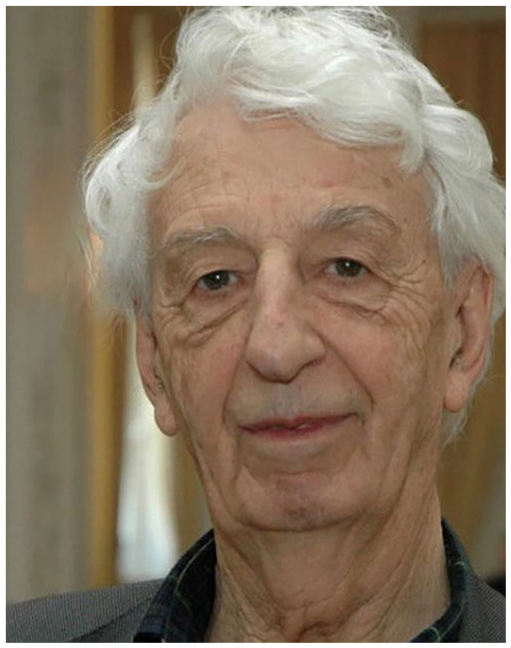
Colwyn Trevarthen, Professor (Emeritus) of Child Psychology and Psychobiology at The University of Edinburgh, has died at the age of 93. A distinguished scholar and innovative researcher in the fields of developmental psychology and psychobiology, Colwyn’s pioneering work in infancy research and early childhood development has had a profound and lasting influence on multiple disciplines, including early education, arts and psychological therapies, and brain science. He belongs to a generation of brilliant infancy researchers (from the 1960s and onwards) whose findings from empirical research (using microanalytic and other innovative video techniques to capture real life data) brought about a paradigm shift across the human sciences and challenging fixed ideas and theories, bringing change to health and education practices from many disciplines. A New Zealander and Scot, he lived for most of his life in Scotland, a country for which he felt a special affinity, with its nature, its people and its rich culture, often drawing inspiration from leading figures of the Scottish Enlightenment.
Born in Auckland in 1931, Colwyn’s early interests in the natural world, flora and fauna of New Zealand were encouraged by his parents, both arts and crafts socialists, his father a lawyer and mother a violin teacher. His father was an artist who had wanted to study architecture, and was always making things, including a wooden flute for Colwyn, which he said he played as a youngster. After studying botany, evolutionary biology, animal ethology and physiology at the biology at the Universities of Auckland and Otago University, Colwyn won a studentship to study for his PhD at the California Institute of Technology (CalTech) where he worked on brain function with Roger Sperry (who later won a Nobel Prize in 1981 for his research on the different functions of the brain’s hemispheres). Continuing his research on brain function in France (in Marseille), Colwyn met leading American child development researcher Jerome Bruner who invited him to come and work at Harvard University’s interdisciplinary Centre for Cognitive Studies. In the 1960s Bruner led a team challenging behaviourism and proposing ‘real-life’ empirical investigations of children’s cognitive development, based in narrative forms of thought that were temporal, sequential, intrinsically linked with action – ‘acts of meaning’, or thinking in action. Bruner’s lasting influence on Trevarthen is evident throughout his work and writings. Trevarthen was very moved by the warm tribute he received from Bruner on his (Colwyn’s) 80th birthday.
In 1971 the opportunity arose for Colwyn to join Edinburgh University’s Psychology Department, where interdisciplinary colleagueship and research continued to grow abundantly in a rich collaborative environment that drew scholars from diverse but related fields from all over the world. Practitioners, therapists, musicians who wanted to research their work, seek answers to pressing questions, were welcomed and supported in their endeavours, if not by Colwyn, then by someone he recommended that they contact.
Trevarthen’s research showed infants as being already primed for communicating. They actively and spontaneously seek companionship, co-generating meaningful narratives before speech, given a respectful, playful and attentive caregiver. Colwyn’s investigations showed that infants were not merely mirroring or imitating the adult, but inviting and seeking meaningful contact, and that this manifested in narrative forms which he described as ‘pre-speech’, ‘motherese’ or ‘pre-music’. This shared non-verbal and pre-verbal communication he termed ‘primary intersubjectivity’ (Trevarthen, 1979, 1980, 1987, 1993a, 1993b). He showed early communication to be dynamic in form, possessing intrinsic musical features that served to organize, regulate the infant’s immature organism, while generating meaningful exchanges, without ‘knowing’, with pauses, meeting each other’s gaze, nodding of the head and other gestural movements. His work demonstrated the significance of time and timing – something he felt had been neglected in studies on cognition. He noted the psychobiologically rooted sympathetic impulses or ‘motives’ for relationship were intrinsically musical, involving sharing of the beat or pulse, and narrative dynamic forms of phrasing or prosodic contouring, pausing and waiting, turn-taking. His innovative research and video techniques influenced and inspired many other researchers. He showed the generative, organizational function of musicality of early communication to be intrinsically determined in the brain, before and beyond speech; and continuing into social and cultural life at all ages, not only as a sign of wellbeing, but promoting wellbeing. For the profession of music therapy his leading contribution to what has become a major interdisciplinary research field was to provide richer understanding and vital evidence of what Music Therapists had referred to as ‘innate musicality’. This is a basic premise on which music therapy is founded, a phenomenon that enables deep connection, reciprocity and meaningful communication beyond speech, and facilitating social inclusion for those with neurological impairment, profound and multiple learning disabilities, and across the broad spectrum of autism, mental health and much more (Alvin, 1975 [1968]; Nordoff and Robbins, 2007 [1977]). Trevarthen took music therapy seriously, as he did all the arts and arts therapies. He supported arts in health by his deep understanding of their roots in wellbeing and their potency in helping people of all ages and diverse cultures grow and develop.
Colwyn was curious and questioning, often challenging but always encouraging. On one occasion, when talking about his early research on the musical parameters of parent-infant relating at Jerome Bruner’s Harvard Center for Cognitive Studies, he was interested to learn that at the same time music therapy research was being carried out in Bertram Ruttenberg’s Day Care Centre for Autistic Children by pioneering Music Therapists, Nordoff and Robbins. They were developing improvisational musical clinical techniques to help build relating, communicating, vocalizing and shared play with neurodiverse children, many without speech, or with delayed learning and motor and social development (see Nordoff and Robbins, 2007 [1977]). Trevarthen like Nordoff and Robbins highlighted the ‘shared beat’ (or pulse) as a fundamental organizing musical parameter in developing and supporting meaningful communication before speech, and the development of joint playing and relating, which enabled the child to take in shared experiences, to be an active agent in meaning-making (Trevarthen, 1979, 1980, 1993a, 1993b, 1994).
In the early 1990s Colwyn Trevarthen supervised the prominent Music Therapist researcher Mercédes Pavlicevic (1997) for PhD at the University of Edinburgh. He acknowledged her work as an important influence on his thinking, and this led to my meeting with him to share video footage of my work with autistic children in improvisational music therapy, and to discuss future research, and to present at interdisciplinary symposia. I was invited to contribute to a Scottish Education Report on Children with Autism (Robarts, 1998), which became a book of that title (Trevarthen et al., 1998), and later on to the book ‘Communicative Musicality: Exploring the basis of human companionship’ (Malloch and Trevarthen, 2009). This is just one example of how Colwyn would encourage and support others, bringing practitioners and researchers together in the most creative and productive ways. His collaborative generosity was legendary and drew people to his Edinburgh lab from all over the world.
Trevarthen’s influence and energetic promotion of researching real life phenomena of human relationship reached ever-widening circles. His collaborative and energetic spirit vitalised research thinking and initiatives worldwide. His influence across generations worldwide and the ways in which he brought people and ideas together has generated much change in the way we think now about infancy and childhood, the foundations of self and wellbeing.
Trevarthen sought to understand the deep-rooted mechanisms of human interaction. He was a pioneer in the study of how infants and caregivers communicate, coining the concept of ‘primary intersubjectivity’ (Trevarthen, 1979) to describe the pre-verbal exchange of emotions and intentions, and, with Penelope Hubley, ‘secondary intersubjectivity’ when (around 9 months) parent and infant begin to share a common focus of interest in joint play (Trevarthen and Hubley, 1978). These are important and useful indications of children’s developmental stages too in therapeutic work.
Colwyn’s writing often showed his poetic way with language. His sentences, sometimes labyrinthine, sometimes pithy and iconic, could convey his meaning in a soundbite phrase that got his message across immediately. Examples include: ‘Sharing makes sense’ (Trevarthen, 1987), ‘First things first’ (Trevarthen, 2005). ‘Playing into reality’ (Trevarthen, 1993a), ‘The dance of wellbeing’ (Trevarthen and Malloch, 2000). His understanding of musicality being embodied and intrinsically linked with meaning-making, he expressed in answer to a question posed in a 1999 BBC documentary film on music therapy, ‘What is music?’: I think that music is something that we have created to satisfy the needs of rhythm and expression which are part of the whole of our mind, the whole of our body, mind and body working together. So musicality, if you want to use a word like that, describes the way that the body moves, the way that thoughts move, the way attention moves, the way feelings move, and so on. (BBC2, 1999)
Trevarthen’s insights have had lasting impact on our understanding of human development, influencing both academic theory and practical approaches to early childhood care and education. He observed the musical parameters in human communication and the significance of timing, metre in narrative and meaning-making. He described musicality evident in spontaneously inter-responsive gestures and movements of the body, intrinsically rhythmic and mutually influencing in their forms and intensities.
In a later key paper, ‘Musicality and the intrinsic motive pulse: Evidence from human psychobiology and infant communication’ (Trevarthen, 1999), he coins a phrase that conveys in a nutshell his central thesis – ‘intrinsic motive pulse or IMP’ – to signal the dynamic embodied nature of musicality and its generative meaning-making - further explored in the 2009 interdisciplinary text ‘Communicative Musicality: Exploring the basis of human companionship’ which he co-edited with Stephen Malloch:
Gestural mimesis and rhythmic narrative expression of purposes and images of awareness, regulated by, and regulating, dynamic emotional processes, form the foundations of human intersubjectivity, and of musicality. Acquired musical skill and the conventions of musical culture are animated from this core process in the human mind . . . Developments in the first year prove the importance of the impulses of natural musicality in the emergence of cooperative awareness, and show how shared participation in the expressive phrases and emotional transformations of vocal games can facilitate not only imitation of speech, but interest in all shared meanings, or conventional uses, of objects and actions . . . (Trevarthen, 1999: 157)
He then considers adversity or disadvantage in early emotional communication and relationship: . . . Disturbances of early communication attributable to emotional unavailability of a depressed mother, or those due to sensory, motor or emotional handicap that causes a child to fail to react in an expected normal, both confirm the crucial function in the development of intelligence and personality of sympathetic motives shared between adult and child in a secure and affectionate relationship, and offer a way of promoting development by supporting these motives. (Trevarthen, 1999: 157)
Trevarthen’s thinking in this seminal paper (one that his close friend and colleague Daniel Stern particularly admired) can be traced back in time to his words from a much earlier publication (Trevarthen, 1978: 99) and shows the beginnings of his explorative, questioning approach, very much in the Socratic tradition of challenging norms and accepted beliefs: How, physically, could the infant mind identify persons? What features of their behaviour are diagnostic of them? Intentional behaviour has a number of features that are not shared with inanimate things, and so an intentional agent may be equipped to respond to others like itself . . . Inanimate movement runs downhill, oscillates in simple ways, bounces, but it does not surge in self-generative impulses. Anything that tends to make unprovoked bursts of rhythm, like a spot of reflected sunlight, seems alive. This rhythmic vitality of movement is the first identifier of live company. (my italics) (Trevarthen 1978)
A phrase from the above quote inspired the renowned child psychoanalytic psychotherapist (Alvarez, 1992) to entitle her first book ‘Live Company’. In it Alvarez integrates developmental understanding from Trevarthen’s and others’ research on infancy and from other schools of psychotherapy to inform, re-consider and innovate psychoanalytic techniques, particularly in regard to ego-deficit and what Alvarez termed as ‘undrawn’ rather than withdrawn children. Here we witness Trevarthen’s influence in inspiring new thinking and bringing about certain changes in psychoanalytic and psychotherapy theory and practice, taking more account of the real life of patients’ needs, to be reached, even ‘vitalized’ by a therapist in sympathy (in the literal sense) with them and responsivity to them.
Trevarthen’s many important collaborations are too numerous to mention them all here, but his work with Stephen Malloch on communicative musicality (from Malloch’s original research and coining of this term), and a stream of brilliant publications with Jonathan Delafield-Butt on the embodied nature of meaning-making, ‘ontogenesis of narrative’, (Trevarthen et al, 2011; Trevarthen and Delafield-Butt, 2015) also incorporating autistic people’s experiences and perspectives, show a continuous, prodigious, ever-deepening, lifelong inquiry that began in Bruner’s Harvard Center for Cognitive Studies five decades ago.
Trevarthen’s interests encompassed not only the developmental processes of early childhood but also the rights and well-being of children within society. He became an ardent advocate for recognizing children as active agents in their own development. Trevarthen believed that children are not merely passive subjects of adult influence but individuals with their own voices, capable of contributing meaningfully to their communities. His work became a potent advocacy that extended into education, where he championed child-centred approaches that respected and nurtured the natural curiosity and communicative abilities of children (Daniel and Trevarthen, 2017). Trevarthen was a strong proponent of the idea that education systems should be designed to support the emotional and social needs of children, recognizing their intrinsic motivation to learn through play and exploration. He was critical of overly rigid and standardized educational practices, which he believed stifled the creative and intellectual potential of children.
Colwyn’s work also had profound implications for understanding and supporting children with developmental needs. His research on early communication helped better understanding of the needs of neurodiverse and autistic, particularly in respect of emotional regulation. Trevarthen’s research brought new perspectives on how children with developmental differences and challenges perceive and interact with the world, leading to more empathetic and effective approaches to intervention. In the 1990s, he was invited by San Diego University School of Law Journal of Contemporary Legal Issues to write a paper on infants’ rights (Trevarthen, 1995)–a subject he tackled with much delight, and one that perhaps could be considered a forerunner of the 2018 book ‘The Child’s Curriculum: Working with the Natural Values of Young Children’ he co-edited with Jonathan Delafield-Butt and Aline-Wendy Dunlop (Trevarthen et al., 2018).
Colwyn Trevarthen’s legacy is vast and enduring. He leaves behind a body of work that has reshaped how we think about infancy and early childhood development, emphasizing the importance of relationships, communication and the social nature of learning. His research has had a profound and transformative influence on a wide range of fields, from psychology and education to paediatrics and child psychiatry, music therapy, play therapy and all arts therapies. Throughout his career he received many honours in recognition of his work including being made an Honorary Doctor of Psychology by the University of Crete, elected a Fellow of the Royal Society of Edinburgh, and becoming a Member of the Norwegian Academy of Sciences and Letters.
Trevarthen has laid the foundations for a more compassionate and understanding approach to early childhood development, one that recognizes the rights, potential and dignity of every child. He will be remembered fondly by all those who had the privilege of sharing time with him, in conversations, at symposia, perhaps sharing a meal or a walk with a group of students and family members, or even a paddle in the sea. Alongside his prolific output of print and e-publications are his recorded lectures and slide presentations posted online that will bring his work to new audiences, far into the future.
Deep sympathies and love go to Colwyn’s wife Lee and their whole family.