



Abstract
Recently, second language (L2) instruction has benefitted from the development of instructional technology such as synchronous computer-mediated communication (SCMC). The present study was conducted to investigate learner perception of the effectiveness of SCMC interactions for L2 learning and building intercultural competence. Students (n = 55) from three different universities in Korea, Japan, and Taiwan participated in a joint online class for one semester. The purpose of the class was to facilitate students’ development of linguistic and intercultural competence by interacting with peers from different cultures online. This study set out to examine the relation between learner perception and interactional features during group discussions. A range of data collection instruments were employed, including a questionnaire to track change in learner perception over time, interviews, and transcripts of interactions during each chat session. Results from linear mixed effect models suggest that among various interactional features, the following two variables were found to be significant predictors of positive attitudes towards SCMC: the amount of students’ attention to language and cultural issues during online discussion. Findings are discussed in light of developing effective SCMC-based language courses.
I Introduction
The last two decades have seen a proliferation of empirical research investigating the efficacy of computer-assisted language learning (CALL) for second language acquisition (SLA) (Plonsky & Ziegler, 2016). Within CALL, synchronous computer-mediated communication (SCMC) has emerged as one of the most popular and heavily researched areas in the field (Parmaxi & Zaphiris, 2015). The current study examines multimodal SCMC and its relevance to the educational context under investigation: the Cross-Cultural Distance Learning Project (henceforth, CCDL 1 ). Evidence is abundant as to the benefits of SCMC for language learning, especially within the interactionist perspective of SLA. One reason for this is because SCMC has increasingly been employed to engage second language (L2) learners in online intercultural collaboration with counterparts in distant locations (i.e. telecollaboration; Chen & Yang, 2014; Freiermuth & Huang, 2012; Warschauer, 1996). Although much research has corroborated the benefits of telecollaboration for L2 learning, studies on learner perception of its use in a regular classroom and how such perception changes over time are scarce. This study, thus, examines how English as a foreign language (EFL) learners who were enrolled in the same language course but were physically located in three different countries perceived the use of telecollaboration and its effect on their L2 learning and intercultural competence (ICC) development.
II Literature review
1 Synchronous computer-mediated communication
Over recent decades, SCMC has received increasing attention from researchers in the field of SLA with a particular focus on its potential as a virtual platform for L2 learning (e.g. Bueno-Alastuey, 2011; Chen & Yang, 2014; Ortega, 1997). SCMC refers to real time interaction between people over a computer network, which includes modes such as text-based instant messaging, audioconferencing, or videoconferencing (Stockwell, 2010). Previous research has uncovered an extensive list of the potential benefits of SCMC for language learners. For instance, it has been shown that learners’ affective states are enhanced through increased motivation (Warschauer, 1996), improved attitudes (Beauvois, 1995), and reduced anxiety (Abrams, 2003).
In SCMC, many features of face-to-face (FTF) communication are present (see Sauro, 2011 for a comprehensive review), which may better prepare learners for the challenges encountered in real-life communication (Bueno-Alastuey, 2011). Within text-based SCMC, there is more frequent turn-taking between learners (Ortega, 1997), and less turn-taking competition (Kitade, 2000). Furthermore, oral SCMC provides benefits for L2 pronunciation development (Bueno-Alastuey, 2010) and oral proficiency development (Wesche, 1994). SCMC has also been touted for its ability to provide learners in EFL contexts with additional opportunities for language practice and social interaction outside of class, especially with other non-native speakers (NNSs) of English or with native speakers (NSs) (Bueno-Alastuey, 2011).
2 Telecollaboration and multimodal SCMC
Telecollaboration is defined as ‘institutionalized, electronically mediated intercultural communication under the guidance of a linguacultural expert (i.e. a teacher) for the purpose of foreign language learning and the development of intercultural competence’ (Belz, 2003, p. 2). Communication tools used to facilitate telecollaboration include both asynchronous forms (e.g. email, Internet forums, or message boards) and synchronous forms (e.g. text-based chat, teleconferencing, and videoconferencing).
The majority of previous research has concentrated on text-based SCMC (Bueno-Alastuey, 2011), suggesting that text-chat messages bear characteristics more similar to oral communication than those of written language (Chun, 1994). Text-chat has been found to encourage learners to participate in communication because it involves a higher frequency of student-to-student exchanges than FTF contexts (Ortega, 1997). As technologies have evolved, SCMC formats have also begun to include voice-based SCMC (SVCMC), resulting in a shift from text communication to spoken communication within online environments (Shih, 2014). Additionally, an increasing amount of evidence demonstrating the facilitative role of SVCMC in L2 learning has emerged. For instance, learners display more gains in oral proficiency (Hampel, 2003), use more repair moves (Bueno-Alastuey, 2010) and self-correction (Yamada, 2009), and have more opportunities for participation (Rosell-Aguilar, 2005). With regard to learners’ affective factors, research has also suggested that SVCMC aids in increasing student motivation (Hampel, 2003) as well as willingness to negotiate for meaning (Jepson, 2005). Additionally, Satar and Ӧzdener (2008) claimed that although SVCMC could be helpful in reducing anxiety levels, the effects of other factors such as learners’ proficiency levels and interlocutors should not be overlooked. Specifically, they indicated that learners with higher proficiency might be less anxious during voice-chat as compared to those with lower proficiency. Furthermore, learners reported that they felt less worried when communicating with their NNS peers than when conversing with an NS.
Another shift in telecollaborative environments involves the increasing use of multimodal forms of SCMC (Stockwell, 2007), often combining both a text-chat and an audio modality (Wigham & Chanier, 2015). One advantage of multiple modalities has been an increase in learner language production during task performance. For example, low proficiency learners tend to utilize text-chat to a great extent to support their oral communication (Vetter & Chanier, 2006). Because fewer cognitive-processing constraints are imposed and more processing time is allowed during text-chat, learners with lower proficiency can keep pace with their chat partners and stake out their positions by supplementing their spoken messages with text-chat (Freiermuth, 2011). Additionally, less dominant speakers use text-chat strategically to maintain equal footing during communication and support their language production (Sauro, 2004). Other reasons for using text-chat include making clarification requests without interrupting the flow of communication, legitimizing themselves as turn-takers, and conducting off-topic conversations (Blake, 2005). For these reasons, the use of multimodal SCMC has risen in popularity in the L2 classroom.
However, organizing telecollaboration projects can be a complicated endeavor involving problems at the individual, classroom, or socio-institutional levels (O’Dowd & Ritter, 2006). As a result, longitudinal systematic investigation of telecollaboration contexts over time remains scarce. More specifically, while much exploration of the effects of telecollaboration on the development of learners’ linguistic and intercultural competence has been carried out (e.g. Chen & Yang, 2014; Freiermuth & Huang, 2012), the focus has been on one-time implementation of telecollaboration for research purposes rather than development of an authentic telecollaboration-based distance learning course.
3 Intercultural competence and L2 development in SCMC and telecollaboration
Aside from language knowledge, another benefit of SCMC and telecollaboration courses is the potential to increase L2 learners’ intercultural competence (ICC). Fantini and Tirmizi (2006) define ICC as ‘a complex of abilities needed to perform effectively and appropriately when interacting with others who are linguistically and culturally different from oneself’ (p. 12). When supplied with various cultural topics to discuss, students are given the opportunity to compare and contrast differences and similarities regarding social phenomena within each other’s cultures. Interactions between non-native speakers using a common target language (TL) lend themselves particularly well to this sort of exploration. In fact, several studies have suggested that SCMC is effective in helping learners communicate their knowledge of culture through the use of the TL (Chen & Yang, 2014; Freiermuth & Huang, 2012).
For example, Jogan, Ana, and Gladys (2001) demonstrated that advances in technology afforded learners the opportunity to gather cultural information through interaction with peers abroad in an authentic communicative setting, thereby promoting cultural understanding. Chen and Yang (2014) also reported that students’ ICC skills were developed mainly through the process of telecollaboration-based interaction, whereby they could acquire knowledge of their interlocutors’ cultures. In a similar vein, Hockly (2015) indicated several benefits of telecollaboration for enhancing ICC. For example, learners are provided with cultural knowledge not usually found in course books or standardized materials, and cultural awareness is promoted through interaction with real informants of the culture of interest. Additionally, Itakura (2004) found that cultural input obtained via online cultural exchanges enabled students to modify cultural stereotypes as well as enhance their awareness of cultural diversity. Despite this research regarding ICC development in telecollaboration contexts, more research is needed to understand how this awareness can be systematically developed (Chen & Yang, 2014).
Many studies have also outlined the benefits of SCMC in terms of L2 development (for a review, see Ziegler, 2016). Previous SCMC studies have shown that students interacting in SCMC mode tended to use more lexically complex language as compared to those completing the same activities in FTF interactions (Warschauer, 1996). In terms of morphosyntax, learners in SCMC have attempted to use a more varied number of language structures and verb forms than those in FTF discussion (Kern, 1995). Yanguas (2012) reported a significant difference in the aural comprehension of students who had completed conversations via audio-based SCMC compared to video-based SCMC and FTF interaction. Overall, SCMC provides learners with opportunities to produce language output, which is essential to L2 development. There is also greater incorporation of negotiation of meaning repair moves and production of comprehensible, modified output (Jepson, 2005). SVCMC specifically, engages learners in more self-repair and self-correcting, which may lead to more gains in oral proficiency (Lin, 2014).
4 Learner perception towards telecollaboration
Only a limited number of studies have investigated learner perception towards SCMC. However, those that exist have demonstrated that learners report strong, positive attitudes towards the use of telecollaboration for both L2 learning and ICC development. For example, Freiermuth and Jarrell (2006) indicated that learners were more willing to communicate using online chat than FTF discussion because online chat minimizes some of the elements that may cause reluctance to use the TL. Moreover, learners tend to perceive text-chat as being less face-threatening and more interesting and as such, are encouraged to engage in online interaction using the TL. Telecollaboration has also been found to motivate EFL learners with respect to task attractiveness, task innovativeness, willingness to communicate, and the need to use English (Freiermuth & Huang, 2012). Similarly, a recent study by Chen and Yang (2014) suggested that learners reacted positively to having a telecollaborative component in a language course. More specifically, Taiwanese EFL learners were found to value the opportunity to use the TL in a real-life context, which was offered in a semester-long telecollaboration-based course. They also believed that such an opportunity helped them develop their linguistic and ICC skills.
As reviewed thus far, a great deal of research has demonstrated that learners engaged in SCMC interaction have overall positive attitudes, increased motivation, and lower levels of anxiety. However, the relationship between the characteristics of interaction and learner perception towards SCMC in telecollaboration-based classrooms has not been systematically investigated. Moreover, there is a considerable lack of investigations into the perceived benefits and drawbacks in real mainstream language classrooms where students from different countries are involved in telecollaboration. To this end, the current study features an authentic distance course, CCDL (see below), which uses telecollaboration as an integral part of its curriculum. The current study attempts to fill the gap in the literature by examining (1) how learner perception towards telecollaboration changes over time and (2) the relationship between interactional features and learner perception towards the role of telecollaboration on L2 learning and ICC development.
The current study addresses the following research questions:
Does learner perception of the benefits of a telecollaboration-based class for L2 learning change over time? What interactional features are associated with learner perception towards the benefits of the telecollaboration-based class for L2 learning?
Does learner perception of the benefits of a telecollaboration-based class for developing intercultural competence change over time? What interactional features are associated with learner perception towards the benefits of the telecollaboration-based class for developing intercultural competence?
III Methods
1 Instructional context: The Cross-Cultural Distance Learning Project
The Cross-Cultural Distance Learning Project (CCDL) was developed in 1999 to foster students’ intercultural communicative competence and social skills through authentic interaction with speakers from other language backgrounds. Multimodal technology was utilized to bridge physical distances between learners from different linguistic and cultural backgrounds. At the time of data collection in 2015, this course was jointly held among three universities in three different countries, Korea (KU), Japan (JU), and Taiwan (TU). The CCDL is a unique venue situated in an EFL setting where input and exposure to the TL are not readily available to learners. In the CCDL course, learners are engaged in topic-based learning coupled with personal interests and practical concerns with a cross-cultural twist (Shao & Wu, 2007).
The CCDL course is a three-credit, semester-long elective course. The overall structure of the course includes three components: (1) FTF in-class discussion among students of each university, (2) synchronous online discussion through video-chat (during two-thirds of the semester) and videoconferencing (during the remaining one-third of the semester), and (3) asynchronous online discussion across all three universities on the bulletin board system (BBS) of the course webpage (CourseN@vi). In addition, students are required to write a final reflection paper about their overall experience and perceptions of the course. The class meets once a week for two hours and 45 minutes. For the first one hour and 15 minutes of the class meeting, students at each school separately discuss the designated topic of the week based on the pre-chat session activities in the textbook to prepare for the subsequent joint video-chat session with students from the other universities.
The current study focused on the students’ video-chat sessions. The chat sessions were organized topically around the designated discussion topics for the course. The responsibility of the facilitator rotated within the group each week. The students warmed up by first discussing the designated topic of the week (i.e. week 1: Happiness factors, week 2: Family systems, week 3: Self-introduction & Free topic, week 4: Self-introduction & Free topic, week 5: Food, week 6: Globalization in your community) with their classmates and the instructor prior to each video-chat session. The participants across all three universities followed the same syllabus with the same textbook (Cross-Cultural Distance Learning [CCDL] Social and Global Issues) written for the CCDL course. They used headphones equipped with microphones and an online program designed for video-chatting called LiveOn. The students were instructed to use all the supplementary functions that LiveOn provides, along with the video-chat function whenever necessary for effective communication. Supplementary functions such as text-chat were used to assist the students’ oral communication in case of communication breakdown or technical difficulties, whereas all the other functions were to help make oral discussion more interesting and dynamic by drawing pictures (whiteboard) and graphs (graph drawing), sharing documents (document sharing), and showing pictures or video clips available online (website sharing). The video-chat sessions took place over 6 weeks, with each chat session lasting approximately 50 minutes. Due to school holidays in their respective countries, the Taiwanese students did not participate in session 3 and the Japanese students did not participate in session 4.
2 Participants
Participants in the video-chat sessions included 22 Korean (aged 20–26; M = 23.19; SD = 1.82), 10 Japanese (aged 19–23; M = 21.00; SD = 1.20), and 19 Taiwanese (aged 20–23; M = 22.39; SD = 1.82) students. Their majors varied from arts and humanities to business to computer sciences across all three universities. The Korean and Taiwanese students were divided into chat groups by the instructors in the beginning of the semester based on the students’ age, gender, and English education background to ensure diversity in each group. Due to the relatively smaller number of Japanese students, they were each randomly assigned one per group. In total, ten groups were formed for the video-chat sessions, each of which consisted of 2–3 Korean, 1 Japanese, and 1–2 Taiwanese students.
3 Data collection materials and procedure
The online chat sessions were automatically recorded in video format in the LiveOn program’s database, making student verbal interactions as well as their use of the supplementary functions available for analysis. Learners’ verbal interactions in each group during each session were transcribed and the frequency of using the multimodal resources was also counted for each participant. All students completed an online survey after each discussion session using Qualtrics. Each survey included 17 (14 Likert scale and three open-ended) questions focusing on the efficacy of online discussion in L2 learning, ICC development, and helpfulness of group members. The current study focused on two items which addressed learner perception of the benefits of online discussion for L2 learning and ICC development: (1) How satisfied are you with today’s group discussion in terms of learning English? and (2) How helpful was your group discussion in terms of gaining new perspectives on the discussion topic today? The first question was relevant to learner perception towards L2 learning, and the second question was relevant to learner perception towards ICC development. Because the primary goal of the course for all three participating universities was to foster EFL learners’ ICC development, the students were instructed to gain new perspectives on the cultural issues relevant to the topic of the week prior to each chat session. To do so, the textbook provided guiding questions in order to elicit culture-oriented discussions, thereby leading learners to share different perspectives on the topic. For each item, students were asked to choose one of the following options on the Likert scale: (1) Very unsatisfied/unhelpful, (2) Unsatisfied/unhelpful, (3) Neither satisfied/helpful nor unsatisfied/unhelpful, (4) Satisfied/helpful, and (5) Very satisfied/helpful.
After completing all six video-chat sessions, a total of six students volunteered to participate in a one-to-one interview (three Korean, two Taiwanese, and one Japanese participant). The interviews with the Korean participants were conducted in a quiet room on their campus, while interviews with the Japanese and Taiwanese participants were conducted via Skype. Each interview lasted approximately 50 minutes and was recorded using a digital voice recorder.
4 Data coding and analysis
All interaction data were transcribed and analysed for the following interactional features: amount of interaction (i.e. the level of engagement), learners’ attention to language (i.e. Language-Related Episodes or LREs), their attention to cultural aspects of instructional topics (i.e. Culture-Related Episodes or CREs), and their use of multimodal resources during the discussions. Table 1 summarizes and defines each variable.
Interactional features during video-chat discussion.
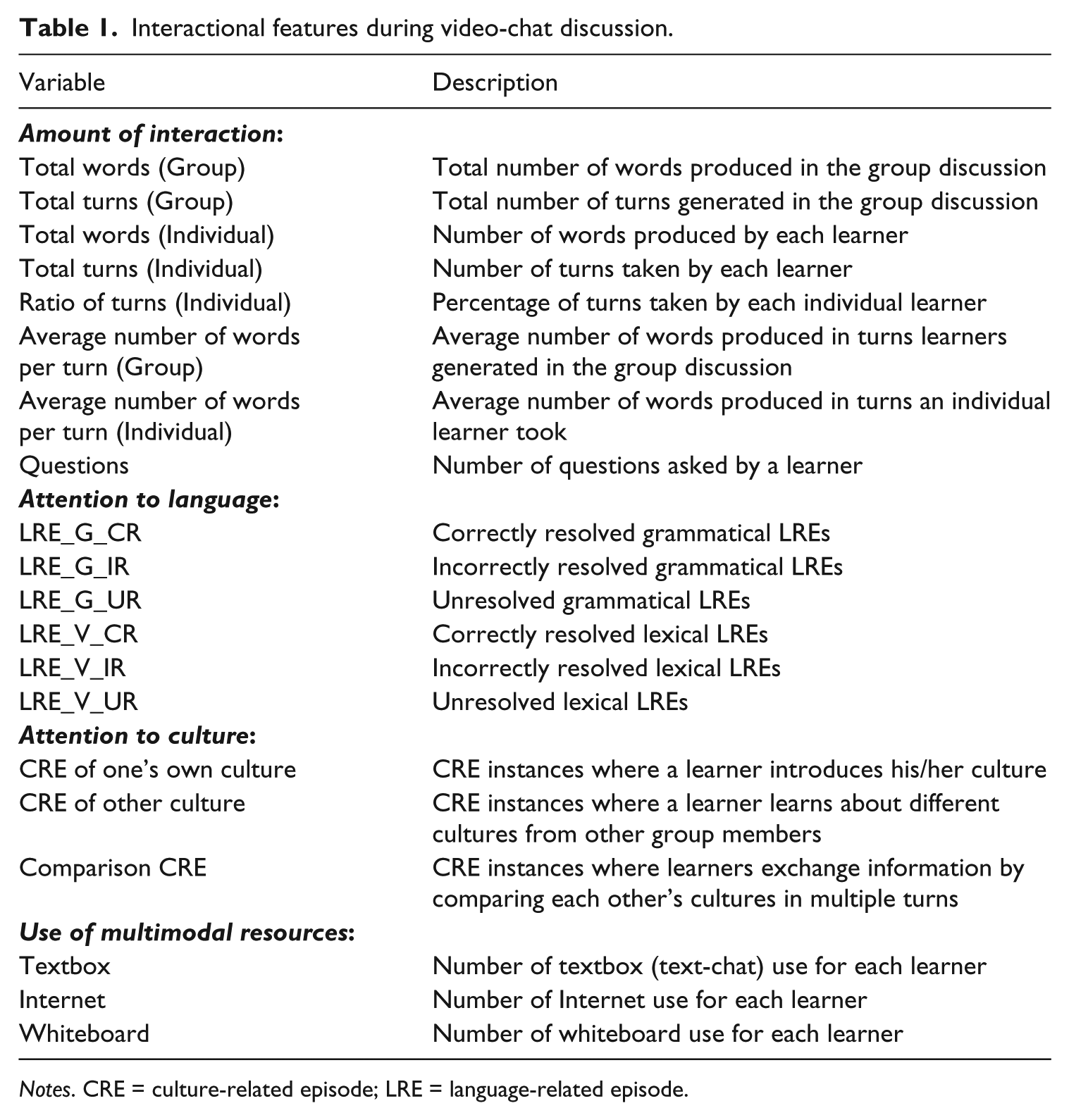
Notes. CRE = culture-related episode; LRE = language-related episode.
Based on previous research on linguistic and motivational variables in L2 learning (Dörnyei, 2002), interactional features were analysed for learners’ actual speech production during conversation, such as the number of words and the number of turns produced by a learner during video-chat. Dörnyei (2002) indicated that, when taken as indicators of learner engagement, these language variables can be used to determine how actively the participants were involved in communicative activities. After counting the number of words and turns at the level of the individual learner, we summed up the word and turn counts of the learners belonging to the same group to calculate the total number of words and turns at the group level. This allowed us to gauge the amount of conversational interactions made by each group during each video-chat session. A ratio of turns per individual was also calculated using the number of turns per group and an individual learner’s turn count because the absolute number itself may not always provide an accurate picture of how much contribution a learner actually made to the group discussion. Additionally, the average number of words per turn was computed at both the individual and group levels. Finally, the number of questions asked by each learner during a chat session was counted, along with how many times a learner used a supplementary function of the chat program, including textbox, Internet, and whiteboard.
In addition to the amount of interaction, learners’ attention to language was analysed using LREs. LREs are defined as ‘any part of a dialogue where the students talk about the language they are producing, question their language use, or correct themselves or others’ (Swain & Lapkin, 1998, p. 326). We coded for both grammatical (i.e. learners discussing morphological and syntactic aspects of language) and lexical LREs (i.e. learners discussing meaning, spelling, or pronunciation of words) identified in previous research (Swain & Lapkin, 1998). After identifying all of the grammatical and lexical LREs, we coded them for three possible outcomes: correctly resolved, incorrectly resolved, and unresolved. An example of a correctly resolved LRE is as follows:
Example 1: Correctly resolved lexical LREs
Since Kimura is very popular surname, the girls talk like we don’t wanna marry with Mr. Kimura.
Actually in Korea, Kim is really common.
Right. Kim. It’s common but I’m not sure it’s not like popular like Kimura. […]
I’m sorry. Maybe not popular I’m sorry. I should have say common. It’s a common name.
Oh common?
I’m sorry, I’m sorry.
Oh no. That’s fine.
For the second research question regarding ICC development, we created a novel unit of analysis called a CRE. CREs are similar to LREs but instead include instances where learners discuss cultural issues relevant to the topic of the week. Three different types of CREs were coded in this study: (1) CRE of one’s own culture, where a learner provides information about his/her own culture with respect to the topic of the week, (2) CRE of other culture, where a learner receives input about different cultures from the other group members, or (3) Comparison CRE, where learners explicitly compare and contrast each other’s cultures over multiple turns. Comparison CRE serves as an umbrella category, which can involve both the first and second type of CREs in one discourse episode. In the example presented below, the entire conversation was coded as Comparison CRE. The Korean participant, Jiwon, talks about Korean culture in line 2, which was counted as one instance of CRE of one’s own culture, whereas the utterances in lines 3 and 5 were calculated as instances of CRE of other culture for Jiwon. Two researchers independently coded the interaction data, and the differences were discussed. The third researcher rechecked the entire data for data coding consistency.
Example 2: Comparison CRE
We should move on the next question about married couple.
We have separate surname in Korea. What about Taiwan and Japan?
In Taiwan, it is normal first to have separate family name for married couple.
Oh. What about Hiro, Japan?
Uh … I think all of the family have them same surname. I don’t know about… um maybe some of them have separate family names, I’ve never heard of it in my case. But I think almost everybody has the same family name when they are married, I think.
So in japan, you choose husband’s family name, right?
5 Statistical analysis
We employed linear mixed effects (LME) modeling to conduct our statistical analyses. An LME analysis uses a combination of fixed and random effects in order to predict a dependent variable. Fixed effects are treated as predictor variables (i.e. independent variables) much like they would in regression analyses. LMEs also include random effects in order to account for variation attributed to individual differences amongst participants and items. As such, LMEs allow for more accurate interpretations of the influence of specific effects when attempting to measure the influence of a predictor variable on an outcome variable (Baayen, Davidson, & Bates, 2008). We used R (R Core Team, 2015) with the lme4 (Bates, Mächler, Bolker, & Walker, 2015) and lmerTest (Kuznetsova, Brockhoff, & Christensen, 2015) packages in order to build our LME models.
We constructed a total of four models in order to systematically answer our research questions. For each of the two dependent variables (i.e. perceptions regarding language learning, and perceptions regarding ICC development) we first tested whether perceptions were affected by time (i.e. whether their perceptions changed over time), and then tested whether perceptions were affected by the various interactional features described above. We also attempted to control for potential differences in the universities, topics, and gender of the participants by including those variables as additional fixed effects. For the models testing time, we entered the perception scores as the dependent variable and then entered school, gender, and session time as fixed effects, with participants entered as random effects. For the models testing interactional features, we entered the perception scores as the dependent variable, university, topic, gender, and all of the interactional features in Table 1 as fixed effects, and participants were entered as a random effect. For all models, we tested the effects of session as random effects and as random slopes, but found their inclusion did not make for a better model fit (nor did they influence the significance of any results) and were thus excluded from the results reported below.
IV Results
Table 2 displays the mean and standard deviations for learner perception towards L2 learning and ICC development over time on a range of 1–5, with 1 being ‘very unsatisfied/unhelpful’ and 5 being ‘very satisfied/helpful’. Please note that the Taiwanese students did not have a class during the third session, and that the Japanese students did not have a class during the fourth session. However, LME models are robust against unequal N sizes, and thus our statistical analyses accounted for the different number of participants per session. Table 3 shows descriptive statistics for all variables which are related to the amount of interaction, attention to language, attention to culture, and the use of multimodal resources.
Descriptive statistics for learner perception over time.
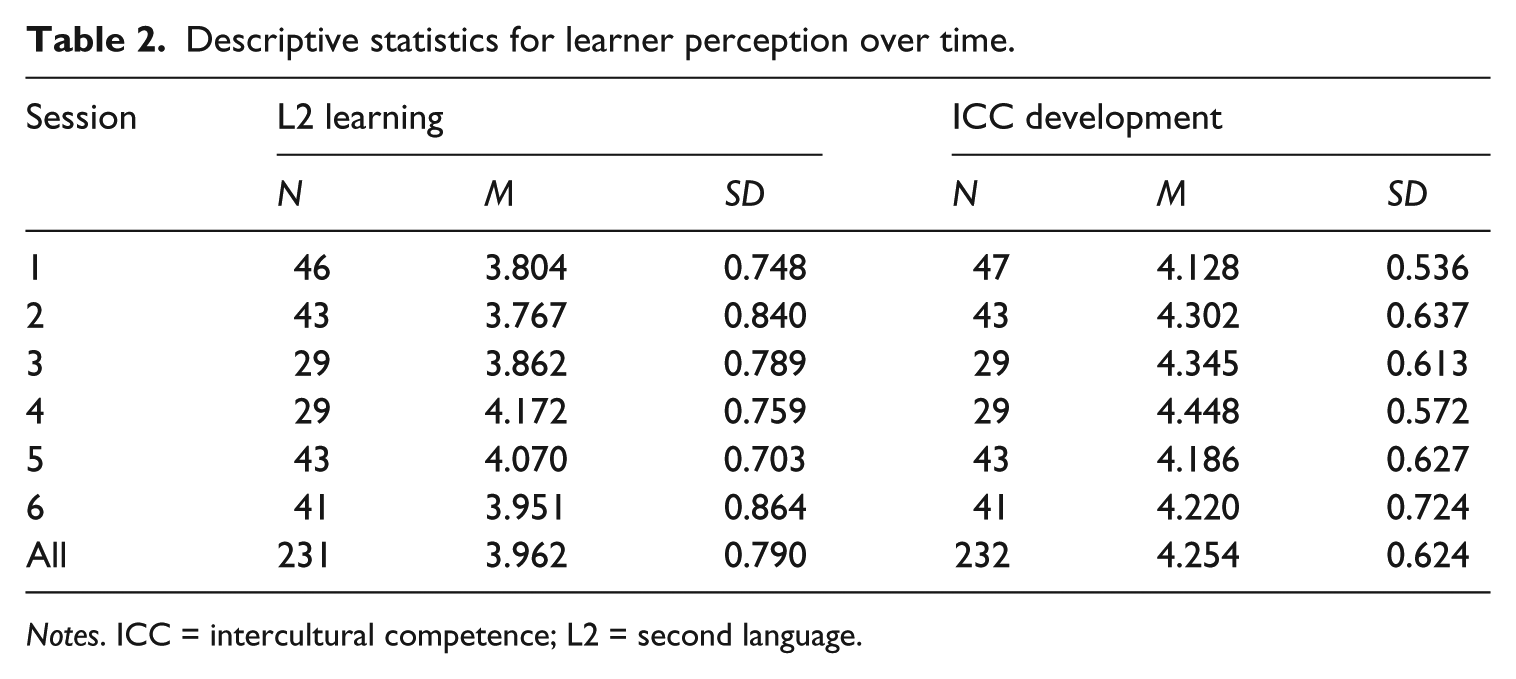
Notes. ICC = intercultural competence; L2 = second language.
Descriptive statistics for variables (rounded to nearest tenth).
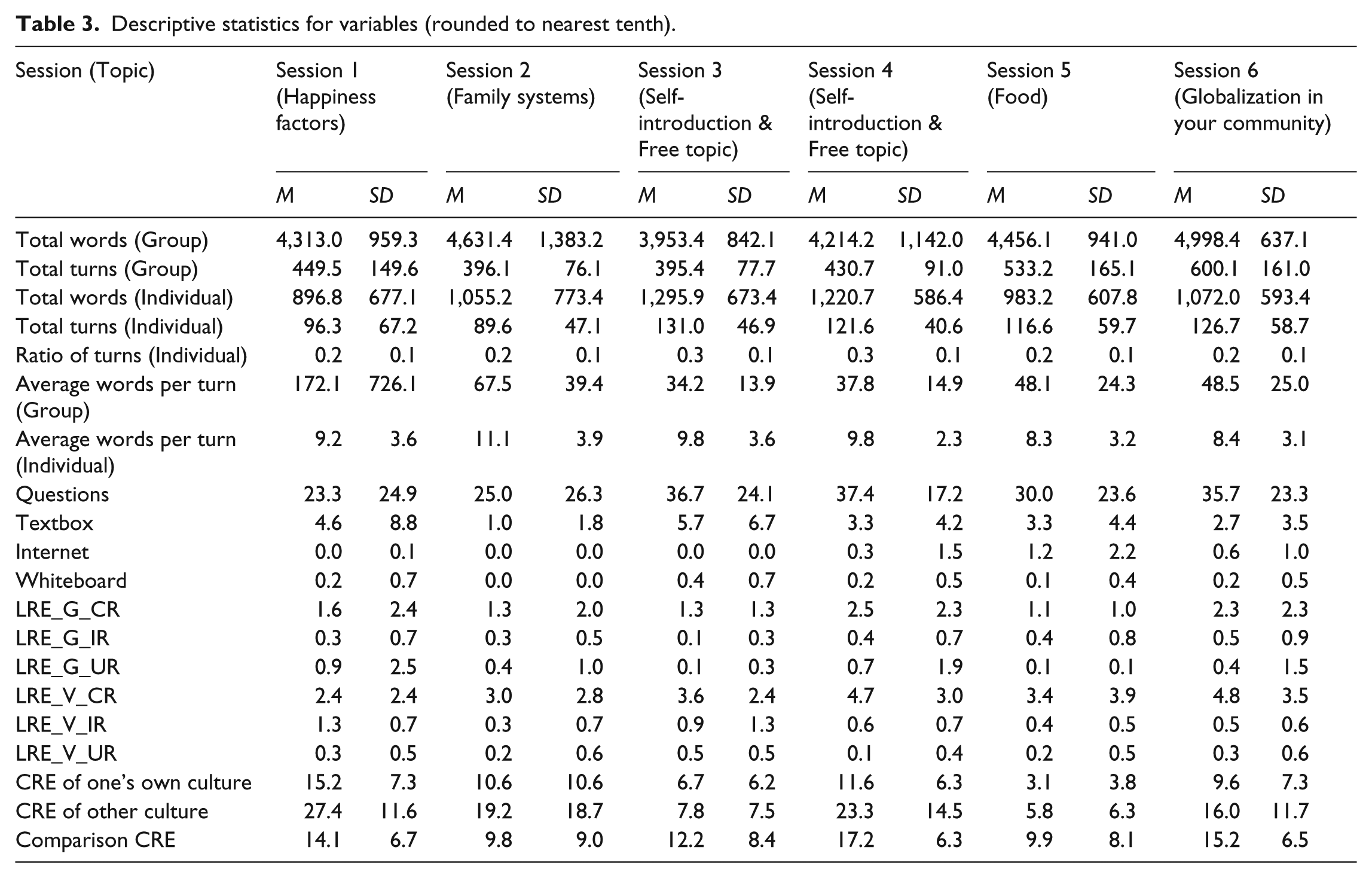
1 Perceptions of language learning over time
An LME model testing whether learner perception towards language learning (on a scale of 1–5) changed over time found that time had a significant effect on learner perception, with later sessions resulting in more positive perceptions of L2 learning. The model reported a marginal R2 of .050 and a conditional R2 of .457. Table 4 reports the intercept and fixed effects, along with their coefficients, standard error, t values, and p values. The intercept represents the baseline score if all numerical predictor variables were held at zero and using the baseline level for each categorical level. For each fixed effect, the estimate reports the change based on each variable, while the t and p values report whether that change is statistically significant.
Time and perceptions of language learning.
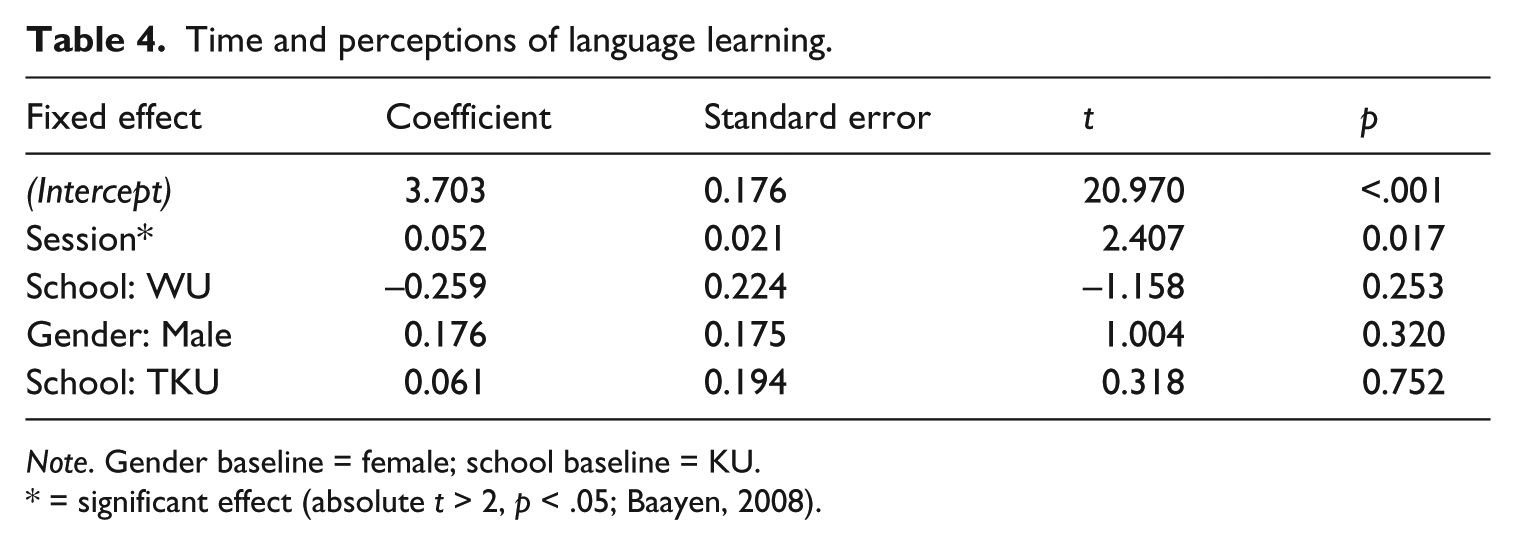
Note. Gender baseline = female; school baseline = KU.
= significant effect (absolute t > 2, p < .05; Baayen, 2008).
Excerpts from the learner interviews provide further insight into the quantitative findings. A Japanese participant, Nana, mentioned during her interview that her speaking abilities had improved as she participated in more chat sessions: I feel my performance in speaking has got better throughout this semester. Because I usually don’t have opportunities to use English in an authentic conversation setting, I found this class to be of great help in practicing English. I’ve become more confident in facilitating discussions and presenting my ideas in English as I participated in the video-chat every week.
Other students indicated the helpfulness of the video-chat sessions in developing vocabulary and grammatical knowledge. For example, Chen (T) mentioned: I learned lots of new words throughout the semester. Since we were given different culture related topics each week, new terms and words relevant to each topic were introduced during the discussions. I think I could learn the new words without much effort just by being exposed to my group members’ utterances containing the words.
Overall, the majority of the students across the three universities were found to perceive video-chatting as being beneficial as they participated in it more and that it primarily promoted their speaking skills and facilitated vocabulary and grammar development.
2 Perceptions of language learning and interactional features
An LME model testing whether learner perception towards language learning was affected by interactional features found significant effects for topic, correctly resolved grammatical LREs, unresolved grammatical LREs, and correctly resolved lexical LREs. Sessions centered around the topic of food (session 5) resulted in significantly more positive perceptions of language learning (on a scale of 1 to 5) compared to sessions where the topic was happiness factors (session 1), family systems (session 2), or globalization in your community (session 6) (there were no significant differences between the free topic session compared to any other sessions). Additionally, the model reported that a higher number of correctly resolved grammatical and lexical LREs resulted in significantly more positive perceptions of language learning, whereas a higher number of unresolved grammatical LREs resulted in less positive perceptions of language learning. This model reported a marginal R2 of .188 and a conditional R2 of .598. Table 5 reports the intercept and fixed effects, along with their coefficients, standard error, t values, and p values.
Interactional features and perceptions of language learning.
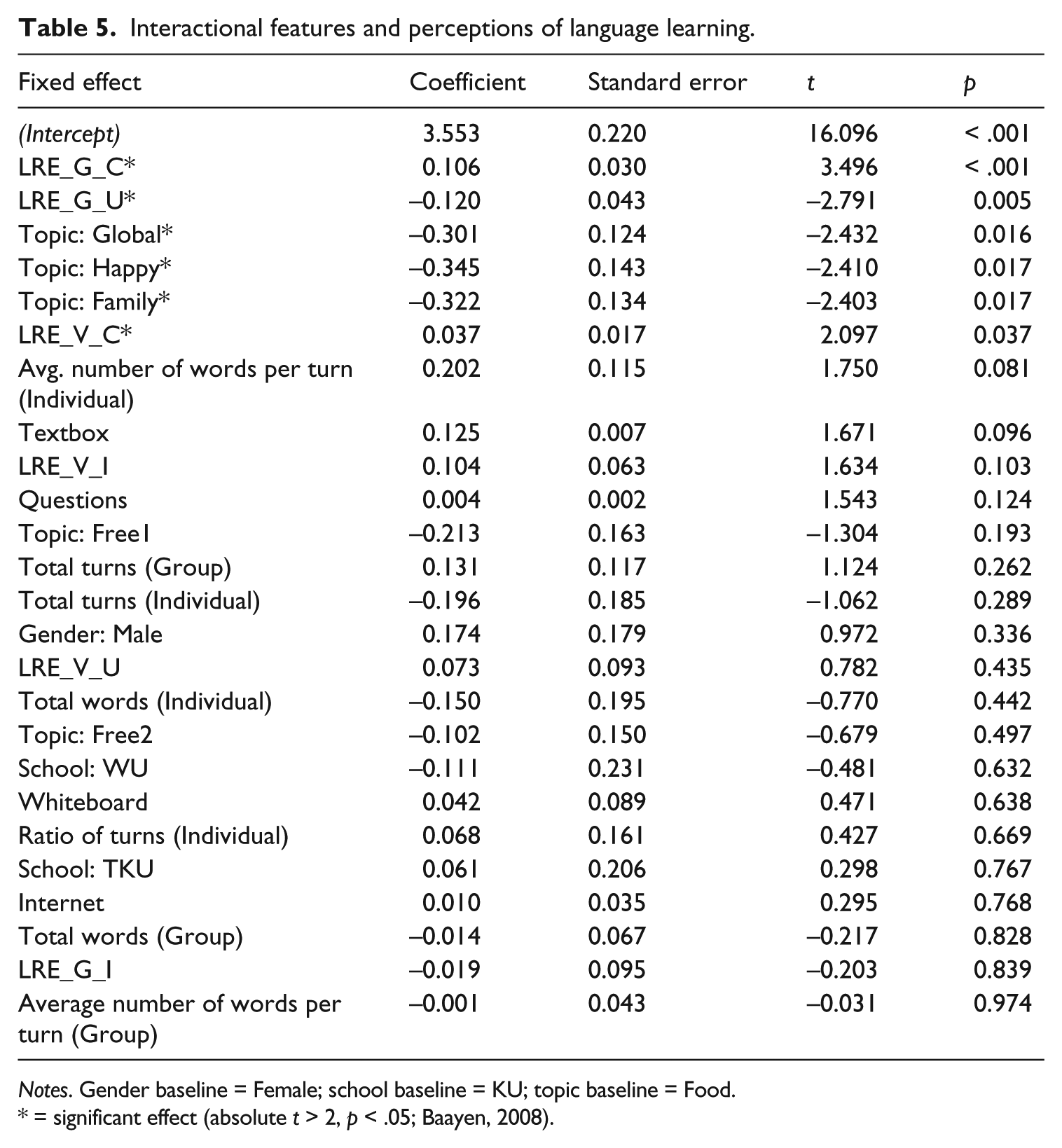
Notes. Gender baseline = Female; school baseline = KU; topic baseline = Food.
= significant effect (absolute t > 2, p < .05; Baayen, 2008).
The results demonstrating enhanced perceptions towards language learning after discussion topics centering on food is further supported by evidence from the learner responses to the survey questionnaire. Indeed, it was only when food was the designated topic that students commented on how interesting and engaging the topic was in the post video-chat survey. For instance, a Korean student, Jiyoung stated as below: I believe I participated in the discussion more actively today because I really wanted to ask my group members about their food culture and introduce Korean food culture.
Ting-wei (T) also mentioned on her survey: My group members and I were a lot more active today compared to the past sessions because the topic was very interesting. By describing different kinds of Taiwanese food to my friends in a way that they could understand, I felt my speaking skills got improved.
The findings suggest that topic may have an impact on student motivation for active participation, which could in turn lead to more positive perceptions towards L2 learning.
The importance of co-constructing linguistic knowledge (e.g. LREs) during video-chatting was also highlighted in the students’ responses. Specifically, the role of feedback in restructuring inaccurate language knowledge in an endeavor to resolve communication breakdown was emphasized as in Jejin’s (K) remark below: Over the semester I could develop efficient strategies to provide feedback and help my group members correct inaccurate utterances, particularly when we had troubles understanding because of inappropriate word choice or ungrammatical sentences. I believe the entire process of discussing and correcting inaccurate language use was very helpful in improving language ability.
Mei-Ling (T), who perceived herself as having relatively lower proficiency than other students, pointed out the benefits of peer feedback as well: I learned a lot from my group members’ feedback to my incorrect use of words or ungrammatical sentences. They helped me notice my language errors and correct them, which I found very beneficial for developing my English knowledge and ability. As I got more familiar with the course and Korean and Japanese students, I became more proactive in asking for their feedback and help when I was not completely sure about my language.
As can be seen in these two excerpts, the learners were aware that they could co-construct linguistic knowledge through interactional moves (e.g. LREs) during the chat interactions. Moreover, it appears that the cycle of exchanging feedback and restructuring inaccurate language knowledge was perceived as a useful language learning activity by the learners as was also found in previous research (e.g. Satar & Özdener, 2008).
3 Perceptions of ICC development over time
An LME model testing whether perceptions of ICC development were influenced by time found that time did not have a significant effect on learner perception. Table 6 reports the intercept and fixed effects, along with their coefficients, standard error, t values, and p values.
Time and perceptions of ICC development.
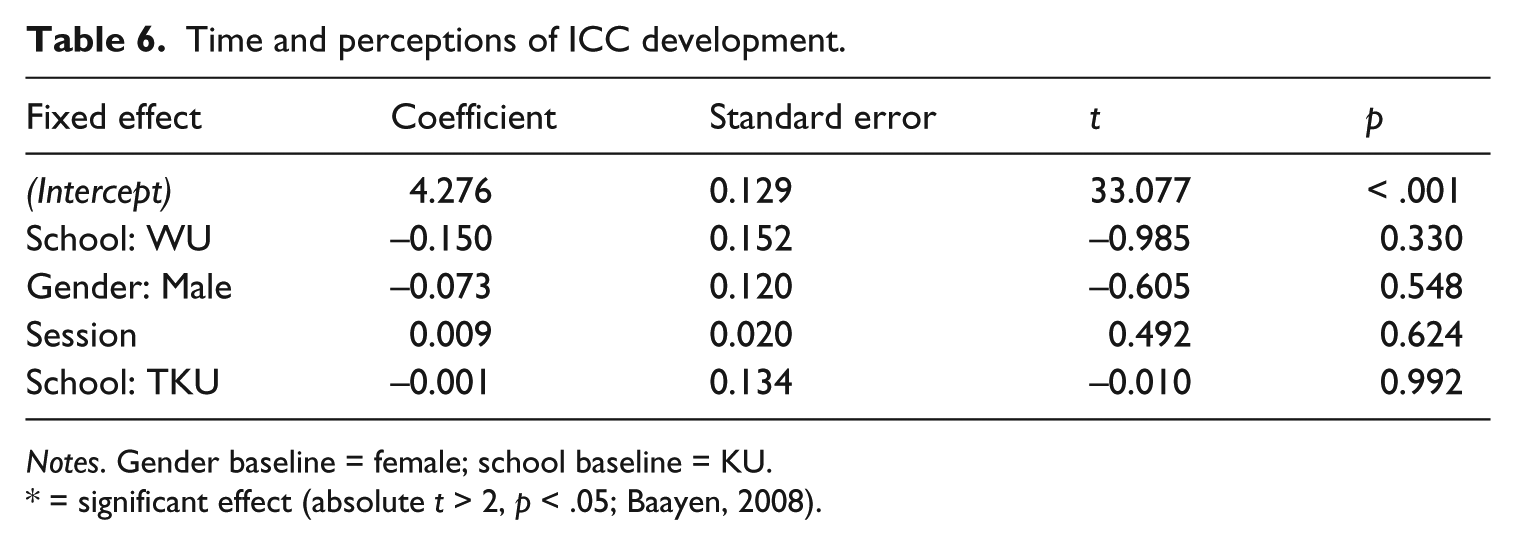
Notes. Gender baseline = female; school baseline = KU.
= significant effect (absolute t > 2, p < .05; Baayen, 2008).
4 Perceptions of ICC development and interactional features
An LME model testing whether perceptions of ICC development were affected by interactional features found a significant effect for CREs involving other countries, with a higher number of CREs of other culture resulting in more positive perceptions of ICC development. The effect of CREs of one’s own culture was marginally significant, almost reaching the significance level (p < .05). However, given that the absolute t value for CRE of one’s own culture is smaller than 2, its effect could be considered minimal. This model reported a marginal R2 of .188 and a conditional R2 of .446. Table 7 reports the intercept and fixed effects, along with their coefficients, standard error, t values, and p values.
Interactional features and perceptions of ICC development.
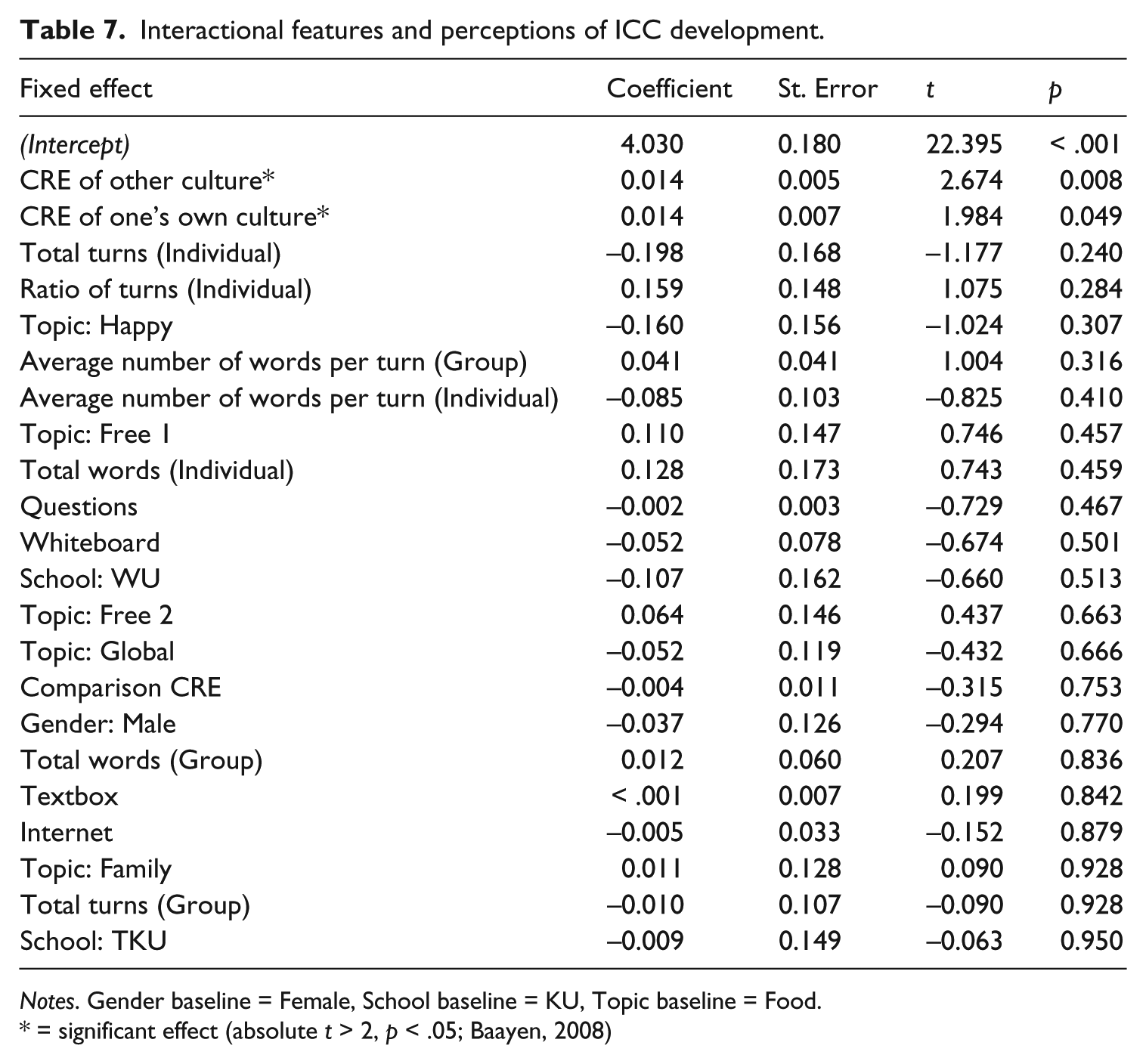
Notes. Gender baseline = Female, School baseline = KU, Topic baseline = Food.
= significant effect (absolute t > 2, p < .05; Baayen, 2008)
The learners’ belief that CRE of other culture (i.e. receiving input about different cultures from his/her group members) was helpful in ICC development is also illustrated in the interview data. For example, Miho (J) said: I liked that I could learn about the cultures of neighboring countries from real informants by using English. It was such a valuable experience that I gained cultural knowledge from my Korean and Taiwanese friends and cleared up many of my cultural misunderstandings over the six sessions of video-chatting.
The other interviewees made similar comments, emphasizing that the information they obtained in the chat sessions helped to develop their ICC rather than the instances in which they provided information about their own culture or compared the similarities and differences between each other’s cultures.
V Discussion
The current study sought to investigate learner perception towards the benefits of a telecollaboration-based class on L2 learning and ICC development over time, and whether that perception is influenced by interactional features of the telecollaboration environment. A growing number of studies have reported positive attitudes from L2 learners towards technology-enhanced language instruction, predominantly because it provided robust opportunities to communicate with peers from different cultures using the TL (e.g. Chen & Yang, 2014; Freiermuth & Huang, 2012). However, to date, little effort has been made to understand which interactional features influence learner perception longitudinally.
Overall, our findings concur with those of previous studies. Specifically, the participants across the three universities in this study perceived their language skills to improve as they participated in more chat sessions, as indicated by the significant effect of time in the LME model for L2 learning. However, time was not a significant predictor in the LME model for ICC development. This may be attributed to the fact that a different topic was assigned for the students to discuss each week (e.g. family systems for week 3, food for week 4), which may have helped them to learn different aspects of one another’s culture rather than accumulate knowledge about the same cultural issue over the semester. Furthermore, as shown in Table 2, the mean perception score for ICC development was already 4.128 (SD = .536) out of 5 after the first chat session and remained high with little variation between sessions, representing a ceiling effect and suggesting that learners perceived the video-chat sessions as being helpful in gaining new knowledge about their peers’ culture from the very start. Both the enhanced perceptions of L2 learning and ICC development throughout the six sessions help corroborate findings from previous studies suggesting that L2 learners experience various cultures and cultivate their language skills through meaningful learning situations relevant to authentic communicative events (Lee, 2007). This, in turn, may allow learners to use the TL in order to develop meaningful interpersonal relationships (Thorne, 2005).
With respect to the interactional features that were found to significantly affect learner perception, the results of LME analyses revealed that learner perception of L2 learning and ICC development were associated with a different set of interactional features. For example, perceptions of L2 learning were determined by topic, correctly resolved grammatical LREs, unresolved grammatical LREs, and correctly resolved lexical LREs. More specifically, the discussion on food resulted in significantly more positive perceptions of L2 learning than did discussions on other topics such as family systems, globalization, happiness factors, or free topics. Of the various aspects involved in a task, topic has been identified as an important factor that sparks learners’ curiosity and interest and ultimately motivates learners’ engagement in an activity (Eddy-U, 2015; Kormos & Préfontaine, 2016). Previous research has suggested that the appeal and ease of a topic may have a stronger impact on learners’ motivation for participation in group discussions, which, in turn, could lead to L2 development (Dörnyei, 2014). Accordingly, learners tend to engage more with the content of the task and choose more appropriate words when they find a topic intriguing to discuss. A similar finding was reported by Poupore (2015), which suggested that L2 learners seemed intrinsically more motivated when they found the content of a task relevant to their personal life themes and challenges. Additionally, the concept of two types of interest seems relevant to the findings of the study. Some researchers categorize interest into two different types - situational interest and individual interest (e.g. Hidi & Renninger, 2006). Situational interest can arise as an affective response to a task, its content, and personal relevance whereas individual interest refers to a state-like characteristic that could predict whether a learner would engage with a specific task (Hidi & Renninger, 2006). Hidi and Renninger (2006) found that motivation as well as learning outcomes were greatly enhanced when learners’ individual interest interacted with situation interest. Thus, it may be plausible that the learners were more actively engaged in the discussion of food culture because they found it more interesting than some of the other topics, in turn leading to more opportunities for LREs.
In addition to topic, different types and resolution outcomes of LRE production were also found to be significant predictors of learner perception towards L2 learning. Results indicated that more resolved grammatical and lexical LREs resulted in more positive perceptions towards L2 learning, whereas a higher number of unresolved grammatical LREs led to less positive perceptions of L2 learning. Previous research has documented considerable evidence confirming that correctly resolved lexical and grammatical LREs are likely to lead to L2 development (e.g. Kim, 2008; Swain & Lapkin, 1998). In technology-based instructional settings in particular, McDonough and Sunitham (2009) suggested L2 learners were largely successful at resolving both lexical and grammatical LREs, which in turn led to learner perception of collaboration with peers as being beneficial, especially for vocabulary learning. Moreover, despite their relatively poor performance in the posttests, the learners in McDonough and Sunitham’s study reported positive perceptions regarding the value of computer-based activities with respect to learning words and grammar. This suggests that actual learning outcomes and learner perception might not always have a clear, positive relationship. Rather, the opportunity itself, in which learners can practice the TL and successfully resolve language-related problems through discussion, might be a significant factor associated with positive perceptions. Our findings suggest that out of all the interactional features analysed in the current study, learners’ engagement with problem solving in terms of language issues (i.e. LREs) was the most important factor in determining whether they reported positive perceptions towards L2 learning in the telecollaborative environment. In other words, producing more language by itself (# of words or # of turns) did not play a significant role, but rather the production and resolution of LREs were crucial elements that affected learner perception.
Our results further reported that CRE production was the only significant predictor of learner perception towards the development of ICC. Of the different types of CRE production, CRE of other culture was found to be the sole significant interactional feature affecting learner perception of ICC development. This suggests that learners found the knowledge they gained about each other’s culture during the chat discussions more useful in promoting their ICC compared to the culture-related information they provided to their peers or the opportunity to compare each other’s culture. This finding concurs with previous research demonstrating the beneficial role of cultural input in fostering ICC development (e.g. Chen & Yang, 2014; Hockly, 2015; Jogan et al., 2001).
The current findings have several implications for L2 learning and ICC development in a telecollaboration-based classroom. First, not only did this study highlight the feasibility of implementing a telecollaboration-based class in an authentic language classroom among universities in three different countries, it also demonstrated the perceived benefits of NNS-NNS video-chatting for the development of L2 and ICC. With the increasing availability of technology in education, language instructors may consider incorporating SCMC interaction into language courses in order to help learners apply their linguistic repertoire in authentic intercultural communication. In addition, the current study lends support to the notion that telecollaboration enables the limitations of the traditional classroom to be overcome by bringing authentic texts and real intercultural communication experiences into the classroom (Byram, 1997).
Furthermore, the study suggests that the amount of simple language production might not be sufficient for learners to believe in the importance of telecollaboration-based classes. Since the findings of the current study indicate the importance of students’ attention to form during learner-centered discussion while co-constructing linguistic knowledge through LREs in telecollaboration classes, training sessions during which instructors train learners to be able to produce LREs and CREs more effectively seem necessary. Another notable result was that although the computer program (LiveOn) created multimodal SCMC contexts, students’ use of resources such as Internet resources (e.g. dictionary) and textbox was minimal. It might be the case that students’ lack of utilization of different tools was associated with their lack of awareness of such tools during discussions. Future research is needed to address how students utilize multimodality tools and how instructors could facilitate the effective use of such tools in telecollaboration classes.
The following limitations should be addressed to help foster future research into this topic. First, we did not measure actual L2 learning and ICC development outcomes among the participants in the current study. It would be worthwhile to investigate how different aspects of language (e.g. vocabulary, speaking) as well as ICC skills develop over time as a result of video-chat throughout the course, and how that development aligns (or does not align) with student perception. Future research may consider addressing this issue by employing a pretest–posttest design and analysing features of oral language skills such as complexity, accuracy, and fluency. In addition, while we counted the frequency of learners’ use of multimodal tools available in the chat program, future research could examine how such tools were used to support the video-chat-based conversations (e.g. how was miscommunication resolved?).
VI Conclusions
The current study examined how interactional features interacted with EFL learner perception towards the benefits of a telecollaboration-based class for overall L2 learning (research question 1) and ICC development (research question 2). Overall, this study illustrated how language learners can experience various cultures and enhance their perceptions towards language learning through meaningful learning situations relevant to real-life communicative events in SCMC (Lee, 2007). Moreover, the current findings indicate that the development of language skills and ICC may be facilitated through different interactional features, supporting the notion that language learning and cultural learning are independent yet mutually reinforcing processes (Damen, 1987). Although we did not establish a direct relationship between interactional features and their impact on language learning, our results provide evidence suggesting that these interactional features should be taken into consideration when designing a telecollaboration-based class in order to maximize the benefits for L2 learning and ICC development.
Footnotes
Acknowledgements
We thank Sun Hee Kim, teaching assistant for the CCDL course, for her assistance with data collection.
Author’s note
YeonJoo Jung is currently affiliated to Pusan National University, South Korea.
Funding
This research received no specific grant from any funding agency in the public, commercial, or not-for-profit sectors.
Notes
1
Throughout this manuscript, each student is referred to by a pseudonym while the nationality is provided in parentheses as follows: K for a Korean, J for a Japanese, and T for a Taiwanese student. All of the utterances are presented verbatim with no changes or corrections.