




Abstract
After the publication of the CEFR Companion Volume in 2018, a revision of the curriculum in force for the English subject in the Bilingual Sections in the Community of Madrid has been implemented. One of the main changes is the inclusion of the concept of linguistic mediation in the subject ‘Advanced English’ in the last stage of secondary education. In an attempt to understand how linguistic mediation strategies and activities are being developed in real classroom contexts, this study has focused on teachers’ perceptions of linguistic mediation. A questionnaire and a focus group were used to examine teachers’ understanding and awareness of linguistic mediation, as well as the type of mediation activities that are relevant for their students and the extent to which they include linguistic mediation activities and strategies in their lessons. Additionally, the study has shown some of the deficiencies that exist in the way linguistic mediation is currently being addressed in the classroom, as well as teachers’ needs in order to better implement it.
I Introduction
The year 2001 represented a starting point for the teaching of languages all over Europe, with the publication of the Common European Framework of Reference for Languages (CEFR). One of the major contributions of the Council of Europe (2001) was the establishment of different language proficiency levels (A1–C2), which helped determine what was expected from students for both productive and receptive activities. Consequently, legislation reforms to reflect this change in Spain were also established to adapt to these new proficiency levels (Ministerio de Educación, Cultura y Ciencia, 2006).
While the concept of linguistic mediation appeared in the initial work of the Council of Europe in 2001, it was only after the publication of the CEFR Companion Volume in 2018 that its importance began to be emphasized. Spain has started to include linguistic mediation as a component in EFL curricula, which is the case of the Spanish Official Language Schools, established in the Real Decreto 1041/2017 de 22 de diciembre (Boletín Oficial del Estado, 2017). In Secondary Schools, the Community of Madrid is the first region that is integrating linguistic mediation within the curriculum in the subject of Advanced English in Bachillerato (Boletín Oficial de la Comunidad de Madrid, 2018). However, to the best of our knowledge, there is still no research on how mediation activities and strategies are being addressed by teachers and students in the classroom after the publication of the CEFR Companion Volume.
Best practices in education reform support the idea of engaging teachers in the design reform process (Schleicher, 2018). While there are instances in which all stakeholders’ input is taken into account, sometimes changes in curriculum happen without the input of all stakeholders (Cheng, 2020), or even without some of them being aware of the change, as it is the case presented in this article. In Schleicher’s words (2018, p. 206), ‘many of these efforts to reform do not draw on the expertise and experience of teachers themselves. So teachers know that the easiest approach for them may be simply to wait out attempts at reform.’ That is why it is important to conduct research with teachers to raise their voice and concerns, with the ultimate goal of improving the quality of teacher training programs and increasing the number of professional development training for in-service teachers.
The present study focuses on the teachers’ perceptions about linguistic mediation and its implementation in the Curriculum for Advanced English in Bachillerato in the Community of Madrid (Spain) after the publication of the Boletín Oficial de la Comunidad de Madrid (2018). By looking at their perceptions and their teaching practices, this research is an attempt to examine whether and how linguistic mediation is being implemented and to understand how to better support the current education workforce who serve students in the Advanced English program in the high schools in the Community of Madrid.
II Theoretical framework
1 A conceptualization of mediation
The concept of mediation has been approached from different perspectives in different disciplines. Its origins date back to some ancient civilizations, in which the mediator was a person in charge of commercial or political practices (Stathopoulou, 2015, p. 15). Since then, the term ‘mediator’ has been adapted and used in different contexts, always with the consistent attribute of ‘a person acting as intermediary’. Perhaps one of the most recognized concepts associated with mediation is conflict resolution, a notion that is present in many studies in different fields: school (Ay, Keskin & Akilli, 2019; Bienstock, 2019; Johnson & Johnson, 1996;), health (Dauer & Marcus, 1997; Sybblis, 2006), penal (Pelikan, 2004; Von Tangen Page, 2000), community (Harrington & Merry, 1988; Tan, 2017), family (Beck & Sales, 2001; Ross & Lazinski, 2014; Taylor, 2002) and international relationships (Bercovitch, 1996; Bercovitch & Rubin, 1992; Bercovitch, Anagnoson & Wille, 1991). However, mediation is not only associated with conflict. It is also linked to the idea of negotiation, where different parties come to an agreement to make decisions and reach conclusions, as in the case of business (Bühring-Uhle, Kirchhoff, & Scherer, 2006) or politics (Davidson, 2016).
The role of mediation in educational contexts is also paramount. It does not only contribute to conflict resolution, as noted above, but also to the establishment of knowledge and language negotiation. For Guerrero Nieto (2007), the foundation of mediation in education is based on Vygotsky’s conceptualization, where three different types of mediators interact: material tools, psychological tools and other human beings. In that sense, students can use different resources available (material tools), dialogue with themselves (psychological tools), and participate in collaborative tasks (other human beings). Kohler (2015, p. 4) also adopts a Vygotskyan position by stating that ‘mediation occurs in the “zone of proximal development” where the novice (learner) is presented with new information and ideas by an expert (teacher) who uses a range of “tools” to enable the transformation of the “new” into the “known”.’ This argument of the teacher as mediator between textual information and the students is also present in the works of Null (2009) and Luo & Hyland (2016), where the figure of the teacher is key in the transformation and creation of meaning, a very important aspect in textual mediation.
However, the role of the teacher as mediator goes beyond the classroom when they become advocates for their students, especially with minority groups (Maloch, 2005) or emergent bilingual students (Haneda & Alexander, 2015; Schwartz & Gorbatt, 2017). This is prevalent in the interconnection between families and the school personnel, where teachers may need to act as intermediaries, in some cases to address issues related to social justice (Nagda, Gurin & Lopez, 2003). Additionally, Brain, Reid & Comerford Boyes (2006) remind us that teachers can act as bridges between external policies that are implemented in the classroom through educational practices.
2 Mediation, language and language teaching
Language is an essential component of mediation, regardless of the discipline where it is applied. Most of what has been published focuses on language choice and ideology (Volk & Angelova, 2007), or translation (Hubscher-Davidson & Borodo, 2012; Scarino, 2016). Related to language teaching, it is worth mentioning studies on intercultural differences (Kohler, 2015; Zarate, Gohard-Radenkovic, Lussier & Penz, 2004) and sociocultural aspects (Donato & MacCormick, 1994) in the classroom, which are representative of the linguistic diversity that is shaping our schools worldwide. Martin-Beltrán, Guzman and Chen (2017, p. 41) remind us that, ‘research is needed to examine how to modify teaching and learning contexts in response to emerging multilingual students’ different needs.’ Here, linguistic mediation plays an important role, as communication is fostered and reinforced (Guerrero Nieto, 2007, p. 228), through collaboration and negotiation of meaning between teacher and students and among students themselves.
In her work, Stathopoulou (2015, pp. 214–215) states that ‘mediation can serve various functions in the classroom setting, and it can have a beneficial effect not only on the building of relationships between students, but also on facilitating the learning process. Research in this area of interest is nearly non-existent.’ The few studies on linguistic mediation in the classroom focus on Content and Language Integrated Learning (CLIL). They have shown that the language and content demands of Foreign Language mediation may explain why more dialogic interaction has been identified in CLIL classrooms (Nikula, 2007) and why CLIL learners have outperformed non-CLIL peers (Baetens-Beardsmore, 2008). However, to the best of our knowledge, there are no studies focused on the mediation activities and strategies employed by teachers and students in Foreign Language Teaching in non-CLIL Primary and Secondary contexts, and how their use can foster multicultural understanding, social interaction, academic performance and language proficiency.
3 Linguistic mediation and the CEFR Companion Volume
In the year 2001, mediation was established by the Council of Europe as one of the different language activities, together with reception, production and interaction. At that time, the primary emphasis of mediation was on interpretation and translation, as seen in the following extract (Council of Europe, 2001, p. 14): In both the receptive and productive modes, the written and/or oral activities of mediation make communication possible between persons who are unable, for whatever reason, to communicate with each other directly. Translation or interpretation, a paraphrase, summary or record, provides for a third party a (re)formulation of a source text to which this third party does not have direct access. Mediating language activities – (re)processing an existing text – occupy an important place in the normal linguistic functioning of our societies.
As opposed to the language activities of reception, production and interaction, mediation activities did not receive much more attention, as there were no Can-do descriptors chart for each proficiency level to help language users determine what was expected from them. It is in their Companion Volume with New Descriptors where the Council of Europe (2018) presents a wider view of mediation other than translating and interpreting a text. In the CEFR Companion Volume, the Council of Europe categorizes mediation activities in three subgroups, as shown in Table 1.
Mediation activities.
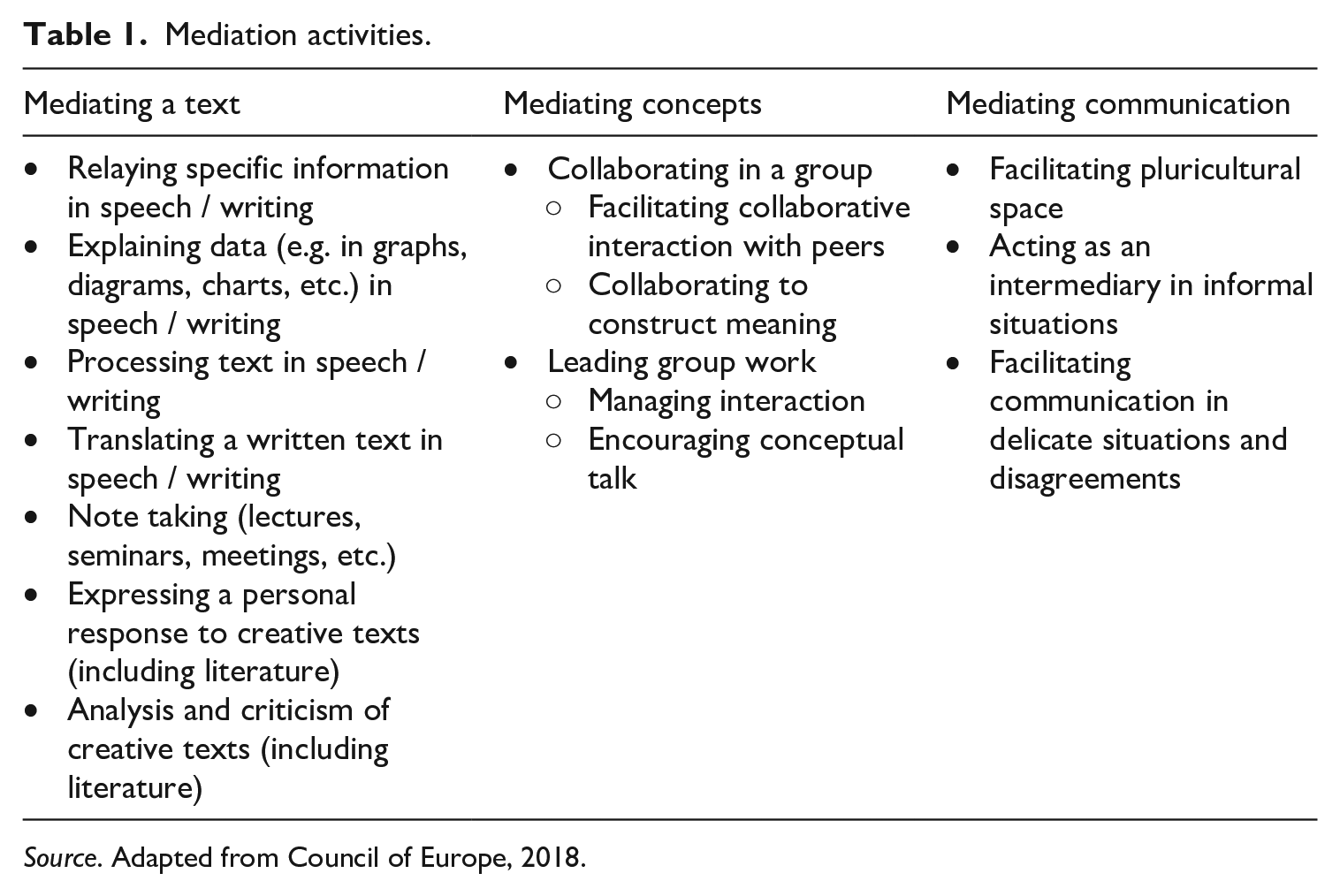
Source. Adapted from Council of Europe, 2018.
The CEFR Companion Volume presents both general scales for mediation tasks (p. 105) and specific scales for each type of mediation activity (pp. 109–127) presented in Table 1. Those general descriptors are representative examples of what users are able to do at different proficiency levels in general, and they are particularly relevant for the classroom in connection especially with small group and collaborative tasks, which can be organized in such a way that learners must share different input, explaining their information and working together in order to achieve a goal. The Council of Europe (2018, p. 34) envisions mediation beyond just cross-linguistic mediation, as aspects related to ‘communication and learning as well as social and cultural mediation’ are also taken in consideration. This new approach supports Martin-Beltrán et al.’s (2017) argument about diversity increasing in the 21st century classroom. We have a whole new area of research with the application of mediation tasks scales and Can-do descriptors in lesson planning and assessment.
The approach employed in this study adheres to the definition of linguistic mediation as presented in the CEFR Companion Volume, which goes beyond the cross-linguistic aspect of transmitting information in another language. Our view of mediation in language teaching includes communication and learning as well as social and cultural aspects with an emphasis on tasks that can be adapted to different proficiency levels, in consonance with Stathopoulou’s work (2013). Additionally, our approach also focuses on both inter-linguistic and intra-linguistic mediation. When inter-linguistic mediation occurs, two or more languages interact. However, in intra-linguistic mediation, only one language is used, but it includes different registers and varieties of that particular language.
4 Curriculum for advanced English in Bachillerato
In the year 2004, a new project based on bilingual education through CLIL was introduced in 26 state primary schools (ages 6–12 years) in the Community of Madrid. The main aim was that students could develop and improve their level of English as they would not only study English as a foreign language but also use it as a medium of instruction in other non-linguistic subject areas. Since 2010, bilingual programs have also been developed in high schools (Secondary Education -ESO-, ages 12–16 years, and Bachillerato, ages 16–18 years), so that students already placed in bilingual education in the primary grades could continue this trajectory in the next educational stages.
Students enrolled in the Bilingual Sections of Secondary schools must complete the Curriculum for Advanced English, which was established for each academic year from 2010 to 2014. However, as Halbach (2020) points out, this Curriculum followed a rather traditional approach, and in 2018 it was revised for a more effective teaching-learning process. The new version of the Curriculum for Advanced English proposes some changes, including the following: oral and written texts are set as the center to organize the rest of the curriculum; both communicative and learning strategies are given a more relevant role; there is a direct focus on the development of academic skills in connection with literary analysis and criticial thinking strategies, and teaching is based on linguistic functions rather than grammatical structures. Moreover, instead of a list of general requirements and orientations on how to put the curriculum into practice, the 2018 version offers specific criteria for the development of the different skills in all courses, as well as a list of suggested readings which adapt to the students’ level according to the CFER and to their own interests depending on their age.
In addition, there is yet another new axis present in this Curriculum for Advanced English for the last educational stage, Bachillerato, which was not contemplated in the previous edition: the concept of linguistic mediation. As mentioned above, Boletín Oficial de la Comunidad de Madrid (2018) established the Curriculum for Advanced English in Secondary Schools, making mediation one of the components to be included. According to the guidelines for Bachillerato contained in this document, language is perceived ‘as a tool for cultural, conceptual, textual and interpersonal mediation’ (p. 106). It explicitly states that once students attain an advanced level in English, they will also develop an ability to be more flexible when using different languages, and therefore develop their ability for linguistic mediation. Moreover, students will reinforce the relationships between the languages they speak, being able to transfer information from one to the other, hence further developing their metalinguistic awareness. Consequently, the Curriculum for Advanced English in Bachillerato emphasizes the importance of collaboration between teachers of different languages (in the subjects Spanish I and II and Second Foreign Language I and II).
Even though linguistic mediation as included in the CEFR Companion Volume covers different areas of communication, the Curriculum for Advanced English in Bachillerato specifically includes the following skills: 1) the ability to identify and explain cultural references of which the reader or interlocutor might not be aware; 2) the ability to tell/relate in English what has been listened to or read in a different language; 3) the ability to modify/reformulate a given text in order to adapt its characteristics to new communicative intentions or to a different audience; and 4) the ability to mediate between people when working in groups by listening attentively, asking for clarification, encouraging participation or formulating clear objectives.
III The study context
Taking into consideration the implementation of linguistic mediation in the curriculum for Advanced English in Bachillerato in the Community of Madrid, the lack of training that teachers have received in this area and the need of research in the field, this study is an attempt to investigate how mediation is currently being addressed and implemented in the classroom.
In order to do so, a questionnaire was designed, piloted and sent to those high schools in Madrid that teach the Curriculum for Advanced English in Bachillerato. As for the participants in the study, all the teachers that answered the questionnaire and participated in the focus group belong to the Bilingual Sections of the so-called ‘Proyecto CAM’, the bilingual project of the Community of Madrid, implemented in public schools, or to the UCETAM (Proyecto CAM) project, which shares the same characteristics but is implemented in semi-private schools.
IV Research
This study looked specifically at teachers’ attitudes and perceptions towards linguistic mediation in the Curriculum for Advanced English in Bachillerato in Madrid. The study was conducted in an attempt to provide an answer to the following research questions:
What is teachers’ understanding and awareness of linguistic mediation?
To what extent do teachers include mediation activities and strategies in their teaching?
What mediation activities are necessary/relevant for advanced English in Secondary School? How can they be adapted and adjusted for these students?
What do teachers need in order to include and better implement linguistic mediation in the classroom?
1 Method
Mediation as a process can be investigated by employing different methodological procedures such as verbal protocols, questionnaires or observations (Stathopoulou, 2015, p. 218). For this particular study, a mixed methods approach was employed, and both a questionnaire and a focus group were used for data collection. Researchers first analysed the CEFR Companion Volume and the Curriculum for Advanced English in Madrid Secondary Schools to align the two documents and identify common areas that would be the basis for the questionnaire and the focus group discussion.
Once the questionnaire was prepared, it was reviewed by members of the research group Language and Education at the Universidad de Alcalá, Spain, to which the authors belong. Revisions to the questionnaire were made based on the feedback received before it was piloted. Participants who answered the questionnaire were asked to participate in a follow-up focus group to further discuss their responses and to engage in a conversation about linguistic mediation with other teachers and researchers. Responses to the questionnaire were collected from September to October 2019, and the focus group took place in December 2019.
2 Participants
Due to the exploratory nature of the study, the researchers employed snowball and convenience sampling techniques. A total of 110 high schools in the Community of Madrid were contacted to recruit teachers for the study. However, the recruitment letter was intended only for teachers who teach Advanced English in the second year of Bachillerato. A total of 24 participants responded to the invitation and answered the questionnaire. This participation rate might seem low and non-significant. However, it is important to note that (1) Advanced English in Bachillerato is not being taught in all the institutions, and (2) there is usually only one certified teacher in each school who is responsible for teaching Advanced English. Therefore, teachers from 24 different institutions participated in the study, which represents approximately 22% of all the high schools in the Community of Madrid. Eight of the teachers who completed the questionnaire volunteered to participate in the focus group. They were invited to a one-hour session with researchers to discuss the topics from the questionnaire and to provide more information about their views on linguistic mediation. All the teachers who participated were volunteers, and therefore had a very high level of interest and motivation. It was our goal to have a second focus group with other teachers who showed interest but could not attend the first focus group. Unfortunately, time became an issue that did not allow us to do so.
3 Instruments
A Questionnaire
To examine the teachers’ perceptions on linguistic mediation, an online questionnaire was developed based on the mediation tasks and strategies listed in Table 1. The questions in the instrument (which is included in Appendix 1) were divided in three different sections:
Demographics: This part focused on aspects such as age, sex, years of teaching experience, type of school and kind of bilingual program in the school where they worked.
Perceptions and practice: This section included three open-ended questions in which participants had to explore the concept of linguistic mediation and reflect on their teaching practices to identify whether they take the concept into consideration when planning their lessons.
Mediation activities and strategies: This part consisted of 23 questions rated on a 5-point Likert scale (1 being not too relevant, and 5 being very relevant) where participants had to rate 18 mediation activities and 5 mediation strategies as they applied to the subject of English in Bachillerato. Each item corresponded to either one mediation activity or strategy, as defined in the CEFR Companion Volume (Council of Europe, 2018): ○ Textual mediation activities: 11 items ○ Conceptual mediation activities: 4 items ○ Communication mediation activities: 3 items ○ Mediation strategies: 5 items
B Focus group
After having analysed the results of the questionnaire, a focus group was conducted in order to gain a more insightful view of teachers’ perceptions about linguistic mediation. The focus group discussion was organized on the following topics:
The concept of linguistic mediation. Because of the disparity in the responses provided in the questionnaire and the high percentage of teachers who did not seem to know anything about it, a further discussion on the concept of linguistic mediation was proposed to the participants so that they could explain and expand on their ideas of what linguistic mediation means to them.
Teacher training. The questionnaire responses to what linguistic mediation means led us to the conclusion that teachers might need more training if they are to implement it in their lessons. In order to confirm this assumption, a discussion on teacher training was conducted in order to discover the extent to which this training is a real need.
Materials and activities. When asked about the activities related to linguistic mediation they used, teachers’ responses in the questionnaire varied, demonstrating different degrees of understanding. Since they did not know what linguistic mediation is, it was difficult for them to describe the materials and activities they used to work specifically on linguistic mediation; therefore, we considered it necessary to propose a discussion on the materials available and the type of activities they normally carried out in English class to analyse the extent to which they included linguistic mediation.
Group work. A discussion on collaborative tasks and group work was considered relevant for the focus group because of two reasons: first, group work was one of the most mentioned type of tasks that the respondents to the questionnaire considered as being related to linguistic mediation, so we wanted them to expand on this idea. Second, activities related to conceptual mediation were the ones considered as more useful to develop linguistic mediation.
Collaboration with other teachers. According to the Orden 2154/2010, de 20 de abril, ‘The Curriculum for Advanced English highlights the importance of working in close contact with other departments in the Bilingual Program by merging contents when possible into the daily English lesson plans, so as to guarantee an overall coherence.’ Because of this, some discussion on this aspect was considered necessary in order to confirm whether this collaboration is taking place and how it is being done.
Linguistic mediation and translation. Interestingly, the responses in the questionnaire showed that teachers considered activities involving translation as one of the less useful to deal with linguistic mediation in the class; therefore, this aspect was included to know more about the reasons why teachers were reluctant to use translation as a tool to develop linguistic mediation.
Cultural mediation. This aspect was included in the focus group so that the participants could expand on their work of cultural mediation in the classroom.
V Data analysis
Prior to the data collection process, the questionnaire was piloted, and a reliability analysis was carried out on the perceptions scale comprising the 23 scale items of the questionnaire, and Cronbach’s alpha indicated a high level of internal consistency (α = .87).
The data from the questionnaire responses were analysed using IBM© SPSS© Statistics Version 26 to find whether any significant patterns emerged in the data regarding the attitudes displayed by the participants. Responses to the questions from the questionnaire were numerically coded for statistical analysis. The coding scheme was conducted so that the higher scores represented higher levels of agreement. There were no negatively phrased items in the survey, so all the questions were coded following the same rule. The open-ended questions, which were answered in English, were coded and then analysed with the help of Nvivo 12. Due to the exploratory nature of this study, the analyses presented in this article are only descriptive, as all the participants share the same kind of program. Since no conclusions are being reached beyond the immediate data alone, inferential statistics are not being used in this particular study.
On the other hand, after having examined the responses to the questionnaire, the researchers decided to organize the discussion in the focus group around the topics that needed further analysis and clarification. Once the participants had given their consent, the conversation in the focus group was recorded and transcribed. The qualitative focus group responses were subsequently analysed to pull out contextualized examples of how participants perceive linguistic mediation in their classrooms. In addition, the focus group also helped to elucidate some of the responses in the questionnaire and to expand the teachers’ perception not only of linguistic mediation but also of the Curriculum for Advanced English in general.
VI Results and discussion
This section presents the results and discussion under each of the research questions that guided the study. Data from both the questionnaire and the focus group are used to answer the questions.
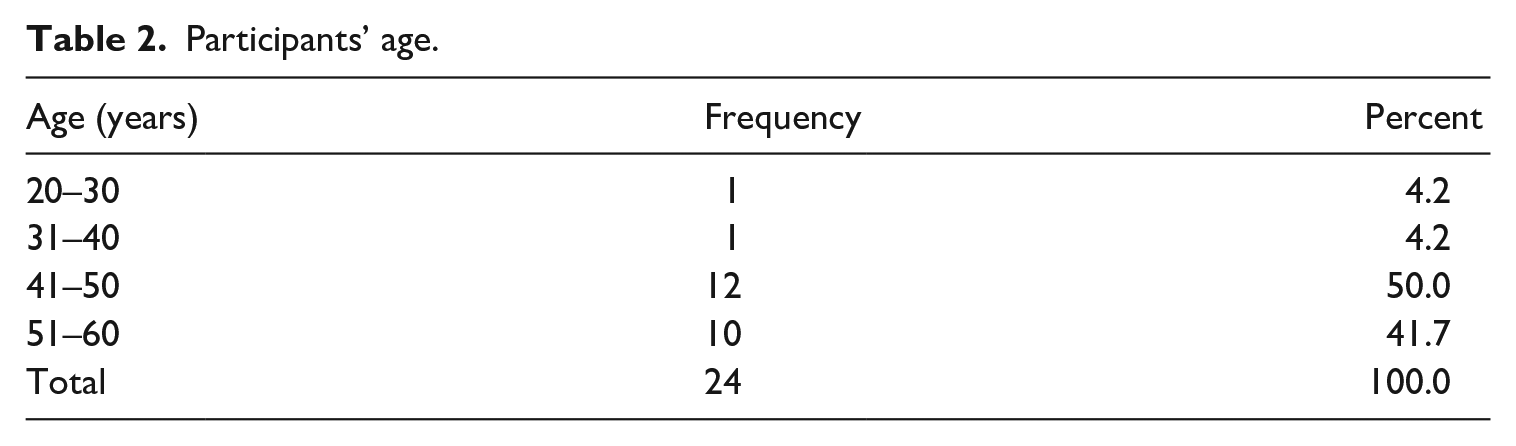
In terms of demographics, only four participants were male teachers (16.7%), while the majority (83.3%) were female teachers. Also, the majority of the participants ranged between 41–50 years (50%) and 51–60 years (41.7%), as shown in Table 2.
Participants’ age.
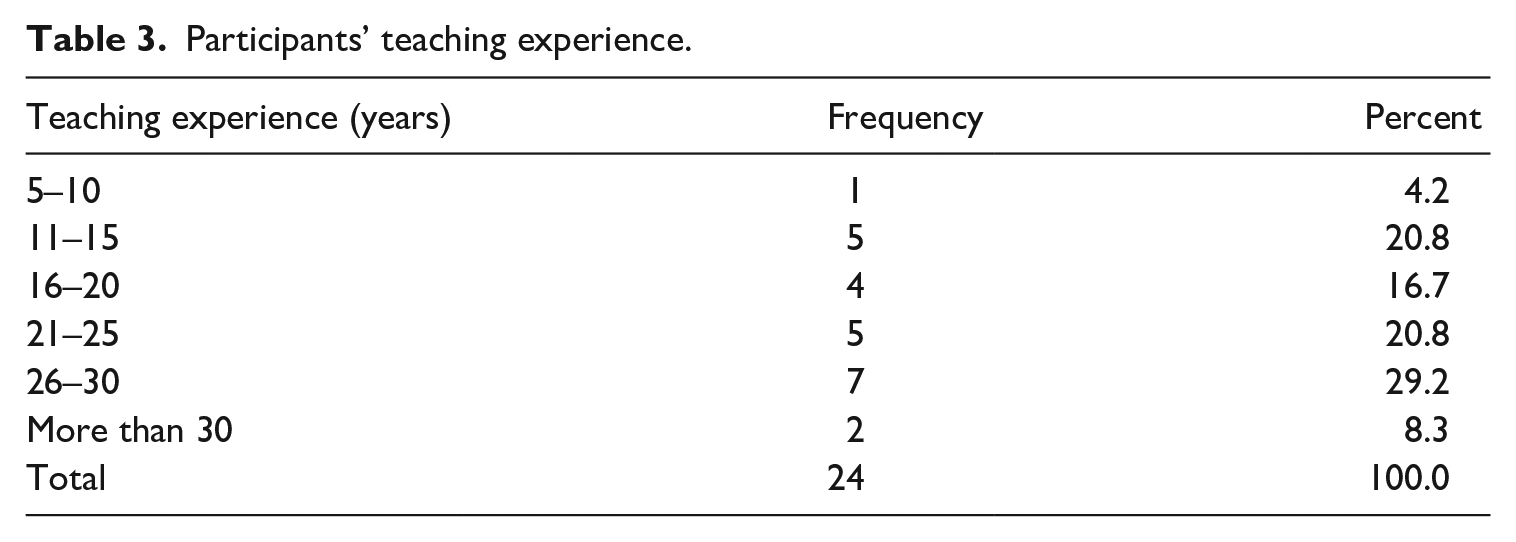
In regards to years of experience, there was a wider range of responses, as stated in Table 3. Only a small percentage of teachers indicated having between 5 to 10 years of teaching experience (4.2%) or being in the field for more than 30 years (8.3%). The majority of the participants had teaching experience that ranged from 11 to 30 years.
Participants’ teaching experience.
Research question 1
In the questionnaire, participants were asked directly ‘What do you understand by linguistic mediation?’ Five participants (21.7%) stated they did not know what linguistic mediation was by stating they were not familiar with the term, they were not sure or they just had no idea. The majority ventured to provide a definition, but their responses were somehow vague and ambiguous, such as ‘making sure that our students understand the contents in English, strategies and techniques’ (Participant 15), ‘using a foreign language with a purpose’ (Participant 19) or ‘the communication among people who speak a different language’ (Participant 21). A common pattern in some of the responses was the idea of helping, facilitating and providing support to others, as evidenced in the following responses:
Mediation makes me think of helping someone somehow. Since it’s linguistic mediation it means something useful for language learners. It must be trying to help students to be able to communicate with other speakers (Participant 1).
Help students communicate with other people (Participant 3).
Facilitating communication between two groups/individuals who can’t do it directly (Participant 16).
Facilitating communication between speakers (Participant 20).
Another concept present in the responses was the idea of problem solving, as stated by four participants in comments such as ‘helping people to communicate in order to solve problems’ (Participant 11) and ‘mediation always deals with solving problems; this time, the mediation deals with communication’ (Participant 18). Also, it is not uncommon to find responses where mediation is interpreted as the means to address cultural differences or to close the gap that exists between two languages.
One of the participants focused on the linguistic aspect of mediation, defining it as ‘a tool that helps translate from one language to another’ (Participant 4). However, it is interesting to see that others saw linguistic mediation as something more than just translating from one language to another. Although they were not aware of the concepts of inter and intra-linguistic mediation, those two ideas were present in their responses when they indicated ‘the ability to transmit the meaning of something that has been expressed in one language in another’ (Participant 9) (inter-linguistic mediation) or ‘extracting meaning from a body of information and conveying it in a different medium, e.g. from reading to speaking’ (Participant 12) (intra-linguistic mediation). All these concepts were further presented and discussed in the focus group.
When asked about linguistic mediation and its meaning, and in spite of the fact that all the participants in the focus group were supposed to be teaching a curriculum that includes this concept, they confirmed again that they had never heard about linguistic mediation before completing the questionnaire. Despite the significant lack of awareness they all shared, they commented again on some ideas that coincided with the responses given in the questionnaire: most of their comments included students helping each other in the different skills, the transfer of information from one means to another (visual to oral, oral to written, etc.), and the comparison of languages as well as using Spanish to help students understand linguistic concepts.
Research question 2
Like the first question, this question can also be answered with data from the open questions in the questionnaire and the focus group. In the questionnaire, teachers were asked the following: ‘Do you take into consideration the concept of mediation when planning activities for your students?’ With the exception of four participants who said that they consider mediation an aspect of their lesson planning, the rest of the participants indicated that they do not focus on linguistic mediation when planning their lessons, and if they did, they were not aware of it, as they did it ‘more intuitively than systematically’ (Participant 8). Those who claimed linguistic mediation to be part of their lessons explained that they mostly focus on cultural aspects, and one of them explicitly said that ‘it only comes to my mind as a cross-curricular concept, not one specifically designed to be dealt with in English lessons’ (Participant 23).
Most of the participants who stated they do not include linguistic mediation in their lessons added a comment to justify why. Some of those comments also serve as evidence to answer the first research question, which focused on their understanding of linguistic mediation. Answers such as ‘not really, but indirectly when we do group work, collaborative work, reaching agreement . . .’ (Participant 7) prove that there is some awareness of linguistic mediation. On the other hand, responses like ‘not much because they are really fluent in English’ (Participant 16) or ‘not really, because it is present all the time’ (Participant 21) demonstrate that there is some lack of knowledge. The fact that students are really fluent in English does not serve as a justification to not focus on mediation aspects, as there are descriptors for mediation tasks and strategies at levels C1 and C2 (Council of Europe, 2018), as we saw before.
As for the discussion in the focus group, although the participants had made clear that they did not know what linguistic mediation is, they were asked if they thought they were including it in any of the tasks they usually implemented with their students. Interestingly, from their answers it could be concluded that they had been developing some activities and proposing different tasks to their students that actually deal with or include linguistic mediation without being aware of it. Among them, the more popular ones were intra-linguistic tasks, this is, activities related with reading literature in English; summarizing, or group work tasks to complete different projects or to discuss a topic.
From this latter aspect, teachers went on to discuss how difficult it was for them to establish groups of work or collaborative tasks, as well as to keep students working together while using English at all times. A new debate on group work was initiated. It is worth mentioning here as part of the linguistic mediation strategies. According to the teachers, students need to be taught how to work collaboratively from an earlier age. From their experience, they can see how students do not like group work in general: they are very competitive and hardly ever collaborate with the other members of their groups. Normally, conflicts arise and because of that students tend to distribute the work they have to do and each of the students takes charge of one section of the group project; therefore, there is no collaboration, and they do not learn how to negotiate meaning either. Hence, group work ends up being pieces of individual work put together and mediation does not take place.
Research question 3
This question can be answered with data from the 23 Likert scale questions in the questionnaire, which can be complemented by the responses shared in the focus group. For the analysis, items were grouped in four categories: (1) textual mediation activities, (2) conceptual mediation activities, (3) communication mediation activities and (4) mediation strategies. Table 4 shows the mean, standard deviation, skewness and kurtosis levels for both the average score of mediation activities and strategies. The levels of skewness and kurtosis fall within the levels established by Bachman (2004, p. 74), which are ±2. Therefore, no assumption of normality is violated.
Descriptive statistics.
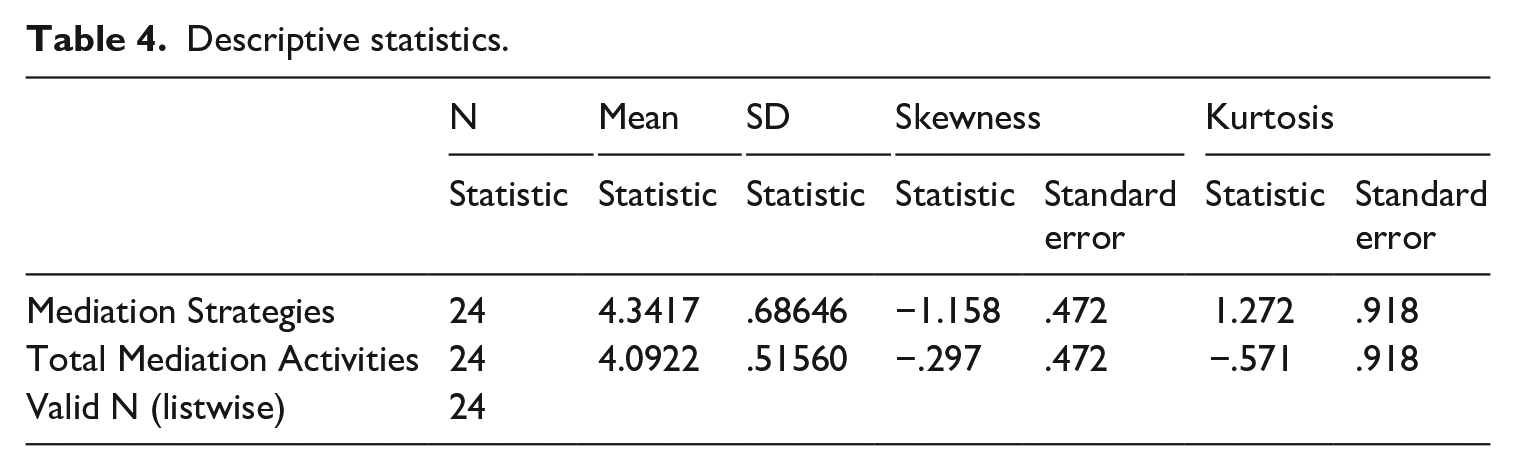
Table 4 can help us determine how relevant participants consider the activities and strategies as they applied to their subject in Bachillerato. Overall, there is a mean score of 4.34 for mediation strategies and 4.09 for mediation activities.
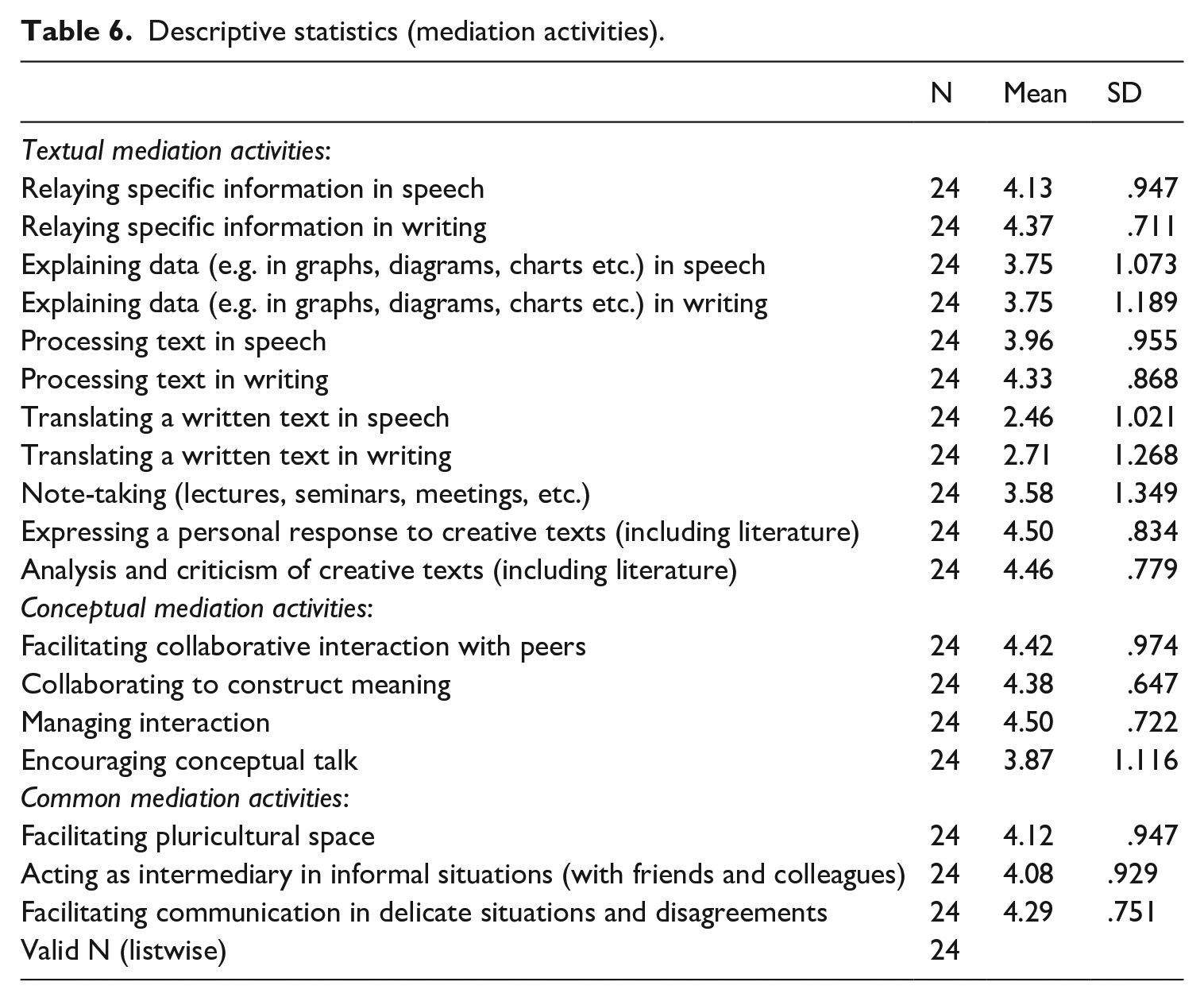
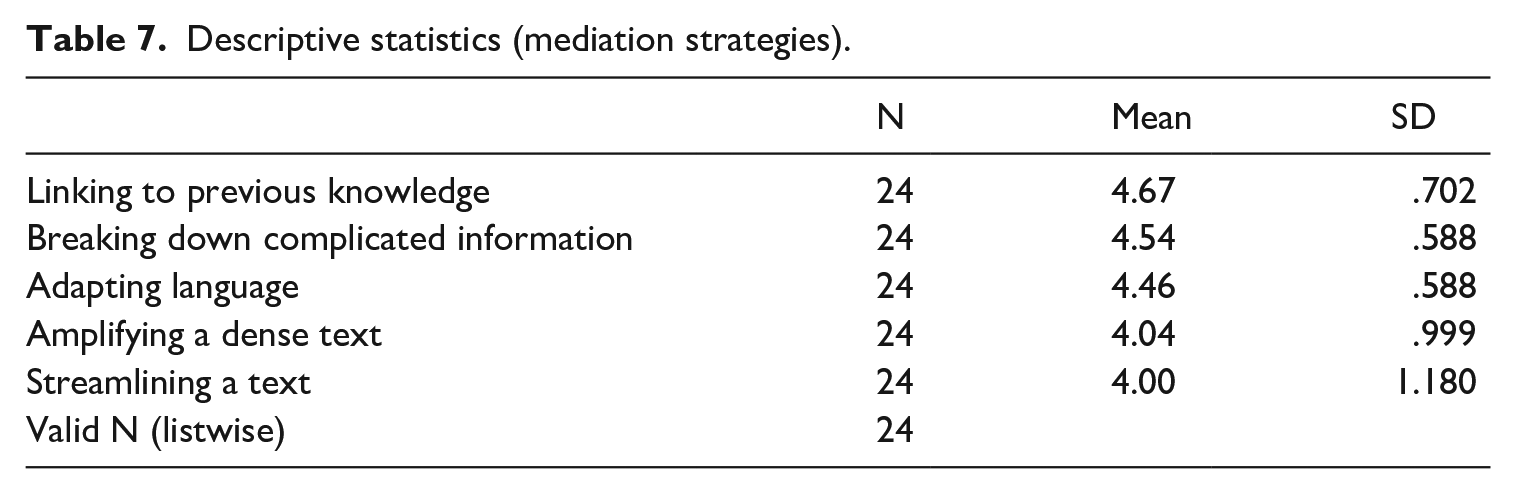
In order to fully answer the question, we must look at the data for (1) each activity subgroup (see Table 5) and (2) each activity and strategy in particular (see Tables 6 and 7).
Descriptive statistics (mediation activities by categories).

Descriptive statistics (mediation activities).
Descriptive statistics (mediation strategies).
Overall, as seen in Table 6, conceptual mediation activities are considered to be more relevant than textual and communication activities, with a mean score of 4.29. Those are the types of activities that involve collaboration, teamwork and group leadership. On the other hand, textual mediation activities are considered to be less relevant (mean score = 3.81), in particular ‘translating a written text in speech’ (mean score = 2.46) and ‘translating a written text in writing’ (mean score = 2.71). Based on these results and on the fact that the new curriculum mentions inter-linguistic mediation, translation was actually one of the topics chosen for the focus group.
In the discussion, the participants in the focus group were asked about inter-linguistic mediation and the use of translation as a strategy to develop linguistic mediation. To this respect, the participants confirmed they rarely use translation as an activity in the English class. All of them were reluctant to use Spanish in the class and, therefore, translation, for two main reasons: first, they stated they do not use it since, for them, ‘Spanish is forbidden in the bilingual program.’ Second, they think that if they only use English, students are exposed to more input in this language. According to their comments, behind these reasons is how difficult it is to obligate students to always use English in the class. Using a language that is not their mother tongue in a classroom context is something students should be used to but, from their experience, teachers find it quite difficult to divert students back to English if they are permitted to use Spanish at some point in the lesson; therefore, teachers tend to limit the use of other languages (mainly Spanish) to explain very specific grammatical or syntactical concepts by making comparisons between English and Spanish in order to make them more palatable for students.
Interestingly, some of the activities with a higher score correspond to textual mediation activities, such as expressing a personal response to creative texts (including literature), with a mean score of 4.5, and analysis and criticism of creative texts (including literature), with a mean score of 4.46. These two types of activities appear to reflect the nature of the content taught in Advanced English. As mentioned earlier, literature plays an important role in the Advanced English classes in Bachillerato, which is why teachers rated these activities higher than other textual mediation activities.
Other activities that received a high score include ‘managing interaction’ (mean score = 4.5) and ‘facilitating collaborative interaction with peers’ (mean score = 4.42). These two tasks correspond to conceptual mediation activities, and in particular activities identified by the CEFR Companion Volume for establishing conditions for effective work (Council of Europe, 2018, p. 117). The scores demonstrate the high expectations that teachers have for students in the program in terms of collaboration and leadership. More than focusing on tasks that require the use of language to convey meaning, their concern is primarily the use of English for interaction and effective group work.
In the first part of the questionnaire, teachers were asked directly ‘What activities do you do where linguistic mediation is used?’ They were asked to answer this question before they saw the list of activities and strategies for two reasons: (1) to check whether they were capable of identifying linguistic mediation tasks and (2) to prevent their answer from being influenced by the list they would rate. Several teachers indicated they did not know or could not identify any activities. Some of the teachers who answered the question gave a vague answer by indicating ‘activities related to the four skills’ or ‘generally speaking, especially those connected with Old English.’ A common answer that several participants mentioned was debates, dialogues and role plays. The focus group was used to further inquire about the types of activities used in class.
All the strategies received a score of 4 or higher (see Table 7), and the one with the highest score is ‘linking to previous knowledge’ (mean score = 4.67), which supports the extensive research on the importance of the activation of prior knowledge (Burgoyne, Whiteley & Hutchinson, 2013; Hasan, Gushendra & Yonantha, 2017; Liu, Gracy & Moscovitoch, 2017). The other two strategies that were perceived as being more relevant are ‘breaking down complicated information’ (mean score = 4.54) and ‘adapting language’ (mean score = 4.46). Students in the Advanced English program are exposed to many literary texts, which sometimes appear in their original version, as mentioned by the participant who discussed Old English in the questionnaire. Taking that into consideration, it may be presumed that there may be a need to simplify the language that is being used in the classroom.
Research question 4
After having analysed the responses to the questionnaire and the information gathered in the focus group, it can be concluded that there are three significant areas that teachers see as real needs when implementing linguistic mediation in their classrooms: teacher training, resources and materials, and lack of time and coordination.
With regard to teacher training, as explained in the analysis of the first research question, although linguistic mediation must be introduced in the lessons and teachers must provide their students with strategies to develop it, the participants were not aware that it was part of the curriculum. Additionally, they did not have knowledge of when it had become part of the curriculum nor of how it was intended to be implemented in the classroom. As all of the participants involved in the focus group commented, the supervisors and/or coordinators of the bilingual program at their schools had not informed them about such a change in legislation, and therefore they were not prepared to put it into practice with their students.
After making quite clear that they lacked an overall understanding of the tenets of linguistic mediation, all participants agreed that, using their words, ‘training is a real need’. According to their comments, in the same way that they had not received any type of information on linguistic mediation as a new part of the official curriculum, they had not been offered any kind of training from their high schools or the Community of Madrid. In their opinion, if the law requires that teachers implement linguistic mediation in their classrooms, adequate training on how to both implement and how to use it with students is of upmost importance.
In the same vein, and after having completed the questionnaire, most participants acknowledged a curiosity and desire to learn more about linguistic mediation, resulting in a subsequent search for information as well as in inquiring with colleagues about their knowledge on the subject. There were very few teachers who knew about linguistic mediation, and those who were aware of it had only heard about it as being used at some Official Language Schools (Escuelas Oficiales de Idiomas), but not as part of the Curriculum for Advanced English.
It is important to note that the need for more teacher training to implement the Curriculum for Advanced English included other aspects of teaching apart from linguistic mediation. Teachers also commented on their interest in training on the integration of different contents and topics in the classroom, as well as how to teach Academic English to their students, since it is something mandated by the Curriculum for Advanced English. In general, they showed their discomfort with the extra courses and academic training connected with what they should teach. As they accurately explained, in order to be a teacher of the Curriculum for Advanced English, there is no special training, but teachers are required to develop certain strategies and skills they have not been prepared for.
Similarly, when discussing the type of tasks that include linguistic mediation, participants in the focus group voiced again the need for more teacher training; this time, on how to organize cooperative learning structures. To them, if mediation has been included in the curriculum to prepare students better for their future lives and to teach them how to cooperate with other people, cultures and languages, this is a strategy that requires additional training, both for teachers and for students.
When asked about the specific materials they use to integrate linguistic mediation in their lessons, the participants had none to report. Furthermore, they criticized the fact that publishers have yet to adapt materials to the new law concerning linguistic mediation, as there was nothing in the textbooks or teacher’s guides discussing it and no strategies to implement it in class. Apart from that, they all agreed on the lack of specific materials for Curriculum for Advanced English in general: in their lessons, they are required to teach using the usual textbook, normally one with a higher level than those of the non-bilingual section, but with the same structure, this is, the usual communicative textbook based mainly on grammar of which students have grown fatigued. In order to include literature, teachers generally include high level readings or unabridged books and use other reference books to teach literature in English.
Currently, the Curriculum for Advanced English in Orden 2154/2010, de 20 de abril acknowledges that ‘there is no single textbook that will cater to all of the course requirements’ and recommends the use of ‘supplementary materials or anthologies’, which reflects the comments in the focus group. As the participants explained, teachers of the Curriculum for Advanced English normally create their own material or share it informally with other teachers if they intend to propose something new and different from the usual old textbook pattern, as a means of introduction to different text genres, topics or projects related with other subjects, or Academic English. However, this normally results in an unsystematic and spontaneous way of presenting new materials to students, because of the lack of time to prepare these new resources due to the teachers’ already busy schedules, as well as the grammar-related content, projects and activities they must cover with their students during the course.
This reality takes us to the third need: apart from training and materials, teachers in the focus group agreed on the lack of time and coordination to prepare the contents for the English subject. According to the Orden 154/2010, de 20 de abril, de la Consejería de Educación, ‘The Curriculum for Advanced English highlights the importance of working in close contact with other departments in the Bilingual Program by merging contents when possible into the daily English lesson plans, so as to guarantee an overall coherence.’ It also encourages cross-curricular projects, mainly with Spanish Language, Geography, History and Arts teachers but, when asked, the participants in the focus group showed a different reality which made this recommendation impossible to implement. According to them, it would be excellent if this collaboration could be established; however, they stated how difficult it is to work with teachers from other areas because of two main reasons: the different syllabus designs in their subjects and the lack of time and organization. In their opinion, if they want to make this collaboration possible, more meetings and planning are needed.
In their experience, teachers of the Curriculum for Advanced English do not meet with teachers of other subject areas that are conducted in English. For them, this could be extremely helpful because they could help each other and create projects that deal with English and other subjects simultaneously. As they see it, this could be more meaningful for students, but it would have to involve changes in the syllabus design of the English subject and the other content subjects, which is currently impossible given the way the curriculum is organized.
Despite this, all of them acknowledge having participated in informal exchange of materials with teachers of other areas or to have collaborated in specific tasks when some motivated teacher has seen that content intersects in two subjects. However, they could foresee difficulty in collaboration and planning, insisting on the need for open-minded headmasters or head of departments, the creation of cross-curricular projects or tasks that can be prepared at the beginning of the course, and more time to meet and share ideas with other teachers.
VII Conclusions
The present study is an attempt to investigate how the concept of linguistic mediation is being addressed and implemented in Madrid Secondary Schools after the revision of the Curriculum for Advanced English, which establishes linguistic mediation as one of the components to be taught. The main findings of the study are twofold: on the one hand, the results highlight that there are critical ways in which educational administrations and the official curriculum design requirements restrain teachers’ capacity to implement strategies to develop students’ linguistic mediation skills. On the other hand, the findings have uncovered important assumptions specific to the inclusion of linguistic mediation in the teaching-learning process.
Regarding the former, the results show that the teachers who participated in the study both responding to the questionnaire and joining the focus group are not entirely familiar with the concept of linguistic mediation. Since it is mandatory in the curriculum, it is evident that they desire more knowledge on the topic in order to support students to be prepared to strategically use mediation tasks in their English learning process. However, teachers must undergo training in order to (1) fully understand the importance of linguistic mediation for language learners, and (2) implement activities that foster students’ acquisition of linguistic mediation. None of the teachers in the study opposed to the implementation of linguistic mediation, which was very well accepted, but their lack of a sound knowledge and understanding of the processes involved by mediation in the foreign language classroom (when theoretically it should already be taught) serves as evidence that there is some area for improvement that involves the educational administration.
In the same vein, teachers also pointed to additional challenges faced in incorporating linguistic mediation in their syllabus design. While the official curriculum encourages cross-curricular projects and cooperation with teachers of other subjects, participants involved in the study have noted the unfeasibility of putting this into practice because of the way the official curriculum is organized, mainly due to the compartmentalization of the different subjects and the immovable contents of their teaching programs. These results hence indicate that teachers acknowledge the importance of curriculum revisions and understand that programs must adapt to the needs of the students in the 21st century. However, there should be more transparency when decisions are being made, especially when those decisions involve teachers and students.
As for the concept of linguistic mediation and its implementation, this study has also raised some awareness amongst teachers, who shared their concern in terms of the inclusion of mediation in their lessons. From their responses, it can be concluded that they are already implementing some strategies and developing activities with their students that are connected to linguistic mediation, but they are doing it in many cases unknowingly or unconsciously. However, when they are presented with different mediation strategies, and asked about their usefulness, teachers signal conceptual mediation tasks such as group and collaborative work as the most helpful to develop their students’ mediation skills. Apart from that, they also make reference to textual mediation strategies, especially the ones related to the expression of a personal response to literary analysis and criticism, because of the content that is generally studied in Advanced English. Conversely, most teachers neglect inter-linguistic mediation strategies as the use of translation as a result of more traditional (and negative) views on using the students’ first language in bilingual lessons.
When it comes to the incorporation of real mediation strategies to their teaching practice, teachers reinforce once more the challenges they face. Among others, they emphasize the need for better coordination with supervisors, the lack of time due to other duties they must perform at school, and the overload of content in the Advanced Curriculum subject as the most salient hindrances for the implementation of mediation strategies in their lessons. Despite this, they attempt to introduce new strategies and organize small projects with other teachers for specific units of work.
As in any study, this one comes with some limitations. The number of participants is limited; thus, the results should be considered carefully. In the future, getting responses from a wider number of participants working in different program types could help us reach more conclusive evidence to support our arguments. Therefore, this study could be replicated and data from private schools can be gathered to make comparative studies. Moreover, some of the questions in the questionnaire appeared to be somehow vague. The question ‘Do you take into consideration the concept of mediation when planning activities for your students?’ was unclear. Mediation tasks are actually activities, and that is not clear in the question as it was posed. Therefore, an analysis of the open-ended questions is needed in order to obtain more valid and conclusive data.
In conclusion, although the scope of this investigation is limited, this research study can be seen as the beginning of a series of studies addressing linguistic mediation from different angles, including teacher training for mediation, use of mediation activities and strategies in the classroom, and correlation studies with multicultural understanding, social interaction, academic performance and language proficiency.
Footnotes
Appendix 1
Questionnaire (adapted from the online version).
Acknowledgements
This study is part of the project ‘Desarrollo de destrezas de literacidad en la etapa de Enseñanza Secundaria Oligatoria en centros de la Comunidad Autónoma de Madrid: studio de la situación actual’ (CCG2018/HUM-006), funded by the Universidad de Alcalá, Spain. We hereby would like to express our gratitude to the research group Language and Education at the Universidad de Alcalá, Spain, for supporting this study.
Funding
The author(s) received no financial support for the research, authorship, and/or publication of this article.
