



Abstract
Language teaching is a highly emotional profession that can affect the teachers’ well-being and learners’ achievement. However, studies have yet to explore the potential of positive psychology interventions and artificial intelligence (AI) tools to promote the psycho-emotional aspects of second language (L2) teachers and learners. Further, studies regarding the effectiveness of AI in promoting the learners’ language skills could have been expansive. Responding to these gaps, researchers chose ChatGPT, an AI-powered chatbot capable of generating natural and coherent texts, as a potential tool to foster positive emotions and interactions between Iranian English language teachers (n = 12) and learners (n = 48) in the L2 writing context. We operationalized ChatGPT in a three-phased writing instruction protocol (CGWIP): (1) a planning phase, where teachers used ChatGPT to brainstorm ideas and generate outlines for each session; (2) an instruction phase, where teachers used ChatGPT to engage the learners in writing process, analyse and reflect on their drafts, and (3) an assessment phase, where teachers used ChatGPT to simulate IELTS writing exam and provided detailed and constructive feedback to the learners. We further tested the effectiveness of CGWIP on teachers’ self-efficacy and learners’ writing skills before and after a 10-week instruction program. The Independent Samples t-test results showed that CGWIP significantly enhanced teachers’ self-efficacy compared to the control group. Also, the results of One Way ANCOVA revealed that CGWIP significantly improved learners’ writing skills and that these effects persisted over time. The study implied that the protocol can nurture teachers’ efficiency by helping them in various aspects of L2 writing instruction, including brainstorming, revising, providing feedback, and assessment, which in turn, improves learners’ writing skills.
I Introduction
Psycho-emotional fluctuations of language teachers have been the focus of recent studies, which mainly adopt positive psychology as the framework that enables researchers to examine one’s emotional continuum, identify the strengths, recognize the stressors, and help individuals overcome the barriers that hinder happiness and mental health (Csikszentmihalyi, 2014; Snyder & Lopez, 2001). Existing results confirm the emotional intensity of the language teaching profession and illustrate the presence of numerous stressors that expose teachers to anxiety, distress, burnout, and well-being threats (Wang et al., 2021). Studies further indicate that teachers’ negative attitudes toward themselves and their job status can adversely affect students’ learning outcomes and feelings (Moskowitz & Dewaele, 2021). Scholars have tried to test and suggest strategies to help teachers remain immune from various well-being-threatening factors. This goal has been considered the ultimate aim of educational systems and would positively influence learners’ feelings and achievements (MacIntyre et al., 2019; Mercer, 2021).
One possible solution for language teachers’ well-being issues might be traceable in the realm of artificial intelligence (AI), the application and effectiveness of which are yet to be discussed in the second language (L2) writing instruction context. Although some studies have explored the potential of AI tools to enhance teachers’ teaching effectiveness and efficiency (e.g. Fyfe, 2022; Opara et al., 2023; Sallam, 2023), few have examined the impact of AI tools on teachers’ psycho-emotional aspects, such as self-efficacy, motivation, and stress (e.g. Ausat et al., 2023; H.S. Kim et al., 2021; Lin & Mubarok, 2021). The introduction of ChatGPT as an interactive AI empowered with language-processing capacities in November 2022 opened a window to new and unexplored theoretical, epistemological, and practical discourses (Jiao et al., 2023).
AI-driven mechanisms can offer flexibility and possibilities that help teachers reduce their cognitive load and stress by saving time and energy and offering various suggestions to teachers’ needs. Further, there have been discussions about the stress-reducing and well-being-enhancing functions of AI-based protocols, along with debates concerning the negative aspects of overreliance on AIs (Gottlieb et al., 2023). Also, AI-based protocols have potential drawbacks, such as creating more problems for teachers who overuse them or lack digital literacy and confusing learners in their language learning process. Moreover, leaving the ever-updating AI-based mechanisms uncontrolled in any educational discourse might demoralize learning and negatively influence the essence of human interactions by replacing the human psyche with AI processors. Recently, Fyfe (2022) investigated how teachers used an AI tool to design personalized learning activities for their students and found that it increased their confidence and satisfaction. Opara et al. (2023) explored how teachers used an AI tool to provide adaptive feedback to their students and found that the tool improved teachers’ feedback quality and timeliness. Sallam (2023) examined how teachers adopted an AI tool to facilitate data-driven decision-making in their classrooms and found that it enhanced teachers’ instructional practices and outcomes. (Fyfe, 2022; Opara et al., 2023; Sallam, 2023). Thus, finding ways to outline and control AI usage within educational circles in general and L2 classrooms, in particular, becomes a noteworthy research trend that is yet to flourish in terms of theoretical and empirical evidence.
Consequently, researchers of the present study attempted to bridge the gap between AI-based mechanisms and language education territory to see how such emerging technologies can help language teachers and learners. Specifically, we focused on the effectiveness of an AI-supported writing instruction protocol and its impact on language learners’ writing skills and teachers’ self-efficacy (TSE). TSE is the translation of Bandura’s (1997, 2011) conceptualization of self-efficacy within teaching boundaries and is among the indicators of teachers’ well-being (von Muenchhausen et al., 2021; Xiyun et al., 2022). Self-efficacious teachers claim they can effectively perform specific tasks, deal with teaching challenges, and solve students’ problems (Fathi et al., 2021; Goddard & Kim, 2018). However, most of the studies on psycho-emotional trends of L2 education have been correlational, meaning that they only examined the associations between variables without establishing causal relationships, and practical solutions to teachers’ problems could have been more expansive. Moreover, the utility of AIs in L2 writing instruction has not been sufficiently explored, especially in relation to teachers’ psycho-emotional aspects. The rationale behind discussing the interconnectedness of teachers’ self-efficacy and learners’ writing skills lies in the premise that writing is one of the most complex and challenging skills in L2 learning, as it requires learners to master various linguistic, cognitive, and socio-cultural aspects of the target language (Hyland, 2003). Moreover, learners’ achievements in L2 writing are among the indicators of teachers’ sense of efficacy (Mehmood, 2019). Additionally, writing instruction is a demanding and stressful task for L2 teachers, who need to provide practical and appropriate guidance, feedback, and support to their students (Ferris, 2014). Hence, studies have focused on writing as a context to examine how teachers’ self-efficacy influences their teaching practices and outcomes and their students’ writing performance and development. However, the evidence supporting this interplay in the L2 context has remained limited. Addressing these gaps, we focused on the impact of ChatGPT on the English as a foreign language (EFL) teachers’ self-efficacy and the learners’ writing skills.
1 Review of literature
This study investigates the impact of an AI-based writing instruction protocol on EFL teachers’ self-efficacy and learners’ writing skill. In this section, we review the literature on three main concepts that inform our study: positive psychology (PP) teacher self- efficacy (TSE) and artificial intelligence (AI) and education. We also present the research questions that guide our inquiry.
2 Positive psychology
Relying on positive psychology (PP), scholars have focused on self-efficacy (SE) and similar constructs. PP is a branch of psychology that studies the positive aspects of human life, such as happiness, well-being, resilience, and strengths (Seligman & Csikszentmihalyi, 2000). Positive psychology has been applied to various fields, including education, where it aims to enhance the quality of teaching and learning by fostering positive emotions, attitudes, and behaviors among teachers and students (Wang et al., 2021). In the context of language teaching, positive psychology can help teachers cope with the emotional challenges and demands of their profession, such as stress, burnout, anxiety, and low motivation, and improve their well-being and performance (Dewaele et al., 2018; Mercer & Kostoulas, 2018). According to PP, individuals are exposed to countless constructive and detrimental thoughts and feelings, controlling of which requires awareness, tolerance, and skills (Seligman & Csikszentmihalyi, 2000). Accordingly, the proponents of PP believe that individuals can flourish by relying on self-efficacy and similar strengths and nurture happiness and well-being by altering the adverse effects of stressors and tensions (Csikszentmihalyi, 2014; Snyder & Lopez, 2001). Therefore, a significant trend within PP-laden studies has been the researchers’ trial to identify, test, and apply coping strategies and skills to help people in different human circles.
3 Teacher self-efficacy (TSE)
Self-efficacy (SE) is among the factors discussed within PP boundaries. Teachers’ characteristics that make them capable of influencing their students’ behavior and academic success are called Teacher Self-Efficacy (TSE), which can be traced within the domain of Social-Cognitive Theory (Bandura, 1997, 2011). The theory asserts that individuals are capable of motivating and self-regulating themselves to gain control over how they think, feel, and behave throughout their lives (Bandura, 2011). In Bandura’s elaborations, SE bridges the gap between having the capability and knowledge to perform a task and the actual doing phase. Fortunately, addressing TSE is common in SLA studies. Mastery experience, the most effective source of SE (Bandura, 2006), was the topic of the research conducted by Malmberg et al. (2014), which concluded that TSE predicts students’ achievement. Their findings showed that teachers’ experience and SE are possible sources of student engagement and learning achievement. According to Jerusalem and Schwarzer (1992), individuals with high levels of SE have more positive expectations and can handle stressors more efficiently, while those who lack a sufficient level of SE imagine themselves as incapable of coping with anxiety and depression.
TSE is an essential factor that influences teachers’ well-being, motivation, commitment, and effectiveness, as well as students’ achievement, engagement, and satisfaction (L.E. Kim & Burić, 2020; Pfitzner-Eden, 2016; Zee & Koomen, 2016). TSE can be measured by various instruments, such as the Teachers’ Sense of Efficacy Scale (TSES) developed by Tschannen-Moran and Hoy (2001), which assesses three dimensions of TSE: instructional strategies, classroom management, and student engagement. Various factors can also impact TSE, such as teachers’ characteristics, experience, professional development, school environment, and student feedback (Tschannen-Moran & Hoy, 2001). Self-efficacious teachers use more enthusiasm in their teaching (Hoy & Spero, 2005), adopt creative teaching methods (Thurlings et al., 2015), and sustain their perseverance in unsupportive situations (Milner & Hoy, 2003). Cultivating self-efficacy leads to less burnout experience (Skaalvik & Skaalvik, 2010) and more commitment to teaching (Coladarci, 1992) and organization (Han & Wang, 2021). The interconnectedness of TSE with professional development (Malmir & Mohammadi, 2018), instructional quality, classroom management, nurturing a supportive classroom climate (Burić & Kim, 2020), job satisfaction (Demir, 2018), and learners’ motivation (Mojavezi & Tamiz, 2012) is also evidenced. Recently, Shao (2023) verified the correlation between L2 teachers’ self-efficacy and grit by analysing the sample obtained from 553 Chinese EFL teachers. Results indicated that the more self-efficacious the teachers, the grittier they become. In other words, teachers who perceive themselves as self-efficacious can maintain their interest and effort toward long-term goals, implying that they are more prone to provide constructive feedback to their students and supervise their progress for extended periods. The idea supports Klusmann et al. (2016) and Ma et al. (2018), who indicated that TSE contributes to the learners’ achievements.
Using structural equation modeling, Heng and Chu (2023) studied the interplay of self-efficacy, resilience, and recovery among 512 EFL teachers, and their results implied that these factors are predictors of teachers’ work engagement, implying that self-efficacious teachers invest more in their students and are more committed to their learners’ progress. Their findings were supported by Mitchell et al.’s (2023) scoping review of 50 articles published from 1984 to 2021 focusing on self-efficacy and writing skills. The results showed that teachers can significantly contribute to the learners’ writing achievement by maintaining a positive attitude, improving the instructional climate, and providing constructive feedback. As noted earlier, students’ achievements in language skills predict teachers’ self-efficacy (Mehmood, 2019) since L2 writing is among the highly complex and challenging skills in L2 learning (Hyland, 2003). Thus, empowering teachers with skills that increase their confidence and competence in L2 writing instruction can benefit teachers and learners simultaneously (Ferris, 2014); however, such claims could have been supported by more evidence.
4 Artificial intelligence, ChatGPT, and education
Artificial Intelligence (AI) has rapidly revolutionized education (Lund et al., 2023). The emergence of ChatGPT as an AI mechanism in 2022 provided an array of controversial debates, the discussions of which are yet to appear in educational contexts (Jiao et al., 2023; Lo, 2023; Ray, 2023). ChatGPT is an AI-powered conversational platform capable of natural language processing and machine learning algorithms. ChatGPT can comprehend natural, slang, and idiomatic language and provide coherent and contextually appropriate responses to its users. User-friendliness, flexibility, versatility, and language processing capabilities of ChatGPT were among the reasons why the platform absorbed over 1 million users in 5 days after its launch in November 2022 (Gottlieb et al., 2023; Ray, 2023). Introducing itself, ChatGPT indicates that its functionality ranges from answering questions, offering suggestions, and assisting people with their language-related needs to translation, writing assistance, language learning support, and idea generation.
The number of AI-based platforms introduced daily surpasses the number of AI-based studies, meaning we are about to embrace an era wherein technology precedes pedagogy (Al-Kadi, 2018; Chapelle, 2003; Opara et al., 2023). Early investigations suggest that ChatGPT and similar AIs can play four roles in educational contexts: material suppliers, interlocutors, assessors, and assistants (Jeon & Lee, 2023). Creating written content, translating, generating study documents, and disseminating knowledge are possible benefits of AI usage (Gottlieb et al., 2023). Contextualizing ChatGPT in healthcare education, Sallam (2023) noted that AI boosts critical thinking and personalized learning while saving time and money. Notably, inaccurate data generation, misinterpretations of human writings, misplaced confidence, and plagiarism have been mentioned as possible threatening areas, which triggered some scholars to highlight the idea that AI-powered chatbots cannot be considered a substitute for teachers (Ausat et al., 2023; Gottlieb et al., 2023). The gap between AI and education in either scenario requires more caution and in-depth analyses.
Studies focusing on L2 writing show that using AI tools in L2 classrooms benefits students in various ways, such as providing personalized and adaptive feedback, enhancing writing quality and accuracy, facilitating self-regulation and metacognition, and increasing motivation and engagement (Ali et al., 2023; Gayed et al., 2022; Kohnke et al., 2023; Lin & Mubarok, 2021). One of the recent and promising AI tools that can be used for L2 writing instruction is ChatGPT, which is a conversational agent powered by a deep neural network model called Generative Pre-trained Transformer (GPT) (Ray, 2023). ChatGPT can generate natural and coherent texts based on input and context and interact with users in a human-like manner. ChatGPT has been used for various purposes, such as creating stories, poems, jokes, code, and lyrics, answering questions, giving advice, and providing information (Ray, 2023). However, the application and effectiveness of ChatGPT for L2 writing instruction have yet to be fully addressed in the literature. As Kohnke et al. (2023) discussed, AI-powered chatbots can provide rich input, motivation, and interactive feedback to learners. The motivational aspects of ChatGPT in language learning were further explored by Ali et al. (2023), who found that using AI-based instructions motivates learners and increases their reading and writing skills. Likewise, Purcell et al. (2013) surveyed 2,462 educators about the impact of AI-based technologies on students’ written output. The results of the mixed-methods study showed that newer digital writing platforms like Google Docs or Grammarly are likely transformative to the writing process due to their versatility and flexibility. Reviewing the literature on digital writing tools, Perry (2021) suggested that digital and AI-powered mechanisms can help students if applied in a well-structured program. Recently, Gayed et al. (2022) investigated an AI named AI KAKU to check its utility in reducing cognitive barriers of EFL learners. Results pinpointed that AI is a potentially helpful English learning assistant and supported previous studies where the researchers reported the positive influence of AI-based learning on L2 learners’ speaking skills (H.S. Kim et al., 2021; Lin & Mubarok, 2021). Recently, Ghafouri (2024) evidenced the impact of a four-staged ChatGPT rapport-building protocol on teacher–student rapport and L2 grit among six EFL teachers and 30 learners. The results showed that the protocol enhances learners’ effort and interest in language learning over time (i.e. grit) by helping the teachers cultivate an emotionally supportive learning context embellished by shared understanding, care, trust, and love (i.e. rapport).
The link between ChatGPT-based instruction and the psycho-emotional fluctuations of L2 teachers and learners’ achievement is missing from the literature. In other words, the existing literature has not addressed the impact of ChatGPT on teachers’ psycho-emotional factors and the learners’ L2 skills in general and writing in particular (Derakhshan et al., 2023; Jiao et al., 2023; Klímová & Ibna Seraj, 2023; Lo, 2023; Ray, 2023). Current literature justifies using AIs other than ChatGPT, such as AI KAKU, Duolingo, and Grammarly, implying that including ChatGPT in the instructional plans at L2 classrooms and curricular levels requires more evidence and reflection. Further, none of the available studies provided an integrated instructional module to operationalize and include ChatGPT usage in L2 writing instruction. Addressing these gaps, we aimed to test the effectiveness of an AI-based writing instruction protocol powered by ChatGPT on EFL learners’ writing skills to check whether the AI-based instruction and the increase or decrease of the learners’ scores have any influence on EFL teachers’ self-efficacy which is directly and indirectly linked to various well-being-related factors. In this vein, the following research questions are posed:
Research question 1: How does ChatGPT-based writing instruction influence EFL teachers’ self-efficacy?
Research question 2: How does ChatGPT-based writing instruction influence EFL learners’ writing skills?
Research question 3: How does ChatGPT-based writing instruction influence the retention of EFL learners’ writing skills?
II Method
1 Teacher participants
Twelve Iranian EFL teachers (male = 6; female = 6) with ages ranging from 24 to 32 years and teaching experience of 5 to 8 years participated in this study. We contacted the teachers through Telegram, a cloud-based online messaging platform, and informed them about the research objectives. The sample size of the teacher participants was determined based on the recommendations of Cohen (1992) for Analysis of Covariance (ANCOVA), who suggested that a minimum of six participants per group is required to achieve a power of 0.80 and an alpha of 0.05 for a medium effect size.
2 Learner participants
Each teacher had online classes for about 25 to 40 students every week. For the research purpose, we asked them to select and group four of their intermediate-level students willing to participate in the online classes for 10 consecutive weeks dedicated to writing skills. The students’ sample consisted of 48 learners (males = 19; females = 29) aged between 20 and 27 years. All 48 learners were classified as intermediate level based on the results of the Oxford Placement Test (Allan, 2004). The teachers and learners were randomly assigned to the control (n = 6) and experimental groups (n = 6). The students of teachers involved in the experimental group were also classified in the learners’ experimental group (n = 24), and the remaining learners were assigned to the control group (n = 24).
III Instruments
1 Oxford placement test (OPT)
To verify the participants’ proficiency level, we asked the teachers to test them with OPT, which is a highly reliable test and is validated in diverse contexts and settings through various studies and is considered a widely accepted and recognized test in the realm of language assessment (Allan, 2004). The test comprises 60 questions on a scale of 0 to 120 and measures the students’ general English proficiency. Accordingly, the results confirmed that the students were at intermediate level (B1, CEFR).
2 IELTS writing tasks
We selected a combination of randomly selected writing tasks from the Complete IELTS series (Brook-Hart & Jakeman, 2012a, 2012b) to be used during the 10-week program. These books are the first and second installments of Cambridge’s Complete IELTS series, which prepare the candidates for band scores ranging from 1 to 6.5 and offer an array of standardized English proficiency tasks and tests that simulate the IELTS exam situation. Since the writing section of IELTS can be divided into academic and general modules, we only focused on general writing proficiency during instruction and assessment.
3 IELTS writing task checklist
Learners’ writing performance was tested based on the 9-band IELTS writing descriptors. The checklist assesses the students’ writing by considering task achievement, cohesion and coherence, lexical resource, and grammatical range and accuracy on a band score of 1 to 9. Each band score provides a detailed explanation of criteria and helps the instructors to assess their learners. Since the checklist yields clearly defined and determined descriptions of the learners’ performance in writing, it offers an objective and systematic manner of assessment, which, in turn, increases the credibility and generalizability of the interpretations based upon it.
4 Teachers’ self-efficacy scale (TSES)
Schwarzer et al.’s (1999) teachers’ self-efficacy scale (TSES) was used to target the teachers’ attitudes towards four subcomponents of self-efficacy including job accomplishment, skill development, social interaction with students, and coping with stress through 10 items aligned on a four-point Liker ranging from 1 (not at all) to 4 (exactly true). The TSES has been validated and used in various studies on teacher self-efficacy (e.g. Burić & Kim, 2020) and offers a sound description of teachers’ intra- and interpersonal insights towards SE.
5 ChatGPT-based writing instruction protocol (CGWIP)
Figure 1 illustrates the intervention of the present study, which relies on ChatGPT (https://openai.com/chatgpt). Notably, ChatGPT-3.5 was used in the present study. Before the intervention phase, we instructed the teachers of the experimental group about how to use ChatGPT in a one-hour online session. Initially, we provided them with the premium accounts of the chatbot so that they could access it before, during, and after their classes. The user-friendliness of the chatbot provides a simple and pleasant experience for its users. Teachers were informed about the chatbot and learned that it could help them for various purposes, ranging from instructional tips to creating stories, poems, jokes, code, and lyrics, as well as answering questions, giving advice, and providing information (Ray, 2023). Accordingly, we operationalized ChatGPT inclusion in L2 classrooms by posing the three-phased ChatGPT-based writing instruction protocol (CGWIP), where the chatbot renders planning, instruction, and assessment throughout the course. Teachers of the experimental group were instructed about each of the aspects in detail.
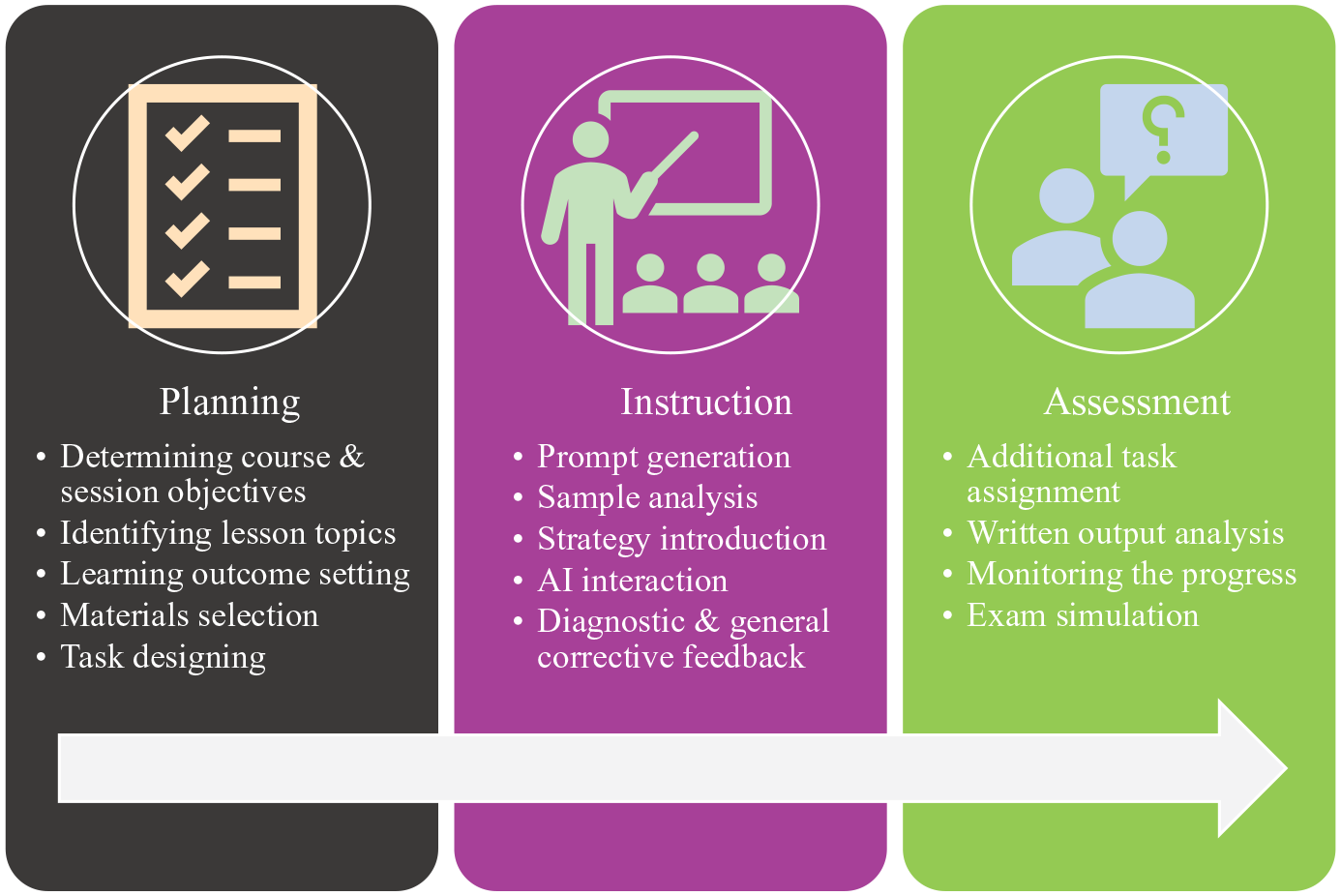
Schematic of ChatGPT-based Writing Instruction Protocol (CGWIP).
The planning wedge represented the pre-writing phase, where the teachers used ChatGPT to brainstorm ideas and generate the outlines required for each session. Specifically, teachers utilized ChatGPT to obtain a detailed lesson plan outlining course and session objectives. To do so, they interacted with the chatbot by providing details about lesson topics, their learners’ proficiency levels, and lesson objectives. ChatGPT processed this information and generated various actionable suggestions, including lists of topics appropriate for the course goals, along with setting detailed learning outcomes for each session, determining the expectations, suggesting a list of materials and samples that fit the procedure of each session, and finally designing a wide range of writing tasks which aim different types of writing in the IELTS exam.
The instruction aspect (i.e. writing phase) enabled the teachers to use ChatGPT and obtain a list of writing prompts ranging from simple sentences to stretched and creative complex texts. Moreover, the chatbot provides the teachers with a detailed sample analysis, which can be prepared before or within the classroom based on the class situation. Meanwhile, the students become familiar with ChatGPT through teachers’ explanations about strategy-based learning. In other words, teachers instructed the learners to rely on the chatbot to improve their writing.
Moreover, some minutes were allocated for student–chatbot interaction in each session. Initially, teachers provided the required explanations, and the learners were expected to work on their homework assignments under the supervision of the ChatGPT, the premium accounts of which were also provided to the students involved in the experimental group by the researchers. The rationale behind the inclusion of this step in the intervention program was to help the students nurture digital literacy, autonomy, and self-confidence while learning through ChatGPT in a self-regulated manner (Kohnke et al., 2023). Moreover, teachers used ChatGPT to amplify the range and quality of feedback provided to the learners. The teachers used the learners’ writing output as the ChatGPT input and asked the chatbot for detailed analysis and feedback. Afterward, teachers discussed the positive and negative aspects of the learners’ writing based on the suggestions outlined by ChatGPT.
The assessment wedge (i.e. post-writing phase) of the CGWIP enabled the teacher to provide additional and supplementary writing tasks and check the previously assigned tasks through output analysis and monitoring features of ChatGPT, which can provide the basis for long-term formative assessments. Finally, teachers used ChatGPT to simulate the exam condition, which required the students to produce the assigned writing task within the determined time limit. In this phase, the teachers used the chatbot to generate IELTS writing tasks with specified expectations and detailed explanations of the expected outputs. For instance, writing paragraphs with clear topic sentences, supporting sentences, and concluding remarks was the objective of one session. In another, the students were asked to enrich their text using a range of words that better described their mastery of the task topic. As the sessions moved on, the expectations shifted from specific to general, where in the final sessions, the students were asked to answer the ChatGPT-generated IELTS tasks by considering all criteria of the exam, including task achievement, cohesion and coherence, lexical resource, and grammatical range and accuracy. See Figure 2.

Sample L2 teacher–ChatGPT interaction.
6 Data collection and analysis procedure
After random assignment and ensuring the homogeneity of the learners, we conducted a one-hour online session and instructed the teachers about their responsibility throughout the study. Teachers also filled out the TSES, which measured self-efficacy in the pre-test phase. To obtain teachers’ post-test scores, we administered TSES after the final session of the intervention program. Throughout the intervention sessions, the control group teachers were asked to follow a task-based model of L2 process writing instruction, which included pre-task, while-task, and post-task phases. In the pre-task phase, teachers introduced the purpose of each session, discussed the topics, and brainstormed ideas to activate the learners’ schemata. In the during-task phase, they modeled the task and analysed and revised the students’ outputs. Evaluation and task assignments were also undertaken by teachers in the post-task phase. Meanwhile, the experimental group teachers were taught and briefed to follow the steps outlined in the CGWIP for the entire course, which lasted 10 weeks and comprised two 90-minute sessions each week.
As for the learners, we tested their writing skills one week before and after the intervention phase based on the IELTS writing checklist. The learners of the experimental and control groups participated in their classes twice a week for 10 consecutive weeks. To minimize the experiment-induced effects, we followed a double-blind experimental approach where participants (i.e. learners) and the experimenters (i.e. researchers) were unaware of the assigned experimental conditions. Doing so is beneficial for experimental studies because it further reduces the presence of confounding variables and, in turn, increases the reliability and validity of the results (Dunning, 2012).
As the intervention phase terminated, the pre-test and post-test scores on L2 writing were analysed by ChatGPT, which assessed their output based on the IELTS writing criteria of cohesion and coherence, task achievement, lexical resource, and grammatical range and accuracy. Further, we asked ChatGPT to rate each student’s writing based on IELTS band scores ranging from 1 to 9. To increase the reliability of the ratings, an IELTS examiner expert reflected on the scores and provided feedback to the researchers. Cohen’s Kappa showed 94% transparency and agreement between the raters’ scores (Gass & Mackey, 2000).
A new set of tasks was tested one week after the program to elicit the delayed post-test scores. In this vein, we selected several of the latest IELTS exam writing tasks and tested the learners. ChatGPT and the human examiner analysed the learners’ writing output and rated them. Consequently, learners’ writing scores (i.e. pre-test, post-test, delayed post-test) and teachers’ self-efficacy scores (i.e. pre-test, post-test) were obtained and analysed through SPSS26.
To analyse the difference between teachers’ self-efficacy scores on pre-test and post-test, we used the Independent Samples t-test. We also used One Way Analysis of Covariance (ANCOVA) to check the effectiveness of the intervention on learners’ L2 writing skills. Pre-requisites of both analyses, including homogeneity of variances of groups, linearity, and homogeneity of regression slopes, were also checked and reported.
IV Results
The first step of data analysis included checking the normality and reliability of the OPT, pre-test, post-test, delayed post-test of L2 learners’ writing and the pre-test, post-test of the EFL teachers’ self-efficacy. Analysis showed that the assumption of normality was fulfilled since the estimated ratios were lower than ± 1.96 (Field, 2018). Further, KR-21 method showed acceptable reliability (r = .71) for the OPT (Fulcher & Davidson, 2007). The inter-rater reliability indices for pre-test, post-test and delayed post-test of writing showed that there were significant agreements between the two raters on pre-test (r(46) = .697), post-test (r(46) = .658), and delayed post-test (r(46) = .648), all of which represented a large effect size, p < .05). Also, Cronbach’s alpha reliability indices for pre-test (n = 10, r = .785) and post-test (n = 10, r = .858) of self-efficacy questionnaires showed acceptable estimates (Fryer et al., 2018; Harrison et al., 2020).
We used the Oxford Placement Test (OPT; Allan, 2004) to verify the participants’ proficiency level, and the results showed that groups were homogeneous prior to initiation of intervention phase ((t(46) = .335, p > .05, r = .049). Similarly, Independent-Samples t-test showed that teachers in experimental and control groups were also homogeneous on their self-efficacy scores prior to the intervention sessions (t(10) = .127, p > .05, r = .040).
1 Teachers’ self-efficacy
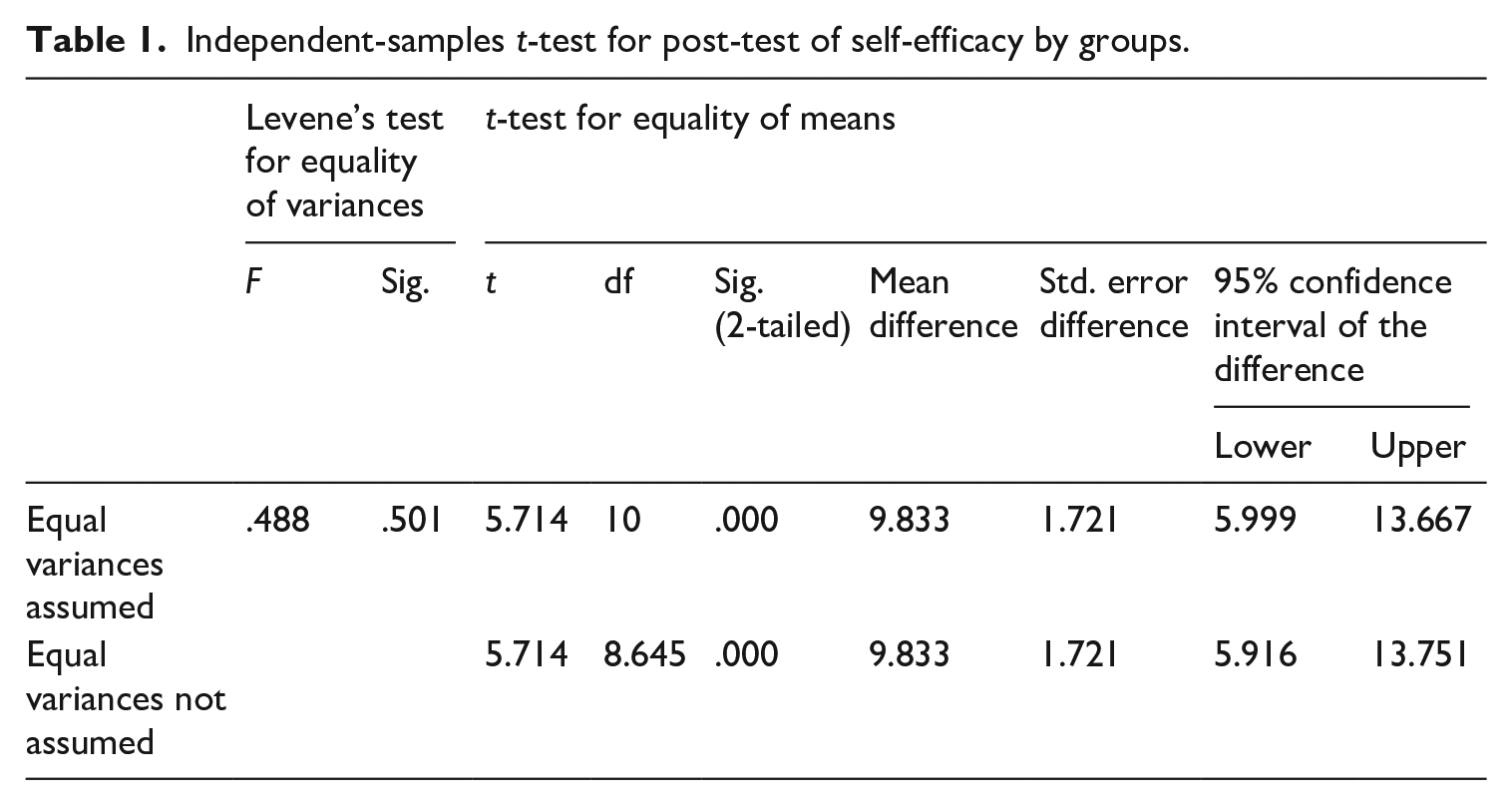
We used an Independent-Samples t-test to test the first null-hypothesis, which stated that CGWIP did not significantly affect the self-efficacy of EFL teachers. The results showed that the experimental group had a significantly higher mean score on the post-test of self-efficacy than the control group, t(10) = 5.714, p < .001, r = .88, indicating that the hypothesis was rejected (Table 1; Figure 3).
Independent-samples t-test for post-test of self-efficacy by groups.

Means on post-test of self-efficacy by groups.
2 Learners’ writing skills
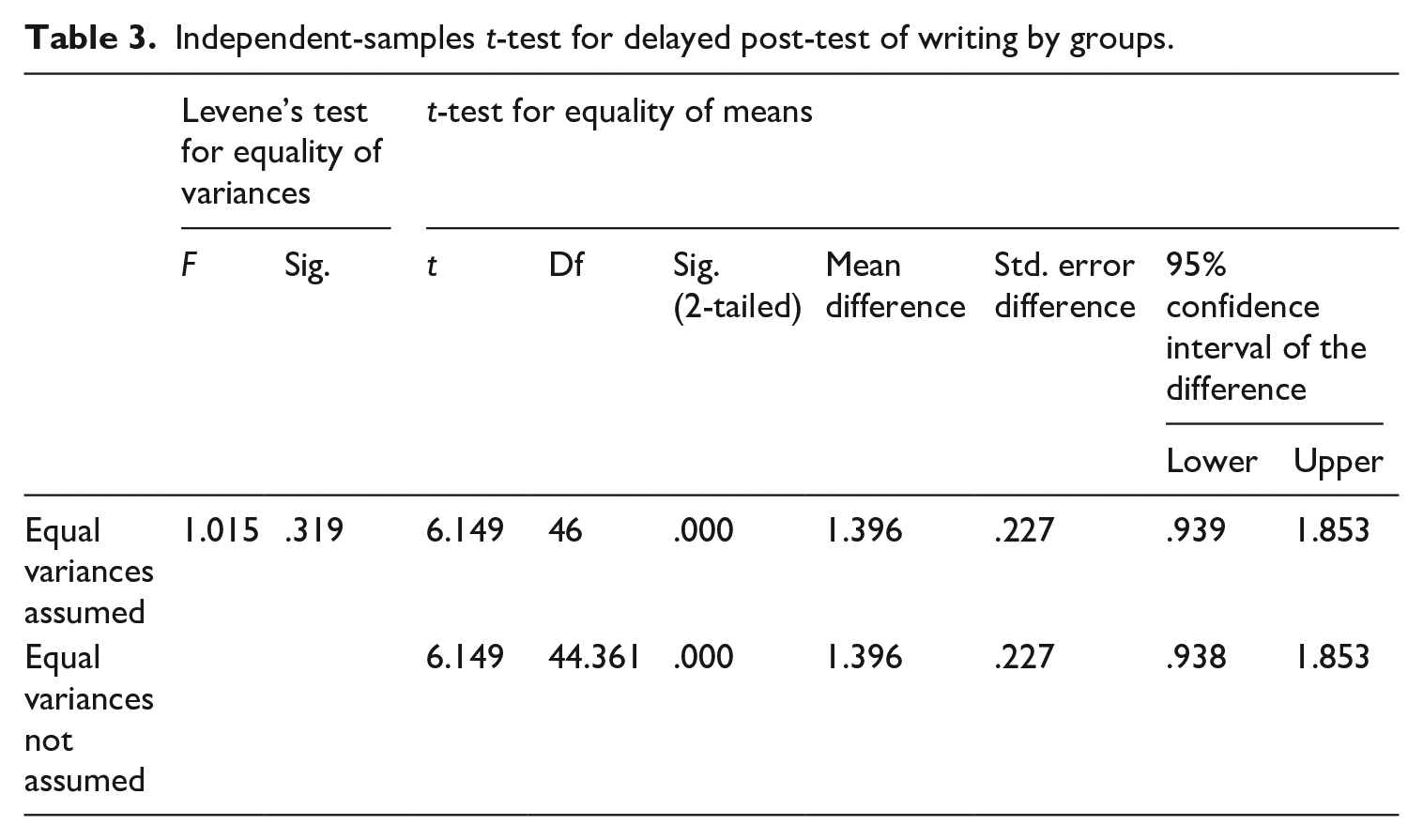
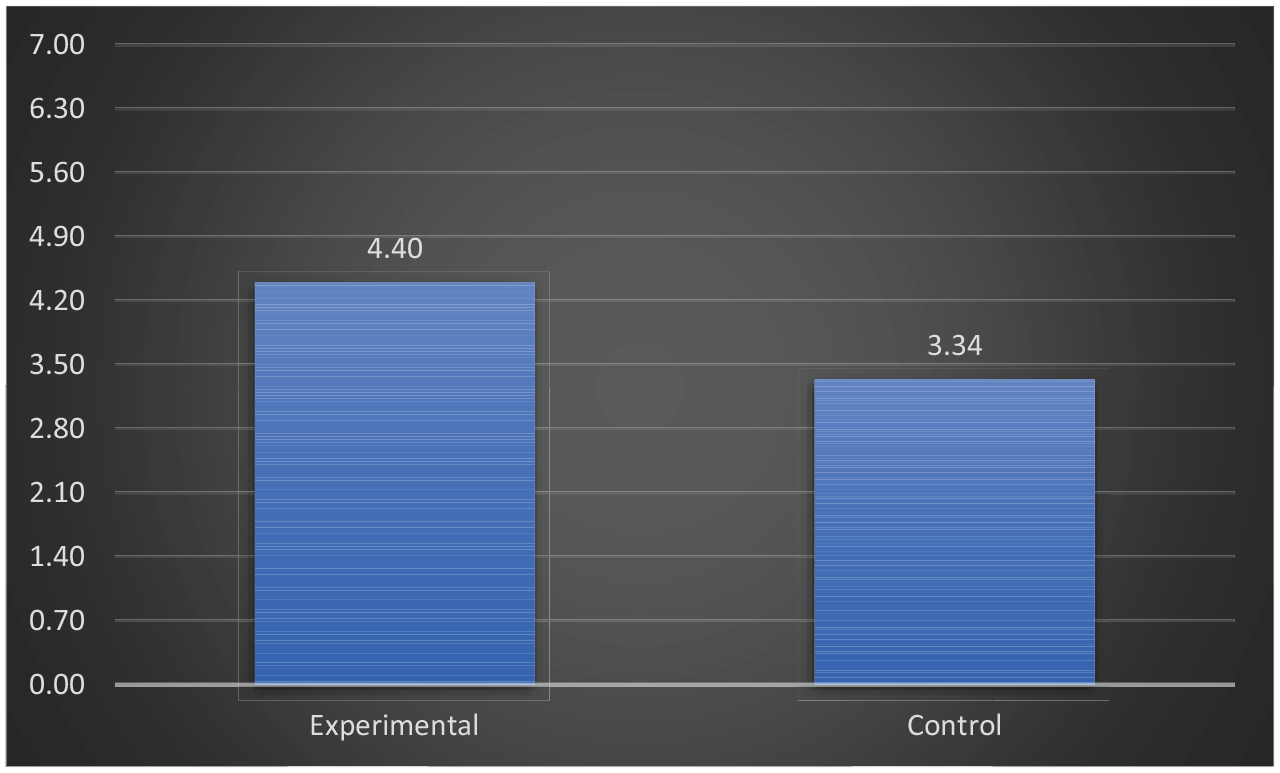
The results of One Way ANCOVA revealed that there was a significant difference between the experimental and control groups on the post-test and delayed post-test writing, after controlling for the effect of pre-test, F(1, 45) = 44.055, p < .001, η2 = .50, indicating that the intervention had a large positive and lasting impact on the experimental group. The effect sizes of the statistical tests were reported using partial eta-squared with reference to the criteria suggested on Gray and Kinnear (2012, p. 323) and Pallant (2016, p. 285). The results are summarized in Tables 2 and 3 and in Figures 4–6.
Tests of between-participants effects for post-test of writing by groups with pre-test.

Independent-samples t-test for delayed post-test of writing by groups.
Means on post-test of writing by groups with pre-test.

Means on delayed post-test of writing by groups.

ChatGPT and future of education.
V Discussion
Researchers tried to test whether ChatGPT has any potential effects on EFL teachers’ self-efficacy (TSE) and learners’ writing skills. Thus, a ChatGPT-based writing instruction protocol (CGWIP) was operationalized and tested in a 10-week writing instruction program, the participants of which were 12 EFL teachers and 48 learners. The rationale behind the present trial was that L2 teaching and learning are demanding endeavors, and the field urgently welcomes practical and effective strategies that can help teachers and learners overcome teaching and learning barriers (e.g. Dewaele et al., 2018; Mercer & Kostoulas, 2018).
Results revealed that teachers who utilized CGWIP enjoyed an increased rate of TSE afterward. In other words, the controlled and structured application of CGWIP resulted in an increased sense of self-efficacy among the teachers. Moreover, the results showed that students who undertook the CGWIP outscored those who merely relied on the process writing approach. These findings are consistent with the previous studies that suggested self-efficacious teachers tend to use more effective and innovative teaching strategies, create more positive and supportive learning environments, and foster higher student achievement and engagement in writing (Klusmann et al., 2016; Ma et al., 2018; Mitchell et al., 2023; Zee & Koomen, 2016). Teachers’ exposure to AI and interaction with ChatGPT at least twice a week and inclusion of ChatGPT in the instructional phase of L2 writing for 10 weeks would potentially help the teachers enhance their awareness towards newly emerged AIs and develop the required skills to use these advancements in the L2 class. In light of the increased sense of efficacy of the teachers, it is plausible to claim that learners’ writing efficacy could improve. The idea is supported by previous studies that showed the interconnectedness of teachers’ self-efficacy and learners’ writing skills and that learners’ achievements in L2 writing predict teachers’ sense of confidence, efficacy, and competence (Ferris, 2014; Mehmood, 2019).
Results are also justifiable relative to Malmberg et al. (2014), who found that TSE is a significant predictor of student achievement. Their findings showed that TSE positively influences students’ achievement and engagement in learning L2 content. The present results can be further discussed by considering Gayed et al.’s (2022) study, wherein the researchers found that AI-based instruction reduces the cognitive barriers of L2 learners. Similarly, we argue in line with Ghafouri (2024), who evidenced the effectiveness of ChatGPT in nurturing the learners’ effort and interest in language learning (i.e. L2 grit) through cultivating rapport and an emotionally supportive environment. Accordingly, we argue that ChatGPT is potentially beneficial for cultivating teachers’ self-efficacy and improving L2 learners’ writing skills.
Moreover, the results showed that CGWIP would help language teachers be less concerned about what to do in each session since the chatbot outlines a detailed list of steps to consider while teaching L2 content. Thus, we argue that applying CGWIP can save teachers’ time and energy, reduce their work demands, and make them more focused and organized. Arguably, the chatbot can detach the teachers from the excessive tensions of determining course objectives, designing lesson plans applicable to each session, diagnosing specific problems in students’ written output, and assessing their performance in long-term periods. The idea is discussed and supported by Jerusalem and Schwarzer (1992), who asserted that highly self-efficacious individuals have more positive expectations and can handle tensions more efficiently. By measuring the TSE of the teachers, we indirectly tapped into teachers’ social interaction capability and sense of job accomplishment (Schwarzer et al., 1999), the traces of which can be tracked down in the writing scores of the students who undertook the CGWIP. In other words, analyses revealed that using ChatGPT in a structured manner throughout writing instruction would positively influence L2 learners’ writing skills. Thus, applying CGWIP might increase the teachers’ social interaction skills, as measured by Schwarzer et al.’s (1999) TSE scale, and the increased scores of their students would give them a sense of an accomplished job. The claim is supported by previous studies, which confirmed that self-efficacious teachers are more prone to perform particular tasks effectively, deal with teaching problems, and solve the students’ problems (Fathi et al., 2021; Goddard & Kim, 2018).
Further, we argue in line with Fyfe (2022), Opara et al. (2023), and Sallam (2023), who discussed the potential benefits of AI usage in educational contexts. Specifically, the findings highlight the specific features and benefits of ChatGPT for L2 writing instruction, such as providing personalized and adaptive feedback, enhancing writing quality and accuracy, facilitating self-regulation and metacognition, increasing motivation and engagement, and establishing the basis for data-driven decision-making. ChatGPT can also generate natural and coherent texts, such as writing samples, analyses, reports, and recommendations, based on the IELTS writing criteria and help the teachers and students understand and apply them to their writing. Further, it can also support the teachers and students in the writing processes, such as planning, drafting, revising, editing, and publishing, and help them develop their writing skills and strategies. These features and benefits of ChatGPT align with the principles of the process writing approach (Badger & White, 2000), which emphasizes the importance of feedback, quality, self-regulation, and motivation in L2 writing instruction. ChatGPT can also enhance the teachers’ and students’ digital literacy and autonomy by exposing them to the latest AI technology and allowing them to interact with such advancements meaningfully. The increased writing scores of the L2 learners in the experimental group, along with the increased self-efficacy of their teachers, as shown by the results, are supportive of Ali et al. (2023), who profiled the influence of AI-based instruction on motivation, reading, and writing of the L2 learners. Similarly, the results supported the previous studies on this research trend, where researchers claimed that AI application in an L2 context through a well-structured program influences the learners’ digital literacy and nurtures their language skills, including writing and speaking (Ghafouri, 2024; H.S. Kim et al., 2021; Kohnke et al., 2023; Lin & Mubarok, 2021).
Several theoretical and pedagogical implications can be induced from the present study. The results implied that ChatGPT-based instruction would remind the teachers about their capabilities to overcome challenges by influencing their students’ outcomes while triggering a sense of self-efficacy. Further, the study contributes to the current positive psychology-laden trends of L2 research by suggesting that if applied in a well-designed and controlled manner, ChatGPT can benefit EFL teachers by increasing their self-efficacy, which is correlated with other notions such as reduced stress and burnout (Jerusalem & Schwarzer, 1992; Kim & Burić, 2020; Pfitzner-Eden, 2016; Skaalvik & Skaalvik, 2010), creative teaching methods (Thurlings et al., 2015), perseverance (Heng & Chu, 2023; Milner & Hoy, 2003; Shao, 2023), job satisfaction (Demir, 2018), and similar psycho-emotional entities the combination of which promotes teachers’ well-being (von Muenchhausen et al., 2021; Xiyun et al., 2022). Additionally, based on the results and in line with recent AI-driven L2 studies, we argue that ChatGPT is beneficial for L2 writing through features such as automated essay scoring, intelligent tutoring systems, or natural language processing (Ali et al., 2023; H.S. Kim et al., 2021; Kohnke et al., 2023; Lin & Mubarok, 2021). ChatGPT can also adapt to the users’ needs, interests, and proficiency levels and provide immediate, personalized, relevant feedback and support. ChatGPT can also interact with the users in a human-like manner, using natural and coherent language, and engage them in a dialogue. These advantages make ChatGPT a more appealing and effective tool for L2 writing instruction, as it can cater to teachers’ and students’ diverse and dynamic needs.
Consequently, the present study tried to approach the use of ChatGPT in a structured and systematic manner to highlight the idea that the application of AI-based tools might have negative impacts on the nature and quality of human learning, create more challenges and difficulties for L2 teachers, and undermine their role and identity. Thus, it becomes essential for teacher educators to equip the teachers with the knowledge and skills required to approach the forthcoming and ever-updating channels of instruction. As we mentioned earlier (Ausat et al., 2023), using ChatGPT and similar AI-powered tools requires the direct supervision of teachers as a crucial component of the education system. Figure 1 illustrates the proposed model of teacher supervision for implementing ChatGPT-based instruction in L2 classrooms, which consists of three stages: planning, instruction, and assessment. However, the use of ChatGPT for L2 writing instruction also poses some limitations and challenges, such as the ethical, social, and pedagogical issues that may arise from the AI-human interaction, the quality, validity, and reliability of the ChatGPT outputs, and the teachers’ and students’ attitudes, perceptions, and readiness to use ChatGPT in their L2 writing classrooms. These issues need to be addressed and resolved before ChatGPT can be widely adopted and integrated into L2 writing instruction. For example, the ethical issues may include protecting the rights and privacy of the teachers and students, preventing plagiarism and cheating, and promoting critical thinking and creativity. The social issues may include the impact of ChatGPT on the teacher–student and student–student relationships, the role and identity of the teacher and the student, and the power and authority of the AI tool. The pedagogical issues may include the alignment of ChatGPT with the curriculum and the learning objectives, the selection and design of the writing tasks and objectives, and the evaluation and assessment of the writing outcomes and progress. The quality, validity, and reliability issues may include the accuracy and coherence of the ChatGPT outputs, the consistency and appropriateness of the ChatGPT feedback, and the trustworthiness and credibility of the ChatGPT tool. The attitude, perception, and readiness issues may include the awareness and knowledge of the teachers and students about ChatGPT and its features and benefits, the motivation and interest of the teachers and students to use ChatGPT and its feedback and support, and the confidence and competence of the teachers and students to interact with ChatGPT and its outputs. These issues require further research and discussion and the development of standards and guidelines for using ChatGPT in L2 writing instruction. For the time being, we prefer to believe in ChatGPT and remain optimistic about what the chatbot itself thinks about the future of teachers and educational systems:
The current study has several limitations that can be considered in future attempts. First, we encourage L2 researchers to provide an in-depth analysis of CGWIP to test its utility as an instructional guideline for L2 teachers further by considering and modifying it in different sociocultural contexts. Moreover, the claims of the present study rest solely on quantitative data, which was obtained from a relatively small sample. Thus, the generalizability of the arguments needs to be more credible and requires more caution. Future researchers can triangulate the data by considering other aspects of ChatGPT to suggest ways by which the well-being of teachers and learners can be positively influenced by the presence of AI in the L2 learning contexts. In doing so, the results of the present study can function as a starting point to expand the existing knowledge on the interplay of AI and L2 education. We used the ChatGPT 3.5 version in the present study; however, researchers can also consider ChatGPT4 and its promising features.
VI Conclusions
The present study investigated the use of a novel AI tool, ChatGPT, for L2 writing instruction. In doing so, we found that a well-established and constructed ChatGPT-based Writing Instruction Protocol (CGWIP) can help the students with their writing skills and increase the L2 teachers’ self-efficacy. Results implied that the link between AI and humans could benefit the teachers and students at the forefront of educational systems, finding ways to reduce their tensions and helping them progress towards flourishing. The study has several implications for L2 teaching and learning practice, policy, and research. For L2 teaching and learning practice, the study suggests that ChatGPT can be a versatile and flexible tool to support various aspects of writing instruction, such as planning, feedback, assessment, and self-regulation. Exposure to ChatGPT and similar AI-based advancements could enhance the teachers’ and learners’ digital literacy and autonomy.
For L2 policy, the study highlights the need for teacher education and professional development programs that equip teachers with the knowledge and skills to integrate ChatGPT and similar AI tools into their L2 classrooms effectively and ethically. The study also calls for developing standards and guidelines for using AI in L2 education that ensure the quality, validity, and reliability of the AI outputs and protect teachers’ and learners’ rights and privacy. For L2 research, the study opens up new avenues for exploring the impact of ChatGPT and other AI tools on different aspects of L2 teaching and learning, such as motivation, engagement, attitude, and achievement. The study also encourages using mixed-methods and longitudinal designs to capture the complex and dynamic nature of the AI-human interaction and its effects on the L2 teachers’ and learners’ well-being and performance. We hope that the present study can contribute to the practical and appropriate use of AI for educational purposes and inspire more research on the impact of ChatGPT and similar tools on L2 teaching and learning.
Footnotes
Authors Contribution
MG contributed in all stages of writing, data collecting, data refinement and analysis of the study. JH contributed in all stages including writing, data collection, analyses, and discussion. AMZ provided feedbacks on all stages including writing, data collection, analyses, and discussion.
Availability of Data
The data for the current study is sharable on reasonable request.
Funding
The author(s) received no financial support for the research, authorship, and/or publication of this article.
Ethical Approval
All respondents were briefed about the study, and ethical considerations outlined by the British Educational Research Association (2011) were followed and applied throughout the study.
