




Abstract
Atypical sensory and repetitive behaviors are defining features of autism spectrum disorder and are thought to be influenced by environmental factors; however, there is a lack of naturalistic research exploring contexts surrounding these behaviors. This study involved video recording observations of 32 children with autism spectrum disorder (2–12 years of age) engaging in sensory and repetitive behaviors during home activities. Behavioral coding was used to determine what activity contexts, sensory modalities, and stimulus characteristics were associated with specific behavior types: hyperresponsive, hyporesponsive, sensory seeking, and repetitive/stereotypic. Results indicated that hyperresponsive behaviors were most associated with activities of daily living and family-initiated stimuli, whereas sensory seeking behaviors were associated with free play activities and child-initiated stimuli. Behaviors associated with multiple sensory modalities simultaneously were common, emphasizing the multi-sensory nature of children’s behaviors in natural contexts. Implications for future research more explicitly considering context are discussed.
Keywords
Introduction
Previous research suggests that children with autism spectrum disorder (ASD) engage in various sensory and repetitive behaviors in their everyday activities (Baranek et al., 2006; Dunn, 2007; Gabriels et al., 2005; Leekam et al., 2011). Despite a growing understanding that these behaviors are embedded in—and contribute to—the daily experiences of children with ASD and their families (Dickie et al., 2009; Dunn, 2007; Kirby et al., 2015c; Schaaf et al., 2011), there has been minimal systematic exploration of the contexts surrounding sensory and repetitive behaviors. Child development theories (e.g. Ecological Systems Theory; Bronfenbrenner, 1979) expound the importance of context in understanding child behavior. However, the majority of the literature on sensory and repetitive behaviors has primarily focused on characterizing the type and frequency of these behaviors with minimal exploration of contextual factors that contribute to these behaviors in naturalistic contexts. In this study, we aimed to address this gap in the literature through collection and subsequent behavioral coding of naturalistic video recordings of children with ASD in their home environments.
Sensory and repetitive behaviors
Although both sensory and repetitive behaviors are considered common among children with ASD (Ben-Sasson et al., 2009; Boyd et al., 2010), there is a lack of consensus in the literature about whether the two categories of behavior are conceptually distinct (Leekam et al., 2011; Rogers and Ozonoff, 2005). Perhaps because of this, each behavior type is often studied in isolation from the other. Some empirical work suggests the existence of separate, but related, patterns of sensory and repetitive behaviors (Boyd et al., 2009, 2010; Gabriels et al., 2008), whereas other literature stresses their overlap (e.g. Ausderau et al., 2014). In the current version of the Diagnostic and Statistical Manual of Mental Disorders, Fifth Edition (DSM-5; American Psychiatric Association (APA), 2013), unusual sensory responses and repetitive/stereotypic behaviors are considered distinct, yet both subsumed under the restricted and repetitive symptom grouping for the diagnostic classification of ASD. As described in the DSM-5, repetitive/stereotypic behaviors can include unusual and/or repetitious vocalizations or actions with one’s own body or with objects (APA, 2013). Additionally, three variations of sensory behaviors are suggested in the DSM-5 and are empirically supported, namely: (1) hyperresponsive (i.e. negative reactions to or avoidance of sensory input), (2) hyporesponsive (i.e. diminished or delayed reactions to sensory input), and (3) sensory seeking (i.e. unusual interest in or excessive interaction with sensory aspects of the environment) behaviors (Ben-Sasson et al., 2009; Boyd et al., 2010). Despite conceptual overlap, in this study, we maintain distinction in accordance with DSM-5 classification. In addition to the diagnostic relevance of sensory and repetitive behaviors for children with ASD, such behaviors also are clinically important because of their negative associations with adaptive behavior (Baker et al., 2008; Gabriels et al., 2005; Lane et al., 2010) as well as frequency and quality of activity participation (Dickie et al., 2009; Hochhauser and Engel-Yeger, 2010).
Parent-report measures have been the primary mode of assessment for both sensory and repetitive behaviors in research and clinical work (e.g. Baranek et al., 2006; Boyd et al., 2009, 2010; Gabriels et al., 2005, 2008; Kern et al., 2006; Lane et al., 2010; Tomchek and Dunn, 2007). For example, measures such as the Sensory Profile (SP; Dunn, 1999), Short Sensory Profile (SSP; McIntosh et al., 1999), and Sensory Experiences Questionnaire (SEQ; Baranek, 2009) are commonly used to collect data about the frequency of sensory behaviors among children with ASD from parents’ perspectives. These measures use items which provide specific examples of sensory-related behaviors and responses and ask how frequently the child acts each way on 5-point scales (e.g. almost never to almost always). Similarly, a common measure of repetitive behaviors is the Repetitive Behavior Scale–Revised (RBS-R; Bodfish et al., 1999), which asks informants to rate items on a 4-point scale (i.e. does not occur to severe). Standardized questionnaire measures continue to be a useful source of data about sensory and repetitive behaviors particularly for frequency and severity of behavior patterns, as well as the affected sensory modalities (e.g. tactile, auditory, and proprioceptive). However, there is a need for observational research to address underexplored aspects of these behaviors, in particular, the role that context plays in their expression.
One potential benefit of observational research is to provide a more objective measure of sensory and repetitive behaviors that can corroborate or supplement parent-report measures. Observational studies have demonstrated success in measuring types and frequencies of sensory and repetitive behaviors in the laboratory (e.g. Kirby et al., 2015b; Militerni et al., 2002; Zwaigenbaum et al., 2005) as well as through retrospective home video analyses (e.g. Baranek, 1999a; Werner et al., 2000). Laboratory measures provide the benefit of a structured context to elicit and assess behavior, which is necessary if experimental control or standardization is important; whereas, home videos capture children in their natural environments and the behaviors that occur within them. Both of these methods can contribute to our conceptual and empirical understanding of children’s behaviors. However, despite beliefs that contextual factors play a role in the manifestation of both sensory (Dunn, 2001) and repetitive (Leekam et al., 2011) behaviors, even studies conducted in natural contexts rarely incorporate aims specifically related to understanding the environmental features (e.g. social context and familiarity of the situation) that may contribute to the expression of these behaviors.
Contexts surrounding sensory and repetitive behaviors
Evidence from correlational and qualitative studies emphasizes a need to consider children’s physical, social, and situational contexts in the expression of sensory and repetitive behaviors. For example, in a study of 49 children with ASD, Brown and Dunn (2010) found only moderate correlations on sensory avoiding and sensory seeking scores (r = 0.45 and 0.59, respectively) across home (on the SP; Dunn, 1999) and school contexts (on the School Companion; Dunn, 2006). This result implies that either the child’s behaviors or the way they are interpreted by different caregivers may change depending on the environment in which they occur. The importance of children’s contexts and specific situations also emerged in two qualitative studies about sensory experiences involving interviews of children with ASD (Kirby et al., 2015a) and their parents (Dickie et al., 2009). Kirby et al. (2015a) noted that children with ASD interviewed in their study “did not discuss their experiences as abstracted interactions with sensory stimuli but rather as situated experiences occurring within a particular time and place” (p. 324). Dickie et al. (2009) noted a similar phenomenon, in that, “parents [did] not typically deconstruct a child’s experiences and reactions into components … sensory elements [were] embedded in the whole situation” (p. 178).
Additional aspects of a child’s situation may contribute to their expression of sensory and repetitive behaviors. For example, the expressed behavior may be related to children’s familiarity with their surroundings, the activities they are engaged in, or characteristics of the environment. Based on interviews with parents of children with ASD, Schaaf et al. (2011) suggested that unfamiliar spaces made sensory behaviors more pronounced and problematic, and alternately, familiar contexts made performing everyday activities easier for the child and the family. Similarly, three adolescents with ASD interviewed by Ashburner et al. (2013) reported a preference for expected stimuli and an aversion to sensations that were unpredictable. The interviewees also expressed utilizing familiar and predictable stimuli as a coping strategy to avoid sensory discomfort (Ashburner et al., 2013). This idea of having control over sensory stimuli also emerged in Dickie et al.’s (2009) study; the authors suggested that being able to decide when and how to interact with sensory stimuli often determined whether or not experiences were positive for children.
Finally, existing literature suggests the social nature of a child’s situation may contribute to the expression of sensory and repetitive behaviors. Turner (1999) in fact summarized the literature related to the social contexts surrounding repetitive behaviors of children with ASD, noting that some studies have suggested social reinforcement may drive repetitive behaviors while others suggest that lack of social interaction may contribute to the expression of these behaviors. Regarding the social nature of sensory behaviors, Baranek et al. (2006, 2013) noted that hyporesponsive behaviors were more prevalent in response to social stimuli for children with ASD as compared to those with other developmental disabilities or typical development.
Study purpose
There is substantial evidence supporting the diagnostic and clinical importance of sensory and repetitive behaviors as they affect the everyday lives of children with ASD. Even though retrospective home videos have contributed to our understanding of behaviors in natural contexts, there remains a need to specifically examine the contexts themselves which surround sensory and repetitive behaviors as they naturally occur during home activities. Using in-home naturalistic video recordings and manualized behavioral coding procedures, we addressed two research aims: (1) describe the home activity contexts within which children with ASD engage in four patterns of sensory and repetitive behaviors (i.e. hyperresponsive, hyporesponsive, sensory seeking, and repetitive/stereotypic) and (2) describe the sensory modalities and stimulus characteristics associated with each pattern of sensory and repetitive behaviors. Based on existing literature, the following were our a priori hypotheses related to the first and second aims: (1a) hyperresponsive behaviors would occur most in the context of activities of daily living, (1b) hyporesponsive behaviors would occur most in the context of social activities, (1c) sensory seeking and repetitive/stereotypic behaviors would occur most in the context of free play activities, (2a) hyperresponsive behaviors would be most associated with novel and family-initiated stimuli, (2b) hyporesponsive behaviors would be most associated with family-initiated and social stimuli, and (2c) sensory seeking and repetitive/stereotypic behaviors would be most associated with child-initiated stimuli.
Methods
This home video study was part of a larger, federally funded longitudinal research project involving children with ASD, other developmental disabilities, and typical development recruited from developmental clinics, parent groups, schools, and a university-based autism participant registry. The main project protocol included, but was not limited to, standardized diagnostic assessments, developmental assessments, and measures of sensory features and repetitive behaviors. Participants eligible for the home video study had confirmed ASD diagnoses and elevated scores (i.e. 2 standard deviation (SD) above the mean on ⩾1 sensory domain or 1 SD above the mean on ⩾2 sensory domains) on one of two parent-report measures of sensory features: SEQ (Baranek, 2009) or SP (Dunn, 1999). Families received monetary incentives for participation in the project, including US$50 for completion of three home video visits. The university’s review board approved this research which adhered to all recommended data security and informed consent/assent procedures.
Participants
This study included 28 boys and 4 girls with ASD (2.4–12.7 years of age); see Table 1 for descriptions of the included participants. Each enrolled participant had a diagnosis of ASD from an independent licensed psychologist or physician (e.g. psychiatrist and developmental pediatrician), which was confirmed using standardized cutoffs on both the Autism Diagnostic Interview–Revised (Le Couteur et al., 2003) and Autism Diagnostic Observation Schedule (ADOS; Lord et al., 1999). Participants were excluded if they had a diagnosis of Fragile-X syndrome, tuberous sclerosis, seizure disorder, or cerebral palsy; mental age <6 months; or uncorrected visual or hearing impairment.
Child and family characteristics.
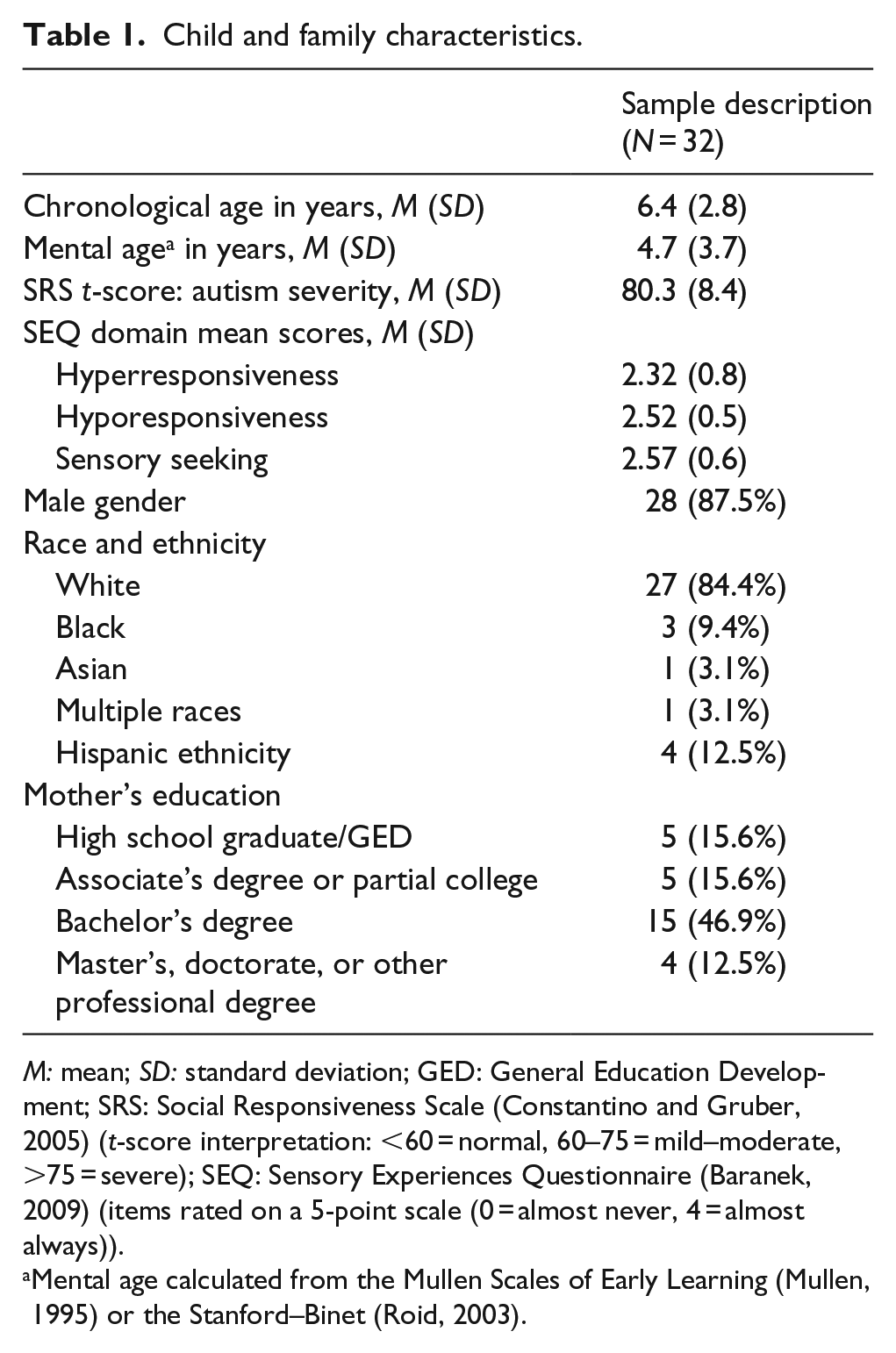
M: mean; SD: standard deviation; GED: General Education Development; SRS: Social Responsiveness Scale (Constantino and Gruber, 2005) (t-score interpretation: <60 = normal, 60–75 = mild–moderate, >75 = severe); SEQ: Sensory Experiences Questionnaire (Baranek, 2009) (items rated on a 5-point scale (0 = almost never, 4 = almost always)).
Mental age calculated from the Mullen Scales of Early Learning (Mullen, 1995) or the Stanford–Binet (Roid, 2003).
Video data collection
Video data were collected either as children entered or were followed-up with within the larger longitudinal study. Graduate student research assistants (videographers) visited the homes of participating families three times each to collect a series of naturalistic video recordings of each child in their home environment during everyday activities. Prior to the home observation, a brief phone interview was conducted with the child’s parent to further explain the study, discuss current sensory and/or repetitive behaviors salient in the home environment, identify situations in which sensory and/or repetitive behaviors would be likely captured on video (e.g. right after school, dinner time), and schedule the first visit. During each of three visits per child (collected within a 2-week timeframe), the videographer typically remained in a participant’s home for 45–60 min and collected video recordings using a hand-held digital recorder in three segments lasting approximately 15 min each. The video segment from the middle third of each visit was used for behavioral coding to address the present research questions.
Behavioral coding
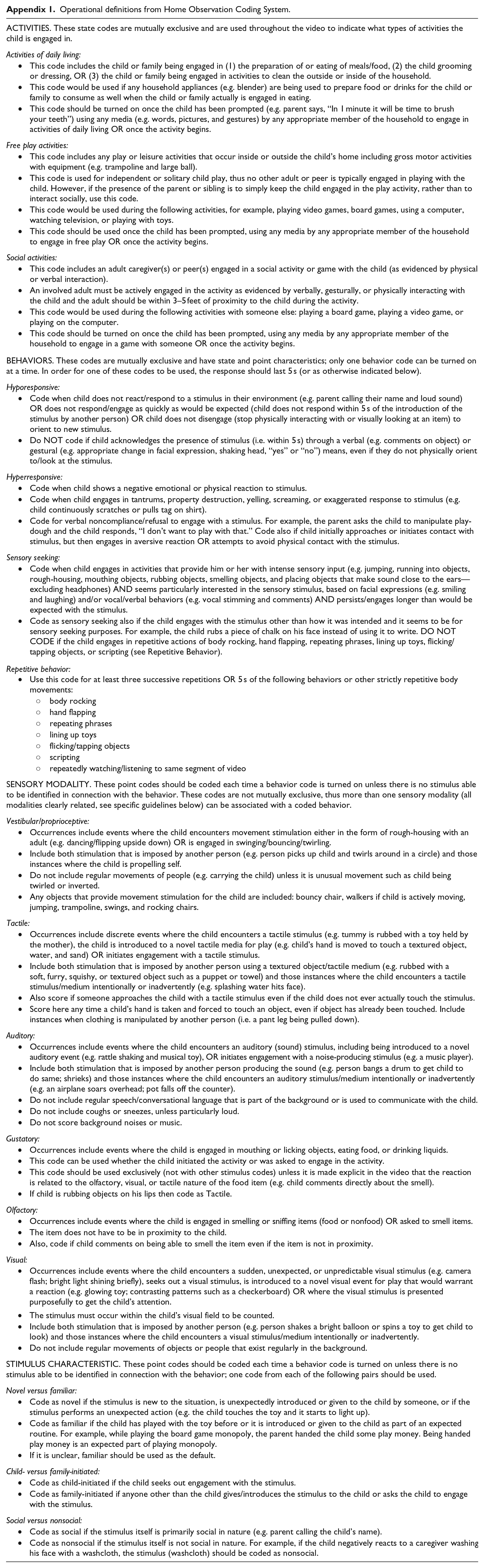
The research team developed a coding manual (Home Observation Coding System (HOCS): Coding Sensory Features in Children with Autism) with detailed procedures, instructions, and operational definitions for behavioral coding and completed coding using Observer XT 10.5 (Noldus Information Technology, 2011) software. The coding system included both point (frequency) and state (duration) codes in order to capture data on the activity contexts, sensory modalities (e.g. tactile, visual, and auditory), and stimulus characteristics (i.e. novel/familiar, child-/family-initiated, and social/nonsocial) surrounding children’s engagement in sensory and repetitive behaviors at home. Coding descriptions of sensory and repetitive behaviors were based on existing literature and measures of sensory (i.e. hyperresponsiveness, hyporesponsiveness, and sensory seeking; SP (Dunn, 1999); SEQ (Baranek, 2009); Sensory Processing Assessment (Baranek, 1999b)) and repetitive/stereotypic (Direct Observation of Repetitive Behaviors Assessment (Boyd et al., 2011); RBS-R (Bodfish et al., 1999)) behaviors. Table 2 includes descriptions of the codes of interest in this study within behavior, activity, modality, and stimulus characteristic categories. Appendix 1 provides further details on the coding rules used in this study.
Relevant codes and descriptions from the Home Observation Coding System.
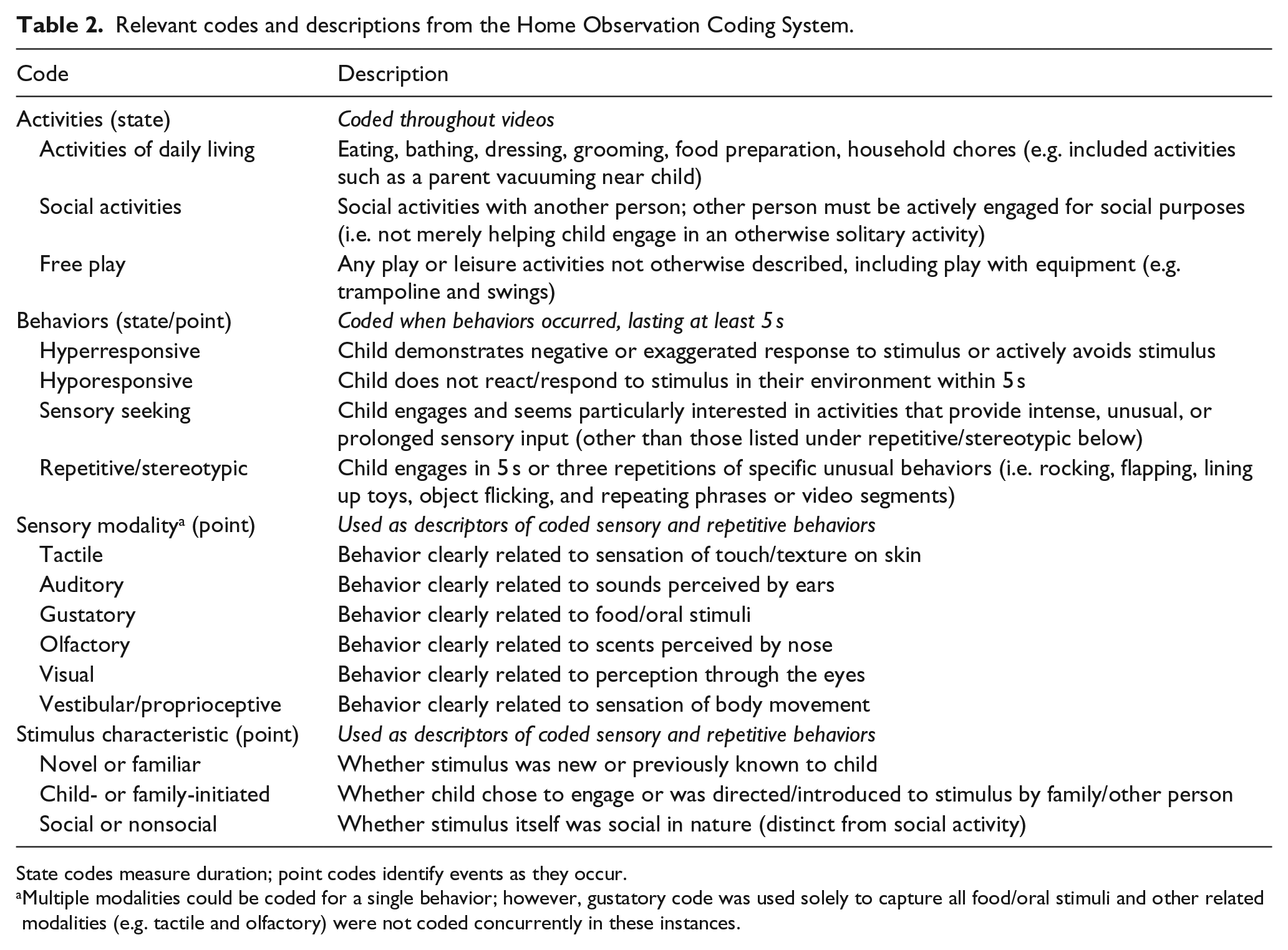
State codes measure duration; point codes identify events as they occur.
Multiple modalities could be coded for a single behavior; however, gustatory code was used solely to capture all food/oral stimuli and other related modalities (e.g. tactile and olfactory) were not coded concurrently in these instances.
Interobserver agreement
Two graduate students (coders) independently scored videos with 23% randomly selected overlap for reliability purposes. To determine the degree to which the coders achieved matching conclusions, both percentage agreement and Cohen’s kappa were used (Kottner et al., 2011; McHugh, 2012). Percent agreement (number of agreements divided by total number of codes) was calculated by the Observer software; an a priori lower limit of agreement acceptability for our study was set at 80%. The coders achieved 82.1% (range, 52%–100% across participants) total agreement across children’s videos. Disagreements were often related to the timing or presence of a codable behavior. Together the coders re-watched any individual case with <80% agreement (n = 2) to reach consensus about disagreements and one additional video was consensus coded by coder request due to its complexity. A kappa coefficient of 0.89 was calculated for the non-consensus videos, demonstrating strong interrater reliability (McHugh, 2012) for the HOCS.
Data analysis
Behavioral coding data were exported from Observer to Microsoft Excel and analyzed using SAS Software, Version 9.4 TS1M1 for Windows. In accordance with our research questions, the analyses involved generating descriptive statistics and cross-tabulations across coding categories for each sensory or repetitive behavior type. To test our hypotheses, we used weighted categorical analyses with each child’s coded behavior weighted inversely to the number of behaviors he or she generated. The weighting approach was used to account for the fact that 32 participants were coded engaging in varying numbers of behaviors; using total counts of behaviors would have increased risk of Type 1 error. The weighted analysis resulted in each child only being counted once, regardless of how many behaviors he or she generated for each type (e.g. four hyperresponsive behaviors by one child were counted as 0.25 of a behavior each in the analysis). Fisher’s exact test (FET), which is equivalent to an exact test of the weighted Pearson chi-squared for 2×2 tables (Agresti, 1992, 2012; Lydersen et al., 2007; Mehta and Patel, 1983; SAS Institute, 2013), was used to compare the results in 2×2 tables (target behavior vs other behaviors by target descriptor vs others) for the hypothesized relationships (10 total analyses). When testing for a relationship between hyperresponsiveness and activities of daily living, for example, what was considered in the FET table was the proportion of instances children engaged in: (1) hyperresponsive behaviors during activities of daily living, (2) hyperresponsive behaviors in other contexts (combined), (3) other behaviors (combined) during activities of daily living, and (4) other behaviors (combined) during other contexts (combined). Finally, we generated a list of examples of each type of coded behavior from free-text comment boxes in which coders described the observed behaviors.
Results
Descriptive results are displayed in Table 3 including frequencies and percentages of activities, modalities, and stimulus characteristics associated with each behavior pattern (i.e. hyperresponsive, hyporesponsive, sensory seeking, and repetitive/stereotypic). Of note, 14 participants (44%) displayed multiple patterns of behavior either within a single visit or across their three visit videos. Specifically, one child was coded engaging in all four types of coded behavior, four children were coded engaging in three types of behaviors (i.e. hyperresponsive, sensory seeking, and repetitive/stereotypic), and nine children were coded engaging in two types of behaviors (i.e. four hyperresponsive and sensory seeking; three hyperresponsive and repetitive/stereotypic; two repetitive/stereotypic and sensory seeking). Furthermore, many behaviors were coded as being associated with multiple sensory modalities; see Table 4 for tabulations of co-occurrences of modalities. Descriptive findings for all codes and FET results for each hypothesis are summarized in the following sections by behavior pattern with examples of coded behaviors provided for each.
Descriptive statistics by behavior.
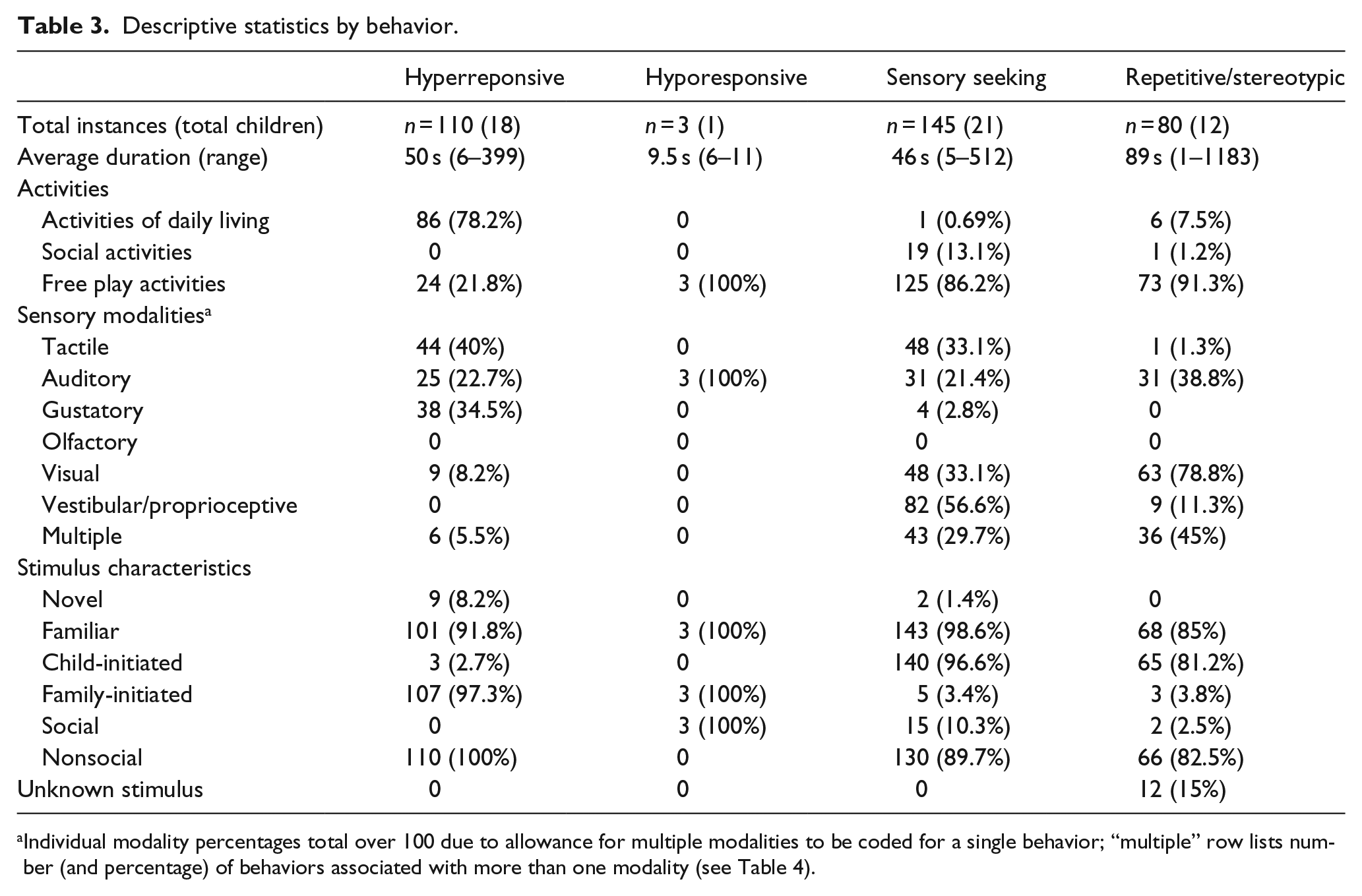
Individual modality percentages total over 100 due to allowance for multiple modalities to be coded for a single behavior; “multiple” row lists number (and percentage) of behaviors associated with more than one modality (see Table 4).
Total and overlapping coded sensory modalities for hyperresponsive, sensory seeking, and repetitive/stereotypic behaviors.
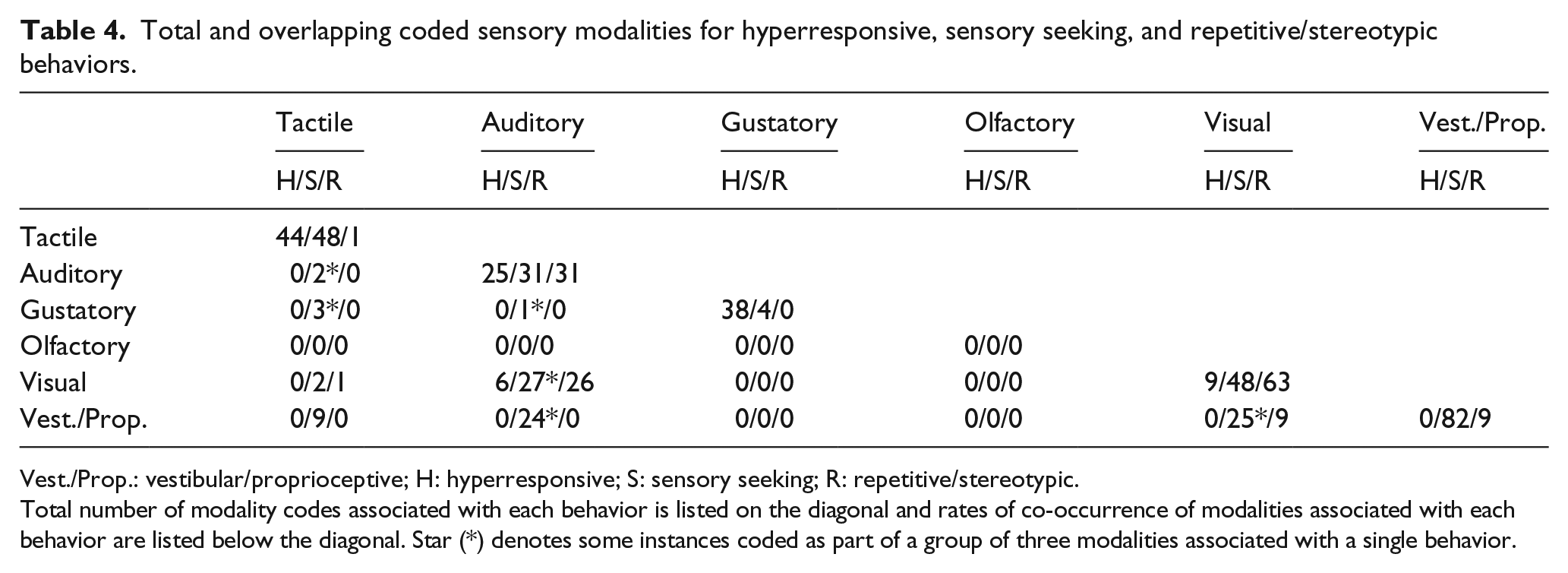
Vest./Prop.: vestibular/proprioceptive; H: hyperresponsive; S: sensory seeking; R: repetitive/stereotypic.
Total number of modality codes associated with each behavior is listed on the diagonal and rates of co-occurrence of modalities associated with each behavior are listed below the diagonal. Star (*) denotes some instances coded as part of a group of three modalities associated with a single behavior.
Hyperresponsive behaviors
Eighteen participants were coded engaging in hyperresponsive behaviors a total of 110 times during video recordings. Observed behaviors included children covering their ears or negatively reacting in response to everyday sounds (e.g. television at moderate volume and sound of water running in the kitchen sink) and sights (e.g. sunlight through a window), as well as avoiding or expressing pain during everyday activities (e.g. hair brushing, teeth brushing, face washing, and toenail clipping). These negative responses or avoidances of sensory input lasted less than a minute on average and occurred primarily within the context of activities of daily living, as hypothesized (Hypothesis 1a; FET, p ⩽ 0.001). The observed hyperresponsive behaviors often involved tactile, auditory, or gustatory stimuli, with overlapping auditory + visual stimuli associated with 5.5% of the coded behaviors. Furthermore, the stimuli associated with all of the observed hyperresponsive behaviors were nonsocial in nature. As hypothesized (Hypothesis 2a), hyperresponsive behaviors were most associated with family-initiated stimuli (FET, p ⩽ 0.001). However, contrary to Hypothesis 2a, we did not find a significant association with novel stimuli (FET, p ⩽ 0.39). In general, the majority of the videorecorded situations were familiar to the child; thus, most hyperresponsive behaviors were associated with familiar stimuli (versus novel).
Hyporesponsive behaviors
Despite inclusion of children with parent-reported hyporesponsive behaviors on the SEQ and SP measures, hyporesponsive behavior was only coded for one child (three instances). Thus, there is not enough data to draw conclusions about this sensory pattern and our a priori hypotheses could not be tested. The child with recorded hyporesponsive behaviors was observed during free play; the child had no response or apparent awareness of parents and sibling calling her name and verbally trying to get her attention at clearly audible levels within close proximity.
Sensory seeking and repetitive/stereotypic behaviors
Sensory seeking and repetitive/stereotypic behaviors—coded in the videos of 21 (145 instances) and 12 (80 instances) participants, respectively—had similar results in terms of associated activities and stimulus characteristics. Aligning with our hypotheses (Hypotheses 1c and 2c), both behavior patterns most commonly occurred in the context of free play activities and involved child-initiated stimuli; however, these associations were significant for the sensory seeking pattern (free play: p ⩽ 0.025; child-initiated: p ⩽ 0.001) but not repetitive/stereotypic behaviors (free play: p ⩽ 0.37; child-initiated: p ⩽ 1.0). Both behaviors also most commonly involved familiar and nonsocial stimuli.
Regarding their differences, sensory seeking behaviors most commonly involved vestibular/proprioceptive stimuli (57%), followed by visual and tactile (33% each), and then auditory (21%), whereas repetitive/stereotypic behaviors most commonly involved visual stimuli (79%), followed by auditory (39%), and then vestibular/proprioceptive (11%). Both were commonly associated with multiple stimuli in different combinations: common sensory seeking overlapping modalities were vestibular/proprioceptive + auditory + visual (16.6%) and vestibular/proprioceptive + tactile (6%); common repetitive/stereotypic overlapping modalities were visual + auditory (32.5%) and visual + vestibular/proprioceptive (11.3%). Furthermore, repetitive/stereotypic behaviors were the only pattern with behaviors coded without identifiable associated stimuli or triggers (15%).
Observed sensory seeking behaviors
The behaviors coded as sensory seeking involved a wide array of gross motor movements (e.g. jumping on stairs, bouncing on large ball, trampoline jumping, headstands, throwing body into furniture or onto floor, and rough-housing with family members) and unusual interests in the sensory aspects of their environments (e.g. intense or prolonged visual or tactile inspection of objects, rubbing objects on face and body, rolling around on carpeted floors, placing objects in mouth, and pressing objects firmly into body). Furthermore, observed sensory seeking behaviors were often multi-sensory and complex in nature (e.g. trampoline jumping while listening to music on headphones and watching television, bringing face close to video screen and tensing whole body, and swinging on swing with head tilted backwards to look at surroundings upside down).
Observed repetitive/stereotypic behaviors
In accordance with the definitions specified in the HOCS (see Table 1), behaviors coded as repetitive/stereotypic similarly involved some actions with objects (e.g. lining up toys and repeatedly watching segments of video), some with children’s own bodies (e.g. rocking back and forth, flapping hands, and repeating phrases), and others with a combination of actions (e.g. bouncing a plastic hanger on the floor while rocking back and forth and vocalizing; twirling an object in front of face while watching same segments of video repeatedly and flapping hands).
Discussion
This study utilized naturalistic video observations and behavioral coding to explore the contexts surrounding the sensory and repetitive behaviors of 32 children with ASD. In particular, we coded the activity contexts, sensory modalities, and stimulus characteristics associated with hyperresponsive, hyporesponsive, sensory seeking, and repetitive/stereotypic behaviors engaged in during everyday home activities.
However, despite our attempts to capture video recordings of all four behavior patterns, only one child in the study was ultimately coded for hyporesponsive behaviors. Although children with elevated hyporesponsiveness on parent-report measures were purposefully included, we found this to be a difficult behavior to code using the described methods. It is perhaps the nature of the behavior that was problematic, such that attempting to code the absence of something was more elusive with our study design than coding more active behaviors such as hyperresponsive, sensory seeking, or repetitive/stereotypic behaviors. Laboratory-based measurements have demonstrated success in capturing hyporesponsive behaviors in a structured situation using a series of presses to test children’s responsiveness (Baranek et al., 2013) and retrospective infant video studies have reported success coding orienting and responsiveness (e.g. Baranek, 1999a). However, because of the limited observations of hyporesponsive behaviors in our study, we were unable to test our hypotheses that they would be most associated with social activities and with family-initiated and social stimuli. Future research should explore alternate methods to collect naturalistic observational data to better capture the contextual details surrounding this behavior.
Our first research aim endeavored to understand the activity contexts during which sensory and repetitive behaviors occurred. As hypothesized, hyperresponsive behaviors were most common during activities of daily living and sensory seeking was most common during free play. Our second aim was to describe the sensory modalities and characteristics associated with each behavior pattern. Also as hypothesized, hyperresponsive behaviors were most associated with family-initiated stimuli and sensory seeking most associated with child-initiated stimuli. The descriptive findings (unweighted) suggest repetitive/stereotypic behaviors most commonly occurred during free play and were associated with child-initiated stimuli, but these findings were not significant using FET on the weighted 2×2 tables.
Contrary to our hypothesis, hyperresponsive behaviors were not commonly observed in association with novel stimuli. This is likely due to the nature of our data collection methods and the fact that we did not observe many novel stimuli in general. Our use of parent report to guide the scheduled video sessions as well as restricting data collection within the home environment seemed to support observation of familiar stimuli, thus limiting opportunities to observe novel stimuli. Previous work suggests that unfamiliar environments may exacerbate the intensity or degree of interference sensory behaviors play in daily life, whereas familiar environments were suggested to facilitate successful activities for children with ASD and their families (Schaaf et al., 2011). However, this study suggests that although novel stimuli may be most salient to parents, hyperresponsive behaviors persist in the context of familiar stimuli in familiar surroundings (i.e. child’s home).
Another finding of interest, though not significant, was that 13% of sensory seeking behaviors occurred in the context of social activities and that 10% of the behaviors were associated with social stimuli. Thus, this study adds to a growing body of literature suggesting some social components to these behaviors. Dickie et al. (2009) noted how, during interviews, parents of children with ASD often described a child’s sensory seeking behaviors as opportunities for and experiences of positive interpersonal touch between parent and child. Future consideration should be given to understanding the role of sensory seeking behaviors on social relationships within the family.
This study also explored sensory modalities associated with sensory and repetitive behaviors and allowed for measurement of multiple modalities at once. However, the gustatory stimulus code was used as a broad code for food-related behaviors due to the difficulty in determining what aspects of the food a child was responding to. It is likely that the simultaneous visual, olfactory, tactile, and gustatory properties of food contributed to the observed behaviors. Thus, considering the gustatory modality as a multi-sensory experience, the rates for multiple stimuli were quite high across behaviors (40% hyperresponsive, 30% sensory seeking, and 45% repetitive/stereotypic). This makes sense because the majority of stimuli encountered in the natural world are multi-sensory (Iarocci and McDonald, 2006). However, the literature is just beginning to understand how behaviors associated with multiple modalities may be distinct; Iarocci and McDonald (2006) suggested that there may be additive or synergistic effects when processed neurologically. The current common methods for collecting data on sensory features using parent-report may be insufficient for understanding the multi-modality nature of stimuli associated with children’s behaviors; however, a recent laboratory-based observational study demonstrated success measuring multiple overlapping modalities (Kirby et al., 2015b). Further work is needed to expound upon these complex properties and their effects on sensory and repetitive behaviors in real-world environments.
There are a few notable limitations to this study. First, although the individualized and naturalistic methods used have numerous strengths (e.g. understanding aspects of children’s real-life contexts associated with their parent-reported behaviors), the generalizability of the findings may be limited to the situations specified and experiences captured during our scheduled recording sessions. Furthermore, although we attempted to capture truly naturalistic contexts, the presence of a videographer and camera may have had unintentional effects on child and family behavior during visits. Finally, we were limited by the sample size and lower frequency of particular behaviors (i.e. hyporesponsive and repetitive/stereotypic behaviors).
As previously stated, in this study, we aimed to explore sensory seeking and repetitive/stereotypic behaviors as separate constructs in alignment with the DSM-5 and previous literature suggesting they are related but distinct. In order to code these behaviors reliably, we set clear guidelines for this study. However, there remains a need to understand the relationship between these behaviors in order to help children effectively manage behaviors that may negatively impact learning, socialization, or quality of life. In this study, we identified similarities across sensory seeking and repetitive/stereotypic behaviors (as defined in the HOCS) in associated activities and stimulus characteristics, but differences in associated modalities. These identified similarities and differences may further inform work to understand the relationship between these constructs.
Conclusion
In this study, we utilized naturalistic video recordings to study sensory and repetitive behaviors with a focus on context. Overall, this study adds new knowledge about contextual factors surrounding hyperresponsive, sensory seeking, and repetitive/stereotypic behaviors engaged in by children with ASD in their homes. Contexts were found to be highly related to the expression of the studied behaviors, in particular the activities that occurred during as well as the characteristics of associated stimuli such as modality, control, and the social nature. Future research should consider interventions that examine appropriate environmental modifications or adaptations in order to support children with ASD in their everyday functioning.
Footnotes
Appendix
Operational definitions from Home Observation Coding System.
| ACTIVITIES. These state codes are mutually exclusive and are used throughout the video to indicate what types of activities the child is engaged in. |
| Activities of daily living: |
| • This code includes the child or family being engaged in (1) the preparation of or eating of meals/food, (2) the child grooming or dressing, OR (3) the child or family being engaged in activities to clean the outside or inside of the household. |
| • This code would be used if any household appliances (e.g. blender) are being used to prepare food or drinks for the child or family to consume as well when the child or family actually is engaged in eating. |
| • This code should be turned on once the child has been prompted (e.g. parent says, “In 1 minute it will be time to brush your teeth”) using any media (e.g. words, pictures, and gestures) by any appropriate member of the household to engage in activities of daily living OR once the activity begins. |
| Free play activities: |
| • This code includes any play or leisure activities that occur inside or outside the child’s home including gross motor activities with equipment (e.g. trampoline and large ball). |
| • This code is used for independent or solitary child play, thus no other adult or peer is typically engaged in playing with the child. However, if the presence of the parent or sibling is to simply keep the child engaged in the play activity, rather than to interact socially, use this code. |
| • This code would be used during the following activities, for example, playing video games, board games, using a computer, watching television, or playing with toys. |
| • This code should be used once the child has been prompted, using any media by any appropriate member of the household to engage in free play OR once the activity begins. |
| Social activities: |
| • This code includes an adult caregiver(s) or peer(s) engaged in a social activity or game with the child (as evidenced by physical or verbal interaction). |
| • An involved adult must be actively engaged in the activity as evidenced by verbally, gesturally, or physically interacting with the child and the adult should be within 3–5 feet of proximity to the child during the activity. |
| • This code would be used during the following activities with someone else: playing a board game, playing a video game, or playing on the computer. |
| • This code should be turned on once the child has been prompted, using any media by any appropriate member of the household to engage in a game with someone OR once the activity begins. |
| BEHAVIORS. These codes are mutually exclusive and have state and point characteristics; only one behavior code can be turned on at a time. In order for one of these codes to be used, the response should last 5 s (or as otherwise indicated below). |
| Hyporesponsive: |
| • Code when child does not react/respond to a stimulus in their environment (e.g. parent calling their name and loud sound) OR does not respond/engage as quickly as would be expected (child does not respond within 5 s of the introduction of the stimulus by another person) OR child does not disengage (stop physically interacting with or visually looking at an item) to orient to new stimulus. |
| • Do NOT code if child acknowledges the presence of stimulus (i.e. within 5 s) through a verbal (e.g. comments on object) or gestural (e.g. appropriate change in facial expression, shaking head, “yes” or “no”) means, even if they do not physically orient to/look at the stimulus. |
| Hyperresponsive: |
| • Code when child shows a negative emotional or physical reaction to stimulus. |
| • Code when child engages in tantrums, property destruction, yelling, screaming, or exaggerated response to stimulus (e.g. child continuously scratches or pulls tag on shirt). |
| • Code for verbal noncompliance/refusal to engage with a stimulus. For example, the parent asks the child to manipulate play-dough and the child responds, “I don’t want to play with that.” Code also if child initially approaches or initiates contact with stimulus, but then engages in aversive reaction OR attempts to avoid physical contact with the stimulus. |
| Sensory seeking: |
| • Code when child engages in activities that provide him or her with intense sensory input (e.g. jumping, running into objects, rough-housing, mouthing objects, rubbing objects, smelling objects, and placing objects that make sound close to the ears—excluding headphones) AND seems particularly interested in the sensory stimulus, based on facial expressions (e.g. smiling and laughing) and/or vocal/verbal behaviors (e.g. vocal stimming and comments) AND persists/engages longer than would be expected with the stimulus. |
| • Code as sensory seeking also if the child engages with the stimulus other than how it was intended and it seems to be for sensory seeking purposes. For example, the child rubs a piece of chalk on his face instead of using it to write. DO NOT CODE if the child engages in repetitive actions of body rocking, hand flapping, repeating phrases, lining up toys, flicking/tapping objects, or scripting (see Repetitive Behavior). |
| Repetitive behavior: |
| • Use this code for at least three successive repetitions OR 5 s of the following behaviors or other strictly repetitive body movements: |
| ○ body rocking |
| ○ hand flapping |
| ○ repeating phrases |
| ○ lining up toys |
| ○ flicking/tapping objects |
| ○ scripting |
| ○ repeatedly watching/listening to same segment of video |
| SENSORY MODALITY. These point codes should be coded each time a behavior code is turned on unless there is no stimulus able to be identified in connection with the behavior. These codes are not mutually exclusive, thus more than one sensory modality (all modalities clearly related, see specific guidelines below) can be associated with a coded behavior. |
| Vestibular/proprioceptive: |
| • Occurrences include events where the child encounters movement stimulation either in the form of rough-housing with an adult (e.g. dancing/flipping upside down) OR is engaged in swinging/bouncing/twirling. |
| • Include both stimulation that is imposed by another person (e.g. person picks up child and twirls around in a circle) and those instances where the child is propelling self. |
| • Do not include regular movements of people (e.g. carrying the child) unless it is unusual movement such as child being twirled or inverted. |
| • Any objects that provide movement stimulation for the child are included: bouncy chair, walkers if child is actively moving, jumping, trampoline, swings, and rocking chairs. |
| Tactile: |
| • Occurrences include discrete events where the child encounters a tactile stimulus (e.g. tummy is rubbed with a toy held by the mother), the child is introduced to a novel tactile media for play (e.g. child’s hand is moved to touch a textured object, water, and sand) OR initiates engagement with a tactile stimulus. |
| • Include both stimulation that is imposed by another person using a textured object/tactile medium (e.g. rubbed with a soft, furry, squishy, or textured object such as a puppet or towel) and those instances where the child encounters a tactile stimulus/medium intentionally or inadvertently (e.g. splashing water hits face). |
| • Also score if someone approaches the child with a tactile stimulus even if the child does not ever actually touch the stimulus. |
| • Score here any time a child’s hand is taken and forced to touch an object, even if object has already been touched. Include instances when clothing is manipulated by another person (i.e. a pant leg being pulled down). |
| Auditory: |
| • Occurrences include events where the child encounters an auditory (sound) stimulus, including being introduced to a novel auditory event (e.g. rattle shaking and musical toy), OR initiates engagement with a noise-producing stimulus (e.g. a music player). |
| • Include both stimulation that is imposed by another person producing the sound (e.g. person bangs a drum to get child to do same; shrieks) and those instances where the child encounters an auditory stimulus/medium intentionally or inadvertently (e.g. an airplane soars overhead; pot falls off the counter). |
| • Do not include regular speech/conversational language that is part of the background or is used to communicate with the child. |
| • Do not include coughs or sneezes, unless particularly loud. |
| • Do not score background noises or music. |
| Gustatory: |
| • Occurrences include events where the child is engaged in mouthing or licking objects, eating food, or drinking liquids. |
| • This code can be used whether the child initiated the activity or was asked to engage in the activity. |
| • This code should be used exclusively (not with other stimulus codes) unless it is made explicit in the video that the reaction is related to the olfactory, visual, or tactile nature of the food item (e.g. child comments directly about the smell). |
| • If child is rubbing objects on his lips then code as Tactile. |
| Olfactory: |
| • Occurrences include events where the child is engaged in smelling or sniffing items (food or nonfood) OR asked to smell items. |
| • The item does not have to be in proximity to the child. |
| • Also, code if child comments on being able to smell the item even if the item is not in proximity. |
| Visual: |
| • Occurrences include events where the child encounters a sudden, unexpected, or unpredictable visual stimulus (e.g. camera flash; bright light shining briefly), seeks out a visual stimulus, is introduced to a novel visual event for play that would warrant a reaction (e.g. glowing toy; contrasting patterns such as a checkerboard) OR where the visual stimulus is presented purposefully to get the child’s attention. |
| • The stimulus must occur within the child’s visual field to be counted. |
| • Include both stimulation that is imposed by another person (e.g. person shakes a bright balloon or spins a toy to get child to look) and those instances where the child encounters a visual stimulus/medium intentionally or inadvertently. |
| • Do not include regular movements of objects or people that exist regularly in the background. |
| STIMULUS CHARACTERISTIC. These point codes should be coded each time a behavior code is turned on unless there is no stimulus able to be identified in connection with the behavior; one code from each of the following pairs should be used. |
| Novel versus familiar: |
| • Code as novel if the stimulus is new to the situation, is unexpectedly introduced or given to the child by someone, or if the stimulus performs an unexpected action (e.g. the child touches the toy and it starts to light up). |
| • Code as familiar if the child has played with the toy before or it is introduced or given to the child as part of an expected routine. For example, while playing the board game monopoly, the parent handed the child some play money. Being handed play money is an expected part of playing monopoly. |
| • If it is unclear, familiar should be used as the default. |
| Child- versus family-initiated: |
| • Code as child-initiated if the child seeks out engagement with the stimulus. |
| • Code as family-initiated if anyone other than the child gives/introduces the stimulus to the child or asks the child to engage with the stimulus. |
| Social versus nonsocial: |
| • Code as social if the stimulus itself is primarily social in nature (e.g. parent calling the child’s name). |
| • Code as nonsocial if the stimulus itself is not social in nature. For example, if the child negatively reacts to a caregiver washing his face with a washcloth, the stimulus (washcloth) should be coded as nonsocial. |
Acknowledgements
The authors thank the families who invited us into their homes to collect video data, as well as the staff and students at the Sensory Experiences Project who assisted with collecting, coding, and managing the data.
Funding
This research was supported by a grant from the National Institute for Child Health and Human Development (R01-HD42168). Recruitment was assisted by the Research Participant Registries at the Carolina Institute for Developmental Disabilities IDDRC (supported by NICHD U54HD079124-02).