




Abstract
By featuring news articles highlighting certain aspects of obesity and backgrounding others, the media can frame these aspects as especially applicable to how obesity should be understood and addressed. Despite the highest rates in Europe, news reports from Britain and Germany have come under little scholarly scrutiny. In this article, we explore frames and their frequency of use in British and German online newspapers. Our findings reveal a dominant cross-national framing of obesity in terms of ‘self-control’, which places a more pronounced emphasis on individual responsibility than demonstrated by earlier studies and may contribute to a culture of weight bias and stigma. The results also reveal evidence for cross-national efforts to challenge this individualising framing with counter-frames of ‘acceptance’ and ‘coming out’. We argue that this is a positive development, which demonstrates the potential of media frames to function not only as possible contributors to weight bias and stigma but also as mechanisms for countering entrenched social conceptions of obesity.
Introduction
Obesity, defined by the World Health Organization (WHO) (2013) as excessive fat accumulation that may impair health by contributing to chronic diseases, has recently been declared a chronic disease by the American Medical Association (AMA) (2013) and the Canadian Medical Association (CMA) (2015). Although obesity discussions often focus on the United States and Canada due to the aforementioned developments as well as the two countries’ high obesity rates (Harvard School of Public Health, 2012), the prevalence of obesity is also rising in the World Health Organization’s (WHO’s) European Region (World Health Organization/Europe, 2014). This region, in which Britain and Germany are ‘competing’ to be ‘the fattest’ (Haynes, 2012; Spiegel Online, 2007), has similarly witnessed efforts to recognise obesity as a chronic disease in its own right (EurActiv, 2011).
This global rise in obesity has been closely mirrored by an increase in news reporting on the issue (Lawrence, 2004), which has in turn spurred research into obesity coverage (Atanasova et al., 2012). Studies have argued that the more frequent appearance of obesity-related news articles and their more prominent placement in newspapers compared to news articles on other issues may influence people’s and policy-makers’ agendas, who may as a result think about obesity more than they do about other issues (McCombs and Shaw, 1972). The media may further influence how an issue is thought about. By discussing certain aspects of obesity rather than others, news articles may frame these aspects as especially applicable to how obesity should be understood and addressed (Scheufele and Tewksbury, 2007). In this way, media frames can ‘diagnose, evaluate and prescribe’ courses of action (Entman, 1993: 52).
This latter impact is not trivial, which may explain the focus of a growing body of research on understanding how obesity has been framed in the news (Atanasova et al., 2012). While there is a wider pool of research on obesity in the media informed by framing theory, our focus here is on the knowledge gleaned from scholarship that identifies obesity frames understood as integrated structures which define an issue, suggest its causes, propose solutions and assign moral evaluations (Entman, 1993). Thus, the work of Holmes (2009), Lawrence (2004), Saguy and Almeling (2005), Sandberg (2007) and Shugart (2013) is of particular interest to this article, as these authors study obesity frames rather than their constituting elements such as the causes of or the solutions to obesity (see, for example, Kim and Willis, 2007).
This scholarship identifies three main frames of obesity in the news. The ‘obesity as a biological problem’ frame presents obesity as a biological or genetic disorder best solved with medical or scientific solutions (Holmes, 2009; Lawrence, 2004; Saguy and Almeling, 2005; Sandberg, 2007). The ‘obesity as a matter of societal responsibility’ frame highlights the role of government and industry in creating obesity-inducing environments (Holmes, 2009; Lawrence, 2004). Finally, the ‘obesity as a problem of personal responsibility’ frame views individuals as ultimately responsible for tackling obesity by making physical activity and food consumption changes (Holmes, 2009; Lawrence, 2004; Saguy and Almeling, 2005; Shugart, 2013). The latter way of framing obesity was also identified in the above studies as the most predominant – a finding consistent with wider developments in public health.
Faced with a growing prevalence of chronic diseases and contracting financial resources, public health systems worldwide have increasingly responded by constructing chronic diseases as the outcome of individual risk behaviours such as sedentary living and consuming energy-dense, nutrient-poor foods (Baum and Fisher, 2014; Glasgow, 2012). This approach may appear to treat chronic diseases as apolitical phenomena, but a closer examination suggests otherwise. The construction of individuals as active patients whose goal is to lead economically productive lives reveals its ‘pervasive neoliberal political rationality’ (Glasgow, 2012: 1). Neoliberalism or the extension of market values to all spheres of life in order to reform personal behaviour (so that it embodies market values) relies on the assumptions that individuals are entrepreneurs who can be educated to make better choices and who can overcome social and environmental constraints (e.g. socioeconomic position and neighbourhood characteristics) by making better choices (Crawshaw, 2012; Dean, 1999). A neoliberal stance provides little impetus for governments to acknowledge health contributors beyond individual behaviour and also allows for solutions to burden individuals.
At the same time, public health policies driven by such views have generally failed to prove their value (Glass, 2000), largely due to their disregard for the social determinants of health or the understanding that individual behaviour is influenced by environmental and socioeconomic settings (Baum and Fisher, 2014). With particular relevance to the success of behavioural policies in the context of chronic diseases are also findings that chronic diseases are more prevalent among the economically disadvantaged, but behavioural approaches tend to be less successful with low-income individuals (Link and Phelan, 2005). In sum, policies emphasising personal behaviour fail to grasp the following: when individuals behave in ways that may be damaging to their health, this may not necessarily be due to their lack of awareness about adverse health effects; rather, the constraints of their life experiences and environments may mean that they are simply unable to change their behaviours (Anthony et al., 2004).
What can be said about the frames of obesity in a Western European context and the public health policies they reflect? This study sets to find out by analysing selected British and German online newspapers to answer: What frames were used to discuss obesity? (RQ1) and How frequently? (RQ2). While our findings reveal a dominant cross-national framing of obesity in terms of individual risk behaviours, we also detect efforts to challenge this individualising framing. In what follows, we introduce the theoretical framework, methodology and results of this study and reflect on the implications of these findings for the media (and its role in obesity), the fat acceptance movement and the public discourse on obesity.
Theoretical framework
Framing theory is among the most popular theories in media and communication research (Bryant and Miron, 2004) and in research into the social representation of health and illness (see, for example, Andsager and Powers, 1999; Stefanik-Sidener, 2013). A frame can be broadly defined as an organising principle (Reese, 2001), a central organising idea (Gamson and Modigliani, 1989) or an interpretative package that enables individuals to make sense of issues by turning ‘meaningless’ aspects ‘into something meaningful’ (Goffman, 1974: 21–22). In the field of sociology, where the roots of framing are situated, the terms frame and framing have been used since the 1950s (Bateson, 1955), but the current popularity of framing theory is largely owed to Entman’s (1993) definition of the four functions (or elements) of a frame – to define an issue, suggest its causes, propose solutions and assign moral evaluations. These four elements, together with Entman’s (1993) further explanation that they need not be all present in a particular text and some may even be shared between different frames, have provided useful guidelines for frame analysis.
Put simply, frames explain complex issues by lending more weight to certain considerations and activating schemas that encourage people to think in particular ways (Chong and Druckman, 2007). One way for frames to give more salience to particular aspects of an issue is by associating these aspects with shared cultural symbols (Entman, 1993; Van Gorp, 2010). Such frames in which beliefs, values, narratives and other culturally shared phenomena have been used to define an issue are known as culturally embedded (Van Gorp, 2010). Examples of culturally embedded frames are the pro-life and pro-choice views on abortion which draw on different culturally shared phenomena – the belief in the sanctity of life and the value of choice, respectively. But as the example of abortion demonstrates so well, there rarely is societal agreement over those characteristics of an issue that should be given most salience, which may result in efforts to redefine issues as something else. Processes of redefining issues by challenging existing understandings are known as reframing (Snow et al., 1986) and are closely associated with the work of social movements. Generating frames which strongly resonate with the cultural heritage of a society is understood as a necessary condition for social movements’ success (Ryan and Gamson, 2006).
In the context of obesity, the fat acceptance movement which challenges the health impact of obesity (and thus, seeks to redefine it) has existed since the 1960s/1970s (Cooper, 2008, 2016). Fat acceptance activists argue that the focus on weight which defines obesity as a health issue may have as much to do with the social and cultural responses to particular kinds of bodies as it has to do with health (Gard and Wright, 2005). From this perspective, the association of weight with illness has resulted in the stigmatisation of people who do not meet socially acceptable weight benchmarks. As LeBesco (2004) writes, viewed as ‘unhealthy and unattractive, fat people are widely presented […] as revolting’ (p. 1). The rise of the Internet and of blogging, in particular, has given increasing opportunities for spreading fat acceptance messages (Cooper, 2008; Dickins et al., 2011), and there currently exists a well-established Fatosphere – an online community of fat acceptance bloggers. The mainstream media reach of fat acceptance messages, however, remains to be evaluated.
Methodology
Sample
We focus on the timeframe 1 January 2009–31 December 2011 as important for obesity in Europe. It was marked by a 2009 proposal for holding a European Obesity Day (EOD) to raise awareness about obesity’s contribution to chronic diseases (Standing Committee of European Doctors, 2009). In 2010, the EOD was launched (Cambre, 2012), and 2011 saw calls by EOD’s president to recognise obesity as a chronic disease (EurActiv, 2011). We then focused on Bild.de, Guardian.co.uk, dailymail.co.uk, sueddeutsche.de, thetimes.co.uk and welt.de, which have consistently attracted major traffic (comScore, 2009, 2012; Hopkins, 2007). By studying the online versions of mainstream newspapers, we show sensitivity to the current reality of news consumption and news provision, as European audiences increasingly read news online, and major print newspapers have successfully transitioned online (Cohen, 2012). We sourced news articles by searching English-language newspapers with ‘adiposis’, ‘avoirdupois’, ‘corpulence’, ‘corpulent’, ‘embonpoint’, ‘fat’, ‘fatness’, ‘obese’, ‘obesity’ and ‘overweight’ and German-language ones with ‘Adipositas’, ‘dick’, ‘dickleibig’, ‘Dickleibigkeit’, ‘Dicksein’, ‘fett’, ‘fettleibig’, ‘Fettleibigkeit’, ‘Fettsucht’, ‘korpulent’, ‘Korpulenz’, ‘obesity’, ‘Übergewicht’ and ‘übergewichtig’. These keywords were informed by our literature review.
The final sample included news articles which contained a keyword in the headline or lead paragraph, conveyed a relevant meaning (‘fat’ as in overweight, not the ingredient), discussed obesity throughout (if obesity was compared to smoking in the headline but the text discussed smoking, the news article was excluded), discussed human obesity and were not duplicates. These criteria were met by 768 news articles (313 dailymail.co.uk, 120 Guardian.co.uk, 109 Bild.de, 85 thetimes.co.uk, 72 welt.de and 69 sueddeutsche.de).
Phases of analysis
This study, informed by Van Gorp’s (2005, 2007, 2010) approach to identifying and analysing culturally embedded frames, had an initial inductive phase answering what obesity frames have been used (RQ1) and a subsequent deductive phase answering how frequently the different frames had been used (RQ2). At the inductive phase, a sub-sample of news articles selected by a mix of random and theoretical sampling was open coded and analysed following the constant comparative method. Entman’s (1993) four functions of a frame were the starting categories for open coding. To formulate frames, open codes were related to a culturally shared symbol (e.g. belief, narrative or value). At the subsequent deductive phase, the total sample of news articles was content analysed for mentions of elements constituting the identified frames. Figure 1 below presents a snapshot of these two phases of analysis.
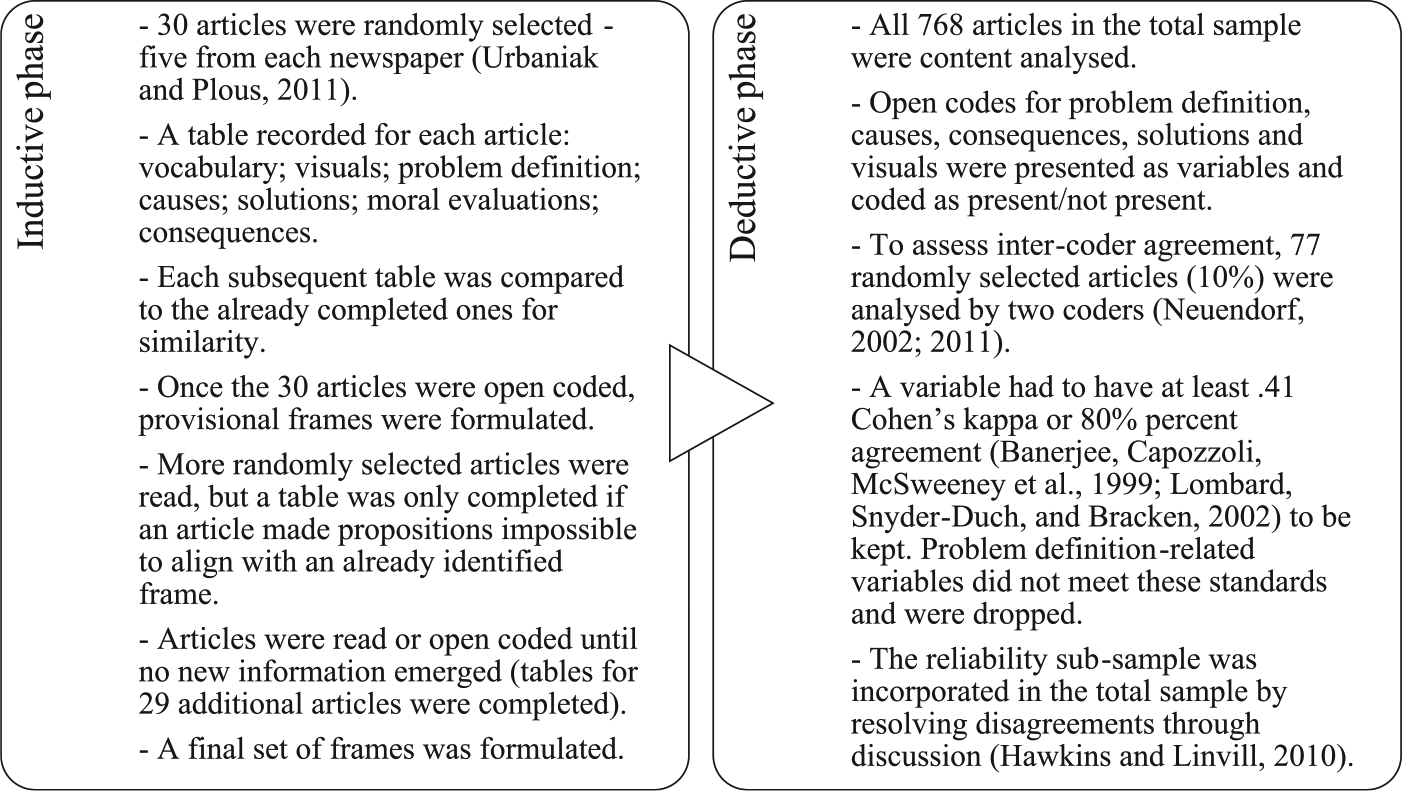
Procedures of analysis.
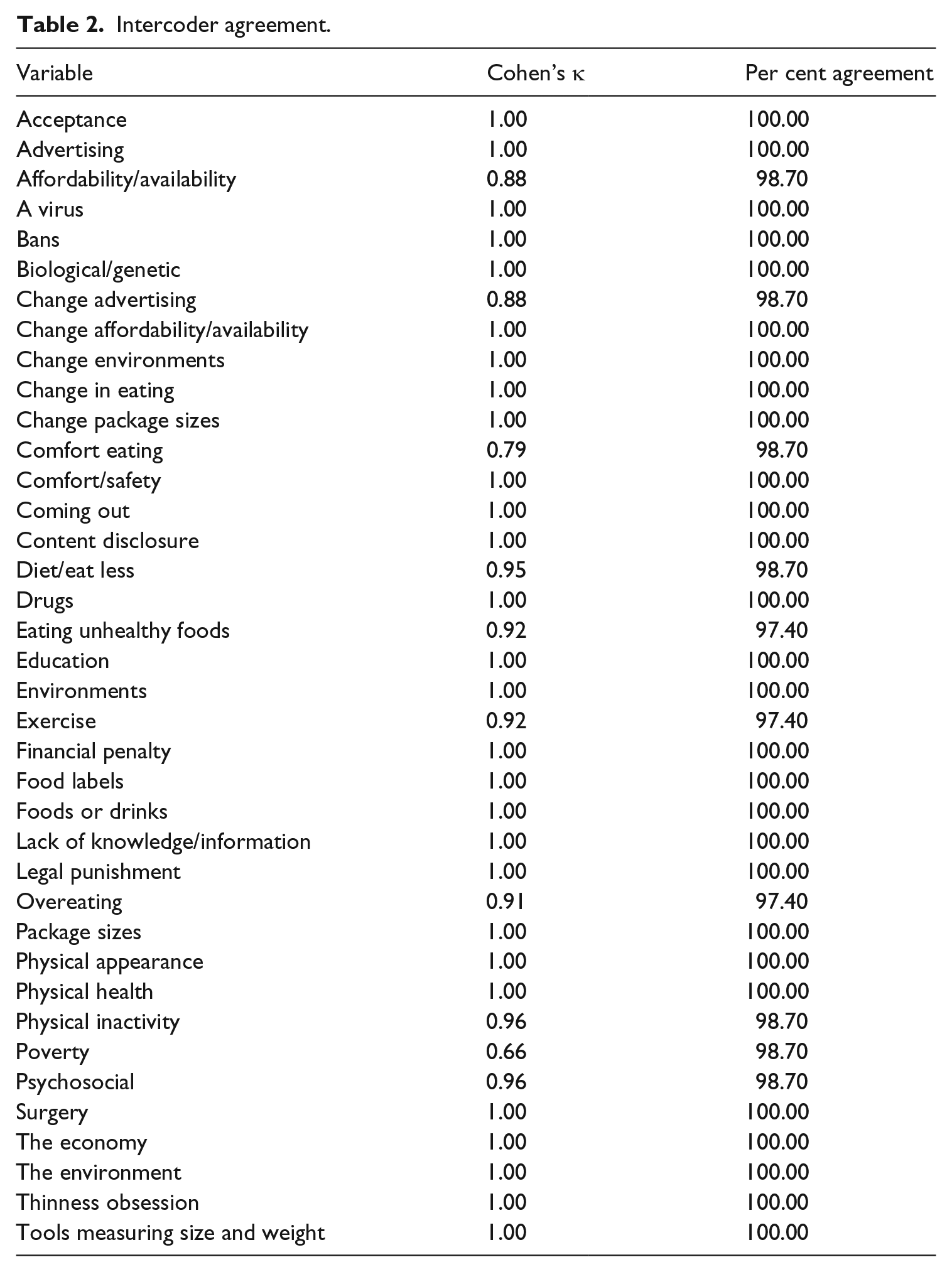
To establish how frequently obesity frames (and not just frame elements) had been used in the total sample, we devised a rule for assembling frame elements (coded as variables at the deductive phase) back into frames. This rule states that if a news article mentioned at least one element unique to a frame, the frame will be interpreted as being present in that news article. The rule rests on two assumptions: that frames can have both unique and shared elements (Entman, 1993) and that shared elements are unreliable indicators for measuring frame presence (Van Gorp, 2005). Following this rule, we found that 588 news articles (76.6% of the total) mentioned at least one obesity frame. This is not to say that the remaining 180 news articles were frameless; they contained frame elements shared between several frames. Table 1 below lists all elements that were presented in a coding protocol and coded at the deductive phase with unique frame elements appearing in bold. Table 2 summarises the results of the final reliability testing, which proceeded as explained in Figure 1.
Frame elements coded in a content analysis.

Intercoder agreement.
Results
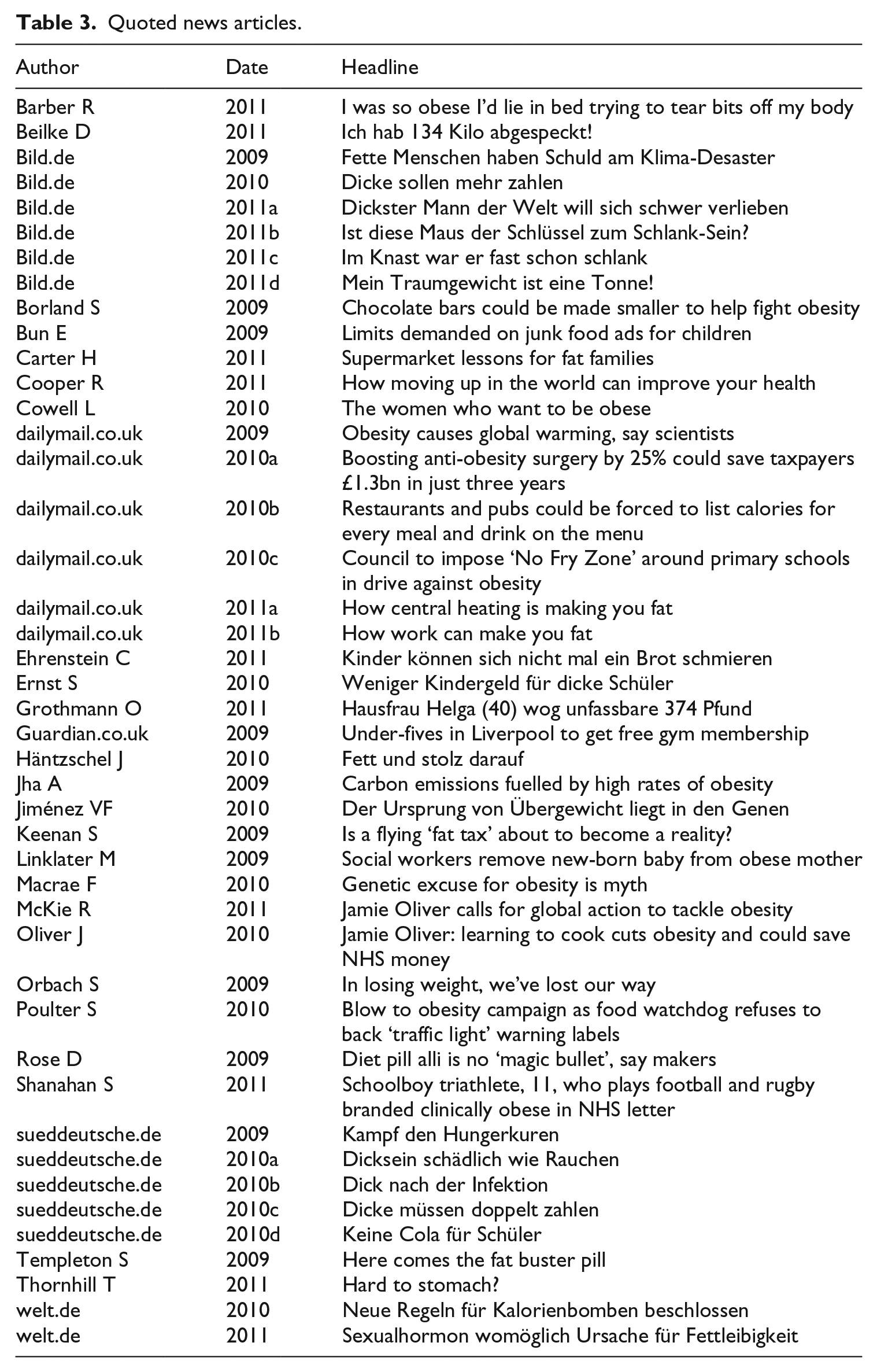
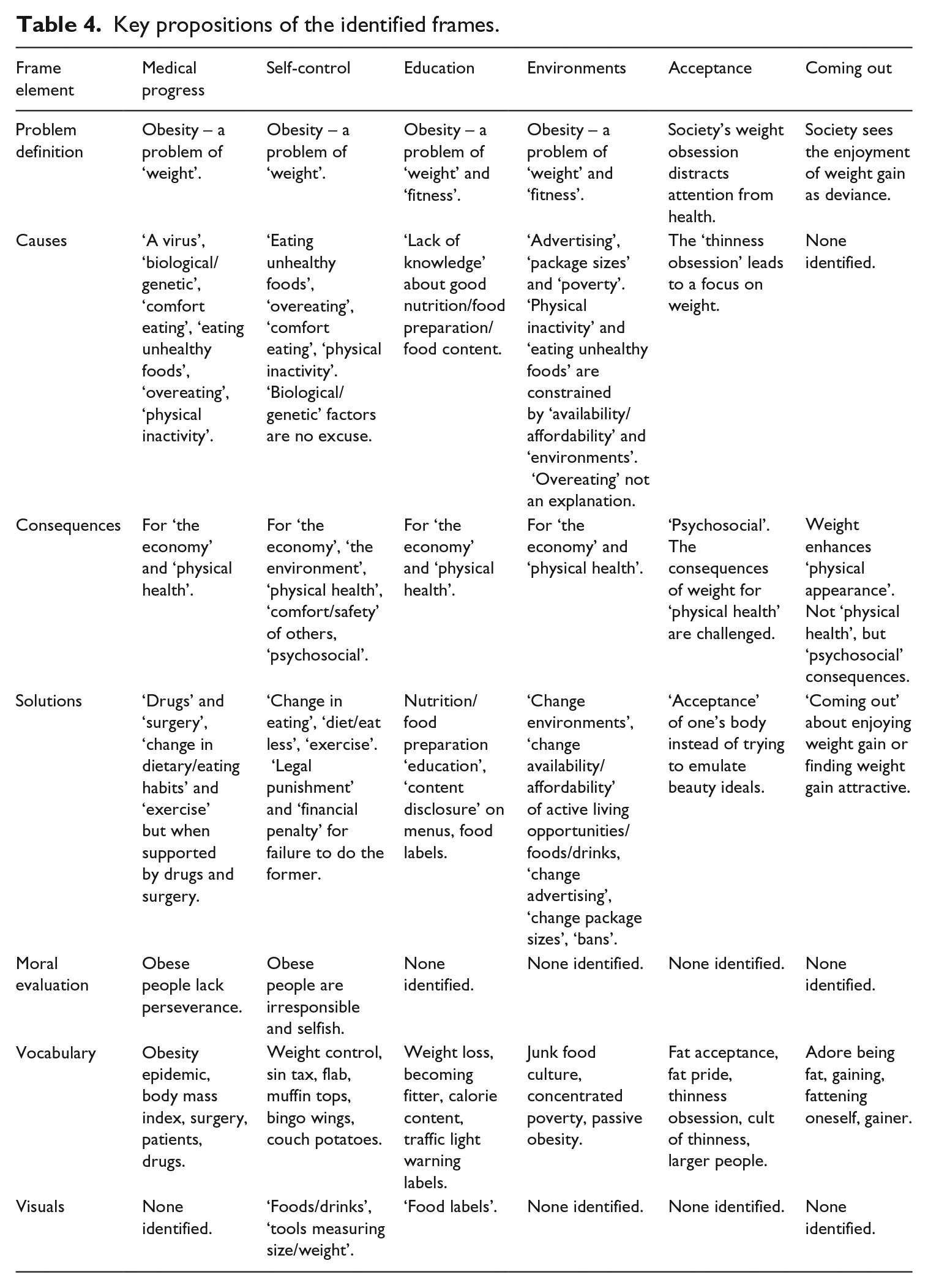
We identified the frames ‘medical progress’, ‘self-control’, ‘education’ and ‘environments’, which conformed to the idea that weight is risky, but we also found the (counter-)frames ‘acceptance’ and ‘coming out’, which opposed this view. We describe these frames below using excerpts from the news articles listed in Table 3, and we summarise the core propositions of the frames in Table 4.
Quoted news articles.
Key propositions of the identified frames.
Medical progress
The ‘medical progress’ frame was built around the belief that medicine and science can cure any problem – a belief which draws on a metaphorical narrative of medical/scientific research as an uninterrupted journey to new territories (Hellsten, 2008). News articles in the ‘medical progress’ frame defined weight as the core problem – ‘being fat is as harmful as smoking’ (sueddeutsche.de, 2010a, 2010b) – and acknowledged a wide range of potential contributors to weigh gain including biological/genetic make-up as in ‘the origin of obesity is in the genes’ (Jiménez, 2010), a virus ‘which attacks the lungs and the eyes’, personal behaviour related to physical activity and food consumption as in ‘eating around the clock for years’ (Bild.de, 2011a), ‘comfort’ eating, not moving and ‘getting even fatter’ (Beilke, 2011) and failure to eat ‘healthy meals’ (Templeton, 2009).
While various possible causes of obesity were discussed, it was solutions from the medical domain that were endorsed. News articles spoke of ‘the discovery of new drugs’ (welt.de, 2011) and instilled a belief in the power of medical research – ‘when will there finally be a pill that makes us slim? […] researchers […] have come one step closer!’ (Bild.de, 2011b). Surgery was presented as life-changing – the life of a woman before weight loss surgery ‘stood still’ (Beilke, 2011), but post-surgery, ‘her weight started steadily going down and her zest for life up’. When personal behaviour was discussed as a solution, drugs featured invariably as in ‘for every 2lbs (0.9kgs) someone can lose through healthy eating and exercise, Alli could help them lose an extra 1lb’ (Rose, 2009). And if drugs failed to show results, it was the lack of perseverance of individuals to blame – ‘Alli may not fare so well because many people will not persevere’ (Templeton, 2009).
News articles worried about obesity’s consequences for physical health and the economy. Obesity was described as ‘a significant risk factor for menacing diseases’ (Jiménez, 2010) with a cost of ‘£4.3billion a year’ to healthcare systems like the National Health Service (NHS) for England (dailymail.co.uk, 2010a). News articles published in British newspapers were also significantly more likely than those published in German ones to use this frame (odds ratio 1.6, χ2(1, N = 768) = 5.680, p = .017), which could be attributed to worries about the cost of surgery to the NHS and the gastric band operation of British radio and television presenter Anne Diamond (Lister, 2009). Overall, the ‘medical progress’ frame (165 news articles, 21.5 per cent of the total) was the third most frequently used frame.
Self-control
‘Self-control’, which was the most frequently used frame (390 news articles, 50.8% of the total), also positioned weight as the core problem, but unlike the ‘medical progress’ frame, it argued that ‘the fat gene can be beaten … in the gym’ (Macrae, 2010). News articles problematised weight both verbally – by discussing how ‘fat people burden the healthcare system’ (Bild.de, 2010) and visually - by depicting obese individuals measuring themselves with tape measures (dailymail.co.uk, 2009). This frame was constructed around the value of self-control – a core feature of ‘the ideal self’ in Western society (Hatty, 2000: 10).
Discussions about the causal mechanisms of obesity focused on personal behaviour related to physical activity and food consumption. For example, news articles spoke of using food to ‘cope’ with problems (Barber, 2011) and eating ‘mornings three sausage rolls, for lunch a mega portion of pasta, afternoons two giant pieces of cream cake’ (Grothmann, 2011). Another news article detailed how an obese individual ‘lazes around […] eats and the tax-payer will pay the bill’ (Bild.de, 2011c). Personal behaviour was also key in the elaborated solutions to obesity – ‘a strict diet’ (Grothmann, 2011), eating ‘at most a few pieces of chocolate’ (Bild.de, 2011c) and exercising to ‘melt away muffin tops and bingo wings’ (Macrae, 2010). The proposition that food consumption is key to both causing and solving obesity was communicated not only verbally but also visually; news articles were accompanied by photographs displaying takeaway boxes (Thornhill, 2011) or burgers and fries (Jha, 2009). And when individuals failed to bring their weight ‘under control’ (Linklater, 2009), legal punishments (Ernst, 2010) and financial penalties such as forcing ‘parents of chunky children to lose their tax breaks’ (Thornhill, 2011), making obese passengers ‘pay double’ (sueddeutsche.de, 2010c) or taxing chocolate (Bild.de, 2010) were recommended.
While news articles mentioned obesity’s ‘strain on the physical and psychological health’ of individuals (Ernst, 2010), they rather dwelled on the impact of obesity on the economy, the environment and the comfort/safety of others. News articles described how ‘fat people burden the healthcare system’ (Bild.de, 2010), ‘being overweight is bad for the environment’ (dailymail.co.uk, 2009), and how a passenger ‘suffered a haematoma in her chest’ after sitting next to someone obese (Keenan, 2009). Obese individuals were cast as particularly irresponsible and selfish in those news articles which examined the environmental impact of obesity – ‘melting ice-caps, desertification and endangered animals – because fat people are filling up their bellies?’ (Bild.de, 2009), questioned an article author adding that obese people also drive to supermarkets and thus, further increase their adverse impact on the global climate via the extra carbon emissions.
Education
By discussing lessons teaching parents how ‘to set weight-loss goals […] and become fitter’ (Carter, 2011), the ‘education’ frame problematised weight as well as fitness. It was built around the belief underlying the work of many charities that education can bring about positive change in the lives of individuals by empowering them to make informed choices (Gold and Porritt, 2004). ‘Education’ was among the less frequently used frames (114 news articles, 14.8% of the total).
People’s lack of knowledge/information about food preparation and content was identified as the leading cause of obesity – ‘children lack basic skills in the kitchen […] have not heard about a healthy diet’ (Ehrenstein, 2011). In line with this understanding of obesity’s leading causes, solutions focused on information/education provision. News articles discussed ‘supermarket lessons for fat families’ (Carter, 2011), ‘food preparation certificates’ (Ehrenstein, 2011), ‘compulsory “traffic light” warnings on food packs to steer shoppers away from an unhealthy diet’ (Poulter, 2010) and proposals to ‘force’ restaurants and pubs ‘to list calories for every meal’ (dailymail.co.uk, 2010b). The role of information and education both as contributors and solutions to obesity was also expressed visually when news articles featured photographs depicting traffic light food labels (Poulter, 2010; welt.de, 2010).
Similarly to the ‘medical progress’ frame, news articles in the ‘education’ frame were concerned with the consequences of obesity for physical health, ‘with every excess pound the risk of diabetes, heart attack and cancer increases’ (Ehrenstein, 2011). The economy was another concern, particularly the ‘£4bn a year’ cost of obesity to the NHS (Oliver, 2010). This partially explains why news articles published in British newspapers were significantly more likely than those published in German ones to use the ‘education’ frame (odds ratio 2.9, χ2(1, N = 768) = 17.133, p < .001). This tendency could also be attributed to the peculiarities of the British liberal welfare state in which government provision of services is minimal and solutions that require little state involvement (such as information provision) are favoured (Eikemo and Bambra, 2008).
Environments
Like the ‘education’ frame, the ‘environments’ frame (second most frequently used – 179 news articles, 23.3% of the total) also problematised both weight and fitness. News articles discussed the need to enable families to ‘get fit together’ (Guardian.co.uk, 2009) and ‘how central heating is making you fat’ (dailymail.co.uk, 2011a). However, informational solutions were considered insufficient to solve obesity, while schools teach about healthy diets ‘takeaways are fuelling junk food culture just outside the school gate undoing much of that good work’ (dailymail.co.uk, 2010c). This frame was built around the belief that people’s lives are affected by their environments – a belief that has been invoked in disability discussions to argue that it is the nature of built environments that disables. The logical solution to problems defined in this way is altering environments (Goodall, 2010).
Characteristic of this frame was that contributors to obesity linked to personal behaviour were discussed in wider contexts such as the nature of living environments and the availability/affordability of foods and active living opportunities. Thus, a news article explained physical inactivity with ‘the switch from labour-intensive jobs to sedentary office-bound’ ones (dailymail.co.uk, 2011b). Another one argued that people have ‘less choice in the matter of their weight than they would assume’ and it is rather ‘the availability of cheap, high-calorie convenience foods’ that cause obesity (McKie, 2011). ‘Junk food ads’ (Bun, 2009), the size of prepackaged foods and drinks (Borland, 2009) and ‘poverty’ (Cooper, 2011) were all implicated as contributors. Similarly, solutions focused on ‘changes in many aspects of our environment’ (McKie, 2011), limiting food marketing (Bun, 2009), banning ‘fattening foods’ (sueddeutsche.de, 2010d) and requiring food manufacturers to reduce package sizes (Borland, 2009). Other recommendations included altering food availability – ‘no new fried chicken shops and burger bars will be allowed to open within 400m of a school’ (dailymail.co.uk, 2010c) – and making active living affordable by offering low-income families free gym membership (Guardian.co.uk, 2009).
Similarly to the ‘medical progress’ and ‘education’ frames, news articles worried about obesity’s consequences for physical health – ‘obesity is a proven killer’ (Guardian.co.uk, 2009) – and the economy. The estimated cost of obesity to the NHS of ‘more than £8.4billion’ (Borland, 2009) received much attention, and news articles published in British newspapers were significantly more likely than those published in German ones to use the ‘environments’ frame (odds ratio 1.6, χ2(1, N = 768) = 5.841, p = .016). This tendency may be due to the more longstanding and central position of personal responsibility in German health law where the spirit of solidarity dictates that the community as a whole is responsible for the health of individuals, but individuals also have obligations to the community (Schmidt, 2008).
Acceptance
Unlike the preceding frames, ‘acceptance’ rejected the negative impact of weight on physical health and identified the focus on weight, not weight itself as problematic – ‘fat people even live longer and are healthier […] it is not the body of the fat person that suffers, but their soul because of discrimination’ (Häntzschel, 2010). A news article about a ‘schoolboy triathlete’ declared ‘clinically obese’ in a letter from the NHS suggested that a focus on weight may lead to worries about the acceptability of one’s body and distract attention from health (Shanahan, 2011). The boy, whose mother was quoted saying ‘labelling fit children “fat” could prompt harmful eating disorders’, had refused dinner upon receiving the letter (Shanahan, 2011). The tendency to focus on weight was linked to society’s ‘obsession with thinness’ (Häntzschel, 2010; sueddeutsche.de, 2009) or ‘cult of thinness’ (Orbach, 2009) defined as the belief that ‘with a perfect figure it will be possible to find the right friends and be loved’. To solve this, news articles argued that it is important for people ‘to accept their body instead of emulating beauty ideals’ (sueddeutsche.de, 2009).
This frame, which was among the least frequently used (18 news articles, 2.3% of the total), was built around the acceptance narrative – a narrative that can be, for example, found in the mission statement of the pro-ana movement, which aims to recast as diversity weight-related traits condemned as a form of disease and used as a ground for discrimination (McColl, 2013). The acceptance strategy is further linked to social movements, as their goal essentially is to get their ideas into the realm of acceptance (Singer, 1991). Explicitly linking the ‘acceptance’ frame to a social movement, a news article described fat activism as ‘the counter-offensive of fat people’ (Häntzschel, 2010), which ‘comes at the right moment’ when ‘the fat person has become a symbol of personal and societal failure’.
Coming out
The ‘coming out’ frame, which was the least frequently used frame (15 news articles, 2.0% of the total), also rejected the negative impact of weight on physical health – ‘people worry about health because it’s the easiest place to hang fat hatred […] I have experienced fat discrimination almost on a daily basis’ (Cowell, 2010). Additionally, weight was discussed in positive terms – ‘I feel more confident and sexier than ever’ (Bild.de, 2011d), ‘more fat means more sex appeal’ (Cowell, 2010). This frame was constructed around the narrative of coming out, which has been employed to describe the social dynamics of lesbian, gay, bisexual and transgender (LGBT) life and suggests that people who are ‘in the closet’ live unhappy lives and want to reveal their identity, but coming out may be impeded by social, economic and other factors (Seidman et al., 1999). Like the goal of acceptance, coming out is a well-documented social movement strategy (Whittier, 2011).
The core problem according to this ‘coming out’ frame was the tension between the positive consequences of weight gain experienced by some individuals and societal perceptions that enjoyment of weight gain is deviant – ‘gaining is often linked to feederism; a topic that occasionally pops up as freakshow fodder in magazines, chat shows or documentaries’ (Cowell, 2010). Coherent with this problem definition, the solution was coming out while also acknowledging the different associated costs to different people – ‘being an NHS employee, she cannot come out of the gaining closet’ (Cowell, 2010) versus ‘she is in the privileged position of “coming out” because she has little to lose: her partner will not leave her because of it, and she is unlikely to lose her job’.
Discussion and conclusion
This study analysed British and German online news articles to identify what obesity frames were used (RQ1) and how frequently they were used (RQ2). Some of the obesity frames that we described have analogies in the reviewed research, but they also differ in a major way – the extent to which individuals were responsibilised for solving obesity. Thus, the ‘medical progress’ frame resembles the ‘obesity as a biological problem’ frame by constructing obesity as a biological or genetic disorder best solved with medical or scientific solutions (Holmes, 2009; Lawrence, 2004; Saguy and Almeling, 2005; Sandberg, 2007). But whereas analogies from past research used biological and genetic explanations of obesity to emphasise that it is a condition outside of self-control and to absolve individuals from responsibility (Saguy and Almeling, 2005), the ‘medical progress’ frame blamed the inefficacy of treatments on obese individuals’ lack of perseverance. Furthermore, the ‘self-control’ frame from our study resembles the ‘obesity as a problem of personal responsibility’ frame by presenting individuals as ultimately responsible for tackling obesity via physical activity and food consumption changes (Holmes, 2009; Lawrence, 2004; Saguy and Almeling, 2005; Shugart, 2013). Yet, the connection between obesity and global warming which was made in the ‘self-control’ frame from our study allowed for the more intense construction of obese individuals as irresponsible and selfish, at the expense of the whole planet. Finally, unlike the ‘obesity as a matter of societal responsibility’ frame which highlighted the role of government and industry in creating obesity-inducing environments (Holmes, 2009; Lawrence, 2004), our ‘environments’ frame gave only superficial attention to socioeconomic factors when it came to solving obesity. A news article reported that poor women who moved to richer areas saw a reduction in obesity because of ‘a lower concentration of takeaway restaurants and more healthy neighbours to model their lifestyles on’ (Cooper, 2011). Missing here and elsewhere was a call to tackle poverty or to reduce socioeconomic disadvantage via redistributive mechanisms in income and wealth, which proposals are fundamental to truly environmental approaches to public health.
The more pronounced emphasis on personal responsibility and weaker engagement with socioeconomic factors at the stage of problem solving resonates with wider developments in the British and German healthcare systems at the time. The year of 2009 saw the publication in Britain of the NHS Constitution which introduced for the first time in the history of the NHS health-related responsibilities for individuals (Schmidt, 2009). In Germany where the personal responsibility concept has been ‘explicitly and prominently enshrined’ in health law since the 1980s (Schmidt, 2007: 242, 2008), the 2007 healthcare reform placed further emphasis on the concept by stating that health complications arising from lifestyle choices may not necessarily qualify for free treatment. The stronger emphasis on personal responsibility may also be attributed to the proximity of the analysed timeframe to the global financial crisis of 2007–2008, which period witnessed the intensification of arguments for less government spending and service provision. The greater emphasis on personal responsibility and our finding that ‘self-control’ was the most frequently used frame (in the total sample and in the British and German sub-samples) corroborates existing knowledge that individualising framings of obesity predominate (Lawrence, 2004; Saguy and Almeling, 2005) and is consistent with the wider body of research on obesity representations (see, for example, Boero, 2007; Lupton, 2004).
Such predominantly individualised framing of obesity can have a number of implications as recently confirmed in empirical research. Couch et al.’s (2015) study of obese people’s perceptions of and responses to individualised reporting shows that news articles emphasising personal responsibility were seen as contributing to a culture of weight bias and stigma. Participants felt that such reporting made it more acceptable to other people to publicly ridicule obese individuals. Study participants also attributed the ever rising number of stigmatising comments they experienced to media representations of obesity that highlight personal responsibility. Findings by Couch et al. (2015) also suggest that a predominant focus on personal responsibility in the news may turn people away, meaning that potentially useful information contained in obesity-related news articles may not reach this audience. Participants spoke of limiting their news consumption in anticipation of the familiar storyline that obese individuals are to blame for their own condition.
However, the media can also function as mechanisms for countering entrenched social conceptions of obesity. This study’s most noteworthy finding is that it was not solely the ‘monolithic mantra that “fat is ‘obesity’ and is unhealthy”’ (Monaghan et al., 2011: 225) that found expression in mainstream news articles on obesity. Critical voices were also given representation, if limited (as our analysis of the frequency of use of the different frames indicated). By critical perspectives we mean voices which reinterpret the research evidence about the negative impact of increased weight on physical health (Cooper, 2011) and thus, argue that the ‘acceptance’ and ‘coming out’ frames presented such perspectives. They challenged the binary understanding of body weight where thin is normal and fat is deviant and unhealthy. Unlike ‘medical progress’, ‘self-control’, ‘education’ and ‘environments’, ‘acceptance’ and ‘coming out’ did not define weight as problematic and a key contributor to illness. The ‘acceptance’ frame problematised the focus on weight rather than weight itself, while the ‘coming out’ frame discussed weight’s positive effect on physical appearance. By doing so, these two frames went beyond redefining obesity; they countered a key proposition of the existing dominant understanding of obesity, and therefore, we distinguish them as counter-frames (Snow et al., 1986). Indeed ‘acceptance’ and ‘coming out’ reflect different aspects of fat activism – a diverse movement where debates still rage regarding the amount and nature of attention that weight should receive (Cooper, 2011).
The presence in mainstream newspapers of counter-frames which can be linked to the fat acceptance movement also points to its success. Social movements’ reliance on the media for validation in the mainstream public discourse is complicated by the specifics of news production. Unlike other social actors (e.g. politicians and scientists), social movements are typically outside the focus of regular news beats which make entry into mainstream media coverage difficult (Gamson and Wolfsfeld, 1993). Even when such coverage is gained, social movements’ messages tend to be slanted or trivialised (Kensicki, 2001). Thus, gaining mainstream news media coverage that does not do this can be seen as success for the fat acceptance movement. While fat acceptance voices have had their space for sharing in the blogosphere, our findings indicate that they have also started carving out a mainstream media space. It can be argued that it was the online impact of the Fatosphere that contributed to the eventual inclusion of critical voices in mainstream media, as there is evidence that journalists take their cues about what to cover from blogs and describe blogs as a key part of information gathering (Smolkin, 2004).
Use of the ‘acceptance’ and ‘coming out’ counter-frames in mainstream British and German newspapers is also a sign that public discourse on obesity is expanding and is unlikely to shrink back to a narrow focus on weight as a key predictor of physical health. This can be seen as a positive sign given growing evidence that physical fitness may be as important for health as weight (Blair and Church, 2004) and evidence that fat acceptance can have a positive impact on obese individuals’ health and well-being (Dickins et al., 2011). It can be further argued that the use of the ‘acceptance’ and ‘coming out’ frames in mainstream British and German newspapers may contribute to an atmosphere in which alternative lived realities or understandings of obesity are more easily possible.
In summary, this article has two main conclusions. We found that obesity was predominantly framed in individualising terms, and the need for self-control was more intensely communicated than what past research has described. On a more positive note, we identified an expanded obesity discourse in which critical voices were represented in mainstream media. This inclusion of fat acceptance messages in mainstream media may be attributed to journalists being increasingly attuned to discussions taking place in the blogosphere. An alternative explanation for the increased media interest in fat acceptance might be the rise of Fat Studies – an interdisciplinary field which aims to expand the understanding of fatness beyond a medicalised view of weight as risky (Cooper, 2016). The timeframe we analysed overlaps with the establishment in the UK of Fat Studies (Cooper, 2016) and the publication of an important fat studies book by Friedrich Schorb in Germany (Häneke, 2013). The use of the fat acceptance frame in mainstream media is noteworthy as it may have a positive impact on obese individuals by contributing to an atmosphere in which alternative lived experiences are more easily possible. This also leads to the limitations of our study – the impact of media frames must be assessed through other methods relying on observation and/or individual accounts. Similarly, interviews with journalists might better illuminate the factors underlying the inclusion of critical voices in mainstream news. More work is therefore invited that covers these two areas.
Footnotes
Acknowledgements
We would like to thank the reviewers and the journal editor for their help and guidance.
Declaration of Conflicting Interests
The author(s) declared no potential conflicts of interest with respect to the research, authorship, and/or publication of this article.
Funding
The author(s) received no financial support for the research, authorship and/or publication of this article.