




Abstract
In December 2017, Australia legalized same-sex marriage (SSM), following a 13-year ban and a drawn-out postal survey on marriage equality that saw campaigners mobilize for a ‘Yes’ vote on a non-binding poll. Through a discourse analysis of the Yes and No campaigns’ television and online video advertisements, we demonstrate how the Yes campaign was symptomatic of what we call a ‘post-liberation’ approach that saw SSM as the last major hurdle for Lesbian, Gay, Bisexual, Transgender, Intersex and Queer (LGBTIQ) politics. While the No campaign linked SSM to gender fluidity, transgender identity, and sex education programmes, in contrast the Yes campaign limited itself to narratives around love and marriage. In not attending to the link between sex, gender and sexuality, the Yes campaign narrowed the possibilities of the debate, preserving existing White heteronormative expectations of gender and sexuality. We contrast the debate that unfolded during the postal survey to the Australian Gay Liberation movement of the 1970s, the latter of which was able to successfully and radically challenge similarly homophobic campaigns. Rather than relying on ‘palatable’ or mainstream ideas of equality, love and fairness, Gay Liberation in Australia embraced the radical potential of LGBTIQ activism and presented a utopian, optimistic vision of a transformed future. Here we suggest that we can learn from the history of campaigns around sexuality, to understand what was ‘won’ in the SSM debate, and to better develop strategies for change in the future.
In 2017, after a drawn out and bitter public debate, Australia held a postal survey that resulted in Parliament legalizing same-sex marriage (SSM). The campaigning period spanned between September, when the process was announced, to November, when the results were released, and saw both No (against SSM) and Yes (in support of SSM) campaigns emerge. These campaigns engaged in prominent public debates, dedicating large amounts of money to advertising. The Yes campaign was ultimately successful. However, it did not confront the issues of homophobia and transphobia that arose, attending only to questions of marriage, monogamous coupledom, and love. In doing so, the Yes win came at a high cost. As leading equality advocate Rodney Croome has since reflected ‘It was a mistake to make marriage equality a small target’ (2018). Heteronormative gender roles remained unchallenged by Yes, and support was not extended towards transgender people or LGBTIQ people of colour. During the period, few criticized the approach adopted by the Yes campaign. Amongst the critics were Jordy Silverstein and Mary Tomsic (2017) who urged engagement beyond monogamous coupledom, Archie Thomas and Hannah McCann, who argued that the campaign must recognize the connections between trans and lesbian, gay, and bisexual oppression in order to secure more than a hollow victory (2017; see also Thomas, 2018), and Alison Gallagher (2017) who argued for a more trans and queer-inclusive campaign. Extending this small field of critique, we argue that the Yes campaign missed a chance to build towards a more radical, utopian vision of LGBTIQ liberation.
The Yes campaign dismissed the need for the radical reimagining of society, marking LGBTIQ liberation as already achieved, save for the legislative hurdle of SSM. We define this as ‘post-liberation’ politics, anchored within a homonormative approach, in the sense first introduced by Lisa Duggan (2002). Duggan's original use of the term was in reference to the politics of LGBTIQ organizing, describing homonormativity as a ‘highly visible and influential center-libertarian-conservative-classic liberal formation in gay politics’ (2002: 177). As she explains, within the context of neoliberalism in the 1990s, LGBTIQ organizing turned toward ‘mainstreaming’, positioning itself against both the anti-gay far right and the queer left. The Yes campaign can be understood as an expression of this new neoliberal strand of LGBTIQ politics described by Duggan, reinforcing the privatization of social responsibility via the nuclear family unit. As former Australian Prime Minister Malcolm Turnbull (a Yes supporter) stated after the postal survey results: ‘[Former Prime Minister] John Howard was most definitely not thinking of gay couples when he said in 1995: “A stable, functioning family provides the best welfare support system yet devised.” But the point is well made. Codependency is a good thing’ (Turnbull, 2017). The Australian Financial Review even argued that the Yes campaign's success may be partly due to the involvement of big business in the campaign (Clark, 2017). However, a crucial addition to the Yes campaign's homonormative approach was a distinct turn away from the politics of liberation to ‘post-liberation’ – that is, seeing radical shifts around sexuality in western society as already largely complete. In this framing, LGBTIQ liberation is no longer a project of social transformation, but rather is defined as the achievement of formal legal equality, with SSM as the (imagined) final legislative hurdle. We use the term ‘post-liberation’ to build on and intersect with understandings of liberal or homonormative politics, and to augment the understanding of this particular form of politics in LGBTIQ campaigns in a Western context.
With this in mind, we consider the specific machinations of the Yes campaign's shortcomings. Firstly, we unpack the political origins of the debate around the postal survey and campaign's antecedents. We focus in particular on what we term the post-liberation approach of Yes. Second, we turn to a discourse analysis of television and online video advertisements from the Yes and No campaigns during the postal survey, to critically analyze the limitations of the post-liberation assumptions of the Yes campaign – in doing so, we draw on Lauren Berlant's notion of ‘cruel optimism’ (2007, 2011). Here, ‘cruel optimism’ refers to the investment in hopes for the future, which may in fact prove detrimental (‘cruel’) to one's ‘flourishing’ (Berlant, 2011: 1). To analyse the advertisement, we employ critical discourse analysis, which focuses on making explicit discursive norms within texts and how they work to realize the interests of those enacting them (Flowerdew, 2008). We analyse these in relation to our concept of post-liberation, noting that the Yes campaign anchored itself within an imaginary that explicitly ‘whitewashed’ (Gabriel, 1998) the campaign, leaving many trans and queer persons unaccounted for.
Finally, we suggest that the future of LGBTIQ politics need not play out in the cruel terms set within the marriage equality debate in Australia. Presenting our own version of optimism and rejecting a post-liberation position, we compare the vision of the Yes campaign to the utopian demands and uncompromising strategies of Australia's Gay Liberation movement of the 1970s. Through drawing on the past to inform our future, we suggest a renewed hope for liberation that goes beyond the boundaries of equality, an approach that might inform LGBTIQ campaigns to come.
The promise and problems of SSM
Prior to the postal survey, debate around SSM had occurred in Australia for over a decade. In 2004, then Prime Minister John Howard – leader of the conservative Liberal-National Coalition – successfully introduced legislation banning SSM in Australia (Marriage Amendment Bill, 2004). SSM had started to gain attention internationally, intensifying in 2004 as President of the USA, George W Bush, also moved for a legal ban to gain conservative votes (Lewis, 2005). In Australia, subsequent Labor-led governments maintained Howard's ban. However over time, as more nations around the world began to legislate for SSM, including many of Australia's closest allies, public pressure grew via increasing rallies, petitions, and other lobbying efforts (see Karp, 2016).
In 2017, the conservative Liberal-National Coalition Government bypassed parliamentary approval and launched a non-binding voluntary postal vote on SSM for all citizens over the age of 18, to be run through the Australian Bureau of Statistics (ABS). There had been community opposition to original Coalition plans for a non-binding plebiscite, largely due to concerns that this was a delaying tactic that prolonged a message of discrimination (see Karp, 2017). However, when the postal survey was announced, marriage equality efforts folded almost immediately into an electoral-style campaign. This was despite the deep unpopularity of the survey expressed by some within the LGBTIQ community (as evidenced by a number of community-funded court cases that sought to challenge the legality of the survey) (Florance, 2017).
At the start of the campaigning period, the key slogan of the campaign was simply ‘Yes’. Organized by a coalition of pro-SSM groups, the campaign was coordinated primarily via the website ‘The Equality Campaign’, where people signed up to activities such as phone banking and door-knocking to get out the vote (‘This Campaign Needs All Of Us’, 2017). As Luke Gahan, a founder of lobby group Australian Marriage Equality (AME) suggested at the time, the campaign would involve creating a temporary organization that resembled other lobby groups around the world, effectively ‘professionalising LGBTI[Q] rights organisations’ in Australia (quoted in Stuart, 2017). Underlying this swift response was the sense that legislative change for SSM needed to be achieved by any means necessary, even if via a non-binding public vote.
The belief in the promise of marriage equality to resolve the final formal traces of LGBTIQ inequality had been widespread amongst LGBTIQ advocates and sections of the LGBTIQ population in Australia for some time (Crosby/Textor, 2014; Philpot et al., 2016). Pro-marriage and family values discourses emerged inside the left across the West in the 1980s (Lavelle, 2015: 183), and the protest politics of Gay Liberation in the 1970s were subordinated to lobbying and legal reform. Liberal demands for ‘equality’ became the focus of LGBTIQ organizing in Australia, and marriage equality came to be seen as ‘the last great issue to be resolved’ for the LGBTIQ community (Willett, 2010: 195). This political perspective reflects not only a liberal rights-based approach, but the distinct view that the struggle for LGBTIQ social liberation had largely been completed, and that the remaining barrier to the last vestige of formal equality was marriage. Such a view overlooks the many legal and medical obstacles faced by LGBTIQ persons not resolved by marriage equality – such as, in the Australian context, blood donation inequality for gay and bisexual men, trans access to medical services, and the right to self-determine gender identity (AHRC, 2015). As Morgan Bassichis et al. argue in their discussion of gay and lesbian organizational responses in the USA context, even where there has been recognition of other issues affecting the LGBTIQ community (such as immigration, or queer family rights) SSM has frequently been imagined as the ultimate solution to these disparities (2011: 17–19; see also Spade, 2015: 31–33). Within the post-liberation politics of the Yes campaign, the very idea of liberation broadly – that is, a radical challenge to dominant understandings of gender and sexuality – is understood as a concern of the past rather than the present. This assumption that a broader liberation politics is no longer necessary came to operate as the foundation for the Yes campaign, as we will explore shortly.
It is important to note that these post-liberation assumptions emerged despite extensive critiques of marriage equality in LGBTIQ discourse in the preceding decade. As Gust Yep et al. propose, two competing ideological tendencies around SSM emerged – an ‘assimilationist’ view advocating SSM to facilitate LGBTIQ entrance to the mainstream, and a ‘radical’ view opposing SSM on the basis that it would mimic heteronormative coupledom (2003; see also Bernstein and Taylor, 2013; Cover, 2010; Hequembourg and Arditi, 1999). For example, taking the latter position, Hameed Herukhuti S Williams argued in the context of the USA that ‘Current marriage equality advocacy is devoid of a critical and radical definition of equity and equality’ (2008: 318). Also taking the radical view, Judith Butler argues that the fundamental problem of SSM is the investment in the idea of the state presiding over personal relationships (2002). She contends that far from being transformative, entrenching this version of equality serves to make LGBTIQ couples more ‘normal’, thus creating a hierarchy of good (married) versus bad (unmarried) homosexuals, rather than troubling notions of heterosexual kinship that give rise to LGBTIQ exclusion in the first instance. She writes: The petition for marriage rights seeks to solicit state recognition for nonheterosexual unions, and so configures the state as withholding an entitlement that it really should distribute in a nondiscriminatory way, regardless of sexual orientation. That the state's offer might result in the intensification of normalization is not widely recognized as a problem within the mainstream lesbian and gay movement. (Butler, 2002: 16)
However, we can understand the limitation of these radical critiques in shaping SSM campaigns, insofar as they appear to suggest abstaining from the debate. For example, Brandzel argues we must, ‘refuse citizenship altogether’ (2005: 198). This implies that any reform-based demands involving the state are necessarily corrupt and underestimates the possibility of a third option: a radical approach to campaigning for SSM that extends beyond the question of marriage. As Kath Browne argues, the simplified dichotomy that sees SSM as only either transgressive or assimilatory does not account for the ‘messiness’ of debates around and experiences of SSM (2011: 103). The possibility of a third approach that does not simplify the debate along such a binary is bolstered by recent ethnographic studies that have troubled the idea of SSM as inherently ‘normalizing’ for those who participate in it (Onishenko and Erbland, 2017), as well as research showing that some US-based groups have both supported SSM and maintained a criticism of the capitalist system more broadly (Weber, 2015).
In the Australian debate, however, the Yes campaign's post-liberation politics saw them situated firmly within an assimilationist approach, rather than exploring a third option. In 2016, AME hired political director of the Irish SSM Yes campaign, Tiernan Brady, to coordinate the Australian campaign. Writing for a major Australian newspaper during the midst of the survey, he argued that the Yes campaign would be successful if it denied the radical possibilities of a marriage equality campaign, to reassure ‘ordinary’ Australians that ‘No one will be less married the day it happens and no one will be more gay’ (Brady, 2017).
Ironically, during Australia's postal survey it was the No campaign that hinted at the radical, liberatory possibilities of SSM, identifying its rupturing potential. The conservatives leading the No campaign described SSM as a ‘rainbow Trojan horse’, which would result in gains for the LGBTIQ community beyond marriage (‘Hundreds Gather for Anti-Same-Sex Marriage Event at Adelaide Town Hall’, 2017). The No campaign organized under the banner of the Coalition for Marriage just prior to the formal announcement of the postal survey (Coalition for Marriage, 2017). This development followed a sustained campaign conducted by right-wing politicians and commentators against an LGBTIQ-positive education programme, Safe Schools, since 2015. The aim of the programme was to educate primary and secondary school students about LGBTIQ identities and experiences (SSCA, 2018). Pointing to Safe Schools, No argued that SSM would usher in a new age of radical sex and gender education and that it could rock the foundations of marriage and of gender roles. As one Coalition for Marriage flyer explained: Changing the marriage law to allow same-sex couples to marry means taking gender out of our laws. Radical gay sex education programs will become more widespread and compulsory as has happened overseas. More and more kids will be taught their gender is fluid and not based on biology. If same-sex marriage becomes law, parents will not have a leg to stand on if they don't want their kids taught radical sex education, and gender ideologies. (Coalition for Marriage, 2017)
Australia legislated for marriage equality on 7 December 2017, yet precisely what has been gained for the LGBTIQ community, beyond the narrow option to have one's relationship recognized as marriage before the state, remains to be seen (Karp, 2017). While No saw the possibilities of SSM reform as a threat, Yes might have seen SSM as a bigger opportunity. Rather than falling back on liberal notions of ‘equality’ and ‘fairness’ the Yes campaign might have defended trans people and sex education, and aimed to open up a broader critical discussion of gender and the family. Situated as we are now, after the survey, we suggest that a critical engagement with how the No and Yes campaigns played out holds lessons for the future of LGBTIQ organizing.
The cruel optimism of post-liberation discourse
Airing during prime time, the first No television advertisement, organized by the Australian Christian Lobby (ACL), attacked gender-neutral school-uniform policies and trans students, and made clear reference to the controversy surrounding the Safe Schools programme. The advertisement featured three mothers talking in what looked like their own family homes, with the following dialogue: Mother 1: School told my son he could wear a dress next year if he felt like it. Mother 2: When same-sex marriage passes as law overseas, this type of program become widespread and compulsory. TEXT: In countries with gay marriage, parents have lost their right to choose. Mother 3: Kids in year seven are being asked to role-play being in a same sex relationship. TEXT: You can say NO. ACL's advertisement ‘Widespread and Compulsory’, 2017.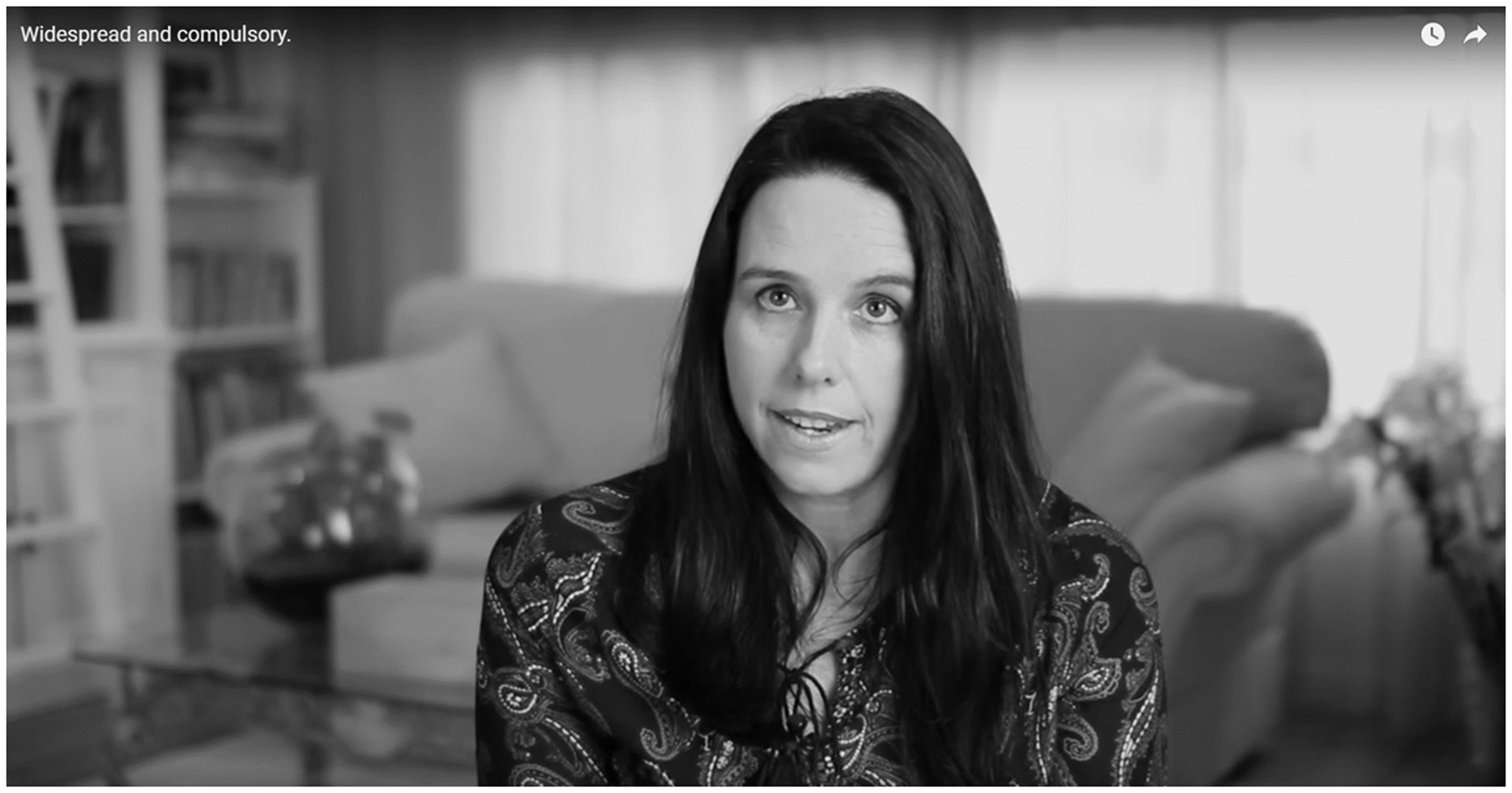
In response, Yes deployed a homonormative post-liberation strategy focusing on marriage alone, and chose to deflect the No campaign's homophobic and transphobic arguments. Croome, a prominent Australian gay rights activist and leader in the 1990s campaign in Tasmania to decriminalize homosexuality, has since written about how explicit this strategy was: [The Equality Campaign] particularly opposed engaging in any way, no matter how positively or constructively, with the issues raised by the No campaign like gender, schools and religious freedom, arguing this just legitimised the No case. … As the main spokesperson for Australian Marriage Equality I was summarily told not to speak about Safe Schools. … I was also told not to address transgender equality, even though my experience had shown me that one of the most compelling arguments for marriage equality were the life stories of transgender people. (Croome, 2018)
Here we might further turn to Butler's conception of the ‘heterosexual matrix’ to understand the set of social expectations that the No campaign sought to reinforce, and that the Yes campaign was unable or unwilling to respond to because of their post-liberation politics. Butler describes gender as falling under a heterosexual matrix wherein there is an inextricable social link made between sex, gender and sexuality, that is normatively reinforced so as to appear inherent, natural, and unchallengeable (2008: 208). Here, the assumption of the gender binary of sex male/female flows from the expectation of oppositional desire between men and women. Thus, maintaining heterosexuality necessitates the idea of a gender binary, where ‘naturally’ oppositional genders desire one another. Butler helps us to understand that where there is a challenge to norms of sexual desire, this also poses a ‘threat’ to the foundation of the gender binary. As she asks, How do certain sexual practices compel the question: what is a woman, what is a man? If gender is no longer to be understood as consolidated through normative sexuality, then is there a crisis of gender that is specific to queer contexts? (Butler, 2008: xi)
We can understand Yes’ resistance to engaging with the radical possibilities entertained by No as indicating an optimism that marriage was the ‘final’ mainstream hurdle in LGBTIQ politics. As Berlant suggests, we are attached to certain objects (in this case, marriage) because of the promises we think they will deliver (2011: 23). Yet, as Berlant explains, cruel optimism exists where desires and attachments are antithetical to flourishing (2011: 1). She suggests: [O]ptimism is cruel when the object/scene that ignites a sense of possibility actually makes it impossible to attain the expansive transformation for which a person or a people risks striving. (Berlant, 2011: 2)
In the first clear sign that Yes were going to ignore the entangled homophobia and transphobia of the No campaign, and remain attached to the object of marriage alone, the Yes campaign focused on finding ‘respectable’ figures to reassure voters that SSM would not threaten gender norms or impact school curricula. Australian Marriage Equality (AME) was the first to respond to the No advertisement directly, setting the tone by narrowing the discussion to marriage specifically. In the first Yes advertisement aired on commercial television during the postal survey period, Australian LGBTIQ advocate Doctor Kerryn Phelps is shown sitting in a modern office watching the No advertisement on a tablet, before she directly addresses the camera (see Figure 2): DR PHELPS: Over the coming weeks, we'll be hearing a lot about whether our family and friends, who are gay and lesbian, can get married. Sadly, some are trying to mislead us, like this ad does, by saying there will be a negative impact, including on young people. The only young people affected by marriage equality are young gay people, who for the first time will have the same dignity as everyone else in our country. And they deserve that (AME, 2017a).
AME's advertisement ‘Dr. Kerryn Phelps in Response to Opponents’, 2017.
Most remarkable, however, was an advertisement from the organization GetUp!, released shortly after the AME advertisement, shared on Facebook and viewed by nearly 200,000 people in the period. In the advertisement, we see a White family of four in a living room, with words addressed to the camera by the mother, mimicking the style of the No advertisement (see Figure 3). At the beginning, the mother speaks directly to the camera, as the lens pans out to display lunch boxes. Two children in gender-normative school uniforms are seen playing, and then hugging their parents on the couch. The dialogue throughout the advertisement is as follows: MOTHER: In this house we believe in fairness and kindness. And we're teaching our kids that everyone should be treated with respect. There's some misinformation out there at the moment, trying to link marriage equality to what these two will learn in the classroom. It's just not true. Marriage equality is not linked to the curriculum. Kids learn their values at home, from their parents. That's why we'll vote yes, in the upcoming marriage equality vote. And if she asks [camera pans to young girl in school dress], we'll tell her it's about fairness and kindness. (GetUp!, 2017)
GetUp!’s advertisement ‘Kids Learn their Values at Home, from their Parents’, 2017. MOTHER: We have always taught them how important it is to be fair. To treat everyone the same. That's what our parents taught us.
AME's advertisement ‘This is about Fairness’, 2017. [Mother pours equal glasses of orange juice as children watch] MOTHER: And that's what this marriage equality thing is all about – treating everyone the same. FATHER: And that's all it's about. WOMAN: So after what we've taught them, of course we're voting yes. FATHER: We'll be in trouble with them if we don't. (AME, 2017b)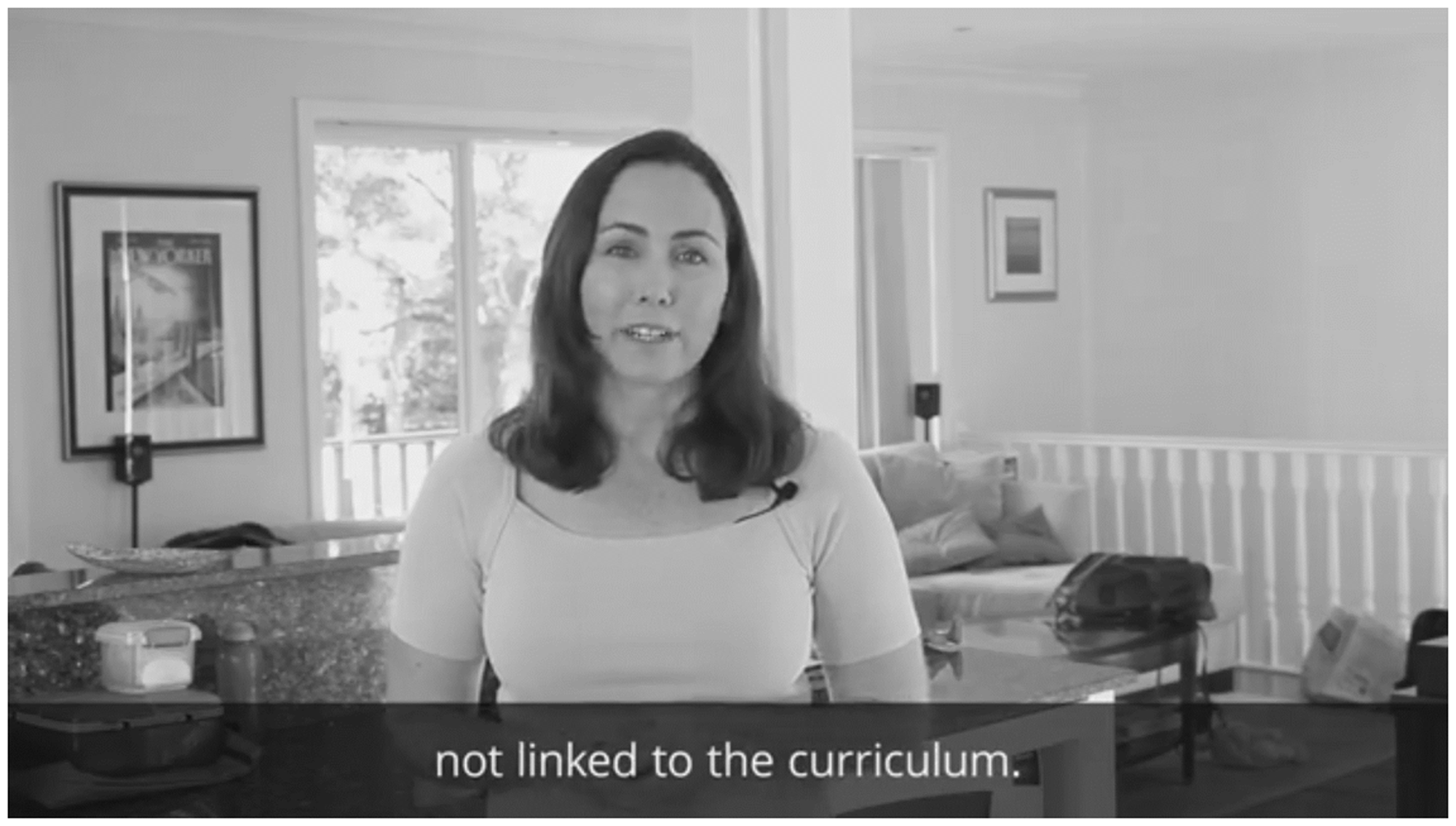
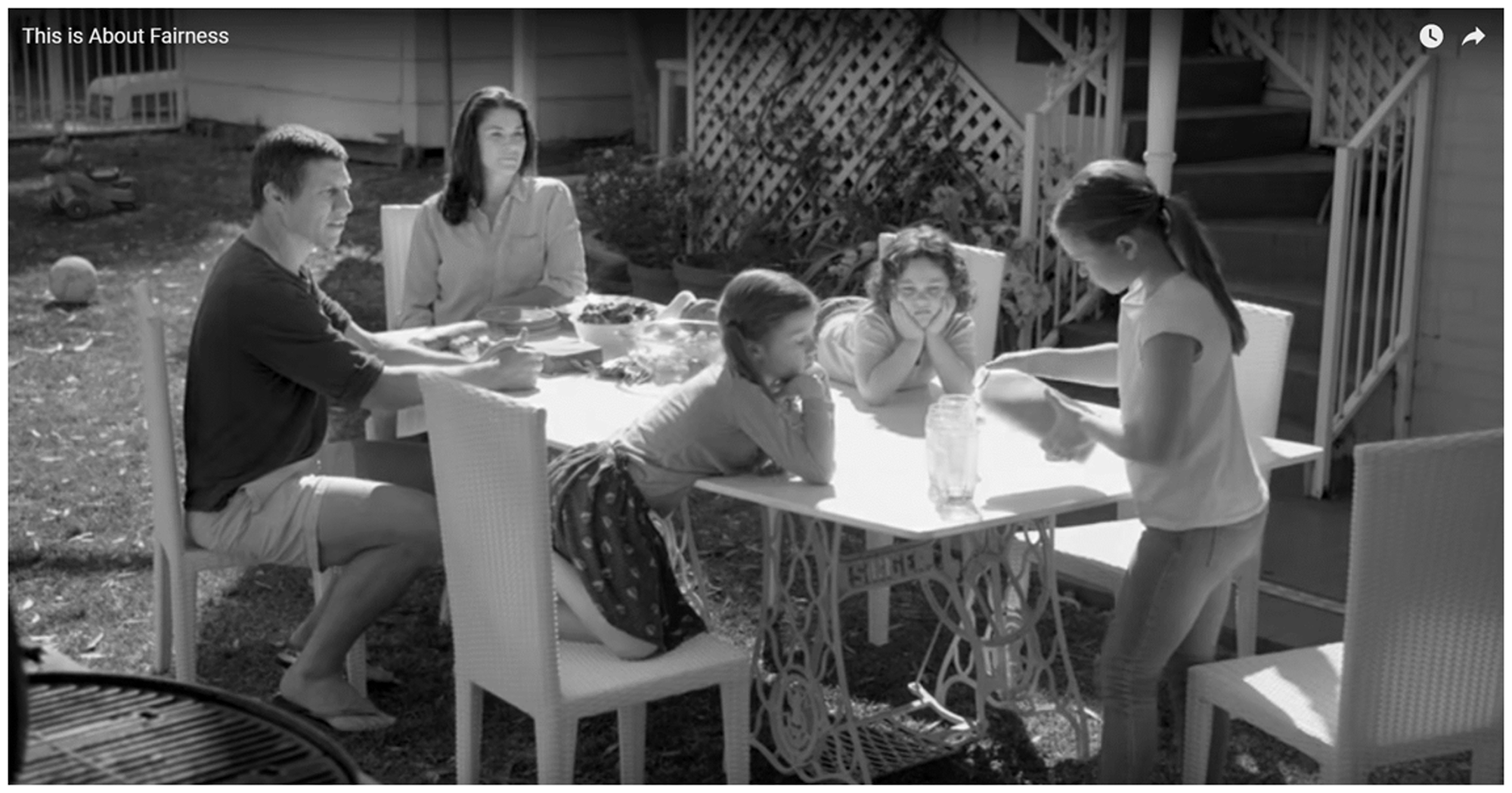
Both of these latter advertisements feature women in heterosexual partnerships, engaged in child rearing. They are smiling, speak in Standard Australian English, have a gentle tone of voice, are White, feminine, and their gender presentation is traditional and ‘unremarkable’. Each woman, as the lead spokesperson, acts as the maternal moral authority, just as seen in ‘Dr. Kerryn Phelps in Response to Opponents’. Men are positioned in these advertisements as quiet yet authoritative, though not necessarily participating directly in issues concerning child-rearing. The parents in these advertisements are centres as the ultimate gatekeepers of their children's values, reifying the traditional heterosexual family as the moral centre of society.
News coverage at the time noted that the Bowman family are a genuine family, not actors. This piece from Joe Hildebrand suggests why they were chosen for the advertisement: Mum runs a small business, Dad's a primary school teacher and they have three lovely kids aged between five and nine. They're nice-looking, nice-mannered and they're whiter than a picket fence. … they really are banal and beige. And that's what makes them so brilliant. … Asked why they were approached to be the new face of the campaign, mum Claudia tells news.com.au: ‘I guess it's because we are so average. We're a white, English-speaking, heterosexual family from the Eastern suburbs of Sydney’. (Hildebrand, 2017)
What we find in these prominent advertisements from Yes, is an optimistic discourse that SSM will deliver ‘fairness’, yet that this is tied to maintenance of the existing status quo – a cruel promise indeed for LGBTIQ persons already marginalized by structures of compulsory heterosexuality, restrictive gender norms, and often their own family units. Arguably it was heterosexual families that received more focus in Yes advertisements than LGBTIQ people, with only one advertisement blatantly including gay and lesbian couples. Aired during prime-time screenings of the reality show The Bachelor, and then later The Bachelorette, the advertisement showed a montage of gay and lesbian wedding ceremonies. The words ‘FOR EVERY BACHELOR AND BACHELORETTE’ appear at the end, followed by a shot of a groom placing a ring on his husband's finger with their bodies framing a waving Australian flag in the background (see Figure 5), followed by the words ‘VOTE YES’ (AME, 2017c).
AME's advertisement ‘We Urge All Australians to #VoteYes for Every Bachelor and Bachelorette’, 2017.
This last image connects the (White) ‘same-sex’ subject to nationalism, emphasizing the Equality Campaign's focus on LGBTIQ people as ‘Australians’ and ‘citizens’ – and building on the near-exclusive Whiteness of the previous advertisements. This appeal to nationalism, connected with Whiteness, is an established pattern in neoliberal, homonormative LGBTIQ discourse, which Jasbir Puar notably defines as ‘homonationalism’ (2007: 2). Here we see that in appealing for inclusion into the imagined national community, rights-based campaign approaches reify the legitimacy of the western nation state and its claim to represent progress and modernity. Such a strategy is particularly jarring in the settler colonial context of Australia, where a continuing feature of the national project is the denial of the violence of colonization alongside a modern mainstreaming agenda in Indigenous affairs (Tout, 2014; Wolfe, 2006). Indeed, the Australian flag itself has become one manifestation of discomfort surrounding the issue (Daley, 2018). As mentioned earlier, Dreher (2017) has shown how this discourse in the Australian SSM campaign can be connected to Islamophobia (Nadim, 2017). Emily Castle (2017) further notes how the marriage equality campaign had long established a pattern of suggesting that SSM would strengthen and cohere the nation. This theme was recently expanded on by Benjamin Hegarty et al. (2018) in their analysis of the links between the SSM campaign and Australia's settler-colonial past and present.
The images in the advertisement, and the song that plays over the montage – a cover of the song Don't Dream It's Over – encourages a re-attachment to the object of marriage, even for those in the LGBTIQ community who may be dubious, as it suggests that without a win on SSM ‘it's over’. As Berlant suggests: [I]f the cruelty of an attachment is experienced by someone/some group, even in a subtle fashion, the fear is that the loss of the promising object/scene itself will defeat the capacity to have hope about anything. (2011: 24, emphasis in original)
Returning to liberation
With the post-liberation cruel optimism of the Yes campaign in mind, we suggest that the campaign could have imagined liberation beyond marriage equality. Here we turn to the Gay Liberation movement in Australia in the 1970s, to return to liberation as a central concern and think through how we might have positioned the debate, or may indeed orient future LGBTIQ campaigns. In contrast to the marriage equality movement, Gay Liberation was able to achieve, alongside other social movements, profound social and cultural change, as well as legal change. This was realized through organizing around radical critiques of marriage, the family, and the social institutions that upheld homophobia, such as the education system and the medical profession (Willett, 2000: 51–60; Wotherspoon, 2016: 174–78). Emerging in the late 1960s with the formation of the Australasian Lesbian Movement (ALM), and subsequently Campaign Against Moral Persecution (CAMP), the Australian gay movement quickly shifted from an earlier liberal politics focused on tolerance, to an argument that legal equality was only a minimum framework for social change (Ross, 2009).
The gay movement's approach was often focused on fighting for legal reform but was importantly set on transforming society more deeply. The editorial in the June/July 1972 edition of CAMP's national publication CAMP INK announced a ‘Sexual Liberation week’ focused on ‘meaningful homosexual law reform’. Here, law reform was seen as just one aspect of the social transformation the movement was fighting for. In the editorial, they cautioned against ‘English style law reform’ arguing that by simply legalizing private, consensual homosexual acts, the Bill that had passed in Britain five years previously did nothing to ‘alleviate the injustices homosexuals are subjected to’ (CAMP INK, 1972a). Significantly, an article from the New York group Gay Activists Alliance was also republished by CAMP, titled ‘Transvestites and Gay Liberation’. The authors argue against the exclusion of ‘transvestites’ from the struggle for gay rights and law reform. They assert that ‘Gay Liberation implies liberation for all people, we are not only demanding our rights, affirming our pride, we are telling all people to do the same, to discover themselves, to celebrate their own unique beauty’ (CAMP INK, 1972b). Here, we find a movement concerned with law reform but alive to its limitations, willing to envision much broader social changes around sexuality and gender.
In June 1972, Sydney Gay Liberation released a letter ‘Love from Sydney Gay Liberation’ articulating its radical political orientation: ‘We don't seek tolerance in this supposedly liberal society but see ourselves participating in the sexual revolution … we CAN blow the minds of this society if we assert ourselves on OUR terms’ (SGL, 1972). Sydney Gay Liberation's manifesto represented the intermingling of demands for reform along with transformational ambitions. Gay Liberation saw LGBTIQ legal reform as part of a struggle for much broader liberation, extending their political project beyond those who were ‘same-sex’ attracted. Robert Reynolds notes that the first literature that was taken from the USA and distributed by Sydney Gay Liberation, ‘promised that gay liberation was not simply the liberation of homosexual’ but rather the ‘liberation of us all’ (2002: 70). Evidence suggests that the radical approach of the Gay Liberation movement was successful in transforming social attitudes to some extent. In 1977 the Royal Commission into Human Relationships reported that attitudes in the community were far ahead of those held by law makers, noting that there was ‘high levels of agreement that homosexuals should be free to express their needs, free of legal constraints’ (RCHR, 1977: 112). In other words, it was not a strategy of compromise and appeasement that Gay Liberation adopted; it was a radical political approach that argued for broader social liberation that shifted attitudes towards homosexuality in the 1970s. This politics of broader liberation meant that when faced with organized conservative political forces, Gay Liberationists were prepared to stand their ground and continue struggling for a radical re-envisioning of gender and sexuality (Willett, 2000: 137).
This was most clearly demonstrated in the response of LGBTIQ activists to the ‘Festival of Light’ (FOL) in the 1970s. FOL was a conservative Christian network founded in 1973 that was, among other things, actively anti-gay. In mid-1978, FOL announced that Mary Whitehouse, an (in)famous conservative social activist from the UK, would visit Australia on tour (Willett, 2000: 135–137). In the lead up to the Whitehouse tour the leading figure in FOL, Reverend Fred Nile, was on the offensive. In August 1978, gay and lesbian community newspaper Campaign republished the latest media release written by Nile, which reflected the same concerns pushed by the conservative right wing in the 2017 debate around SSM. For example, Nile asserted that: It is a blot on society the discredited ‘Royal’ Commission on Human Relationships has recommended that homosexuality (sodomy) be legalised and that homosexuality (sodomy) be taught in our state schools by selected homosexuals! (Carson, 1978)
Yet, the response of Gay Liberation and the broader LGBTIQ community to Nile and FOL was significantly different to how the 2017 Yes campaign responded to the organized No campaign. In 1978, rather than attempting to appease conservative anxieties of ‘slippery slopes’, LGBTIQ activists maintained a radical position. The Whitehouse tour in September was met with demonstrations and vocal opposition across Australia, organized by a coalition of Gay Liberation groups, women's liberation groups and the broader left (Willett, 2000: 137). Willett suggests that as a result of the demonstrations, ‘numbers attending the meetings were smaller than planned’ and that the FOL ‘reported a significant financial loss’ (2000: 138). Importantly, media coverage of Whitehouse was ‘not nearly as sympathetic’ as many of her supporters had expected (Willett, 2000: 138). Writing for Campaign just a month after this political success, gay activist Lance Gowland argued that the homosexual movement, together with other social movements was ‘the seed from which a new society will grow’ (1978). Together with other oppressed and marginalized groups Gowland argued it was possible to fight against groups like the FOL and win a world ‘where there are no oppressive sex roles, where we have control over our own lives’ (Gowland, 1978).
In other words, when faced with organized political forces opposed to their rights, LGBTIQ activists responded with an offensive, and a utopian, optimistic vision of a transformed future, rather than a defensive position and a promise of maintaining the status quo. They successfully confronted and marginalized Mary Whitehouse and the FOL, and rather than rejecting the possibility of radical transformations of gender and sexuality, they embraced this possibility. In a post-marriage equality context we can potentially draw important lessons from the political legacy of Gay Liberation. The successful movement of 1978 was committed to radical transformation, unashamedly confronted the rigidity of gender roles, and forthrightly opposed conservative attempts to promote homophobia and fears about sexuality in school curriculum.
Conclusion
In analysing the dynamics of the No and Yes campaigns in Australia's SSM postal survey, we have raised the possibility of an alternative, more optimistic and radical approach to the SSM debate in an Australian context – and mapped how such potentials were not realized. While the No campaign stoked fear about a future of gender fluidity, trans identity, and sex education in schools, Yes limited the horizons of its campaign to the narrow question of marriage. While the No campaign raised the connections between sex, gender and sexuality in their campaigning and, ironically, the possibility of an alternative, queerer future, Yes sought instead to reify the White heterosexual nuclear family and normative gender roles. In the process, the Yes campaign left behind the possibility of extending trans rights and freedoms through the SSM debate, and potentially missed a chance to more widely question restrictive gender roles and family norms within a very public national debate. We note that analysis of the Yes campaign reveals a strong appeal to nationalistic discourses and the reification of ‘ordinary’ Australia as the White heterosexual family unit, though this is a subject that also warrants further elaboration in relation to Australia's settler colonial history. What is clear is that in narrowing the debate to marriage and reifying ‘ordinary’ Australia, the Yes campaign left many LGBTIQ people, particularly, trans people and queer people of colour, behind.
We have argued that the most radical transformations were (paradoxically) imagined by the No campaign but refuted altogether by Yes who saw the project of liberation as already largely complete. Fundamentally, the Yes refusal to engage in a radical vision was underpinned by a post-liberation politics that constrained LGBTIQ rights to the achievement of formal legal equality, with SSM perceived to be the final barrier to mainstream acceptance within a world where social liberation had already effectively been achieved or was no longer necessary. Here, the cruel optimism of the Yes campaign was evident – choices were made to close off the campaign to the possibilities of radical rupture, and to put discussions about gender roles and Safe Schools to one side in order to secure a single reform. In the wake of the legislative victory on SSM, there are now difficult questions to be asked. As Berlant suggests: Fantasy is the means by which people hoard idealising theories and tableaux about how they and the world ‘add up to something’. What happens when those fantasies start to fray – depression, dissociation, pragmatism, cynicism, optimism activism, or an incoherent mash? (2011: 2)
Footnotes
Funding statement
This research received no specific grant from any funding agency in the public, commercial, or not-for-profit sectors.