




Abstract
This article explores the visual culture of social network applications (apps), using “safer-sex design” as an anchor to contemplate how different practices of looking at HIV co-constitute viral visibility. Drawing on science and technology studies and queer theories, this article traces viral visibility from its digital production through its marketization, and finally to its implications for gay men’s sexual communication in Taiwan. Through interviews with gay Taiwanese men and a social app developer and the visual analysis of Hornet, Grindr, and Scruff, this article describes how the precarity of viruses, knowledge of HIV prevention, and social stigmas against sexual minorities are brought together, staged, and made eligible (and ineligible) for public viewing. This article demonstrates how digital platform designs work to facilitate gay men’s sociosexual communication while ironically reinforcing stigmas against HIV/AIDS in Taiwan, and suggests a critical approach to the visual culture of social apps and queer health.
Introduction
Since the 2010s, the development of social media has taken a new direction in visualizing gay sex. Displaying everything from users’ photos to their names, locations, weights, heights, races, and personal interests and identities, today’s mobile dating apps (or hookup apps) claim to expand the queer lifestyle by offering up many previously unseen aspects of gay men’s lives for public viewing. Those emerging categories of social visualization have made gay men’s practice of cruising no longer a singular act performed in search of sex, but a process involving layered social and sexual practices of looking (e.g., Ahlm, 2017; Blackwell et al., 2015; Brubaker et al., 2016). Central to this article are the practices of looking that co-constitute safe sex, as seen in gay Taiwanese men’s use of dating apps that enable them to gaze upon the human immunodeficiency viruses (HIV), intentionally or otherwise.
Scholars working in critical HIV studies address the serological and molecular surveillance, elucidating how HIV testing, treatment, and prevention generate embodied data for classifying health populations and linking individuals’ sexual conducts and morality to the state and pharmaceutical scrutiny (e.g., Dean, 2015; Guta et al., 2016; McClelland et al., 2020; Molldrem and Smith, 2020; Orne and Gall, 2019; Patton, 1990, 2011; Race, 2016). While personal information about HIV has been instrumentalized for the purpose of disease prevention and control, it remains unclear as to how these forms of surveillance unfold in the context of dating apps. In the past decade, a growing body of research has expanded our understandings of social apps’ capacities to shape social space, health, and sexuality (Garcia et al., 2012; Miles, 2018; Muessig et al., 2013; Papacharissi, 2018; Race, 2015, 2018; Tso et al., 2016). Although there has been critical discussion about how app design is used to commodify gay sex in the name of promoting gay lifestyles (Goldberg, 2020; Race, 2018), a consideration often overlooked is the visuality of design and its mediating effects on gay men’s sociosexual practices (Some efforts that have considered this topic include: Albury et al., 2017; Liang et al., 2020; Mowlabocus, 2016; Race, 2010, 2018; Wu and Ward, 2018).
Since the virus is not visible to human eyes, viral visibility—that is, how medical and technological infrastructures mediate the tangibility of the virus and how images render living matters and bodies knowable information about wellbeing, social relations, and even stigmas—prompts a biopolitical inquiry into the surveillance and resistance surrounding the meanings of living matter (e.g., Cartwright, 1995; Dumit, 2004; Patton, 2011; Singh et al., 2014; Pietrzak-Franger and Holmes, 2014; Serlin, 2010). Building on viral visibility, this article explores how the interpretation of HIV through social apps becomes incorporated into the safe-sex practice among gay Taiwanese men. It asks How do the representations of HIV, risk, and safety on social apps constitute a regime of viral visibility? On social apps, who are the spectators, and what is being seen? Through what kinds of power structures, market mechanisms, and forms of desirability do looking occur? Finally, how have HIV, risk, and safety changed in their visual transformation?
In answering these questions, I trace the trajectory of viral visibility from its digital production through its marketization, and finally to its implications for gay men’s sexual communication in Taiwan. I consider the visualization of safe sex in the Taiwanese context of the LGBTQ movement, contrasting progress in human rights on the one hand with the visibility of HIV/AIDS and social acceptance of HIV/AIDS among sexual minorities on the other. In what follows, I first present the theoretical orientation of my approach to viral visibility, drawing from science and technology studies (STS) and queer theories. I then map out three ways of gazing at HIV/AIDS that take place through gay social apps: First, I examine how Hornet, Grindr, and Scruff curate HIV and sexual risk through their respective app designs. Second, I discuss a paradox that emerges from these social apps’ promotion of a transparent, oppression-free gay sociality in a global environment—how it leads to an implicit sanitization and scrutiny of gay sex in Taiwan’s marketized culture. Finally, I contemplate digital cruising and social oppression against HIV/AIDS, telling the story of how HIV-positive men disguise their HIV status while negotiating new forms of digital oppression and online surveillance. Ultimately, this article emphasizes a need to situate the visualization of HIV in a more expansive and culturally sensitive framework, so as to go beyond the commodification critique and rethink the interpretation of seronormativity. In doing so, this article contributes to understandings of the visualization, categorization, and the constant making and remaking of contemporary queer health.
Viral visibility and “Design as Sexual Practice”
In past decades, gay social network sites have engaged a series of effort in visualizing HIV—primarily through “safer-sex designs.” Although the safer-sex profile options (e.g., condoms and HIV-negative/positive binaries) have appeared on gay websites such as Gaydar since the 1990s (See Race, 2018), today’s social apps have turned to more sophisticated design, showing not only the serostatus associated with HIV treatment and prevention (e.g., “Positive, undetectable” and “on PrEP”) but also HIV identity indicators (e.g., POZ). In 2011, for example, Hornet introduced “Know Your Status,” a feature that allowed users to specify their HIV status and use of antiretroviral therapy (ART). In 2018, Grindr launched a service that pointed users to the nearest HIV testing site. In 2015, Scruff unveiled a different function called “Safety Practices,” which asked users to reveal their HIV-related identities and preferences about medicine. In short, social apps’ commitment to normalizing and hence de-stigmatizing HIV/AIDS (or called “seronormativity”) has translated into the provision of the option of safer sex, urging users to specify their preferences. This paper builds on those developments of seronormativity to think through new form of viral visibility in the digital realm, articulating three practices of looking at HIV, including surveillance, homonormativity, and digital cruising.
Theoretically, my analysis takes an approach that is anchored first in visual and feminist scholarship in science and technology studies. I trace how attempts to fight the AIDS stigma have linguistically, symbolically, and, as a matter of corporate mission strategy, been incorporated into the design of digital platforms. The examples of Hornet, Grindr, and Scruff draw attention to the social construction and technological mediation of HIV/AIDS in dating apps. In doing so, they complicate the idea of scientific objectivity and manifest Paula Treichler’s (1999) conceptualization of HIV/AIDS as an “epidemic of signification.” To consider how the gazes enacted by app platform designs and users’ participation co-constitute practices of sexual safety, I engage Marsha Rosengarten’s (2010) conceptualization of “flesh as information.” Rosengarten contends that the mutual entanglement of flesh and information supports a coextensive process in which “what initially seems to be ‘information’ turns out to transform that which we know as ‘flesh’ or, conversely, flesh turns out to have informational effect” (Rosengarten, 2010: 5). 1 On a similar note, Kane Race (2015) posits that social apps are better understood as mediators that transform, translate, and modify the meanings that they are supposed to deliver. Building on their accounts, I propose an epistemological move from “design and sexual practice” to “design as sexual practice,” suggesting that social apps’ design about HIV disclosure and gay men’s sexual practices are not two distinctive, separate social entities. The idea of “design as sexual practice” instead seeks to complicate the distinction between representation and practice and proposes that social app design has been an active participant in the world-making production of truths about HIV, risk, and gay sex.
“Design as sexual practice” is foregrounded in STS scholar Karen Barad’s (2003 and 2007) intra-activity in ways to contemplate how social apps convey HIV, risk, and gay sex via visual, and material expressions. Barad’s account of agential-realism suggests that visual apparatuses should not be treated as static arrangements in the world, but rather as dynamic configurations of the world. Barad’s observations, which are derived from the problematics of measurement in quantum physics, respond to the dominant discourse of realism and relativism with the claim that realism is always agential, and that there are no preexisting relations among things because the “observed object” and “agencies of observation” are always reconfigured and inseparable. Following Barad, I conceptualize social app’s design as an agential cut that orients our attention away from the ethos of objective gaze to bodies and sex that are discursively and materially made. A visual apparatus, the design of social apps renders HIV visible in a time- and context-specific digital environment in which individuals’ self-identification, HIV disclosure, digital cursing takes place.
The viral visibility of social apps and HIV risk should be understood in light of how HIV disclosure is perceived as a normative category, and a commodity in the marketplace, and in certain cases, a desirable status that calls for the public scrutiny. The second aspect of my theoretical approach interrogates how neoliberal market logic has become a dominant viewing position that intra-acts with HIV sciences. Here, practices of looking at safe sex involve layered, sometimes contradictory positions regarding what to see, how to see, and to whom HIV, risk, and gay sex matter.
Due to the rapid growth of gay apps in the Global North over the past decade, public perceptions of social apps have gradually shifted from seeing social apps as representing a niche market and having subversive potential, to regarding them as mainstream and having been tamed (Miles, 2018). In their discussion of the interplay between the commercial digital platforms and HIV community outreach in the UK, for example, Mowlabocus et al. (2016) describe that not every social network company was forthcoming in supporting intervention work within the context of their services, despite being the sponsors of gay events. Race (2018) further points out the neoliberal marketplace has diverse elements and influences, and should not be interpreted solely within a commodification-exploitation framework. In Taiwan, the transformative features of the market have expanded the scope of LGBTQ lives. They have granted legitimacy to and visibility for certain issues at the expense of others, resulting in the partial exclusion of certain marginalized groups’ rights. My approach of viral visibility engages Lisa Duggan’s homonormativity to critique the potentials and limits of Taiwan’s sexual modernity in relation to neoliberal market logics.
For some time now, Taiwan has been praised for its social progressiveness on the LGBTQ front. Noted advances include its grassroots LGBTQ human social movements (Kao, 2021) since the 1990s; its vibrant gay market activities since the 2000s; its bellwether healthcare model, which was the first in East Asia to implement HIV prevention medicine pre-exposure prophylaxis (PrEP) in 2016; its 2017 landmark achievement of legalizing same-sex marriage (Chen et al., 2018; Laio, 2017; Ramzy, 2019). The progress achieved by these social movements, however, has not always aligned with manifestations of gay sexuality in social apps. How gay sex has been conceived of in the public and digital world remain contested. Due to a need to comply with market expectations and to maintain legitimacy across different social movements, social apps tend to prioritize certain topics over others. For example, even while the 2017 debate over same-sex marriage rights was ongoing, a homonormative gaze implicitly dominated social app companies’ approach to HIV and queer sexualities in their platform marketing considerations. To make this point, I used an interview with a social app developer in Taiwan to demonstrate how the market’s invisible and cruel expectations have increased pressure upon app companies to frame members of Taiwan’s gay community as docile, asexual subjects.
Third and last, I expand upon viral visibility by working from the premise that acts of looking at HIV and gay sex on social apps constitute a practice of digital cruising. Combining desire, erotics, and the affective labor of navigating intimacy and stigmas associated with HIV/AIDS, digital cruising comprises a set of communicative acts performed by gay men (Mowlabocus, 2016). From “sex in public” (Berlant and Warner, 1998) to “sex in the digital city” (Miles, 2018), gay intimate relationships have evolved from being publicly mediated to being digitally mediated. This shift in how gay sex is scrutinized is embodied in various ways by the practice of digital cruising. For example, with their geo-locative features, social apps compress time and space in ways that stage users’ online presence and gather others’ information. In the process, they rely upon social norms that have already been established within the gay community (e.g., Ahlm, 2017; Miles, 2018).
Relevant to the analysis of visualization of HIV is the fact that new labels such as “HIV negative, on PrEP” and “Poz, Undetectable” have gradually become default categories and new social standards for sexual communication in the post-AIDS era. These emerging safer-sex categories mediate gay men’s sexual practice by informing biomed-matching behaviors (Grov et al., 2018; Newcomb et al., 2016). To use Race’s words, gay app profile categories, templates, and designs “operate as structuring devices that situate members within the sexual marketplace, provide a basis for ranking and evaluating other members, and ultimately determine the spheres of exchange to which users gain access and in which their profile-identity will circulate” (Race, 2018: 162). While enabling gay men’s cruising and pleasure, digital platforms also impose a sense of obligation and self-responsibility; as a consequence, gay men comply, or are implicitly required to comply with safer-sex designs in order to serve a type of “digitalized health citizen” (Lupton, 2017). With the platform design, gay men come to enact as neoliberal citizens who take up the responsibility for their and others’ wellbeing, including generating personal HIV-related data in ways to optimize the operation of the platform. With this in mind, this article elaborates on this design and sexual practice configuration by addressing how gay Taiwanese men have optimized their online presences through disguising their HIV status to navigate the regulatory forces of safer-sex design.
As a whole, three layers of viral visibility (i.e., corporate visons, market principles, and cursing practice) contribute to the dialogue between digital embodiment and critical design studies. For one, the inquiry into social apps and viral visibility resonates with “cybercarnality,” a notion about digital embodiment proposed by Mowlabocus (2016) that calls attention to the discursive and material practices related to the pornographic representation of male bodies, self-surveillance, and corporate visions. Unlike Mowlabocus’s original intent that links pornography to male erotic contents, the visual culture I explore here considers pornography at molecular, exploring how social apps safer-sex designs have generated an ultimate form of pornographic expression. This molecular embodiment is reaffirmed through displaying nearly every aspect of gay men’s lives, including their serostatus, viral loads, and use of ARTs.
Furthermore, the layered practices of looking at HIV seeks to challenge the matrix of dominance (Costanza-Chock, 2020), particularly concerning how corporate narratives about and individuals’ compliance with seronormativity—those highlighting the technological capacity for “eliminating stigma” and “contributing to a safer environment” and those reinforcing the personal responsibility of revealing HIV status—reinforce the digital surveillance and in some circumstances, produce new stigmas against those already marginalized bodies and sexualities. Ultimately, the visual culture of social apps underscores the performative features of HIV, revealing the scientific, social, sexual, and moral interpretations about HIV, gay sex, and health. It argues that there is no single-axis framework of looking at HIV and that looking practice is always intersectional.
The data presented here consists of a visual analysis of digital platforms and interviews conducted in Taiwan. From 2017 to 2019, I conducted an ethnographic study of HIV sciences, focusing on the sociocultural consequences of the implementation of PrEP in Taiwan. In the larger project, I interviewed 60 gay Taiwanese men to understand their experiences with PrEP, sexual risk, and social apps. While the larger project contained ethnographic analyses about health inequality, mobility, and digital embodiment. The present article reports a portion of that project by developing an analysis about viral visibility. In the first analysis section “corporate vision and designed safety,” I compare three social apps’ approaches—those of Hornet, Grindr, and Scruff—to visualizing HIV. In the subsequent two sections “Homonormative gaze and marketized safety” and “cruising practice and disguised safety,” I address a gap between the social apps’ global corporate missions and the practices of users in their local market, using interviews with the employees of a social app company and with HIV-positive gay men to map out how HIV is viewed in the Taiwanese commercial marketplace and among members of Taiwan’s gay community. To make my point, I choose to analyze HIV-positive men’s experiences in this article. To protect informants’ privacy and confidentiality, I omit the name of the company whose employees I interviewed and use pseudonyms to refer to the interviewees.
Corporate vision and designed safety
This section analyzes the safer-sex looking practices embedded in three major gay apps—Hornet, Grindr, and Scruff—by using the walkthrough method to discuss their safer-sex-related functions and features. The walkthrough method does not focus on any single feature or any particular aesthetic expression of a specific app; instead, it serves as “a way of engaging directly with an app’s interface to examine its technological mechanisms and embedded cultural references to understand how it guides users and shapes their experiences” (Light et al., 2018: 882). I take a slow-motion approach to unpacking the often tedious process of using a social app, and to detailing “the step-by-step observation and documentation of an app’s screens, features and flows of activity” (Light et al., 2018: 882). My rationale for choosing to analyze Hornet, Grindr, and Scruff is that these platforms were among the first to incorporate safer-sex options into their app designs and be actively involved with HIV prevention. Moreover, these apps are popular both in the West and in Taiwan, allowing them to serve as a vantage point for contemplating how the ideas and practices embedded in app designs may become lost in translation when they travel from West to East.
Hornet
At the time of this writing, Hornet ranks as the world’s second-largest gay social networking app and the most popular gay social app in Taiwan, France, Russia, Brazil, and Turkey. Hornet has claimed that its platform provides more than hookups and that it strives to make more visible the often invisible forms of queer sociality that suffer from social discrimination. Today, upon logging in, a Hornet user accesses a grid of 12 squares, each containing an image of a user’s profile and photos. Hornet users can provide a brief description of themselves and specify their age, ethnicity, height, weight, and preferred sex roles (i.e., “Top,” “Bottom,” or “Versatile”), and, by scrolling down, gain access to other profiles.
In 2011, Hornet launched Know Your Status (KYS), a service dedicated to displaying users’ current HIV test results and use of HIV medicine. With KYS, Hornet simplified the complex process of communicating about sex by offering six options with which users could specify their HIV status: “Negative,” “Positive,” “Negative on PrEP,” “Positive Undetectable,” “Not Sure,” and “Do Not Show” (Figures 1 to 2). Although none of those medical categories were originally invented by Hornet, KYS has innovated new norms of HIV disclosure by transforming medical categories into social ones. By juxtaposing KYS with other categories of information, including height, weight, relationship status, and reasons for being online (i.e., “Looking For”), Hornet normalized the formerly stigmatized and controversial act of HIV disclosure. As Hornet cofounder Sean Howell explained, KYS aims to “eliminate stigma associated with HIV and AIDS; share the latest health facts about preventing the disease; and empower people who live with it, chiefly by affording them improved options for self-expression” (Huffpost, 2015). Here, the KYS component of Hornet’s digital platform allows for an opportunity for intra-action of Hornet’s corporate mission, the stigmatization of disease and gay sex, and individuals’ test results. The design not only reveals an individual’s serostatus but also works as “an epidemic of signification”—an “improved option for sex-expression” that can “empower” people who live with HIV. Hornet KYS design (1). Hornet KYS design (2).
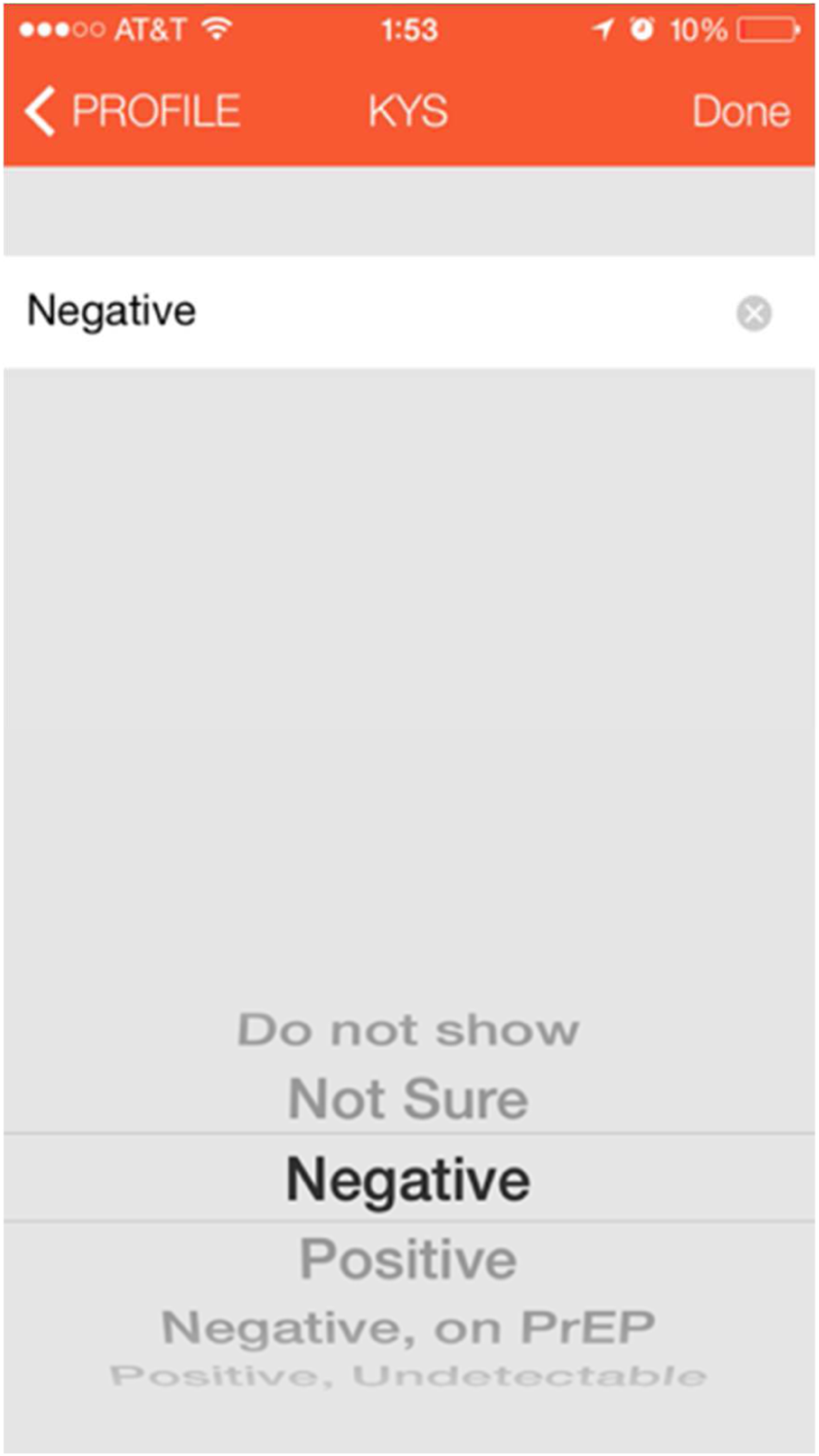
Another example of illustrating KYS produces HIV/AIDS as “an epidemic of signification” is that the design of KYS imposes a temporal order, one that reworks how the period of viral incubation is viewed in a digital context. To more precisely reflect HIV’s incubation period, Hornet requires users to update their HIV test results to keep their KYS current. Should users fail to update their KYS, Hornet sends them a message at the 3- to 6-months mark that notifies, for example, “This is a friendly reminder that it has been 6 months since your last HIV test date.” The message’s wording links social app’s visualizing HIV to ways of emphasizing individuals’ responsibility in timely, respectively, managing their own health affairs. It suggests that the app has made viral visibility part of personal health management, such that delays in updating serostatus are akin to delays in paying bills that warrant friendly reminders online.
Finally, KYS allows the app platform and other users to know each user’s status, producing a design-mediated visualization of HIV that is co-constituted as a relationship of seeing and being seen. In doing so, KYS presumes the neoliberal subjectivity of its users insofar as it expects gay men to exercise rationality and perform specific labor. In particular, the labor of maintaining KYS involves not merely physical labor of one’s using app and uploading his status; it also includes receiving HIV testing, consulting with health practitioners, and consuming HIV medicine regularly. In doing so, KYS reproduces technical and biomedical approaches to viral visibility in not only gazing upon HIV risk, but also facilitating public scrutiny of users’ management of their personal health and HIV status.
Grindr
Throughout its decade-long global expansion, Grindr has become almost synonymous with gay networking apps. Today’s Grindr is the world largest geo-locative social app with more than four million daily users in about 200 countries (Fox, 2019). Upon logging into the free version, users see a grid-based design that displays up to 100 profiles of other nearby users. Over the course of its decade-long development, the social app has increased users’ visibility by providing what is now more than 20 types of categories by which users can sort their online presences for others’ viewing (e.g., age, weight, height, where to meet, gender identification, pronouns, and other social links).
Grindr makes HIV visible in two ways. First, HIV appears as a form of identity. Grindr lists 13 options under the category of “Tribe,” including “Clean-Cut,” “Daddy,” “Jock,” “Leather,” “Twink,” and “Poz.” By listing #POZ as an option, this design does not reinforce a dichotomy of HIV-negativity and HIV-positivity, but instead gives users who either are HIV positive or can acknowledge HIV-positivity a space to establish a community.
Second, in an attempt to demedicalize and de-stigmatize HIV testing, Grindr offers users the opt-in service of testing reminders (McNeil, 2018). HIV status is shown on Grindr in the category of “Sexual Health,” a feature released relatively late in 2018 that is similar to Hornet’s KYS. It invites users to display their HIV status (“Negative,” “Negative, on PrEP,” “Positive,” “Positive, Undetectable,” or “Do Not Show”) and also displays the dates of users’ last HIV tests, making gay men’s HIV test results and test dates publicly accessible data (Kaufman, 2018). Finally, Grindr sends users who opt into the service a quarterly or bi-quarterly light-pink colored HIV testing reminder whose color scheme is intended to feel “inviting” and “friendly” (McNeil, 2018). The reminder also points users to the nearest testing site (Figure 3). Grindr safe sex design.
Scruff
My third case is Scruff, a gay social app that has been popular among gay communities in the West since 2010. Similar to Hornet and Grindr, the Scruff platform curates various aspects of gay sociosexual lives. Upon logging in, Scruff users encounter a grid of 16 squares that display images of other users and their personal information—username, last login time, proximity, dating preference, and reason for using the app—and they can view up to 100 other users’ profiles by scrolling down.
Similar to Grindr’s “Tribe” function, Scruff positions HIV as a form of identity, directing users away from stating their HIV status outright. Moreover, Scruff presents HIV in terms of solutions to prevent its infection, not as the virus itself. In 2015, Scruff launched a new profile option that allowed users to disclose their safety practices by displaying one or more preferences—choosing from condoms, PrEP, and treatment—as means of prevention (TasP) (Figures 4 and 5). Whereas Hornet’s KYS feature limits a user’s preferences for safe sex to a single selection from a range of options that are consistently related to HIV status (e.g., “HIV- Negative,” “Positive,” “On PrEP,” or “Undetectable”), Scruff’s safety practices seem intentionally ambiguous about measures of safe sex. For example, a profile displaying the preferences of “Condoms” and “PrEP” may simply suggest the user’s willingness to play with protection without eliminating the possibility of their being HIV-negative. In a similar vein, a user who selects “TasP” might be implying their status of being HIV-positive or positive and undetectable, but such language could be interpreted differently by different users and by different viewers of profiles. Scruff safe sex design (1). Scruff safe sex design (2).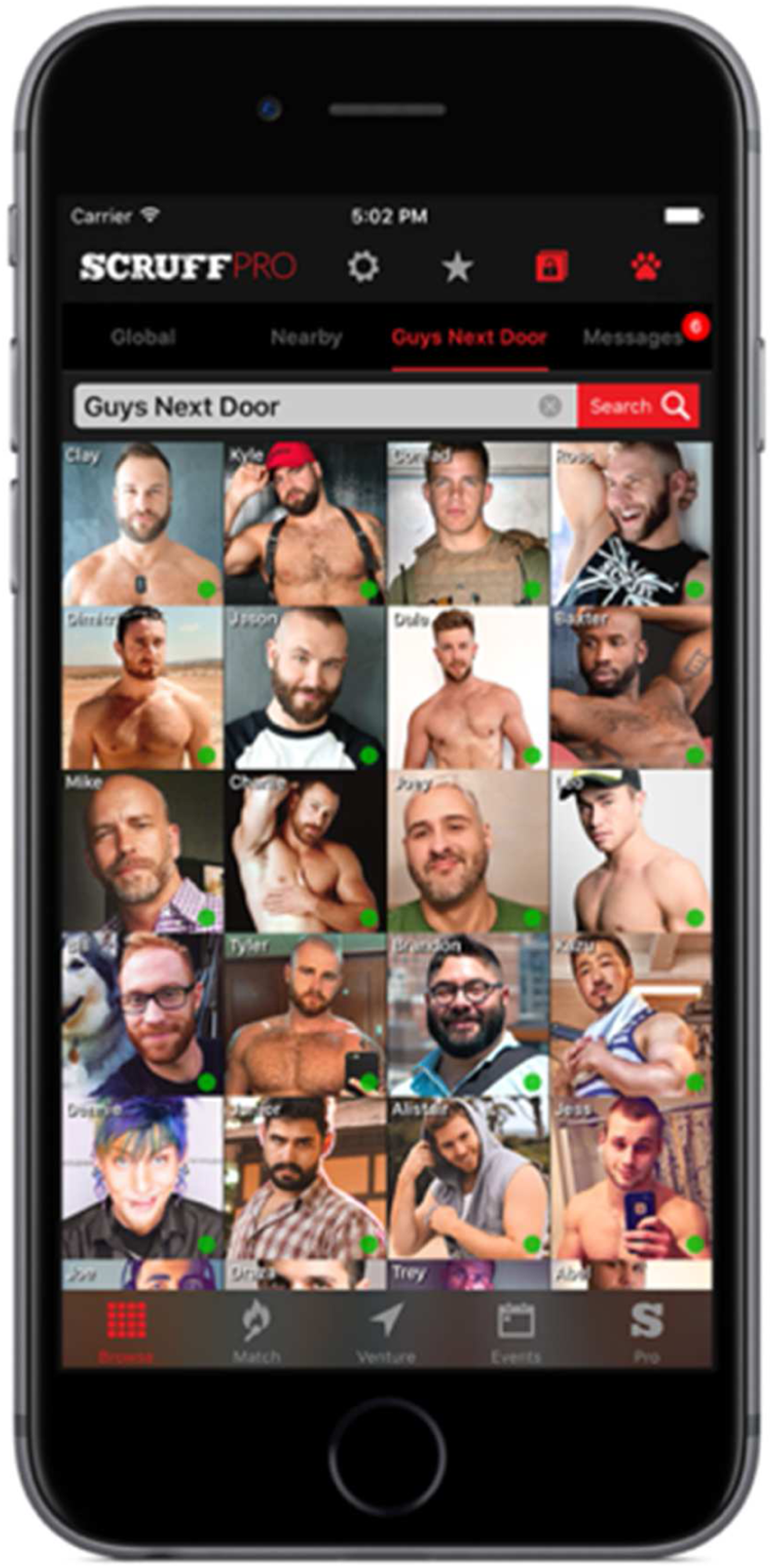

The ambiguity on Scruff suggests that sexual risk is becoming detached from HIV status biomarkers. Instead of directing users to look at each other’s HIV statuses, Scruff’s safety practices are designed to allow users to “spend less time thinking about the virus and more time swapping hot photos and actually hooking up,” explains Jason Marchant, Scruff’s chief product officer (Johnson, 2015). These features enable Scruff users to initiate sexual communication without necessarily revealing their HIV status and without engaging in awkward, sometimes problematic conversations about HIV status. Whereas the Hornet KYS feature normalized HIV/AIDS by turning biomedical categories into a set of social categories, Scruff engaged in HIV education by diverting gay men’s attentions away from directly confronting—seeing—HIV and toward talking around it instead. 2
Although no social app has mandated its users to disclose their HIV status, the design is used—in Race’s (2010, 2018) terms—to exert biopolitical effects via the creation of affective coercion, especially for users who are HIV-positive. In maintaining online seronormativity, gay men are implicitly encouraged to participate in those affectively coercive designs, to fill the emptiness of those picture-like grids, to complete their digital presence. Meanwhile, through the feature of HIV test reminders, social apps transform feelings of opaque uncertainty about the disease into perceptions of it as a time-sensitive phenomenon that can now be publicly scrutinized, compared, and anticipated and managed in real life (See Cartwright, 2012 on social media and H1N1). Through these quarterly or bi-quarterly reminders, users are re-positioned in a new power relationship—being surveilled by social apps one the one hand and being surveilled by others and by themselves on the other.
The homonormative gaze and marketized safety
Gay social media has gradually evolved, over a decade of global expansion, from being digital hookup sites into being queer lifestyle platforms. For example, on Hornet and Scruff, gay men can serve as opinion leaders (or “ambassadors,” to use the social apps’ terminology) to disseminate travel information to their community. “Scruff Venture” lists gay-related social events for users to explore (McElroy, 2015). In 2017, “Hornet Story” began to host native editorial content and a wide range of news in up to six languages. “Grindr Bloop,” a parallel to Hornet’s news room, curates videos, news, and shops for users to “connect around sex, dating, and everything else happening on—and off—the apps” (Grindr, 2020). What are the consequences of this turn to lifestyle? Given that queer tech companies apply the same platform designs throughout their Western-centric global market, how does the Taiwanese market respond to these technological innovations?
Here, I situate the visual culture of social apps within Taiwan’s rapidly growing social media marketplace to show how a homonormative gaze has emerged and in turn, informed a practice of looking at HIV. Since 2017, I have observed the activities of several social app development companies in Taiwan, focusing primarily on their involvement in HIV and health rights movements. In that time, social app companies have been important allies of the LGBTQ movement in Taiwan, highly visible in both digital and social realms. Social app companies have publicly endorsed and commented on the progress of same-sex marriage bills. They have sponsored the Taipei Gay Pride parade, collaborated on research projects with local nongovernment organizations and universities, hosted the Taiwanese government’s health campaigns and commercials on their platforms, and even organized Zoom webinars addressing HIV and sexual and mental health amid the COVID-19 pandemic.
However, as Costanza-Chock (2020) describes in Design Justice, the inclusive visions of design as a universal claim in many ways conflict with the realities of the political economy of design. My inquiry into the visual culture of social apps recognizes that social app companies have endorsed various LGBTQ social events while undermining their work on HIV education promoted the apps’ safer-sex services. The interview with one social app’s sales team in Taiwan (e.g., a local market team that worked for a global social app company) revealed a glitch in the project to present HIV and safe sex at both global and local scales via the same platform design. A team member elaborated upon the organization’s strategies for endorsing the movement for same-sex marriage rights: Our company always stands behind our [gay and LGBTQ] community globally and locally. The reason that those commercial partners work with us is because of our positive image and reputation. Purchasing commercials from us helps increase their brand awareness. We trust those partners. But we are still a company. We maximize our role as a media platform to sponsor them and increase their visibility. (Italics added)
The team member’s remark paints a realistic picture of how social apps function both in the gay community and in the marketplace. Although the app company’s operation rely in part upon paid memberships’ subscriptions, their income comes largely from the commercial sector. Their apps sell advertising banner and pop-up message spots to interested businesses, even placing advertisements for Google. The reminder “But we are still a company” resonates with Sam Miles’s (2018) assessment of how social apps’ subversive potential can sometimes be compromised by neoliberal economic logic as a company embraces the mass market.
While acknowledging the good intentions of the app’s product design, the informant also cautioned that overly emphasizing sex-related content on the platform ran the risk of undermining the business’s growth: You [the interviewer] might think that “How to enjoy anal sex” is a relevant, useful topic that we should feature on our site. That’s because we are who we are [gay men]. Our sales team needs to consider how to maximize our commercial income. If, after persuading our new clients [assumedly straight] that our app will be an ideal site to host their commercials, they come to our site and see tons of sex-related information. …Say, if the sales representative of Cartier is interested in buying our commercial space to sell their engagement rings, and if he comes to our site and read tons of news about anal sex…. Those sorts of things happen in Taiwan. We’ve discussed those issues and haven’t yet made clear guidelines. (Italics added)
This remark reveals a structural and moral conundrum in Taiwan’s sexual modernity amid the current stakes of pink economics. Despite Taiwan’s achievements in LGBTQ human rights, Taiwan’s cultural environment remains relatively conservative about disclosing one’s serostatus. Although the discussion of marriage rights has been a legitimate topic in the public sphere, the same legitimacy is not necessarily accorded to other LGBTQ issues like sex, AIDS, recreational drugs, and especially serodisclosure. Except in the domain of popular culture or art, gay sex and sexual pleasure are often presented as personal affairs in the area of health management, which receives less public recognition than other LGBTQ-rights issues.
This case illustrates the tension between gay social apps’ global missions and the representation of queer life in the public sphere. The global aims of social app companies had been to destigmatize HIV/AIDS by making their platforms more transparent for dealing socially with the disease. Contradictorily, however, the companies’ practices of dealing with the local Taiwanese commercial market reinforced a sense of homonormativity. According to Lisa Duggan (2002), homonormativity not only upholds and sustains heteronormative assumptions, but also demobilizes and elides queer citizenship into the domains of domesticity and consumption. In Taiwan, homonormativity embodies a way of looking at and evaluating eligible gay representation, with public discourses and expectations normalizing certain queer images while implicitly disqualifying others. This tension was often obscured by progressive human rights discourses (same-sex marriage discourses, in Taiwan’s case) and by the understood shift in social apps’ focus to lifestyle—a term too often treated as apolitical. In light of the interviewees’ remarks, this particular social app company’s uneasiness with potential advertisers’ aversion to sex-saturated content suggest that social apps might work to sanitize queer sexual desires and diversity in order to comply with public perceptions of gay sex in Taiwan.
Cursing practice and disguised safety
The third way in which HIV, risk, and gay sex have been visualized in social apps concerns how safer-sex designs have ironically created new forms of digital oppression against HIV/AIDS. Instead of neatly complying with the social apps’ safer-sex designs, gay men have refused to be viewed according to the designs’ expectations. Most of my interviewees developed tactics for negotiating new forms of seronormativity while cruising online. Some who found the safer-sex designs not entirely useful opted to leave their HIV profiles blank. Many gay men also assumed that other app users would lie about their HIV status, and those who were on PrEP tended to question the truthfulness of others’ serodisclosure (See Huang et al., 2019). My focus here is on discussing a new type of sero-category that I call “Poz, on PrEP”—that is, instead of specifying “Poz undetectable” or “TasP” in their app profiles, a significant number of HIV-positive gay men have disguised their HIV status by claiming to be “HIV negative, on PrEP.”
Peter (28 years old), who had lived with HIV for 4 years, told me: I’m taking Truvada to treat HIV, not Truvada for PrEP. Because two medicines are the same thing, the consequence of having sex with me is the same. Using “Poz, Undetectable” or “TasP” makes finding sex on social app impossible. People will judge you even if they say that they don’t mind [HIV-positive status]. You won’t get infected with HIV by fucking me or getting fucked by me, because I’m very aware of my viral load counts. Plus, I’ve been undetectable for years.
Peter’s commentary reveals several practices of looking at HIV. Truvada is an antiretroviral therapy (ART) that has been used to treat HIV since 2004, and it has been used as a form of HIV prevention since 2012. In Taiwan, Truvada for HIV has been a reliable medicine, familiar among people living with HIV, since the early 2010s. Although Taiwan became the first East Asian country to provide Truvada (PrEP) through its healthcare system in 2016, the idea of biomedical HIV prevention remained relatively new to HIV-negative gay men. By articulating the challenges of being a person with HIV in Taiwan, and by challenging the social apps’ HIV status options with the argument that the medicine registers the same effect, Peter’s words illustrate how HIV is simultaneously scrutinized through scientific and moral gazes. Gay men fill out their online profiles and HIV statuses based not merely upon their true status, but also how they might be perceived in others’ eyes.
The safer-sex design of social apps might produce a new form of digital surveillance. In Taiwan, HIV-positive gay men who fail to disclose their HIV-positive status to sexual partners have faced 5- to 12-year sentences in prison. Even in the era of U=U (i.e., undetectable viral loads empirically proven to be unable to transmit HIV), the social lives of people with HIV continue to be at risk. Although social apps have offered the HIV status options of “Poz, Undetectable” or “Treatment as Prevention” as “improved options for sex-expression” to “empower” (in Howell’s words) and to optimize their online environment and promote sexual health for LGBTQ individuals, those designs for safer sex sometimes serve as nothing more than written evidence that users can take advantage of to press legal charges against other users who are HIV-positive. The conundrum of serodisclosure on social apps becomes obvious when considering that more than 50% of HIV-negative men have reportedly been willing to take PrEP (Ko et al., 2016), and yet gay men have avoided revealing their “on-PrEP” status on the apps due to the stigma surrounding HIV/AIDS (Huang et al., 2019). For those reasons, sero-transparency in the digital context troubles gay Taiwanese men’s sexual communication.
Peter’s experiences further offer insight into how digital cruising manifests a homonormative gaze toward gay Taiwanese men’s sociosexual practices. Others who have demonstrated such intention include 38-year-old Howard, who reported changing his HIV-positive status to “Negative, on PrEP” and telling his sexual partners that he was taking Truvada for PrEP. Providing a rationale similar to Peter’s, he was concerned about being discriminated against by sexual partners while cruising online. Another HIV-positive informant, 29-year-old Fred, indicated that identifying himself as an HIV-negative man taking PrEP allowed him to communicate better with other users. In moving between different social and sexual registers, Peter’s and other’s strategies for navigating with HIV stigmas illustrate how gay men with HIV privatize the potential HIV stigmatization and risk of being socially excluded by skewing toward a more morally desirable social position. Those experiences resonate Mowlabocus’s (2020) analysis of PrEP representation in the British press in that HIV biomedical intervention produced a homonormative politics in producing “good gay” and “evil queer.” In my case, the digital expression of PrEP on the social app has reinforced HIV stigmas that furthered the separation of desired and discriminated bodies.
In that context, the safer-sex categories listed on social apps have regulatory and performative effects: Instead of apolitically representing users’ health or sexual status, those categories enact one’s health and sexual condition. To navigate their potential rejection and frustration, some gay Taiwanese men choose to disguise their HIV status by producing new categorical meanings—“Poz, on PrEP”—a HIV-specific double in regaining the social recognition and the rights of seeing and being seen. Gay men’s repurposing and recombining of the apps’ safer-sex categories stitch together their online bodies. The relationship between design, desire, and scientific knowledge about HIV has become, in Barad’s terms (2003: 802), agential in ways that “shift the focus from questions of correspondence between descriptions and reality to matters of practices/doing/actions.”
Conclusion: Looking at HIV and health in the digital world
This article explored the visual culture of HIV risk and social apps, tracing the visualization of HIV from its digital design to its homonormative market responses, and finally to its cruising implications. By considering the intersectional features of HIV, the article read platform design and gay men’s sexual practices in light of each other, describing how social apps’ designs function as agential cuts that create time- and content-specific environments in allowing multiple social elements—HIV sciences, corporate’s missions, and gay men’s cruising—to intra-act, to co-constitute the meaning of safe sex. The walking through the safer-sex designs of Hornet, Grindr, and Scruff revealed that gay social apps differently classify HIV risk, including the generic scientific and medical categories and HIV as a sociosexual identity. Based on their corporate missions, gay social apps present HIV status management as a form of self-responsibility or a gateway to digital cruising. By situating my analysis of the apps’ designs in social app companies’ practices of interacting with Taiwan’s local commercial market, I have further reported how a homonormative gaze becomes a way of looking at HIV through which the discourses about health rights and sex rights were weighted differently in the marketplace. Taiwan presents an unsettling case of in which an active hierarchy of priorities shapes what is seen and what is tamed. Finally, I have pointed out that social apps’ safer-sex design has imposed a sense of obligation that manifested the homonormative politics one the one hand and oppressed people whose lives are already medically and socially disadvantaged on the other. Stories of Peter and others living with HIV offer a glimpse into how such design, despite its good intentions, can stigmatize, ostracize, and incarcerate HIV-positive individuals. Through the interviewees’ stories with social apps, I showed that social app design brings new meanings to existing categories while producing new ontological stances in queerness as a world-making activity.
Like Barad’s agential cut that refers to a time- and content-specific environment in which looking takes place, the analysis of viral visibility can only concern certain aspects related to looking at HIV. What I have not fully explored in the three-layered practices of looking at HIV include how the agential-cut of design, HIV sciences, and gay sex might evolve in ways to change and challenge the making of seronormativity, how the user-generated HIV-related might be surveilled and commodified by the third-company and other stakeholders, and how, in return, the social app companies might respond to the diverse nature of each local market. Those and other questions are important concerns that are outside the scope of the current article and call for more research and collaboration in the future.
Ultimately, the inquiry of viral visibility highlights that the safer-sex design of social apps is not an inner, static being but a dynamic, material process of becoming. As the practices of looking at HIV and gay sex venture into the digital and public domain, this analysis underscores the contested interpretations about HIV and queer health. Costanza-Chock (2020) reminds us that the universalist design principles could erase certain disadvantaged groups and because of that reason, we need to go beyond the single-axis framework by incorporating a more expansive position of design practice. Today social apps, by combing advanced HIV sciences and fulfilling their corporate visions, constitute a pornographic body at the molecular level that reinforces a sense of seronormativity in Taiwan. The conclusion of this article emphasizes a need for investigating the discrepancies between on-app representations, market orientation, and gay men’s digital cruising in order to challenge the often taken-for-granted matrix of dominance (e.g., scientific progress and market discourses). To do this, it requires feminists and queer scholars working in the intersection of STS and health critically and carefully problematize positionalities of looking, to unveil how the precarity of viruses, knowledge of serology, and certain bodies are brought together, staged, and made eligible (and ineligible) for public viewing.
Footnotes
Declaration of conflicting interests
The author(s) declared no potential conflicts of interest with respect to the research, authorship, and/or publication of this article.
Funding
The author(s) received no financial support for the research, authorship, and/or publication of this article.
