




Abstract

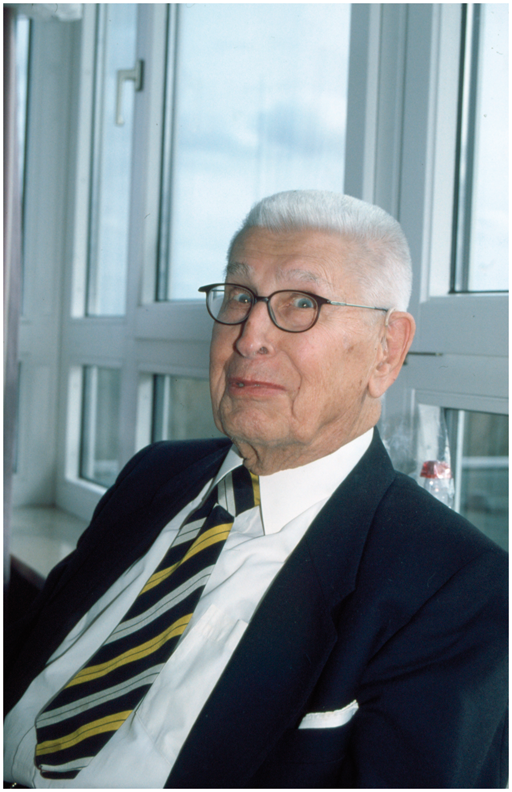
After a long, fulfilled life, Alexander Boroffka, Dr. med. (Göttingen), DTM & H. (Hamburg), FRC Psych. (London), FMC Psych. (Nigeria) passed away at the age of 94 on Monday, June 23, 2014 in Kiel. He shaped and promoted the fields of transcultural psychiatry and psychiatry in developing countries, particularly in German speaking countries, until his death.
Alexander Boroffka was born on March 29, 1920 in Potsdam. He studied medicine between 1940 and 1946 in Berlin, Prague, and Göttingen. His studies were interrupted by military service in the medical academy of the Luftwaffe, as well as a 20-month hospital treatment for tuberculosis. After training in nervous and mental diseases in Königslutter and Berlin, he earned his specialist degree in 1954. Following that, he worked in Kansas City, Missouri for a year. Returning to Germany, he worked as a consultant psychiatrist in various psychiatric hospitals.
In April 1961, he went with his family to Nigeria where he was a senior specialist psychiatrist in charge of the Yaba Mental Hospital in Lagos. At that time, the Yaba Mental Hospital treated more than 500 inpatients and 1,000 outpatients, annually—an extraordinarily heavy clinical workload that left little time for research.
Six months after his arrival in Nigeria, in November 1961, by what he called “a stroke of luck,” he took part in the almost legendary First Pan-African Psychiatric Conference in Abeokuta. There Boroffka met psychiatrists and other mental health workers from about a dozen African countries, many of whom had shaped African psychiatry, such as Taha Ahmed Baasher and El Mahi Tigani from Sudan, Thomas A. Lambo, Abayomi Marinho, and Abraham Ordia from Nigeria, and A. C. Raman from Mauritius. Participants from America and Europe also attended the conference, among them such founders of Transcultural Psychiatry as John C. Carothers, Henry Collomb, Alexander H. Leighton, Raymond Prince, and Eric D. Wittkower.
In 1966, after handing over the Yaba Mental Hospital to his colleague Dr. Abayomi A. Marinho, who had been working with him for 5 years, Boroffka returned to Germany. There he and Dr. Henner Völkel (Kiel) jointly directed the reconstruction of the Waldhaus Klinik in Berlin. Unexpectedly, the World Health Organization (WHO) offered him the position of Visiting Professor at Ibadan University. He started this challenging task in September 1968, after some delay caused by an embargo because of the Civil War in Nigeria. Boroffka felt privileged to replace Lambo who had been the Dean of Medicine and later the Vice Chancellor of the University of Ibadan. Besides teaching and treating patients in Ibadan, Boroffka or one of his colleagues went to Aro Village once a week for consultation.
In 1969 Boroffka was one of the founding members of the Association of Psychiatrists in Nigeria. At its inauguration, Thomas Adeoye Lambo was elected as the first President and Boroffka was elected as the Secretary of the Association. One of Boroffka’s greatest contributions was his extraordinary ability to bring together people and reduce animosity among the various participants. His leadership and his empathy paved the way for great achievements of the association. Boroffka was a great listener and had the unique ability to see the positive aspects in people, thus building bridges and securing the main objectives of the society (Binitie, 1988). These qualities made him an asset to any organization, whether in Nigeria or in Germany. During his last visit to Nigera, in 2001, he attended the 32nd Annual and Scientific Meeting of the Association in Abeokuta. He and Raymond Prince were the only attendees of both conferences, 40 years apart. Boroffka (2003) published a very personal report about this meeting in Curare.
In Nigeria, Boroffka witnessed all the stages of care given to psychiatric patients existing side by side, from the traditional healer to modern social psychiatry as practiced by Lambo in his Aro Village and Ayo Binitie in his Therapeutic Neighborhood. It was Boroffka’s dream to capture on film, the whole history of psychiatry in Nigeria. To realize this project, he travelled, together with Frank Speed, more than 5,000 km from Lagos to Katsina and from Ibadan to Port Harcourt in 1972. During this tour, Boroffka was able to capture traditional healers outside Yoruba land. Boroffka realized that in many tribes there were two groups of healers: the Babalawo, the more priest-like spiritual healers, who often referred to an oracle and deity worship and the Onishegun, who he characterized as bonesetters and herbalists. The film, Management of Madness. Past and Present (1973) was shown at the first conference of AGEM (Arbeitsgemeinschaft Ethnomedizin, a German association of medical anthropology) in October 1973 in Munich. The film was again shown 41 years later at the 27th AGEM conference in Heidelberg and received again a positive response.
After returning in 1973 to Germany, Boroffka settled in Kiel where he held a position as Senior Mental Health Advisor for the Government of Schleswig-Holstein. His tasks there were mainly planning, managing, and consulting. As a clinician, he continued to see chronic psychiatric patients in aftercare institutions. Along with Wolfgang Pfeiffer, he organized, in 1976 in Kiel, a symposium on “Problems of Transcultural-Comparative Psychiatry in Europe” which was supported by the Ministry of Social Affairs of Schleswig-Holstein and the World Association of Psychiatry. The participant list included a veritable who’s who of transcultural psychiatry: George Devereux (Antony/France), Leo Eitinger (Oslo, Norway), Robert Giel (Groningen, Netherlands), Dan Hertz (Jerusalem, Israel), Henry Brian Megget Murphy (Montreal, Canada), Metin Özek (Istanbul, Turkey), Yaw Osei (Marl-Sinsen later Kumasi, Ghana), Paul Parin and Goldy Parin-Matthey (Zurich, Switzerland), Ype Poortinga (Tilburg, Netherlands), Peter Riedesser (Hamburg, Germany), Norman Sartorius (Geneva, Switzerland), Wolfgang Schoene (Münster, Germany), Rosalba Terranova-Checchini (Milano, Italy), and Erich Wulff (Hannover, Germany) among others.
In 1978 when Curare: Zeitschrift für Medizinethnologie/Journal of Medical Anthropology was founded, Boroffka was on the first editorial board. In those days, the subtitle of the journal was Journal of Ethnomedicine and Transcultural Psychiatry. He supported the journal with his ideas and articles for many decades. He presented the experiences with torture and mental suffering of one of his African patients in 1980 (Boroffka, 1980), in a rare document on the subjective experience of a psychosis. For his valuable contributions to the journal Curare and to transcultural psychiatry in Germany, he was awarded honorary membership in AGEM in 2003.
After being pensioned from his government appointment in Germany in 1982, he began to work intensively on his project on “Psychiatry in Nigeria.” Prior to the advent of the Internet, he encountered many communication-related problems and so, as he was also getting older, he was tempted to give up the whole project. While contemplating this, he met Dr. Dele Olajide, consultant psychiatrist at the Maudsley Hospital in London and told him about his project including his intention to abandon it. Dr. Oladije looked through the first draft and convinced Boroffka to complete the work. The result was the 2006 publication of Psychiatry in Nigeria (A Partly Annotated Bibliography). According to Asuni and Williams (2006), the bibliography is a scholarly work covering, in addition to “Psychiatry in Nigeria” as the title indicates, various nonmedical fields including sociology, anthropology, philosophy, religion, and culture, which are pertinent to the understanding of psychiatric phenomenology, diagnoses, and management. The compilation of these publications and annotations, which span over half a century, constitutes the flesh and bones of the whole book, while the chapter on the “History of Psychiatry in Nigeria” constitutes the background to the partly annotated bibliography. Boroffka’s book was positively reviewed by Ademola B. Adeponle (2010) in Transcultural Psychiatry.
Thanks to Boroffka’s initiative in 1991, the section Psychiatry in the Third World of the German Association for Psychiatry, Psychotherapy, and Psychosomatics (DGPPN) was founded. He was the first chairperson of this Section, which is currently called “Intercultural Psychiatry and Psychotherapy, Migration.” In today’s Germany, about 20% of the population has a different cultural background than the autochthonous population. The Section plays an important role in transporting cultural knowledge and expertise within the DGPPN and the annual congresses in Berlin.
Boroffka considered himself to be a clinician and teacher first. His motto as a physician was, “to cure sometimes, to relieve often, to comfort always.” For decades, he treated and supported an African patient—first in Nigeria and later in Germany through regular correspondence and drug supply. When Boroffka was 82 years old, he handed that task over to a younger psychiatrist because he wanted to make sure that his patient was still well supported. When this patient learned of Boroffka’s death, he wrote, "I am very sorry and worried to lose such a great man in the history of my life as a patient under him from 25th September 1970 to 23rd June 2014.”
We can agree, we lost a great man. The field of transcultural psychiatry owes a lot to Alexander Boroffka. His attitude towards patients, his dedication to service, his energy and drive, his respect and love for Africa and its people, and his vision and spirit serve as a model for many of us. He will be dearly missed not only by us, but also by his wife Nora, and his four sons and their families.