




Abstract
Violence victimization is prevalent in the US and is linked to costly mental health outcomes, including dissociation and posttraumatic stress disorder (PTSD). Black Americans are at increased risk for violence victimization, while additionally enduring racism that impacts mental health. Moreover, discrimination affects outcomes of violence. Cultural betrayal trauma theory (CBTT) is a new framework for examining the impact of within-group violence victimization (termed cultural betrayal trauma) and minority status on outcomes. Furthermore, CBTT examines posttraumatic group dynamics, such as (intra)cultural pressure. As pressure to protect the minority in-group by not disclosing cultural betrayal trauma, (intra)cultural pressure may impact outcomes. The purpose of the exploratory study was to examine the impact of cultural betrayal trauma and (intra)cultural pressure on dissociation and posttraumatic stress symptoms (PTSS). Participants (N = 43) were Black/African American university students who completed online measures assessing violence victimization and outcomes. Linear regression analyses revealed that cultural betrayal trauma predicted PTSS, whereas (intra)cultural pressure predicted dissociation. The current study has implications for examining the impact of group dynamics, such as (intra)cultural pressure, in clinical interventions for Black victims of cultural betrayal trauma. Such cultural competency in mental health care treatment may help reduce mental health disparities.
Introduction
Violence victimization is prevalent in the US (e.g., Kilpatrick & Acierno, 2003). Victimization is linked to a host of costly mental health outcomes, including symptoms of posttraumatic stress disorder (PTSD, e.g., Kelley, Weathers, Mason, & Pruneau, 2012; Kilpatrick et al., 2003) and dissociation (e.g., DePrince et al., 2012; Gómez & Freyd, 2017; Gómez, Kaehler, & Freyd, 2014). In addition to being at increased risk for victimization (Chronister & Aldarondo, 2012; Hampton & Gullotta, 2006; Porter & McQuiller Williams, 2011; Rennison & Planty, 2003; West, 2012), Black Americans also endure discrimination (e.g., Hardy, 2013), which further impacts mental health (Kessler, Mickelson, & Williams, 1999; Pascoe & Smart Richman, 2009; Pieterse, Todd, Neville, & Carter, 2012). Moreover, discrimination (Bryant-Davis, Chung, Tillman, & Belcourt,, 2009) and other aspects of the sociocultural context, such as cultural values (e.g., Pole & Triffleman, 2010; Tyagi, 2002), affect outcomes of violence (Brown, 2008; Bryant-Davis, 2005; Bryant-Davis et al., 2009; Campbell, Dworkin, & Cabral, 2009; Wyatt, 1992). Therefore, theoretical frameworks that incorporate aspects of the sociocultural context into examinations of outcomes of violence victimization could provide insight into mental health in Black communities in the US.
Cultural betrayal trauma theory
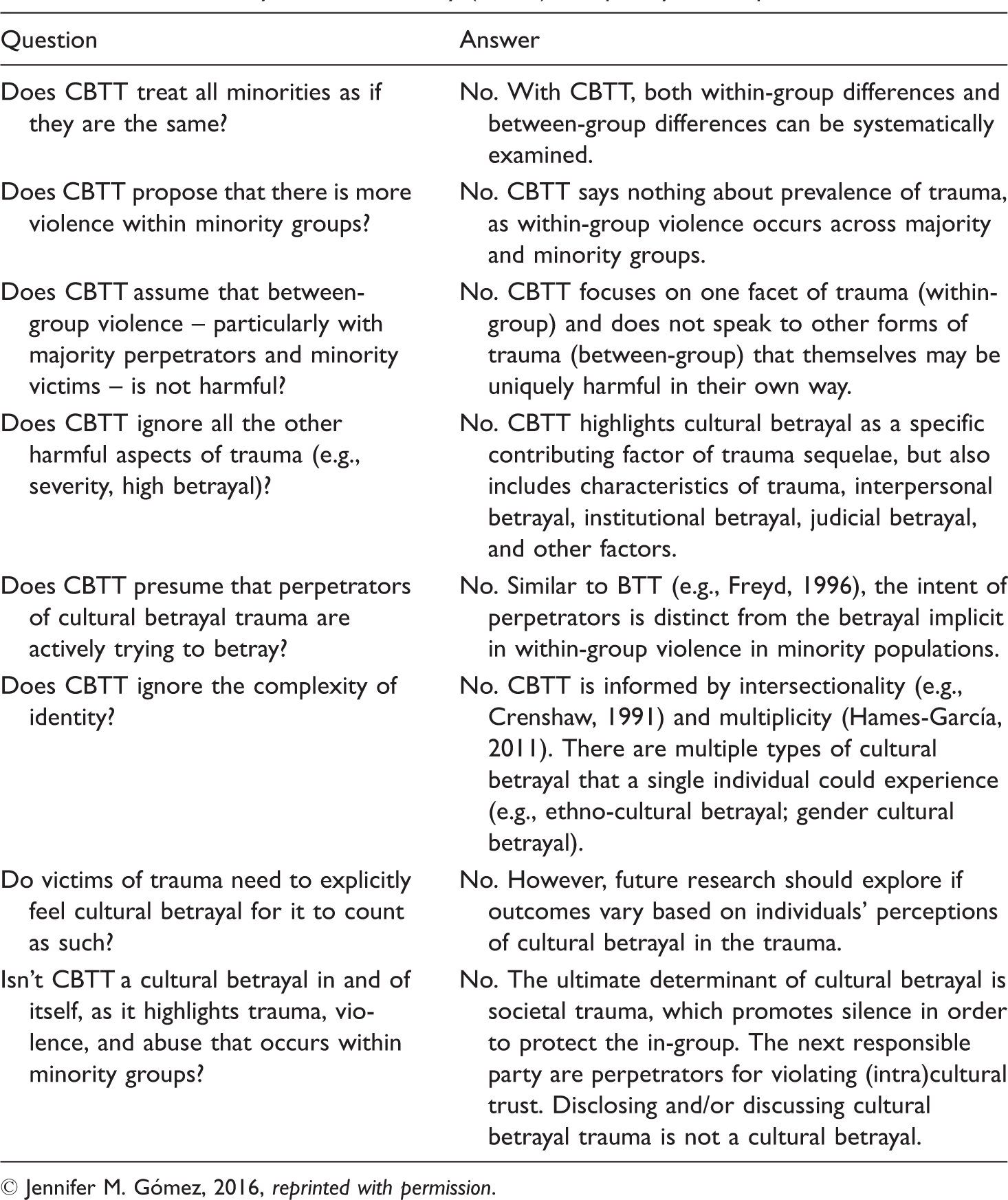
Given the increased risk for violence victimization (e.g., West, 2012) and the importance of context in understanding trauma-related outcomes (e.g., Bryant-Davis, 2005), Gómez (2012, 2015a, 2015c, 2016a, 2017a, 2017b, 2018a, 2018b, 2019b) has been developing cultural betrayal trauma theory (CBTT) as a way of examining the impact of violence victimization and societal trauma (e.g., discrimination) on diverse outcomes of trauma, such as posttraumatic stress disorder (PTSD) and internalized prejudice. Utilizing the Bronfenbrenner (1979) ecological systems model (Figure 1), according to CBTT (e.g., Gómez, 2018b), part of the harm of within-group violence in minority populations can be traced back to the context of inequality (Figure 2). Gómez (2018a) proposes that some minorities develop (intra)cultural trust – connection, attachment, and dependence, similar to racial loyalty (Tillman, Bryant-Davis, Smith, & Marks, 2010) – as a way to protect themselves and each other from discrimination and other forms of societal trauma. According to CBTT, within-group violence in minority populations is an implicit violation of this (intra)cultural trust, a cultural betrayal, that impacts trauma outcomes (Table 1).
Brofenbrenner’s Ecological Systems Model adapted for Cultural Betrayal Trauma Theory, reprinted with permission. © Jennifer M. Gómez, Sasha Johnson-Freyd, & Robyn L. Gobin, 2018. Cultural Betrayal Trauma Theory, reprinted with permission. © 2016, Jennifer M. Gómez and Sasha Johnson-Freyd. Cultural Betrayal Trauma Theory (CBTT): Frequently asked questions. © Jennifer M. Gómez, 2016, reprinted with permission.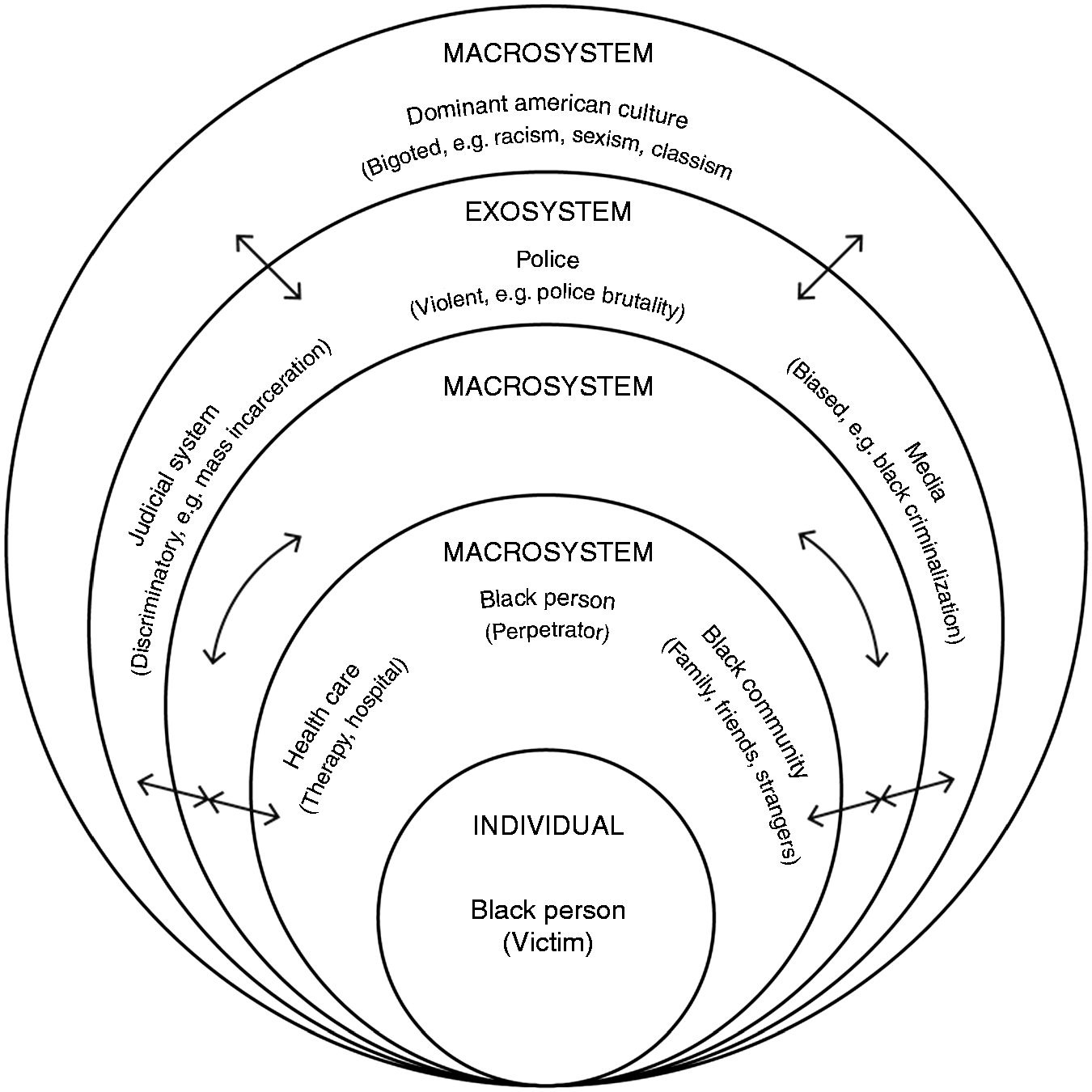

Furthermore, societal trauma may contribute to (intra)cultural pressure, which consists of within-minority group dynamics that silence or punish victims of cultural betrayal trauma because of fears that such victimization would reflect negatively on the entire minority group (Figure 3). (Intra)cultural pressure occurs as a function of societal trauma insofar as minorities are often tasked with representing their entire group (e.g., Platt, Barton, & Freyd, 2009), with negative representations often being used as justification for further oppression (Gómez, 2015c). In this way, the concept of (intra)cultural pressure is in line with that of racial loyalty: the demand of privileging other Black people over securing one’s own needs (Bent-Goodley, 2004; Richie, 1996; Tillman et al., 2010; West, 1999; White, 1994).
Impact of group dynamics on within-group violence, reprinted with permission. © 2015, Sasha Johnson-Freyd and Jennifer M. Gómez.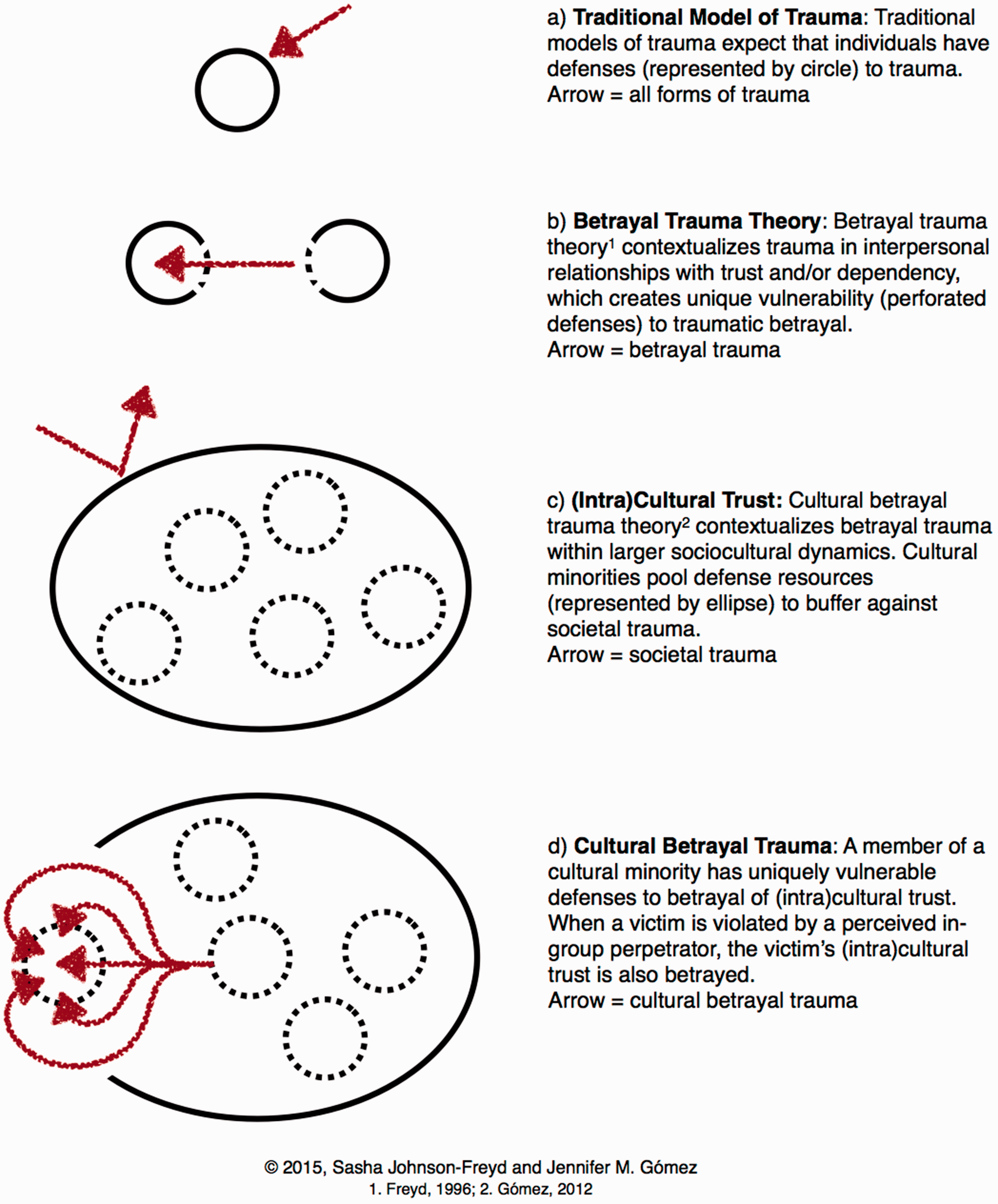
Contemporary examples of (intra)cultural pressure among Black people abound. For instance, in 2014, an HBCU (historically black college or university) President demanded Black women students’ silence following sexual assault (Savali, 2014), ostensibly in reaction to the societal trauma of mass incarceration of Black men in the US (Alexander, 2012). In 2016, a Black female Spelman College student posted on twitter anonymously at @RapedAtSpelman to share details of a gang rape she says she experienced by four Black men from Morehouse College. Through this Twitter account, she states that “Spelman has taught me … to be a woman who has to keep her mouths [sic] closed to protect her ‘brothers.’” In reference to this high-profile case, Gómez (2016a) shared her initial reaction: “Maybe we, as Black women, should just stay silent when these things happen to us. For the good of the Black community. To save ourselves from Them.” (p. 2). These examples occur within the backdrop of the “Stop Snitchin” campaign, in which there is pressure not to cooperate with police following direct or indirect victimization (for a discussion, see Balko, 2010).
In combining these examples with the literature on the impact of negative responses to disclosure on mental health (e.g., Ullman, 2007), it is possible to understand how (intra)cultural pressure could be linked with costly mental health outcomes, such as dissociation and PTSD. Thus, despite operating as a protective mechanism for the minority group as a whole, (intra)cultural pressure may negatively impact mental health on individuals who have been victimized. Finally, the importance of attending to trauma-related cultural betrayal and (intra)cultural pressure becomes even more critical, as the majority of violence victimization happens within-group (e.g., Bryant-Davis et al., 2009).
Purpose of the study
The enduring state of discrimination and oppression against diverse Blacks in America (e.g., Gómez, 2015b; Gómez & Freyd, 2014; McClain, 2015), high rates of violence victimization (e.g., Hampton & Gillotta, 2006), and socioculturally-specific barriers to help-seeking (e.g., Tillman, et al., 2010) affect Black Americans’ mental health. Therefore, examining ethno-cultural betrayal trauma – defined as within-group violence in the form of physical, sexual, and emotional abuse in ethnic minority populations – between Black people may illuminate culturally competent avenues for greater care and support following victimization. With CBTT (e.g., Gómez, 2017) as a guiding framework, the current exploratory study engaged a small sample of Black college students at a predominantly White university in the US. The goals of the study were to test CBTT by examining: (1) lifetime prevalence of ethno-cultural betrayal trauma; (2) rates of (intra)cultural pressure; and (3) the independent associations of ethno-cultural betrayal trauma and (intra)cultural pressure with dissociation and PTSS (posttraumatic stress symptoms).
Method
The current study utilizes a sub-sample of participants and measures of a larger study (Gómez, 2016b).
Participants and procedure
Participants (N = 43) were recruited from a predominantly White university in the Northwestern US. The sample ranged in age from 18–37 years (M = 20.30, SD = 3.34), with 62.8% women, and 37.2% men. The overrepresentation of women in this sample is similar to national averages for Black college students (64% female; 36% male; National Center for Education Statistics, n.d.). The university Institutional Review Board approved the current study. Participants were students who were part of the university Human Subjects Pool. Students had the option of participating in research studies and/or completing alternate assignment(s) (e.g., completing an assignment based on a research article) for class credit. The current study utilized the Sona System, which is a “Cloud-based Participant Management Software” system that administers research online (Sona Systems Ltd., 2018). In the Sona System, potential participants completed a 30-minute pre-screen measure to identify studies for which they were eligible to participate. This measure included a pre-screen item for ethnic minority status. Upon completing the pre-screen questionnaire, potential participants were provided with a list of studies that were named after composers. This ensures that participants choose studies based on time and format (e.g., online vs. in-person) with no prior knowledge of content, as to avoid self-selection bias. Following agreeing to the informed consent form online, participants completed the one-hour online survey at a location of their own choosing and received course credit for their participation. Participants could decline to answer any question and/or withdraw from the study at any time without penalty. Participants are granted credit electronically through the Sona System (2018), thus ensuring participant confidentiality (e.g., the researcher is not provided with participant identifying information). For the purposes of the current study, only those who identified as either Black or African American were included in analyses.
Measures
Brief Betrayal Trauma Survey – Modified for Ethno-Cultural Betrayal Trauma
The Brief Betrayal Trauma Survey – Modified for Ethno-Cultural Betrayal Trauma (BBTS-M; Goldberg & Freyd, 2006) is a six-item self-report questionnaire that assesses physical, sexual, and emotional abuse perpetrated by close and un-close others of the same ethnicity (ethno-cultural betrayal). Items are rated on a six-point Likert scale from never to more than 100 times. A sample item is: “You were deliberately attacked so severely as to result in marks, bruises, blood, broken bones, or broken teeth by someone of your same ethnicity with whom you were very close.” In its initial validation, the original BBTS yielded good test re-test reliability (75%–83%; Goldberg & Freyd, 2006). A test of internal consistency is not appropriate for this measure given that the BBTS-M assesses frequency of different events.
Sexual Experiences Survey – Modified for Ethno-Cultural Betrayal Trauma
The Sexual Experiences Survey – Modified for Ethno-Cultural Betrayal Trauma (SES-M; Koss & Oros, 1982) is a 14-item self-report questionnaire that assesses sexual abuse perpetrated by close or unclose others of the same ethnicity (ethno-cultural betrayal). Identical to the BBTS-M (Golberg & Freyd, 2006), items are rated on a six-point Likert scale, from never to more than 100 times. A sample item is: “An unknown or unfamiliar person of the same ethnicity used some degree of physical force (twisting your arm, holding you down, etc.) to try to make you engage in kissing or petting when you didn’t want to.” The original SES had good test re-test reliability (r = .73 between self-report and in-person interview responses; Koss & Gidycz, 1985). This questionnaire assesses different types of sexually abusive experiences; therefore, a measure of internal consistency is not warranted.
Wessex Dissociation Scale
The Wessex Dissociation Scale (WDS; Kennedy et al., 2004) is a 40-item self-report questionnaire that assesses cognitive aspects of dissociation in daily life. The WDS uses a six-point Likert scale, from never to all the time. A sample item is: “I sometimes look at myself as though I were another person.” The WDS is significantly correlated with the Dissociative Experiences Scale – II (Carlson & Putnam, 1993). Internal consistency was excellent, α = .94.
PTSD Checklist – 5
The PTSD Checklist for DSM-5 (Weathers, et al., 2013) has 21 items that assess symptoms of PTSD, including hyperarousal and negative alterations in mood. The questionnaire has a five-point Likert scale from not at all to extremely. A sample item is: “In the past month, how much were you bothered by feeling jumpy or easily startled?” The PTSD Checklist – 5 had excellent internal consistency, α = .94.
Institutional Betrayal Trauma Questionnaire 2 – Modified for (Intra)Cultural Pressure
The Institutional Betrayal Questionnaire 2 – Modified (IBQ-2 -M; Smith & Freyd, as cited in Smith, 2014) is an 11-item questionnaire that assesses (intra)cultural pressure following ethno-cultural betrayal trauma. As such, only participants who endorsed any violence victimization completed the IBQ-2 -M. The IBQ-2 -M uses a four-point Likert scale, from not at all to very much. A sample item is: “In thinking about the events described in the previous section, did your ethnic group play a role by … Suggesting your experience might affect the reputation of your ethnic group.” The 11-item IBQ-2 -M had excellent internal consistency, α = .93
Data analysis
For the current study, dichotomous variables (0 – none reported, 1 – any reported) for violence victimization (total), physical, sexual, and emotional abuse, and ethno-cultural betrayal trauma were created combining the BBTS-M (Goldberg & Freyd, 2006) and the SES-M (Koss & Oros, 1982). Additionally, a dichotomous variable (0 – none reported, 1 – any reported) additionally was created for the IBQ-2 -M (Smith & Freyd as described in Smith, 2014) as a measure of (intra)cultural pressure. Conversely, mean continuous variables were created from the Wessex Dissociation Scale (Kennedy et al., 2004) and PTSD Checklist-5 (Weathers et al., 2013) for dissociation and PTSS, respectively. To characterize the sample, descriptive statistics were run, including assessing the item by item rates of different types of (intra)cultural pressure. Linear regression analyses were run to examine ethno-cultural betrayal trauma and (intra)cultural pressure as individual predictors of dissociation and PTSS.
Results
Rates of violence victimization for black college students at a predominantly White university.
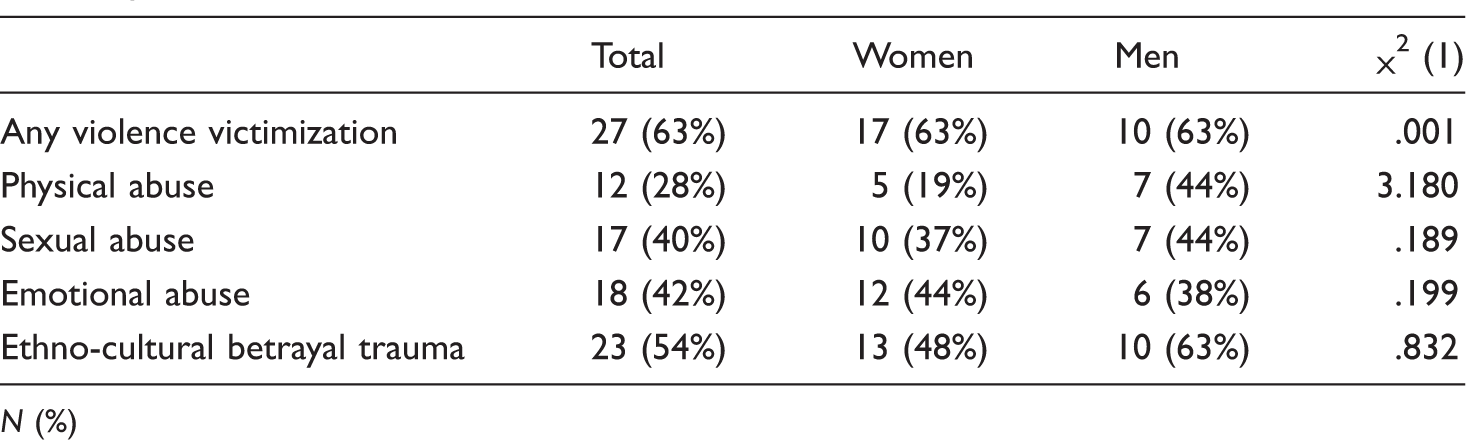
N (%)
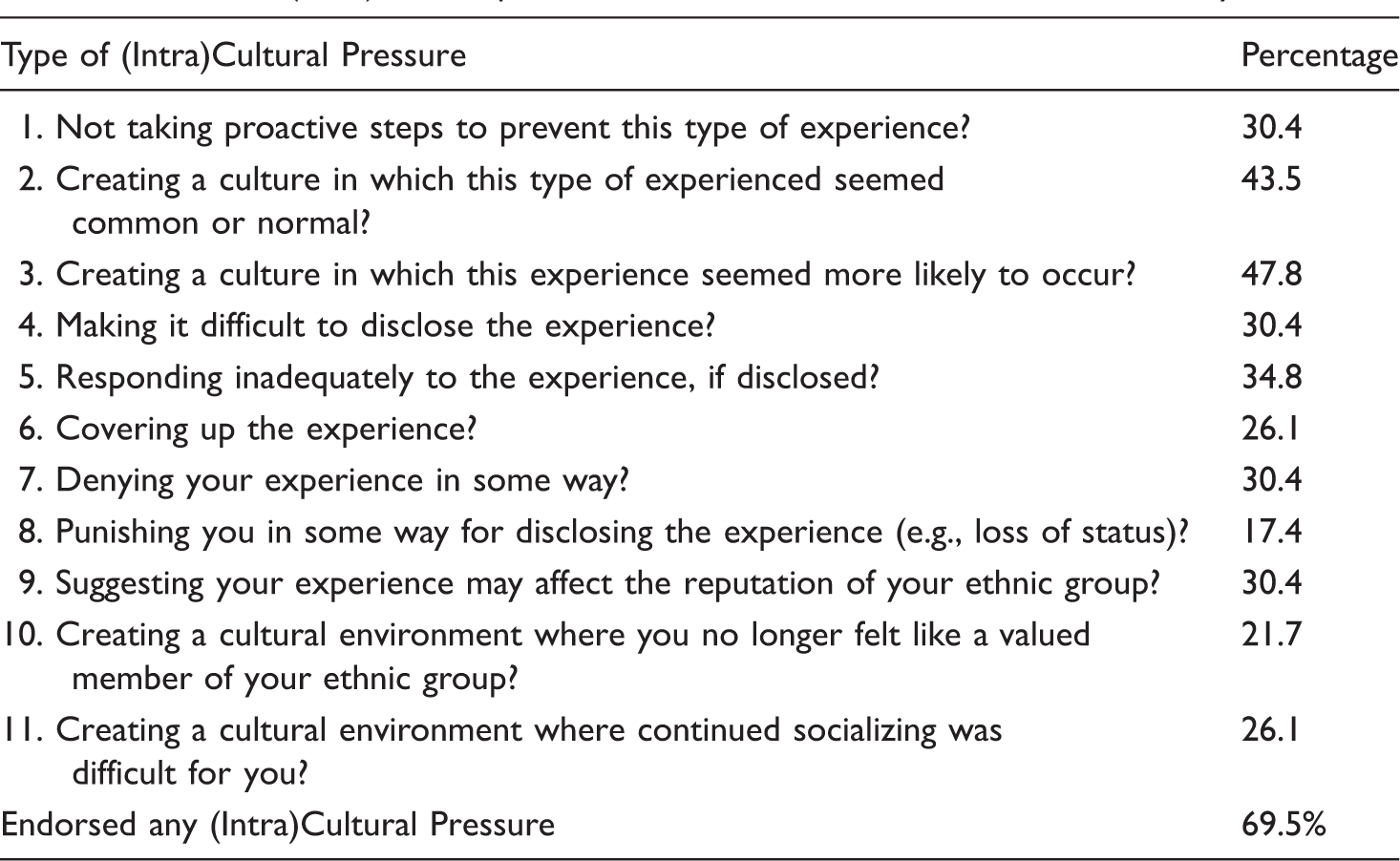
Rates of (intra)cultural pressure for Black victims of ethno-cultural betrayal trauma
Discussion
The current exploratory study is the first to test CBTT among Black Americans. Utilizing a small sample of Black college students at a predominantly White university, ethno-cultural betrayal trauma (defined as within-group violence in ethnic minority populations), dissociation, PTSS, and (intra)cultural pressure were examined. In line with past research, the current study found that prevalence rates of violence victimization were relatively high (e.g., Hampton & Gillotta, 2006), with the majority of victims of ethno-cultural betrayal trauma reporting at least one form of (intra)cultural pressure. Surprisingly, there were no gender differences found in type of abuse, with both genders reporting similar rates of any sexual victimization. As sexual violence is often conceptualized as a form of gendered violence against women (e.g., Gómez, Rosenthal, Smith, & Freyd, 2015), this finding is unexpected and in need of replication in larger samples.
Moreover, the current study’s preliminary findings shed light on the complexity of outcomes of violence victimization, including dissociation, PTSS, and (intra)cultural pressure. As expected, ethno-cultural betrayal trauma predicted PTSS. Interestingly, though many studies have found links between trauma and dissociation (e.g., DePrince et al., 2012; Gómez, 2019a; Gómez & Freyd, 2017; Gómez, Kaehler, & Freyd, 2014), no known studies have looked at how posttraumatic group dynamics, such as (intra)cultural pressure, can impact dissociation. Therefore, the current study’s finding that posttraumatic (intra)cultural pressure was linked to dissociation has implications for further examination of the impact of group, as opposed to individual, characteristics on victimization outcomes.
Previous work has outlined the importance of incorporating sociocultural factors into examinations of violence victimization (Bryant-Davis, 2010; Ford & Gómez, 2015; Harvey, 2007; Harvey & Tummalanarra, 2007). The current study demonstrates the potential utility of CBTT as a framework for engendering this type of contextualized work. As such, the current study has implications for examining the impact of (intra)cultural pressure in clinical interventions for Black victims of ethno-cultural betrayal trauma. These findings further point to addressing societal trauma, such as racism, in clinical interventions, as (intra)cultural pressure is a harmful protection of the Black community against the larger context of inequality. Specifically, relational cultural therapy (Gómez, in press; Jordan, 2010; Miller & Stiver, 1997) is a feminist therapeutic approach that contextualizes clients’ problems within the societal context (e.g., racism, sexism) while privileging the therapeutic relationship as a key mechanism of change. As such, relational cultural therapy may be particularly beneficial for Black victims of cultural betrayal trauma (see Gómez, Lewis, Noll, Smidt, & Birrell, 2016 for a discussion). Relational cultural therapy further centralizes the need for therapists to address the societal power dynamics in the therapy room (e.g., White therapist, Black client); thus, this approach is well-suited to address cultural betrayal and (intra)cultural pressure in ways that work to not further pathologize or homogenize Black people individually and collectively. Such cultural competency in mental health care treatment may help ameliorate broader group differences, such as under-utilization of mental health services (Alvidrez, Shumway, Morazes, & Boccellari, 2011; Weist et al., 2014) and mental health disparities (Gómez, 2015b; Snowden & Yamada, 2005).
In addition to interventions that focus on the individual, large-scale community-wide efforts can work towards systemic change. Specifically, Gómez and Gobin (in press) identify necessary changes to the field of psychology, mental health care, and the judicial system as important avenues to reduce and ultimately eliminate the need for (intra)cultural pressure. Furthermore, the Black church and other community fixtures, such as psychohairapy (Mbilishaka, 2018), can provide entry ways for community healing (Gómez & Gobin, in press). Finally, as put forth by the Association of Black Psychologists in collaboration with The Community Healing Network (Grills, 2013), Emotion Emancipation Circles may be a way to utilize (intra)cultural trust to individually and collectively heal from cultural betrayal trauma, (intra)cultural pressure, and the impact of societal inequality (Gómez & Gobin, in press).
Limitations and future directions
The current study provides a preliminary step in using CBTT (e.g., Gómez, 2017) to examine outcomes of within-group violence between Black people. The small sample size, resulting from limited representation at the site university, limited both the type of analyses that could be done, as well as the generalizability of the findings on other populations of Black college students in the US. As such, the current study’s findings should be used as a starting mechanism to detail future research directions. Future studies should create and validate measures of cultural betrayal trauma and (intra)cultural pressure specific to Black populations (e.g., Gómez & Johnson, in preparation). With such measures, future studies could explore the potential moderating role of (intra)cultural pressure on outcomes of ethno-cultural betrayal trauma. Additionally, future studies could use multiplicity (Hames-García, 2011) as a framework for examining within-group differences of trauma sequelae based on participants’ identification with multiple identities, including those related to ethnicity, gender, minority, religion, and survivor status. Moreover, in addition to further documenting negative outcomes, future studies could explore posttraumatic growth, such as engaging in advocacy and the arts (Bryant-Davis, 2005), relational re-connections with the self and others (Gómez, et al., 2016), and (intra)cultural support following ethno-cultural betrayal trauma. Finally, though the current study focused on individual outcomes, future work can examine how (intra)cultural pressure may also have negative impacts on the mental health of the Black community as a whole, including potentially contributing to fragmented (intra)cultural trust, isolation, depression, internalized prejudice, and other outcomes.
Conclusion
The current study provided introductory evidence for CBTT (e.g., Gómez & Gobin, in press). Though this work centers around Blacks in the US, inequality affects many countries and regions around the world, and therefore, CBTT may be applicable across societal contexts (Gómez, 2012). In adapting CBTT to different populations, the ongoing challenge is to avoid broad ethnic glosses (Pole & Triffleman, 2010) and simplistic overgeneralizations that reduce the complexity of the human experience to one-dimensional minority caricatures. These iterative efforts can be furthered through multidisciplinary collaborations across academic disciplines as well as within the minority communities that are being served. As such, CBTT can engender culturally-relevant research that can create an avenue for lasting change (Gómez, 2014) that documents violence and its effects while potentially reducing its prevalence and impact.
Footnotes
Declaration of Conflicting Interests
The author(s) declared no potential conflicts of interest with respect to the research, authorship, and/or publication of this article.
Funding
The author(s) disclosed receipt of the following financial support for the research, authorship, and/or publication of this article: This work was supported by the Ford Foundation Fellowship Program under the Ford Foundation Dissertation Fellowship, administered by the National Academies of Sciences, Engineering, & Medicine.
 . Twitter: @ JenniferMGmez1