



Abstract
This article explores the processes of transformation of the self in dang-ki healing, a form of Chinese spirit mediumship in Singapore, drawing on more than a decade of ethnographic research. In dang-ki healing, it is believed that a deity possesses a human, who is called a dang-ki, to help clients (i.e., devotees). Through the dang-ki, clients can interact with powerful deities in ways that help them feel hopeful and supported. The dang-kis themselves may also benefit therapeutically from their participation as mediums. Many dang-kis suffer from personal conflicts and distress before becoming a medium and they express and transform their distress through the idiom of spirit possession. Since deities represent traits and moral values promoted in Chinese culture, possession by a deity allows the dang-ki to embody an ideal self and to acquire spiritual knowledge by engaging in ritual practices involving cleansing, self-mortification, stereotyped movements, and altered consciousness. At the same time, junior possessing deities must undergo training under the guidance of senior deities to achieve a higher level of spiritual existence by helping clients through the dang-ki's body. Thus, in dang-ki healing, practitioners, clients and possessing deities are transformed in parallel ways. The dynamics of this reciprocal and interdependent healing process differ from the individualistic approaches in Western psychotherapy and shed light on the links between healing processes, cultural ontologies, and concepts of personhood.
Introduction
Every system of healing or psychotherapy has its own theory of change, which includes signs of illness and affliction and symbols of transformation. However, the actual processes of healing may involve mechanisms beyond those recognized by the local ontological and explanatory model (Kirmayer, 2004). Csordas (1994) has argued that the locus of efficacy of most healing systems (including psychotherapy, and diverse forms of ritual healing) is not the transformation of symptoms, psychopathology, symbolic meaning, or social relationships, but the self that encompasses all these attributes. However, since the meanings of self vary across cultures, this poses a challenge to cross-cultural applications of particular schools of Western psychotherapy that are embedded in an individualistic view of self that may not be shared by people in non-Western societies (Kirmayer, 2007; Kirmayer, Adeponle, & Dzokoto, 2018; Kpanake, 2017).
For example, the goals of resolving intrapsychic conflict by achieving insight in classical psychoanalysis, or of actualizing the authentic self in humanistic psychotherapy, reflect the egocentric or individualistic orientation central to Western worldviews (Cushman, 1996). Of course, this does not mean that Western theorists do not recognize the role that interpersonal relationships plays in individual development. Indeed, social constructionists, who have criticized Western individualism, conceptualize the self as a social construct emerging from relational processes, shared narratives, and communal memories (Gergen, 2011). Nevertheless, the meaning of relational self in Western worldviews is epistemologically and qualitatively different from that found in non-Western worldviews, particularly those from Asian societies.
Even interpersonal psychotherapy, which focuses on relationships, views people as independent, self-contained, and autonomous individuals who may develop psychological disturbances arising from attachment vulnerabilities, inadequate social supports, emotional suppression and inexpressiveness, or poor communication skills (Allan, Campos, & Wimberley, 2016; Kpanake, 2017; Stuart, 2006). Interpersonal psychotherapy aims to address the “patient's ability to assert his or her needs and wishes in interpersonal encounters, to validate the patient's anger as a normal interpersonal signal and to encourage its efficient expression, and to encourage taking appropriate social risks” (Markowitz & Weissman, 2004, p. 137, emphasis added). Similarly, Murray Bowen (1976), whose family system theory influenced the development of various approaches to family therapy, emphasizes differentiation of the self as a central goal to enable people to develop independently of their families and negotiate the balance of independence and togetherness (also see Jankowski & Hooper, 2012).
These interpersonal approaches primarily use social environments as sources for developing, verifying, affirming, and expressing the inner core of self (see Markus & Kitayama, 1991). Social relationships are viewed as an external factor that influences the internal attributes of self. This dualism between self and others, or inside and outside, is in sharp contrast to a more unified view of self found in many cultures in which the self is inseparable from a larger whole comprising not only other people but also divine forces, ancestral spirits, animals, nonhuman agencies, physical environments, and the cosmic order (Kirmayer, 2007). In Confucianism, for example, reciprocity, interdependence, and interrelatedness are the essence of the relational self (Ho, 1995; Sun, 2012). Since one is “intensively aware of the social presence of other human beings, the appearance of others in the phenomenal world is integral to the emergence of selfhood; that is, self and others are conjointly differentiated from the phenomenal world to form the self-in-relation-with-others” (Ho, 1995, p. 116). Buddhist philosophy views this self-other distinction as itself a source of suffering and advocates a developmental path leading toward a sense of selflessness to transcend social boundaries (Austin, 2009; Siderits, Thompson, & Zahavi, 2013).
From a Taoist perspective, instead of pursuing the differentiation of self, the ultimate existential attainment is the return to the state of hun-dun (渾沌) or chaos, where matter, self, spirit, and divinity are undifferentiated (Zheng, 2001). Similarly, in Hinduism, the Atman (subjective existence of the individual self) is mutually constituted with Brahman (the ultimate cosmic principle) such that individuality and universality form the same reality (Chaudhuri, 1954). Concepts of sociocentric and cosmocentric selves are also found in some traditional healing systems, such as shamanism and spirit mediumship (Kirmayer, 2007), which do not aim to uncover or actualize one's unique inner attributes, as in the case of many forms of Western psychotherapy, but guide individuals to live in harmony with other people, nonhuman beings, and the environment. Understanding the ways in which local ontologies and corresponding concepts of self and personhood shape healing practices is an important challenge for cultural psychiatry and psychology.
In this article, we review findings from our research on dang-ki healing, a form of traditional spirit possession practice in Singapore. The research has involved more than 10 years of ethnography, participant observation, and evaluation of 15 practitioners and about 150 clients with psychometric instruments by the first author (Lee, 2007; Lee, 2016; Lee & Kirmayer, 2019; Lee, Kirmayer, & Groleau, 2010). These ethnographic studies were approved by institutional research ethics committees from McGill University, and SIM University (now Singapore University of Social Sciences).
The overall aim of this article is to better understand the processes of healing by comparing Western psychotherapy with dang-ki healing to identify potential mechanisms of efficacy and their relationship to cultural ontologies and concepts of self and personhood (Kirmayer, 2007). Here, we are concerned with the ways in which this form of healing through spirit possession can be viewed as a kind of psychotherapy, transforming the sense of self, interiority and social relationships of both practitioner and client.
In the sections below, we first describe the cultural background and current context of dang-ki healing in Singapore. We then describe the sense in which dang-ki healing can be viewed as (in part) a form of psychotherapy. Subsequent sections consider the healing effects of this form of mediumship for clients (i.e., devotees), the community, dang-ki practitioners, and the deities themselves. Throughout, we identify some of the culture-specific dimensions of dang-ki healing that contrast with the models and assumptions of Western psychotherapies.
The context of Dang-ki Healing
Dang-ki healing is a type of Chinese spirit mediumship practiced in Singapore and other Asian societies (DeBernardi, 2006; Kleinman, 1980; Lee et al., 2010; Lin, 2016). This practice is based on the belief that a deity can possess a human (called dang-ki, 童乩 or 乩童) in order to offer help to people. Although no survey has been conducted in Singapore about the gender ratio of dang-kis, a Taiwanese study with 596 dang-kis found that 70% of them were male (Lin, 2016). Since all of the dang-kis involved in our ethnographic studies in Singapore were also male, we will use male pronouns throughout this article.
The most common issues presented by clients to deities through the dang-kis during spirit possession are related to health and illnesses followed by requests for ritual blessing, fortune-telling, and help with career, business, wealth, and interpersonal conflicts (DeBernardi 2006; Lee, 2007; Lee et al., 2010; Lin, 2016) . Deities commonly address these issues by providing moral advice and prescribing talismans. Herbs and acupuncture may also be administered for health problems, and rituals may be performed to ward off bad luck or evil spirits.
Western theorists usually perceive spirit possession and mediumship as an altered state of consciousness, in which mediums are the same person before, during, and after their “spirit possession” but function in a mode of cognitive dissociation (Winkelman, 2010). From an emic perspective, however, clients and their communities perceive the dang-ki and possessing deity as two different beings. The being they consult and converse with during the spirit possession is a deity rather than a human.
Possessing deities are mainly from the pantheon of Chinese popular religion (民俗信仰), which is a fusion of Taoism, Buddhism, Confucianism, animism and folk mythologies (Zheng, 2001) that jointly shape the worldview of dang-ki healing. Many of these deities were historical figures in ancient China who were deified and worshipped for their noble characters (Chan, 2006). Ordinary Chinese people are familiar with these deities not by reading Taoist or Buddhist scripts but from popular classic novels such as “Journey to the West” (西遊記) and “The Canonization of the Gods” (封神演義), which have been adapted for cartoons, movies, operas, and television programs. The popularity of a particular deity at any given time may be influenced by such mass media (Lee & Kirmayer, 2019). The Monkey God (孫悟空), for example, became a very popular possessing deity across temples in Singapore after the broadcast of a drama series on “Journey to the West” (see Baidu, 2012). Thus, the types of deities possessing dang-kis are not simply derived from Taoist or Buddhist beliefs but from contemporary novels and mass media that have popularized these deities. How these mass media portray the deities may also shape the public imagination of the deities' dispositions and characteristics, which in turn (as we shall show) influence the clients' healing experiences and dang-kis' personal development.
The exact number and background of dang-kis in Singapore is unknown because many practice part-time at private shrines in residential homes instead of more publically visible and accessible temples (Chan, 2006). Ethnographic research has revealed that many dang-kis are Chinese adult males with high school education, who work in non-professional sectors (Lee, 2016; Lee & Kirmayer, 2019; Lee et al., 2010). Their monthly household income would place them in the upper-end of the lower socioeconomic class in Singapore, a society which is predominantly middle-class (see Tan, 2015). The dang-kis' sociodemographic background is similar to that of their clients who are mostly older, working class Chinese (Lee, 2007, 2016). In Singapore, ethnic Chinese form the majority (74.3%) of the resident population, and are mainly affiliated with traditional Chinese religions such as Buddhism (42.3%) and Taoism (12.9%) (Singapore Department of Statistics, 2018). This ethnic and religious context may appear to be conducive to the practice of dang-ki healing. However, given the decreasing numbers of Singaporean Chinese participating in Chinese religions over time, dang-ki healing may be gradually marginalized and attract only a small group of Chinese devotees (Lee, 2016).
Dang-ki healing as psychotherapy
Drawing upon our past research, we approach dang-ki healing as a form of embodied relational healing that is potentially therapeutic to clients, the community, and the mediums. We will argue that the meaning and experience of self in the healing process cannot be understood independently from a larger relational context. This self-experience does not reflect one singular form of self-construal but encompasses several modes, as individuals tend to behave differently across different social contexts or life circumstances. In particular, the personhood of many East Asian people is dynamic, fluid, and multidimensional due to the joint influence of Confucian, Buddhist, and Taoist philosophies, which provide different construals of the self (Sun, 2012). In such cultural contexts, people learn to maintain harmonious relationships in daily life based on Confucian ethic principles. As a result, when interpersonal conflicts reach an impasse, rather than confrontation, they may choose to redirect their attention through personal cultivation, seeking help from other people, or through practices of healing or transcendence based on Buddhist and Taoist doctrines.
In our study of dang-ki practice, the term “healing” refers to the healing of illness rather than curing of disease. The former refers to the process of restoring subjective, affective, social, and spiritual dimensions of health (Kleinman & Seeman, 2000). Health, in turn, is not merely the absence of disease but involves dimensions of meaning and well-being (Taylor, 2018). Individuals may restore their daily functioning even though they continuously experience clinical symptoms. They may also go beyond the goal of repairing or recovering from various kinds of dysfunction to develop, cultivate, and actualize body, mind, relationships with others and spirituality. In the Buddhist script of “The Medicine Buddha Repentance” (慈悲藥師寶懺儀軌), illness is more than just a physical ailment but also refers to many character problems; for example, there are illnesses of greed, anger, ignorance, arrogance, and unfilial behaviors. This broad definition of healing applies to the transformation of the deities themselves, who include humans who were deified after their death and who then must continuously cultivate their spirituality to ascend to a higher level of spiritual existence.
Mediumship, therefore, can be considered as a healing system for personal cultivation and growth rather than for curing diseases. Spirit mediumship is an embodied relational healing practice that is grounded in the body rather than in cognitive-discursive processes (Seligman, 2014). As we shall see later, the narratives of mediums' possession structure specific metaphoric enactments that give rise to bodily experiences that warrant the power and authenticity of the practice (Kirmayer & Ramstead, 2017).
Healing the client
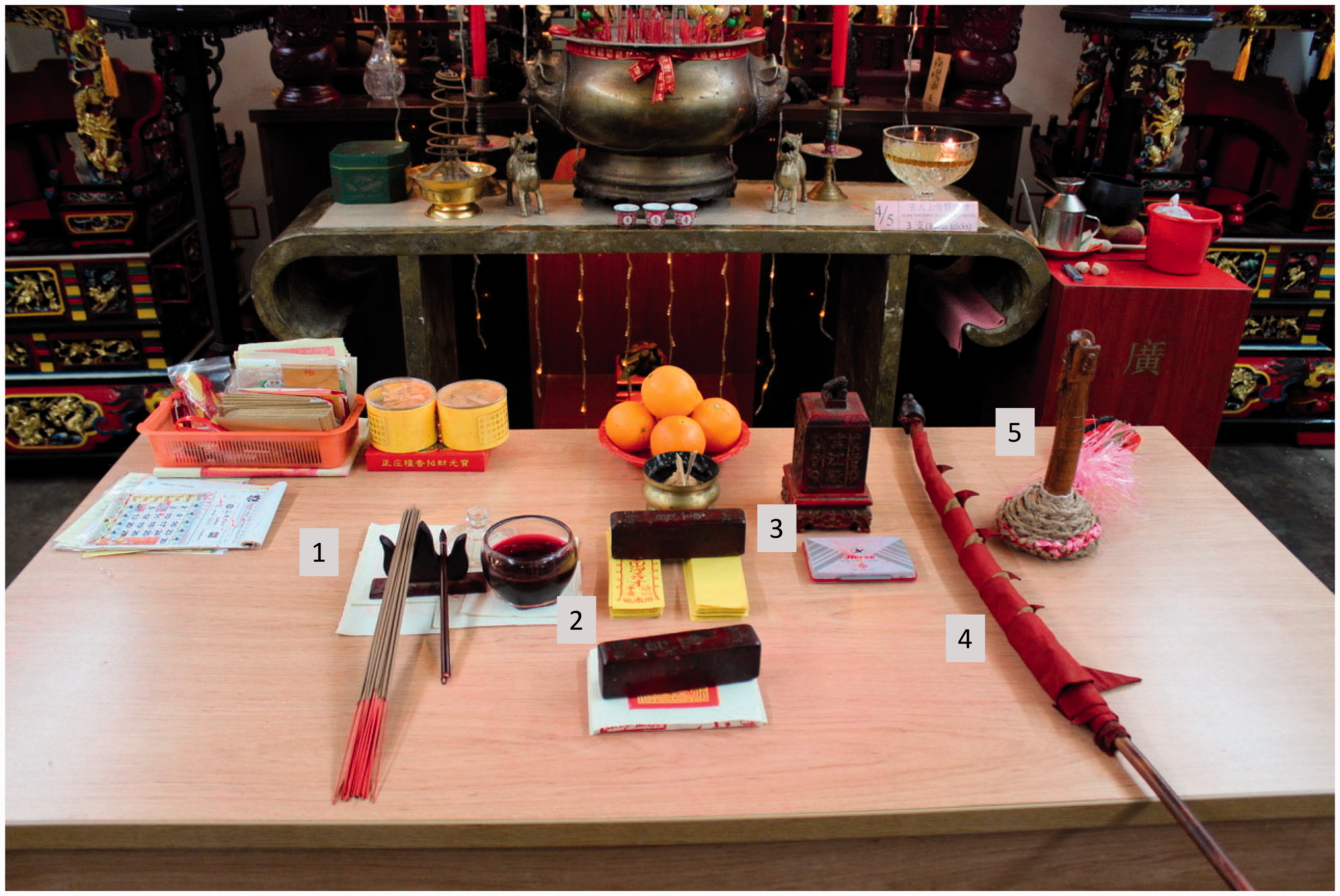
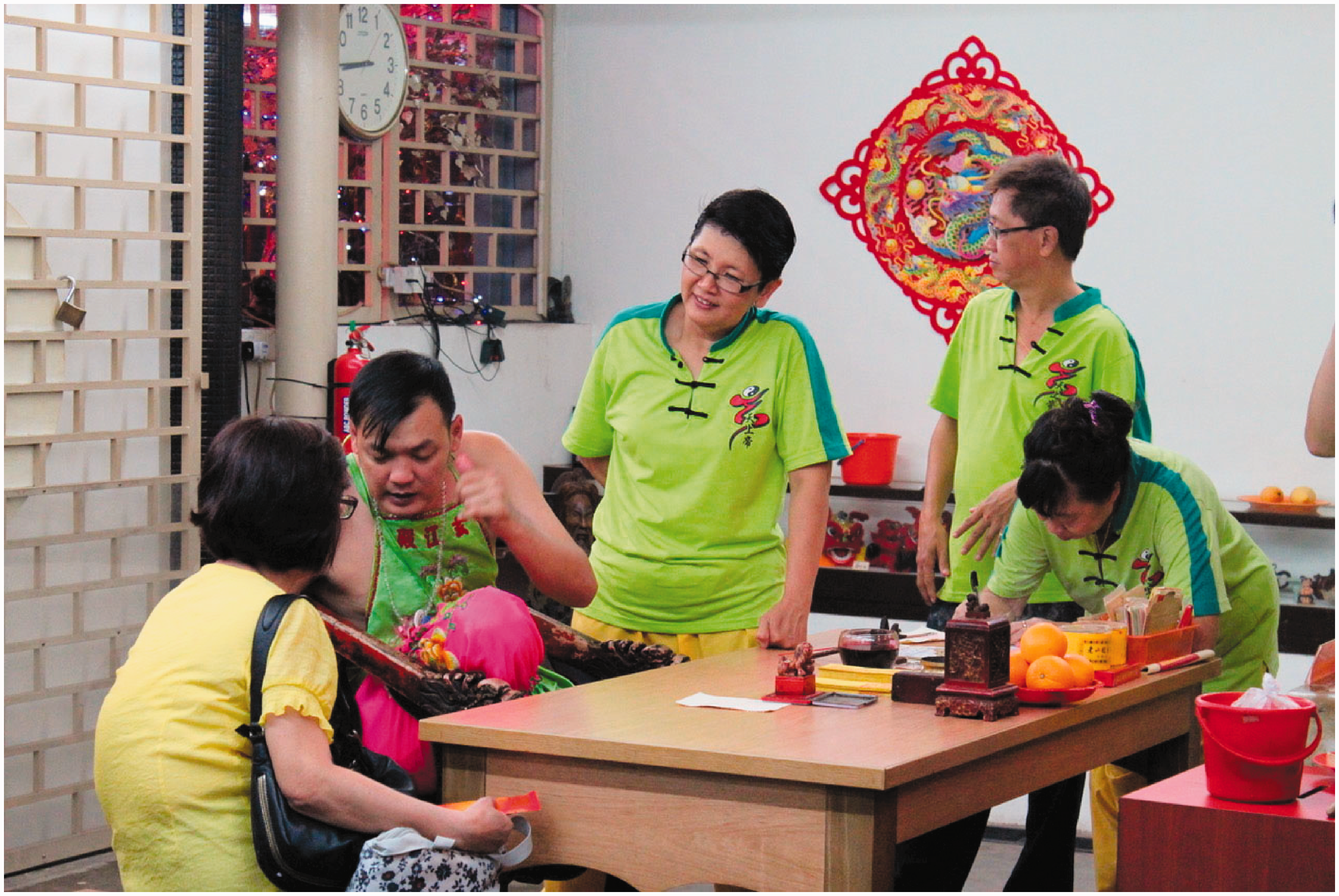
Spirit mediumship is the embodiment and objectification of an invisible being such as a deity. This form of manifestation differs from the sighting, vision, or apparition of a divine entity where reciprocal interaction is usually absent. Through the body of the dang-ki, people can physically interact with an invisible being. Such an interaction is a vivid, tangible, and powerful experience compared to simply praying to the image of the deity on the altar. Compared to prayer, clients prefer the direct communication with deities made possible through the possession of dang-kis (Lee, 2016). Since people can only have this kind of dialogue with a deity in the ritual space of the temple, their healing experiences become publically and personally marked as sacred. Thus, the involvement in dang-ki healing significantly changes and enhances the relational experience between the client and a divine power. Given that dang-ki healing does not take place in a private, cloistered place like the therapist's consulting room in Western psychotherapy, but rather in an open semi-public space, the human-deity interaction is visually presented and its power is displayed to all in the audience. Figures 1 to 3 show a dang-ki shrine hall, a table set with the dang-ki's implements, and a client consulting a deity (i.e., dang-ki in spirit possession) in the shrine hall. Outside the shrine room, clients queue up in a sitting area and may quietly talk among themselves as they await their own consultation with the deity.
Dang-ki shrine with images of deities and joss sticks for ritual offering. The dang-ki sits facing this shrine, while becoming possessed and during subsequent consultations. (© 2017, Photographer, L.J. Kirmayer (April 24, 2012), with permission of the dang-ki). Table with materials for dang-ki healing. Arranged on the table from left to right are (1) joss sticks, a brush and red ink for writing fu, (2) stacks of blank fu and a stack of incense papers, (3) a divine seal and a stamp pad, (4) a red divine command flag, and (5) a ritual whip. (© 2017, Photographer, L.J. Kirmayer (April 24, 2012), with permission of the dang-ki). Dang-ki possessed by deity consulting with a client. The deity is advising the client while assistants (in green polo shirts) listen in and add their comments to clarify the message. Other clients are sitting outside the open room listening to the proceedings and awaiting their turn to consult. (© 2017, Photographer, L.J. Kirmayer (April 24, 2012), with permission of the dang-ki and participants).
The most common healing methods in dang-ki healing involve talking (e.g., giving advice and recommendations), prescription of fu (符; talismans), physical therapy (e.g., acupuncture, herbs, massage), and rituals (e.g., drinking incense ashes mixed with water, blessing, recalling lost souls, cleansing) (Lee et al., 2010). These healing methods are used for managing diverse problems ranging from illness to daily life issues such as interpersonal conflicts and career planning (Lee, 2007). In traditional Chinese culture and Confucian philosophy, physical illness is associated with interpersonal difficulties and disruptions of the social order (Chang, 2008). Various character deficiencies or moral failings – including greediness, jealousy, arrogance, and unfilial acts – are treated as illnesses in Buddhism. Physical health is also connected to emotions and personality in traditional Chinese medicine (TCM) (Lee, 2002). The self is fundamentally a living body and self-cultivation is intertwined with bodily cultivation (Wang, 2012). Thus, dang-ki healing focuses on physical symptoms in relation to personal character and social ethics. The focus on character building is not to assert one's needs but to learn to appropriately present oneself according to social expectations. Much of the advice given by dang-kis reflects this approach to the development of character and interpersonal relations based on Confucian, Taoist, and Buddhist doctrines.
In the healing rituals we have observed, deities (i.e., dang-kis in possession) advised their clients with phrases conveying broad suggestions or injunctions such as “Don't think too much”, “Take things easy”, “Be non-confrontational”, “Learn and cultivate through hardship and life problems”, “Don't be easily disturbed by other people and the environment”, “Self-reflection”, “Acceptance”, “Enjoy life”, “Think positively”, “Inner peace”, “Let nature take its course”, and “Exercise forbearance” (Lee, 2007; Lee et al., 2010). These phrases reflect the Taoist philosophy of self-control, emotional control, and wu-wei (無為; non-action), which are common Chinese ways of coping (Sun, 2012). For Chinese, strong emotional displays are construed as weakness, immaturity, a lack of self-control in the social milieu, and detrimental to social harmony and health (Sue & Sue, 2016). Excessive emotion, rather than emotions per se, is regarded as pathogenic. A high value is placed on the moderation and inhibition of strong affective expression to avoid interpersonal conflicts (Chen, Cheung, Bond, & Leung, 2005). In some social settings, not acting (wu-wei) may be more adaptive than acting because non-action may preserve the homeostasis of the system (e.g., family or interpersonal relationships) whereas taking action may upset the system, thereby leading to more antagonism. In one case, for example, a deity advised a depressed client on the importance of maintaining good relationships with colleagues, even to the extent of blaming herself instead of blaming others: “You must always think that you're in the wrong regardless of whether you're right or wrong. In this way, you'll be more relaxed and will not argue with others. Everyone wants to win but no one wants to lose. You've to lose before you can win. You indeed suffer a loss when you win because no one will talk to you or befriend with you. Don't be bothered by their criticism. You know whether you're good or bad. You don't have to explain to them.” (Lee, 2007, p. 69)
In addition to verbal advice, treatment methods in dang-ki healing include the preparation of fu, talismans with magical writing on papers. A fu is a metonymic representation of the deity, and an embodiment or materialization of the divine power through the symbolism of words. Since the deities' names and divine language are written on the fu, they have the power to summon deities and celestial armies to protect and help clients. In effect, the drawing of certain objects (e.g., human, deity) is thought to possess the same attributes as the actual objects (Liu, 2016). The potency of a fu depends on the words inscribed but also is graded according to its color and size. Yellow fu, which bear the name of a single deity, are used for general purposes. Red and green fu, which bear the names of more than one deity, are considered more potent as they can summon more than one deity. The green fu is also larger in size. These talismans are normally prescribed for urgent and serious issues such as medical or legal cases. The color and size of the fu, and the number of the deities it summons may signify greater potency, which in turn enhances the client's hopes and expectations. Depending on the deity's instructions, clients may burn a fu and drink the ashes with water, use it for cleansing the body, carry it as an amulet, or paste it on the entrance to their home. Fu are used to cure illnesses, ward off evil forces, mend bad luck, or manage interpersonal conflicts. By drinking the ashes of the fu, clients are symbolically united with the divine forces; in our interviews, some clients reported feeling the presence of the deity and feeling connected to divine forces after using the fu.
After using the fu, clients usually feel calm, relaxed, and protected (Lee, 2007). One female client, who had problems with colleagues, was advised not to scold or be angry with others, not to be sensitive to how people had treated her, but instead to focus on her work. She said that the fu had helped her to be less irritable. Another client, who had suffered from stroke, found her work relationship improved after eating the fu. She said that no one had quarreled with her and she did not encounter any more problems at work. She explained how her illness was related to interpersonal relationships: “If I'm sick, I'll easily lose my temper, and then I'll end up quarrelling with my colleagues. After eating the fu, I'm able to calm down myself and will not have hot temper” (Lee, 2007, p. 57).
These narratives suggest that talismans and rituals can influence or transform emotion regulation and interpersonal relationships in everyday life situations. Unlike most forms of Western psychotherapy, this influence occurs without confrontation, negotiation, or intensive talk therapy. In a case reported in Lee (2018), a woman became depressed after having problems with a colleague. Since psychotherapy did not work for her due to her difficulty in expressing and asserting herself, she resorted to a ritual that involved burning a type of talisman that was supposed to turn a villain into a benefactor. She claimed that her relationship with the colleague improved after the ritual. The symbolic act of burning the talisman shifted her attitude toward her colleague. This change in attitude or expectations, may, in turn, have brought about a more positive interaction with him. Given her difficulty in expressing her thoughts and feelings, this ritual allowed her to regulate her emotions and decreased her anticipation of negative interactions, helping her to avoid confrontation in an actual social situation.
Many clients continue to consult the deities, finding the sessions beneficial even though their medical and psychosocial issues persist (Lee et al., 2010). These benefits are largely subjective, involving positive changes in bodily experiences (e.g., gastric relief, better blood circulation, more energy), cognitive-affective states (e.g., calmness, peacefulness, sense of security, self-awareness, hopefulness), interpersonal relations (e.g., avoidance of conflicts), or spiritual experiences (e.g., feeling the presence of divine forces, communicating with deities). For example, a client who had suffered from muscular atrophy and blurred vision due to side effects of medication, received both massage therapy and herbal medicine mixed with the ashes of talismans (Lee et al., 2010). She felt that the massage had straightened and strengthened her legs, and the herbs had improved her vision – although she was still wheelchair bound with blurred vision at the time of the study. Another client experienced changes in bodily sensations following the deity's pulse palpation and acupuncture. 1 She claimed that a stream of warm energy had entered her body through his pulse palpation, which in turn relaxed her mind. As a result, she was calm and able to control her temper to avoid interpersonal conflicts at work. Her narrative is interesting because, strictly speaking, pulse palpation in TCM is viewed as a form of physical examination rather than an intervention. As this example illustrates, clients may actively participate in the treatment, constructing their healing experiences in ways that are independent of the technical rationales for the interventions, yet with strong positive expectations for the benefit of treatments delivered by an omnipotent deity.
In summary, dang-ki healing is embedded in Confucian, Buddhist and Taoist philosophies, which provide implicit cultural ontologies, forms of authority, and expectations for positive outcomes. While Confucianism is applied to the maintenance of social hierarchy and interpersonal relationships, Buddhism and Taoism are applied to general coping strategies and control of thoughts and emotions in every aspect of life. Figure 4 summarizes the process of the client's healing experience (see Dow, 1986; Frank & Frank, 1991; Kirmayer, 2011; Levi-Strauss, 1963). As shown, the deity (i.e., the dang-ki in possession) evokes a culturally legitimized myth of Chinese religion framed in Confucianism, Taoism and Buddhism. He then attaches the client's personal and bodily experience onto certain symbols of affliction (e.g., bad fortune, karma, imbalance of yin and yang, not following Confucian ethic principles), and then manipulates the symbols through culturally recognized interventions (e.g., talking, prescribing fu, rituals) to transform the client's experience.
Structure of transformation of the client's experience in dang-ki healing. During the consultation with the possessed dang-ki, the client interacts with the deity in conversation and through witnessing and carrying prescribed ritual actions.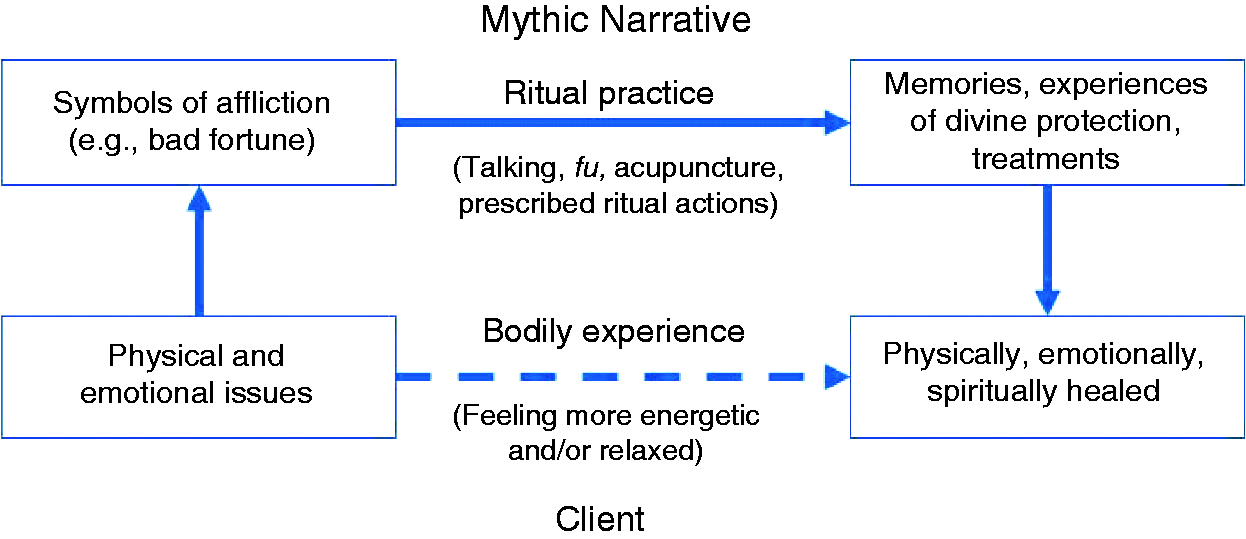
Spirit mediumship as communal healing
Unlike psychotherapy, dang-ki healing is not carried out in a private room, but in the main shrine hall of a Taoist temple in the presence of other clients, shrine attendees, assistants, bystanders, and visitors who can watch and listen to the consultation. Privacy or confidentiality is usually not observed unless a client specifically requests a private session with the deity without the assistants present. Even then, the consultation is still held in the open area. Deities often tell the clients and other attendees that their teachings benefit everyone.
This form of communal healing has been reported in other studies of dang-ki healing (DeBernardi, 2006; Elliott, 1955; Kleinman, 1980; Yee, 2006) and ritual healing practices in many other cultures (Winkelman, 2010). Communal healing can mobilize family and community supports to alleviate individual afflictions (Atkinson, 1987; Krippner, 2002; McClenon, 2002; Thong et al., 1993). The communal nature of this practice allows the dang-ki shrine to function as a healing community rather than a clinic per se. The dang-ki often mingles informally with the attendees before his possession ritual or outside the shrines. 2 By contrast, psychotherapists do not normally socialize with their clients beyond the boundaries of their clinical relationships (Afolabi, 2015). Indeed, professional ethical guidelines generally proscribe such contact. These guidelines are based in part on the individualistic value system underlying the Western mental health care (Koss-Chioino, 2006; Savin & Martinez, 2006). In contrast, the dang-ki practices are rooted in a more communalistic ethos and attendance at the shrine enables clients to establish social networks for information sharing and on-going support. Of course, the dynamics of these networks and the larger community may be complex and there is an important process of self-selection. Clients who benefit from the healing are more likely than dissatisfied clients to continue using the dang-ki's services (DeBernardi, 2006; Lee et al, 2010). They often share their positive healing experiences with fellow clients before and after the rituals. Many clients arrive early before the consultation and remain at the shrine after the sessions to interact with other members, sharing stories of healing and reinforcing positive expectations. Similar situations are not found at mental health clinics in Singapore, which are task-oriented, goal-specific, and detached from the community. Psychotherapy clients usually come at a specific time as scheduled and leave immediately after the consultation. Mental health care is associated with stigma that may also limit open sharing of experiences.
Clients at the shrine also receive support from the deities' assistants, who are volunteers who help by giving out queue numbers, interpreting the divine language uttered by the possessing deities, and guiding the clients to perform rituals. They mingle with the clients and offer advice after clients' healing sessions to reinforce the deities' consultations. As many of these assistants are former clients, their personal healing experiences serve as testimony to the efficacy of the deities. Although the healing power is attributed by clients and practitioners entirely to the deities, the sources of efficacy of dang-ki healing may include the participation of other clients, assistants, and shrine attendees who together constitute a consistent healing environment, supporting a shared ontology and theory of change, engendering strong positive expectations, and reinforcing specific practices.
Healing the medium
Interviews with practitioners indicate that it is not only the clients, but the dang-kis themselves who also benefit therapeutically from the practice of healing. Many ethnographic accounts suggest that spirit mediums, including dang-kis, often experience personal issues or crises in adaptation and distress prior to becoming a medium (Chapin, 2008; Lee, 2016; Lee & Kirmayer, 2019; Obeyesekere, 1981; Seligman, 2014). Functioning spirit mediums generally are described – and present themselves – as free from clinically significant distress and illness after initiation. Of course, there is normative pressure for mediums to give this account of their own healing as a warrant to the power of the helping spirit and the efficacy of their practice. In Brazilian Candomblé, Nigerian, Sri Lankan Hindu or Buddhist, and Sudanese mediumship practices, spirit possession is perceived as an illness inflicted by spirits or as a spiritual calling to serve the spirits (Cohen, 2007; Masquelier, 2001; Mianji & Semnani, 2015; Obeyesekere, 1981). The sufferers establish relationships with the possessing spirits through initiation in exchange for well-being and protection. In other words, the personal distress and illnesses occurring before their initiation are expected to end upon accepting initiation. This does not mean that previous troubles cannot recur or that new kinds of emotional distress and illness cannot develop after becoming a medium. Indeed, in discussing shamanism as a therapy, Peters (1982) suggests that “for the fully initiated shaman, ‘therapy’ never ends. His initiations and healing rituals are his continuous therapy, functionally similar to the therapeutic benefit a therapist derives from the psychotherapy he performs” (p. 38). Similarly, Seligman's (2010) ethnographic research found that Brazilian Candomblé mediums did suffer from illness or distress after initiation. Their narratives, however, framed this distress more as part of an ongoing therapeutic and developmental process than as pathology.
Similarly, dang-kis' involvement in mediumship may be therapeutic for them. Their healing transformation does not happen all at once, but is an incremental process that occurs over time and may continue long after their initiation (see Csordas, 1994). Lee and Kirmayer (2019) reported a dang-ki who still exhibited various psychological symptoms 16 years after becoming a medium. His clinical profile from the Cross-Cultural Personality Assessment Inventory (Cheung, 2011) showed high scores on anxious, depressive, somatic, delusional and hallucinatory symptoms. By engaging in mediumship, he may have improved his daily psychosocial functioning and subjective well-being by changing his perceptions of dysfunction even though he continued to experience clinical and subclinical symptoms. In another study (Lee, 2016), a dang-ki shared that he had not completely freed himself from his emotional conflicts but had treated the deity as his teacher and the temple as his school from which he learned every day. Thus, the dang-ki's spiritual transformation may be a life-long process without a predetermined or fixed outcome.
Before discussing the dang-ki's transformation in detail, it is important to emphasize that spirit possession in dang-ki healing is not construed as an illness because the possession is induced by benevolent deities rather than by malevolent spirits for the explicit purpose of helping humans. In dang-ki healing, illness is attributed to many causes including character problems (e.g., lack of filial piety), bad luck, or traditional Chinese medical etiologies (e.g., imbalance of qi) (Lee, 2007; Lee et al., 2010).
Deities do not induce preinitiatory distress as an exchange for initiation but offer healing for the dang-kis' predicaments that may be precipitated by evil spirits, illnesses, karma or other social factors. This is in contrast to mediumship in some other cultures where the preinitiatory possession is viewed as an illness inflicted by a deity or a spirit (Cohen, 2007; Masquelier, 2001; Mianji & Semnani, 2015; Obeyesekere, 1981). 3 This different view of spirit possession reflects the religious ontology. Most of the possessing deities in dang-ki healing were humans with noble characters who were deified and now expected to help others rather than cause them pain (Lin, 2016). Spirit possession in dang-ki healing is a spiritual calling and divine obligation even though it is involuntary (Lee, 2016; Lee & Kirmayer, 2019).
Through the mediumship of spirit possession, dang-kis express and transform their negative personal experiences and develop their own spirituality. Similar to mediums in other traditions (Pierini, 2016; Seligman, 2014; Sutton, 1990), dang-kis' transformation is centered on embodied experiences of the practitioner. Mediumship employs various ritual practices involving cleansing, ritual mortification, bodily movements, changes in physical sensations, and altered consciousness. After being possessed, the dang-ki's behavior changes according to the disposition and physical appearance of his possessing deity (Lee, 2016; Lee & Kirmayer, 2019). For example, a young dang-ki becomes hunched over and speaks with a tremulous voice like an old man when possessed by an elderly deity. These physical and behavioral changes are signs of a genuine possession and serve to instill hope in clients who believe that the being they consult is an omnipotent deity rather than a human.
Dang-kis mainly acquire spiritual and moral knowledge through bodily experiences of embodiment and enactment rather than by attending religious classes or other forms of explicit instruction. 4 This embodiment is not only a symbolic transformation recognized by others, it is a lived experience of dang-kis whose bodies spend hours inhabited by the deity, talking, moving and feeling in ways mediated by the deity's spiritual and moral qualities. The possession ritual occurs in a setting full of specific cultural affordances that symbolize the pantheon of deities and the possession and healing ritual involves reminders and enactments of the deity's qualities. Identification with the deity is thus through both imagery and enactment and both felt from within by the practitioner and impressed upon them from without through their location within a communal practice and form of life. 5
Before the rituals of spirit possession, dang-kis observe several days of sexual abstinence and a vegetarian diet to cleanse their bodies to be fit for the sacred deities to possess them. However, they do not follow the moral practices only for the sake of the spirit possession rituals. To serve the deity, they must uphold a high standard of moral behavior in all aspects of life outside spirit possession. Therefore, they meditate and lead a simple life by renouncing materialism (Lee & Kirmayer, 2019). They cultivate their character to maintain positive relationships with other people consistent with Confucian doctrine, which emphasizes self-cultivation as an essential life goal (see Sun, 2012). This self-cultivation, which is sociocentric in nature and focused on harmonious relationships with others through observing duties and maintaining hierarchy, differs from the egocentric focus of self-actualization in humanistic psychotherapy (see Ho, 1995). Dang-kis also pursue an ultimate goal of selflessness or self-transcendence from Buddhist and Taoist perspectives. Personal cultivation constitutes an essential part of many healing practices in Chinese culture, including spirit mediums and traditional Chinese medicine physicians (Yee, 2006). In contrast to Western psychotherapy, such healers not only need to ensure that their therapy and behavior are ethical but are required to systematically cultivate themselves. Thus, for dang-kis, mediumship is their lived experience and not simply a religious ritual.
As mentioned earlier, the deities possessing dang-kis are mainly derived from Taoism and Buddhism. They represent positive traits admired by Chinese people, for example, loyalty, filial piety, compassion, justice, benevolence, valor, and high moral principles. Most of these deities were historical figures that were deified due to their noble character (Peng, 2014). Each deity represents some core values or positive traits. For example, the Taoist deity guan-di-sheng-jun (關帝聖君) was an ancient general well-known for his loyalty and righteousness, two essential Confucian moral values. Another common possessing deity is guan-yin (觀音), the Bodhisattva Avalokiteśvara who is associated with compassion.
Since deities represent traits and moral values promoted in Chinese culture, possession by a deity allows the dang-ki to embody an ideal self (Lee, 2016; Lee & Kirmayer, 2019). By incorporating this ideal self into their overall self-representation, dang-kis develop a positive sense of self-identity. It is not sufficient therefore to examine how a dang-ki's personal experience is expressed in a cultural meaning such as spirit possession or deity but how his personal experience is specifically expressed in the dispositions and values represented by a possessing deity. These dispositions and values shape the dang-kis' self-representation, which in turn transforms his personal experience.
For example, one dang-ki reported that he had learned to deal with hardships with a greater composure and insights after becoming a medium (Lee, 2016). The most prominent change was in his temperament and the uncontrollable anger that he had suffered from since youth. Since his emotional conflicts were centered on anger and “hot temper” while the disposition of his deity was composure, he gained compensation for shortcomings in his disposition through spirit possession. This can be understood as adopting new norms and strategies for emotion regulation through the imagery of the deity. However, it makes little sense to treat his management of anger as a pure internal process without situating it in its relational context in which anger is socially undesirable in Chinese culture. Since anger can threaten ingroup cohesion, collectivistic cultures (such as Chinese culture) are less likely than individualistic cultures to endorse expression of anger toward the ingroup (Matsumoto, Yoo, & Chung, 2010). 6
The pursuit of the ideal self is not simply an outward expression and affirmation of the cultivation of an inner attribute or development of one's potentials but serves the primary social function of fostering harmonious relationships. The various dispositions that deities represent (e.g., loyalty, filial piety, compassion, benevolence) are viewed as essential for maintaining interpersonal harmony in Chinese culture (see Sun, 2012).
Figure 5 summarizes the process that spirit possession transforms the dang-ki's personal experience (see Dow, 1986; Frank & Frank, 1991; Kirmayer, 2011; Levi-Strauss, 1963). As shown, the dang-ki expresses his illness and distress through spirit possession, a structure of healing based on a culturally legitimized mythic structure of Chinese religion which includes an ontology of deities or spirits, as well as processes of reincarnation, karma and other beliefs. Enactment of the mythic narratives (e.g., through possession rituals, internalization of the deity's qualities, personal cultivation, meditation, divine teaching in dreams) works to transform the dang-ki's personal and bodily experiences from sick to healed.
Structure of transformation of the dang-ki's experience in spirit possession. An initiatory illness moves the dang-ki to become a healer. During the ritual enactment of possession and consultation with clients, the dang-ki serves as a vehicle for the deity's healing actions and, in the process, experiences the transformation of his own conflict and distress.
In summary, involvement in dang-ki healing appears to be therapeutic for the dang-ki. His transformation is centered on the embodiment of his deity's qualities during the possession rituals. Outside the rituals, he has to maintain his sacred mission as a divine vehicle by developing his spirituality and moral values. This transformation through internalization of the deity's qualities is likely to be an incremental process carried on over many years of practices.
Healing the deities
Dang-ki healing involves transactions with the spirit through the medium of the healer that are often publicly performed, and therapeutic experiences are co-constructed as reciprocal healing processes among healer, deity, client, and the whole community. The ontology that underlies spirit possession allows for spirits with agency and mobility that can move beyond the boundaries of an individual. One consequence is that these practices are often associated with experiences of the self as less bounded or differentiated from others. Puerto Rican mediums, for example, when possessed by spirits causing their clients' illness, experience and reflect their clients' suffering (Koss-Chioino, 2006). Through this process, which Koss-Chioino called “radical empathy,” mediums transcend the boundaries between their own and their clients' selves. This process has similarities to the concept of mutual transformation elaborated in the relational school of psychoanalysis, which posits that therapy acts as a healing agent for both therapist and client through their growing emotional connection over time (Laufer, 2010; Wineburgh, 2013). “Meaning is co-constructed, therapeutic action is bi-directional, and self-representations are fluid; negotiated and re-negotiated relationally throughout the life cycle” (Schamess, 2012, p. 10). While in therapeutic relationships with clients, therapists may gain insight into themselves or experience positive countertransference that originates in their own re-emerging personal issues. 7 However, in psychodynamic theory and practice this process of mutual transformation is primarily located in intraindividual psychological processes such as defenses, insight, and transference whereas the reciprocal healing process of spirit mediumship is situated in a larger relational context with spirits and others in the congregation or community with whom the self is mutually constituted.
The Taoist belief that the healing spirits are deified mortals suggests, as mentioned earlier, that the boundary between human and deity is blurred. Indeed, people have the capacity to become a deity through active personal cultivation (Gan, 2016). Some people who are of noble character may be deified after death. These new deities normally become the disciples of senior deities to continue cultivating their spirituality. To transcend to a higher level of spiritual existence, these novice deities vow to relieve the suffering of sentient beings in the name of their mentor deities (Lee, 2015; Lee & Kirmayer, 2019). For example, the guan-yin who possesses a dang-ki is likely to be a disciple of the original guan-yin because original deities do not descend from the superlunary realm to personally offer consultation (see Lee & Kirmayer, 2019). One mentor deity may have many novice spirits. This explains the diverse behavioral manifestations and capabilities of deities of the same name who possess different dang-kis. In effect, the practice of spirit possession enables the joint cultivation of the dang-ki and his possessing deity (Zheng, 2004). In a case study described in Lee (2016), the deity possessing the dang-ki evolved from a junior to a fully-fledged deity after successfully completing divine missions. When the deity became the main consulting deity of the shrine, he raised his dang-ki's social status from a junior to a senior dang-ki. The dang-ki's spiritual attainment was enhanced over time as shown in his deity's spiritual teaching and use of classical idioms during healing sessions. Thus, the transformations of the deity and the dang-ki mutually reinforce each other such that changes in personal experiences lead to changes in cultural meaning and authority (i.e., of the deity) and vice versa.
Ritual self-mortification, which is one of the embodied practices in mediumship, also has healing value for both dang-ki and client. During special occasions (e.g., the deity's birthday), the dang-ki may engage in public practices that display his possessing deity's power: cutting himself with a sword, blade, or axes; beating himself with spiked balls or truncheons; piercing himself with skewers; or bathing himself in the smoke of burning joss sticks or in hot oil (Chan, 2006; DeBernardi, 2006; Kleinman, 1980). This ritual self-mortification is not the same as pathological self-injury (see Meszaros, Horvath, & Balazs, 2017) but is culturally acceptable and valued (Chan, 2006; DeBernardi, 2006; Sutton, 1990). These embodied displays serve two functions. First, they are the most powerful testimony of the spiritual attainments of the dang-ki, and the demonstration of a genuine divine possession in which a deity is present to protect his medium from pain and serious injury. Second, ritual mortification aims to present the deity's compassion by warding off bad luck, blessing the community, atoning for the clients' sins, and enacting a bodhisattva sacrifice of the deity's body on behalf of all sentient beings (Chan, 2014; Zheng, 2004). In dang-ki practice, it is believed that bodhisattvas, who practice unconditional compassion, themselves experience the suffering of common people. In this sense, the dang-ki embodies and reflects his clients' suffering through mortification. He expresses his strong moral conviction, altruism and devotion to alleviating suffering by sacrificing his bodily integrity for the healing of his clients and the community. As such, ritual mortification is a healing ritual that facilitates the mutual transformation of dang-ki, deity, client, and their community.
Conclusion
Dang-ki healing in contemporary Singapore is a cultural adaptation of spirit possession practices rooted in traditional Buddhist, Taoist and Confucian ideals. Rituals are conducted in communal contexts at shrines and invoke a shared ontology of deities who are exemplars of Confucian and other moral virtues. In embodying the deities, the dang-ki's become intermediaries for their virtuous actions, which provide clients with new ways of interpreting and acting in everyday social situations based on traditional Chinese teachings. Healing takes place in social settings where others in the community can be edified and encouraged by the ritual. The mediums also benefit from the practice, which helps them resolve their own personal issues. They transform themselves by internalizing their deities' qualities by participating in embodied practices and spiritual training over time. The deities themselves are also understood to accrue merit through the healing practice. Those who are junior deities depend on humans (dang-kis) as the vehicle through which to offer divine services; otherwise, they would not be able to directly communicate with their devotees. In dang-ki healing, then, it is not just the clients who are transformed, but also the community, the practitioners, and the possessing deities. The dynamics of this reciprocal and interdependent healing process differ from the individualistic approaches of most Western psychotherapies, and shed light on the links between healing processes, embodiment, cultural ontologies, and concepts of personhood.
Footnotes
Declaration of Conflicting Interests
The author(s) declared no potential conflicts of interest with respect to the research, authorship, and/or publication of this article.
Funding
The author(s) received no financial support for the research, authorship, and/or publication of this article.