




Abstract
A motivating and engaging school environment has been associated with several positive student outcomes. Consequently, schools have an opportunity and responsibility to promote a culture that supports students in developing and maintaining their motivation, engagement, and self-improvement. Efforts to promote such a culture can be embedded within a Positive Behavioral Interventions and Supports (PBIS) framework. In this paper, we begin by describing motivation and engagement, and discussing the relevance of these concepts in schools. Next, we introduce the traditional PBIS framework, highlighting research and core features. Third, we propose how PBIS can be enhanced by incorporating a focus on relationships, engagement, and motivation in the school setting. Finally, we conclude with recommendations for school teams seeking to implement this approach.
A school culture is the sum of the attitudes, values, and beliefs of its administrators, staff, and students. It can be anchored in frustration and discouragement, or ignited and engaged with supportive relationships and the joy of learning. A motivating and engaging school environment has been associated with several positive outcomes (see Skinner & Pitzer, 2012). Unfortunately, student disengagement is common in U.S. schools. For example, a poll of public school students found that the longer students are in school, the less engaged in learning they become (Gallup, 2014). Furthermore, a survey of young people who did not complete high school found that 69% reported feeling unmotivated and uninspired at school (Bridgeland et al., 2006). Schools have an opportunity and responsibility to promote a culture that supports students in developing and maintaining their motivation, engagement, and self-improvement. We believe that efforts to promote such a culture are optimally embedded within a Positive Behavioral Interventions and Supports (PBIS) framework. In this paper, we (a) describe motivation and engagement, and discuss their relevance in schools, (b) introduce the traditional PBIS framework, highlighting research and core features, (c) propose how PBIS can be enhanced by incorporating a motivation and engagement focus, and (d) conclude with recommendations for school teams seeking to implement this approach.
Understanding motivation and engagement
Motivation
Although the construct has been defined in different ways, Deci (1992) describes motivation as the underlying source of energy, purpose, and durability of behavior. Motivation is highly personalized; for example, some students may be motivated by external rewards (e.g. money, prizes, stickers), whereas others are motivated by a sense of accomplishment and praise from others. Students’ personal motivation can also be greatly influenced by social norms, social expectations, behaviors of others, the value they attribute to a task, relationships, and other setting-specific factors. For example, research has found that caring student-teacher relationships predicted middle school students’ motivational outcomes, even when accounting for prior motivation and other related factors (e.g. Wentzel, 1997). As another example, teacher enthusiasm has also been shown to support students’ intrinsic motivation in the classroom (Patrick et al., 2000). Educators have the opportunity to better understand students’ personalized motivation, develop positive relationships that support the development of motivational systems, model healthy motivation and enthusiasm, maximize the effectiveness of external reinforcement as it is delivered, enhance social factors that facilitate motivation, and support the long-term development of an intrinsic value for learning and achieving.
There has been extensive debate regarding the meaning and importance of intrinsic and extrinsic motivation. Although it is beyond the intent of this work to address this complex discourse, we support the notion that extrinsic motivation can be useful to prompt individuals to behave in ways that may not be inherently interesting to them. Further, extrinsic motivation often plays an essential role in adopting and internalizing behaviors that may become intrinsically motivated over time. Although the intrinsic-extrinsic motivation dichotomy is common in educational discourse, we believe it is important to dig deeper in understanding a continuum of motivated behavior. As an example, within extrinsic motivation, Deci and Ryan (1985) further distinguish four regulatory styles: external regulation, introjected regulation, identified regulation, and integrated regulation. According to Ryan and Deci (2000b), these styles exist on a continuum, ranging from less self-determined and autonomous behavior to more self-determined and autonomous behavior.
The process of transforming formerly external regulations and accepting them as one’s own is called internalization. For students to internalize and move towards intrinsic motivation, they must learn to transform external requests into personally endorsed self-regulatory behavior (Ryan & Deci, 2000b). This process is important, because the student internalizes how the behavior can contribute to individual success and promote a positive school environment. Educators can facilitate this internalization process when (a) the desired behaviors are modeled, prompted, and valued by people with whom the individual feels connected; (b) the individual has competence, or is obtaining competence, performing the desired behaviors; and/or (c) the individual understands the meaning of the desired behavior and its importance to their own values (Ryan & Deci, 2000b).
Engagement
In contrast to these underlying motivational processes, engagement is more observable and action-oriented, referring to involvement and participation in prosocial institutions, the school, the classroom, and learning activities (Skinner & Pitzer, 2012). Engagement can be more easily measured than motivation, and some say it is an outward manifestation of motivation (Skinner & Pitzer, 2012). Furthermore, engagement has been thought of as a crucial connection between curriculum and actual learning (e.g. Skinner & Pitzer, 2012).
Fredricks et al. (2004) define engagement in terms of three overlapping components: behavior, emotion, and cognition. The behavioral component may be the easiest to identify. For example, behaviorally engaged students actively participate in the learning process by raising their hands to participate in class, completing work, coming prepared with materials, and cooperating with peers and adults at school.
The emotional component of engagement includes students’ emotional reactions to schoolwork, teachers, and peers, which may include feelings such as enjoyment, interest, anxiety, boredom, and frustration. The emotional component encompasses students’ sense of belonging, perceptions about whether others like them, and whether they feel respected. Fredricks et al. (2004) also include values in the emotional component. Students who are engaged perceive that school is important, useful for the future, and find many school-related tasks interesting.
The cognitive component involves students having the necessary affirmative beliefs in themselves, their ability to learn, their teachers, and the education process to sustain their efforts. Students who are cognitively engaged demonstrate the ability to develop motivational goals and regulate their learning in strategic ways. For example, students demonstrating cognitive engagement by consciously identifying an academic goal (e.g. earning an A on a test), believing that they are capable of meeting that goal, making a mental note of a test at the end of the week, planning to study for that test, and enacting effective study skills.
The intersection between motivation and engagement
Motivation and engagement are related but also distinct. In other words, highly motivated individuals are more likely to be engaged, and highly engaged individuals are more likely to be motivated. Ryan and Deci (2000a) indicate, ‘to be motivated means to be moved to do something’ (p. 54). This movement or action is commonly seen as forms of engagement. Engagement is sometimes thought of as the outward manifestation of motivation (e.g. Skinner et al., 2009), but perhaps not always. Although not the norm, it may be possible to be motivated and not engaged, or to be engaged but not motivated.
When reflecting on supporting students’ motivation and engagement, age and developmental level should not be overlooked. Ryan and Deci (2000a) suggest, ‘From birth onward, humans, in their healthiest states, are active, inquisitive, curious, and playful creatures, displaying a ubiquitous readiness to learn and explore, and they do not require extraneous incentives to do so’ (p. 56). However, depending upon their personal inclinations and prior experiences, some of the tasks, behaviors, and expectations in a school setting are not inherently of interest to students. Ryan and Deci offer a taxonomy of human motivation whereby activities directed by extrinsic motivation can, with time and support, become activities that an individual can come to identify and integrate into his or her own values and goals. That is, when individuals are rewarded or recognized for positive behavior they are more likely to repeat those behaviors, and over time they may accept these behaviors as part of their own values.
Broadly speaking, it is beneficial to promote and sustain the joy of learning associated with young children, and to support long-term development of choice regarding a motivated and engaged self. An early learning environment that is nurturing and supportive of engagement and motivation is essential to the long-term development of the self-improvement process. As students mature, the more advanced tasks associated with internalized or intrinsic motivation (e.g. long-term planning, work ethic, life goals, seeking models, and mentors) are associated with formal operational thinking, which develop as children move toward adolescence (Inhelder & Piaget, 1958). From a Piagetian perspective, schemas (models or representations) related to possible future successful identity are modified over time through the processes of assimilation and accommodation. Instructional staff can provide ongoing guidance, instruction, and activities that facilitate students’ more mindful and efficient acquisition of an intrinsic orientation.
The overlapping yet distinct constructs of motivation and engagement can be thought to exist within an interactive and contextually-influenced process with input and outcome variables (see Figure 1 for one way to think about these processes). Related to the antecedent input variables, personal and family/community factors may contribute to a foundation that either promotes or inhibits the development of positive motivation and engagement at school. A student’s motivation and engagement in the school setting is further influenced by factors in the immediate school context (e.g. Urdan & Schoenfelder, 2006); these may include staff motivation, instructional strategies, school climate, and PBIS principles. Furthermore, positive relationships with adults at school are associated with student engagement and success in school (Allen et al., 2013; Curby et al., 2009). In fact, students report that their engagement is highly dependent on the perception that teachers care about them (Cothran & Ennis, 2000).
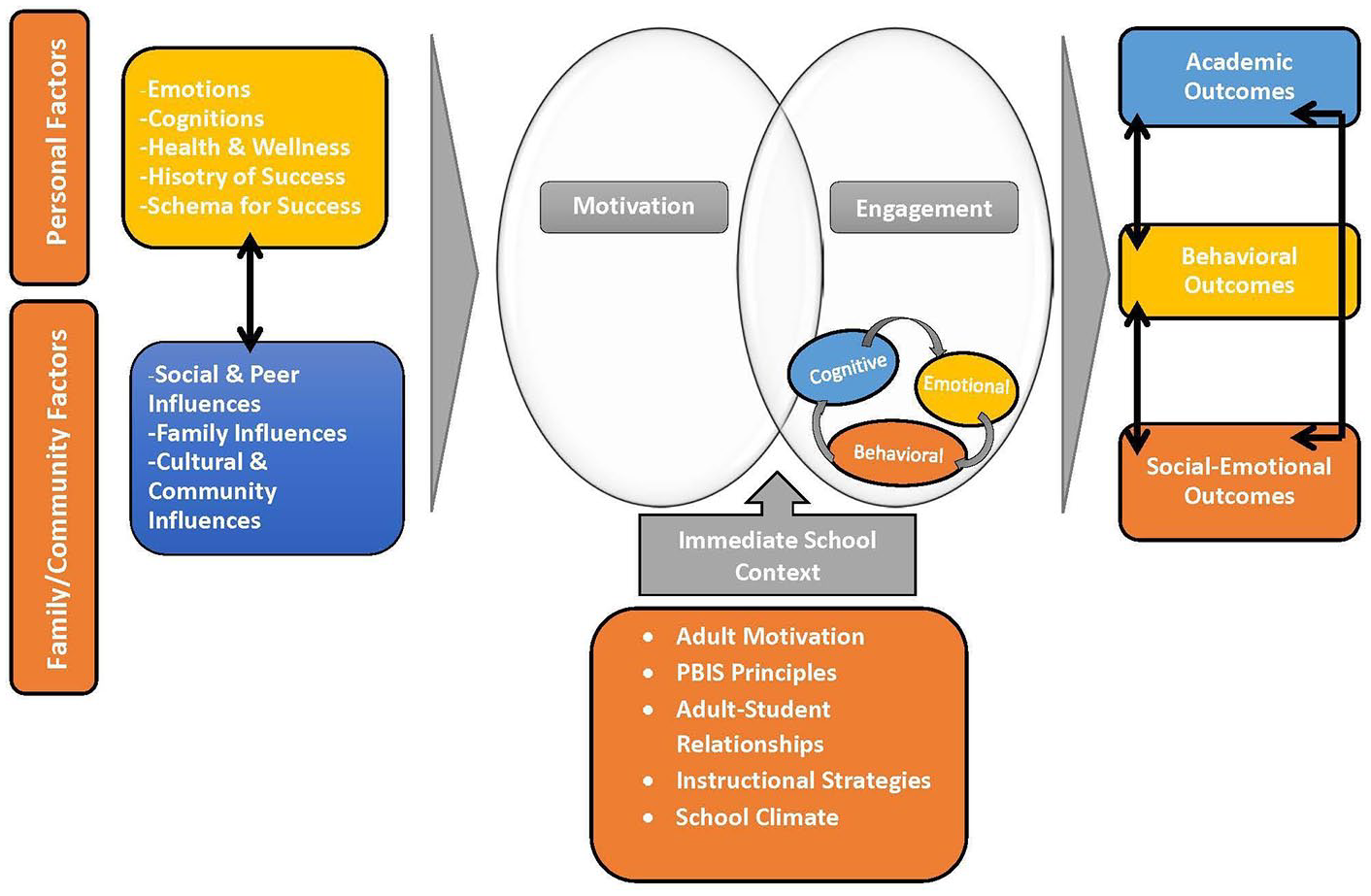
Motivation and engagement: input and outcome variables associated with motivation and engagement.
The resultant motivation and engagement cluster may influence academic, behavioral, and social-emotional student outcomes. Although there may also be direct effects of the personal, family/community, and school context factors on the three outcome variables, we also believe the relationship between them can be partially mediated by student motivation and engagement. In other words, we are proposing a theoretically-informed model in which these factors support or inhibit motivation and engagement, which then affect student outcomes. By better understanding the motivational and engagement factors influencing a student, we may be able to more optimally tailor behavioral interventions and social supports.
Introduction to PBIS
Over 26,000 schools are implementing Positive Behavioral Interventions and Supports (PBIS OSEP Technical Assistance Center, 2019). PBIS is an evidence-based framework for identifying, teaching, modeling, practicing, and acknowledging positive behavior consistent with the expectations in a school environment. PBIS moves schools from a reactive disciplinary-focused process to a proactive instructional approach. A multi-tiered system of support (MTSS), PBIS provides a foundation of positive behavioral support for all students (Tier I). It also provides strategies at the upper tiers (Tier II and Tier III) for students who need additional supports. The system-wide school improvement approach involves adults and students working to improve the overall climate of the school.
The emergence of PBIS was informed by research on behavior support in the 1980s and 1990s. Early work on the use of individually applied positive behavioral interventions for students with behavior disorders was promising, but did not produce desired systemic school-wide change (Horner, 2016). Consequently, interest increasingly shifted to combine effective individual intervention practices with prevention, data based decision-making, and school-wide behavior support systems. PBIS emerged as a framework that combines principles of behavior analysis, instructional practices, and classroom management to support more positive school social cultures through systemic change (Horner, 2016).
Implementing a PBIS framework can have broadly positive effects for students and staff. These positive effects include improved organizational health and staff affiliation (Bradshaw et al., 2008), enhanced staff professional trust and respect (Houchens et al., 2017), increased time for teaching and leadership (Muscott et al., 2008), improved student attendance (Freeman et al., 2015), and reduced suspensions and discipline referrals (Bradshaw et al., 2010; Noltemeyer et al., 2019). Evidence also has revealed some moderate indications of associated academic improvement (Horner et al., 2009; Houchens et al., 2017; Muscott et al., 2008).
The PBIS framework utilizes a three-tiered MTSS. At Tier I, the universal level, all students are provided systematic instruction and support on behavioral expectations, differentiated by school settings. At Tier II, the targeted level of supports, some students who need additional instruction and support are given assistance through organized intervention programs. At Tier III, the individualized level of supports, a few students receive more intensive and individualized assistance.
Despite growing acceptance and success in adopting PBIS, we propose that the framework can be expanded to ignite self-improvement by incorporating strategies that more directly affect students’ motivation and engagement for their own academic and social success.
Motivation and engagement infused PBIS
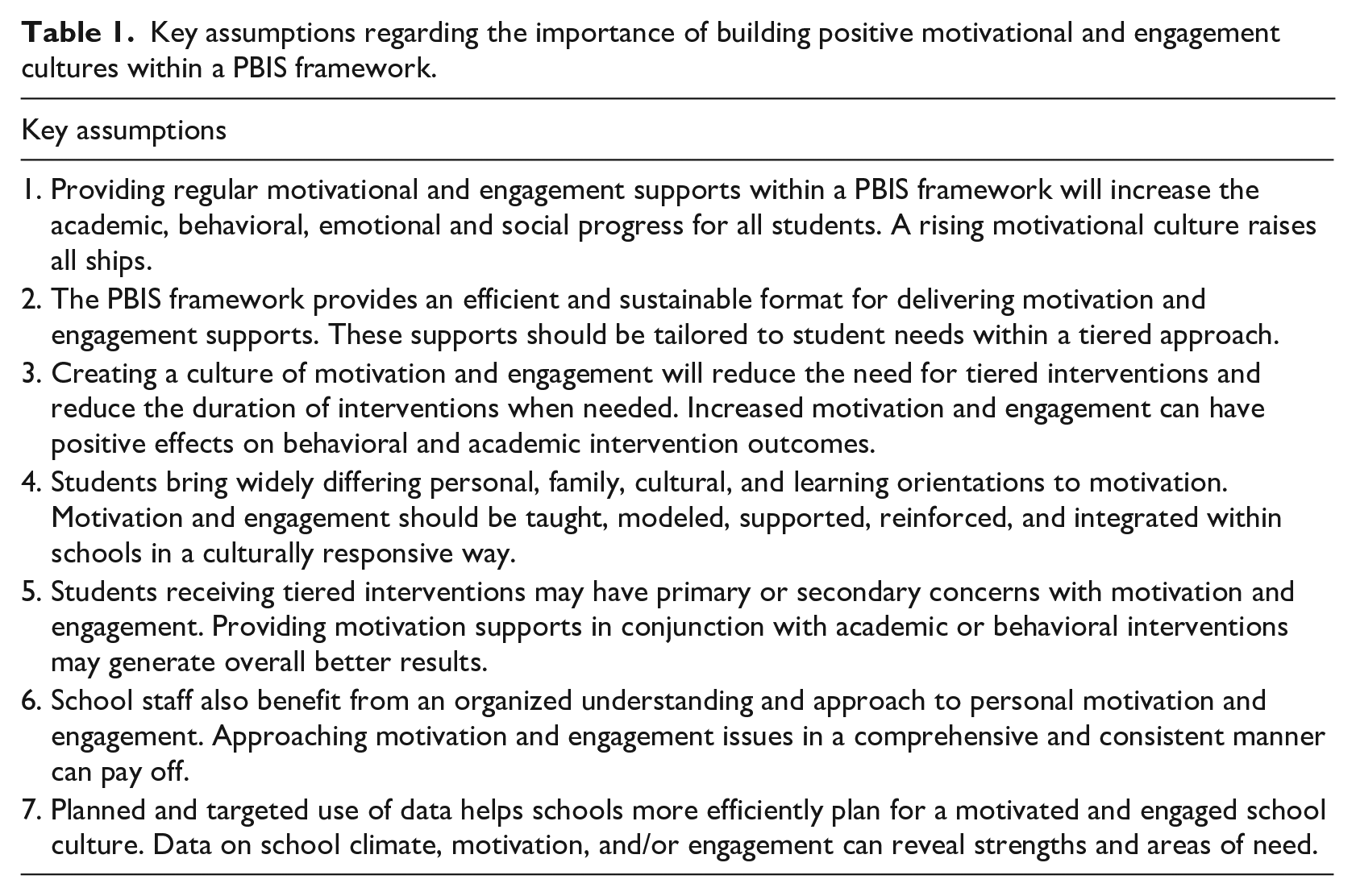
Using PBIS processes, teachers can cue, prompt, rehearse, reinforce, and engage social supports to reinforce motivation and engagement for school success. This approach helps students develop a motivational system that is conducive to school success, while recognizing that some students may require more support than others in this process of developing and applying motivation. Traditional PBIS emphasis on responsibility and choice are expanded to include regular focus upon personal improvement and growth. Table 1 below highlights seven key assumptions undergirding the integration of motivational and engagement components into a school’s PBIS framework.
Key assumptions regarding the importance of building positive motivational and engagement cultures within a PBIS framework.
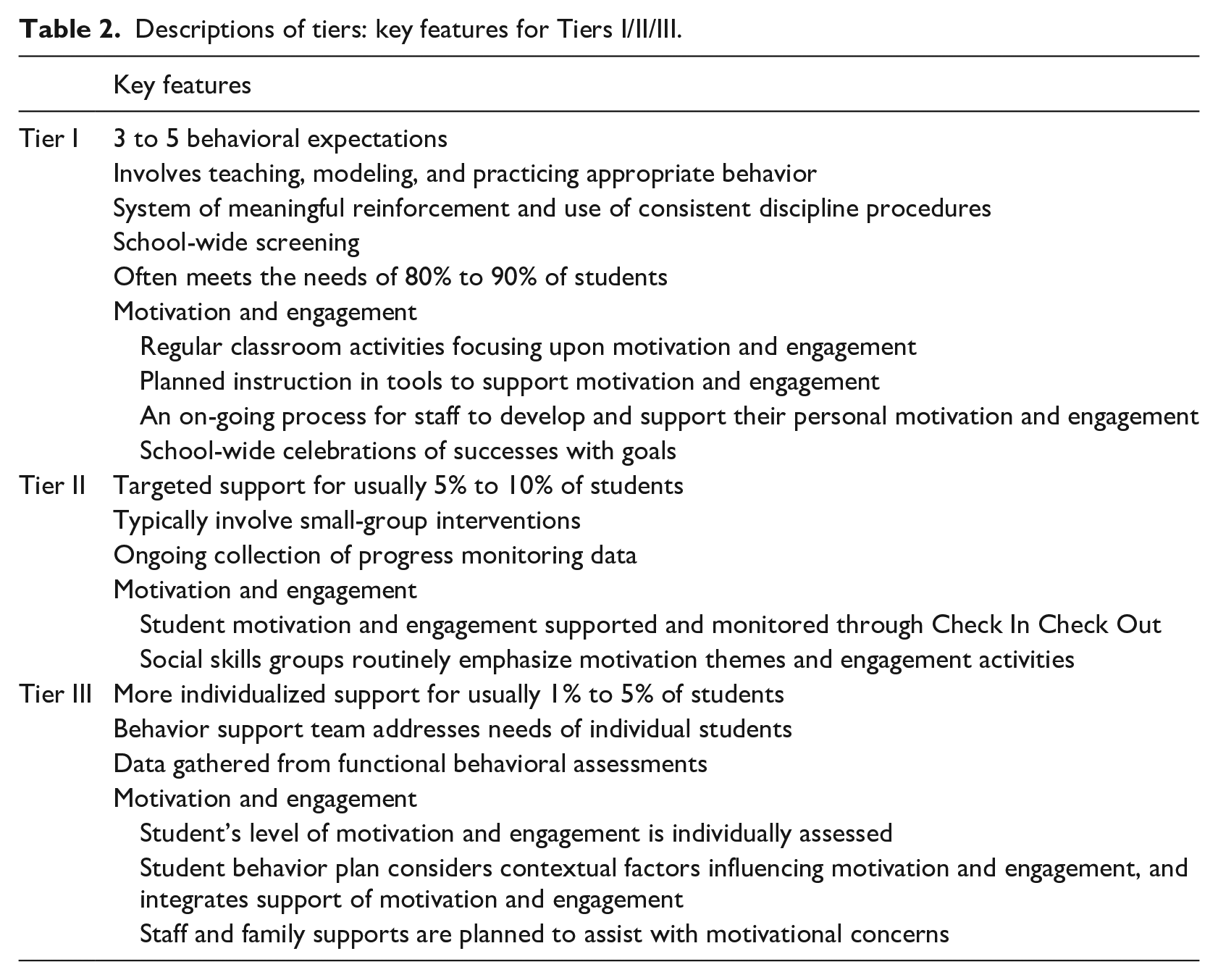
We propose each tier of the traditional PBIS framework can be enhanced to incorporate strategies that facilitate motivation and engagement (see Table 2).
Descriptions of tiers: key features for Tiers I/II/III.
Tier I
Tier I programming is intended to be of consistent high quality and provided to all students. Tier I PBIS involves the establishment and maintenance of a building leadership team (BLT) to plan for and monitor PBIS efforts; school-wide behavioral expectations being defined, modeled, and taught to all students across settings; opportunities for practice, on-going re-teaching, data collection and recognition systems; data-based decision making; culturally responsive practices; and other features as reflected in the SWPBIS Tiered Fidelity Inventory (TFI; Algozzine et al., 2014). Schools have an opportunity to embed motivation and engagement factors into these features.
Behavioral expectations
The implementation of PBIS both begins with and requires the adults involved in the school to reach a consensus on their school-wide expectations for students and uniformity on how and when expected behavior will be taught and discipline matters will be managed. School-wide expectations are three to five core values for student behavior that reflect the needs and priorities for the school. Examples of some commonly identified expectations are: Respectful, Responsible, and Safe or Caring, Prompt, Proud, and Resourceful.
Building Leadership Teams (BLTs) should consider identifying and including a motivation and/or engagement-focused expectation. Doing so provides an opportunity to systematically teach, model, cue, and reinforce these behaviors. It also communicates to the entire school community the importance of these behaviors. Examples of expectations that might be useful to consider are Engaged, Excellence, or Striving (as in Table 3, below).
Teaching matrix example.

Behavior matrix
Once school-wide expectations are identified, a matrix is developed that specifies how each expected behavior looks in the various school settings (e.g. classroom, halls, playground, bus, cafeteria). The matrix descriptors are positively stated, as in Table 3 below. Staff then develop an instructional plan for teaching and practicing the expectations in all key school settings. This instructional plan is intended to be positive and reinforcing of good examples. Successful learning is prioritized over rule making and discipline. Again, the inclusion of a motivation or engagement focused expectation in the matrix allows for the clear communication of what this looks like across settings. For example, being engaged in the classroom might be sharing a thought on how today’s lesson applies to a concept discussed last week whereas being engaged in the lunchroom might be asking others to join in a conversation.
Recognition
Reinforcement and recognition of positive student behavior is planned and implemented systematically within a PBIS framework. Reinforcement refers to any stimulus that strengthens or increases the probability of a specific response. Educators and psychologists routinely seek to reinforce desired behaviors to increase the likelihood they will continue in the future. Within PBIS, educators are encouraged to frequently acknowledge behaviors aligned with school-wide expectations.
The reinforcement strategies associated with PBIS are powerful and effective at promoting behavioral change. However, for students who are still developing internalized systems of motivation, these strategies alone may not be effective in promoting enduring change. For example, in an elementary school classroom, students can earn 15 minutes of extra recess by earning a certain number of ‘Pride Points’ for good behavior. A student who works hard because he believes he is capable, determined to do his best, and dedicated to learning will be likely to continue to work hard if the ‘Pride Points’ program is discontinued. In addition to awarding ‘Pride Points’ and rewards (e.g. extra recess), genuine verbal praise and non-verbal positive cues should be simultaneously paired with the points and rewards. A student who is initially motivated to behave by ‘Pride Points’ will eventually associate the rewards with interpersonal praise and may grow in their intrinsic motivation and personal pride for prosocial behavior. Therefore, although the reinforcement program is effective in the immediate context, it is also important to simultaneously build praise and pride based motivational systems so that students develop the intrinsic desire to engage in socially appropriate behaviors.
While reinforcement of desired and prosocial behavior is a foundation of positive behavioral support programs, caution should be used when implementing interdependent group contingencies. It may be useful for a classroom of children to work toward a special long-term reward, earning a certain number of contingency points over time. In this case it is assumed that the reward (e.g. popcorn party, movie, extra recess) will take some time to earn, will definitely eventually happen, and there is no specific deadline by which the behaviors or points must accumulate. In this case, the focus is on highlighting positive behaviors and negative behavior does not detract from the reward. In contrast, a group contingency that is framed such that all students must meet some behavioral criterion in order for the class to earn extra recess on Friday afternoon could end with the entire class not earning the extra recess due to the behavior of one or a few students. This situation creates frustration on the part of students who have engaged in the desired behavior and have no control over their peers’ behavior. Unintended consequences of this situation could include well-behaved students resenting their peers and losing motivation to behave well as they feel powerless to control their peer’s behavior. Furthermore, this approach may be unlikely to change the behavior of the student(s) who did not meet the behavioral expectation, particularly if they need further teaching, practice, modeling, and/or feedback on the expected behaviors (in other words, if it is a skill-based issue rather than a performance-based issue).
Building motivational systems
In order to assist students in internalizing positive motivation and engagement beliefs, it is important to embed instructional opportunities into classroom routines to help students develop their motivational systems and apply more motivated beliefs and attitudes. Beyond direct instruction in a school’s 3 to 5 behavioral expectations, students benefit from classroom experiences and tools that support a motivation and engagement self-improvement process. A combination of individual and shared learning experiences may be used to accomplish this, such as:
The opportunity to pursue classroom and personal self-improvement goals with direct guidance and support from the teacher or another staff.
The development of self-monitoring skills and self-management strategies to organize and support individual improvement.
Participation in regularly scheduled activities that increase awareness of the beliefs, emotions, and rewards associated with purposeful learning and self-improvement.
A process for problem solving when faced with a personal challenge.
Opportunities to interact with and acquire knowledge from positive role models.
Opportunities to practice behaviors which reflect best effort.
Cuing, support and reinforcement for making mindful positive choices regarding motivation and engagement.
Acquisition and use of self-regulation and self-monitoring strategies to measure progress toward personal goals.
Opportunities for self-reflection on personal progress with their chosen self-improvement efforts.
Engagement with parents to support self-improvement both at school and at home.
Growth Mindset-focused interventions (e.g. praise for effort rather than ability, encourage students to embrace challenges, help students view mistakes as opportunities, focus on the process of learning).
Engagement with a curriculum that is relevant to students’ interests, current lives, and future aspirations.
Opportunities for autonomy, choice, and challenge.
Data and systems
School teams work together to establish and sustain the data, systems, and practices to generate the desired behavioral, social, and academic goals. PBIS data systems track discipline and behavioral patterns, utilization of reinforcements, fidelity with which core practices are being implemented, and decision parameters for Tier II and Tier III service needs. Essential PBIS practices include regular instruction in expected behaviors, opportunities for modeling and practice with expected behaviors, a focus on cuing and reinforcing expected behaviors, and a positive consistency from adults. PBIS systems include action planning, regular assessment and review of core practices, team structures to train and maintain implementation, and communication/feedback loops. The outcomes are benchmarked relative to the established goals in the school action plan and desired improvements in discipline, climate measures, and academic progress. Schools may collect staff, student, and/or parent data on school climate, motivation, and/or engagement. Furthermore, schools should self-assess the degree to which various school factors are in place to support motivation and engagement for both students and staff, and plan for Tier I supports accordingly.
Tier II
Fundamental to MTSS is the belief that when universal, high-quality instruction (whether academic, behavioral, social or as here, motivational) is provided to all students, there is significantly less need for costly future remedial interventions. At the same time, students do not all learn at the same rate, and it is essential to plan additional and time efficient Tier II and Tier III intervention assistance for those students that need more time or different approaches to acquire the concepts.
Tier II supports are provided to those students who meet a criteria for additional assistance. Tier II PBIS interventions commonly utilize supports such as Check In Check Out (CICO, Crone et al., 2010) or social skills groups to address identified behavioral or social needs. Within Tier II of a motivation and engagement focused PBIS framework, existing PBIS interventions such as CICO and social skills groups are maintained; however, deliberate planning is used to ensure that motivation and engagement constructs are integrated into these supports. For example, a motivation item can be included in a student’s daily CICO progress report and motivation and engagement goals can be included in each session of a social skills group. More intentional collaboration with parents about supporting school motivation and engagement within the home should be considered.
Although individualized and intensive behavior plans are often found within Tier III of the PBIS framework, behavior plans can also be used to support students with Tier II needs. For example, at Tier II behavior plans may be developed within a classroom to target a small group of students with similar motivation and engagement needs. These plans typically outline goals for desired behaviors, strategies for reaching these goals, and data collection procedures.
Tier III
Some students need more individualized and intensive Tier III services and supports. When regular and well-structured Tier II supports are not sufficient, school teams initiate a more detailed assessment and planning process, which should include student and family participation and voice. Tier III individualized assessment, planning, and intervention can prevent problems from escalating further or and potentially preclude the need for special education assistance.
At Tier III, motivation and engagement concepts should be intentionally integrated into individualized behavior plans. Furthermore, behavior plans should be informed by an analysis of the broad factors that might influence a student’s motivation and engagement (e.g. social influences, history of school success, teacher-student relationships, family influences, instructional strategies). When developing behavior plans, it is critical to incorporate the key concepts of systematic problem-solving, data-based decision making, culturally and developmentally responsive practices, and monitoring of implementation fidelity and outcomes.
Related to the latter, the team should determine measurable goals linked to the identified concerns, student and adult expectations, and an implementation plan. The motivation and engagement plan defines who will be involved, what actions will take place, the frequency/duration of the plan, and agreement on how and when progress will be reviewed to determine the impact of the interventions.
The well-constructed plan should include specific strategies intended to improve the student’s motivation and engagement. Ideally, these strategies should complement or build upon existing school Tier I and Tier II motivation and engagement supports. If the student has been receiving Tier II motivation and engagement supports, the Tier III intervention may be the same intervention(s) with increased individualization, intensity, frequency, and/or duration. Tier II interventions that are easily modified for increased individualization or intensity include self-monitoring strategies, check-in check-out, social skills groups, and mentoring supports. The motivation and engagement plan should also integrate or align with any other intervention or support plans (e.g. IEP, academic interventions).
Several interventions could be considered to address Tier III motivation and engagement. These may include:
Check and Connect (see http://checkandconnect.umn.edu/): Check and Connect is an intervention that involves assigning a trained mentor to work with students who are disengaged.
Individual and Small Group Counseling: Students needing Tier III motivation and engagement supports may benefit from an opportunity to address their challenges in a more personal and focused setting that counseling can provide.
Motivational Interviewing: Motivational Interviewing (MI; Miller & Rollnick, 2002) is a technique used by psychologists, counselors, and therapists to increase motivation for change (Miller & Rollnick, 2002).
Relationships: Important across all tiers
Establishing and nurturing positive adult-student relationships is important within all three PBIS tiers. These positive relationships are generally characterized by teachers who are warm, consistent, patient, caring, genuine, encouraging, supportive, and have appropriate but challenging expectations for students. Student-teacher relationships and student engagement are reciprocal in nature; in other words, they can influence and feed off one another. For many students, positive student-teacher relationships promote positive feelings about school and may even increase students’ self-efficacy about schoolwork. Positive feelings about school and increased self-efficacy promote internal motivation and the desire to work hard and try when challenged. These student behaviors result in increased learning and praise from the teacher (Skinner & Belmont, 1993). The teacher develops more positive feelings about the student, and the develops increased teacher efficacy, which contributes to an ongoing positive relationship with the student.
Interestingly, school staff often find it easier to build positive relationships with students who already demonstrate motivation and engagement. In addition to nurturing these relationships, it is important to actively seek ways to engage and build positive relationships with students who appear to be less motivated and engaged than their peers. Strategies to promote positive relationships may include:
Greet each student by name and with a warm smile as they enter the classroom.
Learn about students’ interests and hobbies and demonstrate genuine interest and enthusiasm when students share about their interests outside of school.
Incorporate information from students’ backgrounds or cultures into lessons or instructional materials.
Use nonverbal communication to convey warmth and encouragement (e.g. smile, thumbs-up).
Engage in active listening and validate students’ feelings.
Look for opportunities to praise students (even for small accomplishments) who do not typically receive positive praise.
Have fun and laugh with students.
Recommendations to school-based teams
It is recommended that a school-based Building Leadership Team (BLT) develop a school-wide improvement plan to support motivation and engagement focused PBIS. We recommend considering the following process when engaging in this work, which is based on the Ohio Improvement Process (OIP, 2012) framework.
Initial preparation for motivation and engagement: The BLT should initially assess the building’s level of readiness to implement motivation and engagement aligned PBIS and/or to integrate motivation and engagement elements into their current PBIS process. It is also valuable to review whether appropriate team structures and procedures are in place. As one example, if a building has a behavior team, MTSS team, or social-emotional learning team, the role and function of these teams potentially should be refocused to accommodate future motivation and engagement activities. Similarly, plans to build communication channels to academic intervention teams or community agency collaboration teams should be considered.
Identifying motivation and engagement needs: BLTs improve their planning efforts with relevant data from a variety of potential sources. For example, data could be gathered through assessment of the motivation and engagement of the staff, school climate surveys, indicators of student motivation as reflected in academic achievement measures, district report card data, evaluation of building and district motivation and engagement culture, focus groups, and parent survey data. Leadership teams review existing data sources and determine a plan for both baseline and long-term assessment needs.
Developing a focused motivation and engagement plan: Whether the school is just initiating the PBIS process or integrating motivation and engagement into an existing process, the leadership team should outline a focused plan to scale up these processes. Ideally, the plan includes: SMART (Specific, Measurable, Achievable, Relevant, Timely) goals and progress monitoring strategies Strategies to integrate motivation and engagement into the school-wide expectations and matrices A plan for collecting relevant motivation and school climate data A plan to support staff wellness and professional development A commitment from building and district administration to support this work Strategies to engage parents and the community in the process Student voice and input Strategies to integrate motivation and engagement activities into classroom routines Clearly specified roles, responsibilities, leadership functions, and timelines
Implement and Monitor the Motivation and Engagement Plan: Key considerations during the implementation stage include: Staff systematically introduce students to motivation and engagement concepts while regularly providing activities to support these concepts Staff systemically support each other with motivation and engagement strategies, resources and mutual assistance Administrators provide leadership in establishing a positive culture of motivation and engagement Ongoing professional development and coaching supports Tier II and Tier III academic and behavioral interventions are provided within a unified motivation and engagement framework
Evaluating the motivation and engagement improvement process: School teams should evaluate implementation progress, fidelity of implementation data, and related outcome data. When there are concerns regarding the implementation of the plan or the desired outcomes, the team should shift its focus back to reviewing critical needs and revise the plan as is necessary.
Conclusions and recommendations
A PBIS framework, with a more salient and systematic motivational component, provides an opportunity to create a positive climate that promotes setting and achieving social, behavior, and academic goals and supports the positive climate. The PBIS framework and systematic reinforcement procedures are powerful tools that can be used to promote student success. Utilizing PBIS, educators can teach clear expectations for responsible behavior in the various aspects and settings of school life. Although reinforcement procedures can be effectively used in the schools, in relying too much on reinforcement-based systems, some fear we are training generations of students to behave appropriately only when there is personal gain (Reischer, 2016). Furthermore, what may be overlooked or omitted is teaching a value and process for responsible self-improvement. A building of staff and students who are living, modeling, guiding, and supporting a culture of motivated behavior and self-improvement may yield a more improved outcome. When systems to support motivation and engagement are consistently embedded within the classroom and broader school context, students move toward more internalized motivation over time. Acquiring an internalized value for motivation and self-improvement is a long-term developmental process. Rather than being solely passive learners from adult reward systems, students are challenged to make conscious choices on their path to self-improvement and to be more tomorrow than they are today.
All aspects of the PBIS data, systems and practices are utilized in scaling up this expanded version of PBIS. Staff employ the PBIS processes we associate with teaching and supporting expectations, such as direct instruction, modeling, rehearsing, cueing, prompting and reinforcement. Motivation and engagement themes are integrated into these processes. Students are regularly supported in making mindful choices regarding their motivation and engagement. Additional strategies and tools beneficial to motivation and engagement are also included, such as guiding, challenging, planning skills, self-monitoring skills, reflection skills and practice activities. These are best realized as part of a continuous school-wide improvement plan with a focus on supporting positive relationships and a positive school climate.
Student success is facilitated in an environment, undergirded by supportive and positive relationships, where the social norms and supports are oriented more clearly toward a shared culture of social, academic, and behavioral success. The framework and processes associated with PBIS give us a pathway to this shared culture. This shared culture is important because, as Hattie (2009, p. 49) suggests, ‘Engendering a positive attitude to schoolwork may be both a precursor to greater engagement, and a worthwhile outcome in itself. It seems achievement plus effort plus engagement are keys to success in school’.
Footnotes
Acknowledgements
Thank you to Caitie Zierden and Jerusalem Tukura, Graduate Assistants at Miami University, for their editorial assistance with this paper.