



Abstract
Aims and objectives:
Personality psychologists argue that personality is the result of nature and nurture. However, relatively little attention has been paid to the latter. The present study considers the effect of multilingualism, a social factor, on personality.
Methodology:
A total of 651 multilinguals from around the world filled out an online questionnaire containing questions about participants’ language profile and a so-called “Big 5” questionnaire: the Multicultural Personality Questionnaire (short form).
Data and analysis:
Correlation analyses were run between the level of multilingualism of participants and their scores on five personality traits. A parceled structural equation model was then used to examine the influence of multilingualism on three personality subscales.
Findings:
The model indicated significant positive path coefficients between the level of multilingualism and Flexibility, Social Initiative and Open-mindedness.
Significance:
Our findings confirm and expand earlier research that showed that multilingualism/multiculturalism can be considered to be enduring environmental factors that contribute to the shaping of personality profiles.
Keywords
Introduction
Personality traits “summarize a person’s typical behavior” (Pervin & Cervone, 2010, p. 229) and there is broad agreement among psychologists that there are five broad, bipolar dimensions, the so-called Big Five, which are situated at the summit of the hierarchy (Pervin & Cervone, 2010). There are a large number of “lower-order” personality traits, that are often correlated with Big Five traits but also explain unique variance. Although psychologists agree that personality is determined both by physiological and social factors (Furnham & Heaven, 1999), relatively little research has been carried out on the effect of social factors. The present study is situated within this avenue of research as multilingualism (and possibly multiculturalism; see Grosjean, 2015) is a social/cultural variable with the potential to shape a person’s personality (Dewaele & van Oudenhoven, 2009; Dewaele & Wei, 2013; Wei & Hu, 2018).
The present study is the first to investigate the effect of multilingualism on five higher-order personality traits. Its goal is to demonstrate that multilingualism and multiculturalism, which have increasingly been maligned by politicians (see Noack, 2015), is an advantage that provides positive traits to individuals. Rigorous and impartial research on how multilingualism is linked to personality is crucial to combat the return of the deficit view of bilingualism and multilingualism (Edwards & Dewaele, 2019).
The literature review focuses on the research that has linked measures of multilingualism and personality traits measured with the Multicultural Personality Questionnaire (van der Zee, van Oudenhoven, Ponterotto, & Fietzer, 2013) and briefly mentions research on “lower-order” personality traits and emotions. Following the recommendation by Wei, Hu, and Xiong (2019) to report effect sizes in literature reviews, we will use the bench marks proposed by Wei and Hu (2018). The authors argue that given the topic-specific nature of effect size, Cohen’s (1988) traditional grid is inadequate for the effects of sociobiographical variables. They suggest to lower the Cohen’s threshold values so “that .005, .01, .02, and .09 be used respectively as the small, typical (medium), large, and very large benchmarks for the effect size R2 when interpreting the influence of sociobiographical variables (. . .)” (Wei and Hu, 2018, p. 8).
The literature review is followed by the research question and the methodology section. The results section presents the statistical analyses which are discussed in the following section and, finally, some tentative conclusions are presented.
Literature review
van der Zee and van Oudenhoven (2000) developed the Multicultural Personality Questionnaire (MPQ). Just like Big Five personality inventories, the MPQ scales consider five dimensions. The main difference is that the MPQ scales are more geared toward predictions of multicultural success compared with general personality questionnaires. The first dimension is Cultural Empathy: the ability to empathise with cultural diversity, understanding feelings, beliefs and attitudes different from heritage ones. The second dimension is Flexibility: the ability to learn from new experiences, adjusting behaviour according to contingency and enjoying novelty and change. The third dimension is Social Initiative: the tendency to approach social situations actively, taking the initiative and engaging in social situations. The fourth dimension is Emotional Stability: the tendency to remain calm in stressful situations controlling emotional reactions. The final dimension is Open-mindedness: an open, unprejudiced attitude towards diversity. Even the MPQ dimensions that closely correspond with Big Five scales are more specifically focused on aspects that are relevant to multicultural success (van Oudenhoven & van der Zee, 2002). The MPQ dimension of Cultural Empathy, for example, is similar to Agreeableness from the ‘Big Five’ construct as both refer to the ability to empathise with other’s feelings. However, Cultural Empathy also includes empathizing with and understanding the feelings of members of different cultural groups. The MPQ has been used around the world. The construct validity of the five-factor MPQ has been assessed through both exploratory and confirmatory factor analyses across diverse samples (van der Zee et al., 2013). It has been applied to various age groups and professional groups: students, employees, expatriates and their family members, and refugees. In all cases, the dimensions were found to be reliable (reliability coefficients range between .70 and .90) and to show consistent patterns of correlations with related variables (Leone et al., 2005). Construct validity is strong as the dimensions show correlations as predicted with related personality and attitudinal variables (Leone et al., 2005). van Oudenhoven, Timmerman, and van der Zee (2007) demonstrated the cross-cultural equivalence of the scales of the MPQ. van der Zee et al. (2013) examined the construct validity of the MPQ short form (40 items instead of 91) and found positive and significant relationships with scales for well-being and emotional intelligence. The authors concluded that the “MPQ–SF scales were sufficiently reliable and showed considerable content overlap with the original scales (. . .) the data reported here did provide considerable support for the psychometric qualities of our short version to justify their use in research settings” (p. 123).
Dewaele and van Oudenhoven (2009) was the first study to investigate whether multilingualism and multiculturalism, which are relatively stable social variables, could influence personality traits as measured by the MPQ. The authors investigated the relationship between the number of languages known and five personality dimensions. Participants were 79 ninth grade pupils (aged 13–15) in a London comprehensive school in a socially deprived area. 41 participants were born outside the UK and were of African, Arabic, Caucasian and Asian origin. The remaining 38 participants were locally born, British teenagers of Caucasian and Asian origin. 27 participants were incipient bilinguals, i.e. they were in the process of learning a foreign language at school. The other participants included 43 trilinguals, 6 quadrilinguals and 3 pentalinguals (p. 10). A t-test revealed that the multilingual group scored significantly higher than the group of incipient bilinguals on Open-mindedness (p < .002, Cohen’s d = .57 – a large effect size (cf. Wei et al., 2019)), and marginally higher on Cultural Empathy (p = .054, Cohen’s d = .40 – a medium effect size), but they scored significantly lower on Emotional Stability (p < .0001, Cohen’s d = .62 – a large effect size).
In a follow-up study, Dewaele and Stavans (2014) replicated the London study with 193 residents in Israel. Those born in Israel tended to score higher on Emotional Stability than those born abroad (p < .07, Cohen’s d = .18 – a small effect size). A MANOVA revealed that participants with a single immigrant parent scored higher on cultural empathy (F(3, ) = 6.14, p < .003, η2 = .061), Open-mindedness and Social Initiative (explaining between 4.6% and 6.2% of the variance, i.e. small to intermediate effect sizes). Participants who had become dominant in Hebrew later in life scored lower on Emotional Stability than Hebrew L1-dominant participants (explaining 4% of the variance). Surprisingly, the number of languages known was unrelated to their personality profile. However, a more granular measure of multilingualism (total language use and total proficiency in various languages) showed that those who scored higher on these two language measures also scored significantly higher on Cultural Empathy, Open-mindedness and Social Initiative. Advanced knowledge of more languages was also linked to higher levels of Cultural Empathy (predicting 2.3% of the variance, i.e. a small effect size).
Korzilius, Van Hooft, Planken, and Hendrix (2011) also investigated the link between multilingualism and personality traits (measured with the MPQ) among 144 non-international employees, international employees and business contacts in a Dutch multinational company. A Pearson correlation analysis revealed that number of languages known was positively linked to Open-mindedness (N = 144, r = .35, p < .01, R2 = .1225) and Emotional Stability (N = 144, r = .30, p < .01, R2 = .09) (p. 540). Both effect sizes could be described as medium. An ANOVA revealed a significant effect of the stakeholder group on three MPQ traits, namely Open-mindedness (F (2,130) = 7.68, p < .001, η2 = .11), emotional stability (F (2,130) = 7.97, p < .001, η2 = .11), and Flexibility (F (2,130) = 4.42, p < .014, η2 = .06). Post-hoc tests revealed that the international employees, who knew significantly more languages than the two other groups (F(2,141) = 12.49, p < .001, η2 = .15), scored significantly higher than non-international employees on Open-mindedness and on Flexibility than the local employees and business contacts.
Dewaele and Wei (2012) looked at the relationship between multilingualism and a lower-order personality trait, cognitive empathy, among 2158 participants. The knowledge of more languages turned out not to be linked to higher levels of Cognitive Empathy. However, a significant effect emerged of global language use on Cognitive Empathy (r (1922) = .072, p < .001, R2 = .005). Participants who used all their languages frequently became better communicators and were better able to see the world from their interlocutor’s point of view.
In a follow-up study based on the same database, Dewaele and Wei (2013) considered the link between multilingualism and another lower-order personality trait, Tolerance of Ambiguity. A one-way ANCOVA revealed that the number of languages had a significant positive effect on Tolerance of Ambiguity (F (5,1984) = 8.7, p < .0001, η2 = .021) (p. 235). Post-hoc tests showed that monolinguals scored lower on Tolerance of Ambiguity than the trilinguals, quadrilinguals and pentalinguals (p < .0001). The difference between the monolinguals and the bilinguals was smaller (p < .027) (p. 235). Levels of Tolerance of Ambiguity scores stabilized for quadrilinguals and pentalinguals. Higher levels of global proficiency in different languages also had a significant (but very small) effect on Tolerance of Ambiguity scores (F (2,1978) = 6.0, p < .003, η2 = .008) (p. 236). The authors concluded that Tolerance of Ambiguity is to some extent influenced by the sociolinguistic and cultural environment and by the need to acquire new languages in order to survive in a new linguistic and cultural environment.
van Compernolle (2016) partly replicated the Dewaele and Wei (2013) study, looking for relationships between global proficiency and Tolerance of Ambiguity among 379 adults, including monolinguals, bilinguals and multilinguals. A Spearman rank correlation showed that participants with higher levels of global self-assessed proficiency also scored significantly higher on Tolerance of Ambiguity (N = 379, Rho = .019, p < .0002, R2 = .000361).
Wei and Hu (2018) also investigated the question of the effect of global self-assessed language proficiency and multilingualism on the Tolerance of Ambiguity of 260 Chinese multilinguals in an English Foreign Language context. A one-way ANOVA revealed that the differences in Tolerance of Ambiguity scores of low, medium and high global proficiency groups were not statistically significant (F (2,251) = 2.490, p = .085, partial η2 = .019, R2 = .019) – but the variance explained reaches the bench mark for a medium effect size. A further hierarchical regression analysis showed that number of languages known was a significant predictor of Tolerance of Ambiguity (p < .027, R2 = .019), which the authors interpret as “a typical (or medium) effect size for this line of research” (p. 8).
Dewaele (2019) failed to find an effect of the number of languages known on the trait Emotional Intelligence using three databases collected for previous studies to which a total of 1278 multilinguals contributed (first study: N = 464, χ2 = 1.6, df = 3, p = .66; second study: N = 301, χ2 = .92, df = 3, p = .82; third study: N = 513, χ2 = 2.20, df = 5, p = .82) (p. 9). This null result was slightly surprising because a Kruskal–Wallis test in Alqarni and Dewaele (2018) revealed that 205 Arabic–English bilinguals scored significantly higher than 404 Arabic and English monolinguals on the trait Emotional Intelligence (χ2 (2) = 11.23, p < .004, d Cohen = .262, i.e. a small effect size). The authors suggest that the unexpected result might be linked to the fact that previous research focused on degrees of multilingualism, and that it rarely included monolingual participants.
Following a similar avenue, Ikizer and Ramírez-Esparza (2017) used mediation analyses to investigate social flexibility in 206 bilinguals and 465 monolinguals living in the US or Canada. The authors developed a 12-item scale based on Petrides’ (2009) Trait Emotional Intelligence Questionnaire that focused on social interactions, social flexibility and positive outlook. The authors found that the bilinguals scored significantly higher than monolinguals on social flexibility (F = 14.74, p < .001, η2 = .022) and on social interactions (F = 6.80, p < .01, η2 = .01) (i.e. medium and small effect sizes). Mediation analyses revealed that social flexibility fully mediated the relationship between bilingual status and social interactions (p. 9). The authors conclude that as “bilinguals switch between two languages, they develop the ability to adapt to new environments, cope with change, and attend to others’ perspectives” (p. 10).
The effect of multilingualism has also been investigated on psychological and emotional dimensions such as Foreign Language Anxiety which has been shown to be strongly linked with high Neuroticism and low Emotional Stability (Dewaele, 2017; Dewaele & MacIntyre, 2019). An ANOVA in an international sample of 1746 Foreign Language learners (Dewaele & MacIntyre, 2014) revealed that knowing more languages corresponded with significantly lower Foreign Language Anxiety (F (5, 1740) = 14.1, p < .0001, η2 = .032) and significantly higher Foreign Language Enjoyment (F (5, 1740) = 9.9, p < .0001, η2 = .022) The effect size is medium.
An overview of the effects of multilingualism (broadly defined) on personality traits and psychological dimensions reported in the literature review are presented in Table 1.
Overview of the effects of multilingualism on psychological dimensions.
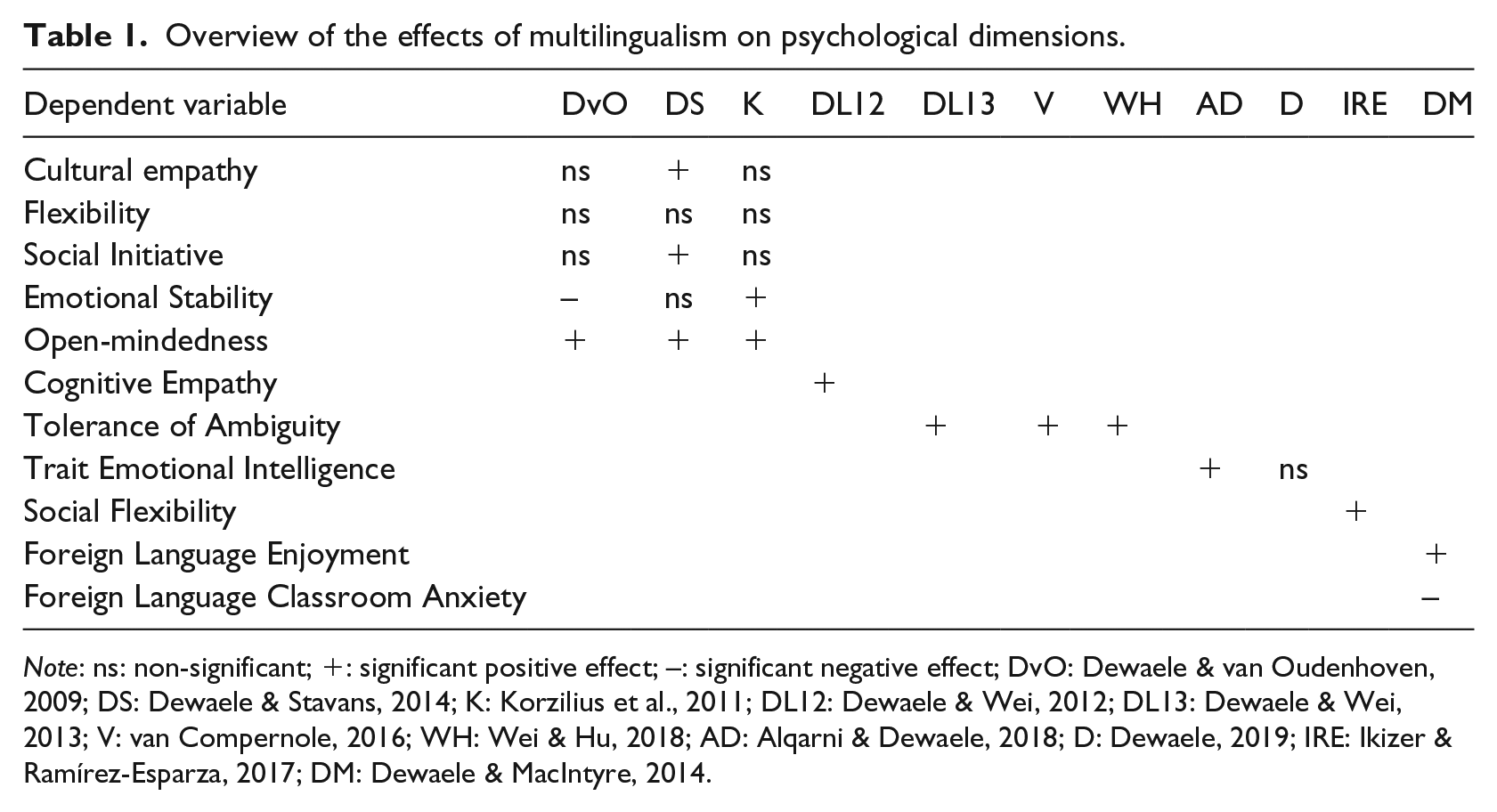
Note: ns: non-significant; +: significant positive effect; –: significant negative effect; DvO: Dewaele & van Oudenhoven, 2009; DS: Dewaele & Stavans, 2014; K: Korzilius et al., 2011; DL12: Dewaele & Wei, 2012; DL13: Dewaele & Wei, 2013; V: van Compernole, 2016; WH: Wei & Hu, 2018; AD: Alqarni & Dewaele, 2018; D: Dewaele, 2019; IRE: Ikizer & Ramírez-Esparza, 2017; DM: Dewaele & MacIntyre, 2014.
This brief literature review suggests that multilingualism, advanced knowledge of several languages and frequent use of them has been linked to personality traits and other psychological and emotional dimensions. In the current contribution, we propose to delve deeper in the topic, focusing solely on the five MPQ dimensions, re-using the large database that was collected to analyse variation in Foreign Language Enjoyment and Foreign Language Classroom Anxiety in Dewaele and MacIntyre (2019).
Research question
Is there a possible relationship between multilingualism – as measured by the number of languages known – and the scores of individuals on the five factors of the Multicultural Personality Questionnaire?
Methodology
Participants
A total of 651 foreign languages (FL) learners participated in this study. As is usual in this type of research (Dewaele, 2018), there was a strong gender imbalance (461 females, 181 males, 9 preferred not to say). The youngest participant was 15, the oldest 70 and the mean age was 25.6 years (SD = 9.3). They were studying FLs mostly in Europe (n = 391) and North America (n = 114), followed by Asia (n = 65), Africa (n = 43), Australia (n = 26), and South America (n = 12). Most were at university (n = 597) with a minority at high school (n = 54). Participants were multilinguals, with 138 bilinguals, 230 trilinguals, 131 quadrilinguals, 91 pentalinguals, 34 sextalinguals and 27 participants reporting knowing seven or more languages. In terms of nationality, the largest group were Americans (n = 104), followed by Belgians (n = 58), Spaniards (n = 56), Japanese (n = 47), British (n = 18) and smaller groups of other nationalities. English was the most frequent L1 (n = 297), followed by French (n = 79), German (n = 69), Japanese (n = 52), Arabic (n = 49), and 48 other languages. Close to half of participants (n = 318) reported studying English as a FL.
Participants were recruited through snowball sampling, which is a form of non-probability sampling (Ness Evans & Rooney, 2013). 1 An open-access anonymous online questionnaire was used. Calls for participation were sent through emails to students, colleagues and informal contacts asking them to forward the link to people studying a foreign language who had at least intermediate competence in English. The questionnaire remained online for eight months in 2016 and attracted responses from 782 participants across the world, of which 651 filled out the questionnaire completely. The advantages of online questionnaires, ease of access to rich and abundant data from participants in diverse locations, outweighs the main disadvantage, namely participant self-selection (Dewaele, 2018). The research design received ethical approval from the first author’s research institution. Participants indicated consent by ticking a box at the start of the questionnaire.
Instruments
In addition to the items on their sociobiographical background, the following scales were included in the online questionnaire:
Sociobiographical and linguistic profile
Participants were asked to provide the sociobiographical and linguistic background information that was presented in the previous section.
Multicultural Personality Questionnaire (short form)
A five-factor personality measure, with 40 items measured on a five-point scale (van der Zee et al., 2013). The five factors, each with eight items, included in the measure are:
Cultural Empathy
The subscale measures the ability to empathise in culturally diverse situations and include items such as “[I] enjoy other people’s stories” (Cronbach’s α = .81).
Flexibility
Measures the ability to adjust and learn from experience. All eight items in this scale are negatively worded, for example: “[I] like routine”. All items were reverse coded before analysis (Cronbach’s α = .82).
Social Initiative
The subscale measures the ability to engage in social situations and contains items such as “[I] make contacts easily”. The scale contains three negatively worded items that were reverse coded before analysis (Cronbach’s α = .80).
Emotional Stability
Measures the tendency to control emotional reactions to stressful situations via items such as “[I] keep calm when things don’t go so well”. The scale contains six negatively worded items that were reverse coded before analysis (Cronbach’s α = .77).
Open-mindedness
Measures an open and accepting attitude towards diversity through items such as “[I] have a feeling for what is appropriate in a specific culture” (Cronbach’s α = .77).
Results
Correlations and regressions between the observed variables
Table 2 indicates the descriptive statistics for all observed variables. It should be noted that although some skewness and kurtosis is present in each of the MPQ subscales, no one subscale has a skewness or kurtosis value of larger than +1 or smaller than –1, indicating an acceptable distribution of data (Hair, Hult, Ringle, & Sarstedt, 2017).
Descriptive statistics.
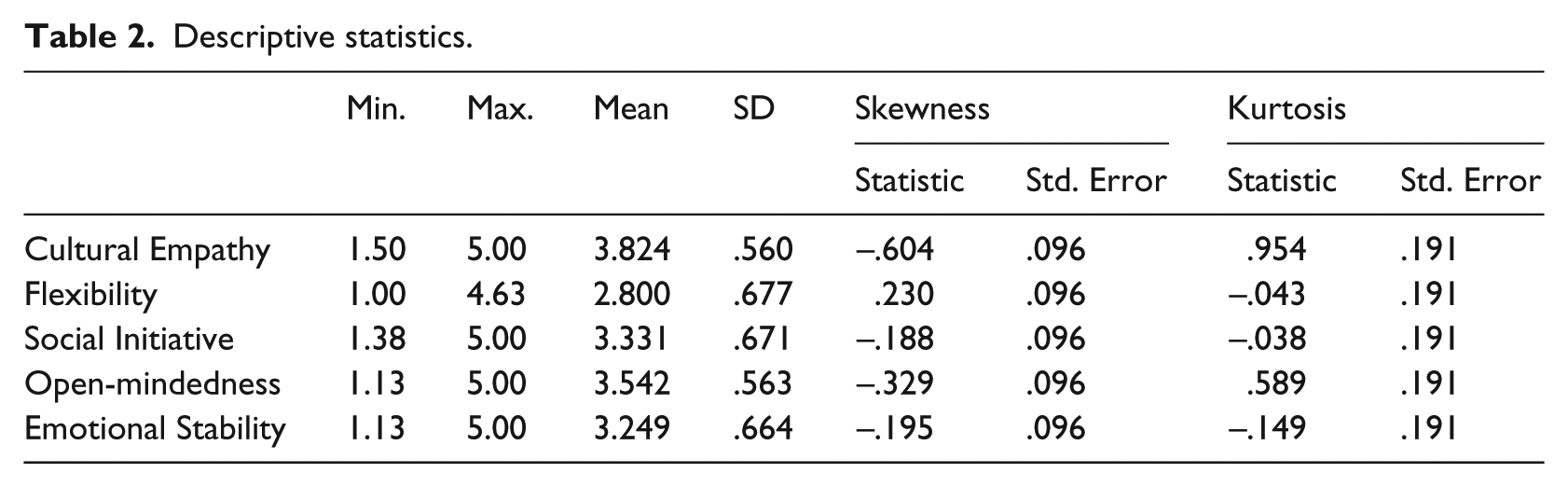
Table 3 indicates the correlations among all observed variables, as measured by Pearson correlation coefficients. As indicated, three subscales of the MPQ had statistically significant positively weak correlations with the number of languages spoken, namely Flexibility (r = .134; p < .001), Social Initiative (r = .158; p < .001), and Open-mindedness (r = .203; p < .001). As such, whilst the three correlations are positively significant, the indicated relationship may in fact be very small or even negligible.
Correlation matrix (observed variables).
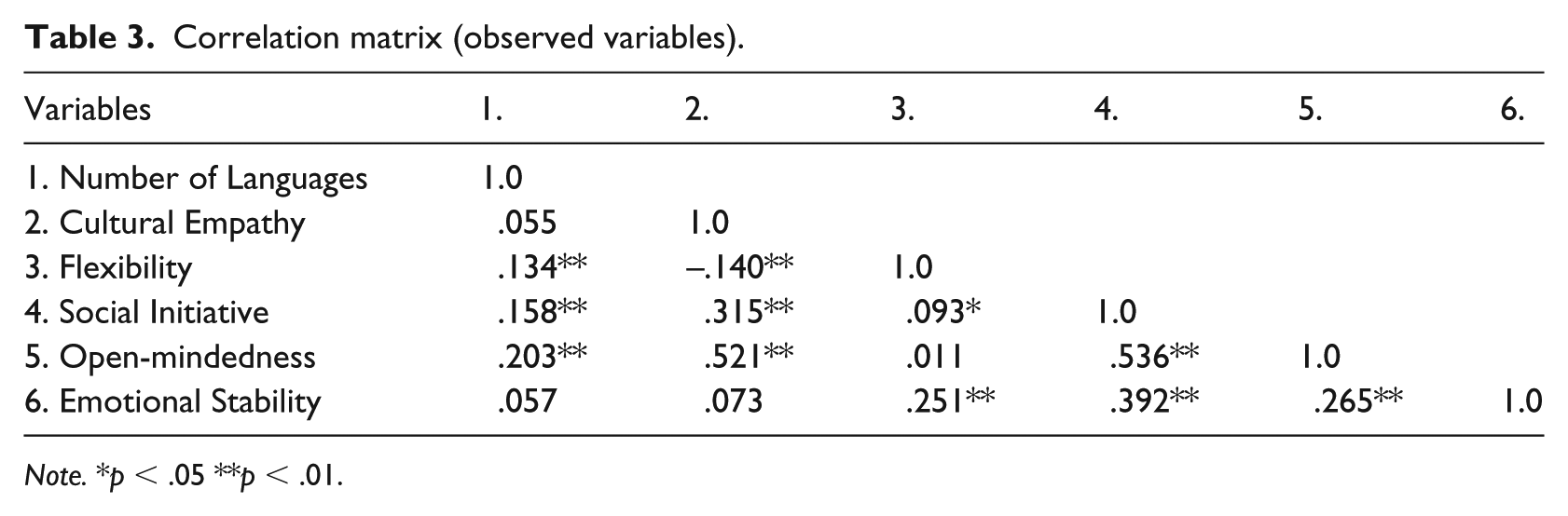
Note. *p < .05 **p < .01.
Direct linear regressions were conducted between multilingualism and each of the personality variables (see Table 4). Results indicate a significant regression between multilingualism and Flexibility (F (1, 649) = 11.799; p < .01) with an R2 = .018. Similarly, a significant regression was derived between multilingualism and Social Initiative (F (1, 649) = 16.545; p < .001) with an R2 = .023. Lastly, statistically significant results were also found for the linear regression between multilingualism and Open-mindedness (F (1, 649) = 27.838; p < .001) with an R2 = .04. Multilingualism therefore positively predicts Flexibility (β = .134), Social Initiative (β = .158), and Open-mindedness (β = .203). The amount of variance explained by multilingualism in each of the three personality variables (1.8% to 4/0%) would be considered small according to Cohen’s (1988) criteria but would be considered very large in Wei and Hu’s (2018) new benchmark system for interpreting the effects of sociobiographical variables. The results thus lend credence to the research hypothesis that multilingualism does indeed shape personality.
Linear regressions of multilingualism as predictor variable.
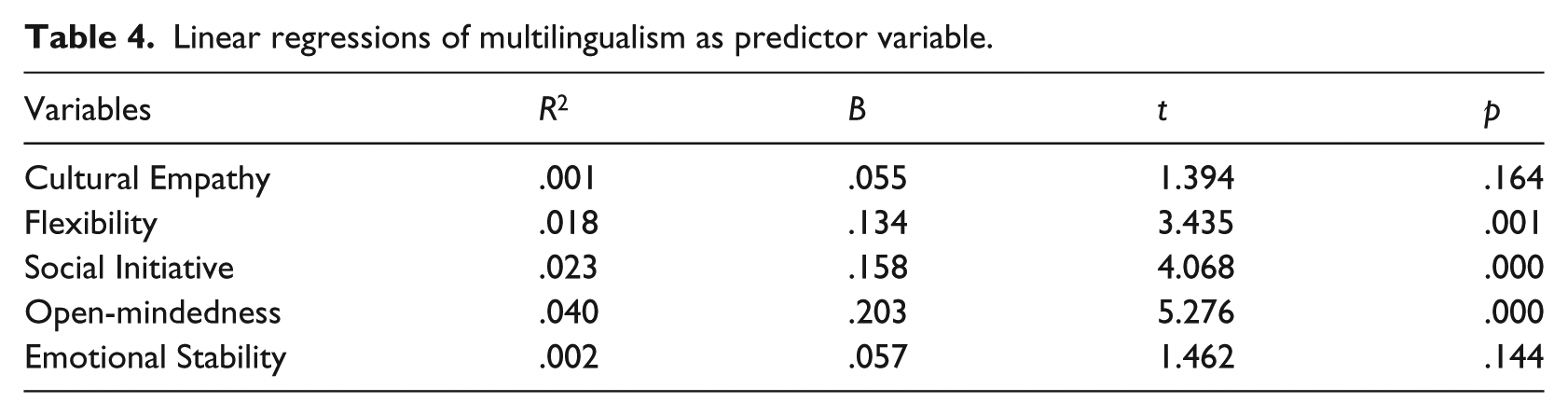
As three personality factors indicated a relationship with multilingualism (as measured by the self-reported number of languages spoken), further analysis will be conducted in order to provide further depth with regard to the findings.
Structural equation modelling
A model was constructed demonstrating the proposed hypothesis that multilingualism may affect an individual’s standing on Flexibility, Social Initiative and Open-mindedness (see Figure 1). The model was tested with MPlus version 7.11 (Muthén & Muthén, 2012), utilizing a robust likelihood estimator (MLM) in order to take the non-normality of the data into account. A mean-adjusted chi-square will therefore be interpreted in the model fit statistics. It should be noted that multilingualism was indicated by a single observed variable – namely the self-reported number of languages spoken – and as such the factor loading was fixed to 1 and the error terms fixed to 0 in order to accommodate the single indicator latent variable (Muthén & Muthén, 2012).

Proposed structural equation model.
Figure 1 demonstrates the full structural equation model with path coefficients. A first model was fitted to the data with each personality factor indicated by eight individual item indicators. Unfortunately, this first model achieved poor fit (see Table 5). Comparative Fit Index (CFI) = .756 especially indicated a weak fit with a value far below the recommended .90 cut-off (Kline, 2005). In addition, the Satorra-Bentler chi-square (χ2 (270) = 1267.085; p < .001) indicated an inadequate fit of the data to the proposed model. The only fit indices that indicated a mediocre fit was the Root Mean Square Error of Approximation (RMSEA) = .075 and the Standardised Root Mean Square Residual (SRMR) = .078 with a fit below the recommended cut-off of .80 (Kline, 2005; MacCallum, Browne, & Sugawara, 1996).
Fit statistics of structural equation models.

RMSEA: root mean square error of approximation; CFI: comparative fit index; SRMR: standardised root mean square residual.
Upon inspection of the output results generated by MPlus version 7.11, the conclusion was drawn that the poor fit achieved in the first structural equation model was due in large part to inter-item covariances. In order to shed greater light on the dataset and the research question in particular, the decision was made to parcel the data with two items in each parcel, thus each personality factor latent variable had four indicator variables. Parceling was used as it is known to create a more parsimonious dataset with less sampling error (MacCallum, Widaman, Zhang, & Hong, 1999), as well as lowering the likelihood of distributional violations (Little, Cunningham, Shahar, & Widman, 2002).
The parceled structural equation model can be seen in Figure 2 with the fit statistics reported in Table 5. As indicated by the fit statistics, the fit improved significantly: Satorra-Bentler chi-square χ2 (60) = 234.87, Root Mean Square Error of Approximation (RMSEA) = .067, Comparative Fit Index (CFI) = .919. The model indicates that the pathway coefficients between multilingualism and the three personality factors are significant, but weak. Therefore, the number of languages an individual speaks may have a marginal, positive effect on the individual’s standing on Flexibility, Social Initiative and Open-mindedness.
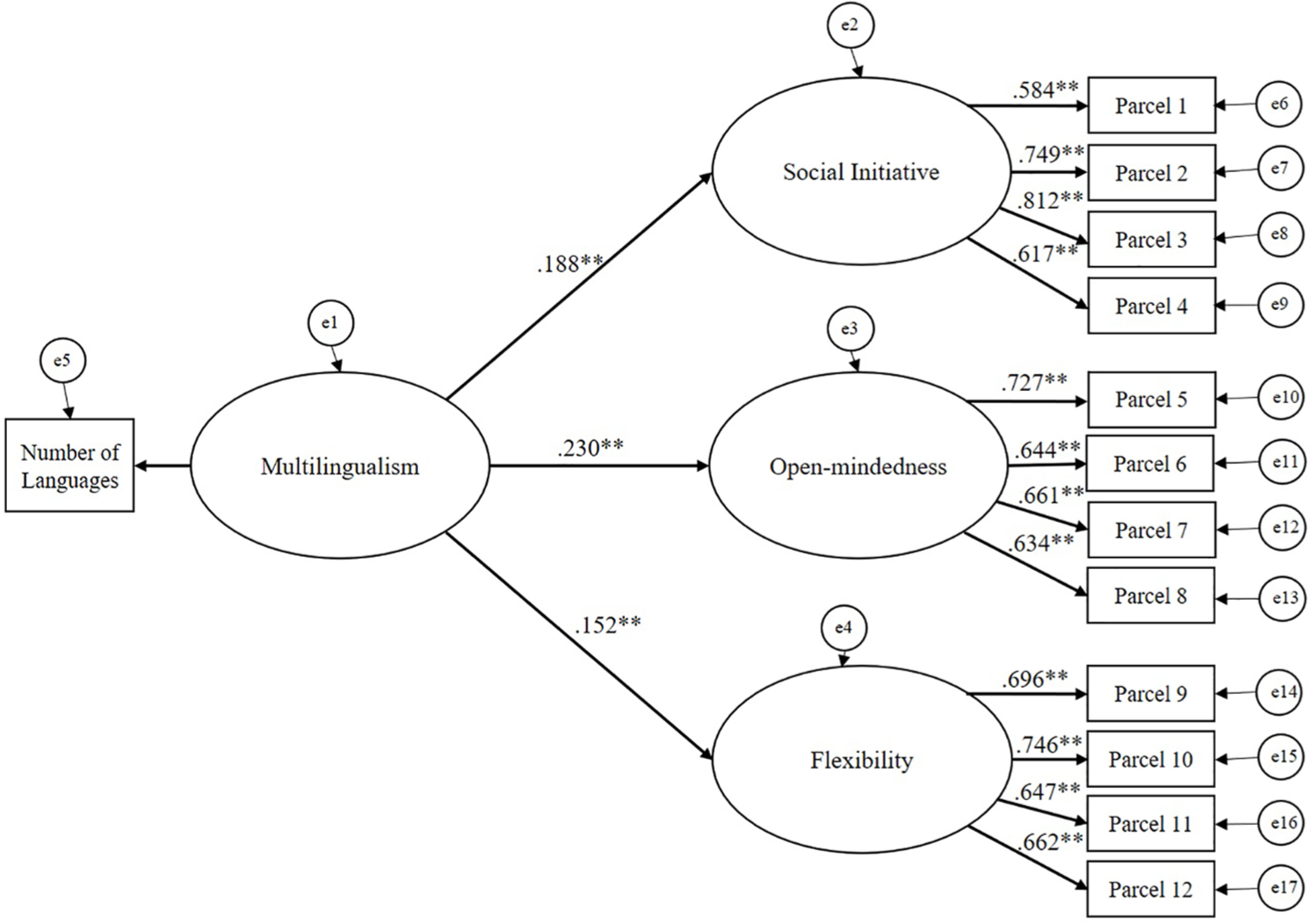
Results of SEM. N = 651. All path coefficients are significant at **p < .01. The model demonstrates acceptable fit statistics: Satorra-Bentler Chi Square χ2 (60) = 234.87, RMSEA = .067, CFI = .919.
The authors are aware of the critiques against parceling in structural equation modelling and that parceling may increase the probability of a Type II error (Bandalos & Finney, 2001). However, it should be noted that the MPQ40 questionnaire utilized in this study is designed with five unidimensional personality factors. Therefore, the oft-cited critique against parceling – namely that it distorts multidimensional constructs – is not applicable in this instance (see Little et al., 2002). In addition, no other study could be found that examined the research question through the method of structural equation modelling. Therefore, the authors argue that the benefits of examining the effects of multilingualism on the three personality factors of Flexibility, Social Initiative and Open-mindedness through the powerful method of structural equation modelling should outweigh the potential critique against the use of parceling. However, future replication studies with larger samples and measurement models without parceled indicator variables is recommended and needed in order to lend credence to the findings of this study.
Discussion
The answer to the research question is largely positive as the total number of languages known was significantly linked to three out of five personality traits, namely Flexibility, Social Initiative and Open-mindedness – albeit with very small effect sizes. An overview of the effects of multilingualism on the five MPQ personality traits identified in the present study and in previous research is presented in Table 6. It shows that different measures of multilingualism have been related with all MPQ personality traits but not systematically so. The only trait that has been consistently linked with multilingualism is Open-mindedness, which also had the strongest path coefficient (β = .230; p < .001) as can be seen in Figure 2. Open-mindedness is a trait that shares characteristics with the lower-order trait Tolerance of Ambiguity that was also found to be higher among people who know more languages (Dewaele & Wei, 2013; van Compernolle, 2016; Wei & Hu, 2018) and with Social Flexibility (Ikizer & Ramírez-Esparza, 2017). In other words, multilinguals know from very early on that their own linguistic, cultural values and practices may not be shared by the people with whom they interact. The awareness and the interest in these differences could lead to self-reflection and ultimately to acceptance that different people may have different values.
Overview of the effects of multilingualism on the five MPQ personality dimensions.
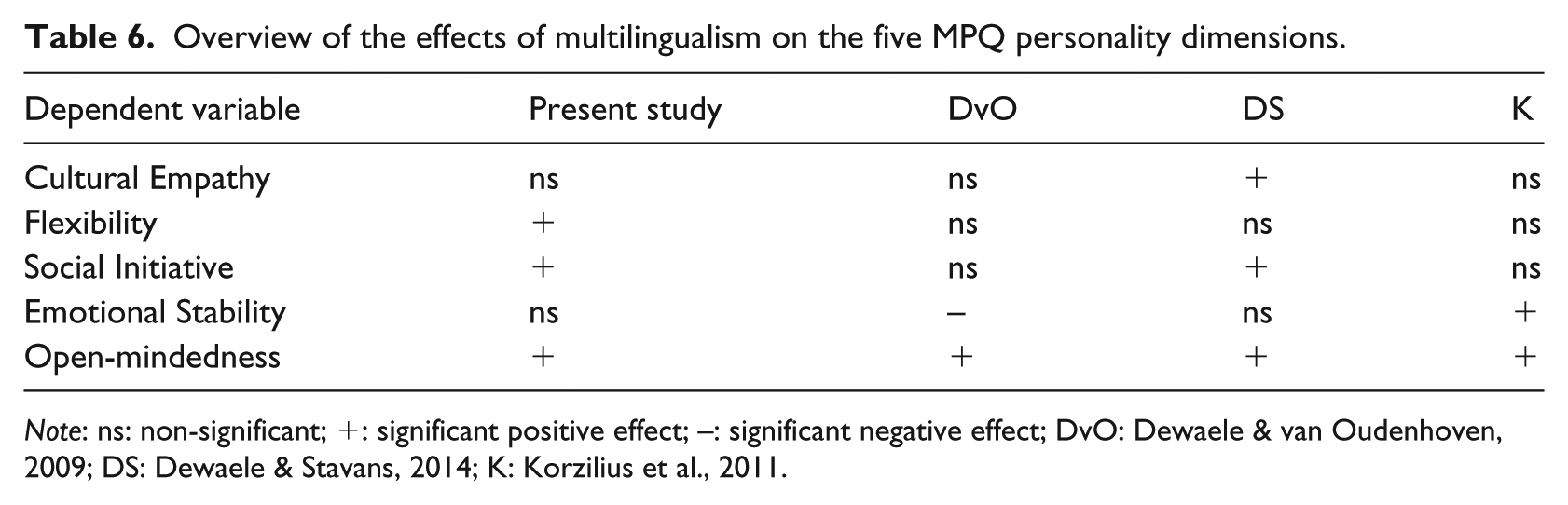
Note: ns: non-significant; +: significant positive effect; –: significant negative effect; DvO: Dewaele & van Oudenhoven, 2009; DS: Dewaele & Stavans, 2014; K: Korzilius et al., 2011.
The present research design does not allow us to pinpoint the exact origin of the differences in Open-mindedness of our participants. It could be caused by their multilingualism or in fact by their multiculturalism, defined by Grosjean (2015) as active participation in the life of two or more cultures, a combination and blending of attitudes, behaviours, values, and languages of these cultures. Becoming multilingual may not affect individuals’ sense of self, identity and personality to the same extent as becoming multicultural. It is thus likely that participants with a higher number of languages proportionally may contain a larger number who are multicultural. It is likely that more of these participants were multilingual by design rather than by accident.
Given the more scattered effects of multilingualism on the four other personality traits, it is probably better not to speculate too much about possible causes. Finally, just as in Dewaele and Wei (2013), it is important to point out that the causal pathway could in fact be multidirectional, where multilingualism is both a cause and an effect. Indeed, being multilingual can push a person to develop a more multicultural personality. Similarly, it could be argued that participants who were born with a certain personality profile were more likely to become multilingual later in life, through an active choice.
The current study examined the relationship between multilingualism and personality through the use of correlation coefficients and structural equation modelling and achieved relative success in doing so. However, several limitations of the current study ought also to be discussed. The study relied on self-reported data and as such the measure used to quantify the level of multilingualism – the self-reported number of languages an individual speaks – can vary based on interpretation by the individual as to what level of competence constitutes the ability to communicate in a language. A future study with independent verification on the level of multilingualism of participants is recommended. Also, the database did not contain monolingual participants because the target group was foreign language learners. It is possible that the presence of a monolingual group would boost the effect sizes that we identified, as the crucial threshold might be between monolinguals and those knowing more than one language, after which the effect of knowing extra languages tails off. Another limitation is that more than 70% of participants were female, which is typical in this type of research (Dewaele, 2018) but it means the results need to be interpreted with this in mind.
Methodologically, the use of a parceled model to fit the data may also be criticized as the parceled data does have a higher probability of producing a Type II error (Bandalos & Finney, 2001). Thus, a future replication study with a more robust sample is needed in order to determine whether fit can be achieved in the proposed model in Figure 1. In addition, future studies may also want to examine nuances in the data more closely, as group-level differences may be found in age, gender, language or regional groups.
Conclusion
The aim of the present study was to establish whether a link existed between the level of multilingualism and personality traits measured through the MPQ. The level of multilingualism of 651 participants turned out to produce higher scores on the personality traits Flexibility, Social Initiative and Open-mindedness. The positive link between multilingualism and Open-mindedness turned out to be consistent in the studies we reviewed. Overall, the findings suggest that multilingualism and/or multiculturalism does indeed shape personality to some degree. Crucially, the current study expands previous research showing that knowing more languages provides positive traits to individuals, and that multilingualism and/or multiculturalism is –by extension- an advantage for the communities in which these multilinguals live.
Footnotes
Acknowledgements
The authors would like to thank those who participated in the study and the reviewers for their excellent comments.
Declaration of conflicting interests
The author(s) declared no potential conflicts of interest with respect to the research, authorship, and/or publication of this article.
Funding
The author(s) received no financial support for the research, authorship, and/or publication of this article.
