



Abstract
Aims and objectives/purpose/research questions:
The current study examined the language-reading relationship for bilingual students in two grade levels (grades 1 and 3) and for two reading outcomes (decoding and comprehension) to understand the contribution of oral language in English reading. The study also explored the potential mediating role of oral language between language use, reading frequency, and reading outcomes.
Design/methodology/approach:
The study included 60 bilingual students from bilingual households that speak a language other than, or in addition to, English. All participants completed a battery of language and reading assessments and a background survey.
Data and analysis:
Three separate confirmatory factor analyses were conducted to derive an Oral Language factor (from oral language assessments), a Language Use factor, and a Reading Frequency factor (from survey items). A multivariate regression was conducted to investigate whether the language-reading relationship differed by grade and reading outcome. A multivariate mediation analysis was also conducted to examine whether the Oral Language factor mediates the effect of Language Use and Reading Frequency on reading outcomes.
Findings/conclusions:
Oral language proficiency significantly predicted both decoding and comprehension for both grades. Oral language also mediated the relationship between reading frequency and reading outcomes.
Originality:
This study investigates the contributions of oral language in young bilingual students’ English reading outcomes, which is an under-explored topic.
Significance/implications:
The results demonstrated the importance of oral language proficiency in bilingual students’ reading outcomes. Oral language plays a robust role in not only reading comprehension but also decoding. The study also clarified that the effects of reading frequency on reading outcomes are indirect and mediated via oral language. Improving bilingual students’ oral language proficiency coupled with promoting their reading frequency can help promote their reading outcomes.
Keywords
Introduction
The number of bilingual students in the United States who speak a language other than English or in addition to English at home has grown exponentially in the past few decades. Based on the current statistics (National Center for Education Statistics, 2018), there was an estimated 9.5% (or 4.8 million) of bilingual students in public schools who were designated as English learners (EL) by their school districts in fall 2015; however, this estimate of bilingual students is conservative because it does not include proficient bilingual students who do not have the EL designation. Although an ever-increasing population, research on the predictors of bilingual students’ reading process and outcomes is limited. Many theoretical models of reading, such as the simple view of reading (SVR), argue that language plays a critical role in reading (Gough & Tunmer, 1986; Hoover & Gough, 1990). Empirical studies examining the role of language in reading development for monolingual readers have consistently found a robust language-reading link (e.g. Perfetti, 2007). However, research on the language-reading relationships for bilingual students 1 is relatively limited.
In addition to oral language proficiency, research has also found that young monolingual readers’ language use and reading frequency contribute to their reading either concurrently or as a forward predictor for long-term outcomes (Dickinson & Porche, 2011; Sénéchal & LeFevre, 2002). A recent study by Trainin et al. (2017) also found that the home literacy practices of young Latino students learning English as an additional language impact their oral language and other emergent literacy skills, which in turn predict their English reading outcomes. In other words, the relationship between home literacy practices and reading outcomes is mediated by English oral language skills. However, relatively little research has been devoted to examining the role of language use and reading frequency on bilingual children’s second language reading development and, in particular, the relationships between language/reading frequency, oral language, and reading outcomes.
The role of language in reading
As reading is a language-based skill, many reading models include language as a critical component (e.g. Perfetti, 2007; Roth et al., 2002). The most widely cited language-based reading model is likely to be the simple view of reading (SVR), which posits “word decoding” and “listening comprehension” as the two core components in reading. Word decoding is defined as the ability to accurately and quickly read isolated, single words, whereas listening comprehension refers to the ability to derive sentence- and discourse-level meaning of a speech with parallel structures to a written text. However, researchers have argued that the SVR’s conceptualization of language is oversimplified (LARRC, 2015; Silverman et al., 2015). Some of the recent models elaborated on the SVR by expanding it to include other language components, such as vocabulary, morphological awareness, and syntactic knowledge (LARRC, 2015; Silverman et al., 2015).
The SVR model also claims that relative weights of word decoding and listening comprehension change over time as readers develop word recognition skills (Gough et al., 1996). This claim is supported by other theoretical models of reading, such as the RAND Reading Study Group’s (2002) conceptualizations of reading comprehension. Specifically, this claim predicts that word decoding skills play greater roles in reading outcomes in kindergarten and early elementary grades, whereas listening comprehension (and other structural language skills, such as vocabulary and syntax) weigh more in reading comprehension in upper elementary grades. This claim receives broad empirical support from cross-sectional studies that showed, developmentally over time, a decrease in the strength of association between word decoding and reading comprehension, and an increase in the relation between listening comprehension and reading comprehension (RAND Reading Study Group, 2002). As there is not a theoretical framework specifically devoted to reading development in bilingual children, the current study adopts the SVR model to evaluate the role of language in reading for this population. The current study also takes into consideration recent modifications of the model by conceptualizing “language” as a multi-dimensional construct and includes measures of language in multiple domains (LARRC, 2015; Silverman et al., 2015).
Research on bilingual students’ reading development
Compared to the extensive literature on monolingual readers’ reading process and outcomes, research on the reading development of bilingual students is quite limited (Silverman et al., 2015). Bilingual students’ reading development differs from monolingual readers in fundamental and important ways, because bilingual learners are learning the oral language as well as reading in their second language (L2), whereas monolinguals are learning only to read without having to learn the basics of the oral language (Paradis et al., 2011). The extant literature on bilingual students’ English reading development has also revealed a critical effect of language skills on their English reading development (e.g. Huang, 2019; Davis et al., 2017; Erdos et al., 2011; Silverman et al., 2015). Research on L2 reading has also shown a significant contribution of language to reading in adult L2 readers in a formal instruction context (e.g. learning English in Korea) (Lee & Schallert, 1997; Zhang, 2012). Several studies that compare the language-reading relationship between monolingual English only (EO) and bilingual students have even shown a stronger language-reading link for bilingual students than for EO students (Davis et al., 2017; Geva & Farnia, 2012).
Geva and Farnia (2012) 2 compared the changes in the language-reading relationship between 390 bilingual students and 149 EOs in grade 2 and then again in grade 5. All oral language and reading assessments were in English only. Although bilinguals performed comparably as EOs in cognitive processing, decoding, and word and text reading fluency in grades 2 and 5, bilinguals scored lower than EOs on oral language measures at both time points and on reading comprehension in grade 5. Additionally, while phonological awareness and vocabulary significantly predicted reading comprehension in grade 5 for both groups, syntactic skills and listening comprehension were significant predictors of reading comprehension for bilinguals, but not for EOs.
In another recent study, Davis et al. (2017) worked with 83 EO and bilingual students in grades 5–7 to examine the relative contributions of background knowledge, English language proficiency, reading strategy use, and readers’ epistemic beliefs to the comprehension of science texts. They derived a composite measure of English language proficiency from scores of receptive vocabulary, morphological awareness, and receptive and productive syntax measures. They found that English language proficiency composite was the strongest predictor of reading comprehension, followed by background knowledge. The relationship between English language proficiency and reading comprehension was also stronger for bilingual students than for EO students.
As suggested by Geva and Farnia (2012), the bilingual-EO differences in the relationship between English language proficiency and English reading comprehension may be attributed to the nature of the language assessments, that is, that the English language assessments were not challenging enough for the EO students than for the bilingual students. However, authors in both studies argued that the bilingual-EO differences are most likely due to the variation in bilingual students’ English language proficiency and the fact that successful reading comprehension demands the ability to process print with multiple language skills, in particular syntactic skills and listening comprehension.
The effect of language use and reading frequency on reading outcomes
Research on monolingual reading has also demonstrated the contributions of both language use and reading frequency to reading outcomes (Dickinson & Porche, 2011; Sénéchal & LeFevre, 2002). Since young bilingual children are still developing their oral language proficiency in their L2, their language use may predict oral language proficiency and reading outcomes. Relationships between language use, language proficiency, and reading may also differ as these children become more proficient in L2. However, research on the connection between language use and reading outcomes for bilingual children is very limited. In a study by Beech and Keys (1997), the authors compared the English language and reading outcomes between monolingual children and bilingual children, and the effect of language use on language and reading outcomes. All children were between 7 and 8 years of age at the time of testing. Results from the study revealed no significant differences in English reading outcomes between monolingual EO and bilingual children, though bilingual children performed lower than their EO peers on the English vocabulary measure. 3 Additionally, among the bilingual children, those who self-reported thinking predominantly in their home language rather than in English scored lower in the English vocabulary measure but not in reading measures, suggesting that language use may predict L2 oral language skills but not L2 reading outcomes.
Research on the relationship between reading frequency and reading outcomes for bilingual children is also sparse, and the results are mixed. Constructionist theorists believe that children can learn to read or improve their reading outcomes by reading more (Stanovich, 1986, as cited in Carver & Leibert, 1995). However, Carver and Leibert (1995) examined the effect of free reading during a summer reading program on both monolingual EO and bilingual upper elementary graders’ reading outcomes and did not find a positive effect of increased reading time on student reading outcomes. Carver and Leibert argued that a “reading bootstrap,” defined as the process of students lifting themselves up by their bootstraps to a higher reading level, will not automatically happen simply by increasing reading time and frequency.
Reese and Goldenberg (2008) adapted the ecocultural theoretical framework to examine the influence of contextual variables on young Latinx immigrant children’s English and Spanish literacy development in kindergarten and first grade. The contextual variables they examined included family literacy practices and environmental factors, such as community literacy resources. They found that the frequency of English and Spanish reading with the child, respectively, yielded positive correlations with the child’s English and Spanish reading outcomes. Children who read in English, and children whose parents read in English, performed better on the English reading measures, and children who frequently read on their own also scored higher in both English and Spanish measures. These findings suggested that the language choices of the literacy practices the children engaged in are important for bilingual children, and language use and language learning opportunities also played a role in bilingual children’s reading outcomes.
Given the critical effect of oral language in monolingual reading and the limited research on the language-reading relationship for bilingual students, the current study examined the language-reading relationship for young bilinguals in two grade levels (grades 1 and 3) and for two different types of reading outcomes (decoding and comprehension) to understand the contribution of language for readers at different developmental stages. “Bilingual” students are defined as those who speak a language other than English or in addition to English at home, regardless of their proficiency and literacy skills in their two languages. Both the grade levels and reading outcomes (decoding and comprehension) are used as indices of different reading developmental stages. We chose to look at differences by grade level rather than by chronological age because grade will account for students’ duration of literacy instruction in English. 4 We adapted the SVR framework and conceptualized “language” as a complex construct involving multiple components, such as vocabulary and syntactic skills (Silverman et al., 2015). We also explored the effects of language use and reading frequency on reading outcomes, as well as the potential mediating role of English oral language between language use, reading frequency, and reading outcomes. Because young bilinguals are still developing their oral language in their second language, we hypothesize that their oral language proficiency would play a critical role and mediate the effects of language use and reading frequency on reading outcomes. The three specific research questions are:
Does the relationship between English oral language and English reading outcomes (decoding and comprehension) differ by grade level (grade 1 vs. grade 3)?
Does English oral language proficiency mediate the relationships between language use and reading outcomes?
Does English oral language proficiency mediate the relationships between reading frequency and reading outcomes?
We defined language use as participants’ choice of language in their interaction with different people (e.g. parents and friends) and in various contexts (e.g. at home and at school), and we measured language use with seven survey items. Reading frequency is defined as participants’ frequency of engagement in reading various genres of text in English and is measured with six survey items. Both sets of questions were developed based on prior research, such as the Background Survey in Davis et al. (2017), the Bilingual Input Output Survey in Peña et al. (2018), and the Reading Activity Inventory in Guthrie et al. (1994).
Method
Participants
Sixty bilingual students between the ages of 6 and 10 (M = 8) participated in the study. Based on survey responses from the participants and/or their parents, all participants were from bilingual households that speak a language other than English as well as English. Ninety percent of the sample (n = 54) were simultaneous bilinguals who were exposed to two languages before age 5 (Hoff, 2013) whereas the other 10% were sequential bilinguals who were exposed to English as their second language after age 5. Half of them (n = 30) had received English as a second language (ESL) services in their schools. Approximately 43% of the students were first graders (n = 25), and the others were third graders (n = 35). In terms of ethnicity, approximately 57% of the participants were Latinx (n = 34), and the other 43% were Asian (n = 26). Within each ethnicity, half of the participants (n = 30 total) had been designated as an English learner (EL) and received ESL services at their schools, while the other half had never had such designation or services. Sixty percent of the students’ home language is Spanish and the other 40% are Asian languages, including Mandarin Chinese (30%), Hindi (3%), Punjabi (5%), and Japanese (1.7%) (see Table 1). There was a significant relationship between participants’ ethnicity and socioeconomic background as indexed by their parents’ education level, X2 (3, N = 60) = 30.14, p < .001. Bilingual participants from Asian ethnic backgrounds tended to have parents with higher levels of education than participants from Latinx ethnic backgrounds.
Descriptive statistics for participants’ background variables.
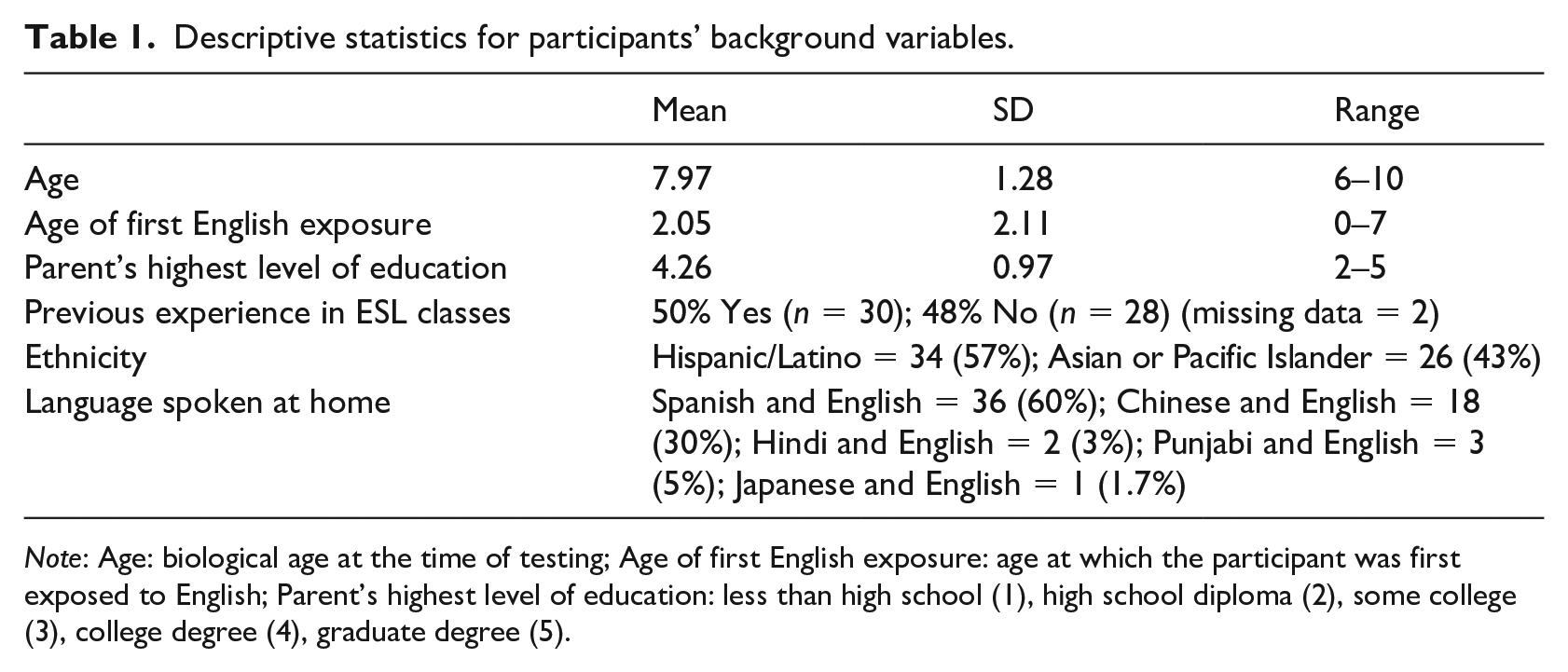
Note: Age: biological age at the time of testing; Age of first English exposure: age at which the participant was first exposed to English; Parent’s highest level of education: less than high school (1), high school diploma (2), some college (3), college degree (4), graduate degree (5).
English language measures
Phonological awareness
The Comprehensive Test of Phonological Processing–Second Edition (C-TOPP-2; Wagner et al., 2013) was used to evaluate participants’ phonological awareness. We used the Elision and Sound Matching subtests for grade 1 and the Elision and Phoneme Isolation subtests for grade 3 following C-TOPP-2’s guidelines. Phoneme Isolation and Sound Matching measured similar constructs, and they are appropriate for different age groups. For all three subtests, participants produce words and sounds based on the examiner’s instruction. C-TOPP-2 has an internal reliability index of 0.88–0.94 for children between ages 4 and 17 years.
Semantics
The English semantics subtest in the Bilingual English Spanish Assessment–Middle Elementary (BESA-ME; Peña et al., 2010) was used to assess participants’ semantic knowledge. There are 42 items in total. Participants are asked to either point to or describe a picture based on the examiner’s question. The internal coefficient alpha is 0.86 for this section.
Morphosyntax
The English language test in BESA-ME was also used to assess morphosyntactic knowledge. Participants completed and repeated sentences including basic English morphosyntactic constructions, such as possessives, regular and irregular past tense, and relative clauses, by selecting the correct picture from multiple pictures. The coefficient alpha for this section is 0.95.
Receptive syntax
The Sentence Structure subtest from Clinical Evaluation of Language Fundamentals®–Fifth Edition (CELF®-5; Wigg et al., 2013) was used to evaluate receptive grammar knowledge. CELF®-5 is a widely used norm-referenced standardized test for assessing oral language proficiency. For each set of four pictures, participants were asked to point to the picture that was the correct answer for the examiner’s question. The internal consistency of CELF®-5 ranges from 0.66 to 0.76 for 5 to 8.11-year-old children.
Listening comprehension
The Oral Comprehension subtest from the Woodcock-Johnson IV Test of Oral Language (Schrank et al., 2014) was used to assess listening comprehension. Participants listened to the audio and said the last word that completed the sentence. The internal reliability of listening comprehension is 0.90.
Narrative production
We used the Alien story from the Test of Narrative Language–Second Edition (TNL-2; Gillam & Pearson, 2017) to elicit narrative production from the participants. Participants’ narrative samples were then scored for story content (18 points) and story complexity (12 points). Coefficient alpha ranges from 0.81 to 0.90. Test-retest reliability ranges from 0.85 to 0.93.
English reading measures
We used the Woodcock Reading Mastery Test–Revised (WRMT-R; Woodcock, 1987) as our reading assessment because it has well-established reliability and validity and is also used widely in reading research. To measure English word decoding skills, we used the Word Identification and Word Attack subtests. The Word Identification subtest assessed participants’ ability to pronounce printed English words accurately, while the Word Attack subtest measured participants’ ability to read pronounceable unfamiliar words (both non-words and low-frequency words). To measure English reading comprehension skills, we used the Passage Comprehension subtest in the WRMT-R test. Participants were shown a printed short passage with one word missing, and they were required to produce the missing word. We used both form H and form G and counter-balanced the use of these two forms in both grade 1 and grade 3. The reliability ranges from 0.97 to 0.99 for Word Identification and from 0.91 to 0.97 for Word Attack, respectively for grade 1 and grade 3 and for both H and G test forms. The published reliability of the Passage Comprehension subtest ranges from 0.92 to 0.97 for the target grades and forms.
Participant background survey
The participant background survey included questions about the participants’ basic demographic information, seven items about their English language use (e.g. How frequently do you use English at breakfast in the morning?), and six items about their frequency of reading various genres in English (e.g. How often do you read magazines in English outside of school?). 5 All the questions about language use and reading frequency in the survey targeted only English and were presented as Likert-scale questions. Language use items use a 5-point Likert scale (1 = No English; 2 = A little English; 3 = Some English; 4 = Mostly English; 5 = Only English), whereas reading frequency items use a 4-point scale (1 = Never or almost never; 2 = Once or twice a month; 3 = Once or twice a week; 4 = Every day or almost every day).
Procedure
All participants were recruited through flyers posted on a university campus and libraries near the university, advertisements in the local magazines, and snowball sampling. They completed the full battery of standardized language and reading assessments and filled out the participant background survey. They were tested in a quiet room at a university in a single 1.5-hour session with multiple breaks. When younger participants had difficulty reading or understanding the survey questions, the researcher read the questions out loud and wrote down the responses from the participant or from the parent, who answered the questions on the child’s behalf. The parent also completed a brief survey that included questions about the family’s socioeconomic status and information about their child’s schooling experience.
Data processing
Table 1 presents the descriptive results for the participants’ background variables, and Table 2 shows their performance on the language and reading assessments. Raw scores, rather than age-normed scores, were reported and used for the analyses because of the interest in grade-level differences. Third graders performed higher than first graders on all three reading measures. The means and standard deviations for first and third graders are 32.12 and 22.34 versus 63.86 and 12.92 for Word Identification, 12.64 and 11.27 versus 28.69 and 8.57 for Word Attack, and 19.88 and 21.76 versus 33.57 and 10.20 for Passage Comprehension. The two word-decoding measures yielded a high correlation of 0.92, justifying the creation of a Decoding composite score by averaging estimated z-scores (Deacon et al., 2014). This allows the equal contribution of the two decoding assessments in the analyses.
Descriptive statistics for language and reading measures.
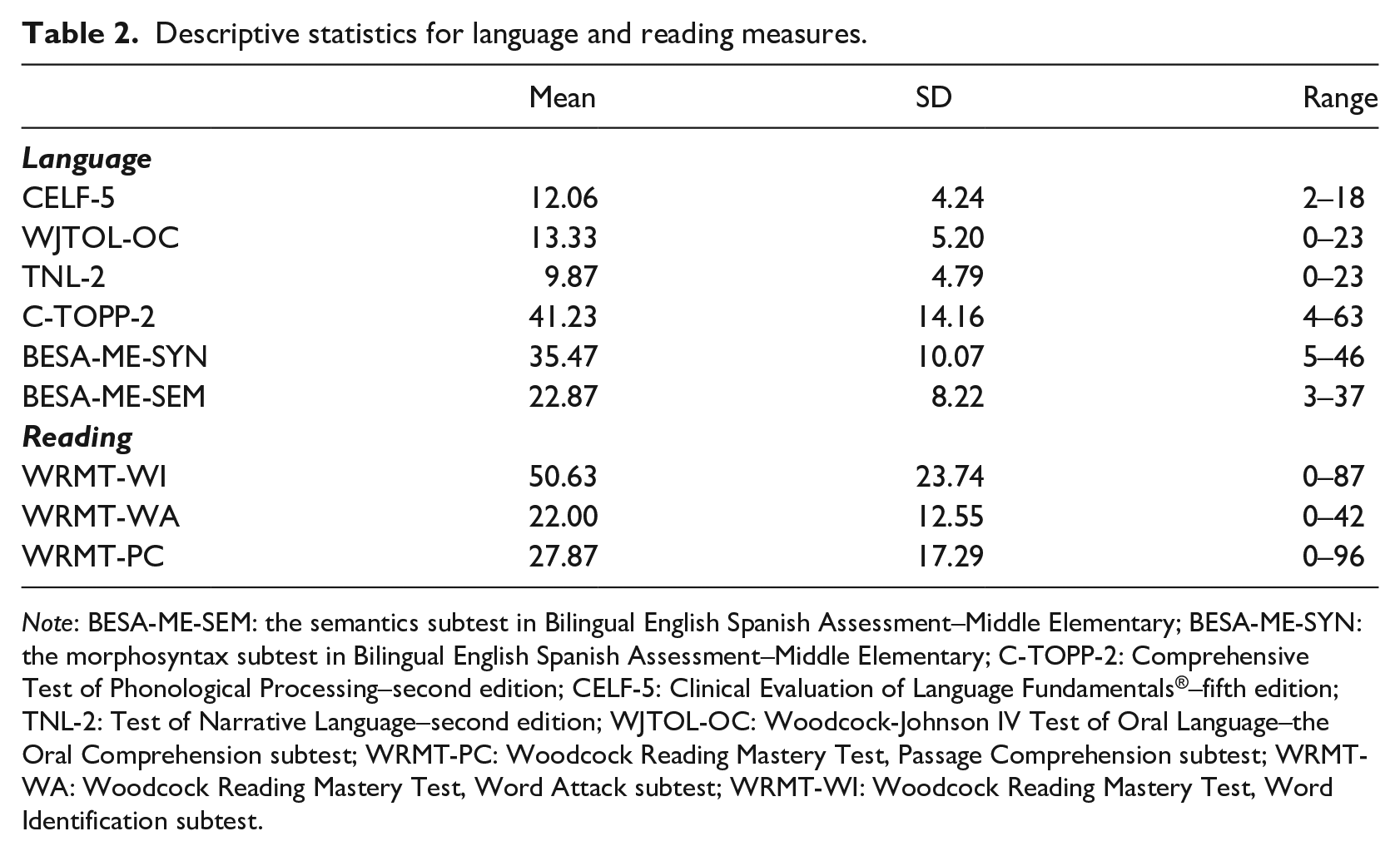
Note: BESA-ME-SEM: the semantics subtest in Bilingual English Spanish Assessment–Middle Elementary; BESA-ME-SYN: the morphosyntax subtest in Bilingual English Spanish Assessment–Middle Elementary; C-TOPP-2: Comprehensive Test of Phonological Processing–second edition; CELF-5: Clinical Evaluation of Language Fundamentals®–fifth edition; TNL-2: Test of Narrative Language–second edition; WJTOL-OC: Woodcock-Johnson IV Test of Oral Language–the Oral Comprehension subtest; WRMT-PC: Woodcock Reading Mastery Test, Passage Comprehension subtest; WRMT-WA: Woodcock Reading Mastery Test, Word Attack subtest; WRMT-WI: Woodcock Reading Mastery Test, Word Identification subtest.
We first conducted descriptive statistics and bivariate correlational tests to examine the relationships between the language and reading measures. The six language measures were all significantly correlated with each other (r = 0.33–0.78), suggesting that they are measuring a common construct. We then conducted a confirmatory factor analysis (CFA) on the six measures and derived an Oral Language factor (Table 3; and the fit indices showed a good model fit).
Standardized results of confirmatory factor analysis of language factor.
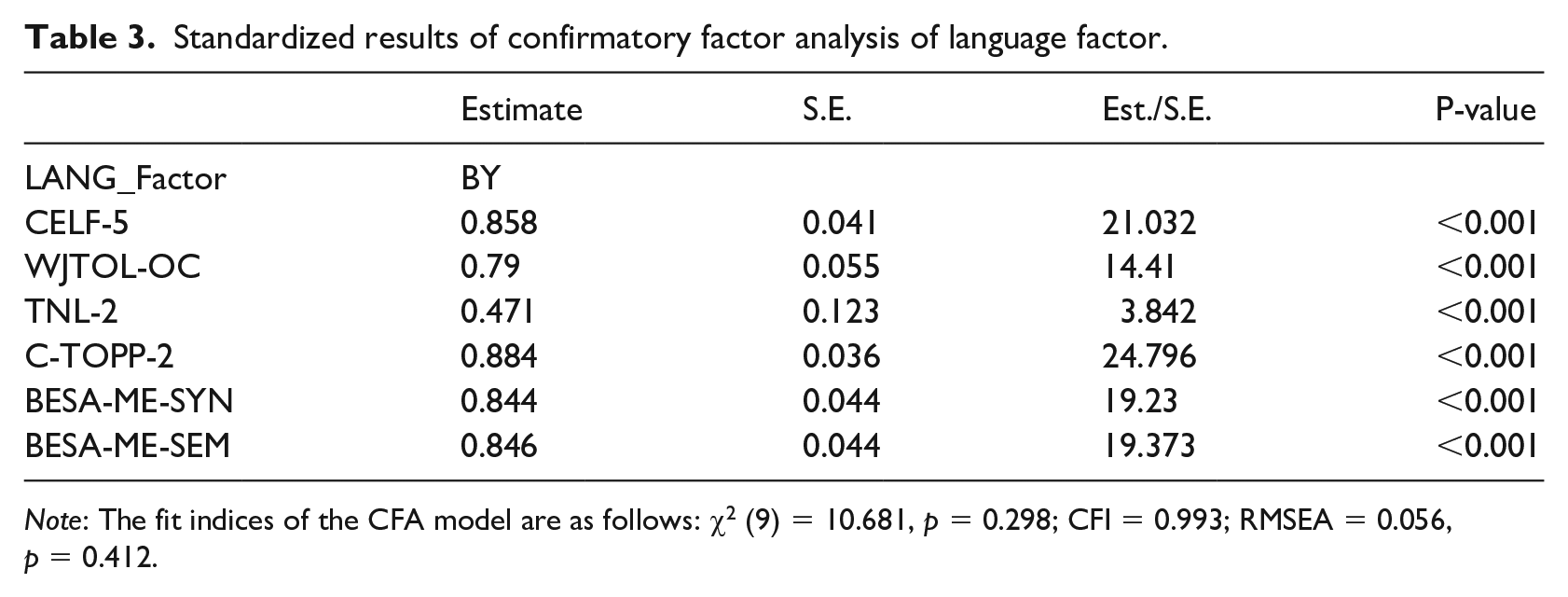
Note: The fit indices of the CFA model are as follows: χ2 (9) = 10.681, p = 0.298; CFI = 0.993; RMSEA = 0.056, p = 0.412.
Table 4 presents the descriptive results for the survey items related to language use and reading frequency. We also conducted a CFA for the seven language use items and found that five of them loaded well on the latent factor (see Table 5). The two poorly loaded items were then dropped, and the Language Use factor was represented by the common variance of five items. Another CFA for the six reading frequency items was also conducted (see Table 6), and the factor score of Reading Frequency was derived based on the common variance of five well-loaded items (the revised five-item CFA model was substantially improved: χ2 (2) = 0.941, p = 0.625; CFI ≈ 1.000; RMSEA ≈ 0.000, p = 0.666)
Descriptive statistics for language use and reading frequency survey items.
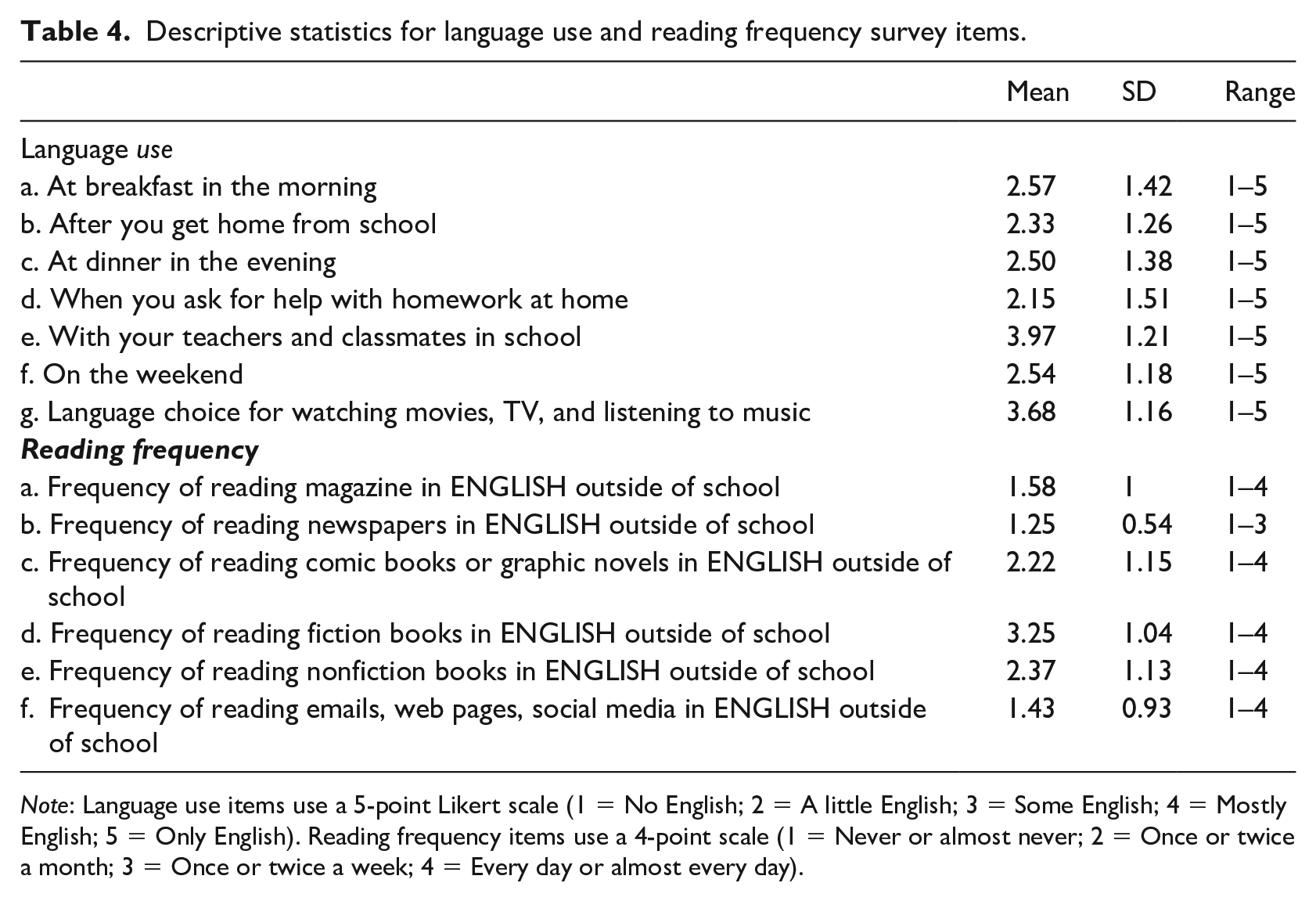
Note: Language use items use a 5-point Likert scale (1 = No English; 2 = A little English; 3 = Some English; 4 = Mostly English; 5 = Only English). Reading frequency items use a 4-point scale (1 = Never or almost never; 2 = Once or twice a month; 3 = Once or twice a week; 4 = Every day or almost every day).
Standardized results of confirmatory factor analysis (CFA) of language use (7-item, not-revised).
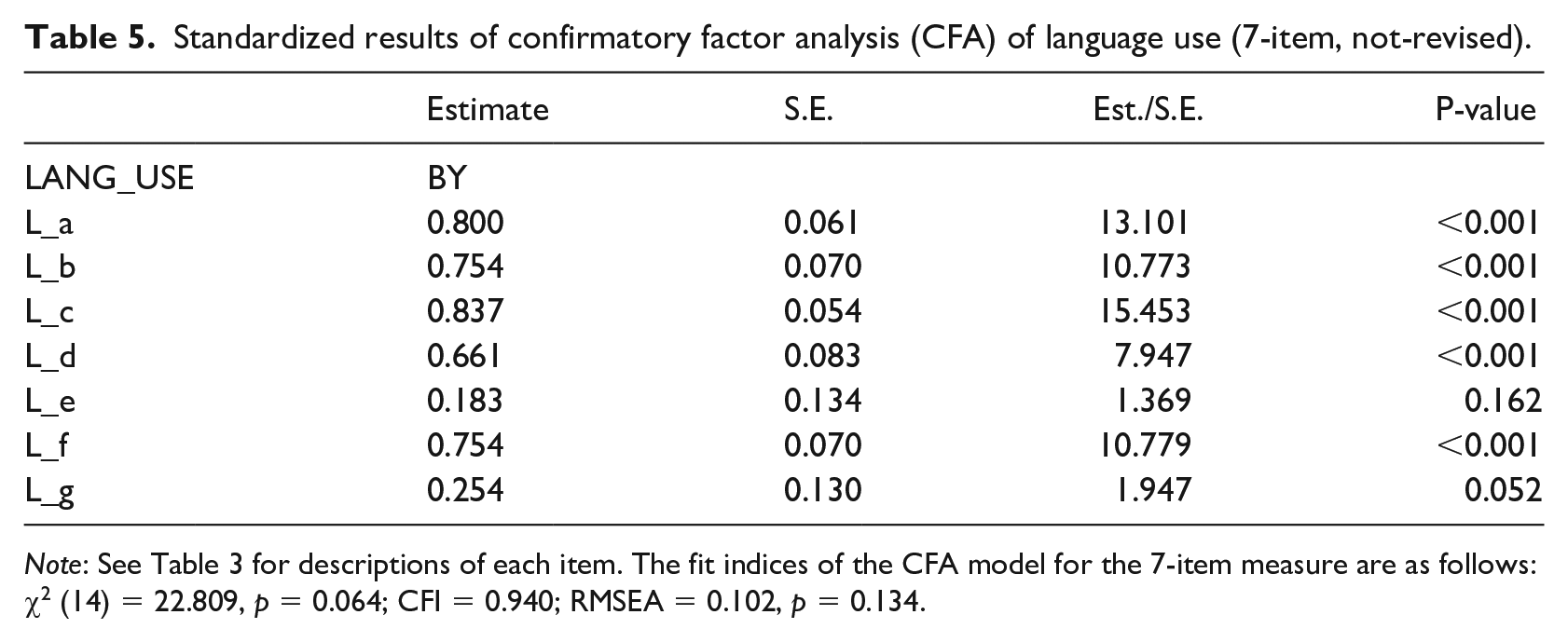
Note: See Table 3 for descriptions of each item. The fit indices of the CFA model for the 7-item measure are as follows: χ2 (14) = 22.809, p = 0.064; CFI = 0.940; RMSEA = 0.102, p = 0.134.
Standardized results of confirmatory factor analysis of reading frequency factor.
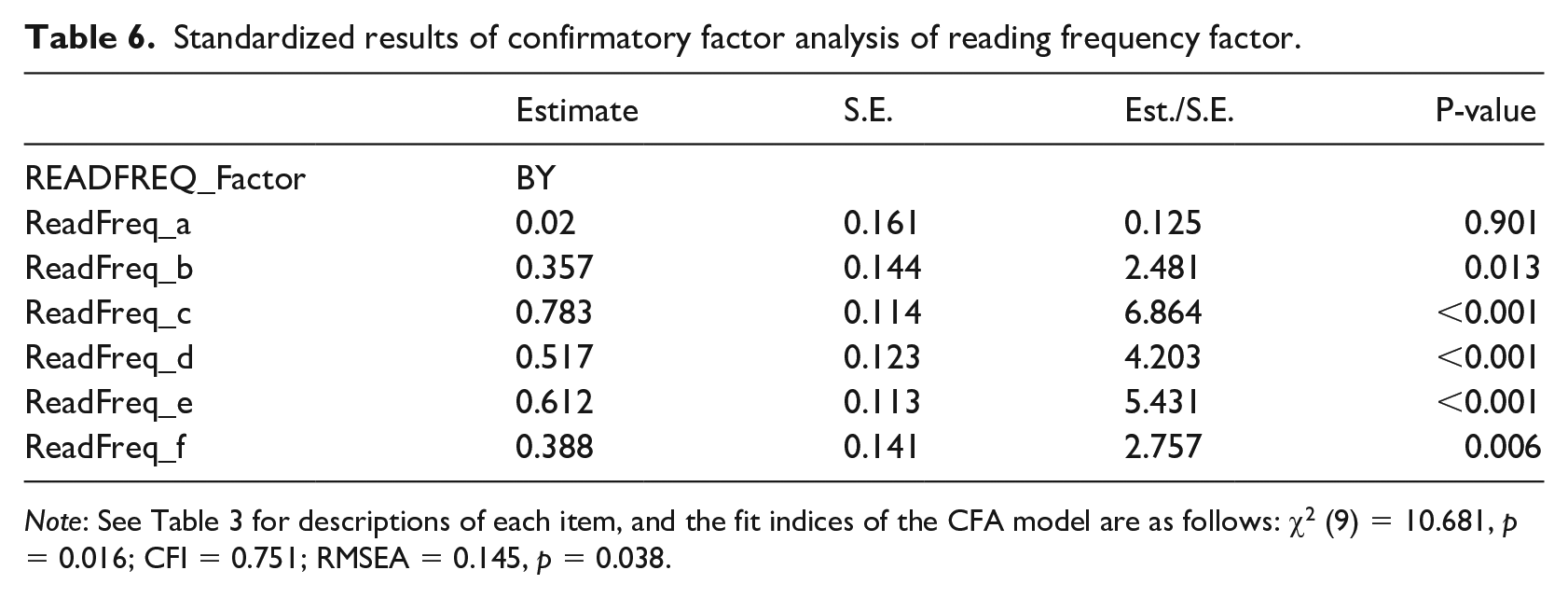
Note: See Table 3 for descriptions of each item, and the fit indices of the CFA model are as follows: χ2 (9) = 10.681, p = 0.016; CFI = 0.751; RMSEA = 0.145, p = 0.038.
Results
To answer the first research question about whether the language-reading relationship differed by grade level and type of reading outcome, we conducted a multivariate regression by regressing Decoding and Comprehension (these two variables are correlated) on the Oral Language Factor and Grade. We also tested whether grade moderated the effect of Oral Language on the two outcomes by adding in the product of Grade and Oral Language as the moderating term. To answer the second and third research questions, we conducted a multivariate mediation analysis to examine whether the Oral Language factor mediates the effect of Language Use and Reading Frequency on both Decoding and Comprehension. Some previous research has shown the effect of ethnicity, SES, and EL designation (Aikens & Barbarin, 2008; Kim, 2004) in reading outcomes, so we also included these three variables as covariates in all multivariate regression and mediation analyses. Mplus 7.4 (Muthén & Muthén, 2015) was used for all analyses.
Does the relationship between English oral language and English reading outcomes (decoding and comprehension) differ by grade level (grade 1 vs. grade 3)?
The results of multivariate regression analysis are listed in Table 7. Both grade (β = 0.589, p = 0.016) and Oral Language factor (β = 0.662, p < 0.001) significantly predicted Decoding. No moderation effect was detected, which means that the effect of the Oral Language factor on Decoding did not differ across grades. For Comprehension, there is no significant effect of grade. Only the effect of the Oral Language factor was statistically significant (β = 0.692, p < 0.001), suggesting that the relationship between oral language and reading comprehension does not differ by grade level. The three covariates were not significant in these multivariate regression analyses. Although some previous research has shown the effect of these covariates on reading outcomes, the relatively small sample size and homogeneity in SES may have limited the power to detect a significant effect.
Standardized results of multivariate regression.
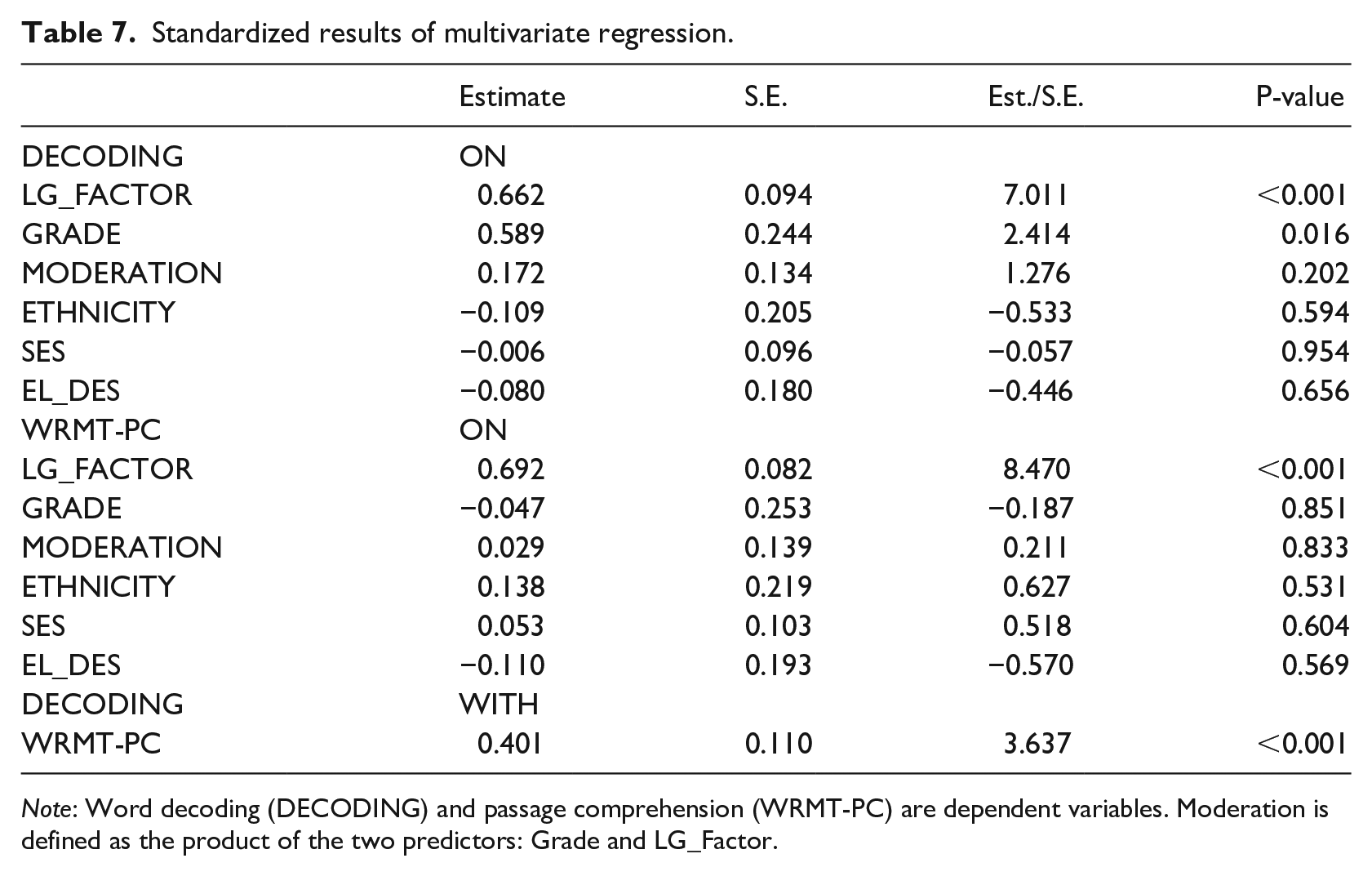
Note: Word decoding (DECODING) and passage comprehension (WRMT-PC) are dependent variables. Moderation is defined as the product of the two predictors: Grade and LG_Factor.
Does English oral language proficiency mediate the relationships between language use, reading frequency, and reading outcomes?
We first tested whether the two predictors (Language Use and Reading Frequency) were significantly associated with both dependent variables (Decoding and Comprehension) and the mediator (Oral Language factor). The Reading Frequency factor significantly predicted Decoding and Comprehension as well as the mediator. In contrast, Language Use factor was not significantly associated with the dependent variables. We thus only focused on the Reading Frequency factor in the mediation analysis.
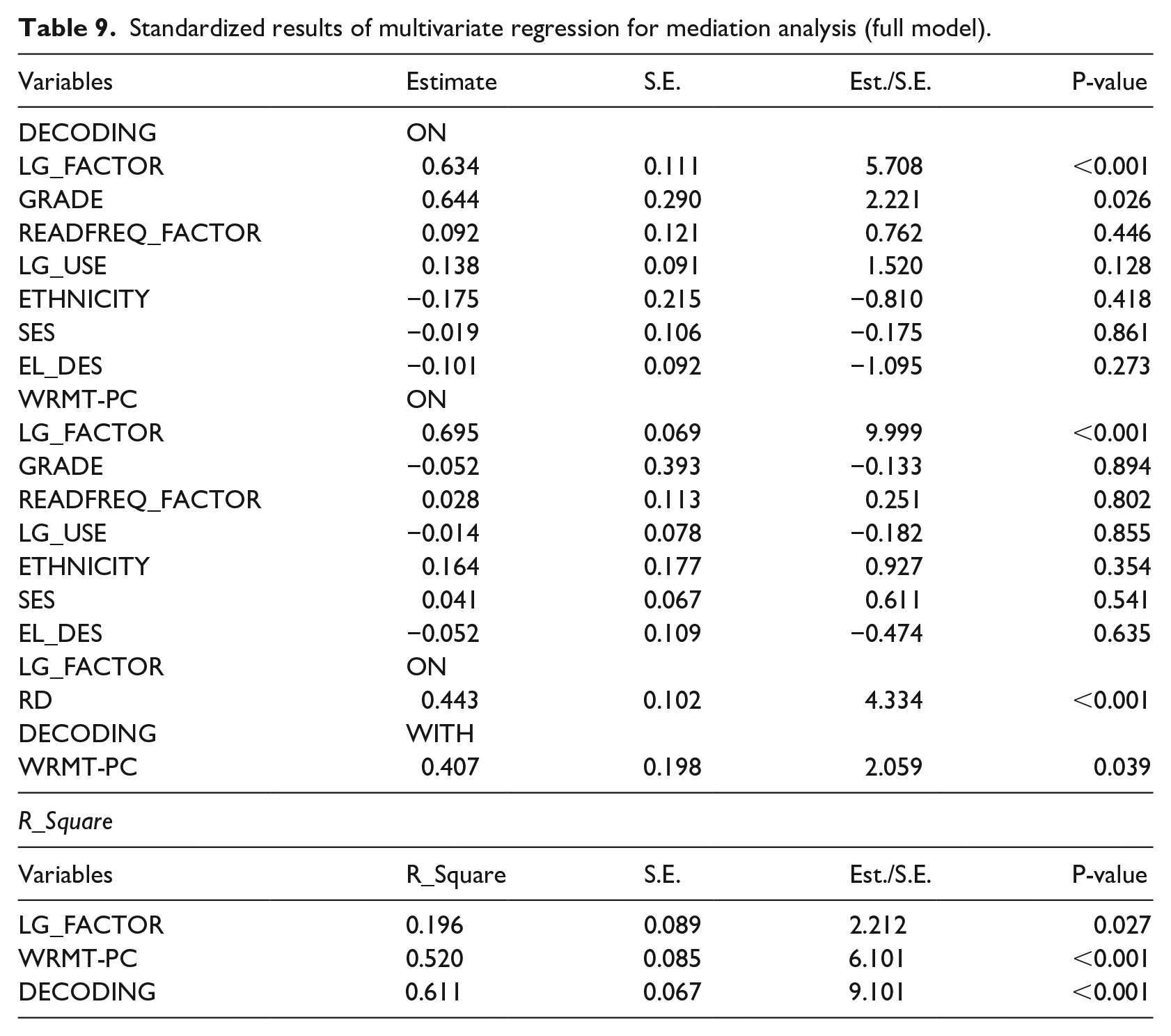
As seen in Tables 8–10, the mediation analysis revealed an indirect effect from Reading Frequency to both Decoding (β = .281, p < 0.001) and Comprehension (β = .308, p < 0.001) via the Oral Language factor. The addition of the mediator (Oral Language factor) in the full model resulted in no direct effect of Reading Frequency on the two outcomes (β = 0.092, p = 0.446 for Decoding; β = 0.028, p = 0.802 for Comprehension). That is, the effect of Reading Frequency on decoding and comprehension was indirect and mediated through bilingual students’ oral language proficiency.
Standardized results of multivariate regression for mediation analysis.
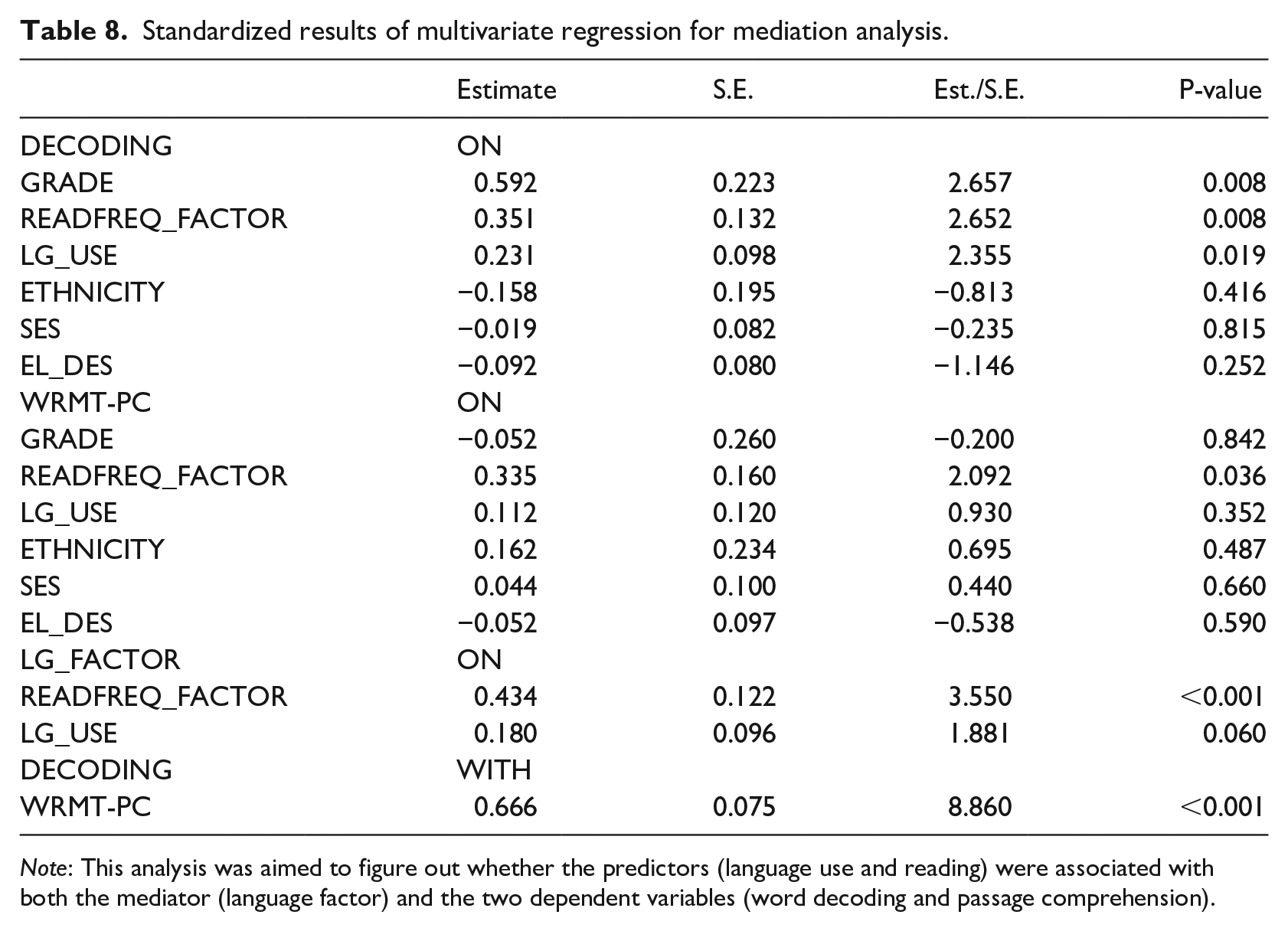
Note: This analysis was aimed to figure out whether the predictors (language use and reading) were associated with both the mediator (language factor) and the two dependent variables (word decoding and passage comprehension).
Standardized results of multivariate regression for mediation analysis (full model).
Standardized results of the indirect effects of mediation analysis.

Note: The mediation analysis used 5000 bootstrapping samples.
Discussion
The current study aimed to examine the contributions of oral language in reading for young bilingual students in the United States. Our results showed that oral language proficiency significantly predicted both decoding and comprehension for both grades, suggesting a critical role of oral language in L2 reading for young bilingual students in early elementary grades and for different reading development stages. The results corroborated previous research (e.g. Silverman et al., 2015) and aligned with L2 reading research in a foreign language formal instruction context (Lee & Schallert, 1997; Zhang, 2012). The study replicated the finding that oral language is robust for bilingual students’ English reading comprehension, the target reading construct of existing research that examined the language-reading link (e.g. Davis et al., 2017; Geva & Farnia, 2012; Silverman et al., 2015). The current results further demonstrated the importance of oral language for bilingual students’ early English literacy development, that is, decoding. These results suggested that the SVR model could be applied to account for the reading development of bilingual students as well.
It is worth noting that the regression model revealed a significant grade-level effect on decoding but not on comprehension; third graders performed significantly better than the first graders on the decoding tasks but not on the reading comprehension task. This counter-intuitive finding may be attributed to the reading comprehension measure and/or the students’ reading instruction. The task type or format of the assessment we used for measuring reading comprehension (i.e. WRMT Passage Comprehension subtest) may be unfamiliar or culturally inappropriate for the bilingual students in the study. The reading instruction they received in school may not have prepared them for such assessments or may not have focused on developing reading comprehension skills.
We also found that oral language mediated the relationship between reading frequency and reading outcomes. Bilingual students who reported higher frequency in reading in English had higher oral language proficiency in English, which in turn was related to better reading skills. In other words, among bilingual students, those who read more frequently in English have better oral language proficiency, and it is through the oral language proficiency, rather than reading frequency per se, that reading frequency contributed to better reading outcomes. We interpret this finding to be partially aligned with Carver and Leibert (1995), who showed that simply reading more does not contribute directly to better reading outcomes. Increasing reading frequency but not providing explicit instruction on how to learn to read is unlikely to help young bilingual students “lift themselves up by their bootstraps” to a higher reading level. Combined with previous research that demonstrated significant contributions of language use during reading activities to bilingual students’ reading outcomes (Reese & Goldenberg, 2008), we believe that bilingual students would benefit from explicit instruction on the language presented in the text, such as vocabulary and sentence structure. The focus on language in reading will not only promote language development, but also reading outcomes for bilingual students.
In contrast, bilingual students’ language use correlated with oral language proficiency but not with reading outcomes. The lack of association may be attributed to the construct definition, and operationalization of “language use” in the current study. Our measure of language use focuses on interactional language use, that is, participants’ language choice when they interact with others and in various contexts, rather than language use in reading-specific activities, such as shared book reading with parents or frequency of English reading with child.
The current results corroborated Beech and Keys (1997), who suggested that interactional language use, though positively related to bilingual children’s oral language proficiency, may not contribute to their reading outcomes. As discussed previously, Reese and Goldenberg (2008) found that language in reading-specific activities (e.g. frequency of English reading with child), rather than interactional language use that is not specific to reading contexts, yielded positive correlations with Latinx immigrant children’s reading outcomes. Similar results have also been shown by a few other studies (e.g. Linan-Thompson et al., 2003). A more in-depth investigation in the future comparing the effects of language use in interactional and reading-specific contexts on reading outcomes would afford us a more comprehensive picture.
In sum, results from the study revealed a critical role of oral language proficiency in young bilingual students’ English reading development. These findings highlighted the importance of incorporating explicit oral language instruction and opportunities for language use in the reading instruction for bilingual students. Given that young bilingual students are acquiring English oral language and reading at the same time, explicit instruction and support for oral language development is necessary across different stages of reading development.
Limitations
The current study has several limitations to be addressed in future research. First, the current sample consists of mainly bilingual students from middle-class backgrounds. Even though the sample was not limited to the university community, all families lived relatively close to the university. Future research should examine bilingual students from other SES strands. Second, bilingual students in the United States are a highly heterogeneous group that vary in many characteristics (Lesaux, 2006). Future studies that systematically examine the language and reading outcomes and language-reading link for different subgroups of bilinguals, particularly bilinguals with a current EL designation, will help elucidate the language-reading links for all bilingual students. Given the robust evidence of cross-linguistic transfers in language learning, it is important to also investigate the contributions of native language and literacy skills to bilingual students’ L2 reading outcomes (August & Shanahan, 2006; Durgunoğlu, 2002; Melby-Lervåg & Lervåg, 2011). Taking into account bilingual students’ native language skills would also provide a more comprehensive picture of bilingual students’ language proficiency. The approach to consider the whole child by assessing both of their languages rather than focusing on their L2 is also in line with current research on reading development and education (Alvarez, 2018; Reyes et al., 2016). Finally, it remains unclear what the relative weight of various language components is and how the relative weight may differ by subgroups of bilingual students. Future studies that systematically investigate the contributions of language to reading using multiple language measures and sufficiently large sample size are needed to fully understand the role of language in reading.
Conclusions and implications
To conclude, the current study demonstrated the importance of oral language in reading for bilingual students and provided support for the critical role of oral language in bilingual students’ reading development. Specifically, the results not only replicated previous research that found a strong effect of oral language on bilingual students’ English reading comprehension, but extended the finding to show its robust role for English decoding skills. Since there is no existing theoretical framework devoted to bilingual students’ reading development, the current results suggested that the SVR model could potentially be applied for bilingual reading development, with the addition of a link between the two core components, “word decoding” and “language comprehension.” The study also clarified the effects of reading frequency on reading outcomes, which are indirect and mediated via oral language skills.
Results from the study have direct implications for the reading instruction and intervention for bilingual students. Encouraging bilingual students to read more without supporting their oral language development at the same time may not be as helpful, as the effect of reading frequency is contingent upon their oral language skills. Bilingual students learning to read in their L2 would benefit from explicit instruction in oral language, such as vocabulary and sentence structure (Castles et al., 2018). Providing explicit support for oral language development, coupled with promoting their reading frequency at school and home, would help prepare bilingual students for reading success.
Footnotes
Acknowledgements
We thank Mingxia Zhi, Dominica Nieto, and Malavika Perinchery for their research assistance. We are also grateful to Ms. Kathy Faktor for sponsoring our advertisements in the San Antonio Kids magazine, and to Tohui Language Academy and the Summer Young Writers Camp and Plaza de Lectura readers tutoring program at the University of Texas in San Antonio for their help with recruitment. This article would not have been possible without the participation and support from the children and families in the study. Preliminary results of this research were presented at the 2019 meeting of the American Educational Research Association. All errors are our own.
Declaration of conflicting interests
The author(s) declared no potential conflicts of interest with respect to the research, authorship, and/or publication of this article.
Funding
The author(s) disclosed receipt of the following financial support for the research, authorship, and/or publication of this article: This research was supported by an Achieving Literacy Initiative seed grant sponsored by the Office of the Vice President for Research, Economic Development, and Knowledge Enterprise, the College of Education and Human Development, and the Office of the President at the University of Texas in San Antonio.
