




Abstract
In Occidentalism, Xiaomei Chen observes that the West was employed by the opponents of official institutions as a liberating force against the Chinese government in the post-Mao period. As her arguments are premised on the basis that the government views the West as the contrary, the book briefly delineates ‘official Occidentalism’ that serves for domestic oppression of its citizens, and occasionally cultural imperialism toward its socialist brother. Nevertheless, this observation, as she admits, does not intend to totalize all cultural aspects and diversities. Encapsulating highly controversial and contested categories, as well as complicated or even contradictory sentiments, sexuality broaches a new subject matter on the study of Occidentalism. Situated in the genealogy of representing the West in Maoist and early post-Mao China by the official newspaper of the Communist Party of China, the People’s Daily, this article argues that, while sexuality had been silenced and suppressed under administrative penalties and Party disciplinary sanctions, it was powerfully embedded within and stereotyped by socialist ideologies, serving as a tool for the government to construct socialist superiority and capitalist inferiority, by means of which ‘new China’ gets healed from historical trauma, the socialist regime is justified, Western cultural imperialism is resisted, political allegiance is sustained, sino-centrism is re-established within the domestic sphere and the identity of the party-state is mediated. In doing so, the article aims to provide a theoretical construction of ‘official Occidentalism’ from the multiple lens of sexualities in Maoist and early post-Mao China.
Since the ‘reform and opening-up’, the late Deng Xiaoping’s famous saying that ‘it does not matter whether the cat is black or white, as long as it catches mice’ had been widely criticized for embracing capitalism. Regardless of his political attitude, the ‘reform and opening-up’ policy did bring economic development to China since its implementation, together with what the public viewed as Western culture and capitalist ideology. A Chinese who lived through the 1980s is, more often than not, impressed with two contrasting social environments between that decade and the previous decades. Starting from the 1980s, people rushed into business for money; pop music made its way into the market traditionally dominated by revolutionary and classic songs; VCDs featured bikini girls and ‘sensual’ dances; the sex service industry revived and the porn industry prospered. These are just a few scenes that characterized the early ‘reform and opening-up’ era.
One might be right to argue that these scenes are not necessarily reflections of Westernization, even less a hint on what the Western actually is, but the clashes that the ‘reform and opening-up’ brought between two perceived ‘contrasting’ cultures had never been so evident and conspicuous, which led people to define the Western as what did not previously exist in China and what was fresh and new then. Indeed, there seemed to be compelling evidences to justify such perceptions. First, these phenomena spread from China’s developed areas like Guangdong – a province with a considerable scale of the capitalist market economy – to the inland which was dominated by the socialist planned economy in the 1980s, and second, these phenomena were not previously associated with, primarily, the red revolutionary culture, not even visible or tolerable during the Maoist period. Consequently, these signs were marked as profoundly capitalist and Western, which brought love–hate sentiments to Chinese people. While liberals embraced this change for a wealthier, colorful and less suppressive life, the sign that the West came alerted the Communist Party of China (CCP) of a new round of imperialism – cultural imperialism that threatened to ‘peacefully transform China into capitalism’ (heping yanbian). As a result, the mainstream media, in the control of the CCP, vented such worries and anxieties, urging people to caution against Western capitalist ideologies that attempted to overturn the socialist regime.
While the clashes that the opening-up brought about demonstrated a strong presence of ‘Chinese Occidentalism’, this Occidentalism was actually foregrounded and carried forth by the CCP prior to the 1980s, in the Maoist era when, on the one hand, driven by nationalism, the Party tried to erase traumatic memories and humiliations left from China’s semi-colonial period; on the other hand, People’s Republic of China, as a newly established socialist regime, saw an urgent need in demonstrating its advancement (xianjinxing) to both the international and the domestic, in resisting the Western interference and in consolidating the Party’s rule. Under the guidance of the Marxist theory, the Chinese government superioritized socialism over capitalism, believing that capitalism was in its late stage and would advance toward socialism and eventually communism; in an advanced but vulnerable status, the socialist regime needed protection to avoid regression into the road of capitalism. This has been, or at least was, believed to be a natural law of social development. In an article published by the People’s Daily, Mao’s saying was reiterated as follows:
Socialism is a long-lasting historical period. In this historical period, there will always be struggles between the bourgeois and the proletariat, as well as risks of capitalism restoration. To ensure the victory of socialism and prevent capitalism restoration, we must unswervingly carry forth the socialist revolution from the political frontline, from the economical frontline, and from the ideological and cultural frontlines. (Wan, 1964)
Throughout the Maoist period, the CCP launched movements of ‘proliferating the socialist and eradicating the capitalist’ (xingshe miezi) in an all-round manner. Under this circumstance, a series of binary oppositions were constructed between socialist China and capitalist West. The West was often referred to as the corrupt and decadent, whereas China, and sometimes its socialist counterparts, was the culturally and politically superior. Typically, China’s mainstream red revolutionary culture ran almost antithetical to the capitalist Western. As Anthony Fung (2007) observes, ‘the uses of music in that country [China] have been instrumental in serving political purposes for the state’ (p.425). Red songs were popularized nationwide to ‘ensure and sustain the people’s political allegiance to the party-state regime’ (Qian, 2014: 606) whereas popular music was controlled by the Chinese government by means of direct bans and censorship (Fung, 2007: 425). This is because, as the People’s Daily claimed, pop music was a product of economic and cultural invasion of Western imperialism (Lu, 1981).
Such binary positioning, as it reveals, serves the Party’s political ends to define the socialist self, to defend its superiority, to ensure people’s confidence in socialism and eventually to consolidate its rule. It is this positioning that potentially entails, in Ian Buruma and Avishai Margalit’s (2004) words, ‘the dehumanizing picture of the West painted by its enemies’ (p.4), which opens another historical perspective for the study of sino-West attachment – the official discourse of ‘Chinese Occidentalism’.
Edward Said (1978), in his Orientalism, believes that ‘[t]o speak of scholarly specialization as a geographical “field” is, in the case of Orientalism, fairly revealing since no one is likely to imagine a field symmetrical to it called Occidentalism’ (p.50). Said might be right in pointing out that ‘the Orient has not formulated a complete system in the study of the Occident’ (Xia, 2014: 132), but scholars observed that the Occident was sometimes, for one reason or another, either viewed as a singular entity (Sun, 2000: 13) or typified in a ‘rigid, simplistic, and often simply wrong way’ (Carrier, 2003: vii). If Occidentalism is generally defined as ‘stylized images of the West’ (Carrier, 2003: 1) in which ‘it distorts by reducing complex societies and cultures to simple essences’ (Arkush, 1997: 145), it is of no wonder that this concept, however protean it is, always exists. Taking ‘Chinese Occidentalism’ as an example, it has numerous manifestations, from domestic audiences’ critique of Zhang Yimou’s and Chen Kaige’s films (Wang, 1997: 57), ‘Chinese nationalist anger at Western “China is not a threat” arguments’ (Gries, 2007: 46), to the Chinese civilization mode that defends itself as peace, harmony and tolerance in opposition to the US civilization mode allegedly featured by war, hegemony and intolerance (Gries, 2007: 45). Occidentalism ‘played a key role in mediating the self-knowledge of the nations within the East with important questions being stirred up in the process’ (Sun, 2000: 13–14).
In her groundbreaking monograph Occidentalism: A Theory of Counter-Discourse in Post-Mao China, Xiaomei Chen (1995) delineated two major Chinese Occidentalisms – official and anti-official, demonstrating that in this ‘singular’ geographical location of East Asia, the West, onto which contradictory sentiments are usually projected, can be constructed as totally opposite images, each serving its unique cultural or political ends. With regard to ‘anti-official Occidentalism’, Chen (1995) argued that the West was appropriated by the elite classes in post-Mao China as a liberating force against the Chinese government, but on the other hand, ‘the Chinese government uses the essentialization of the West as a means for supporting a nationalism that effects the internal suppression of its own people’ (p.5), and occasionally for cultural imperialism to subjugate its socialist brother (p.15) in order to promote a Maoist cult and China’s leading role among the third world countries (p.6), the latter of which is what she termed as ‘official Occidentalism’.
Certainly, Chen’s arguments over Occidentalism are enough to speak for themselves since her Occidentalism, like Said’s (1978) Orientalism, is as much as ‘a style of thought based upon an ontological and epistemological distinction made between “the Orient” and (most of the time) “the Occident”’ (p.2). However, this distinction, together with her ‘anti-official Occidentalism’, was largely an appropriation of Orientalism – a product of ‘Western orientalism and its hegemonic influence on colonized people’s views of their own culture and of the West’ (Arkush, 1997: 145), a reiteration of the Western projection that all the more reinforces Orientalism – and less a counter discourse toward Western imperialism and hegemony. In this sense, Chen’s Occidentalism can hardly be viewed as a counterpart to Said’s Orientalism. Indeed, there is hardly an Occidentalism that can be said to be a counterpart to Said’s Orientalism since the study of the Occident, for instance in China, lacked a systematic institutional effort, as well as a historical ground parallel to Western imperialism, which inevitably rendered ‘Chinese Occidentalism’ fragmentary, paradoxical and inward. In other words, there are numerous Occidentalist instances which serve diverse political and cultural purposes. In this context, a horizontal perspective (that is, a specific field) is expected to better capture the complexity, intricacy and paradox, or to uncover multiple purposes and roles within a certain Occidentalist discourse.
In the last few decades, the discipline of sexuality demonstrated an exclusively Occidental feature: Not only was knowledge on sexuality dominated by Western or West-educated scholars, but the Orient was employed to testify this knowledge and to popularize it, which in a sense reproduced Western hegemony and Euro-centrism. Viewed by scholars as a vibrant cultural site and a vigorous field, both the Orient and sexuality had been long overlooked in terms of knowledge production. So, to examine Occidentalism from the perspective of sexualities is, personally, as much sexual as political. Briefly speaking, the significance of this study is at least two-fold, namely, to write about the history of sexuality in the Orient and to highlight the Orient as a ‘power center’. The Occident, in this case, is employed as an epistemic tool in explicating the Oriental centrism as much as it serves for the construction of Oriental discourses and the self-definition of the Orient.
As well acknowledged, sexuality has been a taboo in the Confucian Chinese society for its close association with morality. Especially when socialist ideologies were incorporated into Confucian culture, lust was viewed as a bourgeois element that threatened spiritual purity and socialist order; queer sexualities, which previously received relatively tolerant attitudes in dynastic China (Hinsch, 1990: 4; Zhang, 2001: 19), were subject to ‘the arbitrary imposition of administrative penalties and Party disciplinary sanctions’ (Li, 2006). However, as implied in my previous studies (Zhang, 2014a, 2014b), sexuality as an unarticulated and unspeakable subject does not reduce it into less an institution where power is embedded and articulated. On the contrary, it functions as an even more powerful weapon serving not only gender suppressions but, more significantly, the political struggles between China and its enemies. The fact that sexuality can play an extraordinary role in such struggles can be partly attributed to the stereotyping force of gender and sexuality, which produces taken-for-granted assumptions and presuppositions resisting to be questioned (Lorber, 1994: 54). This is supposed to be especially true in the conservative red culture where to represent the unrepresentable in exclusive association with its enemies can more compellingly justify the negative stereotyping. Nevertheless, as China was not such a world power that could export its culture to colonial countries as the West, these forces mainly functioned inward toward its domestic citizens, under which several campaigns, controversial or unintentional though they might be, were effected within domestic sphere, including women’s emancipation from ‘three mountains’ (sanzuo dashan) and ‘four ropes’ (sitiao shensuo), suppression of sexual minorities as well as political allegiance by means of subjugating gender relation to class struggles. As all these were driven, wholly or partly, by an opposition to Western culture and capitalist ideologies, the gender history of ‘new China’, particularly of the Maoist and early post-Mao era, reflects a strong presence of ‘official Occidentalism’.
In light of previous findings, this study, by centering around the ‘essentialized dualism’ between socialism and capitalism in history, argues that, while sexuality, in the first place, served the CCP’s political ends to construct socialist superiority and capitalist inferiority, the official construction of Occidentalism encapsulated a wide array of diversified functions in line with socialist ideologies and the red revolutionary culture. These include: how female agency was enabled through anti-imperialism and how the West was appropriated in, allegedly, women’s liberation; how romance was desexualized/sexualized in support of political allegiance and nationalist sentiments; and how the West became a suppressing force against the queer and vice versa. Arguably, ‘official Occidentalism’ played a critical role in the formation of the party-state during the Maoist era whereas the early post-Mao era was notably characterized by counter discourses under a new wave of Westernization, or what Chen (1995) termed as ‘anti-official Occidentalism’. The reason that this study examines official discourses throughout the Maoist into early post-Mao era is because of the asymmetric time frames for the representation of ‘sexual Occidentalism’ and ‘queer Occidentalism’, with the former manifested remarkably during the Maoist period and the latter in the early post-Mao era. Here, I use ‘sexual Occidentalism’ to designate Occidentalist discourses concerning the normative gender whereas ‘queer Occidentalism’ for discourses concerning the queer. The manifestation of ‘queer Occidentalism’ was delayed mainly because queer sexualities were hardly represented during the Maoist era; it was not until the early post-Mao era that the official discourse of ‘queer Occidentalism’ was fully revealed through the government’s resisting discourses against Westernization and capitalist ideologies as a result of China’s opening-up.
To uncover these discourses, the study situates ‘official Occidentalism’ in a genealogy of representing the West by the official newspaper of the CCP, the People’s Daily. Launched in 1946, the People’s Daily has been the ideological leader responsible for delivering updated values and directing ideologies to the public. The newspaper is also well known as the spokesperson of the State Council. Views therein are believed to reflect the voice of authorities. Through a close reading of literary texts, the study argues that, through the official construction of Occidentalist discourses, ‘new China’ gets healed from historical trauma, the socialist regime is justified, Western cultural imperialism is resisted, political allegiance is sustained, sino-centralism is re-established within the domestic sphere and the identity of the party-state is mediated. In doing so, the article aims to provide a theoretical construction of ‘official Occidentalism’ from the multiple lens of sexualities in China.
‘Sexual Occidentalism’: asexual socialism versus sexual capitalism
‘New women’ as an Occidentalist reference
Marxism tells us that, since class antagonism emerged in human society, working women have been the object of the cruelest and most brutal suppression by all exploiting classes. This is because women’s suppressed status is ultimately determined by the private ownership of production materials and class exploitations. Engels pointed out that, ‘in history, class antagonism originally came together with husband-wife confrontation under the marriage system while class exploitation originally with men’s enslavement of women’. Male-female hierarchy is thus a reflection of class conflicts on gender relation. (Bai, 1974)
As Marxism incorporated women’s liberation into class struggles and the grand socialist undertaking, the CCP, considering the country’s complex political situation then, defined women’s suppression as multi-fold: ‘three mountains’ (namely, federalism, imperialism and bureaucratic capitalism) and ‘four ropes’ (namely, political authority, clan authority, religious authority and patriarchal authority). It was believed that women can only be liberated when the old society is liberated, the undertaking of women’s liberation has to be integrated with the undertaking of the proletarian revolution, and revolutionary women have to participate in the neo-democratic anti-federalism and anti-imperialism revolution led by the CCP (Chai, 1999: 67).
Motivated by Marxist and Mao Zedong’s thoughts, women became a strong force in the anti-three mountains movements during the neo-democratic revolution. Women’s liberation was sustained due to consistent endeavor that lasted after the founding of People’s Republic of China, which was then carried forth in the form of labor liberation (laodong jiefang; Cai, 1993: 66). Encouragement for public participation in socialist undertakings brought about the transformation (gaizao) programs initiated by the CCP, aiming to transform people, especially those of a capitalist or landlordist background, into the proletariat class through labor, for better fairness in society, and for the Party’s founding promise that ‘people are masters of themselves’ (renmin dangjia zuozhu). ‘New women’ emerged in this context as an ideal model representative of the female working class, who not only fought against bureaucratic capitalism and resisted corrupt bourgeois lifestyles but actively participated in socialist construction. Bourgeois women, as a product of the ‘backward’ capitalism, were mainly appropriated to cultivate, among the general public, political sensitiveness toward the ‘decadent’ capitalist ideologies. In the article ‘How to treat women’s issues’, the bourgeois women were construed as thus:
Bourgeois women, like bourgeois men, are bourgeois elements [zichanjieji fenzi]. They base their pleasure on the pain of the exploited. Like commodities, they are private properties of their husband. The criteria for them to choose a relationship are money, assets, status and position, which in a word is a cautiously-measured sale and purchase, and a ‘cash deal’. (Wan, 1964)
What follows is the socialist women defined in precise opposition to the materialist, greedy, ruthless and inferior bourgeois women. Bourgeois women thus signify a prototype of what ‘new women’ should always resist and be alerted in that political milieu, in accordance with class struggles deployed by the CCP to maintain socialist purity and to avoid regression into capitalism. Indeed, women’s participation into anti-capitalism movements and production activities had not only awakened female consciousness but also gained them public respect and gender equality to some extent. This official discourse spread quickly to the masses in a top-down mode as the socialist ideology prevailed in a compellingly make-believe manner. In the well-known revolutionary song, ‘New Female’ (xin de nüxing), music by Nie’er 1 and lyrics written collectively, states that ‘new women are the productive masses/new women are the social laborers/new women are the pioneers in new society construction/new women will ride over the storms of the era together with men’.
It is undeniable that labor kept emancipating the female from a passive social role and contributed to, at least, the rise of female consciousness, but the image of socialist women, represented by ‘revolutionary women’, was notably portrayed not only as brave in taking action and in talking back, as politically engaging and active, as resistant to patriarchal maltreatment, but also, not surprisingly though, as de-sexualized beings with a unisex title of ‘comrade’ (tongzhi). Such practice reached its climax in the Cultural Revolution when people’s daily life had been politicized under radical struggles between ‘two classes and two routes’. Women were subject to two distinctive national discourses. On the one hand, they were forced to either ‘dissimilate’ [de-feminize] themselves into quasi-male transformers or to be ‘dissimilated’ [de-feminized] as the transformed (Gao, 2006). Representation of women during this period was overwhelmed by the working class of ‘iron woman’ (tie gu niang) and ‘female pathbreaker’ (nü chuang jiang; Yao, 2007). On the other hand, ‘in the cultural context of women’s liberation and gender equity driven by “the sameness of male and female”’, ‘women of that time were shaped into an image pattern characterized by “no sex, no beauty, no [erotic] affection, no love, no [sexual] desire” through a highly homogeneous discourse […]’ (Guo, 2006: I). Women who demonstrated a detectable sense of ‘immoral lust’ would be subject to the crime of ‘female hooligan’ (nü liu mang; see Figure 1; Fu, 2013) or ‘bad element’ (huai fen zi; see Figure 2; Qin, 2010).
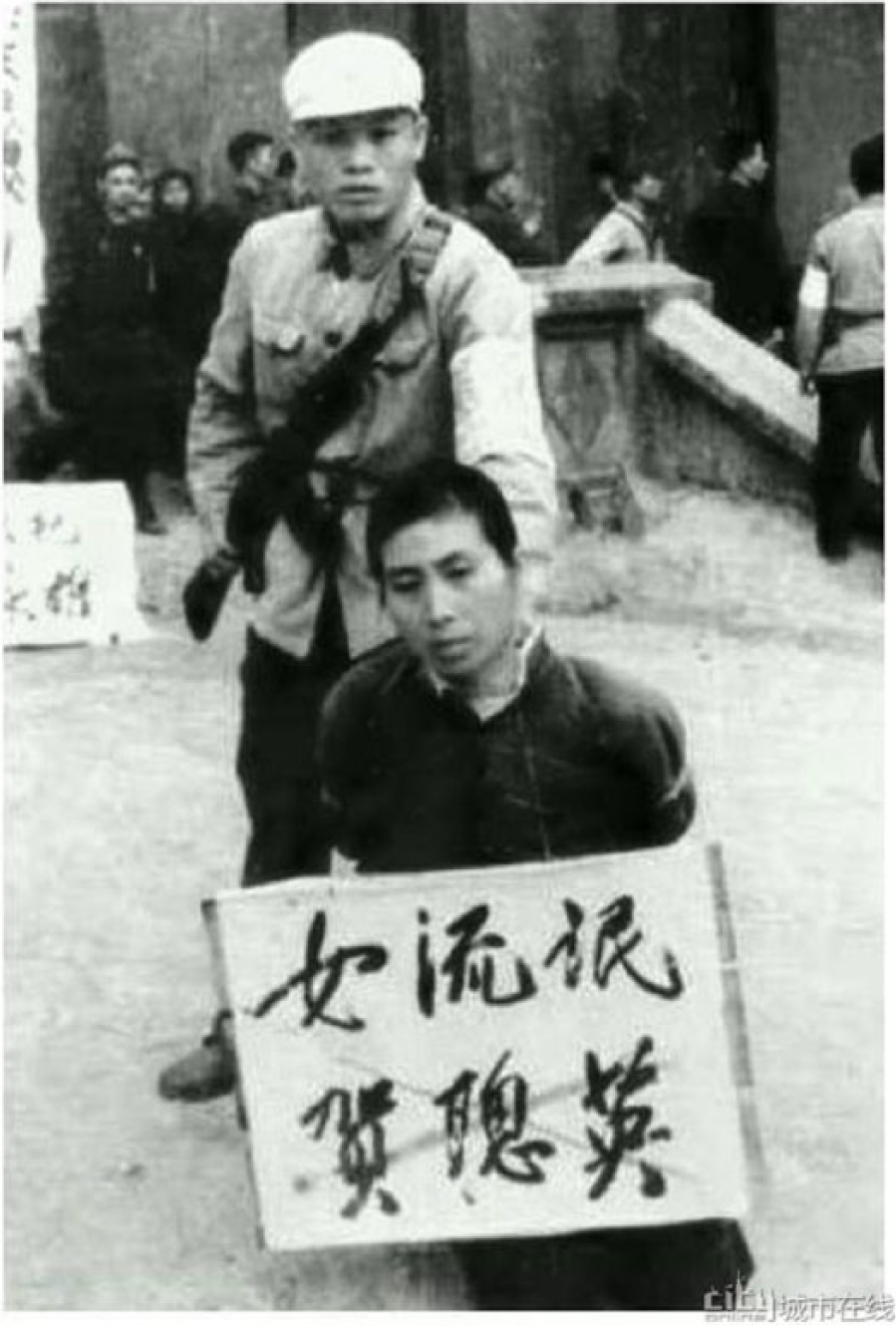
He Congying was executed under the charge of ‘female hooligan’ in the Cultural Revolution.
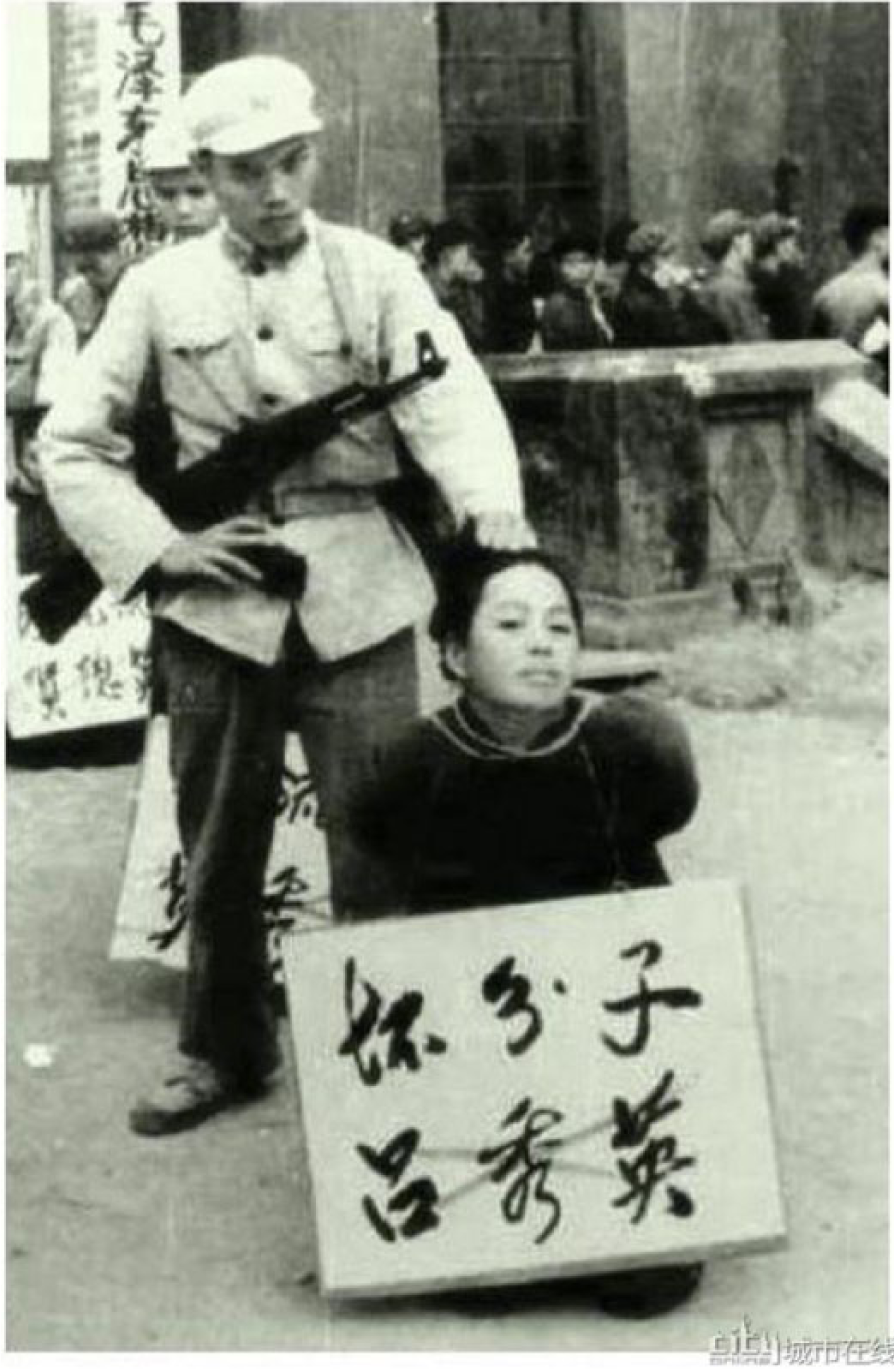
Lü Xiuying was executed under the charge of ‘bad element’ in the Cultural Revolution.
Indeed, representation of women’s physical attractiveness had always been regarded as ‘decadent, base and women-insulting’ (Chen, 1950; Wu, 1957). At first thought, this seems explicable at all considering the conservative red revolutionary culture, but such official attitudes, when repeatedly and forcefully uttered by the male-dominated authorities that claimed to emancipate and respect the ‘significant half’, apparently have accommodated more complicated feelings. In a literary criticism (Hao, 1950) on Fang Ji’s novella entitled Make Life More Beautiful, the author criticized the elevation of a girl’s beauty in people’s social and political life, for such a capitalist belief of ‘love supremacy’ would not only distort women’s social role and subjugate women to an incorrect attitude of and treatment by the exploiting class, but ‘the exaggeration of the girl’s role in the army has completely eradicated the political significance of those farmer PLA’. Such a threat was reiterated by another literary critique (Yuan, 1952) on the sensual depiction of a high-rank Party member attracted to a ‘bourgeoisie-like’ woman, in which the author explained that the Party revolutionary that its author tried to praise has non-proletariat thoughts and hence ‘readers will not believe it actually happens among revolutionaries in guerrilla wars’. It can thus be seen that, in the name of protecting women, women’s sexuality was actually viewed as a potential threat to revolutionary outcomes and subsequently to socialist undertakings. So, having escaped from being a sexual object subjugated to the exploiting classes, women were, at the same time, denied as a sexual subject. In light of this, ‘new women’ were also an embodiment of the Party’s misogyny in an unfamiliar guise of the red revolutionary culture. This misogyny provided a prerequisite for the official construction of ‘sexual Occidentalism’ where the Party’s denial of women’s sexual agency was justified through labeling agentive sexual expressions as capitalist.
Revolutionary comradely romance: rejecting bourgeois elements
the lustful sex life belongs to capitalism, and is a decadent phenomenon. The proletariat is a newly-emerging class, so they do not seek addiction or stimulation through anesthetics. Instead, they need less sex to seek stimulation, just like they should drink less alcohol. (Zeng, 1982, cited Lenin’s words to Gleichhe)
As the guiding thoughts of socialist China, Marxism and Leninism, in line with the political configuration then, categorized sexuality/romance into distinctively socialist and capitalist camps, which can be roughly summarized by ‘sexual capitalism’ and ‘asexual socialism’. The appropriation of sex in defining socialism, on the one hand, reflects a socialist endeavor to eradicate class hierarchy, as lust was believed to be the monster that subjugated women to an inferior and subordinate status; on the other hand, it aimed to motivate the public morale in participating socialist undertakings, as ‘revolution calls for concentrated and strengthened forces’ (Zeng, 1982). Such a Marxist view could not find a better alliance with the conservative ‘farmer-party’ culture, leading to another sort of sexual conservatism in socialist China where ‘representation of romances […] was widely linked with revolutionary comradely (tongzhi) friendship whilst showing a profound disapproval towards signs of the “capitalist lust”’ (Zhang, 2014b: 184).
After the founding of People’s Republic of China, as class confrontation shifted its form from warfare to class transformation and public revelation, during socialist construction, labor became an embodiment of socialist aspirations, employed not only to transform the exploiting classes into the proletariat but to retain an equalitarian society and to advance social development toward communism. Under these circumstances, ‘revolutionary romance’, as the only legal form, was closely attached to socialist construction and labor transformation where comrades, that is, people with shared communist beliefs, were encouraged to get together, since socialist aspirations could lay the most solid foundation of their union. As implied by the article ‘A view on labor and love’, what socialism values is the kind of ‘sincere and pure love established during labor’ (Sha, 1958). The ‘noble love’, according to an article entitled ‘Nobel love’ (Xie, 1953), was defined in opposition to its capitalist opponent:
In capitalist society, love is based on the condition of money and beauty whereas in a people’s democratic society, love is ‘a couple who lives together’ (Article VII, Marriage Law), for ‘mutual love and respect, mutual assistance, mutual support, harmonious union, labor and production, child-rearing, and joint efforts in the construction of family happiness and a new society’. (Article VIII, Marriage Law) In capitalist society, love is unstable: ‘love becomes hesitant when money or beauty runs out’, whereas in people’s democratic society, with the progress of socialist and personal undertakings, individual interests increasingly match collective interests, and romantic affection is increasingly in line with patriotism. This eventually presents a couple’s love that is noble, sincere and consolidated.
As comradely romance rejects capitalist materialism and lust, bourgeois elements were appropriated by the Party in a way to reinforce the collective values and to define the political regime of the party-state. The collective values proclaimed that, through pursuit of a spiritual unity, revolutionary achievements could be enhanced, and federal remnants and bourgeois elements could be expelled, which projected onto romance a peculiar political significance. Indeed in the Maoist era, as the Party constantly introspected its socialist route to make sure that ‘capitalist backwardness’ had been thoroughly eradicated and not revived to influence the country’s communist future, the government imposed sensitive regulation on people’s words and behaviors. People were encouraged to disclose words or behaviors not in line with socialist ideology. In this political milieu, couples were also urged to retain political sensitiveness through mutual monitoring and revelation. In the report to the first working committee on urban women (Zhang, 1955), while the Party warned that ‘capitalist ideology is contaminating our working people and revolutionary cadres’ with corrupt bourgeois lifestyles, particularly ‘decadent sex life and marriage’, women were called on to ‘hate, disclose and fight against the decadent and illegal conducts of their husband’. It concludes as thus,
The facts mentioned above should not be taken as trivial problems of personal life only, but major problems that are closely related to and will have a great impact on society and the collective. We must realize that these phenomena are a sign that capitalist ideologies and lifestyles have contaminated our revolutionary camp and hindered the increase of revolutionary forces.
In response, Party members were frequently accused of decadent sex lives by their wives (Wang, 1955; Xiao, 1956), and subjugated to strict Party regulations in the name of ‘work style problem’ (zuofeng wenti), which, in the Party’s view, would ‘hinder the increase of revolutionary forces’ and effect peaceful regression into capitalism. In this context, romance became a site where class struggles were enacted, capitalist ideologies were resisted and political allegiance was sustained for China’s socialist construction during the Maoist period.
Besides the strict regulation imposed on the Party members as mentioned above, it is also evident that, at the official level, the Chinese government constructed a counter discourse against the White. For instance, rape cases were reported by the People’s Daily, reminding the public of the country’s traumatic experiences during Europe’s invasion in the late 19th and early 20th century (Li, 1950). In other instances, the White men were referred to as ‘overly indulgent in lust’ (zongyu guodu; Xinhua News Agency, 1958), or with ‘abnormal sexual desire’ (biantai xingyu; Xinhua News Agency, 1958), which has been a well-received stereotype till this day. The significance of such stereotyping is at least three-fold: first, in constructing such a beast–human distinction, China negotiated its national identity that once fell victim to Western ‘barbarism’, and urged for a balanced sino-West power relation; second, the White, positioned in a strong contrast to loyal, self-disciplined and self-retrospective Chinese men, served as a subtle mean for the CCP to enact moral regulation and political allegiance among its people, especially among Party members; third, such an aggressive image of the White men embodies a sense of nationalism through which both Chinese women and men were alerted of the White threat.
Changes and continuity: ‘sexual Occidentalism’ in post-Mao China
Admittedly, ‘sexual Occidentalism’ manifested itself to be relatively static and singular in the Maoist era when China, under a secluded authoritarian dictatorship, employed a homogeneous discourse to maintain social and political stability. The opening-up era, as noticed by scholars, is one of Westernization, of China’s modernization through Western learning (Tu, 1991: 5–6; Wang, 1997: 59). Under that circumstance, on the one hand, the CCP, alerted by strong ideological, political, economical and cultural clashes, frequently reminded the public not to take in capitalist ideologies (Zhang, 2014a, 2014b). But on the other hand, there was a widespread feeling, especially among the elite classes, that the West was more superior to China (Chen, 1995). The ubiquitous feeling of Western superiority stimulated ‘Western fever’ and ‘Western worshiping’, which facilitated the formation of a counter discourse against the Chinese government. Entering the 1980s, comradely romance was contested, together with the asexual image of socialist female and ‘capitalist lust’; ‘official Occidentalism’ weakened under China’s opening-up. Particularly, a number of cultural products featuring bourgeois women, romances and lifestyles imported from Taiwan and Hong Kong gained considerable popularity in mainland China. ‘Sexual Occidentalism’ began to be characterized by counter discourses towards free expression and sex liberation.
‘Queer Occidentalism’: homo-capitalism versus hetero-socialism
Homosexuality: from capitalist vice, disease to drawback
While scholars uncovered a discrepancy between the thick and relatively tolerant same-sex tradition in dynastic China (Hinsch, 1990; Zhang, 2001) and the homo-suppressive culture in the 20th century (Leung, 2010; Li, 2006), they often attribute China’s transition into sexual conservatism to Westernization that brought in heteronormativity during the 19th and 20th century when China’s door was forcefully opened by the West through invasion. Indeed, as sexuality became a defining trait of personal identity in the Western world during the 18th and 19th centuries (Foucault, 1976; McGee and Warms, 2011: 53), same-sex practices were increasingly homosexualized in Maoist China under such institutionalized regulating forces that had never happened before, considering: first, homosexuality was subject to ‘the arbitrary imposition of administrative penalties and Party disciplinary sanctions’ (Li, 2006), and second, a subjectivity beyond the system of heterosexual structures began to seek articulation in social discourses but could not be articulated, ‘turn[ing] into a ghost living nowhere’ (Zhang, 2011). It seems undeniable that Westernization prepared China for a more homo-suppressive culture through its export of concepts like heteronormativity, sexualized identity and homosexuality per se, though it is not until the Maoist period that these imported concepts found best alliance with and expression in the red revolutionary culture and socialist ideologies.
As the CCP deployed class struggles to resist bourgeois elements during the Maoist period, homosexuality became the target of China’s abjection in constructing the socialist self (as hetero-socialism) and the capitalist Other (as homo-capitalism). Abjection, according to Julia Kristeva (1982), plays a significant role in the process of self-identification, through which a chaotic and fragmentary body turns into a perceivable self. In this context, the capitalist West became, for China, ‘what disturbs identity, system, order. What does not respect borders, positions, rules’ (Kristeva, 1982: 4). By abjection, China obtained the ability of primal distinctions, enhanced its socialist identity and consolidated its route toward communism. As Kristeva’s abjection theory applies to homosexuality in a similar light, abjection granted a strong cohesion to ‘hetero-socialist China’ and ‘homo-capitalist West’. Consequently, homosexuality was employed by the CCP to defend its superiority over capitalism as much as the capitalist West was appropriated to suppress homosexuality at home.
Previous studies (Li, 2006; Zhang, 2014a) have shown that the Maoist period was particularly resistant toward the Western sense of homosexuality, that is, homosexuality as an essentialized identity category: There was not only a forceful denial of the existence of tongxinglian – a newly coined phrase referring to homosexuality/homosexual – in China’s context (Zhang, 2014a), but same-sex behaviors were called ‘errors’ that ‘could be corrected via reform through education and/or labour’ (Li, 2006: 83). Besides the linguistic and ontological factors, this attitude was probably in collaboration with a set of measurements initiated by the Chinese government. After establishing People’s Republic of China, the government outlawed the prostitution system, penalized brothel owners, closed brothels and sent out medical corps for sexually transmitted disease (STD) prevention and treatment; in 1964, the government declared to the world that STDs had been basically eradicated in China (Li and Wang, 1990). Certainly, the family-centered heterosexual lifestyles, together with its newly established monogamy, could add to the moral, cultural and political supremacy of socialist China.
So since the ‘reform and opening-up’, the unexpected appearance of tongxinglian (homosexuality) in the Chinese media was recognized as exclusively pertaining to the capitalist West. From ‘death’ to ‘(re)birth’, the West, viewed as the origin place of homosexuality, was turned to for explication, upon which Chinese visitors and cultural observers comfortably unraveled this otherwise unintelligible phenomenon. From a socialist Oriental gaze, homosexuality was depicted as, more often than not, the ‘dark side of society’ (Wu, 1982b), a ‘distorted phenomenon’ (jixing guaizhuang; Wei, 1986), a ‘spiritual vacuum’ (Yuan, 1985) or as ‘objective values defeated by subjective feelings’ (Zhao, 1987); accordingly, the homo-tolerant culture in the West was seen as a ‘malignant tumor’ (Gu, 1988) that would bring danger to society. In an article (Yuan, 1985) published by the People’s Daily, the author commented on the US gay and lesbian rights movement as thus:
Compared with the concept of freedom that President Lincoln fought for black slaves in the last century, isn’t this irrationally off limits? […] Only with material civilization but lack of spiritual civilization, this is a fatal weakness of capitalism. The previously-mentioned adult films and the gay parade reflect their spiritual vacuum. Therefore, it proves that the Central Government is making the right move in constructing both material and spiritual civilizations during China’s modernization. (Yuan, 1985)
This discourse implies that capitalist individual freedoms, democracy, shallowness and materialism had to be ‘overcome’ (Buruma and Margalit, 2004: 3) in a socialist country like China, whose culture and leadership was superior and more politically correct than the West. The ‘decadent’ image of the capitalist West was proven through compelling evidence when reports on AIDS emerged and surged in the 1980s domestic media. When celebrating that ‘China does not have the AIDS disaster that the United States is currently facing’ (Ren, 1996b), the West was accused of its ‘free sex’ policy, particularly of its same-sex culture which was viewed as the source of AIDS at that time. An editorial wrote that, If AIDS is a culture, then we had better make it more specific – it is a sick culture and a cultural cancer. It is a sexually transmitted disease brought by the post-industrial society of the West, and a flower of evil from the devalued love. (Lin, 1988)
As the China myth was consolidated by AIDS discourses, nationalist sentiments rose, expressing a strong resistance to sexual freedom and individualism inherent within capitalist ideologies.
The collapse of socialist regimes starting from 1989 is certainly more than a great blow to the world’s socialist camp, but a virtual crisis that the authoritarian Chinese government had to face. Although the students’ movement in 1989 failed to bring substantial changes to China’s political configuration, it did urge the government to adopt a more open attitude toward critiques and, at the same time, to strengthen its ideological control. In an article (Li, 1989) published by the People’s Daily, entrepreneurs urged university students to be always suspicious of the ‘drawbacks (biduan) of modern capitalism’, which would prevent China from its communist future, into which homosexuality was incorporated. As a result, the contemporary Chinese culture, on which the red revolutionary culture had left impressive and indelible marks, still exerts a strong resisting force to the ‘cultural imperialist mentality’ (wenhua diguo zhuyi xintai). ‘Propaganda of homosexuality’ has always been the target of the ‘porn crackdown’ (saohuang) project, which has been prescribed into laws (Qu, 2013).
Debating same-sex rights: a changing Occidentalist perspective
As argued in ‘Representation of homoerotism by the People’s Daily Since 1949’ (Zhang, 2014a), the modern concept of human rights was imported from the West and hence connoted Western ideologies. During the Maoist period, collectivism was an important thread running throughout socialist thoughts, but since China’s opening-up, collectivism was challenged by the Western sense of human rights that would threaten China’s traditional and socialist values, leading to individualism and hence transgression of the state’s governance. Homosexuality, in this circumstance, was regarded as a product of such individualism and a transgression of collective values (Xu, 1988). For homosexuality was such a ‘capitalist vice’, same-sex rights should be denied for the greater interests of community, subject to self-negation and self-sacrifice.
Despite this, homosexuality had been closely tied to human rights, not only because of the debates over its inclusion or exclusion but also because they have a shared source of origin – the West. As China got increasingly nervous with AIDS in the 1980s, objection toward the Western sense of human rights was intensified as it would not only disrupt the social order but also indulge a deadly disease. Same-sex rights were thus under contempt, treated as part of the inferior Capitalist institution and ideologies. As the article ‘Limits’ wrote,
The so-called ‘homosexuality’, all of us know what a dishonor it is. The Chinese people even feel ashamed to speak of such an issue, but some of the Americans take it as part of their divine human rights (tianfu renquan) to the extent that no one can regulate it. […] In any case, as ‘homosexuality’ causes AIDS, even people who favor xianggong
2
have to be self-restrained in order to save their life. (Sai, 1986)
During the 1980s and the first half of the 1990s, reports on homosexuality were overwhelmed by AIDS in the West. In the meantime, China was frequently criticized by the West for its human rights situation. Under such tension, homosexuality was duly employed as a counter discourse by the Chinese government, by arguing that instead of being deprived of human rights, homosexuality actually constituted a threat to human rights. In the article ‘A comparison of human rights between China and the United States’, it is stated that ‘with AIDS spreading quickly as a result of homosexuality and an uncontrolled sex life, AIDS has become a serious social problem threatening the life of Americans’ (Ren, 1996a). This view was reiterated by a subsequent article (Zhang and Wu, 1998), which asserted that ‘freedom in homosexuality had caused and spread AIDS and other sexually transmitted diseases’, and ‘if the Americans popularize these freedoms to the world as part of the universal human rights, the world will fall into chaos and disorder’. This attitude did not diminish until AIDS patients were diagnosed in mainland China, upon which the officials realized the urgent need to contain AIDS rather than to aggravate the situation through continued condemnation and discrimination. Under this pressure, the Chinese government started to change its attitude, in the hope of containing the spread of AIDS (Wang, 2007) and of eradicating the moral discrimination toward AIDS patients (Li, 2009).
Despite this shift in attitude from exclusion to inclusion, human rights remained a tool for the CCP to construct capitalist inferiority, particularly to counter the Western charge on China’s human rights situation. In ‘A human rights record of the US in 2010’ released by the Information Office of the State Council, the government accused the United States for the ‘90% of the homosexual, bisexual, and transsexual students who suffered from harassment at school’ (Information Office of the State Council, 2011). More political than factual, this critique reflects how same-sex rights served as a tool to defend the Party’s socialist regime and to resist Western interference into China’s domestic affairs.
Treatment of transgenderism as an Occidentalist practice
While expounding the fall of xianggong, Helen Leung (2010: 47) observed that since the 20th century, such representation would be taken as freakish which echoed the weak image of the newly established China. Such a change in attitude seems to indicate that China had internalized Western stereotyping of its weak image; if this is true, from a shifted perspective, the fall of xianggong compellingly demonstrates that an unusual political significance had been projected onto the effeminate male in 20th century China, probably to deconstruct the colonial label of ‘sick man of East Asia’ (dongya bingfu).
In the Maoist period, this attitude was aggravated by the socialist political context. To retain advancement of socialism, the CCP demarcated cultural phenomena into distinctively capitalist and socialist camps, in which the effeminate male, representative of the federal and capitalist trash (zaopo), was abjected. As argued in my previous work (Zhang, 2014b), while FtM (female to male) cross-dressing represented by the People’s Daily was unanimously in praise of heroic behaviors of Chinese women, either to defeat enemies or to perform risky tasks, MtF (male to female) cross-dressing beyond theatrical performances was represented to a minimum and when it occurred as a shame. An article in the People’s Daily recorded that
The sinful anti-revolutionary Wan Guoxiong crept into Shanghai in 1950. In order to hide his identity, he has been wearing women’s clothes and has changed his name to Wang Xiujuan. He perms his hair, powders his face, puts on lipsticks, wears a gorgeous high-necked cheongsam, and carries a small delicate handbag. His breasts shake when he walks. What a splendid and coquettish woman! Nonetheless, no matter how scheming the anti-revolutionist is, no matter how much effort the anti-revolutionist make, he cannot hide from his neighbors who come into contact with him. Some are curious why this ‘woman’ has such long hairs on her legs, which are very conspicuous even under silk stockings. Some are curious why this ‘woman’ has an Adam’s apple. Some once discovered that this ‘woman’ was wearing a bra on a flat chest. The mask of this ‘woman’ is being removed little by little and the truth is gradually being revealed. (Xiao, 1957)
What is remarkable here is the article’s positioning of the cross-dresser as a bourgeois woman (xiaozi nüren), as such representation used to be officially banned for its ‘unhealthy spiritual connotation’ antithetical to the typical image of the proletariat working women in socialist China. Together with illegal stylistic choices such as ‘splendid and coquettish’, the article depicted an Other beyond socialist epistemology, which can only be made intelligible through unusual linguistic choices and from capitalist ideological perspectives. Besides, the People’s Daily frequently juxtaposed the two modifiers – ‘cross-dressing’ and ‘anti-revolutionary’ (Huang, 1957; Wei, 1958; Xiao, 1957). Repeated paralleling between cross-dressing and anti-revolutionary acts was probably based on a shared feature, that is, a violent subversion of what the socialist ideology would then define as ‘the natural’, with one drawn from essentialist biological theory and the other from Marxist social development theory.
As can be seen, queer sexualities had always been stereotyped, politicized and positioned as incompatible to socialist undertakings during the Maoist era, as a result of China’s antagonism with anti-revolutionary forces, as well as the reinterpretation/mis-interpretation of socialist ideologies through the conservative ‘farmer-party’ culture. The minimum representation of queer sexualities in this era reflected the Party’s silencing endeavor, which hampered the revelation of queer Occidentalist discourses and delayed its manifestation until the early post-Mao era when China’s opening-up threatened the socialist order and collective values. Through heated debates over Westernization, queer sexualities became a locus for the expression of divergent political stances between China’s Left and liberals.
Transsexuality and transgression of national and institutional boundary
In the 1980s, China started to pursue modernization, which ‘simply means to be Westernized’ (Wang, 1997: 59). Science, like a double-edged sword, while embraced for the convenience it brought to people’s daily life, was meanwhile a cause for concern because of its destructive force on traditional values. So when sex reassignment surgery was introduced into China, it posed a threat to traditional Chinese values that attached special importance to family line and filial piety. In 1982, the People’s Daily published an article reflecting the medical dilemma on transsexuality:
During a period of time, I received a number of letters asking me to change their sex. One of the reasons is that a newspaper reported my treatment of a patient with a defective sexual organ (known as hermaphrodite) but the newspaper did not make it clear. For those with defects, they can indeed be cured according to their own actual gender. However, it does not mean that we can change the sex of normal individuals as they wish by any means. Coincidently, approximately at the same time, a translated foreign article entitled ‘Gender Reassignment School in Britain’ was published, with its content on treatment of hermaphrodites. This wrong title deepened some readers’ misunderstanding. It took us unimaginable efforts to explain why it was inappropriate for them to undergo medical treatment as reported. Despite our efforts, we still could not be understood by our patients and their families. They even considered us conservative. (Wu, 1982a)
‘Science was to blame. And so were capitalism, and the absorption […] of modern technology, and notions of individual freedoms and democracy’ (Buruma and Margalit, 2004: 3). Certainly, Buruma and Margalit’s argument finds resonance in this particular Chinese context as sex reassignment surgery was an invention of Western sciences. What follows naturally is to view transsexuality also as of Western origin. As a result, to abject transsexuality is to protect China from contaminating capitalist ideologies now represented by modern sciences. Transsexuality is thus as much transnational as transgenderal, and the boundary of gender cannot be crossed, or it would be symbolic of the transgression of the national boundary, of China’s regression from socialism into a ‘queer capitalism’. By denying that gender can be reassigned through surgery, the author and surgeon was not only resisting modern sciences that threatened traditional Chinese values and resisting the contamination of capitalist ideologies but re-enacting the essentialization of capitalism and socialism, as much as that of gender and sex.
Similar to homosexuality, transsexuality was also viewed as a social disease exclusively pertaining to the Western culture. An article (Fu, 1982) published by the People’s Daily mentioned renyao (transgender performer). It briefly criticized Taiwan for importing such a ‘foreign and low’ culture. This critique echoes a similar but more significant work published at the request of the Ministry of Public Security by the People’s Daily Press. In the book Xifang shehui bing (Social diseases of the West), transgender, under the umbrella term tongxinglian (homosexual), was labeled as a social disease of the Western capitalist society (Wang, 1992). If Taiwan, as a transgressive capitalist regime, decayed under the influence of Western culture and capitalist ideologies, the socialist China, in contrast, successfully safeguarded its national and institutional ‘border’ and prevented the Western ‘invasion’. Therefore, in this book, as well as in the article, transgenderism, like homosexuality, became a target of abjection serving the Chinese state’s ends to defend its socialist system and to maintain its moral and political supremacy.
‘Queer Occidentalism’ in question and in transition
Like ‘sexual Occidentalism’ that purported to either support Marxism/Leninism or to refute Khrushchev’s revisionism, ‘Queer Occidentalism’ in China was also influenced by the Soviet Union practices (particularly Stalin’s re-criminalization of homosexuality since 1933), subject to the hegemonic Communist international discourses. However, CCP’s politicization of same-sex/transgender practices as anti-revolutionary also underscores the role of Maoist ideologies in the official construction of ‘queer Occidentalism’ where the conservative red revolutionary culture played a significant role (Zhang, 2014b). Instead of defining and prescribing legitimate femininity, masculinity and romance as ‘sexual Occidentalism’ did, ‘queer Occidentalism’ was constructed through denying the very existence of queer subjects in China, which deprived the discourse of ontological grounds. If the Chinese government once successfully maintained the discourse by silencing the queer, then the rise of the queer at home, particularly the first sex reassignment surgery in the 1980s and later the government’s acknowledgment of homosexuality, exhibited failures of such official discourses.
Especially among the queer communities, instead of seeing the West through a derogatory lens, they found the West not only a queer paradise for its freedom in self-expression and liberated sex (Bao, 2013) but a powerful weapon to counter domestic suppression. Under this circumstance, another discourse has been under construction. Since the new millennium, ‘queer Occidentalism’ has become predominantly a counter discourse in mainland China: queer researchers found the West a place of scholarly openness to ‘deviate from the official lines and mainstream scholarship at home’ (Lavin, 2013); queer narratives pursuing overseas publications expressed extensive Occidentalist feelings, occasionally in a ‘telling-bitterness’ manner; queer novel writers, by taking advantage of the prevalent Occidentalist feelings, incorporated Western settings and romanticized the West to get their works better promoted in domestic market; queer activists, when claiming for lesbian, gay, bisexual and transgender (LGBT) rights, widely cited the West for justification, not only theoretically grounding China’s LGBT movements in Western thoughts but also practically pushing China toward Western footsteps.
Conclusion
Overall, in the context of socialist China, sexuality has a peculiar political significance in resisting Western cultural imperialism, in de-demonizing the socialist institution, in re-defining political regime and cultural values, in cultivating a sense of nationalism, and in consolidating the rule of the party-state. This official discourse, however, hardly serves as Chinese imperialism, but more to resist Western cultural imperialism and to consolidate the socialist regime. While it fulfilled the role in, borrowing Carrier’s (1992) words on Orientalism, ‘self-definition by opposition with the alien’ (p.196), the West was meanwhile appropriated for a wide array of domestic ends. Although the West is identified as a key referent to construct the discourse of ‘official Occidentalism’, the communist revolutionary hegemony is not only achieved by the repudiation of the West (i.e. ‘imperialism’) but of China’s pre-communist past, or ‘feudalism’ and ‘bureaucratic capitalism’ in Mao’s words. Sex and sexuality, including polygamy and prostitution, were considered both as ‘Western imports’ and ‘feudal remnants’ by the CCP, paradoxical as it may seem. ‘Official Occidentalism’ must, in other words, work together with other official discourses, including anti-feudalism and anti-bureaucratic capitalism (i.e. anti-Nationalist Party) to be fully effective.
Finally, it is critical to be aware that ‘Occidentalism […] is an all the more indeterminate and problematic “quasi-theoretical” concept’ (Wang, 1997: 62), not only because it is illusive but because this fabricated illusion was premised precisely on the problematic East–West opposition (Chen, 1995: 13; Wang, 1997). Such official discourse tends to be increasingly problematic and paradoxical since China’s ‘reform and opening-up’ when ‘the obsession with “western leaning” and the “high culture fever” in the 1980s intellectual sphere contributed to legitimizing the West as the prototype of modernity and labeling China as “belated modernity”’ (Bao, 2013: 130), which created an intricate power dialectics between Occidentalism and Orientalism. Despite widespread warnings reminding people not to take in the ‘capitalist decayed ideologies’, ‘the ambivalent obsession with the West seemed to characterize the structures of feeling in China in the 1980s and 1990s’ (Bao, 2013: 130). The Occident was re-conceptualized through a number of cultural products in an increasingly globalized world.
As Chen (1995) discussed,
as a result of constantly revising and manipulating imperialistically imposed Western theories and practices, the Chinese Orient has produced a new discourse, marked by a particular combination of the Western construction of China with the Chinese construction of the West, with both of these components interacting and interpenetrating each other. (p.5)
Indeed, benefiting from the Orientalist view that Western sexuality was the least repressed and the most liberated (Bao, 2013: 143), both sexual and queer Occidentalisms have transited from official suppressive discourses in the Maoist era to liberating discourses, playing a significant role in China’s sex liberation movements. Particularly, activist Li Yinhe’s employment of Western thoughts and incidents in advancing LGBT rights toward Western footsteps reflects the liberating role of Occidentalism in post-socialist China.
Footnotes
Acknowledgements
Portions of the evidence presented here also appear in published articles ‘Transgender representation by the People’s Daily since 1949’ (Zhang, 2014b) and ‘Representation of homoerotism by the People’s Daily since 1949’ (Zhang, 2014a) in Sexuality & Culture.
Funding
This research received no specific grant from any funding agency in the public, commercial or not-for-profit sectors.