



Abstract
Susan Luckman, citing Katherine Gibson’s call for a return to ‘the grass-roots work of engaging the community and being open to developing new economies’, advocates a vision of creative industries that builds the affordances of ‘edge-places of creativity’. Luckman’s focus is non-urban localities. Her proposal, nevertheless, could equally apply to the amateur craft groups, community organisations and independent businesspeople that the Arts and Humanities Research Council–funded projects Co-Producing CARE: Community Asset-based Research and Enterprise, and Maker-Centric: Building Place-based, Co-making Communities worked with in deprived inner-city areas in the British Midlands. Both projects were undertaken with Craftspace and other stakeholder organisations, worked collaboratively with community groups, employed co-production processes and combined hand-making with digital fabrication. The aim of each project was to prototype a method with communities that builds agencies (cultural, social, economic, skills-based) through making and could be applied by other groups. While the CARE method was concerned with the affordances of collaborative making, Maker-Centric looked at these through a heritage and placed-based lens. This article examines the potential for local, collaborative, purposeful, social making as an ‘edge-place’ activity for creative enterprise that is inclusive and supportive.
Introduction
Craft work is being championed by individuals, communities and governments as the answer to complex and profound issues of economic and social inclusion . . . this has seen the rise of various craft-based social enterprises, including many which enable displaced or otherwise marginalised peoples to use traditional skills in new contexts as both a source of income as well as identity and belonging. (Luckman and Thomas, 2018: 2) Lockdown saw a surge in purchase of craft equipment and materials. People turned to age-old craft skills and making to get by. In this rupture when supply chains and infrastructure can break down, craft bubbles up in the gaps because it’s productive at human scale. People look anew at what’s around them and see potential in available materials . . . craft has been a binding activity at this time. (Figueiredo, 2021)
This essay opens with two quotes from key actors in the field that contextualise the approach taken here to craft affordances and the creative economy. In their book Craft Economies, Luckman and Thomas (2018: 4) conceptualise craft holistically, describing it not only as a set of skills, a creative practice, and a means of making a living, but also as ‘a particular way of being in the world’. Directing us to their wider social and cultural value, Luckman and Thomas foreground how crafts enable alternatives to the mainstream economy, at least in the Global North. Facing a future when our jobs will be done by artificial intelligence (AI), they foresee a revaluing of such human skills and qualities as learning by doing, collaborative problem-solving and social skills. Craft, particularly social making, has something unique and distinctive to contribute here. In her Peter Dormer lecture (Figueiredo, 2021) in the midst of the Covid-19 pandemic, Deirdre Figueiredo, Director of Craftspace, a crafts organisation in Birmingham, UK, similarly reflects on the value of craft at a time of crisis; how, that is, it ‘bubbles up’ to swiftly mobilise social capital, build resilience, connect communities and create a shared reservoir of skills and emotional intelligence. Making helps us process meaning out of trauma and loss, aid healing and recovery, and reclaim identity and a sense of belonging, themes explored in the Craftspace touring exhibition We are Commoners (Craftspace, 2020b). At a time of pandemic and environmental catastrophe, when the structures of capitalism are under severe strain, alternative, countercultural values, collective ways of living, communal ownership of resources and new economic theories move into the mainstream (Albert, 2003; Castells, 2012). Figueiredo cites The Care Collective’s (2020) manifesto, which proposes that society be restructured according to a politics of interdependence that makes care the organising principle in every dimension of our lives, and at every scale. Signalling a shift away from national government and organisational top-down strategies within the cultural industries (Florida, 2003) this marks a move towards the bottom-up, co-produced, commons ethos that underpins the creative ecology of the Maker Movement, community embedded craft clusters, and initiatives by local networks and groups (Bennett, 2020; Ring, 2020).
The two projects examined here fit into the latter category. The Arts and Humanities Research Council (AHRC)-funded projects Co-Producing CARE: Community Asset-based Research and Enterprise, and Maker-Centric: Building Place-based, Co-making Communities considered the power of collective making to promote cooperation, build agency and potentially re-imagine cultural work and creative identities. A Follow-on-Funding for Impact and Engagement project, Maker-Centric was designed to extend the learning from CARE with new stakeholders and communities. Both projects employed practice-based, co-produced research methods informed by notions of social making and quiet activism (Hackney, 2013). This requires increased awareness of the social and political agencies embedded in collective making and everyday creativity, and their ability to engender change by, for instance, promoting pro-environmental activities associated with slow fashion through home-sewing, repurposing and repair (Hackney et al., 2021). Recognising the messy processes of interaction that collective creative making involves, we began to see the craft group as a metaphor and model for wider society, and a place that, with the correct protocols in place, can become a powerful space for mutual cooperation, dialogue and learning (Hackney et al., 2016).
Craftspace, the lead partner organisation for CARE and Maker-Centric, used their valuable network to bring in key stakeholders Bealtaine Festival, Dublin and Creative Black Country (CBC), British West Midlands as well as community groups. Having a partner organisation of this calibre on board with deep roots in the locality was an enormous asset in generating impact and dissemination, and essential in building trust with communities. This was particularly significant when reaching out to groups that are often under-represented in the UK professional crafts world. The diversity of participating groups, which included the West Midlands Caribbean Parent and Friends Association, a Somali women’s group and an Asian women’s textile group in Birmingham, and a South Asian men’s health group run by Arun Bector in Wolverhampton, resulted from their close ties with Craftspace, CBC and other collaborating agencies. Project outputs include films, photographs, artefacts, self-reflective texts and blogs, which are available on project websites (CARE, 2013–2014a; CARE 2016; Maker-Centric, 2016).
Craft and the creative industries: a co-produced community approach
Susan Luckman (2012: 9–10), citing Katherine Gibson’s call for a return to ‘the grass-roots work of engaging the community and being open to developing new economies’, proposed a revaluing of cultural workers in rural areas, ‘vernacular creativity’ and the affordances of place or, what she terms, ‘edge-places of creativity’. Luckman’s thesis applies equally well to the work of the amateur craft groups, community organisations and independent businesspeople that CARE and Maker-Centric worked with in deprived inner-city areas, overlooked sites that are also rich in cultural heritage and contemporary creativity but where connections between people, place and practice might benefit from further investigation. This section outlines thinking in three areas that underpin the creative economies of making that emerged from CARE and Maker-Centric: (1) the value of amateur practice, (2) race and diversity and (3) community and living heritage.
A ‘prominent feature of late-modern life’, the revival of craft production among amateurs, artisans, small firms and enterprises foregrounds the ‘enigmas of experiential variation, personal subjectivity and human agency in everyday work contexts’, something that has until recently been largely ignored in academic debate on cultural work (Banks, 2007: 123, 28). CARE and Maker-Centric developed from an interest in the wider potential of amateur making to build individual and community agencies, from modes of quiet (everyday) activism (Hackney, 2013) to volunteering, community projects, working in makerspaces, participating in higher education and converting a hobby into a business. The project journey was not without its challenges, but one important finding was how a shared process of purposeful making could provide a safe space to encounter, share and resolve problems and differences, and build community (Hackney et al., 2016). Participants have continued to work with stakeholders and researchers on further projects, travelling to London for exhibitions and events (Craftspace, Maker-Centric, 2016), passing on their experience of collaborative making as Maker-Centric ambassadors, or contributing to the health activism project Craftivist Garden #wellmaking (Craftivist Collective, 2013). Others went on to Higher Education joining BA Fashion at the University of Wolverhampton, for instance. They turned their pastimes into projects but, as Mary Kay Culpepper and David Gauntlett (2020) acknowledge, turning a ‘project into a business’ comes with distinct challenges. Drawing on affordance theory and Anthony Giddens’ theory of structuration – the idea that norms gradually change over time through ‘doing things’ – they examine the role that ‘creative affordances’ (self-representation, social, techno-material, time, space, money) play in the lives of a small sample of middle-class businesswomen. They conclude that success depends on ‘a particular alignment of identity, self-efficacy, and affordances – a mix which came in a few different flavours, but was not especially common or easy to arrive at’ (Culpepper and Gauntlett, 2020: 156). While it is not clear that any of our participants launched businesses post-project, there is plenty of evidence that involvement brought affordances in the form of increased self-identity as creatives, the social (and health) benefits that come with belonging to a community/group, space (including for exhibitions) and even techno-material affordance. Rose, who weaves her own textiles, used the Fab Lab to fabricate a new component when her loom broke, enabling her to save money and complete an important commission on time.
Acts of everyday racism are evident across the creative industries, where those in positions of authority tend to be white, male and middle class (Saha, 2018). The diverse ethnicities of project participants, in contrast, reflected local communities in the British West Midlands. Most participants, irrespective of ethnicity, additionally, self-described as working class. Karen Patel’s important research on diversity and expertise development in the craft economy, and racism in the crafts sector more specifically, records the challenges, from blatant racism to microaggressions that people of colour experience in the crafts sector (Patel, 2020a, 2020b, this issue). Her work with women of colour who run their own businesses echoes Culpepper and Gauntlett’s findings but inflected through the experience of being black in a predominantly white sector. These include the importance of visibility, role models, mentors and a like-minded community to help withstand the everyday assault of heritage-based assumptions and stereotypes. Patel employs maker-stories as an effective affordance tool. A podcast by Jasmine Carey, a fashion designer, pattern cutter and educator who runs a craft business making leather bags, is particularly powerful when she talks about the ‘casual’ racism she experienced from a colleague in education, the horror and hurt still palpable in her voice (Patel, 2019, 2021). Carey’s experience confirms the failings of institutional diversity policies (Ahmed, 2012). She calls for the urgent need for diversity on recruitment and award panels, something that is highlighted in ‘Creatively Minded and Ethnically Diverse’ a recent The Baring Foundation Report (2021). Might it be that staying local, but thinking globally – cosmopolitan localism (Manzini and M’Rithaa, 2016) – and working on the ‘edge-places’, intersections and interfaces between, for instance, the professional craft world, university, third sector, cultural economy and business could provide a space of greater inclusion, agency and autonomy?
Much of the value of craft to recent creative economy thinking arises from its inherent connections with heritage, local community and place-making (Bennett, 2020). The concept of living heritage – heritage driven by activities rather than simply the possession of assets – underpins CARE and Maker-Centric whose methodology is centred on participant-led imaginative responses to, and critical engagement with, the heritage, places and spaces where participants live. Writing about heritage and community engagement, Emma Waterton and Steve Watson call for a revisionist account that questions who a particular narrative belongs to (Waterton and Watson, 2011). They argue that in the United Kingdom the past has been ‘sealed off’ from the present, ‘[p]urged of political tensions’, and represented by collections of professionally interpreted artefacts and buildings (Waterton, 2005: 319). This has never been more relevant than now as organisations such as the National Trust scramble to respond to the brutal heritage of slavery and colonisation that many of their properties were built on (Young, 2020). Paradoxically, although we have the label ‘public heritage’, there is ‘no distinct role for the “public” within the management [or mediation] process’ of heritage, so communities, aside perhaps from white middle-class groups, are marginalised (Waterton, 2005: 319). More diversity on the boards of heritage organisations is needed alongside a rethink about how we engage with it. While heritage objects are ciphers for dominant cultural constructs and discourses expressing identity and power (Smith, 2006), community engagement as a living feature of contemporary heritage opens up new spaces for practice and discourse, fostering identity, well-being and revitalising civic agency (Webster, 2020).
Care craft: co-production, collaboration and dissent
Making, like community, is inherently untidy and can often be challenging. Two key theoretical approaches that address the complexities of community cooperation and creativity informed our methodology. Drawing on complexity theory, Alison Gilchrist, an expert in community development and advisor to the CARE project, argues for a model of community as an integrated and evolving system of networks comprising diverse and dynamic connections (Gilchrist, 2000, 2009). She extrapolates an ‘edge of chaos’ model where communities occupy an intermediate zone between rigidity and randomness in which forms of ‘untidy creativity’ operate. Gilchrist’s insights helped us think about how processes of making might operate in relation to the messy process of interaction, wider infrastructures, networks, processes of knowledge construction and identity formation within groups. The sociologist Richard Sennett’s (2012) work on creativity and cooperation, meanwhile, argues that engaging in creative processes collectively can help us bridge differences and respond to others on their own terms. Involving such skills as careful listening and tactful behaviour, being creative together enables groups to find points of agreement, manage disagreement, avoid frustration and achieve interactions that are ‘knitted together’ through exchanges of difference (dialectic cooperation) or the location of common ground (dialogic cooperation) or, most often, a combination of the two. Sennett’s thinking about dialectic and dialogic cooperation provides a framework for interrogating making process and informed CARE’s central aim: to collectively explore with participants what happens when groups make together and whether messy ‘edge of chaos’ crafting – rigid and random, dialectic and dialogic – might promote cooperation and agency.
CARE’s partner organisations Craftspace, Bealtaine Festival and Voluntary Arts England played a central part in shaping project aims and research questions. Deirdre Figueiredo ensured that CARE built on Craftspace’s remit to support sustainable community engagement models for crafts enterprise rooted in social purpose, as well as the organisation’s interest in heritage as a site and process for community innovation (Craftspace, 2020a). Bealtaine Festival brought expertise on the role of creativity for better ageing, while Voluntary Arts England focused on the health benefits of intergenerational amateur making (Bealtaine Festival, 2020; Voluntary Arts England, 2021). All were concerned about the impact of an ageing society where individuals need to supplement their income and manage their health over a longer period of time in a context of cut-backs in the health service and government funding. The impacts and benefits of amateur crafts in later life is a growing area of research, particularly with regard to well-being (e.g. Adams-Price and Morse, 2018; Kenning, 2015). The project team, therefore, decided to recruit people aged 50+ in Birmingham and Dublin to explore craft enterprise as a route to supplementing income while promoting the health and well-being benefits associated with a hobby/leisure activity. Working collaboratively with heritage sites enabled us to examine how combining crafts activities with heritage in two very different locations might serve to bridge and build economic, human and cultural capital across, and through, different communities of interest and place. Project activities focused on the themes of purposeful working and gainful employment in later life outlined in NESTA’s Five Hours a Day Report (Nesta, 2020) and involved participants in running workshops, leading heritage tours and talks, curating exhibitions and installations, as well as designing, making and selling craft objects.
Two groups of participants were recruited, one in Birmingham working with Soho House Museum (Figure 1) and one in Dublin, located in Dublin Castle, and a schedule of creative workshops, heritage visits and skype dialogues was developed. Participants co-devised creative ways to promote collaboration and reflection and track their learning journeys. Two strategies emerged. First, each participant wrote responses to the questions: ‘What have I learned?’ and ‘What have I shared?’ at the end of every workshop, some were filmed creating a living archive for the website (CARE, 2013–2014c). Second, echoing a history of domestic making, participants recorded their thoughts and feelings in words and images (and occasionally attached objects) on a tablecloth which was exchanged between the community groups. Fred, a Birmingham participant, is of mixed heritage – his parents are Irish and Jamaican – a connection that was celebrated in a picture of a ‘Jamirish’ harp (Figure 2).

Participant drawing of Soho House Museum, Birmingham on the Community Sharing Tablecloth, 2014.
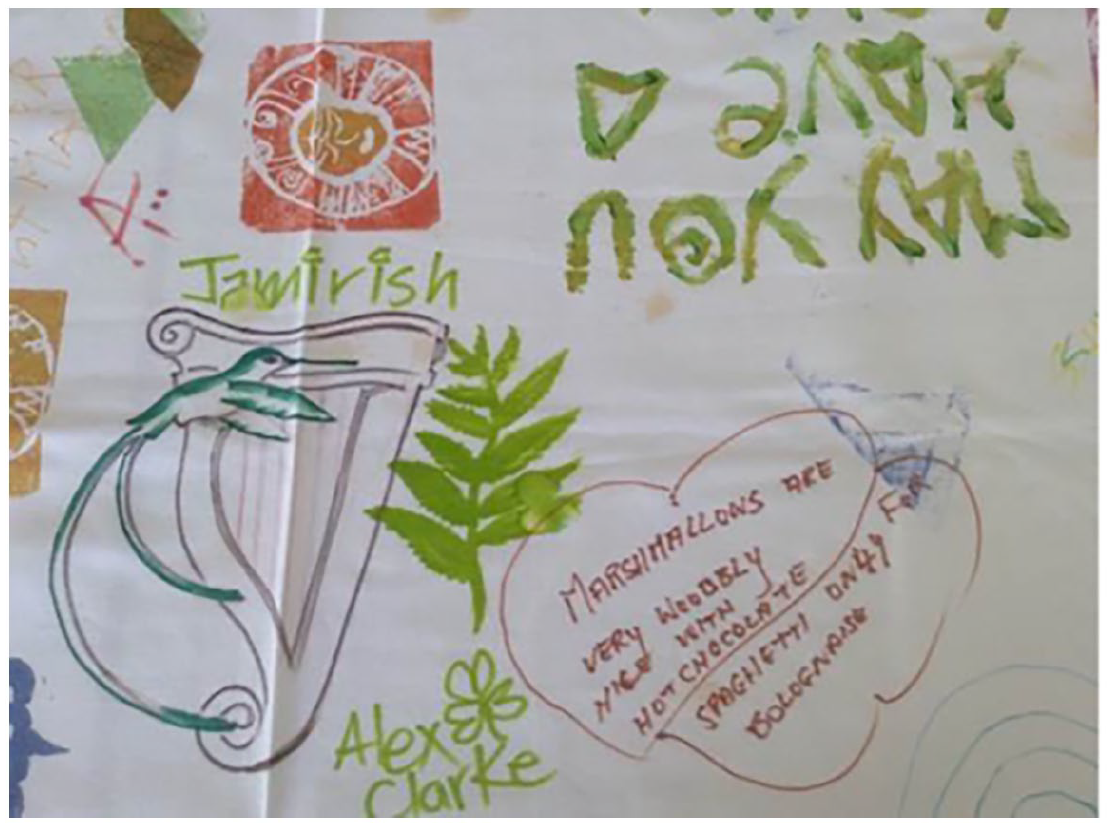
Participant drawing of a Jamirish (Jamaican and Irish) harp on the Community Sharing Tablecloth, 2014.
Making together: Dublin
The Dublin group worked with textile artist Liz Nilsson and project manager at Dublin Castle Lian Bell. Bell’s aim was to understand how creative making might help locals create a relationship with the castle. Nilsson devised a workshop framework for the group to (1) draw inspiration from the castle, its contents and archives; (2) explore the benefits and challenges of working collectively, including collaborative exercises and creating a skills bank. Inspired by carpets, which were designed by architect Raymond McGrath to echo the building’s decorative scheme, the group decided to make two printed banners echoing their intricate patterns and colours (Figure 3). A response to McGrath’s response seemed a suitable way of reflecting on heritage as something that is fluid and continually being remade. The process of collective design development was challenging, involving different personalities, competencies, clashes of ideas and opinions. The making process, however, helped resolve tensions as group members learnt to listen to and support one another and, as Sennett (2012) suggested, began to respect differences of opinion while finding common ground. Shevaun, for instance, noted that ‘[e]ach person has experienced the design process from struggling with it, and from having to compromise with others. We have made design decisions, we have learned about colour, repetition, contrasts, balance, and harmony and especially about negotiating agreement’. Caitlin, who admitted that she struggles with letting others take the lead, decided to help a member of the group who was nervous and worried that he would make a mistake; ‘And then I placed my stamp in the wrong place!’ she recalled, ‘In a funny way it relaxed the whole group and we had got so much more enjoyment from the printing!’
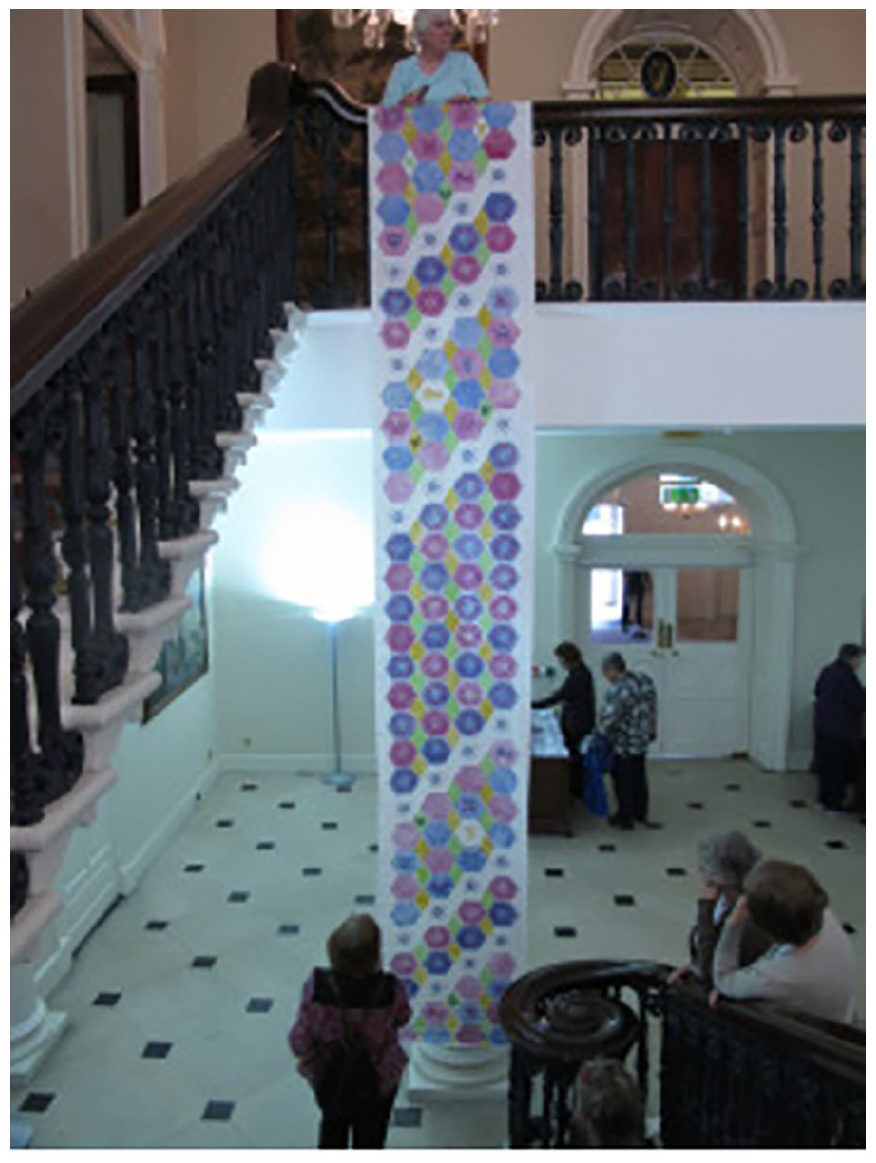
Participants collaborating to hang their banner in Dublin Castle, 2014.
Liz observed that ‘as in all collaborations there are moments of both frustration and euphoria’, but gradually the printing process got quicker as participants got into a ‘printing synchronicity’. ‘[T]he interaction and discussion between group members refined and improved the resulting artwork’, she reflected, noting the speed at which the banners were created – something that could not have been achieved if people had worked alone. Some participants preferred to observe rather than print, but when the work was complete ‘they took as much ownership over the finished pieces . . . It was exhilarating to see them [the banners] being rolled down from the bannister to the floor’. One important learning point was to establish boundaries and a structure to work in, which everyone agreed on and bought into. Liz organised the group into teams with different responsibilities and helped them limit their colour palette and the range of shapes they used. It allowed individuals the freedom to collectively devise their approach, experiment, and make ‘mistakes’, confident in the knowledge that they would produce a successfully unified design. This notion of creative freedom within safe limitations was an important lesson learned about group creative making and collaboration and emerged in workshop activities with other groups (Figueiredo et al., 2018).
Making together: Birmingham
Soho House, the home of the manufacturer and businessman Matthew Boulton who made a fortune from decorative silver plate and ormolu, was the meeting place of the Lunar Society and a key site for the West Midlands Enlightenment in the 18th century. It was opened as a museum in 1995 with a core audience of traditional museum goers. Being situated in the culturally diverse area of Handsworth on the outskirts of Birmingham city centre, Soho House, however, is both an ‘edge-place’, and a heartland for diverse communities. Staff appreciate the need to engage with local residents and use the house and its collections in innovative ways to develop an increased sense of affiliation and ownership. In 2012, for instance, the museum collaborated with Craftspace, Culture Commissioning and Staffordshire County Council to support an artist in residence to work with a South Asian women’s textile group, to re-engage with the history and design of the house. This project acted as a springboard for CARE and Rachel West, the museum’s heritage officer, played an active role, introducing participants to the house and its collections (Figure 4).
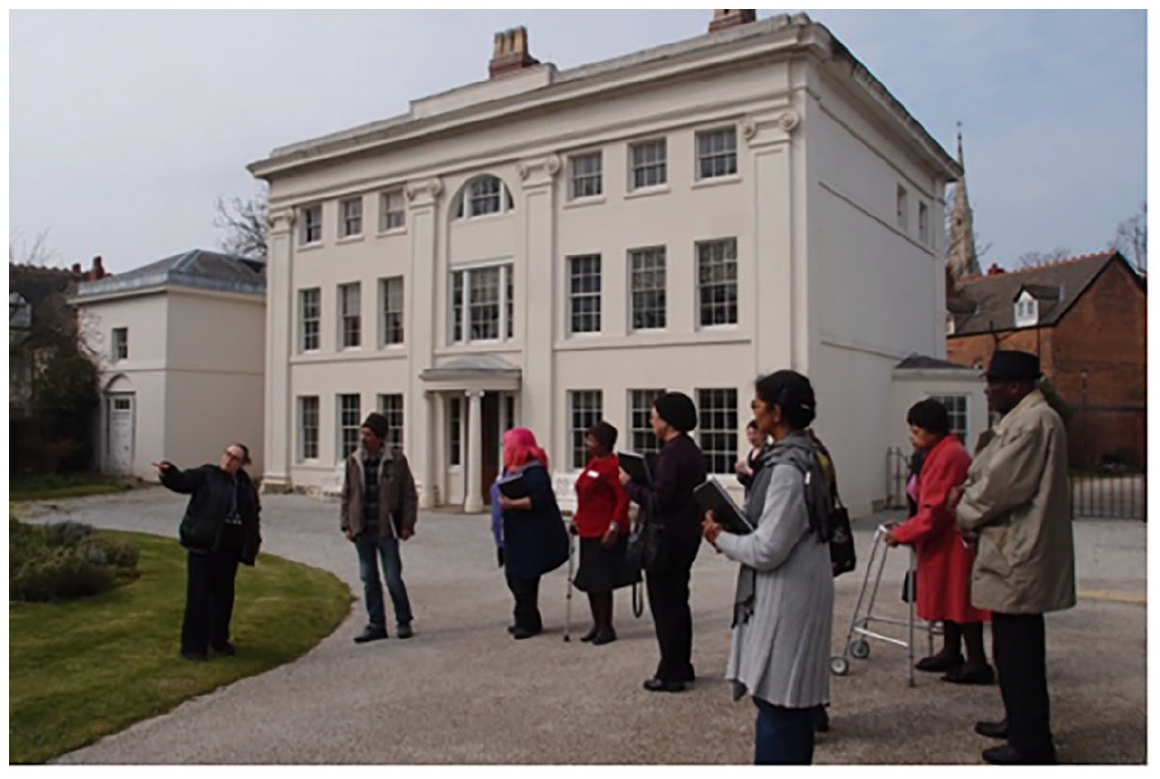
Rachel West shows the Birmingham group around Soho House Museum and gardens, 2013.
In the nearby Handsworth Centre, designer Natalie Cole worked with a West Indian craft group run by Hyacinth and including new recruits Carolyn, Fred and Rose who had responded to the CARE participant call-out. The latter all volunteered for workshops at the Makernow Fab Lab in Falmouth, Cornwall – CARE’s main location – to prototype their designs using milling and laser-cutting technology. An initial group visit to Soho House produced ideas for decorative motifs that responded to the building, its interiors and gardens. Rose was inspired by an intricate geometric floor design, while Carolyn explored decorative finials in the furniture and an ornate mantelpiece, and others focused on wallpaper and fabric. Fred turned to the garden rather than the house, going direct to nature for his design concept. Participants from Birmingham and Dublin liaised remotely with practice-based researchers at Makernow who helped them develop their designs in various ways, including as fabric printing blocks.
Birmingham participants, like their Dublin colleagues, became attuned to each other’s needs, competencies and vulnerabilities. Co-creation involved personal support and skill sharing to aid design development. The availability of different craft materials together with the crafts and design skills within the group led to an instinctive process of communication and exchange that helped people not only progress their ideas, but also build their competencies. As in Dublin, having permission to fail was part of the creative process and helped to build confidence, and a supportive group dynamic was essential in enabling this. Carolyn commented on how different this was to her experience of art at school and university, which she recalled as more competitive, prescriptive and individualistic. May, who was very shy and found it difficult to make eye contact, grew in confidence through continual positive affirmation and the generosity of individuals who showed her different embroidery stitches. Her whole demeanour changed, confirmation of the enormous value of positive feedback. When tensions and differences of opinion did emerge, as in Dublin, they were resolved through the process of making. Hyacinth, who has a strong personality, is a highly skilled, trained educator, and has clear ideas about craft, had a disagreement with Sally about how the latter should finish her textile piece. Sally, however, persisted in completing the work in the way that she felt appropriate. Unable to win the argument verbally, the less assertive Sally literally ‘made’ her point, an example of quiet activism where the act of doing speaks louder than words. When the piece was finished, Hyacinth conceded that Sally had been right. Consensus was achieved through ‘doing’ rather than ‘talking’ as the pair moved from dialectic (exchanges of difference) to dialogic cooperation (the location of common ground). In her short film, Hyacinth candidly acknowledged that working collectively can unearth a range of emotions, declaring ‘Sharing makes me feel good it can also make me feel angry’ (CARE, 2013–2014c). Refusing any nostalgic gloss on community or crafting, she expresses the sometimes difficult and disruptive energies that can emerge in collective activity. Conversely, her experience with Sally confirms the positive dynamic of working things through together, the material power of making (Figure 5).

Hyacinth (on the left) and Sally experience a difference of opinion, Birmingham, 2014.
Fred had to deal with a serious illness during the project but he tackled everything, relished setting himself technical challenges and took every opportunity to travel; he visited the group in Dublin, was an active participant at the Falmouth Fab Lab and helped present the project at the AHRC Festival in Cardiff. ‘I had the opportunity and I took the opportunity’, Fred reflected, adding that the practical and social aspects of the project were a ‘lifeline’ that helped him to manage anxieties about his health. Fred’s lamp design required a great deal of problem-solving and the group brainstorming was particularly helpful because he could lose himself in it, an unexpected therapeutic benefit of co-creation. Rose observed that whereas initially Fred had been on his mobile, escaping rather than chatting, his absorption in problem-solving drew him into the group. Rose, Carolyn and Fred talked about the value of absorption in crafting as an ‘interior activity’ creating a safe ‘interior space’ in which often very personal difficulties could be considered and shared. Carolyn also has health problems and appreciated the benefits of social making outside the ethos of mainstream education, another benefit of edge-place creativity. The project provided a framework that she felt allowed her to work playfully, challenging her in positive ways; the collegiate nature of social making contrasted favourably with her experience of higher education.
Making together: in the fab lab
Representatives from the Birmingham and Dublin groups travelled to Falmouth to work with crafts practitioners Katie Bunnell and Justin Marshal to develop their designs at the Makernow Fab Lab. Exchanging CAD files and samples prior to the workshop prepared the ground for design brainstorming, but no one was prepared for the extent to which participants’ ideas would change through the process of fast prototyping, material testing and group discussion. Carolyn, for instance, who was expecting to work in fabric found herself working on brooch prototypes, excited by the range of samples she could quickly produce using CAD software, laser-cutting plywood and Perspex (Figure 6). Rose combined the precision of laser-etched plywood with hand-stitch (Figure 7), while Alex’s ideas for a lamp evolved into an interactive kit format. It was this process of thinking through making that led to the concept of bespoke souvenirs. As Justin and Katie commented, . . . while the digital tools inspired and motivated participants opening-up endless possibilities for productive development and new aesthetic qualities, the most important thing that was shared was design thinking. This was expressed through open and supportive discussion of the results of playful experimentation made possible by the capabilities of the digital workshop toolkit. (CARE, 2013–2014)
Participant requirements for software training led to the idea of ‘Community CAD Champions’ (CCCs) who could develop their skills by helping others, something that materialised when Fred and Rose supported Maker-Centric participants at the Fab Lab, Sandwell College. CCCs can also be a way of opening up makerspaces to diverse communities, older people and women who may not have the digital capital to feel comfortable in what are generally perceived as tech-driven spaces (Ring, 2020). Fred and Rose accessed free time at the Fab Lab in exchange for their mentoring work with others.
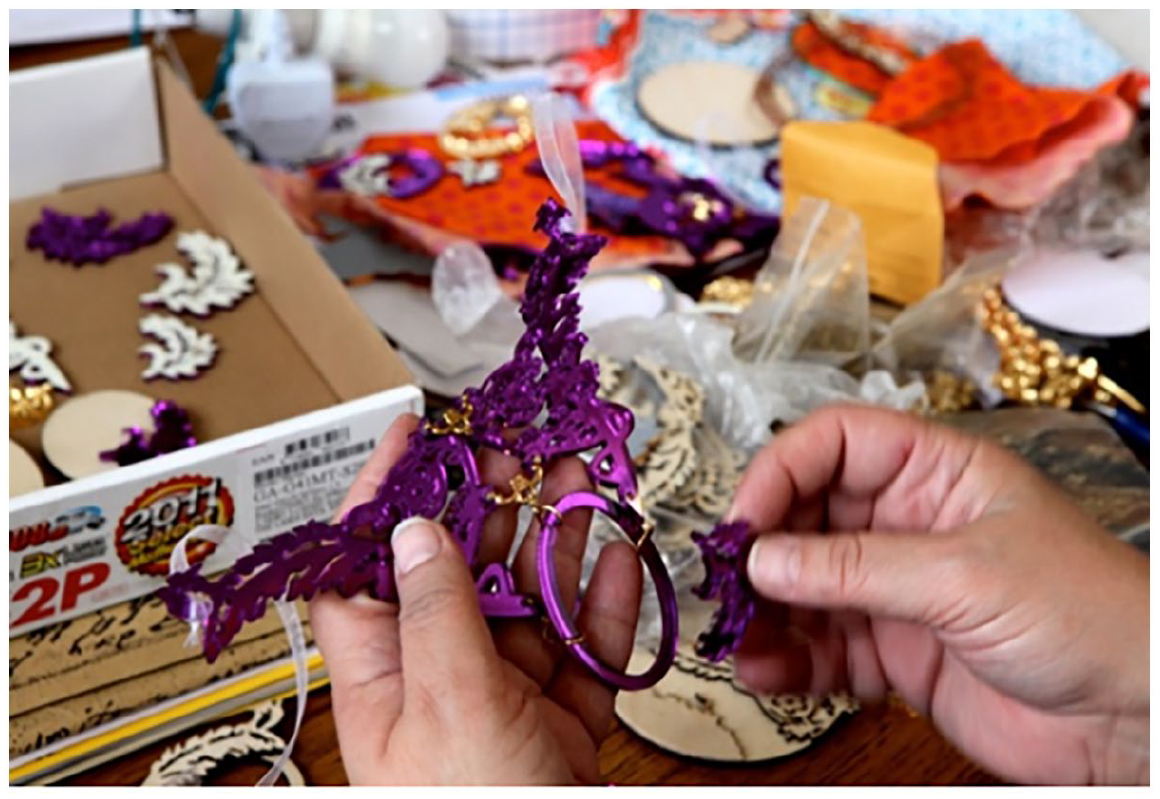
Carolyn’s concept completely changed when she played with shapes and materials at Makernow, Falmouth, 2014.
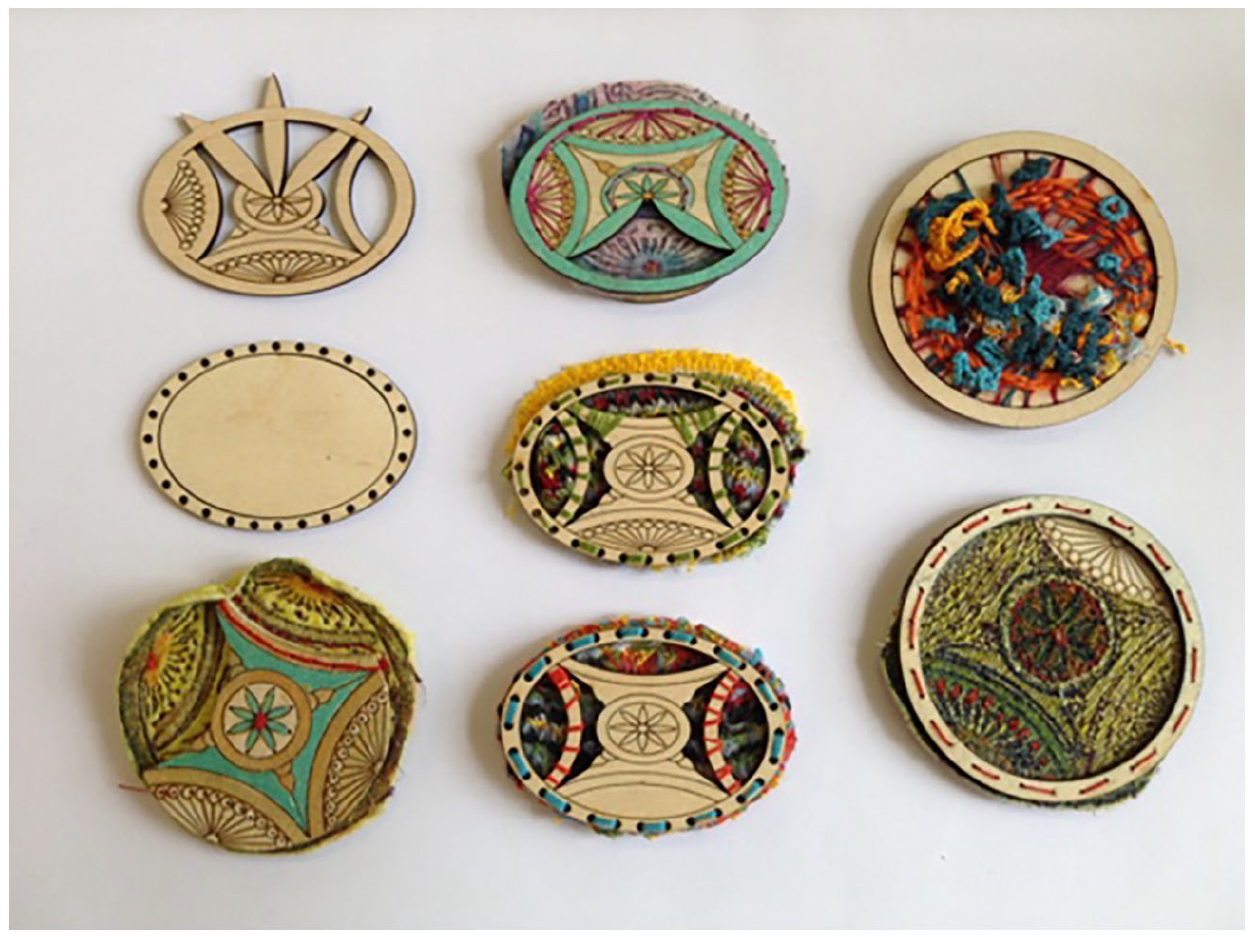
Rose produced a range of prototype brooch designs inspired by the decorative floor at Soho House Museum, 2014.
Maker-Centric: walking, mapping, stitching, stamping
Maker-Centric builds on learning from CARE. While CARE examined how making together might resolve differences, raise consciousness and build affective relationships and agencies, Maker-Centric adapted the collaborative making methodology to work in a more focused way with heritage, place-based identities and cultural entrepreneurship in diverse communities in the English Midlands and the Black Country 1 (Maker-Centric, 2016). The location responded to Craftspace’s (2016) remit to strengthen and revitalise communities in the region and the approach was prototyped at the AHRC Connected Communities Research Festival: Community Futures and Utopias (CARE, 2016; Figueiredo, 2018). The English Midlands is a highly diverse multi-cultural area and Sajida Carr, Director CBC, Sharon Nanen-Sen and Saffie Price at Wolverhampton Voluntary Sector Council (WVSC, n.d.) helped the research team recruit communities and build reciprocity and trust in engagement. Maker-Centric resonated with CBC’s 100 Masters initiative showcasing crafts, entrepreneurial and everyday creativity in the region (CBC, 2016–2017). A taster day at the University of Wolverhampton trialled creative techniques and helped match the project with participant interests and needs.
Maker-Centric, like CARE, worked with the creative skills, knowledge, interests and expertise in communities to foster agency. Working, among others, with participants from diverse and minority ethnic groups, it additionally aimed to provide a safe space to reflect on complex and sometimes difficult relationships between place, community and identity. The project set out to examine the proposal that connecting diverse communities with place through creative making and the lens of heritage could enable groups to better own, inhabit and express identities through place-based communities. Exploring multiple pasts and creativities, as such, becomes a catalyst for current and future thinking about how communities live and work together, struggle and flourish and, ultimately, undertake the messy business of forging new place-based communities (Hackney et al., 2018).
The English Midlands and the Black Country has a long history of industrial innovation and radical thinking in arts, sciences and manufacture, which is evident in the metal and enamels showcased at the Bilston Craft Gallery, Ironbridge ironwork, Staffordshire ceramics, and textiles in Nottingham and Hereford. Taking inspiration from the Midlands metalwork industry, the project team decided to focus on creating and using printed stamps as a means of visualising and mapping journeys to better understand people’s relationships with place (Figures 8 and 9). Two groups based in Wolverhampton agreed to participate in the project: Gatis Community Space (GCS) in Whitmore Reans and Petals of Hope (Hope Community Project, n.d.) located in Hope House, Heath Town (Figure 10). Both groups engaged in a series of weekly workshops at their own locations over a period of 3 months with artists Gavin Rogers (Petals) and Laura Onions (Gatis) to co-devise stamps reflecting their collective interests and concerns. As with CARE, purposeful collaborative making was central to the engagement process (Shercliff and Twigger Holroyd, 2020; Twigger Holroyd and Shercliff, 2020). Workshops began with conversations about the meaning of place. Petals, a women’s group whose members come from Morocco, China and Mauritius, focused on language, national and regional culture, food and home-making. Gatis, who have a strong ecological ethos, wanted to investigate the history of their locality. Gatis and Petals are situated in areas experiencing deprivation, poor housing and, at times, violence, something they wished to address. Built in the 1960s, the Heath Town Estate reportedly houses 46 nationalities, recent migrants and longer term residents, which according to one newspaper is both a cause for tension and celebration (Young, 2020); the women wished to celebrate the richness of their diverse cultural heritage. Gatis, run by Maria and Bill Billington, employ the strapline ‘acts of random caring’ (GCS, 2020) to signal their sense of pride and care for the local area, and their aim to galvanise and bring the community together through art, craft and play underpinned their engagement with Maker-Centric. Visits to local archives – Wolverhampton City Archives for Gatis and the Hodson Shop Archive for Petals (Gilbert, 2013–2018) – was followed by an enamel heritage walk by artist John Grayson (Crafts Council, 2020); workshops at the Fab Lab, Sandwell College (2021) supported stamp fabrication. Gatis made stamps and stencils for pavements and walls (with washable inks and chalks) repurposing old gardening tools and boots as stamp handles, while Petals created stamps inspired by flowers from their home countries with household objects as handles. Embroidering the stamped designs as place-settings on a tablecloth, they made their own version of Judy Chicago’s Dinner Party, a combined symbol of individual cultural identity and collective belonging. The following sections drawn from Laura and Gavin’s reflections of working with the groups provide insight into the process.
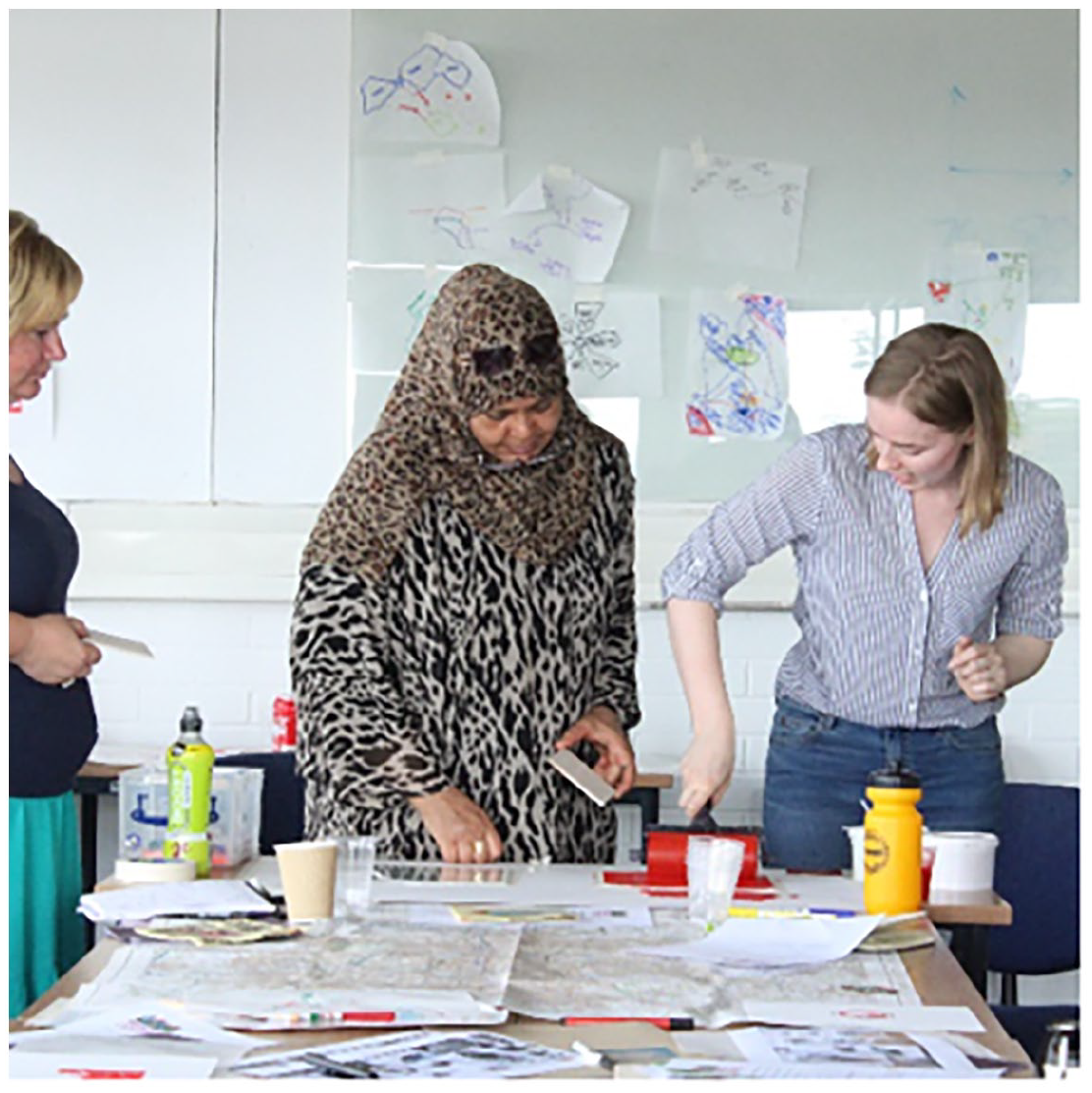
Participants printing at Maker-Centric Taster Day, University of Wolverhampton, 2017.
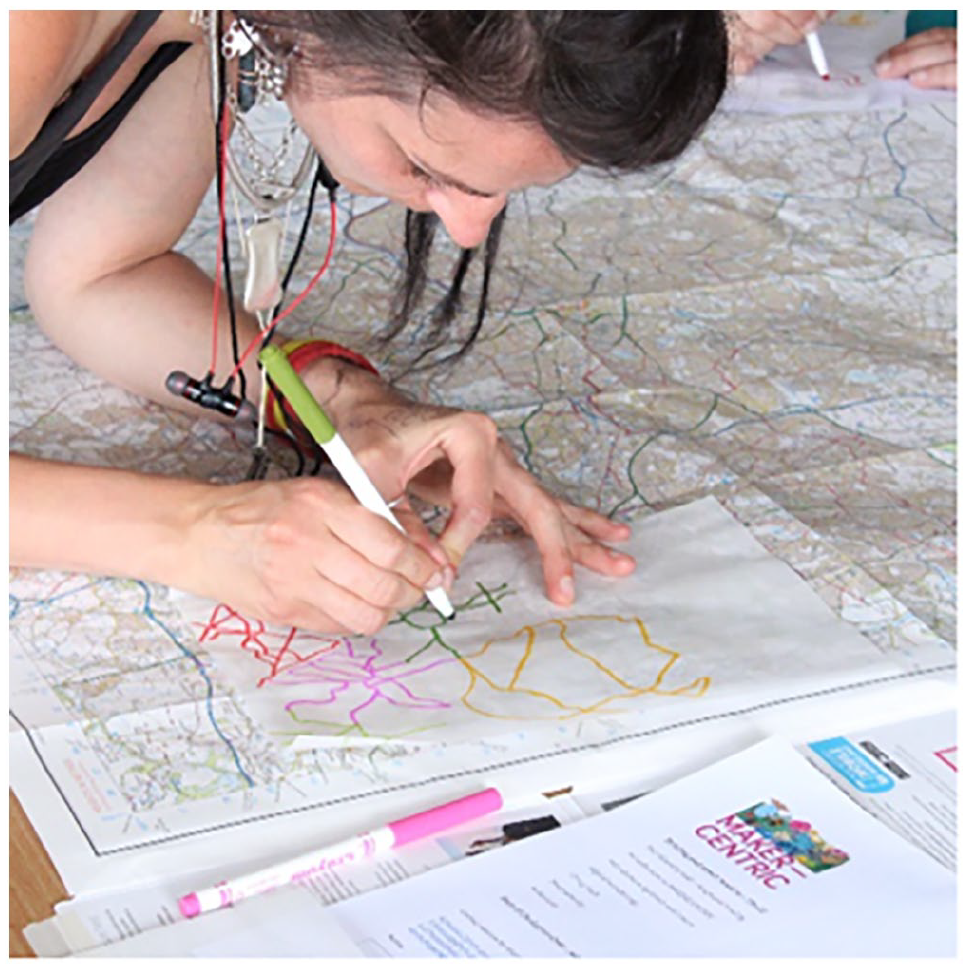
Personalised mapping at Maker-Centric Taster Day, University of Wolverhampton, 2017.

Petals of Hope Group, 2017.
Gatis with Laura: taking a pen for a walk
The Gatis workshops began with an icebreaker activity, an exploratory, sensory, convivial walk led by the participants around the immediate surroundings of the Centre in Whitmore Reans. Laura reflected, Setting off just after 11am, the pavements still drying from rain, tyres on tarmac sound tacky, echo in the distance. As we went around the block Maria told me of how Gatis was closed down a few years ago due to lack of funding and how quickly the vacant space became a breeding ground for drugs and gangs . . . We pause momentarily to look at the drain covers, made by local metal works, stamped with Cradley Heath [Figure 11]. The cracks in the walls and pavestones suddenly become interesting to us . . . We study the changing skyline and the ad-hoc nature of different buildings butting up against one another, tower blocks, mosques, and terraced houses . . . [For] Arun the tower blocks remind him of ones he used to live by in Blakenhall that were demolished in the late ‘70s, dispersing the communities of people who lived there. These conversations highlight how public spaces are claimed, destroyed, or interfered with to the detriment of local communities . . . the importance of maintaining these kinds of safe spaces for people is increasingly vital. Walking in this way becomes a critical and spatial practice . . . People making place and place making people.
For the second workshop, Laura asked the group to move from walking in place to mapping it through personal experience and memory. Everyone drew a Wolverhampton journey and shared it with the group (Figure 12). Laura recalled that Taking a pen for a walk enabled those quieter members of the group to share their stories. Throwing pennies in the fountain outside St Peter’s church. Remembering an alternate route to school to feel the wind tunnelling between the tower blocks that are no longer there. Finding the most scenic route, to admire a tree. Walking through West Park to meet a loved one . . . Walking along the canal, noticing the tug ropes. From our collection of wobbly, circulating, and diverging line drawings an alternative set of stories emerged. Reflective and attentive to the overlooked, embedded moments in our movements through place. Making visible our individual and collective associations with the city.
Laura made colour-coded mind-maps from the stories and narratives began to emerge about encountering place through embedded experience: Chapel Ash-church benches-car parks-demolition-retaining meeting places-cuts to funding; Eucalyptus tree-touch the Aloe Vera-canal-industrial and natural-play ground-band stand, for instance. Laura’s process of ‘roaming, walking and mapping’ is drawn from her interest in dérive and psychogeography. She describes it as an affective practice of ‘framing and re-framing questions pertaining to social, political, and cultural issues’ that can activate space, negotiate relations with place and reveal power structures; ‘[b]ound within the complex realisations of place are the identities of those who pass by and through. It is co-constitutive and negotiated, it affects us as we affect it’.

Photograph of drain cover made at Cradley Heath ironworks, Staffordshire, taken during walking and mapping workshops at Gatis Community Space, Whitmore Reans, Wolverhampton, 2017.
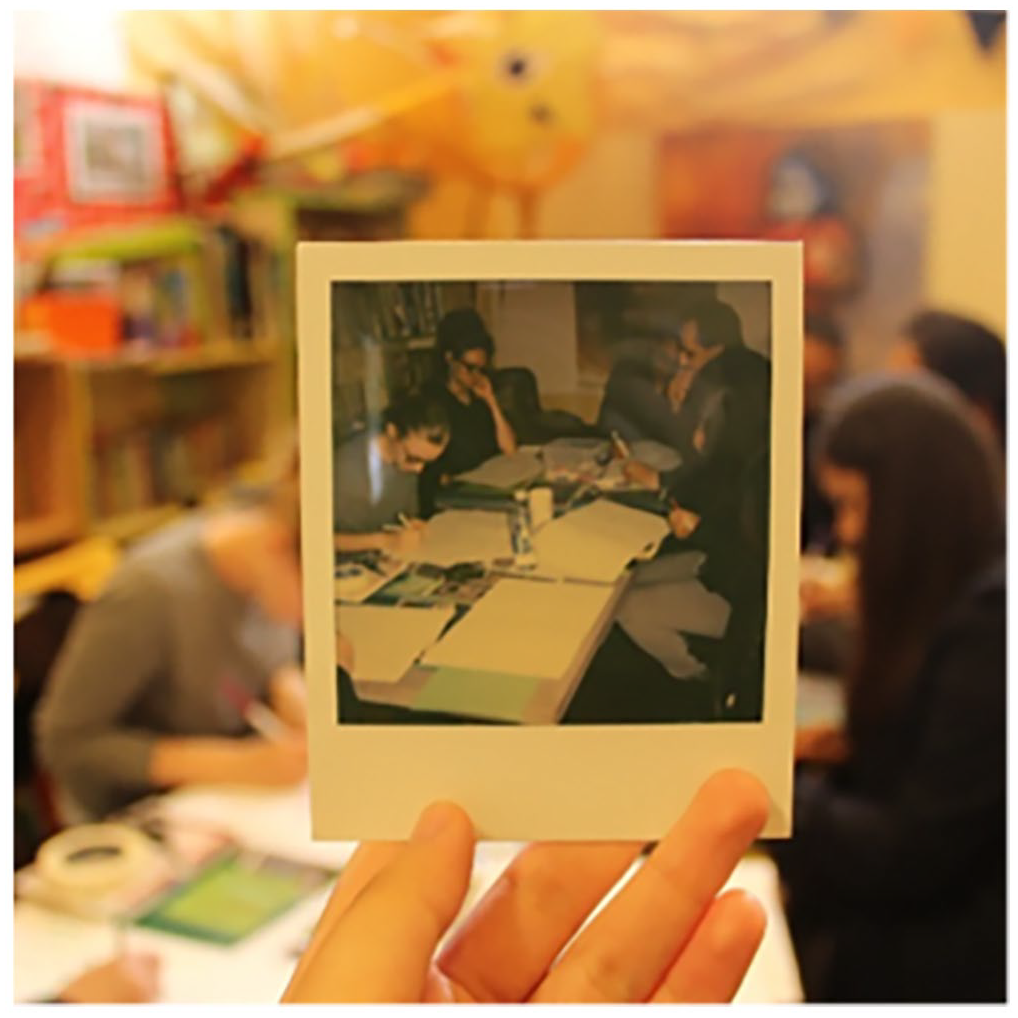
Photograph of participants making memory maps during walking and mapping workshops at Gatis Community Space, Whitmore Reans, Wolverhampton, 2017.
Petals with Gavin: posies and pigs trotters
The Hope Community Centre is a key point of contact for new and established families living on the Estate. Petals helps new immigrant arrivals settle, offering a safe space to make friends and practice English (Figure 10). Michelle Sleigh, a former market stall worker now community arts practitioner, supports the group to undertake ambitious creative projects, and exhibit their work at the Wolverhampton Art Gallery (Waine, 2018). Communication operated through a mixture of Google Translate – between Arabic, Mandarin, English and indeed the Black Country dialect – and a shared interest in making (Figure 13). Many women had home-based craft skills in dressmaking, sewing and knitting which they practised for pleasure and necessity: to make, repair, remake, resize, for instance.
I like to fix things, adapt clothing, make it shorter, take it in, make it better, you know . . . I like to buy material from the market to make clothes, but also add things, beads, jewels, customise it . . . I can knit most things, let me show you . . . (Petals participants, 2017)
Many worked, or had worked, in shops, factories, on market stalls; one participant from East Asia had been a train driver. All now lived and/or worked in Heath Town or the surrounding area and attended the Centre on a regular basis. Their interest in home: the domestic skills and creativity involved in making a home, and the local/social skills needed to live in Wolverhampton were, as Gavin put it, ‘the two-part glue that bonded these people together’.
The first workshop started with tea and biscuits and shared stories about journeys to and connections with Wolverhampton: Conversations whirled, and subjects spiralled from pigs’ trotters to trains, from Chanel handbags to prayer beads, from shouting ‘. . . come and get your buns . . .’ on the market, to China town, Morocco and back to the Mander Shopping Centre. From visiting nearby Birmingham, to remembering the old trolley buses, to stories of endless crying upon arrival to the UK, as the wet weather ran down the window. From the comforts of knitting to the frightful feeling of being scared of local gang crime . . .
Parallels were drawn between Black Country and Chinese delicacies: ‘faggots and paes’ (meatballs and peas), ‘pigs trotters and chitterlings’ (pigs’ feet and intestines). The group discussed their mixed feelings about living in Wolverhampton, a city that has been named one of the worst places to live in the United Kingdom, but also one of the best to raise a family and start a business. Such contradictions are evident in the controversy surrounding the Black Country flag which, with its interlinked chains, references the metal industries but has also been linked to the region’s history of enslavement (Huxtable et al., 2020; Madeley, 2020; Young, 2020). Thinking about signs, symbols and slippery meanings, the group began to devise logo stamps, creating their own Petals hand-made identity (Figure 14).

Black Country in Chinese Mandarin.
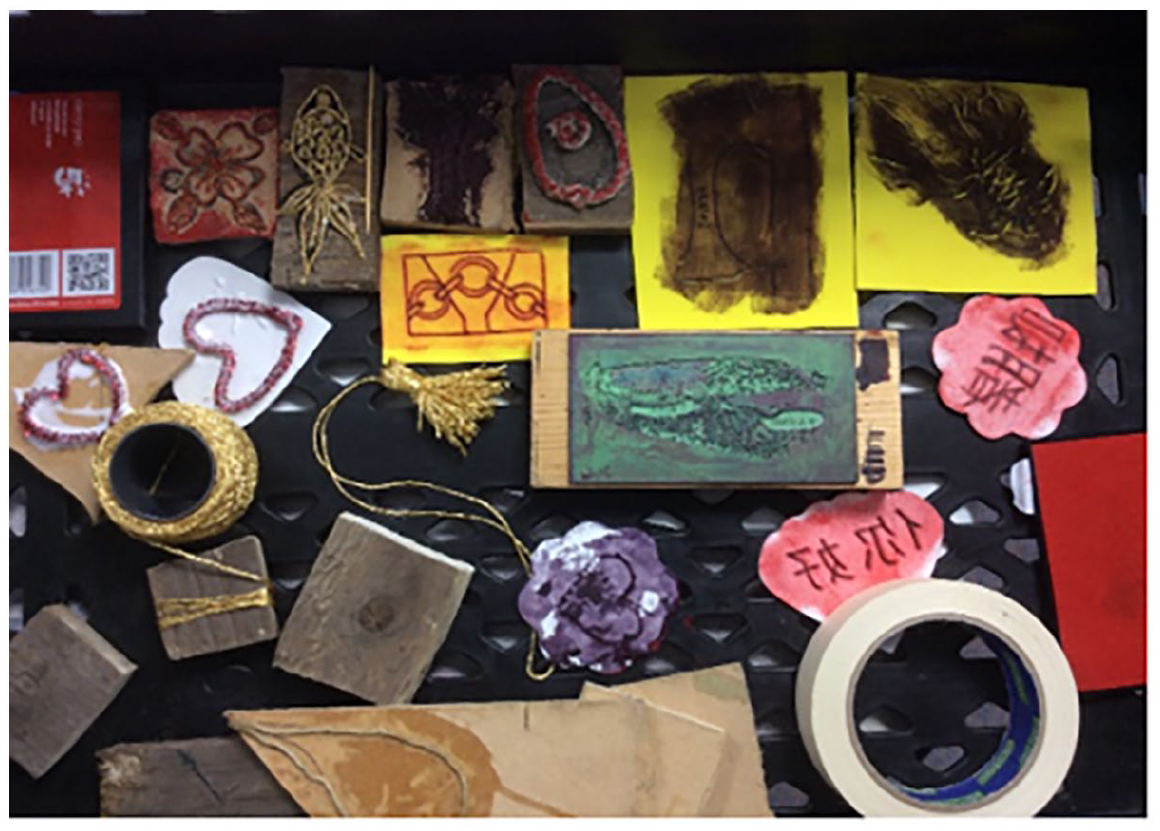
Hand-made stamps, Petals of Hope workshops, Wolverhampton, 2017.
Conclusion: re-imagining difference, community heritage and craft enterprise
CARE and Maker-Centric are underpinned by recent discourse on the wider value of everyday creativity, localism and living heritage, and the often difficult but extremely valuable benefits of cooperation that emerge when people make things together. We found that the messy processes of collaborative making not only parallel but also materialise the ‘messy’ nature of community with its disjunctions and disruptions. It is in these potentially chaotic edge-places and spaces of creativity that differences of culture, life experience, skills and knowledge can collide and meet, and potentially valuable change can happen. Rather than smoothing over difference or contradiction, the workshops showed how making together can create safe spaces to build affordances, confront and resolve differences of experience, opinion and expectation. Some issues, nevertheless, remained unspoken. On the bus to the final Maker-Centric event, a white Petals participant voiced racist comments within earshot of the women she had been working with for many weeks. Shocking, this act also seemed an extraordinary betrayal of trust. Her colleagues, however, remained silent and seemed unsurprised. A member of the research team sitting nearby pointed out the inappropriate and hurtful nature of what had been said, but the incident was a sharp reminder of the racist thinking that all too often sits below the surface of British ‘niceness’, as Karen Patel has observed (Patel, 2020a).
Waterton and Smith (2011, 6) propose that we acknowledge a more complex understanding of community ‘run through with divergent interests, anger, boredom, fear, happiness, loneliness, frustrations, envy, wonder and a range of either motivating or disruptive energies’ – energies evident in the messy interactions emerging in craft groups. In their report on building research collaborations between universities and Black and Minority Ethnic communities, David Bryan and his co-researchers argue that collaboration depends on the willing creation of an ‘equitable and respectful space’ where people come together to ‘understand and engage with each other’s distinctive knowledge and experience’ and shape ‘mutually beneficial outcomes’ (Bryan et al., 2018: 17). Defining 10 principles for community–university partnerships, they identify the value of paying attention to the dynamics and intersections between and within groups – those messy interactions and relationships, in other words – while ensuring that projects actively avoid reproducing existing prejudices and stereotypes (Bryan et al., 2018).
Making processes and making communities in themselves are not simple panacea for promoting understanding and inclusion. With protocols in place that promote respect and prevent prejudice, however, that are co-produced by project partners and agreed with participants, social making’s potential for quietly activist engagement could be radical. It is a delicate line to walk, but findings from the two projects examined here suggest that the trust engendered by acknowledging the messy processes of interacting through making mean that the craft group could become a safe space to share and collectively address the lived effects of racist microaggressions, casual sexism and other everyday violations. In terms of the creative economy, a strong ‘edge-place’ network of museums, heritage sites, local government, universities, third sector organisations and makerspaces could sustain groups, helping to grow community capital, social enterprise and the trust and shared purpose that engenders inclusion and progressive change.
Footnotes
Funding
The author(s) disclosed receipt of the following financial support for the research, authorship and/or publication of this article: This work is supported by the Arts and Humanities Research Council [AH/K006789/1 and AH/P009638/1]. Grateful thanks go to them and to all those who contributed to the projects: partners, advisors, researchers – in particular, Maker-Centric Research Assistant Kauser Hussain – and facilitators for their hard work, support, inspiring ideas and valuable criticism. Above all, thanks go to all the community participants who generously gave their time and energy, and shared their insights, creativity and skills with us, it was an enormous privilege working with you. All participant names have been changed to preserve anonymity. All image copyright belongs to the relevant research project unless otherwise stated.
