



Abstract
Different archives of television material construct different versions of Australian national identity. There exists a Pro-Am archive of Australian television history materials consisting of many individual collections. This archive is not centrally located nor clearly bounded. The collections are not all linked to each other, nor are they aware of each other, and they do not claim to have a single common project. Pro-Am collections tend not to address Australian television as a whole, rather addressing particular genres, programs or production companies. Their vision of Australia is ‘ordinary’ and everyday. The boundaries of ‘Australia’ in the Pro-Am archive are porous, allowing non-Australians to contribute material, and also including non-Australian material and this causes little sense of anxiety.
The archives of Australian television history
Australia’s National Film and Sound Archive ‘play[s] a key role in documenting and interpreting the Australian experience.… We collect, store, preserve and make available screen and sound material relevant to Australia’s culture’ (NFSA, 2008: np). Situated in Acton, the ACT is a monumental building, typical of the architecture of Acton, a central Canberra suburb that houses many governmental buildings.
The National Film and Sound Archive is the official Australian archive of television history (despite the lack of ‘television’ in it title – which tells us something about the standing of television within Australian cultural circles). By contrast, the Australian Television Archive is: ‘an unincorporated, non-profit venture created by James Paterson’ (Paterson, 2006). Managed by an individual Pro-Am historian, with a primarily internet presence, the aims of this archive are:
To heighten public awareness of the importance of preserving our television heritage, in particular that of Australia – not many people realise how much of Australia’s television heritage is being, or has already been, lost.
To uncover and preserve what material is still left.
To present some of the uncovered and preserved material to the public. (Paterson, 2006)
This archive is housed in a domestic dwelling in the Melbourne suburb of Boronia – a typical Australian outer suburb, sprawling and low set and very different from Acton (see Figure 2). I found the Australian Television Archive as part of my research for an Australian Research Council (ARC) Discovery project, ‘Australian Television and Popular Memory: New Approaches to the Cultural History of the Media in the Project of Nation-building’. This project aims to:
construct histories of Australian television from the point of view of those who have made and consume it, in order to describe and understand the part that television has played in the popular experience of a national culture.
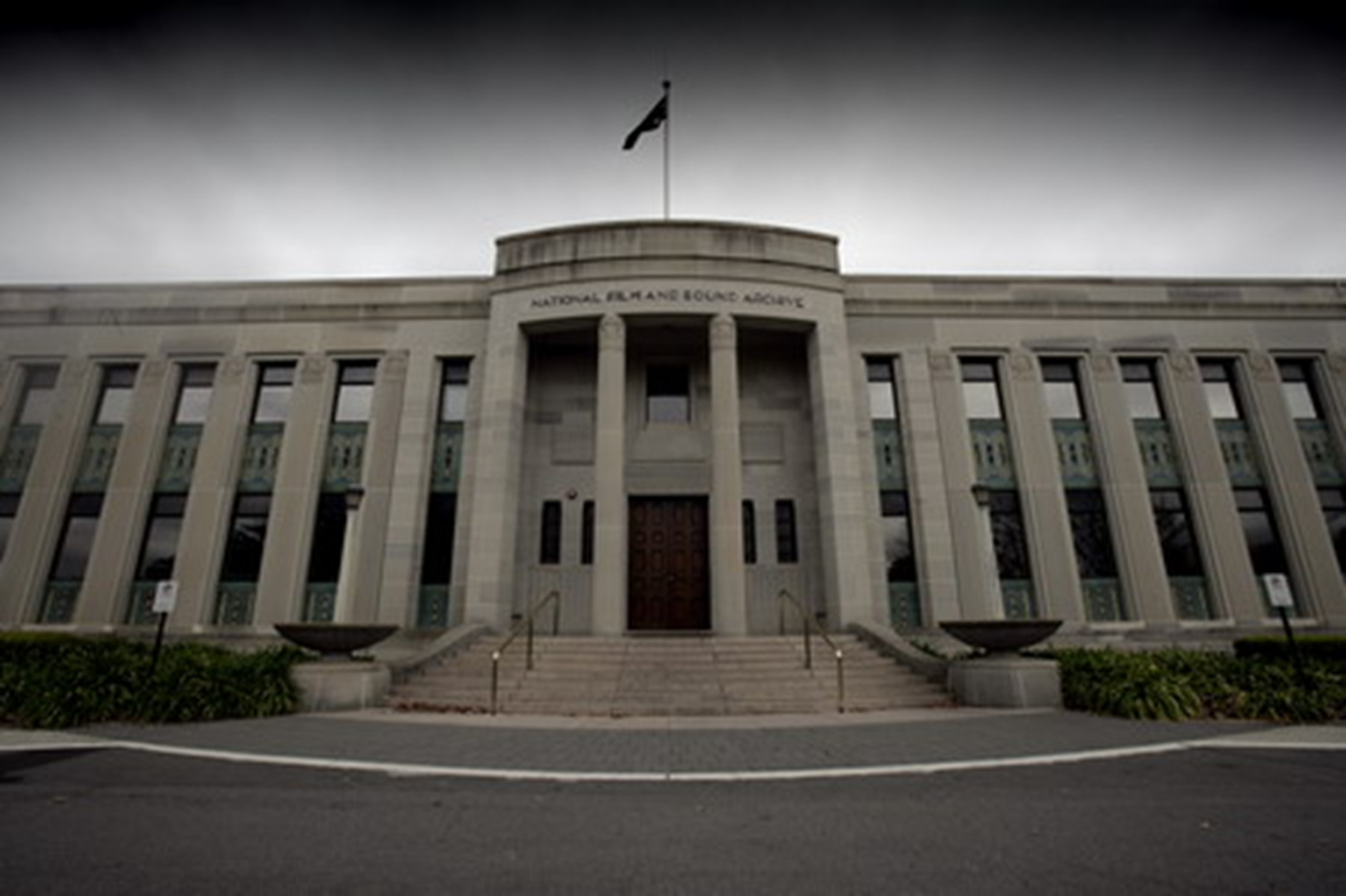
National Film and Sound Archive
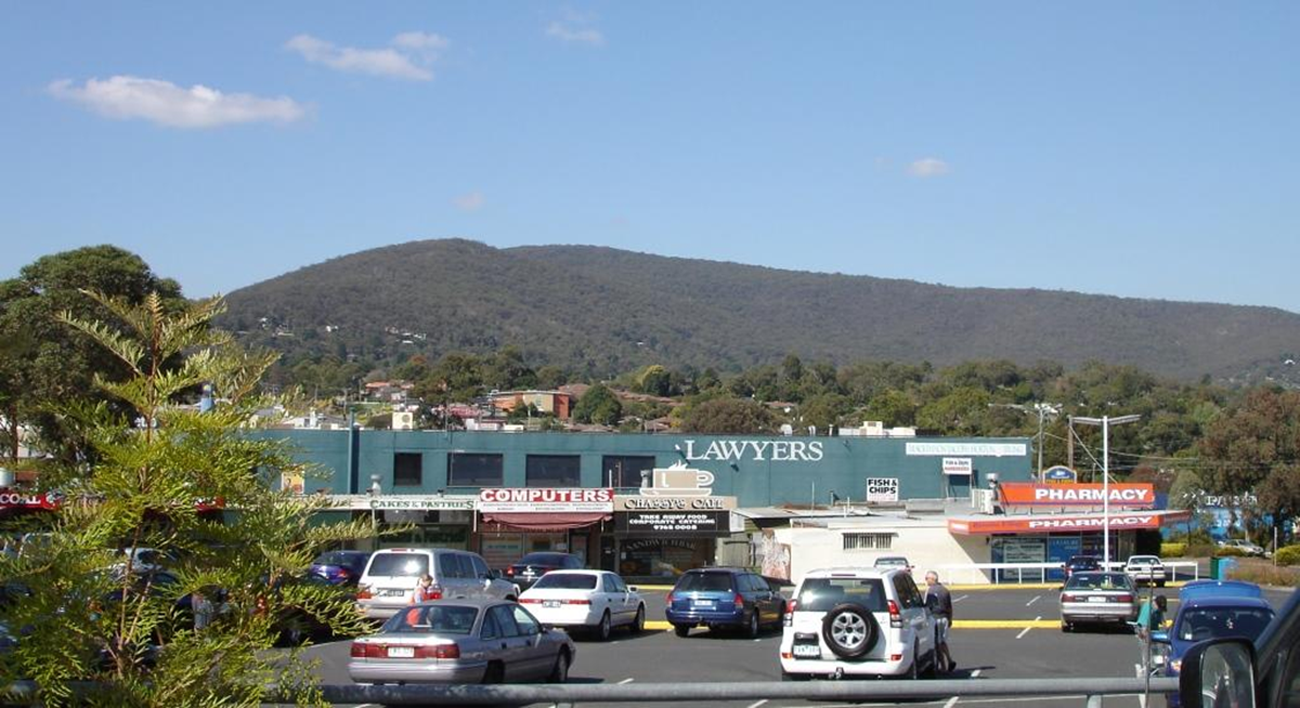
Boronia, Melbourne, Victoria
As my part of the project I focus on Pro-Am historians of Australian television. Pro-Am historians (the term is taken from Leadbeater and Mills, 2004) are people who collect Australian television history materials: memorabilia, production materials, copies of programs or even just information. They are not formally trained in history, archiving or curatorship, nor are they employed by any recognized institution. They collect for their own interest, pleasure or fun, but do so ‘to professional standards’ (Leadbeater and Mills, 2004: 9). This is a leisure activity rather than paid work; and, importantly, it is domestic rather than being associated with a workplace. As such, it is largely suburban rather than being centralized.
The content of the Pro-Am archive of Australian television is quite different from that of formal archives. As such, it memorializes quite a different picture of the object ‘Australia’. Based on textual analysis of 37 collections and interviews with 11 historians, this article maps the Pro-Am version of ‘Australia’ in ‘Australian television history’, and discusses the importance of the suburbs in that vision.
Television history and national identity
Part of our interest in the ARC project has been to:
Examine the role that television has played in our national life, and thus in our national histories, from the point of view of ‘the people’ rather than that of the professional historian or the expert producer.
The phrase ‘the people’ is marked by quotation marks to make clear the constructed nature of such a notion. Like ‘the nation’, this is a contested category: it matters who is included in such a category. In our ARC project we include a number of different fractions of ‘the people’, including general television audiences as well as television workers and traditional archives. My own particular focus is on that small subset of ‘the people’ who contribute unpaid labour as ‘Pro-Am’ archivists. When this focus is taken, an interesting new perspective on Australian television emerges. It is commonplace to assert that there is a strong link between television, nations and national identity. As Graeme Turner notes, ‘For most of its history, in most places where it is available, television has been a national medium … addressed to the citizenry of a single nation-state’ (2009: 54). This address has meant that television has functioned as ‘an important source of the sense of nationhood’ (Smith, 1998: 3). Derek Kompare writes of a nation’s ‘television heritage’ as:
a nostalgic record of the nation, and our place in it, in which television figures prominently, so that, for instance, I Love Lucy has become as endemic of the 1950s [in America], Miami Vice of the 1980s and Beverly Hills 90210 of the 1990s as anything from outside television. (in Gray, 2008: 41)
In Australia we can point to particular programs and characters that have become representative of Australia (without, of course, representing all Australians) – some obvious examples being Paul Hogan, or Neighbours (McKee, 2001).
Archives have similarly laid claim to an important role in the formation of national identity:
those institutions designated ‘national’ museums serve as the official arbiters of the nation’s historical memory.… National museums collect artefacts and display them in ways that illustrate key moments in the nation’s history and the defining traits of the nation and its people. Their primary purpose is to represent the nation both to itself and to international visitors. (Hogan, 2008: 182)
But of course, both television and archives always tell partial stories about nations. Some people’s stories are told, others are excluded. How could it be any other way? Curating is necessarily a process of exclusion (or redaction – see Hartley, 2003: 83). As I have demonstrated elsewhere, in the case of the National Film and Sound Archive, its version of Australian television is:
stronger on current affairs and older programs … [and less strong on] the popular history of Australian television – game shows, lifestyle genres, moments of human interest, ‘great moments’ of television programs and content that matches with the way that programs are recollected in popular memory. (McKee, 2011)
The Pro-Am archive is different. These different archives memorialize different versions of Australian television history – and thus different versions of ‘Australia’.
A suburban archive
The difference between these archives is represented by their different physical manifestations. The last time I visited the suburb of Acton I was reminded of just how monumental the buildings that house the various national archives are. They are big because they are centralized. But they are not only big – they perform that bigness in particular ways. These buildings say: ‘We are important. What we do is important. It is, in fact, of national – or even, National – importance.’
The Pro-Am archive does not perform its importance so grandly. It is an imaginary totality, to begin with, a collection of collections. It is decentralized and networked. There is no single repository of information. The Pro-Am archive of Australian television history materials is made up of hundreds of collections like the Australian Television Archive (although few that are as professionally run or as exhaustive), held in hundreds of suburbs around Australia. ‘A Tribute to Crawford’s Productions’ 1 is run from Crows Nest, NSW; Bob Phillips’ collection is located in Moorooduc, Mornington Peninsula; the Johnny Young Archives are held in Oakleigh, Melbourne – and so on around the country, from inner city suburbs to rural Australia. The only thing that holds them together as a single object is the curious gaze of a television researcher, gathering them together and claiming that they can be taken to represent a single archive. In this sense, my work in calling the Pro-Am archive into being is typical of the curatorial work of the internet, where ‘the user co-creates content’ (Hartley, 2010: 3): the job of organizing exhibitions is typically done by the consumer, at the point when they perform a search. But I am a doing this work from a particular perspective – that of an academic in receipt of an ARC grant with a focus on national identity. I was interested in seeking a national Pro-Am archive of Australian television – and I have found one. In such a context, my criteria for deciding what should be included in such an archive become particularly important. In the end, for the sake of sanity and practicality, if not for any reason of essence that can easily be defended, I looked for an element of self-awareness in those collections that I included in my version of the Pro-Am archive. Someone who owns copies of the seven Sons and Daughters novels that published as a spin-off of the TV series is not automatically a collector, and those novels are not automatically part of the Pro-Am archive. But when the covers of those novels are scanned and placed on a webpage entitled ‘Sons and Daughters Website: a tribute to the classic Aussie soap of the 1980s’ 2 – alongside the cover of the cast album, episode summaries and cliff-hanger images from every episode of the program – then they do become part of the Pro-Am archive. This is the object I am here discussing – the imaginary totality of such collections, both on and offline. Through a demonstrated self-awareness as historians, or collectors, or archivists, the people running these collections make them available for networking, and thus for incorporation into the imaginary totality of collections.
I suspect that this definition is implied by the very terminology I’m employing – Pro-Am archive. This is not simply amateur collecting. The implication of the ‘Pro’ in Pro-Am is, as noted above, that these collectors work ‘to professional standards’ (Leadbeater and Mills, 2004: 9). It is possible to argue about what this means – for example, the collectors I interviewed mostly do not catalogue their materials according to the standards of professional curatorial work; nor do many of them preserve their materials to the most stringent standards. I have taken the ‘Pro’ to mean, at its most limited, a conscious awareness of collecting materials – and thus ended up, tautologically, with the Pro-Am archive that I have defined.
Ordinary Australia
The Pro-Am archive is a collection of collections, of quite different natures. But there are some points of similarity between them.
It is interesting, for example, that few of the Pro-Am collections claim to give an overview of Australian television as a whole. The Australian TV Archive, for example (and despite its name) does not attempt to build a comprehensive list of all Australian television programs. The genre most strongly represented in that particular archive is station idents. Most Pro-Am sites are similarly, and quite explicitly, limited in their ambit, focusing on a particular genre (the Aussie Soap Archive), 3 production company (ABC TV at Gore Hill) 4 or program (Countdown). 5 And although a couple of the sites in the Pro-Am archive do present chronologies of ‘great moments’ in Australian television – for example, televisionau.com includes a history which notes major policy changes, the dates of important programs and Logie winners 6 – this is mostly not the case. In the best probabilistic manner (Hartley, 2010), the Pro-Am archive is a serendipitous collection of items that the collectors like and/or have stumbled across. There exists relatively little synthesis. Or rather, as with the current project, the work of synthesis is enabled by the archive (through search engines and metadata) but operationalized by the ‘produser’ (Bruns, 2009).
Here is the first point about the version of ‘Australia’ represented in this archive: it is not a single thing. It is not monumental. It is a collection of collections – a series of (perhaps incommensurable) visions. When I interviewed Pro-Am archivists, I asked them how they decided what parts of Australian television history were important enough to be archived. It was notable that none of the answers laid claim to a coherent national vision. Two discourses predominated.
The first discourse is an individualistic one – I collect what interests me (see Hartley et al., 2008: 238). As one interviewee puts it: ‘I like gathering it, and then having a look and seeing if any of it interests me. And if it does I keep it’; another makes clear his personal investment when he says ‘I was never really one to keep the programs. I was often more interested in the stuff that appeared between the programs.’
The second discourse is that of ultimate democratization – everything is exactly equally worthy of being preserved. One interviewee says: ‘I think it’s all important … I see it [all] as people’s work, so people have been creative and created work and have put energy into creating something and then it has been forgotten.’
Obviously neither of these attitudes would be workable in a formal National archive. Are they workable in the Pro-Am archive? To make a final judgement on such a question would require deconstructing the very nature of what we have understood to count as an archive, and I’ll refrain from doing that here. Rather, I’ll simply note that I have shown elsewhere that, for researchers of Australian television, there are many ways in which YouTube – a part of the Pro-Am archive – is a superior resource to the National Film and Sound Archive (McKee, 2011).
I was also interested that, when I spoke to the Pro-Am collectors, a discourse of supplementarity emerged: that they began to publish their collections in order to plug gaps in the existing resources. ‘I started up [the website] because there was hardly anything about Australian television. There was a lot about American television, and a lot about English, but very little about Australian’, says one. Similarly, a collector who focuses on Australian soap operas explains that his interest emerges, at least in part, from a lack of other resources attending to that genre:
I sort of chose the genre soap opera mainly because nothing else had been written about them as far as I could tell. I mean there were other sites and books about programs such as police dramas done by Crawford, but nothing about these shows. So that was sort of what interested me … there was nothing else like it.
The second point about the Pro-Am ‘Australia’ is that – unsurprisingly, perhaps tautologically, but worth stating nonetheless – this is an ‘ordinary’ vision of Australia, (from Frances Bonner’s ‘ordinary television’–Bonner, 2003). Bonner draws attention to the ‘disregarded’ programs in television schedules – ‘game shows, lifestyle programmes, the chat shows … advice programmes as well as the … magazine programmes’ (2003: 1), and names these ‘ordinary’:
because there is nothing special about them and because their everydayness seems to be a partial reason for their not being regarded as sufficiently important to bear sustained investigation. (2003: 3)
I have found in the Pro-Am archive collections detailing and recording copies of drama series, soap operas, music variety programs and sitcoms – but I have not found any committed to documentary, current affairs or arts programs. It is unworthy, ordinary, everyday genres which are most at the heart of the Pro-Am version of Australian television.
Indeed, the only consistent representation of documentaries and current affairs in this archive is their title sequences – which are of more interest than their content to the Pro-Am archive. Title sequences are an example of ‘interstitial’ material – like station idents and promos, this is the television that fills the gap between program content. It is television in perhaps its purest form. As Hartley et al. (2008: 238) have previously noted, there is demonstrable fascination in the Pro-Am archive for this material, the ‘continuity’, the ‘gap between programs, between whatever you’re watching’, the content that ‘you may not notice that you’re watching … even while you’re watching it … filled with familiar emblems, oft-repeated slogans, jingles and ideas’ (Hartley, 1992: 164). It is the sinew, the place between – which brings us back again, perhaps, to the suburbs. This is another way in which the Pro-Am archive of Australian television can lay claim to a suburban nature. The genres that are most popular in this archive are either literally suburban (the sitcoms and soap operas which represent the suburbs) or set in the fictional non-space of television (music and game shows as well as interstitial material).
A third point which interested me about this archive’s representation of Australia: the boundaries of this ‘Australia’ are porous; and this causes little anxiety. Yes, there is a sense of national coherence to the project – many of the sites quite explicitly name themselves as being devoted to ‘Australian’ television and programs. But this archive is not only created by Australians. Kirsty Leishman has previously written about the Australian Television Information Archive, which is one of the most comprehensive sources available anywhere – either on or off the internet – for plot details about a number of Australian drama series. She notes the oddity of the fact that this site is in fact Canadian – indeed, she suggests that the webmaster’s ‘distance from Australia [is] crucial’ to the nature of the archive (Leishman, 2008: 4). My research backs up this point. Several important sites within the Pro-Am archive are created and hosted by non-Australians, 7 with a particular focus on single programs (Prisoner, Neighbours). These sites are clearly part of the Pro-Am archive of Australian television – even though (as I found out in interviews) some of the collectors have no sense of contributing to a history of Australian television as an object beyond their interest in their own particular programs.
Conversely, there is also the question about how the boundaries are drawn in the reverse direction – that is, what non-Australian programs are included in the Pro-Am archive of Australian television history. I have previously suggested that the history of Australian television can quite happily include non-Australian television programs that have their own particularly Australian histories of broadcasting and reception (see McKee, 2009). Thus it should not be surprising that some of the Pro-Am sites of Australian television history also include non-Australian material. The YouTube channel of Conniptions886 8 is a key part of the Pro-Am archive, including hundreds of examples of historical Australian television material – but also includes occasional American examples (such as Lancelot Link, Secret Chimp). This two-way porousness – non-Australians contribute to the Pro-Am archive of Australian television programs, and Australia’s own Pro-Am archive also includes non-Australian programs – does not create any apparent sense of anxiety. There is no defensiveness or sense of the need for an explanation if a collector whose primary interest is Australian television history includes American programs in his collection. There is no essence to this version of ‘Australia’, nor are there any rigidly drawn boundaries around it.
It is worth noting that there is a degree to which this lack of concern is due to the user-created nature of this archive. When I defined the object of study as self-aware collections of materials about Australian television history, I didn’t impose a condition about the national provenance of the collections. The Sons and Daughters website, 9 for example – providing plot summaries and screen grabs for every episode of the program, along with details and photographs of memorabilia, including the covers of the novels released to tie in with the show, and the cast album – is clearly part of this archive. But the site displays no sense of itself as part of a larger project – no mention of Australian television history, no contextualizing of the program, no links to any other Australian TV history websites or web-rings. When I interviewed the British Pro-Am collector who runs the site, he told me he has no particular interest in Australian television per se, nor its history. And yet, in the course of my searches, the Pro-Am archive of Australian television history materials is called into being. Perhaps the version of ‘Australia’ I am describing here is the version that I have created in my explorations of the archive, and the lack of paranoia around drawing boundaries is in fact simply a reflection of my own lack of worry about deciding what should count as part of this ‘Australian television’ archive. Had I decided that I would only include sites that clearly demonstrated an awareness of their own place in Australian television history, you would be reading a very different article right now.
It is worth noting that while there was little sense in the Pro-Am archive itself of a vision of ‘Australia’ as a unified object, the Pro-Am collectors are able to articulate a coherent sense of Australian television history when asked. Interviewing Pro-Am collectors, I invited them to take a national viewpoint, and to talk about Australian television history as a whole – and about the place of Australian identity in that history. Obviously I wanted to word this in a way that would make sense to people who did not necessarily have a formal training in the language of cultural studies. I asked them ‘From your perspective, can you think of any iconic moments in Australian television history?’ When asked, most of them were happy to articulate an answer – although we must always remember that one of the limitations of interviews as a research method is that interviewees answer the questions that you ask them (McKee, 2003: 84). There was little agreement across interviewees. Some pointed to well-recognized moments in the history of Australian television:
there’s some significant programs, like the old In Melbourne Tonight and The Mavis Branston Show which I think was quite groundbreaking in its presentation of comedy in those days … [in] the 1970s and there’s things like Number 96 which was very significant.… Also … events. Obvious things like the Moon-Landing even though it wasn’t in Australia. The advent of SBS, which took on a whole new perspective on television here … I think that was fairly iconic in its formation as well.
Such an account would match well with more formal histories of Australian television (see McKee, 2001). But other interviewees pointed with great passion to moments which stood out for them personally – their own memories of Australian television history:
the Pantyhose Murderer from Number 96 … that’s the most riveting 32 episodes of anything I’ve ever seen … Prisoner had a lot, they had a fire, a tunnel escape, a quarantine drama, which turned out to be a poisoning – they thought it was a tropical disease but it was someone poisoning everyone. They had the terrorist siege which was pretty violent. E Street had a number of them; they had a car bomb, they had ‘Mr. Bad’ which was the serial killer.… The Restless Years had a serial killer storyline, and you didn’t know who it was and it turned out to be a female character who was blind and in a wheelchair! I thought that was a pretty iconic storyline. I don’t think anyone else ever seems to remember it, but to me that was a very iconic moment…. The first episode of The Box, is absolutely riveting, it’s almost like an All About Eve in terms of plot twists and characters, and drama. That’s an iconic episode on its own – just the opening episode of The Box.
The fact that ‘I don’t think anyone else ever seems to remember it, but to me that was a very iconic moment’ makes clear the way in which this collector was seeing Australian television history.
In order to find out Pro-Am collectors’ perspectives on the national identity that is represented in Australian television, I also asked ‘Do you think that Australian television is different from British or American programs?’ When asked, most of them were happy to articulate an answer – although once again, it is important to remember that interviewees may never have thought about a particular topic before they are asked to consider it by a researcher (McKee, 2004: 210). With this in mind, it’s interesting that more than one collector draws attention to the ‘naïve’ nature of Australian television: ‘the Americans are a little more polished in what they do, yet our industry started off very basic’, says one. Another notes that:
In terms of the programs that I’m concentrating on [soap operas] these were, I think, produced at a faster rate than American or UK primetime television. So it’s a bit more rushed, I mean there’s a little bit more ‘This seems like a good story line, let’s just go with it’ because they’re rushing more, so it’s a bit more haphazard. It can be a little bit more fun I guess for the same reason. I think also it was created in a naïve environment so, they’d get away with things I guess that other nations may not get away with in terms of censorship, perhaps? I think slipping in the nude scenes and the gay and lesbian characters I think they got away with it because Australia was a bit of a naïve country …
Although the boundaries of ‘Australia’ are porous in the collections, this does not mean that no understanding of that term operates in these archives. It is rather that the term is not taken as an essence. It is not something that must be protected, with boundaries that must be rigorously policed. The versions of Australia with which the Pro-Am archivists are operating are tolerant and multiple – each can articulate some understanding of the category, but they do not insist that it is exclusive or that other versions must be wrong.
Conclusion
The monumentalism of Acton is very different from the suburban home of the Australian Television Archive in Boronia. I propose that these physical differences stand metaphorically for the different versions of Australia represented in official and Pro-Am archives of Australian television history. The Pro-Am archive of Australian television is suburban both in its own nature and in the ordinary version of the nation it collects. Australia is not an abstract thing ‘out there’, but is represented by and stored in the suburbs. It is not separate from everyday life but a part of it, represented by ‘ordinary’ genres and the continuity of television that is so familiar that we don’t even notice it most of the time. It is not a single, homogeneous identity, but a collection of perspectives that are not necessarily coherent. It is the collection of representations, regional and differentiated and ordinary and everyday, which we live in our consumption of television. It is the imaginary totality of all moments of enjoying the consumption of Australian television. This is the Australia of the Pro-Am archives – something different from the monumental version of the country that is inscribed in the National Film and Sound Archive, but equally important.
Footnotes
Acknowledgements
Thanks to Larry Boxshall, Peter Cox at the Powerhouse Museum, Chris Harris at ACMI, Nathalie Anghoustine of the Media Archives Project, Chris Keating, Andrew Mercado and all the Pro-Am collectors of Australian television history materials who were interviewed for this project.
Thanks also to Christine Schmidt, Ben Hamley and Emmy-Lou Quirke for invaluable research assistance, and to John Hartley, Graeme Turner, Sue Turnbull, Chris Healy and Alison Huber, for ideas and suggestions.
The research for this paper was supported by the ARC Discovery grant DP0879596 ‘Australian Television and Popular Memory: New Approaches to the Cultural History of the Media in the Project of Nation-building’.