




Abstract
As large multinationals move their operations into remote regions of the world, imperatives of social responsibility and sound business pragmatism compel engagement of the marginalized local Indigenous people. This notion is particularly relevant for the mining industry in Australia, which is undertaken in remote regions, where the local Indigenous communities are significantly socio-economically disadvantaged compared to other Australians. This article reports the job-related outcomes of Indigenous Yolngu people of East Arnhem Land in the Northern Territory of Australia who were participants in a unique vocational-educational programme set up by the multinational mining company Rio Tinto Alcan. These mainline job-related outcomes are in two main areas: (1) employment in mainline work at the Nhulunbuy refinery or the mine site and (2) entrepreneurial timber-related business (milling timber, house construction, furniture manufacture). Both streams are inaugural achievements for these Indigenous Australians. The concluding sections present challenges for multinational corporations when anchoring institutional processes, structures and the contemporary technologies of the workplace with the contextuality of rural Australian communities.
There is widespread recognition that the low labour force participation of Australian Indigenous people (Prime Minister’s Report, 2010) is a primary factor underpinning their significant socio-economic disadvantage. The relatively lower health status and life expectancy, poorer housing and unsanitary living conditions (McDonald et al., 2008) as well as the higher incarceration levels, suicide rates and poverty (Wurst, 2009) of Indigenous people compared to other Australians – conditions that are visibly worse in remote regions of the country – has encouraged the federal government to target job creation in rural regions through three main avenues. First, initiated in 1977 in a small number of Aboriginal communities as a response to criticisms from both Indigenous Affairs policy makers and some Aboriginal community leaders (Arthur, 2002) that Indigenous people were receiving unemployment payments without doing any work, was the Community Development Employment Projects (CDEP) scheme (Altman et al., 2005). Second, acknowledging the particular disadvantage of Indigenous Australians in the labour market, government mechanisms have been installed to assist Aboriginal people to establish their own small businesses, and there has been a geographic and sector spread of successful Aboriginal enterprises (Foley, 2003; Open for Business, 2008) while a number of government-sponsored endeavours have been less successful (Furneaux and Brown, 2008; Russell-Mundine, 2007). Last, there has been a prevailing assumption the Australian mining industry will provide employment opportunities in remote Aboriginal communities, but, despite a resurgence of interest in Indigenous employment, their engagement (following the Mabo decision and Native Title legislation) remains relatively low (Brereton and Parmenter, 2008).
Complexities of Australian Aboriginal culture compound the difficulty of developing strategies to optimize the benefits of Indigenous participation in the mining industry. The appearance of a homogeneous Indigenous culture has been consciously created through the binding energy of kinship obligations and familial networks within settings of established protocols for mutual collective benefits (Foley, 2010; Kilpatrick et al., 2003). But there are also discernible variances in language and art, and fundamentally different lifestyles (Altman, 2003) between urban and regional Aboriginal people. These dissimilarities attract forces of conciliation as the clash of commercial mainstream values and the maintenance of traditional ceremonial obligations can be a substantial barrier for Indigenous employment in the Australian minerals sector.
Despite cross-cultural awareness programmes being conducted by mining corporations, a lack of understanding or respect for cultural differences can arise in the form of racist attitudes. Indeed, the information provided can be overwhelming for non-Indigenous Australians (Arbeláez-Ruiz, 2010), who are likely to be familiar with Indigenous people in suburban settings rather than remote Indigenous communities who practice hunter gatherer pursuits. A succession of mining corporations operating at Nhulunbuy have acknowledged that racism is a complex problem in a multicultural workforce, and proven racist comments or discrimination are likely to attract an invitation to choose an aisle or window seat on the next departing flight. Foley succinctly portrays the issues for mining companies operating in Australia with the words: ‘Indigenous cultural values are often elusive, complex and contestable’ (2006: 15), which encourages the installation of inclusive and comprehensive training and employment schemes that appreciate Aboriginal interests.
This article presents over four years’ worth of data and has the potential to contribute to paradigms for better addressing the persistently poor socio-economic conditions of Australian Aboriginals. Specifically, the article identifies emerging barriers for vocational-educational training of Indigenous people for employment in the Australian mining industry. A more positive feature of the article is the set of timber-related Indigenous social entrepreneurial endeavours being undertaken by the Gumatj Yolngu clan of the Indigenous people of East Arnhem Land. Interestingly, the latter venture was seeded by participants who withdrew from the initial vocational-educational programme to illustrate the relevance of strong cultural continuities. The setting is in the remote Gove Peninsula of East Arnhem Land of the Northern Territory (NT) of Australia (see Figure 1).
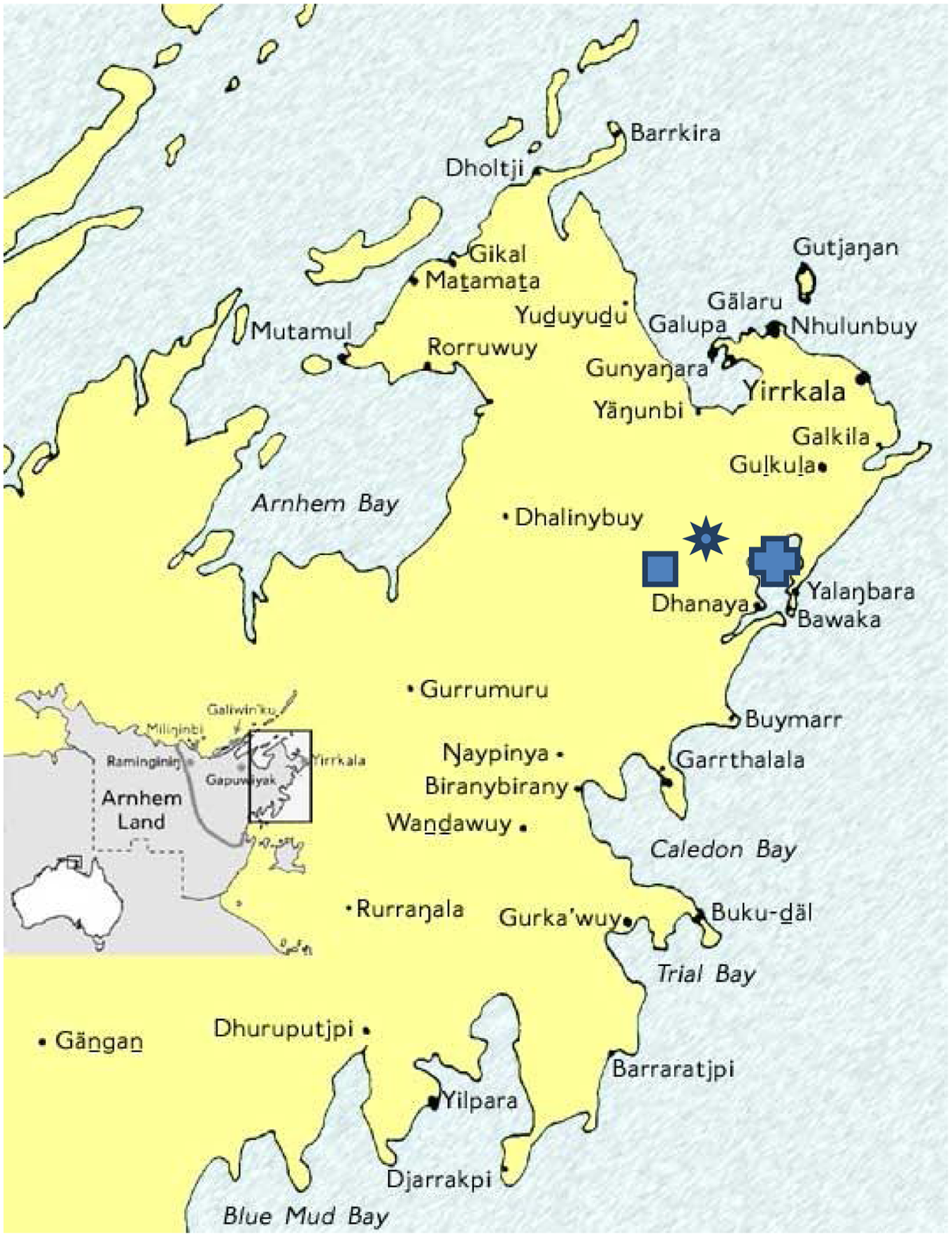
The study site
Individualism versus universalism in education and employment
The cultural and linguistic diversity of Indigenous Australia ensured that successive Australian governments have had to grapple with Indigenous policy. Since colonial times there have been two major streams of Indigenous Australian political reforms: (1) assimilation and (2) self-determination.
Formation of the first took some 160 years, but, within a tenth of that time, the pivotal reform of self-determination was introduced. Although there has been tinkering with the latter policy, education and employment have been persistently advocated as the way to resolve the Australian Aboriginal problem, but success has been elusive. For instance, the model of social transition of Indigenous people after the 1967 referendum was administered differently by the Labor and Liberal governments (Hughes and Warin, 2005) with outcomes of fragmented remote unsustainable communities and suburban fringe settlements. Political manipulation by the Howard Liberal government was reflected in intense scrutiny of the previous Hawke and Keating Labor governments’ institutional reforms and later abolition of the Aboriginal and Torres Strait Islander Commission. A radical reform of the Commonwealth administration of Aboriginal Affairs made the political landscape less sympathetic to Aboriginal rights (Anderson, 2007), while compulsory federal government legislation of the 1990s serendipitously led to a resurgence of interest in Indigenous employment in the Australian minerals industry (Barker, 2006; Cheshire et al., 2011; Parsons, 2008). Now within the grasp of Australian Indigenous people is the opportunity to delineate their expectations of relevant education and training for sustaining their communities (Economic Independence Sub-Committee of the National Indigenous Council, 2007; Pearson, 2007).
Education for expectations
In spite of the considerable investments by successive Australian governments the Australian Indigenous people are arguably the most disadvantaged identifiable group within the national society (Commonwealth of Australia, 1991; Wild and Anderson, 2007). A great deal of literature shows Australian Indigenous people are likely to experience lower life expectancy; higher incidence of obesity, diabetes and cardiovascular diseases from dietary intake (Rowley et al., 2000); and high levels of common infectious diseases (e.g. diarrhoea, parasitic diseases, eye infections), which can be attributed to unsanitary living conditions preventable by education for better hygiene behaviours (washing hands) (McDonald et al., 2008). Other literature reveals Indigenous Australians are likely to have lower incomes, lower labour market participation and higher incidence of substance abuse (Altman, 2009; Krieg, 2006), which are factors recognized to underlie poverty. A line of discourse was advanced (Gray and Hunter, 2002; Reynolds, 2005) that these gross inequalities manifest from a lack of education, which leaves Australian Indigenous people vulnerable to unemployment. But education conceptions that have drawn heavily on cultural separation and discounted Indigenous perspectives (Nichol, 2008) have generally been lamentably unsuccessful (Johns, 2011). Contemporary contributors suggest that the pathway to social reconciliation between Indigenous and non-Indigenous people lies in education anchored in Indigenous forms of learning (Harrison, 2010; Harrison and Greenfield, 2011) and that takes into account Aboriginal epistemology (Yunkaporta, 2009) in order to improve post-school transition into training and employment.
Australian Indigenous affairs policy has had major impacts on the employment of Indigenous Australians. Kaplan-Myrth (2005) provides a bleak account of how a series of government policies (since 1788) compelled Australian Indigenous people to be segregated, and how their confinement to Missions and government centres (where they were given sustenance, medical treatment, education and training) provided the pastoral industry and other non-Indigenous enterprises with unpaid labour, while curtailing any Indigenous commercial activity (Smith, 2006). Even more abhorrent were the actions of pastoralists in East Arnhem Land from 1860 to 1908, when they massacred Indigenous clans and took their land to operate cattle stations (Trudgen, 2000). By the 1950s trusteeship of Indigenous society centred on the official Australian policy of assimilation, a notion embracing the concept that Australian Aboriginals would eventually be integrated into a community with the beliefs and customs of non-Indigenous Australians. Under mounting international pressure from the Church, politicians and lobbyists, a constitutional referendum was conducted in 1967 leading to the introduction of the broad policy of self-determination by the Whitlam commonwealth government in 1972 (Altman et al., 2005; Anderson, 2007; Sanders, 2002).
A most prominent effect of the policy of self-determination was the 1970s outstations movement. Freed of encumbrances, Indigenous people – particularly those in the NT – moved back to their traditional ancestral lands to establish small communities, referred to as outstations, where the people were able to institute the customary sector of their traditional economy, which is based on wildlife harvesting (Altman, 2003). The Australian government was then obliged to decentralize appropriate institutional support and adequate resources for services such as health, education and transportation to ensure the well-being of those isolated communities. Notable was the provision of welfare payments as a support mechanism within the government policy of social inclusion, which is a conviction all Australian citizens should have the opportunity to participate in economic, social and community life (Brown, 2009).
Endeavours to move to the policy of self-determination have been complicated by stakeholder assumptions. Withdrawal of the Missions (Yirrkala closed in 1975) was not satisfactorily replaced with Indigenous community councils, exposing the flawed philosophical underpinnings of self-determination. More pertinent was the dependency on welfare, which, instead of developing collective and individual responsibility, according to Pearson (2007) has led to the collapse of social norms and the emergence of violence, suicide, alcoholism, child abuse and heavy substance abuse (Krieg, 2006; Lee et al., 2008; Wurst, 2009).
Faced with mounting criticisms from the wider community that Indigenous people were being paid welfare without doing any work, the Australian government introduced the CDEP scheme. Although the scheme had three major positive features – (1) the building of a strong, functional, sustainable and socio-cultural base for individuals; (2) increased access to labour market participation; and (3) that it allowed communities to engage in a fundamentally different customary economy to the dominant Australian context (Altman et al., 2005) – there was scant evidence to show that Indigenous people moved into the mainstream labour market (Arthur, 2002). Moreover, with the abolition of the Aboriginal and Torres Strait Islander Commission in 2004, which was responsible for the administration of the scheme, the Australian government set a path to restructure the scheme into a work-readiness training programme under the control of the Federal Department of Employment and Workplace Relations.
The Australian federal government has also targeted job creation in two other avenues. These avenues are (1) commitment to developing Indigenous business opportunities for economic independence and (2) strengthening the prevailing assumption that the mining industry will provide Indigenous people in remote regions with employment. There is a developing contemporary literature of Australian Indigenous entrepreneurship, but it will not be dealt with in detail in this article. What will be acknowledged is that the European written records reveal that the Yolngu people were engaged in extensive trade with the Macassarese (from the Celebes) from the 17th century (Berndt and Berndt, 1999; Russell 2004; Worsely, 1955) until the licences were revoked by the South Australian government in 1907. This entrepreneurial heritage may be the foundation for the recent emergence of a Yolngu timber business, that will be outlined later in the article.
The Australian mining industry is intimately connected with government regulations. Unlike many other Australian industries not only are the products controlled by government regulations, but there is also extensive taxation on activities and exports, which have to be borne by the miner (Banks, 2003). Government controls are pervasive in work practices, encompassing both specific and generic award provisions in the pursuit of robust occupational health and safety, as Australian mining and refinery sites are physically and emotionally demanding on workers. Indeed, Australian mine and refinery workers have the longest working hours of any industry in Australia (Colley, 2005), requiring employees to work shifts of 12 hours or more, in rostered patterns, making fatigue issues a major problem for management. The pervasiveness of regulation ensures that unqualified and uncertified people can neither enter mining infrastructure or establishments nor may they operate any facility, equipment or apparatus at mining/refinery sites. Moreover, at all times personal protective equipment must be worn. In addition, regular random medical inspections are conducted and any evidence of substance abuse results in immediate suspension and likely termination of employment. Their lack of education and relevant training, poorer health, a preference not to wear bulky constrictive clothing, and challenges in balancing family and community obligations discourages Australian Indigenous participation in Australian mining. But recent legislative reforms have led to mining companies taking a more proactive approach to preparing Australian Indigenous people for employment in the minerals industry.
Foundations of Indigenous employment and training provisions
A contemporary assumption – that the establishment of a minerals extraction facility in a remote region of Australia will lead to significant sustainable Indigenous mainline employment – is worthy of re-examination. From 1788, when Captain Phillip sailed into Botany Bay to assert the Crown’s acquisition of sovereignty over the several parts of Australia, until 1993 the minerals extraction sector operated under the notion of terra nullius (vacant land belonging to no one) (see Proclamation of Governor Bourke, 10 October 1835). Indigenous people who lived in the region of the mining operations were displaced (Crawley and Sinclair, 2003) and, although some local Indigenous people were employed doing menial tasks (Barker, 2006), most were excluded. In particular, the treatment of the Yolngu people on the Gove Peninsula in the 1960s is well reported by Galarrwuy Yunupingu AM
1
when he writes: Now it is the early 1960s and a man called Harry Giese, the so-called protector of Aborigines in the Northern Territory stands on a 44-gallon drum at the Yirrkala airport. He has called some people together to give them news – I am one of those people; my father is there also; Roy and Mawalan Marika; the Djapu leaders, too. A mine will be built here at Yirrkala, he tells us. It will mine the dirt that we stand on – our soil. The mining companies are coming and they will mine the land. They will take all the land and the boundary of that land will run to the edge of Yirrkala, and Yirrkala will be badly affected. Giese talks for 20 minutes, then he gets in his car and drives away. This is the first mining agreement on the Gove Peninsula. (2009: 34).
Despite a Bark Petition to Canberra in 1963, and a subsequent appeal to the Darwin Supreme Court contesting the mining proposal, construction of the mineral extraction and refining facilities commenced and the operations were commissioned in 1972.
In 1992 the perspective held by the pastoralists and miners, that the Australian outback was empty and vacant, was profoundly changed. Eddie Mabo, David Passi and James Rice, all descendants of the Merian people, challenged in the High Court of Australia the earlier annexation of the Murray Islands in Torres Strait by the Queensland government. Their claim was that the Merian people had lived on the islands in a subsistence economy based on cultivation and fishing prior to European contact. In a landmark decision, on 3 June 1992 the notion of terra nullius was declared irrelevant. By a majority of six to one the High Court ruled, as put by the Chief Justice, Gerrard Brennan: ‘The fiction by which the rights and interests of Indigenous inhabitants in land were treated as non-existent was justified by a policy which has no place in the contemporary law of this country’ (Mabo v Queensland (No. 2), 1992: 21). In a historic decision (commonly referred to as Mabo) it was recognized that the prior rights of Australian Aboriginals and Torres Strait Islanders were similar to those of Indigenous groups in other parts of the world.
The Mabo decision obliged the Australian government to introduce mechanisms for dealing with Indigenous rights. These rights, possessed at the time the British Crown claimed sovereignty, were to receive protection from the Australian common law. In 1993 the Keating government introduced legislation to deal with the implications of the Mabo High Court decision and other relevant legislation (e.g. Aboriginal Land Rights 1976, Pitjantjatjara Lands Act 1981) by establishing procedures to retrospectively validate the land titles of occupiers, and to set out mechanisms for addressing Native Title claims. Indigenous groups, in a historic compromise, accepted the validation feature in exchange for guaranteed rights of the Traditional Owners (and their representatives), on whose ancestral lands are the mineral resources, to negotiate in land use agreements.
The recent substantial Australian legal developments coupled with international policy discourse have shaped a commitment to deliver employment opportunities for Indigenous people. Prior to the 1993 legislation, various international instruments (e.g. International Covenant on Civil and Political Rights 1985 and the International Labour Organization Convention No. 169 of 1989) were prominent events that rekindled interest in Indigenous wellbeing. Relevant to the mining industry the highest body of the International Council of Mining and Metals (ICMM, 2008) has endorsed policies that are reflected in the operating procedures of particular mining companies to foster employment and training provisions within the negotiated land use agreements. In Australia, the federal government and the Minerals Council of Australia have signed a memorandum of understanding committing both parties to deliver better outcomes for remote Indigenous communities. In addition to the direct financial benefits and proposed long-term outcomes for the Indigenous community, often a common feature of the land use agreement is provision for employment and training of local people. Consequently, a number of mining companies have implemented employment, training and procurement strategies as a contribution to ensuring sustainable community benefits. Among these initiatives is the vocational-educational initiative that has been set up by Rio Tinto Alcan at Nhulunbuy.
Methodology
Site
On the Gove Peninsula the international mining company Rio Tinto Alcan operates the largest alumina refinery in the southern hemisphere. Bauxite ore is transported from the mine site (by a conveyor belt system of some 18 km) and refined to alumina by the Bayer process. This mineral extraction complex is the largest employer in the NT and many of the employees reside in the ‘closed’ town of Nhulunbuy, which has all the facilities (e.g. hospital, airport, shopping complex, government services) of a contemporary township.
Participants
The participants of the study are Indigenous Australians. In May 2007 when an inaugural vocational-educational training programme was started by the mining company (then Alcan Gove) the participants came from the adjacent small hamlets (Galupa, Galaru, Gunyangara) or Yirrkala (see Figure 1) as they had to be transported to and from the training centre by the mine company bus (Daff and Pearson, 2009). Initially, the participants were from the Yolngu nation of clans, the descendants of those who had been the occupiers of the land for some 50,000 years. With greater exposure over time, the vocational-educational programme now has participants from across several states of northern Australia.
Procedure
Prior to the commencement of the vocational-educational programme a number of initial actions had to be completed. On the direction of Executive Management the proposal to set up the training programme was articulated in a comprehensive document to gain widespread support from national and local Indigenous groups, the Traditional Land Owners, the three levels of government, top industry bodies, the mining sector and the business community. A special training centre was built on the outskirts of Nhulunbuy, the two main buildings were equipped with teaching resources and qualified teachers, administrative and supervisory personnel were engaged. Registered training organizations (e.g. Charles Darwin University) were engaged to deliver work-integrated learning programmes to meet the content and pedagogical requirements of the Federal Department of Educational Employment and Workplace Relations. In addition, there were myriad arrangements, too many to list here, that had to be completed to meet the first intake of participants in May 2007. Putting together all these activities, the programme was identified as the Arnhem Learning Education and Regional Training (ALERT) scheme.
Since its inception, ALERT has been progressively refined. The primary function of ALERT is to prepare Indigenous people, who have roots in a fundamentally different customary economy based on wildlife harvesting, to work in the highly complex, shift regimented, physically and emotionally demanding regime of mineral extraction operations. Consequently, the initial expectations were that ALERT participants would require a minimum of seven months of training before they would be prepared for mainline work, with a further 29 months of on-the-job training. Currently, with better selection procedures and a wider spectrum of applicants, it is possible to prepare ALERT participants for mainline work in three months, while others can begin employment at the refinery earlier. After completion of a comprehensive and rigorous selection procedure, applicants are allocated to one of two streams of meaningful work-outcome destinations: (1) Work Ready or (2) Work Starts.
Work Ready and Work Starts are generic components of the ALERT scheme that provide flexibility and adaptability to meet the needs of the Indigenous applicants. Work Ready is the destination of applicants with lesser vocational and educational competences. Important objectives of Work Ready are to instil work habits of attendance and punctuality, encouraging participants to listen and acquire practical work skills as well as knowledge so they can work either at the Nhulunbuy mining operations or in mainline jobs in the wider community. A tangible outcome is the Certificate 1 of Resources and Infrastructure Operations, which is awarded by the Charles Darwin University. Less than half the students transition into Work Starts.
Work Starts provides a point of departure for several vocational opportunities and further educational outcomes. The several pathways to full-time employment include secondment, apprenticeships and traineeships. Work Starts enables participants to have casual employment with the mining company within an environment of pastoral care, involving Group Training Northern Territory and the opportunity to be awarded the Certificate 2, in a number of disciplines, by the Charles Darwin University.
Following the recruitment process most ALERT applicants are participants in either Work Ready or Work Starts. However, the flexibility of the ALERT scheme enables competent applicants to be engaged in full-time employment or other career paths on completion of the recruitment stage. The various vocational pathways for Indigenous candidates are shown in Figure 2.

RTA ALERT programme pathways
Measures
The ALERT participants were scored by their work-relevant outcomes. Every applicant of the ALERT programme is identified in the database. Some withdrawals from the vocational-educational programme were voluntary (e.g. left to work on homelands), some involuntary (e.g. suspended, custodial sentence). Those participants who graduated from the programme were employed either by Rio Tinto Alcan or in the wider community and their workplace was identified. For those ALERT participants/graduates who remained in the region it was possible to follow their career paths as they ‘job hopped’.
Results
The work-relevant outcomes are shown in three parts. First, a review of the recruitment data and the job outcomes of the ALERT programme demonstrates Indigenous employment is a major challenge for the Australian mining sector. Second, greater delineation is given to ALERT graduates in terms of the attained qualification and their first job position in the community or Rio Tinto Alcan. This information is presented in Table 1. Finally, there is a commentary on the few ALERT participants who left the programme to work on their ancestral lands at the Garrathiya cattle station. Subsequently, a greater number of Yolngu people have shown enthusiasm to be involved in similar timber-related entrepreneurial ventures.
ALERT programme accomplishments

Note Certificate 1 in Resources and Infrastructure Operations.
Certificate 2 is a GTNT (Group Training Northern Territory) in a variety of streams such as Administration, Engineering or Metalliferous Mining Operations.
A feature of the recruitment process was the leakage of applicants. From May 2007 up to February 2011 there was a total of 337 applicants (by telephone, fax, email, presentation), but 199 (59.05%) did not go forward when applicants were required to present documentation of formal education, work references or Aboriginal certification. Subsequent comments suggested that a number of the applicants viewed ALERT as another welfare variant, but, on realizing investment would need to be made by them, they discontinued their application. Some leakage of applicants could be attributed to low competence in English comprehension and poor health. The total number of Indigenous people who have been ALERT participants from May 2007 to March 2011 is 138.
The work-relevant outcomes of the 138 Indigenous participants are shown in Figure 3. Overall, the figure shows that some two-thirds of the participants leave the programme, and within this group less than 15 percent are employed in mainline jobs in the wider community. The data of Figure 3 reveal almost 16 percent (15.94%) are in mainstream jobs at the refinery or the mine site. A further 16.66 percent are in Work Ready or Work Starts, and it is expected that about one-third of these Indigenous participants will transition into mainline jobs either in the mining sector or the community. Rigorous recording of job outcomes of Indigenous people who ‘aspire’ to be ALERT participants reveal that most remain in their remote communities.
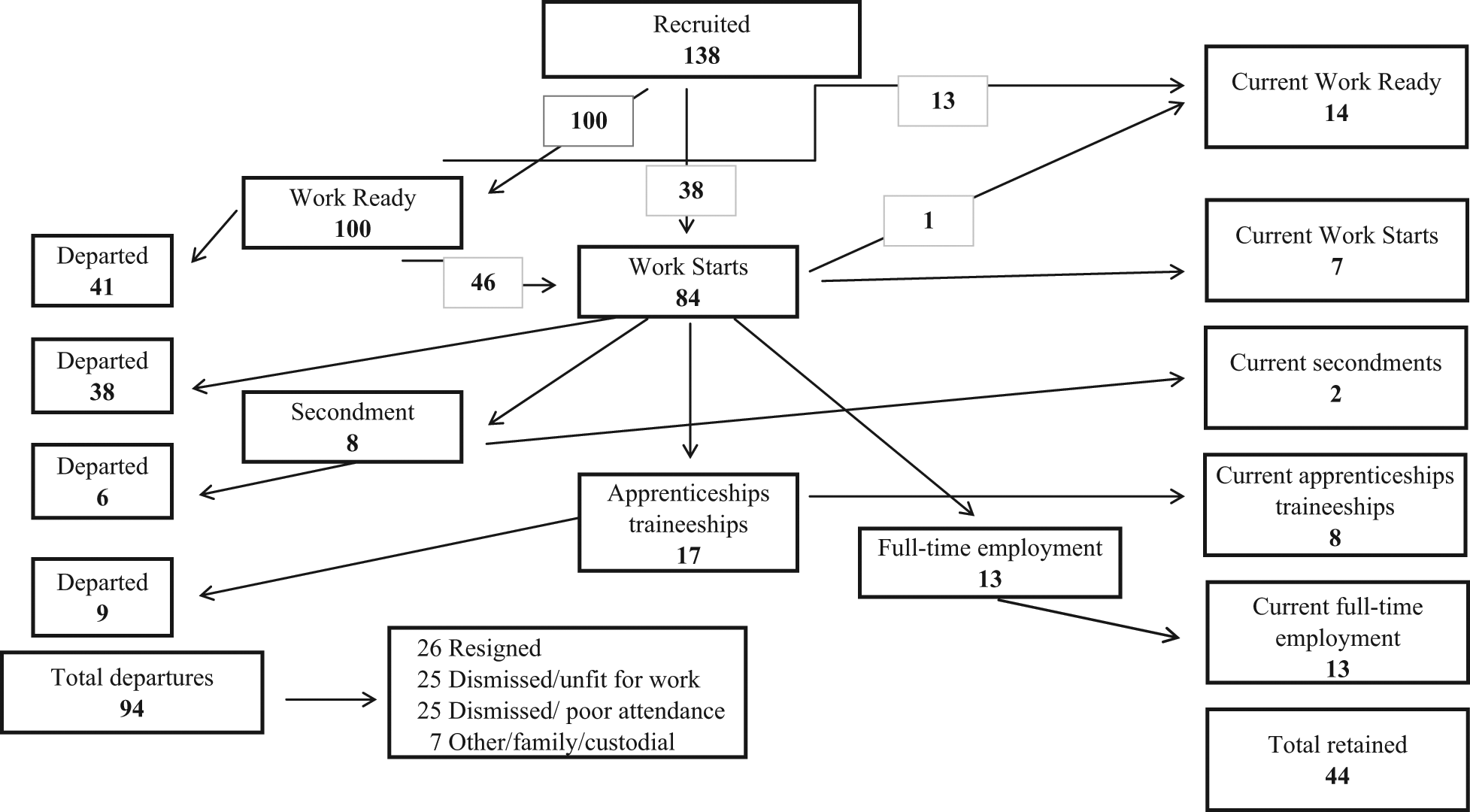
ALERT overall programme retention, May 2007–31 March 2011
Table 1 summarizes educational and vocational attainments by the number of Indigenous ALERT participants. The number of ALERT trainees who have graduated with a Certificate 1 or a Certificate 2 are few, but outstanding, and numerically increasing annually. These recipients are the first Indigenous Yolngu to be awarded this achievement by Charles Darwin University. In addition, the Yolngu males who are engaged in engineering apprenticeship are another significant first.
Also shown in Table 1 is the current vocational destiny of ALERT participants. The Rio Tinto Alcan vocational values replicate the scores in the right-hand boxes of Figure 3. However, the number of ALERT participants shown as having employment in community mainline jobs is to be regarded with caution as once these Indigenous people move away from the Nhulunbuy region their career path becomes less well known. In the Nhulunbuy region during the first three years of the programme, a total of 16 members chose to work on their homelands, and a majority (13) returned to their communities to work on specific tasks, usually a CDEP for the East Arnhem Shire. Indeed, three Indigenous people returned to the Gumatj Corporation cattle station at Garrathiya, some 100 km south-south-west of Nhulunbuy. There they have been productively engaged (with other non ALERT participants) in timber milling and dwelling construction (Pearson and Helms, 2010a).
The withdrawal of the three Yolngu men from the inaugural 2007 ALERT programme may have been the genesis of a developing Indigenous social enterprise. These three people became the core of a larger group of Indigenous Yolngu who selectively felled mature trees from the savannah forest and milled the logs to produce construction timber. Other Yolngu men, with non-Indigenous supervision, constructed two high-quality accommodation dwellings at the Garrathiya cattle station as a part of the greater goal to supply nearby outstations with cryovaced beef product (Pearson and Helms, 2010a). After the completion of this project there was further milling of timber at different locations, and this led to the construction of a large house at Dhanaya on the shore of Port Bradshaw (Pearson and Helms, 2010b). Realizing the decorative features of the milled timber (eucalyptus tetrodonta) a group of Indigenous Yolngu, with supervision by a non-Indigenous cabinet maker from Melbourne, built a number of board room tables (valued at $3500 each). The greater ambition is to extend the learned skills to make a selection of robust timber furniture that will survive the wear and tear of overcrowded, intergenerational living, which is a normal condition of Indigenous housing. Currently, a number of Yolngu are involved with the construction of three homes at Gunyangara, and a further two on the outskirts of Nhulunbuy. These endeavours are not only providing tangible products for the clan, but also the participating Yolngu are embarking on the magnificent obsession of building their future.
Discussion
The acknowledged disadvantage of Indigenous Australians is well documented and, consequently, has attracted a great deal of speculation as to how the problems might be resolved. Often the suggestions and recommendations have been provided by non-Indigenous academics, bureaucrats, politicians and interested people who collectively claim the solution lies in education and employment. While these global notions resonate with the wider community, the delineation of programmes that engage these inextricably bound topics and provide Indigenous Australians with sustainable futures have yet to emerge. It has been estimated by Dillon and Westbury (2007) that across 86 percent of Australia there are some 1200 remote Indigenous communities and the Australian governments (and their departments) have targeted three universal streams of unsubsidized work (i.e. CDEP, entrepreneurship, mining) in order to attenuate the level of Australian Indigenous disadvantage. But after 34 years of endorsement of the CDEP scheme, the intention is to restructure this political experiment into education and training. The claimed commitment to Australian Indigenous entrepreneurship also displays an absence of coherent policy. After terminating the Yolngu international trade in 1907, and installing a mechanism to provide finance for the benefit of Aboriginal enterprises in the late 1960s, today few Indigenous people are employed in sustainable enterprises (Australian Government, 2009). Last, is the prevailing assumption Indigenous people will pursue employment in the Australian mining industry to generate personal wealth and have better socio-economic conditions by adopting lifestyles requiring regular adherence to mining rosters. The evidence provided in this article reveals this universal notion is worthy of further examination.
The content of this article has four notable features. First is the scant disclosure of statistical data of Indigenous employment in the Australian mineral industry. Seldom do mining companies operating in Australia provide to the community comprehensive information about Indigenous vocational-educational programme pedagogy or content, the academic achievement of participants (voluntary and involuntary withdrawals, graduates), and the relevant work outcomes in mainstream jobs (numbers of Indigenous people in specific jobs) (Brereton and Parmenter, 2008; Tiplady and Barclay, 2007). Conveniently, the scores are broadly expressed as percentages in a range of job types, to hide missing data while avoiding responsibility for accountability. The escape clause for the mining company is that any vocational-educational achievements and work placements are sensitive and commercial dimensions of the land use agreements. Rio Tinto Alcan (Gove Operations) is to be commended for allowing the presentation of the material in this article.
Second, the evidence is that a high proportion of applicants did not proceed beyond the registration stage. When applicants had confirmed their Aboriginality by certification, but then realized that ALERT was not a variant of a government welfare programme, but that there would be a requirement for them to make a personal investment in a vocational-educational programme, many did not proceed. This finding has foundation in a statement from Pearson (2007: 26), who wrote that welfare has been accompanied by a ‘calamitous erosion of black responsibility’. A further significant loss of applicants was due to substance abuse. Lee and colleagues (2008) state that heavy cannabis use has become common in remote Indigenous communities, as well as the misuse of tobacco, alcohol and petrol. Candidate exclusion was also due to English literacy and numeracy deficits. In 2007 and 2008 applicants with relatively low literacy and numeracy competences were accepted, but many withdrew after exhibiting poor classroom behaviour and a disinclination to learn. Now candidates with less than upper primary school English and numeracy competences are seldom accepted.
A third feature is the work-relevant outcomes of the ALERT participants. Some Indigenous participants experienced the programme, but were involuntarily removed, while others left voluntarily to return to their communities, often to be drawn into cultural pursuits or to begin work for the East Arnhem Shire. Some Indigenous participants who completed the ALERT programme elected to work at the mine site, operating heavy equipment, or at the refinery in a variety of mainstream jobs (Daff and Pearson, 2009). A few Indigenous people graduated from the programme with a Certificate I in Resources and Infrastructure Operations and a smaller number with a Certificate II in streams of Administration, Engineering or Metalliferous metals. These qualifications are awarded by the Charles Darwin University. Notable is the presence of two Indigenous apprentices, one now in their second year. These achievements are substantial results as it is the first time an Australian Indigenous person has been awarded these qualifications or attained this trade status at this site. Moreover, since the Rio Tinto Alcan (Gove Operations) mine site and refinery were commissioned in 1972, these are the first Australian Indigenous people to work in mainstream jobs at these facilities. The enormity of the importance of these achievements was demonstrated at the graduation ceremony, when parents of the graduates became visibly emotional.
The fourth feature was the unexpected creation of a set of timber-based Indigenous social enterprises. A social enterprise is a hybrid commercial model that blends economic and social value creation to bring solutions to critical social problems. Indigenous housing is a significant social problem being addressed by the Yolngu people who are milling timber on their ancestral lands some 100 km south-south-west of Nhulunbuy, and building dwellings at Garrathiya, Port Bradshaw, Gunyangara and on the outskirts of Nhulunbuy. Three members of the inaugural 2007 ALERT programme were the initial core of the Indigenous social entrepreneurs of this venture, and, through the leadership of Galarrwuy Yunupingu, a number of timber-related small businesses are now operating (timber milling, house construction, furniture) (Pearson and Helms, 2010a, 2010b, 2011). Undertaking these economic social and ecological projects may have conveniently emerged following the departure of the three Indigenous participants from the ALERT programme. But it is also nice to believe their involvement with the vocational-educational programme may have been the impetus for the reinvigoration of the customary section of their lifestyle of wildlife harvesting while maintaining a strong spiritual and religious connection with their traditional lands when engaged in meaningful work. It is not uncommon to find an Indigenous employee, spear in hand (with wife and children walking behind) hunting in the savannah forest, yet the day before this man was operating mechanical or electrical equipment on a building site.
Conclusion
The notion that Australian Indigenous people will be substantially represented in the workforce of remote mining operations to improve their socio-economic status warrants revisitation. The prevailing assumption that Indigenous people would wish to acquire greater personal wealth and develop skills and competences to enable them to have the opportunity to be employed in contemporary industrial work contexts is problematic. Australian Indigenous people are in a gift-giving economy, referred to by the Yolngu as the process of humbugging. For instance, if a Yolngu person is at the checkout of Coles or Woolworths with a trolley of goods and has insufficient cash the strategy is to call out loudly in the mother tongue. Other Yolngu come and place money on the counter with the expectation in a similar situation they would also be ‘gifted’ any required money. Indigenous Australians who live in a remote region are engaged in a fundamentally different customary culture from the dominant capital-intensive mainstream national culture. A universalist view that Australian Indigenous people would want to accumulate assets and wealth is unlikely to be accurate given the value Aboriginals place on kin-based relationships and utilitarian living. The point was made by a young Yolngu man to the authors at a spectacular beach with turquoise-coloured waters: ‘You white people are mad. You work all your life to retire at a place like this. I can come here any day.’ Clearly, the universal strategies of Australia’s social policy for improving the well-being of Indigenous people need to be challenged.
A salient implication of the information presented in this article is the relevance of the phenomenon of ‘crossvergence’ for Indigenous Australians. An important debate in the cross-cultural management literature is how individual behaviours are influenced by the converging effects of the dominant institutional rules and societal values, or the diverging forces of communication networks and education. The observance of behavioural differences in geographically separate places has popularized the notion of a unique value system of crossvergence, which is a synergistic state resulting from the combination of convergence and divergence elements. Indigenous Australians have a different culture and are influenced by a holistic spiritual view of the world (Dreamtime), which is very different from the dominant society in which they are embedded, and the evidence presented shows the Indigenous subjects adopted strategies and tactics to pursue their preferences and expectations. Indeed, highlighted in the article is how the Indigenous people strengthened their cognitive processes, enabling the development and acquisition of skills and behaviours to achieve successful outcomes in work structures substantially different from, and incongruent with, the culture of their hunter-gatherer backgrounds. Crossvergence is also practised within the global landscape by contemporary organizations searching for competitive advantage, nominally expressed as sustainable cross-cultural business encounters, when engaging stakeholders from diverse nationalities and holding different dispositional nuances. Indigenous Australians are also challenged to search for a fine balance between tradition and change. Their journey of crossvergence is conducted in the narrower local or national arenas, but this lesser geographical expanse has not been less inhibiting. The sobering evidence is that few Australian Indigenous people were able to sharpen their core beliefs and deep-rooted ancient values to make them context-relevant with the dominant Australian system.
Footnotes
Funding statement
This research received no specific grant from any funding agency in the public, commercial or not-for-profit sectors.