



Abstract
Popular music constitutes an important mode of public expression which can stimulate not only a change in the public image of place but also wider social and cultural communities in shrinking cities. Focusing on the internationally successful indie-rap band Kraftklub from the Eastern German city of Chemnitz, we analyse how they visually, rhetorically and musically address shrinkage and the GDR as a critical comment on municipal memory and identity politis. Contextualizing Kraftklub’s oeuvre with the official city marketing campaign, we show that popular music scenes help establish a new, inclusive and confident post-industrial identity as well as contribute to a more positive urban image.
Keywords
Urban decline and shrinking processes are common features of the contemporary urban landscape challenging many cities worldwide. Apart from their direct economic and social effects, they can destabilize the public image, cultural significance, and collective meaning of a neighbourhood or an entire cityscape. For shrinking cities – in contrast to growing and dynamic post-industrial western cities such as London, Toronto or Munich – achieving a positive identificatory potential often poses a great challenge and involves overcoming already existing negative spatial connotations. Contrary to the conventional capitalist growth paradigm, however, declining and shrinking urban areas are often also places of social innovation, artistic creativity, identity reconfigurations, and thus ultimately great economic opportunities developing on a grassroots level. This has been especially pronounced in the realm of popular music, as evinced by the emergence of hip-hop in New York’s South Bronx in the 1970s (Forman, 2002; Rose, 1994), techno and house in Detroit in the 1980s, Britpop and drum and bass around Manchester, UK, or death metal in Gothenburg, Sweden, in the 1990s. Musical developments not only have the potential to re-make and re-signify the social and physical environment from the bottom up but also to provide a city with new images and new identification potential (Cohen, 2007).
This article explores how the Eastern German city of Chemnitz responds to urban shrinkage by focusing on the different strategies pursued by the city’s official marketing campaign and by the popular local indie-rap quintet Kraftklub. Chemnitz is the third largest city in what is now the state of Saxony in Eastern Germany and has an eventful history marked by growth, system change, renaming and decline. Since their founding in 2010, the indie-rap band Kraftklub has not only emerged as the voice of Chemnitz’s younger population and their ambivalent perspectives on their hometown but has also become successful across the German-speaking music landscape. We argue that while the official marketing campaign silences the double rupture of post-1989 socio-political change and shrinkage, Kraftklub construct a complex and place-specific image of Chemnitz that neither ignores nor negates the city’s past and present problems. We will demonstrate how the band presents Chemnitz as a place of both alienation and belonging, of troubles and of opportunity by strategically subverting its conventional image as a drab and decaying city through appropriating and cultivating its underdog image and explicitly addressing both its GDR (German Democratic Republic) past and its post-industrial present. We will point out how Kraftklub’s grassroots approach provides a witty collective identification potential as an alternative to the exclusive and one-sided top-down marketing strategies used by the municipal administration. Ultimately, we will discuss why Kraftklub’s creative mixing of various popular music genres and their ironic self-presentation has also resonated well with audiences in other German-speaking regions afflicted by similar problems. Overall, Kraftklub is thus a significant example of the symbolic as well as economic relevance of creative practices in addressing and negotiating structural change as well as locational marginality from the bottom up. 1
Chemnitz’s double rupture: political change and urban shrinkage
In the past 25 years, two main events have had a tremendous impact on Chemnitz as a whole. The first rupture was the fall of the Berlin Wall in 1989 which resulted in large-scale socio-political change. The second rupture is closely intertwined with the end of the Cold War as the political changes also resulted in the massive deindustrialization of the city’s production base, the demolition of old housing stock and abandoned factories, in unemployment, and in a severe shrinkage of the population. These two intertwined developments can be described as a double rupture that fundamentally shape the experience of many Chemnitzers, and that Kraftklub also engage with in their music. This section aims to explore the history of Chemnitz as a dialectical history of growth and shrinkage. For the present purpose, we understand shrinking as a post-growth urban phenomenon which not only has deleterious effects but also has a productive side. The framework of the double rupture ultimately allows us to understand how Kraftklub address Chemnitz’s present problems in terms of language, music, genres, styles and spatialized narratives.
In the 19th century, Chemnitz experienced unprecedented growth as the epicentre of Saxony’s industrialization. Particularly its textile industry and machine engineering factories attracted workers from the whole region (Keller, 2002: 311–21), resulting in a peak population of 360,000 in 1930 (Kresta, 2010). Moreover, the wealth generated in Chemnitz also turned it into a stronghold of economic, social and cultural progress, not only in Saxony but in all of Germany. As an industrial centre, however, which also provided the city with the nickname of ‘Manchester of Saxony’ (Weiske, 2002: 243–4), Chemnitz was a major target in the Allied bombings during the Second World War, leading to the destruction of large parts of the city. In spite of this destruction and the subsequent occupation by Soviet troops, in the GDR the city soon regained its status as an industrial centre (Weiske, 2003: 100) with an output equalling one-third of the GDR’s national product (Pollmer, 2010).
The enormous rebuilding effort after the Second World War was accompanied by the socialist government’s decision in 1953 to change the city’s long-standing name into Karl-Marx-Stadt – Karl Marx City. Intended as a name of honour and socialist responsibility, it gave additional thrust to reconstructing the city as a socialist model city, with large avenues for political demonstrations in the city centre surrounded by rows of Plattenbau prefabricated housing complexes (Weiske, 2003: 105). This government attempt to fashion a new kind of city in the name of the founder of its reigning ideology is best symbolized by the monumental 22-foot high bust of Karl Marx, sculpted by Soviet artist Lev Kerbel and erected at the city’s central downtown square in 1971, which was not accepted by the local population for a long time because of the top-down nature of the political decision (Weiske, 2003: 102).
The fall of the Berlin Wall and German reunification in 1990 not only resulted in radical political, social and cultural transformations, but was also especially hard on the city’s economy. While the city had experienced dismantling of industry by Soviet forces already in the early Cold War of the 1940s and 1950s, reunification was followed by deindustrialization on an unprecedented scale. The city’s former name of Chemnitz was restored in 1990, while the city’s employment situation deteriorated as many factories, including traditional companies such as Diamant, were closed within the space of a few years due to their low profitability and high environmental pollution. Over the past 20 years, the privatization, restructuring or closing of factories decimated the industrial workforce, which decreased from 43,000 employees to roughly 4,200 in 2010 (IHK Chemnitz, 2011: 16–17). As a result, many elderly and lower-skilled people became unemployed so that in recent years, about 12–13% of the locals received welfare benefits (Statistik Sachsen, 2014d).
The dire economic situation since 1989 has been exacerbated by an increasing out-migration of especially young and educated segments of the population. Similar to other shrinking cities around the world, Chemnitz suffered from both demographic decline – by 2013 the population had decreased to just above 242,000 from c. 323,000 in 1989 (CWE, 2008; Statistik Sachsen, 2014b) – and an attendant rapid ageing process. The average age of the population has increased from 39.7 years in 1990 to 47.4 years in 2011, making the average resident in Chemnitz older than their equivalents in Dresden (43.1), Leipzig (43.9) (Statistik Sachsen, 2014c), or Saxony (46.5) (Statistik Sachsen, 2014a). This demographic change results in transformed power relationships, where inhabitants and local politicians come from a predominantly elderly and conservative middle class, which views dynamic youth and subcultural movements in the city rather sceptically.
Economic and demographic shrinkage has contributed to generally low self-esteem among the population, particularly in contrast to its burgeoning perennial Saxon rivals: the newly hip city of Leipzig and the baroque city of Dresden (Weiske, 2002: 242). This is exacerbated by Chemnitz’s primarily negative image in unified Germany. What had once been the pride of socialist urban planning has since become widely regarded as drab and grey, even inhuman, totalitarian architecture, leading to a general perception of Chemnitz as not only an ugly and boring but also failing working-class city caught in decline and populated either by elderly people nostalgically longing for GDR times or by neo-Nazis (Großmann, 2007: 89–106).
However, there is also another side to Chemnitz which is often overlooked, especially by people from outside of Chemnitz. Not only has Chemnitz long been a major city of sports and of arts, but it also has a lively music scene of rock, electronic music and hip-hop. Between 1998 and 2006, the Splash! Festival, a hip-hop and reggae music festival, was held in Chemnitz. The festival started out as an extended jam session by local hip hoppers and developed into an event advertised as Europe’s largest hip-hop and reggae festivals (splash! Entertainment, 2014).
We argue that popular music is a privileged field to negotiate the double rupture of political change and urban shrinkage, which we treat as a contested cultural narrative that also includes non-economic aspects of deindustrialization. Different narratives of transformation are created by different social groups. Each of these narratives highlights particular aspects just as it silences others, an issue that will be discussed with regard to the marketing campaign ‘Stadt der Moderne’. In their songs and music videos, Kraftklub directly address this double rupture audio-visually and verbally by engaging both the local conditions as well as musical and visual traditions of representing urban and economic transformations. These bottom-up counter-narratives highlight the importance of everyday culture and popular music as a way of regenerating local identities in deindustrializing contexts. The negotiation of the double rupture is thus ultimately a conflicting terrain which fosters a critical discourse on the future of the global capitalist economy as well as local urban contexts.
The ‘Stadt der Moderne’ city marketing campaign: tabooing the double rupture of shrinkage and system change
Instead of trying to capitalize on the creative and identitarian potential of Kraftklub, especially for young Chemnitzers, the city administration turned to established international recipes of cultural urban place marketing in advertising Chemnitz as ‘Stadt der Moderne’ (‘City of Modernity/Modernism’). 2 Launched in 2007, it is a strategic marketing measure by the city of Chemnitz and the City-Management und Tourismus Chemnitz GmbH (CMT) with the aim of achieving at least 500,000 overnight stays by 2017 as a benchmark of image change (CMT, 2008a). A successor to more playful campaigns such as the 1990s slogan ‘Chemnitz – Stadt mit Köpfchen’, that is, ‘Chemnitz – Heady City’ (the head referring to the Karl Marx Monument and general smartness) or the early 2000s slogan ‘InnovationsWerkStadt’ (‘InnovationWorkShop/City’) – alluding to the city’s industrial past and present – the ‘Stadt der Moderne’ campaign deliberately turned to high culture in order to improve the city’s image and attract affluent tourists to boost the local economy. With this focus, the campaign excluded the two experiences which have deeply shaped the lives of many Chemnitzers in the late 20th century: the painful experience of shrinkage and deindustrialization, and the ambivalent experience of GDR history and turbulent socio-political change afterwards.
In their 2008 press release ‘Warum ist Chemnitz Stadt der Moderne?’ (‘Why is Chemnitz the city of modernism?’), the CMT introduced two meanings of ‘Moderne’, as an epoch and as an attitude: ‘During Classical Modernism, Chemnitz experienced its first major boom, which has shaped the face of the city and its self-esteem until today. However, modernism also means an attitude of critical thinking, of progress and the courage for perpetual renewal’ (CMT, 2008b). Representative of the whole campaign, the press release tried to stabilize Chemnitz’s image by connecting it to a period of economic and artistic growth and prosperity peaking around the turn of the 20th century. It names industrial mogul Richard Hartmann as one of the most important entrepreneurs in Chemnitz whose Sächsische Maschinenfabrik (Saxon Engineering Factory) produced locomotives, spinning machines and steam engines that decisively contributed to Chemnitz’s position among the leading industrial regions in Germany. It also mentions modernist architecture such as the Villa Esche by the renowned architect Henry van de Velde, the award-winning Kunstsammlungen Chemnitz (Museum of Fine Arts), the nearby opera house, impressive late 19th-century factory buildings dubbed ‘industrial cathedrals’, and the art nouveau neighbourhood Kaßberg. Finally, it connects modernism with the Chemnitz-born expressionist painters Karl Schmidt-Rotluff and Ernst-Ludwig Kirchner or the Bauhaus designer Marianne Brandt.
By using the term ‘Moderne’ with its reference to both modernism and modernity, the marketing campaign verbally and visually connects the economic and cultural boom era of modernism with a contemporary culture of innovation. The slogan ‘Moderne ist in Chemnitz Prinzip’ (‘Modernism is a principle in Chemnitz’) defines the campaign. Beneath the heading, the website shows a large photo with a panoramic view from the inside of a department store designed by the renowned architecture company ingenhoven architects that opened in 2003 (Ingenhoven, 2015). The building’s glass façade and soaring white structure signify the city’s post-reunification achievement in rebuilding the city centre in the late 1990s and early 2000s with the involvement of famous international architects, including Helmut Jahn and Hans Kollhoff. In the background of the picture is the art nouveau city hall, built in 1910, symbolizing the early 20th-century boom years. The photograph engages in a dialogue between the buoyant modernism of the early 20th century and the architectural modernism of the early 21st century. The marketing campaign thus also re-frames the city’s recent history as one of strong industrial growth, a strategy which is not only geared to upper middle-class tourists but also to potential investors.
While accurate in its thematic conception, the campaign is problematic on several counts. First, the definition of ‘Moderne’ in the city marketing campaign refers only to established ‘high’ cultural forms of art and architecture. It leaves out Chemnitz’s popular culture pioneers, such as cinematographer Guido Seeber, its vernacular architecture such as movie theatres, and its working-class culture like the workers’ associations which were an integral part of public life during the Weimar Republic (Keller, 2002: 372–6). Second, it also leaves out the various political and cultural conflicts between the working classes and the urban elites that Chemnitz, like all of Saxony, had to face in the early 20th century (Kassner, 2000: 14). Industrialization had resulted in exploitative work relations, low wages, monotonous operation cycles and severe air pollution, which gave Chemnitz its nickname ‘Rußchamtz’ (‘Grime Chemnitz’; Weiske, 2002: 237). These conditions led to severe riots in the summer of 1919 that claimed several lives and which the Saxon state government could only quash with police and military force (Bramke, 1998: 39). In the 1920s, Chemnitz’s population faced inflation, a severe economic downturn coupled with high unemployment and political upheavals, and the subsequent rise of the National Socialist regime transformed Chemnitz into a centre of the German defence industry (Bramke, 1998: 35, 38, 53).
The city did in fact not experience a unified ‘smooth’ era of modernism with uninterrupted growth and progress, but had its share of ideological and cultural battles. The CMT campaign deliberately evaded this complex past and instead presented a romanticized version of modernism as a successful period of distinctive high culture in order to attract the financially well-off cultural tourists. This strategy of ‘smoothing out’ (Jones quoted in Lashua et al., 2009: 131) by creating a selective memory echoes ethnomusicologist Lise Waxer’s observation that ‘during times of change or uncertainty, popular memories are often recalled by civic and cultural agencies to attempt to fix meanings to particular power-laden symbols of unified cultural identities’ (Waxer quoted in Lashua et al., 2009: 131).
Third, it ‘smooths out’ and marginalizes the city’s GDR past as Karl-Marx-Stadt, which is still present not only architecturally but also in public and private memories and narratives. The celebratory emphasis on the city’s presumably glorious past and present silences the more pressing issues of the present. In this way, the campaign exhibited a striking disregard of large parts of Chemnitz’s current population, for many of whom both the GDR past as well as working-class traditions play an important role in their identity construction and self-esteem, and who resented the elitist and exclusionary notion of culture forced upon them.
As a result, the top-down campaign faced broad resistance by the public: Wolfgang Ebert, director of the German Society of Industrial Culture, criticized the slogan for being rather cold and insufficiently emotional and human in the local newspaper Freie Presse (Uhlig, 2007: 15). This was supported by a survey in 2010 which revealed that only 35% of the interviewees thought that the slogan fitted the city, and one-third of all interviewees had negative associations to the slogan (Zanger and Kaminski, 2010). Respondents criticized, in particular, the difficulty of comprehending the slogan and suggested a revision of the campaign that included an emphasis on the residents’ collective experiences.
CMT’s strategy to avoid such problematic topics resonates with scholarly observations on the public and political discourse in shrinking cities. German sociologist Christine Hannemann states that ‘up until recently it was impossible to “sell” this topic [of shrinkage] politically, especially on the municipal level’ (2002: 17). Moreover, as sociologist Katrin Großmann argues, local authorities have treated shrinkage as a taboo for a long time. Yet she claims that those shrinking processes must be accepted as a new ‘paradigm’ in order to actively construct a new collective identity and urban planning (2007: 252) – not as an exclusionary discourse, but as an inclusionary community effort. These critical assessments of the efficacy of the CMT marketing campaign have been proven right, as it was neither successful in reaching Chemnitz citizens or significantly improving the city’s image, nor did it lead to the hoped for local economy boost through tourism.
Addressing the double rupture: Kraftklub’s Mit K
In contrast to the official, top-down marketing approach which silences the double rupture of system change and shrinkage in Chemnitz, Kraftklub address those changes openly and appropriated them by means of irony and humour. Founded in 2009, Kraftklub have become highly successful across Germany, winning the prestigious German New Music Award in 2010 before releasing their first album Mit K in January 2012, which immediately rose to number one on the national album charts (Chartsurfer, 2015). Their songs, music videos, and especially their energetic and usually sold-out concerts have garnered them a devoted national fan base.
It is especially their open engagement with and negotiation of Chemnitz’s GDR past and post-industrial shrinking present that is responsible for their fervent local support and their national success. This is particularly visible in the album’s sixth track titled ‘Karl-Marx-Stadt’. While explicitly set in the present, the lyrics and the use of the East German name Karl-Marx-Stadt instead of the post-socialist name Chemnitz establish a strong connection to the city’s GDR past. However, the song does not only give a voice to the often problematic realities of Chemnitzers, but also appropriates and subverts the underdog and outsider image of Chemnitz.
The song is like a hymn to a dysfunctional city in decline with a complex past. The speaker, who refers to himself as a ‘clueless slacker’ (‘verpeilter Hänger’) establishes Chemnitz as an abandoned, disillusioned grey city with empty streets and dilapidated infrastructure. Describing the city as populated by Nazis, retirees, hooligans and unemployed (‘In einer Stadt, die voll mit Nazis ist, Rentnern und Hools’), the speaker emphasizes that he is not responsible for the grim situation. He also refers to ‘Hartz-IV’, the German welfare payments which many unemployed Chemnitzers depend on. Rather, the speaker’s precarious existence is blamed on the new capitalist system and the political elites who failed to address the problems caused by the double rupture. With this, a recurrent and notorious mass media trope casting East Germans as constant complainers is taken up in order to satirize both that attitude of lament and the media stereotyping, while at the same time addressing the very real problems of many declining cities.
These observations on the current socio-economic situation in Chemnitz are contrasted with stereotypical aspects of daily life in GDR-era Karl-Marx-Stadt. The title, the reference to ‘Diamant-Räder’ (‘bikes made by Diamant’), and the line ‘Ich cruise Banane essend im Trabant um den Karl-Marx-Kopf’ (‘I cruise around the Karl Marx head in a Trabant car, eating a banana’) explicitly point to cultural landmarks of the GDR. They reference the famous bikes produced by Diamant in Karl-Marx-Stadt, the legendary Trabant car, originally manufactured in the nearby city of Zwickau and ubiquitous throughout the GDR, the East Germans’ supposed craving for tropical fruits like bananas, and, of course, the Karl Marx Monument as the quintessential GDR monument. While such references to East German products, art and lifestyle are almost completely absent in the ‘Stadt der Moderne’ marketing campaign, Kraftklub consciously promote them as a source of local (and regional) identity and heritage in the song ‘Karl-Marx-Stadt’.
This is especially true for the prominent Karl Marx Monument Kraftklub mentions. It is an important point of identification for many Chemnitzers as it reminds them of their and their city’s history. Silenced by the official marketing campaign as a signifier for the socialist regime, the ‘Nischel’ (its local colloquial term) has, since the late 1990s, found its way into the local alternative culture, where it repeatedly appears in graffiti, on flyers and stickers promoting music and other events.
Especially in hip-hop culture, the massive sculpture plays a prominent role. Examples include local hip-hop crew Epileptik Undercover, who use the bust wearing a baseball cap with their logo, as seen on the sticker advertising their 2008 album (Figure 1). Also the flyer for the ‘Double Trouble’ party series at the Cube Club shows the ‘Nischel’ (Figure 2) with hip-hop style baggy pants and sneakers, underneath another socialist signifier, the 24-storey high-rise building of the Interhotel Kongress from 1974.
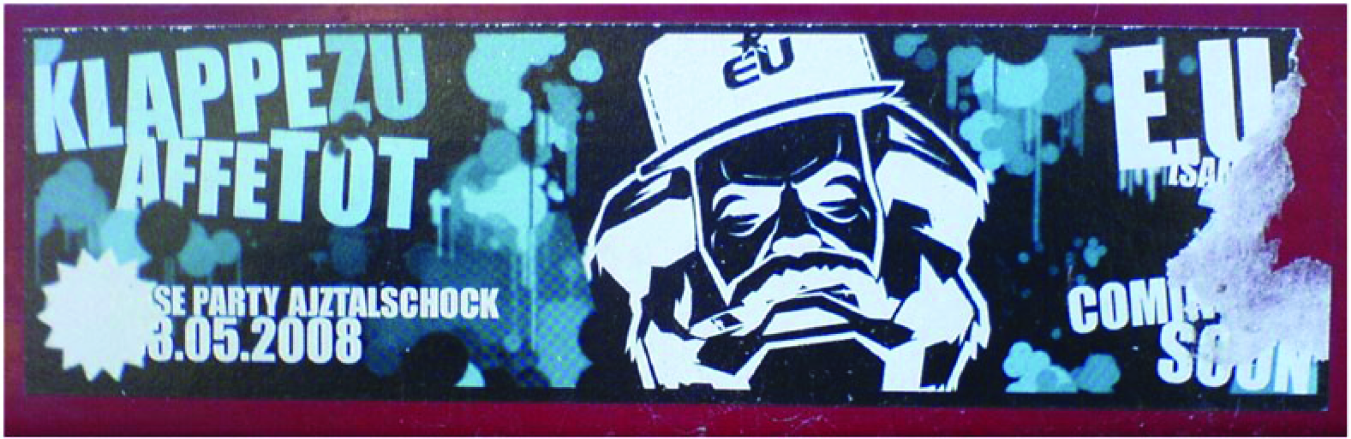
‘Klappe zu Affe tot’ (sticker).
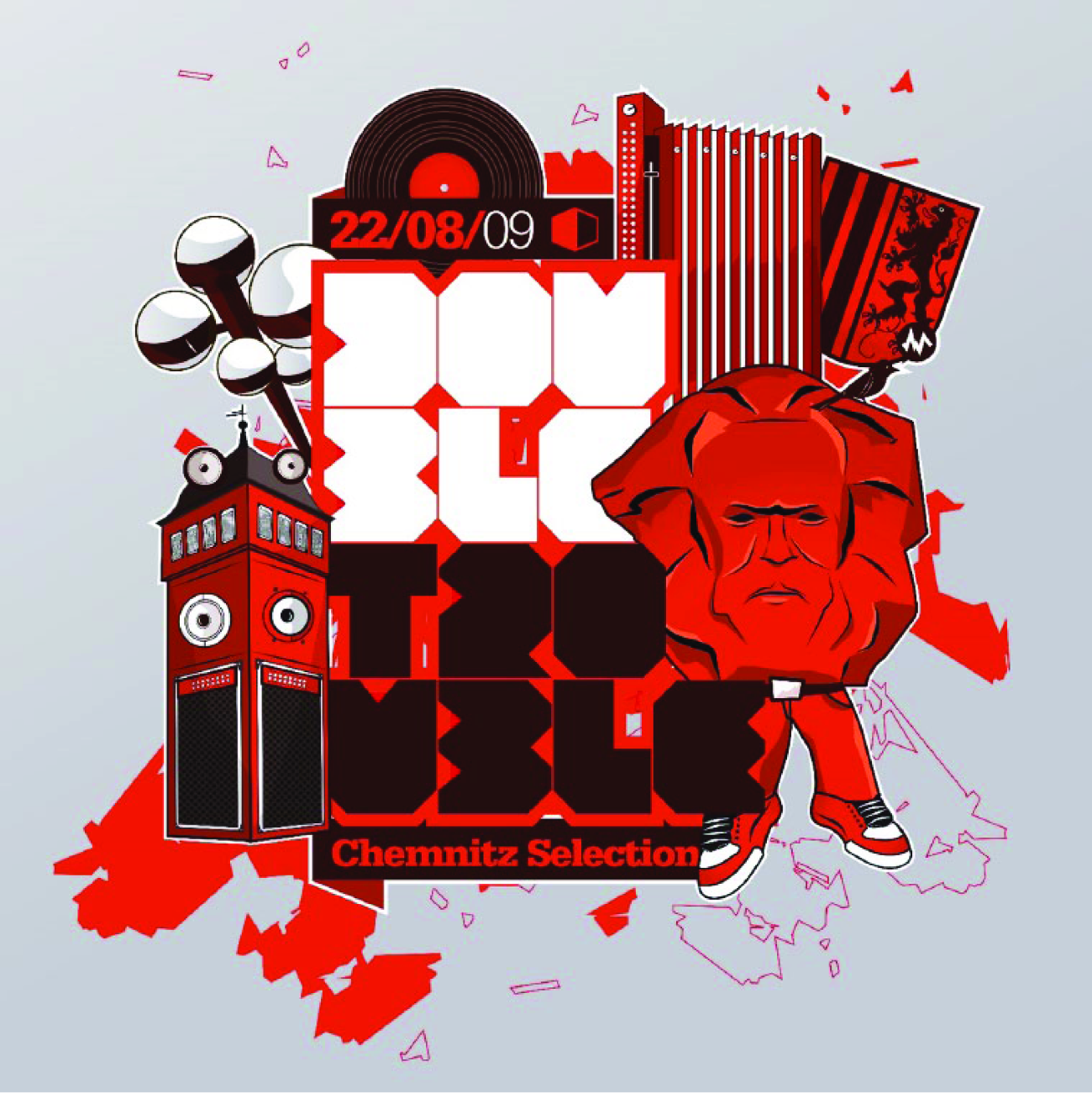
Karl Marx head as local pop cultural icon.
In contrast to the municipal marketing campaign, Kraftklub engage in this grassroots negotiation and appropriation of local GDR sensibilities. However, unlike the nostalgic and romanticized accounts of the GDR in the so-called Wende films of the late 1990s and early 2000s such as Sonnenallee or Goodbye Lenin! (Enns, 2007), Kraftklub deliberately conflate East and West German imaginaries. The song suggests that an East German identity and a post-reunification and West German identity (signified in the Anglicized verb ‘ich cruise’) can be performed in harmony. In this way, both the socialist heritage as well as the capitalist present are selectively accepted and affirmed. However, by naming three clichéd signifiers of socialism in one line alone, Kraftklub also exaggerate their influence, thus poking fun at the still dominant stereotypes about East Germany as well as ironically appropriating them as part of the past. Their celebration of the Karl Marx head shows that this socialist monument is part of local history and can be a source of local pride and identification, even after the fall of the GDR. Even for a broader audience, the sculpture is easily accessible and can be read an icon of anti-capitalism similar to the popular Che Guevara head.
Instead of marginalizing or lambasting post-industrial and post-socialist Chemnitz, the song ‘Karl-Marx-Stadt’ uses the above-mentioned elements to fashion not only the speaker but also the whole city as an underdog and loser. Particularly the chorus ‘Ich komm aus Karl-Marx-Stadt, bin ein Verlierer Baby, Original Ostler’ (‘I come from Karl-Marx-Stadt, I’m a loser, baby, original Easterner’) uses ironic appropriation to argue for a self-confident acceptance of the city’s problems. The line draws on two intertextual references. The first one is Beck’s American indie hit ‘Loser’ (1994) which is referenced in the sampled melody and the translated segment ‘bin ein Verlierer, Baby’. The second uses the alliteration ‘Original Ostler’ as an allusion to the American West Coast rapper Ice-T’s 1991 album and term ‘original gangster’. Kraftklub thereby establish a connection that deliberately constructs the German East, Chemnitz, and themselves as knowledgeable, rough and real, and thus as hip and cool. Drawing on American popular music influences suggests that urban problems are not just a phenomenon of post-reunification Eastern Germany, but that unemployment, lack of perspective and marginalization have a global dimension. In creating intertextual references dealing with failure (‘Loser’) and tough city life (Ice-T’s gangster attitude), Kraftklub create a musical and generic link to socially marginalized groups and to declining urban contexts in especially American culture. At the same time, Kraftklub employ the culturally well-established commercial appeal of the subversive underdog (Frank, 1997) to strategically position themselves in the musical marketplace.
‘Karl-Marx-Stadt’ is reminiscent of an earlier hymn to a deindustrializing marginalized German city, singer-songwriter Herbert Grönemeyer’s ode ‘Bochum’ (1984) to the eponymous West German Ruhr Area city. However, in contrast to Grönemeyer’s enumeration of Bochum’s charming quirks (its unrecognized beauty, its hard-working and honest people, its pigeon breeders and its soccer club), Kraftklub directly address the negative stereotypes of Chemnitz/Karl-Marx-Stadt. While ‘Bochum’ is primarily a manifestation of local pride, ‘Karl-Marx-Stadt’ takes the sonic deindustrialization theme much further by combining local pride with a postmodern ironic appropriation of the underdog image as well as with transnational pop cultural references. This resonates well with contemporary audiences: Kraftklub is successful across German-speaking regions as they offer alternative sources of identity formation for Chemnitzers and non-Chemnitzers alike.
Indeed, this subversive pride in the urban underdog status is a powerful message not only in East Germany, as reactions by both fans and critics show. Clemens Meyer (2012: 44), a contemporary German writer who visited the band’s final tour concert in Dortmund, near Bochum, explains the appeal of ‘Karl-Marx-Stadt’ in the German edition of the Rolling Stone magazine: Here, in the run-down Ruhr Area, here between waste lands […] in the former land of black gold [coal], where coal mines and furnaces are shut down, both overground and underground, here people understand the sensibility that is expressed in this song.
He shows that Kraftklub’s message that cities commonly denounced as ugly, boring, or failing possess not only powerful markers of identity and heritage but often also lively creative music and subcultural scenes that can be a source of local pride and an expression of creative achievement resonates well in many mid-size peripheral or declining Western German cities, such as Dortmund.
This symbolic subversion of spatial power relations from the margins is perhaps best expressed in Kraftklub’s song ‘Ich will nicht nach Berlin’ (‘I don’t want to move to Berlin’). One of the most popular tracks on the album Mit K, Kraftklub originally performed it as contestants for their home state of Saxony at the Bundesvision Song Contest in 2011, an annual event where musicians from all 16 German states compete with each other. With its direct attack on Berlin, which since the 1990s has become one of the most vibrant and polarizing cultural centres in Germany, and particularly on Berlin’s notorious hipster culture, the song enjoys great popularity all over Germany, including Berlin.
Kraftklub openly and critically challenge the prevalent notion that Berlin is the only cool place to be in Germany, a common view among young Germans that is amplified by frequent mass media reports like Peter Gumbel’s article in Time ‘Hip Berlin: Europe’s capital of cool’ (2009; Colomb, 2012). The song mocks the hollow rhetoric of these reports and of Berlin’s hipster culture with its emphasis on lifestyle, fashion and aesthetics (references to tote bags, retro glasses, undercut hairstyles, Club Mate soda and soy milk). The imaginary dialogue in which the speaker’s enthusiastic idea of a ‘creative’ job is a fashion blog with photographs of street art and interesting people – ‘as long as it’s in Berlin’ – exposes hipsters and their much-touted creativity as random and trivial. It also ridicules Berlin’s self-representation as a creative city, a dominant marketing narrative that connects neoliberal economic policies focusing on the creative industries (Colomb, 2012) with the ascendancy of the ‘creative’ Berlin hipster to project an image of a cool, hip and artsy Berlin lifestyle popular among German youths.
With their catchy chorus ‘Ich will nicht nach Berlin!’, Kraftklub directly acknowledge, yet resist, the pressure to move from Chemnitz to Berlin in order to be regarded ‘cool and creative’. Kraftklub here assume the voice of youths from other parts of Germany considered peripheral who are similarly frustrated by the Berlin hype but whose perspective is marginalized in the media. The band, however, goes beyond expressing a widely shared discontent. Their whole album, and particularly songs such as ‘Karl-Marx-Stadt’, also prove that successful creative works may emerge from peripheral and marginalized regions. They thus offer themselves and their pride in the troubled regions of Chemnitz and East Germany as a model for other young and/or creative people all over Germany.
Moreover, they position Chemnitz on a similar, or even superior and more avant-garde, level of cultural and musical creativity than the established centres of Berlin and Hamburg. Next to Berlin, Hamburg is a hub of the German music industry, which, since the 1990s, has become famous for the so-called ‘Hamburger Schule’, a loose group of German-language singer-songwriter indie rock bands like Tocotronic and Die Sterne (Grimm, 2014). Similar to their tongue-in-cheek rejection of Berlin’s hipster culture, Kraftklub also distance themselves from these serious-minded and intellectual Hamburg bands. In the first title of Mit K, ‘Eure Mädchen’, Kraftklub emphasize their difference from, and thus their superiority, to both bands: ‘Wir sind / nicht Tocotronic / und wir sind auch nicht Die Sterne’ (‘We are / not Tocotronic / and we are also not Die Sterne’). The jokes about their lack of credibility – ‘Wir sind nicht kredibil! / Wir machen Popmusik!’ (‘We are not credible! / We make pop music!’) – and the boasts about the success of their music with the girls establish Kraftklub as the playful, witty and irreverent new avant-garde. The band constructs an outsider image of hip rebelliousness that builds on and exploits the similarly structured musical conventions of hip-hop, indie rock and punk, yet refuses easy stylistic, generic and rhetorical classification. 3 Kraftklub thereby attempt to subvert established notions of the hierarchy of genre and place in the music business. Their place of marginalized and maligned Chemnitz in this hierarchy is thus inverted and it is seen as a place of freedom and creative resistance. With this redefinition of categories such as decline, periphery and marginality, the ambivalent life experiences of East German youths between decline and creative expression are thus constructed as avant-garde – another strong message elevating Chemnitz and the East.
This is also emphasized by the music video of ‘Ich will nicht nach Berlin’, which again uses the Karl Marx head as a sign of subversion and a symbol of new localized identity politics. Kraftklub have taken a helicopter to the top of a building overlooking grey and monotonous East Berlin and spread their red-coloured flyers and a banner depicting Chemnitz’s Karl Marx Monument over Berlin’s GDR-era Plattenbauten (Figure 3), thus symbolically (re-)claiming the capital of the unified Germany, Berlin, in a rebellious and defiant gesture.
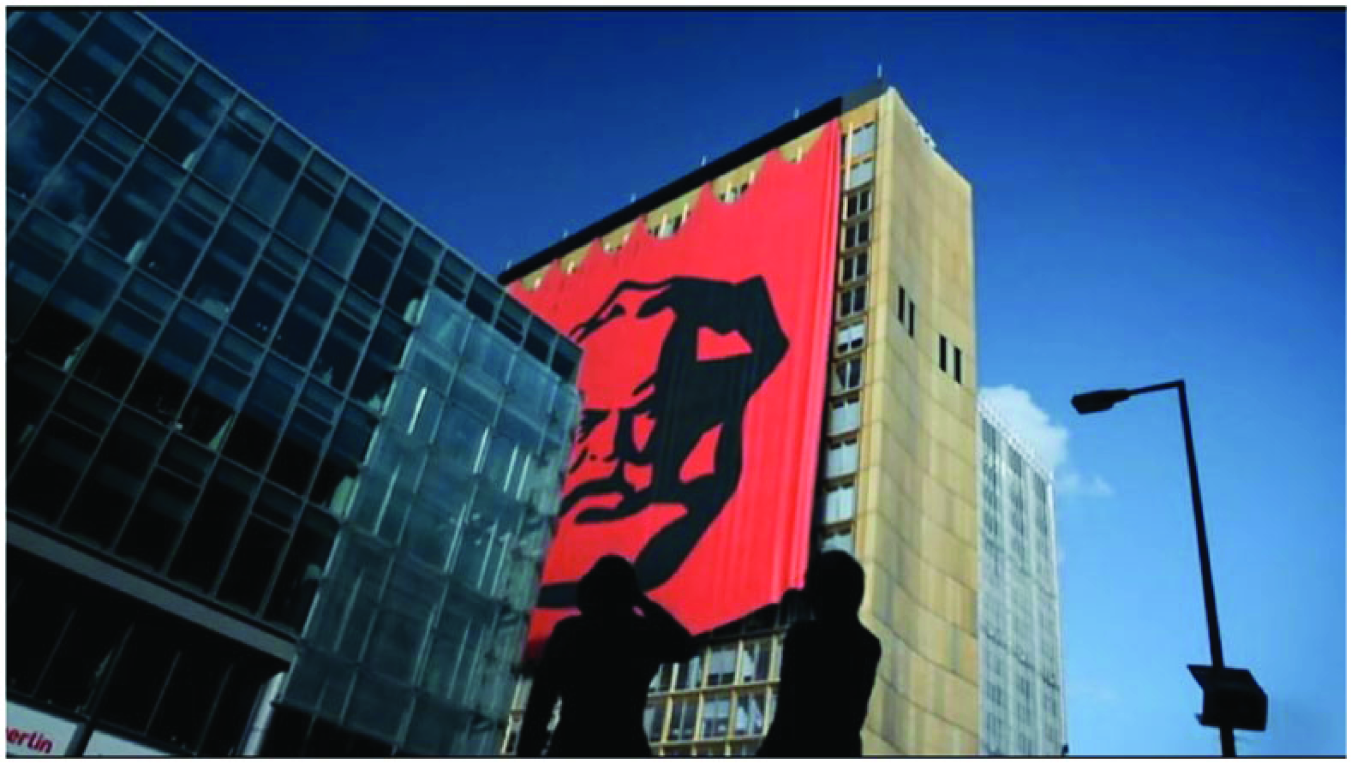
‘Ich will nicht nach Berlin’. Music Video.
With this spatial, sonic and cultural act of pride, the band literally claims the cityscape in Germany’s capital, thus symbolically subverting the power relationships between the growing capital Berlin and the declining city of Chemnitz: Chemnitz, symbolized in the music video by the giant stylized red-and-black design of the Karl Marx head, is superior to Berlin. At the same time, the hoisting of the Karl Marx head is also a comment on post-Cold War Berlin’s forgetful and deliberate erasure of its GDR history, exemplified by the tearing down of the GDR parliament building, the Palast der Republik, in 2008 (Falser, 2011). Pointing to Berlin’s GDR past and Chemnitz’s self-styled creative power, Kraftklub deliberately conflate the common western perception of Eastern Germany in general and the shrinking city of Chemnitz in particular, thus exposing the clichés to ridicule and using them for a new kind of German identity politics.
Kraftklub is thus a powerful example of how youth and subcultural music scenes are able to generate not only local pride in a shrinking city such as Chemnitz but also effect a change in its wider public image. Since Kraftklub’s first single, fans from all over Germany have been travelling to Chemnitz to hear the band play or attend the parties regularly organized by its members in the club Atomino. 4 Especially in their direct address of the problems associated with shrinkage and their creative appropriation of Chemnitz’s GDR past, they have forged a more inclusive identity of Chemnitz, as local cultural activist Marcus Nicer describes in the city magazine Stadtstreicher already in November 2011: ‘With all the city’s success frenzy and the happy faces of the people, into which I look, I see pride.’
Kraftklub, more than 20 years after the fall of the Berlin Wall, have also contributed to a more relaxed attitude towards remnants of the GDR, even appropriating some of them and making them cool in the process. For a promotional photo (Figure 4) of Mit K, Kraftklub posed in front of a typical GDR-era Plattenbau partly covered with large banners displaying their logo – two hands with the fingers forming two mirror-inverted ‘K’s’ mocking gang symbolism.
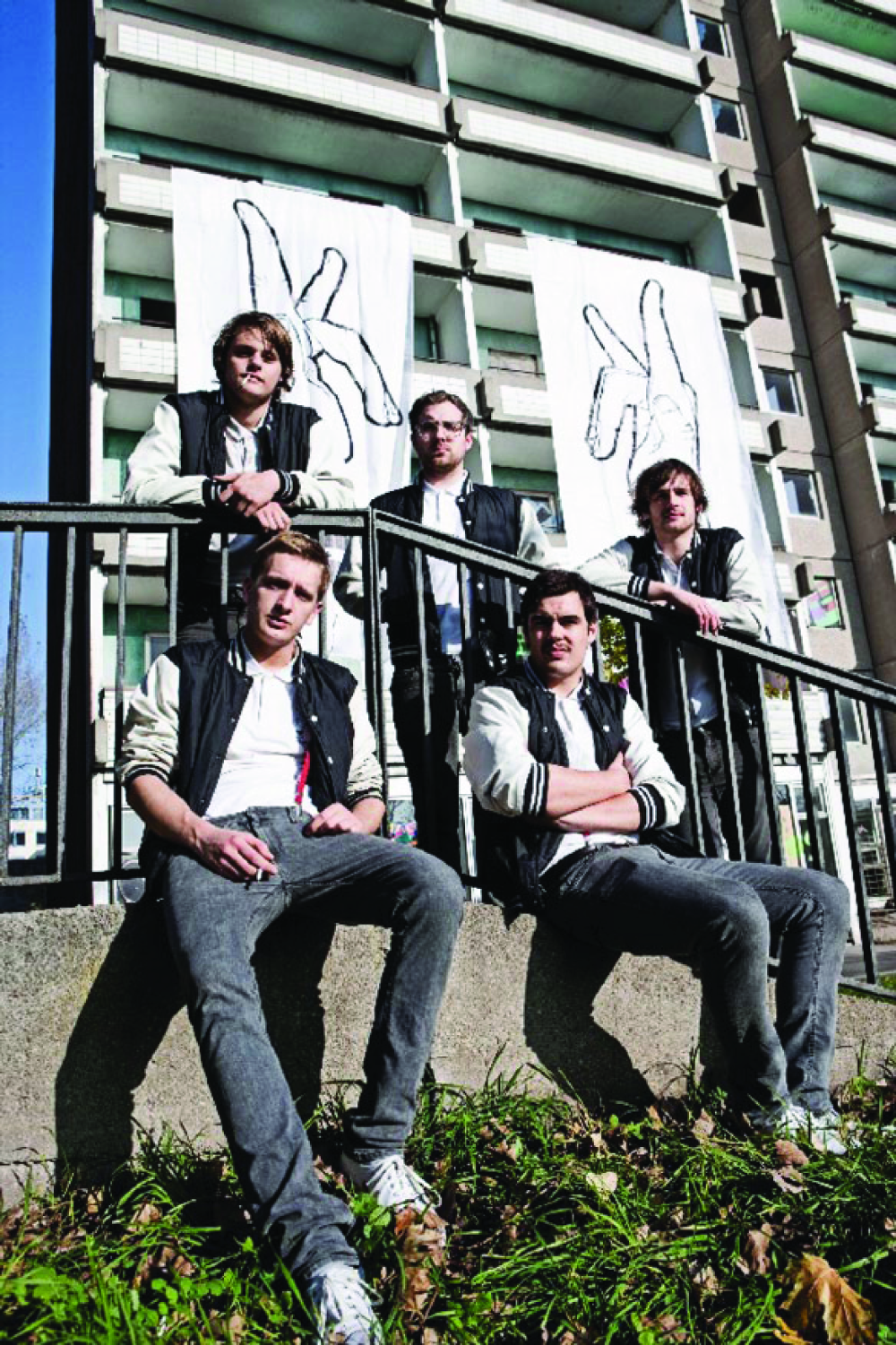
Kraftklub.
Similar to the banner in their video, this banner prominently links Kraftklub with a building type which is as essential a part of an East German identity as it has been an object of West German ridicule due to its grey and monotonous exterior. Kraftklub here employ their origins in a Chemnitz shaped by the GDR past for their contemporary public image, thereby not only acknowledging this past but also contributing to a re-appreciation of its architectural history. This strategy has proven successful: the well-known reggae band Seeed from Berlin chose to film their music video ‘Deine Zeit’ (‘Your Time’) in front of the Karl Marx Monument in spring 2013 (Figure 5).
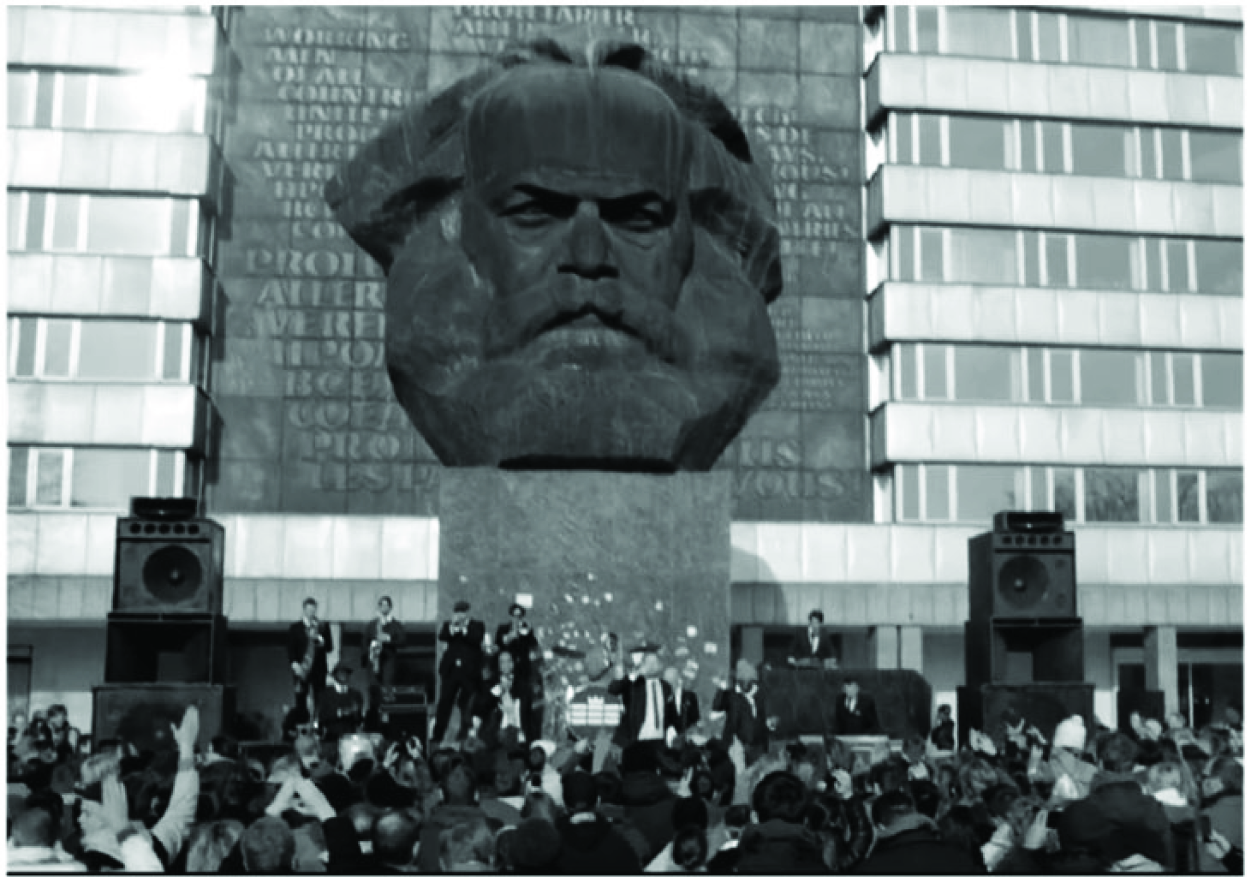
Seeed, ‘Deine Zeit (official video) in Chemnitz’.
The concert affirms Chemnitz as an attractive city even for a popular group from Germany’s capital. Taking Kraftklub’s anti-Berlin-hipster hymn ‘Ich will nicht nach Berlin’ literally, they endorse the new image of Chemnitz by temporarily switching their home turf Berlin with that of Chemnitz, thus validating Chemnitz as the avant-garde of urban transformation, innovation and creativity. This outside appreciation is also being noticed in Chemnitz. Reader annemuh (2013) wrote in the online version of the local newspaper Freie Presse: Chemnitz, I love you!! The city is starting to live again and Seed [sic] makes a great promotion for us. Finally, an advertisement which does not represent us as a grey hole but as a cult city with vibrant and cool people. Who cares about the sticker at the Nischel. On the contrary, they take away the seriousness of a socialist monument and elevate it to an object of cult and source of identity for the entire city. The concert was awesome, too. Chemnitz needs more of that.
The exclamation ‘Chemnitz, I love you!!’ is indeed a milestone expression in the self-perception of the city as many Chemnitzers have long had a very ambivalent attitude towards it. This local pride is also evident in the repetition of the noun ‘cult’, which demonstrates that Chemnitz is a cool city and the ‘Nischel’ a place of worship. Indeed, as we have shown earlier, Lev Kerbel’s monumental sculpture has recently experienced a strong visual resurgence. In voicing everyday experiences of the double rupture in their music, Kraftklub create a democratic and egalitarian response to decline which a wide local public can identify with. Thus they transcend the city’s gender, class, ethnic and age boundaries and artistically help to create a new version of a collective identity that is much more inclusive than the official marketing campaign.
Moreover, Kraftklub also support Chemnitz not only through an improved self-perception and outside image but also more directly through activist work. Since 2010, they have helped to establish and promote a building for the city’s creative scenes, the Bandbüro Chemnitz in the neglected Brühl neighbourhood, with rehearsal and recording studios, a media design office and an independent radio station, among others (König, 2012). They have also used their popularity to revive the music festival tradition in Chemnitz by successfully starting the Kosmonaut Festival in the summer of 2013 as an annual festival for independent rock and hip-hop music. Its name, once again, references GDR and local history as the term Kosmonaut (Russian for astronaut) was used for the GDR-era Kosmonautenzentrum located in Chemnitz, a stylized space rocket housing an exhibition about space travel. Here, Kraftklub again re-imagine and re-contextualize the city’s past in order to re-signify urban space as a response to decline and deindustrialization.
Last but not least, the band has also contributed to a re-appreciation of Karl-Marx-Stadt’s avant-garde music scene. The experimental late-1980s band AG Geige, the members of which included the parents of two members of Kraftklub (brothers Felix and Till Kummer), has recently been rediscovered and showcased in Carsten Gebhardt’s documentary film AG Geige of 2012.
The latter example also suggests the importance of long-standing cultural networks in grassroots creative endeavours, which might be particularly pronounced in a mid-size, economically and socially struggling city with a complex past full of ruptures such as Chemnitz. These place-based networks connect and reinforce creative traditions not only across generations, and, in the case of Chemnitz, also socio-economic systems, but also across different musical and artistic genres. Kraftklub, as a product and agent of these networks, is an example of the success of a bottom-up socially and culturally innovative musical group with subcultural credibility that, in contrast to the top-down municipal marketing campaign, has so far been able to convert its subcultural capital (Thornton, 1996) into economic and especially identificatory capital.
Conclusions: a Saxon sonic success story – and its limitations
In this article we argued that the popular German band Kraftklub plays a key role in the re-imagination of the Saxon city of Chemnitz by re-articulating and selectively appropriating the double rupture of urban and political change. In doing so, they directly address two of the most crucial issues which are central to the inhabitants’ own identity formation, but which have been silenced in the official rhetoric such as the city marketing campaign ‘Stadt der Moderne’. Because Kraftklub gives voice to the double rupture in an ironic, subversive, yet also inclusive way that conflates not only notions of ‘East’ and ‘West’ with regard to Germany’s post-reunification history but also of centre and periphery in the production of youth cultural and popular music traditions, their message also speaks to youth across smaller and mid-size German-speaking cities which also face a wide, and possibly similar, range of economic, social and identity problems. As such, they belong to a generation of younger East German artists, including the writers Clemens Meyer and Jana Hensel or bands Silbermond or Jennifer Rostock, who were not necessarily born when the double rupture happened, but who reflect on its repercussions in their art (Meyer, 2012: 44).
However, this sonic success story faces limitations and shortcomings. First, it raises the question of how far this urban cultural strategy is sustainable in light of a capitalist framework. Large and mainstream corporations have the tendency to appropriate and commodify such grassroots and rebellious tendencies, especially in popular music such as punk or hip-hop (Frank, 1997). Having been signed to the record label Vertigo Berlin, a subsidiary of Universal Music, since 2011, Kraftklub have certainly been influenced by corporate marketing strategies aware of the popular and commercial appeal of their subversive underdog image (Universal, 2011). This tension between corporate-supported economic success and grassroots authenticity also raises the question, of how long Kraftklub can remain credible to their respective audiences. The band is certainly aware of this. The song ‘Unsere Fans’ (‘Our Fans’), released on Kraftklub’s second album In Schwarz (In Black) in September 2014, directly addresses issues of commercialization and the loss of ideals, ironically distancing themselves from these common charges of ‘selling out’ by humorously accusing their fans of this kind of transformation. Second, Chemnitz’s new city marketing campaign (Uhlemann, 2014) increasingly appropriates Kraftklub’s unconventional treatment of the double rupture by addressing it in their own ads and activities. The website of the new marketing campaign ‘Die Stadt bin ich!’ (‘The city – that’s me!’), created by Chemnitz-based agency Zebra, features the Karl Marx Monument prominently and asks Chemnitzers to share their personal stories about the fall of the Wall and its aftermath. The agency also hosts ‘Rock am Kopp’ (‘Rock at the Head’), a series of concerts in front of the Karl Marx Monument (Steinebach, 2014). Third, their music seems to reach mainly people with a similar cultural background, that is, those of a relatively young age, of a leftist-liberal mindset, and whose socialization took place through 1980s and 1990s globalized popular music, again neglecting older parts of the population.
The question thus remains, how can such a musical urban re-branding remain innovative and spread beyond the respective youth and popular cultural scenes to a larger local population whose experience of the double rupture of decline and political change resulted in hardships and loss of social identity that has not been overcome or dealt with? How can post-industrial shrinking and marginalized cities like Chemnitz not only inspire large parts of their population with a re-invigorated local identity but also compete with other urban centres for the mobile companies and workers of the knowledge economy, in which images and social, cultural and environmental factors are more important than traditional locational advantages, such as access to natural resources or trade routes?
Footnotes
Funding
The author(s) received no financial support for the research, authorship, and/or publication of this article.