



Abstract
Research on the effects of intergroup competition has relied on various conceptual approaches and has produced inconsistent findings. Following a review of the intergroup competition literature, we propose a framework which emphasizes that the influence of intergroup competition varies primarily according to participants’ construal of potentially competitive events. We assess this via two variables: competitive intergroup perceptions (CIP), the perception that one’s ingroup and another group(s) in the current situation are attempting to gain a reward at each other’s expense; and competitive intergroup motivations (CIM), the individual desire for one’s group to do better or acquire more of a reward than the other group(s). In four studies that presented participants with an ambiguously competitive intergroup setting and administered CIP and CIM scales adapted for the context, both variables were empirically nonredundant (Studies 1–4) and showed unique relations with intergroup outcomes: CIM, rather than CIP, was directly associated with greater intergroup bias (Studies 2–4), discriminatory intentions (Study 3), and discriminatory behavior (Study 4). CIP consistently registered an indirect effect on intergroup bias and behavior through CIM. Our results suggest that in ambiguous group contexts, CIM facilitates the pursuit of goals for the ingroup, which may involve expressing intergroup bias and more antisocial outgroup behavior, and that these tendencies are quite sensitive to corresponding changes in CIP. The current framework offers more precise insights into the influence of competitive group dynamics, and can easily be integrated with other research paradigms to determine how and when intergroup competition produces intergroup bias and discrimination.
Keywords
Intergroup competition has been implicated in a wide range of perceptual, evaluative, and behavioral outcomes, including intergroup emotions (Cottrell & Neuberg, 2005; Smith, Seger, & Mackie, 2007), prejudice (Duckitt, 2006; Esses, Jackson, & Armstrong, 1998), experiencing pleasure from outgroup failures (Cikara, Bruneau, & Saxe, 2011; Leach & Spears, 2008), voting (Louis, Duck, Terry, Schuller, & Lalonde, 2007; Struch & Schwartz, 1989), negotiations (De Dreu & Nijstad, 2008; Diekmann, Tenbrunsel, & Galinsky, 2003), aggression (Cikara, Botvinick, & Fiske, 2011; Federico, Golec, & Dial, 2005; Thomsen, Green, & Sidanius, 2008), genocide (Schütte & Kessler, 2007; Staub, 2000), the downplay of past ingroup atrocities (Noor, Shnabel, Halabi, & Nadler, 2012), and even consumer decision-making (Durvasula & Lysonski, 2006, 2009; Sharma, Shimp, & Shin, 1995). Research has suggested that competition between groups is generally associated with destructive social consequences. However, the contexts and features of intergroup competition vary widely, and some research shows that it does not always lead to intergroup aggression.
The current research has two overarching goals: to gain more precise insights on the nature and operation of competition in intergroup contexts, and to understand how intergroup competition leads to intergroup bias and discrimination. We introduce a new conceptual framework that emphasizes the impact of people’s subjective construal of potentially competitive events, and propose a necessary distinction between competitive intergroup perceptions (CIP) and motivations (CIM). This approach is instrumental in understanding how intergroup competition leads to intergroup bias and discrimination.
Competition and Intergroup Bias
Research on realistic group conflict theory (RGCT; Levine & Campbell, 1972; Sherif, 1966) and social identity theory (SIT; Tajfel & Turner, 1986) have provided the most detailed analyses on intergroup competition. RGCT states that “real conflict of group interests causes intergroup conflict” (Campbell, 1965, p. 287), and suggests that intergroup discrimination can be traced to intergroup competition over scarce resources (Campbell, 1965; Levine & Campbell, 1972; Sherif, 1966). Indeed, perceived intergroup competition over material resources, such as wealth, political power, or territory is associated with greater enmity between groups (J. W. Jackson, 1993; L. M. Jackson & Esses, 2000). SIT research recognized, however, that intergroup bias and discrimination could occur in the absence of competition over resources, and be driven by the desire to achieve a positive social identity for one’s ingroup(s). Studies utilizing the minimal-groups paradigm (MGP) of assigning participants to groups based on arbitrary criteria have observed relatively consistent levels of ingroup bias in attitudinal and resource allocation measures (cf. Mummendey et al., 1992), despite an absence of an overtly competitive goal structure between groups (Brown, 2000; Tajfel & Turner, 1986). Contemporary research has focused on integrating how competition over material resources and a superior group identity affect intergroup conflict (Scheepers, Spears, Doosje, & Manstead, 2006; Stephan & Stephan, 1996), and examining the contributions of relevant dispositional and ideological variables, such as social value orientation (de Dreu, 2010) and social dominance orientation (SDO; Pratto, Sidanius, & Levin, 2006).
Research that casts doubt on the consistency with which intergroup competition leads to negative outcomes has received relatively little attention. A meta-analysis showed that presenting competitive versus individualistic settings in MGP studies did not increase discriminatory behavior (Jetten, Spears, & Postmes, 2004). Multiple studies have shown that contexts of intergroup competition did not affect participants’ evaluations of or behavior toward the target group(s) relative to conditions in which the relationship between groups was cooperative or independent (Brewer & Silver, 1978; Brown, 1984; Brown & Abrams, 1986; Judd & Park, 1988; Rabbie & de Brey, 1971; Tyerman & Spencer, 1983). A cross-cultural review found that although societies with greater levels of competition tend to show higher violence and crime rates than cooperative societies, some societies that practiced relatively high levels of competitive rituals and business practices had low crime rates as long as there was a strong cultural belief in nonviolence (Bonta, 1997). Understanding when intergroup competition produces bias is complicated by the fact that contemporary studies have used a wide variety of conceptual and operational definitions for the core construct (see Table 1).
Research paradigms examining the influence of competitive dynamics in the intergroup relations literature.
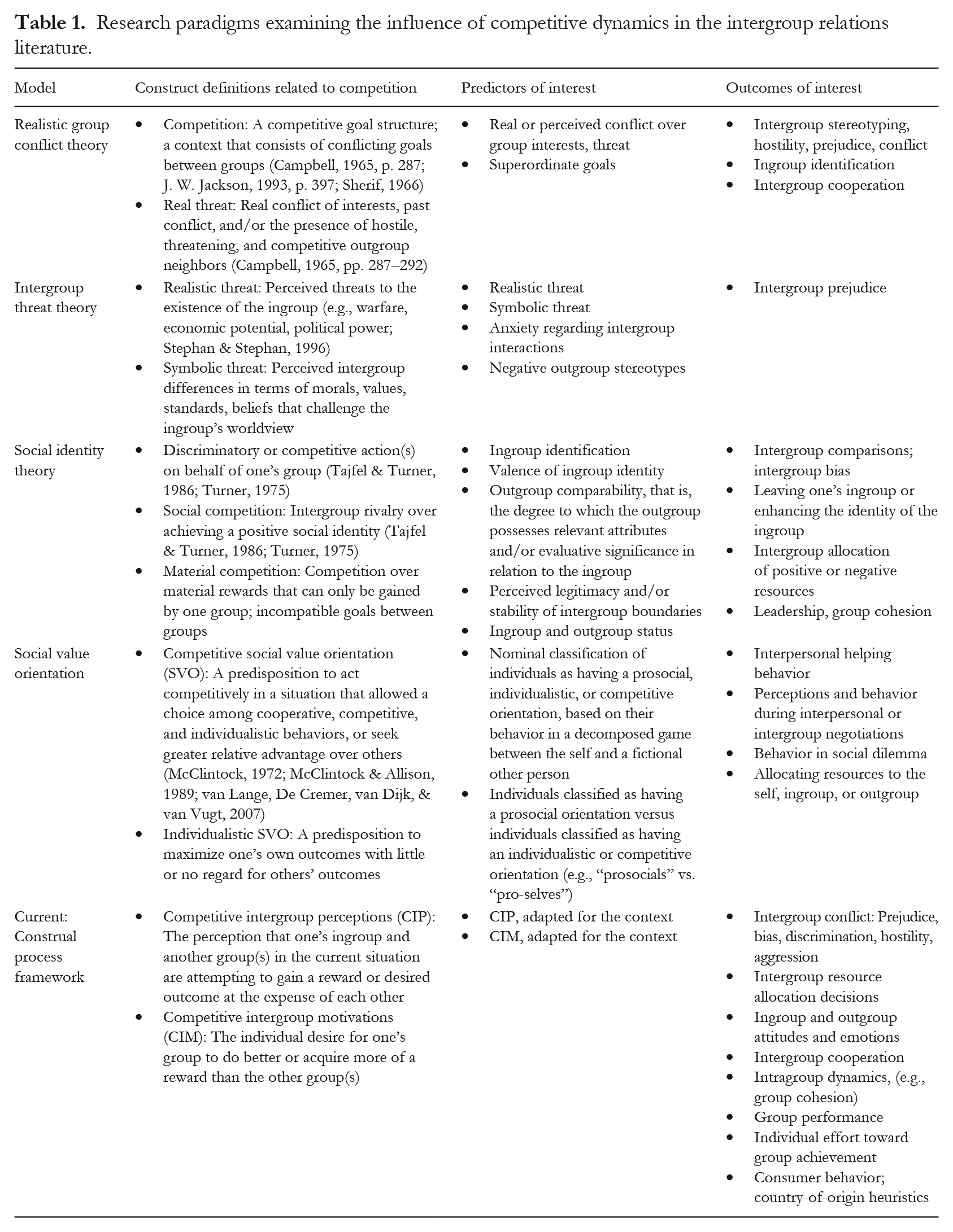
Intergroup competition has been conceptualized and operationalized as an experimentally induced competitive situation (Holtz & Miller, 2001; Judd & Park, 1988), a competitive desire to have more resources or social status than another group (Louis et al., 2007; Thomsen et al., 2008), the perception of a competitive, or zero-sum resource distribution arrangement with another group (Duckitt, 2006; J. W. Jackson & Smith, 1999; L. M. Jackson & Esses, 2000), a competitive processing style (Sassenberg, Moskowitz, Jacoby, & Hansen, 2007), and competitive behavior performed on behalf of one’s group (Tajfel & Turner, 1986; Turner, 1975). Different research paradigms of intergroup conflict have presented a diverse set of construct definitions related to intergroup competition, some of which are conceptualized according to the research questions driven by their own theoretical foci (e.g., the distinction between social and material competition by SIT, see Table 1).
Beyond the intergroup relations literature, construct definitions of competition tend to fall into one of three categories: (a) situational, (b) motivational, or (c) behavioral. Each of these definitions refer to a negative, comparative relationship between oneself or one’s group and the other person(s) or group(s). Situational definitions emphasize that participants are placed in interdependent goal structures in which a reward is eventually distributed unevenly, based on the relative performance of participants (e.g., Deutsch, 2006; Stanne, Johnson, & Johnson, 1999). Motivational definitions describe competition in terms of an individual’s temporary or chronic desire to behave competitively, prefer competitive versus individualistic or cooperative situations, or a goal or need to perform better than other participants performing similar tasks (e.g., Johnson & Norem-Hebeisen, 1979; McClintock & Allison, 1989). Finally, behavioral definitions describe competition in terms of the direct act(s) involved in pursuing a reward at the expense of other individual(s) or group(s); e.g., Deutsch, 2006; Sommer, 1995).
The research literature on intergroup competition, then, presents multiple conceptualizations of the core construct and inconsistent findings regarding its effects. This presents several challenges for understanding the antecedents and consequences of intergroup competition. As mentioned earlier, competitive situations do not invariably elicit competitive motivations or behavioral reactions from participants (see also Deppe & Harackiewicz, 1996; Gibson, Sachau, Doll, & Shumate, 2002). In line with SIT, it is also feasible that heightened competitive motivation can enhance competitive behavior, even in the absence of an explicitly competitive goal structure. It is clear that people’s competitive motives, competitive behavior, and perceptions of the situation as competitive are distinct constructs, but in the relevant literatures, there is no coordinated discussion of how these processes relate to each other, or which of these processes differentially (or jointly) leads to negative social consequences.
A Construal Process Framework for Intergroup Competition
The current approach departs from conceptualizing competition according to situational definitions, and emphasizes that the influence of intergroup competition varies according to how the potentially competitive intergroup context is subjectively construed by its participants. This reasoning is consistent with theory and research (Deutsch, 1949, 1962; van Lange, Otten, De Bruin, & Joireman, 1997) which emphasize that a person’s subjective interpretation of a potentially competitive situation influences his or her behavior, rather than the objective goal structure itself. We suggest that as a person subjectively construes a potentially competitive situation, any effects attributable to intergroup competition occur via two distinct variables.
Competitive Intergroup Perceptions (CIP)
This is defined as the perception that one’s ingroup and another group(s) in the current situation are attempting to gain a reward or desired outcome at each other’s expense. CIP may be affected by situational cues (e.g., an intergroup context described as competitive) or chronic influences (e.g., the tendency to believe groups are in competition). The conceptualization of this construct is based on similar competitive perceptual processes in the intergroup relations literature, such as the perception of realistic threats from the outgroup (Stephan, Stephan, & Gudykunst, 1999) or a competitive processing style (De Dreu & Nijstad, 2008; Sassenberg et al., 2007). CIP also shares conceptual similarities with perceptions that our world is a competitive jungle (Duckitt, Wagner, du Plessis, & Birum, 2002), and that outcomes are distributed in a zero-sum fashion (L. M. Jackson & Esses, 2000).
Competitive Intergroup Motivations (CIM)
This is defined as the individual desire for one’s group to do better or acquire more of a reward than the other group(s). The conceptualization of CIM follows from similar motivational processes in the intergroup relations literature, such as contextual needs for a superior group identity (Turner, 1975) and/or chronic desires for a dominance hierarchy between groups (Pratto, Sidanius, Stallworth, & Malle, 1994). This construct is also similar to variables such as a competitive versus an individual or cooperative value orientation (van Lange et al., 1997) or a hypercompetitive motivation (Dru, 2003). As with CIP, CIM may vary as a function of the contextual cues (e.g., momentary goals) or individual differences (e.g., SDO).
The conceptualizations of CIP and CIM are based on relevant constructs from the intergroup relations literature to integrate research paradigms that have examined intergroup competition in a predominantly independent fashion. In comparison with other theories, we define competitive influences in terms of both perceptual and motivational processes, rather than situational definitions as does RGCT, or the incentive on which the competition is based, such as SIT and intergroup threat theory (ITT; see Table 1). While other theories have a broader focus on how different variables contribute to intergroup conflict, we focus more narrowly on the effects of processes related to competition. Although the current research examines how CIP and CIM affect intergroup bias and discrimination, we expect that both processes affect a broad range of outcomes beyond intergroup conflict.
CIP and CIM focus on the interdependent relationship between the ingroup and other target person(s), which is inherent in most construct definitions of competition. We expect, therefore, that CIP and CIM are positively related, but empirically distinguishable constructs. For example, CIP should be more strongly related to group-relevant perceptual processes than CIM, such as perceived group differences and homogeneity. CIM should be more strongly related to motivational and/or goal-directed processes in the context of competition, such as a desire for ingroup cooperation and cohesion. CIP and CIM are both expected to be nonredundant with constructs that exclusively focus on perceptions of the ingroup, such as ingroup identification, attention to ingroup norms, or a strong desire for ingroup achievement.
Conceptualizing the influence of intergroup competition according to these two competitive processes opens new research questions regarding how it may affect subsequent group-relevant thoughts, feelings, and behavior. In the context of a potentially competitive situation, either people’s perceptions (CIP) or motivations (CIM) may be exclusively responsible for generating intergroup discord. A great deal of research from RGCT and ITT support the idea that heightened CIP would yield higher levels of intergroup bias. It is noteworthy, however, that RGCT suggests a linear relation between the importance of the goal competed for and the resulting intergroup friction (Sherif, Harvey, White, Hood, & Sherif, 1961, p. 45; see also Campbell, 1965). SIT similarly suggests that intergroup discrimination can emerge from the desire for a positive ingroup identity that may be obtained at the expense of other groups (Tajfel & Turner, 1986). Research derived from both theories has rarely examined the influence of both competitive motivations and perceptions simultaneously as suggested by our approach. CIP and CIM may have unique, additive contributions to intergroup bias, consistent with other research which has demonstrated that concurrently measured perceptual processes (e.g., perceived conflict) and motivational processes (e.g., SDO) had a unique impact on outgroup attitudes and behavior (Louis et al., 2007; Sidanius, Haley, Molina, & Pratto, 2007). The two variables may operate sequentially, such that CIP generally increases CIM, which in turn elicits greater intergroup bias and discrimination (Cuddy, Fiske, & Glick, 2007). In contrast, heightened CIM may elicit stronger perceptions of competition (De Dreu & Boles, 1998), which facilitates intergroup bias (L. M. Jackson & Esses, 2000). An interaction is also plausible, such that heightened CIP or CIM only produce greater levels of intergroup bias when the other variable is also high. Investigating these possibilities would enhance our understanding of when and how intergroup competition leads to intergroup bias and discrimination.
The Present Research
The current research had two overarching goals: to develop psychometrically sound CIP and CIM measures according to our conceptualizations, and to determine how these variables affect intergroup bias and discrimination. Our first study tested the idea that CIP and CIM are related but distinct, nonredundant constructs. Three additional studies then examined the separate roles of CIP and CIM on intergroup bias and discriminatory intergroup behavior. In each study, participants were presented with a context in which ingroup members could potentially construe a competitive relationship with a relevant outgroup. For a baseline assessment of how CIP and CIM affect group members’ treatment of each other, we chose contexts in which the groups themselves were of equal status and not strongly associated with preexisting stereotypes, emotions, or narratives of severe ongoing conflict. Specifically, Studies 1, 2, and 4 presented participants with a context based on the minimal-groups paradigm, and Study 3 presented a context between the participant’s own and another university. In each study, participants completed scales assessing CIP and CIM, and the criterion variables were intergroup bias as measured by intergroup attitudes (Studies 2–4), behavioral intentions (Study 3), and discriminatory behavior (Study 4).
Study 1
This study was designed to examine the psychometric properties of the CIP and CIM scales we developed. We administered these scales as part of a potentially competitive context between two groups based on the traditional MGP setting.
Method
Participants
Participants in Studies 1–4 were undergraduate students from a southwestern Ontario university who participated for course credit. Participants in the current study (N = 273) completed all measures via an online survey.
Procedure and materials
Participants first completed a computer-based task that could ostensibly determine their thinking style as either inductive or deductive. This task administered the Dialectical Thinking Questionnaire (Spencer-Rodgers et al., 2008; e.g., “I sometimes believe two things that contradict each other”). The program then asked participants to interpret a series of pictures that were culled from various websites, online tests, and games in which people report their interpretations of ambiguous pictures. Once participants had completed all questions, the program displayed two screens which suggested their responses were being analyzed, followed by a results page that classified them as a deductive thinker.
Participants were then presented with an article generated for the current study that was made to appear as a summary of ongoing research on inductive and deductive thinking styles (stimulus articles for all studies are available as online supplementary material). The article was designed to enhance participants’ social identification with their assigned ingroup by discussing research findings on the apparent differences between the two thinking style groups. The article also included some content to portray an ambiguously competitive setting between deductive and inductive thinkers and allow participants to make their own inferences from the intergroup context (e.g., “[researchers] are currently conducting studies to see whether inductive thinkers and deductive thinkers are more likely to score highly on tests of motor skills, academic aptitude, . . .”). To establish that both groups had equal status, the article mentioned that research was inconclusive as to whether either group is superior on any given criterion. To ensure our analyses comprised responses from participants who attentively understood the thinking style classification scheme and relevant points from the article, we omitted data from participants who did not correctly identify themselves as a deductive thinker, or correctly indicate that the researchers were investigating whether deductive or inductive thinkers perform better on measures of performance, or that there is a 50/50 chance of deductive or inductive thinkers performing better on any given performance measure. This left a total sample of 186 participants; sample demographics of each study are summarized in Table 2. Participants then completed each of the following measures; higher scores represent higher levels of each variable.
Sample characteristics in Studies 1–4.
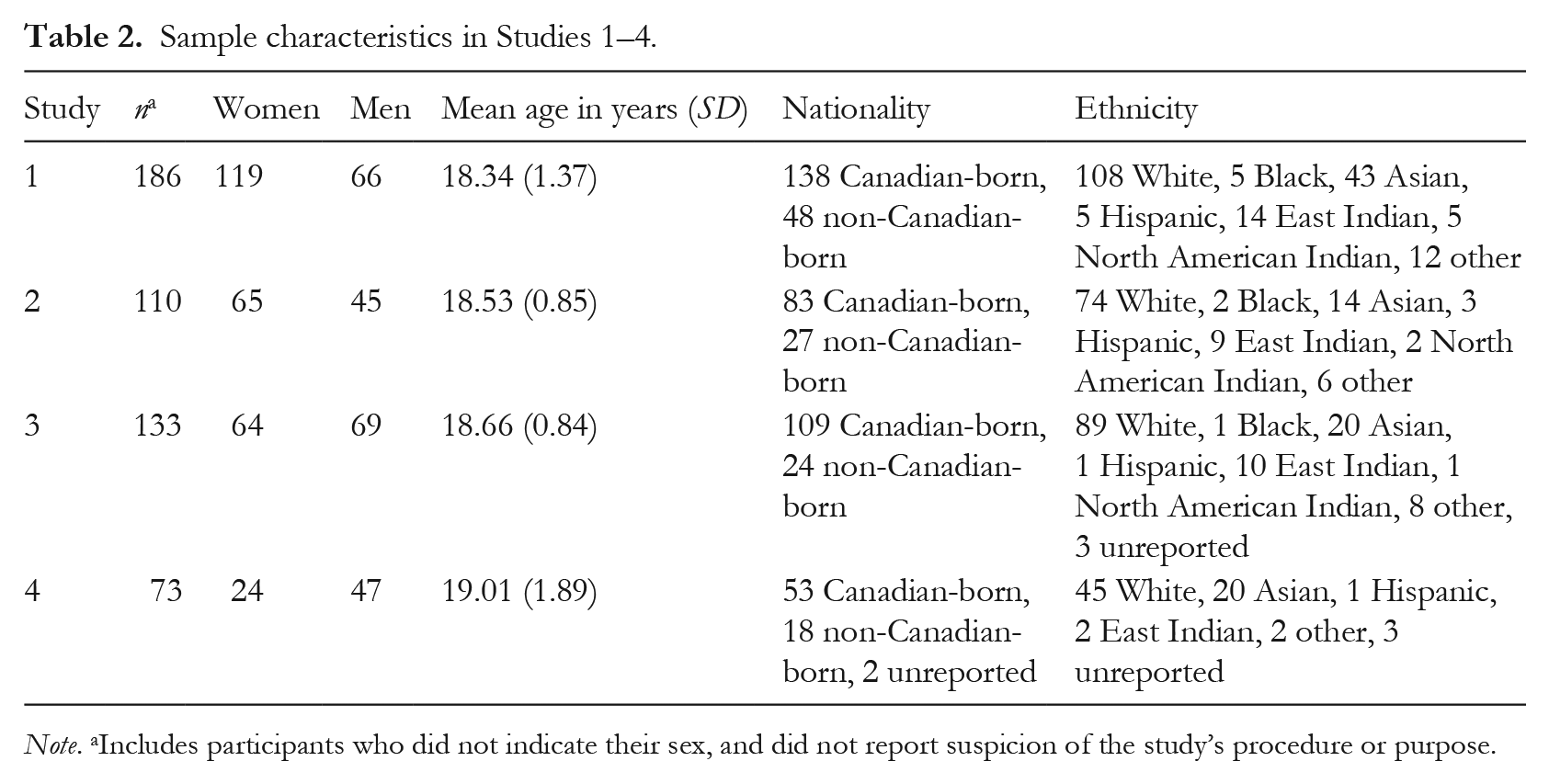
Note. aIncludes participants who did not indicate their sex, and did not report suspicion of the study’s procedure or purpose.
CIP and CIM
Participants’ levels of CIP were measured using a four-item scale designed to assess whether they perceived the relationship between deductive and inductive thinkers as either competitive or noncompetitive (M = 3.00; SD = 1.40). CIM levels were measured using a six-item scale designed to assess the participant’s desire for deductive thinkers to out-perform and maintain superiority over other inductive thinkers (M = 2.73; SD = 1.32). Both measures for Studies 1–4 are presented in the Appendix.
Results and Discussion
The CIP and CIM scales displayed strong internal consistency (αs = .91, and .92, respectively) and were positively correlated, r(184) = .75, p < .001. 1 We conducted a confirmatory factor analysis on participants’ responses to the CIP and CIM items. We tested the fit of two models: the first specified all items designated as CIP and CIM loading onto one latent factor, and the second specified that the CIP and CIM items loaded onto their two respective latent factors, which were correlated. The two-factor model yielded better model fit, χ2 = 79.38, p < .001, CFI = .935, RMSEA = .085, than the one-factor model, χ2 = 124.62, p < .001, CFI = .872, RMSEA = .117. A chi-square difference test supports the idea that the two-factor model is superior to the one-factor model, χ2diff = 31.45, p < .001. In sum, Study 1 provided evidence that CIP and CIM scores represent two related, but distinct constructs. The subsequent studies were designed to assess how they predicted intergroup bias and discrimination.
Study 2
Study 2 provided additional psychometric tests of our CIP and CIM scales, and an initial test of how they affect intergroup bias. Study 2 employed the same setting and procedure as Study 1 with some exceptions. We asked participants to report their belief in the importance of following the norms of their ingroup, their desire for cooperation among ingroup members, and the degree to which they perceived strong differences between their ingroup and the outgroup. Because the latter variable and CIP both assess perceptions of the ingroup and outgroup, we expected that CIP would be more strongly related to the perception of intergroup differences than CIM. In contrast, we expected that CIM, rather than CIP, would be more strongly related to the importance of following ingroup norms and the desire for intragroup cooperation, as these variables reflect an overall desire for group agency that would facilitate achieving the goals related to CIM. To investigate how CIP and CIM influence intergroup bias, we administered measures of intergroup attitudes adapted for the current MGP context. The current and remaining studies assessed participants’ level of ingroup identification, that is, the perceived centrality of their ingroup to the self (Ellemers, Kortekaas, & Ouwerkerk, 1999), to rule out the idea that the effects of CIP or CIM are driven by this variable.
Method
Participants
In Studies 2–4, participants came to the lab in groups of up to five individuals, and all measures were completed in private rooms or booths on the computer. Study 2 participants were 130 university students who participated for course credit. One participant’s data were lost because of a technical error, and we omitted data from 19 participants for whom a funnel debriefing procedure revealed that they thought the thinking-style classification process was fictional or inaccurate. 2 This left a total sample of 110 participants.
Procedure and materials
Participants completed the same computerized task as Study 1. Participants were then directed to summon the experimenter who recorded their thinking style on a checklist, then gave them a paper copy of the research summary article on thinking styles from Study 1 to read with a slip reminding them of their status as a deductive thinker. Participants then completed the ingroup identification, CIP, and CIM measures in randomized order, followed by the ingroup and intergroup criterion scales.
Ingroup identification
Participants completed an eight-item scale of ingroup identification adapted from other measures (Ellemers et al., 1999; Leach et al., 2008) to assess the degree to which they considered their membership as a deductive thinker to be an important component of their identity (e.g., “I am similar to the average deductive thinker,” 1 = strongly disagree, 7 = strongly agree).
Ingroup criterion measures
To measure constructs related to the desire for ingroup agency we adapted a six-item measure of the self-reported importance of following ingroup norms (e.g., “. . . that deductive thinkers act as fellow deductive thinkers would prefer,” 1 = not at all important to me, 10 = extremely important to me) and a measure of the inclination toward intragroup cooperation (e.g., “individual deductive thinkers should consider the needs of other deductive thinkers, even if they do not expect something from them in return,” 1 = strongly disagree, 7 = agree strongly) from research on ingroup norms and collectivism (Fischer et al., 2009; Jetten, Postmes, & McAuliffe, 2002; Shteynberg, Gelfand, & Kim, 2009).
Intergroup criterion measures
To assess perceptions of intergroup differences we adapted a four-item measure from Leach et al. (2008) and J. W. Jackson (2002; e.g., “Deductive thinkers are very different from inductive thinkers,” 1 = strongly disagree, 7 = strongly agree). Ingroup and outgroup bias was measured by asking participants to rate how well 10 attributes describe deductive thinkers on a 10-point scale (e.g., “honest” and “rude,” 1 = not at all, 10 = extremely). Participants also rated the same 10 attributes as they applied to inductive thinkers. The order in which participants answered questions about the ingroup or outgroup was randomized. Negative attribute ratings were recoded and aggregated to form indices of the degree to which participants positively evaluated the target group. Intergroup bias was assessed by subtracting participants’ evaluative ratings of inductive thinkers from their ratings of deductive thinkers.
Results
The descriptive statistics and intercorrelations are presented in Table 3. To examine the construct validity of CIP and CIM, we conducted separate regression analyses on participants’ self-reported importance of following group norms, desire for intragroup cooperation, and perceived intergroup differences that simultaneously entered participants’ level of ingroup identification, CIP, and CIM as predictors. As expected, CIM, but not CIP, was associated with a greater desire for intragroup cooperation, and a stronger belief in the importance of following group norms. In contrast, CIP, but not CIM, predicted the perception of intergroup differences (see Table 4).
Descriptive statistics and zero-order correlations among predictors, covariates and criterion variables – Study 2.
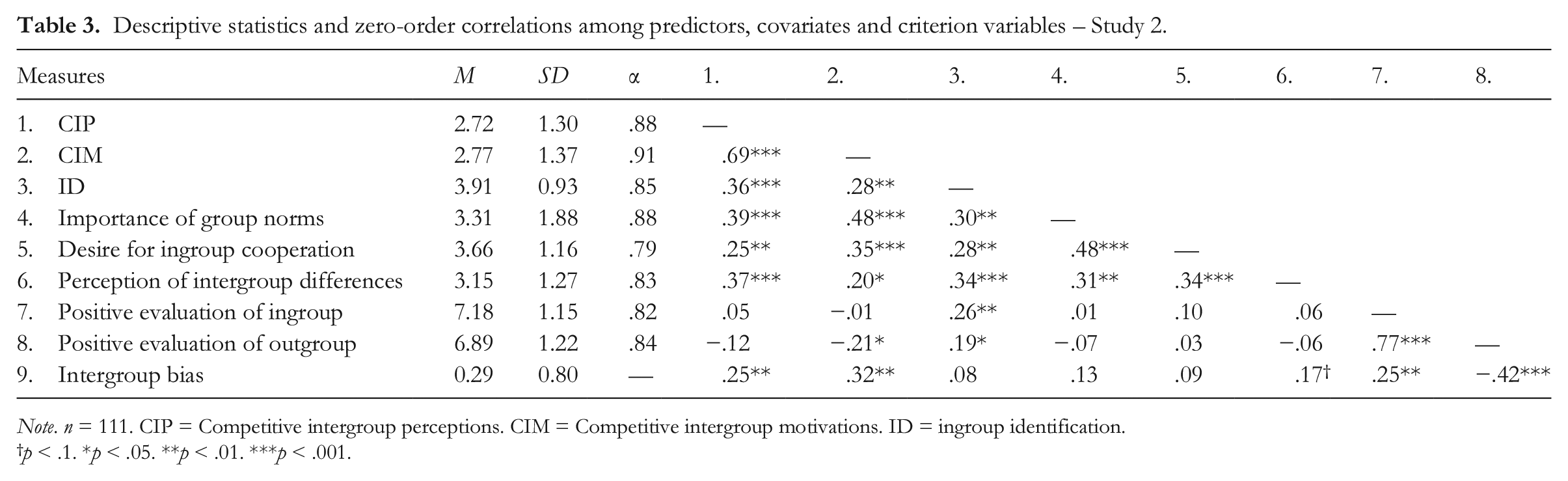
Note. n = 111. CIP = Competitive intergroup perceptions. CIM = Competitive intergroup motivations. ID = ingroup identification.
p < .1. *p < .05. **p < .01. ***p < .001.
Regression analyses (Study 2).
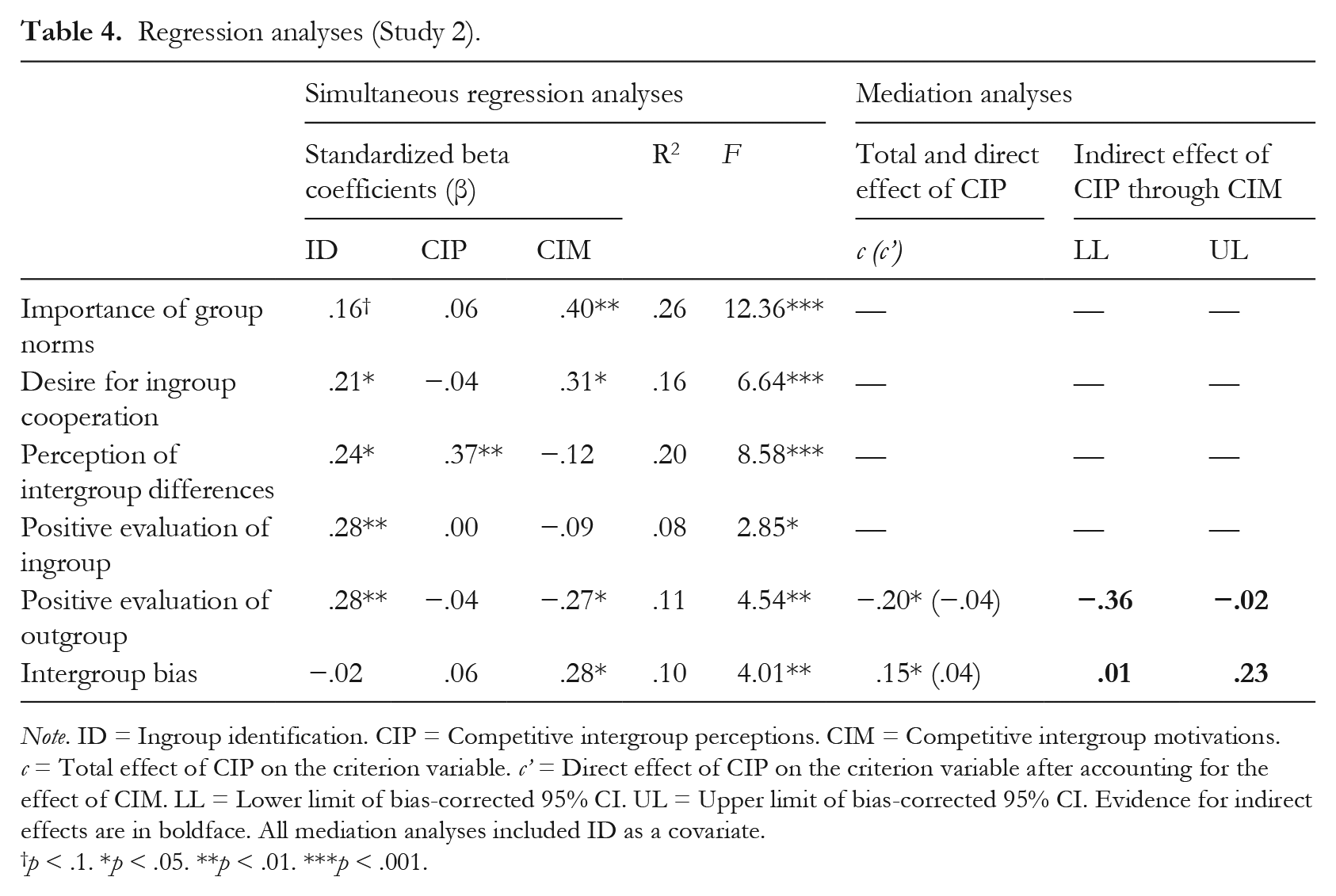
Note. ID = Ingroup identification. CIP = Competitive intergroup perceptions. CIM = Competitive intergroup motivations. c = Total effect of CIP on the criterion variable. c’ = Direct effect of CIP on the criterion variable after accounting for the effect of CIM. LL = Lower limit of bias-corrected 95% CI. UL = Upper limit of bias-corrected 95% CI. Evidence for indirect effects are in boldface. All mediation analyses included ID as a covariate.
p < .1. *p < .05. **p < .01. ***p < .001.
We conducted separate regression analyses on participants’ evaluation of the ingroup, outgroup, and intergroup bias that simultaneously entered participants’ mean-centered level of ingroup identification, CIP, and CIM as predictors in the first step, and the interaction between CIP and CIM in the final step (Aiken & West, 1991). Ingroup evaluations were the only criterion variable predicted by the interaction between CIP and CIM, t = 2.12, p = .037, such that a higher level of CIM was associated with more negative evaluations of the ingroup when participants believed they were not in competition, that is, when they reported lower levels of CIP. The interaction between CIP and CIM did not predict any other outcome variables in Studies 2–4, therefore, it is not discussed further. These findings suggest this interaction may have been a Type 1 error, or that this process is relevant in ambiguous contexts where individuals are inexperienced with the assigned ingroup and outgroup categories. More research on this phenomenon as it relates to group cohesion and performance is warranted.
We subsequently conducted separate regression analyses on participants’ evaluation of the outgroup, and their self-reported bias that simultaneously entered participants’ level of ingroup identification, CIP, and CIM as the only predictors (see Table 4). Only CIM was associated with less positive evaluations of the outgroup and greater levels of intergroup bias; the effect of CIP was not significant. These results did not change when the perception of intergroup differences and the importance of following group norms were added as covariates. 3
Given the outcomes of the correlational and regression analyses, we used Preacher and Hayes’s (2008) macro to investigate whether CIP registered a significant indirect effect on participants’ evaluation of the outgroup, and their level of intergroup bias. In these analyses, ingroup identification was entered as a covariate, CIP was entered as the predictor, and CIM was entered as the mediator. All analyses across Studies 2–4 that used this macro produced regression coefficients and confidence intervals from a sampling distribution of 5,000 bootstrapped iterations. We report the total and direct effects of CIP, although evidence of a mediated or indirect effect is primarily indicated when the bias-corrected confidence intervals for the indirect effect of CIP through CIM do not include zero (MacKinnon, Fairchild, & Fritz, 2007). In the present study, the bias-corrected confidence intervals suggested that CIP registered a significant indirect effect on intergroup perceptions through CIM in the analysis of participants’ evaluations of the outgroup and level of intergroup bias (Table 4).
Discussion
The current study provided initial evidence that CIP and CIM are distinct variables which uniquely influence intergroup bias. CIP—rather than CIM—was related to perceptions of intergroup differences. In contrast, CIM was associated with a stronger belief in the importance of following ingroup norms, and a greater desire for cooperation between ingroup members. The correlation and regression analyses also suggested that CIM was more strongly associated with worse outgroup evaluations and greater intergroup bias than CIP.
The mediation analyses in Study 1 suggested, however, that higher levels of CIP indirectly facilitated more negative outgroup evaluations, and greater intergroup bias, through its influence on CIM. This suggests that in ambiguous contexts, CIP may trigger CIM, which prepares the individual to express ingroup loyalty and bias.
These results were observed in a context between two equal-status groups with no prior history of conflict, but it was unclear if similar results would emerge in a real-world context between real groups. The effects of CIP and CIM on intergroup conflict were also restricted to intergroup evaluations in the current study, and we sought to include a broader range of intergroup criteria in Studies 3 and 4.
Study 3
In Study 3, we attempted to extend the findings of Study 2 by using a more personally relevant context that included groups unassociated with specific stereotypes or value-laden emotions. We presented our student sample with a fictional article that discussed the perceived consensus regarding an apparent rivalry between their own and another comparable university within the same province. Similar to Study 1, the current study assessed participants’ self-reported CIP, CIM, ingroup identification, and ingroup and outgroup evaluations in relation to the current intergroup context. The current study also assessed participants’ intentions to engage in competitive, avoidant, or prosocial behaviors toward outgroup members. To verify that the effects of CIP or CIM were not driven by participants’ beliefs or emotions regarding the status of their university relative to others, we administered a measure of participants’ perceived status of their own university relative to others, and their satisfaction with their university’s relative status.
Method
Participants, procedure, and materials
Participants were 133 university students who were told that the current study was investigating how people form attitudes about their own and other universities. The session began with participants completing filler dispositional questionnaires, including the Brief Big-Five Personality (Gosling, Rentfrow, & Swann, 2003), Commitment to Beliefs (Maxwell-Smith & Esses, 2012), and Rosenberg (1965) Self-Esteem scales. Prior to the latter measure, participants completed a two-item measure of their university’s perceived status relative to other universities (e.g., “I feel that the fate of Western students is improving relative to that of students from other universities,” 1 = totally disagree, 7 = totally agree), and a two-item measure of their satisfaction with their university’s status compared with other universities (e.g., “When I think about the future and compare the situation of Western students to that of students from other universities, I am. . .” 1 = very dissatisfied, 7 = very satisfied) that were adapted from prior measures of intergroup status (Guimond & Dambrun, 2002).
The experimenter then asked participants to read an article that was made to appear as though it had been written and published in their university’s campus newspaper. The article began by mentioning that many students believed their own university (Western) was similar to another university (Queen’s) in terms of student population size, culture, and history. The article introduced an ambiguously competitive context between the two universities by mentioning “trash talk” found in online bulletin boards between students from both universities. The article also highlighted how some students either believed or questioned whether there was a competitive rivalry between the two schools.
After reading the article, students completed the measures of CIP, CIM, and ingroup identification from Study 1 adapted for the current context (see the Appendix) and presented in randomized order. Participants then completed a series of measures that assessed their behavioral intentions toward students from Queen’s (“Thinking further about the relationship between Western students and Queen’s students, please indicate how willing you would be to do each of the following . . .” 1 = not at all willing, 10 = extremely willing). Specifically, participants completed three four-item measures that assessed their willingness to behave toward the outgroup in a manner that is competitive (e.g., “Try to make sure that Western students have a better reputation than Queen’s students”), avoidant (e.g., “Interact with other Queen’s students as little as possible”), or prosocial (e.g., “Try to be friends with a Queen’s student”). Items were adapted from similar measures on discriminatory, avoidant, and cooperative intentions (Cuddy et al., 2007; Kessler & Mummendey, 2002; Mackie, Devos, & Smith, 2000; Struch & Schwartz, 1989), and the presentation sequence of these measures was randomized. Participants then completed the ingroup and outgroup evaluation measures from Study 2, which were adapted for the current context.
Results
Participants’ perceptions of their university’s status relative to others were unrelated to almost all criterion variables and were therefore omitted as a covariate. The descriptive statistics and intercorrelations for the remaining variables are presented in Table 5; ingroup identification and participants’ satisfaction with their university’s relative status were included as covariates in all analyses.
Descriptive statistics and zero-order correlations among predictors, covariates and criterion variables – Study 3.
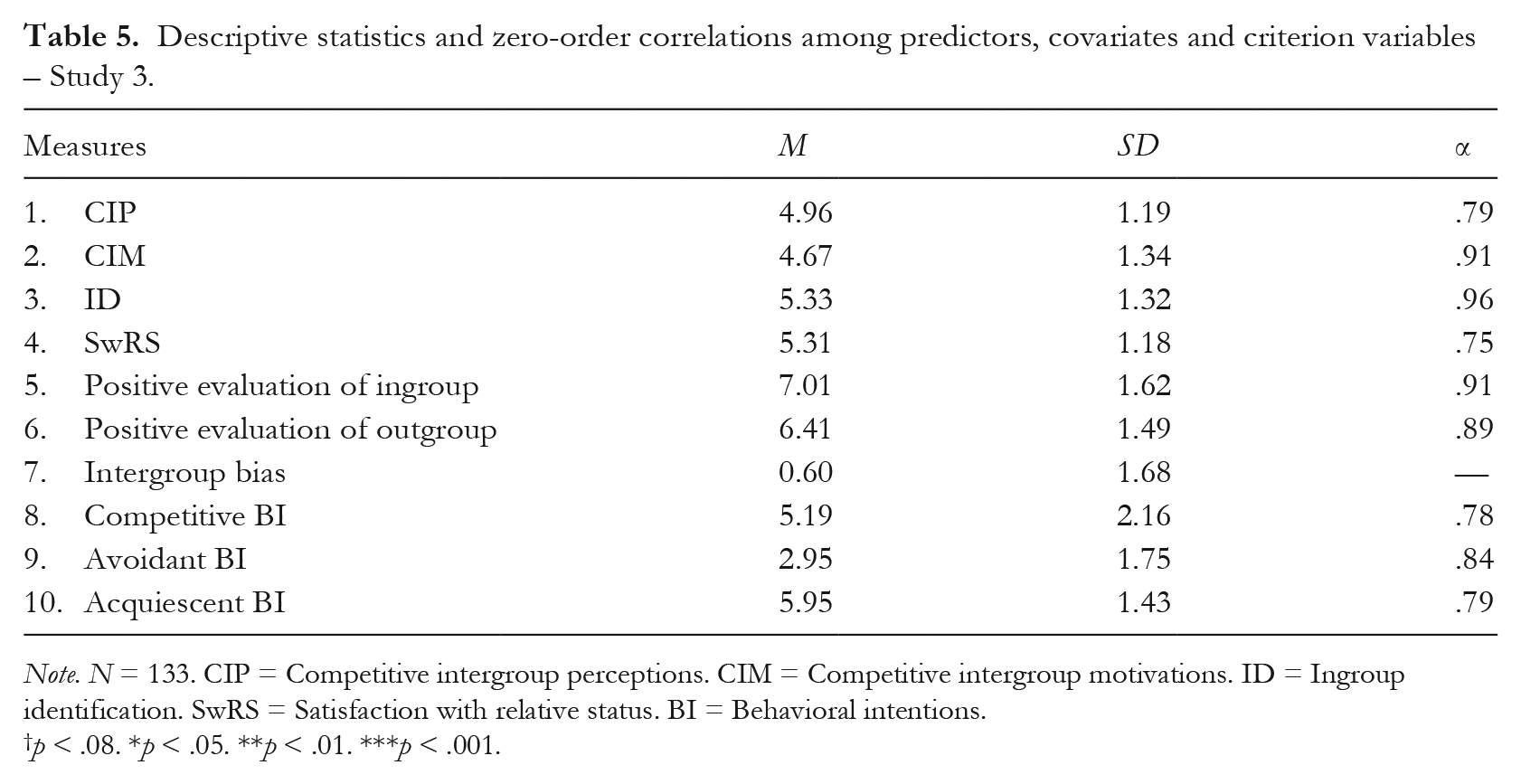
Note. N = 133. CIP = Competitive intergroup perceptions. CIM = Competitive intergroup motivations. ID = Ingroup identification. SwRS = Satisfaction with relative status. BI = Behavioral intentions.
p < .08. *p < .05. **p < .01. ***p < .001.
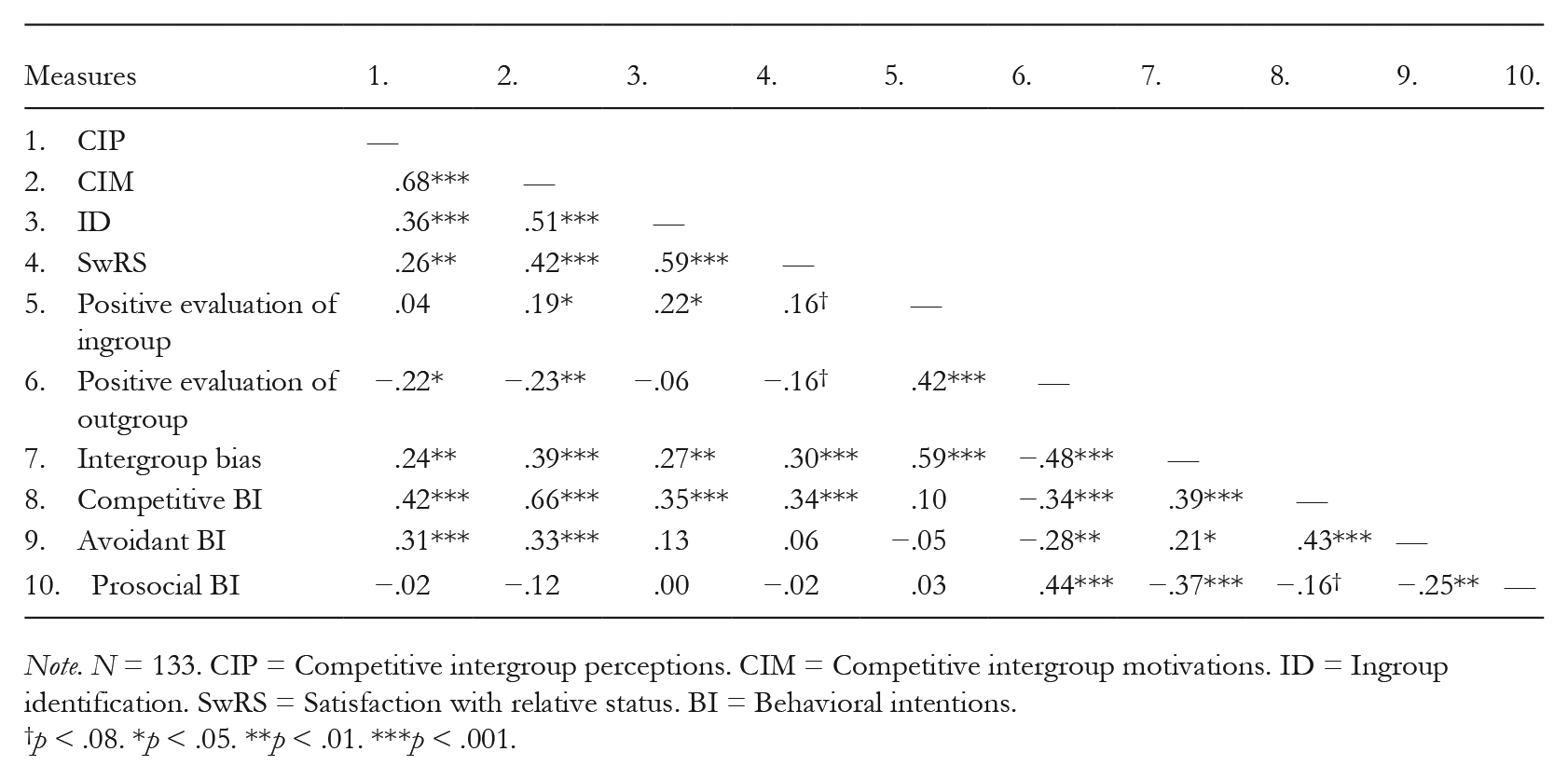
Note. N = 133. CIP = Competitive intergroup perceptions. CIM = Competitive intergroup motivations. ID = Ingroup identification. SwRS = Satisfaction with relative status. BI = Behavioral intentions.
p < .08. *p < .05. **p < .01. ***p < .001.
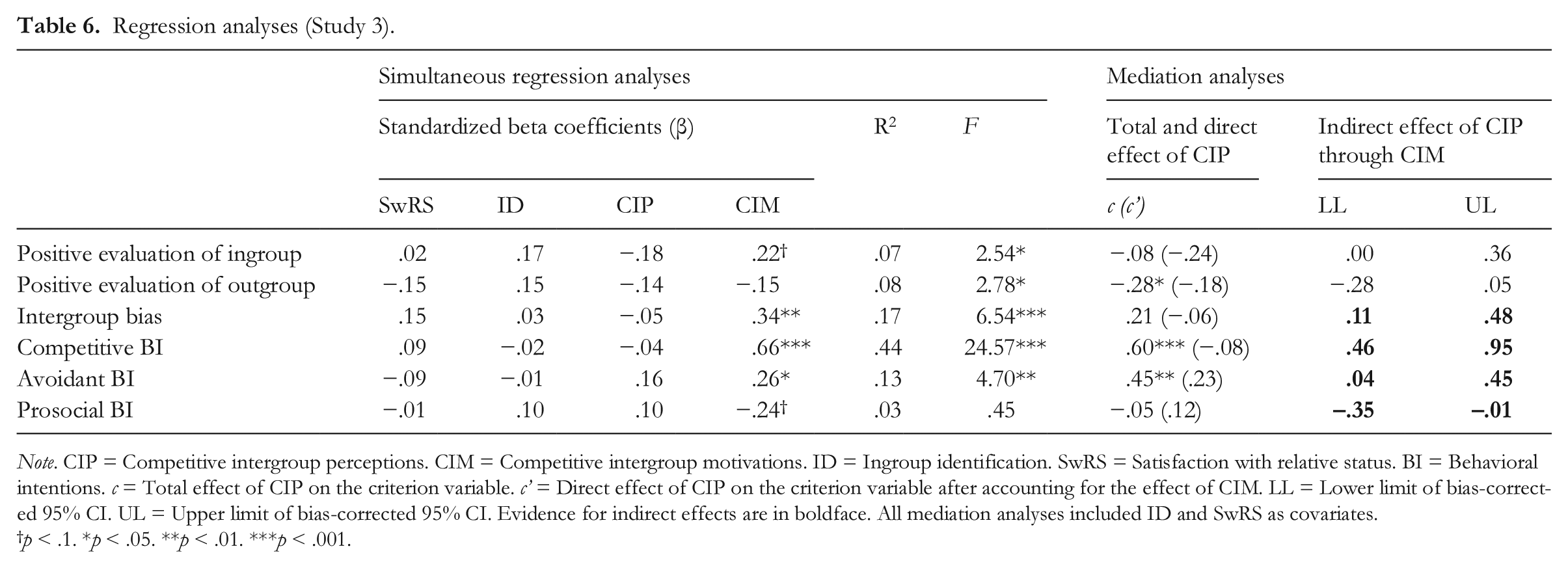
We conducted separate analyses regressing each of the criterion variables on the covariates as well as participants’ level of CIP and CIM. As seen in Table 6, participants’ self-reported CIM was associated with greater evaluative intergroup bias, and stronger competitive and avoidant behavioral intentions toward the outgroup. The tendencies for CIM to predict more positive evaluations of the ingroup and less prosocial intentions toward the outgroup were nonsignificant, yet are directionally consistent with the trend of CIM predicting greater bias against the outgroup. In contrast, the effect of CIP was always nonsignificant.
Regression analyses (Study 3).
Note. CIP = Competitive intergroup perceptions. CIM = Competitive intergroup motivations. ID = Ingroup identification. SwRS = Satisfaction with relative status. BI = Behavioral intentions. c = Total effect of CIP on the criterion variable. c’ = Direct effect of CIP on the criterion variable after accounting for the effect of CIM. LL = Lower limit of bias-corrected 95% CI. UL = Upper limit of bias-corrected 95% CI. Evidence for indirect effects are in boldface. All mediation analyses included ID and SwRS as covariates.
p < .1. *p < .05. **p < .01. ***p < .001.
Similar to Study 1, we used Preacher & Hayes’s (2008) macro to investigate whether CIM mediated the relation between CIP and participants’ evaluation of their ingroup, level of intergroup bias, and behavioral intentions toward the outgroup. The bias-corrected confidence intervals did not include zero in the analysis of intergroup bias, competitive, avoidant, and prosocial outgroup intentions (see Table 6). This suggests that CIP registered a significant indirect effect, through CIM, on each of these variables.
Discussion
The overall trend observed in Study 3 was that participants’ CIM regarding the outgroup, rather than their CIP, was more strongly associated with more positive ingroup evaluations, greater evaluative intergroup bias, more competitive and avoidant intentions toward the outgroup, and less prosocial intentions. The mediation results of the present study suggested that CIP indirectly affected intergroup bias and behavioral intentions via CIM.
Results are consistent with those of Study 2. In both studies, CIM was more strongly related to intergroup bias than CIP, and CIP affected most criterion variables indirectly through CIM. Study 3 further illustrated how these variables operated to influence competitive, avoidant, and prosocial outgroup intentions. Collectively, both studies support the idea that CIP activates CIM, which in turn, prepares the individual for group agency by expressing intergroup bias and more antisocial intentions against the outgroup. In Study 4, we sought to further extend these results by examining whether the influences of CIP and CIM would be similar in a context where individuals have the opportunity to actively discriminate against outgroup members.
Study 4
Study 4 employed the same ambiguously competitive MGP setting and measures of CIP, CIM, and ingroup identification from Studies 1–2. However, the primary criterion variables in the present study were participants’ decisions to help or hinder other ingroup or outgroup members achieve better scores on a performance task that would yield no intrinsic or tangible benefits for the participant. This decision-making exercise involved allocating points via Tajfel matrices, which counted as questions answered correctly on the performance task, to random selections of ingroup and outgroup members, and served as the primary measure of intergroup bias, and discriminatory and prosocial behavior. In line with Studies 2–3, it was expected that CIM would be more strongly related to greater intergroup bias and discriminatory behavior, and less prosocial behavior than CIP.
Method
Participants
Participants were 78 university students. Five participants were excluded because they believed the thinking-style classification process was fictional. Technical errors caused a loss of data for two participants (n = 71).
Procedure and materials
The procedure and materials for the present study were identical to Study 2 with the exceptions that the evaluative criterion measures were dropped and the context for the group performance task was added. After participants completed the CIP, CIM, and ingroup identification measures, they were told they would be completing a group performance task at the end of their session. The program was said to assess group performance by calculating the percentage of questions answered correctly by the members of each group in the span of 10 minutes. To ensure the task was seen as assessing performance in a domain that was not deemed particularly important for most participants, the instructions mentioned that the task was assessing perceptual and reflexive performance, and that performance on this task is unrelated to academic achievement and intelligence. We programmed a comprehension check to collect true/false responses to statements designed to verify that participants correctly understood each of the previous aspects of the performance task; after each response, participants were shown whether they had answered that question correctly. To verify that the effects of CIP or CIM could not be attributed to participants’ specific feelings or beliefs about the performance task, or their focus on ingroup achievement, we administered a series of questions that assessed the performance task’s intrinsic level of interest (e.g., “I expect the full performance task to be . . .” 1 = very boring, 7 = very interesting), incentive value (e.g., “Performing well on the group-performance task would be . . .” 1 = not at all impressive, 7 = very impressive), difficulty (“I expect the full performance task to be . . .” 1 = very easy, 7 = very difficult), and the degree to which participants wanted their group to achieve a high group performance score (e.g., “It is very important to me that my group perform well on the upcoming performance task” 1 = strongly disagree, 7 = strongly agree).
Group decision task
Participants were then told that before moving on to the performance task, they would first complete an exercise that was designed to assess the extent to which inductive and deductive thinkers use similar decision-making strategies. The instructions explained they would have the chance to award points to participants classified as either ingroup or outgroup members in a future session of the current study. These points were said to represent questions answered correctly on the group performance task in that session.
Discriminatory and egalitarian behavior
Participants submitted their point allocation decisions via Tajfel matrices. A typical matrix showed the categorical label and identification numbers of an ingroup and outgroup member from a future session of this study on two different rows, and 13 columns which represented different point allocation choices for both individuals. We used six standard Tajfel matrices (Turner, Brown, & Tajfel, 1979) and varied whether the ingroup or outgroup member appeared on the top row of each matrix, resulting in 12 matrices total (sample trials are available as online supplementary material). One set of criterion measures is based on the total sum of points given to ingroup and outgroup members across all trials, and intergroup bias in the current study was calculated as the difference in points allocated to ingroup versus outgroup members (e.g., Leonardelli & Brewer, 2001).
Tajfel matrices enable participants to use different strategies for allocating points to ingroup and outgroup members. Some strategies are more aggressive toward the outgroup, such as allocating points to maximize the point differential between group members even at the expense of ingroup profit (i.e., maximum difference or MD), or focused on the ingroup, such as maximizing points for ingroup members regardless of what is awarded to the outgroup (i.e., maximum ingroup profit or MIP). Other strategies are more prosocial, such as maximizing points to both group members regardless of which group gains more (i.e., maximum joint profit or MJP) or allocating equal points toward both group members (i.e., parity or P). The calculation of Tajfel matrix pull scores is based on the logic of comparing participants’ choices between a pair of trials in which the available selections of one table pit the use of one strategy versus another, and the other table presents choices where the use of both strategies would converge on identical selections (details on the calculation of pull scores are available as online supplementary material; see also Bourhis, Sachdev, & Gagnon, 1994). Pull scores have a potential range of −12 to 12, such that higher scores reflect a stronger inclination toward a particular behavioral tendency. Pull scores are often intercorrelated, but mathematically independent (Bourhis et al., 1994). Because the current research focuses on intergroup bias and discrimination, we aggregated pull scores that corresponded to the tendencies of choosing maximum difference versus maximum ingroup profit (MD vs. MJP + MIP), choosing ingroup favoritism versus intergroup equality (FAV vs. P), and choosing ingroup favoritism versus maximum joint gain (FAV vs. MJP) as a measure of discriminatory behavior, and conceptualized the tendency of choosing equality versus ingroup favoritism (P vs. FAV) as a measure of egalitarian behavior.
Decision strategies
Once participants completed the Tajfel matrices, they were asked to respond to an open-ended question that asked how they generally arrived at their decisions and the major reasons for their choices. Two coders, blind to the purposes of this study, independently rated participants’ responses using a coding scheme partially adapted from Cohen, Montoya, and Insko (2006). The coding scheme classified each response according to two predominant strategies: competitive, ensuring that the ingroup received more points than the outgroup, and equality, ensuring that the ingroup and outgroup received an equal amount of points. Responses for both dimensions were rated on a 3-point scale (−1 = mentioned and intentionally avoided the strategy; 0 = did not mention the strategy; 1 = mentioned and applied the strategy). Some participants reported using different strategies across different trials, therefore, it was possible for responses to be classified as applying a competitive and equality strategy. The mean interrater agreement across both dimensions was high, r(71) = .75–.85, ps < .001.
Results
Participants’ perceptions of the performance task’s intrinsic level of interest, incentive value, and difficulty were unrelated to virtually all criterion variables and were omitted as covariates. The descriptive statistics and intercorrelations for the remaining variables are presented in Table 7.
Descriptive statistics and zero-order correlations among predictors, covariates and criterion variables – Study 4.
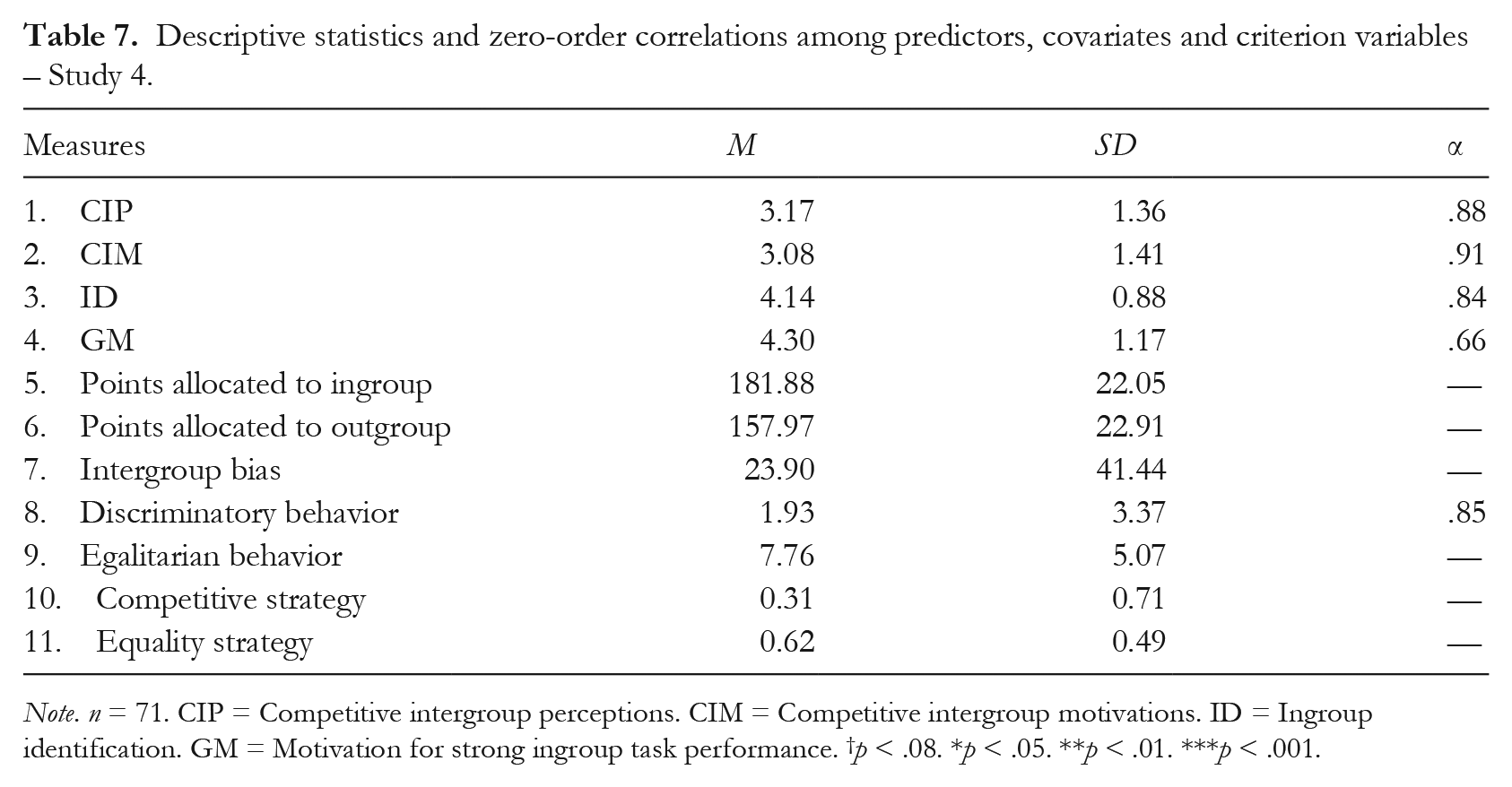
Note. n = 71. CIP = Competitive intergroup perceptions. CIM = Competitive intergroup motivations. ID = Ingroup identification. GM = Motivation for strong ingroup task performance. †p < .08. *p < .05. **p < .01. ***p < .001.
Descriptive statistics and zero-order correlations among predictors, covariates and criterion variables – Study 4.
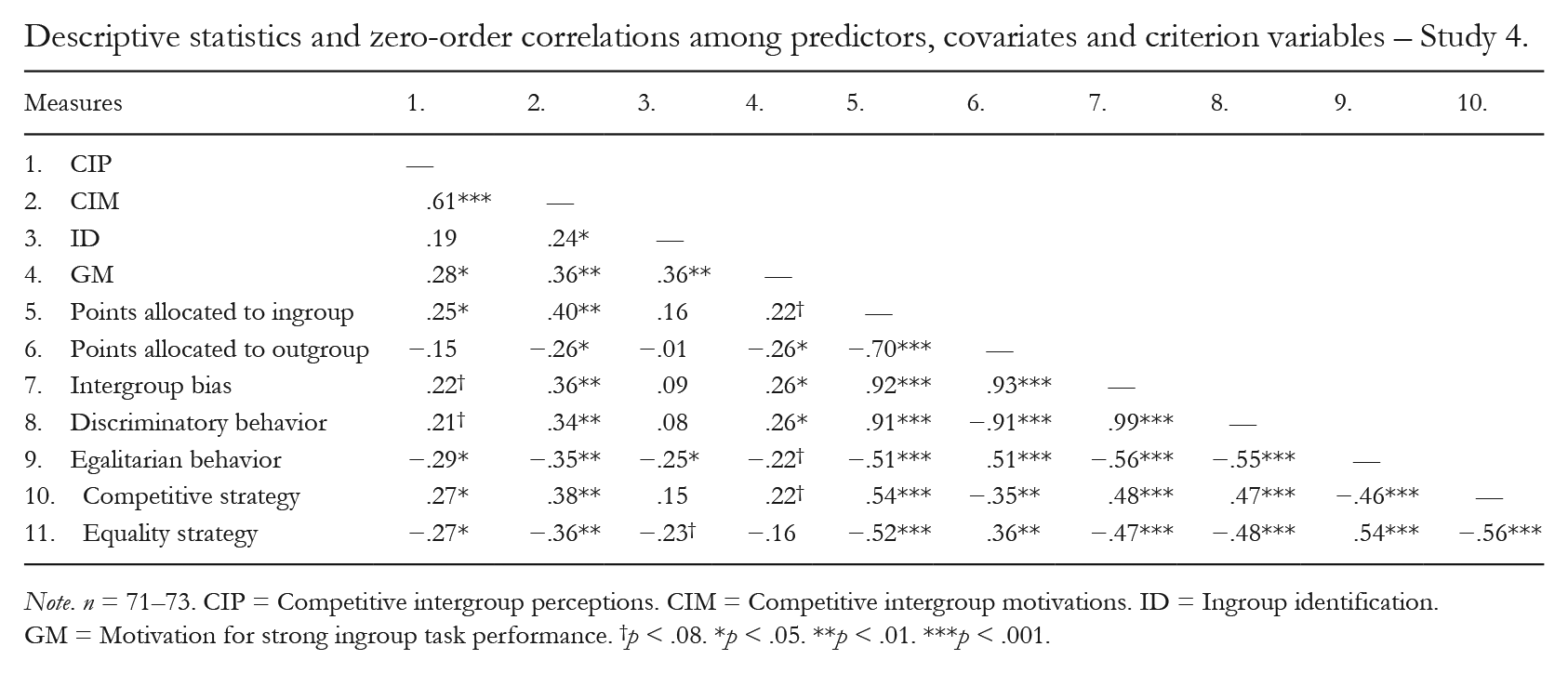
Note. n = 71–73. CIP = Competitive intergroup perceptions. CIM = Competitive intergroup motivations. ID = Ingroup identification. GM = Motivation for strong ingroup task performance. †p < .08. *p < .05. **p < .01. ***p < .001.
Following the previous studies, we conducted separate analyses that regressed each criterion variable on participants’ level of ingroup identification, motivation for a high group performance score, CIP, and CIM. As seen in Table 8, self-reported CIM predicted more points allocated toward the ingroup, greater intergroup bias in point allocations, more discriminatory behavior, and a stronger endorsement of competitive decision strategies. The tendency for CIM to predict a weaker endorsement of equality strategies was nonsignificant, but is directionally consistent with the trend of CIM predicting greater intergroup bias. The effect of CIP was again nonsignificant across all criterion measures.
Regression analyses (Study 4).
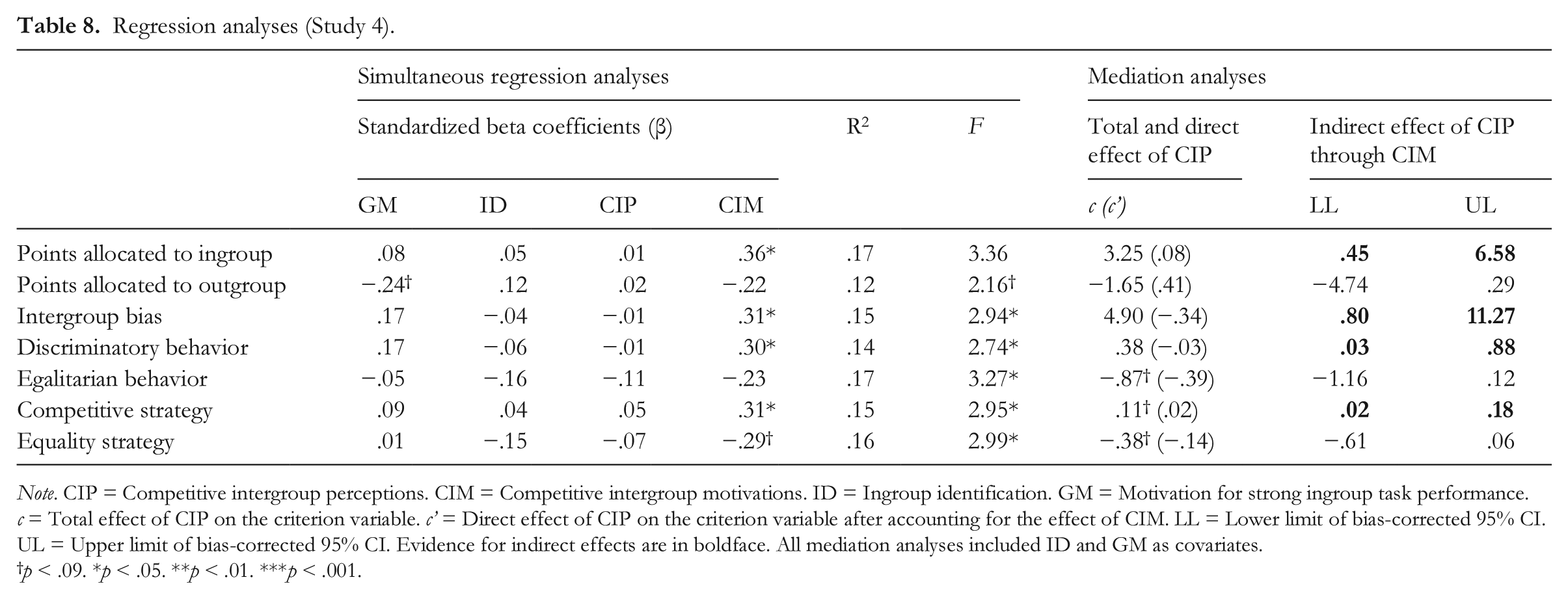
Note. CIP = Competitive intergroup perceptions. CIM = Competitive intergroup motivations. ID = Ingroup identification. GM = Motivation for strong ingroup task performance. c = Total effect of CIP on the criterion variable. c’ = Direct effect of CIP on the criterion variable after accounting for the effect of CIM. LL = Lower limit of bias-corrected 95% CI. UL = Upper limit of bias-corrected 95% CI. Evidence for indirect effects are in boldface. All mediation analyses included ID and GM as covariates.
p < .09. *p < .05. **p < .01. ***p < .001.
We used Preacher & Hayes’s (2008) macro to investigate whether CIM mediated the relation between CIP and participants’ allocation of points to the ingroup, intergroup bias, discriminatory behavior, and reported use of competitive and equality strategies. The bias-corrected confidence intervals suggested that CIP registered a significant indirect effect, via CIM, on ingroup point allocation, intergroup bias, discriminatory behavior, and the use of competitive strategies (see Table 8).
Discussion
The present study extends Studies 2–3 by showing how CIP and CIM differentially affect discriminatory behavior. In Study 4, it was observed that participants’ competitive motivations—not their competitive perceptions—regarding the intergroup context were more strongly associated with allocating more resources to the ingroup, allocating a greater difference in resources to the ingroup versus the outgroup, and more discriminatory behavior overall. The mediation results consistently suggest that CIP affected participants’ behavior indirectly via its influence on CIM. These effects occurred after controlling for the participants’ ingroup identification and desire for their group to achieve a high score on the performance task.
These results complement those of Studies 2 and 3. In those studies, CIM was more strongly related to intergroup bias than CIP, and the influence of CIP operated indirectly through CIM on most of the criterion variables.
General Discussion
The current set of studies demonstrates the value of conceptually and empirically distinguishing between competitive intergroup perceptions (CIP) and motivations (CIM) in potentially competitive group settings. A confirmatory factor analysis in Study 1 suggested that CIP and CIM are positively related, but distinct constructs. In Study 2, CIP was more strongly associated with the perception of intergroup differences than CIM, while CIM was more strongly associated with constructs related to maintaining ingroup agency, that is, the importance of following ingroup norms and desire for ingroup cooperation, which are consistent with the hypothesized distinctiveness of both constructs. Distinguishing between CIP and CIM in the current research also illustrated that both variables were distinct in their relation to evaluative and behavioral intergroup bias and discriminatory behavior. Across three studies, CIP did not affect any intergroup criteria independently of CIM—except for the perception of intergroup differences in Study 2. CIM was associated with greater intergroup bias, and more antisocial intentions and behavior than CIP. However, the mediation analyses consistently showed that CIP indirectly affected intergroup bias and discriminatory intentions and behavior through its influence on CIM. On the whole, these results suggest that, in potentially competitive contexts, CIM plays a more prominent role in generating intergroup bias and discrimination, and that this process is quite sensitive to perceptions of whether a competition between groups is taking place.
Implications and Future Research Directions
One of the primary benefits of conceptualizing intergroup competition in terms of CIP and CIM is greater precision in understanding how intergroup competition leads to intergroup bias and discrimination. We observed that the perception of active competition with the target group was strongly related to the desire for one’s ingroup to have more or be superior to the target group, which in turn facilitated greater intergroup bias, more competitive and distant outgroup intentions, and more discriminatory outgroup behavior. This was consistently observed in contexts that did not objectively institute competition between groups. These findings are particularly relevant to research on RGCT and ITT (Stephan et al., 2002; Stephan & Stephan, 1996), which has found that perceptions of conflict, as well as realistic or symbolic threats, elicit outgroup prejudice (e.g., L. M. Jackson & Esses, 2000; Stephan, Renfro, Esses, Stephan, & Martin, 2005). Our findings suggest that those studies may have obscured how people’s motivation to acquire more than the outgroup was likely a more potent trigger for intergroup prejudice than their corresponding perceptions of conflict.
This research may help to reconcile the contradictory findings regarding the effects of intergroup competition. Our results suggests that those studies that observed that the presence of competitive versus noncompetitive group contexts did not result in corresponding increases in discriminatory behavior (e.g., Brewer & Silver, 1978; Brown, 1984; Jetten et al., 2004) may not have elicited sufficiently strong levels of CIM. This explanation is plausible, considering that each of these findings are from studies that used the minimal-groups design and the competition may not have been sufficiently motivating. This explanation is also consistent with the fact that many studies which have observed heightened intergroup bias and discrimination as a function of perceived competition (e.g., Stephan et al., 2005; Struch & Schwartz, 1989) typically included a highly appealing or self-relevant incentive (e.g., political power, economic prosperity).
Our research indicates that competitive motivations play a more proximal role in fomenting intergroup discord, but other contexts may stimulate a different set of outcomes. Future research should incorporate experimental manipulations that vary the degree to which the ingroup is explicitly seen as competing with the outgroup, and/or the value of the ingroup surpassing the outgroup. It may be that experimental manipulations of CIP and CIM would result in both contributing additively to intergroup discrimination. Considering the effects of CIM in Studies 2–4, however, it is plausible that inducing strong competitive motivations may produce intergroup bias even without any mention of a competitive goal structure. A third possibility may emerge, such that situationally-induced increases of CIP or CIM affect intergroup discrimination only if the other variable is also situationally heightened, in line with the idea that the effects of competitive perceptions or motivations both have to pass a sufficiently strong threshold for either to impact intergroup outcomes.
In this way, the current research could be regarded as a baseline for future endeavors that examine how CIP and CIM operate in other contexts and with other types of groups. CIP or CIM may mediate or moderate the effects of processes such as patriotism or nationalism (Mummendey, Klink, & Brown, 2001), SDO (Pratto et al., 1994), relative deprivation or gratification (Guimond & Dambrun, 2002), or collective narcissism (de Zavala, Cichocka, Eidelson, & Jayawickreme, 2009) on intergroup discrimination. It is noteworthy that the covariates in our studies, which include renown constructs such as the centrality of the ingroup to one’s identity (Studies 2–4), satisfaction with the relative status of one’s ingroup (Study 3), and the “individualistic” desire for one’s ingroup to achieve (Study 4) were consistently associated with competitive motivations, and in some cases, with competitive perceptions regarding the outgroup. It may be plausible, however, that in contexts of intergroup conflict, individuals who score lower on constructs related to the support of intergroup inequality (e.g., SDO), may react to a strong perception of intergroup competition with benevolence or empathy toward outgroup members, particularly if the outgroup is seen as unable to attain greater status. These possibilities underscore the value of assessing CIP and CIM separately in research on intergroup conflict. We hope, therefore, that the current framework stimulates more investigations that directly examine the roles of competitive intergroup processes.
Footnotes
Appendix
Note. The deductive vs. inductive thinkers context was used in Studies 1, 2, and 4, the Western vs. Queen’s context was used in Study 3. Agreement was assessed on a 7-point scale (1 = strongly disagree, 7 = strongly agree).
Acknowledgements
The authors thank James Olson for his comments on an earlier version of this paper. Parts of this research were completed toward the requirements of the PhD dissertation for the first author, and honors undergraduate thesis project for the fifth author. Portions of this work were presented at the Society for the Psychological Study of Social Issues 2012 Biennial Meeting in Charlotte, NC. Additional supporting information may be found at 
Funding
The author(s) received no financial support for the research, authorship, and/or publication of this article.
Notes
References
Supplementary Material
Please find the following supplemental material available below.
For Open Access articles published under a Creative Commons License, all supplemental material carries the same license as the article it is associated with.
For non-Open Access articles published, all supplemental material carries a non-exclusive license, and permission requests for re-use of supplemental material or any part of supplemental material shall be sent directly to the copyright owner as specified in the copyright notice associated with the article.
