



Abstract
This article presents an extensive overview of state of the art in design and testing of design for deconstruction concrete connections for concrete elements by reviewing and discussing the results of both experimental and numerical studies in this domain. In particular, characteristics and demonstrated behavior of precast dry beam-to-column concrete connections and beam-to-beam concrete connections that possess certain degree of demountability are critically reviewed. Furthermore, the mechanical behavior and structural performance of various design for deconstruction connections are compared and discussed. The comprehensive review presented in this study highlights considerable potential for minimizing the life cycle impact of buildings, especially with regard to energy and material resources, through application of design for deconstruction systems. The results presented in available literature provide a good degree of assurance with regard to safety and feasibility of implementation of design for deconstruction systems in practice. However, it is also revealed that full-scale tests conducted to evaluate the structural feasibility and construction effectiveness of design for deconstruction concrete connections are limited. Directions for future research are provided by discussing the identified challenges and limitations of design for deconstruction systems for concrete structures.
Keywords
Introduction
The building and construction industry is responsible for up to 30% of annual energy use and greenhouse gas emissions occurred globally (van Dijk et al., 2014). In addition, construction industry is one of the largest consumers of raw natural resources and producers of solid waste, referred to as construction and demolition waste (Peng et al., 1997). With this in mind, construction and building industry has been the focus of attention as a key industry sector in the recent global initiatives for enhancing sustainability (Naik, 2008). This growing focus on sustainable practice in construction industry has in turn led to numerous innovative approaches to reduce the environmental impacts throughout the life cycle of the structure (Jaillon and Poon, 2014; Tingley and Davison, 2012). With concrete being regarded as the most-used construction material worldwide, particular attention has been especially placed on innovative approaches to improve sustainability of concrete structures, which will be the focus of this study.
A majority of approaches investigated to reduce the environmental impact of structures are in line with the “3R” waste management principle which aims at reducing, reusing, or recycling, in the order of desirability, construction, and demolition waste generated during service life of a building, leading to a proportional decrease in the demand for new resources, as well as associated energy consumption and costs (Peng et al., 1997; Sadi et al., 2012). Reduction either through eliminating the need for particular elements and processes or through avoiding over-design has a long-standing history in design and planning of structures and is regarded as the most effective approach toward enhancing sustainability in construction (Peng et al., 1997). Reuse, on the other hand, results in reduction in consumption of natural resources through extending the life of existing structural elements by moving them from one application to another. Reuse is widely considered as a sustainable strategy due to eliminating the need for extraction of new natural resources as well as preserving the energy and capital invested initially in construction of the elements from raw materials (Akbarnezhad and Xiao, 2017). Recycling is the last resort in the hierarchy of sustainable waste management practices which becomes a favorable option when reduce and reuse are either technologically infeasible or financially unjustifiable (Chini, 2001; Kibert and Chini, 2000). A great deal of effort has been made over the past several decades to improve the state-of-the-art concrete recycling technology and gain a better understanding of properties, applications, and limitations of recycled concrete. The breadth of available literature in this domain ranges from investigations on mechanical and durability properties of recycled concrete (Evangelista and de Brito, 2007; Poon et al., 2004; Topcu and Şengel, 2004; Xiao et al., 2005) to structural performance of recycled concrete structures (Choi and Yun, 2012; Gonzalez and Moriconi, 2014; Xiao et al., 2006, 2012, 2015). Recycling of concrete has been widely advocated as a sustainable strategy due to various economic and environmental benefits by redirecting the waste from remote landfilling and reducing the need for extraction of natural aggregates through providing an alternative source of recycled aggregates (Hansen, 1986). However, it has also been noted that while contributing to preserving the material resources, recycling is considerably less effective compared to reuse strategy in terms of preserving the energy and capital invested in manufacturing the structural elements and is accompanied usually with additional energy use during the recycling operation (Akbarnezhad and Xiao, 2017; Ding et al., 2016). With such drawbacks in mind, enabling the reuse of structural elements has topped the wish-lists of many researchers in the field of sustainable concrete structures over the past several years.
While a majority of concrete elements are designed with service lives which are considerably longer than service life of the building they are used in, a major barrier to reusing concrete elements is the inability to disassemble elements of a conventional concrete structure (Ong et al., 2013). The effort to identify potential reuse strategies for concrete structures has therefore directed researchers toward identifying reverse-construction, that is, deconstruction, strategies which rely on development of demountable connections for concrete elements. Precast concrete elements, which naturally undergo a systematic assembling process during construction and provide a degree of flexibility in terms of design of connections, have been identified as viable candidates for development of demountable concrete elements.
Precast concrete has been gaining growing popularity over the past several decades due to its significant advantages including easier and quicker erection of the building structures, better quality due to tighter off-site control, reduced on-site activities, and reduced waste generation (Jaillon et al., 2009; Li et al., 2014; Lu and Yuan, 2013). The research on development of more efficient and innovative connections for precast concrete elements has a history as long as the precast concrete research itself (VanGeem, 2006; Yee and Eng, 2001). During the past 30 years, about 25 typical precast concrete connection types have been recommended by the Precast/Prestressed Concrete Institute (PCI) (Choi et al., 2013). Similarly, a great deal of experimental research has been conducted on the behavior of connections between precast concrete elements which has resulted in our improved understanding of challenges and further improvements required.
However, the current practice in precast concrete frame construction leaves little room for exploring reuse of concrete elements as an option; this is mainly because demountability is seldom an option for typical precast concrete connections, due to overlapping continuity bars and use of abundant cast-in-situ concrete to ensure monolithic behavior at the connection region. This has led to the development of a new and rapidly growing research area on developing and testing innovative disassemble-able connections for concrete elements, referred to commonly as design for deconstruction (DfD) connections, to enable reuse of concrete structures (Crowther, 2005).
While having a relatively long history in mechanical and manufacturing history where it is mostly referred to as design for disassembly, DfD is a relatively new and burgeoning concept in civil engineering (Güngör, 2006). The DfD elements in a structure can be disassembled at the end of building’s service life for reuse in the same or a similar structure. Implementation of DfD in timber and steel structures is relatively straightforward as timber and steel structures can be readily designed, with minor modifications, to allow the level of demountability required by DfD. The former could be dismantled and reused with the aid of carpentry skills, while the latter have the potential for dismantlement through the use of bolted connections. However, when it comes to concrete structures, implementation of DfD is challenging and requires development of new demountable connections and comprehensive research to ensure reliability of these connections. Distinction should be made between DfD structures and resilient structures including replaceable structures which have also gained considerable popularity in recent years (Lu et al., 2013). In particular, the replaceable members are designed to enable replacement of damaged elements in structures after an earthquake event; whereas in DfD structures, the reusable members are expected to be in good condition with no or minimal damage to enable their reuse.
The application of DfD in the concrete industry has been targeted at realizing the deconstruction of concrete elements for reuse in new structures, which will significantly reduce the environmental impacts and increase resource utilization efficiency (Gorgolewski, 2008). Reuse of concrete elements not only eliminates the need for extraction of new materials and energy consumption to manufacture the new elements but also minimizes the generation of C&D waste, and thus the need to landfill or recycle the waste, which would have been otherwise generated by demolition of building at the end of its service life. The economic and environmental benefits of DfD through giving structural elements a new life has been investigated through life cycle assessment (LCA) (Tingley and Davison, 2012) and life cycle costing with the aid of building information modeling (BIM) (Akbarnezhad et al., 2014); and significant energy, carbon emission, and cost reductions have been reported.
According to Webster and Costello (2005), from the structural perspective, the general requirements for a DfD structure includes the following: (1) using common and standard connections, minimizing the number of different member sizes; (2) using removable fasteners and avoiding adhesives in the connection; (3) avoiding multiple types of structural systems; and (4) avoiding composite systems unless the combined system can be reused. Driven by the growing importance of sustainability, the research on DfD has enjoyed rapid growth within the academia with an increasing number of different types of demountable connections being reported in available literature. Such an increase in breadth of research on DfD presents a potential threat, as it increases the risk of failure to precisely assess the status of the body of knowledge. This could in turn become a major barrier to identifying the required directions for research. On the other hand, a good understanding of current state of the art through a comprehensive review of available literature could present an opportunity to coordinate future research directions to address the key issues and barriers hindering the widespread application of DfD systems in practice. While a number of efforts has been made to review the state of the art in generic types of connections used in precast concrete (Nakaki et al., 1999; Priestley, 1996) or engineering applications (Jaillon and Poon, 2014; Yee et al., 2011), such studies tend to focus on conventional connections without discussing their demountability and suitability for DfD structures. There is currently a lack of comprehensive review of recent development with regard to DfD connections. With this in mind, this article provides a comprehensive overview of the body of knowledge on DfD connections used for concrete structures by critically reviewing the results of previous studies in this domain. Apart from DfD connections designed specifically with demountability features, other non-DfD concrete connections including dowel connections, precast pre-stressed connections, hybrid-steel connections, and beam-to-beam connections, which possess certain degree of demountability and a potential for further development for use as DfD connections are also discussed.
An extensive literature review methodology was conducted to identify the relevant papers in the field. The papers were identified using Scopus, ISI Web of Knowledge, ScienceDirect, and Google Scholar. The Keywords used include, but are not limited to, “design for deconstruction,”“design for disassembly,”“disassemble-able concrete connection,”“dry beam-to-column connections,”“demountable concrete connection,”“dowel connection,”“precast pre-stressed connection,” and “hybrid-steel concrete connection.” No limits were set for publication date, while the language of publications was limited to English. This led to identifying a total of 107 papers which were then filtered by the authors to select the relevant papers reviewed in this study. It also should be noted that the term “connection” and “joint” in this article were used in two different ways. “Connection” refers to the intermediate part that combines two separate elements together, while “joint” refers to the specific connection between column and beam of the structure.
Experimental studies on DfD concrete connections
Dry concrete connection
Dowel concrete connection
Beam-to-column dowel concrete connection is the most common connection used in the European precast industrial buildings (Belleri et al., 2015). A typical dowel concrete connection for the frame structure is shown in Figure 1. As shown, a dowel connection typically consists of one or more steel dowels, embedded in the column and inserted in a beam hole, filled with mortar. The dowel concrete connection can be categorized as a dry pinned joint, which is complex due to its composite nature. Dowels in frame connections which provide horizontal resistance could be disassembled conveniently from the structure. With this in mind, dowel connection is regarded as a suitable candidate for use in DfD structures where ease of disassemble-ability of connection is a key requirement.
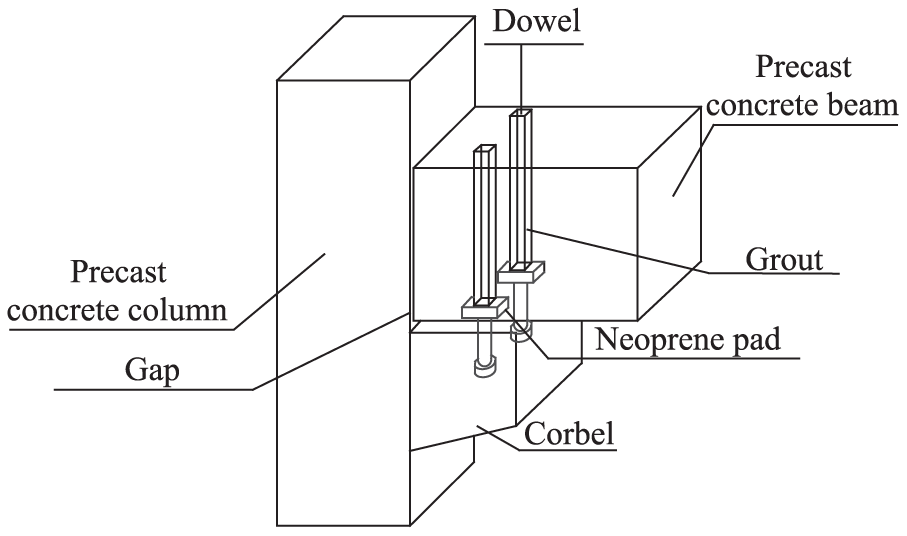
A typical dowel connection for concrete frame structure.
The shear behavior of the dowel connection in concrete structures has been previously investigated extensively by several studies including Vintzeleou and Tassios (1987), Dei Poli et al. (1992), Tanaka and Murakoshi (2011), and Vintzeleou and Tassios (1987). A recent growth in number of studies on dowel connections is observed after the Emilia Romagna earthquake which hit a highly industrialized area in Italy, where hundreds of precast buildings with dowel connections were affected and damaged in 2012 (Belleri et al., 2015).
In an experimental study conducted by Psycharis and Mouzakis (2012), monotonic and cyclic shear was loaded on dowel concrete connections. The general layout of the concrete specimens including precast beam and column elements is shown in Figure 2(a) and (b). Several design aspects such as the shear ductility capacity of the connections and the effect of various parameters on their strength were studied. It was reported that dowel concrete connections showed considerably lower resistance, less than half of monotonic load, to the cyclic load. However, it was noted that the results for cyclic loading indicate favorable of shear ductility in cases where concrete cover of the dowels has sufficient thickness. The cross section of the dowels was identified as the main parameter determining the resistance of the connection, while the normal distance of the dowels from the edges was found to be the secondary influential factor. Furthermore, the use of high strength grout was found to lead to an increase in the resistance of the connection and improved cyclic response by decreasing pinching and increasing ductility.

General layout of one type of dowel connection: (a) general layout of the specimens and (b) damages of specimens during the tests.
Further investigation on the shear behavior of typical beam-to-column dowel connection was performed by Magliulo et al. (2014) through the experimental setup shown in Figure 3. The results confirmed the expected behavior of the dowel connection under horizontal load by indicating a brittle splitting failure. In order to improve the structural performance, El Debs et al. (2010) and Aguiar et al. (2012) proposed a new, simplified beam-to-column connection with inclined dowels, which is displayed in Figure 4. The shear mechanism of this beam-to-column connection was studied. Test results showed that the load capacity of the connection depends on the dowel inclination as indicated by clear increase in the load capacity when the dowel inclination angle was varied from 0° to 60°.

Shear test on the dowel connection.

Beam-to-column connection with perpendicular or inclined dowels.
Apart from the shear behavior of dowel connections, the cyclic performance of the concrete structure with dowel connections has also been studied extensively as a key concern of researchers in this domain. To evaluate the whole structural behavior of dowel beam-to-column connections, a full-scale three-story precast building was subjected to a series of pseudo dynamic loadings (Bournas et al., 2013; Negro et al., 2013). As shown in Figure 5(a) and (b), a hinged connection by means of dowel bar and a moment-resisting connection by means of an innovative ductile connection system were investigated in this study. In dowel connection, an increased diameter at the critical section was adopted in the pinned connection to transfer shear and axial forces. While in moment-resisting connections, four steel rebars and two thick steel plates were employed, and a bolt was used to connect the two steel plates. It was observed that large forces occurred in multi-story buildings with hinged beam-to-column connections, when the structure entered into the nonlinear regime. A considerably smaller beam-to-column joint slip was reported for moment-resisting connections compared to dowel connections. However, it appears that significant cracking appeared in the vicinity of the dowel beam-column joint, which was quite different from a rigid joint in this study.

One type of hinged connection and one type of moment-resisting connections: (a) pinned connection and dowels with increased diameter at the critical section and (b) connector used to realize dry emulative beam–column joints.
Brunesi et al. (2015) focused on the main structural characteristics and criticalities in the seismic response of precast concrete structures with typical dowel connections. Two 3/4 scale two-bay, three-story precast concrete frames with and without cladding panels were subjected to quasi-static cyclic loading. The results demonstrated an unsatisfactory performance for the structure mainly due to its beam-to-column connection systems. It was recommended that due to their nearly elastic-fragile behavior, the application of such frames in areas with high seismic susceptibility should be avoided. The following conclusions can be drawn from investigations on the dowel connections:
Dowel connections provide a simple dry beam-to-column concrete connection suitable for DfD structures. The dowels could be disassembled conveniently, facilitating the deconstruction process of reusable precast concrete elements. However, the use of dowel connection can lead to development of large bending moments in columns. This tends to render dowel connections economically unjustifiable in tall buildings due to simultaneous increase in the bending moment due to an increase in the building height. Thus, the application of dowel beam to column connections in practice is limited mainly to low-rise buildings. In cases where the application of dowel connection in high-rise building is of interest, it is suggested that shear walls are included to reduce the bending moment in the columns.
The section of the dowels is the main parameter that determines the resistance of the connection, while the normal distance of the dowels from the edges has also been found to have a significant influence. The dowel inclination could increase the load capacity of the connection. Furthermore, the employment of high strength grout increases the resistance of the connection and improves the cyclic response by decreasing pinching and increasing ductility.
Precast pre-stressed concrete connection
Due to small amount of post-cast concrete applied during the construction process and employment of additional tendons (Priestley, 1996), the precast pre-stressed connections for precast concrete structures are considered as another suitable candidate for demountable connections in DfD structures. The previous studies on precast pre-stressed concrete connections generally report desired structural performance including adequate strength and energy dissipation characteristics in monolithic conditions. Dywidag ductile connection (DDC) method, proposed initially by Englekirk & Nakaki, Inc., allows precast concrete beams to be bolted to a precast column, simplifying the construction process while improving the seismic behavior at the same time (Englekirk, 1995, 1996). In this connection, a high-quality steel rod with controlled post-elastic properties acts as a “capacitor” to limit the loads and achieve a balanced system. The tests conducted at the University of California at San Diego in 1993 showed that DDC system performed well in overcoming failure even after sustaining more than 25 cycles of large displacement-controlled cyclic loadings, with maximum story drifts of 4.5%. However, DDC system was found to have a number of drawbacks including its relatively high cost and high precision requirement in construction.
Several prefabricated buildings have been built in Japan and New Zealand by adopting precast pre-stressed dry connections. The performance of post-tensioned concrete connections in precast structures has been the subject of considerable research in 1980s and 1990s. The main variables investigated in early studies on these connections include the location of pre-stressing tendons, the level of post-tensioning force, and the use of bonded or unbonded tendons (Alcocer et al., 2002; French et al., 1989a, 1989b; Priestley and Tao, 1993; Stone et al., 1995).
The concept of connecting precast concrete frame elements with beam pre-stressing tendons de-bonded through the joints was first proposed by Priestley and Tao (1993). Based on the results of inelastic analysis, it was noted that improved joint shear performance and restoring force characteristics could be expected from this arrangement.
Ozden and Ertas (2007) presented the results of a series of tests performed on post-tensioned precast concrete moment-resisting beam-column connections with different mild steel reinforcement contents. The post-tensioned connections were tested under displacement-controlled reversed cyclic loading. Based on observations and test results, it was demonstrated that post-tensioned connections had adequate flexural strength and could sustain up to 4% story drift without experiencing major strength degradation. By analyzing the observations, it was proved that the response of post-tensioned precast concrete hybrid connections could approach that of the monolithic subassembly with an increase in mild steel reinforcement content.
Hawileh et al. (2006) developed a non-iterative simplified design procedure for precast concrete beam-to-column connections, which used unbonded post-tensioning steel and partially de-bonded mild steel reinforcing bars, as shown in Figure 6. The feature of this connection is the combination of mild steel and post-tensioning steel. The mild steel reinforcement was designed to dissipate energy while the post-tensioning steel was used to clamp the beam against the column. The post-tensioned force acts as a restoring force to bring the frame back to its original configuration after an earthquake and provides shear resistance through the friction developed at the beam–column interface. A potential failure mode of this hybrid frame connections is the fracture of low-cycle fatigue of the mild steel bars. Laboratory tests were performed by Hawileh et al. (2010) to evaluate the low-cycle fatigue of reinforcing bars in precast hybrid frame connections and results showed that this problem should be addressed in the seismic design. An experimental program on this connection was conducted at the laboratories of the National Institute of Standards and Technology (NIST; Cheok and Stone, 1994). The results showed that this connection can be designed to match the performance of a similar monolithic connection. Hawileh et al. (2013) and Saqan and Hawileh (2010) also proposed a set of new non-dimensional parameters and procedures for the design of unbonded post-tensioned precast hybrid wall connection. Comparisons between the conventional iterative design procedure and the new non-iterative design charts procedure were made. It is found by the authors that the proposed design equations predicted values are accurate and are normally within 2% of the exact optimum solution.
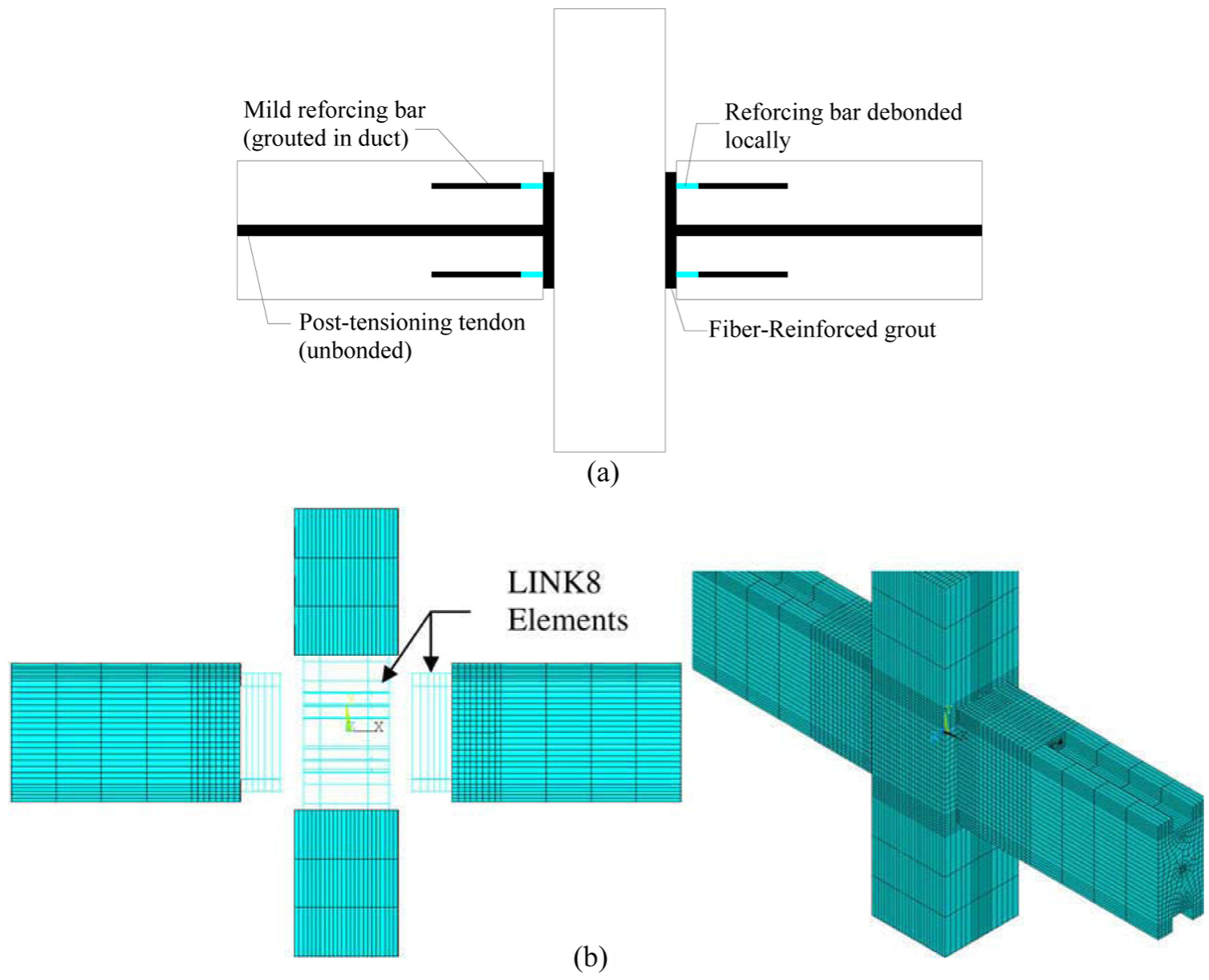
Post-tensioned connection with unbonded post-tensioning steel: (a) post-tensioned connection and (b) FEM connection isometric view.
The main findings of the previous analysis on the precast pre-stressed concrete connection can be summarized as follows:
The precast pre-stressed connection is a suitable candidate for use in DfD structures due to its ease of demountability, the small amount of cast-in-situ concrete used, and its use of additional tendons. Precast pre-stressed connection in precast concrete structures is the major ductile connection minimizing the seismic damage. It is adopted due to limited residual structure deformations. The post-tensioned tendons act as elastic springs which re-center the joint, after a seismic event, back to its original conditions.
Available literature indicates that the precast pre-stressed connections typically exhibit desired structural performance in terms of strength and energy dissipation characteristics when compared with similar monolithic specimens.
While appearing as good candidates for DfD structures, the need to lay ducts to install the tendons penetrating a beam-to-column DfD joint makes the construction of the DfD pre-stressed precast connections complicated and further research is required to identify or develop alternative equipment and technologies for pre-stressing of such DfD elements.
Hybrid-steel concrete connection
In hybrid-steel concrete connections, steel plates are used to ensure adequate moment resistance in dry beam-to-column connections and thereby avoid hinged connections in the structure (Figures 7 and 8). Such connections are featured by an obvious assembling and disassembling ease, rendering them suitable for DfD structures.

Typical steel plate beam-to-column connection details.
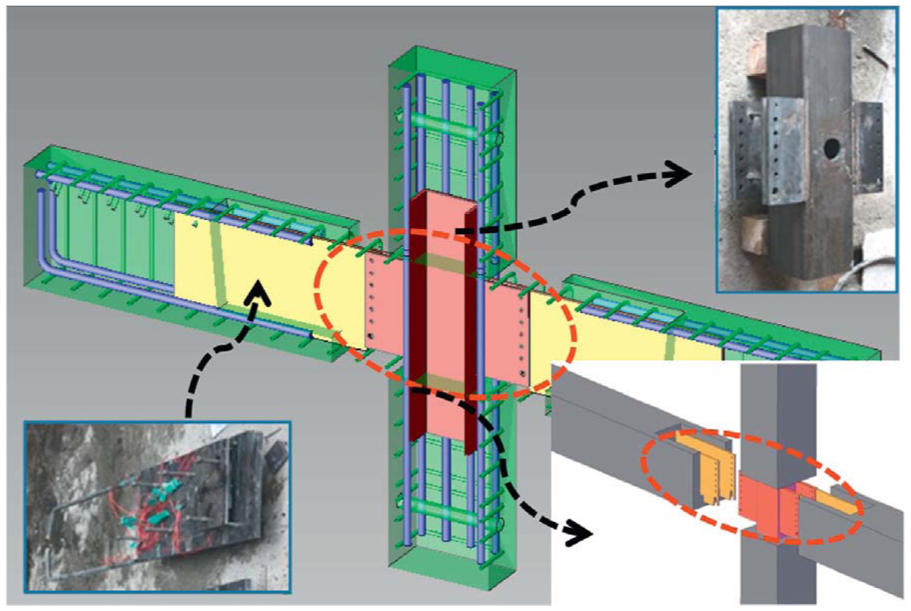
Steel plate beam-to-column connection with ECC casting.
A hybrid precast concrete beam system incorporating an H-steel plate was developed by Yang et al. (2010) as a simple ductile connection. Although favorable capacity and ductility of the hybrid precast concrete system were confirmed by reported experiments, the specimens tested in this research were all beams rather than frame connections. Metelli and Riva (2008) presented the first results of a full-scale experimental research concerning the cyclic behavior of a particular beam-to-column “dry” connection for precast concrete elements. For the sake of developing a ductile beam-to-column connection in case of earthquake, the column and the beam were joined together using high-strength threaded steel bars, steel plates, and fiber-reinforced concrete. The “Z” shaped beam–column interface was expected to increase the shear resistance of the connection.
The authors reported that the dry connection during cyclic tests showed a good performance, characterized by a stable behavior up to 2.0% drift. They concluded that the connection showed significant potential for its application in the design of seismic precast structures, both due to the favorable behavior exhibited by the joint on the beam side and the ease of its assembly and repair. However, due to concrete cracking, brittle failure of the connection occurred on the column side with the pull-out of a conical fracture surface radiating from the anchored end. Thus, for higher drift values, the connection was found to have a limited dissipative capacity. It was noted that further development of the joint on the column side is required. An effective bar anchorage system allowing the bar yield should be obtained, to provide adequate ductility and dissipative capacity of the joint, even in case of high earthquake intensity.
Choi et al. (2013), Kulkarni et al. (2008), Kulkarni and Li (2009), and Li et al. (2009) also reported the behavior of beam-to-column connections using steel plates and bolts under cyclic loading. Kulkarni et al. (2008), Kulkarni and Li (2009), and Li et al. (2009) proposed an innovative hybrid-steel concrete connection (Figure 7). As shown in Figure 7, a steel angle and plate connection was used to assemble the two precast beams to the joint core. Cyclic reversal loading tests showed no abrupt damage within the joint core region. The connection exhibited adequate ductile behavior under seismic loading. Embedment of the steel sections in joints was reported to greatly enhance the strength of the connection. It was demonstrated that joint core regions were adequately confined by the incorporated steel sections, providing a significantly high degree of restraint and reducing the joint core deformation under the reversed cyclic loading.
Choi et al. (2013) proposed an alternative hybrid-steel connection characterized as a ductile connection as shown in Figure 8. Steel connectors and engineered cementitious composite (ECC) were used to improve the constructability of the joint and the efficiency of the stress transfer between discontinued precast members. The steel connector consisted of bolting steel tubes and steel plates which were placed inside the precast column and beam. As shown in Figure 8, ECC was cast on-site to cover some parts of the beam and the joint.
The results of two cyclic load tests conducted on the precast beam-to-column connections using the steel connectors and the ECC highlighted that this type of connection shows a typical flexural failure mode and behaves monolithically until failure. Stress discontinuity between the members was not observed and the force was effectively transferred to the beam and connection. The proposed connection by Choi et al. (2013) satisfied the requirement prescribed in the ACI structural guideline and thus was verified to provide excellent seismic performance. It was suggested that the proposed hybrid connection with steel plate assembly and ECC is suitable for use in precast concrete buildings in seismic regions.
The following conclusions may be drawn based on the results presented in previous studies on hybrid-steel connections:
The hybrid-steel connection is featured by an obvious assembling ease due to the lack of reinforcement across the column, rendering it suitable for DfD structures. Using steel plates and ECC, the flexural performance, shear resistance, ductility, and energy dissipation of the beam-to-column connection could be improved.
The joint damage might be localized at the beam–column interface due to both the unbonded bar elongation and the opening of the pre-existing crack at the beam–column interface. This feature might reduce the inelastic mechanism. Brittle failure of the connection on the column side might occur with high drift. Cracks at the joints should be controlled.
Connections with bolted assembly with steel plate and some special concrete such as high-performance fiber reinforced cement composite may be used in design of concrete buildings in seismic area. However, the body of knowledge on steel plates in dry concrete connections and their applications is currently limited.
Beam-to-beam concrete connection
A viable alternative to beam-to-column DfD connections is beam-to-beam DfD connections which offer a number of advantages. First, a beam-to-column DfD connection will inevitably disturb the continuity of reinforcements which is unfavorable. Furthermore, the seated precast beam is coinciding with the inherent plastic hinging region for DfD beam-to-column joints. In order to perform satisfactory seismic performance, additional technique is usually required for this kind of connection. Moreover, the congested reinforcement details in the connections create difficulties during the construction stage (Khoo et al., 2006). With this in mind, DfD connections can be argued as a more viable option for the frames adopting beam-to-beam connections.
In order to avoid the plastic hinge regions during seismic excitations, Khoo et al. (2006) proposed a frame connection which moved the connection away from the column face. The middle precast beam was connected to the short protruding beam stubs, which were parts of the precast columns. The connections between these precast elements were established through lapping of the hooks at the precast beam ends, which were then encased within cast-in-place concrete.
The results of reversed cyclic loading experiments on the beam-to-beam connection frame revealed that the connection allows the formation of plastic hinges in the beam-end regions. Furthermore, the failure of the specimens was identified to have been caused by the significant shear deformation in plastic hinge regions. The authors concluded that the connection was feasible as a replication of cast-in-place moment-resisting connection. The modified precast frame allowed for the formation of plastic hinges in the beam-end regions.
However, significant bond deterioration was also observed in the connection regions and the premature bond failure was identified as the root cause of stiffness degradation within the entire frame, especially for the specimen with 90-degree hook. It was therefore suggested that sufficient transverse reinforcement should be provided to transfer the entire shear force entering the connection region.
Korkmaz and Tankut (2005) proposed a beam-to-beam connection in which the middle precast beam was placed on cantilever beams. As shown in Figure 9, the cantilever beam was extended from columns of the structure in a similar manner to the connection presented by Khoo et al. (2006). However, the top reinforcement was continued by lap splicing or welding within the connection region to develop a moment-resisting precast concrete connection. Bottom reinforcement was continued by welding two steel plates together. Cast-in-situ concrete was placed after the reinforcements were connected. The results of the tests conducted by cyclic loading applied at the top of the beam highlighted anchorage problems in the lap splicing specimens. However, connecting the top steel via welding was found to lead to satisfactorily performance. For frames with beam-to-beam connections located in seismic regions, welding and use of longer confined lap splicing was recommended. In addition, for the bottom connections, this could only be realized if the connectors are stronger than the bottom bars themselves, and the connection plates should also be properly anchored.

Beam-to-beam connection with cantilever beam.
Ong et al. (2013) and Lin (2013) proposed a DfD moment-resisting beam-to-beam connection for application in typical multi-story RC apartment blocks (Figure 10(a)). The bolted end plate steel connection was selected as the basis for the proposed DfD moment-resisting connection. The main reinforcement of the precast beam was welded onto the flange plate. To evaluate the performance of this type of connection, precast beams were tested through a two-series test program involving service load test and failure load test. In this test, the specimens were first loaded and subsequently deconstructed and then reconstructed before being tested to failure. Figure 10(b) shows the test setup and instrumentation of the four-point-bending test used in this study. The results indicated that the specimens performed similarly in terms of crack propagation, failure mode, and the ductile behavior under quasi-static loading. The proposed DfD moment-resisting beam-to-column connection was shown generally to be capable of providing an adequate amount of moment resistance while the deconstruction and subsequent reconstruction process was found to be feasible. However, it was also noticed that mechanical demolition work during deconstruction might damage the connection and result in considerable noise and debris.
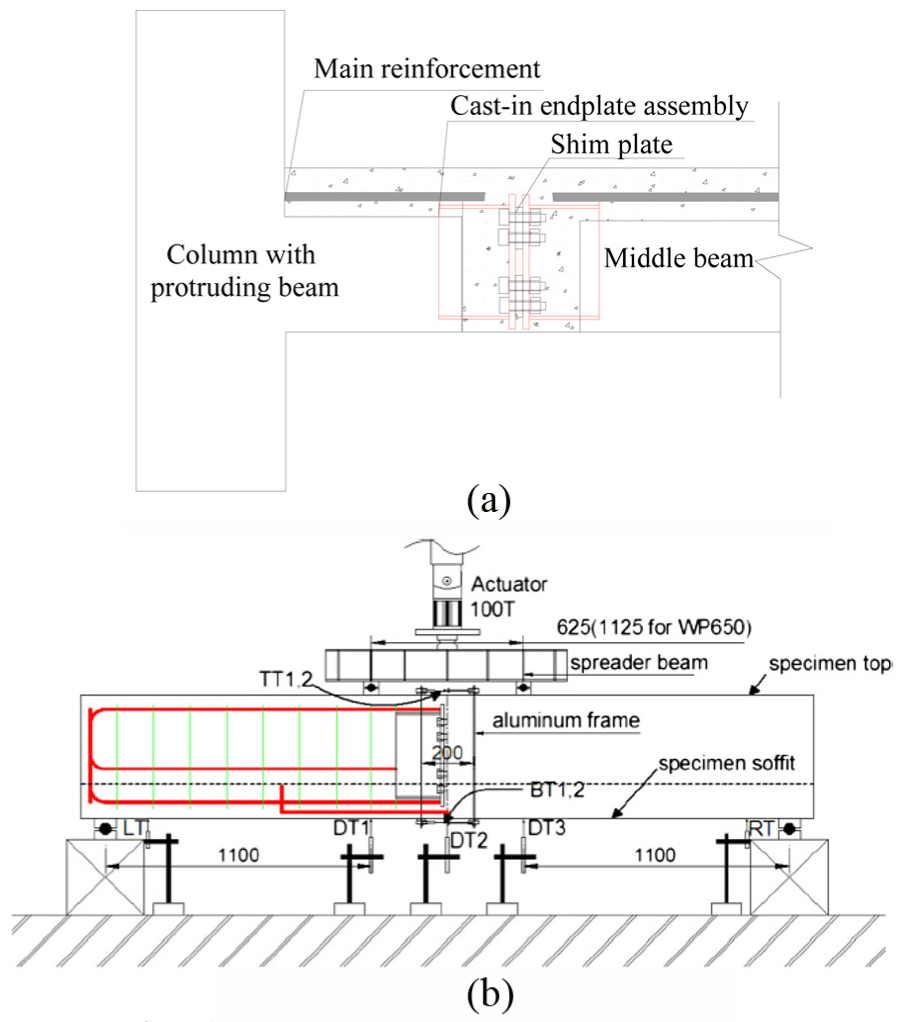
Beam-to-beam connection with bolted end plate steel: (a). conceptual detail of the proposed DfD beam–column connection and (b). test setup of the DfD beam-to-beam connection.
Xiao et al. (2017) proposed a new moment-resisting DfD concrete connection by welding rather than bolting the connections to simplify the construction process and thereby reduce the associated costs. As shown in Figure 11, the main reinforcements in both the top and bottom of the beam, within the connection region, were welded to the main reinforcements of the frame columns. The amount of cast-in-situ concrete used in this connection was limited to a small amount to facilitate future deconstruction. The post-cast-in-situ concrete was used mainly to provide compressive stress transfer and protection against possible corrosion and fire during service life. Static and cyclic flexural loadings showed that the proposed moment-resisting concrete connection was capable of providing adequate moment resistance and was feasible as a replication of cast-in-place connection for frame structures in seismic regions. The mechanical removal of small amount of cast-in-situ concrete was reported to be hassle-free with only a small amount of debris generated during the deconstruction stage.
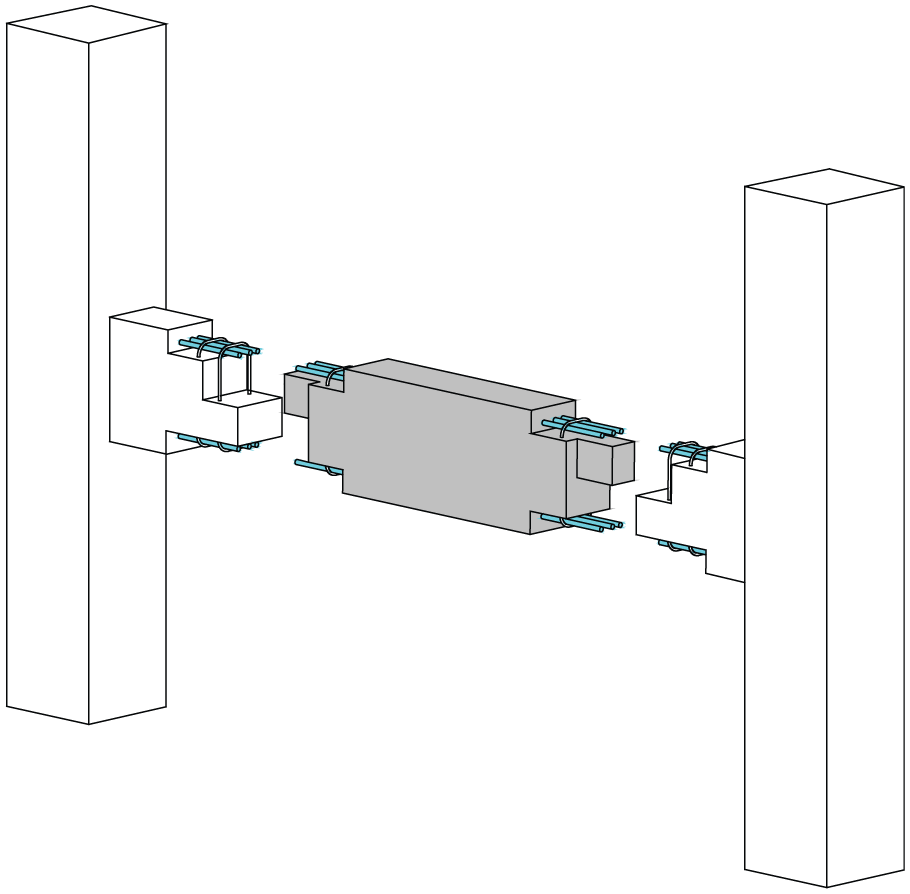
A moment-resisting DfD concrete connection.
The following conclusions can be drawn from the previous investigations on beam-to-beam concrete connections:
Structural frames adopting beam-to-beam connections are viable candidates for adoption of DfD approach. The complications involved in design of DfD connections for beam-to-beam connections is found to be considerably less than beam-to-column connections mainly due to minimal disturbance to continuity of reinforcement and avoiding the plastic hinging region in DfD beam-to-beam connections.
The available literature shows that beam-to-beam connection is feasible as a replication of cast-in-place moment-resisting frames, with similar performances reported with regard to the crack propagation, failure mode, and the ductile behavior.
The results of previous studies highlight a relatively hassle-free construction and subsequent deconstruction process for beam-to-beam DfD connections, contributing considerably to their economic viability and desirability for applications in practice.
The existing body of knowledge on the beam-to-beam connection is limited. Furthermore, the experimental tests reported in previous studies deal mainly with beam specimens. It is recommended that future studies should focus on the overall structural performance of beam-to-beam connections or frame structures. New modified beam-to-beam connections such as connections adopting sleeve connected rebar may provide alternative solutions and can be a subject of interest to researchers in this field.
Numerical studies on DfD concrete connections
Due to unique connection features and material heterogeneity, gaining a thorough understanding of the complex structural behavior of DfD concrete connections by relying on limited number of experimental tests is challenging. Furthermore, the effect of several influencing parameters cannot be varied in a limited number of experiments. With this in mind, numerical simulation has been adopted by a number of studies as an alternative testing environment to gain a better understanding of DfD connections and parameters influencing their performance. The key feature of DfD concrete structures is the existence of various kinds of interfaces, such as new concrete-old concrete interface, steel-concrete interface, and dowel-concrete interface. The modeling of interface behavior is important and also brings challenges for the numerical study of DfD concrete structures. However, despite their great potential to contribute to the body of knowledge on DfD, only a limited number of numerical studies have been reported in available literature.
The dowel concrete connection studied earlier by Psycharis and Mouzakis (2012) was adopted by Kremmyda et al. (2014, 2017) to develop a nonlinear finite element model in ABAQUS (Figure 12). The developed nonlinear three-dimensional (3D) numerical model was calibrated against the experimental data reported by Psycharis and Mouzakis (2012). The concrete smeared cracking model of ABAQUS was applied to both concrete and grout, while a classic plastic model was used for the steel dowels. Contact properties were assigned in two orthogonal directions at the interface between the dowels and the surrounding infill grout and at the interface between the dowels and the surrounding concrete. In the normal direction, hard contact with allowed separation was assigned, while in the tangential direction, a friction coefficient of 0.60 was considered. The results indicated a satisfactory match between the results of finite element model and experimental data, confirming the capability of the model to capture the behavior of pinned beam-to-column connections under loading. The finite element analysis also showed that the main parameters affecting the accuracy of the model were related to the characteristics of the concrete, grouting materials, and the contact properties between the dowels and the surrounding grouting materials.
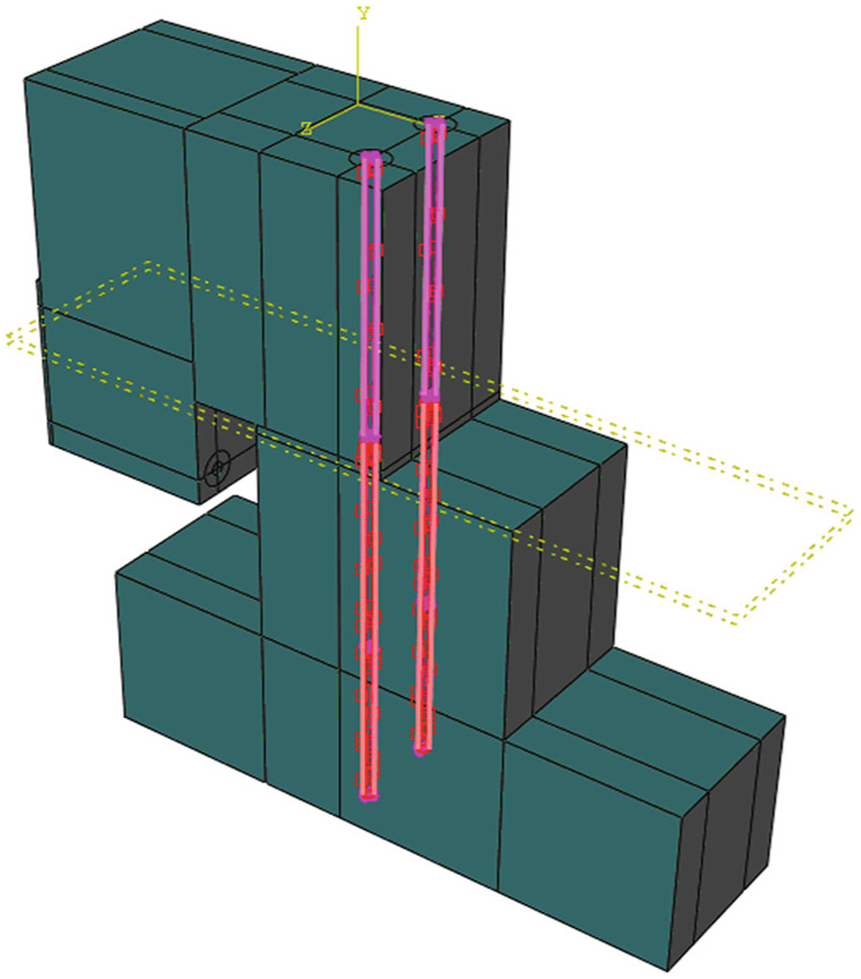
Finite element model of one type of dowel connections.
Magliulo et al. (2014) used a similar finite element model of the dowel connection in ABAQUS, which was validated by their test results. For the concrete used in the column and the beam, a smeared crack concrete model was assumed. The steel dowels were modeled as 3D elements and interface elements were defined in order to take into account the bond slip phenomena. Defining the interaction and contact surface between elements was highlighted as key step in implementation of the finite element model. The interaction between steel reinforcement and concrete was modeled by assuming perfect adhesion. The interaction between dowel and concrete/grout was modeled by a cohesive element in ABAQUS software. The results of this study confirmed the expected behavior of this kind of connection under horizontal load, showing a brittle splitting failure in the lateral cover of the column. The numerical model of the connection, which showed a good agreement with experimental results in terms of maximum strength, failure mechanism, and local stress, also proved that the dimension of lateral and frontal covers greatly influenced the concrete splitting of this connection.
Zoubek et al. (2013) developed a numerical analysis to describe the characteristic of inelastic seismic behavior of dowel connections on the global and element level. In their finite element model, nonlinearity of concrete was modeled based on the concepts of plasticity and damage using concrete plasticity damage model included in ABAQUS. Classical plasticity model with combined isotropic hardening was adopted to define the material properties of dowels and the reinforcement. The interaction definition was again highlighted as a key issue in this finite element model. For the interface between dowel and concrete/grout, contact properties were defined in two orthogonal directions. Hard contact with allowed separation was chosen normal to the surface of the dowel and the tangential behavior was described with friction coefficient of 0.8 to simulate bond between the dowel and the concrete. The interaction between the neoprene and the concrete surface was defined as a hard contact in normal direction and with a friction coefficient of 0.5 in the tangential direction. No slip was considered between the reinforcement and concrete. The proposed numerical model not only confirmed the empirically based design formulas for the strength of the dowel connections but also provided a finite element model–based tool to analyze the beam-column dowel connections with different structural parameters.
Available literature also includes a number of simulation studies on precast pre-stressed concrete connections. Hawileh et al. (2010) developed a finite element model in ANSYS to predict the response and behavior of post-tensioned connections subjected to cyclic loads. Special attention was paid to material properties, mesh refinement, contact surfaces, pre-tensioning, and boundary conditions. The post-tensioning was modeled via a pre-tension force in the post-tensioning steel tendon elements corresponding to the tendon initial tensile force in a preliminary load stage. Perfect bond connectivity was maintained between the pre-tensioning elements and post-tensioning steel elements. The model was validated and verified against results of experimental tests. The finite element model proved to be effective in producing results which were in good agreement with the experimental results both in the elastic and plastic ranges.
Kaya and Arslan (2009) developed a 3D finite element model of a post-tensioned precast beam-to-column connection in ANSYS. In this analytical model, model size, material properties, the loading program, and boundary conditions were the same as those of specimens tested experimentally. In particular, a discrete model was used for the finite element model. Smeared crack model was selected to define the cracked concrete. A full bond between the concrete and steel was assumed, and no additional bond elements were used to define the interface between the concrete and steel. The authors concluded that the model was successful in obtaining a useful range of results from the analytical modeling of precast beam-to-column connections where pre-stressing and post-tensioning were applied.
Compared with simulation studies on dowel connections and precast pre-stressed concrete connections, a fewer finite element studies have been reported on hybrid-steel concrete connections.
Kulkarni et al. (2008) presented a nonlinear finite element analysis of hybrid-steel concrete connections using DIANA simulation package. The results of experimental studies on this hybrid-steel concrete connection were discussed earlier in section “Hybrid-steel concrete connection.” Two-dimensional (2D) plane stress elements were applied to simulate the concrete and steel plates, while reinforcing bars were modeled as truss elements. In material modeling, the concrete models were based on nonlinear fracture mechanisms to account for cracking; plasticity models were used for the concrete in compression and steel reinforcement. The connection steel plates were modeled with 2D plane stress elements and were assigned the material properties of steel. A perfect bond between the concrete and steel plates was assumed in the analysis. Comparing the results of numerical simulation with the experimental results indicated the reliability of the finite element models used in this study. The connection plate modeled using 2D plate elements and by neglecting the concrete on either side showed a satisfactory performance in the structural analysis.
In the only simulation study in available literature where direct reference to DfD concrete connections is made, Lin et al. (2013) performed a finite element analysis using ABAQUS to validate their experimental results (Ong et al., 2013). Full bonding at the interface was assumed between the steel components and concrete, that is, relative slip between the steel and concrete was ignored. Furthermore, the welding and bolts assembly (washer, shim plate) were ignored to simplify modeling. The portion of the main reinforcement within the welded anchorage region was modeled using shell elements with the equivalent section area. The proposed finite element model was calibrated and validated by comparison against available experimental test results. The numerical results showed good agreement with the experimental data in terms of overall trend and the ultimate moment capacity prediction. It is reported that the mean ratio of the experimental results to the analytical results has a value of about 0.99.
Discussion and suggestions
DfD in the field of civil engineering is emerging as an alternative to demolition around the world. The DfD concept has been applied to building structures in a number of developed countries. For example, the SMT system in Dutch construction market is one of the demountable systems, which is available for concrete structures (Addis and Schouten, 2004). It comprises a series of standard columns, floor slabs, and wall panels, which are bolted in place after assembly to form moment-resisting connections. A range of standard external and internal wall panels are employed to provide the overall stability and stiffness of this concrete structure. However, adequate full-scale experimental tests to evaluate the structural feasibility and construction effectiveness of the DfD connection are lacking and further research in this area is needed.
Table 1 compares the benefits and weaknesses of different types of connections discussed above. The dowel connections, precast pre-stressed connections, and hybrid-steel connections are regarded as feasible DfD connections for concrete structures. These types of connections possess certain degree of demountability, since no or little cast-in-situ concrete is employed. Available literature consists of extensive test results related to mechanical behavior, structural performance, and finite element analysis of these connections. However, there is currently a lack of literature focusing on application of these three kinds of concrete connections in DfD systems.
Comparisons on benefits and weaknesses of different types of connections.

The beam-to-beam connection has been a subject of more recent research efforts in the domain as a more viable alternative connection for DfD systems. Due to the possible continuity of reinforcement in the joint area and avoidance of the inherent plastic hinging region, beam-to-beam concrete connection is deemed as the best way to pursue DfD systems for concrete structures. The extent of available literature on the seismic behavior of the beam-to-beam concrete connection is very limited. According to the results of the review reported above, the few reported experimental tests are primarily focused on concrete beams. Moreover, only two experimental studies to verify the structural performance of concrete specimens after deconstruction and reconstruction have so far been reported (Ong et al., 2013; Xiao et al., 2017). Therefore, full-scale experimental tests on whole DfD concrete structures are expected in the future. Furthermore, further research is required to evaluate other potential DfD connections such as novel beam-to-beam connections, beam-to-slab connections, and column–column connections.
The review of numerical studies on DfD concrete connection revealed that defining the interaction between precast concrete and post-cast concrete elements is a key step in the implementation of the finite element analysis, influencing the final results and the failure pattern of the nonlinear analysis. Most reported simulation studies were found to assume a perfect bond at the interface between different materials, which is not a realistic assumption. In an attempt to address this, a layer of interface elements has been used in a number of studies to model the interface of DfD concrete connections. The success of such an approach depends on the constitutive law (i.e. the bond-slip model) specified for the interface elements. However, the bond law in the direction normal or parallel to the interface has not been thoroughly investigated. It will introduce arbitrariness of bond law definition for the finite element model if the interface elements are adopted currently. As a result, the fundamental researches on the bond law of concrete to concrete or concrete to grout are strongly suggested as an area of future research.
Conclusion
This article presents a state-of-the-art review on the relevant researches and findings on the experimental and simulation study on DfD concrete connections. The main comments and suggestions can be summarized as follows:
Several experimental and simulation studies have been carried out in the world to investigate the DfD feasibility of some novel concrete connections, although most of them were not intended for DfD systems directly and consciously.
As the simplest dry beam-to-column concrete connections suitable for DfD systems, the dowel connections have been fully investigated. Experimental results and finite element analysis show that the section of the dowels is the main parameter that determines the resistance of the connection and the normal distance of the dowels from the edges also has significant influences. However, due to the large bending moments in the columns, it is suggested that only low-rise buildings can be designed employing the pinned dowel beam-to-column connections.
On account of the limited residual deformations, precast pre-stressed connections in concrete structures could be adopted as a type of DfD concrete connection. The precast pre-stressed connections usually exhibit the desired structural performance, and the strength and energy dissipation characteristics of the connections are adequate with respect to monolithic specimens. Drawbacks like the complicated construction, additional equipment, and technology may render disassembly difficult and limit the application of precast pre-stressed connections in civil engineering.
Hybrid-steel connection is featured by an obvious assembling ease due to the lack of reinforcement across the column which conforms to the DfD systems. Current researches conclude that the connection damage might be localized at the beam–column interface due to both the unbonded bar elongation and the opening of the pre-existing crack at the beam–column interface. Brittle failure of the connection on the column side might also occur with high drift. The amount of research and application of steel plate in dry concrete connection is limited and needs to be developed in the future.
Due to the possible continuity of reinforcement in the joint area, beam-to-beam concrete connection is deemed as the best way to pursue DfD systems for concrete structures in the future. The present review shows that beam-to-beam connection is feasible as a replication of cast-in-place moment-resisting frames, as the crack propagation, failure mode, and the ductile behavior perform similarly. However, current researches on the beam-to-beam connection, especially on those moment-resisting connections, are insufficient. Furthermore, the experimental tests are mainly focused on beam specimens. Research is ongoing and future studies should pay more attention to new modified beam-to-beam connections and also the whole structural performance of DfD concrete frame structures.
The definition of the interaction between precast concrete and post-cast concrete elements is a key step in the implementation of the finite element analysis. Full bonding assumption at the interface between different materials will not give a fully understanding on the interface behavior of DfD concrete connections. Employing a layer of interface elements to model the interface of DfD concrete connections is a favorable approach. The fundamental researches on the bond law of concrete to concrete or concrete to grout are strongly suggested in the future.
Footnotes
Acknowledgements
The authors are grateful for the valuable advice and help offered by Prof. J.G. Teng of The Hong Kong Polytechnic University.
Declaration of Conflicting Interests
The author(s) declared no potential conflicts of interest with respect to the research, authorship, and/or publication of this article.
Funding
The author(s) disclosed receipt of the following financial support for the research, authorship, and/or publication of this article: The authors wish to acknowledge the financial support from the National Natural Science Foundation of PR China (NSFC; No. 51325802), the joint research project between NSFC and PSF (No. 5161101205) and the Peak Discipline of Civil Engineering in Tongji University. The authors are also grateful to The Hong Kong Polytechnic University for its financial support (4-9A6X).