



Abstract
This paper probes the effects of the Tuned Mass Damper (TMD) device on the response of a 40-story building including three types of soils and experiencing 16 far-field earthquakes. The Ant Colony Optimization (ACO) method is employed to obtain the best settings for TMD values and the objective is reducing the maximum drift of the structure considering soil structure interaction (SSI) effects. The TMD effects on the displacement and acceleration response of the structure as well as its influence on the drift response are studied. Moreover, the frequency analyses of the drift responses in addition to the story locations with the highest drifts are also investigated. It is shown that the optimized design results in considerable reduction in drifts enhancing the profits of utilizing the TMD device.
Keywords
Introduction
Passive control devices have been employed in several fields of engineering such as mechanics, aeronautics and civil engineering. Tuned Mass Dampers (TMDs), which were firstly introduced by Frahm (1911); are now utilized in many structures to dissipate energy induced by oscillations caused by earthquakes and wind. Thus, TMD can prevent failure of the buildings and in this form it can be both life-saving and cost-effective.
First successful analyses of the TMD’s effect were presented by Wirsching and Yao (1973) and Wirsching and Campbell (1974). Their results revealed that the TMD can be effective in decreasing the seismic response and so the probability of failure of a building. Since then, many other researchers studied the effect of using the TMD to determine its optimum parameter and its effect under earthquake excitation, such as Chang (1999), Marano et al. (2007), and Rana and Soong (1998).
Taniguchi et al. (2008) analyzed the TMD’s effects and optimal parameters of the TMD. Excitation is applied as a white-noise base acceleration, and a 15% to 25% reduction in the displacement of the structure is achieved.
Leung and Zhang (2009) optimized the TMD parameters by Particle Swarm Optimization (PSO) method. Results revealed that the PSO can be used to find the optimum mass ratio, damping and tuning frequency of the TMD device.
Tigli (2012) also studied the optimum design of TMDs installed on linear damped systems that are subjected to random loads. Minimizing the displacement, velocity and acceleration of the main structure are considered as optimization parameters. The results indicated that designing the TMD based on the velocity reduction delivers the best overall performance with the minimum complexity in the equations.
The efficiency of the TMDs against near-field earthquakes is studied by Matta (2013). The results show that TMDs can be effective even against impulsive loads when large mass ratios are employed. Moreover, while maximum displacement is investigated; replacement of MDOF structure with a SDOF one is feasible.
Greco and Marano (2013) evaluated the effectiveness of TMD in reducing vibration levels induced in systems by seismic motions. The objective was to challenge the TMD performance from both energy and displacement outlooks. The results demonstrated that the energy criterion provides a huge discount on the response in the structure with TMD. Recently, Cao and Li (2019) proposed a novel control device named tuned tandem mass dampers-inerters (TTMDI) with broadband frequency and high effectiveness, and evaluated the performance of it in terms of its effectiveness, strokes, stiffness and damping coefficient, frequency spacing, robustness and structural response control characteristics.
All of the mentioned papers neglected soil effects in their research. The structure results with soil structure interaction (SSI) effects actually differ from the results of fixed base model. Many researchers have studied the SSI effects, for example; Xu and Kwok (1992) studied the wind-induced motion of two tall structures equipped with TMD, considering the effect of soil properties.
Wu et al. (1999) and Ghosh and Basu (2004) studied the effectiveness of TMDs on reducing the response of structures including SSI effects. Moreover, Wang and Lin (2005) investigated similar research on multiple tuned mass dampers (MTMDs), and they also achieved the same results in their study.
MTMDs are another type of TMDs that are utilized to reduce the vibration of structures under wind and earthquake excitations. According to Li (2010) and Li et al. (2010), when an asymmetric structure is built on soft soil sites, the robustness and effectiveness of the active MTMD for asymmetric structures is underestimated or overestimated if the SSI effect is neglected. Some researchers have investigated other novel TMDs and their effects on the vibration mitigation of structures, such as Cao and Li (2018) and Wang et al. (2017).
There are also other investigations considering both TMD and SSI effects, for example; Liu et al. (2008) developed a mathematical model (based on the Newmark method) for time-domain analysis of wind-induced fluctuations of a tall building. The results revealed that SSI effects cannot be ignored for soft soils.
Farshidianfar and Soheili (2013a) investigated the optimized parameters for TMDs to reduce the earthquake vibrations of high-rise buildings; including SSI effects. Ant colony optimization (ACO) technique is utilized to reduce both the maximum displacement and acceleration of stories. They demonstrated how ACO can be employed for the design of optimum TMDs.
They also compared the three optimization methods, namely ACO technique, Artificial Bee Colony (ABC), and shuffled complex evolution (SCE) methods; to optimize TMD for reducing the maximum displacement of the structure (Farshidianfar and Soheili, 2013b). The results revealed that the ACO is the most rapid and efficient method.
Although each heuristic method has its own unique capabilities, the experience of authors in successfully employing ant colony algorithms in a wide range of structural problems (Abachizadeh and Kolahan, 2007; Abachizadeh and Tahani, 2009) recommends hiring the ACO here as an outperforming method to optimize the TMD parameters.
Though many studies are published including SSI effects and concentrating on reducing the displacement and acceleration responses of the high-rise structures, little investigations are performed on the effects of TMD on decreasing the story drift of tall structures due to earthquake excitations. For example, Oviedo et al. (2010) studied the response of ten-story reinforced concrete (R/C) structures with hysteretic dampers subjected to the earthquake ground motion. For this purpose, the “constant yield story-drift ratio” was offered as a deformation controlling scheme for the explanation of the yield deformation of hysteretic dampers. Besides, Liu and Paavola (2015) depicted a reliability-based optimization method of an inter-story drift of frame structure under earthquake oscillations.
In this paper, the Newmark method is employed for calculating the responses of a 40-story building exposed to earthquake excitation. The ACO technique is utilized to optimize the parameters of TMD to minimize the maximum story drift of the building. Few studies have considered and used heuristic algorithms, while heuristic techniques such as the ACO method; can be employed as useful and effective methods for optimization of the TMD parameters to achieve the best ones in design. Three soil types, namely soft, medium and dense soils are also considered to investigate the SSI effects.
Modeling of tall buildings
Figure 1 shows an N-story structure. The TMD and soil parameters are also indicated in this figure. Using Lagrange’s method, the equation of motion for the structure shown in Figure 1 is represented as follows (Thomson and Dahleh, 1997):

where [m], [k], and [c] respectively indicate mass, spring stiffness and damping of the fluctuating system. [m*] shows the acceleration mass matrix for earthquake and üg is the earthquake acceleration. Employing Lagrange’s equation; the mass, stiffness and damping matrices are achieved as follows (Liu et al., 2008; Thomson and Dahleh, 1997):
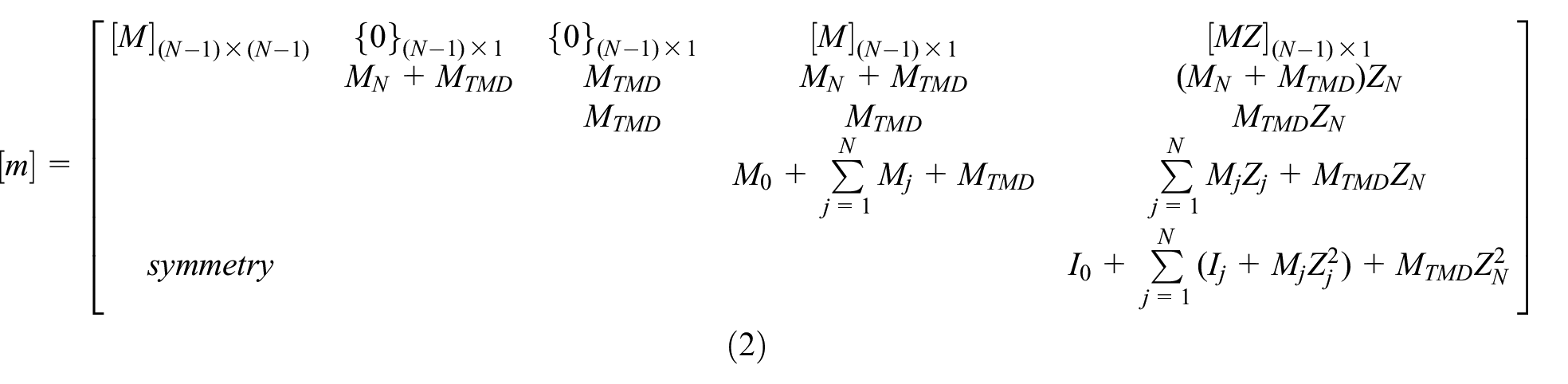


When the SSI and TMD effects are considered, the degree of freedom (DOF) of the structure is N+3; and if each of the TMD or SSI effects are neglected, the system DOF is reduced one or two degrees; respectively. According to Rayleigh’s proportional damping, the damping of the N-story building can be shown as follows:

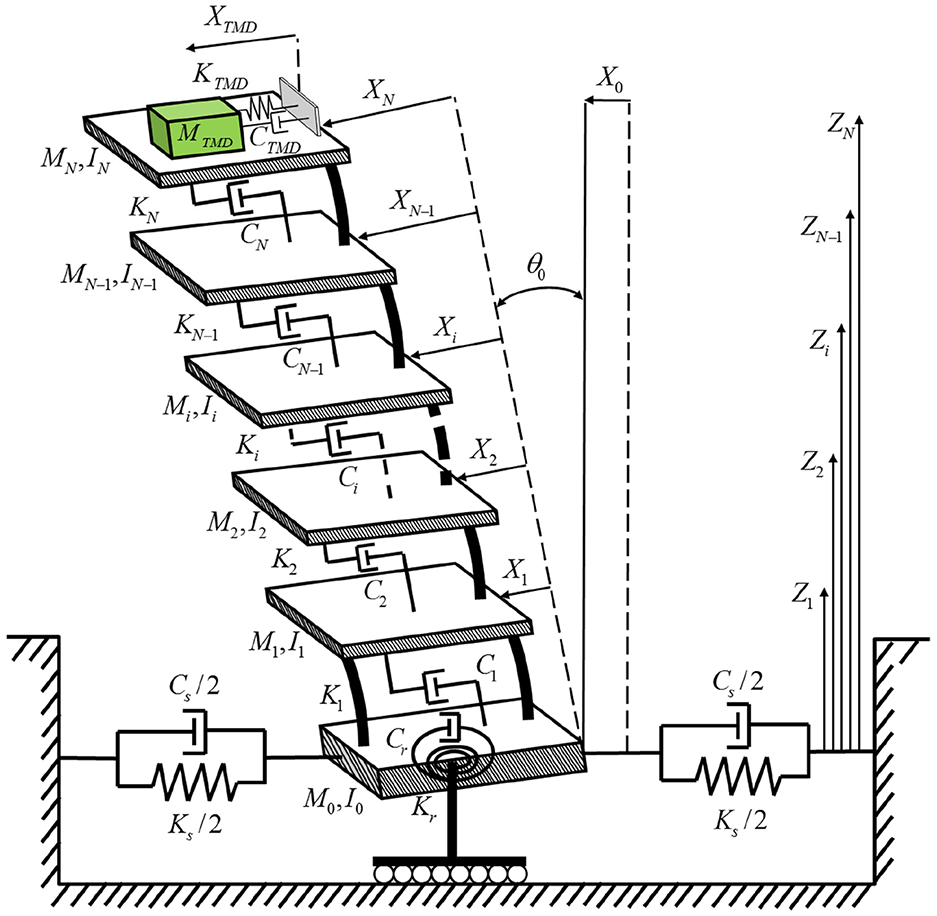
Shear building configuration.
It means that the damping matrix is considered as the linear combination of mass and stiffness matrices. This assumption is usually used for the sake of simplicity of solution of equation (1). Assuming A0 and A1, the damping ratio ξ for the ith mode of such system can be obtained in the following form (Chopra, 2012):

Specifying the necessary damping ratio, the coefficients A0 and A1 can be obtained at two different modes m and n using the following equations:

The displacement vector {x(t)} including both the displacement and the rotation of floors and foundation; and also the TMD oscillation, can be signified as follows:

The parameters Cs, Cr, Ks, and Kr can be obtained from the soil properties (i.e. Poisson’s ratio vs, density ρs, shear wave velocity Vs and shear modulus Gs) and radius of foundation R0 (Liu et al., 2008).
In this investigation, we used three methods to calculate the time response of TMD and building:
Using MATLAB SIMULINK blocks to simulate the equations. This method takes long time to solve the equations and blocks must be modified if the SSI or TMD effects are ignored or the number of floors is changed.
The state space method is faster than the first one and does not have the mentioned limitations, but yet it is a time consuming method especially for optimization processes.
A technique based on the Newmark integration method (Newmark, 1959) that is the fastest one in both solving and optimizing processes, thus this method is utilized to compute the time response of the structure and TMD. Figure 2(a) shows an example of the drift response of the 40th floor of the building which is achieved from the state space and Newmark methods; and Figure 2(b) demonstrates the accuracy of both methods in detail. Further investigations show that the accuracy of the all three methods is nearly the same as well.
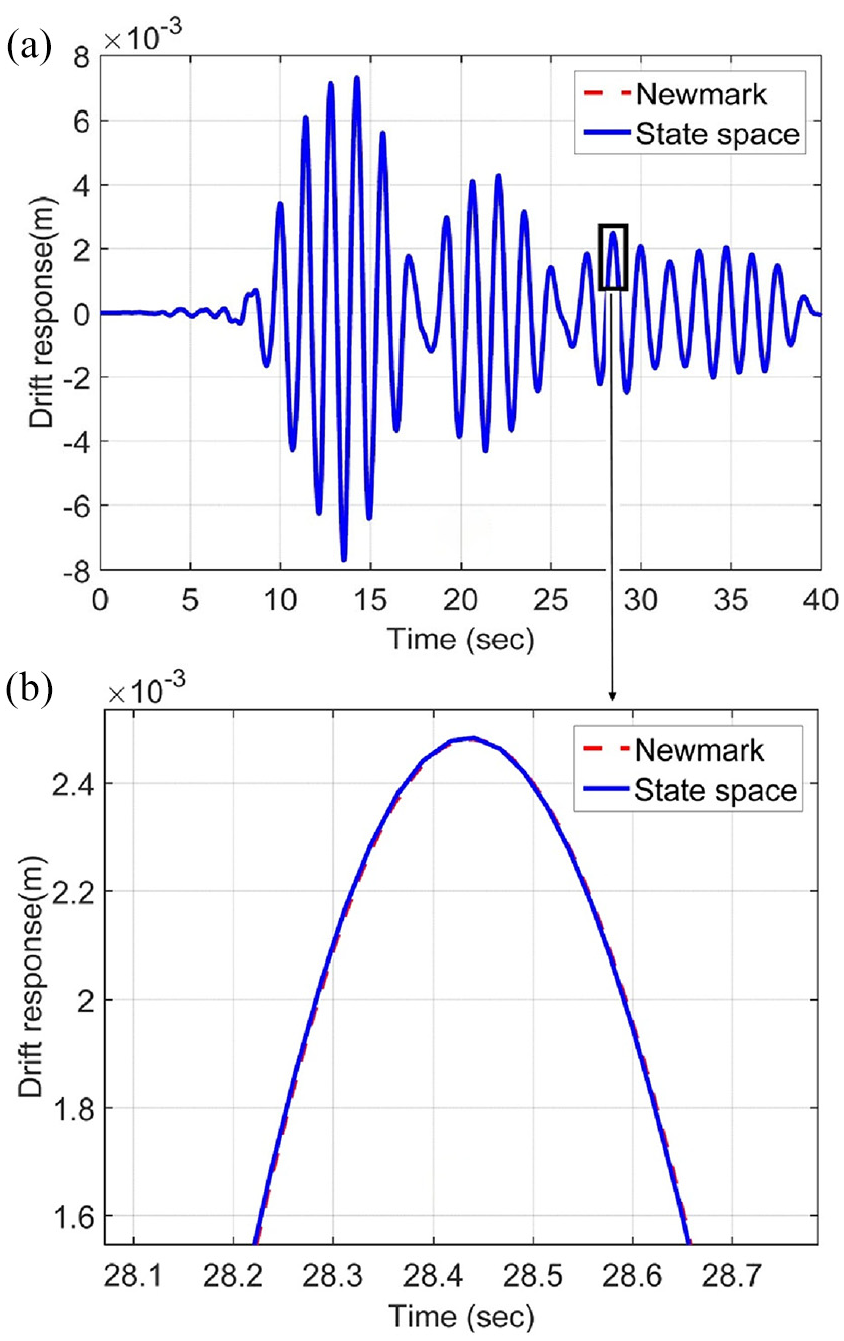
(a) Drift response of 40th floor, Coalinga earthquake, soft soil and (b) detailed view from the rectangular area.
Ant colony optimization
Inspired by the collective behavior of real ant colonies, the Ant System (AS) algorithm was introduced by Dorigo (1992). The developed metaheuristic named as ant colony system (ACS) was later presented in 1997 by Dorigo and Gambardella (1997) for solving the traveling salesman problem (TSP). Rapidly, the algorithm was extensively and productively applied to many other combinatorial problems (Dorigo and Stutzle, 2004) such as quadratic assignment, vehicle routing, and job-shop scheduling.
In the field of structural and mechanical engineering, papers have been repetitively published in the last 10 years. Trusses and frames, manufacturing processes, laminated structures (Abachizadeh and Tahani, 2011) and later, smart materials (Abachizadeh et al., 2010), robotics (Baghli et al., 2017) and manufacturing processes (Sankar and Umamaheswara, 2018) are among notable cases optimized using different versions of ant colony algorithms.
While most of the heuristic methods have been initially proposed to tackle combinatorial optimization problems, many real-world engineering problems include either continuous or mixed variables. Hence, there has been a considerable amount of research to suggest new metaheuristics or adapt to the existing ones. In the same account for ACO, methods were proposed to handle continuous variables. In the original approach of ant algorithms, each ant constructs the solution incrementally using the set of available solution components defined by the problem formulation. This selection is done with the help of probabilistic sampling from a discrete probability distribution. For tackling continuous problems using this method, the continuous domain should be discretized into finite ranges.
In the real world, ants are capable of finding the shortest path among possible ones using biased foraging toward paths with higher deposits of pheromone. In the next three rules of ACS inspired by this competency, the design variables are presented by i and their discretized search domains are shown by j. The sections of the total solution are chosen in a constructive approach named “state transition rule”:

where τ(i,j) shows the amount of pheromone related to the jth element of variable i, and η(i,j) is the heuristic function liberally defined according to the nature of the problem. In this rule, q is a random number, and q0 is a parameter set by the user (0 ≤q & q0≤ 1). If q> q0, the next step is selected according to proportional distribution of probability function, similar to the roulette wheels, assigned as follows:
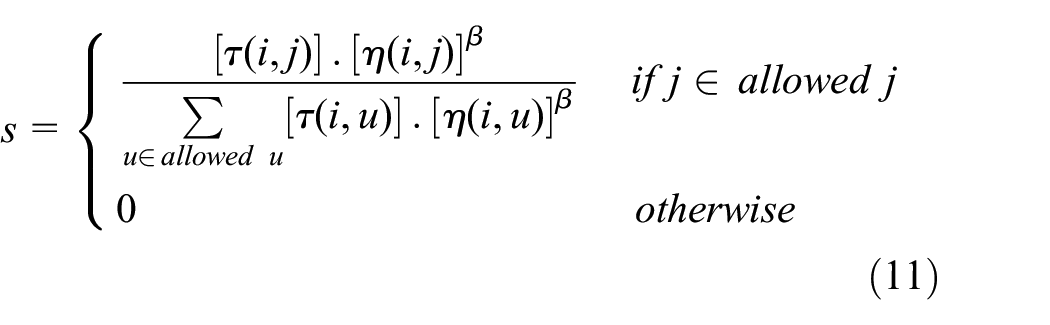
The significant factor of q0 defines the fraction of randomness against the determination of state transition rule. As larger q0 directs the algorithm towards deterministic decisions, lower amounts reinforce the state of unpredictability.
To avoid stagnation of the algorithm and similar to evaporation of pheromone in the real world, the amount of pheromone level is modified after finishing each evaluation by applying “the local updating rule”:

where ρ denotes the local evaporation coefficient. The best performance is expected with
The third rule which is known as “the global updating rule” acts as positive feedback and accumulates more pheromone around the best solution obtained so far:

where Δτ is the inverse of the objective function and α is the global evaporation coefficient (Dorigo and Gambardella, 1997).
This procedure is repeated with n ants until the termination condition, regularly the maximum number of cycles, is satisfied. Similar to other heuristic optimization techniques, it is important to tune the algorithm to achieve sensible results. In this paper, the parameter settings as n = 3, α = 0.1, ρ = 0.1, τ0 = 2 and q0 = 0.75 are found acceptable. Besides, without damaging the overall effectiveness of ACO, the heuristic function is neglected to avoid intricacies in its definition scheme.
In this paper, the objective function, the maximum story drift of the structure; is defined as follows:

where ui denotes the total displacement of the story i including the displacement and rotation of story and foundation.
Numerical study
In this study, 16 far-field earthquake data are used with names presented in Table 1. But in this paper, for the sake of brevity and as an example; only Coalinga and Superstition Hills (I) earthquakes (number 1 and 6) acceleration spectra and their results are represented and discussed in detail.
The characteristics of earthquakes.
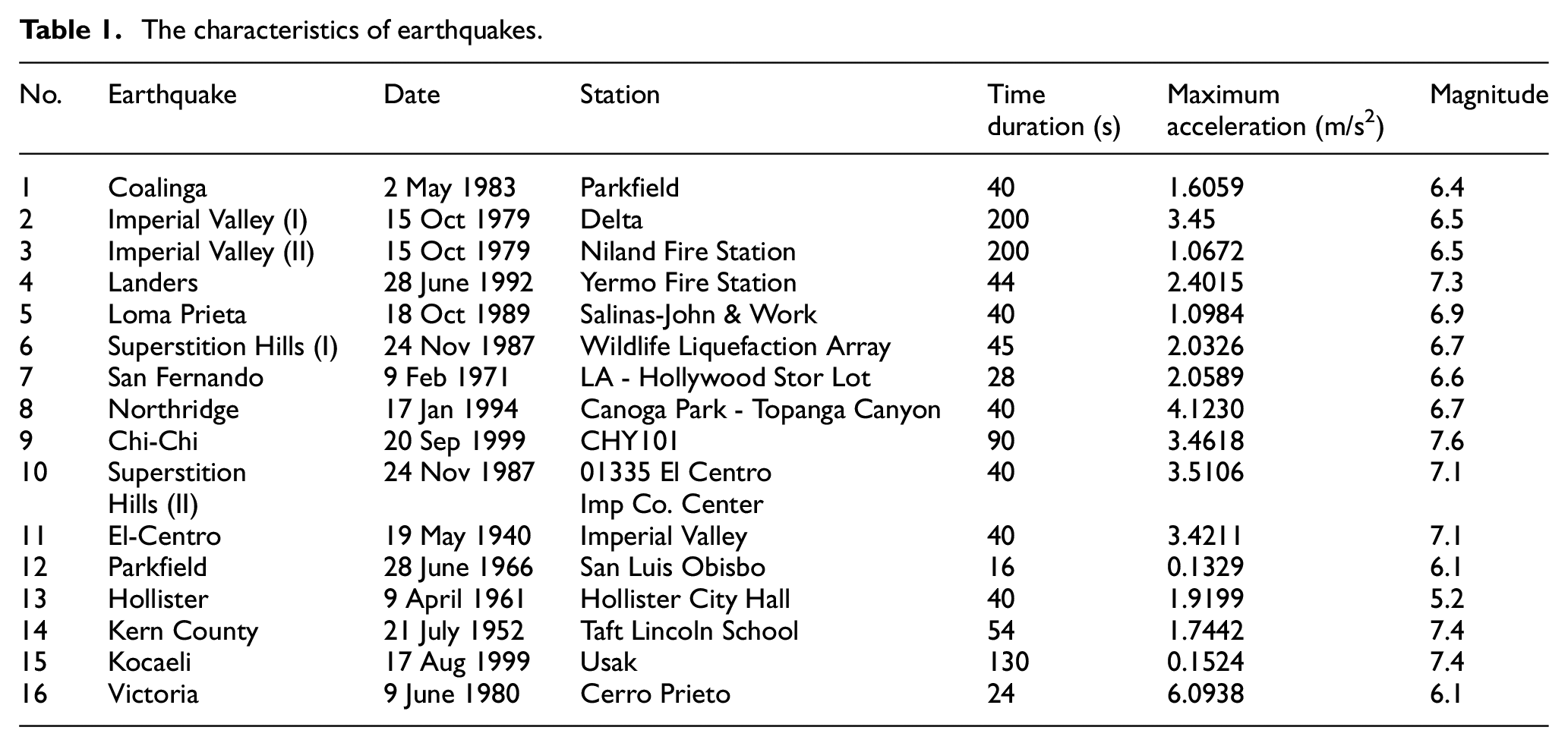
It is necessary to say, although the El-Centro and Victoria earthquakes are known as far-field oscillations, nonetheless; these earthquakes have almost the behavior and properties similar to a near-field earthquakes.
To examine our method, we use a 40-story building with parameters represented in Table 2 (Liu et al., 2008). Moreover, the three soil types (namely called soft, medium and dense soil) are considered as the basis of the structure. In addition, a fixed base structure is examined which demonstrates a building without SSI effects. The soils and foundation parameters are listed in Table 3.
Structure parameters (Liu et al., 2008).

Parameters of the soil (Liu et al., 2008).

The search area for the TMD design variables is set in such a way that all the first-three frequencies of the structure are covered, and the TMD system is underdamped, in other words; the damping ratio quantity (ξ) is less than 1. For this purpose, the maximum mass ratio is considered about 3.5% of the first modal mass, that is, 50 × 103≤MTMD≤ 1000×103 (Kg), spring stiffness of the TMD is set as 0.3 × 10⁶≤KTMD≤ 60 × 106 (N/m) and the TMD damping is tuned to 0.1 × 10³≤CTMD≤ 2000 × 103 (Ns/m).
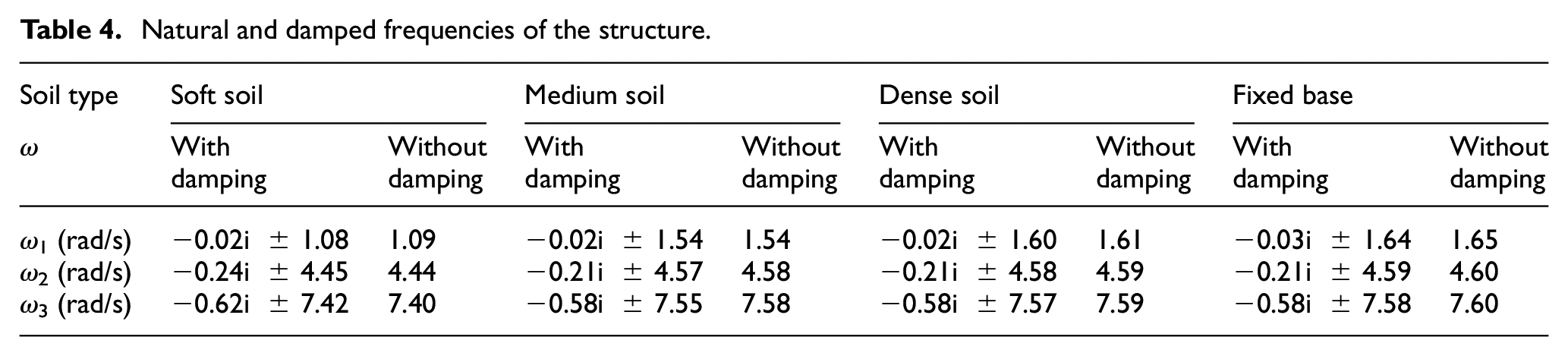
The first-three frequencies of the structure considering each soil effect are shown in Table 4. The Rayleigh’s proportional damping coefficients for this structure is assumed as A0 = 0 and A1 = 0.02, as considered by Liu et al. (2008). These values are selected such that all the three first modes which have significant contribution to the response possess reasonable damping ratio values. In addition, the damping ratio for the higher modes will be increased with frequency and the related modal responses will be eliminated because of their high damping (Chopra, 2012).
Natural and damped frequencies of the structure.
The objective is to decrease the maximum drift of the structure during earthquake time length. In this research the drift is defined as the relative translational displacement between the two consecutive floors of the structure. The effects of TMD parameters, which achieved from optimization; on the displacement, acceleration responses and drift of the structure are probed in this study. Moreover, the maximum drift location is also investigated for each earthquake; and the soil effects are discussed and studied as well. Figure 3 shows the flowchart of ACO algorithm for the TMD optimization.
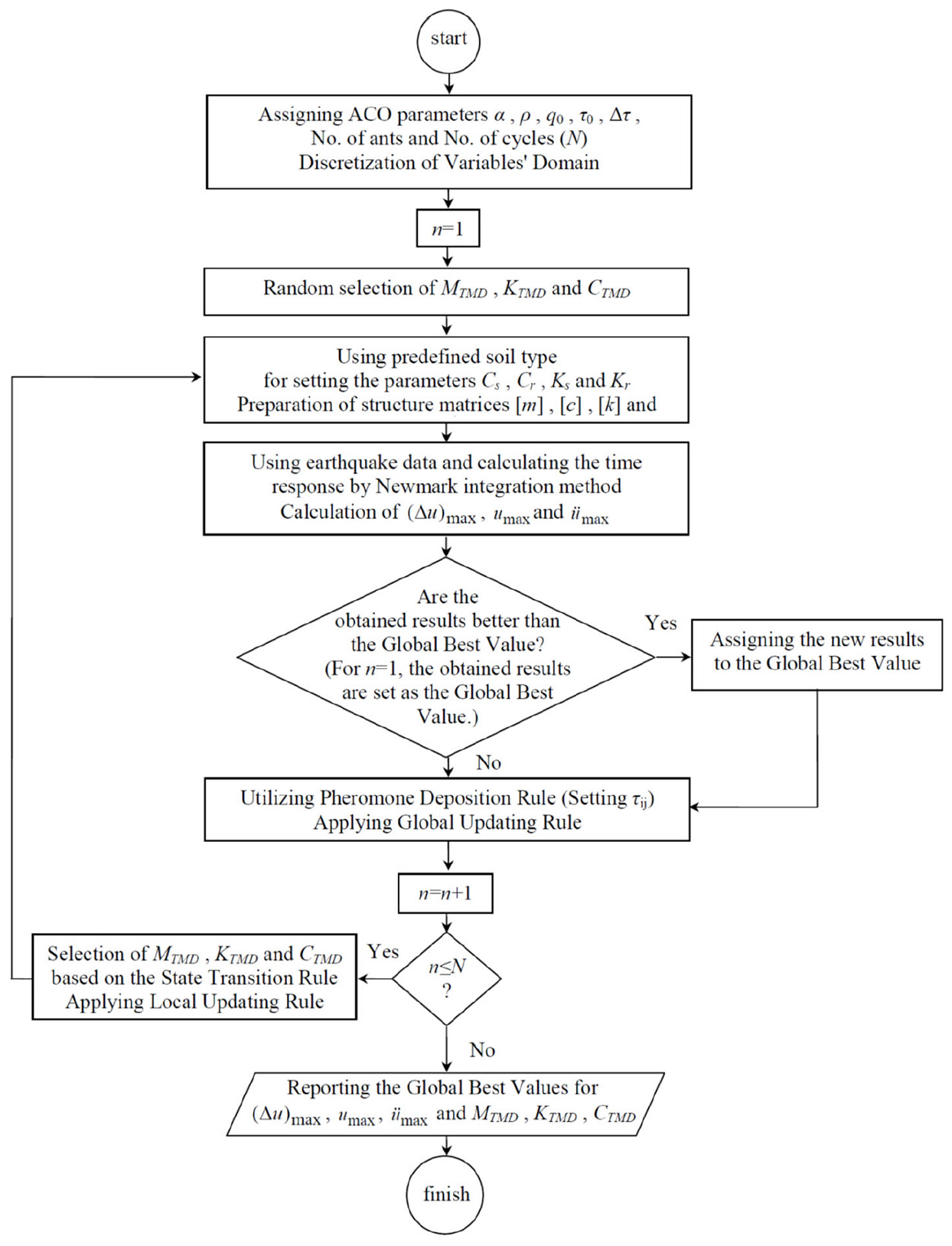
The flowchart of ACO algorithm for TMD optimization.
Results and discussions
The drift, displacement and acceleration reduction percentages for all 16 far-field earthquake spectra and the three types of soils (soft, medium and dense soils) are demonstrated in Figures 4 to 6, respectively.
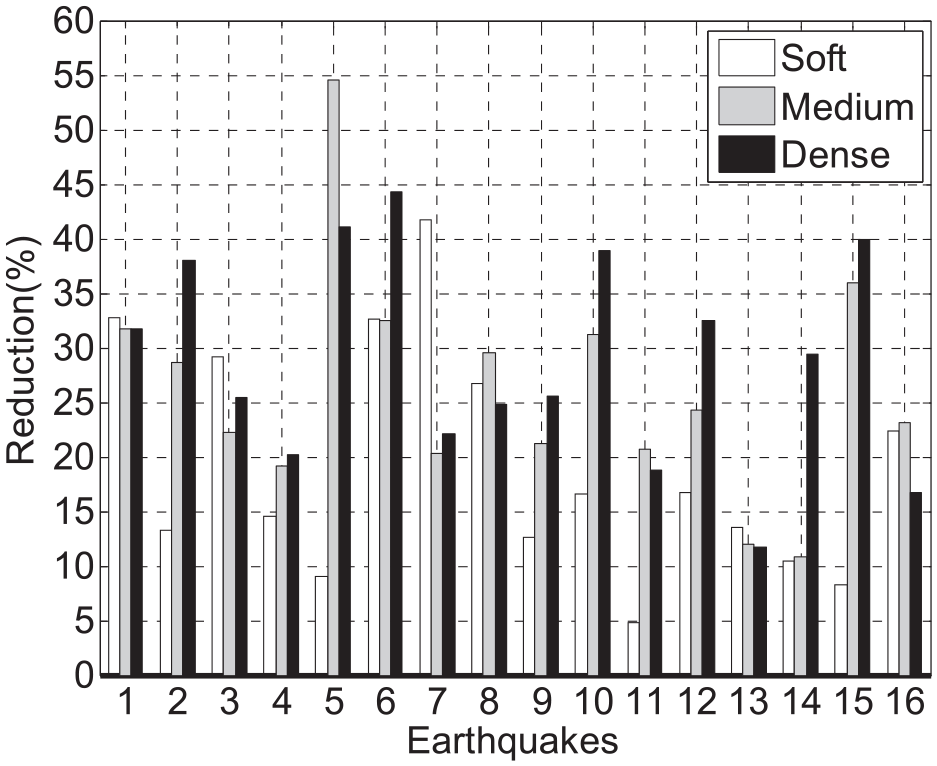
Maximum drift reduction percentages for 16 earthquakes.
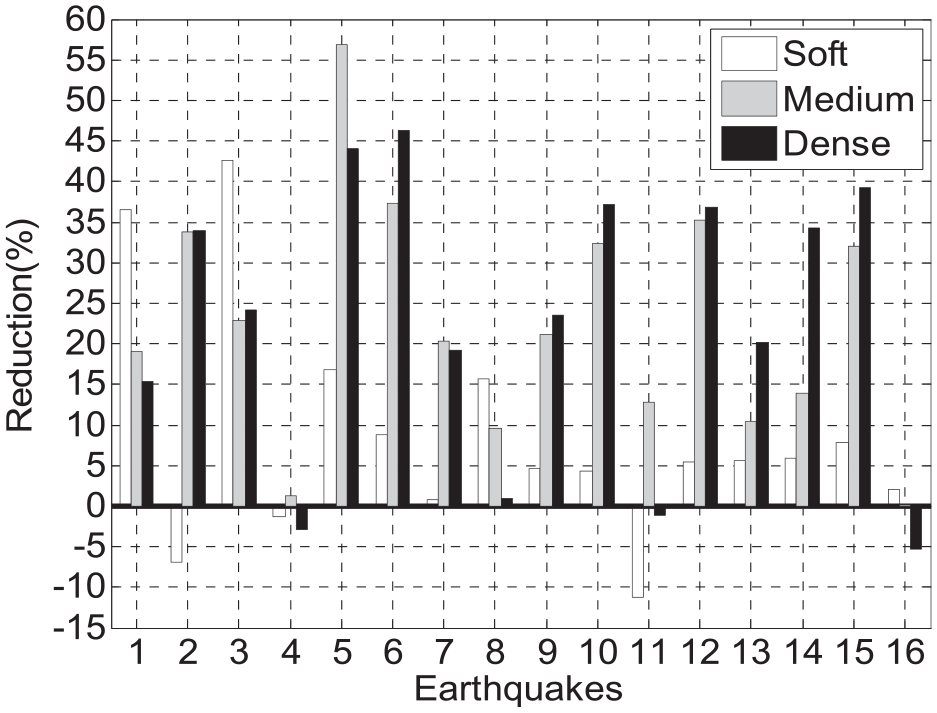
Maximum displacement reduction percentages for 16 earthquakes.
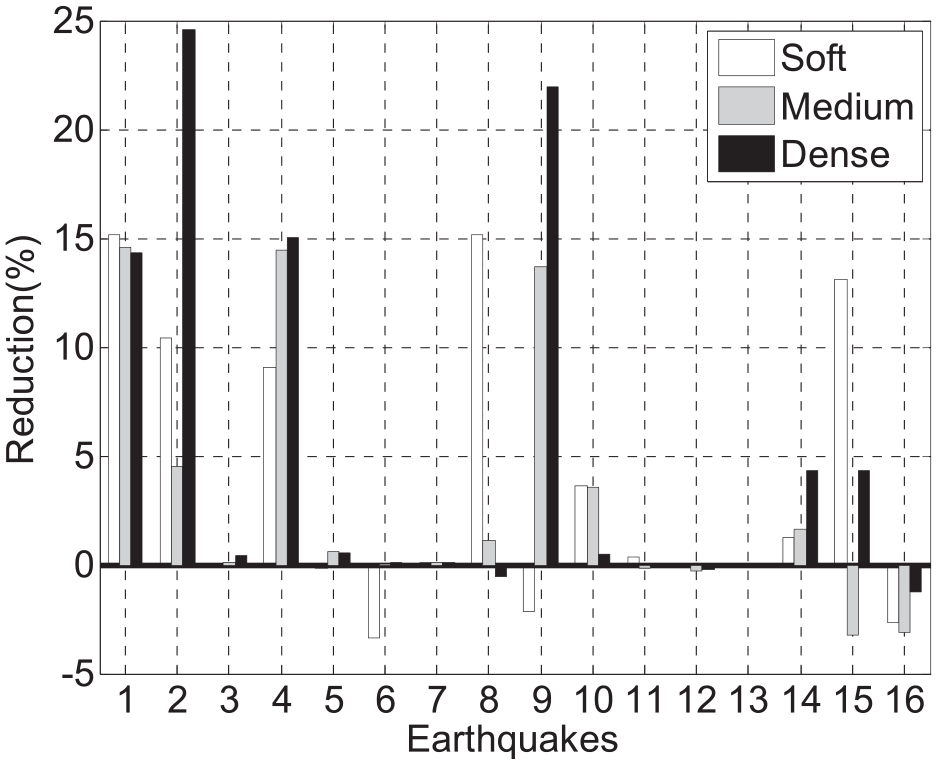
Maximum acceleration reduction percentages for 16 earthquakes.
In these figures, the drift reduction percentage is defined in the following form:
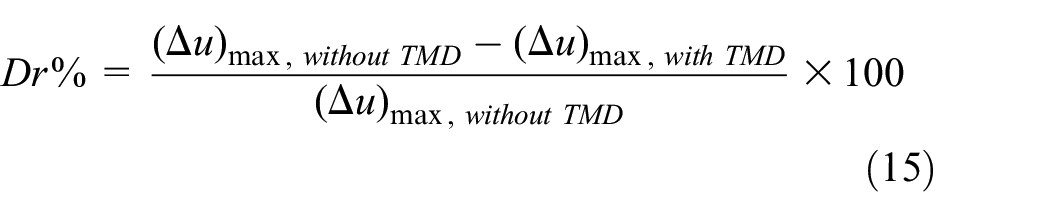
In which,
Similarly, the displacement and acceleration reduction percentages are respectively calculated as follows:


where
According to the Figures 4 to 6, one can generally conclude that the TMD is more efficient for dense, medium and soft soil types, in turn. Because the target of optimization is to minimize the maximum drift of the structure, it can be seen that the TMD is more effective for drift and the reduction percentage attains over 50 percent in some cases. Furthermore, a comparison between Figures 5 and 6 shows that such optimization has strong effects on the displacement and acceleration of the structure, and the former reduction is generally greater than the latter one. However, in few cases the reduction percentages are near zero or even negative, especially for the structure acceleration; which means that the optimization of the maximum drift in some cases has no effect or somehow increases the maximum response of the building in comparison with the structure with no TMD device.
So the results show that the TMD is an effective device for the reduction of the maximum drift and displacement of the structure, and it usually decreases the maximum acceleration as well. Moreover, if we do not consider the SSI effects in our problem, it would result in mistaken outcomes. For example, for the structure under the Imperial Valley (I) earthquake (No. 2 according to Table 1) using TMD and soft, medium and dense soils; we respectively have a 13.2%, 28.7%, and 38.0% reduction in the story drift, which are also presented in Figure 4. Since the fixed base structure results are in close proximity to the dense soil, if the soil effects are neglected; the results will be overestimated. However, the fixed base model results are eliminated for the sake of briefness.
Similarly, the same conclusions can be derived from the Superstition Hills (I) earthquake, as can be seen in Figure 4 (earthquake No. 6 according to Table 1). According to this figure, we have a 32.5%, 33.6%, and 44.3% drift reduction respectively for the soft, medium and dense soils. Nevertheless, if the SSI effects neglected; the results will be generally overestimated.
Figures 7 and 8 show the drift frequency response of the structure for the Coalinga earthquake and soft soil effects with and without TMD device, respectively. By comparing the peak value of these figures with the frequency of the structure which was presented in Table 4, it can be seen that the peak frequencies of the drift for the soft soil are near to the second frequency of the structure. Obviously, the TMD has the most influence on this frequency, and effectively decreased the response amplitude for the second structure frequency response.

Drift frequency response at the maximum drift location for soft soil with TMD, Coalinga earthquake.

Drift frequency response at the maximum drift location for soft soil without TMD, Coalinga earthquake.
Considering Figures 9 and 10, the dominant frequencies are close to the first and second frequencies of the building. Since the frequency response has higher values near the second frequency, then the TMD is preferably tuned on the second frequency of the structure, and the amplitude of this frequency is more effectively reduced.
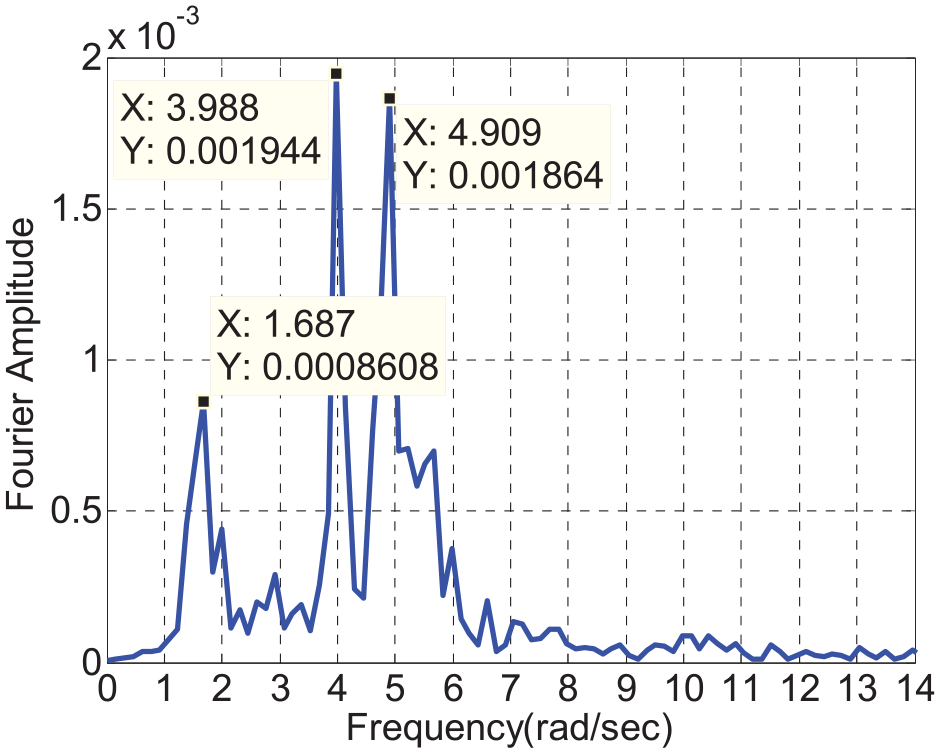
Drift frequency response at the maximum drift location for dense soil with TMD, Coalinga earthquake.
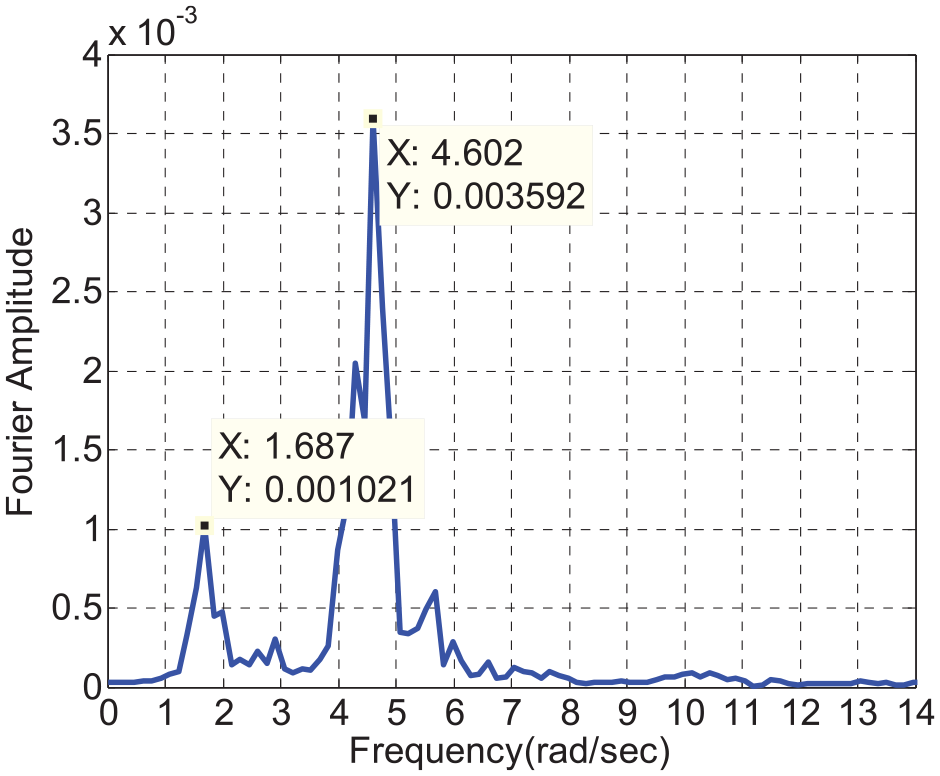
Drift frequency response at the maximum drift location for dense soil without TMD, Coalinga earthquake.
Figures 11 and 12 demonstrate the drift frequency response of the building for Superstition Hills (I) earthquake with and without TMD, and assuming the medium soil for the SSI characteristics. The results show that the dominant quantities are near to the first and second frequencies of the structure, but in this case the TMD is more effective if it is tuned according to the first frequency rather than the second one. This is because in this condition the first frequency is more excited rather than the second one, and the response amplitude is higher near the first frequency. Therefore, the TMD reduces the amplitude of this frequency more effectively than the others, such as the second one.
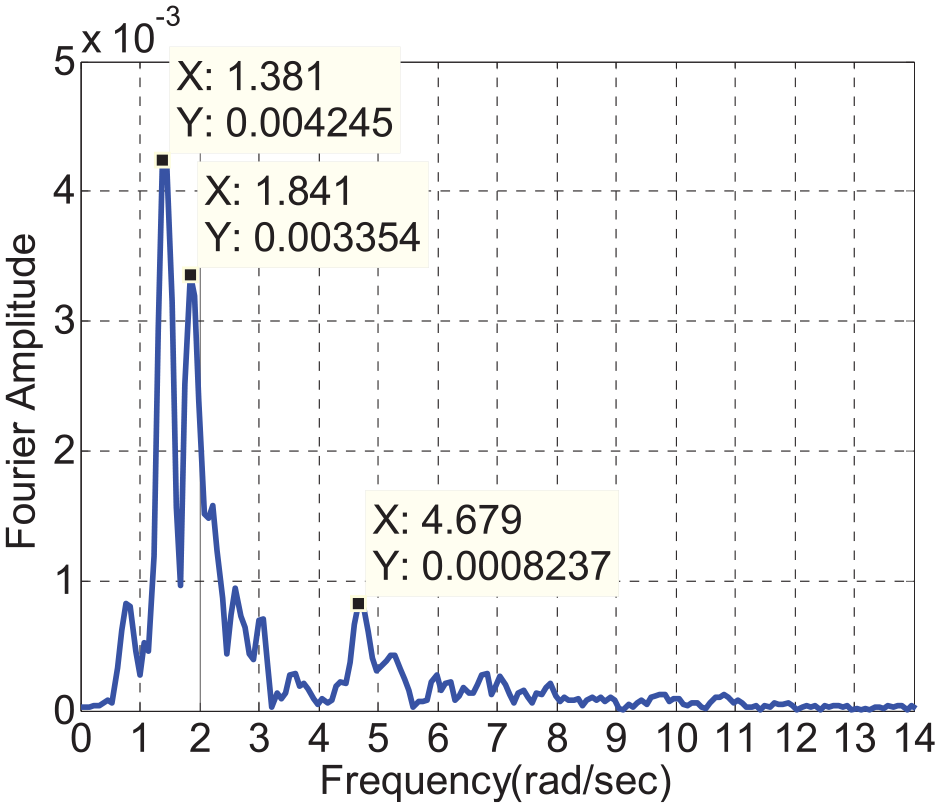
Drift frequency response at the maximum drift location for medium soil with TMD, Superstition Hills (I) earthquake.

Drift frequency response at the maximum drift location for medium soil without TMD, Superstition Hills (I) earthquake.
The same conclusions can be obtained for the dense soil properties and the Superstition Hills (I) earthquake; which are exhibited in Figures 13 and 14. It means that the peak frequencies are near to the first and second frequency of the structure and the TMD has the best performance if its frequency is tuned near the first frequency. Hence, the amplitude of this frequency is more effectively decreased compared to the other structural frequencies.
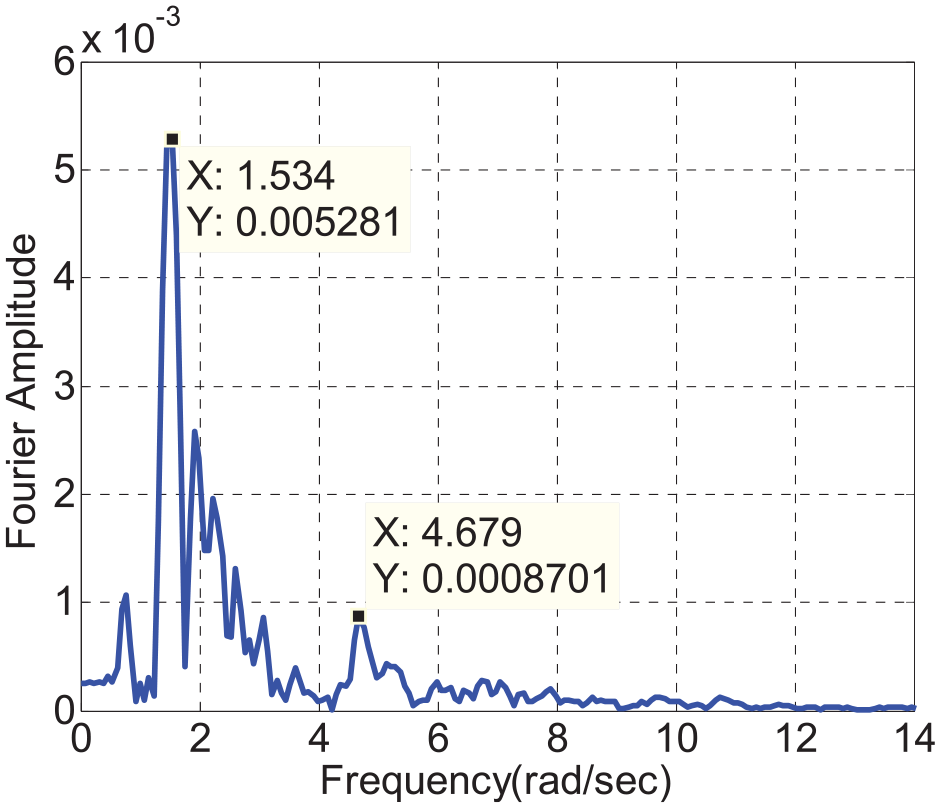
Drift frequency response at the maximum drift location for dense soil with TMD, Superstition Hills (I) earthquake.

Drift frequency response at the maximum drift location for dense soil without TMD, Superstition Hills (I) earthquake.
As a general conclusion for all 16 far-field earthquake data which are used in this investigation, the TMD is efficient when it is tuned based on the first or second drift frequency response of the structure for different soil characteristics.
In detail, the results can be categorized as follows:
For the soft soil, considering 16 earthquakes; the frequency of optimized TMD is tuned on the second frequency of the structure for 12 earthquake acceleration spectra, while for the other four ones it is set on the first frequency. It means that for the soft soil the TMD has the most effect on the second frequency rather than the first one.
For the medium soil, the optimized TMD is adjusted on the first frequency for 12 earthquakes. It means that the optimized TMD for the minimization of the maximum drift of the building is mostly tuned on the first frequency of the structure rather than the second one.
For the dense soil, the TMD has the most effect on the first frequency, that is, among 16 earthquakes, 12 cases are tuned on the first frequency.
Table 5 demonstrates the floor number in which the maximum drift is happened for different earthquakes after employing the TMD device. It can be seen from the results that the number of floors undergoing the maximum drift is different for various earthquakes and soil characteristics. For example, the maximum drift for the soft soil and the Superstition Hills (I) earthquake occurs on the 30th floor while for the dense soil it has happened in the 13th story. Similar results are obtained for other earthquakes, which means that the maximum drift is not restricted to any special floor; unlike the maximum displacement and acceleration which are usually occurred on the top floor (Farshidianfar and Soheili, 2013a, 2013b).
The floor number that the maximum drift is occurred.
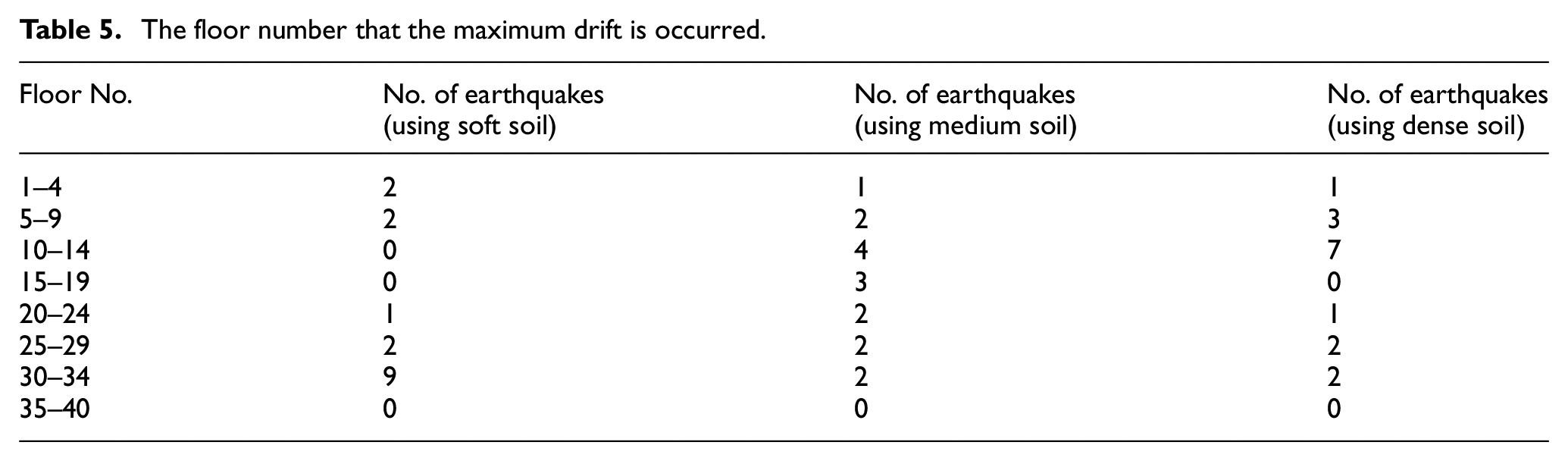
According to Table 5, the following results can be achieved:
For the soft soil, the maximum drift after utilizing TMD has occurred between the 30th and 34th floor for most earthquakes.
For the medium soil, the maximum drift has occurred between the 10th and 19th stories for most earthquakes. Also, it can be seen that the other floors may also show the highest drift but the most probable region is the lower half of structure height.
For the dense soil, the maximum drift for 7 earthquakes has happened between the 10th and 14th story, making them more vulnerable to the higher drifts.
Conclusion
In this paper, the Newmark method is used to calculate the story drift, displacement and acceleration responses of a 40-story building. The ACO method is utilized to optimize the parameters of TMD including mass, spring stiffness and damping coefficient which are assumed as design variables; and the objective is reducing the maximum drift of the structure. It can be seen that the TMD is a useful device to reduce the oscillations of structure and hence the damages caused by earthquakes.
The investigation of 16 earthquakes and three soil types indicates that the TMD can effectively reduce the drift up to 50 percent in some cases. Moreover; when the TMD is optimized to minimize the maximum drift of the structure, it can also reduce the displacement and acceleration in most cases. It is seen that ignoring the SSI effects in the modeling brings incorrect outcomes generally.
Considering the soft soil, the optimized TMD is tuned on the second frequency of structure in 75 percent of earthquakes, but for both the medium and dense soils; in 75 percent of earthquakes, the frequency of optimized TMD is tuned on the first frequency. It means that to have the most effective TMD, one should set its frequency near the second frequency of structure for the soft soil, and near the first one for the medium and dense soils. Furthermore, it is revealed that the maximum story drift usually occurs after the 75% of the structure height (top 25% height of building) for the soft soil, while for the medium and dense soils, it mainly happens at the 30% of the height (70% from the top) of the structure. Further investigations may bring more precise results in the future.
Footnotes
Appendix
Declaration of Conflicting Interests
The author(s) declared no potential conflicts of interest with respect to the research, authorship, and/or publication of this article.
Funding
The author(s) received no financial support for the research, authorship, and/or publication of this article.
