



Abstract
Steel/concrete structures strengthened with externally bonded FRP plates may be subjected to significant temperature variations during their service time. Such temperature variation (i.e., thermal loading) may significantly influence the debonding mechanism in FRP-strengthened structures due to the thermal incompatibility between the FRP plate and the substrate as well as the temperature-induced bond degradation at the FRP-to-steel/concrete interface. However, limited information is available on the effect of temperature variation on the debonding failure in FRP-strengthened beams. This paper presents a new and closed-form solution to investigate the plate-end debonding failure of the FRP-strengthened beam subjected to combined thermal and mechanical (i.e., flexural) loading. A bilinear bond-slip model is used to describe the bond behavior of the FRP-to-substrate interface. The analytical solution is validated through comparisons with finite element analysis results regarding the distributions of the interfacial shear stresses, the interfacial slips and the axial stresses of the FRP plate. Given that a constant bond-slip relationship is adopted, it is observed that an increase in service temperature will lead to an increased interfacial slip at the plate end and consequently a reduced plate-end debonding load, and vice versa. Further parametric studies have indicated that the thermal loading effects become more significant when shorter and stiffer FRP plates are applied for strengthening.
Keywords
Introduction
Externally bonded fiber-reinforced polymer (FRP) sheets and plates (hereafter “plates” for brevity) have been widely used for flexural strengthening of steel/concrete beams (hereafter “beams” for brevity) (Al Nuaimi et al., 2021; Idris and Ozbakkaloglu, 2014; Naser et al., 2019; Teng et al., 2012; Wang and Wu, 2018; Zhang and Teng, 2016; Zhang et al., 2017). Plate-end debonding is a very common failure mode of the strengthened beams under loading, and therefore, it has become one of the most fundamental research topics in the past few decades. Numerous experimental (Deng and Lee, 2007; Lenwari et al., 2006; Rizkalla et al., 2008; Yu et al., 2011; Zeng et al., 2018) and theoretical studies (De Lorenzis and Zavarise, 2009; De Lorenzis et al., 2013; Haghani et al., 2009; Naser et al., 2021; Schnerch et al., 2007; Smith and Teng, 2001; Stratford and Cadei, 2006; Teng et al., 2002, 2015) have investigated the plate-end debonding failure in the FRP-strengthened beams at ambient temperature. The existing studies have demonstrated that high interfacial shear and peeling stresses at the plate end contribute to the plate-end debonding failure. In quantification of the interfacial shear and peeling stresses at the plate end, early analytical studies have considered the constitutive behavior of the bond interface as linear elastic (Smith and Teng, 2001; Teng et al., 2002). Recent studies on FRP-to-steel/concrete bonded joints have revealed that the bond strengths of such bonded joints with sufficiently long bond lengths are governed by interfacial fracture energy rather than interfacial shear stress (Al-Tamimi et al., 2015; Dai et al., 2005; Dong and Hu, 2016; Ouyang and Wan, 2009; Teng et al., 2012; Wang et al., 2021; Yu et al., 2012; Yuan et al., 2004, 2012). More importantly, the use of stress-based failure criteria combined with consideration of the linear elastic behavior of the bond interface may significantly underestimate the plate-end debonding loads (Teng et al., 2015). Therefore, some efforts have been made to consider the nonlinear behavior of the bond interface in predicting the plate-end debonding failure modes of the FRP-strengthened beams.
The cohesive-zone modeling approach is one of the most commonly used approaches to model the nonlinear behavior of the FRP-to-steel/concrete interface (De Lorenzis and Zavarise, 2009; De Lorenzis et al., 2013), in which appropriate traction-separation constitutive laws are usually adopted to describe both mode I and mode II behavior of the bond interface. For pure mode II behavior, it is usually necessary to use a bond-slip model to define the relationship between interfacial shear stress and slip. Therefore, some bond-slip models for the FRP-to-steel/concrete interface at ambient temperature have been well established (e.g., Dai et al., 2005; Liu and Dawood, 2018; Lu et al., 2005; Teng et al., 2021; Yu et al., 2012; Zheng et al., 2020). Traction-separation models of pure mode I behavior are little known and usually approximated by the uniaxial stress–strain behavior of the constituents or described by the mode I fracture energy of the bond interface (Dai et al., 2003; Fernando et al., 2015; Teng et al., 2015). Among the existing solutions for the cohesive zone modeling approach of the FRP-strengthened beams, early models have only considered mode II behavior (De Lorenzis and Zavarise, 2009), while later ones have been further extended to consider both mode I and mode II behavior using a mixed-mode cohesive law (Bruno et al., 2016; De Lorenzis et al., 2013; Teng et al., 2015). However, such modeling approaches so far have been limited to the behavior of FRP-strengthened beams at ambient temperature.
The FRP-strengthened beams in service are likely to experience significant temperature variations due to the daily and seasonal temperature changes (Al-Shawaf, 2010; Bai et al., 2021; Biscaia, 2019; Mhanna et al., 2020; Sahin and Dawood, 2016; Stratford and Bisby, 2012; Teng et al., 2021) and possible fire exposure (Gao et al., 2018; Kodur and Naser 2018; Kodur et al., 2019; Ouyang et al., 2021; Song et al., 2021; Yu and Kodur 2014). The temperature variations (i.e., thermal loadings) have two different effects on the interfacial behavior and the associated debonding failure: (a) thermal stresses at the FRP-to-steel/concrete interface that are induced by different thermal expansion coefficients of the FRP plate and the steel or concrete substrate (e.g., Gao et al., 2012; 2015a; Jia et al., 2021; Silva and Biscaia, 2008); (b) bond degradation of the FRP-to-steel/concrete interface due to the temperature-induced changes in the mechanical properties (e.g., strength and stiffness) of the bonding adhesive (e.g., Dai et al., 2013; Kodur et al., 2019; Zhou et al., 2019). It is noteworthy that the effects of thermal loadings on the mechanical properties of the reinforcing fibers of the FRP plate as well as the steel/concrete substrates are negligible (Nguyen et al., 2011; Sauder et al., 2004) compared with those of the bonding adhesives. In other words, the bond degradations at elevated service temperatures are of higher concern than the mechanical property degradations of the FRP plate and the steel/concrete substrate under the same temperature exposure. Therefore, a large number of bonded joint tests have been conducted in the literature to study the bond performance between FRP and steel/concrete structures at different temperatures (e.g., Al-Shawaf et al., 2009; Biscaia and Ribeiro, 2019; Chandrathilaka et al., 2019; Ferrier et al., 2016; Ke et al., 2020; Korayem et al., 2016; Nguyen et al., 2011; 2019; Yu and Kodur, 2014; Zhou et al., 2020), and some temperature-dependent bond-slip models have already been established based on the test results (e.g., Biscaia and Ribeiro, 2019; Dai et al., 2013; Nguyen et al., 2011; Zhou et al., 2019). Also, differential deformations between the FRP plate and the steel/concrete substrate may occur at elevated service temperatures due to different thermal expansions of the FRP plate and the steel/concrete substrate (Biscaia, 2019; Biscaia et al., 2017; Deng et al., 2004; Stratford and Cadei, 2006). Such deformations may lead to increased interfacial shear and peeling stresses within the bond interface, thereby influencing the behavior of the FRP-strengthened beam under combined thermal and mechanical loading. The effect of such temperature-induced deformations on the interfacial stress distributions at the plate ends has been analytically studied only using linear elastic material behavior (Deng et al., 2004; Stratford and Cadei, 2006). As discussed earlier, the nonlinear behavior of the bond interface should be considered even at ambient temperature. At elevated service temperatures, the behavior of the bond interface becomes increasingly nonlinear (Dai et al., 2013; Zhou et al., 2019) due to the softening behavior of the bonding adhesive. Therefore, to account for a more realistic estimation of interfacial stresses at the plate ends, the nonlinear behavior of the bond interface needs to be considered.
The above review work indicates that there is lacking research on the effects of interfacial thermal stress and bond degradation on the plate-end debonding failure of the FRP-strengthened beam under combined thermal and mechanical loadings. This paper presents a new and closed-form analytical solution to study the effects of thermal loadings on the plate-end debonding propagation in the FRP-strengthened beam, which for the first time has considered the nonlinear bond-slip behavior between the FRP plate and the substrate beam. The proposed analytical solution aims to capture the interfacial shear stress distribution near the plate end caused by the combined action of thermal and mechanical loadings. In the theoretical analysis, the influence of the interfacial peeling stresses is ignored, considering that the thermal incompatibility between the FRP plate and the substrate is parallel to the longitudinal axis of the beam. Another justification is that when the bending stiffness of the original steel/concrete beam is much larger than the externally bonded FRP plate (this is the most common condition for FRP-strengthened steel/concrete beams), the bending moment in the FRP plate and the relevant peeling stress at the interface may be insignificant (De Lorenzis and Zavarise, 2009; Mohammadi et al., 2017; Taljsten, 1997). In addition, appropriate consideration of the peeling stresses will make the analytical solution very complicated, so it may not be easy to obtain a closed-form analytical solution (De Lorenzis et al., 2013; Wilson et al., 2020). It is noteworthy that even for the FRP-strengthened beams at ambient temperature, pure mode II stress-based models are often considered to simplify the theoretical solutions (Bennati et al., 2016; Bocciarelli et al., 2016; Cornetti et al., 2015; De Lorenzis and Zavarise, 2009; Mohammadi et al., 2017). Therefore, only mode II stresses are considered in this study to examine the thermo-mechanical coupling effect on the plate-end debonding failure.
New analytical solution
As stated in the introductory section, De Lorenzis and Zavarise (2009) developed a cohesive zone modeling method to predict the plate-end debonding failure in the FRP-strengthened beam under mechanical loading only. This paper proposes a new analytical approach to consider the thermal loading effect on the plate-end debonding mechanism following De Lorenzis and Zavarise’s (2009) method. Similar to the assumptions adopted in the previous study, in the present study also: (a) both the beam and the FRP plate are assumed to be linear elastic, (b) shear deformations of the beam and the FRP plate are neglected, and (c) interfacial shear stresses are assumed to be invariant across the thickness of the adhesive layer. In addition, the temperature variation and the associated thermal expansions of the FRP and the substrate are assumed to be uniformly distributed along the entire length of the beam.
Mode-II cohesive law
A bilinear bond-slip relationship (Figure 1), which consists of a linear elastic branch and a subsequently linear softening branch, is adopted to describe the cohesive law of the interface between the FRP and the beam. Although such a bilinear model is simple, it can capture the essential properties of the interface. Therefore, it is the most widely used bond-slip constitutive law in the literature for modeling the mode II behavior of the FRP-to-steel/concrete interface (De Lorenzis and Zavarise, 2009; De Lorenzis et al., 2013; Gao et al., 2012; 2015a; Teng et al., 2015; Yuan et al., 2004). The key parameters of the bilinear bond-slip model are the interfacial fracture energy (i.e., Bilinear bond-slip relationship in cohesive zone analysis.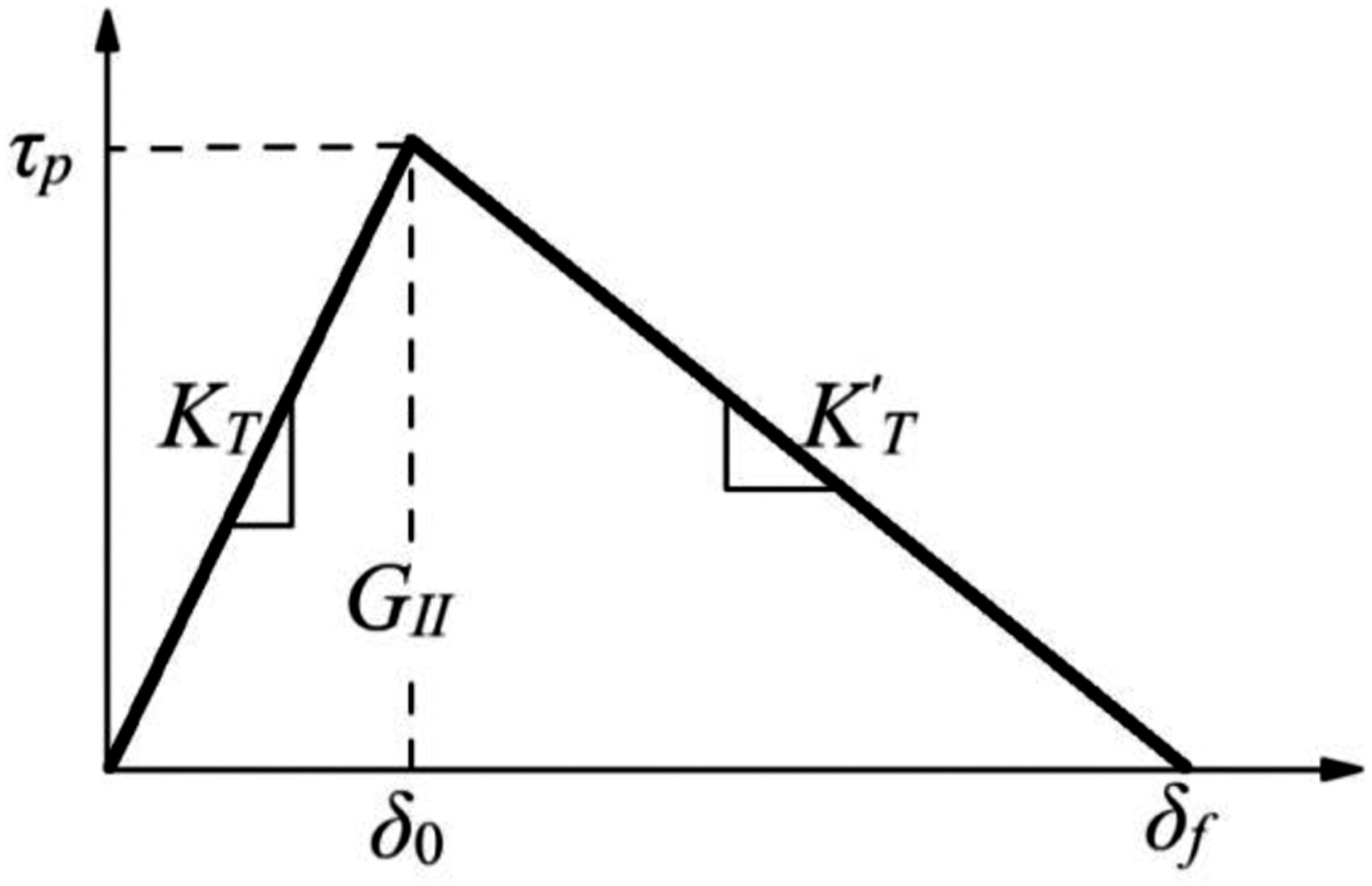
The bilinear bond-slip model can be described by the following formula
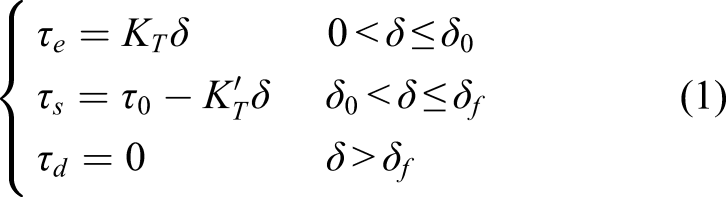



Existing research has shown that the mechanical properties of the bonding adhesive will change with the temperature variations due to significant stiffness and strength reductions at elevated service temperatures (Zhou et al., 2020). Therefore, the bond-slip behavior of the interface varies with the temperature variations accordingly. The present analytical solution is derived based on the assumption that the local bond-slip model (as shown in Figure 1) remains constant to simplify the analytical solution. It is worth noting that the experimental study in the literature has indicated that the strength of the bond joint depends only on the bond-slip behavior at the final service temperature of the bonded joint, provided that the interfacial fracture energy changes monotonically with the temperature variation (Zhou et al., 2019). Therefore, the proposed analytical solution can be easily extended to consider the stiffness and strength reductions of the bonding adhesive by using a temperature-dependent bond-slip model at the final service temperature (also described by the bilinear function).
Governing equation and analytical solution
Figure 2 schematically shows a typical FRP-strengthened beam under a three-point bending loading. The beam is strengthened at its soffit by an FRP plate with a length of Schematic of the FRP-strengthened beam.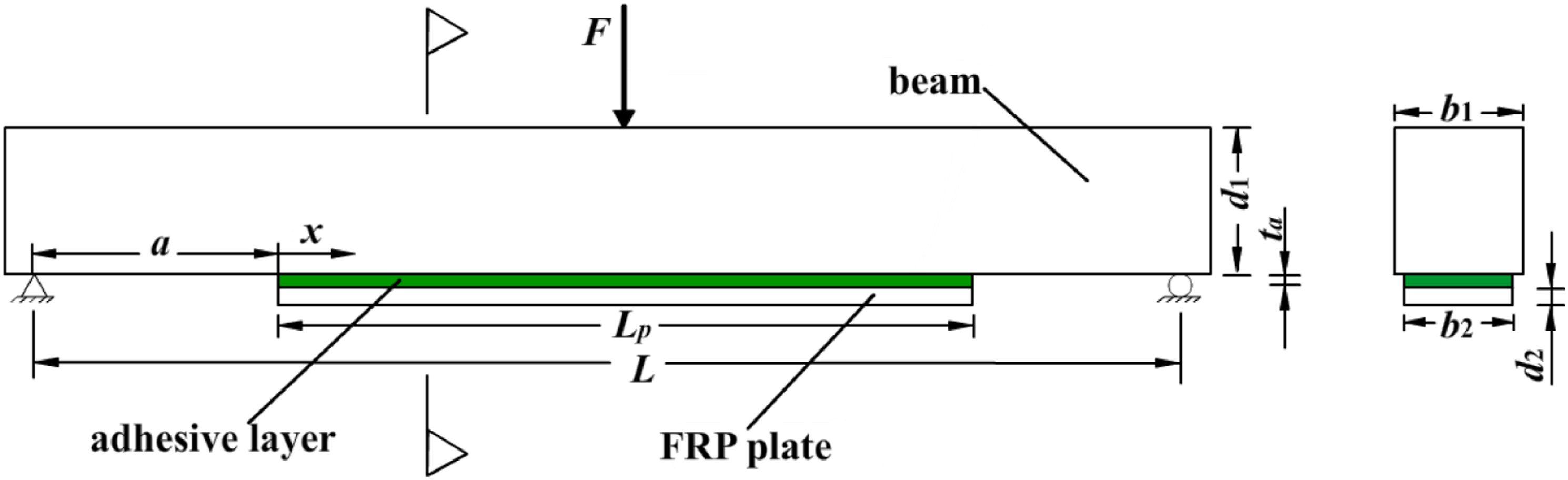
Figure 3 illustrates a free–body diagram of the differential element (with a length Schematic of a differential element of FRP-strengthened beam.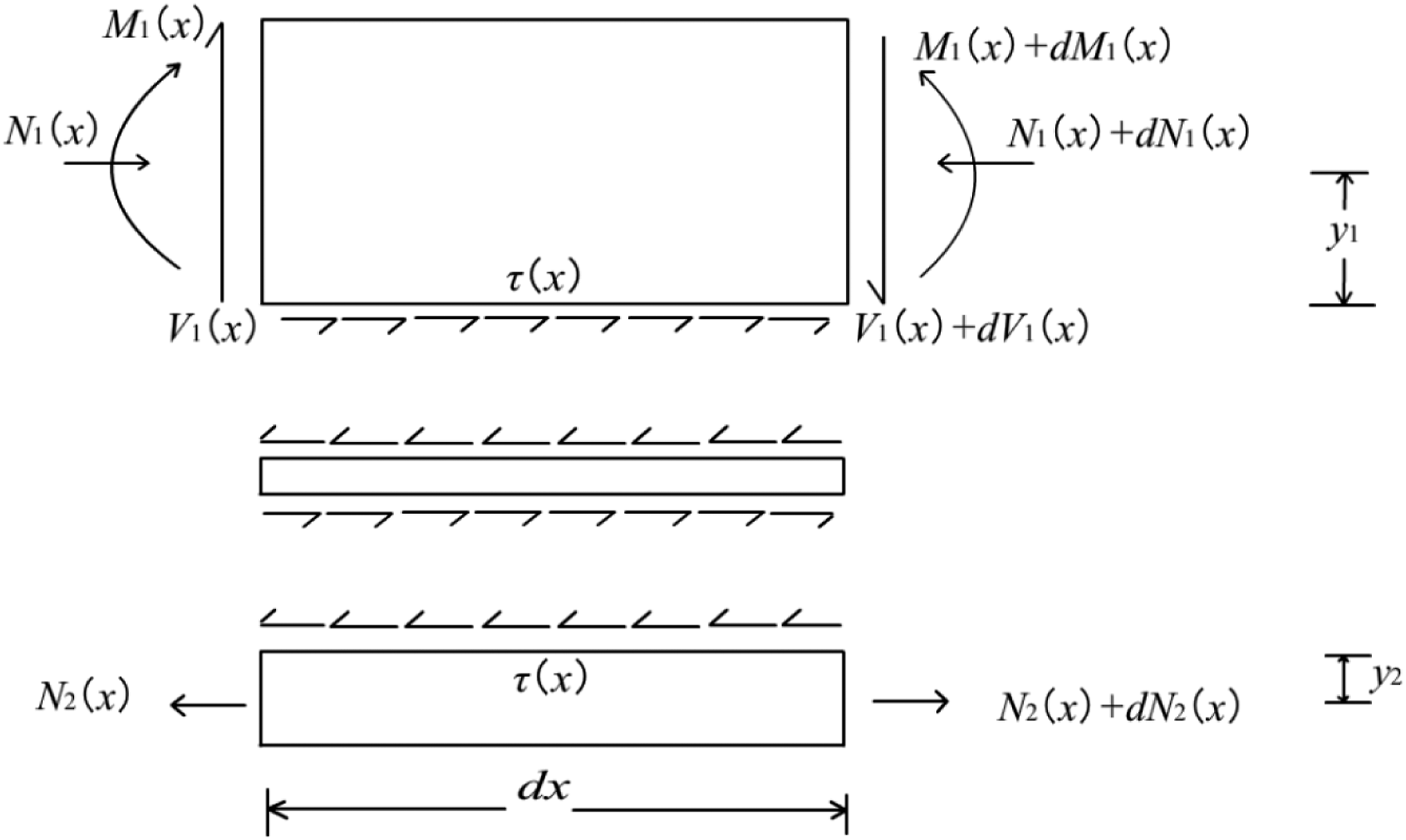
According to the horizontal force equilibrium of the beam and the FRP plate, the following equations can be obtained:


The relationship between the overall bending moment and the shear force distribution of the beam can be written as:

Since the flexural stiffness of the FRP plate is negligible compared with that of the beam, it is ignored and the overall moment equilibrium can be expressed as follows:



The interfacial shear slip at the location x can be expressed as

Differentiating equation (11) and substituting equations (9) and (10) into it, the following equation can be derived:

By substituting equation (11) into equation (1), the shear stress at the elastic stage of the interface can be calculated by:

Furthermore, differentiating equation (13) twice and substituting equations (5), (7), (8), and (12) into it, the final governing differential equation of the interfacial shear stress can be obtained as:
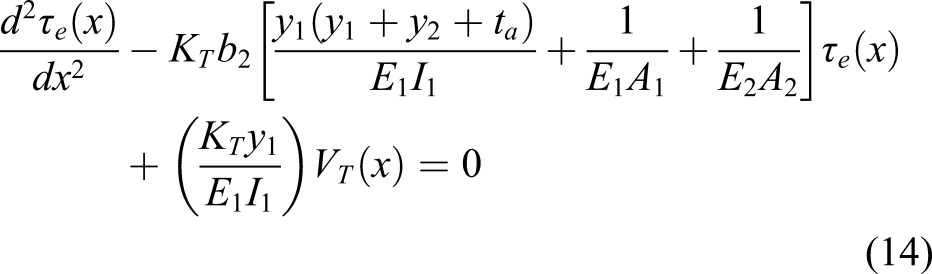
By setting

The general solution of equation (15) is:


When the interface enters the softening region, the shear stress distribution can be expressed as

Similarly, the governing equation of the shear stress distribution in the softening region can be derived as:

By defining

The general solution of the shear stress distribution in the softening region can be expressed as:


Stages of debonding process
The entire deformation process of the interface can be divided into three stages, including the elastic (E) stage, elastic-softening (E-S) stage, and elastic-softening-debonding (E-S-D) stage. The interfacial shear stresses remain below
It is worth noting that once the debonding failure starts at the plate end, the loading-bearing capacity of the FRP-strengthened beam will suddenly decrease, as reported by Deng and Lee (2007). That is because the debonding propagation is likely to be a dynamic process and a sudden release of energy is usually encountered during the debonding process (Teng et al., 2015). As a result, the load corresponding to the occurrence of plate-end debonding failure is usually defined as the load-bearing capacity (i.e., the debonding load) of the FRP-strengthened beam (Teng et al., 2015; De Lorenzis et al., 2013). Therefore, only the E and E-S stages are included in the analytical solution to predict the debonding load.
Elastic stage
In the elastic stage, the entire length of the interface behaves as elastic, and the shear stress distribution can be expressed as




Substituting equations (9) and (10) into the first-order differentiation of equation (13) and applying the above boundary conditions, the following equation can be derived:


By substituting equation (23) into equation (27),

Since the load applied to the FRP-strengthened beam is symmetrically distributed, the interfacial shear stress at the mid-span is zero. That is,

Therefore,
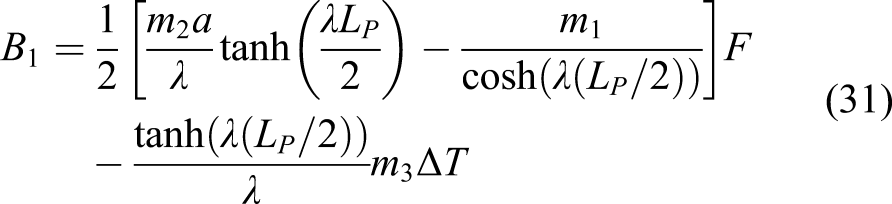
In addition, the axial stress of the FRP plate (
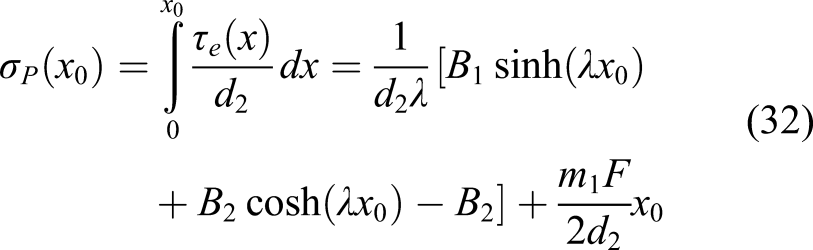
Elastic-softening stage
In the E-S stage, both the softening region (near the plate end) and the elastic region (near the mid-span of the FRP plate) should be considered, and the length of the softening region


Similar to the method used in the E stage, by applying the boundary conditions at the plate end, the integral constant

Similarly, the shear stress is equal to zero at the mid-span. That is

In addition to the boundary conditions of the plate end and mid-span as described above, the peak shear stress

Substituting equations (37) and (35) into equation (33),
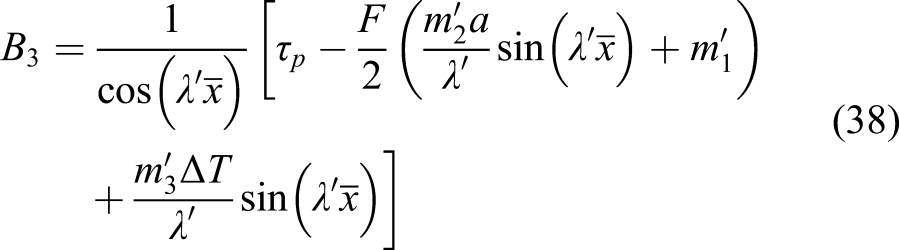
Similarly, substituting equation (37) into equation (34) and combining equation (36),
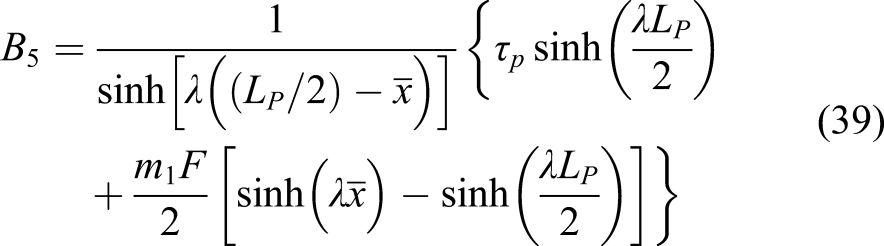
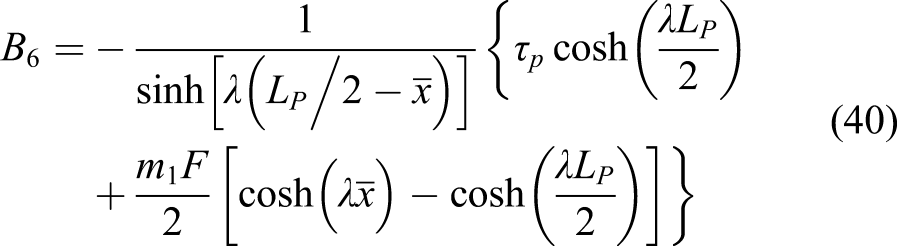


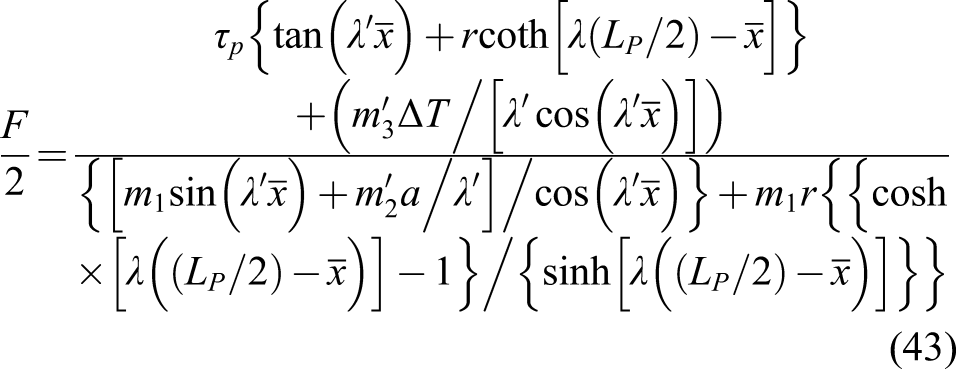
In addition, for the cases where
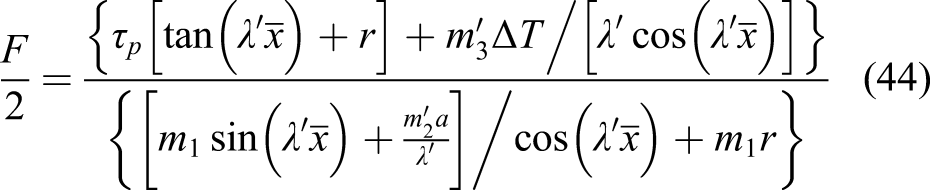
when
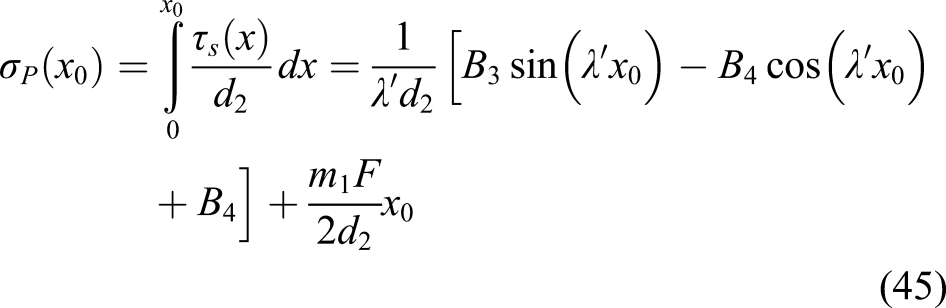
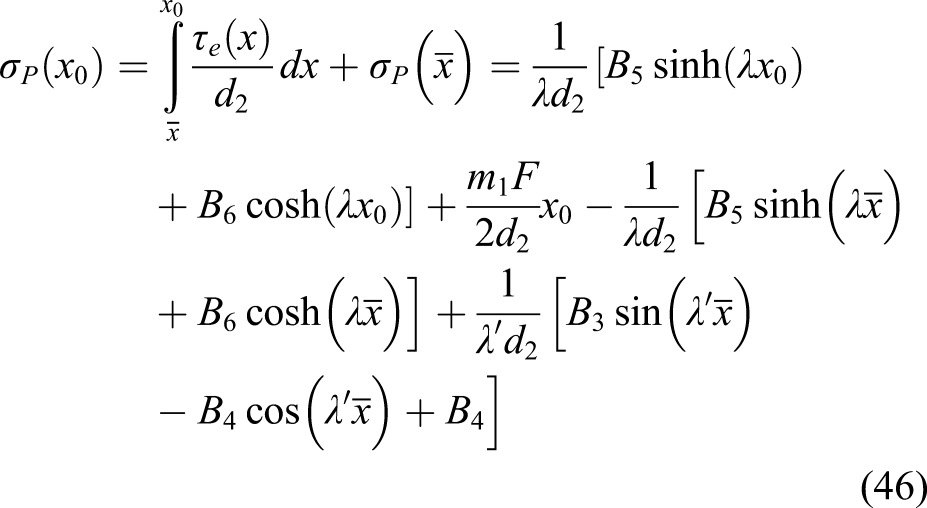
Debonding load
When the interfacial shear stress at the plate end decreases to zero, the debonding load of the FRP-strengthened beam is reached at the end of the E-S stage. Applying the boundary condition (i.e.,

The debonding load
Validation of the analytical solution
Finite element (FE) model
Parameters used in the FE model.

All the FE results in the paper are obtained using the general-purpose software Abaqus 6.14 (Abaqus, 2014). It is worth mentioning that the authors have extensively used Abaqus software for modeling the behavior of FRP-strengthened reinforced concrete (RC) beams at ambient and high temperatures (i.e., under fire exposure) (Dai et al., 2015; Gao et al., 2015b, 2016, 2017), the debonding behavior of FRP-to-steel/concrete bonded joints under combined thermal and mechanical loadings (Gao et al., 2012; 2015a), as well as the flexural behavior and associated debonding failures of the FRP-strengthened steel beams under bending loading (Zeng et al., 2018). A similar two-dimensional (2D) FE model is used in the current study to simulate the interfacial stress distribution and related debonding propagation of the FRP-strengthened beam under combined thermal and mechanical loadings. The steel beam is modeled by the Euler-Bernoulli beam element (B23 in the Abaqus notation), which uses cubic interpolation functions and has two translational and one rotational degrees of freedom at each node. The FRP plate is modeled by a two-node truss element (T2D2), which has two translational degrees of freedom at each node. The adhesive layer between the FRP plate and the steel beam is modeled by a four-node cohesive element (COH2D4), which can simulate the bond interface with appropriately defined bond-slip properties. When defining the interface behavior in the normal direction of the cohesive elements, the stiffness and the mode I fracture energy are assumed to be several orders of magnitude greater than those of the mode II case to ensure that no penetration or separation occurs in the interfacial normal direction. The FE model is created and solved using the Abaqus static general approach, in which the nonlinear analysis of each load step is solved using Newton-Raphson equilibrium iterations with the default force convergence value (i.e., 0.5%).
Mesh sensitivity analysis
A mesh sensitivity analysis is carried out to obtain the most suitable size of FE meshes. The substrate beam, the FRP plate and the adhesive layer are simulated with the same mesh size. Such element size varies from 0.1 mm to 6.4 mm. Figure 4 compares the interfacial shear stress distributions near the plate end predicted for the beam under a mechanical load of 80 kN with different element sizes, including 0.1 mm, 0.2 mm, 0.4 mm, 0.8 mm, 1.6 mm, 3.2 mm, and 6.4 mm. The comparisons in Figure 4 indicate that a mesh size not larger than 0.4 mm is suitable for achieving an accurate FE prediction of the shear stress distribution near the plate end. Therefore, the element size of all components (i.e., both the adherends and the adhesive layer) is set to 0.2 mm in the FE model based on a tradeoff between accuracy and efficiency of the computation. Distribution of interfacail shear stress with different element sizes.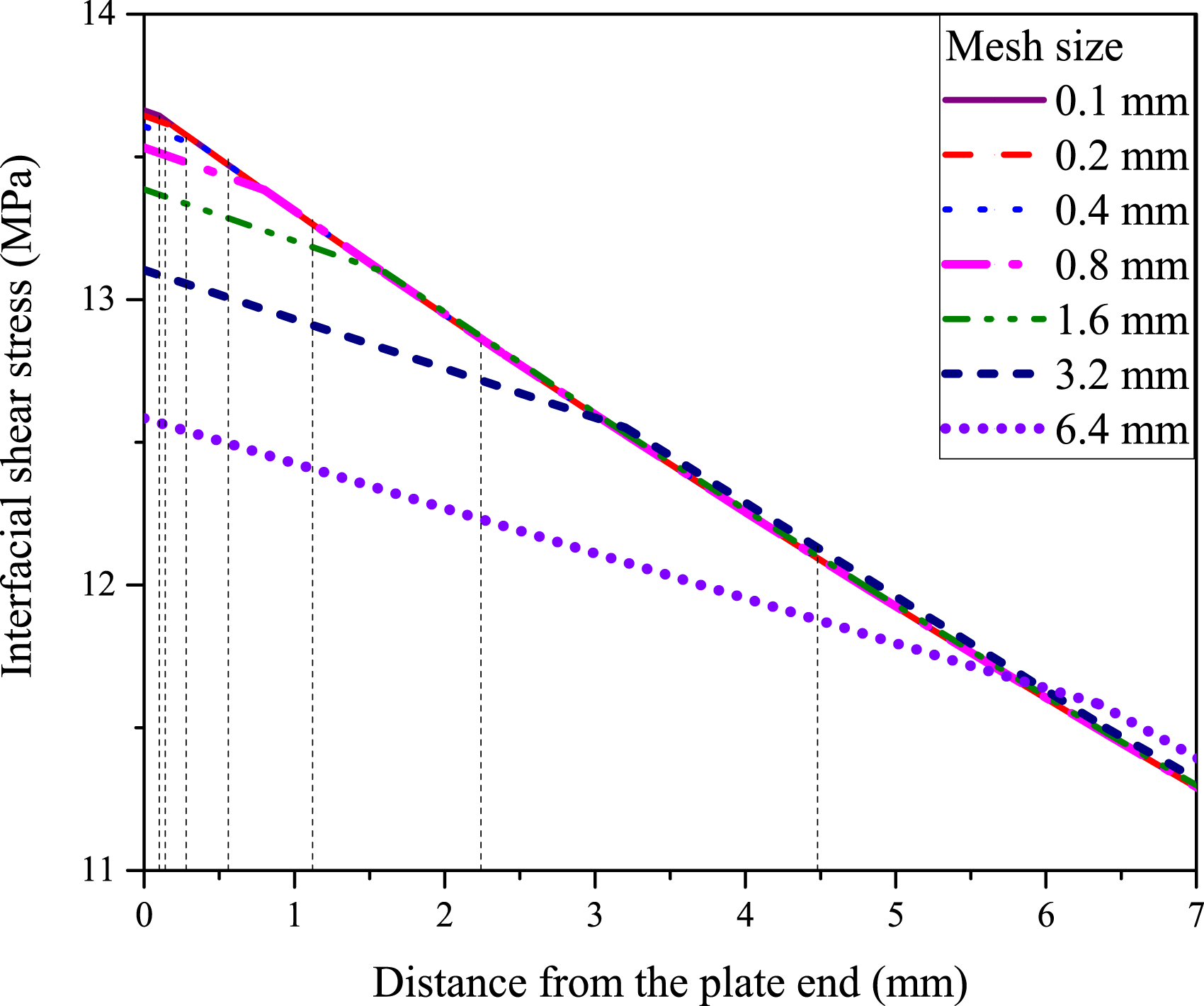
Comparisons with the FE results
Figures 5 and 6 show the distributions of interfacial shear stresses/slips and axial stresses in the FRP plate predicted by the analytical solution and the FE model under two different conditions: (a) the beam is subjected to mechanical loading only and the temperature variation is not considered (i.e., at room temperature); (b) the beam is subjected to varying service temperatures (from −50°C to +50°C) while the applied load is constant. In these figures, the magnitudes of interfacial stresses/slips are normalized by the maximum interfacial shear stress Comparisons between analytical and FE results for the FRP-strengthened beam under various applied load levels: (a) normalized shear stress distribution; (b) normalized shear slip distribution; (c) axial stress of the FRP plate. Comparisons between analytical and FE results for the FRP-strengthened beam at various service temperatures: (a) normalized shear stress distribution; (b) normalized shear slip distribution; (c) axial stress of the FRP plate.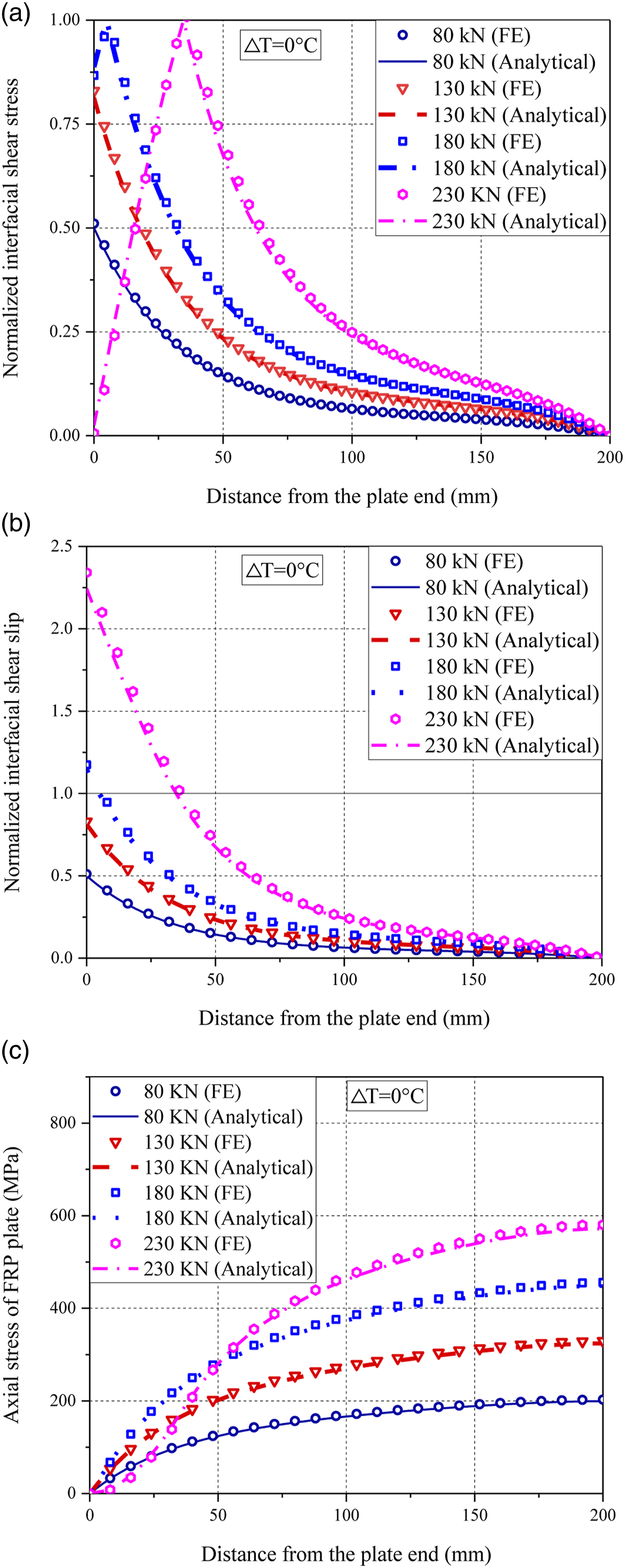
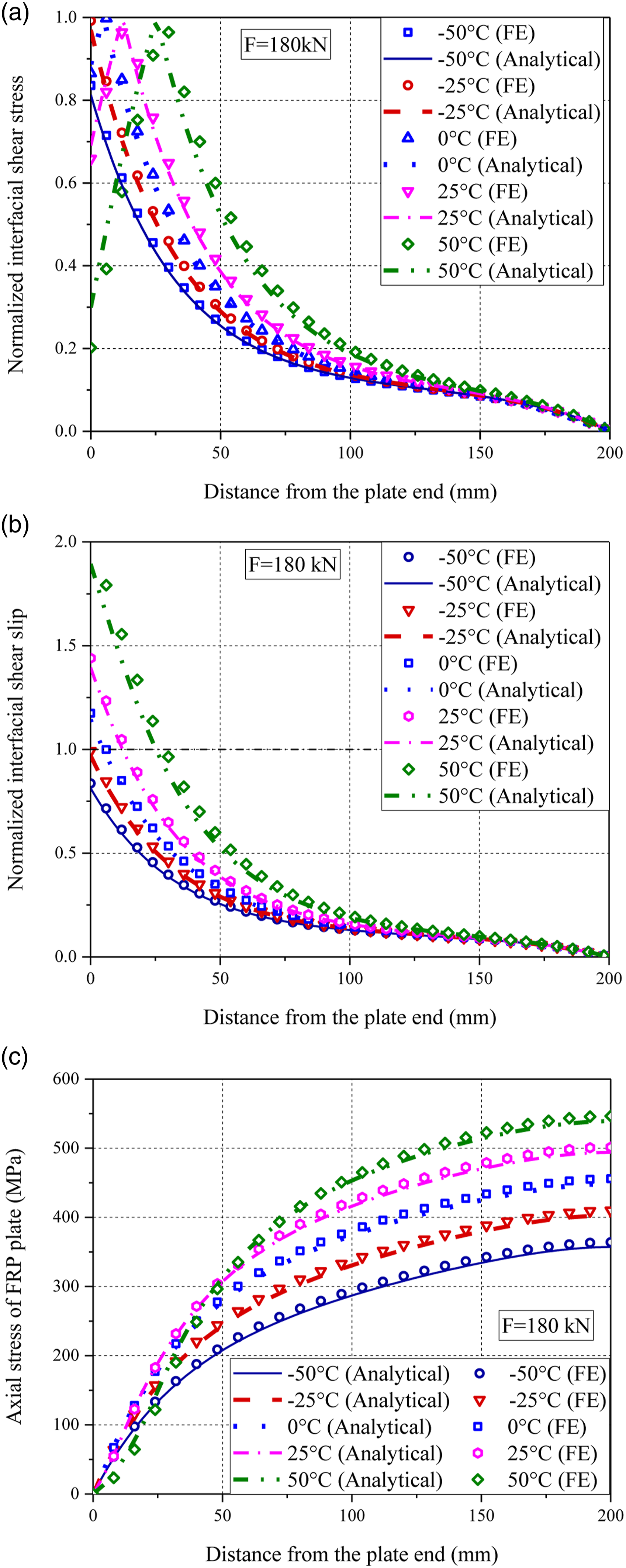
As shown in Figure 5, the deformation process gradually evolves from the E-stage to the E-S stage as the applied load increases. During the E stage (
In Figure 5(c), it is observed that the axial stresses of the FRP plate increase from the plate end to the middle zone. Also, the axial stresses in the FRP plate are improved with the increased mechanical load under low loading levels regardless of the plate location. During the E-S stage, the axial stresses near the plate end are reduced due to decreased interfacial shear stresses, as shown in Figure 5(a). A similar phenomenon can be observed when the beam is subjected to a constant mechanical load and an increased service temperature (Figure 6). As illustrated in Figure 6, the interfacial shear stresses change significantly with the temperature growth, although the applied load remains constant. When the temperature variation is zero, the interface has entered the softening stage under the given load. However, if the temperature variation is −25°C or −50°C, the interface is still in the elastic stage. On the other hand, when the temperature variation increases to 25°C or 50°C, the interface softening near the plate end becomes more significant. The comparisons depicted in Figures 5 and 6 have indicated that the interfacial shear stresses/slips caused by the temperature increase are in the same direction as those induced by the mechanical loading. In other words, if the service temperature grows, the maximum interfacial shear stress and the corresponding slip are obtained at a relatively lower level of applied load, resulting in a decrease in the debonding load of the FRP-strengthened beam.
Parametric Study
Effect of FRP plate properties
In this section, the analytically predicted debonding loads of the FRP-strengthened beam with different properties of the FRP plate are studied to obtain a good understanding of the thermal loading effect on the debonding load. The beam with the properties listed in Table 1 is still used as the benchmark. The main properties studied herein are the length, thickness, and elastic modulus of the externally bonded FRP plate.
Figure 7(a)–(c) shows the changes in the debonding load of the FRP-strengthened beam under various service temperatures in cases of different FRP plate lengths, thicknesses and elastic moduli, respectively. The predicted debonding loads at different temperatures are normalized by the value at the reference temperature (i.e., Effect of temperature variation on the normalized debonding load for the beam strengthened with an FRP plate with varying (a) lengths; (b) thicknesses; (c) elastic moduli.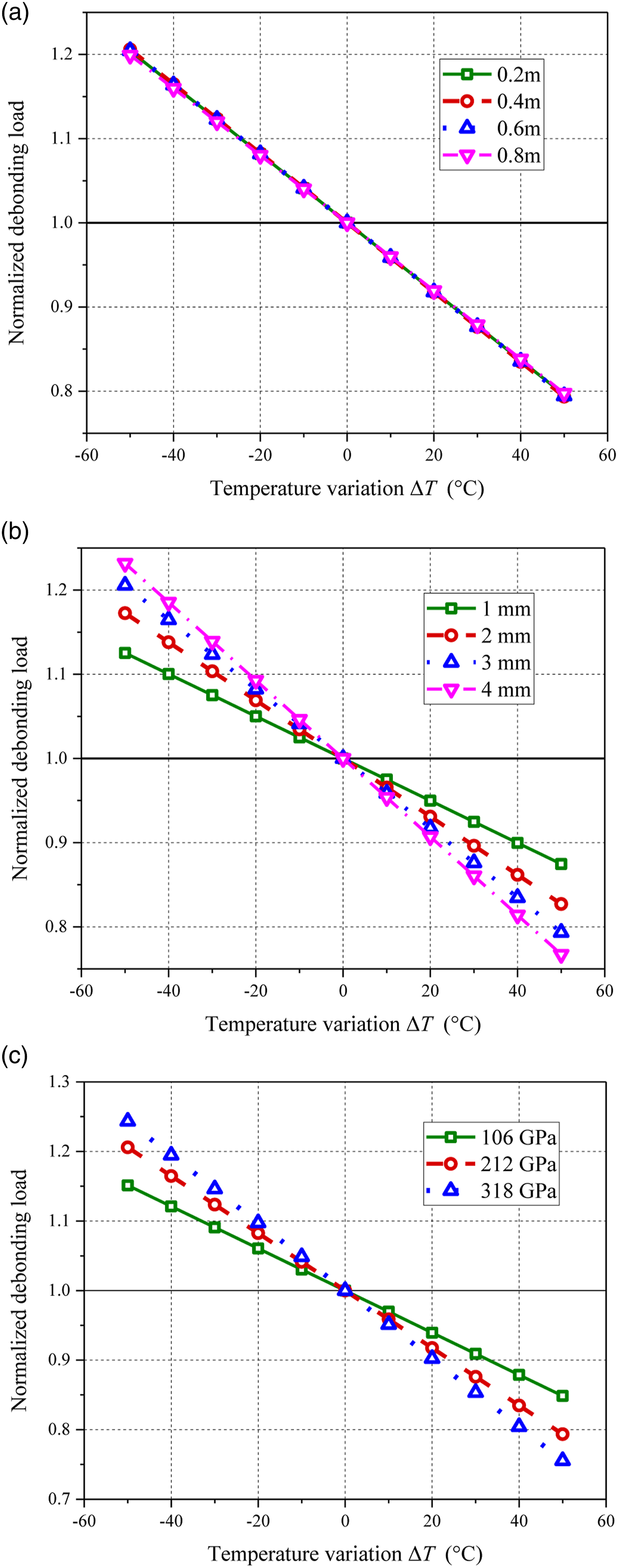
It can be seen that the debonding load of the FRP-strengthened beam decreases with the increase of temperature regardless of the properties of the FRP plate (Figure 7(a)–(c)). The effect of the FRP plate length on the debonding load of the FRP-strengthened beam under various service temperatures is negligible, as shown in Figure 7(a). However, both the thickness and the elastic modulus of the FRP plate have significant effects on the changes of the debonding load with the temperature variation. The normalized debonding load of the FRP-strengthened beam at lower service temperatures increases with the increase in the thickness and/or elastic modulus of the FRP plate, while the opposite trend appears at higher service temperatures. This finding means that higher plate end debonding load reductions are observed for the FRP-strengthened beam with higher elastic modulus and thickness of the FRP plate. Note that only the thermal stress effect is considered herein (i.e., assuming that the bond-slip relationship remains unchanged) to produce the analytical results. The FRP plate thickness and the elastic modulus are expected to affect the debonding load since the interfacial shear stresses are related to the axial stiffness values of the FRP plate. That is, when the FRP plate has a higher stiffness, any thermal deformation may cause a larger load transfer through the interface, resulting in a higher changing rate of interfacial stress. Even if this tendency cannot be directly reflected by equation (47), the results of Figure 7(b) and (c) show that the higher changing rate exists due to the temperature variations for the FRP-strengthened beam with higher stiffness of the FRP plate.
Effect of bond degradations at elevated service temperatures
In the preceding section, the thermal stress effect on the plate-end debonding load of the FRP-strengthened beam at various service temperatures has been studied in detail without considering the degradation of bond performance. However, it is clear that at elevated service temperatures, the mechanical properties of the bonding adhesive will be significantly reduced (Bai et al., 2008; Dai et al., 2013). Existing bonded joint tests show that the bond interface exhibits cohesion failure in the adhesive layer, which is directly attributed to the degradation in the mechanical properties of the adhesive at elevated service temperatures (Dai et al., 2013; Zhou et al., 2020). Similarly, the bending tests on FRP-strengthened RC beams in the literature indicate that the failure at ambient temperature mainly occurs in the concrete cover layer below the bond interface, while the beams tested at elevated service temperatures exhibit cohesion failure in the bonding adhesive layer due to the degradations in the mechanical properties of the adhesive (Klamer et al., 2008). Therefore, the service temperature variations have a significant impact on the bond-slip behavior of the FRP-to-steel/concrete interface. In this section, an attempt has been made to investigate the effect of temperature-dependent bond-slip behavior on the plate-end debonding load of the FRP-strengthened beam at various service temperatures.
Since the available information on the bond-slip characteristics of the FRP-to-steel/concrete interface at various service temperatures is very limited (Naser et al., 2021), two different idealized schemes as shown in Figure 8 are assumed in this study to account for the temperature-dependent bond-slip models (including the shear strength degradations) at elevated service temperatures. In these two schemes, the initial elastic stiffness Two schemes of temperature-dependent bond-slip models: (a) scheme A; (b) scheme B.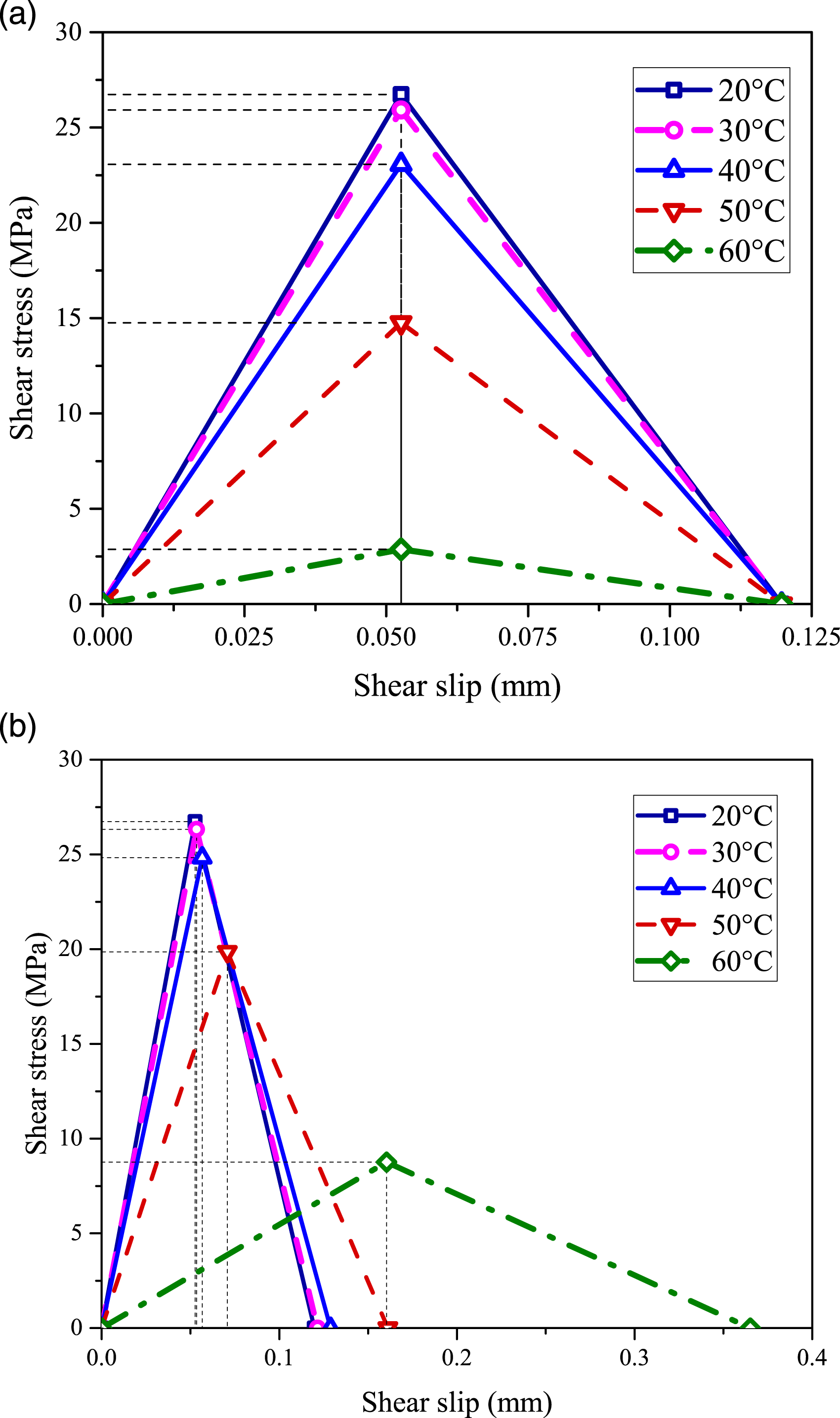
Figure 9 illustrates the analytical results of the plate-end debonding loads of the FRP-strengthened beam at elevated service temperatures on the basis of considering the above two schemes of temperature-dependent bond-slip models. In Figure 9, the plate-end debonding loads at elevated service temperatures are normalized by the corresponding value obtained at ambient temperature (i.e., 20°C). Note that the reference case considered in Figure 9 does not consider the change of the bond-slip model. Normalized debonding loads at elevated service temperatures.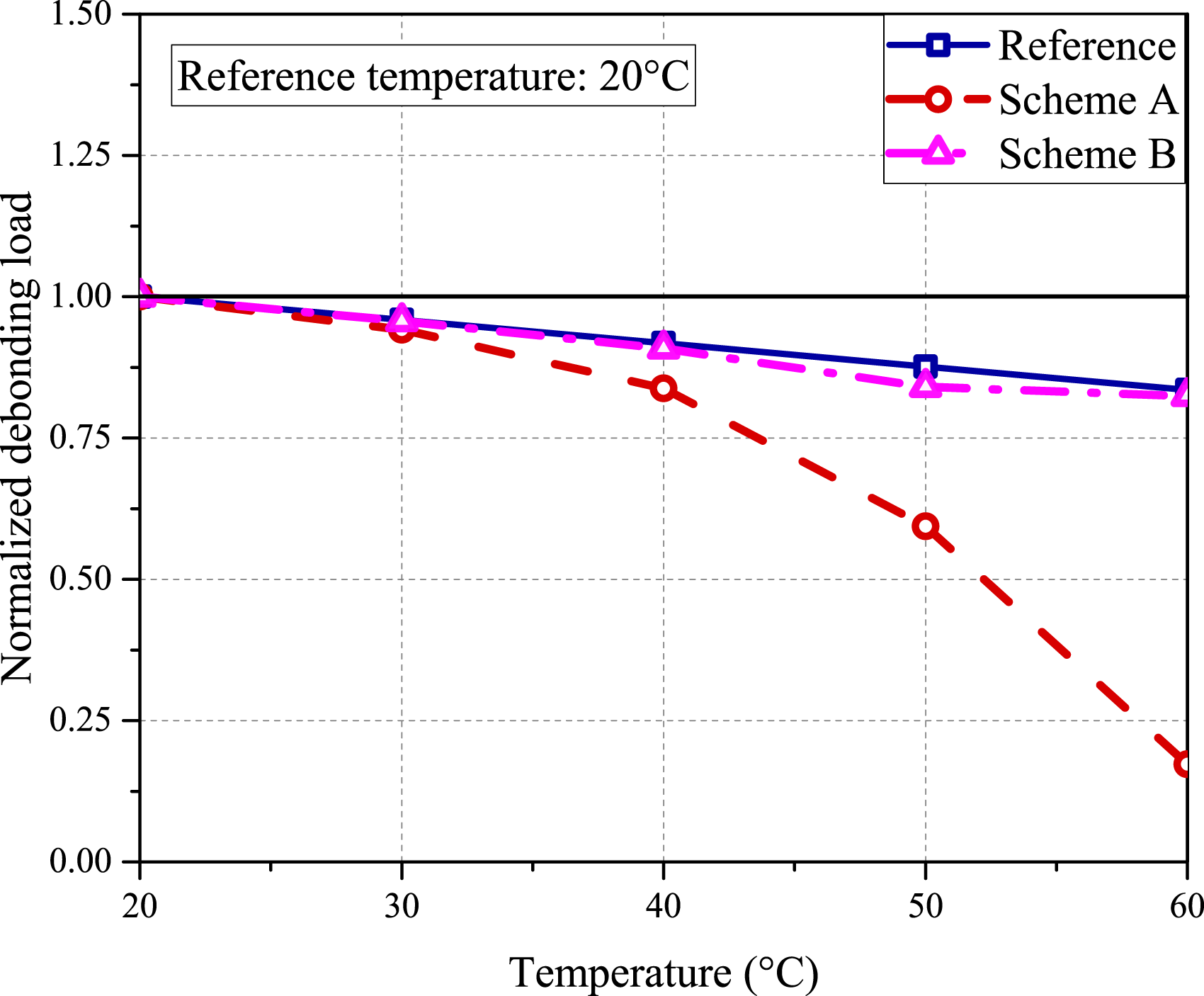
Figure 9 shows that the analytical results of Scheme B are in good agreement with the results of the reference scheme, indicating that the reductions in the initial stiffness and the interfacial shear strength almost have negligible effects on the plate-end debonding load, if the interfacial fracture energy remains unchanged. However, the analytical results of Scheme A show a significant reduction in plate-end debonding load, which indicates that the interfacial fracture energy has a significant effect on the plate-end debonding load. This finding is consistent with the analytical results reported by Zhou et al. (2019). In their study, the bond strengths of the FRP-to-steel bonded joints were found to decrease with the temperature increase only if the interfacial fracture energy was reduced. This finding also confirms that the analytical solution based on a constant bond-slip model determined at the final temperature yields a conservative plate-end debonding load, especially when the bond-slip relationships in Figure 8(a) are used for describing the bond degradations at elevated service temperatures.
Conclusions
This paper presents a new and closed-form analytical solution for predicting the plate-end debonding failure of the FRP-strengthened steel/concrete beam under combined mechanical and thermal loadings. The distributions of interfacial shear stresses/slips and the axial stresses of the FRP plate at different loading stages can be predicted using the proposed analytical solution. The analytical solution has been validated by the comparisons between analytical and FE results. The following conclusions can be drawn based on the analytical solution and the results presented in the paper. When the FRP-to-steel/concrete interface maintains elastic behavior, the interfacial shear stresses at the plate end grow with the increasing service temperature. The interfacial shear slip at the plate-end always increases with the temperature growth. The plate-end debonding load of the FRP-strengthened beam decreases with the increasing temperature. The enhancement in the FRP plate stiffness leads to an increasing rate of the debonding load reduction with the temperature. The reduction of the interfacial fracture energy significantly reduces the plate-end debonding load. On the contrary, the reductions of the initial elastic stiffness and the interfacial shear strength have almost negligible effects on the plate-end debonding load provided that the interfacial fracture energy remains unchanged. The analytical solution based on a constant bond-slip model determined at the final temperature yields a conservative plate-end debonding load, which is suitable for practical design purposes.
Although the proposed analytical solution provides a conservative method for predicting the plate-end debonding load, the accuracy of the theoretical analysis can be further improved by considering an appropriate temperature-dependent bond-slip model. However, the determination of the temperature-dependent bond-slip behavior of the FRP-to-steel/concrete interface at elevated service temperatures is still largely unknown. Since the plate-end debonding loads decrease significantly with the increasing temperature, it is necessary to conduct further research to better understand the temperature-dependent bond-slip behavior of the FRP-to-steel/concrete interface at different service temperatures.
Footnotes
Declaration of conflicting interests
The author(s) declared no potential conflicts of interest with respect to the research, authorship, and/or publication of this article.
Funding
The author(s) disclosed receipt of the following financial support for the research, authorship, and/or publication of this article: The authors are grateful for the financial support received from the National Natural Science Foundation of China (NSFC) (51978398 and 51478406), the Research Grants Council of the Hong Kong SAR (15219919) and the Natural Science Foundation of Shanghai (19ZR1426200).
