




Abstract
Artificial intelligence (AI) provides advanced mathematical frameworks and algorithms for further innovation and vitality of classical civil engineering (CE). Plenty of complex, time-consuming, and laborious workloads of design, construction, and inspection can be enhanced and upgraded by emerging AI techniques. In addition, many unsolved issues and unknown laws in the field of CE can be addressed and discovered by physical machine learning via merging the data paradigm with physical laws. Intelligent science and technology in CE profoundly promote the current level of informatization, digitalization, autonomation, and intellectualization. To this end, this paper provides a systematic review and summarizes the state-of-the-art progress of AI in CE for the entire life cycle of civil structures and infrastructure, including intelligent architectural design, intelligent structural health diagnosis, intelligent disaster prevention and reduction. A series of examples for intelligent architectural art shape design, structural topology optimization, computer-vision-based structural damage recognition, correlation-pattern-based structural condition assessment, machine-learning-enhanced reliability analysis, vision-based earthquake disaster evaluation, and dense displacement monitoring of structures under wind and earthquake, are given. Finally, the prospects of intelligent science and technology in future CE are discussed.
Keywords
Introduction
The concept of artificial intelligence (AI) was first proposed by John McCarthy at the Dartmouth Summer Research Project in 1956, which is regarded as a seminal event for artificial intelligence as an independent research field. After a series of machine learning (ML) models and algorithms were developed (such as perceptron, backpropagation algorithm, support vector machine, etc.), Hinton et al. proposed the deep belief network and opened the era of deep learning (DL) in AI (Hinton et al., 2006).
DL can be divided into three main categories: deep supervised learning, deep unsupervised learning, and deep reinforcement learning (Minar and Naher, 2018). Deep supervised learning often requires well-labeled data to train the model and is frequently used for classification and regression tasks. For example, the Residual Network (ResNet), consisting of 152 layers, was proposed in the ImageNet Large Scale Visual Recognition Challenge (ILSVRC) classification competition and won first place (He et al., 2016). Deep unsupervised learning can be used for feature representation when the labeled data is limited or difficult to achieve. Generative Adversarial Networks (GANs) (Goodfellow et al., 2020) were proposed as a probability-based generative model to learn data distributions by the game playing between the generator and discriminator, which has become one of the most popular deep unsupervised learning techniques. GANs have been widely used in various image-related tasks (Brock et al., 2018; Isola et al., 2017; Zhou and Berg, 2016) and engineering problems (Gao et al., 2019; Qian et al., 2022). Deep reinforcement learning can learn the model from the interaction between agent and environment, which is quite similar to the knowledge learning process of humans and has been regarded as a fundamental way to achieve general-purpose AI. For example, reinforcement learning was used to create a high-performing flight controller, and the effectiveness in addressing real-world autonomous control problems was validated (Bellemare et al., 2020).
The conventional design, construction, inspection, monitoring, maintenance, and disaster prevention in civil engineering (CE) are still in a low level of informatization, digitalization, autonomation, and intellectualization. For example, condition assessment for bridges is one of the most significant issues in structural health monitoring (SHM). Conventional structural condition assessment techniques usually compare the statistical metrics of monitoring data with pre-designed thresholds as the evaluation criteria. However, this straightforward approach is often not universal, accurate, and appropriate for complex structures in real-world applications.
Recently, the successful development of AI has provided advanced mathematical frameworks and algorithms for further innovation and vitality of classical CE. A novel ML paradigm for structural health diagnosis and prognosis has been established to discover and model the performance and conditions of a structure through deep mining of monitoring data (Bao and Li, 2021). Furthermore, DL techniques can automatically learn features through deep neural network architectures, alleviating the existing difficulties in feature extraction. DL techniques widely used in CE mainly include convolutional neural network (CNN) and long short-term memory models. A variety of novel DL-based methods have been developed and widely applied in different research areas of CE (Rafiei and Adeli, 2018; Bao et al., 2019; Azimi et al., 2020; Sun et al., 2020).
To better describe a blueprint of the current research hotspots and prospects of AI in CE, this paper conducts a systematic review and summarizes recent progress in multiple aspects: intelligent architectural design and structural design, intelligent structural health diagnosis, intelligent disaster prevention and reduction. The conclusion section summarizes the paper and discusses the prospect of intelligent science and technology in future CE.
Intelligent architectural design
The purpose of intelligent design in CE is to introduce intelligent technologies into the traditional design process of architecture and structure, lessen the requirement for professional knowledge of practitioners, shorten the life cycle of product development, reduce costs and improve quality. In the design field of CE, AI can enhance the design process to obtain optimal design results, avoid repetitive laborious work, and reduce computational costs. Intelligent design in CE can be divided into two parts: intelligent architectural design and intelligent structural design.
Intelligent architectural art design
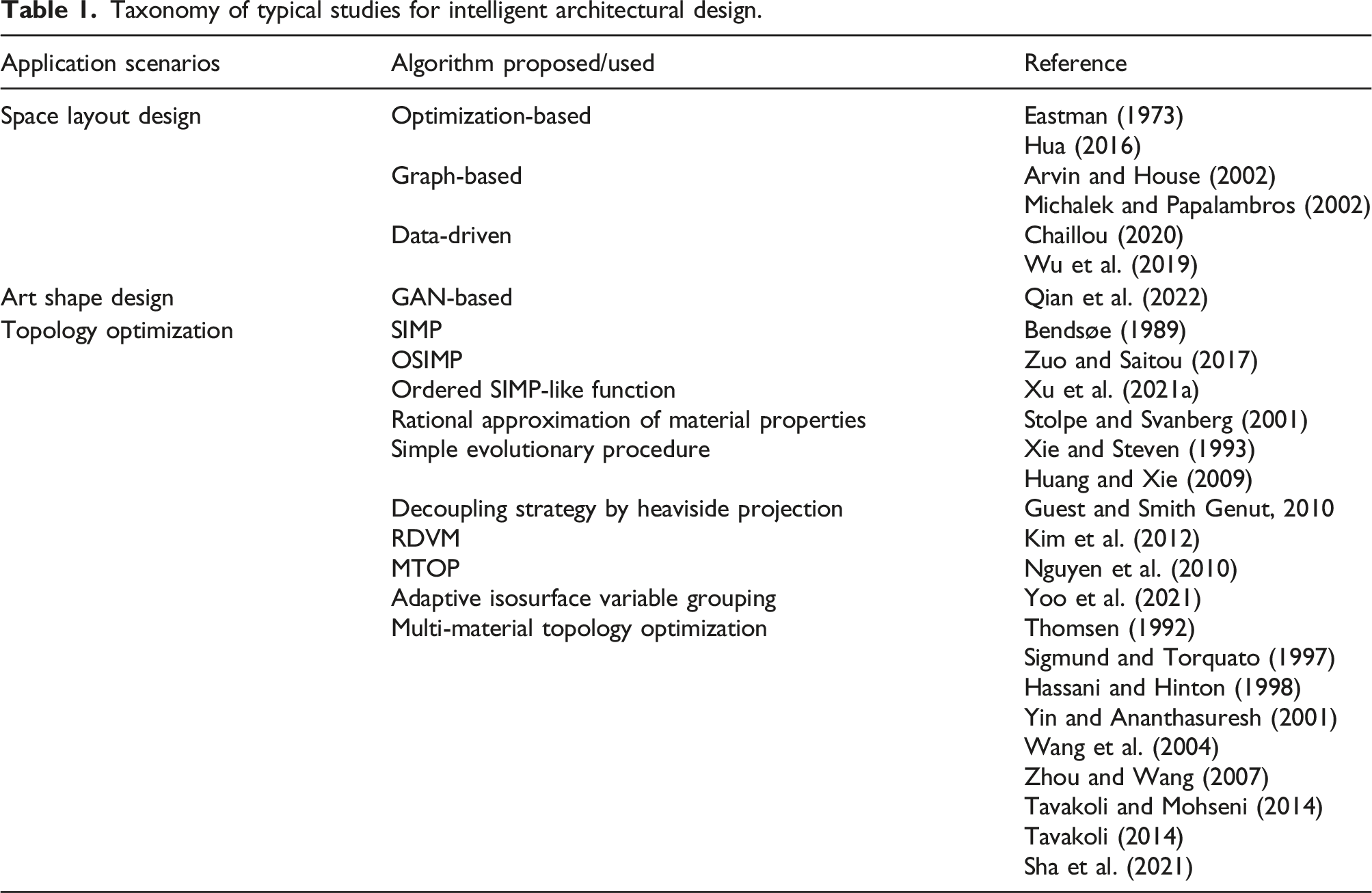
Most of the current studies about architectural intelligent design focus on the automatical design of architectural space layout, which can be roughly divided into optimization-based methods (Eastman, 1973; Hua, 2016), graph-based methods (Arvin and House, 2002; Michalek and Papalambros, 2002), and data-driven methods (Chaillou, 2020; Wu et al., 2019). Among the data-driven methods, DL has been introduced to automatically generate floor plans with given boundaries based on datasets of preexisting designs. For example, ArchiGAN can generate an entire floor plan by nesting three Pix2Pix-GAN models and allow the input from users at each step (Chaillou, 2020), which corresponds to three distinct design steps: footprint massing, program repartition, and furniture layout.
Architectural art shapes reflect the understanding of design goals, art styles, and local culture, which are supposed to positively impact the quality of the designed solution (Schütze et al., 2003). The architectural sketches are essential to express the architectural art shape, and they can not only present the initial design ideas of the designer but also inspire new afflatus in turn (Schon, 2017). However, due to the difficulties of lacking precise mathematical functions, governing equations, and quantitative evaluation metrics for architectural art shapes, studies on the intelligent design of architectural art shapes are somewhat limited.
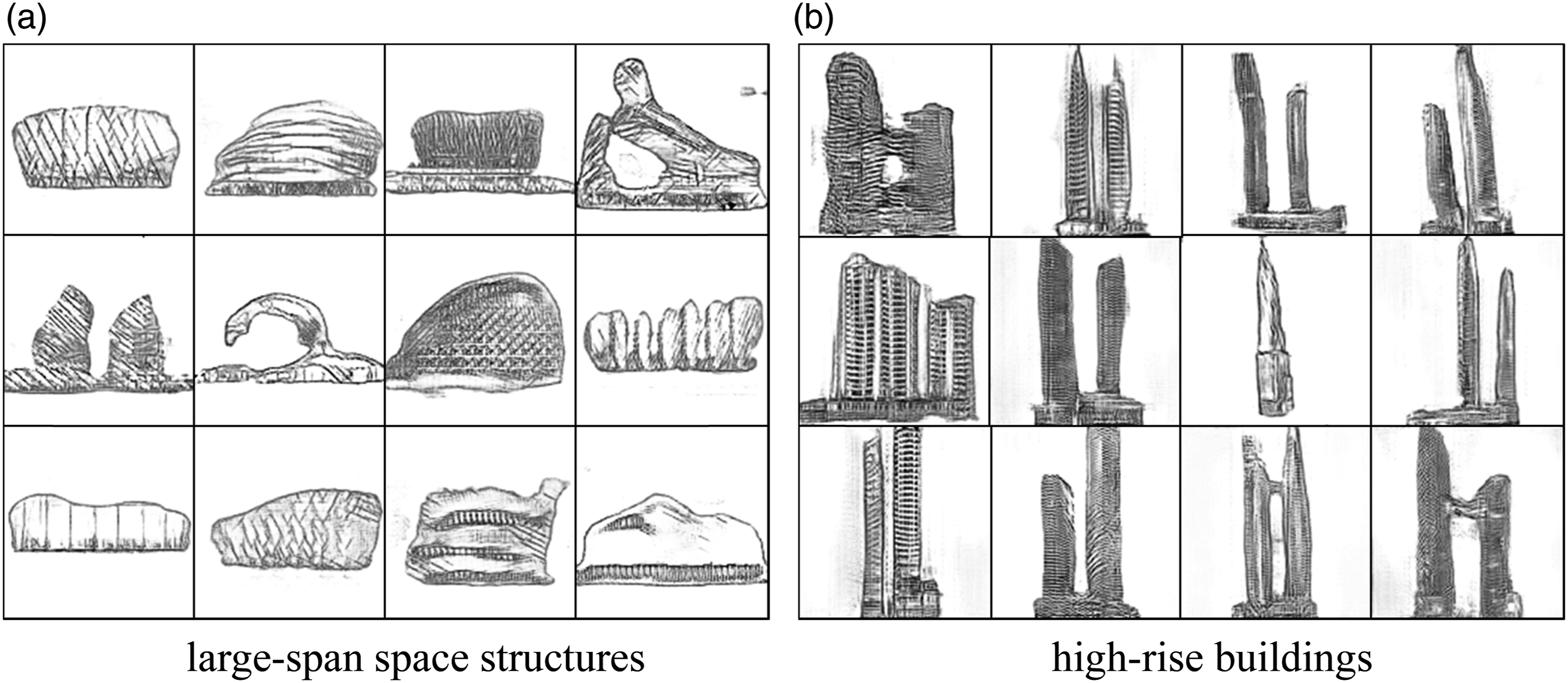
Recently, a preliminary exploration for the intelligent design of architectural art shape has been performed, and an autonomous design method for architectural shape sketches was proposed based on a novel Self-Sparse Generative Adversarial Network (Self-Sparse GAN) (Qian et al., 2022). As shown in Figure 1, the proposed framework for the autonomous design of architectural shape sketches contains three parts: data preparation, generative model, and evaluation metric. In the generative model, the proposed Self-Sparse GAN can utilize the sparsity in sketch images to improve the model performance by the newly-designed Self-Adaptive Sparse Transform Module. Figure 2 shows representative results of novel generated architectural sketches different from the training data set. The results show that the generated sketch not only successfully learns the features of textures from buildings but also can generate the corresponding textures at the proper positions. In the future study, more factors, including functionality, geographical location, neighborhood environment, culture, and climate effects, will be further considered within input variables for customized intelligent architecture designs. Framework for autonomous intelligent design of architectural shape sketches (Qian et al., 2022). Representative intelligent design results of architectural art shape by Self-Sparse GAN (a) large-span space structures (b) high-rise building.
Intelligent structural design and topology optimization
Investigations on intelligent structural design can be divided into size optimization, shape optimization, and topology optimization for civil structures (Bendsøe and Sigmund, 2013). The size and shape optimizations do not change the topology of the structure and only extend the original solution space; therefore, no new structural forms can be generated. However, topology optimization can obtain novel structures by defining various design domains, boundary conditions, and loading conditions. For example, a new beak-shape structure was obtained by topology optimization for plane wings (Aage et al., 2017), as shown in Figure 3. Meanwhile, topology optimization can connect architectural aesthetics, engineering stability, and efficiency (Beghini et al., 2014). Optimized beak-shape structure of plane wing by topology optimization (Aage et al., 2017).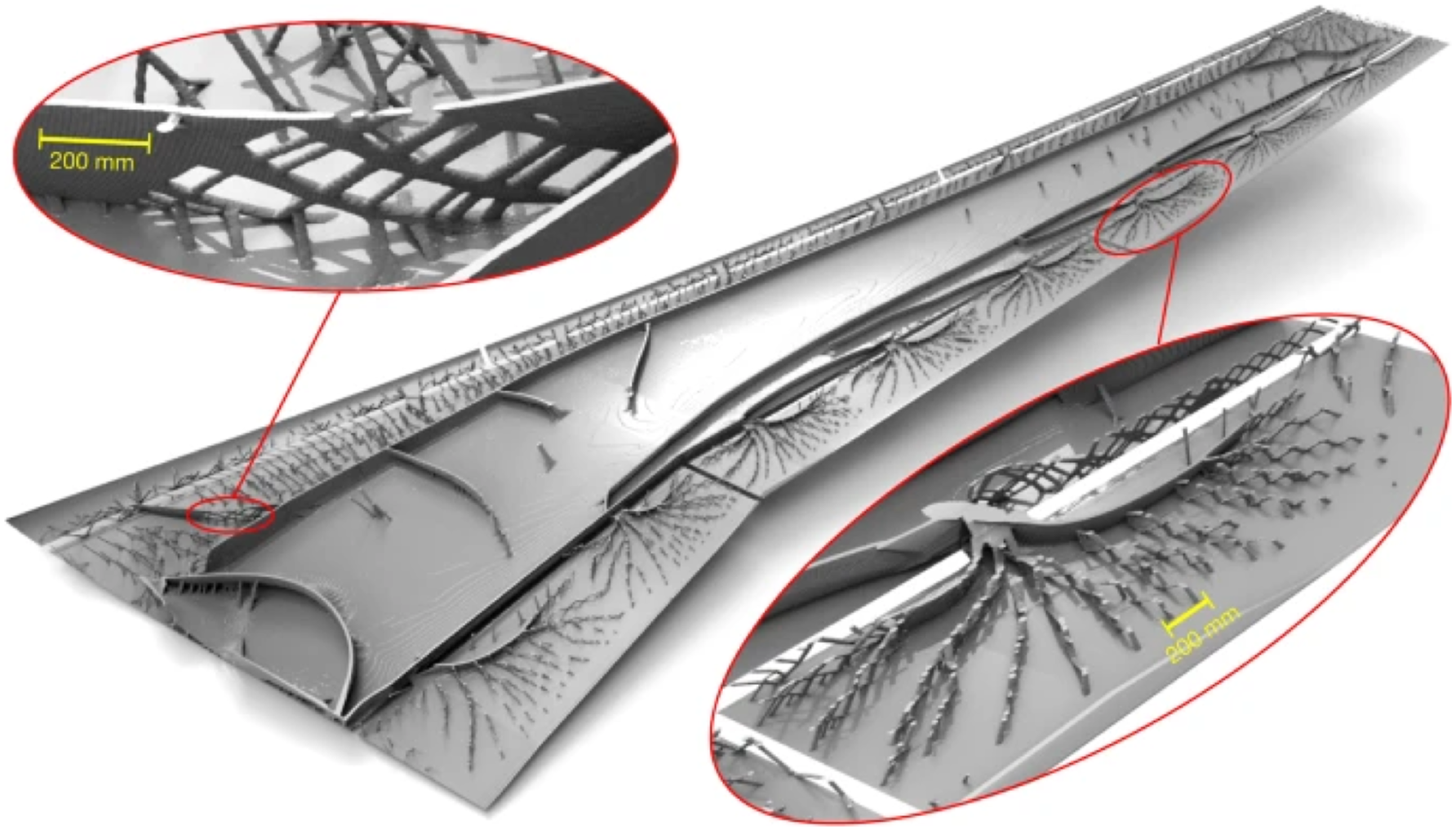
Since the pioneering work of topology optimization (Bendsøe, 1989), numerous topology optimization methods have been proposed, among which the most common method is named “Solid Isotropic Material with Penalization” (SIMP) (Bendsøe, 1989), and its formulation is Applications of topology optimization on engineering design for civil structures (a) Illustration for the concept design of a high-rise building in Australia (Beghini et al., 2014) (b) Optimized girder structure for super-long bridges (Baandrup et al., 2020).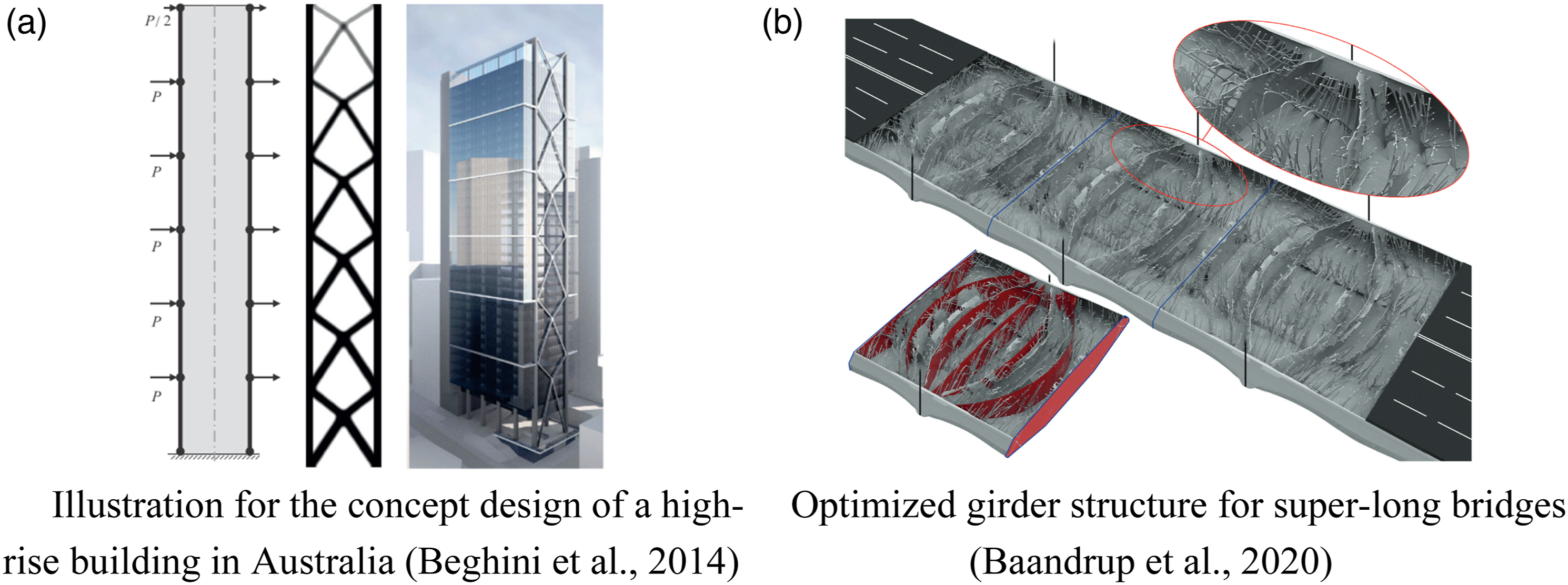
To overcome the above computational burden, a series of investigations have been conducted to reduce computational cost and improve computational efficiency. A decoupling strategy was proposed to separate the design variables and meshes by the Heaviside projection method (Guest and Smith Genut, 2010). A reducible design variable method was proposed to reduce the computational costs of updating design variables by ignoring design variables that have converged (Kim et al., 2012). Another approach was using a multi-resolution topology optimization (MTOP) scheme to obtain high-resolution designs with a coarser discretization for finite elements and a finer discretization for both density elements and design variables (Nguyen et al., 2010). In the above study, finite element analysis was performed in a relatively coarse mesh, significantly saving time in solving governing equations. However, the main drawback of MTOP was introducing excessive design variables by the density mesh. Subsequently, an adaptive isosurface variable grouping criterion was proposed to classify similar design variables into a single grouped design variable and reduce the number of design variables in MTOP (Yoo et al., 2021).
Another obstacle to applying topology optimization for real-world structures is that multi-type materials are supposed to be used rather than only one kind of material in engineering structures. Most existing studies of topology optimization focus on a single type of material, i.e., a structure only comprises one kind of material or void. Nevertheless, topology optimization on multi-material structures has been rarely investigated. The multi-material topology optimization was first proposed to maximize the integral stiffness of a structure composed of two types of isotropic materials based on the homogenization technique (Thomsen, 1992; Hassani and Hinton, 1998). Subsequently, multi-material topology optimization techniques can be divided into material-dependent and material-independent methods, according to whether the design variables are related to the number of material types or not.
The number of design variables for material-dependent methods increases with the number of material types. A three-phase topology optimization technique was proposed to determine the effective properties of composite materials with extreme thermal expansion (Sigmund and Torquato, 1997). The structure can be described by a density function defined at each element to reduce the number of design variables. Similarly, multi-material design problems using the level set and the phase field methods have also been studied (Wang et al., 2004; Zhou and Wang, 2007). The alternating active-phase algorithm was proposed by separating a multi-phase topology optimization problem into a series of binary-phase subproblems (Tavakoli and Mohseni, 2014). A new level set-based multi-material topology optimization method was proposed (Sha et al., 2021), and the 2D optimization result with two materials is shown in Figure 5. However, due to the inherent characteristics of the phase field method, its convergence speed is too languid to obtain a feasible solution (Tavakoli, 2014). Optimization result of 2D beam with two materials (noted by blue and red) (Sha et al., 2021) (a) 2D beam model (b) Optimization result.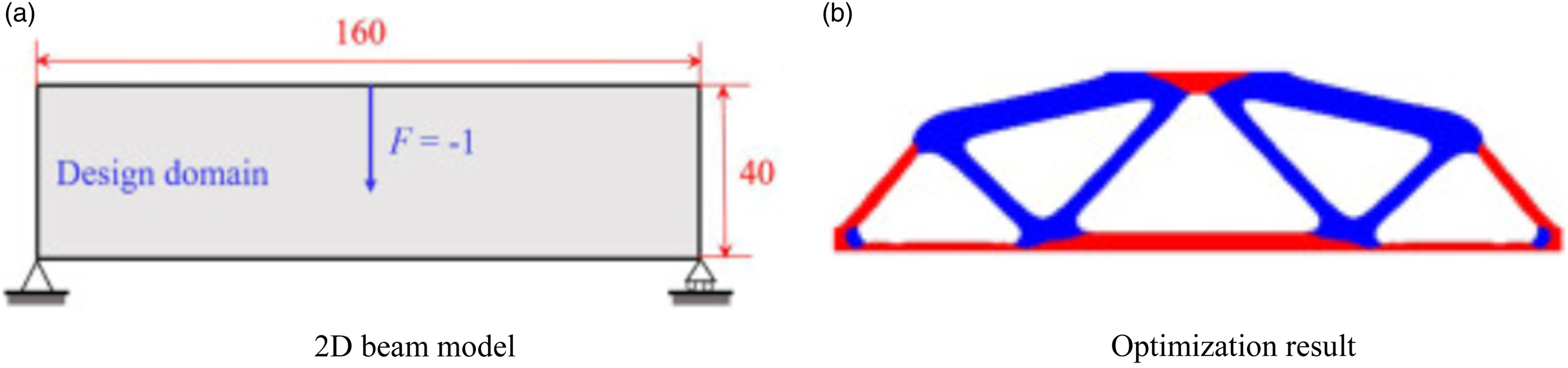
For material-independent methods, a peak function was proposed for the multi-material topology optimization with a single design variable (Yin and Ananthasuresh, 2001). Another method was to adopt the ordered SIMP interpolation method (OSIMP) to express the properties of candidate materials with a single design variable (Zuo and Saitou, 2017), as shown in Figure 6. A novel ordered SIMP-like function was further proposed to realize the relaxed and scaled stress interpolation for stress-constrained multi-material topology optimization (Xu et al., 2021a). However, it still suffered from numerical instability due to discontinuous gradients. Therefore, it is required to establish more efficient algorithms for topology optimization to obtain clear topological boundaries and handle multi-material optimization problems. Ordered multi-material SIMP interpolation method (a) Interpolation curve of the OSIMP (b) Gradient curve of the OSIMP.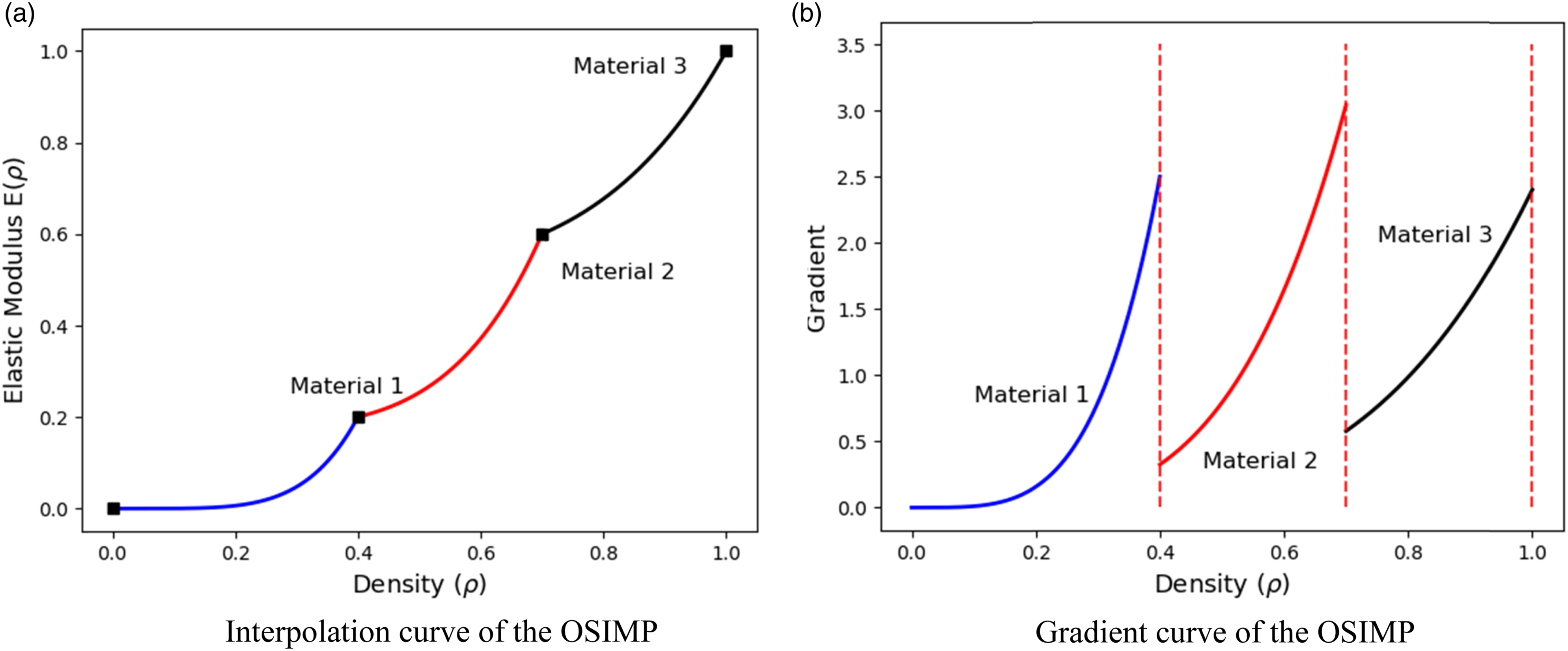
Taxonomy of typical studies for intelligent architectural design.
In the future study, a new topology optimization framework can be established by deeply integrating topology optimization with AI for large-scale engineering structures. Meanwhile, the intelligent design of art shape and structure should be integrated to finally form a new paradigm of intelligent design for CE, simultaneously taking architectural aesthetics and structural mechanics into account. Moreover, the physics-informed neural network (PINN) is proposed as a novel approximator to discover physical laws embedded in a specific data set that can be described by partial differential equations (Raissi et al., 2019). Recently, PINN has shown wide applications in various fields of computational mechanics and mathematical physics, which is also promising for intelligent computation and finite element analysis in architectural design.
Intelligent structural health diagnosis
During the long-term service period of civil structures and infrastructure, damage accumulation and resistance deterioration will inevitably occur due to coupled effects of material erosion and cyclic fatigue loads, especially for large-scale bridges. Following the paradigm of damage prognosis (Farrar and Lieven, 2007), structural damage recognition, condition assessment, and reliability evaluation were the most significant issues for health diagnosis.
Since the 1990s, SHM techniques have been widely adopted in large-scale infrastructure. Conventional non-destructive testing and vibration-based methods have been investigated for damage detection and condition assessment. The measured signals were directly compared with peak values or statistical indices with thresholds regulated by the design code. However, the following challenges remained to be addressed: these techniques required the dense deployment of sensors on bridges and faced the ill-posedness of the reverse problem; the modal parameters were insensitive to minor damage in a local position; the accuracy was influenced by temperature and noise.
With the successful development of AI, data-driven methods have been developed for SHM, damage detection and condition assessment based on ML, DL, and computer vision (CV) algorithms (Dong and Catbas, 2019; Gao et al., 2019; Zhang et al., 2019). In this section, several examples for intelligent structural health diagnosis are summarized.
Computer vision-based structural damage recognition
CV provides a modern way to make computers see and interpret the real world. Recently, extensive inexpensive acquisition sources (e.g., consumer-grade cameras, smartphones, camera-amounted unmanned aerial vehicles (UAVs), surveillance monitors, etc.) can provide sufficient, multi-view, multi-source image data for broader applications of CV techniques in the fields of SHM (Du et al., 2022; Zhao et al., 2022a; Feng and Feng, 2018), damage detection (Ye et al., 2019; Wang and Xia, 2022; Ding et al., 2022), and condition assessment (Bao et al., 2019; Hu et al., 2021; Wang et al., 2022a). CV enables the identification of minor local changes on structural surfaces more readily and sensitively than conventional modal-based methods. Vision-based damage detection has been elaborately investigated using image processing techniques. Generally, these methods mainly utilized close-up imaging of structures and only focused on a small area of local damage regions. Moreover, model performances heavily relied on the optimal selection of handcrafted features and critical parameters, thus lacking accuracy and robustness in facing large-scale images with complex backgrounds under real-world scenarios.
Deep CNN possesses many neurons combined with convolutional operations and has a powerful ability to extract multi-scale and multi-type features from images with good generalization. One straightforward idea of using CV for damage recognition is building a CNN to classify damage or non-damage patches from the original images. For tiny fatigue cracks in the real-world steel box girder, complex background and disturbance handwritings bring significant challenges compared with the common crack recognition. A fusion CNN was established for the tiny crack identification in steel box girders of an actual cable-stayed bridge (Xu et al., 2019a), as shown in Figure 7. Hierarchical features in multiple levels were extracted and concatenated before the final softmax classification of crack, handwriting, and background, which was the most significant difference from conventional chain-like CNNs. This issue has attracted increasing interest from global researchers in the SHM community, and the corresponding datasets and codes have been released in the first International Project Competition for Structural Health Monitoring (Bao et al., 2021). Investigations of crack recognition were also performed on thermal cracks (Andrushia and Lubloy, 2021) and using attention mechanisms in CNN (Cui et al., 2021) and synthetic data augmentation (Zhai et al., 2022). Established fusion CNN for semantic segmentation of tiny steel cracks and representative recognition results in real-world cable-stayed bridges (Xu et al., 2019a).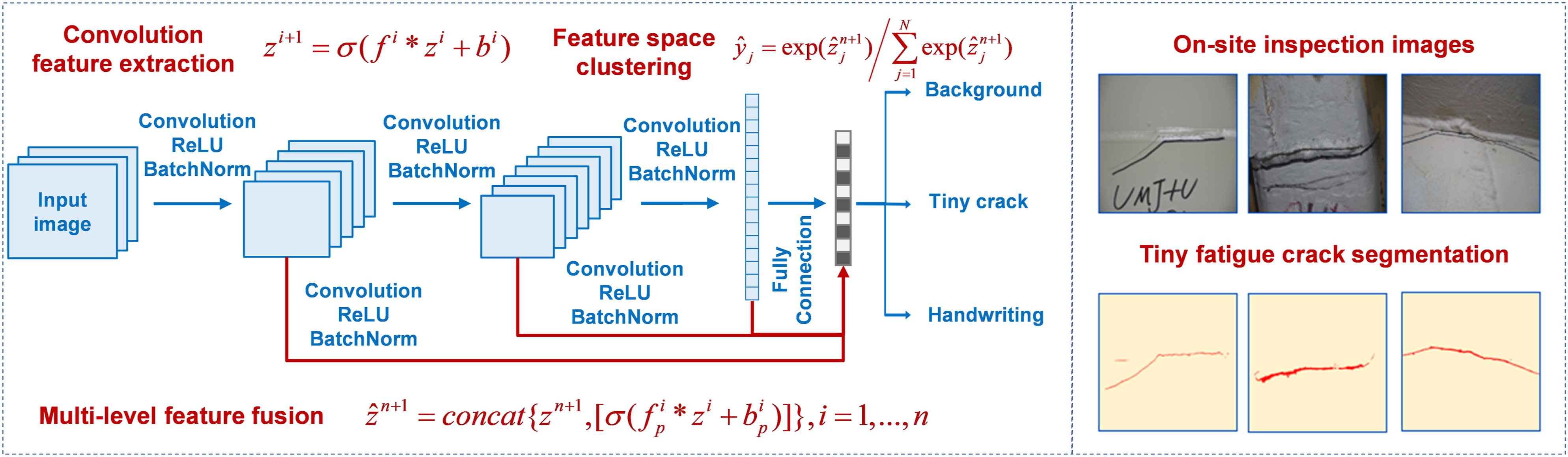
DL-based damage recognition was always performed by directly migrating the well-trained model to newly-collected on-site images, thus requiring a massive data set for training and a large volume of model parameters to ensure the recognition accuracy and robustness under various scenarios. To address the above issue, a novel Self-Attention-Self-Adaption (SASA) neuron computing model was proposed to enhance the capability of feature extraction and non-linear expression power for neural networks (Zhao et al., 2022b). Figure 8 shows the schematic of the SASA neuron computing model. Self-Attention-Self-Adaption neuron computing model embedded in the enhanced U-net for tiny crack segmentation (Zhao et al., 2022b).
Standard supervised learning techniques require complete damage types and sufficient training examples to establish a robust damage recognition model, which brings up a time-labor-consuming image collection process. To fix this issue, a nested attribute-based few-shot meta-learning paradigm was proposed for structural damage identification (Xu et al., 2021b), as shown in Figure 9. First, an external few-shot meta-learning module was established based on classification tasks (meta-batches) to produce robust classifiers for new damage types. Support and query subsets, including partial damage types and a few examples, were randomly sampled from the original image data set. Second, an embedded internal attribute-based transfer learning model was trained by minimizing the l2-norm and angular losses of attribute representation vectors in an end-to-end manner, where damage attributes acted as the common inter-class knowledge and were transferred from the source damage space of support set to the target damage space of query set. Nested damage recognition framework by few-shot meta-learning and attribute transfer (Xu et al., 2021a).
Furthermore, the intenal network could be designed as a general image segmentation model for pixel-wise recognition of various structural damage. Therefore, a modified DeepLabv3+ model was established as the interior model. Figure 10(a) shows the schematic of the modified DeepLabv3+ model for semantic segmentation of multitype structural damage. The backbone network of the original ResNet101 was replaced with the lightweight MobileNetV2. Depthwise separable and dilated convolutions were used instead of standard convolution to reduce parameter volume. A refined atrous spatial pyramid pooling module was designed following the backbone network to expand the receptive fields of multilevel feature maps using dilated convolutions with various dilation rates. In addition, a piecewise loss function based on Focal and Dice losses was designed for different training stages. Figure 10(b) shows several representative results for semantic segmentation of concrete crack, concrete spalling, rebar exposure, and cable corrosion. The results indicated that the established model performed well and was stable while facing various structural damage. It could be inferred that the morphological feature and shape contexture for various categories of structural damage were automatically captured. Modified DeepLabv3+ for semantic segmentation of multitype structural damage (a) Network structure (b) Prediction results.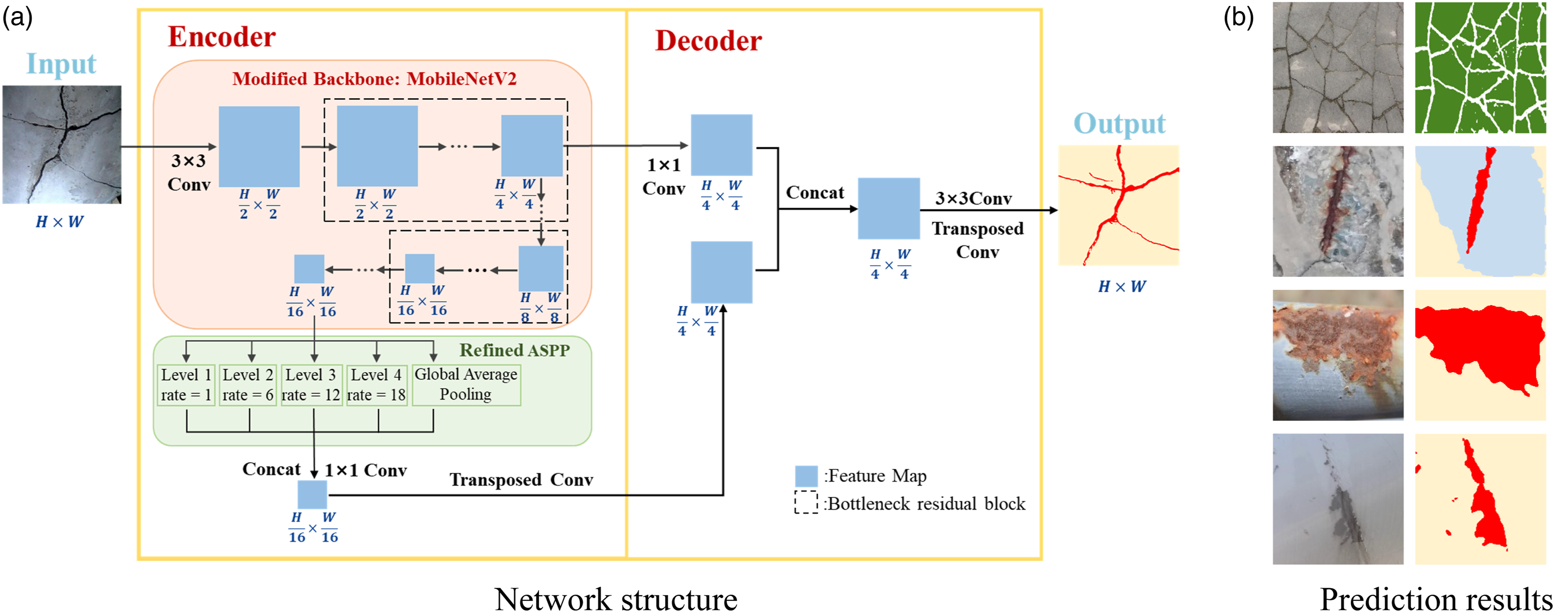
Correlation-pattern-based structural condition assessment
The structural response is definitely coupling-influenced by the structural model and external loads, whereas it is difficult or even impossible to precisely obtain them as prior knowledge. Therefore, it is still difficult to directly perform condition assessment from variations of structural responses because of the unknown initial residual stress, material and manufactural defaults, and coupling effects of structure damage and external loads. Considering that the correlation between structural responses subjected to identical external loads is only a function of structural parameters and independent from the external loads, the correlation can be employed as an indicator of structural condition. Inspired by the above perspective, DL networks were constructed to model intra- and inter-class temporal and probabilistic correlations of different quasi-static responses for condition assessment of cable-stayed bridges. In this section, correlation modeling between different bridge responses is investigated in a data-driven manner, including the time-space domain and the probability distribution domain.
The time-series relationship between different response groups for long-span bridges was modeled by establishing global and partial bi-directional long short-term memory (BiLSTM) networks (Tian et al., 2021), as shown in Figure 11. The input and output were time-history of gird vertical displacement (GVD) and cable tension (CT). A total of 31 GVD and 28 CT sensors on the entire bridge were used to build the global model, while the partial model utilized only one single CT as output and a few GVDs as inputs selected by the Sobol’s sensitivity index to customize an individual model for a specific cable. Representative prediction time histories of CT in 10 min for different cables show that the predicted CTs matched the ground truths quite well. Statistical results show that the average root mean square error (RMSE) and relative RMSE between predicted and ground-truth CTs are 1.83kN (3.19%) and 1.86kN (3.24%) for the global and partial models, respectively. BiLSTM-based time-series relationship model between different responses and representative prediction results of CT from GVD (Tian et al., 2021).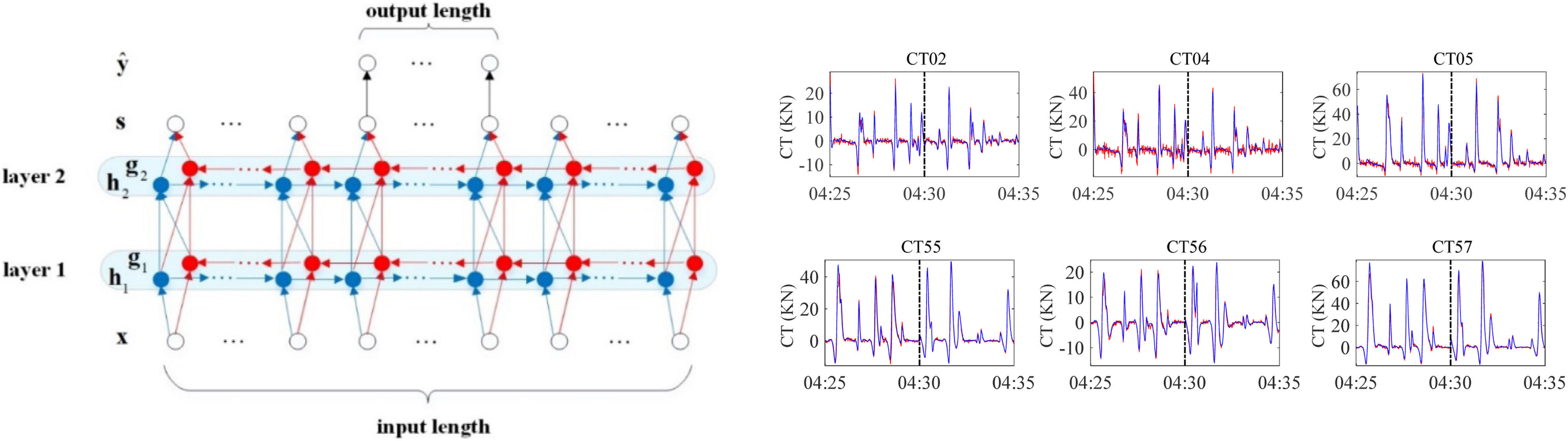
Except for the temporal correlation modeling, probability distribution variation informed condition assessment has also been investigated to discover the probabilistic correlation pattern embedded in monitoring data of different structural responses. A DL network comprising two variational autoencoders (VAEs, E1-G1 and E2-G2) and two GANs (G1-D1 and G2-D2) was established to model the probabilistic correlations of quasi-static responses of bridges (Xu et al., 2022), as shown in Figure 12. VAEs were designed to model intra-class correlations among either GVDs or CTs, and GANs were designed to model inter-class correlations between GVDs and CTs. The input and output were marginal probability density functions (PDFs) of the quasi-static responses obtained in the same time window under identical vehicle loads and structural parameters. The shared latent space assumption was considered to establish correlations between GVD and CT. Weight sharing (shown as red blocks) was further implemented to ensure that the shared latent space could connect two VAEs. In addition, if the model functions well, PDFs of GVD and CT were supposed to be translated in a cycled manner, which would obey a cycle-consistency constraint (shown as blue arrows). Schematic of intra-class and inter-class probabilistic correlation modeling between two response groups (Xu et al., 2022).
The Wasserstein distance (also named as Earth Mover Distance, EMD) between the predicted and ground-truth PDFs of tension in the cables was used as an indicator of the structural condition. Figure 13 shows that the predicted PDFs matched the ground-truth ones well and that specific modes of bridge condition change induced by SHM system upgrade, cable damage, sensor malfunction, and traffic jam could be successfully identified. The results showed that the Wasserstein distance was very sensitive to damage and presented noticeable variations when the damage of the stay cable occurred. Representative results of probabilistic correlation informed bridge condition assessment (recognized patterns of bridge condition in (c) from top left to down right: system upgrade, cable damage, sensor malfunction, and traffic jam) (Xu et al., 2022).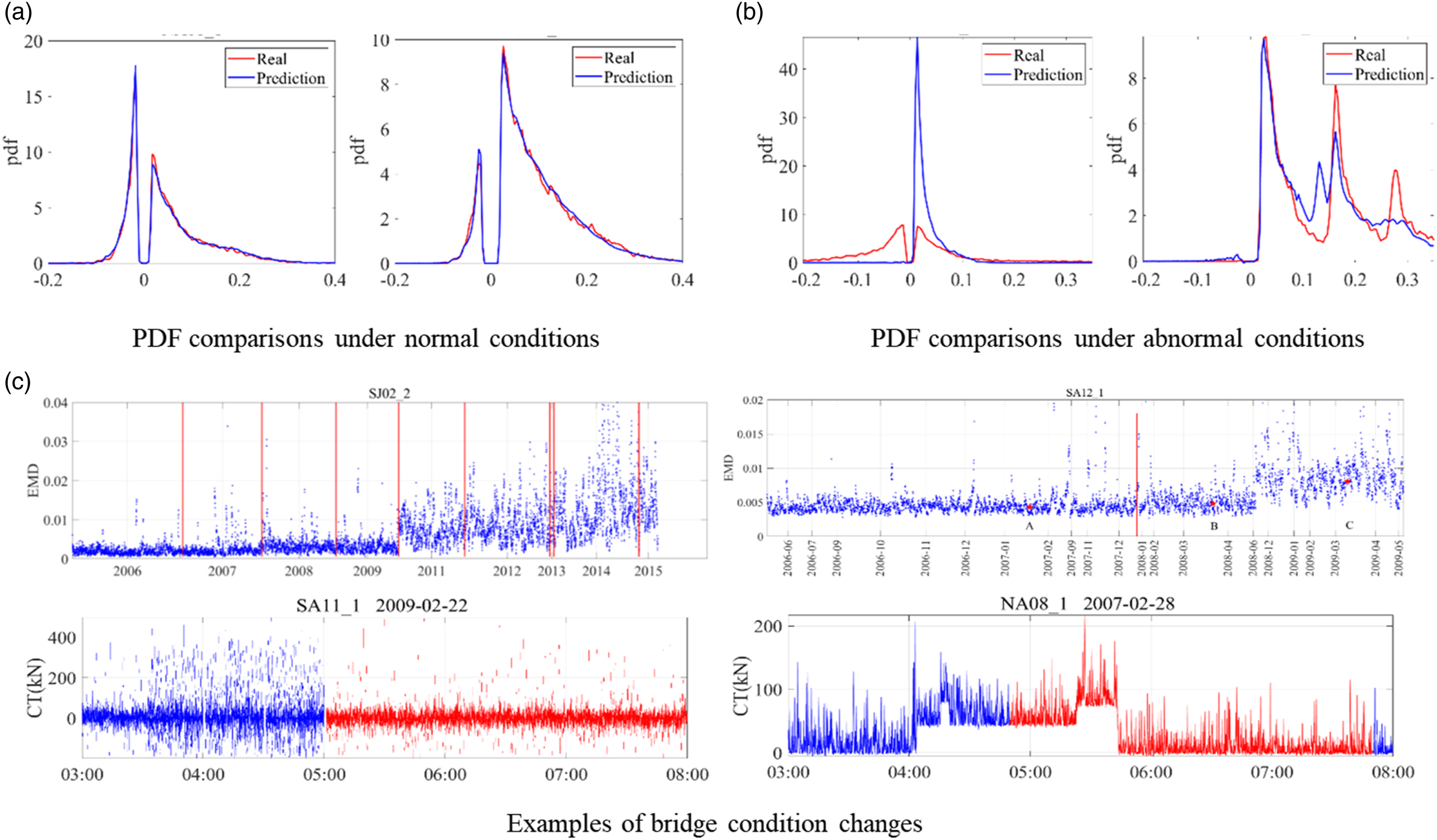
Two-fold advantages are analyzed using the probabilistic correlation for structural condition assessment superior to temporal correlation. The requirement of data quality for PDF correlation analysis is less strict than the point-to-point time-series correlation analysis, reducing time-synchronization for different sensors. On the other hand, the computation cost of PDF analysis is much lower than the time-series analysis because a large volume of time-history data can be statistically integrated into a unified distribution interval.
Intelligent reliability analysis based on active learning kriging and subset simulation
After the distributed damages and defects are classified, localized, and evaluated, reliability analysis can be performed to calculate the failure probability of structural components and systems by considering input parameters as random variables. Generally, the first and second-order reliability methods (Ang and Cornell, 1974; Tvedt, 1990) are two classical approximation means. The Monte Carlo Simulation (MCS) provides an alternative way for failure probability estimation based on random samples. To improve the efficiency of MCS, a series of variance reduction methods based on importance sampling (Melchers, 1989), subset simulation (SS) (Au and Beck, 2001), and surrogate models (Kaymaz, 2005; Echard et al., 2011) have been proposed. However, conventional methods for structural reliability evaluation were inefficient for assessing an extremely low failure probability because many samples were required to ensure the desired accuracy. Variance reduction methods faced the limitation of unacceptable computational costs for large-scale real-world infrastructures because the limited state functions were typically highly nonlinear and implicit. Additionally, the convergence criterion of the surrogate models was typically defined by setting a threshold value for the learning function, which was highly stringent for reliability estimation.
To address the above issues, a novel two-stage convergence criterion that merged into the exterior SS framework and the interior Kriging model was proposed to improve the efficiency of reliability analysis (Chen et al., 2021), as shown in Figure 14(a). First, the exterior SS framework was established to transform the extremely low failure probabilities into a series of higher conditional failure probabilities. Second, training samples were actively selected to enrich the design of experiments inside each subset. Finally, the interior Kriging model was updated until the two-stage convergence criterion was satisfied. The proposed method possessed the following advantages: (1) error estimation by the interior Kriging model, (2) low failure probability assessment by the exterior SS framework, and (3) hierarchical and global error control using the two-stage convergence criterion. The proposed method was validated by a real-world model of a cracked orthotropic steel deck with 20 variables for reliability assessment with an extremely low failure probability, as shown in Figure 14(b). Schematics and actual application of intelligent reliability analysis based on active learning kriging and subset simulation (Chen et al., 2021) (a) Efficient reliability evaluation algorithm using two-stage convergence criterion (b) Exact responses of newly selected training samples in different subsets for a real-world cracked orthotropic steel deck.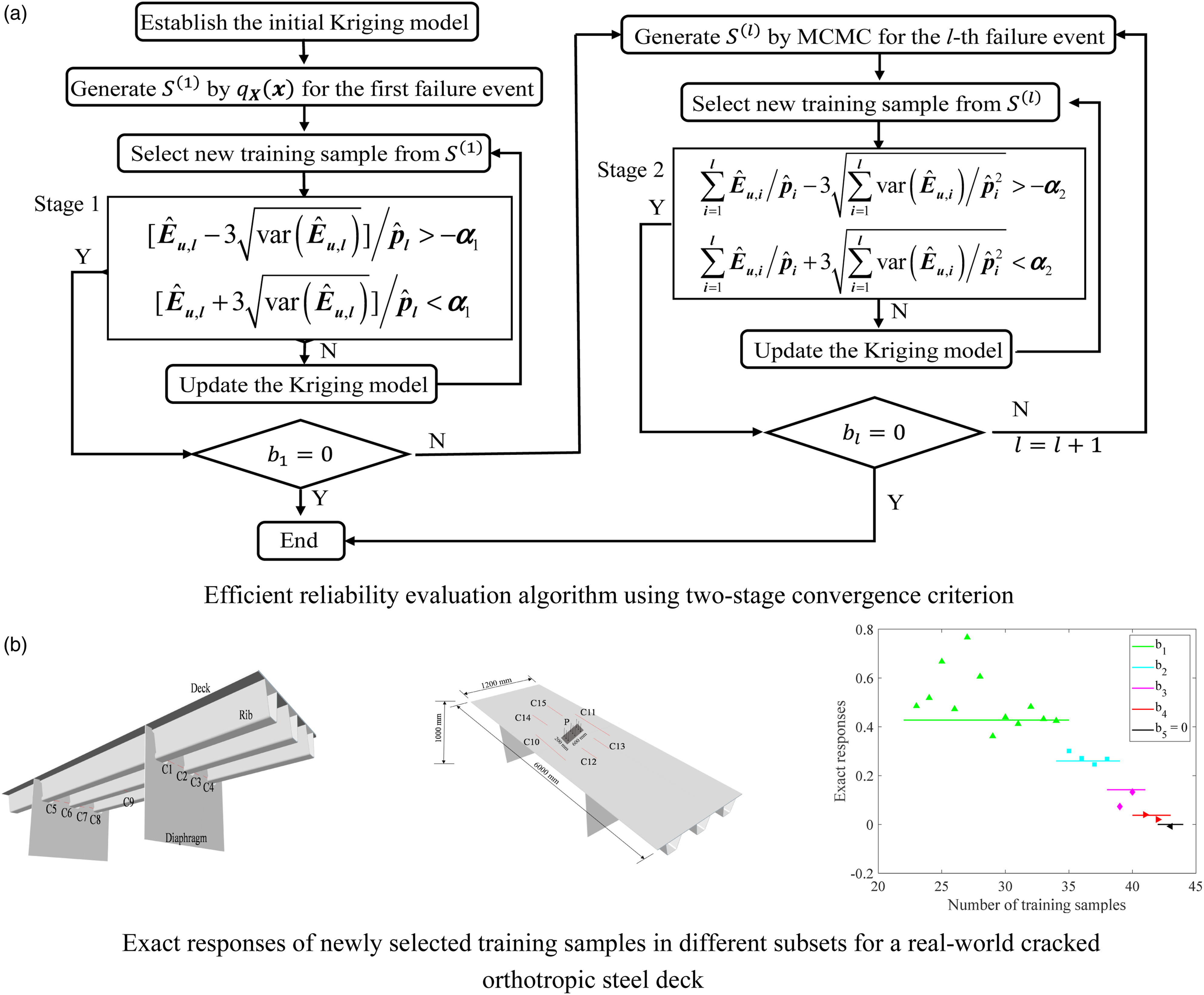
Taxonomy of typical studies for intelligent structural diagnosis.

Intelligent disaster prevention and reduction
Vision-based multi-scale evaluation of seismic disaster
Earthquakes may significantly impact the safety of city buildings, and most of the casualties and economic losses are closely related to the seismic disaster. Therefore, rapid and precise damage localization and condition assessment of post-earthquake buildings in urban areas are critical for emergency responses and rescue decisions after an earthquake. Manual visual inspections are widely utilized as a typical way for seismic disaster evaluation. Nevertheless, it is time-consuming and laborious, the results heavily depend on the prior experience and subjective judgment of inspectors, and on-site safety cannot be guaranteed.
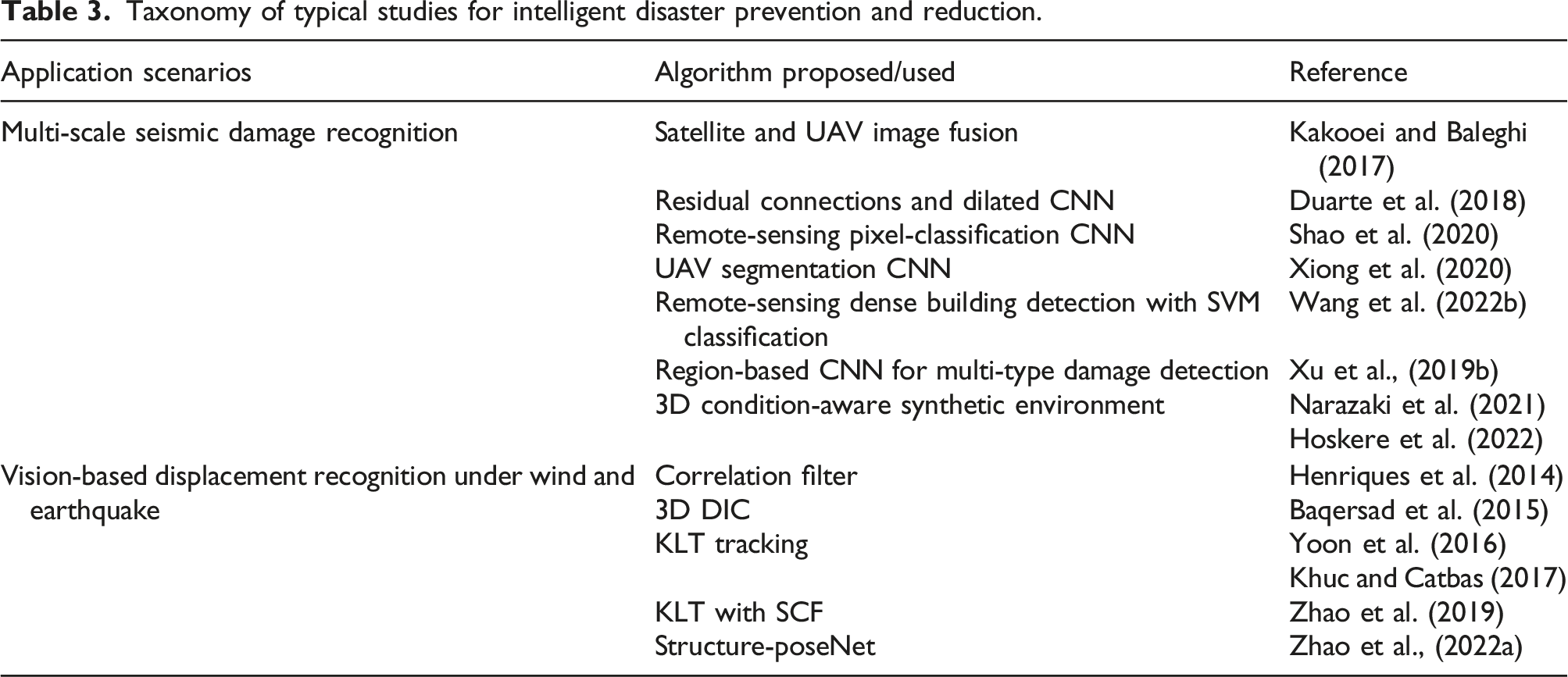
Recently, the rapid development of AI is profoundly promoting the evolution of earthquake engineering, integrating with remote sensing, UAVs, and robot techniques. Shao et al. proposed a novel end-to-end remote-sensing pixel-classification deep CNN for classifying non-damaged buildings, damaged buildings, and backgrounds (Shao et al., 2020). Xiong et al. utilized geographic information system data and projection transformations to obtain segmentation images of individual buildings from tilting photography taken by UAVs, and built a CNN to assess whether buildings had collapsed (Xiong et al., 2020). Kakooei and Baleghi reported an automatic fusion framework for building damage assessment by combining satellite and UAV images (Kakooei and Baleghi, 2017). Duarte et al. designed a CNN framework using residual connections and dilated convolutions to combine satellite and airborne images and improve the classification accuracy of damaged buildings (Duarte et al., 2018). Spencer et al. proposed a framework to generate vision-based condition-aware models using UAV images and integrated geometry information of structural components, structural defects, and damage states into a three-dimensional model (Spencer et al., 2019; Hoskere et al., 2022; Narazaki et al., 2021).
Images acquired by different platforms have unique advantages and characteristics. The satellite remote sensing images could quickly obtain the large-scale general location of building groups, but the only visible information of building roofs affects the evaluation accuracy. UAV images could obtain much more precise information about building facades, but the inspection range is limited due to the power endurance. A multi-scale damage recognition, localization, and assessment framework was established to address the above issues of post-earthquake building evaluation. Large-scale satellite images, median-scale UAV images, and small-scale images from digital cameras were utilized.
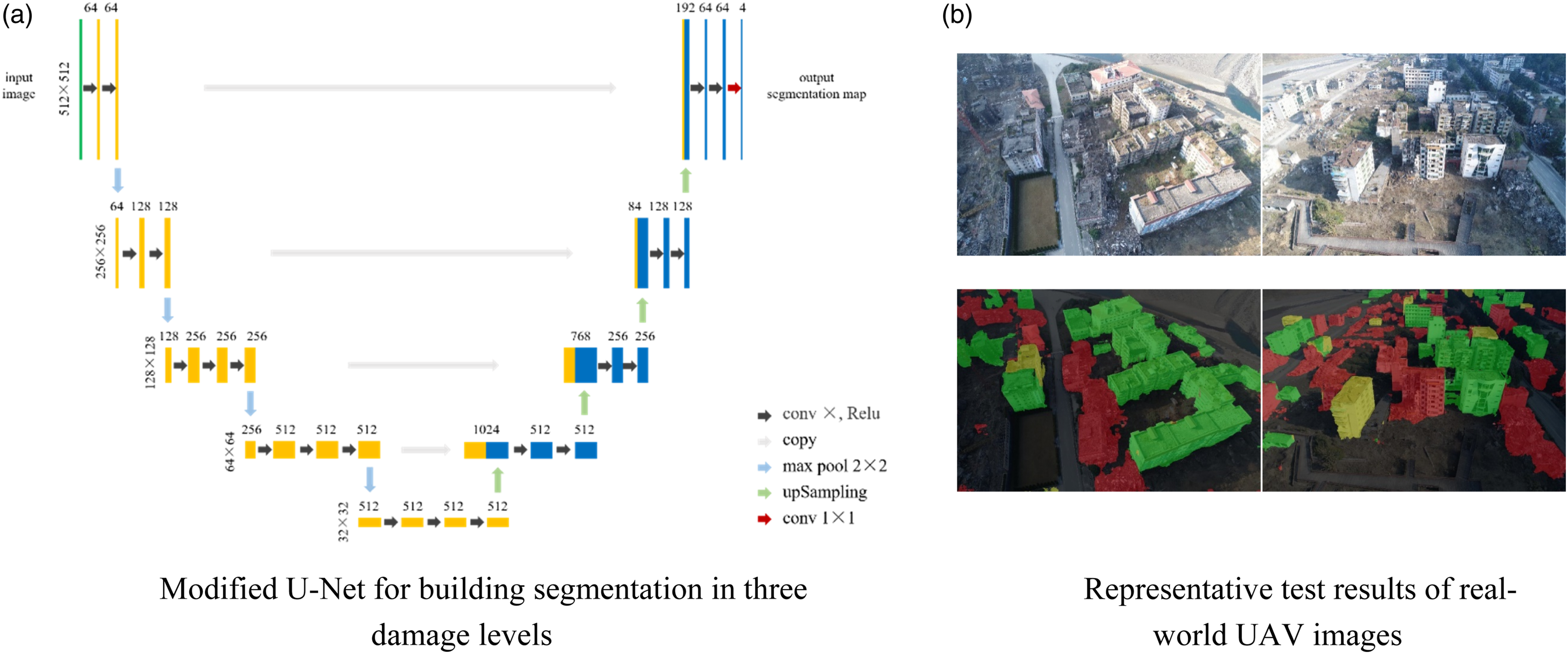
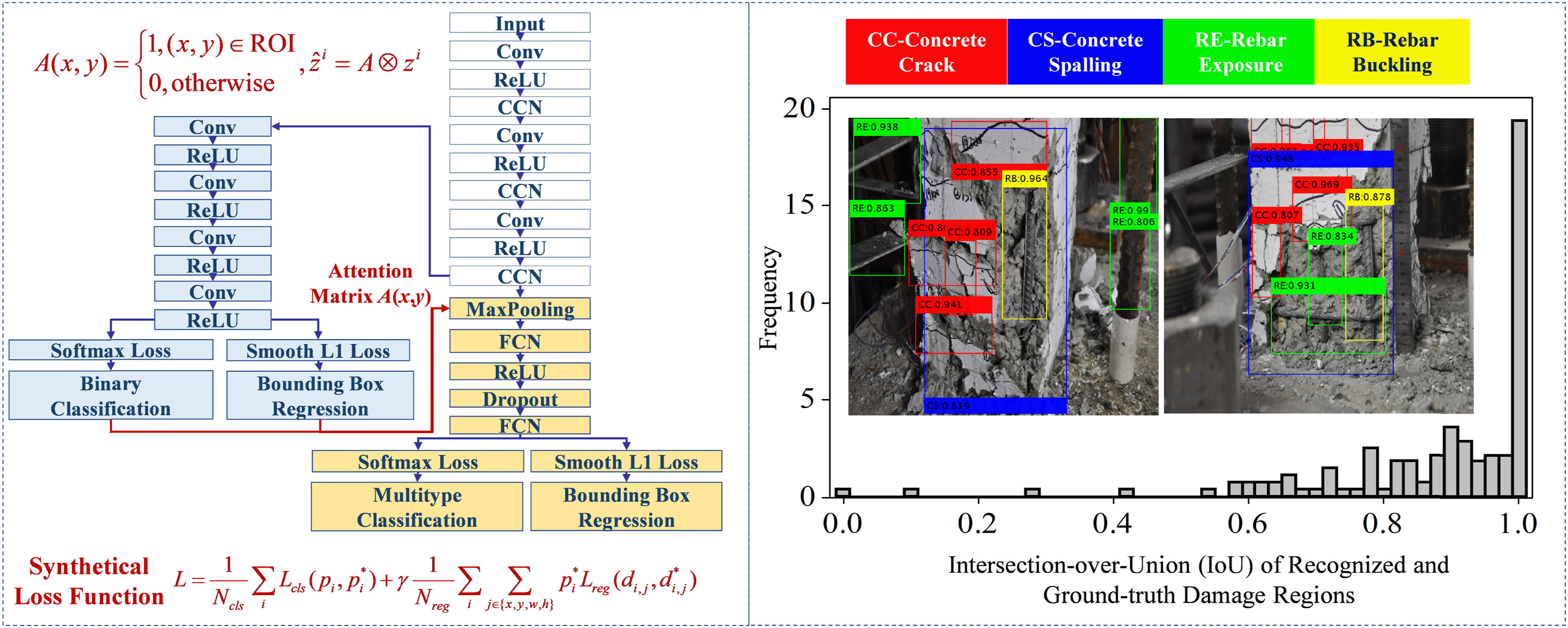
Firstly, rapid building localization and binary classification of collapse or non-collapse for small dense buildings in broad areas were achieved by modified YOLOv4 and support vector machine (Wang et al., 2022a), as shown in Figure 15. Secondly, a modified U-Net for the semantic segmentation of post-earthquake buildings in three levels (destroyed, major damage, and minor damage) was built using facade-plus-roof images from UAVs, as shown in Figure 16. Then, a geometry-informed DL method was further proposed for structural component segmentation of post-earthquake buildings. A modified U-Net model was established with a new synthetical loss function containing a geometric consistency (GC) term and a classical cross-entropy term. Given the edge closure of the connected domain for homogeneous structural components, the GC term comprised a split line loss and area loss in accord with the circumference and area constraints. The generalization ability of the proposed method was eventually verified by conducting robustness tests under complex real-world scenarios with various disturbances, including abnormal exposure and rain lines in various intensities. Test results revealed that the proposed method gained a high test accuracy with a mIoU of 97.97%. Finally, a region-based multi-type seismic damage recognition method was proposed to classify and localize concrete crack, concrete spalling, rebar exposure, and rebar buckling for reinforced concrete structures using images from hand-held cameras (Xu et al., 2019b), as shown in Figure 17. The comprehensive condition assessment of post-earthquake buildings could be implemented with the fusion of multi-scale evaluation results. A combined vision-based framework of small dense building localization and collapse classification by remote sensing images (Wang et al., 2022a). Modified U-Net for semantic segmentation of post-earthquake buildings using UAV images (a) Modified U-Net for building segmentation in three damage levels (b) Representative test results of real-world UAV images. Faster R–CNN–based multi-type seismic damage recognition (Xu et al., 2019b).
Structural dense displacement recognition under wind and earthquake
The dynamic response is a significant clue for large-scale structure and infrastructure for condition assessment during and after a typhoon or earthquake. With the development of AI, CV-based and DL-based methods for dynamic response monitoring have been proposed, including the target-based method (needing feature target pre-installed on the structural surface) and target-free method.
The target-based method usually installs targets with recognizable features on structures with advantages of high robustness and precision. The target-free method employs the visual feature of the structure itself and is less labor-time-consuming, which indicates that it has a much higher requirement for the robustness of the recognition algorithm. The Kanade-Lucas-Tomas (KLTs) tracking algorithm was used to track the feature points of a structure model in the laboratory (Yoon et al., 2016). Khuc et al. further employed the KLT method in a stadium where the lighting conditions were more changeable (Khuc and Catbas, 2017). To improve the feature recognition ability, the correlation filter was applied for displacement detection, recognizing a small area as a whole instead of a certain point in conventional feature point tracking algorithms (Henriques et al., 2014). Zhao et al. combined KLT with a support correlation filter (SCF) to recognize the dynamic displacement response of an eight-m high reinforced concrete bridge tower model in a shaking table experiment (Zhao et al., 2019). In SCF, a filter was trained to find the most suitable tracking object position in every frame (except the first frame) of the video. During the training and prediction process, the circulant matrix improved the computation efficiency. Distinct from most of the displacement measurement approaches based on a monocular camera, three-dimensional (3D) digital image correlation (DIC) utilizes a pair of stereo cameras to calculate the 3D coordinates of a structure (Baqersad et al., 2015). However, it requires high-quality images to ensure recognition accuracy, which is often unavailable in consumer-grade cameras and Internet videos.
To overcome the limitation of requiring at least two high-resolution cameras in conventional DIC method, a monocular-vision-based dynamic displacement recognition method was further proposed (Structure-PoseNet) to recover the three-dimensional displacement from a low-quality Internet video 80 years ago (Zhao et al., 2022a), as shown in Figure 18(a). Considering only a handful of frames in the monocular video were annotated, a random elastic deformation algorithm was proposed for data augmentation to enrich the diversity of structural morphology, as shown in Figure 18(b). Control nodes (red dots) were equidistantly set on mesh grids of the original image, and random offsets were assigned to these control nodes following a uniform distribution (blue arrows). Offsets of other pixels were calculated using two-dimensional cubic spline interpolation. The recognition resolution reached two percent of the structure length without a large number of physical targets installed on the structure, which were essential for traditional feature point matching methods. DL-based dense displacement monitoring approach using monocular video (a) Structure-PoseNet architecture comprising component segmentation and pose parameter estimation (b) Random elastic deformation for image augmentation of structural morphology.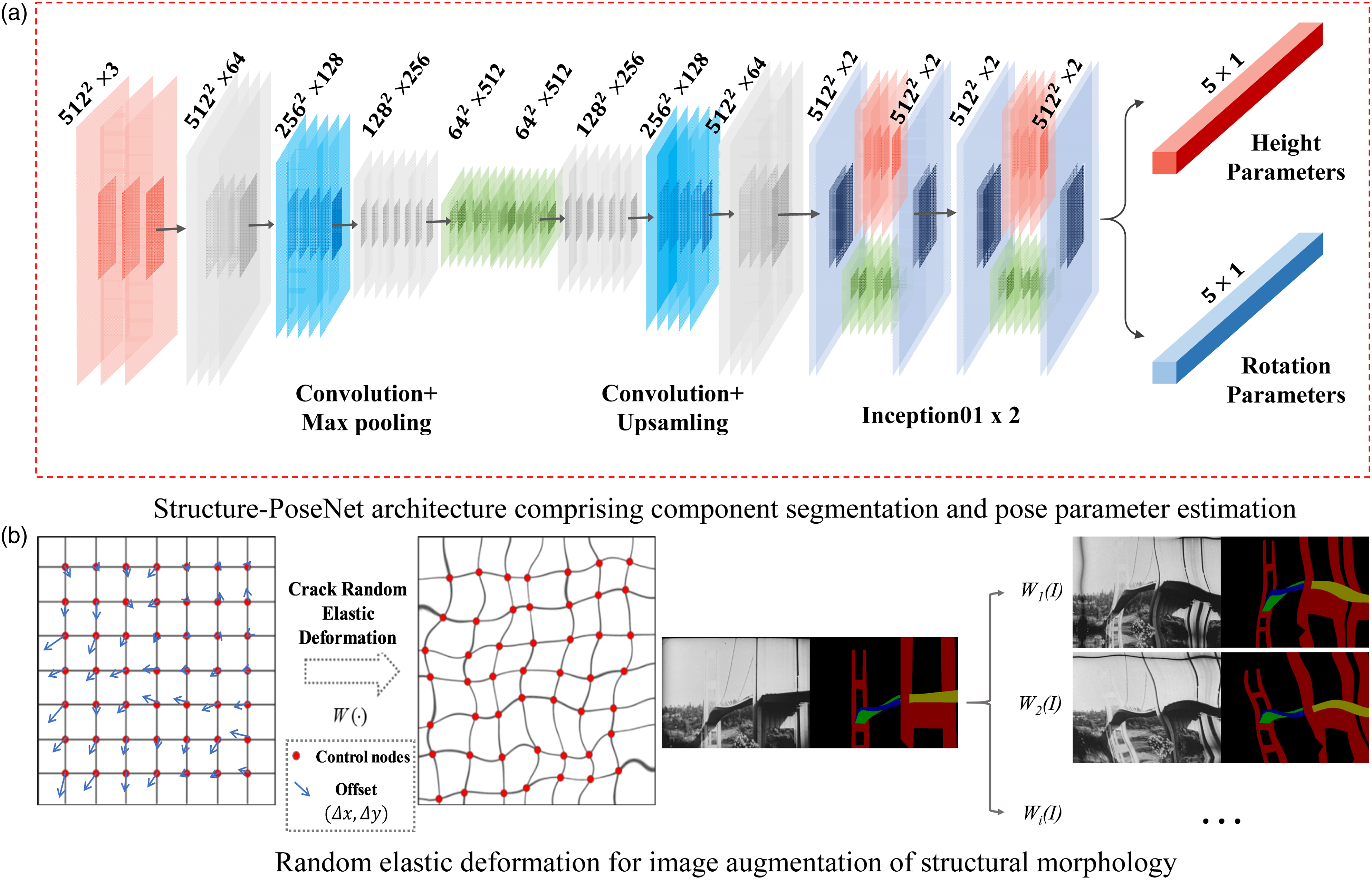
Taxonomy of typical studies for intelligent disaster prevention and reduction.
Future outlook
Although significant advanced progress has been made for AI in CE, fundamental scientific innovation and industrialized applications are still limited. Further breakthroughs are required to support natural intelligence during the whole-life process of planning, design, construction, maintenance, and disaster prevention. The following issues are listed as the potential prospects for AI in CE: (1) Architectural art and structural optimization should be organically integrated to form a new paradigm of intelligent design. A universal mathematical principle integrating art, culture, and mechanics should be proposed to establish the theoretical framework of intelligent design for architectural aesthetics and mechanics. (2) Novel principles, technologies, devices, systems, and equipment should be explored for the global perception of structures to enable the intelligent holographic identification and prediction of structural health under incomplete information. Moreover, a generalized intelligent agent of structural maintenance should be developed for various tasks under complex service scenarios. (3) A physical ML-driven framework for intelligent disaster prevention and reduction should be exploited based on multi-source data and physical models for complex urban-scale engineering systems. A generic theory of multi-disaster simulation, evaluation, and prediction should be established. (4) Finally, virtual scientists and engineers in CE will devote themselves to improving the efficiency and accuracy of solving complex control equations, ensuring the generalization ability of intelligent algorithms and mechanical models, and discovering unknown physical laws.
Conclusions
This paper presents a systematic review and recent progress on AI in CE from various aspects of intelligent architectural design, intelligent structural health diagnosis, and intelligent disaster prevention and reduction. A series of intelligent algorithms have been developed and applied in architectural art design, structural design and topology optimization, CV-based structural damage recognition, correlation-pattern-based structural condition assessment, ML-assisted reliability analysis, multi-scale evaluation of seismic disaster, and dense displacement recognition under wind and earthquake. Corresponding real-world applications of the abovementioned AI-based methods are also reported in this paper, including intelligent design of architectural art shape and structure, multi-type distributed structural damage classification and segmentation using limited data, condition assessment for long-span cable-stayed bridges, and performance evaluation under wind and earthquake disasters. The results demonstrate the necessity, effectiveness, and efficiency of developing AI-based methods to tackle unsolvable problems in classical CE.
Although considerable progress has been gained in intelligent science and technology in CE, in-depth investigations are required to promote intelligent CE theories with self-evolutionary capabilities in a physical ML paradigm. It is still a big gap from developing an intelligent agent based on the existing knowledge system to designing a generic intelligent agent with fundamental self-learning capacity, universal adaptability, and task-specific transferability. Finally, self-evolving virtual scientists and engineers are supposed to be created, discovering new mathematical methods and physical laws in classical CE.
Footnotes
Declaration of conflicting interests
The author(s) declared no potential conflicts of interest with respect to the research, authorship, and/or publication of this article.
Funding
The author(s) disclosed receipt of the following financial support for the research, authorship, and/or publication of this article: Financial support for this study was provided by the National Natural Science Foundation of China [Grant Nos. 52192661, 51921006, and 52008138], National Key R&D Program of China [Grant No. 2021YFF0501003], China Postdoctoral Science Foundation [Grant Nos. BX20190102 and 2019M661286], and Heilongjiang Province Postdoctoral Science Foundation [Grant Nos. LBH-TZ2016 and LBH-Z19064].
