



Abstract
Structural health monitoring (SHM) data have a large volume, increasing the cost of data storage and transmission and the difficulties of structural parameter identification. The compressed sensing (CS) theory provides a signal acquisition and analysis strategy. Signal reconstruction using limited measurements and CS has attracted significant interest. However, the dynamic responses obtained from civil engineering structures contain noise, resulting in sparse samples and reducing the signal reconstruction accuracy. Therefore, we propose an optimization algorithm for the measurement matrix integrating the Karhunen-Loeve transform (KLT) and approximate QR decomposition (KLT-QR) to improve the accuracy of dynamic response reconstruction of SHM data. The KLT reduces the correlation between the measurement matrix and the sparse basis. The approximate QR decomposition is used to improve the independence between the column vectors of the measurement matrix, optimizing the measurement matrix. The experimental results for a laboratory steel beam indicate that the proposed KLT-QR algorithm outperforms three other algorithms regarding the accuracy of dynamic response reconstruction (acceleration, displacement, and strain), especially at high compression ratios. The acceleration responses from the Ji’an Bridge are utilized to verify the advantages of the proposed algorithm. The results demonstrate that the KLT-QR algorithm has the highest accuracy of reconstructing the vibration signals and yields better Fourier spectra than the conventional Gaussian measurement matrix.
Keywords
Introduction
Bridges are exposed to harsh conditions, such as severe earthquakes, material aging, and heavy traffic loads, leading to structural damage or performance degradation. Structural health monitoring (SHM) is a cutting-edge technology that acquires real-time measurements to maintain the safety of bridges during their long service lives (Li & Ou, 2016). The Nyquist–Shannon sampling theorem is typically used for data acquisition. The signal must be sampled at least twice at the highest frequency to avoid information loss. Thus, data obtained from SHM systems have a large volume, making data transmission and storage challenging. The compressed sensing (CS) theory proposed by (Donoho, 2006; Candes and Tao, 2006a, 2006b) provides a strategy for signal acquisition and analysis of large-volume data. The CS theory holds that signals with sparse or compressible features in a certain domain can be projected to a low-dimensional space with a measurement matrix unrelated to the transform basis. The signals can be reconstructed using limited amounts of projection data and non-convex optimization. The advantage of the CS theory over the Nyquist–Shannon sampling theorem is that it reduces the amount of data to be stored and/or transmitted. Thus, the CS theory has been applied in many fields, including medical imaging (Gandeva et al., 2023), image reconstruction (Wang et al., 2022), astronomy (Bobin et al., 2008), wireless sensor networks (Xiao et al., 2019), and speech recognition (Goodarzi & Almasganj, 2016).
The dynamic response signals obtained by the SHM system of bridges are approximately sparse in the frequency, wavelet, or other transform domains, satisfying the conditions of the CS theory. Therefore, the application of the CS theory to SHM has attracted considerable attention (Jayawardhana et al., 2017; Ngeljaratan et al., 2021), including but not limited to modal analysis (Park et al., 2014), damage detection (Jayawardhana et al., 2017; Jeon et al., 2022), response estimation (Jana and Nagarajaiah, 2023), and missing data recovery (Tang et al., 2021; Li et al., 2021).
A major challenge to the application of CS is that the reconstructed signals may differ significantly from the original signals, especially at high compression ratios (CR). Various algorithms were investigated to reconstruct the signals with high accuracy. Unni et al. (2023) proposed an alternative iterative recovery algorithm based on plug-and-play instead of the traditional recovery methods based on regularized minimization to reconstruct the original signal from the compressed measurements. Wan et al. (2021) proposed a new dictionary method to compress signals by random sampling. An l1-norm sparse regularization was used to reconstruct wind speed signals. Huang et al. (2019) developed a modified two-task learning algorithm to improve Bayesian CS and enhance the accuracy of data loss recovery. Wan et al. (2022) proposed an improved complex multi-task Bayesian CS approach that proved efficient and reliable for data compression and reconstruction. Bao et al. (2020) developed a machine learning approach for SHM data reconstruction using CS (Xiao et al., 2019).
The sparsity of the vibration signals affects the reconstruction performance (Mascarenas et al., 2013). Kang et al. (2023) proposed an enhanced error reduction method for signal reconstruction to ensure that the ambient vibration response was sparse for a regular transform basis. Sousa and Wang (2018) investigated sparse representation algorithms for compressing bridge weigh-in-motion data and found that K-means singular value decomposition exhibited the best performance. Dong et al. (2023) applied deep convolutional generative adversarial networks for vibration data reconstruction. This method has the advantage of directly learning the end-to-end mapping between the compressed and original signals without requiring sparsity assumption or random sampling.
Another alternative to achieve accurate signal reconstruction is optimizing the measurement matrix and minimizing the correlation between the measurement matrix and the sparse basis. Measurement matrix optimization algorithms use three approaches: (1) improving the independence of the measurement matrix, (2) reducing the correlation between the measurement matrix and the sparse basis, or (3) constructing a new deterministic measurement matrix. Huang and Makur (2013) proposed an algorithm to reduce the average mutual coherence of the original CS measurement matrix and improve the sampling matrix. Rahim and Alijabbar (2017) used an incoherent unit norm tight frame to obtain low mutual coherence and proposed a method to construct different-dimensional measurement matrices. Zhao et al. (2021) proposed a posterior information-based image measurement matrix optimization algorithm to decrease the correlation between the measurement matrix and the sparse basis and improve the robustness of an image compression system. Yao et al. (2017) adopted QR decomposition to obtain the incoherence rotated chaotic measurement matrix that satisfied the restricted isometry property (RIP) criterion in sparse reconstruction. Yi et al. (2021) developed a measurement matrix optimization method based on alternating minimization to improve the reconstruction performance in CS. Chen et al. (2023) proposed a measurement matrix optimization algorithm that utilized prior information on the target image. Jin et al. (2023) proposed two joint optimization algorithms for a Gaussian random measurement matrix to reduce the coherence between the coherence matrix and the sparse basis. Wei et al. (2020) proposed an optimization algorithm that minimized the mutual coherence between the measurement and the sparsification matrices to improve the signal reconstruction performance. (Xu et al., 2021) proposed an equiangular tight frame (ETF)-based iterative minimization algorithm to reduce the mutual coherence between the dictionary and the measurement matrix.
However, most measurement matrix optimization algorithms only optimize the independence between the column vectors of the measurement matrix or the correlation between the measurement matrix and the sparse basis. Therefore, this paper integrates QR decomposition and the Karhunen-Loeve transform (KLT) to optimize the measurement matrix and increase the reconstruction accuracy. Our approach differs from other studies because we improve the independence between the column vectors of the measurement matrix and reduce the correlation between the measurement matrix and sparse basis simultaneously. Experimental investigations using the vibration responses of a steel beam in a laboratory and the acceleration responses from the Ji’an Bridge in Jiangxi Province, China, are conducted to verify the effectiveness and feasibility of the proposed measurement matrix optimization algorithm. The main contributions of this paper are as follows: • An algorithm integrating QR decomposition and KLT to optimize the measurement matrix is proposed. • The proposed method enables the accurate reconstruction of dynamic responses. • The response reconstruction performances of the proposed algorithm, the KLT algorithm, the approximate QR decomposition algorithm, and an algorithm with a Gaussian random matrix are compared.
Compressed sensing
A one-dimensional signal

In the CS theory, the measurement vector

The CS theory exploits the fact that (1) the signal

An L1-based regularization algorithm (Hale et al., 2008) or greedy iterative algorithms (Donoho et al., 2012) can be used to solve equation (3). The L1 regularization algorithm provides higher reconstruction accuracy, but it requires a large amount of measurement data and is computationally inefficient. The greedy iteration algorithm has low reconstruction complexity and fast computational speed for small and medium-dimensional reconstruction problems. Common greedy iteration algorithms include the matching pursuit algorithm (Mallat and Zhang, 1993), the orthogonal matching pursuit (OMP) algorithm (Tropp and Gilbert, 2007), the piecewise orthogonal matching pursuit algorithm (Donoho et al., 2012), and others. The OMP algorithm is simple and has a fast rate of convergence; therefore, it is selected here as the reconstruction optimization algorithm.
Optimization of the measurement matrix
The measurement matrix

Optimized measurement matrix based on the Karhunen-Loeve transform (KLT)
The signal vector




The transformed vector

The KLT performs a linear transformation of

The covariance matrix of


The covariance matrix
The KLT is a transformation of a one-dimensional vector signal. Thus, each row of the sensing matrix
Optimized measurement matrix based approximate QR decomposition
The independence between the column vectors of the measurement matrix is closely related to the minimum singular value of the matrix. The larger the minimum singular value, the more independent are the column vectors of the matrix. Therefore, increasing the independence of the column vectors of the measurement matrix is achieved by increasing the minimum singular value of the measurement matrix.
The approximate QR decomposition increases the minimum singular value of the matrix without changing its properties. Therefore, the measurement matrix is decomposed using approximate QR decomposition:

Since the elements on the main diagonal of the

Response reconstruction steps based on the optimization of the measurement matrix in compressed sensing
We propose a measurement matrix optimization algorithm that integrates the KLT and approximate QR decomposition (KLT-QR algorithm) because the former reduces the correlation between the measurement matrix and the sparse basis, and the latter ensures the independence of the column vectors of the measurement matrix. The optimized measurement matrix is utilized for compressed sampling and signal reconstruction. The KLT-QR algorithm has higher computational complexity than the non-optimal case, the KLT algorithm, and the QR algorithm but the same spatial complexity. The steps are as follows: Step 1: Determine the sparse basis Step 2: Perform KLT and approximate QR decomposition on the sensing matrix Step 2.1: Transpose the ith row of the sensing matrix Step 2.2: Calculate the eigenvector and eigenvalue of Step 2.3: Perform QR decomposition on the matrix V using equation (13). Retain the main diagonal elements of Step 2.4: Substitute Step 2.5: Update Step 2.6: Perform step 3 when Step 3: Obtain the new measurement matrix Step 4: Substitute the optimized measurement matrix Step 5: Substitute

It should be noted that the proposed approach is based on the assumption that the structure is linear and the dynamic responses of the structure are stationary.
Experimental investigations
The feasibility and effectiveness of the proposed measurement matrix optimization algorithm were verified using the vibration responses of a simply supported overhanging steel beam in the laboratory (Figure 1). The beam had a length of 4 m, with a cross-section size of 50 mm × 5.65 mm (width × thickness). The beam was constrained by a sliding support and a hinge support, and the supports were attached to concrete blocks sitting on the ground. Experimental setup of simply-supported overhanging beam.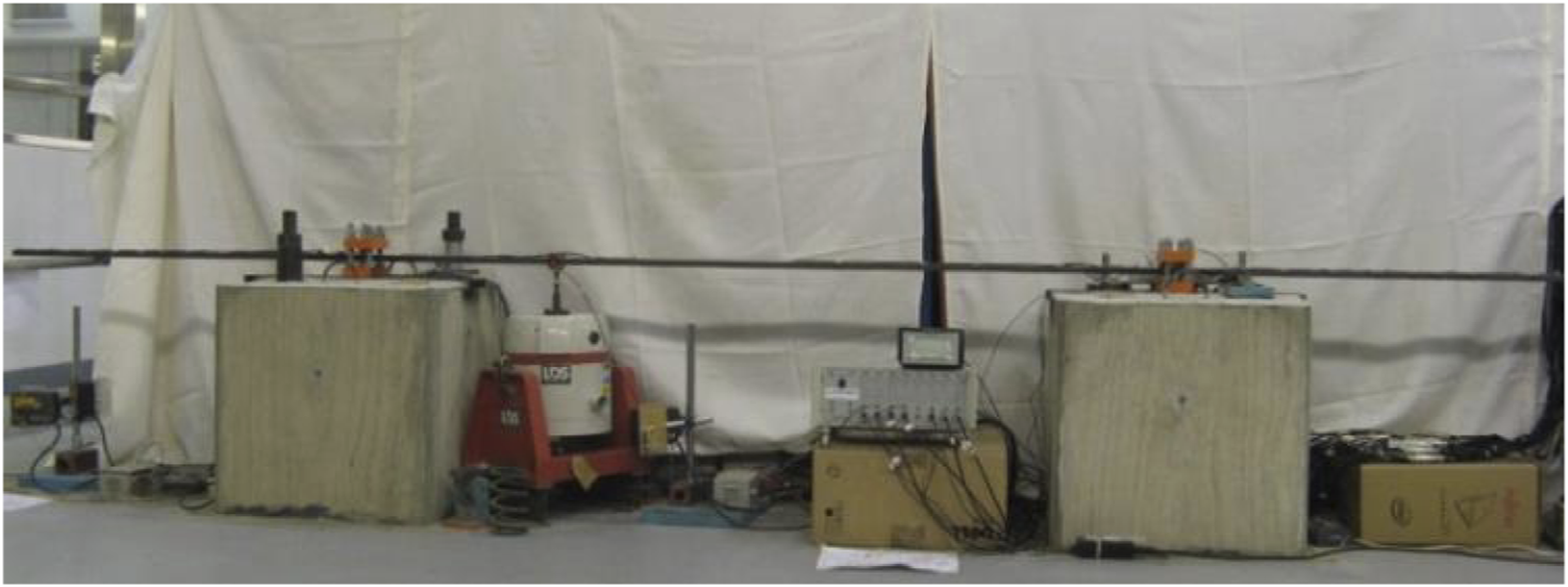
Three types of sensors (LK-503 laser displacement transducers, BX120-5AA resistance strain gauges, and KD1008 accelerometers) were used to collect the dynamic responses of the beam. The locations of the sensors on the beam are shown in Figure 2. A series of impulses generated by a SINOCERALC-03A force hammer was applied to the beam. The responses were recorded by a 32-channel data acquisition system (KYOWA EDX-100A) at a sampling rate of 500 Hz. More details on this experiment can be found in (Zhu et al., 2013) Sensor layout.
The ideal scenario is that the CS sensors compress the recorded data, and algorithms reconstruct the signal if required. However, these CS sensors are unavailable commercially. Thus, a simulation was conducted to obtain compressed data. Three types of responses were compressed using the optimized measurement matrix to verify the method’s performance. The process is described using the acceleration response as an example. The reconstruction algorithm was the OMP algorithm with a discrete cosine transform (DCT) basis, and the initial measurement matrix was a Gaussian random matrix.
Figure 3 shows the 2 s acceleration response of the beam obtained from the accelerometer. The signal’s CR is defined as Time history of the original acceleration response.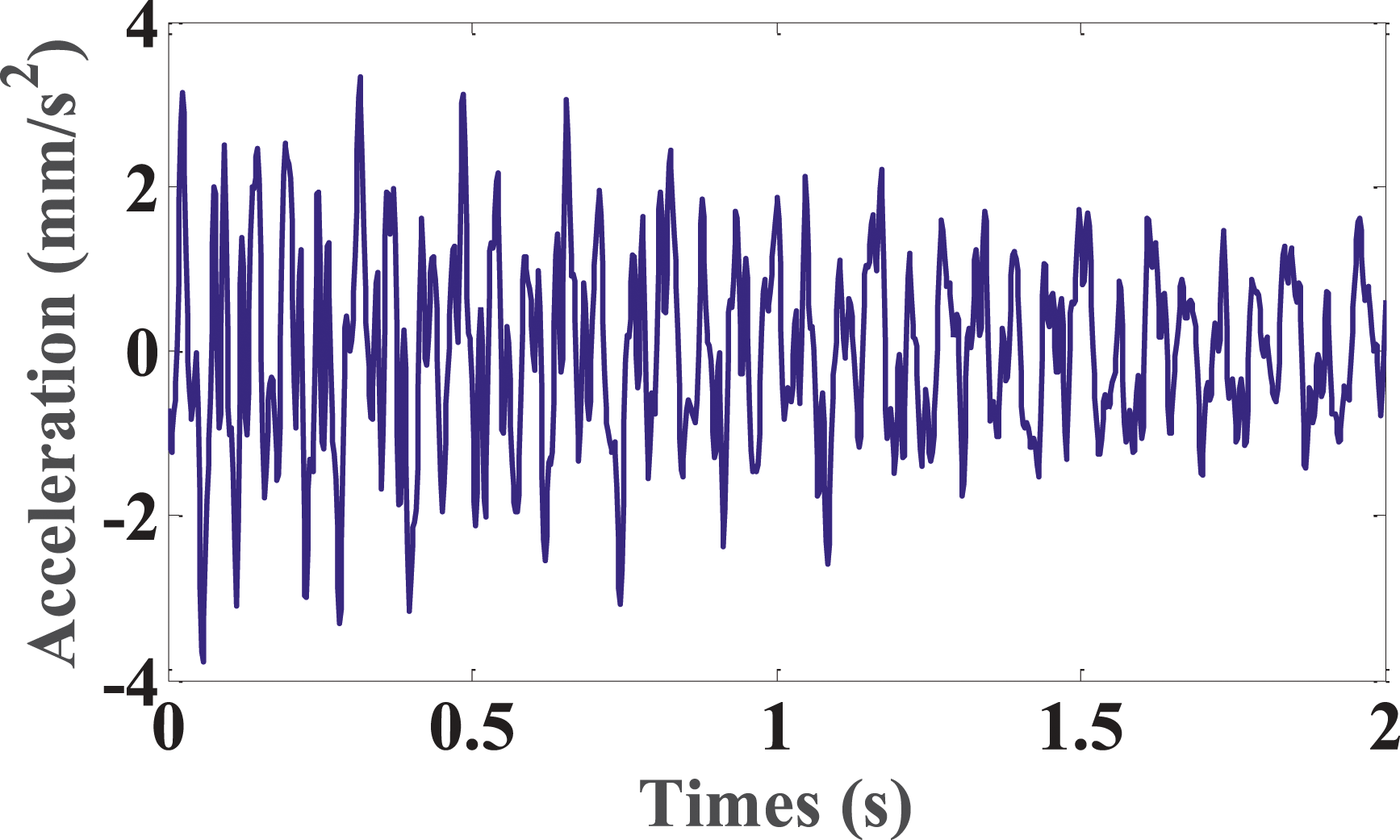


The acceleration response was compressed using five CRs (70%, 60%, 50%, 40%, and 30%) to obtain the compressed measurement vector Relative reconstruction errors for different algorithms for the acceleration response.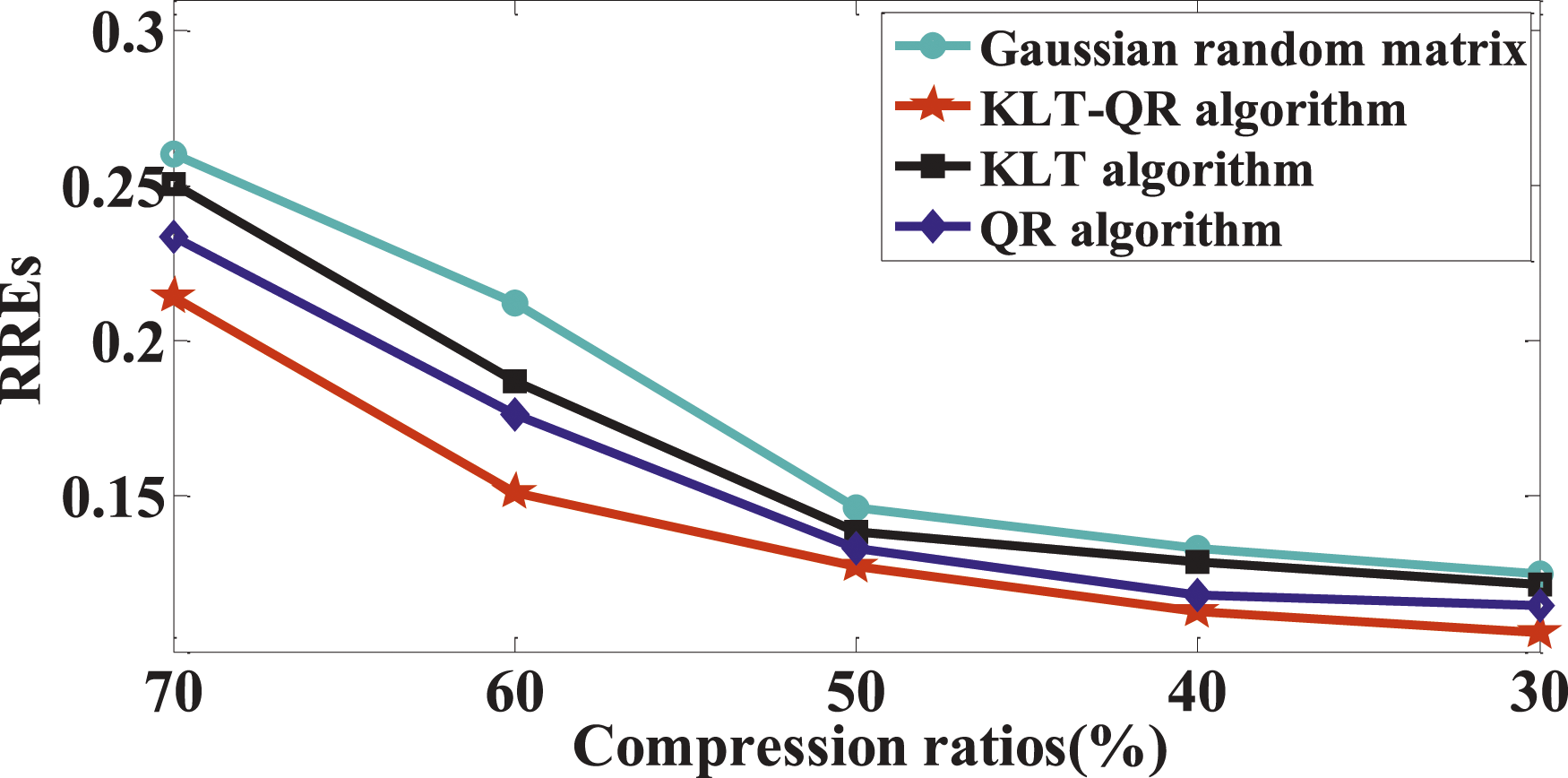
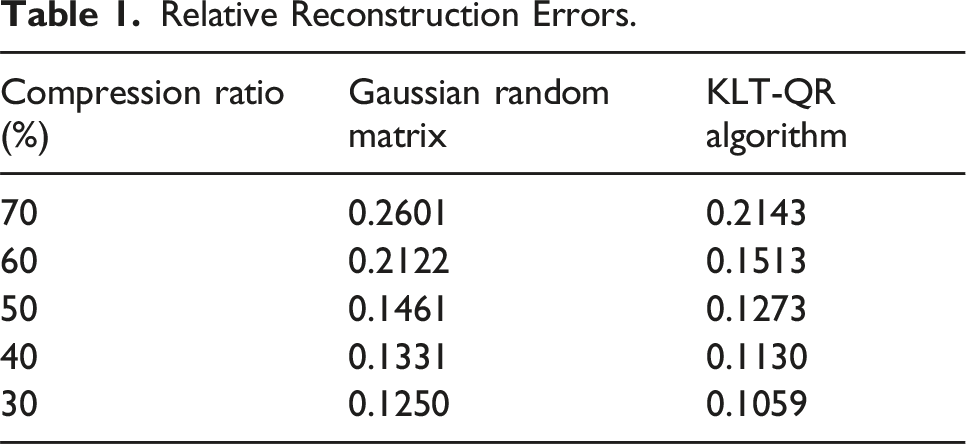
Figure 5 shows the original acceleration and reconstructed responses obtained from the KLT-QR algorithm and the Gaussian random measurement matrix. The reconstructed signals obtained from the KLT-QR algorithm match the original signal well. The proposed algorithm outperforms the Gaussian random matrix method when the CR is large. Table 1 lists the RREs for the five CRs. The reconstruction errors are lower for the proposed KLT-QR algorithm than for the conventional Gaussian random measurement matrix for all CRs. Comparison of reconstructed and original acceleration responses. Relative Reconstruction Errors.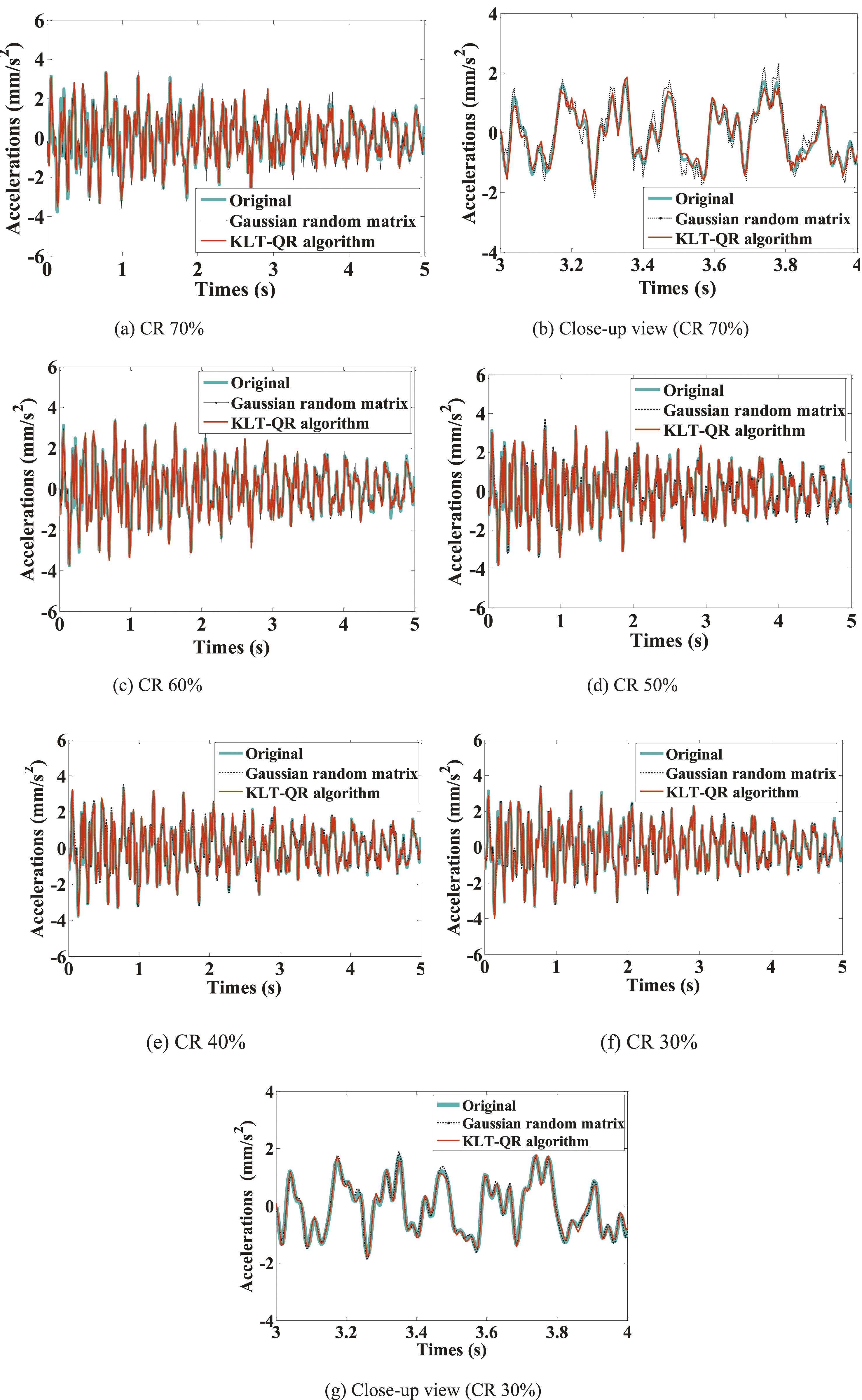
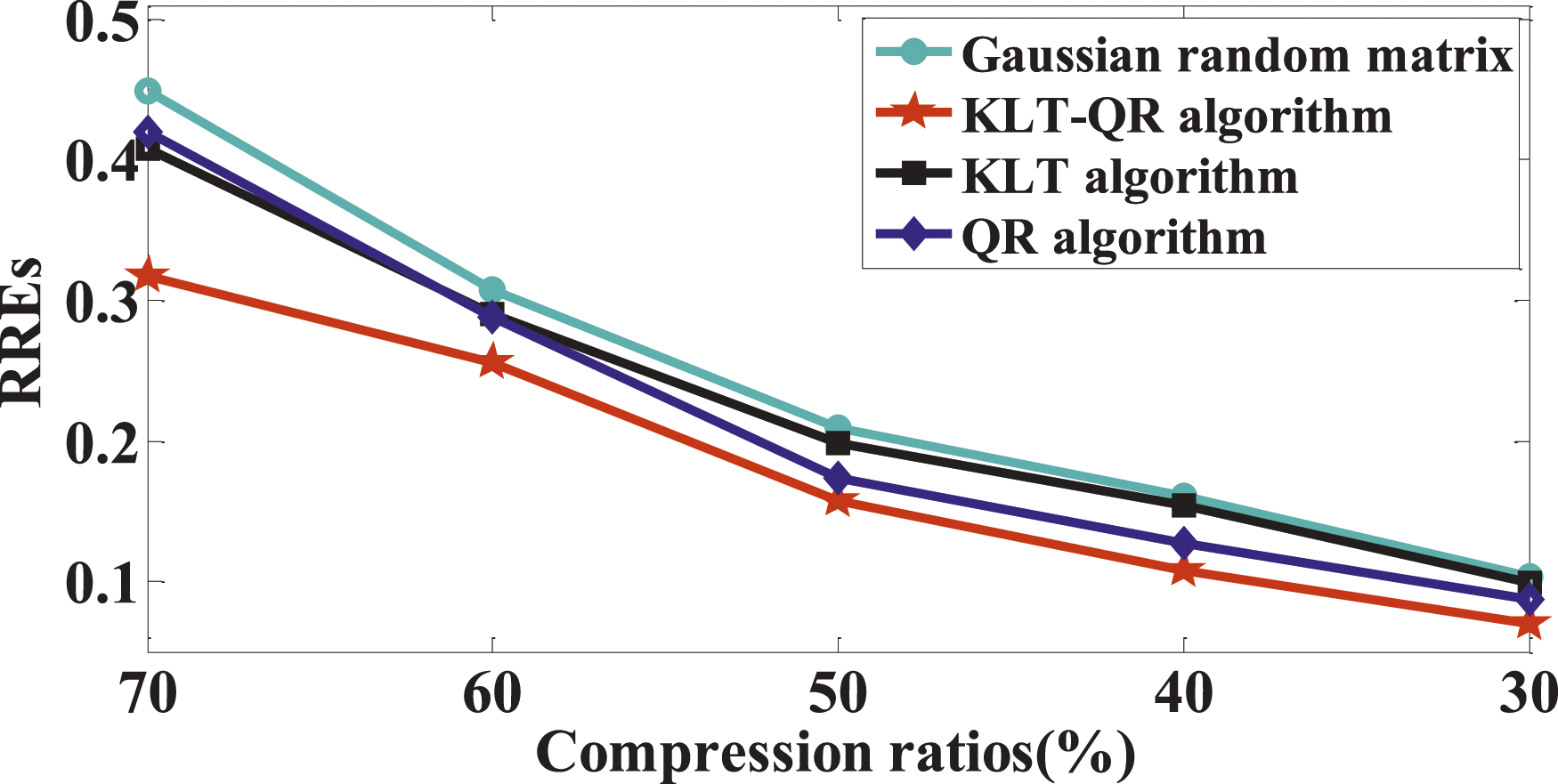
The proposed KLT-QR algorithm was also verified using the measured displacement and strain time history responses. The initial measurement matrix, sparse basis, and reconstruction algorithm were the same as those for the acceleration response reconstruction. The RREs of the displacement and strain response reconstruction are plotted in Figures 6 and 7. Figure 6 indicates that the RREs of reconstructing the displacement signals are the lowest for the KLT-QR algorithm. This algorithm achieves the best results when the CR is larger than 40%. A similar result is observed in Figure 7 for the strain responses. The reconstruction performance of the measurement matrix optimized by the proposed KLT-QR algorithms is better than those of the algorithms, regardless of the type of dynamic response. The algorithm exhibits the largest improvements at higher CRs. Relative reconstruction errors for different algorithms for the displacement response. Relative reconstruction errors for different algorithms for the strain response.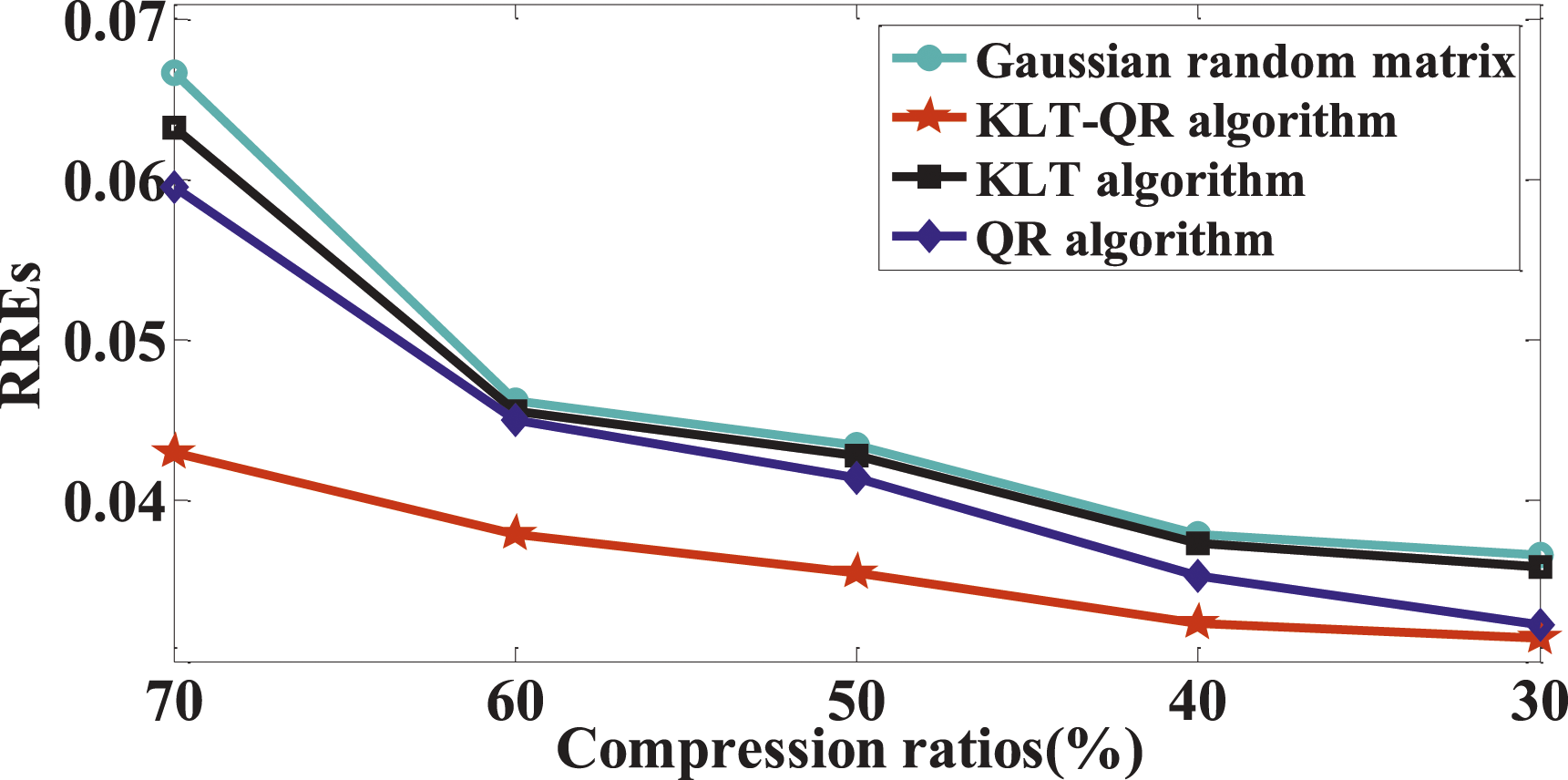
Case study of the Ji’an bridge: reconstruction of acceleration responses
The Ji’an Bridge is a steel tube concrete mid-span arch bridge located in Jiangxi, China, as shown in Figure 8. It has a length of 536 m and a span of 36 m + 138 m + 188 m + 138 m + 36 m. The width of the bridge deck is 28 m. Figure 9 shows the accelerometer configuration. The sampling frequency was 200 Hz. The first-order vertical frequency of the bridge was 0.623 Hz, the first-order torsional frequency was 1.039 Hz, and the second-order vertical frequency was 1.057 Hz. Ji’an Bridge. Accelerometer layout (Unit:m).
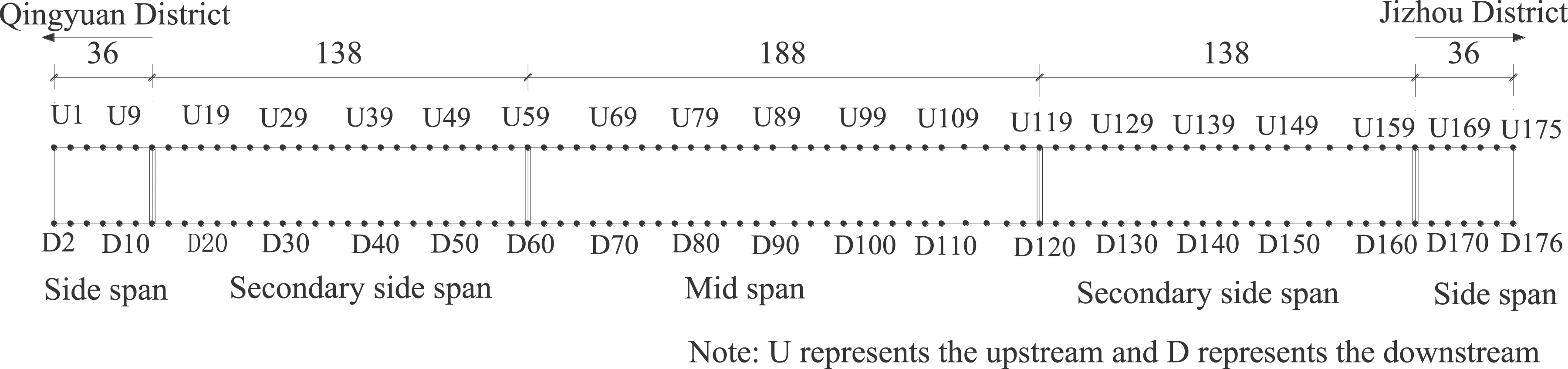
Figure 10 shows the 5 s acceleration response of the bridge deck in the middle span at the U81 measurement point. The initial measurement matrix, sparse basis, and reconstruction algorithm are the Gaussian random matrix, DCT basis, and OMP algorithm, respectively. The signal compression was performed with five CRs (70%, 60%, 50%, 40%, and 30%). Figure 11 shows the RREs of the KLT-QR algorithm, KLT algorithm, approximate QR decomposition algorithm, and the Gaussian random measurement matrix for five CRs. The RRE of the proposed KLT-QR algorithm is much lower than that of the other algorithms when the CR exceeds 50%, demonstrating the superiority of the proposed algorithm. The RRE is 11.76% at a CR of 70%, indicating high reconstruction accuracy. Acceleration response at U81. Relative reconstruction errors for different algorithms for the acceleration response of the Ji’an Bridge.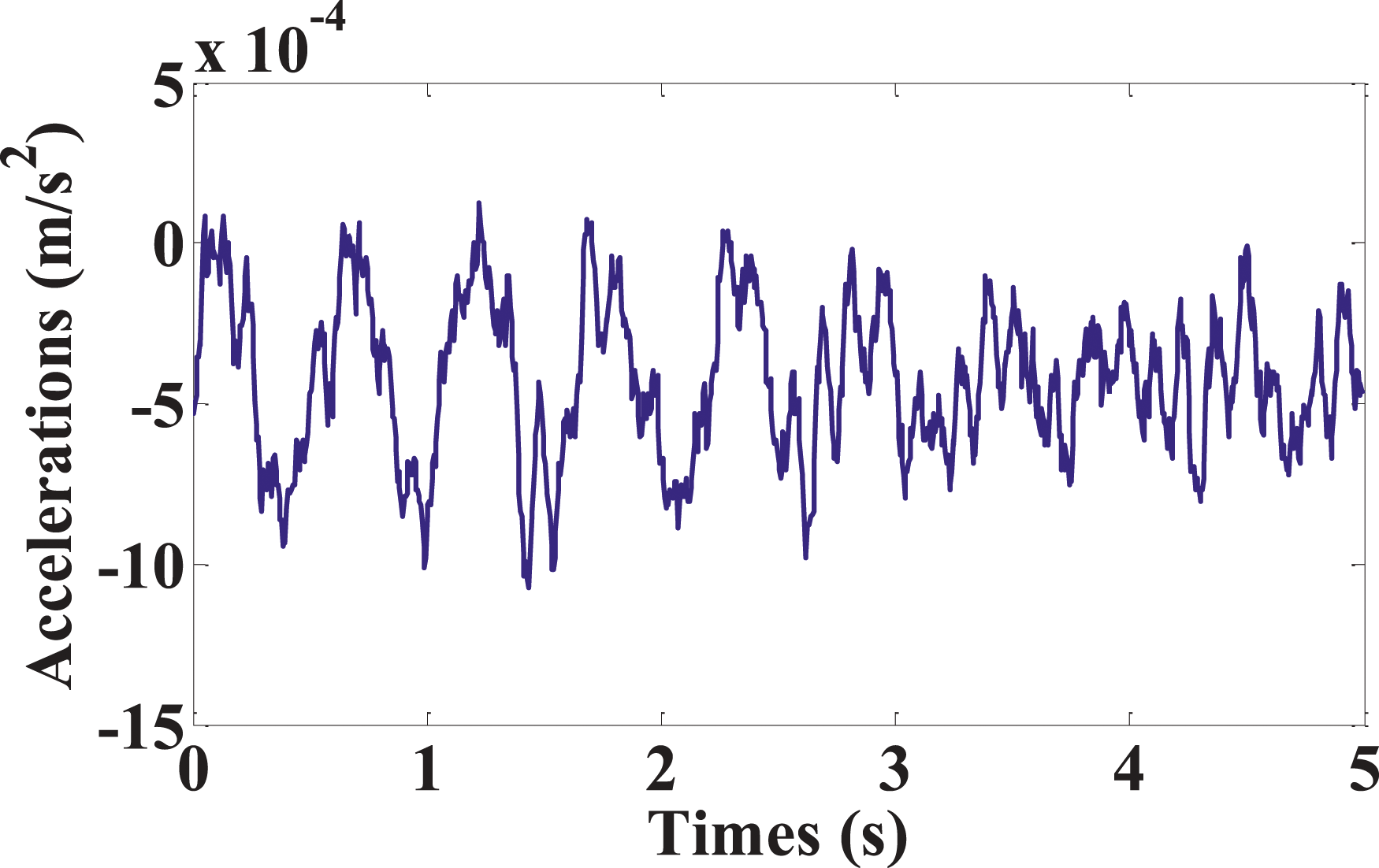
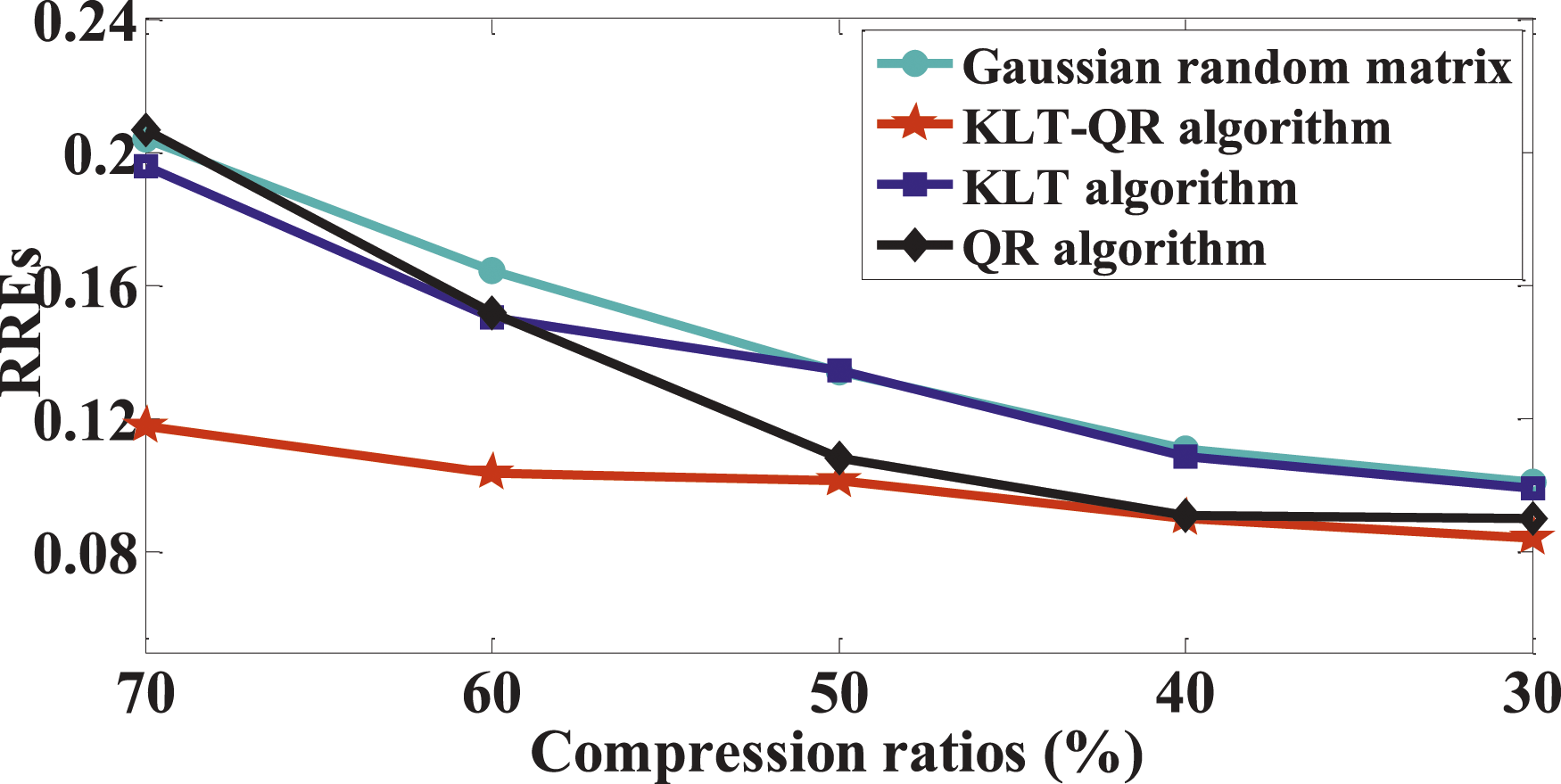
Figure 12 shows the original and reconstruction responses obtained from the KLT-QR algorithm and the Gaussian random matrix. The reconstruction signals obtained by the two algorithms are in good agreement with the original signals when the CR is 30% and 40%. However, the proposed algorithm has higher signal reconstruction accuracy than the one using the Gaussian random measurement matrix when the CR exceeds 50%. Comparison of reconstructed and original acceleration responses (Ji’an Bridge).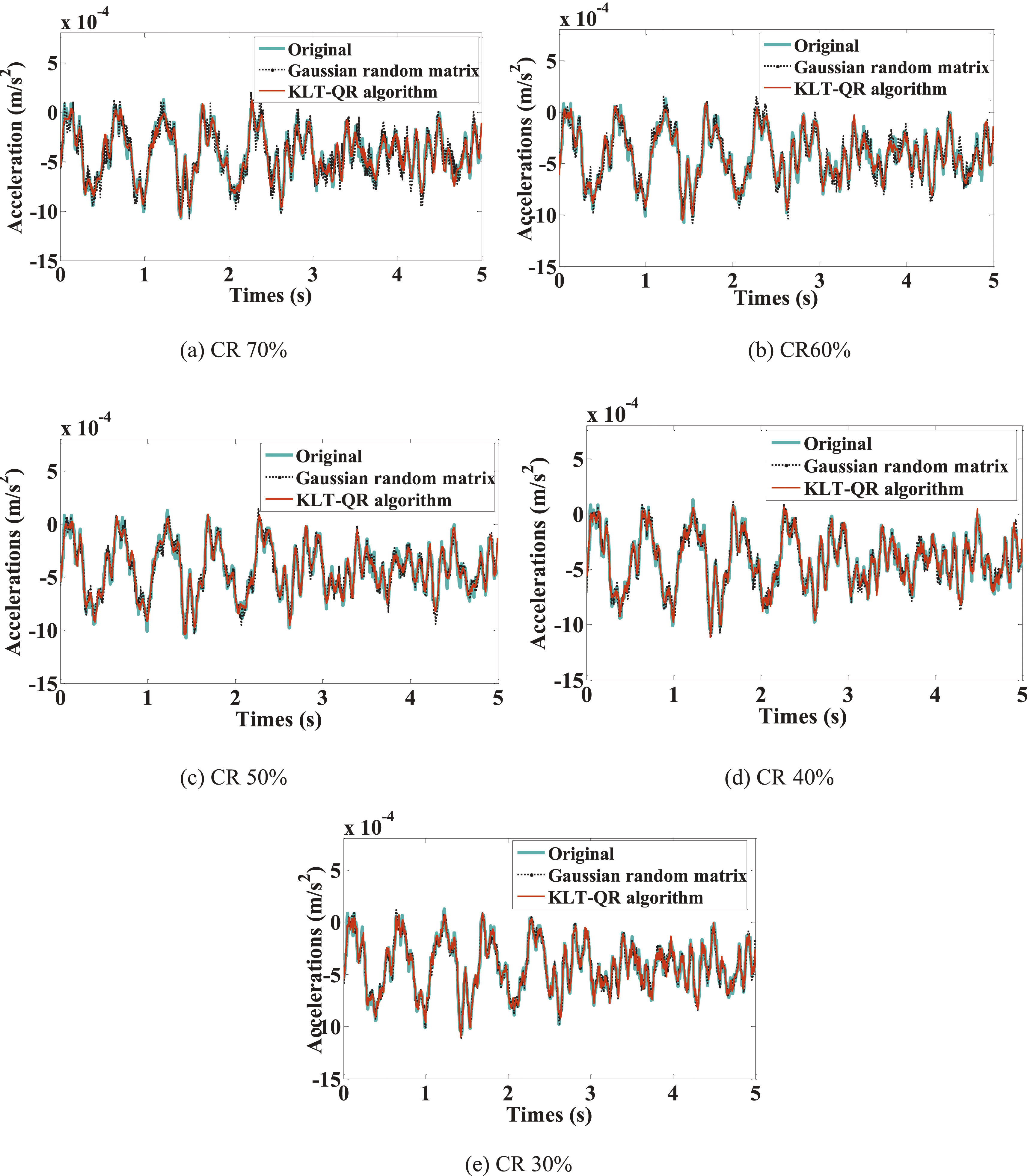
Figure 13 shows the Fourier spectra of the original signal and the reconstructed signals derived from the KLT algorithm and the Gaussian random matrix at CRs of 70% and 30%. The reconstructed response obtained by the proposed KLT algorithm agrees well with the original signal, but the Gaussian random measurement matrix results show significant discrepancy. The KLT-QR algorithm can identify the frequencies 1.039 Hz and 1.057 Hz at a CR of 70% with a negligible error, whereas the Gaussian random matrix cannot. These findings confirm that the optimized measurement matrix used by the proposed algorithm performs better than the Gaussian random matrix. Comparison of Fourier spectra for different algorithms.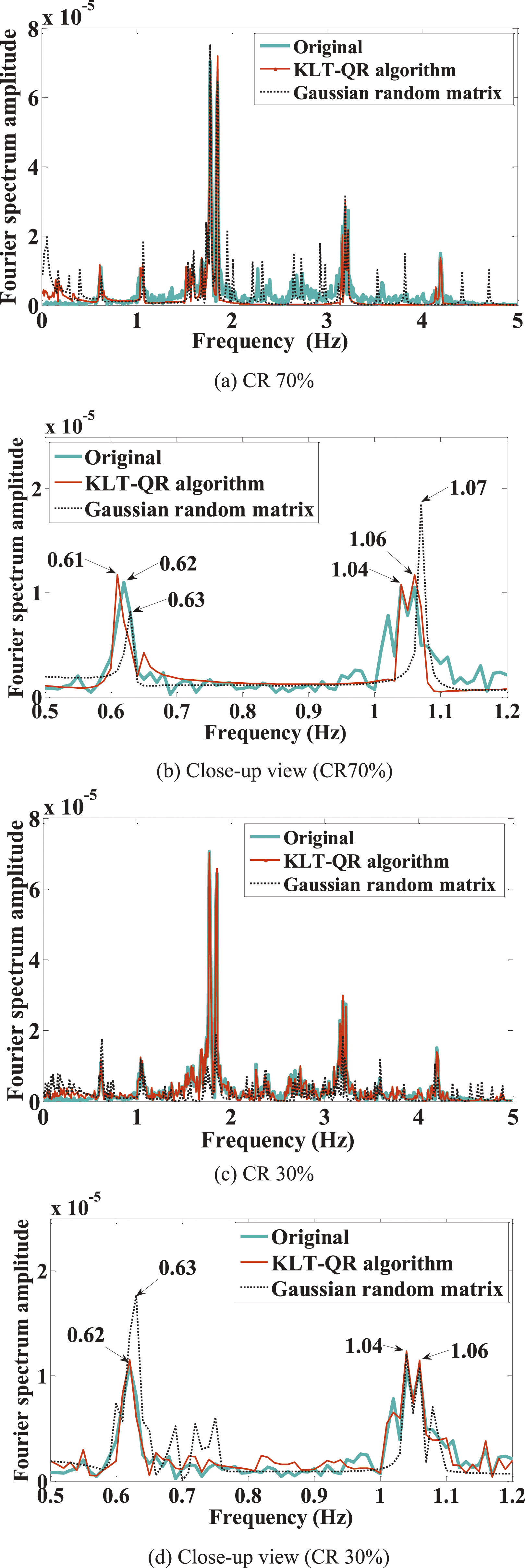
Conclusions
This paper investigated the Gaussian random measurement matrix in CS for performing dynamic response reconstruction. The QR decomposition and KLT were combined to improve the independence between the column vectors of the measurement matrix and decrease the correlation between the measurement matrix and the sparse basis. The proposed KLT-QR algorithm was comprehensively evaluated using the vibration responses of a steel beam in the laboratory and the acceleration responses of the Ji’an Bridge. The main conclusions were summarized as follows: (1) The proposed KLT-QR algorithm achieved higher accuracy in reconstructing the compressed signals than the KLT or QR decomposition algorithms or the Gaussian random measurement matrix, especially at high CRs. (2) The proposed algorithm exhibited better Fourier spectra than the Gaussian measurement matrix. (3) Future investigations will include designing CS sensors that can compress the dynamic signals to facilitate the acquisition and transmission of vibration responses for SHM.
Footnotes
Declaration of conflicting interests
The author(s) declared no potential conflicts of interest with respect to the research, authorship, and/or publication of this article.
Funding
The author(s) disclosed receipt of the following financial support for the research, authorship, and/or publication of this article: This work was supported by the Natural Science Foundation of Fujian Province (2021J01598).
