




Abstract
Beam-Column Joints (BCJs) are critical structural components that experience significant stress concentrations, making them particularly vulnerable to failure under seismic loading. While conventional reinforcement techniques can enhance their performance, they often lead to excessive congestion and construction challenges, limiting their efficiency. In contrast, Steel Fiber Reinforced Concrete (SFRC) has emerged as a promising alternative, offering superior crack resistance, ductility, and energy absorption, thereby improving the seismic resilience of BCJs. This review provides a comprehensive assessment of SFRC BCJs through experimental and numerical studies, employing bibliometric and systematic review methodologies. It examines key aspects such as BCJ shear mechanisms, shear strength, relevant design code provisions, and the mechanical properties and constitutive models of SFRC. By synthesizing major research findings, this paper highlights SFRC’s contributions to enhancing shear strength, energy dissipation, and failure mode mitigation. Additionally, this review identifies critical knowledge gaps, emphasizing the need for long-term durability studies, refined numerical modeling techniques, large-scale experimental validation, and design code updates for the full integration of SFRC in seismic-resistant structures. It also underscores the importance of updated seismic codes, hybrid fiber systems, and AI-driven modeling to optimize SFRC BCJ performance. By bridging experimental and computational insights, this study advances the adoption of SFRC in seismic-resistant design, paving the way for safer, more cost-effective infrastructure in earthquake-prone regions.
Keywords
Introduction
Beam Column Joints (BCJ) are critical components in framed structures, particularly under seismic loads (Frappa and Pauletta, 2024; Palomo et al., 2024; Pang and Li, 2024). Historically, these joints have been the primary locations of failure during seismic events, contributing significantly to structural collapses (Cimmino et al., 2020; Nahar et al., 2020). The complex stress state and insufficient ductility of BCJ make them vulnerable to seismic forces compared to other structural elements (Ahmad et al., 2025; Maheri and Torabi, 2019). This vulnerability is evidenced by numerous failures and significant story drifts that can lead to catastrophic structural collapses under seismic loading (Gul et al., 2024; Guo et al., 2022).
The behavior of BCJ significantly impacts the performance of a frame structure under different loading conditions (Shen et al., 2024; Zeb et al., 2025). Recent studies have highlighted that damage to these connections can result in severe deformations and, ultimately, the failure of the entire structure (Guo et al., 2022; Lu et al., 2023; Shen et al., 2022). Seismic loads can induce abrupt shear failures in these connections due to the combined effects of compression, bending, and shear forces (Huang et al., 2022; Wang et al., 2024). As a result, BCJ are often considered among the most critical and failure-prone sections of a structure. Their performance directly impacts on the overall stability and resilience of the frame, necessitating a thorough understanding of their mechanics and response under dynamic loading conditions.
The design and construction of BCJ require careful consideration of reinforcing bars and hoops to ensure adequate structural ductility (Li et al., 2023; Pang et al., 2022). Despite advancements in design guidelines, such as those established by ACI-ASCE in 1976, which emphasize the importance of joint size, end anchorage of beam longitudinal reinforcement, and transverse reinforcement, challenges remain (Nadir et al., 2021; Pinkham et al., 1976). These guidelines often lead to difficulties in construction and concrete placement, resulting in joints that may still be susceptible to damage during large seismic events. Figure 1(b) illustrates various structural failures in BCJ observed during past earthquakes, highlighting the critical nature of these connections in maintaining structural integrity. (a): Flowchart of the Structured Review Process for SFRC Studies. (a) Northridge earthquake of 1994, Kaiser Permanente Building (Library | Pacific Earthquake Engineering Research Center). (b) A Structure in Turkey, 1999 Izmit Earthquake (İzmit earthquake of 1999 | Marmara Region, Magnitude 7.4, Aftershocks | Britannica; Saatcioglu et al., 2001). (b): Building collapses as a result of failing beam-column joint.
Concrete, the primary material used in construction, possesses inherent properties that make it suitable for structural applications. As a composite material, concrete combines cement, water, and aggregates, providing strength and durability. However, it is also characterized by its brittleness, low tensile strength, and limited strain capacity, which can lead to cracking and failure under tensile loads (Ashokan et al., 2023; Belay et al., 2024). To address the shortcomings of concrete, steel reinforcement bars have traditionally been used to enhance its tensile strength and ductility. This combination allows for effective load transfer and improves the overall performance of structural elements under various loading conditions.
Recent advancements in concrete technology have led to the emergence of Fiber Reinforced Concrete (FRC) (Huang et al., 2015; Serna et al., 2022). FRC incorporates discrete fibers, such as steel, glass, synthetic, or natural materials, into the concrete matrix (Khan et al., 2022; Monaldo et al., 2019). The use of fibers considerably improves concrete’s mechanical qualities, including crack resistance, flexural toughness, and energy absorption capacity (Elakhras et al., 2021; Mohamed et al., 2024). These improvements address the inherent flaws of traditional concrete, especially in high-stress places like BCJs. Particularly in crucial connections, SFRC has proven to be a very successful substitute for conventional reinforcement (Zhang et al., 2024). In addition to improving stability, ductility, and energy absorption, SFRC can also decrease construction costs and reinforcing congestion).
To date, no comprehensive review has been conducted that provides an in-depth examination of both experimental and numerical evaluations specifically in the context of SFRC BCJs. Existing reviews primarily focus on general topics such as reinforced concrete using steel fibers (Abirami and Sangeetha, 2020; Ahmed and Siva Chidambaram, 2022), composite beam-column joints (Askar et al., 2024), and hybrid fiber-reinforced concrete (Nadir et al., 2021). Only one review (Kalaivani and Karthik, 2016), published in 2016, addresses SFRC BCJs directly, but it lacks the depth needed to fully analyze experimental and numerical investigations. This highlights the need for a systematic assessment of recent advancements in this field. To bridge this gap, this paper employs both bibliometric and systematic review methodologies to provide a comprehensive assessment of SFRC BCJs. The bibliometric analysis quantitatively maps scientific literature, identifies research trends, and evaluates contributions across regions, journals, and institutions. Meanwhile, the systematic review critically examines experimental and numerical studies on SFRC BCJs, highlighting key findings, methodological approaches, and areas for future research. This dual approach ensures a thorough evaluation of state-of-the-art research, addressing knowledge gaps and providing valuable insights into the mechanical behavior, seismic performance, and design considerations of SFRC BCJs. The structured methodology employed in this study is visually represented in Figure 1(a), illustrating the key steps involved in both bibliometric and systematic reviews. The bibliometric analysis (left) involves Scopus data retrieval, categorization, and trend analysis, while the systematic review (right) categorizes studies into experimental and numerical approaches, focusing on seismic performance, crack control, and validation techniques. This structured approach ensures a holistic evaluation of SFRC BCJ research.
Mapping the literature on SFRC BCJ
A comprehensive review of the literature on SFRC BCJ was conducted using bibliometric data from Scopus, one of the most prominent literature databases. The bibliographic dataset was compiled by searching for the keyword “SFRC Beam-Column Joint” within the Scopus search engine, yielding 58 relevant documents. These documents were then analyzed to explore their various characteristics. The findings from this analysis are presented below.
The publication trends, document types, and subject areas related to SFRC BCJ were examined using the Scopus analyzer. According to the publication trend (illustrated in Figure 2), the earliest research on SFRC BCJ dates back to 1977, when Henager published a study on steel fiber-reinforced, ductile concrete joints designed for seismic-resistant structures. However, research progress in this area was initially slow, with only a handful of papers published, one in 1992, another in 1994, followed by single publications in 2001 and 2007. Notably, after 2013, there was a steady increase in publications on SFRC BCJ, with 2021 marking the highest number of publications, totaling eight for that year. The surge in publications after 2013 (Figure 2) aligns with increased interest in sustainable seismic solutions post major earthquakes (e.g., 2011 Tōhoku (Japan Earthquake 2011 - Internet Geography)) and advancements in fiber-reinforced concrete technology, reflecting global efforts to address BCJ vulnerability. Publication trend of SFRC BCJ literature.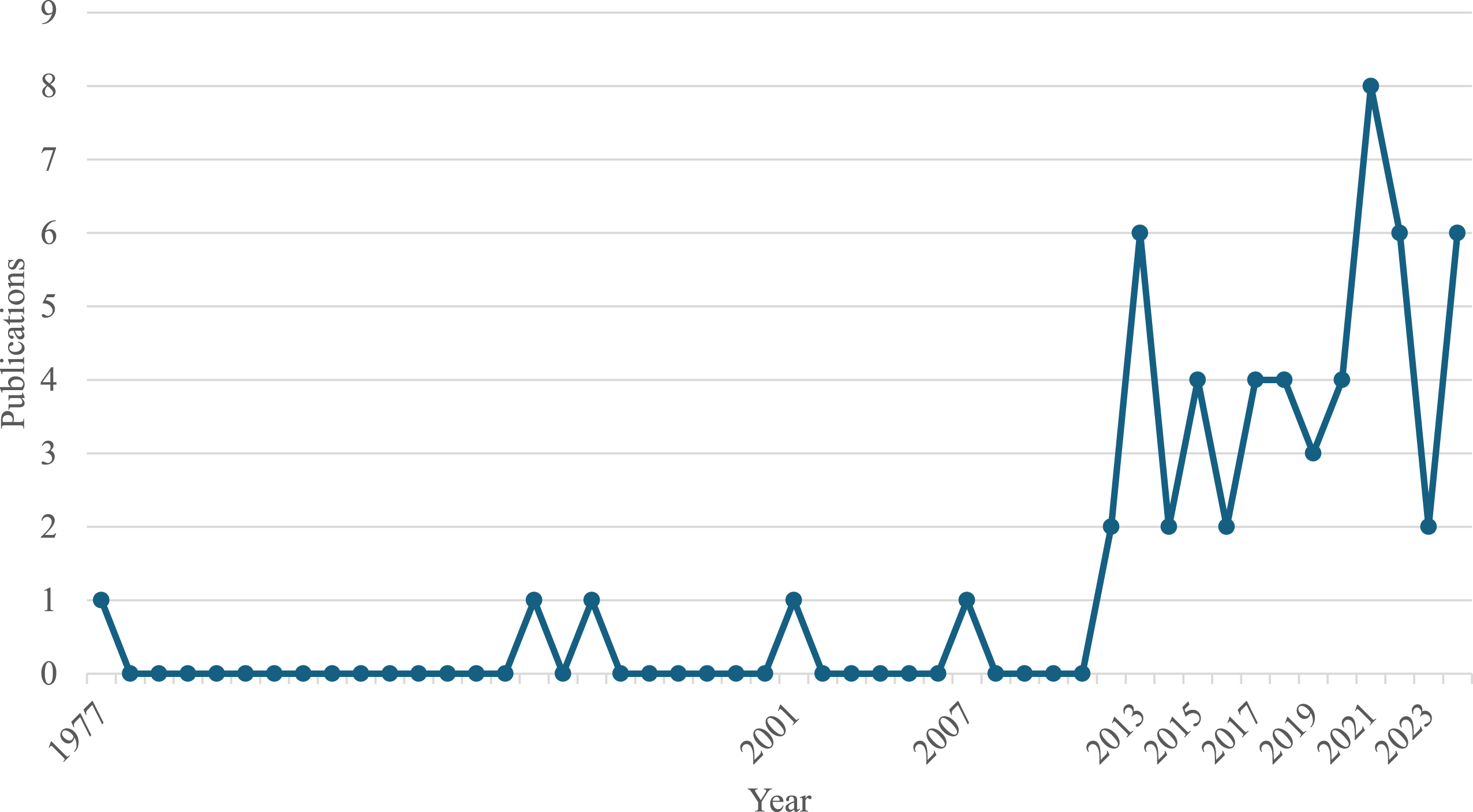
The Scopus analyzer also provided insights into the types of documents within the SFRC BCJ literature, as shown in Figure 3. Journal articles and conference reviews accounted for 90% of the total publications, with journal articles alone contributing 78%. Conference papers and book chapters made up the remaining 10% of the dataset. The dominance of journal articles (78%, Figure 3) and engineering-focused research (65%, Figure 4) indicates a strong emphasis on practical applications of SFRC BCJ, driven by the urgent need for earthquake-resistant design standards. Document types in SFRC BCJ literature. Subject areas in SFRC BCJ literature.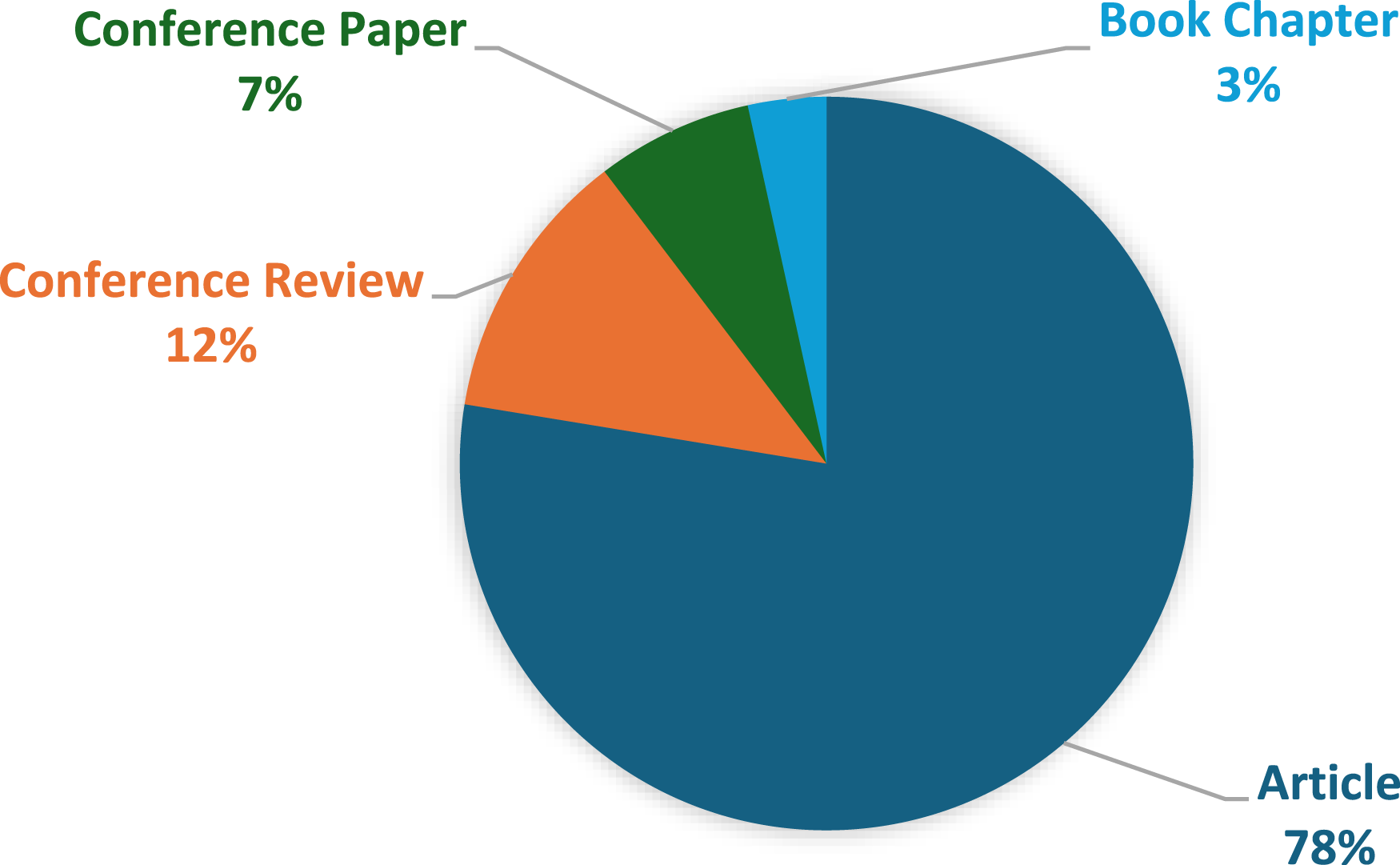

Further analysis of the SFRC BCJ literature was conducted based on subject areas (Figure 4). The majority of literature, 88%, fell under the categories of engineering and material sciences, with engineering contributing more than 65%. Other disciplines made up the remaining 12%, with Earth and planetary sciences contributing just 1%.
The scientometric analysis also highlighted geographic contributions to SFRC BCJ research, with India leading in the number of publications, followed closely by China. Together, these two countries dominate the research output in this area. Contributions from other nations, while smaller in comparison, are also noteworthy, and are illustrated in Figure 5. Country contributions to SFRC BCJ literature.
Finally, institutions play a critical role in advancing research in specific fields. As shown in Figure 6, the Central Building Research Institute in India leads the publication output on SFRC BCJ, with five documents, followed by Zhengzhou University and the Indian Institute of Technology Roorkee, each with four publications. Other institutions around the world with single publications are not represented in the graph. These institutions have emerged as key contributors to the development of SFRC BCJ research. Institutions in SFRC BCJ research.
The bibliometric analysis of the literature on SFRC BCJ highlights significant trends and contributions over time. Although early research in this field was limited, a notable surge in publications has occurred since 2013, indicating growing interest and advancements in SFRC BCJ research. Journal articles remain the dominant form of publication, and the research is largely concentrated in engineering and material sciences. Geographic analysis shows that India and China lead in contributions, reflecting their active roles in this area of study. Furthermore, prominent institutions such as the Central Building Research Institute and Zhengzhou University have been instrumental in advancing the field. This comprehensive mapping of the literature provides a clear view of the evolving landscape of SFRC BCJ research, offering valuable insights for future studies and developments.
Beam column joint shear mechanism
BCJ are subjected to a complex combination of compressive, tensile, and shear forces during significant seismic events, as illustrated in Figure 7(a) (Vecchio et al., 2018; L Zhang et al., 2022). In this figure, the vertical shear forces in the beams are denoted by Vb, while the horizontal shear forces in the columns are represented by Vc. The compressive and tensile forces at the beam ends are labeled as Cbc and Tbc, respectively, and for the column ends, these forces are denoted as Ccc and Tcc. Similarly, the compressive and tensile forces in the reinforcement at the beam ends are referred to as Cbs and Tbs, with Ccs and Tcs representing the forces at the column ends. BCJ mechanical analysis; (a) forces acting on the joint; (b) the mechanism of the diagonal strut; (c) the truss mechanism (Vecchio et al., 2018).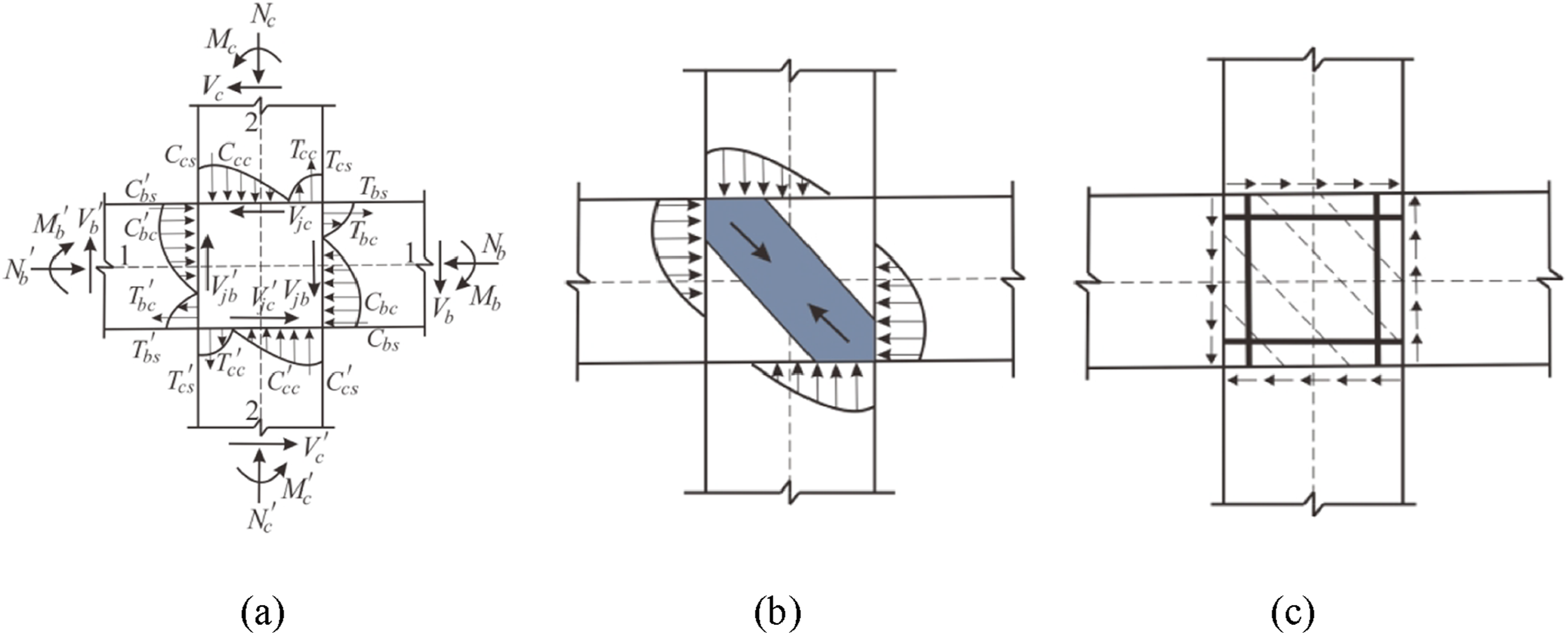
These forces converge at the joint core, forming a diagonal compression strut, as shown in Figure 7(b). Initially, this diagonal concrete strut bears the majority of the joint shear forces. However, as the horizontal loading increases and the first diagonal crack emerges within the joint core, the concrete begins to soften and crack, exacerbating the shear stresses. Consequently, the truss mechanism starts to assume the role of load transfer, gradually taking over from the compromised diagonal concrete strut. At this stage, the diagonal tension is resisted primarily by the transverse and vertical reinforcement, supplemented by Steel Fibers (SF) (L Zhang et al., 2022).
The deterioration of the diagonal concrete strut is mitigated by the bridging effect of SF and the enhanced bond between the reinforcement and SFRC (Wang et al., 2019; Yukun and Yukun, 2024). As loading continues, friction between the cracked concrete and the reinforcement-SFRC bond aids in resisting diagonal compression. Eventually, as the diagonal cracks widen and the SF are pulled out, shear failure ensues, characterized by the yielding of the transverse reinforcement and spalling of the concrete (Ding et al., 2012). Thus, as depicted in Figure 7(c), the shear mechanism in SFRC BCJ involves a combination of both diagonal strut and truss actions.
Beam-column joint shear strength
BCJ in reinforced concrete (RC) frames are critical regions where the structural integrity of the framework is highly dependent on the joint’s ability to resist shear forces effectively (Pauletta et al., 2020). The shear strength of these joints plays a crucial role in ensuring the seismic resilience and overall stability of the structure. The nominal horizontal shear strength of an interior RC beam-column joint, denoted as
Mathematically, the shear strength is given as: (a): The concrete struts: (a) three in interior joints; (b) two in exterior ones (Pauletta et al., 2015). (b): Truss mechanism contributions (Pauletta et al., 2020).


Here,
A key distinction between interior and exterior beam-column joints lies in the number of concrete struts that contribute to shear resistance. In an exterior joint (Figure 8(a)(b)), only two concrete struts, ST1 and ST2, are present. The inclined strut ST2 forms due to the transfer of tensile forces from the beam’s top reinforcement to the joint core via bond stresses. However, the bond stresses from the bottom reinforcement are typically negligible in exterior joints, as this reinforcement primarily experiences compression forces of relatively lower magnitude.
Conversely, in interior joints (Figure 8(a)(a)), an additional inclined strut, ST3, is present. This strut arises due to the bond stress transfer from the beam’s bottom reinforcement, which in this case is subjected to significant tensile forces. This results in non-negligible bond stresses that contribute to the shear resistance of the joint. The combined effect of these three struts, along with the reinforcement-induced truss mechanism, enhances the shear resistance of interior beam-column joints, distinguishing them structurally and behaviorally from their exterior counterparts.
Code provisions recommended for beam-column joint design
Building codes establish specific guidelines to ensure the structural integrity of BCJ. These guidelines emphasize the critical role of properly anchoring both beam and column reinforcements within the joint and ensuring that the beams and columns have sufficient flexural strength to encourage a preferred beam failure mechanism (Dabiri et al., 2019, 2020). They also set limits on allowable shear stresses and mandate the inclusion of transverse reinforcement within the joint to enhance its shear resistance (Uma and Jain, 2006).
Code Criteria for BCJ Design (Nadir et al., 2021).

Confinement Factor (λ) for Various Codes (Nadir et al., 2021).
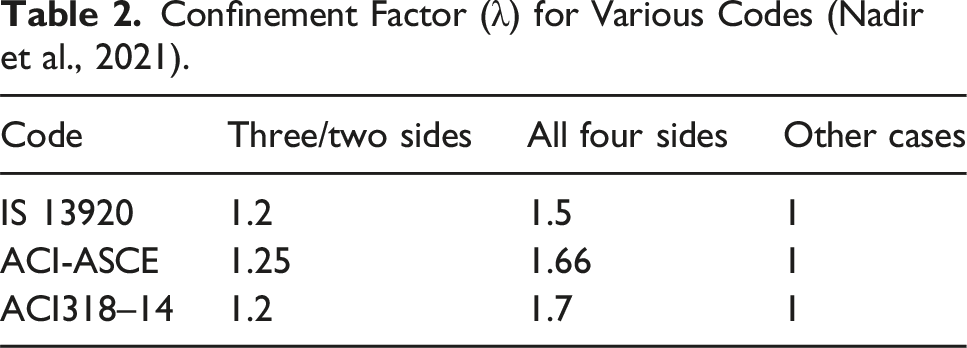

BCJ confinement condition by transverse beams: (a) all four sides, (b) three/two sides and (c) other cases (Nadir et al., 2002, 2021; Recommendations for Design of Beam-Column Connections in Monolithic Reinforced Concrete Structures 2002b).
Overview of SFRC
The idea of using Steel Fibers (SF) in concrete dates back to the early 1900s, with Porter first suggesting this application in 1910. However, significant research into FRC didn’t begin until 1963 in the United States (Romualdi and Batson, 1963). The process of creating SFRC involves incorporating SF into a regular concrete mixture consisting of water, fine and coarse aggregates, and hydraulic cement (Kang et al., 2019).
According to the American Concrete Institute (Marsh et al., 1973), SF are discrete, tiny pieces of steel with an aspect ratio (length to diameter) ranging from 20 to 100. These fibers can vary in cross-sectional shape and are small enough to be evenly distributed throughout fresh concrete using standard mixing processes. Chemical admixtures known as superplasticizers are frequently applied to SFRC to enhance its workability and uniformity.
SF engineering properties, including their cross-sectional design, length, diameter, and material composition, are depicted in Figure 10. These were originally spherical, smooth, and cut or chopped to specific lengths. The rough surfaces, hooked ends, and crimped or undulating shapes of modern fibers are evolutionary traits. They are often produced by drawn steel wire, sliced sheet steel, or melt-extraction methods that produce fibers with a crescent cross-section (Abousaba et al., 2023). Different shapes of SF; (a) straight slit sheet or wire (b) deformed slit sheet or wire (c) crimped-end wire (d) flattened-end slit sheet or wire (e) machined chip (544.1R 96 PDF | PDF | Concrete | Reinforced Concrete).
Classification of SF by ASTM A820 (Behbahani et al., 2011).

Mechanical properties and constitutive models of SFRC
Compressive strength of SFRC
The compressive behavior of SFRC is significantly influenced by the fiber volume fraction (

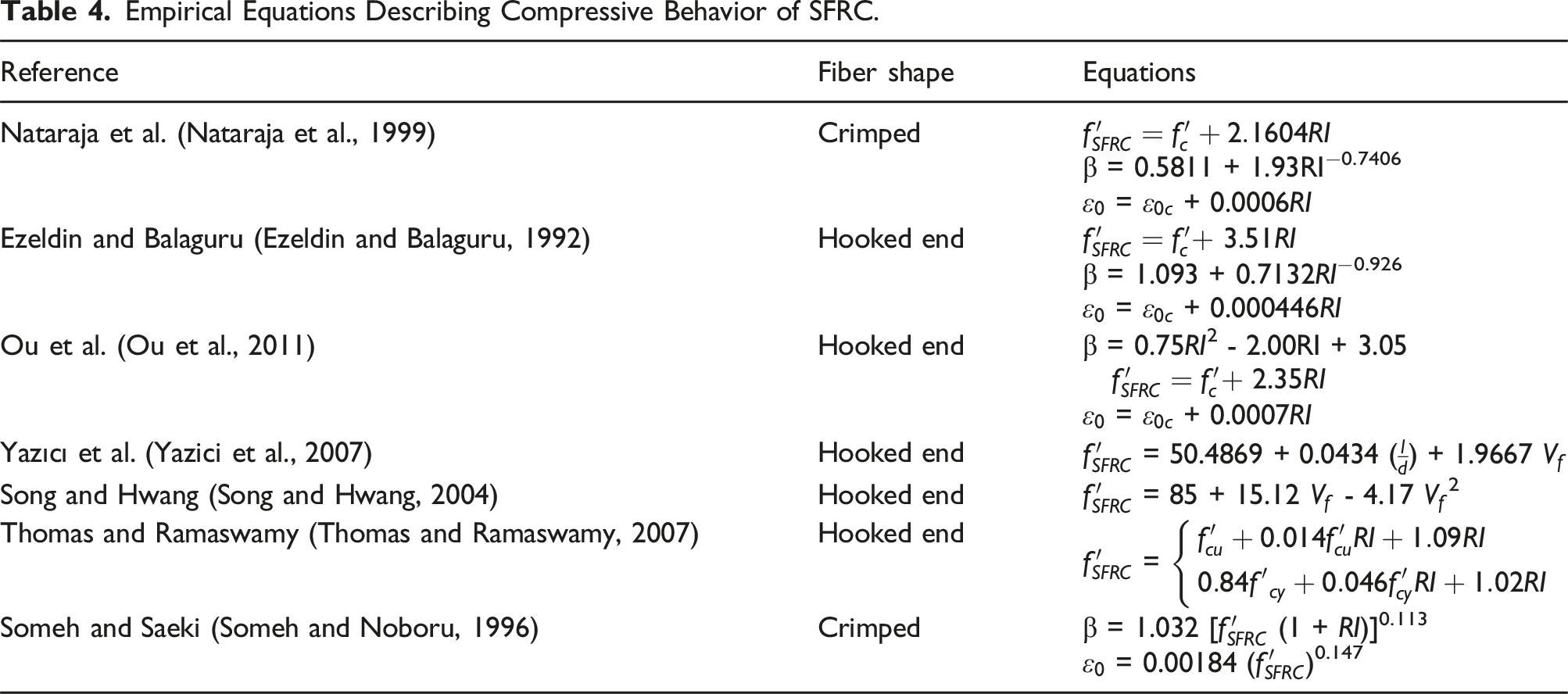
A widely accepted approach for modeling SFRC’s compressive strength incorporates the reinforcement index (RI =
Empirical Equations Describing Compressive Behavior of SFRC.
Tensile strength of SFRC
While compressive strength is often emphasized in concrete design, splitting tensile strength plays a crucial role in controlling brittle failure. SFRC improves tensile behavior by acting as a tensile reinforcement. Research indicates that the tensile-to-compressive strength ratio of SFRC is significantly higher than that of conventional concrete, sometimes increasing several-fold due to fiber reinforcement. The splitting tensile strength increases with
Empirical Equations for Tensile Strength Prediction of SFRC.

Flexural strength of SFRC
Flexural strength is another critical property of SFRC, representing its ability to resist bending stresses. Many studies indicate that increasing
Empirical Equations for Flexural Strength Prediction of SFRC.

The mechanical properties of SFRC, including compressive, tensile, and flexural strengths, are strongly influenced by fiber volume fraction, aspect ratio, and reinforcement index. Empirical models provide useful predictive tools, but variability in material properties and testing conditions can lead to discrepancies. The compressive strength of SFRC benefits from crack control at low
Steel fibers reinforced concrete beam column joints
The installation of transverse reinforcement and the subsequent pouring and compaction of concrete within joint regions can present challenges that may compromise the effectiveness of confinement provided by the reinforcement after cracking and deterioration of the joint core (Craig et al., 1984). These issues can lead to insufficient load transfer, resulting in structural deficiencies and reduced overall performance of beam-column connections. To mitigate these issues and improve the crack resistance of concrete, FRC has emerged as a promising solution in recent years. Improving the overall performance of concrete remains a paramount concern in the field of civil engineering (Alam et al., 2024; Shen and Zhang, 2020).
Fibers are a typical method to overcome the quasi-brittle behavior of concrete and increase its mechanical performance, particularly under tensile stress, where the concrete’s strain capacity is limited. The addition of fibers improves tensile strength by preventing microcrack initiation, propagation, and branching within the mortar matrix surrounding coarse aggregates . SF, in particular, are valued for their capacity to enhance shear and flexural strength, absorb more energy, and act as bridging agents when cracks form. Their presence encourages the transition of failure modes from brittle to ductile, thereby enhancing the overall resilience of structural elements under dynamic loads (ACI PRC-544.1R-96: Report on Fiber Reinforced Concrete (Reapproved 2009)).
Adding SF to concrete can significantly improve the seismic performance of BCJ while also reducing the demand for dense steel reinforcement. This reduction in conventional reinforcement not only decreases the overall weight of the structure but also simplifies the construction process. SF helps to maintain the integrity of joints during seismic events by providing additional post-cracking strength and energy dissipation capabilities. As a result, the likelihood of catastrophic failure during an earthquake is mitigated, enhancing the safety and longevity of the structure.
Numerous recent studies have investigated the impact of SF on the performance of BCJ using numerical and experimental approaches. These investigations provide valuable insights into how fiber incorporation can improve structural behavior. For instance, researchers have used finite element analysis (FEA) to model the behavior of SFRC joints under various loading conditions, revealing that fiber content, aspect ratio, and distribution can significantly influence load-carrying capacity and ductility.
The next sections provide an extensive overview of these numerical and experimental studies, investigating how SF affects beam-column joint performance. A summary of each cited author, including their research approach, methods, and key findings, is presented in Table A1 (Appendix A). These contributions collectively highlight the importance of SFRC in enhancing the structural performance of BCJ and underscore its potential as a practical solution in seismic design.
Experimental approaches for evaluating SFRC BCJ
Early studies on steel fiber reinforced concrete in beam column joints
Studies have demonstrated that SFRC enhances the durability and strength of concrete structures. Early research on the use of SFRC in BCJ has been crucial in highlighting its benefits. In 1977, Henager conducted one of the initial studies on SFRC in BCJ (Henager, 1977). The objective of this research was to mitigate steel congestion by employing SF as a substitute for conventional steel hoops in joints. To evaluate their performance, cyclic loads were applied to two full-scale external beam-column connections. The first joint was built following the seismic design rules in ACI 318 (Building Code Requirements for Structural Concrete (ACI 318-08) and Commentary - ACI Committee 318, American Concrete Institute) and was designed to be ductile. The second joint used SFRC in the joint area instead of hoops, as shown in Figure 11. Figure 11 contrasts the ductile specimen (a), compliant with ACI 318, and the SFRC-modified joint (b). The absence of cracks in (b) under cyclic loading demonstrates SFRC’s effectiveness in replacing congested hoops while maintaining shear capacity. The study found that both types of joints successfully contained concrete in the joint area. The SFRC joint outperformed the conventional joint, showing no signs of cracking, whereas the conventional joint developed minor hairline cracks and a significant crack at the beam-column interface. Overall, the SFRC joint was more damage-resistant, flexible, and had better shear capacity compared to the conventional joint. The test specimens consisted of: (a) a ductile specimen and (b) a modified specimen (Henager, 1977).
Seismic behavior of SFRC BCJ
The seismic resilience of SFRC in BCJ has been extensively examined for its ability to improve structural durability during earthquakes. Olariu et al. (Ioan Olariu et al., 1992) conducted early research on SFRC frames, with a particular emphasis on precast BCJ subjected to simulated seismic conditions. Their study included four full-scale central joints designed in accordance with Romanian standards: three were precast, and one was monolithic. The application of SFRC was intended to reduce the congestion of steel within the joints. The findings indicated that SFRC effectively confined cracks, controlling their propagation and diminishing the risk of brittle failure. Specifically, SFRC joints exhibited a reduction of approximately 25% in crack width, which contributed to enhanced seismic performance.
Similarly, Filiatrault et al. (Filiatrault et al., 1995) investigated the effect of SFRC on the seismic performance of internal BCJ, focusing specifically on minimizing lateral reinforcement. Their study involved three full-scale specimens: one lacking seismic detailing, another incorporating seismic detailing, and a hybrid joint that utilized SFRC in the joint region but did not have seismic detailing. Results revealed that the hybrid SFRC specimen demonstrated intermediate performance between the fully detailed and non-detailed specimens. The hybrid specimen exhibited superior shear strength to the fully detailed specimen up to a ductility ratio of 2.5. Furthermore, almost 85% of the energy absorbed by the fully detailed seismic specimen might be dissipated by the hybrid specimen. However, the application of SFRC did not completely remove diagonal shear cracks within the joint.
Further research by Scariah et al. (Scariah et al., 2015) examined the seismic behavior of BCJ reinforced with various types of fibers. Their results demonstrated that the fiber-reinforced specimens showed a marked enhancement in performance compared to the control specimen, particularly regarding initial crack load and ultimate load capacity. Specifically, the Polypropylene Fiber Cement Concrete (PFCC) specimen showed a 54% improvement in initial crack load and a 10% increase in ultimate load when compared to conventional concrete. The SFRC specimen exhibited increases of 46% in initial crack capacity and 20% in ultimate load capacity. Notably, the SFRC specimen exhibited a remarkable 108% increase in initial crack load and a 50% increase in ultimate load compared to control specimens. The study also noted that modified specimens tended to fail due to crack widening, with a predominant crack forming 2 cm from the beam-column joint. In contrast, normal concrete specimens displayed multiple cracks. Both modified specimen types exhibited primary failure resulting from vertical cracks at the beam-column interface. Nevertheless, the SFCC specimen exhibited fewer and narrower cracks compared to the PFCC specimen. Figure 12 provides visual representations of these cracks in PFCC and SFRC specimens. Failure pattern of PFCC and SFRC BCJ (Scariah et al., 2015).
In a related study, Gencoglu and Eren (Genço et al) examined the impact of SFRC on exterior BCJ subjected to reversed cyclic loading. They compared specimens made of plain concrete with those incorporating SFRC in critical areas. The results indicated that SFRC specimens demonstrated higher load capacities, improved ductility, and reduced shear crack widths, although shear cracking was not eliminated. This suggests that SFRC could serve as a cost-effective alternative to extensive transverse reinforcement, but it also highlights the need for further research to optimize fiber volumes and types. Additionally, the investigation revealed that all beam-column joint specimens subjected to reversed cyclic loading at the beam tip exhibited similar behavior, with bending-type cracks appearing in relation to the applied load level (Figure 13). With the exception of Specimen #1 (Figure 13(a)), diagonal (×-shaped) cracks formed in the beam-column joint region of Specimens #2, #3, and #4, attributable to inadequate transverse reinforcement as specified by the Turkish Earthquake Resistance Code. Specimen #2 (Figure 13(b)) with plain concrete showed ×-shaped shear cracks at lower displacement levels compared to SFRC specimens (Figure 13(c) and (d)). As anticipated, shear cracks in Specimen #2 were wider than those observed in the SFRC specimens. While SFRC did not entirely prevent the formation of ×-shaped shear cracks in the beam-column joint area, it significantly reduced their width compared to Specimen #2. This result aligns with the established ability of SF to bridge crack faces, thereby mitigating cross-bending, reducing fracture widths, and enhancing the shear capacity of the concrete segment. Crack propagation was observed in multiple specimens within the joint and the confinement regions of the beam and column (Genço et al).
Jiuru et al. (Jiuru et al., 1992) conducted experiments on 12 specimens incorporating various types and placements of SF, demonstrating that SFRC significantly enhances shear strength, ductility, and energy dissipation in BCJ. The incorporation of SFRC in the joint core helped alleviate problems related to steel reinforcement congestion and construction challenges. The incorporation of SF improved the bond strength and anchorage properties of reinforcement bars, indicating that SFRC is particularly advantageous for structures situated in seismic regions. Similarly, Rather et al. (Rather et al., 2020) examined SFRC BCJ using M20 grade concrete under horizontal loading. Their study revealed a 33% improvement in yield strength and a 14.02% increase in joint efficiency for SFRC specimens compared to control models. SFRC specimens also demonstrated approximately a 20% increase in ductility displacement, although a reduction in ultimate stiffness was observed.
Shakya et al. (Shakya et al., 2012) investigated the potential of SFRC to reduce steel reinforcement in BCJ. They developed a control specimen based on the structural design of existing railway bridges in Japan and compared it with three additional specimens featuring reduced longitudinal rebars and hoops, with varying steel fiber contents of 0%, 1%, and 1.5%. The study revealed that incorporating 1.5% SF effectively mitigated the need for steel rebars while preserving structural integrity. As the amount of rebar was reduced, the failure mode moved from flexural to anchorage. However, the addition of SF improved bond strength, leading to flexural failure in the SFRC specimens. This increase in strength of flexural and shear permitted the replacement of the smaller reinforcements with efficiency, and adequate ductile behavior was attained. The specimen containing 1.5% SF exhibited energy dissipation that was substantially similar to the control specimen, emphasizing the significance of SF in energy transfer. Hao et al. (Hao et al) investigated the hysteretic behavior of dry external BCJ reinforced with SFRC and CFRP bolts under cyclic loading conditions. The researchers created a brand-new form of dry joint with SFRC and CFRP bolts. Relative to a reference monolithic joint, the proposed dry joint displayed superior ductility, increased maximum capacity, and improved energy dissipation. Remarkably, the SFRC joints achieved a maximum applied load that was 27% to 49% higher than that of the monolithic joints, while maintaining comparable or superior ductility. CFRP bolts effectively replaced steel bolts, mitigating corrosion issues while maintaining excellent seismic performance.
In another study, Luyang Zhang et al. (W Zhang et al., 2022) enhanced shear strength prediction in SFRC joints by developing a modified compression field theory (MCFT) model. This framework links the influence of randomly dispersed SF at cracks to the tensile stress they provide, improving shear capacity in SFRC BCJ. Treating cracked SFRC as a distinct material, the model uses average stress-strain relationships to derive equilibrium, compatibility, and constitutive equations. It was validated through experimental data from 68 shear failure tests and compared against predictions from the ACI Code 318-14, Tang’s model, and Gao’s model, as shown in Figure 14. Figure 14 validates the proposed MCFT model (a) against experimental data, showing closer alignment than ACI 318-14 (d). The scatter in Tang’s model (c) underscores the need to account for fiber dispersion, a gap addressed in this study. The calculated shear strengths of all specimens were obtained using: (a) the proposed model, (b) Gao’s model, (c) Tang’s model, and (d) the model from ACI Code 318-14 (W Zhang et al., 2022).
Crack control and damage mitigation
Effective crack control and damage mitigation in BCJ are crucial for maintaining structural integrity and safety during seismic events. SFRC has demonstrated significant potential in improving joint performance and reducing damage.
For Instance, Amato et al. (Amato et al., 2011) developed an analytical model to enhance the ductility and energy dissipation of BCJ. Representing the beam as a cantilever, the column as simply supported, and the joint as a truss structure using the strut-and-tie approach, the model incorporates moment-curvature and force-displacement relationships to address three failure stages: cracking, yielding, and crushing. The study highlighted the critical influence of geometric reinforcement ratios and the role of SF in significantly improving biaxial strength and joint performance compared to conventional concrete. While the model did not account for bar slippage or shear failure, it successfully simulated load-carrying capacity and failure modes within the joint region, emphasizing the SF’ vital contribution to enhanced strength and ductility.
Likewise, Oinam et al. (Oinam et al., 2018) tested six beam column joints made with different contents of SF under cyclic loading in experimental tests aimed at checking the level to which SFRC could improve the performance of the beams and found SFRC improved not only energy dissipation but also strength and ductility comparable to the traditional concrete. This led in smaller crack diameters and improved overall damage tolerance, meaning less potential demand for transverse reinforcement and joint performance. Ganesan et al. (Ganesan et al., 2007) presented a discussion on beam-column joint behavior under cyclic loading with steel fiber reinforced high performance concrete (SFRHPC) where the volume fractions of fiber used were as high as 1% in a mix containing silica fume and fly ash. Their findings revealed that SFRHPC specimens exhibited finer crack patterns (Figure 15) and increased load-carrying capacity. Specifically, specimens with 1% SF showed a 75% increase in deflection at ultimate load and a 145% increase in ductility compared to high-performance concrete (HPC) specimens. Moreover, the SFRHPC specimens experienced reduced stiffness degradation, demonstrating enhanced energy absorption and structural integrity. (a) HPC specimen post-failure; (b) SFRHPC specimen post-failure (Ganesan et al., 2007).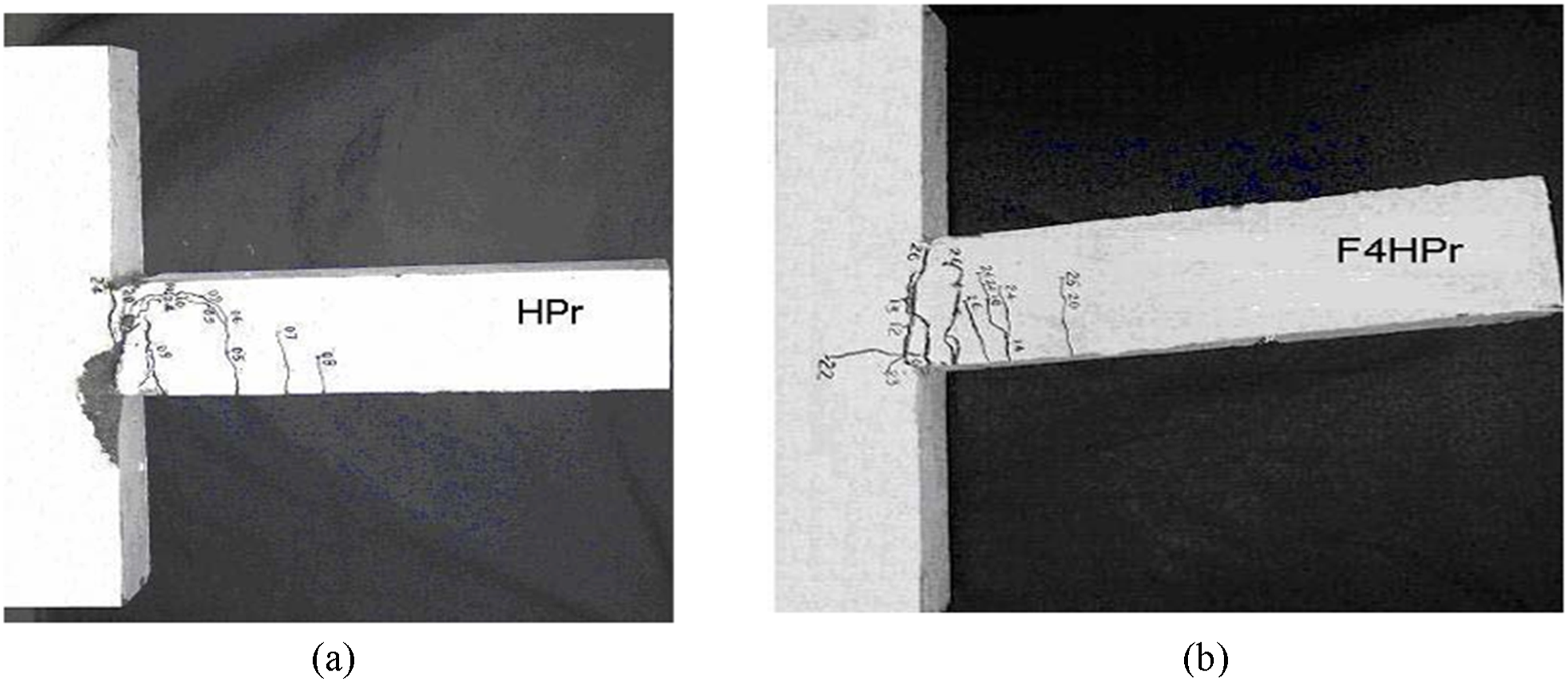
Dora and Hamid (Dora, 2012) investigated the seismic behavior of a full-scale precast BCJ equipped with an SFRC corbel. The sub-assembly was subjected to reversible lateral cyclic loading up to ±1.5% drift. Experimental results indicated that cracks in the cast-in-situ portion of the beam-column joint initiated at a drift of +0.75% (in the pushing direction). The load versus displacement hysteresis loops matched the moment-rotation analysis’s theoretical predictions quite well. The research also evaluated ductility, equivalent viscous damping, secant stiffness, and elastic stiffness. The findings showed that displacement ductility increased as target drift increased, peaking at 2.09. Despite the incorporation of SFRC in the beam-column joint and corbel areas, the precast joint demonstrated limited ductility and showed a tendency for considerable damage when subjected to higher displacement levels caused by lateral loading.
In another study, Tuleasca et al. (Tuleasca et al) evaluated cast-in-place SFRC joints in precast structures using a test rig that simulated the behavior of precast double-tee beams and columns under cyclic loading. The findings showed that SFRC joints experienced minimal deformation and reduced crack widths compared to non-fibrous concrete. With a ductility ratio of 2.63, the SFRC joints demonstrated superior performance with minimal strength degradation. Based on these results, the researchers advocated for the broader use of SFRC joints in seismic design, especially in areas susceptible to plastic behavior, to enhance overall structural safety. Similarly, Shi et al. (Shi et al., 2021b) investigated the seismic performance of BCJ built of SFRHC using pseudo-static tests on seven specimens. Important variables such stirrup ratio, concrete strength, axial compression at column ends, and steel fiber volume were examined. Evaluations were conducted on hysteretic behavior, energy dissipation, ductility, and strength/stiffness degradation. Bending at the beam end and core zone were the main failure modes. Higher stirrup ratios, steel fiber volume, and axial compression improved ductility and energy dissipation, while increased concrete strength slightly reduced ductility. A 1% steel fiber volume raised ductility by 45.2% and energy dissipation by 120%. Increasing concrete strength from 80.1 to 89.5 MPa decreased ductility by 9% but enhanced ultimate load by 4% and energy dissipation by 8%. A 0.6% stirrup ratio in the core improved ductility by 25% and energy dissipation by 20%.
Structural behavior and reinforcement detailing
SFRC has demonstrated significant potential in enhancing the structural performance of BCJ, particularly in terms of reinforcement detailing and overall behavior. Numerous studies have investigated SFRC’s impact on load-carrying capacity, crack control, and seismic performance. Hooda et al. (Hooda et al., 2013) examined the effects of different steel fiber percentages and reinforcing details on exterior BCJ behavior, analyzing specimens with varying fiber compositions and tie spacings. The addition of SF at 0.5%, 1%, and 1.5% significantly improved joint performance, resulting in enhanced ductility, reduced fracture width, greater stiffness, and increased ultimate load-carrying capacity.
In another Study, Filiatrault et al. (Filiatrault et al., 1994) assessed SFRC’s potential to reduce lateral reinforcement in BCJ. Specimens with 1.6% steel fiber content and an aspect ratio of 100 showed improved shear strength and energy dissipation, with plastic hinges forming in the beams rather than joints. These SFRC specimens dissipated about 95% of the energy compared to fully detailed seismic specimens. Despite the benefits, the study highlighted the role of fiber aspect ratio and volume in performance, noting the continued presence of shear cracks. John Craig et al. (Craig et al., 1984) further explored the use of SFRC to mitigate steel congestion in BCJ. The details of the tested specimens are shown in Figure 16. Comparing SFRC specimens with reduced hoop reinforcement to conventional concrete specimens, they observed increased shear and moment capacities, improved concrete confinement, and greater structural integrity in the SFRC specimens. However, the failure mechanisms in SFRC joints remained similar to those in conventional concrete joints. Details of the tested specimens (Craig et al., 1984).
Liu (Liu, 2006) examined the impact of SFRC on shear capacity in BCJ under lateral cyclic loading. Three groups were compared: joints without seismic provisions but with SFRC, joints with SFRC following NZS 3101 guidelines, and reference specimens with full seismic detailing (Figure 17). By improving tensile strength, ductility, energy absorption, and shear resistance, SFRC moved failure modes from joint shear to beam or column flexural failure. However, SFRC alone was insufficient to prevent column bar buckling, emphasizing the importance of adequate hoop reinforcement. In a related study, Rohm et al. (Röhm et al., 2012) evaluated the effects of various parameters, including longitudinal reinforcement ratios, the number of hoops, SFRC portion lengths, and steel fiber volumes. Their findings showed that while SFRC reduced joint damage compared to reference specimens, it did not significantly enhance the anchorage of large-diameter bars. Test specimen details, (a) first group, (b) second group, and (c) tired group (Liu, 2006).
Sachdeva et al. (Sachdeva et al., 2021) studied the behavior of SFRC BCJ with an emphasis on anchorage capacities using headed bars. The specimens were evaluated at steel fiber volumes of 1% and 1.5%, while the concretes were at C20 and C40 grades. Based on the study, the anchorage capacity and the overall structural integrity of the headed bar were significantly enhanced. Specimens prepared with SFRC showed improved ductility and energy absorption with the highest values being reported for samples containing 1.5% SF. Moreover, an anchorage capacity-predicting non-linear regression model obtained in the investigation generally agreed well with experimental results and showed that SFRC is capable of enhancing seismic performance and durability.
Through increased ductility, decreased crack propagation, and improved load-carrying capacity, SFRC has shown to be useful in improving the structural behavior of BCJ. Although challenges such as shear cracks and bar buckling persist, SFRC, when combined with appropriate reinforcement detailing, provides a robust solution for reinforcing concrete structures.
Flexural behavior and load-deformation characteristics
SFRC can significantly enhance the performance of BCJ, particularly their flexural behavior and load-deformation characteristics. Due to its superior strength, ductility, and energy dissipation capabilities, SFRC is essential for assessing the durability of structural components under various loading conditions.
For Instance, Sharma et al. (H.K. Sharma et al., 2015) investigated the flexural behavior of 1/4-scale steel-fiber BCJ, focusing on corner BCJs. Ten BCJs were cast using high-performance fiber-reinforced concrete (HPFRC), while control specimens were fabricated with conventional HPC. The steel fiber content varied from 0% to 12%. The study examined failure modes and load-deformation behavior under monotonic loading. HPFRC specimens demonstrated substantial improvements in compressive, split tensile, and flexural strengths, surpassing HPC specimens by 78%, 144%, and 646%, respectively. These findings highlight SFRC’s effectiveness in enhancing the flexural performance and structural integrity of BCJ.
Collectively, these studies highlight the advantages of incorporating SF in BCJ, especially in improving flexural behavior and load-deformation characteristics. SFRC’s ability to enhance ductility, strength, and energy dissipation establishes it as a valuable material for designing resilient structural systems.
Hybrid fiber reinforcement and cyclic loading
Hybrid fiber reinforcement has proven to be a promising approach for enhancing the seismic performance of BCJ by improving ductility and energy dissipation. To evaluate the impact of different steel and polypropylene fiber combinations on the behavior of the structure under cyclic loading, recent studies have investigated these combinations. High-performance hybrid fiber-reinforced concrete BCJ under reverse cyclic loading were studied by Ganesan et al. (Ganesan et al., 2014). A mixture of 0.3%, 0.15%, and 0.20% polypropylene with 0.5% and 1% SF was employed to cast 12 BCJ using M60 grade concrete. The results of the tests indicated that the ductility factor, ultimate load, and first-crack load were all enhanced by the SF. Notably, when compared to standard specimens, a blend of 1% steel and 0.15% polypropylene fibers performed better.
Madheswaran et al. (Madheswaran and Ravichandran, 2019) examined the impact of hybrid SF on the strength and ductility of BCJ. They tested three types of specimens: a control with normal concrete, one with 1% SF as per IS 456, and another with 1% SF as per IS 13920. The specimen with SF according to IS 13920 demonstrated a 37.5% increase in load-bearing capacity, a 74.03% increase in ductility, and a 117.4% improvement in cumulative energy absorption compared to the control specimen, highlighting the significant seismic resilience provided by SF. Additionally, under reversed cyclic loads, Perumal and Thanukumari (P. Perumal and Thanukumari, 2011) investigated the use of high-performance concrete (HPC) and cocktail fiber-reinforced HPC (CF-HPC) for external BCJ. There were five BCJ evaluated. The studies revealed that, in comparison to HPC, fiber-reinforced concrete increased both the ultimate and initial crack loads. The 1.5% steel and 0.2% polypropylene fiber combination performed well in terms of strength, ductility, and energy dissipation capacity. Moreover, Ghosni et al. (124) evaluated the mechanical characteristics of concrete reinforced with SF and polypropylene fibers. Through their analysis, the impact of fiber volume percentage on the mechanical characteristics of both fresh and hardened concrete was evaluated. The indirect tensile strength showed notable improvements in mechanical properties, increasing by 21% in concrete with 0.5% by volume of 30 mm SF and by 45% in concrete with 1% of steel fiber. In an additional study, Noorhidana and Forth (Noorhidana and Forth, 2021) examined the performance of SFRC in precast concrete BCJ subjected to seismic loading. Their tests revealed that specimens containing 1% SF achieved a 40% increase in energy dissipation compared to those with 0.5% SF. Furthermore, the 1% steel fiber specimens demonstrated enhanced hysteretic behavior, delayed crack formation, and reduced crack severity, leading to improved overall seismic performance. The patterns of crack formation are illustrated in Figure 18. Crack patterns within the joint core (cast-in-place concrete) for two specimens: (a) with 0% steel fiber reinforcement (Vf = 0%) and (b) with 1% steel fiber reinforcement (Vf = 1%) (Noorhidana and Forth, 2021).
The shear strength of steel fiber-reinforced external BCJs with different anchorage details was studied by Son et al. (Son et al., 2024). The kind of SF, the anchorage technique, and the arrangement of the hoops were among the variables that were examined on seven specimens. To assess performance, reversed cyclic loading experiments were carried out. The study discovered that anchorage details had no effect on peak loads, however SF greatly increased joint shear strength. Failure analysis revealed that using hooked bars reduced shear distortion in joints with SF, while headed bars mitigated pull-out deformation. SFRC achieved comparable anchorage performance even without transverse reinforcement. The analysis of SFRC joints highlighted that accurate predictions of shear strength depend on considering anchorage length and concrete tensile strength.
Niwa et al. (Niwa et al., 2012) tested eight one-sixth scale specimens, based on Japan’s rigid-frame railway bridge design, to evaluate the effects of SF on external and knee joints following the Hyogo-ken Nambu earthquake. To compensate for a 29.2% reduction in steel reinforcement, SF were added at volumes of 0%, 1%, and 1.5%. Despite reduced reinforcement, the addition of 1.5% SF significantly improved load capacity, ductility, stiffness, and energy dissipation. However, anchorage failure and rebar debonding occurred in non-reference joints, even with 1.5% fibers. The performance of external BCJ reinforced with SIFCON (Slurry Infiltrated Fiber Concrete) laminates was also examined by Balaji and Thirugnanam (Balaji and Thirugnanam, 2013). Six specimens were evaluated under cyclic loading in accordance with IS 13920-1993 criteria using an M30 concrete mix and 9% crimped SF. When compared to conventional joints, the SIFCON-reinforced joints demonstrated higher stiffness, ductility, energy absorption, and ultimate load capacity.
Advanced design and modeling approaches
Recent advancements in the design and modeling of SFRC BCJ have notably enhanced their performance, particularly under seismic loads. The integration of SFRC with various reinforcement technologies addresses traditional issues such as limited ductility and susceptibility to damage. For instance, Ngo et al. (Ngo et al., 2020) explored the effectiveness of exterior dry joints reinforced with SFRC and CFRP bolts under cyclic lateral loads. This study aimed to overcome challenges related to limited ductility and corrosion susceptibility. Testing various specimens with differing levels of prestress, they found that high prestress could increase load-carrying capacity by up to 20%. SFRC significantly improved ductility and energy dissipation, reduced inclined cracks, and enhanced overall seismic performance. The concrete-end-plate design showed superior stiffness compared to monolithic joints. The research concluded that combining SFRC with CFRP bolts optimizes joint performance, making these joints suitable for both earthquake-prone and non-earthquake regions. Furthermore, Guan et al. (Guan et al., 2023) tested four full-scale precast hybrid steel-reinforced concrete (SRC) BCJs under cyclic loads. The idea behind these creative connections was to use partially precast steel-reinforced concrete (PPSRC) components to shift the plastic hinge away from the joint contact. By adjusting the axial compression ratios, concrete types (ordinary vs steel-fiber reinforced), and connection techniques (monolithic vs precast), the researchers assessed the seismic performance of the PPSRC connections. PPSRC connections fared better than monolithic connections in terms of energy dissipation, failure modes, strength, ductility, and stiffness degradation.
The application of engineered cementitious composites (ECC) to decrease transverse reinforcement spacing in the joints and plastic hinge zones of ductile moment-resisting frame structures was examined by Suryanto et al. (Suryanto et al., 2022). Using two ECC BCJs and their companion specimens, the damage-tolerant concrete ECC was tested under reversed cyclic loading, in contrast to ordinary concrete and SFRC. Figure 19 shows details of the reinforcement and the test specimens. The study provided a comprehensive analysis of seismic features, including digital crack maps showing damage progression. The results indicated that ECC specimens, despite having relaxed detailing, exhibited seismic performance comparable to, and sometimes better than, the control specimens designed according to seismic standards. ECC specimens demonstrated a broader hysteresis loop with less pinching and reduced residual drifts than SFRC specimens, exhibiting equivalent overall performance. Large displacement reversals caused significant cracking in the concrete examples, while the ECC joints held up well throughout the testing. The cracking patterns for both kinds of specimens are shown in Figure 20. Details of the reinforcement and test specimen dimensions: First, RC; then, ECC; and last, ECC and SFRC. The regions where ECC or SFRC was applied are indicated by the shaded areas in (b) and (c). (d) Beam-column joint testing setup with reversed cyclic loading (Suryanto et al., 2022). Images of the joint areas after the specimens were tested: (a) RC, (b) ECC, and (c) SFRC (Suryanto et al., 2022).

Khalaf and Qissab (Khalaf and Qissab, 2020) conducted cyclic loading tests on interior BCJ to assess the impact of S inclusion on ductility and energy dissipation. Two groups of specimens were subjected to reversed vertical cyclic loading, with different stirrup configurations and steel fiber contents. In comparison to regular concrete, the study found that steel fiber greatly improved ductility and energy dissipation. Specimens in Group G1, which used optimal steel fiber ratios and stirrup arrangements, exhibited notable performance gains, potentially reducing the need for additional stirrups. Group G2, using higher fiber ratios, faced challenges due to asymmetrical geometry.
Similarly, Jianxin Zhang et al. (Zhang et al., 2023) examined the seismic performance of high-strength steel (HSS) and high-strength SFRC (HSSFRC) exterior BCJ. Cyclic loading was applied to eight joints, with variations in reinforcement strengths and concrete types. HSSFRC significantly improved load-bearing capacity, delayed cracking, enhanced energy dissipation, and reduced bond-slip. Key factors included reinforcement strength, concrete distribution, and shear compressive ratios. For SEJH1 and EJH1, using 600 MPa HSS reduced reinforcement by 22.6% while increasing flexural strength by 9%. For other specimens, reinforcement was reduced by 33.3% with only a 6% decrease in flexural strength due to improved yield strength. HSS joints with 400 MPa reinforcements displayed similar failure mechanisms, energy dissipation, and secant stiffness. Replacing 400 MPa bars with fewer 600 MPa bars in beam longitudinal reinforcements enhanced seismic performance and reduced congestion. The joint core’s ductility, slippage, concrete crushing, and shear deformation were all enhanced by HSSFRC, however peak load and secant stiffness were not much affected. The combination of HSSFRC with HSS bars substantially improved seismic resilience, underscoring the need for updated design guidelines. In another study, Patel et al. (Patel et al., 2024) assessed the effectiveness of SFRC in enhancing exterior beam-column joint performance under cyclic loading. SFRC was incorporated into critical regions of six specimens, using 60 mm long SF at a 2% volume fraction. SFRC specimens exhibited significant improvements in energy dissipation, ductility, stiffness, and reduced damage. Seismic energy absorption capacity increased by 240%–340%, displacement ductility and damping capacity improved, joint shear strength increased, and shear cracks were delayed, resulting in superior seismic resilience and overall structural performance.
Given the promising yet varied experimental findings on SFRC BCJ, numerical approaches offer a complementary perspective. While physical experiments provide valuable insights, they are often limited by the complexity of variables and practical constraints, such as scale and cost. Numerical simulations allow researchers to explore SFRC behavior under conditions challenging to replicate experimentally, enabling more extensive parametric studies to validate and expand upon experimental results.
Numerical approaches for evaluating SFRC BCJ
SFRC has demonstrated considerable enhancements in the seismic behavior of beam-column connections, as highlighted by various finite element modeling (FEM) studies. These models leverage SFRC’s enhanced material properties to accurately predict joint behavior under seismic loading conditions.
For Instance, Noor et al. (Noor et al., 2024) assessed the performance of SFRC BCJ under cyclic loading using a displacement-controlled quasi-static hysteretic loading method, following the guidelines of FEMA-461. They developed a finite element (FE) model in ABAQUS, incorporating stress-strain curves for plain concrete, SFRC, and steel, as well as various constitutive models to represent both elastic and plastic behaviors. The model included SF with specific constitutive laws to reflect their impact on the concrete matrix. An elastic-perfectly plastic model for steel, featuring an optimal viscosity parameter of 0.002, was utilized to enhance both accuracy and stability. The FE model predicted load-deflection behavior with an average error of 8% compared to experimental results (see Figure 21) and accurately simulated crack patterns (see Figure 22). Longer aspect ratios and higher steel fiber volume fractions improve ductility, crack resistance, and load capacity, according to the parametric analysis. The study underlined the crucial impact of fiber properties on structural behavior by recommending an ideal fiber volume fraction of 2% and an aspect ratio of 60 for attaining the greatest SFRC joint performance. Skeleton curve of calibrated model (Noor et al., 2024). Failure patterns (Noor et al., 2024).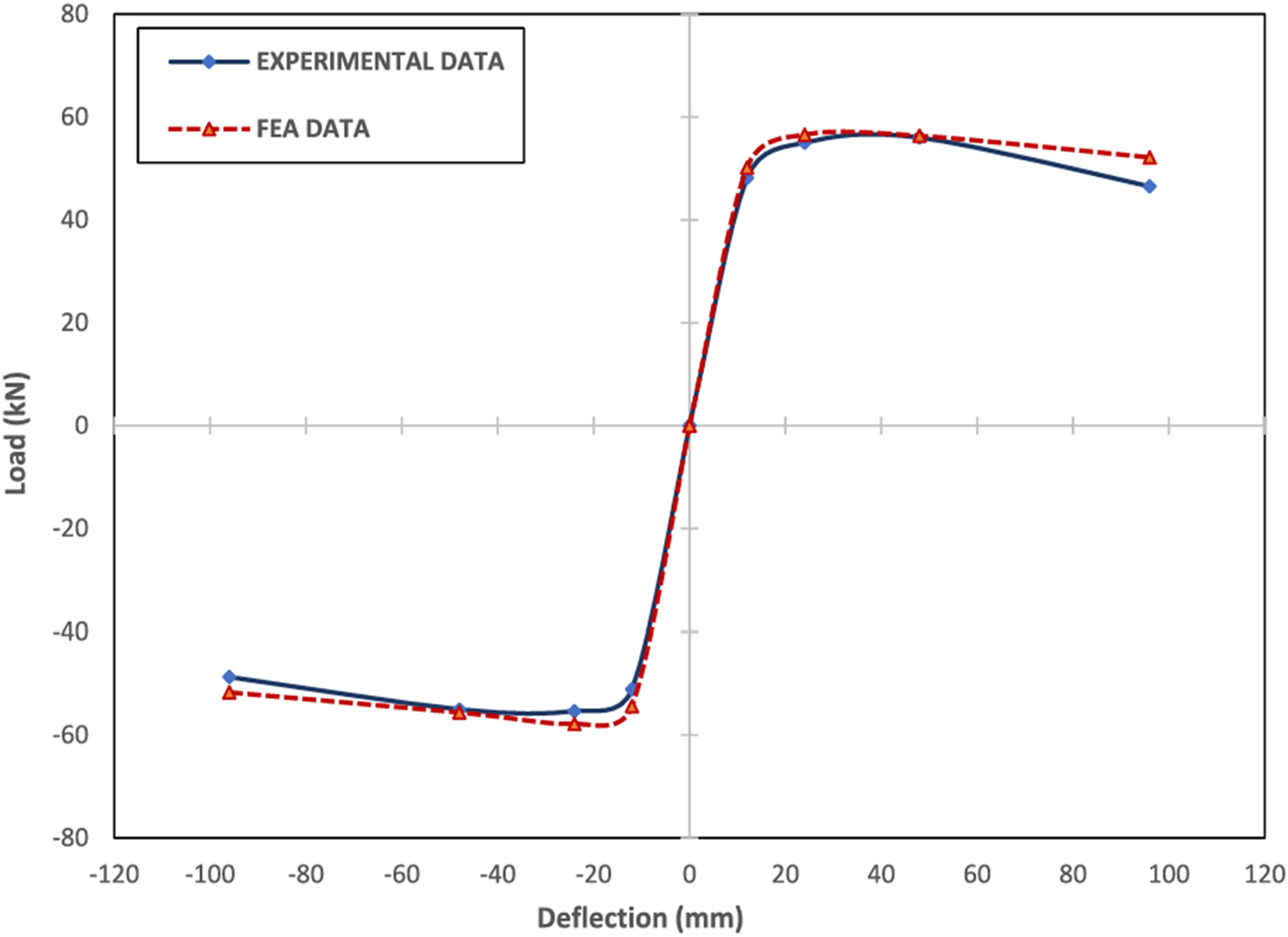

Similarly, Yimer and Aure (Adem Yimer and Aure) investigated the seismic behavior of BCJ made of SFRC under cyclic loading using finite element analysis. Their study focused on how varying axial loads influenced the performance of these joints. Using ABAQUS/Standard and a damaged plasticity model, they validated their model against experimental data (Figure 23). Six SFRC specimens were subjected to reversed cyclic loading; each specimen had a different column axial load ratio but a constant 2% steel fiber volume percentage. The load-carrying capacity, stiffness, energy dissipation, and failure modes were among the factors that the researchers examined. They found that increasing axial load delayed cracking and damage, slightly improved joint stiffness, and enhanced initial energy dissipation. Notably, no joint cracks occurred up to 50% of the column’s axial load capacity. Concrete crushing in the column was shown to cause a minor reduction in cyclic stiffness after this. These results suggest that while higher axial loads can enhance SFRC beam-column joint confinement, there may be a threshold beyond which adverse consequences become apparent. Comparing the cracks in the specimen at the point of failure (Adem Yimer and Aure).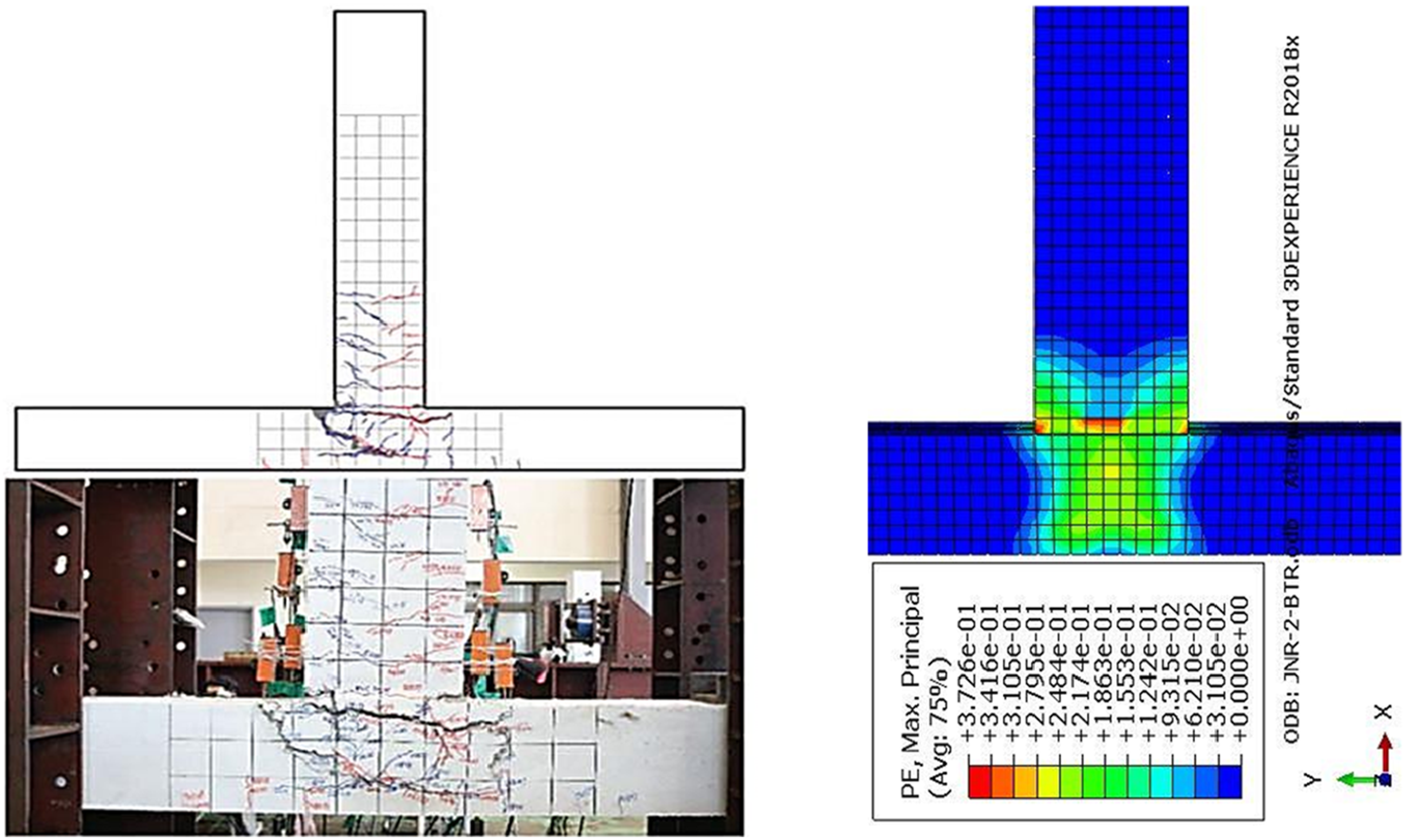
Campione et al. (Campione et al., 2024) investigated the flexural behavior of SFRC in external BCJ to enhance seismic resistance. By comparing specimens made with plain concrete to those incorporating 1% hooked SF, the study demonstrated that SFRC substantially improves shear strength, reduces cracking, and enhances energy dissipation. SFRC specimens showed better crack control and increased ductility, with no cracks observed in the nodal region and plastic hinges forming in the beam. The study provided design recommendations consistent with ACI 318 and Eurocode 8, highlighting SFRC’s superior performance over plain concrete in managing crack propagation and strengthening joints (see Figure 24). Damage seen in ABAQUS between SFRC specimens and a simple concrete specimen (Campione et al., 2024).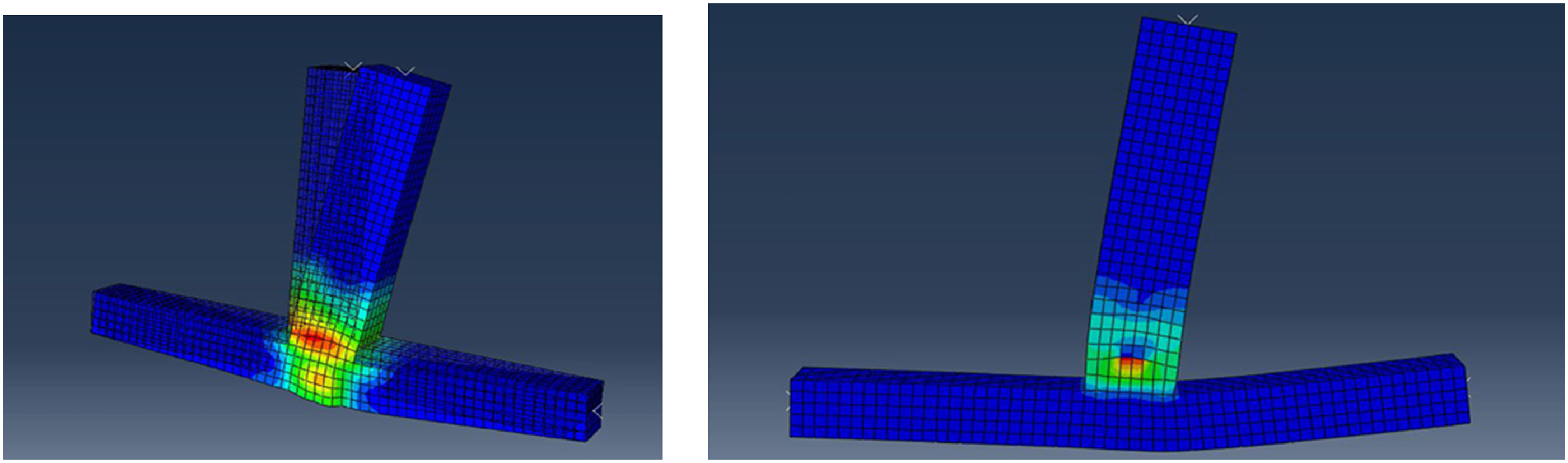
Ke Shi et al. (Shi, Zhang, Zhang, Xue, et al., 2021) developed a finite element model in ABAQUS to predict the cyclic behavior of BCJ built of steel fiber-reinforced high-strength concrete (SFRHC). The model, validated by comparison with experimental data, identified three distinct loading phases: elastic, elastic-plastic, and failure. The results of the investigation shown that while higher concrete strength may cause a decrease in ductility, increasing the steel fiber volume ratio greatly increased peak load capacity and ductility. These findings underscore the importance of optimizing steel fiber content and stirrup ratios to enhance seismic performance, offering valuable guidance for designing more resilient structures in earthquake-prone regions. Additionally, the research highlighted the need for further studies covering a broader range of materials, loading conditions, and assessments of long-term performance (refer to Figure 25). The specimen’s failure model: (a) The test’s core joint; (b) The test’s beam; and (c) The FE analysis (Shi, Zhang, Zhang, Xue, et al., 2021).
Banu et al. (Banu et al., 2023) looked into the behavior of BCJ reinforced with SFRC under cyclic loading. Three categories were created from test specimens: Type A followed the Indian Ductile Detailing Code (IS 13920 – 2016); Type B added SF to the joint area while adhering to IS 456 and SP 34; and Type C included concentrated SF in the critical joint zone in addition to ductile detailing (Figure 26). Reverse cyclic displacement was applied at the beam end. The Concrete Damage Plasticity (CDP) model was used to create a 3D numerical model in ABAQUS/CAE (version 6.14) that replicates the nonlinear behavior of concrete. Specimens with 1.5% steel fiber content and ductile detailing exhibited the best performance, with an average deviation of less than 10% between finite element analysis and experimental results. SFRC significantly improved diagonal tension capacity, shear strength, and durability, leading to enhanced load-carrying capacity, reduced stiffness degradation, and greater ductility. SFRC beam column Joint (Banu et al., 2023).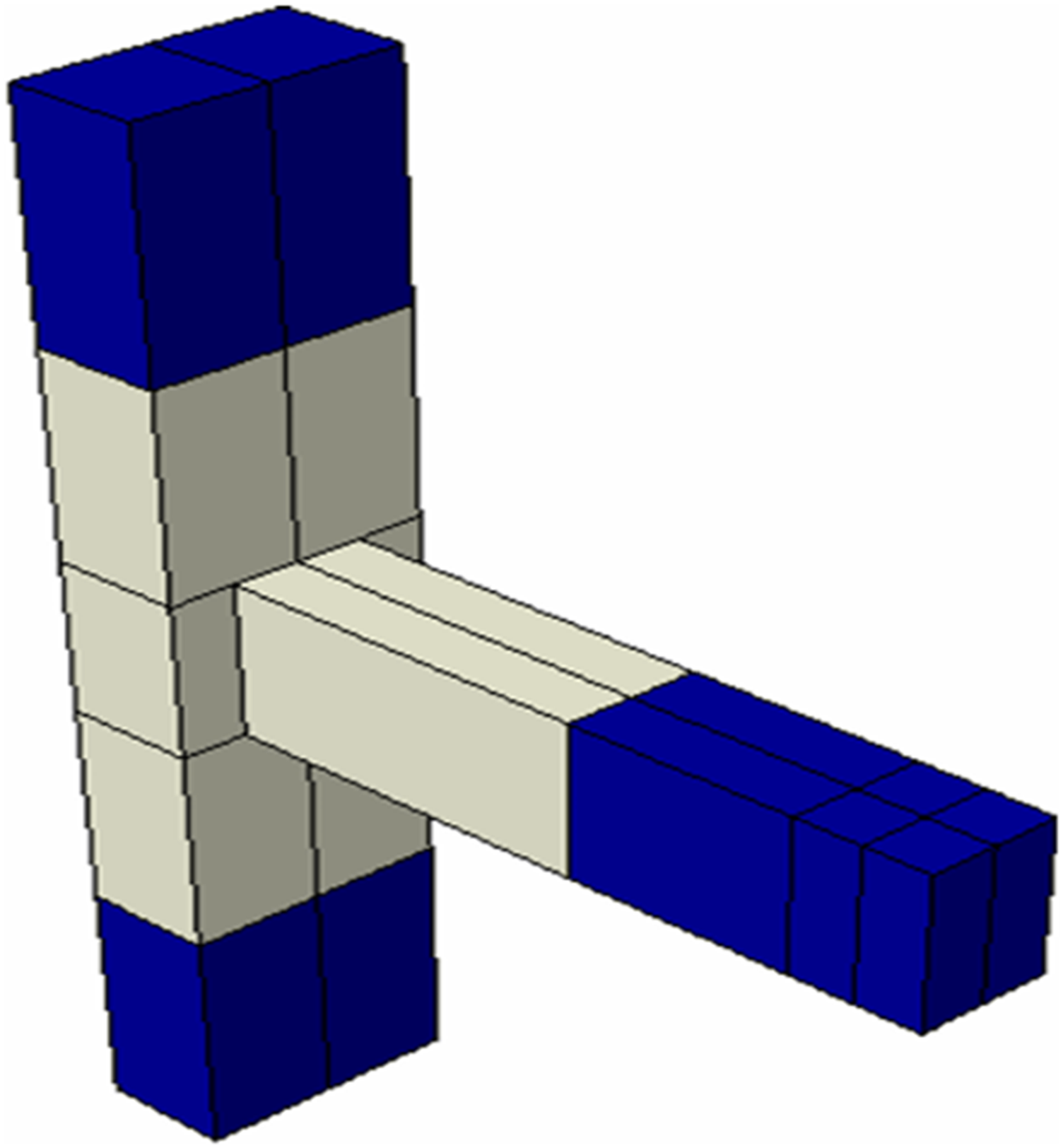
Yimer and Aure (Yimer and Aure, 2022) conducted numerical simulations to investigate SFRC BCJ, addressing reinforcement congestion issues common in traditional concrete joints. They used ABAQUS with a three-dimensional eight-node hexahedral element and the CDP model to accurately capture nonlinear material behavior. Their results demonstrated that SFRC significantly enhanced compressive strength, tensile behavior, and overall joint performance under cyclic loading. The study highlighted that increased steel fiber content notably improved ductility, energy dissipation, and stiffness retention, confirming SFRC as a superior alternative to traditional concrete for applications in earthquake-prone regions.
Hait and Das (Hait and Das) explored the impact of SF on the performance of BCJ under cyclic loading. They designed and tested specimens with a strong-column weak-beam configuration. Finite element modeling was conducted in ANSYS, where they carefully selected element types, assigned material properties, and meshed the geometry to ensure precise simulations. The models were iteratively refined to closely match the physical behavior of the joints. According to their finding, which is depicted in Figure 27, SF greatly increased the joints’ toughness and energy absorption capacity, enhancing their resistance to cracking and postponing failure under cyclic loading. The study concluded that incorporating SF, including those from lathe shop scraps, into BCJ significantly boosts their durability and seismic performance, particularly when designed according to IS 13920:1993. The initial cracks happened closer to the BCJ (Hait and Das).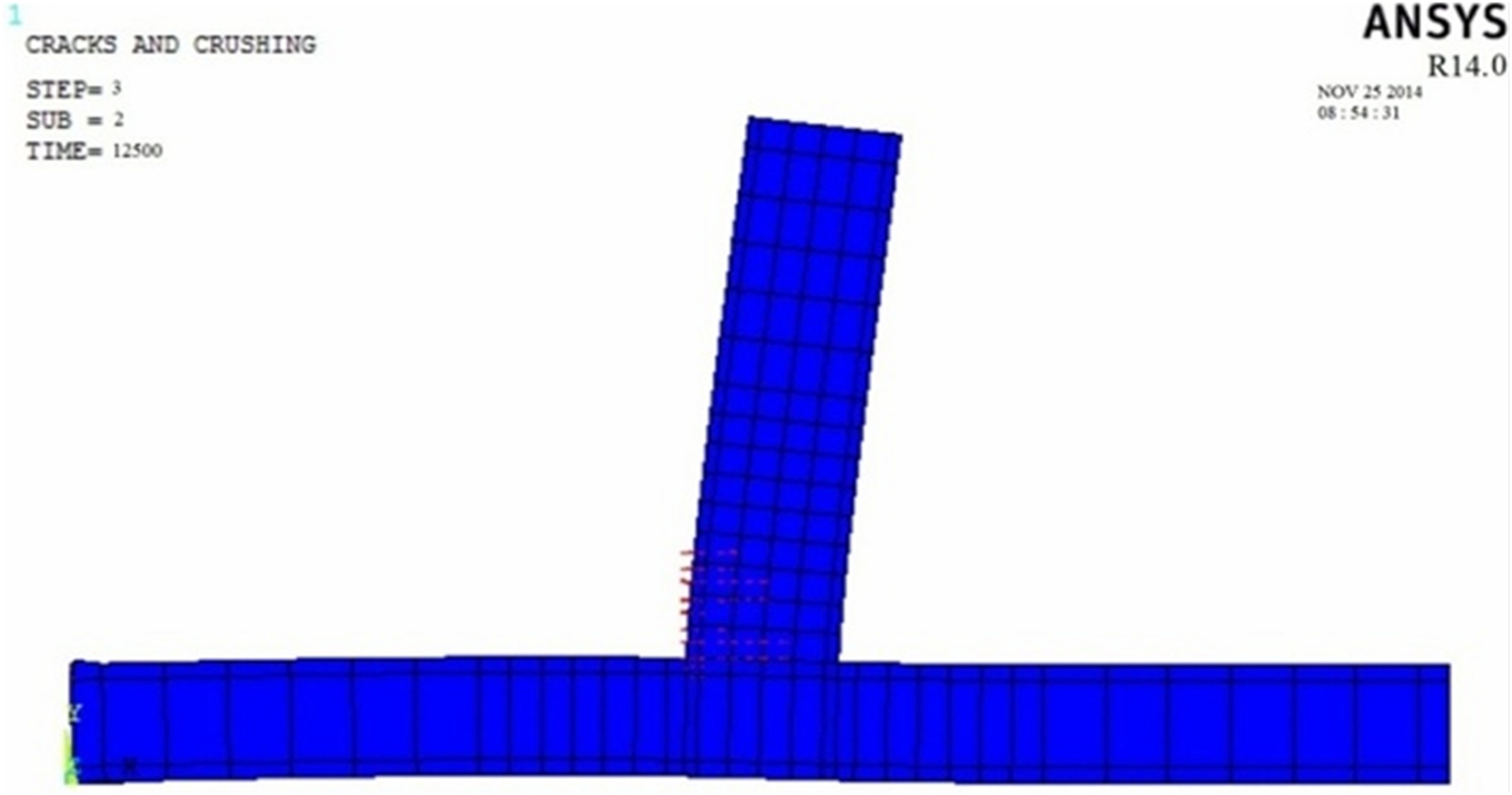
Abbas et al. (Abbas et al., 2014) carried out a numerical simulation of the cyclic behavior of SFRC using the NLFEA model. The researchers aimed to determine whether SF would enhance the structural performance of RC joints by enhancing the ductility and offsetting the loss of conventional reinforcement. They prepared both external and internal beam-column joint specimens with hooked-end SF by varying the fiber content for the comparison of its effect on the joint performance. The results obtained from both experiments and numerically were compared, which indicated that the addition of the SF significantly improved the residual tensile strength, load-carrying capacity, and ductility under seismic conditions but not improved cracking stresses. This research also led to creating a simplified design equation that would assist in determining the proper amount of fiber to replace the stirrups of a standard stirrup without any loss of joint integrity.
Further extending these findings, Chai et al. (Chai et al., 2017) developed an FEA model using LUSAS software to analyze SFRC-precast concrete corbels under varying volumes of SF content. The numerical model was validated against experimental data and used to predict the structure’s performance regarding the SFRC corbel. The greater SF effect on stress distribution resulted in a 9.25% increase in the ultimate shear load of corbels, according to the results. The average increase in stiffness and ductility ratio was 11.80% and 8.95%, respectively, for every 0.5% increase in SF volume. The failure mode would change from brittle bending-shear failure to more ductile flexural failure with the addition of SF. Additionally, compressive crushing failure would be lessened, and tensile fractures would be critically eliminated. The results also implied that introducing SF into precast components can enhance the safety and resilience of structures, thereby affecting construction specifications. Further research in this regard, Barure et al. (Barure et al., 2020) investigated the behavior of BCJ composed of SFRC under blast loading using finite element simulations in ANSYS 16 Workbench. According to this study, adding SF significantly increases ductility and performance under high loading scenarios. Specifically, the total deformation in SFRC joints was less by 4% from traditional concrete, and equivalent stresses were increased by 10%, thus signifying improvements toward elasticity and strength. The research directs toward the potential benefit of SFRC in improving resilience against blast loads.
In another study, Kumar et al. (Saravana Kumar et al) examined how steel fiber reinforcement influences the performance of BCJ in high-strength concrete, particularly in relation to seismic behavior. The study used Ultratech OPC Cement, silica fume, river sand as fine aggregate, and HYSD (Fe 415) bars for reinforcement. In order to create exterior BCJ that complies with IS 13920, both with and without steel fiber reinforcing, a seven-story RCC framed building that was built in STAAD Pro was used as a model. In order to attain workability and strength in casting, high-range water reducers were employed. High levels of steel fiber reinforcement improved the seismic behavior of beam-column connections, according to experimental data. Even when compared to standard concrete, the stiffness and ductility of joints were enhanced with steel fiber reinforcing. In addition, the incorporation of SF reduced the anchorage requirements, made construction easier, and maintained excellent structural performance. The paper concluded that the steel fiber reinforcement significantly improved the seismic resistance of the BCJ, and its use must be made in earthquake-resistant areas.
Overall, these numerical studies highlight the considerable benefits of SFRC in improving beam-column joint performance, including enhanced load-carrying capacity, ductility, and seismic resilience. However, in spite of such developments, some of the problems associated with reinforcement configuration and extreme load conditions need further research.
Discussion
The review of experimental and numerical studies on SFRC BCJ highlights significant progress in addressing the limitations of traditional concrete reinforcement, particularly in seismic applications. Several key themes emerge from the literature, providing insights into the structural behavior of SFRC joints and the potential for its broader application in civil engineering structures.
Enhanced ductility and crack control
One of the most consistent findings across the studies is the improvement in ductility and crack control when SFRC is integrated into BCJ. This is particularly important under seismic loading, where the ability of a structure to undergo large deformations without significant loss of strength is critical. Experimental investigations, such as in Henager (Henager, 1977), present lower crack counts and better shear performance of the SFRC joints compared to the conventionally reinforced joints. This is further justified by numerical investigations, where crack formation is delayed, and also crack widths are reduced for SFRC, which is due to the effect of fiber bridging.
However, while SFRC effectively enhances ductility, it does not entirely eliminate the formation of shear cracks in BCJ under severe loading. In fact, according to Gencoglu and Eren (Genço et al), even if cracking is less, the fiber does not prevent failure. In other words, at the end of this subsection, it can be concluded that although fibers create a more resilient joint, they are hardly enough to replace classical reinforcement in the most highly stressed zones and consequently fiber content needs to be optimized, as well as their placement.
Seismic resilience and energy dissipation
The literature highlights the role of SFRC in improving the seismic performance of BCJ, with notable improvements in energy dissipation. Specifically, studies by Filiatrault et al. (Filiatrault et al., 1994) and Scariah et al. (Scariah et al., 2015) have indicated that the SFRC joints can dissipate an important percentage of seismic energy and, consequently, reduce the risk of a collapse failure event in seismic action. The major advantage of SFRC is that it can change the mode of failure from brittle to ductile, hence making a structure absorb energy before collapse.
Nevertheless, despite these advantages, there are still challenges related to optimizing the volume and distribution of SF within the concrete mix. For example, higher fiber content increases energy dissipation but reduces workability and increases costs. The balance between these factors remains something to be further explored, especially in large-scale applications where cost-effectiveness becomes critical.
Limitations of current design codes
The review of code provisions for SFRC BCJ reveals a gap between experimental findings and current design guidelines. Although standards like ACI-ASCE and EN 1998 provide some guidance on joint shear strength and reinforcement requirements, they do not fully account for the benefits of SF in enhancing joint performance. As noted in several studies, including those by Zhang et al. (W Zhang et al., 2022), current codes often overlook the contribution of fibers to shear resistance, leading to potentially conservative designs.
The need for updated design codes that incorporate the effects of SFRC is evident. Future revisions should consider experimental and numerical evidence that supports the use of SFRC in reducing reinforcement congestion, improving ductility, and enhancing seismic resilience. Additionally, more research is needed to develop reliable design equations that can predict the performance of SFRC joints under varying load conditions.
Advanced numerical modeling, comparative studies, and validation of SFRC beam-column joints
Numerical modeling has emerged as a pivotal tool for evaluating the seismic performance of Steel Fiber Reinforced Concrete (SFRC) Beam-Column Joints (BCJ). Studies such as those by Noor et al. (Noor et al., 2024) and Yimer and Aure (Adem Yimer and Aure) demonstrate the effectiveness of FEA in replicating experimental results, with an average error of 8% in load-deflection behavior predictions. However, the accuracy of these models is highly dependent on the constitutive laws and material properties assigned to SFRC, steel fibers, and reinforcement.
A comparative analysis of numerical approaches reveals distinct methodologies and their respective strengths. For instance, Noor et al. (Noor et al., 2024) employed ABAQUS with an elastic-perfectly plastic model for steel and a Concrete Damage Plasticity (CDP) model for SFRC, which effectively captured crack patterns and ductility enhancements. In contrast, Yimer and Aure (Adem Yimer and Aure) focused on the influence of axial loads using a damaged plasticity model, validating their results against experimental cyclic loading tests. These studies underscore the importance of selecting appropriate material models to reflect the nonlinear behavior of SFRC, including fiber-matrix interactions and post-cracking tensile resistance.
Validation methods for numerical models vary, with some studies relying on direct comparisons with experimental load-displacement curves (Noor et al. (Noor et al., 2024)), while others employ parametric analyses to assess sensitivity to fiber volume fraction and aspect ratio (Shi et al. (Shi et al., 2021b)). The integration of advanced techniques, such as nonlinear finite element analysis (NLFEA) and modified compression field theory (MCFT), further enhances predictive accuracy. For example, Zhang et al. (W Zhang et al., 2022) developed an MCFT-based model that outperformed traditional ACI 318-14 predictions in shear strength estimation, demonstrating the potential for refined theoretical frameworks. Despite these advancements, challenges persist in modeling long-term performance, fatigue, and extreme loading conditions. Discrepancies between experimental and numerical results often arise from simplifications in fiber distribution assumptions or boundary conditions.
Conclusion and future research directions
The integration of SFRC in BCJ has demonstrated significant improvements in seismic performance, crack control, and energy dissipation. However, challenges such as optimizing fiber content, refining numerical models, and validating large-scale applications remain. Addressing these gaps through targeted research particularly in durability, hybrid systems, and code development will facilitate the widespread adoption of SFRC in seismic-resistant structures. Collaborative efforts between academia and industry are essential to translate laboratory findings into practical, code-compliant solutions.
Optimization of steel fiber content, distribution, and orientation
While SFRC has been shown to enhance BCJ performance, further research is required to determine the optimal fiber dosage, aspect ratio, and orientation under varying loading conditions. Advanced experimental studies coupled with numerical modeling can improve predictive models for fiber dispersion and its effect on mechanical behavior. The influence of manufacturing techniques and concrete mix design on fiber orientation should also be investigated to maximize performance.
Long-term performance and durability studies
The impact of environmental factors such as temperature fluctuations, moisture exposure, and chemical attacks on SFRC BCJ remains underexplored. Future research should include: • Long-term cyclic loading and fatigue behavior analysis. • Post-seismic residual strength assessments. • Corrosion resistance of embedded steel fibers. • The effects of aging on mechanical properties and crack propagation.
Advanced numerical modeling and AI-driven simulations
Current finite element models require refinement to better capture SFRC behavior under seismic and extreme loading conditions. Integrating artificial intelligence (AI) and machine learning in predictive modeling can enhance the accuracy of simulations, particularly in: • Crack propagation and fiber pullout mechanisms. • Fiber-concrete interaction at different strain rates. • Long-term degradation modeling using deep learning techniques.
Large-scale experimental validation and practical implementation
While laboratory-scale studies have highlighted SFRC’s advantages, large-scale structural testing is necessary to validate its effectiveness in real-world applications. Pilot projects in seismic-prone areas should be initiated to assess SFRC’s practical feasibility. Additionally, cost-benefit analyses are essential to determine economic viability in infrastructure projects.
Code development and standardization
Existing design codes, such as ACI 318 and EN 1998, do not fully account for SFRC’s contribution to shear strength and ductility. Future research should focus on: • Proposing design equations that incorporate SFRC-specific parameters. • Developing standardized testing methodologies for SFRC BCJ. • Establishing performance-based criteria for SFRC integration into seismic design standards.
Hybrid reinforcement strategies for enhanced seismic resilience
Hybrid fiber reinforcement (e.g., combining steel, polypropylene, and basalt fibers) has been studied in other structural applications but remains underexplored for BCJ. Future research should evaluate: • The combined effects of hybrid fibers on shear strength, flexural performance, and energy dissipation. • The interaction between hybrid fibers and conventional reinforcement detailing. • Optimized hybrid fiber combinations to balance workability, mechanical properties, and cost.
SFRC BCJ performance under extreme loading conditions
While SFRC has been studied extensively under seismic conditions, its behavior under extreme events requires further investigation. Future studies should be examined: • Fire resistance, including post-fire residual strength, thermal degradation mechanisms, and recovery strategies. • Blast and impact resistance, with a focus on progressive collapse mitigation. • The development of impact-resistant SFRC formulations for critical infrastructure and military applications.
By addressing these research directions, SFRC technology can be further refined to create more resilient, efficient, and cost-effective structural solutions. Prioritizing large-scale validation, advanced numerical modeling, and code integration will be crucial for SFRC’s widespread adoption in modern construction practices.
Footnotes
Author contributions
Umar Ahmad Noor led the research effort, conceptualized the study, designed the methodology, conducted an extensive and in-depth literature review, analyzed and synthesized key findings, and wrote the full manuscript. He also ensured the academic rigor, coherence, and originality of the review. Muhammad Faisal Javed and Khan Shahzada contributed to enhancing the originality and scholarly value of the review by critically evaluating the content, refining key arguments, and validating the findings. All authors approved the final version of the manuscript.
Declaration of conflicting interests
The author(s) declared no potential conflicts of interest with respect to the research, authorship, and/or publication of this article.
Funding
The author(s) received no financial support for the research, authorship, and/or publication of this article.

Data Availability Statement
All data supporting the findings of this study are included in the manuscript. For any additional data requests or inquiries, please contact Umar Ahmad Noor at
Appendix
Summary of Research Studies Cited in the Literature Review.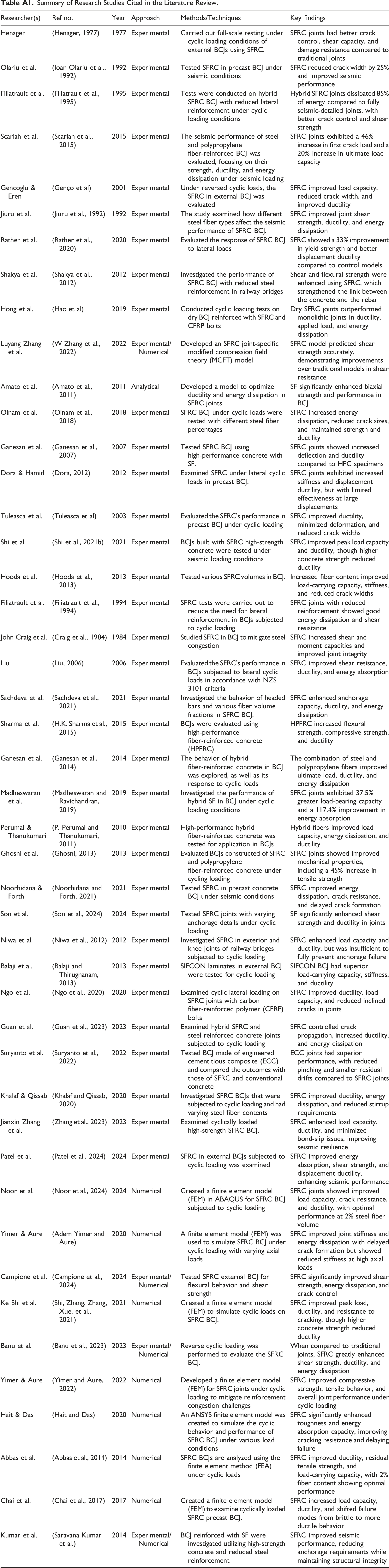
Researcher(s)
Ref no.
Year
Approach
Methods/Techniques
Key findings
Henager
(Henager, 1977)
1977
Experimental
Carried out full-scale testing under cyclic loading conditions of external BCJs using SFRC.
SFRC joints had better crack control, shear capacity, and damage resistance compared to traditional joints
Olariu et al.
(Ioan Olariu et al., 1992)
1992
Experimental
Tested SFRC in precast BCJ under seismic conditions
SFRC reduced crack width by 25% and improved seismic performance
Filiatrault et al.
(Filiatrault et al., 1995)
1995
Experimental
Tests were conducted on hybrid SFRC BCJ with reduced lateral reinforcement under cyclic loading conditions
Hybrid SFRC joints dissipated 85% of energy compared to fully seismic-detailed joints, with better crack control and shear strength
Scariah et al.
(Scariah et al., 2015)
2015
Experimental
The seismic performance of steel and polypropylene fiber-reinforced BCJ was evaluated, focusing on their strength, ductility, and energy dissipation under seismic loading
SFRC joints exhibited a 46% increase in first crack load and a 20% increase in ultimate load capacity
Gencoglu & Eren
(Genço et al)
2001
Experimental
Under reversed cyclic loads, the SFRC in external BCJ was evaluated
SFRC improved load capacity, reduced crack width, and improved ductility
Jiuru et al.
(Jiuru et al., 1992)
1992
Experimental
The study examined how different steel fiber types affect the seismic performance of SFRC BCJ.
SFRC improved joint shear strength, ductility, and energy dissipation
Rather et al.
(Rather et al., 2020)
2020
Experimental
Evaluated the response of SFRC BCJ to lateral loads
SFRC showed a 33% improvement in yield strength and better displacement ductility compared to control models
Shakya et al.
(Shakya et al., 2012)
2012
Experimental
Investigated the performance of SFRC BCJ with reduced steel reinforcement in railway bridges
Shear and flexural strength were enhanced using SFRC, which strengthened the link between the concrete and the rebar
Hong et al.
(Hao et al)
2019
Experimental
Conducted cyclic loading tests on dry BCJ reinforced with SFRC and CFRP bolts
Dry SFRC joints outperformed monolithic joints in ductility, applied load, and energy dissipation
Luyang Zhang et al.
(W Zhang et al., 2022)
2022
Experimental/Numerical
Developed an SFRC joint-specific modified compression field theory (MCFT) model
SFRC model predicted shear strength accurately, demonstrating improvements over traditional models in shear resistance
Amato et al.
(Amato et al., 2011)
2011
Analytical
Developed a model to optimize ductility and energy dissipation in SFRC joints
SF significantly enhanced biaxial strength and performance in BCJ.
Oinam et al.
(Oinam et al., 2018)
2018
Experimental
SFRC BCJ under cyclic loads were tested with different steel fiber percentages
SFRC increased energy dissipation, reduced crack sizes, and maintained strength and ductility
Ganesan et al.
(Ganesan et al., 2007)
2007
Experimental
Tested SFRC BCJ using high-performance concrete with SF.
SFRC joints showed increased deflection and ductility compared to HPC specimens
Dora & Hamid
(Dora, 2012)
2012
Experimental
Examined SFRC under lateral cyclic loads in precast BCJ.
SFRC joints exhibited increased stiffness and displacement ductility, but with limited effectiveness at large displacements
Tuleasca et al.
(Tuleasca et al)
2003
Experimental
Evaluated the SFRC’s performance in precast BCJ under cyclic loading
SFRC improved ductility, minimized deformation, and reduced crack widths
Shi et al.
(Shi et al., 2021b)
2021
Experimental
BCJs built with SFRC high-strength concrete were tested under seismic loading conditions
SFRC improved peak load capacity and ductility, though higher concrete strength reduced ductility
Hooda et al.
(Hooda et al., 2013)
2013
Experimental
Tested various SFRC volumes in BCJ.
Increased fiber content improved load-carrying capacity, stiffness, and reduced crack widths
Filiatrault et al.
(Filiatrault et al., 1994)
1994
Experimental
SFRC tests were carried out to reduce the need for lateral reinforcement in BCJs subjected to cyclic loading
SFRC joints with reduced reinforcement showed good energy dissipation and shear resistance
John Craig et al.
(Craig et al., 1984)
1984
Experimental
Studied SFRC in BCJ to mitigate steel congestion
SFRC increased shear and moment capacities and improved joint integrity
Liu
(Liu, 2006)
2006
Experimental
Evaluated the SFRC’s performance in BCJs subjected to lateral cyclic loads in accordance with NZS 3101 criteria
SFRC improved shear resistance, ductility, and energy absorption
Sachdeva et al.
(Sachdeva et al., 2021)
2021
Experimental
Investigated the behavior of headed bars and various fiber volume fractions in SFRC BCJ.
SFRC enhanced anchorage capacity, ductility, and energy dissipation
Sharma et al.
(H.K. Sharma et al., 2015)
2015
Experimental
BCJs were evaluated using high-performance fiber-reinforced concrete (HPFRC)
HPFRC increased flexural strength, compressive strength, and ductility
Ganesan et al.
(Ganesan et al., 2014)
2014
Experimental
The behavior of hybrid fiber-reinforced concrete in BCJ was explored, as well as its response to cyclic loads
The combination of steel and polypropylene fibers improved ultimate load, ductility, and energy dissipation
Madheswaran et al.
(Madheswaran and Ravichandran, 2019)
2019
Experimental
Investigated the performance of hybrid SF in BCJ under cyclic loading conditions
SFRC joints exhibited 37.5% greater load-bearing capacity and a 117.4% improvement in energy absorption
Perumal & Thanukumari
(P. Perumal and Thanukumari, 2011)
2010
Experimental
High-performance hybrid fiber-reinforced concrete was tested for application in BCJs
Hybrid fibers improved load capacity, energy dissipation, and ductility
Ghosni et al.
(Ghosni, 2013)
2013
Experimental
Evaluated BCJs constructed of SFRC and polypropylene fiber-reinforced concrete under cycling loading
SFRC joints showed improved mechanical properties, including a 45% increase in tensile strength
Noorhidana & Forth
(Noorhidana and Forth, 2021)
2021
Experimental
Tested SFRC in precast concrete BCJ under seismic conditions
SFRC improved energy dissipation, crack resistance, and delayed crack formation
Son et al.
(Son et al., 2024)
2024
Experimental
Tested SFRC joints with varying anchorage details under cyclic loading
SF significantly enhanced shear strength and ductility in joints
Niwa et al.
(Niwa et al., 2012)
2012
Experimental
Investigated SFRC in exterior and knee joints of railway bridges subjected to cyclic loading
SFRC enhanced load capacity and ductility, but was insufficient to fully prevent anchorage failure
Balaji et al.
(Balaji and Thirugnanam, 2013)
2013
Experimental
SIFCON laminates in external BCJ were tested for cyclic loading
SIFCON BCJ had superior load-carrying capacity, stiffness, and ductility
Ngo et al.
(Ngo et al., 2020)
2020
Experimental
Examined cyclic lateral loading on SFRC joints with carbon fiber-reinforced polymer (CFRP) bolts
SFRC improved ductility, load capacity, and reduced inclined cracks in joints
Guan et al.
(Guan et al., 2023)
2023
Experimental
Examined hybrid SFRC and steel-reinforced concrete joints subjected to cyclic loading
SFRC controlled crack propagation, increased ductility, and energy dissipation
Suryanto et al.
(Suryanto et al., 2022)
2022
Experimental
Tested BCJ made of engineered cementitious composite (ECC) and compared the outcomes with those of SFRC and conventional concrete
ECC joints had superior performance, with reduced pinching and smaller residual drifts compared to SFRC joints
Khalaf & Qissab
(Khalaf and Qissab, 2020)
2020
Experimental
Investigated SFRC BCJs that were subjected to cyclic loading and had varying steel fiber contents
SFRC improved ductility, energy dissipation, and reduced stirrup requirements
Jianxin Zhang et al.
(Zhang et al., 2023)
2023
Experimental
Examined cyclically loaded high-strength SFRC BCJ.
SFRC enhanced load capacity, ductility, and minimized bond-slip issues, improving seismic resilience
Patel et al.
(Patel et al., 2024)
2024
Experimental
SFRC in external BCJs subjected to cyclic loading was examined
SFRC improved energy absorption, shear strength, and displacement ductility, enhancing seismic performance
Noor et al.
(Noor et al., 2024)
2024
Numerical
Created a finite element model (FEM) in ABAQUS for SFRC BCJ subjected to cyclic loading
SFRC joints showed improved load capacity, crack resistance, and ductility, with optimal performance at 2% steel fiber volume
Yimer & Aure
(Adem Yimer and Aure)
2020
Numerical
A finite element model (FEM) was used to simulate SFRC BCJ under cyclic loading with varying axial loads
SFRC improved joint stiffness and energy dissipation with delayed crack formation but showed reduced stiffness at high axial loads
Campione et al.
(Campione et al., 2024)
2024
Experimental/Numerical
Tested SFRC external BCJ for flexural behavior and shear strength
SFRC significantly improved shear strength, energy dissipation, and crack control
Ke Shi et al.
(Shi, Zhang, Zhang, Xue, et al., 2021)
2021
Numerical
Created a finite element model (FEM) to simulate cyclic loads on SFRC BCJ.
SFRC improved peak load, ductility, and resistance to cracking, though higher concrete strength reduced ductility
Banu et al.
(Banu et al., 2023)
2023
Experimental/Numerical
Reverse cyclic loading was performed to evaluate the SFRC BCJ.
When compared to traditional joints, SFRC greatly enhanced shear strength, ductility, and energy dissipation
Yimer & Aure
(Yimer and Aure, 2022)
2022
Numerical
Developed a finite element model (FEM) for SFRC joints under cyclic loading to mitigate reinforcement congestion challenges
SFRC improved compressive strength, tensile behavior, and overall joint performance under cyclic loading
Hait & Das
(Hait and Das)
2020
Numerical
An ANSYS finite element model was created to simulate the cyclic behavior and performance of SFRC BCJ under various load conditions
SFRC significantly enhanced toughness and energy absorption capacity, improving cracking resistance and delaying failure
Abbas et al.
(Abbas et al., 2014)
2014
Numerical
SFRC BCJs are analyzed using the finite element method (FEA) under cyclic loads
SFRC improved ductility, residual tensile strength, and load-carrying capacity, with 2% fiber content showing optimal performance
Chai et al.
(Chai et al., 2017)
2017
Numerical
Created a finite element model (FEM) to examine cyclically loaded SFRC precast BCJ.
SFRC increased load capacity, ductility, and shifted failure modes from brittle to more ductile behavior
Kumar et al.
(Saravana Kumar et al.)
2014
Experimental/Numerical
BCJ reinforced with SF were investigated utilizing high-strength concrete and reduced steel reinforcement
SFRC improved seismic performance, reducing anchorage requirements while maintaining structural integrity