




Abstract
Viscoelastic damper is widely applied in structural energy dissipation and vibration control, as it is critical for ensuring the structural stability and enhancing energy dissipation. This study designs two novel viscoelastic dampers with patterned metasurface structure to improve the performance of dampers. The dynamic behaviors of novel dampers are investigated through dynamic loading experiments under different frequencies, temperatures, and displacement amplitudes. An equivalent fractional-order dual-branch model is proposed to consider the effect of temperature and frequency for viscoelastic constitutive model. Based on this model, the interfacial failure behavior between viscoelastic layer and rigid substrate is investigated, and the effects of temperature and frequency on the critical displacement and energy release rate is analyzed. The mechanical behavior of interfacial failure between the viscoelastic layer and steel plate under different patterned metasurface structures (palm-shaped and fingerprint-shaped) is investigated. A theoretical analysis is conducted on the effects of metasurface geometric parameters on interfacial bonding strength. Experiments and theories indicate that temperature, frequency, and the patterned metasurface interfacial design significantly influence interfacial bonding strength and energy dissipation of dampers. The present work demonstrates that effective metasurface structural design enhances interfacial bonding strength and fracture toughness, thereby improving energy dissipation capacity of the damper.
Keywords
Introduction
Viscoelastic dampers are widely used in engineering due to their excellent energy dissipation capabilities. The viscoelastic material layer is critical component of viscoelastic dampers, the energy dissipation capacity of the device determined by the viscoelastic material. The energy dissipation capacity is governed by the mechanical properties of the viscoelastic material. High-damping viscoelastic materials can effectively attenuate structural dynamic responses (Vergassola et al.,2018;Rao, 2003; Choi and Kim, 2010; Kim et al.,2006; Öncü Davas and Alhan, 2019). The damper undergoes hysteresis deformation during the vibration of the structure. A portion of the external energy is dissipated as thermal energy through mechanical motion and the remainder is stored as strain energy. To enhance the dynamic performance of viscoelastic dampers, extensive research has been conducted focusing on the design of both the viscoelastic materials and the damper configurations (Oh et al.,2009; Zhou et al.,2016; Wang et al.,2019).
To analyze the structural vibration energy distribution under multi-directional excitation, Xu (2009a, 2009b) pioneered the spectral density multifield energy theory in 2006. Subsequently, a large-span space structure equipped with multidimensional seismic isolation/mitigation devices conducted the world’s first shaking table test to confirm this theory could be applied to optimize the dynamic performance of complex multidimensional seismic isolation systems. Zhang et al. (2023) investigated the interfacial bonding behavior between steel plates and viscoelastic rubber materials under shear loading, elucidating the bonding-to-failure mechanisms and their influence on damper performance. Sato et al. (2022) proposed an equivalent sinusoidal wave approach to approximate long-duration random vibration signals, enabling efficient estimation of the thermo-mechanical characteristics of viscoelastic dampers and their full-structural responses. It is critical to establish accurate viscoelastic constitutive models for enhancing the damping performance of viscoelastic dampers in practical engineering applications. Classical mathematical models, including the Maxwell model, Kelvin model, Standard Linear Solid model, and fractional derivative models (Lakes, 2009), have been used to accurately describe the storage modulus and loss factor of viscoelastic materials under dynamic loading. Tsai and Lee (1993) proposed empirical formulas and fractional derivative operators to formulate characteristic equations considering environmental temperature, displacement amplitude, and frequency simultaneously. Liang et al. (2023) combined multiple relaxation viscoelastic-viscoplastic model and the three-element viscoelastic model to develop a constitutive model reflecting the influence of different temperatures on damping properties. Xu et al. (2020) derived the temperature-frequency equivalent principle based on the WLF equation, converting the effects of temperature into frequency variations.
In the process of designing viscoelastic dampers, the steel plate is bonded to the viscoelastic layer through high-temperature and high-pressure combined with high-strength adhesive. Under external excitation, the crack at the viscoelastic layer and steel plate may propagate, degrading the dynamic performance and energy dissipation capacity of the viscoelastic damper. The study of the interfacial debonding and structural instability mechanisms between soft layer and rigid substrates has found broad applications across diverse fields such as soft robotics, biomedical engineering, and flexible electronics (Kim et al.,2011; Ilievski et al., 2011; Minev et al.,2015; Lu et al.,2018). Based on interfacial slip failure behavior under external loading, Dai et al. (2010) derived the critical radius of system curvature of the slipping crack propagation on interface, which can determine interfacial fracture toughness of slipping failure. Hui et al. (1992) introduced the viscoelastic standard linear solid model into crack-tip stress calculations, and a theoretical crack propagation model under small-scale yielding is established. In the process of crack propagation in viscoelastic bonded structures, the peeling force exhibits significant rate-dependent behavior. Chen et al. (2013) developed a functional relationship between the energy release rate and the crack propagation velocity at the interface of the viscoelastic strip and substrate. Huang et al. (2016) consider the time-dependent variation of the neutral plane in viscoelastic layers under external loading and predicted three interfacial crack propagation states. Zhu et al. (2021) established a theoretical model based on the energy method for viscoelastic, hyperelastic and hyper-viscoelastic materials under 0° peeling conditions, which predicts interfacial failure through peel force analysis across different bonded structures. To investigate temperature effects on interfacial adhesion, Lavoie et al. (2015) investigated the rate-dependent intrinsic fracture energy of interfaces induced by the thermally activated chain scission mechanism in adhesives, establishing a critical energy release rate model for interfacial failure. Their work revealed that the fracture energy increases with the loading rate of molecular chains.
Patterned metasurface designs and interfacial structures have been extensively investigated for their effectiveness in enhancing mechanical properties and regulating interfacial bonding performance. Wang et al. (2024) investigated the effects of external factors on the shear strength and energy dissipation performance of the “corrugated steel–rubber” interface, providing important design guidance for engineering applications. Huang et al. (2005) demonstrated that roof collapse in PDMS stamps stems from interfacial adhesion with the substrate and revealed the adhesion-driven failure mechanism, which can predict the collapse criterion based on geometric parameters and material properties. Boutin et al. (2015) proposed a periodic surface structure with internal resonance, termed an elastodynamic metasurface, which can control elastic wave propagation in homogeneous media. Zhu et al. (2018) proposed an elastic metasurface capable of efficient guided wave isolation through total internal reflection mechanisms without requiring full structural encapsulation, enabling localized vibration protection and energy shielding in targeted regions.
Traditional viscoelastic dampers have stronger dynamic performance under high frequencies and low temperatures. However, the dampers face a critical issue: the damper interface is prone to damage, which subsequently induces the structural failure of the damper. Research on the interfacial failure between the viscoelastic layer and the rigid substrate mostly focuses on the crack propagation law and fracture energy at the interface. Such research can effectively reveal the intrinsic correlation between loading rate and ambient temperature. In this study, we design two novel dampers inspired by the surface texture of gecko footpads and metasurface structure, which aims to enhance the interfacial bonding strength and energy dissipation of dampers. The new damper design is based on the combination of gecko crystal layer structure and metasurface periodic structure. The first type of palm damper adopts a hexagonal groove periodic arrangement, while the second type of finger damper adopts a multi stripe diamond groove periodic arrangement, and is compared with conventional dampers without surface treatment. The dynamic behaviors of novel dampers are investigated through dynamic loading experiments under different frequencies, temperatures, and displacement amplitudes. An equivalent fractional-order dual-branch model is proposed to consider the effect of temperature and frequency for viscoelastic constitutive model. Based on this model, the interfacial failure behavior between viscoelastic layer and rigid substrate is investigated, and the effects of temperature and frequency on the critical displacement and energy release rate are analyzed. The mechanical behavior of different patterned metasurface structures (palm-shaped and fingerprint-shaped) is investigated, and the correlation between the critical displacement and external excitation during interfacial failure is established. A theoretical analysis is conducted on the effects of metasurface geometric parameters on interfacial bonding strength. Experiments and theories indicate that temperature, frequency, and the patterned metasurface interfacial design significantly influence interfacial bonding strength and energy dissipation of dampers. The present work demonstrates that effective metasurface structural design enhances interfacial bonding strength and fracture toughness, thereby improving energy dissipation capacity of the damper.
Experiments on viscoelastic dampers
Device design
The conventional plate-type viscoelastic damper is constructed by bonding rubber layers to steel plates with Chemlok adhesive under high-temperature and high-pressure vulcanization. Since the thickness of the adhesive layer is negligible compared to that of the viscoelastic layers, the energy dissipation capacity is primarily determined by the properties of the viscoelastic material. This experiment employs acrylate (ACM) as the matrix material for the viscoelastic component. The acrylate-based viscoelastic material possesses high damping and energy dissipation capabilities for vibration mitigation and energy dissipation, excellent aging resistance and high-temperature stability, enabling it to maintain stable damping performance during long-term utilization (Deng et al., 2018). The interfacial failure caused by cracking can significantly constrain the energy dissipation performance of viscoelastic dampers. It is critical to enhance the interfacial bonding strength and crack resistance between the viscoelastic layer and steel plates through structural optimization. This enables the viscoelastic layer to fully achieve its damping performance under various complex service conditions and external excitations, enhancing its energy dissipation capacities.
In natural adhesion-enhanced structures, gecko feet possess multiscale hierarchical structures that provide adhesion for vertical surface attachment, composed of millimeter-scale lamellar layers, micrometer-scale setae, and nanometer-scale spatulae at plate ends. The adhesion mainly stems from van der Waals forces between setae extending from lamellar layers and contact surfaces, with lamellar layers serving as flexible supports for better contact (Autumn et al., 2006). The artificial metasurface is utilized as a two-dimensional artificial periodic structure. Through the arrangement of specially designed natural metals and dielectric materials, it can show the extraordinary physical properties not found in natural materials (Landy et al., 2008; Schurig et al., 2006; Yu et al., 2011). In this study, the viscoelastic damper interface is designed by simulating the gecko slice texture, using palm and fingertip configuration, as shown in Figure 1. The first design, the palm shaped damper, reproduces the hexagonal periodic arrangement of the palm, with internal grooves with hexagonal patterns. The second design, finger shaped damper, imitates the fingertip stripe ring structure, has periodically arranged diamond elements, scaled to the size of the fingertip, to simulate the multi toe synergy. The interface pattern is made in millimeters and assembled according to biomimetic structures. The layered layer is a soft ridge approximately 2 mm thick on the gecko’s foot pad, retaining a groove depth of 2.5 mm. The keratinized scales with a side length of 0.2 mm and the width of a single toe with a side length of 2 mm were scaled 10 times to facilitate processing and manufacturing, resulting in a hexagonal side length of 2 mm and a diamond side length of 20 mm. To reduce stress concentration caused by diamond interior angles, a 90-degree diamond interior angle was selected. For the first type of palm damper: hexagon side length: 2 mm, interface groove width: 1 mm, interface groove depth: 2.5 mm, hexagon internal angle: 120°. For the second type of finger damper: diamond side length: 20 mm, interface groove width: w = 1 mm, interface groove depth: 2.5 mm, diamond internal angle: 90°. Viscoelastic damper with bio-inspired gecko lamellar texture and artificial periodic metasurface design.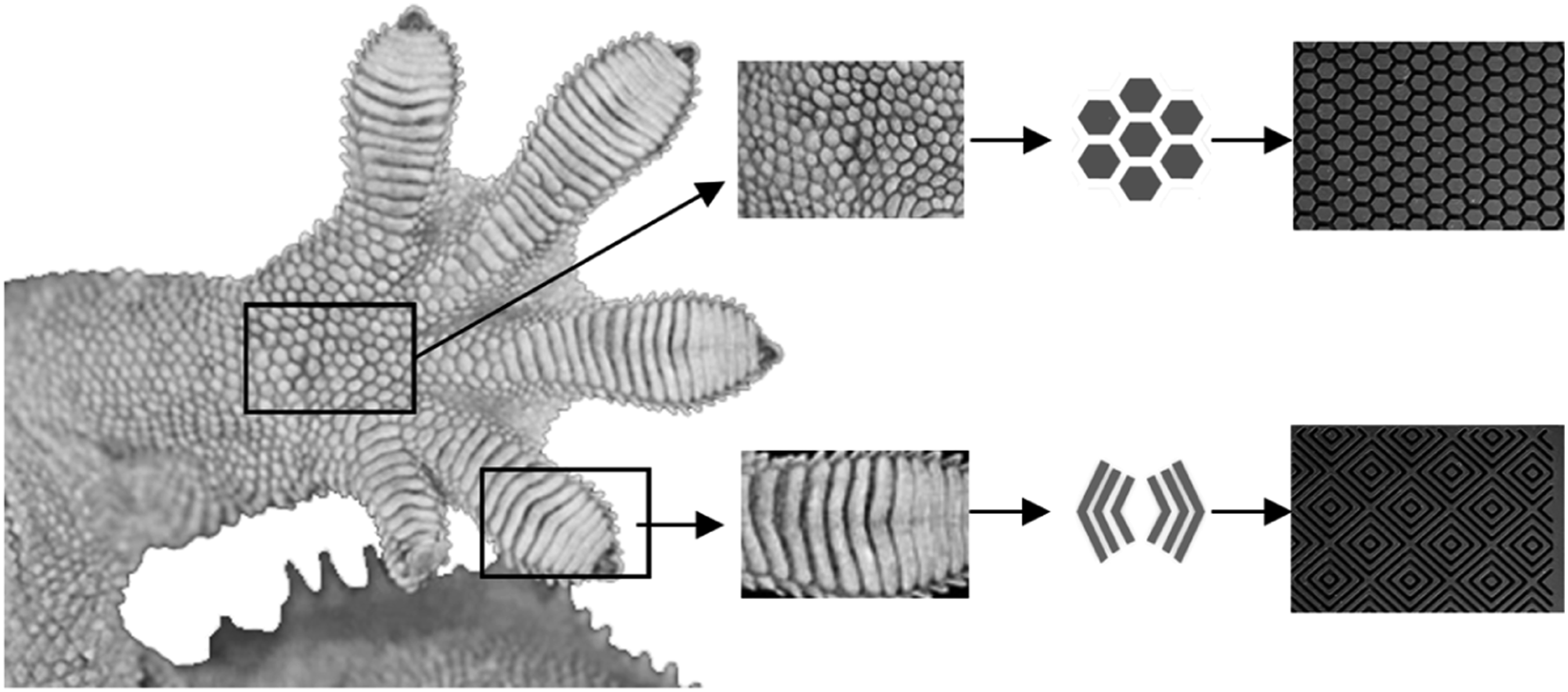
Experimental details
Loading conditions of the viscoelastic damper.

To verify the interface enhancement effect of the newly designed damper, the dynamic performance tests of the normal damper, palm damper and finger damper are conducted. The loading system used in the experiment is a 100 kN hydraulic servo fatigue testing machine manufactured by W + B Company (Löhningen, Swaziland), as shown in Figure 2(a). The dampers are fixed at both ends, and cyclic displacement loading (a) Dynamic properties tests of the viscoelastic damper. (b) Side view of the viscoelastic damper. (c) Viscoelastic damper under shear loading inside temperature chamber.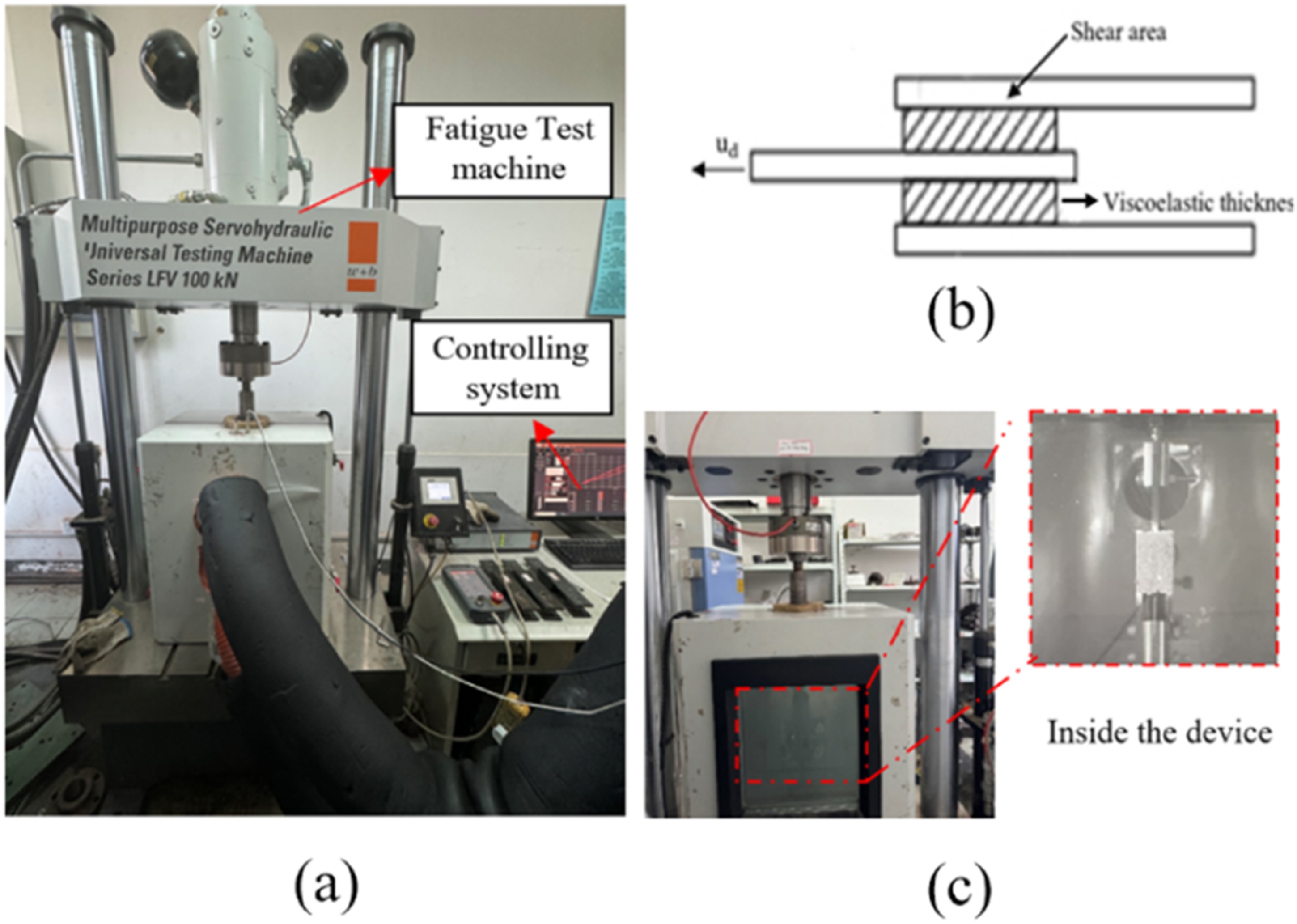
Results and analysis
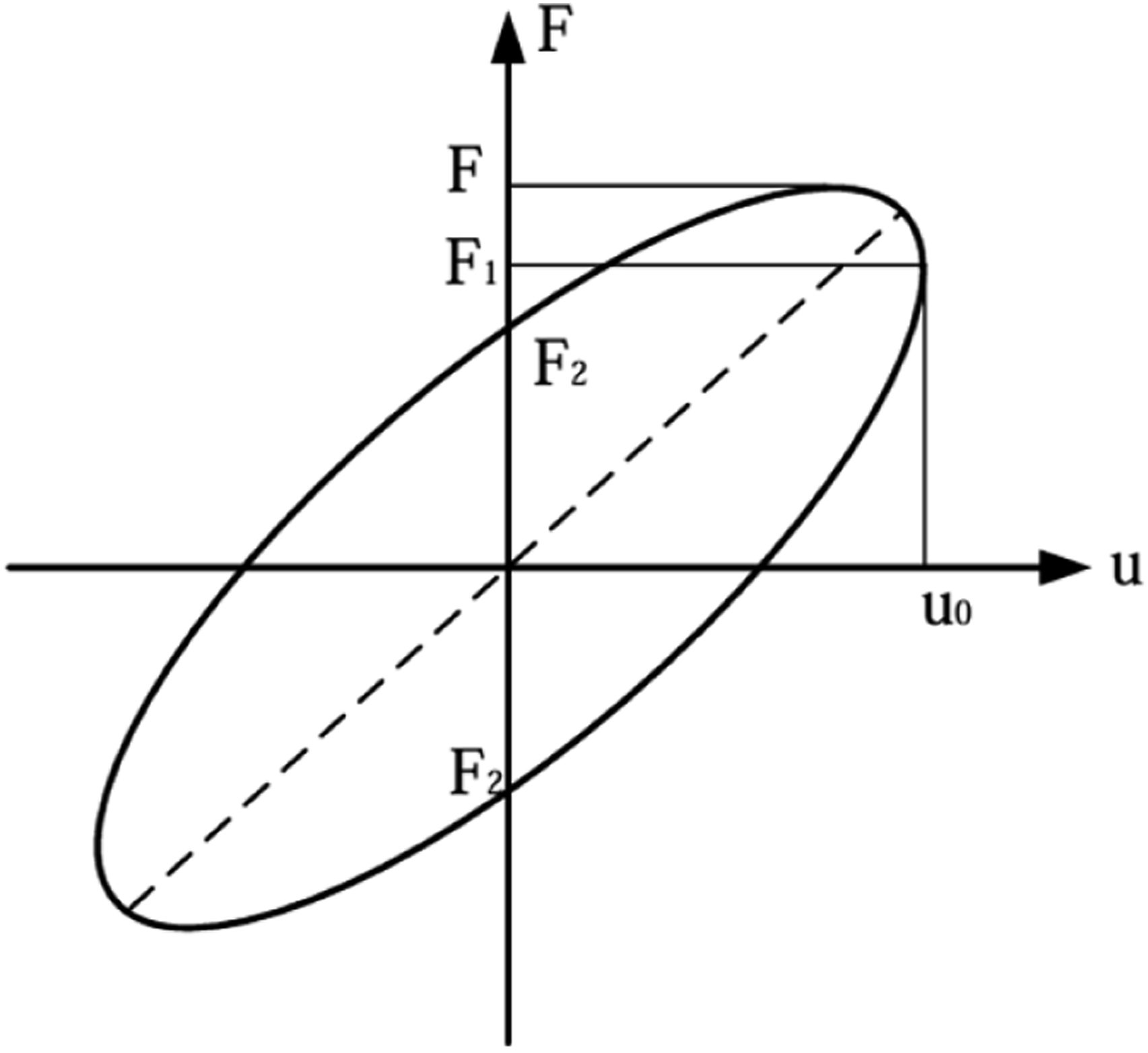
During the sinusoidal displacement loading, the viscoelastic layer undergoes shear deformation. The hysteresis curves of the viscoelastic damper under various working conditions are adjusted to standard ellipses, as shown in Figure 3. The force-displacement equation of the hysteresis curve is expressed in the following form (Makris and Constantinou, 1991; Xu et al., 2016; Xu et al., 2019) Force-displacement hysteresis curve.
Based on the force-displacement curves of the viscoelastic dampers under different loading conditions, the storage modulus 



Here,
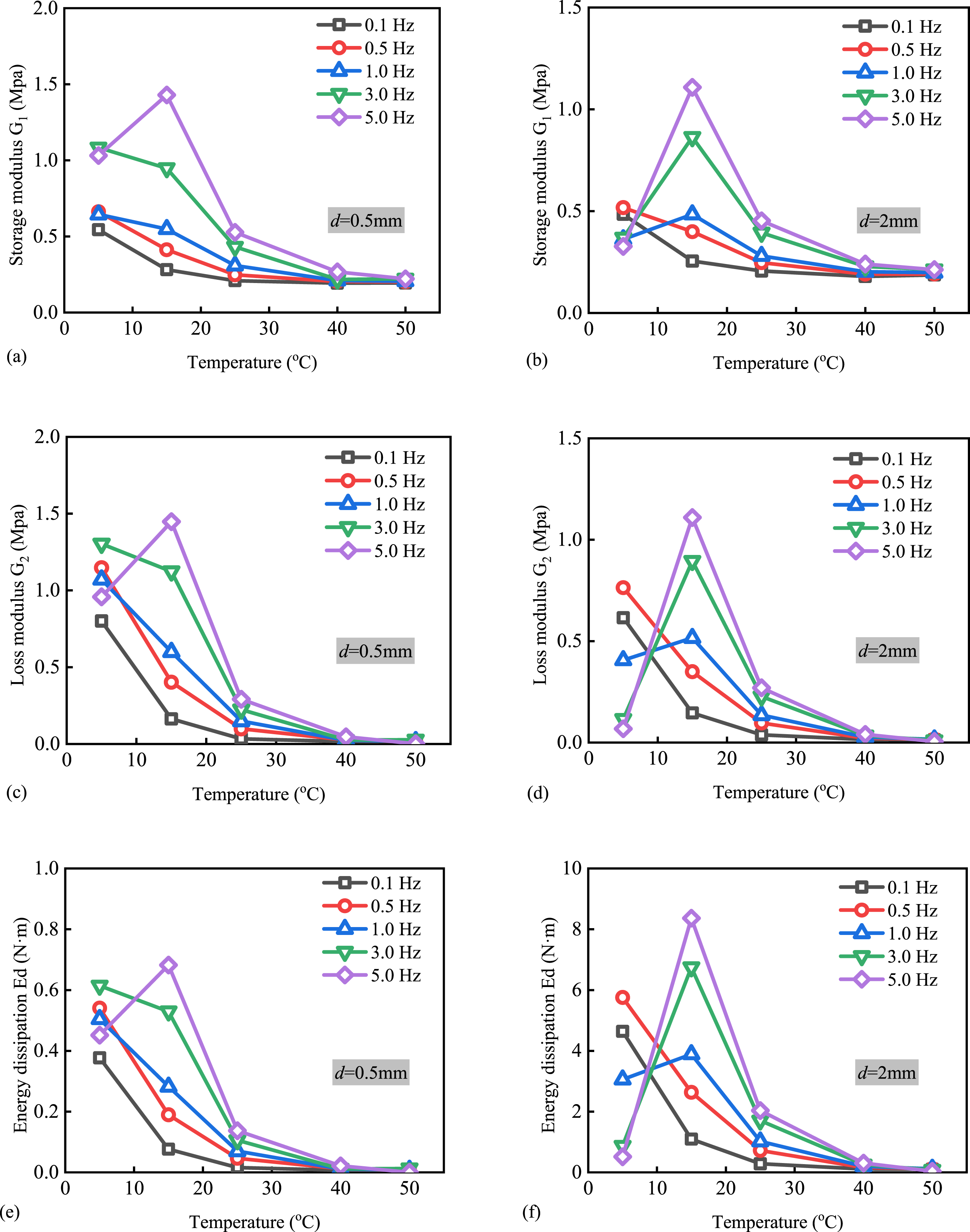
The temperature dependence of the dynamic performance of viscoelastic dampers is investigated by testing their mechanical properties at different temperatures. As shown in Figure 4(a) and 4(b), the normal damper was tested at two working conditions: one with displacement of 0.5 mm and frequency 0f 0.5 Hz, and the other with displacement of 2 mm and frequency of 0.3 Hz. At both conditions, the slope, area, and fullness of the hysteresis curves decrease with increasing temperature. Specifically, the slope, area, and fullness of the hysteresis curves at low temperatures are much larger than those at high temperatures. The experimental results indicate that the viscoelastic damper exhibits significant temperature reliance. To illustrate the effect of temperature on the viscoelastic damper, the dynamic characteristics Force-displacement curves of normal damper at various temperatures: (a) d = 1 mm, f = 0.5 Hz. (b) d = 2 mm, f = 0.3 Hz. Force-displacement curves of palm damper at different frequencies: (c) d = 0.5 mm, T = 15°C. (d) d = 2 mm, T = 25°C Force-displacement curves of finger damper at different displacement amplitudes: (e) f = 5 Hz, T = 15°C. (f) f = 5 Hz, T = 25°C. Force-displacement curves of three dampers at different frequencies: (g) d = 0.5 mm, T = 5°C, (h) d = 2 mm, T = 5°C. Dynamic performance of normal damper at different temperatures: Storage modulus G1:(a) d = 0.5 mm and (b) d = 2 mm, Loss modulus G2:(c) d = 0.5 mm and (d) d = 2 mm, Energy dissipation Ed:(e) d = 0.5 mm and (f) d = 2 mm.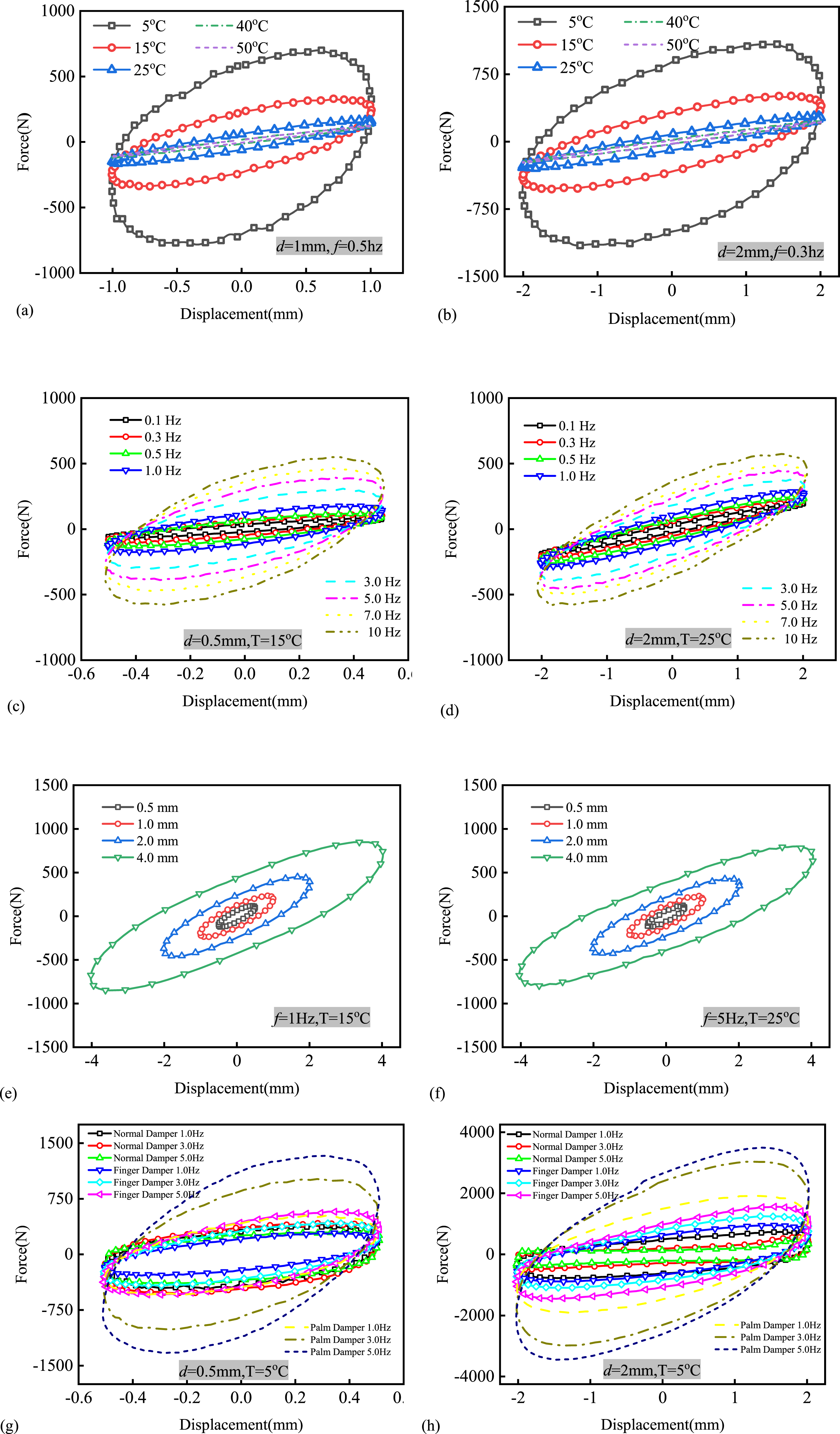
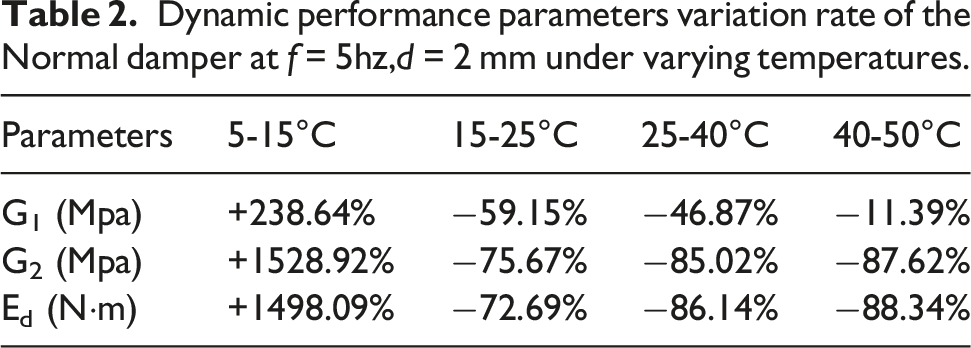
Dynamic performance parameters variation rate of the Normal damper at f = 5hz,d = 2 mm under varying temperatures.
The frequency dependence of the dynamic performance of viscoelastic dampers was investigated by testing their mechanical properties at different frequencies. As shown in Figure 4(c) and 4(d), the palm damper is tested under two working conditions: one with displacement of 0.5 mm and temperature of 15°C, and the other with displacement of 2 mm and temperature of 25°C. At both conditions, the slope, area, and fullness of the hysteresis curves increase with increasing frequency. Specifically, the slope, area, and fullness of the hysteresis curves at high frequencies are much larger than those at low frequencies. The experimental results indicate that the viscoelastic damper exhibits important frequency correlation. To illustrate the effect of frequency on the viscoelastic damper, the dynamic characteristics G1, G2, and Ed are plotted in Figure 6. Figure 6(a) and 6(b) show the variation of storage modulus with frequency at different temperatures, corresponding to displacements of 0.5 mm and 2 mm respectively. Figure 6(c) and 6(d) represent the variation of loss modulus with changing frequency at displacements of 0.5 mm and 2 mm. Figure 6(e) and 6(f) denote the variation of energy dissipation with increasing frequency at displacements of 0.5 mm and 2 mm. Dynamic performance of palm damper at different frequencies: Storage modulus G1:(a) d = 0.5 mm and (b) d = 2 mm, Loss modulus G2:(c) d = 0.5 mm and (d) d = 2 mm, Energy dissipation Ed:(e) d = 0.5 mm and (f) d = 2 mm.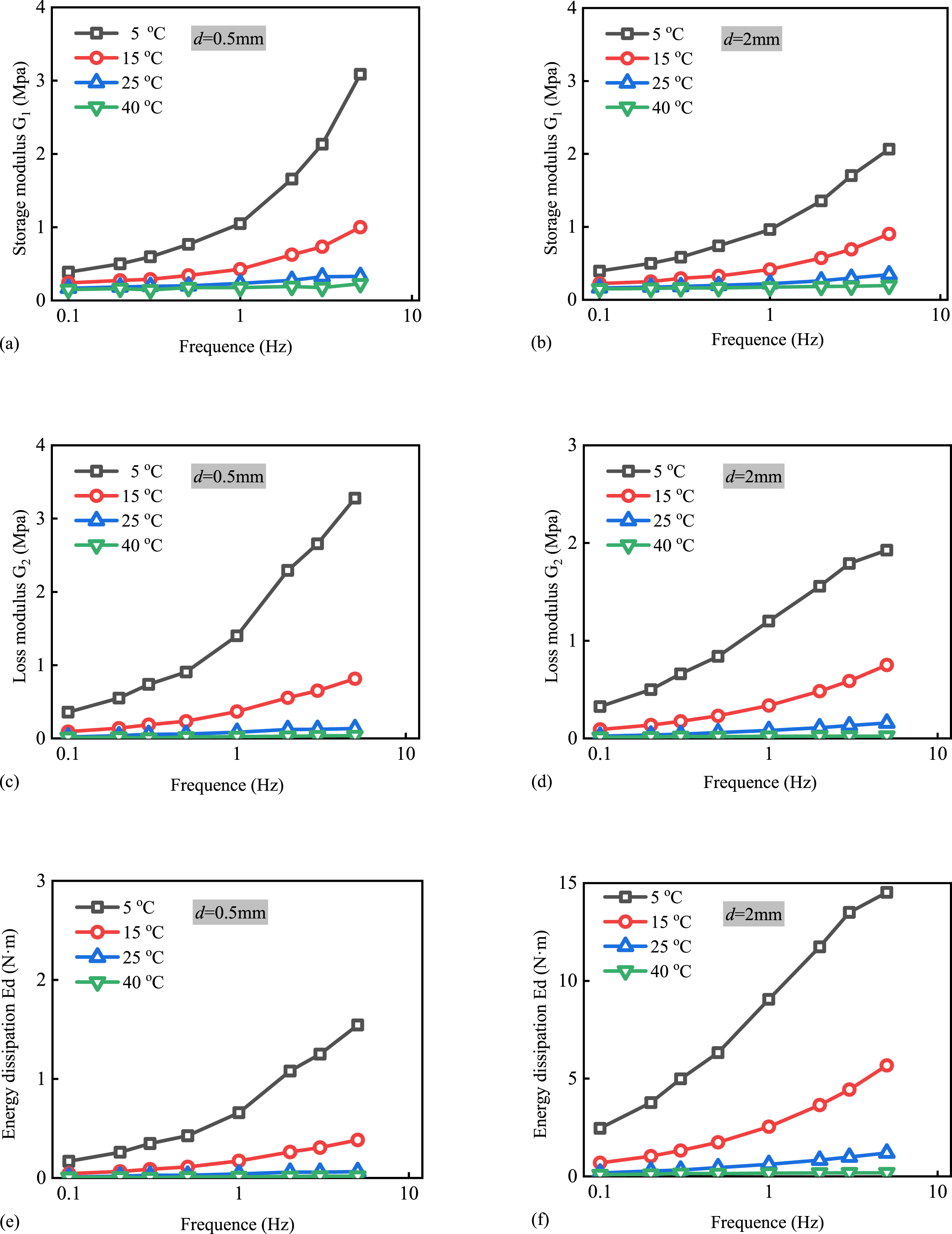
Dynamic performance parameters variation rate of the palm damper at T = 15°C,d = 2 mm with varying frequencies.

The displacement dependence of the dynamic performance of viscoelastic dampers is investigated by testing their mechanical properties with changing displacement amplitudes. As shown in Figure 4(e) and 4(f), the finger damper is tested with two working conditions: one with frequency of 1 Hz and temperature of 15°C, and the other with a frequency of 5 Hz and a temperature of 25°C. At both test conditions, the slopes of the hysteresis curves remain essentially unchanged with increasing displacement. The energy dissipations increase with increasing displacement, showing a positive correlation with the deformation degree of the viscoelastic layer. To illustrate the effect of displacement on the viscoelastic damper, the dynamic characteristics G1, G2, and Ed are plotted in Figure 7. The variation of storage modulus with changing displacement at a frequency of 1 Hz and 15°C are shown in Figure 7(a) and (b) respectively. Figure 7(c) and 7(d) illustrate the changing trend of loss modulus with displacement variation at a frequency of 1 Hz and 15°C. Figure 7(e) and 7(f) denote the energy dissipation variation with increasing displacement. Dynamic performance of finger damper at different amplitudes: Storage modulus G1:(a) f = 1 Hz and (b) T = 15°C, Loss modulus G2:(c) f = 1 Hz and (d) T = 15°C, Energy dissipation Ed:(e) f = 1 Hz and (f) T = 15°C.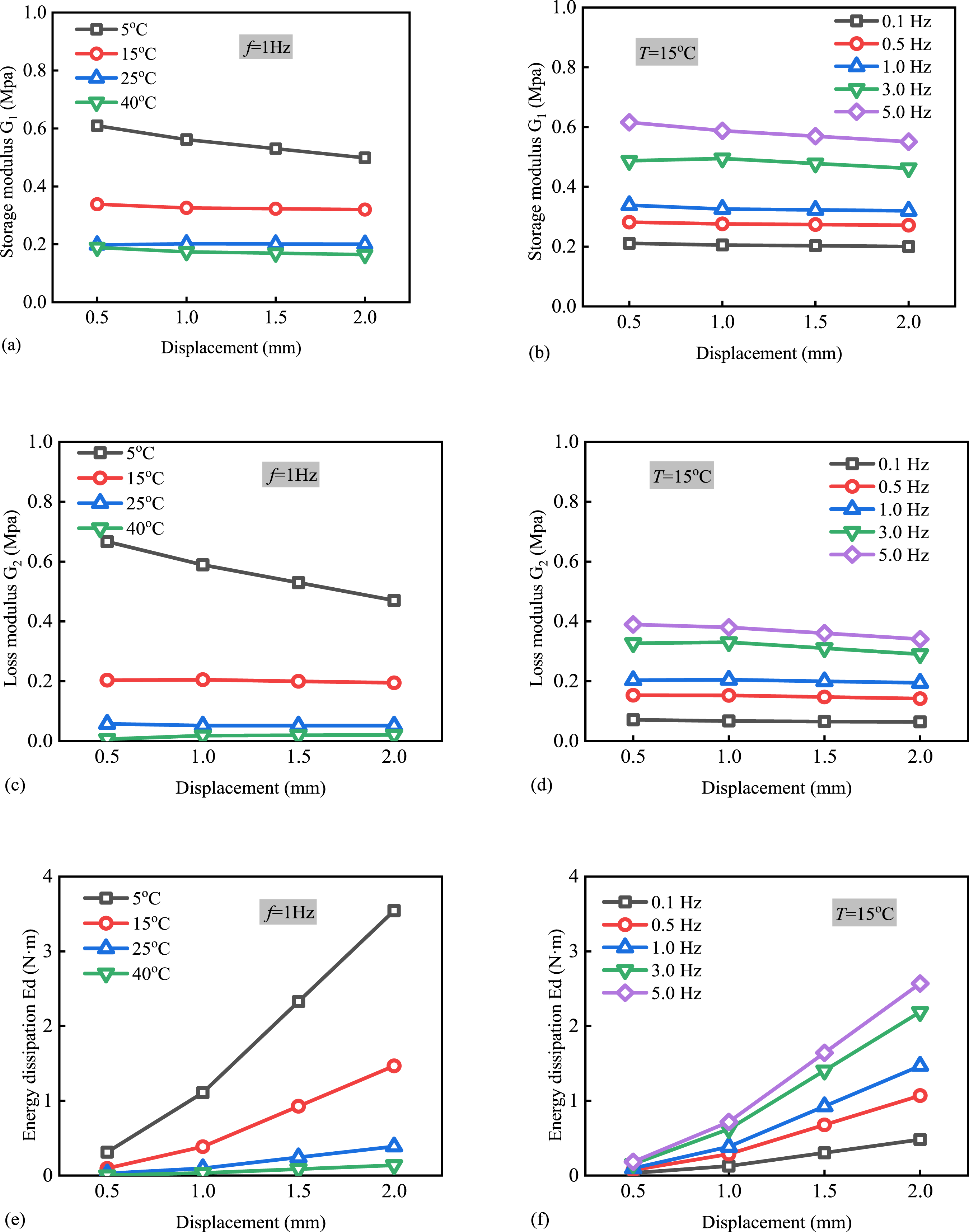
Dynamic performance parameters variation rate of the finger damper at f = 1 Hz,T = 15°C with varying displacement amplitude.

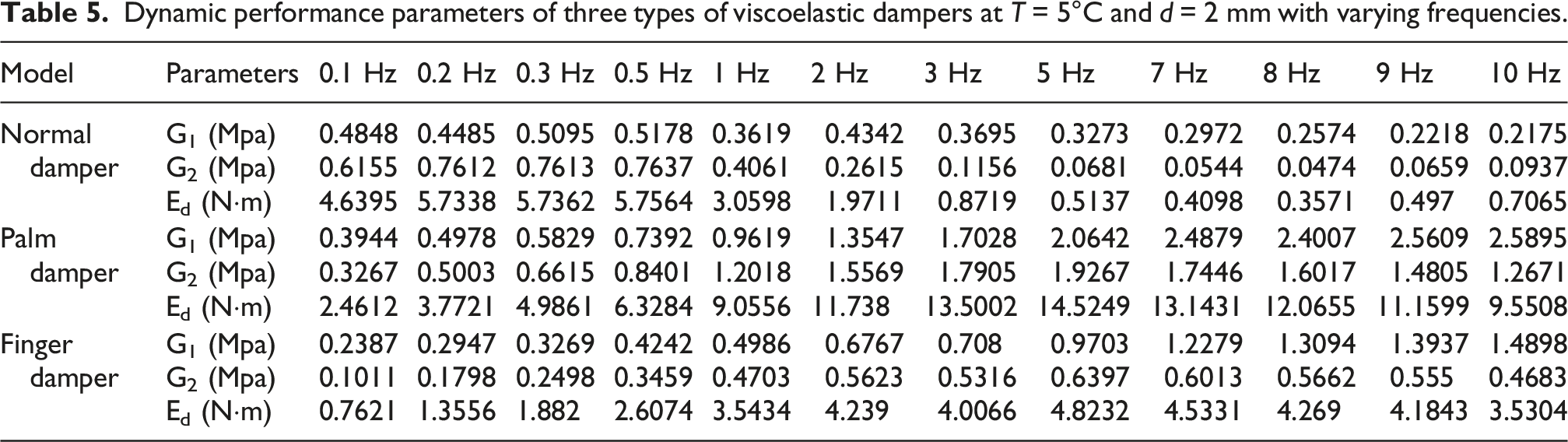
The effect of the metasurface structure design on dynamic performance is investigated by testing the mechanical properties of three types of viscoelastic dampers. At low-temperature conditions, the hysteresis curves of the three types viscoelastic dampers at different frequencies were selected for two loading displacements: 0.5 mm and 2 mm, as shown in Figure 4(g) and 4(h). Among them, the area, slope, and fullness of the hysteresis loops of the palm damper are greatly higher than those of the normal damper. The finger damper also shows a slightly increase in the area, slope, and fullness of the hysteresis loops compared with the normal damper. The dynamic characteristics G1, G2, and Ed of the three type dampers are plotted in Figure 8. Figure 8(a) and (b) show the variation of storage modulus at different displacement amplitudes and frequencies when T = 5°C, Figure 8(c) and 8(d) represent the variation of loss modulus and Figure 8(e) and 8(f) denote the variation of energy dissipation. Dynamic performance of three types of viscoelastic dampers at different frequencies and displacement amplitudes: Storage modulus G1:(a) d = 0.5 mm, T = 5°C and (b) d = 2 mm, T = 5°C, Loss modulus G2:(c) d = 0.5 mm, T = 5°C and (d) d = 2 mm, T = 5°C, T = 5°C, Energy dissipation Ed:(e) d = 0.5 mm, T = 5°C and (f) d = 2 mm, T = 5°C.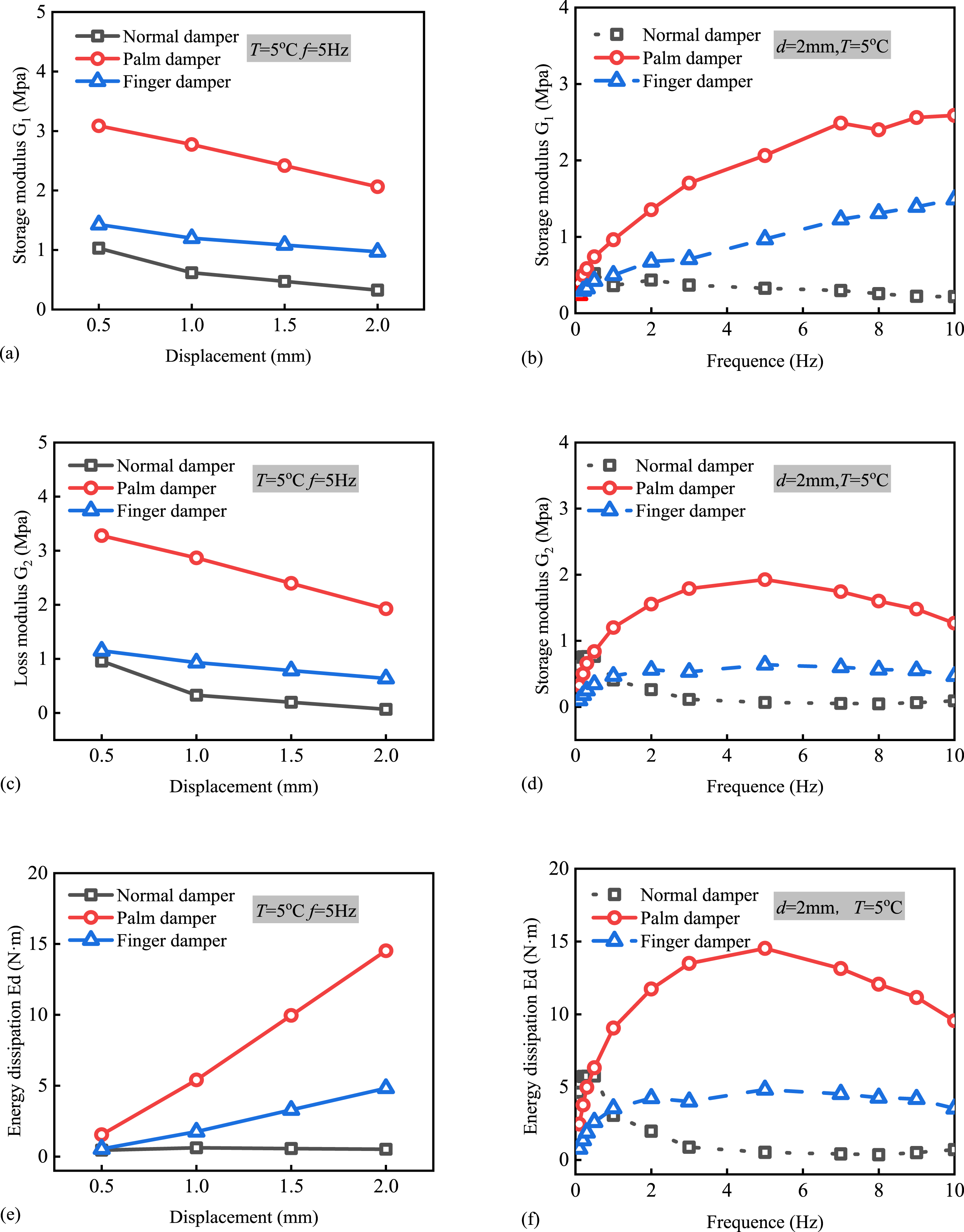
Dynamic performance parameters of three types of viscoelastic dampers at T = 5°C and d = 2 mm with varying frequencies.
Shear failure mechanism of viscoelastic damper
Viscoelastic mathematical models
The viscoelastic layer and steel plate bond failure process is accompanied by significant viscoelastic energy dissipation, and plays a major role in controlling the apparent adhesion energy. An effective viscoelastic constitutive model is developed to characterize the influence of temperature and frequency on the critical energy release rate of interfacial failure through affecting the loading rate of molecular chain. This model enables prediction of the dynamic parameters with varying temperature-frequency conditions. During the dynamic loading process, viscoelastic material is subjected to sinusoidal strain (or stress), it generates a corresponding stress (or strain) response, exhibiting inherent hysteresis. This occurs due to the phase angle 
Here, 

The real part represents the energy stored in the material due to elastic deformation during the loading process, which is expressed as the storage modulus. The imaginary part represents the energy dissipated by the material due to viscous deformation and is expressed as the loss modulus. The damping factor reflects the capacity of the composite material to dissipate energy under dynamic loading. Based on the dynamic performance tests of viscoelastic dampers, loading frequency and displacement amplitude are identified as two significant factors influencing their mechanical and energy dissipation behaviors. A fractional-order model is proposed to describe the dynamic behavior of viscoelastic dampers, and the constitutive relationship of viscoelastic materials can be effectively approximated through various combinations of spring and dashpot elements, achieving excellent fitting with experimental data using fewer parameters.
The definition of fractional calculus is given as follows:
Here, Fractional-order dual-branch parallel viscoelastic model.
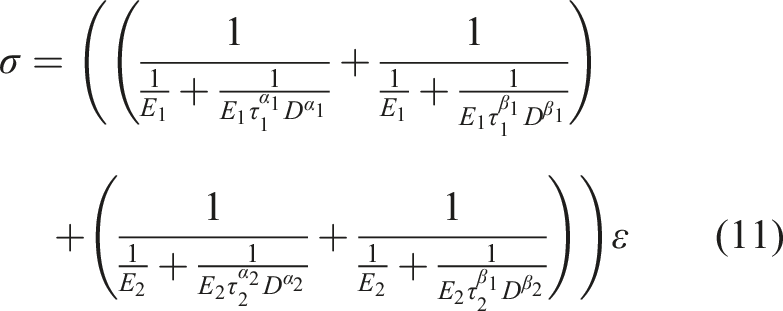
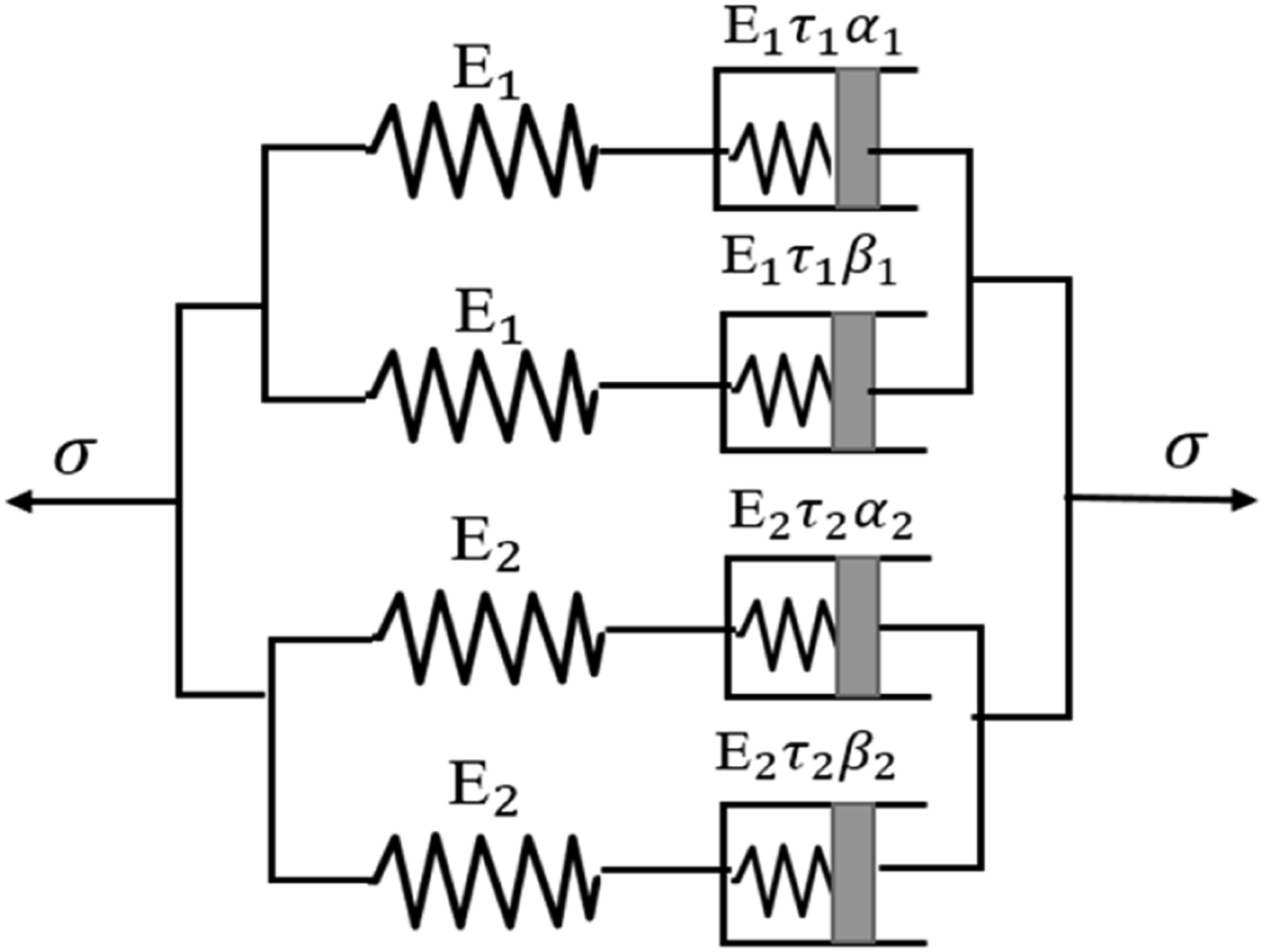
Following the Fourier transform method (Fang et al., 2020; Wang et al., 2021) to separate the real and imaginary components of equation (11), the storage modulus and loss modulus expressions of the dual-branch fractional calculus model are obtained as: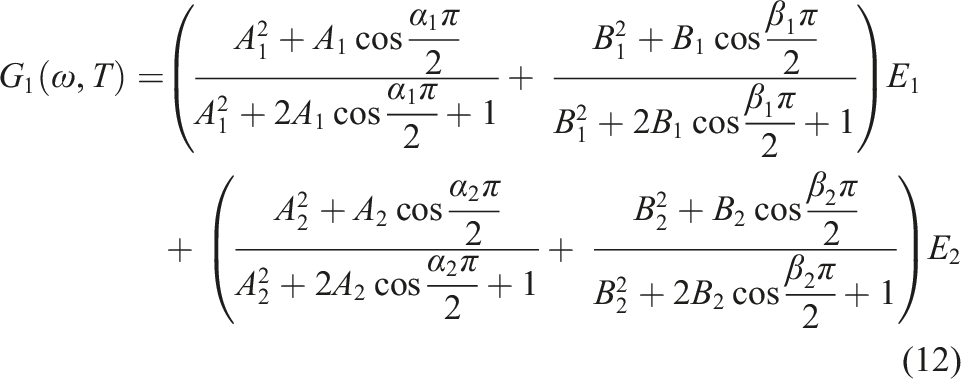
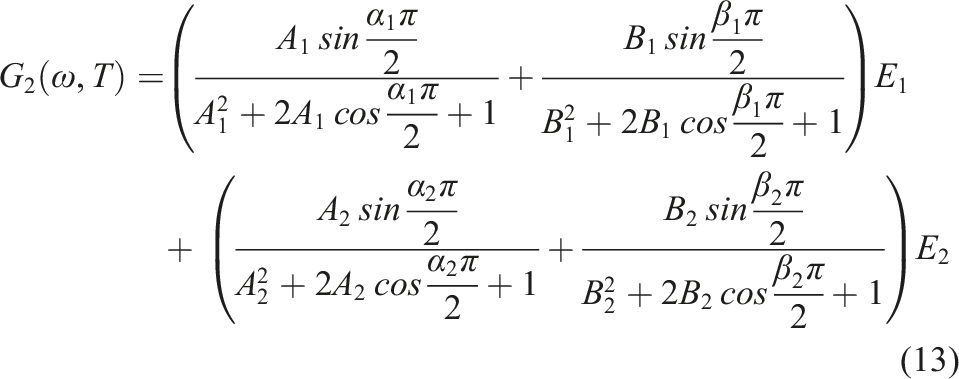

The parameters of a dual-branch fractional-order model.

The fitting results of the viscoelastic mathematical model are shown in Figure 10 α
1
/α
2
: Fractional order characteristics of the fractional order spring pot, reflecting the degree of viscoelasticity, β
1
/β
2
: Fractional order differential coefficients that match the fractional order. E
1
/E
2
: The elastic modulus of the elastic elements in two parallel branches, reflecting the pure elastic deformation ability. τ
1
/τ
2
: the relaxation time in two parallel branches, representing the time scale of internal stress relaxation. a
K
is a material parameter related to the activation energy of molecular chain motion in materials,and T
o
is the reference temperature. The maximum error in the storage modulus is 1.9%, while that in the loss modulus reaches 22.4%. The storage and loss moduli increase with increasing frequency and decrease with rising temperature. At higher frequencies, molecular motion becomes more restricted, shortening the stress relaxation time of the viscoelastic layer within each cycle and thereby enhancing its energy dissipation capacity. The influence of temperature on the internal chemical bonds of viscoelastic materials is analogous to that of frequency, and the model successfully captures the nonlinear variations of the storage and loss moduli with respect to both parameters. In summary, the model effectively captures the behavior observed in the experiment. Based on the mathematical model, the dynamic performance of the viscoelastic layer under external excitation can be accurately predicted, and the level of viscoelastic energy dissipation during interface failure can be characterized. Comparison between experimental data and fractional-order model in dynamic mechanical performance: (a) Storage modulus (b) Loss modulus.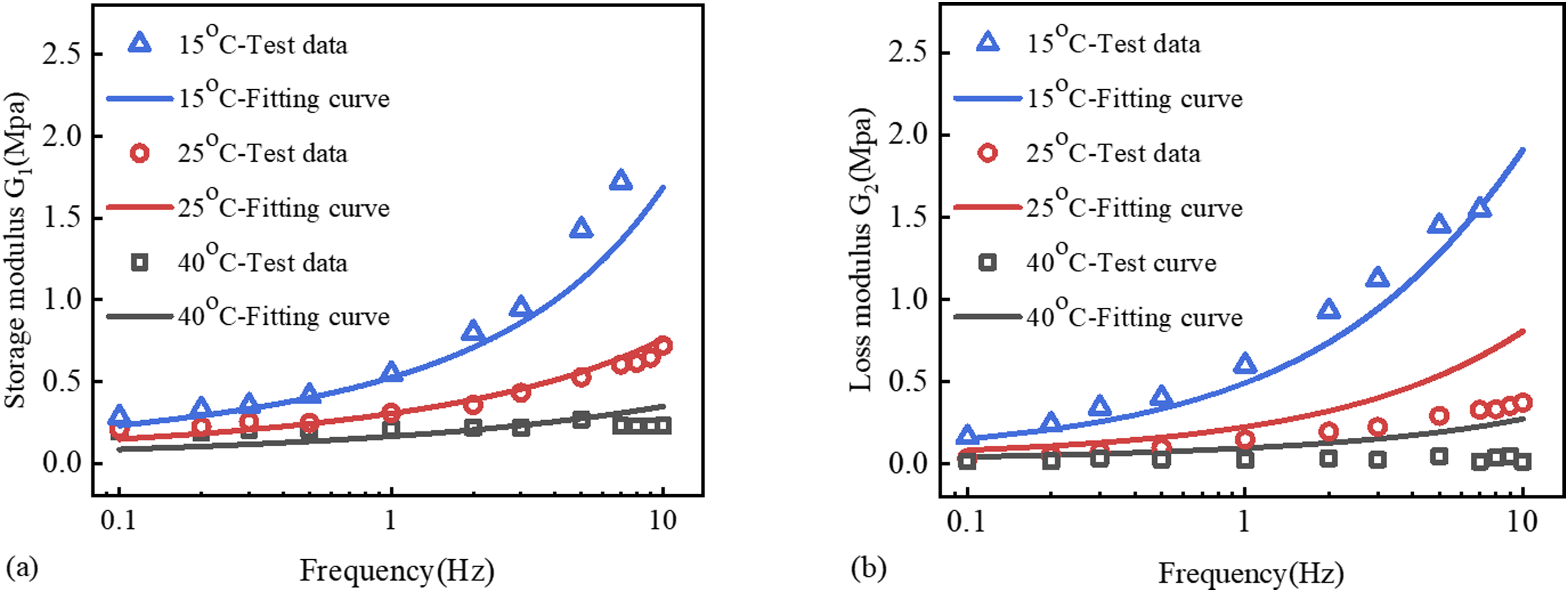
Energy release rate
When a system is subjected to external forces, fracture mechanics methods establish a connection between the stored energy and the interfacial energy generated during the separation process. Through experiments, we observed that the cemented interface undergoes separation in an unstable manner, and the system compliance C stores elastic energy 
The damper structure is composed of inextensible rigid layers and viscoelastic layers. When the excitation displacement 
During the displacement loading process of the viscoelastic layer, part of the external work is converted into elastic energy, while the other part is converted into thermal energy and dissipated along with the mechanical motion. As shown in Figure 11, the viscoelastic layer is covered by steel plate backings on both its upper and lower sides. Interfacial failure in the viscoelastic layer between steel backing plates.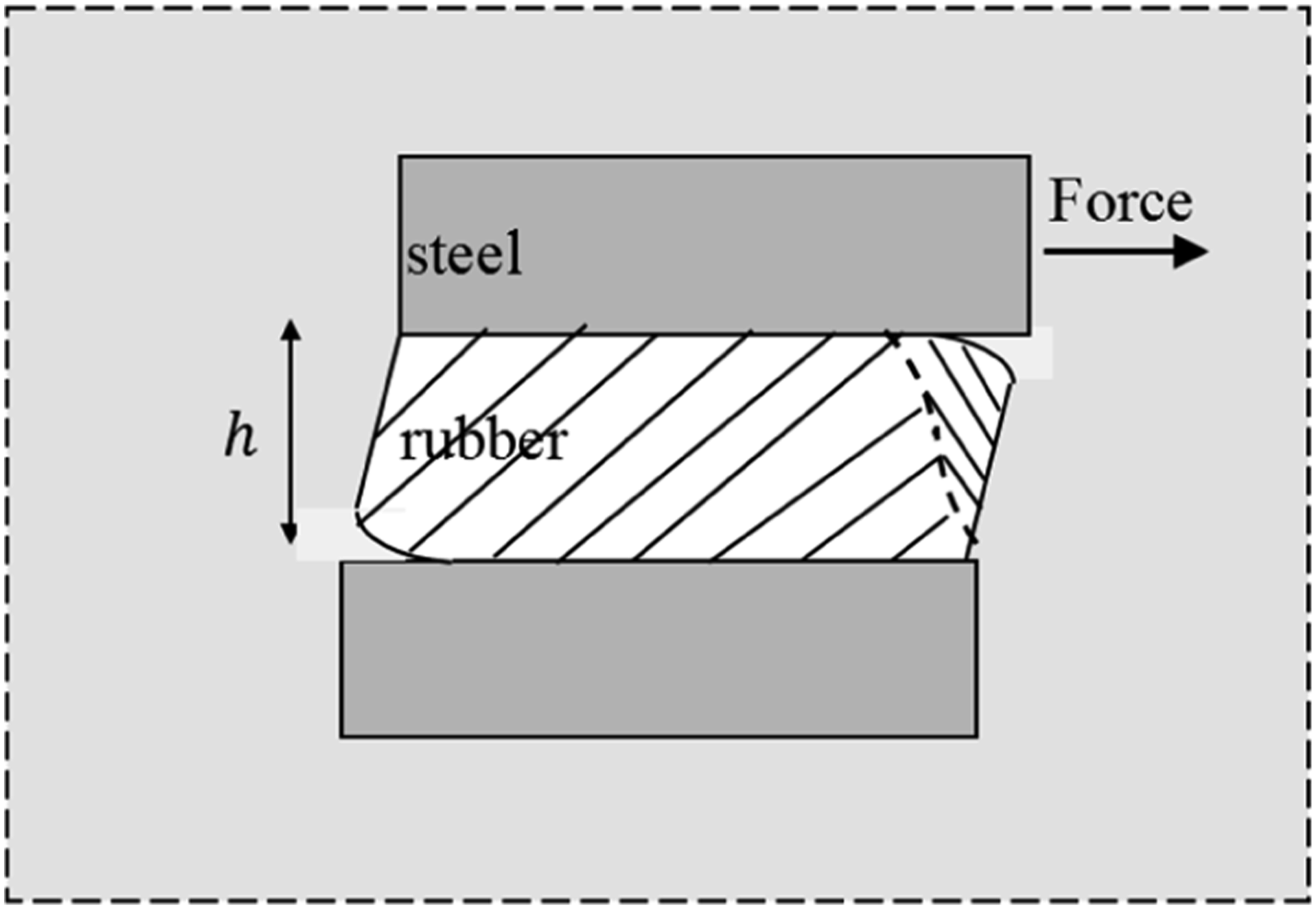
When the critical amplitude is reached, due to the squeezing effect of the upper and lower steel plate backings, half of the material per unit volume along the crack propagation direction fails and releases energy to form a new interface. The critical energy release rate at this point is: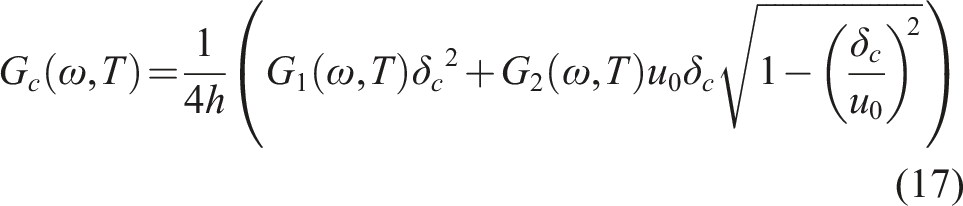
The deformation energy stored during crack propagation is expressed as 
When the excitation displacement reaches its maximum amplitude, the crack tip velocity reduces to zero. At this specific state, the shear modulus is fully represented by the storage modulus 
Where (a) Dependence of the critical displacement at viscoelastic layer cracking on temperature and frequency (b) Relationship between critical energy release rate at viscoelastic layer cracking and temperature/frequency.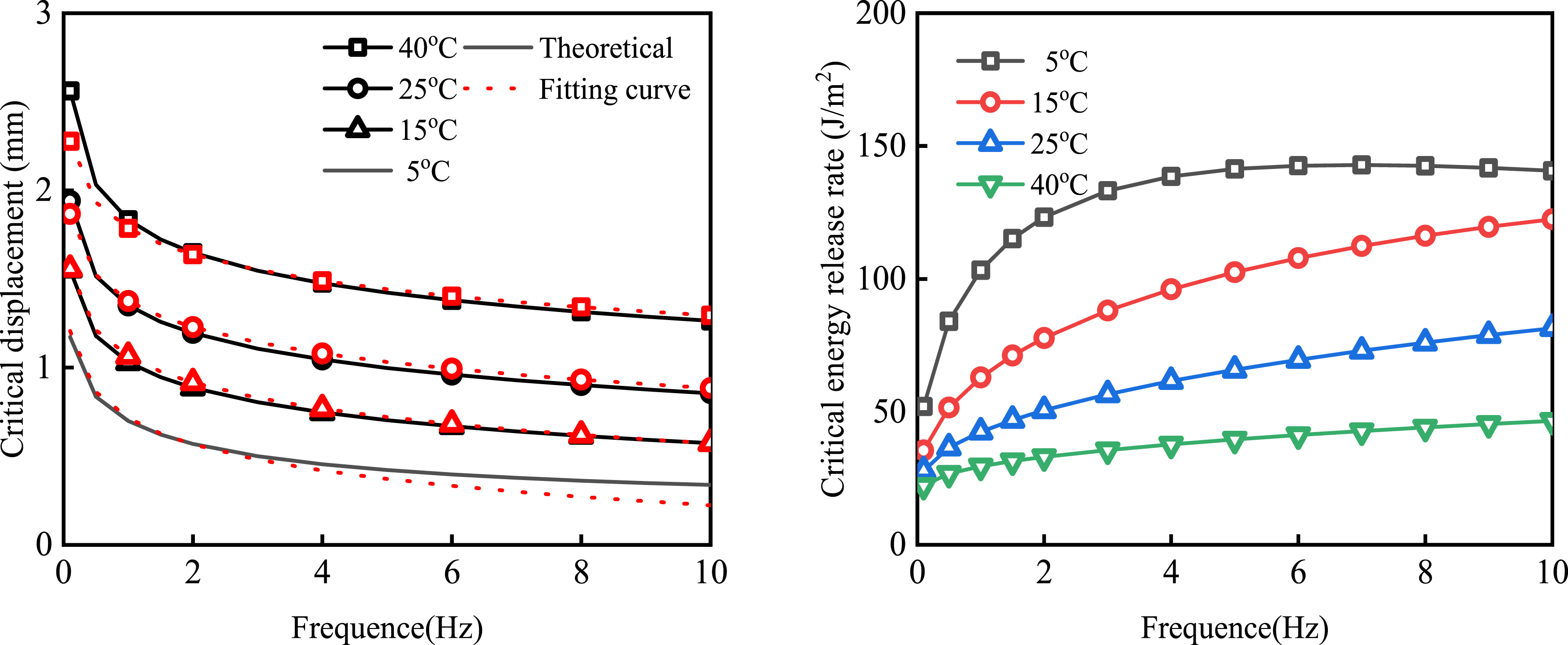
Interface failure of metasurface viscoelastic dampers
Figure 13 illustrates the 3D structural configuration of the viscoelastic strip bonded to a rigid substrate, as well as the unit cross-sectional view of the viscoelastic element. Here, Periodically patterned metasurface: (a) 3D structural diagram (b) Unit cross-section diagram.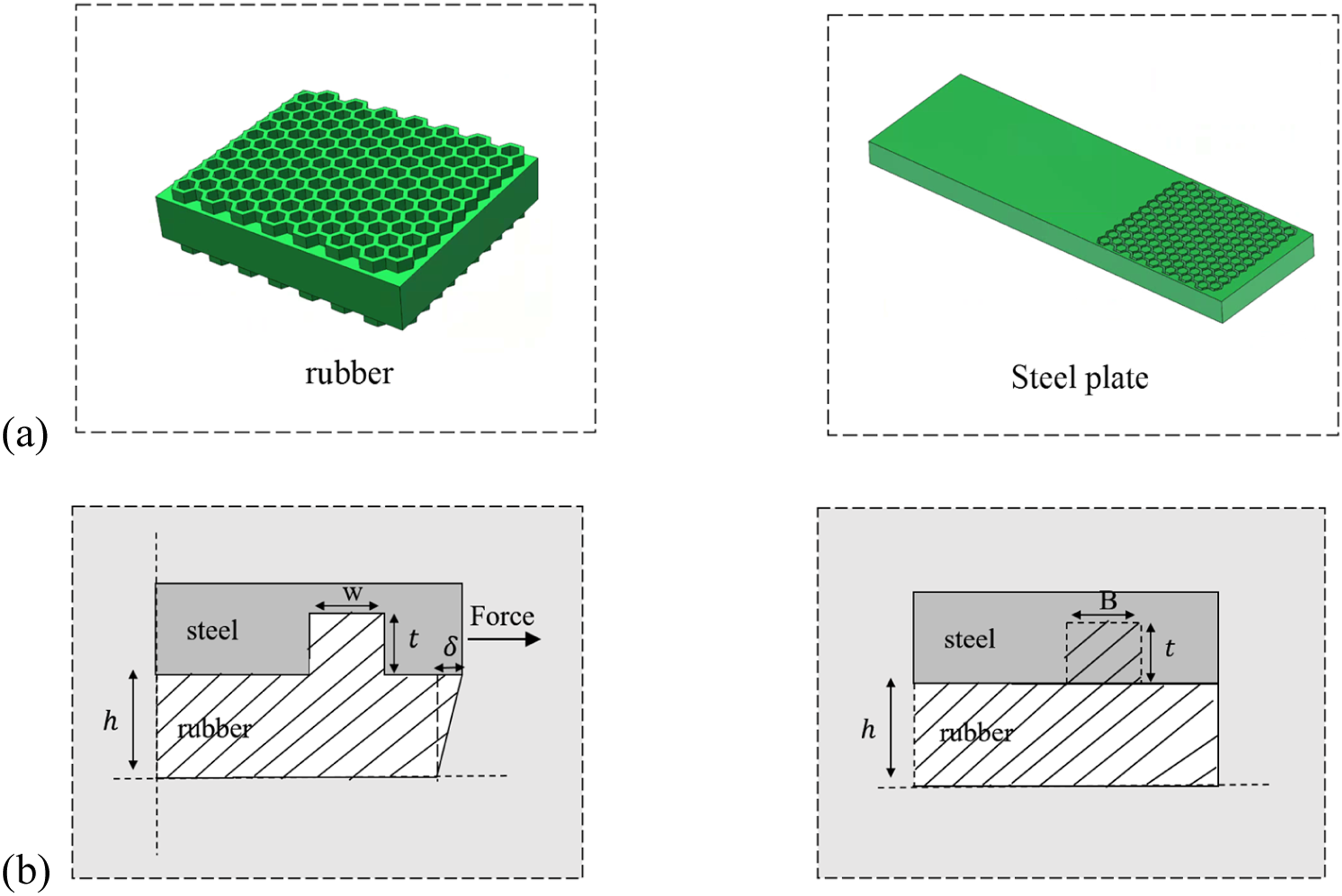
Interfacial failure behavior of periodic metasurface unit structures
To further investigate the effect of the patterned interface on bonding strength, the mechanical behavior of interfacial failure within the substrate grooves was analyzed on the unit cross-section of the viscoelastic strip. The viscoelastic strip is bonded to the steel plate via thermal vulcanization, where the fracture toughness of the adhesive layer is lower than that of the continuous polymer chain network inside the rubber. Therefore, cracks preferentially propagate along the interface. Before reaching the periodically patterned metasurface, this fracture behavior is identical to that of ordinary dampers. When interfacial failure of the viscoelastic strip occurs on the periodically patterned metasurface, it is divided into three distinct stages based on the geometric configurations differing in the height and width directions, as shown in Figure 14. Viscoelastic strip failure mode of periodically patterned metasurface.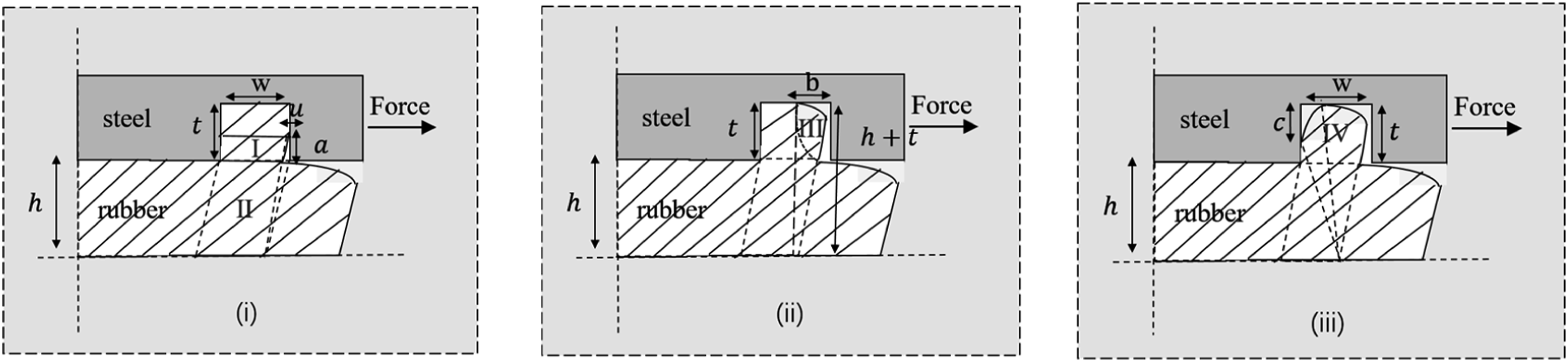
When interfacial failure occurs in failure mode i, as the crack length a propagates, the shear strain energy generated by the displacement load in Region II is released. A portion of this energy is consumed as interfacial bond energy to create new surfaces, while the other portion is dissipated as compressive strain energy in Region I where the viscoelastic body is compressed. The crack opening displacement 
Here, 

The energy release rate for interfacial failure per unit area parallel to the width direction and in the lateral direction can be expressed as:
Substituting Equations (20)-(22) into Equation (23), the energy release rate can be expressed as follows: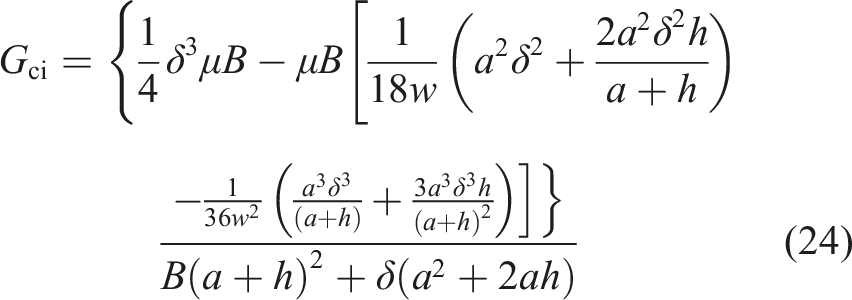
When interfacial failure occurs in failure mode ii, the crack reaches the top of the groove. In Zone III, the shear rate is lower than that at the interface junction of the flat surface, and its energy release rate is:
When interfacial failure occurs in failure mode iii, the crack extends by a unit length c. The deformation energy of the viscoelastic strip in region IV caused by shear loading, is released as the crack length increases and as a new interface is formed. The strain along the crack length c is 
When the interface fails on the periodically patterned metasurface, the applied displacement reaches the critical displacement. The surface structure is divided into three stages. The difficulty of interfacial failure varies across these stages, which means different stages are more prone to unstable failure under different loading displacements. However, all stages are affected by ambient temperature and loading frequency. The dimensions of the experimental specimen are set as follows: h = 10 mm, t = 2.5 mm, w = 1 mm, and B = 1 mm. Under the given energy release rate with a crack tip velocity of zero, the parameters are substituted into Equations (24-26), and the critical displacements for different structural configurations are obtained. The relationship between the critical displacement at complete failure across the three stages and temperature-frequency conditions is shown in Figure 15. Among them, the critical displacement of Mode i under different temperatures and frequencies is much higher than that of Mode ii and Mode iii, which provides an important protective effect against interface failure. When Mode ii failure occurs, the viscoelastic layer detaches, and this failure mode is regarded as the key stage leading to performance degradation. Relationship between critical displacement and temperature/frequency at different mode: (a) Failure mode i, (b) Failure mode ii, (C) Failure mode iii.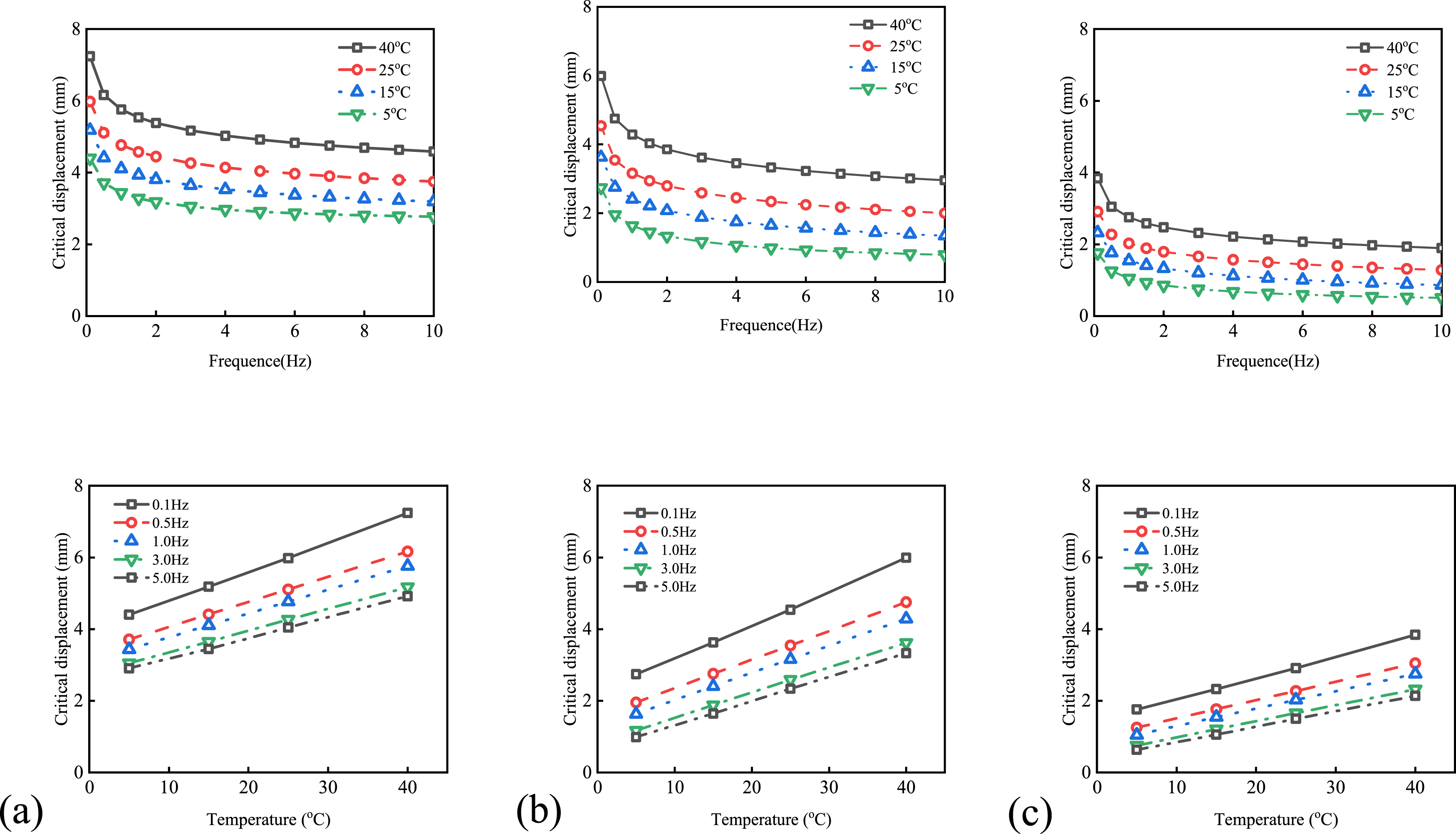
The critical displacement is larger at high-temperature and low-frequency conditions, resulting in greater tear resistance at the interface. Mode i exhibits higher critical displacement than mode ii and mode iii, which retards fracture failure between the viscoelastic layer and rigid substrate during cyclic loading. Furthermore, at the given temperature and frequency, the length, width, and height of the metasurface structure were adjusted respectively, allowing the relationship between the critical displacement and the geometric parameters of the viscoelastic strip to be obtained. As shown in Figure 16, it can be observed that increasing the width and height of the metasurface structure while reducing its length contributes to the increase in critical displacement. These structural adjustments further enhance the tear resistance of the damper. Effect of the geometric parameters of the viscoelastic strip on critical displacement.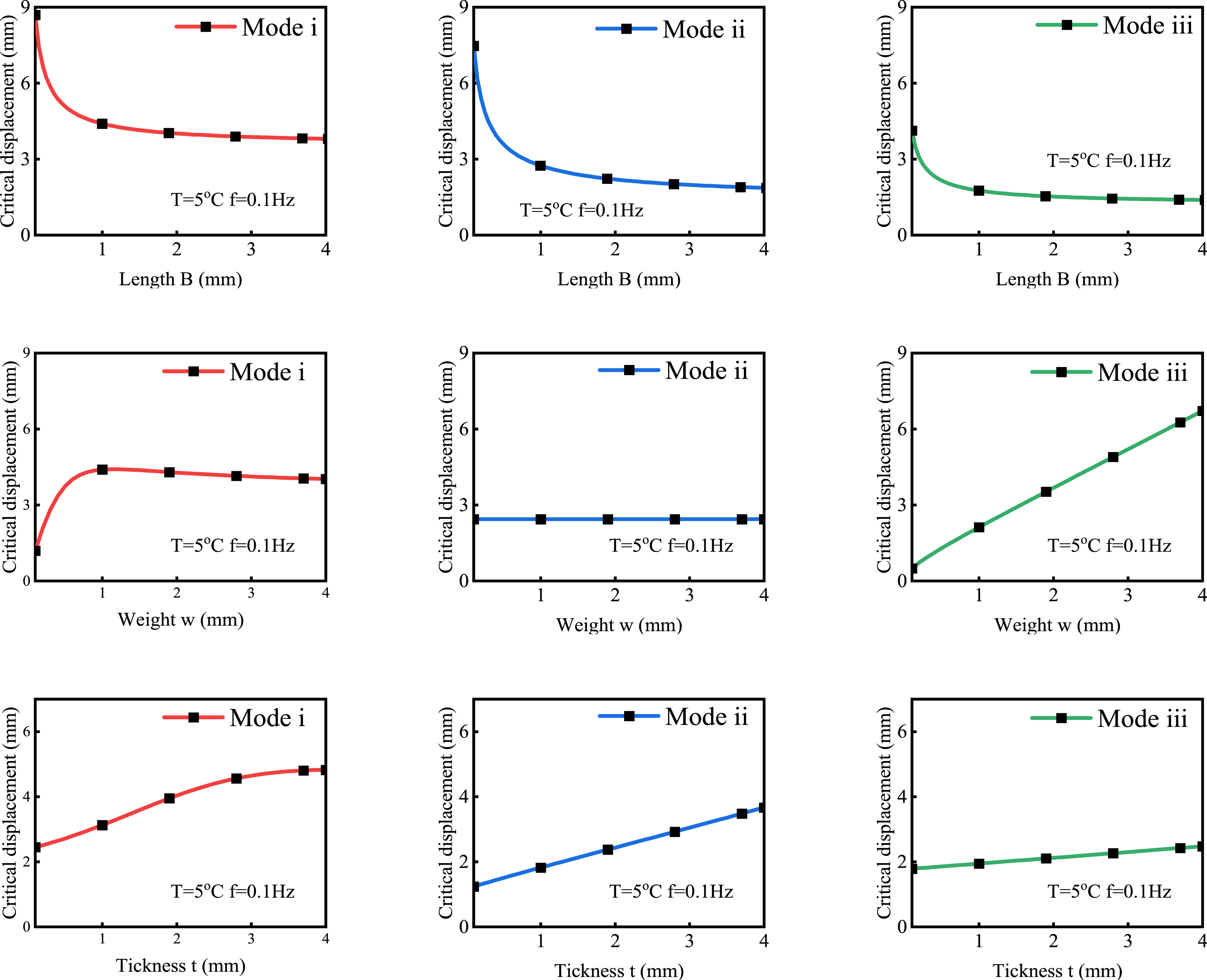
Effect of periodic metasurface structures on bonding strength
As illustrated in Figure 17, the viscoelastic damper is subjected to displacement loading along the longitudinal direction (x-axis) of the plate with the minimum periodic unit analyzed specifically along the x-direction. The palm damper employs hexagonal periodic units featuring an internal angle of 120°, and the finger damper is constructed from rhombic periodic units with an internal angle of 90°. The force diagram of patterned viscoelastic strip units within a single periodic: (a) Palm damper, (b) Finger damper.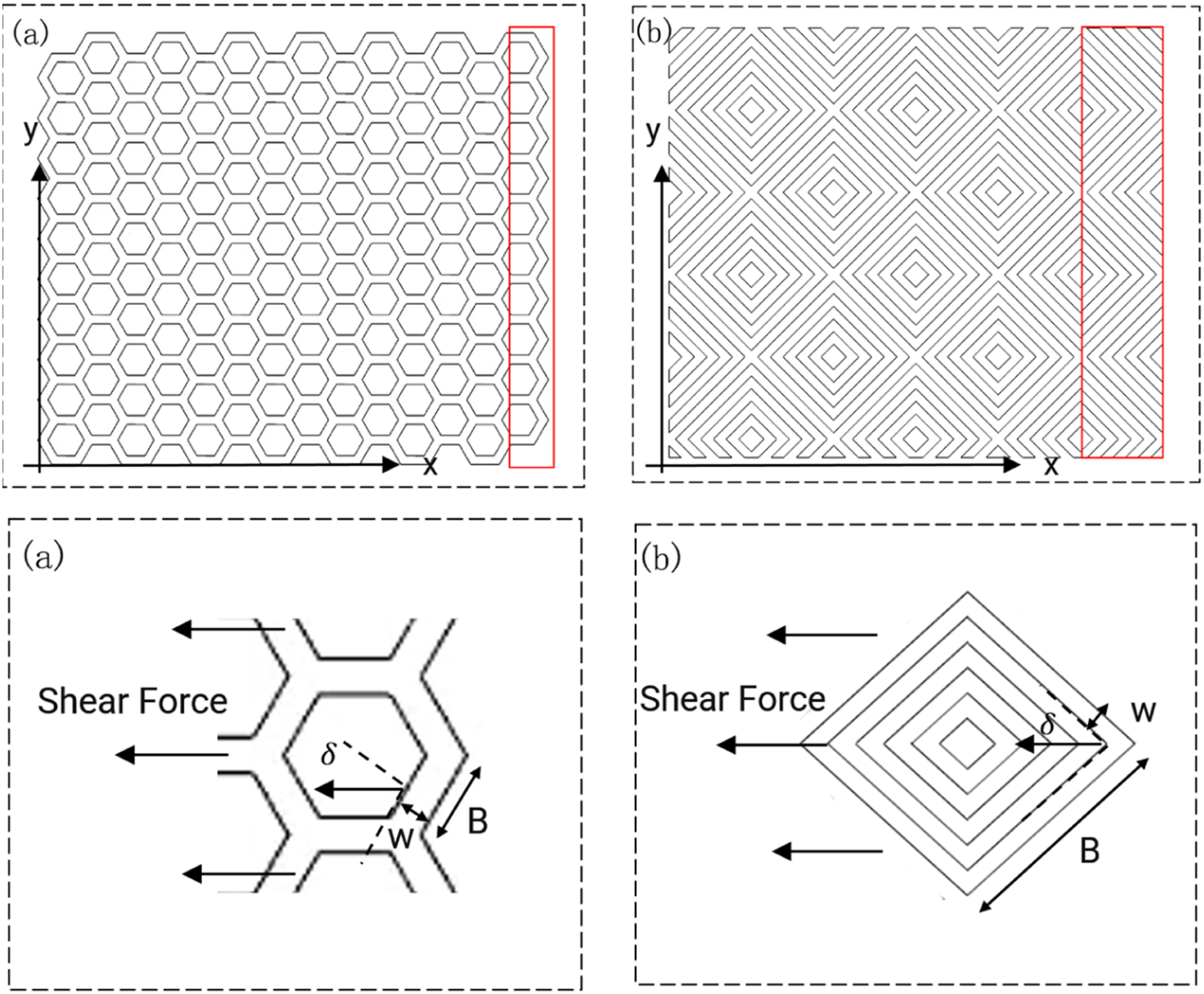
For the palm damper, due to the combined effect of multiple periods along the length direction, the strain induced by displacement mainly occurs perpendicular to the structural width direction. The reduction in displacement along the width direction is expressed as The critical displacement at the damper interface failure varies with frequency.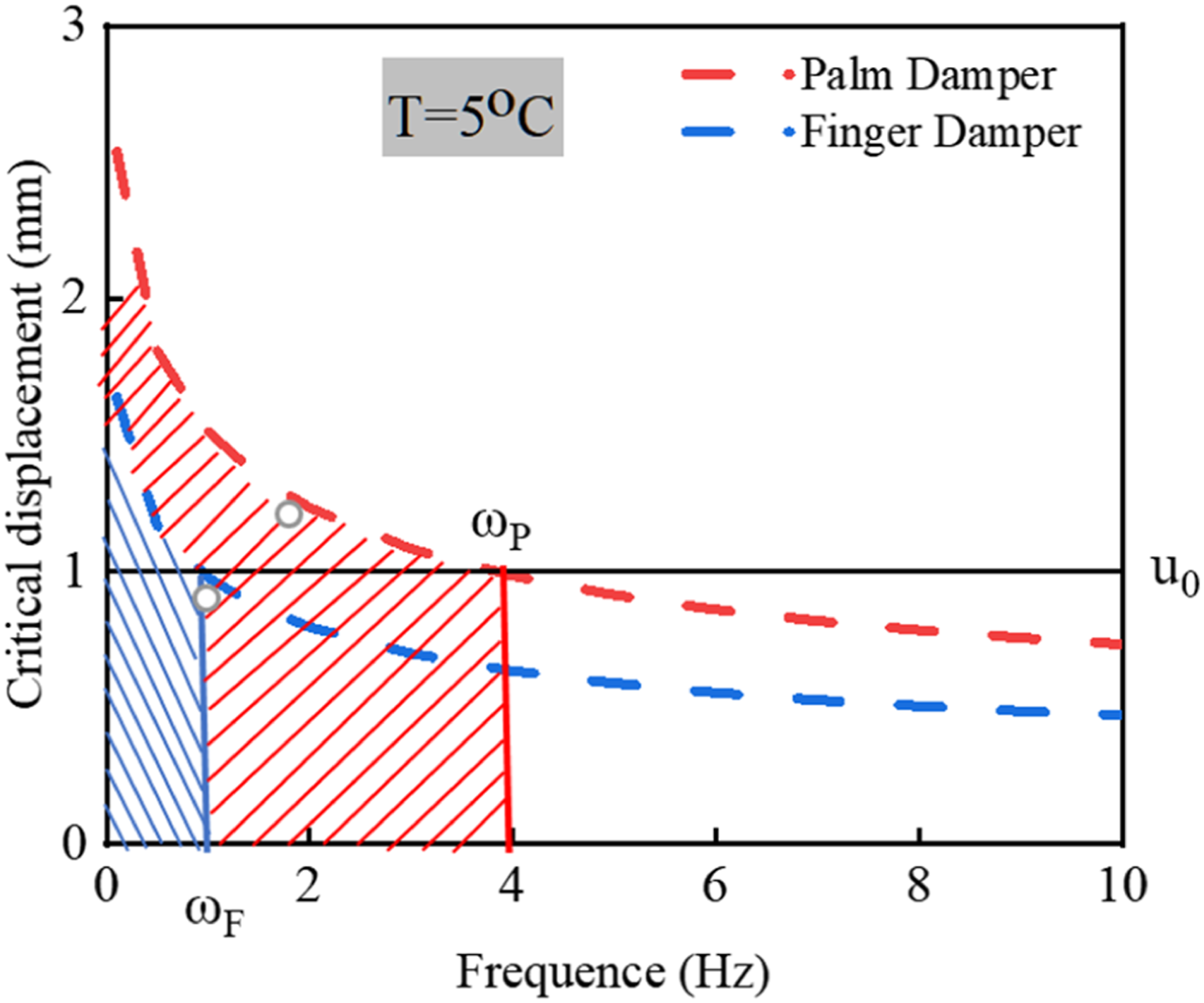
When the applied displacement exceeds the critical displacement and the corresponding load surpasses the critical load, interface damage and strength degradation occur in the damper. The post-damage load Experimental and theoretical comparison of dynamic performance of viscoelastic damper considering interfacial damage: (a) Storage modulus, (b) Loss modulus.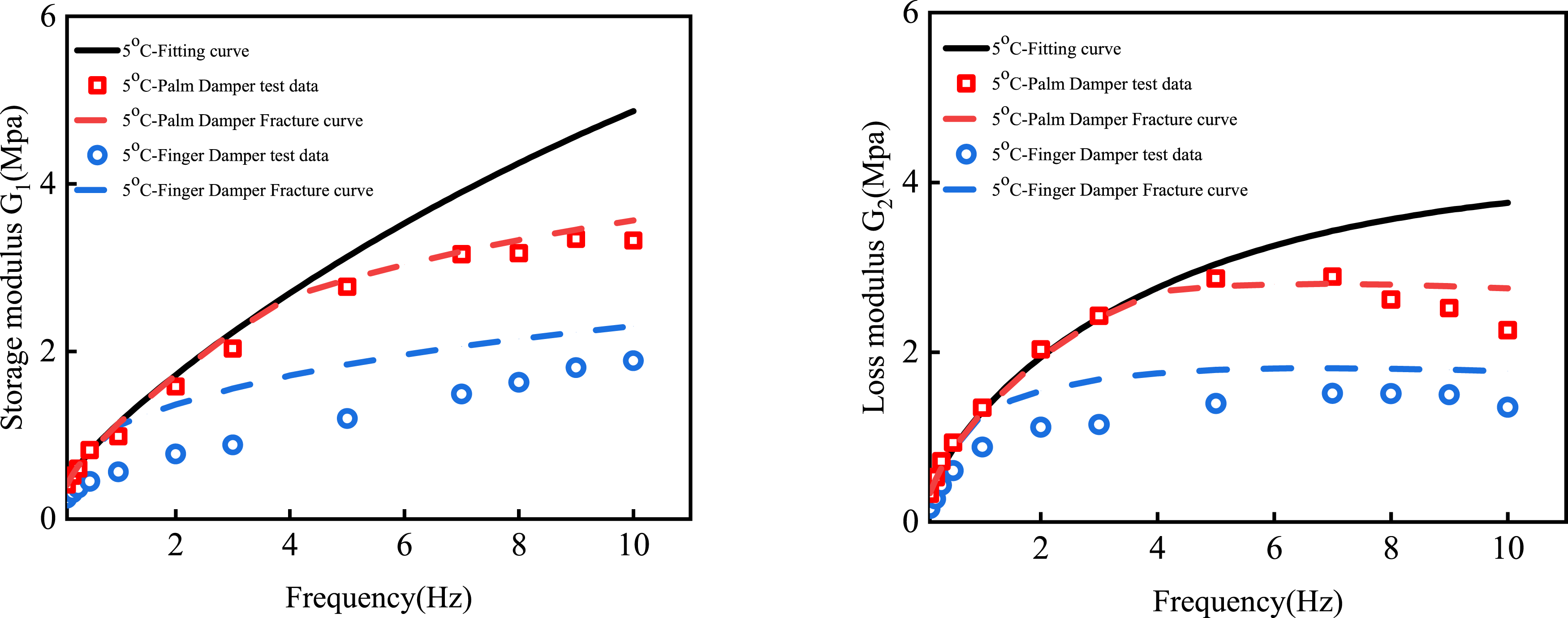
The periodic groove structure forms surface constraints between the viscoelastic layer and the steel plate, effectively delaying the initiation and propagation of interface cracks caused by long-term fatigue loads, and ensuring the stability of the damper structure. Viscoelastic materials are prone to stress accelerated aging at the interface between steel plates and rubber. The patterned interface reduces residual interface stress and critical displacement, hereby improving long-term durability. The groove increases the effective contact area between the steel plate and the rubber layer, maintains the basic bonding strength of the interface, and avoids the sudden drop in dynamic performance of the damper caused by the failure of a single chemical bonding system. The enhanced fracture resistance of the interface provides reliable support for the aging vulcanization/bonding layer. Therefore, patterned metasurface design is a practical strategy to improve the long-term stability of viscoelastic dampers.
Conclusions
The viscoelastic damper surface is patterned using natural gecko setae lamellar biological structures integrated with artificially designed periodic metasurfaces, with material performance and interfacial crack development observed through dynamic shear testing. A fractional-order dual-branch parallel viscoelastic mathematical model is employed to characterize the constitutive behavior, explicitly decoupling the strain energy and viscoelastic energy dissipation release during interface damage through the separation of storage modulus and loss modulus. This approach quantified the influence of ambient temperature and loading frequency on interfacial adhesion performance. Mechanical analysis was performed on two new types of viscoelastic dampers with distinct periodic metasurface arrangements, establishing an interfacial failure model along interfacial junctions within the unit cross-section. Critical displacements under external loading were derived to quantify tear resistance capabilities for each metasurface structural configuration. When the applied displacement exceeds the critical threshold, interfacial damage initiates. Experimental measurements of the storage modulus and loss modulus validate the analytical model incorporating damage evolution. The integrated experimental-theoretical approach yields the following conclusions. (1) The newly designed two types of metasurface viscoelastic dampers exhibit excellent dynamic performance and energy dissipation capacity. Specifically, at (2) By employing a fractional-order dual-branch parallel viscoelastic model and leveraging the temperature–frequency equivalent principle, the constitutive behavior can be effectively estimated using a relatively little amount of model parameters. This framework combines the viscoelastic energy dissipation and strain energy release during the interfacial failure process of the viscoelastic layer with the viscoelastic mathematical model, thereby accurately capturing the effects of temperature and frequency on the interfacial energy release rate associated with layer debonding. (3) By combining the viscoelastic mathematical model with interfacial fracture mechanics, the interfacial failure behavior between the viscoelastic layer and the rigid substrate is characterized. Based on this method, the single-period metasurface structure is divided into different modes according to the mechanical behavior of different structural configurations. The effects of temperature and frequency on interfacial failure at each mode are systematically analyzed. In addition, the influence of geometric parameters on bond strength is investigated, and the critical displacement associated with various periodic configurations is used to evaluate interfacial damage. (4) Integrated experimental and theoretical investigations reveal that periodic metasurface structuring of viscoelastic dampers significantly enhances their critical load-bearing capacity under interfacial unstable failure, leading to improved energy dissipation performance. Theoretical analyses further show that increasing the wrinkle angle of surface patterns perpendicular to the loading direction, along with increasing surface pattern height and width, substantially improves the tear resistance of the structure, thereby offering practical guidance for subsequent structural optimization.
Footnotes
Acknowledgements
We thank the Big Data Center of Southeast University for providing the facility support on the numerical calculations in this paper.

Funding
The authors disclosed receipt of the following financial support for the research, authorship, and/or publication of this article: This study was financially supported by the National Natural Science Foundation of China with Grant No. 52278505, 52108443, Jiangsu Province International Cooperation Project with Grant No. SBZ2022000169, National Key Research and Development Plans with Grant No. 2019YFE0121900, the Tencent Foundation through the Xplorer Prize, the Zhi Shan Scholarship of Southeast University with Grant No. 2242022R40041, Innovation and Entrepreneurship Program (Innovation and entrepreneurship Doctor) of Jiangsu Province with Grant No. JSSCBS20210132, and the Fundamental Research Funds for the Central Universities with Grant No. 2242025F10009.
Declaration of conflicting interests
The authors declared no potential conflicts of interest with respect to the research, authorship, and/or publication of this article.
Data Availability Statement
Some or all data, models, or code that support the findings of this study are available from the corresponding author upon reasonable request, including (1) the code programmed for the mathematical model results calculation, and (2) the experimental results of the viscoelastic dampers at different test conditions.