



Abstract
Background
Thermal aging of cast stainless steel in nuclear reactors calls for reliable non-destructive evaluation methods.
Objective
To investigate the feasibility of using eddy current testing (ECT) to evaluate thermal embrittlement in CSS.
Methods
Accelerated aged specimens were characterized using multi-frequency ECT and Charpy impact tests. ECT amplitude features were fused with PCA and correlated with impact energy to establish a quantitative relationship.
Results
A strong correlation was found between the impact energy and the first principal component (PC1) of the ECT amplitude, both of which decreased with aging.
Conclusions
This study demonstrates that ECT provides a feasible method for evaluating thermal embrittlement in CSS by using a PCA-fused amplitude feature to quantify toughness and the low-frequency phase CV to track material inhomogeneity.
Introduction
Cast stainless steels (CSS) are widely used for critical components in pressurized water reactors (PWR) due to their excellent corrosion resistance, high strength, and design flexibility imparted by the ferrite phase.1–2 However, during long-term service at high temperatures, the thermal aging embrittlement of CSSs leads to a reduction in toughness, which affects the structural integrity of the PWR nuclear power plants.3–4 For assessment of the embrittlement caused by the aging effect, the current primary method is microstructural analysis or indentation testing, and there is still no reliable non-destructive evaluation (NDE) technique yet. Microscopic analysis indicates that thermal aging induces spinodal decomposition of ferrite in the microstructure, leading to changes in the electromagnetic material properties, which suggests a potential to use electromagnetic NDE methods for its assessment.5–9 Among various electromagnetic techniques, eddy current testing (ECT) has emerged as a promising candidate due to its high sensitivity to electromagnetic property variations. 10
In this study, the feasibility of the eddy current testing (ECT) was studied for NDE of the thermally aging of CSS structures experimentally. Aging specimens of different state were fabricated at first at 400°C to accelerate the aging procedure. An ECT system was used to measure the NDE signals for specimens of different aging state. Eddy current signals were acquired at various frequencies, and relevant features were extracted to characterize the embrittlement of CSS during thermal aging. Subsequently, the electromagnetic properties of the aged CSS were measured to provide a physical basis for the observed changes in the eddy current signals.
Experimental
Specimens
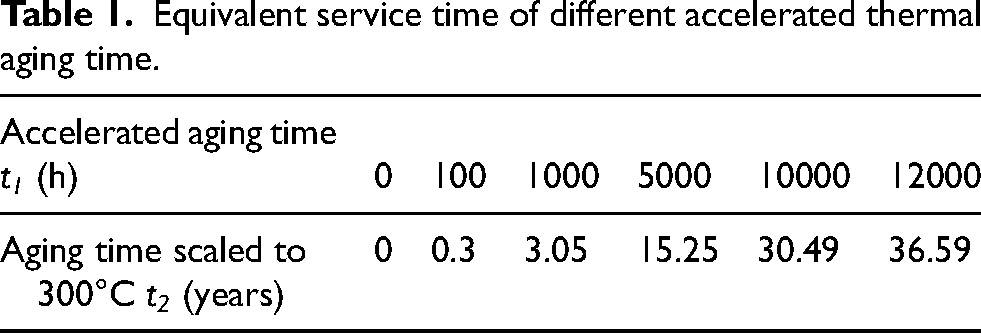
CF8 M cast austenitic stainless steel was used for this research. The preparation of accelerated thermally aged specimens was guided by the Arrhenius relationship. In Eq. (1), Q is the activation energy, R is the gas constant, T1 represents the elevated temperature used for accelerated aging, and T2 is the actual service temperature. t1 denotes the duration of the accelerated test, while t2 corresponds to the equivalent service time. The relationship between the accelerated thermal aging time and the equivalent aging time at 300 °C is provided in Table 1. The preparation process for the thermal aging specimens involved several steps. First, large blocks of cast stainless steel were placed in a furnace and held at 400 °C for a target duration. After the heat treatment, the blocks were taken out and the surface oxides were cleaned off. The descaled material was then sectioned into specimens for both non-destructive testing and mechanical testing. The specimens for non-destructive testing had final dimensions of 60 mm × 30 mm × 10 mm. The prepared specimens are shown in Figure 1.

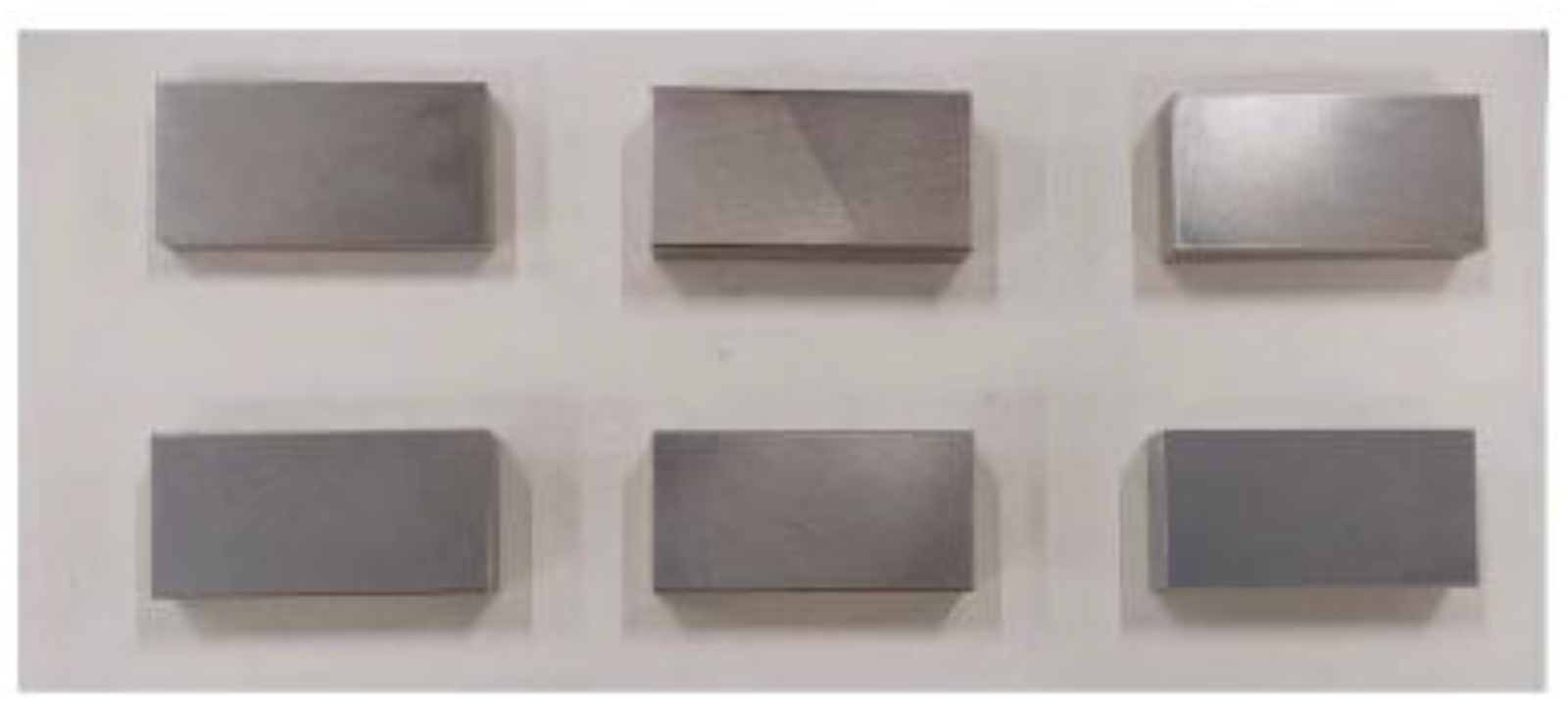
Thermal aging specimens.
Equivalent service time of different accelerated thermal aging time.
Eddy current testing was performed on the thermally aged specimens using a system comprised of an eddy current instrument and a control computer (Fig. 2(a)). The ECT probe contained a coil (4 mm outer diameter, 150 turns of 0.08 mm wire) wound around a 1 mm ferrite core, and the spring mechanism was employed to ensure a constant lift-off (Fig.2(b)). For each specimen, measurements were conducted at 30 uniformly distributed points on its surface using three excitation frequencies: 10 kHz, 20 kHz, and 50 kHz. The testing procedure was as follows: first, the probe was balanced in the air. Second, the probe was pressed firmly against a measurement point on the specimen, and the ECT signal was recorded over a period of time. This process was repeated for all measurement points. Finally, the stable segment of each recorded signal was extracted for analysis. Data acquisition was maintained continuously throughout the process of moving and stabilizing the probe; consequently, a large volume of data points, reaching the order of 105, was accumulated. A representative raw signal acquired from an unaged specimen (0 h) at 10 kHz is shown in Figure 3. Transient fluctuations were observed at the beginning and end of each measurement segment, corresponding to the probe's placement and removal. To ensure accuracy, the mean value of the stable central portion of the signal was calculated and used as the definitive ECT result for each measurement point. The multi-point measurement approach can reveal variations in material properties within a specimen.
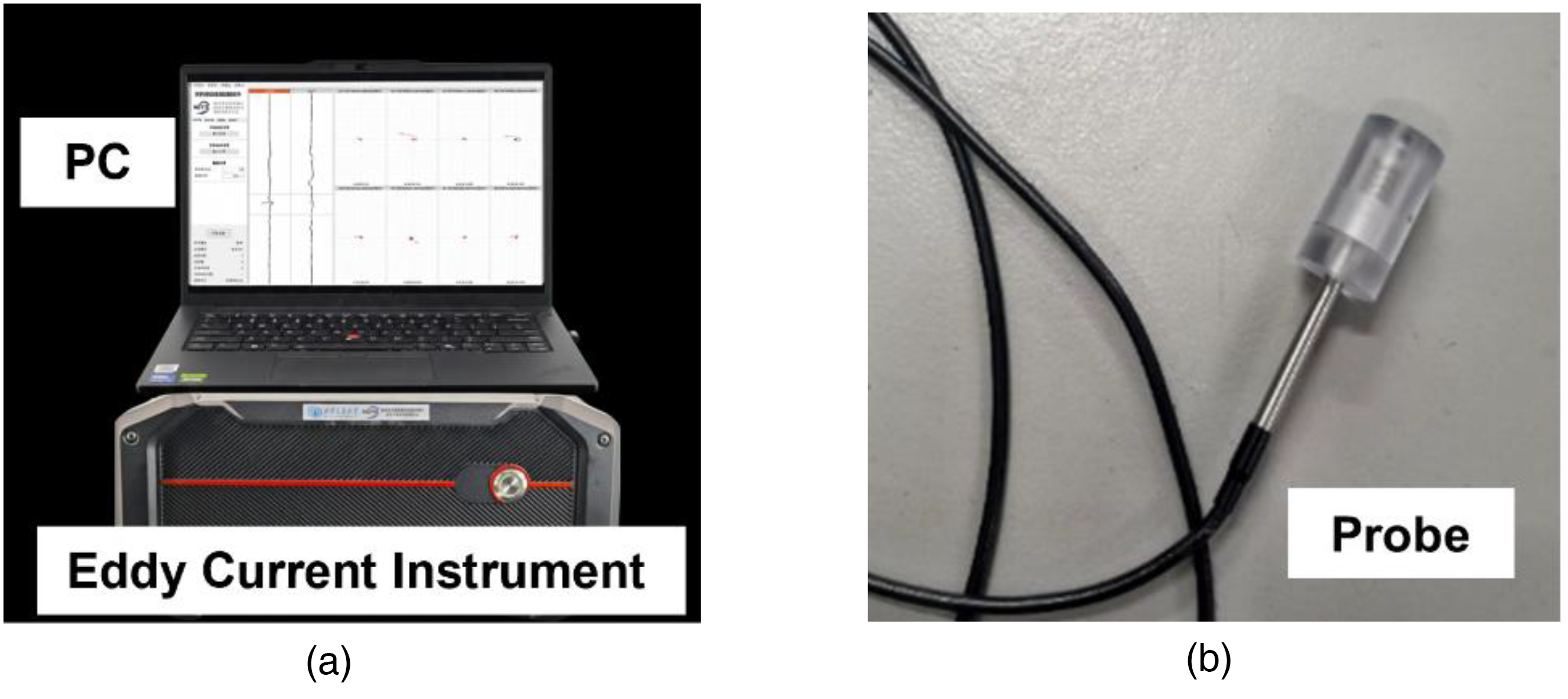
(a). ECT experiment system. (b). ECT probe.
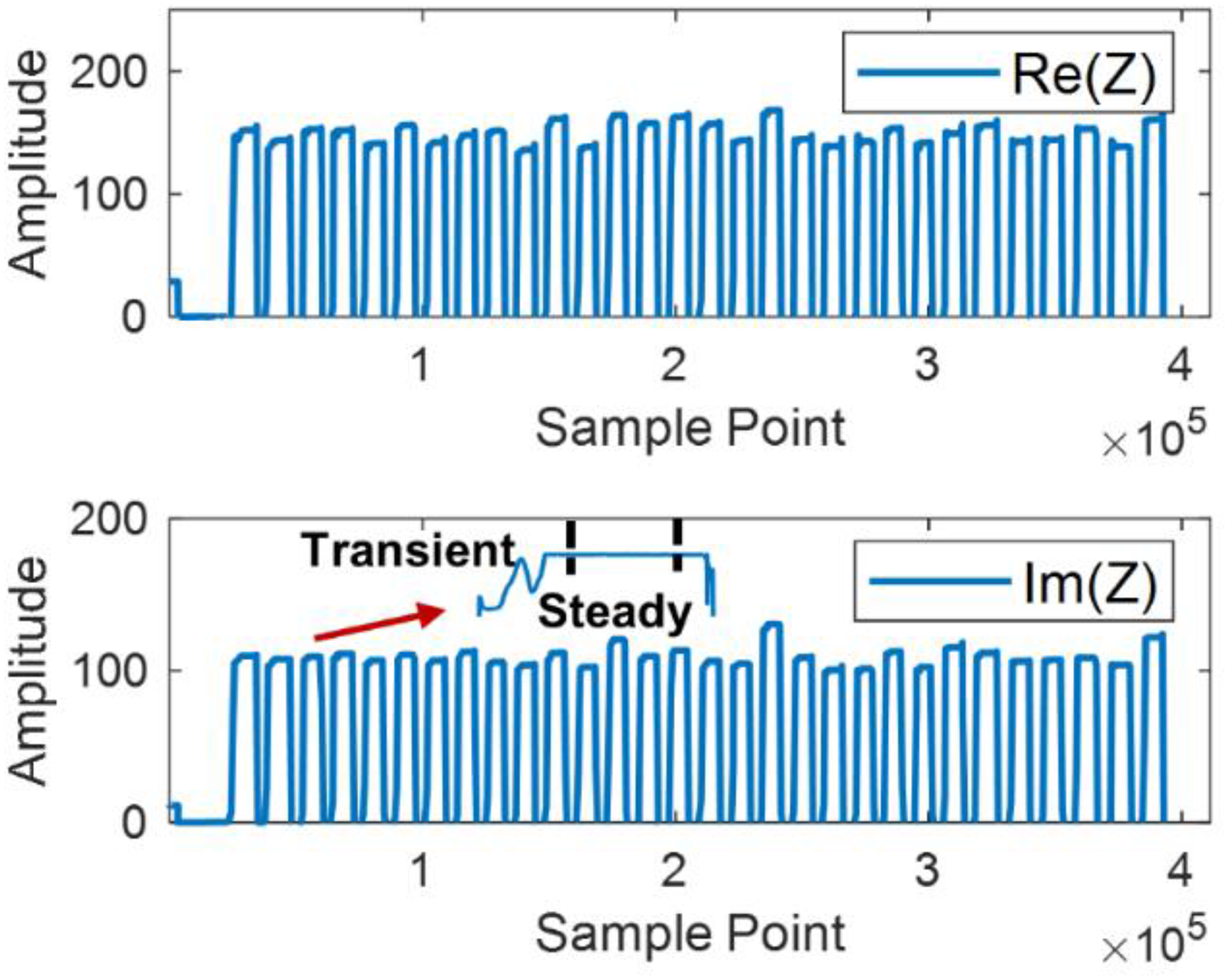
ECT signal of unaged specimen at 10 kHz. The x-axis represents the cumulative number of eddy current signal points collected during the specimen scanning.
The degree of embrittlement from thermal aging was assessed via Charpy V-notch impact tests. Standard specimens (55 mm × 10 mm × 10 mm) were prepared according to GB/T 19748–2019. An instrumented Zwick/Roell RKP450 pendulum impact tester was used to measure the absorbed energy at room temperature. To ensure data reliability, three replicate tests were conducted for each aging condition, with the resulting impact energy values serving as a direct measure of the material's embrittlement.
Results
ECT results
The impedance plane plots of the eddy current signals for all specimens at the three excitation frequencies are presented in Figure 4. The results exhibit significant dispersion for all aging conditions, confirming the inhomogeneous microstructure and varied local electromagnetic properties of the cast austenitic stainless steel. Despite this dispersion, distinct trends emerge with increased thermal aging. At 10 kHz and 20 kHz, the operating points move towards the origin, with both the real and imaginary parts showing a clear decrease, whereas at 50 kHz, the imaginary part decreases markedly while the real part exhibits only minor changes. To statistically analyze these trends, the amplitude and phase features were extracted from the signals, with the results shown in Figure 5. As depicted in Fig. 5(a), the signal amplitude demonstrates a consistent decreasing trend with increasing aging time for all three frequencies. By contrast, the phase feature shows less significant changes, though the 50 kHz results exhibit a slight upward change.
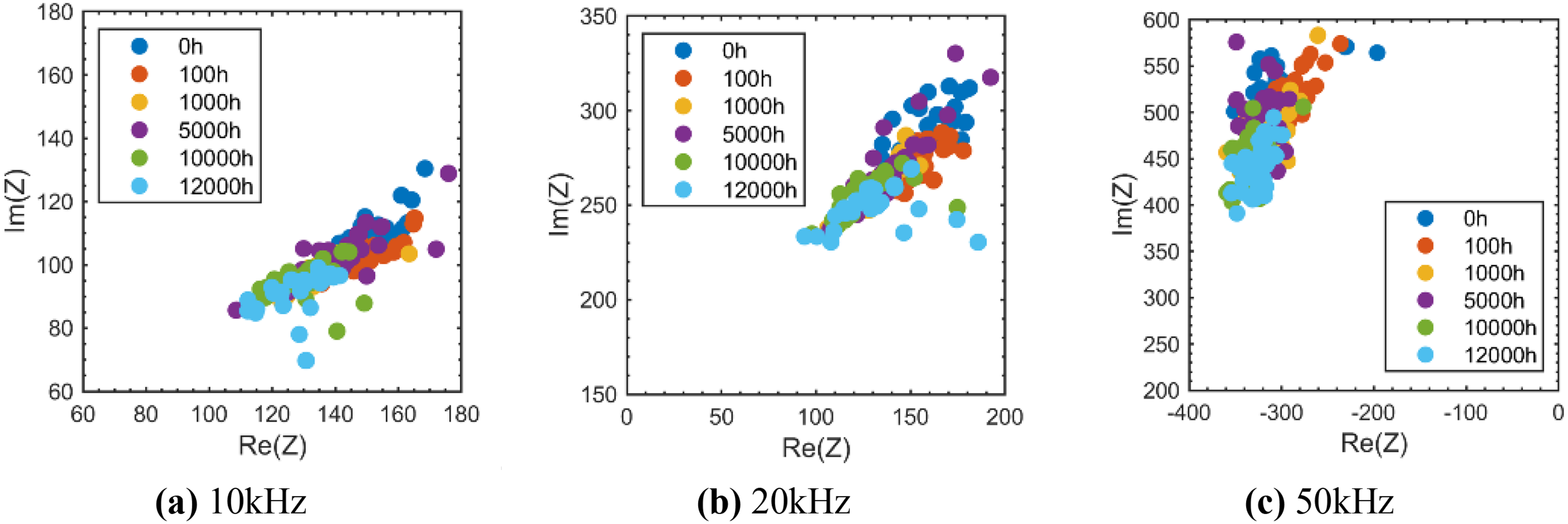
The impedance plane at different frequency.
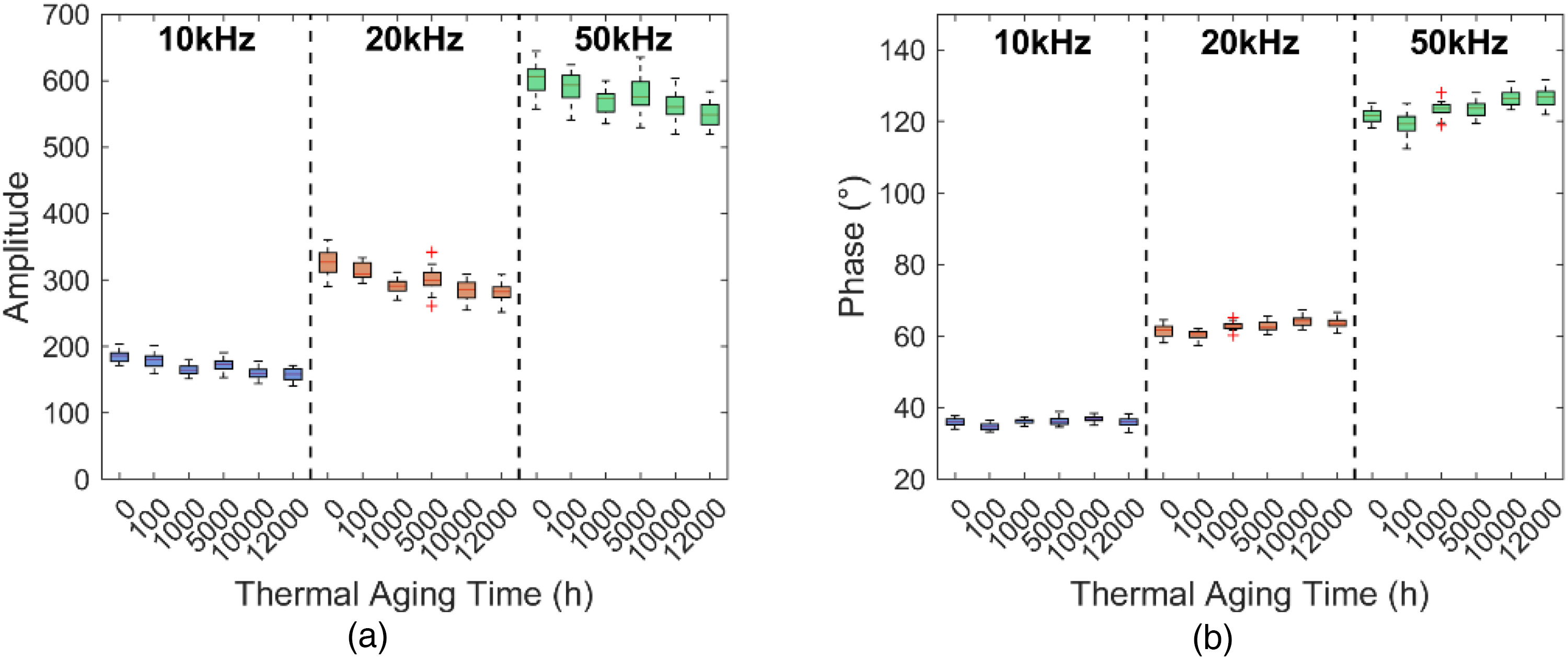
(a). Amplitude results. (b). Phase results.
The evolution of material inhomogeneity during the thermal aging process was investigated. This was quantified by calculating the coefficient of variation (CV) from thirty eddy current measurements distributed across the surface of each specimen. Figure 6 illustrates the CV of the eddy current signal's amplitude and phase as a function of aging time. As shown in Figure 6(a), the CV of the signal amplitude exhibits a prominent peak at 5000 h of thermal aging for all tested frequencies. Apart from this condition, the CV values at other aging durations (0, 1000, 10,000, and 12,000 h) are comparatively low and show no significant trend. In contrast, the CV of the signal phase, depicted in Figure 6(b), reveals more distinct long-term trends. At 10 kHz, the CV progressively increases with extended aging, indicating greater inhomogeneity in the material's response. At 20 kHz, the CV is relatively stable initially but increases significantly after 10,000 h. Conversely, at 50 kHz, the CV shows a limited fluctuation range. This suggests that the dispersion of the phase signal at 10 kHz is a robust indicator for the progression of thermal aging, primarily because the lower frequency provides a greater skin depth to effectively capture the bulk degradation.
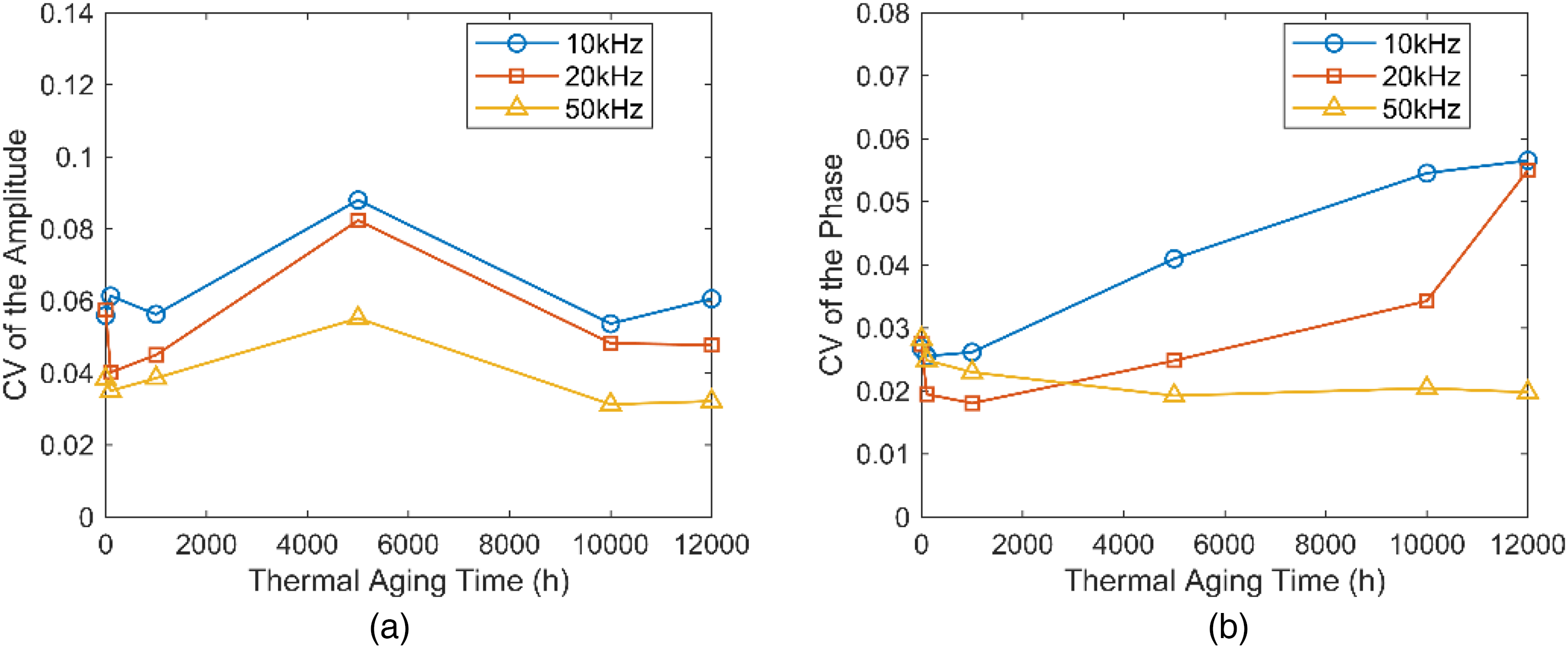
(a). CV of amplitude during aging. (b). CV of phase during aging.
Figure 7 illustrates the relationship between impact energy and thermal aging time. The results indicate that the impact energy decreases significantly with the thermal aging time. The degradation process can be divided into two stages. In the initial stage (from 0 to approximately 1000 h), the impact energy experiences a rapid and substantial drop. Subsequently, in the later stage (beyond 1000 h), the rate of decrease slows considerably, and the impact energy gradually approaches a saturation plateau.
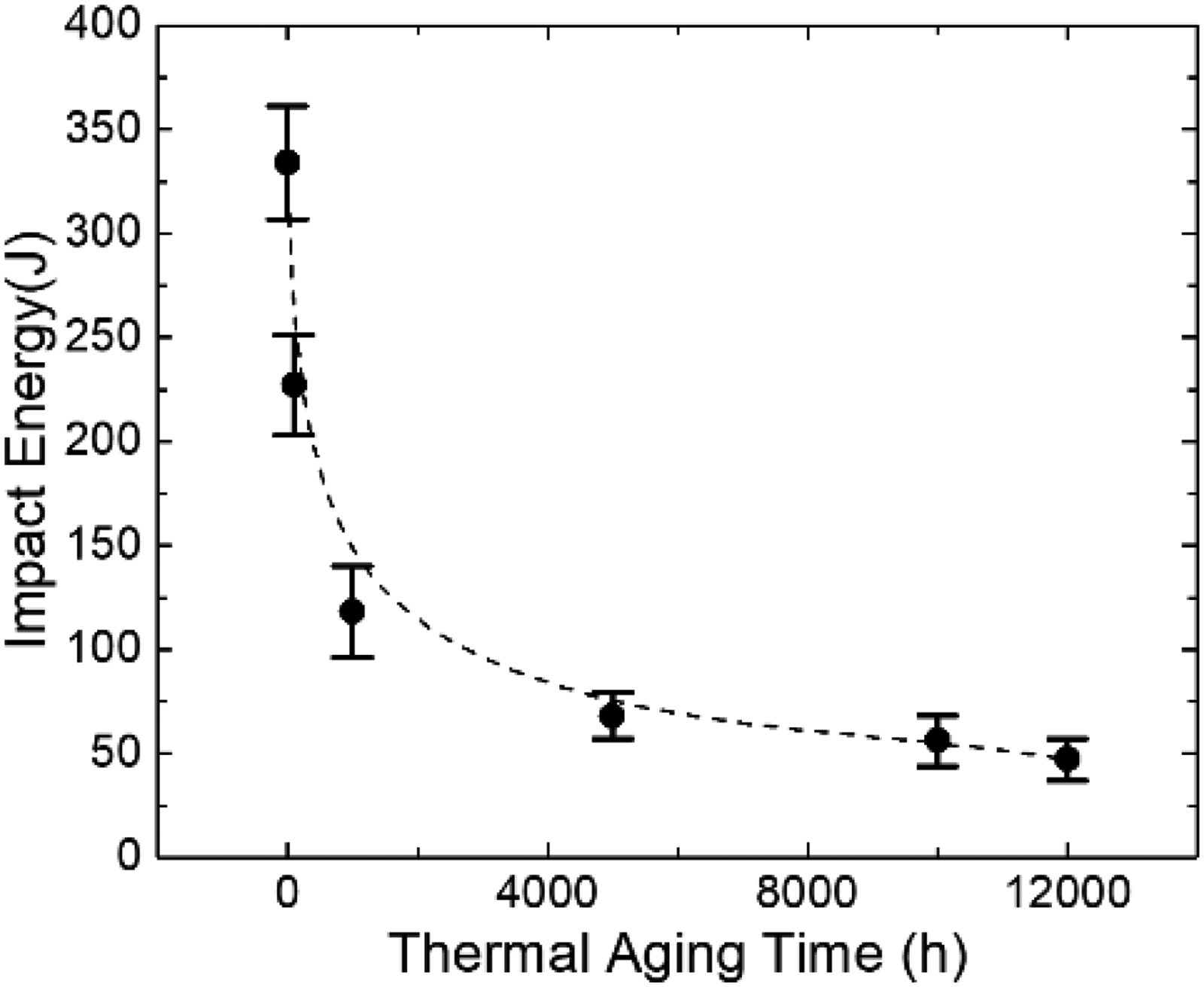
Impact energy vs thermal aging time.
Based on the analysis in Section 3.1, although the eddy current signals from the thermally aged specimens exhibit a certain degree of dispersion, the mean value of the amplitude parameter shows a clear correlation with the aging progression. Therefore, the mean value of the amplitude was selected to characterize the degradation of impact energy. To effectively integrate the multi-frequency information, Principal Component Analysis (PCA) was implemented. First, the mean amplitude values from the three frequencies were organized into a data matrix, which was then standardized to unit variance to eliminate scale effects. By performing eigen-decomposition on the covariance matrix, the principal components were obtained. The first principal component (PC1), which explains the majority of the total variance (over 95%), was selected as the fused feature. This approach reduces the redundancy among the three highly correlated frequency inputs while preserving the essential information related to material degradation. Subsequently, a quantitative relationship between the PC1 feature and the impact energy was established by creating a calibration curve using a second-order polynomial fit. The resulting calibration is shown in Figure 8. The goodness of fit is demonstrated by a high coefficient of determination (R2) of 0.9164. This result confirms that the eddy current-based approach can evaluate the impact energy of the cast stainless steel after thermal aging. While simple amplitude parameters have shown success in uniform materials, 10 the present work demonstrates that for heterogeneous CF8 M castings, a PCA-based fusion of multi-frequency data provides a more robust characterization.
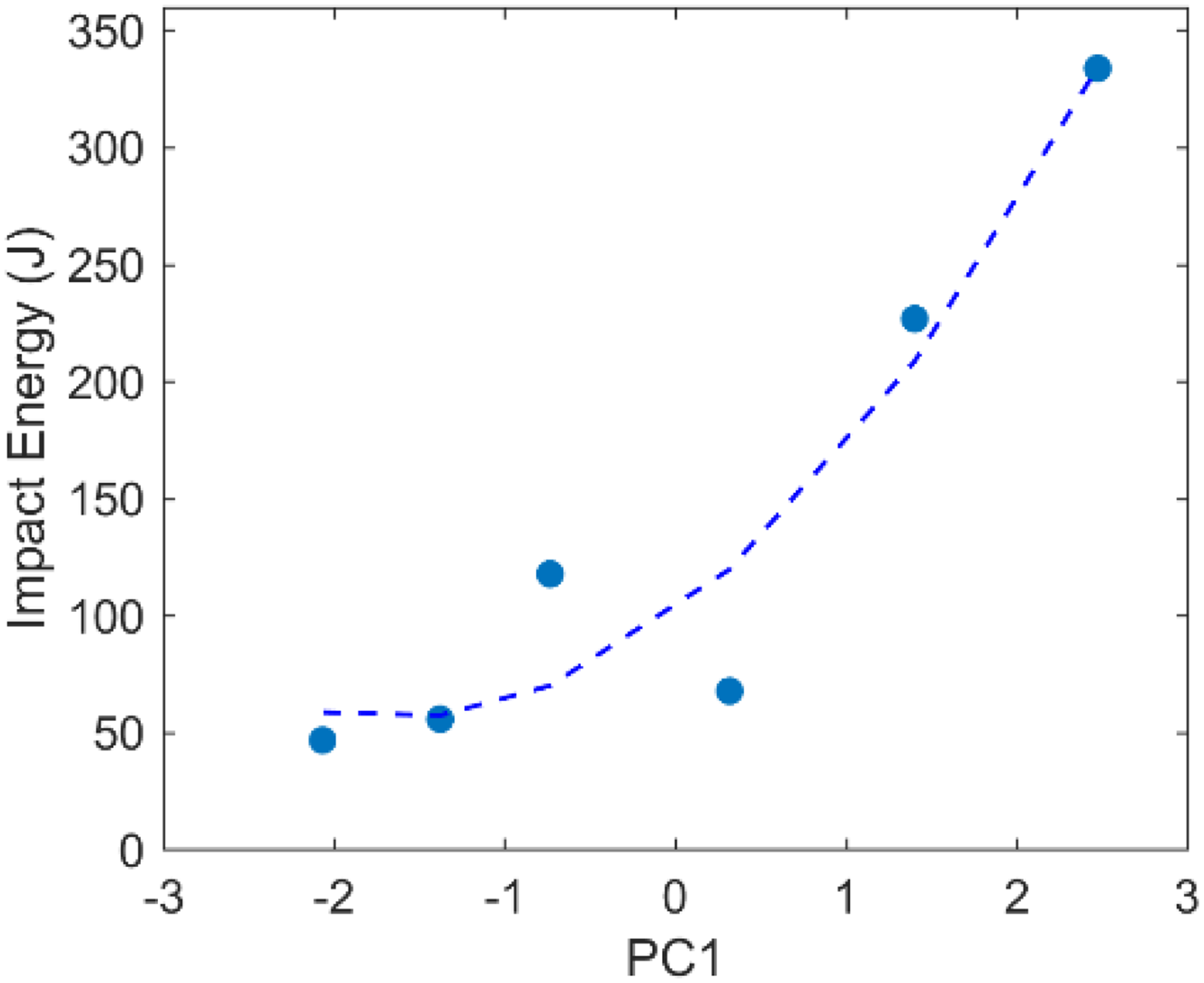
Calibration curve for impact energy.
To investigate the evolution of electromagnetic properties during thermal aging, the conductivity and relative permeability of the specimens were measured. The conductivity (Fig. 9) was measured with a four-point DC potential drop method, averaging ten measurements from the surface of each specimen. The results indicates that the conductivity slightly increases with aging time, reaching its maximum value at 10,000 h, which is an increase of approximately 2% compared to the unaged condition. The relative permeability (Fig. 10) was measured with a FerroPro permeability meter, also averaging ten measurements per specimen. In contrast to conductivity, the permeability decreased significantly with aging time, reaching its minimum at 12,000 h—a 10.1% reduction from the unaged state. Hence, the response of the ECT signal is primarily governed by the significant reduction in relative permeability. On one hand, the decrease in the specimen's permeability weakens the magnetic coupling between the ECT probe and the material, leading to a direct decrease in the coil's inductive reactance. On the other hand, the reduced permeability also weakens the intensity of the induced eddy currents within the material, which reduces energy dissipation and thus decreases the coil's equivalent resistance. The simultaneous decrease in both inductive reactance and resistance causes the operating point in the impedance plane to move towards the origin, as is consistent with the results shown in Figure 4. Consequently, the signal amplitude decreases with the aging time.
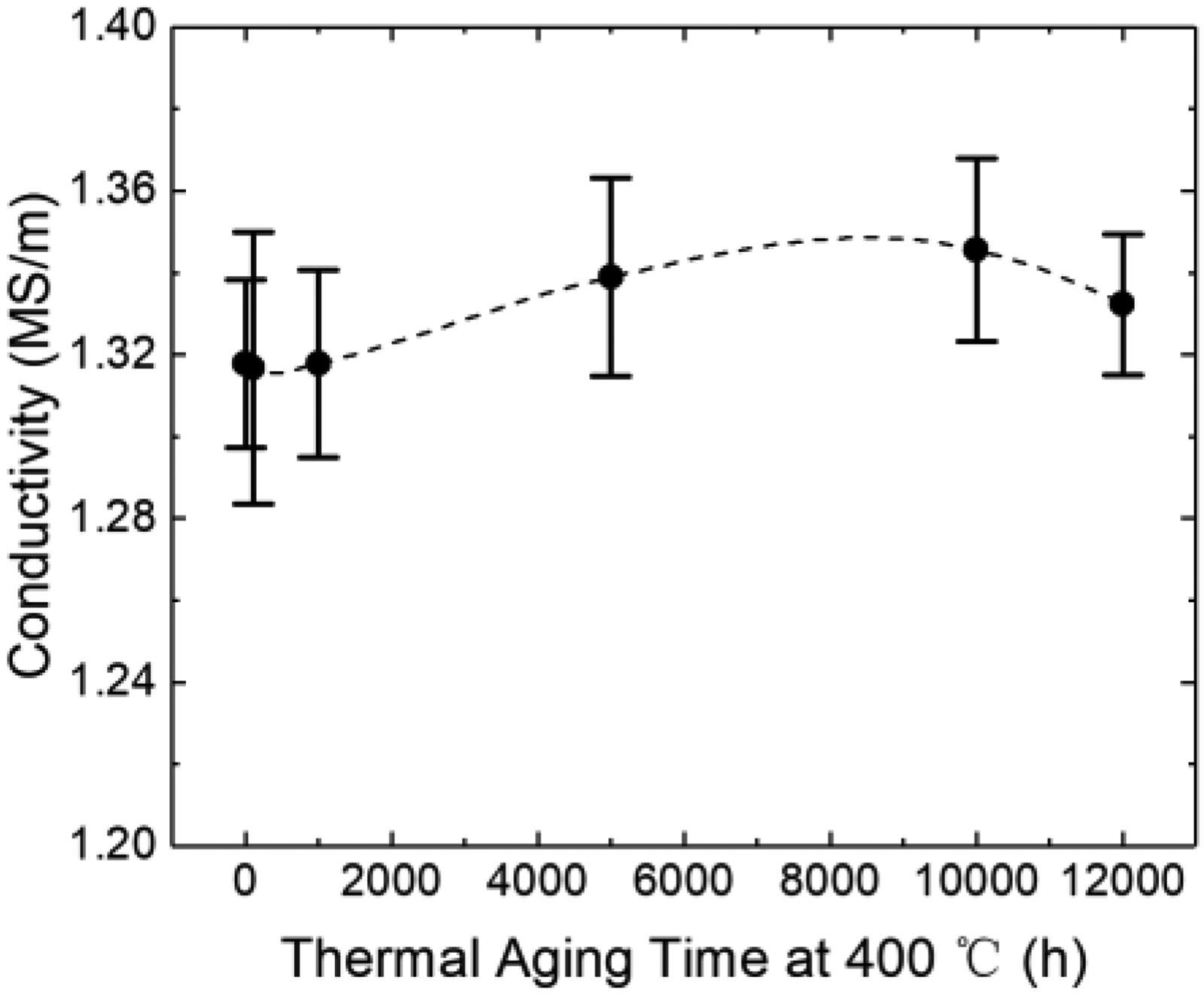
Conductivity measurement results.
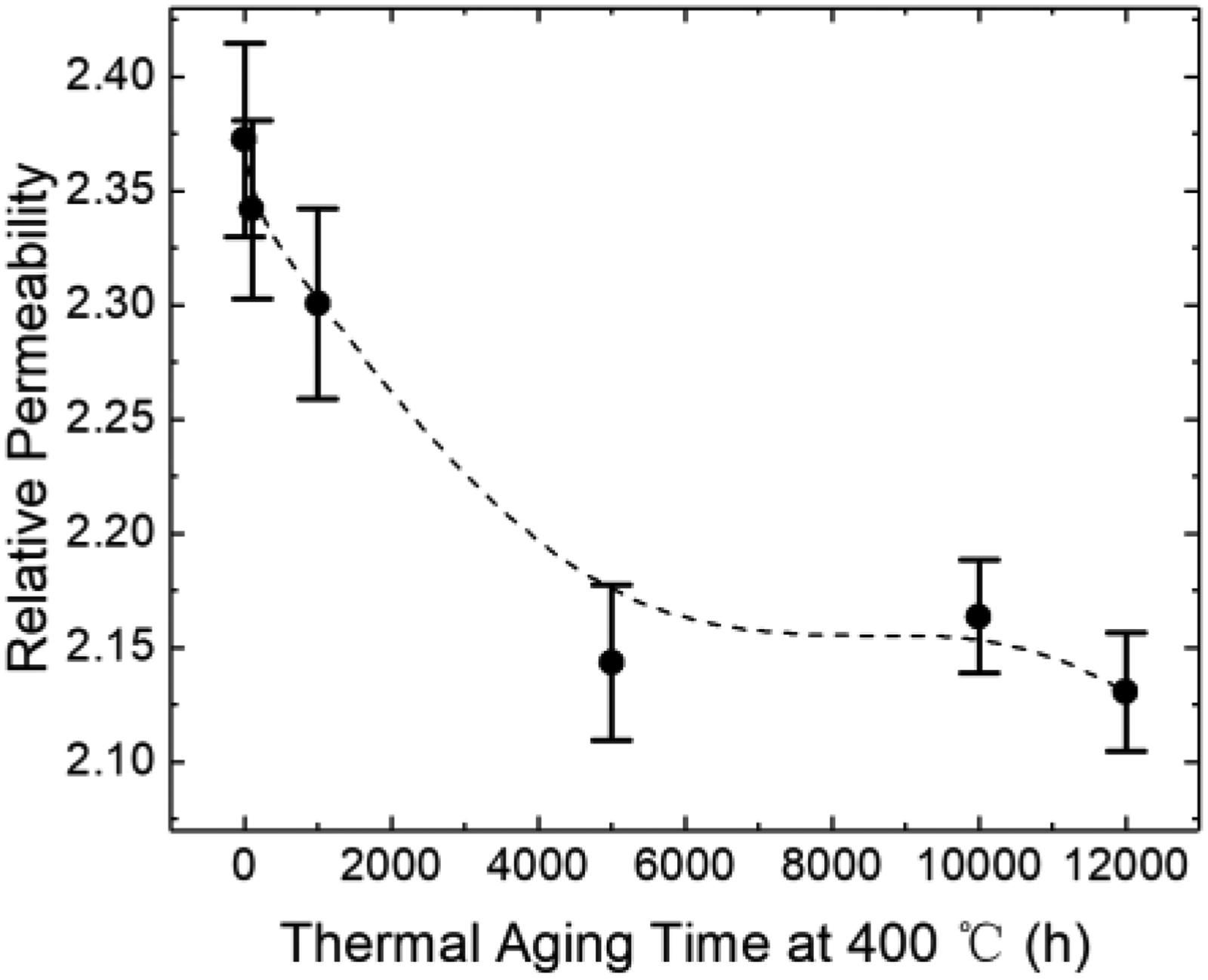
Relative permeability results.
This study demonstrates the feasibility of using eddy current testing to evaluate the thermal embrittlement of cast stainless steel. Multi-frequency eddy current signals were acquired, and the extracted amplitude features showed a consistent decreasing trend with thermal aging. Subsequently, a calibration curve was established between the impact energy and the first principal component (PC1), which synthesized the amplitude features from all frequencies. Notably, the spatial inhomogeneity of the phase signal at 10 kHz, as measured by the coefficient of variation (CV), increased steadily with prolonged thermal aging. The investigation into the underlying mechanism revealed that the evolution of the ECT signal is primarily governed by the significant decrease in the material's relative magnetic permeability during aging.
Footnotes

Ethical statement
This study does not involve human participants or animals. Therefore, ethical approval and consent are not applicable.
Funding
Supported by National Key R&D Program of China under grant 2022YFB3707202
Declaration of conflicting interests
The authors declared no potential conflicts of interest with respect to the research, authorship, and/or publication of this article.