



Abstract
Background
Individuals with type 2 diabetes mellitus (T2DM) have a higher incidence of dementia than those without the disease, possibly due to overlapping pathophysiological mechanisms. While glycemic control is essential to reduce dementia risk, recent studies suggest that newer antidiabetic agents, SGLT2i, GLP-1 RA, and DPP-4i, may offer neuroprotective effects.
Objective
To investigate the incidence of dementia in T2DM patients treated with SGLT2i compared to GLP-1 RA or DPP-4i.
Methods
A systematic search of PubMed, Embase, and Cochrane databases was conducted for cohort studies published up to June 2025 that assessed dementia incidence in T2DM patients using SGLT2i versus DPP-4i or GLP-1 RA. Risk ratios (RRs) were calculated using the Mantel-Haenszel random-effects model, with variance estimated via restricted maximum likelihood in R version 4.3.0.
Results
Ten studies met inclusion criteria. Four compared SGLT2i with GLP-1 RA, and seven with DPP-4i; one study contributed to both comparisons. The pooled RR for dementia in SGLT2i versus GLP-1 RA users was 0.91 (95% CI: 0.73–1.12; p < 0.003; I² = 78.7%). When comparing SGLT2i to DPP-4i, the RR was 0.39 (95% CI: 0.28–0.56; p < 0.00001; I² = 96.4%).
Conclusions
Use of SGLT2i was associated with a lower risk of dementia compared to DPP-4i, with no significant difference observed when compared to GLP-1 RA.
Keywords
Introduction
The incidence of dementia in individuals with type 2 diabetes (T2DM) is significantly higher than in those without the condition, showing a 1.5 to 2-fold increased risk.1–3 Several mechanisms have been proposed to explain this association, including insulin resistance, chronic inflammation, oxidative stress, endothelial dysfunction, and disturbances in cerebral energy homeostasis. 4
Regarding Alzheimer's disease (AD), this relationship is explained by shared pathophysiological pathways, such as brain insulin resistance, reduced activation of the PI3K/AKT pathway, and increased GSK3β activity, which favor tau hyperphosphorylation and amyloid-β accumulation—key hallmarks of AD. 5 In addition, chronic inflammation, AGE–RAGE signaling, and mitochondrial dysfunction present in T2DM exacerbate oxidative stress and synaptic damage, creating a neurodegenerative environment that accelerates cognitive decline. Recent evidence highlights the role of circulating microRNAs (miRNAs) as common molecular mediators in AD and T2DM. 5 A review identified 21 dysregulated miRNAs shared by both conditions, targeting genes central to glucose metabolism, neuronal survival, and inflammation, including MAPK1, MAP2K1, AKT1, RAF1, and PIK3R1. These networks integrate signals that regulate energy balance, synaptic plasticity, and cell survival. Dysregulation of miRNAs such as miR-132 (neuroprotective, often downregulated) and miR-34c (upregulated, with detrimental metabolic effects) illustrates how altered gene regulation may contribute simultaneously to metabolic dysfunction and neurodegeneration. 5
Unfortunately, there are no treatments that significantly alter the clinical course or cure the various forms of dementia, which highlights the importance of preventive measures. 6 Adequate glycemic control is regarded as an important pillar in dementia prevention, exerting neuroprotective effects. 7 However, recent evidence suggests that newer classes of oral antidiabetic agents may offer additional benefits beyond glycemic control.4,8
These newer classes include sodium-glucose co-transporter 2 inhibitors (SGLT2i), glucagon-like peptide-1 receptor agonists (GLP-1 RA), and dipeptidyl peptidase-4 inhibitors (DPP-4i). Preclinical studies suggest, as neuroprotective mechanisms of such drugs, anti-inflammatory action, improvement in brain insulin signaling, reduction of oxidative stress, enhancement of cerebral blood flow, promotion of neurogenesis, and systemic metabolic and vascular effects, which could provide secondary neurological benefits.9–11
Meta-analyses of previous observational clinical studies have shown favorable associations between SGLT2i use and reduced risk of dementia compared to non-users.12–14 However, direct comparisons between SGLT2i and other classes of oral antidiabetic agents, such as GLP-1 RA and DPP-4i, with neuroprotective effects also described, have not been analyzed in prior meta-analyses. In this context, the objective of the present study is to investigate the incidence of dementia among patients with T2DM using SGLT2i compared to those treated with GLP-1 RA or DPP-4i in clinical studies. This analysis aims to fill a relevant gap in the literature and provide evidence to inform clinical practice regarding cognitive protection in patients with diabetes.
Methods
This systematic review and meta-analysis were conducted in accordance with the Cochrane Handbook for Systematic Reviews of Interventions and the Preferred Reporting Items for Systematic Reviews and Meta-Analyses (PRISMA) statement.15,16 The study protocol was registered in the International Prospective Register of Systematic Reviews (PROSPERO; CRD420251062943).
Eligibility criteria
We included cohort studies that met the following eligibility criteria: (1) enrolled adults with T2DM’; (2) compared users of SGLT2i with users of either DPP-4i or GLP-1 RA; and (3) reported incident dementia as a clinical outcome.
Studies were excluded if they (1) enrolled participants with cognitive decline without a formal diagnosis of dementia, only reduced scores on cognitive screening tests, or prior dementia diagnosis; (2) lacked a control group; (3) adopted a crossover design; or (4) used the same patient database as another included study. We excluded studies based on population databases with overlapping evaluation periods. In such cases, only the study with the largest population was included, provided there was no population overlap with the other included studies.
Search strategy and data extraction
A comprehensive literature search was performed across PubMed, Embase, and Cochrane Central Register of Controlled Trials from inception to June 2025, without language restrictions. The search strategy included the following terms and their combinations: “SGLT2 inhibitors,” “SGLT2i,” “sodium-glucose cotransporter-2,” “dapagliflozin,” “empagliflozin,” “canagliflozin,” “dementia,” “cognitive,” and “Alzheimer” (Supplemental Material). Two reviewers (P.M. and L.A.) independently extracted baseline characteristics and outcomes, following predefined extraction criteria. Discrepancies were resolved by consensus or by consultation with a third reviewer (P.C.).
Endpoints and subgroup analyses
The primary endpoint was the incidence of all-cause dementia. Analyses were stratified into two comparison groups to evaluate the effect of SGLT2i : SGLT2i versus GLP-1 RA, and SGLT2i versus DPP-4i. The selection of these comparison groups is based on the neuroprotective mechanisms described in preclinical trials with these three oral antidiabetic agents.
Quality assessment and risk of bias
The quality of included cohort studies was assessed using the Newcastle-Ottawa Scale (NOS), which evaluates three domains: selection of participants, comparability of cohorts, and ascertainment of outcomes. Studies scoring ≥7 were classified as high quality; those scoring 4–6 as moderate; and those <4 as low quality. The evaluation was performed independently by two reviewers (P.M. and L.A.), with disagreements resolved through discussion or adjudication by an expert (P.C.).
Statistical analysis
Binary outcomes for the incidence of dementia were analyzed using risk ratios (RRs). All analyses were conducted using a Mantel-Haenszel random-effects model, with variance estimation performed via restricted maximum likelihood (REML). 17 Results are presented with 95% confidence intervals (CIs) and p-values, with statistical significance defined as p < 0.05. Heterogeneity across studies was evaluated using the I² statistic and Cochran's Q test. According to the Cochrane Handbook for Systematic Reviews of Interventions, I² values below 40% and Q test p-values greater than 0.10 were considered indicative of low or negligible heterogeneity. 18
Sensitivity analyses were performed using a leave-one-out approach to assess the impact of each study on the overall effect size. To further explore heterogeneity, Baujat plots were used, while funnel plots were employed to examine potential small-study effects and publication bias (Supplemental Material). All statistical analyses were carried out using R version 4.3.0 (R Foundation for Statistical Computing, Vienna, Austria). 19
Results
Search results and study characteristics
The search strategy was conducted in June 2025 using the PubMed, Embase, and Cochrane databases, identifying 756 potentially eligible studies. After removing 197 duplicates, 559 publications were screened. Title and abstract screening led to the exclusion of 538 studies, which were reviews, conference abstracts, case reports, or did not meet the eligibility criteria regarding the study population. Of the 21 full-text articles assessed, seven were excluded due to absence of the subgroup of interest in the analysis, two due to overlapping population, one due to inappropriate study design and one due to outcome inconsistency (Supplemental Material). Ten studies were included in this review. Four of them used GLP-1 RA as a control group, and seven used DPP-4 inhibitors. One of the studies (Cohen, 2025) was used in both groups. 20 The study selection process is illustrated in Figure 1.
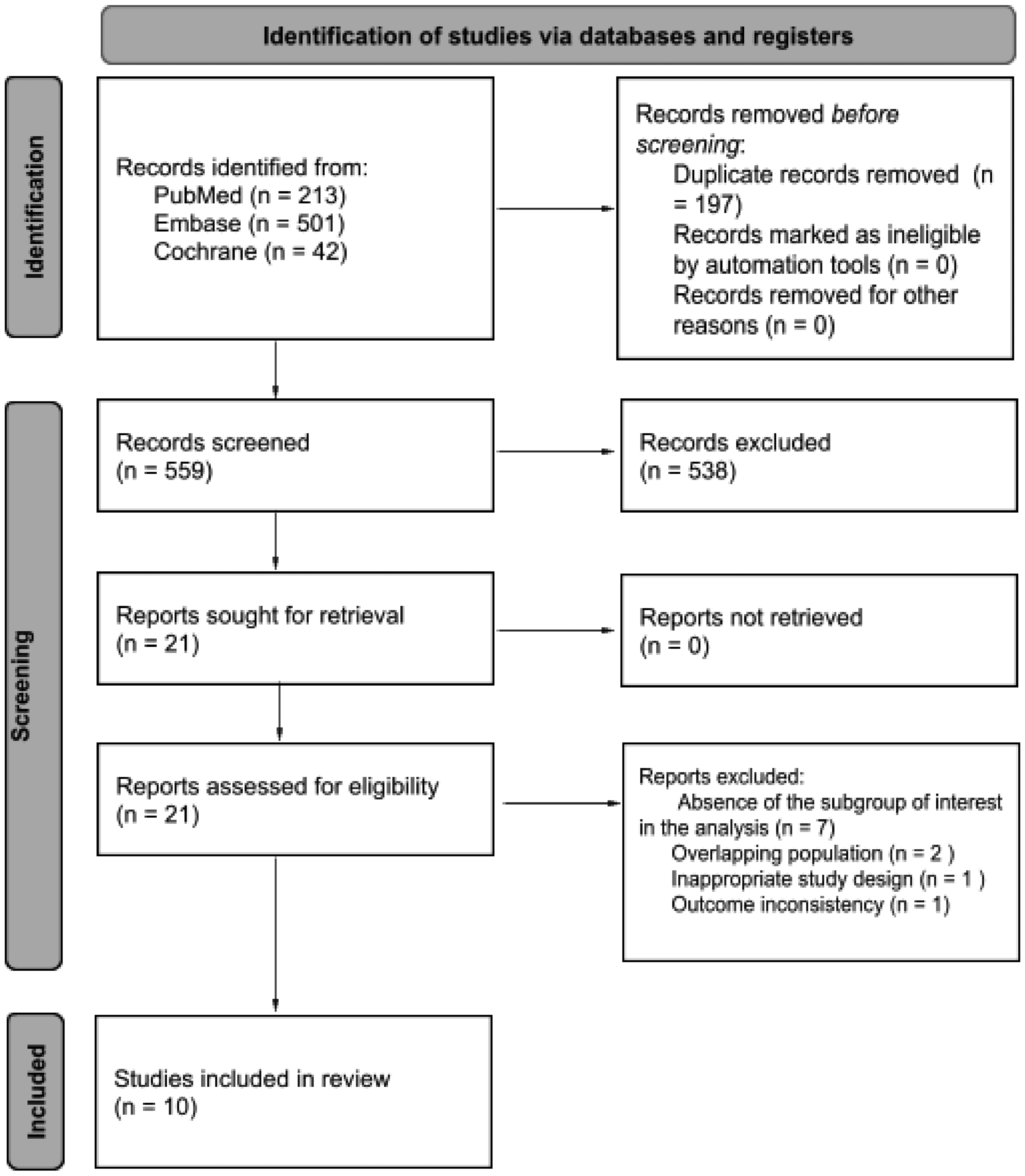
PRISMA flow diagram of study selection.
All cohort studies addressing the topic were included. The outcomes analyzed refer to the incidence of dementia, with no restrictions regarding subtype. Table 1 presents the baseline characteristics of the participants in each study, including the antidiabetic agents used in the intervention and control groups, number of participants, mean age, sex distribution, time of follow up, populational database and criteria to define dementia.
Baseline characteristics of included studies that used SGLT2i or GLP1 RA.

NA: not available.
Baseline characteristics of included studies that used SGLT2i or DPP4i.
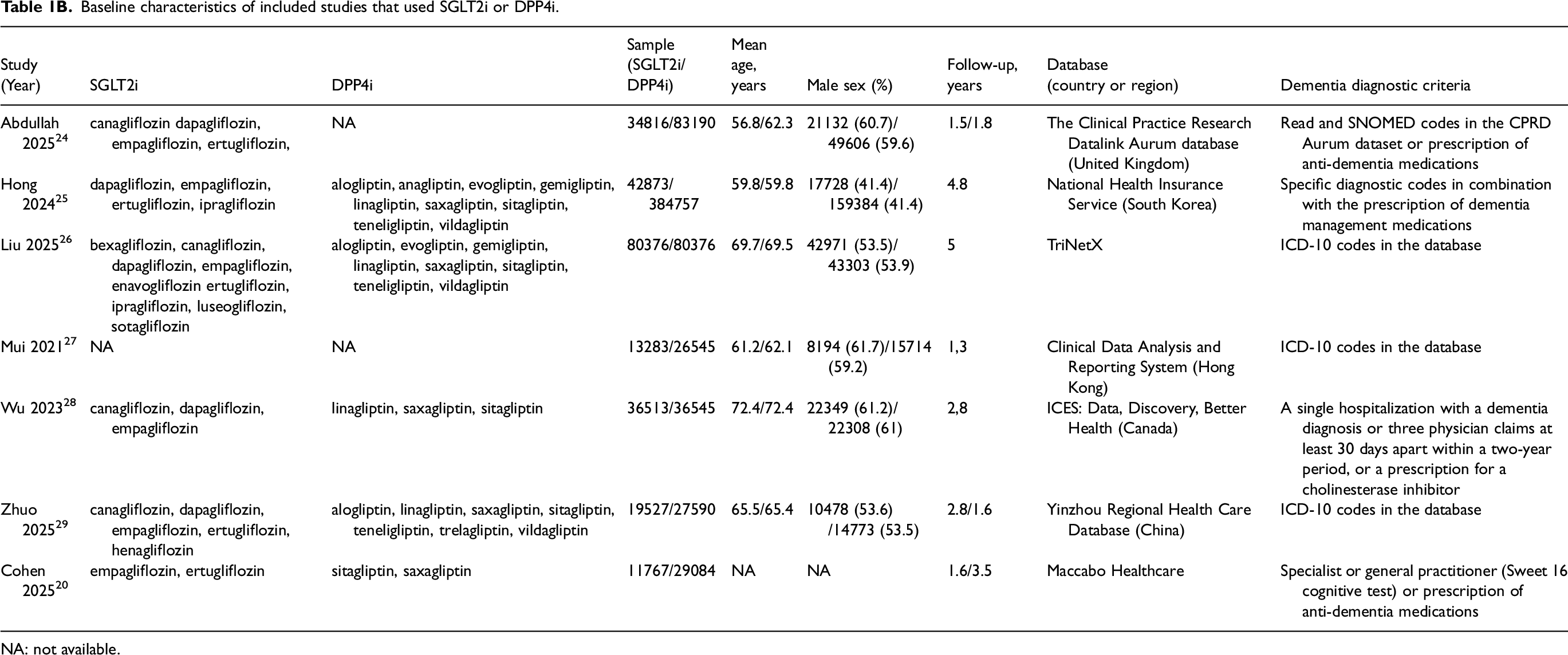
NA: not available.
Meta-analysis results
Incidence of dementia
SGLT2i versus GLP-1 RA. The incidence of dementia was compared between patients with T2DM using SGLT2i versus GLP-1 RA. The incidence of dementia in the group using SGLT2i was 2.63% (6537 cases in 248,448 patients). In the GLP-1 RA group, the incidence of dementia was 3.28% (8249 cases in 251,276 patients). The relative risk calculated between the groups was 0.91 (p < 0.003; CI: 0.73–1.12; I² = 78,7%), with no statistically significant difference between the groups, as shown in Figure 2.

Forest plot of the incidence of dementia with the use of SGLT2i or GLP1RA.
SGLT2i versus DPP-4i. The incidence of dementia was compared between patients with T2DM using SGLT2i versus DPP-4i. The incidence of dementia in the group using SGLT2i was 1.95% (4676 cases in 239,155 patients). In the DPP-4i group, the incidence of dementia was 6.42% (42,871 cases in 667,905 patients). The relative risk calculated between the groups was 0.39 (p < 0.00001; CI: 0.28–0.56; I² = 96,4%), with statistically significant difference between the groups, as shown in Figure 3.
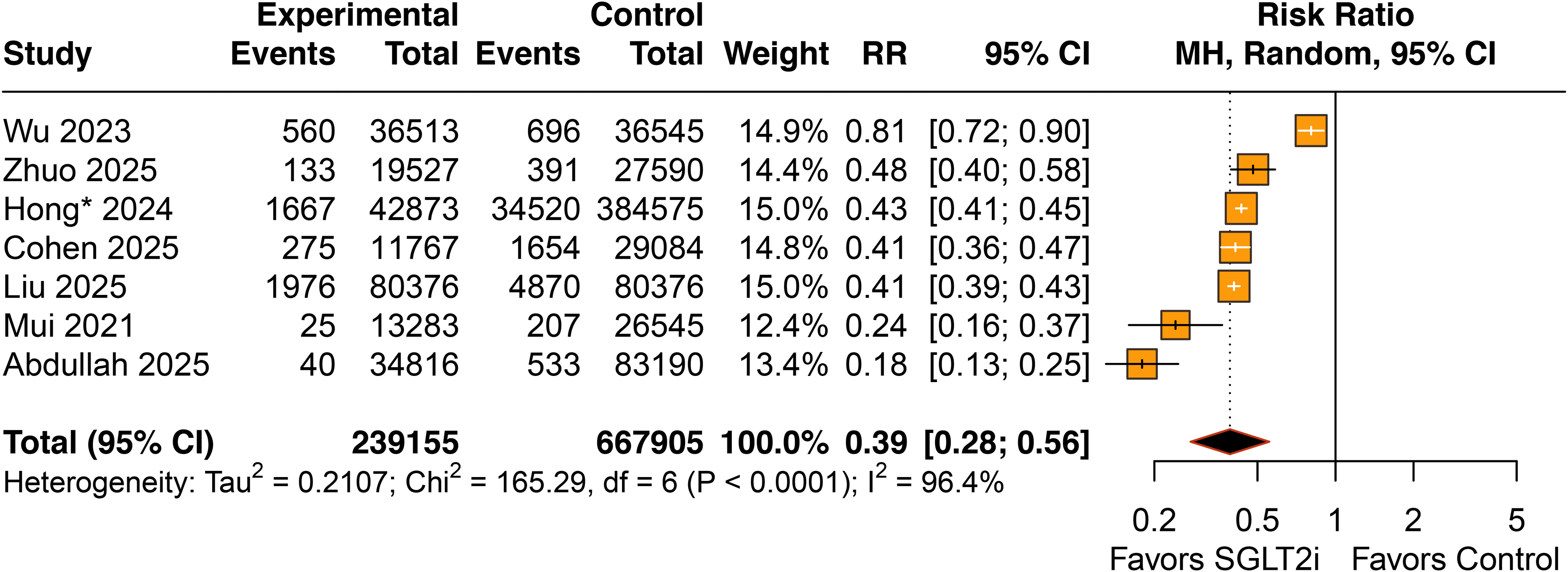
Forest plot of the incidence of dementia with the use of SGLT2i or DPP-4i.
As a sensitivity analysis, we performed a leave-one-out approach to evaluate the influence of individual studies on the pooled prevalence estimates. The analysis comparing SGLT2i and DPP-4i showed consistent results, as illustrated in Figure 3. In contrast, the leave-one-out analysis comparing SGLT2i and GLP-1 RA indicated that excluding the study Tang et al. altered the primary outcome, 23 with SGLT2i then appearing to be associated with a lower incidence of dementia disease. This finding suggests a substantial influence of the particular study on the overall result.
Quality assessment and publication bias
This meta-analysis included only cohort studies; therefore, the NOS was used for methodological quality assessment. The results of this assessment indicated that the studies were of high quality, as all of them scored either eight or nine points (Supplemental Material). Since each analysis included fewer than 10 studies, assessment of publication bias was not performed.
Discussion
This meta-analysis, based on cohort studies, evaluated the incidence of dementia in patients with T2DM using SGLT2i compared to GLP-1RA or DPP-4i. The comparison between SGLT2i and GLP-1RA showed no significant difference between the groups. However, the use of SGLT2i versus DPP-4i was associated with a significant reduction in the risk of dementia in patients with T2DM, with a relative risk reduction of 60%. Meta-analyses comparing the use of SGLT2i to other antidiabetic agents have shown a reduction in the incidence of dementia in patients with T2DM.12–14 However, no meta-analyses were found in the literature that directly compared SGLT2i with other new oral antidiabetic drugs.
The neuroprotective effects of SGLT2i can be explained by several pathophysiological mechanisms. 9 These drugs are lipid-soluble and cross the blood-brain barrier, reaching brain concentrations sufficient to influence key neuronal pathways. 30 This is supported by the expression of SGLT1 and SGLT2 receptors in several regions of the central nervous system, including the hippocampus, cerebral cortex, and cerebellum. 31 Additionally, the presence of SGLT2 has been identified in the epithelium of the choroid plexus and in ependymal cells, suggesting a potential influence on cerebrospinal fluid composition. 32 Recent experimental evidence also indicates that SGLT2 inhibitors, particularly empagliflozin, may preserve the integrity of the blood–brain barrier. In animal models of cerebral ischemia, these agents reduced blood-brain barrier disruption, limited neuroinflammation, and improved neurological outcomes. Notably, such protective effects were associated with preservation of cerebral microvascular endothelial cells through β-catenin–mediated mechanisms. 33
Beyond receptor-mediated mechanisms, SGLT2i has also demonstrated the ability to inhibit acetylcholinesterase. 30 Notably, canagliflozin has been shown to reach effective brain concentrations capable of enhancing acetylcholine levels, mimicking the mechanism of action of cholinesterase inhibitors, drugs commonly used in the treatment of dementia due to Alzheimer's disease. 34 Another possible mechanism involves the increase in brain-derived neurotrophic factor (BDNF) levels, as observed in animal models treated with empagliflozin, which may promote neuroplasticity and protect against cognitive decline. 35
SGLT2i may reduce the risk of dementia not only through direct central nervous system effects but also via cardiovascular protection, antioxidative and mitochondrial-stabilizing properties, and mTOR pathway suppression. 9 Cerebral atherosclerosis has been associated with cognitive decline and dementia.36,37 These drugs exert anti-atherosclerotic actions by reducing vascular inflammation, oxidative stress, and improving endothelial function. 38 Chronic inflammation promotes the release of reactive oxygen species (ROS), which in turn exacerbate endothelial dysfunction, atherosclerosis, and neuronal injury through mechanisms involving amyloid-beta and tau toxicity.39,40 SGLT2i have demonstrated the ability to mitigate oxidative stress beyond glycemic control, by reducing ROS production and enhancing antioxidant enzyme expression. 41 Moreover, experimental models show that these agents improve mitochondrial function, preserving neuronal integrity. 42 Lastly, modulation of the mTOR pathway may partly explain the neuroprotective effects of SGLT2i. Chronic mTOR activation, commonly seen in T2DM, is associated with endothelial dysfunction, disruption of the blood-brain barrier, and aberrant phosphorylation of proteins such as tau and amyloid-β. 43 SGLT2i induce a fasting-mimicking metabolic state by reducing circulating glucose and amino acids, thereby restoring the circadian rhythm of mTOR activity. 44
Although SGLT2i demonstrate promising neuroprotective effects, it is important to highlight that the drugs used as a control group in this study—GLP-1 RA and DPP-4i—also belong to the class of novel oral antidiabetic agents with neuroprotective mechanisms established in preclinical studies.10,11 GLP-1 RA can cross the blood–brain barrier and act on receptors located in the cortex, hypothalamus, and substantia nigra. 45 These agents appear to modulate neuroinflammation by promoting an anti-inflammatory microglial phenotype, 46 reduce oxidative stress and preserve mitochondrial and cellular integrity, 47 improve brain insulin signaling through the PI3 K/Akt pathway, 48 inhibit neuronal apoptosis by modulating survival pathways, 48 decrease tau and beta-amyloid phosphorylation, 47 and increase the expression of neurotrophic factors such as BDNF and GDNF. 49 In turn, DPP-4i act partly through indirect mechanisms by inhibiting GLP-1 degradation, thereby enhancing previously described neuroprotective effects. 10 Given the partially indirect nature of these effects, it is plausible to consider whether this might help explain the higher incidence of dementia observed in the DPP-4i group.
Regarding the comparison between SGLT2i and GLP-1 RA, this meta-analysis did not reveal a statistically significant difference between the groups. However, upon the leave-one-out sensitivity analysis, when the study of Tang et al. was excluded, 23 a significant reduction in the incidence of dementia was observed in the SGLT2i group, along with the elimination of heterogeneity in the forest plot, which dropped to zero. Investigating the possible cause of this discrepancy, it was found that the study by Tang included tirzepatide—a dual agonist of GLP-1 RA and glucose-dependent insulinotropic polypeptide (GIP) receptors—as one of the medications in the GLP-1 RA group (Table 1). 23 This particularity may have introduced a comparative bias, since tirzepatide, due to its dual mechanism, differs from the selective GLP-1 RA, thus constituting a potentially unfair comparison that impacted on the observed results.
To date, the available literature has consistently demonstrated an association between the use of SGLT2i and a reduced risk of dementia in observational studies. Three recent meta-analyses have evaluated the neuroprotective potential of SGLT2i compared to other antidiabetic therapies. Tang et al. (2023) reported that SGLT2i users had a lower risk of all-cause dementia compared to non-users (RR: 0.62; 95% CI: 0.39–0.97). 12 Similarly, Youn et al. (2024) observed a significant reduction in dementia risk among SGLT2i users (HR: 0.68; 95% CI: 0.50–0.92), in addition to improved cognitive performance as measured by standardized scores (SMD: 0.88; 95% CI: 0.32–1.44). 13 More recently, Pan et al. (2025) also found an association between SGLT2i use and a lower risk of dementia (RR: 0.77; 95% CI: 0.71–0.84). 14 However, in all of these studies, the comparison was made between SGLT2i users and non-users, with the control group potentially including patients using any other class of antidiabetic drugs except SGLT2i.
In addition, Zhang et al. conducted a large real-world cohort study using United States healthcare databases and demonstrated that both SGLT2i and GLP-1 RA were associated with a lower risk of Alzheimer's disease compared with DPP-4 inhibitors, but no significant difference was observed between SGLT2i and GLP-1 RAs - results that align closely with the associations observed in our meta-analysis. 50 While Zhang et al. provided valuable single-country evidence based on two large datasets, our meta-analysis builds on these findings by integrating multiple population-based cohorts from different regions and comparing SGLT2i with GLP-1 RAs and DPP-4i in a broader dementia context beyond Alzheimer's disease. This approach enhances generalizability and provides the first pooled estimate of relative dementia risk among these modern antidiabetic classes in real-world practice. 50
In this context, our study contributes with a direct comparative analysis among newer classes of oral antidiabetic agents, all of which have shown potential neuroprotective effects in previous clinical research. By evaluating whether SGLT2i offers superior cognitive protection when directly compared to GLP-1 RA and DPP-4i, we aim to address an important gap in the current literature.
Limitations
This study has several limitations that should be considered when interpreting its findings. First, the small number of included studies may have affected the robustness of the meta-analysis and limited the ability to perform subgroup analyses, such as by age, sex or geographic region, which may lead to relevant differences in outcomes. 51 Secondly, the limited follow-up period may not fully reflect the long-term outcomes associated with the evaluated classes, as dementia typically develops over several years, with pathological changes often preceding the onset of clinical symptoms. 4 Third, a high degree of heterogeneity was observed across the studies, which may be partially explained by differences in outcome definitions (i.e., incidence of dementia) and the use of observational designs, which are naturally subject to greater variability. 52 Moreover, the lack of data on specific dementia subtypes hampers a more detailed assessment of the impact of antidiabetic agents on each clinical form. Additionally, unreported variability in baseline characteristics—particularly educational level, diabetes duration, and comorbidities—may further contribute to heterogeneity and introduce confounding factors into the results.
Conclusions
The correlation between diabetes and dementia is well established, with individuals with T2DM having a 1.5 to 2-fold higher risk of developing dementia compared to those without the condition.1–3 New classes of oral antidiabetic agents have demonstrated neuroprotective mechanisms in preclinical studies.53,54 Among them, SGLT2i are considered one of the most promising classes, given their ability to act through both direct mechanisms within the central nervous system and indirect cardiovascular protection. 9 Previous meta-analyses have shown a lower incidence of dementia among SGLT2i users compared to users of other antidiabetic agents.12–14 However, the direct comparison between SGLT2i and GLP-1RA or DPP-4i remained a gap in the literature. This cohort-based study did not demonstrate a statistically significant difference between SGLT2i and GLP-1RA. In contrast, when comparing SGLT2i with DPP-4i, a reduced risk of incident dementia was observed among SGLT2i users. Subgroup analyses were not feasible due to the limited number of studies. Therefore, these findings should be interpreted in light of the limitations of our study.
Supplemental Material
sj-docx-1-alz-10.1177_13872877251395086 - Supplemental material for Incidence of dementia in patients with type 2 diabetes using SGLT2 inhibitors versus GLP-1 receptor agonists or DPP-4 inhibitors: A systematic review and meta-analysis of cohort studies
Supplemental material, sj-docx-1-alz-10.1177_13872877251395086 for Incidence of dementia in patients with type 2 diabetes using SGLT2 inhibitors versus GLP-1 receptor agonists or DPP-4 inhibitors: A systematic review and meta-analysis of cohort studies by Pedro Henrique Milori, Larissa Maria Armelin, Antônio Mutarelli and Paulo Caramelli in Journal of Alzheimer's Disease
Footnotes
Acknowledgements
The authors have no acknowledgments to report.

Author contribution(s)
Funding
The authors disclosed receipt of the following financial support for the research, authorship, and/or publication of this article: Paulo Caramelli is funded by CNPq, Brazil (bolsa de produtividade em pesquisa).
Declaration of conflicting interests
The authors declared the following potential conflicts of interest with respect to the research, authorship, and/or publication of this article: Paulo Caramelli: Preparation of CME materials and speaker in symposium sponsored by Aché, Biogen, Danone, Fleury, Lilly, Lundbeck, Novo Nordisk and Pratti-Donaduzzi. Consulting activities for para Aché, Danone and Knight Therapeutics. Investigator in clinical trials sponsored by Passage Bio and Roche.
Paulo Caramelli is an Editorial Board Member of this journal but was not involved in the peer-review process of this article nor had access to any information regarding its peer-review.
Data availability statement
The data supporting the findings of this study are available within the article and/or its Supplemental Material.
Supplemental material
Supplemental material for this article is available online.
References
Supplementary Material
Please find the following supplemental material available below.
For Open Access articles published under a Creative Commons License, all supplemental material carries the same license as the article it is associated with.
For non-Open Access articles published, all supplemental material carries a non-exclusive license, and permission requests for re-use of supplemental material or any part of supplemental material shall be sent directly to the copyright owner as specified in the copyright notice associated with the article.
