



Abstract
This article examines how responsibility is understood and enacted among Sāmoan diaspora living in Greater Brisbane, Australia. Drawing on 46 in-depth, repeat interviews with 16 participants, the study demonstrates that responsibility is a multifaceted practice shaped by cultural values, migration histories and everyday social relations. Participants described responsibility across three interconnected domains: the household; the community; and the future self. These accounts reveal how Sāmoan collectivist practices, such as fa‘alavelave and tautua, intersect with the expectations of life in Australia, often producing tensions between individual aspirations and communal obligations. The findings highlight the ways responsibility is embedded in fa‘asāmoa, encompassing reciprocity, service and relational identity, while also negotiating the pressures of Western individualism. By foregrounding Sāmoan-centred perspectives, the article argues for a more nuanced sociological understanding of responsibility that moves beyond dichotomies of personal versus societal responsibility and recognises its fluid, relational and culturally situated nature.
Introduction
Responsibility has become a central theme in contemporary sociological debate, often framed through policy discourse that emphasises personal choice, self-management and individual accountability. Within this dominant narrative, responsibility is frequently treated as a moral attribute of autonomous subjects, obscuring the relational, cultural and collective dimensions that shape how responsibility is lived and understood across diverse communities. Pacific scholarship has long challenged such narrow framings by highlighting the centrality of relationality, reciprocity and obligation in Pacific worldviews, yet sociological research in general has been slow to incorporate these insights into broader discussions about responsibility. This article contributes to addressing that gap by examining how Sāmoan people living in the Greater Brisbane region articulate and practise responsibility in their everyday lives.
This article has been written from a White or pālagi perspective. I am a researcher of Anglo-Celtic heritage currently living in Brisbane, Australia, although I grew up in rural Queensland. I have spent a significant portion of my adult life living and working in cultures that are not my own. My husband, who is of Finnish and Anglo-Celtic heritage, spent several years working in schools that were largely populated by Pasifika youth. His stories, in addition to reading research from Australian-based Pasifika scholars instilled a desire in me to develop a greater understanding of the challenges and opportunities facing Pasifika diaspora in Australia. While I seek to share the voices of Sāmoan diaspora, and the findings have been shared with the research participants, I acknowledge that this article has been written through my lens and is one of many possible interpretations.
Contemporary Conceptualisations of Responsibility
Western Conceptualisations of Responsibility in the Literature
Responsibility can be challenging to define, operating, like most sociological concepts, ‘within a web of other concepts’ (Lucas, 1993, p. 9). Responsibility theory has largely been debated within the field of philosophy in relation to ethics (moral responsibility, e.g., Williams, 2012), legality (legal responsibility, e.g., Long, 1999) and citizenship (political responsibility, e.g., Dunn, 1990). While the topic was appreciated by classical sociologists such as Durkheim, Habermas, Parsons and Weber, the topic has been of limited interest to sociologists in the past few decades and the concept arguably remains largely underdeveloped (Strydom, 1999). Indeed, responsibility is often discussed as something we either all care about or something to be completely ignored, typically failing to recognise the intertwined and interconnected social practices and roles (Strydom, 1999)
Sociological literature that does focus on responsibility often describes the concept in relation to societal or social responsibility (e.g., Delanty, 1999, pp. 156–157; Strydom, 1999) or has a focus on risk (e.g., Beck, 1992; Lupton, 2006). The former of these aims to shift focus away from solely individual responsibility to one of collective responsibility, particularly in relation to global challenges such as the environment or the climate crisis (e.g., Mailer, 2009). The latter focuses on social responses to how risk is viewed in society, particularly in relation to precarity and uncertainty (e.g., Groves, 2014). Both bring a sociological lens to understanding responsibility at a macro level, particularly in relation to systemic change and/or how institutions and structures shape experiences and understandings of responsibilities.
Similarly, responsibility has also been explored within the social policy and feminist literature, centring on the gendered construction of responsibility. This is perhaps most extensive in relation to caregiving, work and welfare, highlighting the unequal distribution of caregiving responsibilities within the family (e.g., Baxter et al., 2023; Sullivan, 2019) and devaluing of caring professions within the labour market (e.g., Block et al., 2018; England et al., 2002). Ethics of care theorists, such as Tronto (1993) and Kittay (2011), have argued that responsibility must be reconceptualised as a collective, relational practice rather than an individual moral attribute, challenging neoliberal policy models that individualise risk and obligation.
This is not to say that the micro level is not also of interest to sociologists, particularly in relation to person-to-person interactions. This manifests in the sociological literature on responsibility in two main ways. First, ‘questions of responsibility arise whenever a person is expected by some other person(s) to act in a certain way’ (Williams, 2012, p. 824). Indeed, ‘[t]he “burden” and “privilege” aspects of responsibility have a deep relation to the role of moral and other normative expectations in enabling social interaction’ (Williams, 2012, p. 822). Other scholars have described responsibility as ‘linked to questions of participation,’ ‘one's social and emotional enmeshment in the collectivity one feels responsible to’ (Hage, 2012, p. 112), ‘linked fate’ (Reyes, 2020, p. 785) and ‘valid components of citizenship’ (Bolzendahl & Coffe, 2009, p. 766). Thus, while the focus here is largely on the micro level, the links back to the macro level are evident in the links to the broader sociological phenomena and notions of collectivity described above (Munro, 2011).
The second way in which responsibility is described in the sociological literature is the neoliberal conceptualisation of individual responsibility. I am referring here to the idea that we have a personal responsibility to fulfil our potential and to be our best selves, and to meet our own needs (Maman & Rosenhek, 2019; Savini, 2019; Shamir, 2008). Additionally, neoliberalism encourages the use of charity and civil society-led initiatives rather than relying on government ‘handouts’ (Parsell et al., 2021; Pyysiäinen et al., 2017). This again creates a focus of responsibility on the micro level, with a strong emphasis on individual needs and obligations, rather than collective needs.
Pasifika Conceptualisations of Responsibility in the Literature
How responsibility is described in Pasifika literature differs from the descriptions outlined above yet is still arguably sociological in its approach. Across Pasifika literature, for example, there is often a strong emphasis on collectivism and on ‘obligations’ to kin, or what Williams (2012, p. 822) described as ‘prospective responsibilities’ (see, e.g., Fa’aea & Enari, 2021; Fainga‘a-Manu Sione et al., 2023; Fetui, 2020). However, it is important here to be aware of the connotations that the English language word ‘obligation’ imbues. Use of the word obligation − or its synonyms such as duty, burden, imperative, or commitment − is often used in the scholarly literature to indicate negativity. These connotations are not as prevalent when reading Pasifika literature, where these obligations are often described as being carried out with alofa (love) and tautua (reciprocity of service). Literature which discusses Sāmoan culture and populations often refers to this using the word fa‘alavelave, which does not directly translate into English but may be understood to encompass monetary gifts but also the performance of social responsibilities for major life events such as births, weddings and funerals (Ala‘ilima & Ala‘ilima, 1994; Lilomaiava-Doktor, 2009a). Fa‘alavelave is frequently described as central to Sāmoan life and remains an important cultural practice in which reciprocity is central (Lilomaiava-Doktor, 2009a; Va’a, 2001).
Building on this, Faleolo (2019) demonstrates that these obligations can extend across transnational spaces, including financial obligations to kin residing elsewhere, and how this may influence migration decisions, such as taking a better paid job in Brisbane, Australia, over a more prestigious but less well-paid job in Auckland, Aotearoa New Zealand. Stanley and Kearney (2017) describe the tensions that these obligations can cause among Sāmoan youth, particularly when they conflict with personal desires or goals that are often elevated within broader, mainstream Australian society, such as the attainment of tertiary education qualifications (see also Esera & Viliamu, 2025). Yet it is important to note that these responsibilities or obligations are not necessarily viewed by diaspora in a negative light. Indeed, noted above, these responsibilities or obligations form part of fa‘asāmoa, which roughly translates as the Sāmoan way of life, and encompasses dimensions such as extended family or kin group, service, love and respect (Lilomaiava-Doktor, 2009a). Lilomaiava-Doktor (2009a, p. 8) highlights that Sāmoans develop ‘one's āiga [kin or extended family] relationships through responsibilities that are maintained over time’. The importance of relationships and cultural expectations should thus be emphasised in any discussion around responsibility.
This is not to say that Pasifika notions of responsibility do not also focus on global challenges. Tui Atua (2018), for example, discusses a Sāmoan framing of responsibility for responding to the climate crisis. Enari and Jameson (2021) similarly discuss climate justice to demonstrate the way in which the Sāmoan diaspora remain connected to the Islands. Notions of responsibility among Sāmoan diasporic communities, however, typically ‘demands (sic) a collectivist or communal orientation that gives priority to group needs’ and ‘upholds a sense of self in relation to others’ (Kearney et al., 2011, p. 147). This indicates a fluidity in everyday practice between macro (global responsibility) and micro (personal responsibility) that is not typically found in sociological literature on responsibility.
Methodology
The findings in this article are drawn from my doctoral research, which sought to understand how Sāmoan diaspora in Greater Brisbane understood ‘the good life.’ Those identifying as Sāmoan are one of the fast-growing groups in Greater Brisbane − a metropolitan area in southeast Queensland which encompasses the five local government areas of Brisbane, Ipswich, Logan, Moreton Bay and Redland City, with a population of just over 2.5 million people. Approximately 29,500 Greater Brisbane residents claimed Sāmoan heritage in 2021, compared to only 11,000 in 2006, indicating an increase of almost 170%, compared to an increase in the Greater Brisbane population of only 40%.
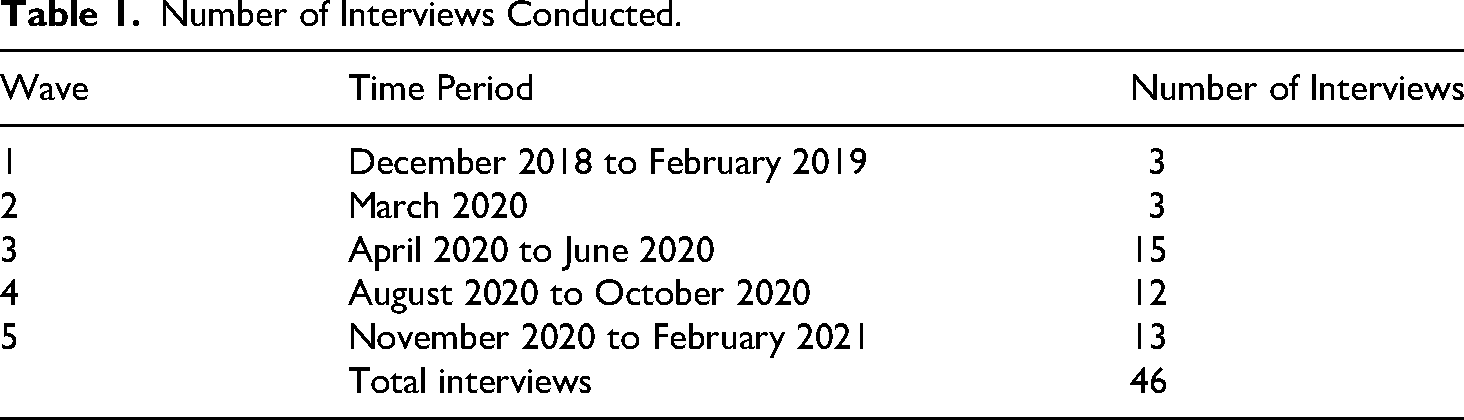
Between December 2018 and February 2021, I undertook 46 repeat, unstructured, in-depth interviews with 16 participants, all of whom self-identified as Sāmoan. Participants were interviewed between one and five times: one interview (n = 1); two interviews (n = 6); three interviews (n = 6); four interviews (n = 0); and five interviews (n = 3). The number of times participants were interviewed was related to their availability and choice to participate in the research; not all participants were able to engage with the research throughout the whole period of data collection (see Table 1).
Number of Interviews Conducted.
I used a criterion-based convenience sampling approach (DeCarlo, 2018), with a deliberately broad inclusion criterion. To be involved in the study, participants only needed to meet the following criteria: identify as Sāmoan; be 18 or over; and live in the Greater Brisbane area. Ethnic identification was self-identified; my research interest lay in diaspora, and so there were no criteria around place of birth or citizenship. Given the exploratory nature of the research, recruitment was undertaken through a mix of personal connections and Pasifika-specific groups (e.g., Pasifika Women's Association and university-based Pasifika clubs). Further recruitment occurred through snowball sampling, with participants sharing information about the project with friends and family if they felt comfortable to do so.
Participants ranged in age from 19 to late 40 s. The majority were women (n = 13) and there were a few (n = 3) men. Participants were spread across Brisbane but mostly concentrated in Logan (n = 7) and the border between Brisbane and Ipswich (n = 4), which aligns with the areas of Greater Brisbane with the largest Pasifika populations. Most were born in Aotearoa New Zealand (n = 11) or Samoa (n = 2), but many held Australian citizenship (n = 9). None had parents who were born in Australia.
Interviews were conducted both face-to-face and via Zoom or telephone, depending on participant preference and restrictions relating to the COVID-19 pandemic. The time of each interview varied, depending on the participant's availability and interest, with most interviews lasting around 80 min. Each participant was offered a $20 Coles Group & Myer gift card as a thank you for participating.
Following the lead and preferences of the participants, the interviews followed an unstructured approach. This unstructured approach, particularly early in the participant−researcher relationship, was also used to develop rapport with participants. It also aligns with the Sāmoan framework of teu le va, which privileges reciprocity and respect for relational spaces (Anae, 2016). Participants often began by describing their family history, including who left the Islands and when, typically providing sociohistorical context to their experiences. They also described various events that were happening in their lives and the lives of their friends and families. Subsequent interviews typically began with a ‘catch up’ of what had happened since we last spoke. While the initial focus of my doctoral research had been primarily around fiscal practices, the interview approach was participant-led and so discussion became more focused on educating me around cultural practices, sharing frustrations around cultural norms, and expressing desires to reconnect with their culture. Conducting repeated interviews also allowed opportunities for me, as the researcher, to share preliminary findings with the participants for their input and feedback.
As noted in the introduction, I am an Australian of Anglo-Celtic heritage and a non-Pasifika researcher. My cultural identity impacts the ways in which the data for this study were collected, constructed, analysed and shared. Taking an unstructured approach during research interviews meant that the research participants had control over which of the narratives and experiences they chose to share − or not share − with me. With the aim of being authentic and open, I sought to be transparent in my positionality and reasons for undertaking the research and approached all conversations from a place of curiosity rather than judgement. Some participants explicitly stated that they shared certain frustrations with me because I was from outside their community. Similarly, I am sure that there were stories not shared with me for the same reason. The collection of stories shared are nonetheless essential to helping us better understand the participants’ lives within their social context and broader social phenomena.
Interviews were audio recoded and then transcribed. Transcriptions were analysed using reflexive thematic analysis (Braun & Clarke, 2022). I read all the transcripts in full to (re)familiarise myself with the contents, uploaded the transcripts into NVivo, a qualitative analysis software program, and then thematically coded them. Memos detailing researcher notes and preliminary analysis were also added to the NVivo file. Given the unstructured nature of the interviews, it made more sense to use a reflexive thematic approach. There is a focus in reflexive thematic analysis on data engagement, with recognition of the influence of the researcher on the interpretation of data (Braun & Clarke, 2022). Throughout this process I identified several key themes in the data, which were subsequently shared with research participants as preliminary findings. The research participants identified the themes of responsibility, identity and agency as those which most resonated. The theme of ‘responsibility’ forms the basis of this paper. The categorisation that frames the findings (responsibility to the household, responsibility to the community and responsibility to the future self) were developed in collaboration with the research participants, who confirmed that these were accurate reflections of their experiences.
The research was approved by The University of Queensland Human Research Ethics Committee (2018/001040). All participant names have been replaced with pseudonyms and other details have been adjusted where necessary to ensure participant de-identification.
Towards Sāmoan-Centric Conceptualisations of Responsibility
The following findings and discussion are drawn from narratives shared by the 16 participants in the research. Due to the reflexive practice undertaken through data collection and analysis, the findings and discussion are heavily intertwined. Rather than viewing responsibility at either the macro (global) or micro (personal) level, the findings demonstrate a more complex, nuanced understanding that suggests a fluidity between macro and micro levels that suggests incongruence with more dominant conceptualisations of responsibility in Australia.
Responsibility to the Household
There was no standard household composition for the participants in this study. However, they largely consisted of extended family groups: parent(s); children (including adult children); grandparents; and sometimes adult siblings and/or aunts/uncles. Importantly, however, the exact makeup of each household varied at different times, with family members, especially parents or adult siblings, often being transient, moving between houses (within the Greater Brisbane area), cities (within Australia) and countries (to Aotearoa New Zealand or Samoa). The participants shared stories of how these shifts in household composition influenced choices they made, especially in terms of contributing financially to the household. Talia, for instance, explained how her brother had ‘gone straight into work’ rather than pursuing higher education to help financially support their family after their father had died. She had also decided to take a ‘gap year’ between high school and university to earn some extra money to help her family: I just waited that year and then I kind of spent that year just working, trying to help with my family as well… My pay just goes to like supporting like my family, doing whatever I need to do with the money. Bills, you know, all that semi-adult stuff. (Talia) I got HSC, whatever the equivalent here is, High School Certificate here. And then I could have gone to uni, but my dad had just lost his job. And so I left to go and start working. So I went straight into work after that [finishing high school]. (Sefina) I think every family has set up a different way, but in my family the way it works is my youth allowance [Australian Government welfare benefit available to youth under 25 who are engaged in full-time study or training] or money that I earn [in my casual work], half of my youth allowance goes to my family and will probably go to church commitments, and then if I work, if I earn money from work, then Mum and Dad might give me a water bill or something like that for me to pay off, things like that. So, there's definitely household expenses that I need to take care of with my casual work. (Loto) Yeah I’m really lucky that I don’t pay board… I’ve been really fortunate in that I’ve been able to spend a lot of my own money doing things that I love as well… I know a lot of my cousins and extended family don’t really have that privilege. A lot of their money goes back into the family and they don’t really see any of their own, which can be difficult because - I don’t know how I’d be able to do that, to be honest. (Teuila) From the ages of about 13 to 15, I worked, and I would, I’d give it out of the kindness of my heart because I always wanted my parents to have money. And that's how they − I won a competition, so I won $8,000 back then. And I gave my parents half of that money… And I’m like, ‘Oh, I just gave it to you cause you’re my parents, that's what good children do, they give, you know.’ (Tamah)
However, discussions of responsibility to the household extended beyond financial contributions. Many participants described caring responsibilities for both younger siblings as well as older family members. Siblings were often discussed in interviews, with participants expressing a strong sense of responsibility to younger siblings to ensure that they had the best opportunities available to them. Some participants described being involved in decisions about their younger siblings’ schooling. This might include attending parent−teacher meetings at school or helping with homework. Natia, for example, described how she took the day off from work to attend a parent−school meeting following a conflict that her younger brother had been involved in at high school: So I took a day off work to go to my brother's [school] interview. Cause my brother was like, oh he really wants me to come cause my parents don’t really understand English properly and he doesn’t want my mum to misunderstand. Cause my dad was working so he couldn’t go. So my brother doesn’t want Mum to say anything that makes it worse. And I was like, oh okay. So yeah. I took a day off work and did that. (Natia) …. probably the most important people in my life… it's on me to look after my siblings at home in terms of being supportive for them and making sure things are all together, making sure that we’re all connected, on the same page. (Loto) We would never put her [elderly mother] in an aged care facility or anything like that. That alone is almost taboo in our culture… I think it's because we have that mentality that it's a blessing to be able to look after your parents and we acknowledge everything that they have done for us while we grew up, so looking after them up until – yeah, it's a blessing. And putting them into an aged care facility is looked upon so badly. (Emere) Like many Pasifika girls I think, I still live at home with my parents…They’re getting quite old, so I get quite worried about leaving them. (Teuila)
Responsibility to the Community
The participants in this study also described responsibility to the broader Sāmoan and Pasifika community. However, as with responsibility to the household, participants often began by describing this in terms of fa‘alavelave. As discussed earlier, exact translations are challenging, but it is often defined as a ‘ceremonial occasion’ (Levine, 2003, p. 175) or ‘the giving of money for cultural obligations’ (Signal et al., 2012, p. 109). Lilomaiava-Doktor (2009b, pp. 60–61) defines fa‘alavelave as ‘life cycle events’ for which resources are pooled from immediate and extended family members. Historically, gifts such as food and mats were given as part of fa‘alavelave; however, more recently in diasporic communities in Australia and Aotearoa New Zealand, this has translated into giving cash (Enari, 2020; Va’a, 2001). This shift from giving food to giving cash was described in different ways by the participants. For many second and third generation diaspora, fa‘alavelave was often spoken of with exasperation (George & Rodriguez, 2009): If you’re struggling financially, fa‘alavelave is not a word you want to hear at all. (Loto) It comes back to our culture of making sure we support one another even though we don’t have anything to give, we still give something… Or like we’ll work in order to get something in order to give it, kind of thing. We work so hard to earn money, get money so that we can just give it away. But I think it's important to understand that it isn’t. To us who were born and raised here in Australia, it looks as if it's just giving away but to the older generations Sāmoans and those in our community it's more important, in that, it's not the idea of just giving away, but it comes back to culture and tradition and things like that. (Loto) It's part of, you know, the way we show reciprocity and respect that that's, you know, that's the way that we give back. (Lalago)
The tension between meeting individual needs versus community needs was apparent when participants discussed financial obligations linked to fa‘alavelave. In the stories shared by the participants, they often described a conflict or tension between what they felt was in the best financial interest of their family and what their parents or other members of their household felt was appropriate. This mismatch was frequently raised as a source of frustration by the participants, who felt that cultural values and duties were often placed above the more pressing economic needs of the family. What was described as the best way to approach fa‘alavelave differed between participants, although typically second or third generation participants promoted the use of a savings account or similar to help plan for these expenses. However, many participants described situations where family members ended up in significant personal debt, such as taking out payday loans with high interest rates, to meet financial obligations. This had an impact on other members of the household, who were then called upon to help repay the loans.
Natia, for instance, described how her father had a series of loans, including three payday loans with interest rates of around 48%, which were taken out to contribute to fa‘alavelave. Even though the debt was technically her father's, Natia felt that it was also her responsibility to pay off the loans, and to ensure her family was financially secure. This demonstrates the impact of culture on the interactions and interdependence that choices made by one family member have on another. It also highlights that, at times, collective responsibility can have negative implications for individual wellbeing (Fainga’a-Manu Sione et al., 2023).
In addition to fa‘alavelave, participants also described regularly sending funds back to the Islands as remittances, a phenomenon that has been described in detail elsewhere (e.g., Connell & Brown, 2004; McGavin, 2014). Indeed, there is evidence that remittances strengthen cultural identity among Pasifika populations (McGavin, 2014). While this phenomenon of sending money ‘home’ is common among migrant groups (Baak, 2015), it is prominent among Sāmoan and other Pasifika diaspora in Australia (Karunarathne & Gibson, 2014): It's just what you do, you help where you can, there's no, ‘you owe me this much’ after, you just kind of do it… It's been challenging at times, especially when you’re sending money to people that I’ve never met. But they’re family… they don’t have a lot of the privileges we have here to be able to provide for family, so it's kind of a responsibility we have to be able to look after them as well. (Teulia)
In addition to informal roles that formed part of cultural expectations, participants also discussed the impact of formal cultural roles in relation to responsibility to the community. Chief titles, or matai, were provided as examples where their holders had certain responsibilities towards villages or communities in Sāmoa, regardless of where they and their immediate family resided. For example, Emere was born in Aotearoa New Zealand, but her father was a high chief in his village in Sāmoa. Even though the family lived in Aotearoa New Zealand and, later, Australia, he spent extended periods of time in the Islands: Throughout our childhood, I would say, we always sort of wondered, well we always thought that [his chief title] had taken a priority over us for most of our lives. So he was more or less, like if he wasn’t here, he was back in the Islands, doing what needs to be done, and then here again for a bit, and then back to the Islands, so very in and out. (Emere) So we [our immediate family] don’t have that many responsibilities. Only if something happens in the village we’ll send money over or if there's fundraising in Brisbane we’ll go to that and do fundraising and help out. (Natia) Her husband is like a high chief over there so they were visiting all the time anyway. Yeah, they had to go back all the time for like, ceremonies, and just village, what's it called, village happenings and stuff. So they were going there like, maybe like four to six times a year. So it was just like oh, you might as well live there, you’re spending so much money on flights and stuff. Yeah, yeah, so they just had to move back. (Natia) …cause both my parents are high chiefs, so, you know, you get the email, we need x amount of dollars for your contribution, and there's just no questions asked, you just send it you just gotta send it, you send the money, that's what they asked for. And obviously a lot of those things you can’t plan for, it just happens, so you just know, that's a part of our culture I guess, that will always be around. (Penina)
Responsibility to the Future Self
In addition to responsibility to the household, and responsibility to their family and community, the participants discussed − often explicitly − how they had a responsibility to achieve a better life for themselves. Most participants in this study were second or third generation migrants and described their parents moving from Sāmoa in search of a better life, more for their current and/or future children than themselves. Iosefa, for instance, grew up in Aotearoa New Zealand and, later, in Australia to Sāmoan-born parents. He said that this was a common story among the Sāmoan diaspora, as Sāmoans migrated to provide better opportunities for their children: The natural migration path was always to get to [Aotearoa] New Zealand, so they can work, and then bring up their kids in a western country where their kids can get better opportunities. (Iosefa)
The path to a better life was thus often seen in the form of earning a higher income, generally obtainable through higher education and/or non-blue-collar jobs. The life trajectories of their parents and/or other family members had a direct influence on the choices that the participants made about their education and employment. Low-skilled work such as factory work was viewed as failure: My family would always bring up the picture of factory jobs in order to motivate me to keep on trying my best in the classroom, so that I could go to university. Because they saw factory jobs as… what did they say? They’d always say things like, ‘Do you want to work in a factory job? Because that's what you’re going to get if you don’t work hard [in] school.’ (Loto) The most important thing my parents always told [my siblings] and I was getting an education and getting a piece of paper, that they made so many sacrifices to come here so that we could do what they couldn’t do, which was just be given the opportunity to see what their potential was rather than go straight to work. (Penina) He's got to get some kind of [higher education] certificate or something [because] he has all this opportunity and he wants to throw it away and play rugby and ruining the whole reason why our parents moved here from Sāmoa… That's the whole point. We just need to do better than the previous generation, so you can help out the family. (Ioana) Yeah my family's never owned our own house and so I think that might be my life's goal, is owning my own house because that's something that I think provides stability for a family, something that provides a strong foundation for people to come back and see this is my home, and having that strong foundation that allows them to really do anything they want with their life, but at least they know they can always come back to this place that they call home. (Loto)
Conclusion
The narratives above demonstrate the diverse ways in which responsibility plays out among the Sāmoan diaspora through their households, their communities and themselves. The participants frequently referred to what they felt were often conflicting influences of their cultural contexts − Sāmoan understandings and the dominant Western understandings in Australia − with the tension between the individual and the collective most frequently evident in how these responsibilities were described. The benefits of being part of the community − that is, the collective − were considered central to the lives of the participants, particularly through access to supports and a sense of belonging. However, belonging came at a cost, which many of the second and third generation participants struggled to justify. The impact of these responsibilities was compounded by the realities of being diaspora, especially as Aotearoa New Zealand citizens, alongside cultural expectations (Enari & Haua, 2021). This resulted in specific constraints on individual choice and decision-making (Fainga‘a-Manu Sione et al., 2023).
The participants in this study indicated that their choices about housing, employment and the pursuit of higher education were directly related to providing financial support to their families. For many of the participants, their sense of responsibility to others − particularly financial responsibility − led to stress and tension. Responsibility was equally understood to be reciprocal and a way of showing love for family and community. These choices were closely linked to cultural expectations, particularly around providing support for parents and extended kin (Kearney et al., 2011; Va‘a, 2017).
For the participants in this study, responsibility was not a singular concept but an interwoven set of practices grounded in fa‘asāmoa, the cultural values, protocols and relational expectations that guide Sāmoan social life. These practices included: providing care for elders; contributing to fa‘alavelave; offering service to the church; and supporting family members both in Australia and in Sāmoa. At the same time, participants described the pressures of reconciling these collective obligations with the demands of life in Australia, where economic precarity, time scarcity and the normative emphasis on self-sufficiency often created tension and ambivalence.
Arguably, this sense of responsibility to kin and community has been used in Australia to sustain neoliberal forms of responsibility (Cheshire & Lawrence, 2005), with reliance on government-funded welfare and social support discouraged in favour of community-led support (Pyysiäinen et al., 2017). The participants discussed challenges that they faced in enacting responsibility when tensions arose between what they felt reciprocity should look like and when they felt the practice had devolved to consummatory giving that led to household and community sacrifice and deprivation. As a growing diaspora, this tension should be a priority area for future research.
Footnotes

Funding
The author disclosed receipt of the following financial support for the research, authorship, and/or publication of this article: This work was supported by an Australian Government Research Training Program Scholarship, and partially supported by the Australian Research Council Centre of Excellence for Children and Families over the Life Course (CE200100025).
Declaration of Conflicting Interests
The author declared no potential conflicts of interest with respect to the research, authorship, and/or publication of this article.