




Abstract
Law enforcement officer spouses and significant others (LEOS) are susceptible to secondary trauma, i.e., psychological and physiological strain from exposure to occupational stress through their interpersonal relationship with their partner. Secondary, or vicarious, trauma in this population is a result of their partner’s occupational stress related to the dangerous nature of the work as well as the unpredictable work environment inherent in law enforcement. Research on secondary trauma for law enforcement personnel is limited, and there is even less for their spouses and significant others. This article begins to fill in the gap in the literature through a mixed-methods study that sought to identify how law enforcement work impacts LEOS, uncovering occupational stressors and various coping mechanisms. A survey of participants (n = 171) found that LEOS report a variety of stressors and in light of these, use negative coping strategies twice as much as positive coping strategies. Focus group data support the survey results, with 70% of respondents acknowledging significant stress related to their partner’s occupation. Data revealed that LEOS experience elevated stress at levels close to, and sometimes more than, the law enforcement officer (LEO), contributing to the use of negative coping strategies to manage the strain. Further research is needed to demonstrate how LEOS are at risk for experiencing long-term physical and mental health concerns resulting from ongoing exposure to heightened levels of stress, and to explore or design effective interventions to address or prevent secondary stress.
Introduction
Occupational stressors experienced by law enforcement officers (LEO) negatively affect their interpersonal interactions with their spouses and/or significant others. Law enforcement officer spouses (LEOS) or significant others experience high levels of stress that affect their overall physical, mental, and family health (Kirschman, 2018). According to Kirschman (2017:2), a clinical psychologist and therapist for first responders, “Behind every officer who is involved in a critical incident, there is an almost invisible family left to pick up the pieces or to watch helplessly as a once familiar and loving individual changes into a stranger”. The specific impact on LEOS and how being married to a LEO may affect spouses’ physical and mental health has not been established because most research to date focuses on the officer as opposed to the spouse/significant other.
Purpose of the study
There is a need to understand the culture of being a LEOS so community support and services can be designed to treat common issues unique to this population. LEOS is defined here as any individual married to or in a partnership with an active duty or retired sworn law enforcement officer working, or having worked, in agencies such as city police, county sheriff, probation, corrections, or highway patrol. There is a gap in research as to the impact on LEOS and how being married to an officer may affect the spouse’s physical and mental health. Therefore, this study seeks to learn what occupational stressors are commonly experienced by LEOS due to the unique culture of law enforcement, what coping skills are most common among the target population, and if there is any relationship between childhood experience and coping. This study addresses a dearth of knowledge and focuses solely on LEOS to keep the research narrow and specific to the culture.
Research has shown that LEOS are susceptible to secondary trauma (Kirschman, 2018), in addition to occupational stress caused by: an irregular work schedule, personality changes (Roberts and Levenson, 2001), bringing work stress home (Karaffa et al., 2015), the stigma attached to seeking mental health services (Karaffa and Koch, 2016), and higher alcohol use to cope with stress (Menard and Arter, 2013). Studies completed with first responders, police, fire, and medical personnel, suggests a high percentage of workers bring home their occupational stress and this has a significant role in how they interact in their personal lives (Fay et al., 2006; Karaffa et al., 2015; Kirschman et al., 2013). The law enforcement community is a culture within itself, is extremely hard for an outsider to gain trust without being a member, and studies have shown how this separate culture can provide additional strain on the family (Karaffa et al., 2015; Roberts and Levenson, 2001).
Literature review
Occupational stressors
LEO have unique needs based on the culture of law enforcement and occupational stressors that have a perceived impact on family members, especially spouses/significant others. The terms “occupational stress” and “work-related stress” are used interchangeably, and are defined here as psychological strain causing physiological and behavioral changes (Pasillas et al., 2006). Occupational stress is widespread and affects LEO across the world, as evidenced by studies conducted in Scotland (Alexander and Walker, 1996), the United States (Brodie and Eppler, 2012; Karaffa et al., 2015; Tuttle et al., 2018), Turkey (Gul and Delice, 2011), and India (Lambert et al., 2017). According to a study by Alexander and Walker (1996) in Scotland, ∼ 59% of LEOS reported that their relationship had been adversely impacted because of work stress. Ninety-four percent of LEOS reported that officers experiencing work stress would not pursue therapeutic services as a source of support (Alexander and Walker, 1996). “Work related stress associated with police work leads to numerous issues including post-traumatic stress disorder (PTSD), depression, anxiety, alcoholism, substance abuse, suicide, domestic violence, divorce, and other addictions and problems” (Renteria, 2009, 1). The stigma attached to seeking mental health support prevents officers from accessing help due to the risk of being perceived as “weak”, incapable of protecting the public, or lacking the capacity to have their brothers’ backs during critical incidents (Kirschman, 2018; Menard and Arter, 2013; Renteria, 2009; Waters and Ussery, 2007).
Research has explored a variety of occupational stressors such as shift work or irregular work schedules, negative communication patterns between spouses (Karaffa et al., 2015), vicarious trauma (Porter and Henriksen, 2016), higher alcohol intake to cope with trauma (Menard and Arter, 2013), the stigma of seeking mental health treatment (Karaffa and Koch, 2016), hypervigilance (Gilmartin, 2002), and family history (Inslicht et al., 2010). These studies suggest the significant stressors officers carry with them would have a remarkable effect on their interpersonal relationships. Kirschman (2018) wrote about how LEO are expected to compartmentalize, but often bring work home. Studies on marriage to a LEO indicate findings that support the need for further research focused on LEOS that is specific to the impact of physical and mental health symptoms, adverse childhood experiences (ACE), and developed coping skills as factors contributing to the function of the relationship (Galatzer-Levy et al., 2013).
According to the National Law Enforcement Officers Memorial Fund (2019), there are nearly 900,000 police officers in the United States. Approximately 306,000 of these sworn officers experienced symptoms related to PTSD (Kirschman, 2017). Symptoms of PTSD include, but are not limited to, intrusive memories, nightmares, reliving traumatic events, physical reactions, avoidance, difficulty thinking, loss of memory, and acting withdrawn. Another commonly experienced symptom of PTSD and personality change in law enforcement is hypervigilance (Kirschman et al., 2013).
According to Gilmartin (2002), officers often experience high levels of hypervigilance even when they are off duty and in their home environment. Hypervigilance is a physiological condition regulated by the sympathetic branch of the autonomic nervous system. Hypervigilance interferes with the officer’s ability to function in a healthy manner in interpersonal relationships because of the inability to recover or relax while outside of work (Gilmartin, 2002; Kirschman, 2018). Owing to hypervigilance and other occupational stress, officers likely experience a change in their personality (Gilmartin, 2002; Kirschman, 2018), and have trouble compartmentalizing work and home, creating difficulty during interactions with their spouse. Officers experience significant human tragedy, run into dangerous situations to help or protect the public, and are exposed to individuals engaged in criminal activity. These extraordinary circumstances experienced on a semi-regular basis can contribute to changes in officers’ thinking patterns and lead to behavior changes that can result in stress on their interpersonal relationships (Kirschman, 2018). Additionally, it is not uncommon for officers to keep work-related concerns to themselves out of adesire to protect their spouse, but instead creating distance in the marriage (Alexander and Walker, 1996; Karaffa et al., 2015).
Historical trauma or childhood trauma
Historical trauma, or an accumulation of trauma, is another key factor to consider when studying the law enforcement community. The ACE research study conducted by the Center for Disease Control (CDC) and Kaiser Hospital (1998), showed that accumulation of trauma increases the likelihood that an individual will experience more trauma and other related medical and mental health concerns (Felitti et al. 1998). The ACE study linked childhood trauma to increased risk of depression/anxiety, suicide, substance abuse, chronic obstructive pulmonary disease, ischemic heart disease, sexually transmitted diseases, and much more (Felitti et al., 1998). This trauma can contribute to an officer adopting maladaptive coping mechanisms to cope with occupational stressors faced on a frequent or daily basis. “There also is increasing evidence to suggest that exposure to trauma in childhood leads to neurobiological changes in the developing brain” (Knight, 2015: 26).
Secondary traumatic stress
Spouses’ adverse reactions to the traumatizing events experienced by their partners imply they are experiencing a secondary traumatic stress (STS) response (Renshaw et al., 2011). STS is defined by Bride (2007) as the feelings that develop when learning about an individual’s trauma or tragedy and becoming adversely affected by it. It often accrues from listening and working with victims or loved ones experiencing trauma, or working in a traumatic setting like disaster relief, resulting in post-traumatic stress symptoms. First responders show that the emotional and psychological stresses of their job can be transferred to family members (Brodie and Eppler, 2012; Karaffa et al., 2015; Porter and Henriksen, 2016; Tuttle et al., 2018). “The nature of police work includes toxic work environments and uncertain danger which imparts a unique type of occupational stress spillover or the transfer of stress from work life to home life for law enforcement officers” (Tuttle et al., 2018: 246). Lastly, warning signs of trauma exposure include feeling helpless and hopeless, minimizing, chronic exhaustion/physical ailments, dissociative moments, and feelings of guilt, fear and anger (Dernoot Lipsky, 2009).
Coping skills
The degree to which police marriages are functioning is dependent on the coping strategies utilized in the relationship. Coping techniques are organized into different categories and identified as adaptive or maladaptive skills (Amnie, 2018). The use of adaptive coping strategies promotes resilience and results in a successful long-term relationship (Thompson, 2012). Some adaptive STS coping tools include regular exercise, healthy diet, mindfulness, humor, practicing spirituality/religion, breathing exercises, seeking social support (Amnie, 2018), and communication (Meffert et al., 2014). Maladaptive coping techniques include avoidance of stress, withdrawal, isolation, use/misuse/abuse of alcohol or drugs (Leino et al., 2011), disassociation and engaging in risky behaviors (Amnie, 2018). It is possible for an individual to use a coping mechanism in the short term and not cause harm, but long-term effects can be cumulative and harmful. For example, caffeine can be safely consumed periodically, but regular use of high levels of caffeine over time has been shown to cause anxiety, gastrointestinal issues, difficulty sleeping, and is listed in the DSM IV as a factor in some psychiatric disorders (McLellan et al., 2016). Regular consumption of energy drinks has been linked to increased risk of type 2 diabetes, obesity, and high levels of cortisol (Alsunni, 2015). Successful prevention techniques combine education, training, and peer support (Caringi et al., 2017).
The research demonstrates that LEO have significant occupational stressors that negatively contribute to their interpersonal relationships. This study seeks to identify occupational stressors experienced by LEOS, how agencies support spouses, and what skills and techniques are most commonly used among LEOS to cope with the stress experienced by LEO such as secondary trauma, personality changes, hypervigilance, and stigma of seeking mental health treatment. There is a gap in research in this area and this study provides insight that may contribute toward developing programs of support for LEOS to mitigate symptoms experienced because of occupational stressors.
Methodology
Procedures and study design
The research was conducted using a mixed-method, cross-sectional design to determine how law enforcement work impacts LEOS. Prior to data collection, approval was obtained from the California State University (CSU), Chico Institutional Review Board. Four surveys and focus groups were used for data collection. The study was conducted over a 7-month period, including preparation/recruitment of participants, data collection and data analyses.
Sampling
Prior to data collection, each participant completed an informed consent form explaining the purpose of the research, risk and benefits of participation, and how the researcher would secure confidentiality and participant anonymity. No identifying information was collected. For this study, participants were recruited by purposive and snowball sampling through social media, such as Facebook, online groups exclusively for LEOS, and email distributed to local law enforcement agencies requesting participants. Participants were recruited initially for the electronic survey. After the survey closed, the collected data was used to further recruit interested participants willing to be part of the focus groups. The survey was used to invite participants for further data collection by stating a willingness if chosen to be part of a focus group. Focus groups were conducted at the CSU Chico campus.
Quantitative data
An original electronic survey was designed that combined demographics, the ACE questionnaire, questions describing occupational stressors, and questions outlining a variety of coping mechanisms. The survey was made available through a reusable link posted in social media groups for LEOS and through email to interested participants. The survey was open for 1 month before being closed for data analyses. The data obtained through the electronic surveys was stored in the Qualtrics survey platform which required a user name and password for access. Only the researcher had access to the data. At the end of the Qualtrics data collection, the data was exported to SPSS software for analyses and stored on a thumb drive for security. The thumb drive was stored in a locked safe when not in use by the researcher.
Qualitative data
A month after the survey closed, two focus groups were conducted based on responses from the electronic surveys. Focus group participants were recruited through survey responses asking volunteers to engage in a more detailed discussion to further explore and explain the results collected through the survey. The researcher received support from local law enforcement agencies through the process of recruitment by delivering a department-wide email with information about the study for any interested participants. Participants signed an informed consent form and made a verbal agreement to confidentiality prior to group engagement.
Instruments
Demographic questionnaire
The first part of the survey contained nine items describing the demographics of the population. Predesignated selections were listed for the participant to choose from. Items included gender, ethnicity, age, length of officer’s career, if the officer was in law enforcement when the relationship began, length of relationship, children, previous use of counseling, and type of law enforcement agency affiliation.
Adverse childhood experiences
The ACE survey is a self-reporting scale including 10 items with a reliability of .78. Each item answered “yes” was scored “1” and each item answered “no” was scored “0”. Total scores could range from 0 to 10. The survey measured childhood exposure to trauma including: child physical, sexual, and emotional abuse/neglect; parental violence; household mental illness and substance use; parental separation or divorce; and incarcerated household member.
LEO observed stress
The LEO survey consisted of 14 Likert items to measure stress among two populations: (1) officer stress as observed by the LEOS; and (2) self-reported stress by the LEOS. Items included occupational hazards or stress such as: shift work, avoidance, hypervigilance, sleep habits, critical incidents, personality changes, physical stress, black/white thinking, and occupational loyalty. Items were developed by the researcher after reviewing the literature on occupational stress commonly experienced in law enforcement (Alexander and Walker, 1996; Brodie and Eppler, 2012; Caringi et al, 2016; Fay et al., 2006; Gilmartin, 2002; Karaffa et al., 2015; Kirschman et al., 2013; Porter and Henriksen, 2016; Roberts and Levenson, 2001; Tuttle et al., 2018). The responses scored between “1” and “5”, with “1” indicating “never” and “5” indicating “daily”; total possible scores ranged from 14 to 70. Internal reliability was measured at .62 using Cronbach’s alpha coefficient.
LEOS self-reported stress
Research has found evidence to support the correlation between direct exposure to trauma or stress accompanying LEOs home from work and “spilling over” into their personal life causing concerns with interpersonal relationships (Tuttle et al., 2018). This segment of the survey measured occupational stress as listed above experienced by the LEOS through indirect exposure. Responses were scored between “1” and “5”, with “1” indicating “never” and “5” indicating “daily”; total possible scores ranged from 14 to 70. Cronbach’s alpha coefficient was .73, indicating an acceptable internal reliability.
Positive coping and negative coping
The Positive Coping and Negative Coping instrument was developed by the researcher using literature defining adaptive and maladaptive coping mechanisms (Amnie, 2018). The survey contained 15 items and used a Likert scale of: never, once a week, 2–3 times a week, 4–6 times a week, or daily as measurements scoring responses with “1” to “5” respectively. Total possible scores ranged from 15 to 75. The mean inter-item correlation scored in the optimum range of .4 for reliability. Eight adaptive and six maladaptive coping mechanisms were included: isolation, journaling, spiritual activities, aggression/yelling, meditation, self-care, counseling, drinking alcohol, taking over-the-counter medications, coffee or energy drinks, volunteer work, and attending support groups.
Focus group questionnaire
Two focus groups, totaling eight participants, were conducted with a different facilitator each time. The data obtained from the groups were combined into a single codebook. Questions were developed from the above survey results and focused on areas that seemed to prominent and unique to the culture of law enforcement. Items covered shift work, hypervigilance, sleep, coping mechanisms, and spirituality.
Following each focus group, the faculty advisor and student researcher met to analyze and code prominent themes. The first two sessions followed each focus group to extract the data, identify themes, and compare/contrast the information that stood out. The student researcher and faculty advisor individually and independently created codebooks to ensure all data was included. Themes emerged into four different, broad categories: (1) adaptation to life as a LEOS, (2) stressors, (3) secondary trauma, and (4) coping mechanisms.
Ethical/cultural considerations
Focus group participants were given an informed consent form to complete prior to the discussion. Participants were encouraged to notify the facilitator if a break were needed, and were reminded that if it became uncomfortable, they could end participation at any time without negative consequences. The facilitator for each group was equipped with trauma-informed care and was aware that participants could be triggered by the discussion. Referrals were available to participants if they needed further assistance to process concerns that may have arisen during or after the group was completed. Each group was reminded about confidentiality and the delicate nature of material that could arise. It is important to note the uniqueness of the community and cultural characteristics such as distrust of others and loyalty to their specific department.
Results
Survey results
A total of 201 surveys were completed. Of the respondents, 30 were eliminated from the results because the survey was not completed or they did not meet the qualifying criteria of being married to or in a partnership with a retired or active duty sworn law enforcement officer; thus, the data analyses examined 171 valid surveys. Data was collected via an electronic survey platform, which comprised four sections: demographics, the ACE survey, occupational stressors, and coping skills.
Demographics
Of the participants (n = 171), 81% described themselves as Caucasian and 98% of respondents identified as female. Ages of participants ranged from 19 to 66 years and 87% reported having children. Of the total, 59% identified their agency affiliation as a state entity such as state trooper or highway patrol (see Table 1).
Demographic factors.
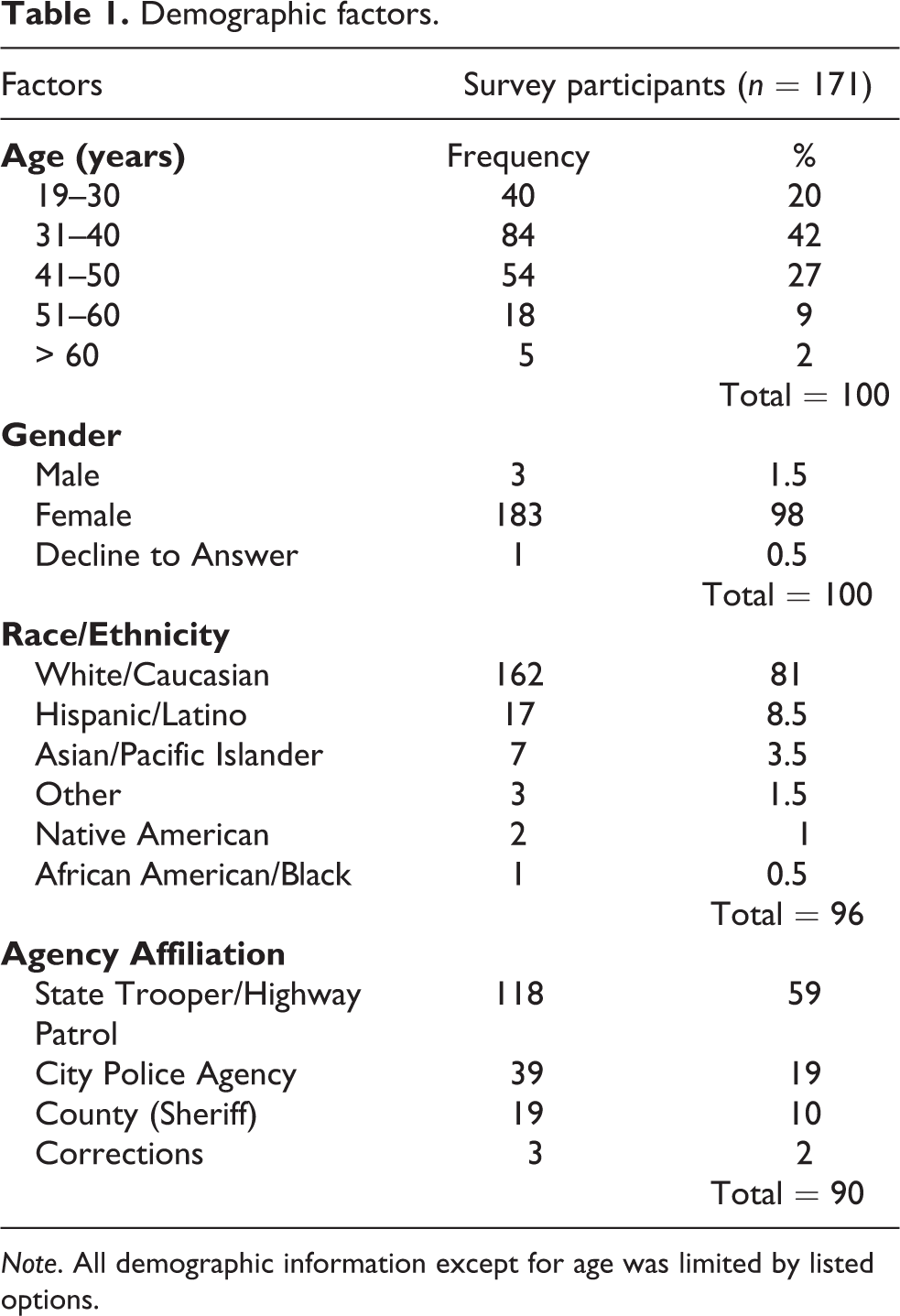
Note. All demographic information except for age was limited by listed options.
Adverse childhood experiences
Of the 171 valid responses, 29% scored above 3 on the ACE questionnaire. The mean score was 5.4 with a total possible score of 1–10. According the ACE study, individuals with a total score above 3 are at increased risk of mental and physical health conditions (Felitti et al., 1998). Fifty respondents scored above 3, with a mean score of 5.4 and a standard deviation (SD) of 1.485. Some 121 participants scored between 0 and 3 ACE with a mean score of 2.281 and a SD of 2.327, indicating that most scores in the group were close to the average overall (see Table 2).
ACE survey.

Individuals who have experienced trauma are more likely to be subjected to further trauma and expanding evidence supports neurobiological changes occur in the brain in response to trauma (Knight, 2015). An analysis of the survey responses revealed that participants with a total ACE score above 3 (n = 50) reported higher levels of stress than those who score between 0 and 3 (n = 121). Data reflected coping tools were used more frequently in the group scoring above 3 ACE than the group with a total ACE score of between 0 and 3 (see Table 3).
ACE, stress, and coping.
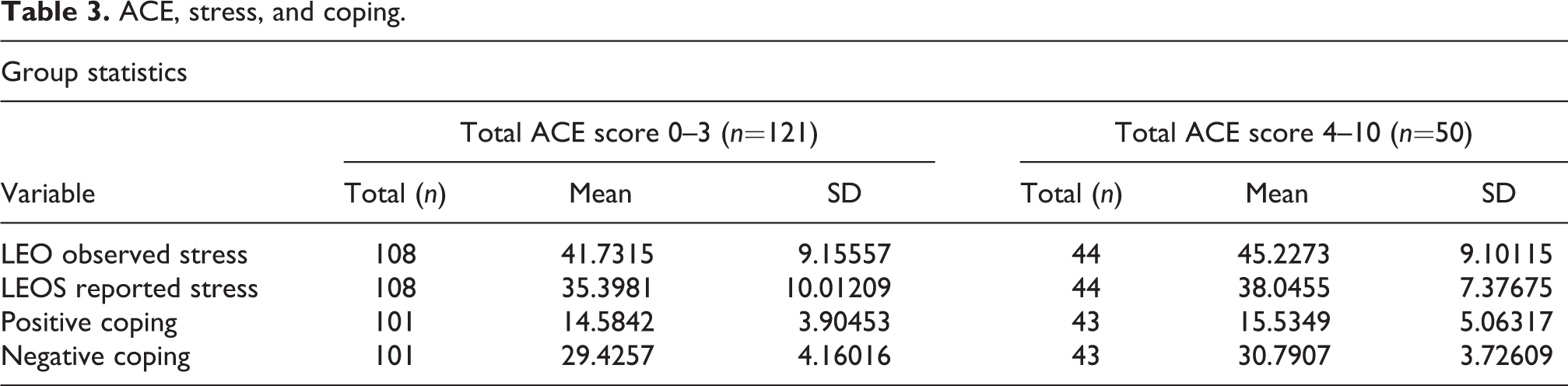
Participants with ACE scores between 0 and 3 reported lower stress levels with a mean score of 41.7315 for LEO observed with total possible scores ranging from 14 to 70, a mean score of 35.3981 for LEOS with total possible scores ranging from 14 to 70, and using negative coping skills more frequently than positive coping skills; whereas participants with an ACE score above 3 reported elevated stress levels with a mean score of 45.2273 for LEO observed stress with total possible scores ranging from 14 to 70, a mean score of 38.0455 for LEOS with total possible scores ranging from 14 to 70, and using negative coping skills more frequently than positive coping skills.
Law enforcement officer observed stress
Results reflected scores ranging from 44 to 69% of participants experiencing all of the measured items of stress (see Table 4).
Occupational stress.

Note: The survey contained 14 variables measuring occupational stress using a Likert scale.
LEOS reported observing the officer demonstrate significant stress measuring higher than the average stress level. LEOS reported observing stress with a mean score of 36.1645, with scores ranging from 19 to 60 of a total score ranging from 14 to 70, SD was 9.37973 indicating a wide spread of the data (see Table 5).
LEO observed stress survey.
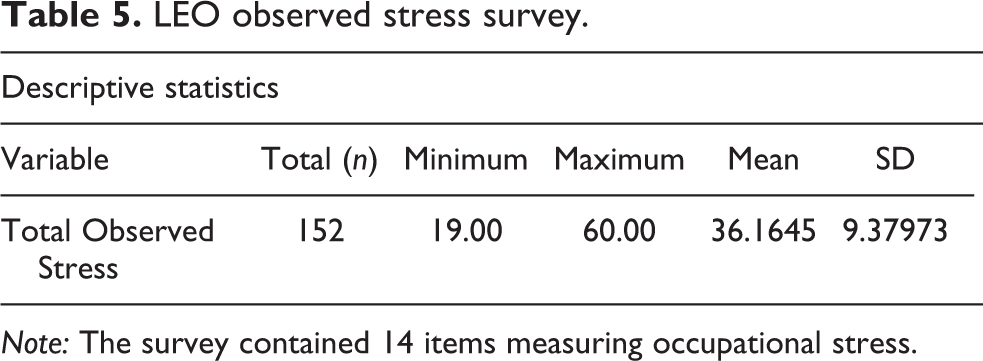
Note: The survey contained 14 items measuring occupational stress.
Law enforcement officer spouse self-reported stress
Participants reported experiencing all items measured under occupational stress. The results indicated that 46% of participants experienced stress ranging to 70% of participants experiencing items listed as occupational stressors (see Table 6). Scores ranged from 20 to 64 with a total possible score ranging from 14 to 70, a mean of 42.7434 and a SD of 9.24751 indicating a wide spread of scores (see Table 6).
LEOS self-reported stress survey.
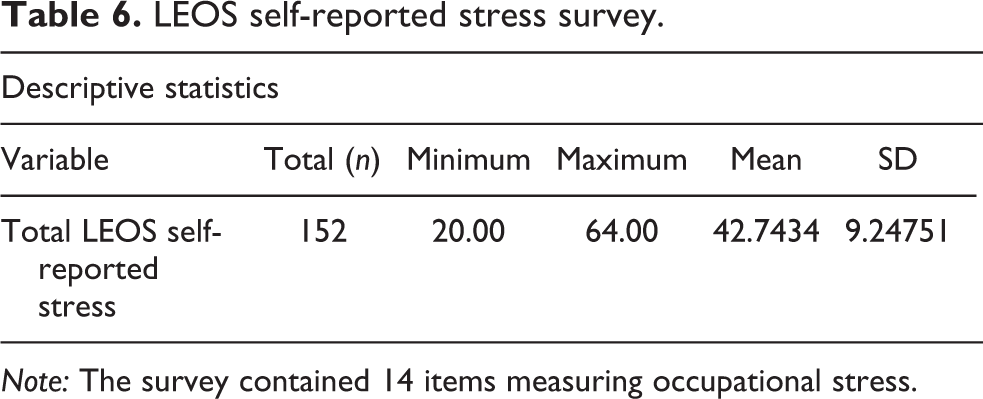
Note: The survey contained 14 items measuring occupational stress.
Positive coping and negative coping
Of the participants, > 60% reported using self-care and exercise, which are defined as positive coping mechanisms (see Table 7). On items measuring positive coping skills, LEOS scored between 8 and 32 with a total possible score ranging from 8 to 40, a mean score of 14.8681 and a SD of 4.28732, indicating that most respondents scored close to the mean score (see Table 8).
Coping mechanisms survey.

Note: Survey contained eight items measuring positive coping and seven items measuring negative coping.
Coping mechanisms survey.
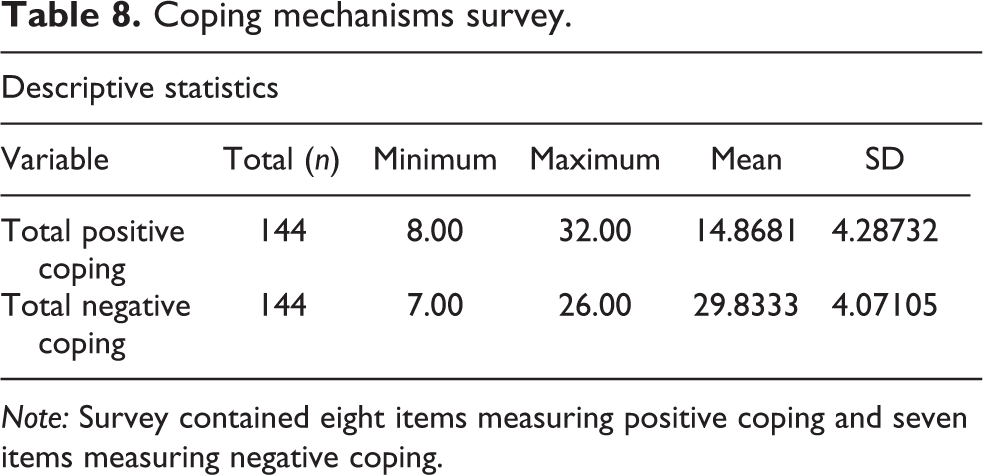
Note: Survey contained eight items measuring positive coping and seven items measuring negative coping.
Of the participants, 61% reported being self-critical and 55% reported using coffee or energy drinks which are defined as negative coping mechanisms (see Table 7). On items measuring negative coping skills, LEOS scored between 22 and 41 with a total possible score ranging from 7 to 35, a mean score of 29.8333 and a SD of 4.07105, indicating that most respondents scored close to the mean score (see Table 8).
Focus group analysis
Focus group questionnaires
Discussion in the focus groups contained several common dominant themes including; shift work, hypervigilance, single parenting, sleep deficiencies, secondary trauma, resilience, public image, peer support, support systems, protective traits, care giving, personality changes, relational time, self-care, stress relief and emotional stress. These were grouped as subthemes under four different, broad categories: (1) adaptation to life as a LEOS, (2) stressors, (3) secondary trauma, and (4) coping mechanisms.
Theme 1. Adaptation to life as a LEOS
Five subthemes made up this dominant theme: shift work, single parenting, resilience, public image, lack of sleep, and protective traits. Every LEOS in both groups shared a common language centered around adapting to life as an officer’s spouse. One participant stated, “So we’re not spending a lot of time together because I’m exhausted from the shuttling and all the—everything basically—being the one and only for a ‘x’ amount of days”. Schedule and shift changes, family commitments in competition with work commitments and protective behaviors are common or typical issues facing LEO families (Brodie and Eppler, 2012; Porter and Henriksen, 2016; Waters and Ussery, 2007). LEOs become accustomed to working long hours and being on-call 24 hours a day because of the demands of work (Alkus and Padesky, 1983). LEOS close the gap by adapting to traditional roles by changing the family schedule to take care of the household, are often a single parent, and in many cases employed outside the home (Alkus and Padesky, 1983). This sentiment was echoed by a participant stating, “…just feeling like a single parent even though we have a spouse, feeling like a single parent all the time. You just feel like you have to do it all”.
Theme 2. Stressors
Stress is the overarching theme evident in the data in its entirety, as evidenced by nine subthemes comprising this governing theme: sleep deficiency, physical health, emotional and relational stress, hypervigilance, personality change, daily stress, caregiving, and stress relief. The literature includes an abundance of research supporting these types of stress being omnipresent in the lives of LEO families (Arble et al., 2017; Brodie and Eppler, 2012; Finn and Tomz, 1998; Habersaat et al., 2015; Kazmi and Singh, 2015; Miller, 2007; Porter and Henriksen, 2016; Woody, 2006). LEOS group participants shared a common characteristic of caregiving that contributes to emotional exhaustion and relational strain. One spouse said, I always wanted to have my husband’s lunch made. So, he’d have something before he goes to work and the kid’s lunches were made, a hot breakfast, a hot dinner. So that would be a little stressful at times to get that done and now I don’t really care so much.
Hypervigilance contributes to stress in significant ways because it not only causes neurological changes, but it contributes to behavior or personality changes in response to chemicals released in the brain (Gilmartin, 2002). LEOS reported a heightened sense of awareness in statements like: “They’re always on and so it kind of rubs off onto you”, “I’ve never been a gun person. I am now, but I wasn’t then”, “If there’s a noise in my house I get the gun and walk around”. Participants agreed they are “trained” to pay attention and data supports physical fatigue from being in a constant state of awareness (Brodie and Eppler, 2012).
Theme 3. Secondary trauma
This theme provoked mutual shared experiences of hearing secondhand about critical incidents through participants’ spouses or on social media. This theme stood on its own and had one subtheme: critical incidents. Participants shared the fear experienced when they learned about a critical incident such as a pursuit, officer-involved shooting, fatal car accident, or local crisis such as the failure of the Oroville Dam spillway and the wildfires. Watching incidents play out on social media or the news adds to the strain LEOS experience and participants talked about the role of social media groups providing information in these situations to help ease the fear of not knowing if their officer is safe. In addition, national crises such as school shootings had a great impact of LEOS participants. One participant shared, But I also work at a school so like, for example, we went to this big training in Sacramento on something totally different, but I noticed all the bathroom stalls had these little like J17 or whatever. My first thought was like oh if there’s a shooter and you’re locked in there and you can say where you were and someone’s like or so they can tell the maintenance guy which toilet is broken. She veered into oncoming traffic with this tow truck that split her down the middle basically. I think that’s probably as far as like accidents and stuff gruesome and that’s an example of one he was on scene, but he purposely did not go out of his way to see her as other officers did and he’s like I don’t need to see that.
Theme 4. Coping mechanisms
This encompassing theme was made up of seven subthemes: peer support, spirituality, coping, family time, self-care, isolation, and loyalty/pride. Participants expressed a desire to have peer support discussing the importance of having a network of people who understand the unique life of law enforcement families and the strain involved on a daily basis. One participant that is affiliated with the California Highway Patrol described peer support: It is very unique and is interesting and it’s like an automatic bonding thing-and part of it is the isolation too because you do pick up and move initially to where you don’t know anybody so that’s all you have.
LEOS in both groups mentioned alcohol, isolation, family time, and spiritual practices as ways they manage the stress. Resilience was a trait that was hard to ignore listening to the group discuss the ways they categorize stress. One participant stated, “Cops are really good at compartmentalizing, but I don’t think that people understand that their wives do it more because we have to kind of put it away for a later time”. Participants described the intentional ways they plan family time and how they have to be spontaneous to fit it in at times because of shift work or being called out on a day off.
Discussion
The purpose of this mixed-method study was to learn what occupational stressors are commonly experienced by LEOS because of the unique culture of law enforcement and what coping skills are most common among the target population. In addition, the researcher sought to examine the correlation between LEOS with ACE scores over 3, level of stress, and coping strategies in comparison with their counterparts with ACE scores between 0 and 3. There did not appear to be a significant difference in the stress levels of participants with higher ACE scores and those with lower ACE scores and coping mechanisms used to manage stress. All occupational stressors listed on the survey were reported to be experienced commonly by most respondents with almost 60% of respondents experiencing symptoms like lack of sleep, shift work/long hours, critical incidents/secondary stress, hypervigilance, and personality changes like black-and-white thinking, irritability, resentment, and physical tension. Maladaptive coping mechanisms were reported to be used twice as often as adaptive coping mechanisms by all respondents.
Physical signs of stress such as tension in the neck or back, hypervigilance, and critical incidents were prevalent themes that contribute to high levels of strain and sleep deprivation. Of the quantitative respondents, 65% reported feeling tension in their body they attributed to stress. It has been shown that LEOs begin their career in supreme health and often retire early or die from work-associated stress ailments (Waters and Ussery, 2007). Some 63% of LEOS respondents validated feelings of hypervigilance. This staggering result coupled with 70% of participants attesting to being exposed to critical incidents was supported by qualitative data from the focus groups as LEOS described the fear instilled through the LEO’s work. Group participants shared examples of hypervigilance. Some statements were matter-of-fact like, “There’s a proper place to sit at a restaurant”, referring to the officer sitting with his back to the wall facing the exit so he can assess risks, or “I don’t trust anybody to watch my kid” and others more detailed such as: That’s where I’m really, really vigilant and it changes your perspective of the things that you think are safe and they are not and getting their perspective and knowing that he’s always casing out the joint for where’s the best place for us to escape, where do I hide the kids and that rubs off after a while and sometimes when I forget it’s lovely.
Critical incidents elicited mixed responses. Seventy percent of LEOS survey respondents had exposure to critical incidents placing them at risk for secondary or vicarious trauma. Literature has shown that women report higher amounts of psychological stress (Hart et al., 1995; Kawam and Martinez, 2016), putting them at greater risk of feeling stress after hearing about a critical incident. Qualitative data collected demonstrated that exposure to critical incidents has an equal if not more significant impact on LEOS. Participants made the following statements: “Hey babe don’t touch my pants because there’s probably brain matter on them”, and “When you wake up and their boots are outside and you’re like somebody’s [brains, guts, blood are] on there”. LEOs are often provided with debriefing through employment to help them process critical incidents, but LEOS are not provided the same opportunity (Leino et al., 2011).
The lack of sleep and repeating theme of feeling exhausted was supported by both survey responses and qualitative data. Inadequate or insufficient sleep has been linked to a weakened immune system with higher health risks (Ganz, 2012), slower reaction time or reactivity (Newland, 2009; Sluiter et al., 2003), and necessary to process traumatic experiences to create memories (Kobayashi et al., 2016). LEOS reported feeling overwhelmed, irritable, and exhausted. Results show the resilience of LEOS who adapt daily life based on constantly changing variables like shift work, long hours and lack of sleep. One LEOS said, “It seems as soon as you get used to one shift it changes again”. Group participants discussed not only a lack of sleep, but also trouble going to sleep, and remaining in a heightened state of awareness especially at night because of the LEO being at work or coming home in the middle of the night.
Coping skills
Data reflected that self-care and exercise were the most commonly used positive coping skills. Seventy-nine percent of LEOS survey participants attested to the use of energy drinks or coffee to manage stress. Alcohol consumption was sanctioned by 65% of respondents. Alcohol use was not supported as extensively in the qualitative data which may be a result of it being an accepted and encouraged way to cope in the law enforcement culture (Menard and Arter, 2013; Waters and Ussery, 2007). Participants endorsed the use of isolation, aggression/violence/yelling, volunteer work, and spiritual activities as common coping strategies.
Isolation was supported by participants in the focus groups, as evidenced by statements like, “I don’t need a best girlfriend to talk to and so I don’t. I don’t put it out there on anyone else if I’m stressed. And I cry”. Another LEOS stated, “I know for me I have felt so isolated as a cop’s wife”. The discussion included accounts of family not understanding why the LEO was absent for holidays or family celebrations and friends who were alarmed because the LEO never seemed to be around. The lack of understanding from natural support groups such as friends and family seemed to contribute to isolation.
Qualitative data demonstrated how public image plays a role in how much is shared, “I mean yeah I don’t want him to look bad”, and the lack of trust of outsiders, “I don’t wanna be that crazy wife”, or those not in the LEO community, “we have a real strong sense of family of blue”. The data collected through focus group discussions highlighted LEOS falling into traditional family roles where unspoken expectations assume that the spouse will take care of the house, prepare meals, wash laundry, raise the children, cater to the needs of their LEO, sometimes also working outside the home, and sacrifice their own needs to ensure that everything is taken care of. Kirschman (2018), describes this type of coping as “over-functioning” or a habitual way of putting their own needs last. Qualitative data represented this with statements like: “As a mom and a wife and as a person sometimes you’re use to making sacrifices”. LEOS may learn this through childhood observations in their family of origin, or through social constructs that show women in a nurturing, caretaking role.
Limitations
There are some limitations to the study that are worth considering. A snowball sample using social media such as Facebook groups was used to recruit participants. Because of the private nature of law enforcement culture, the desire to protect their identity and their family, many members do not participate in social media and some individuals may not be reflected in the sample because of this concern. Women are more likely to use social media and network with other women (Kimbrough et al., 2013). This is reflected in the number of participants that identified as female. In addition, there is evidence that women are more likely to experience psychological strain (Hart et al., 1995). The majority of participants were affiliated with a state entity such as highway patrol, which likely results from membership of the researcher with the California Highway Patrol. The focus groups were conducted in Chico, California which is a rural community located in the northern part of the state and posed challenges that may not be faced in urban areas. This resulted in a limited number of participants able to attend the groups.
There has been limited research focusing on LEOS and instruments were created for the purpose of studying unique characteristics encountered in the field of law enforcement. LEO have shown the propensity to minimize manifestations of stress and this may be true of LEOS (Perrin et al., 2007), resulting in low scores. The instruments need further use to determine reliability and validity. Surveys were based on self-report and can limit the scope of data collected making it difficult to generalize.
Conclusion
This study found that LEOS experience elevated stress at levels close to, sometimes more, than the LEO, contributing to the use of maladaptive coping strategies to manage the strain. The data collected provided insight into the resiliency of LEOS and the need for culturally competent support or programs to help minimize adverse effects of occupational stressors on LEOS. Social work emphasizes the importance of evidence-based policy and practice. This study demonstrates the importance of social workers being equipped to educate the public and the community about law enforcement culture and advocate for social policies making mental health and wellness a priority. In doing so, it will help to not only strengthen law enforcement families, but by extension benefit the community in which they serve and protect.
In addition, the data reflected in this study can guide future practice because it indicates a need for a trauma-informed approach and/or cognitive–behavioral therapy to address trauma and the distorted thinking patterns that occur over a long career in law enforcement. Peer support is highlighted throughout the literature as one of the most effective modalities for treating first responders and their families. Peer support has gained recognition because it reduces the stigma of asking for help (Finn and Tomz, 1998; Levenson, 2007). This research can provide a foundation for further studies in this unique population to explore the subject, gain insight, and create support to address the needs of the LEOS community. LEOS are at risk of experiencing long-term physical and mental health concerns resulting from ongoing exposure to heightened levels of stress.
Footnotes
Acknowledgements
I would like to thank Dr Susan Roll for her continuous support, encouragement, and committing to serve as the committee chair for this project. Her passion for social justice and dedication to learning motivated me to pursue my interest in this area of research. Professor Roll was instrumental in the strategic planning of the data collection and analyses of qualitative data, and challenged me to think outside my personal beliefs. This study was completed because of her supervision and support. Dr Ryan Patten, a committee member, was key for providing culturally specific feedback. His supervision and unique skillset proved valuable for this study. His insight was useful and helped to narrow the focus of the research. Last, I would like to thank Dr TangJudy Vang for sharing my vision in this research topic. Her excitement spurred me on and pushed me to pursue more than I anticipated. I am grateful for her statistical expertise and the analyses would not have been completed without her instruction and guidance. Dr Vang pushed me to grow by challenging the data collected to find greater understanding.
Declaration of conflicting interests
The author(s) declared no potential conflicts of interest with respect to the research, authorship, and/or publication of this article.
Funding
The author(s) received no financial support for the research, authorship, and/or publication of this article.
