



Abstract
Gibraltar, a British Overseas Territory with limited forensic capabilities, currently relies on external forensic service providers for evidence analysis. This dependency results in several challenges, including long turnaround times, high transport costs, and reduced compliance. Such issues are not unique to Gibraltar and are observed in other small countries and territories with similar constraints. By characterising these challenges, this study identifies solutions that can improve forensic processes in Gibraltar and provide a model for other small regions facing comparable issues. Data analysis of Gibraltar's existing forensic pipeline together with interviews from local stakeholders and external forensic experts identified two possible supportive strategies: Strategy 1, sample screening of evidence prior to outsourcing; and Strategy 2, the implementation of Rapid DNA technology within custody suites. To further explore the cost-to-benefit ratio of these strategies, a business plan was developed for each. These analyses show that sample screening can improve the efficiency of local forensic processes by integrating cost-effective solutions and repurposing existing laboratory infrastructure, whereas Rapid DNA technology was less favourable because of the high initial investment required for equipment. Although no single pipeline was found to be an ideal fit, each strategy offered potential societal benefits, including increased speed and quality of results, leading to faster investigative leads and a reduction in re-offending. These findings add to the limited research on cost-effective forensic solutions for small jurisdictions, and support the development of more autonomous forensic capabilities, ultimately enhancing their efficiency and effectiveness in criminal investigations.
Keywords
Gibraltar, a British Overseas Territory situated at the northern tip of Spain, covers just 6.7 km2, with 35% being uninhabitable (Pomeroy et al., 2019). Its population of around 33,000 relies on a single hospital, one airport, two high schools, and three primary law enforcement agencies: the Royal Gibraltar Police (RGP), the Gibraltar Defence Police, and His Majesty's Customs. Notably, the RGP, the oldest police force in the Commonwealth, is Gibraltar's primary civilian law enforcement agency, employing 255 officers as of the end of the 2021–2022 policing year. Currently, forensic testing in Gibraltar is largely outsourced to external providers in the United Kingdom (UK), including for DNA analysis and confirmatory drug screening. This practice, common among small territories with limited resources, leads to long turnaround times, increased costs, and a loss of oversight and control over forensic processes.
Establishing a fully dedicated forensic laboratory in such a small and resource-constrained area is often impractical because of high setup costs and relatively low crime rates (Garrett, 2020). However, smaller regions do not need to lag in forensic capabilities and alternative, more feasible approaches can be explored with potential for future development and enhancements (De La Chica et al., 2025). If regions choose not to outsource, they can consider various options such as local sample screening, employing cost-effective technologies, or leveraging existing facilities to support forensic analysis.
Sample screening, a preliminary triage process, helps identify which evidence requires further analysis. In the current context, “sample screening” is used to describe triage decisions informed by expert assessment and DNA quantification data and does not encompass presumptive or confirmatory biological fluid tests or alternative light source examinations. This can involve expert qualitative judgement within the police force—such as prioritising items based on evidential relevance, context, and likelihood of DNA recovery—or the use of quantitative tools, including DNA quantification data, to identify low-template samples (Choromański, 2022). For instance, Touch DNA, which often yields low quantities of DNA, may be more likely to fail during downstream analysis (Alketbi, 2023). Introducing a ‘pause-at-quant’ method may save costs by avoiding full analysis of samples when too little DNA is observed. However, this approach is not always feasible because of the automation in laboratories where it becomes impractical to halt processing for a single low-quantity sample (Simoes Dutra Correa et al., 2020), nor is it considered appropriate when low-template DNA samples may yield usable short tandem repeat (STR) profiles. Rapid DNA technology offers another potential solution, enabling quick DNA profiling within police custody suites. Although the initial investment for this technology is high, it can significantly streamline the forensic process and provide faster results.
In Gibraltar, introducing forensic services locally through sample screening could address the limitations of outsourcing. However, a thorough assessment of resources, infrastructure, funding, and regional needs is essential for developing a viable forensic pipeline (McAndrew, 2012). This involves creating a business plan to evaluate the benefits, limitations, expenses, and long-term prospects of different approaches (Wickenheiser, 2021). This paper examines Gibraltar's current forensic provisions for DNA analysis and reference samples, analysing the existing pipeline with the RGP's limited resources. By evaluating the pipeline, this study identifies key issues and explores four potential interventions: implementing sample screening at the Gibraltar Health Authority (GHA), the University of Gibraltar, and within the RGP station, as well as considering Rapid DNA technology in police custody suites. Research and interviews with experts, who have experience with similar systems in other jurisdictions, were conducted to assess the feasibility of these options. The aim is to enhance forensic capabilities locally, optimise the use of external services, and ultimately improve investigative outcomes in Gibraltar and potentially other small territories.
Methods
This study utilised a mixed-methods approach, combining meta-analysis and qualitative data collection to evaluate Gibraltar's forensic pipeline and propose new strategies. The research includes both primary data on existing pipeline efficacy and also secondary data sources from interviews to gain a comprehensive understanding of current practices and identify potential improvements through business case development.
Existing pipeline
The existing analytical pipeline for DNA analysis in Gibraltar was first mapped to help identify areas for potential improvement. Additional data were gathered through a meta-analysis of annual reports and documents from 2017 to 2022, obtained from the RGP, their contracted forensic service provider (FSP), and the Gibraltar Police Authority. These reports included annual submission rates of evidence type, STR profiling success rates and turnaround times from submission to result. These data were summarised to provide insights into existing challenges and bottlenecks within the current forensic pipeline. The analysis of these documents revealed common issues faced by similarly sized jurisdictions, suggesting that the findings could benefit other small territories with comparable forensic constraints. Data also suggest two new strategies can be considered to support RGP forensic analysis. First, the application of a sample triage approach prior to the submission of items for forensic analysis. Second, the adoption of Rapid DNA technology to bring STR analysis in-house.
New strategies
The potential of these new strategies was further explored via consultations and semi-structured interviews with key stakeholders in forensic science. Initially, an email interview (UREC approval reference number: 23/PBS/004) with 14 questions was sent to the crime scene investigation (CSI) department of the RGP to explore practical challenges and specific requirements in Gibraltar. Their response was analysed to identify recurring themes and patterns. In addition, five virtual interviews were conducted with experts in the following areas: (a) developing forensic capabilities in resource-limited countries, (b) managing an accredited DNA testing facility within a university, (c) management and application of existing RGP forensic infrastructure, (d) management of the University of Gibraltar, and (e) the use of Rapid DNA methods in U.K. policing. These interviews, which each lasted 45–60 minutes, were recorded and transcribed. The interview questions, ranging from 6 to 10 open-ended and predefined, aimed to explore both the benefits and limitations of the identified strategies. By synthesising insights from these interviews with existing documentation, business cases were developed for each new strategy focusing on practical applications and feasible solutions. These stakeholders were selected to ensure representation across operational policing, laboratory management, academic infrastructure, and strategic forensic service development, allowing each proposed strategy to be evaluated from both practical and governance perspectives.
Results and discussion
Review of gibraltar's existing forensic pipeline
The forensic pipeline in Gibraltar, as outlined in Figure 1, involves several stages. This was developed using a combination of data sets such as annual reports, documents, and interviews. CSIs from a team of three or four respond to crime scenes, collect evidence, and package it according to protocols. Evidence items, including swabs, are initially stored in a refrigerator or designated area at the RGP headquarters before being shipped to a third-party contractor for DNA analysis. Currently, it takes an average of 34 days from evidence collection to receipt by the FSP, because of factors such as the monthly pooling of samples and transport time. Approximately five crime scene samples and 50 reference swabs are outsourced monthly, with courier costs approximately £57.40 per month calculated by weight. Once received by the FSP, whole evidence items, such as clothing, require additional sample examination, incurring extra costs. DNA analysis, including STR profiling, is performed regardless of quantification values; however, only 16% of outsourced crime scene samples result in a reportable STR profile meeting the FSPs interpretation and reporting thresholds. The reported success rates were obtained directly from FSP annual reports and reflect the proportion of submitted samples yielding a reportable DNA profile.
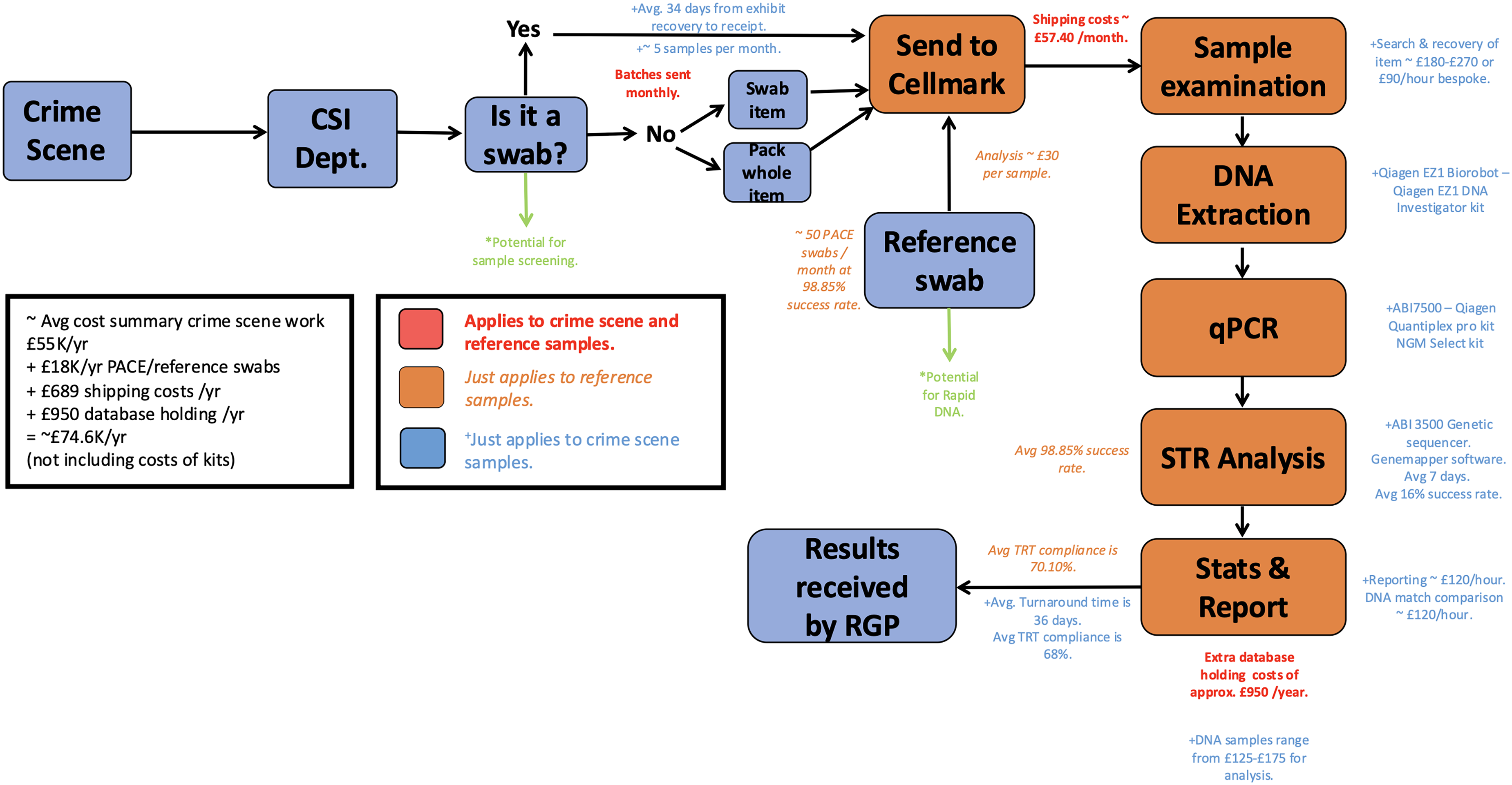
A pipeline of Gibraltar's current forensic workflow of outsourcing evidence. Possible points for intervention are highlighted with an asterix.
On average, the turnaround time for a complete report of results for a submitted crime scene exhibit, is a further 36 days. This makes the total time from exhibit recovery to analysis report, approximately 70 days. Statistical analysis and DNA match comparison incurs extra costs outside the analysis expenses. In addition, maintaining Gibraltar's DNA database costs approximately £950 per year.
Annual reports from 2017 to 2022 reveal trends in crime offences and sample submissions. The compilation of sample submission quantity and success rates allowed the identification of problematic sample categories (Figure 2). The most frequently outsourced sample type, with an average of 66 samples submitted per year, is “Touch DNA”. This is high compared with blood and saliva samples (two submitted) and an “other” category at approximately one sample per year. Despite being the most collected and costly sample, Touch DNA yields the lowest profiling success rate, around 16%. As is typical for Touch DNA samples (Tozzo et al., 2022), this low success rate is largely associated with low template quantities. Although usable STR profiles can be obtained from low-template samples in operational casework, input amounts below approximately 100 pg are generally associated with increased stochastic effects and a reduced likelihood of obtaining a complete, reportable profile (Developmental Validation of the Investigator® ESSplex SE QS Kit; https://www.qiagen.com/th/resources/download.aspx?id=9761730e-def1-4011-bd8a-852b4849dd6d&lang=en). Consequently, the introduction of a sample triage approach could support more informed decision-making by identifying low-yield samples where the probability of success is limited. Blood and saliva samples, which are known to yield higher quality DNA profiles, demonstrate higher success rates and should therefore be prioritised for direct analysis rather than screening.
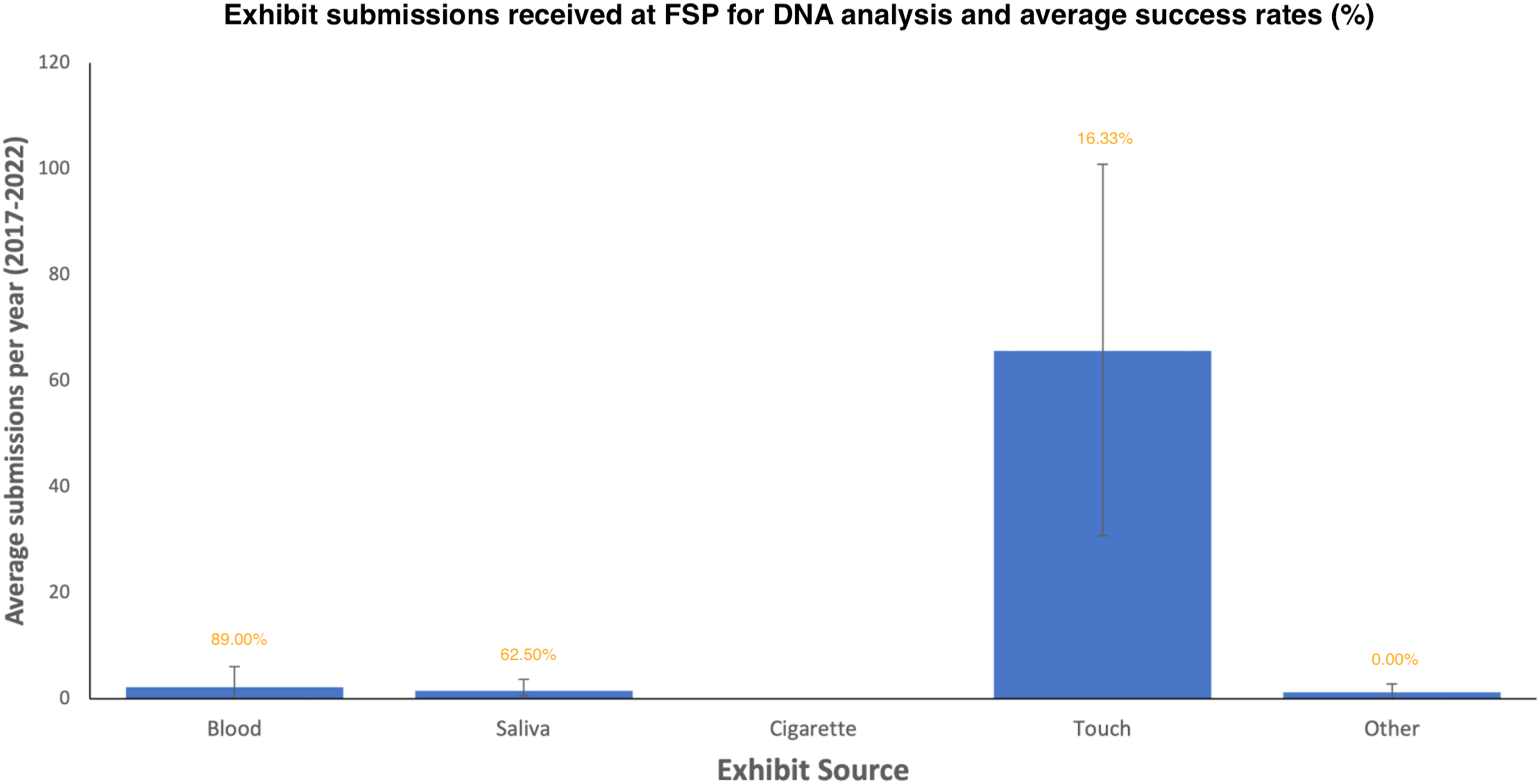
Average number of samples submitted annually to the forensic service provider (FSP) for DNA analysis, based on data collated over a six-year period. Reported success rates for each sample category, as provided in the FSP annual reports, are indicated above error bar.
Data (Figure 3) also shows that within Touch DNA samples, “Property” samples (e.g. toothbrushes, lighters) are the most common, with an average success rate of 20.28%. “Clothing – other” categories, including items like t-shirts and trousers, also contribute significantly. Sending these items whole rather than swabbing or mini-taping increases transport costs. Pre-screening these items using existing expertise in the RGP CSI team could reduce the volume of evidence sent for further analysis, thereby saving on transport costs.
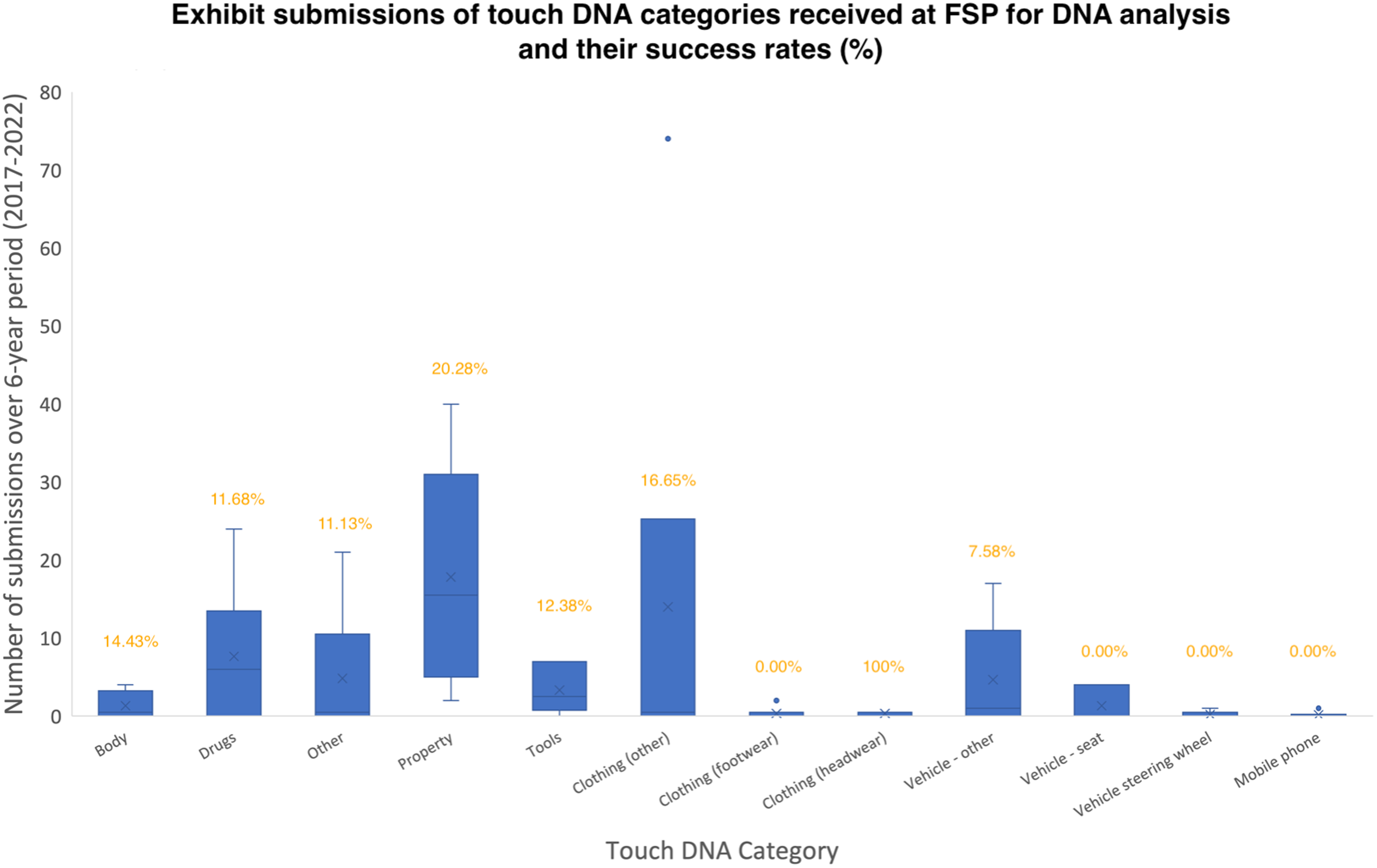
A breakdown of annual submissions of Touch DNA swabs by item type received by the forensic service provider, using data collated over a six-year period. Categories refer to Touch DNA swabs recovered from the listed item types (body, drug-related items, property, etc.). Average profiling success rates for each category are indicated above error bar.
The challenges faced by Gibraltar's forensic pipeline—such as high costs, long turnaround times, and low success rates for certain sample types—are not unique to small territories. Many countries with similar resource constraints encounter these issues. The insights gained from Gibraltar's pipeline can offer valuable lessons for other small or resource-limited jurisdictions, suggesting that tailored strategies, such as sample screening and prioritisation, and Rapid DNA analysis onsite could enhance efficiency and reduce costs in forensic services globally.
Strategy 1a: Sample screening at the GHA
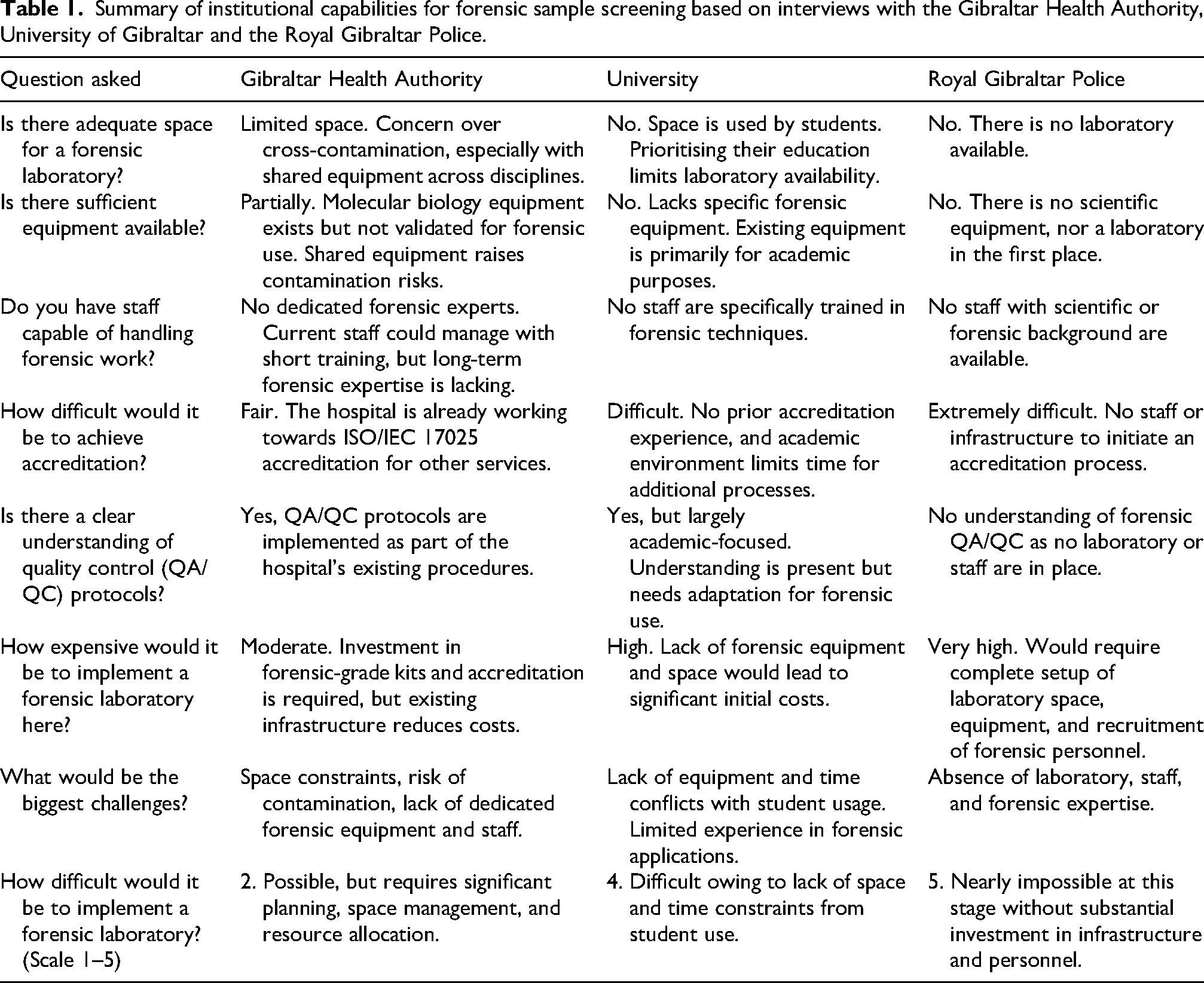
The feasibility of implementing DNA sample screening at the GHA laboratory hinges on existing resources, infrastructure, and personnel. Through interviews with stakeholders and site visits, it was identified that the GHA's current laboratory lacks the physical space and forensic-grade equipment essential for full forensic testing (Table 1).
Summary of institutional capabilities for forensic sample screening based on interviews with the Gibraltar Health Authority, University of Gibraltar and the Royal Gibraltar Police.
Limited infrastructure and staff shortages also pose significant challenges to establishing a dedicated forensic laboratory (Airlie et al., 2021; Gestring, 2023; Granja & Machado, 2020). Although the molecular biology department conducts DNA extractions for clinical purposes, the equipment is not validated for forensic use, which risks reduced sensitivity and reliability (Muharam & Paintner, 2022). Furthermore, sharing equipment with other disciplines raises contamination concerns, necessitating strict Standard Operating Procedures, which may be challenging in a non-forensic setting (Preuße-Prange et al., 2009). To mitigate these issues, a targeted business plan is essential, including investment in forensic-grade kits, equipment, and staff training (Figure 4).
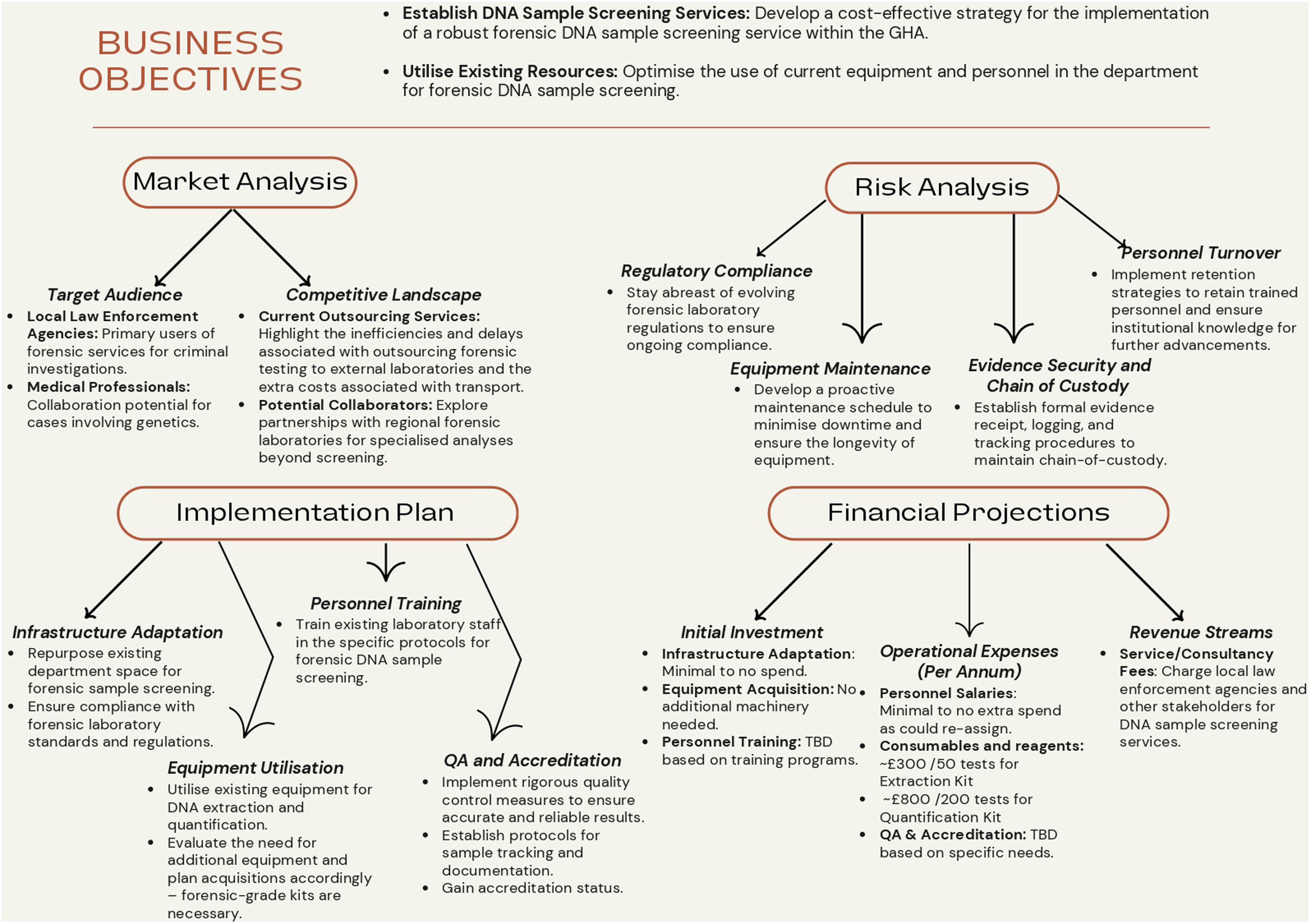
An initial business plan for the set-up of forensic DNA sample screening at the Gibraltar hospital laboratory.
This model, which repurposes existing hospital infrastructure, offers a cost-effective way for small regions to build local DNA screening capability while maintaining external partnerships for full STR profiling and interpretation. Such an approach, while specific to Gibraltar, could benefit other small jurisdictions by reducing outsourcing and improving efficiency. In the long term, accreditation to ISO/IEC 17025 would further enhance reliability and credibility, ensuring robust results in court (Doyle, 2019; Dror & Pierce, 2019). Importantly, the GHA's ongoing efforts towards accreditation reflect an overall commitment to higher standards, which could extend beyond forensic services. By reallocating resources and staff for periodic forensic work, the GHA can triage samples and streamline outsourcing, optimising costs and case efficiency (Liu, 2014). Because the laboratory is located within a hospital environment, it benefits from established institutional security measures and controlled access systems, reducing risks associated with the storage and handling of forensic samples. This model, as demonstrated in Table 1, outlines the comparative resources available across institutions in Gibraltar, highlighting opportunities for future growth in local forensic services that can also apply to other small territories with similar constraints.
Overall, the GHA presents the most operationally feasible location for implementing sample screening in Gibraltar, given its existing laboratory infrastructure, trained personnel, and quality management systems. Although additional investment and governance arrangements would be required to align screening activities with forensic standards, this approach offers a practical and scalable option with the greatest potential for near-term implementation.
Strategy 1b: Sample screening at the university of gibraltar
Established in 2015, the University of Gibraltar operates as an independent statutory body with a modern laboratory primarily dedicated to marine biology. Unlike other government-linked institutions discussed in this paper, it operates independently, which presents both opportunities and challenges. Interviews with key stakeholders, including the vice chancellor, laboratory manager, and field scientists, as well as direct observations, provided insights into the laboratory's capabilities and limitations for forensic applications (Figure 5). The primary challenges identified include the lack of specialised forensic-grade equipment necessary for DNA extraction and quantification (Botch-Jones et al., 2021), and the laboratory's heavy use for marine biology research. The risk of cross-contamination raises concerns about its suitability for forensic work without additional investment and strict protocols to ensure sample integrity. Although the University operates within a restricted-access academic environment, the laboratory space is shared with students and staff for teaching and research purposes, meaning additional access controls and secure storage measures would be required to ensure appropriate safeguarding of forensic samples.
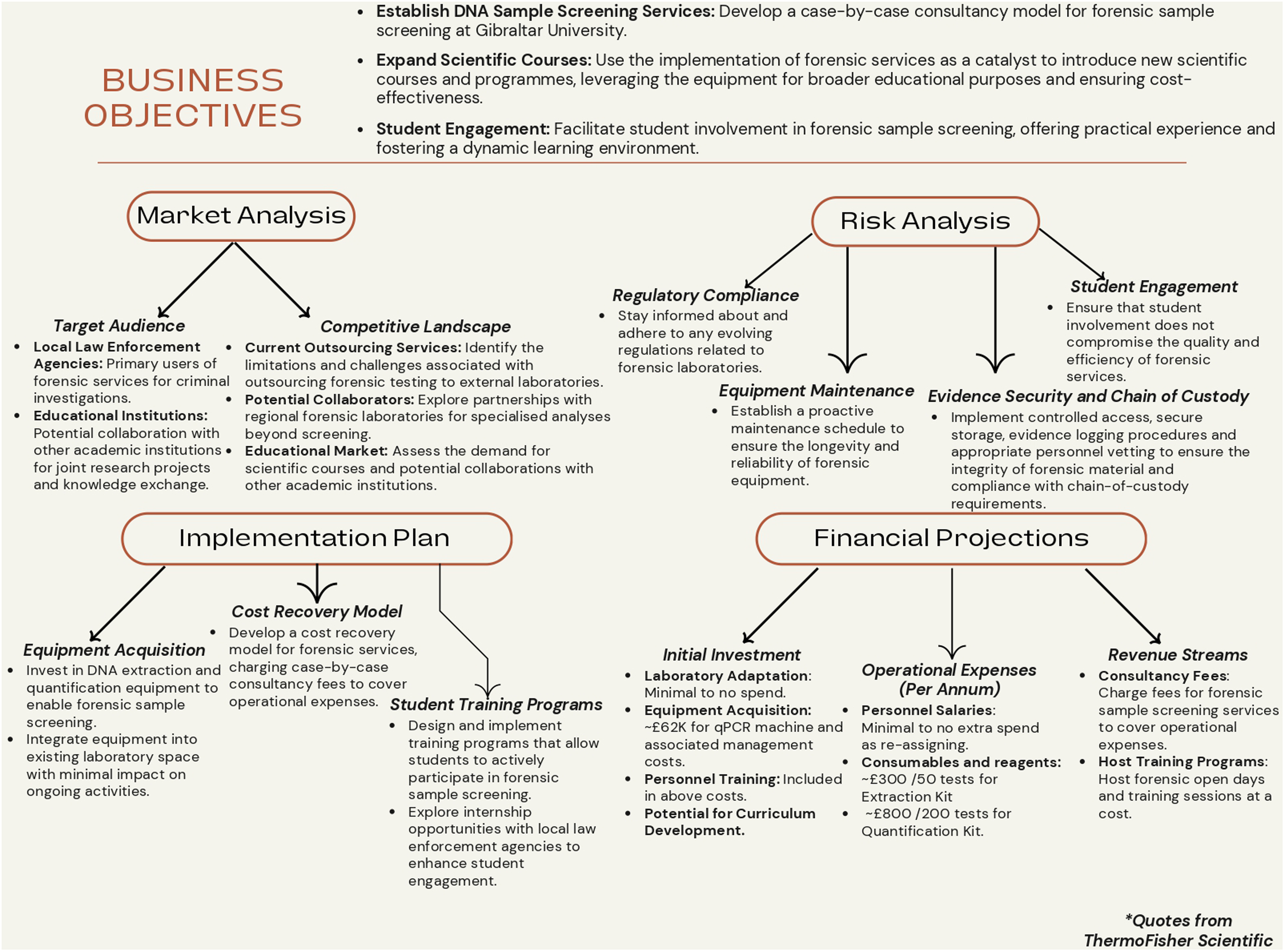
A brief, initial business plan for the set-up of forensic DNA sample screening at the university of Gibraltar.
A major barrier is the lack of accreditation within the university's laboratory, which currently focuses on educational and research purposes. The University's laboratory, lacking forensic accreditation, would face considerable costs and logistical challenges to achieve this status. Although the GHA's higher usage rate might lead to smoother accreditation, the university would need to navigate additional complexities (Neuteboom et al., 2023). Interviews with individuals with expertise in establishing laboratories in resource poor areas emphasised that accreditation is crucial to maintain the integrity of any forensic workflow and if sample screening were to be conducted in a non-accredited laboratory—such as the University of Gibraltar—the entire chain of custody and the validity of the forensic results could be called into question (Bouzin et al., 2023; Lewis et al., 2024). However, if screening takes place on a sub-sample while the parent sample is sent to the FSP, this process could remain intact, provided strict handling procedures are followed to prevent contamination or mismanagement. It is important to note that accreditation is not currently a legal requirement for forensic evidence to be admissible in court in Gibraltar, but it remains an international standard for forensic practices (Ross & Neuteboom, 2020).
Despite these challenges, a consultancy-based approach to forensic DNA sample screening could be a viable pathway forward. Given the infrequent arrival of forensic samples, this method aligns well with the current usage patterns of the laboratory and minimises the strain on resources. Although initial investments in forensic technology are required, such as laboratory kits, instrumentation, and associated training, these costs may be offset by the benefits of enhanced forensic capabilities and educational opportunities (Figure 5). The University of Gibraltar's strategic plan for 2023–2026 (Strategic Plan 2023–2026, 2022) emphasises expanding its offerings in taught degrees, qualifications, and training to meet local and regional needs. Although science-based courses are not currently a focus, the integration of forensic DNA sample screening could act as a catalyst for the future introduction of such programmes. This would not only enhance the university's curriculum, but also provide students with practical, laboratory-based experience in DNA analysis (Nilendu, 2024). Although the University of Gibraltar faces challenges in implementing forensic DNA sample screening, a consultancy-based model holds promise. It presents an opportunity for growth in forensic capabilities and academic offerings, with potential applications extending beyond Gibraltar.
In addition although the University of Gibraltar offers opportunities for capacity building, training, and longer-term forensic development, the absence of accreditation and limited forensic infrastructure currently constrain its feasibility for operational sample screening. This option may therefore be better suited as a future or complementary strategy rather than an immediate solution.
Strategy 1c: sample screening at the RGP headquarters
The RGP operates from two stations, with all departments based at its main headquarters since 1994. First-hand visits and interviews with RGP staff provided insights into the feasibility of setting up a sample screening facility at the current location (Table 1). The existing CSI department consists of two rooms: an office for three officers and an evidence/storage room. The latter offers some potential for preliminary sample screening, although the limited space and lack of forensic-grade equipment pose significant challenges. The absence of dedicated forensic staff, except for one officer with a master's degree in DNA analysis, further complicates the feasibility of setting up a robust forensic screening service. Without properly trained personnel and adequate infrastructure, achieving accurate and reliable results would be difficult (Kathane et al., 2021; Yadav, 2017). Moreover, the dual use of the evidence room for storage increases the risk of contamination, undermining the quality assurance needed for forensic processes (Chowdhury, 2021; Fonneløp et al., 2016). In addition, locating forensic sample screening within a police force raises well-recognised concerns regarding scientific independence, impartiality, and perceived bias, which would require robust governance structures and oversight to mitigate.
Despite these limitations, adapting the evidence room for basic sample screening could offer benefits. It would reduce the need for reliance on external laboratories, streamline the forensic pipeline, and strengthen the chain of custody. Expert interviews highlighted the usefulness of having in-house screening, particularly for urgent cases such as sexual assaults, such as that used by the U.K. Metropolitan Police (the Met) where a small DNA laboratory operated by third-party forensic scientists provides a model for how in-house capabilities can expedite investigations. However, replicating such a model in Gibraltar is not without significant challenges. The Met's laboratory is supported by substantial resources, and setting up even a basic version of this at the RGP headquarters would require substantial investment in infrastructure and equipment—costs that may not be justifiable given Gibraltar's low volume of forensic cases (Fraser, 2012). In addition, the current space constraints at the headquarters make this option less viable. Although this approach may not be feasible in Gibraltar owing to financial and spatial limitations, the concept of in-house sample screening remains valuable for other jurisdictions. In larger regions with greater forensic demands, implementing such a system could enhance the speed and reliability of forensic workflows. The experience of police forces in England and Wales, where preliminary screening is often carried out before sending samples to external laboratories, demonstrates how such a model could improve efficiency in high-volume environments (Green, 2012). Ultimately, although in-house forensic screening at the RGP headquarters may not be a practical solution for Gibraltar currently, it underscores the broader importance of balancing resource investment with forensic service needs. Forensic infrastructure development in small regions requires strategic planning, cost–benefit analysis, and consideration of long-term sustainability (Figure 6). The lessons drawn from this case can inform similar jurisdictions looking to enhance their forensic capabilities while managing space and budget constraints.
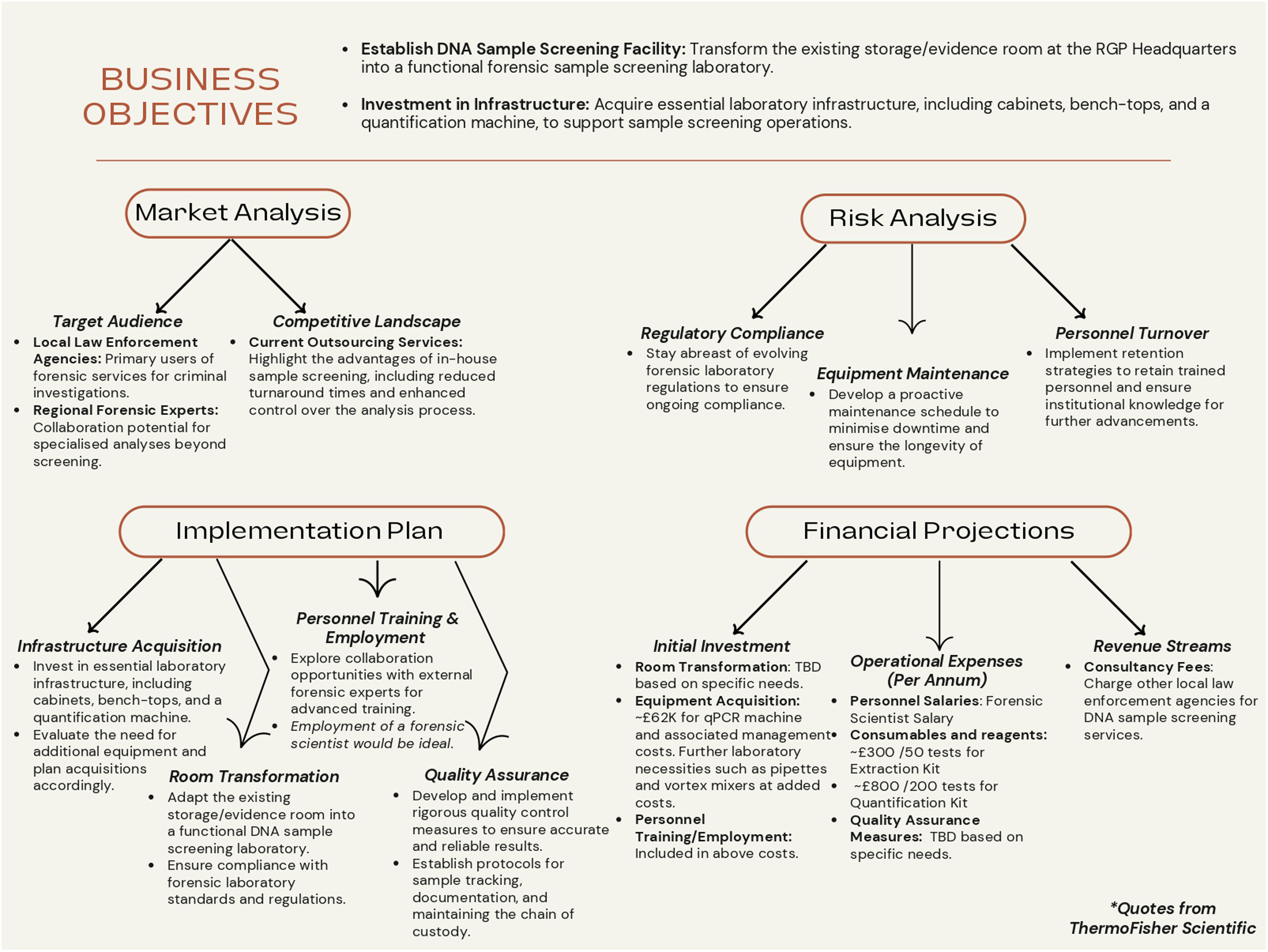
An initial business plan for the set-up of forensic DNA sample screening at the Royal Gibraltar Police headquarters.
Overall, sample screening within the RGP headquarters is limited by space, infrastructure, staffing, and governance constraints, making it the least feasible option in the current context. In-house screening may be advantageous in larger jurisdictions, however significant financial and structural barriers reduce its practicality for Gibraltar at present.
Strategy 2: Rapid DNA technology
An alternative for Gibraltar is the adoption of Rapid DNA technology within the RGP custody suites, particularly for processing reference swabs. Currently, approximately 50 reference swabs are outsourced monthly to the UK for analysis, incurring both shipping and analysis costs. Although reference samples have a high success rate of 98.85%, the FSP reports a turnaround time compliance of 70.10%, with the expected turnaround typically within 14 days, indicating that around 30% of samples exceed this timeframe, which could be improved by localising this process. Rapid DNA technology offers the benefit of fast turnaround times, delivering DNA results within 90 minutes (Salceda et al., 2017). This speed allows law enforcement to match profiles while suspects are still in custody, which may prevent further crimes or aid in extending custody for reoffenders. Indeed, various countries such as Italy, Australia, and the United States have successfully evaluated Rapid DNA for reference samples (Behind the Bench, 2020; Carney et al., 2019; Morgan et al., 2019). However, its primary limitation is that it is currently only validated for reference samples with high DNA quantities, and its forensic application remains limited due to sensitivity concerns (Hares et al., 2020). In addition, Rapid DNA instruments can only process one sample at a time, meaning that for Gibraltar's monthly volume of approximately 50 reference swabs, a single machine would require around 75 hours of runtime per month, not accounting for sample preparation, quality checks, or potential re-testing, highlighting a significant limitation for small jurisdictions with limited staff and financial resources.
Globally, the demand for forensic DNA analysis continues to increase, with Project FORESIGHT reporting an average annual growth in DNA Database (reference) backlog of 8.29% between 2014 and 2023, and a median backlog of 11.43% for the 2023–2024 reporting period (Speaker, 2025). With such rising demand, Rapid DNA could offer a potential solution to alleviate external laboratory delays, depending on the specific circumstances and needs of the jurisdiction. For small jurisdictions like Gibraltar, local processing could enhance efficiency by reducing shipping costs and ensuring priority processing for urgent cases. However, the financial investment required for Rapid DNA is significant. A single machine costs approximately £125,000, excluding ongoing costs for reagents and maintenance (Thermo Fisher Scientific). Although these expenses decrease over time as the machine is used more frequently (Speaker, 2023), Gibraltar's low sample throughput (around 600 swabs annually) may not justify the cost. An initial business plan (Figure 7) suggests that although Rapid DNA could provide long-term efficiency, the initial setup and running costs may not lead to a positive return on investment for such a low volume. Moreover, the implementation of Rapid DNA would require addressing critical concerns beyond just financial investment. Data security presents a significant challenge, because managing sensitive genetic information would be an additional responsibility for the RGP, which has not previously handled such tasks. Gibraltar's DNA database is currently managed externally by the FSP, and any transition to in-house analysis would necessitate robust data security protocols to protect against unauthorised access and privacy breaches (Wilson-Wilde & Pitman, 2017). Although Rapid DNA offers a promising solution to the backlog issues faced by many forensic services, the current limitations and costs may outweigh the benefits for Gibraltar. For smaller jurisdictions with low sample volumes, the technology may be best suited as a future consideration rather than an immediate solution. However, as research and development in the field progress, this technology has the potential to transform forensic workflows, making it a viable option for countries or regions that aim to reduce reliance on external service providers and build in-house forensic capabilities. Ongoing advancements in sensitivity, automation, and cost-efficiency may make Rapid DNA increasingly feasible for low-volume jurisdictions in the near future.
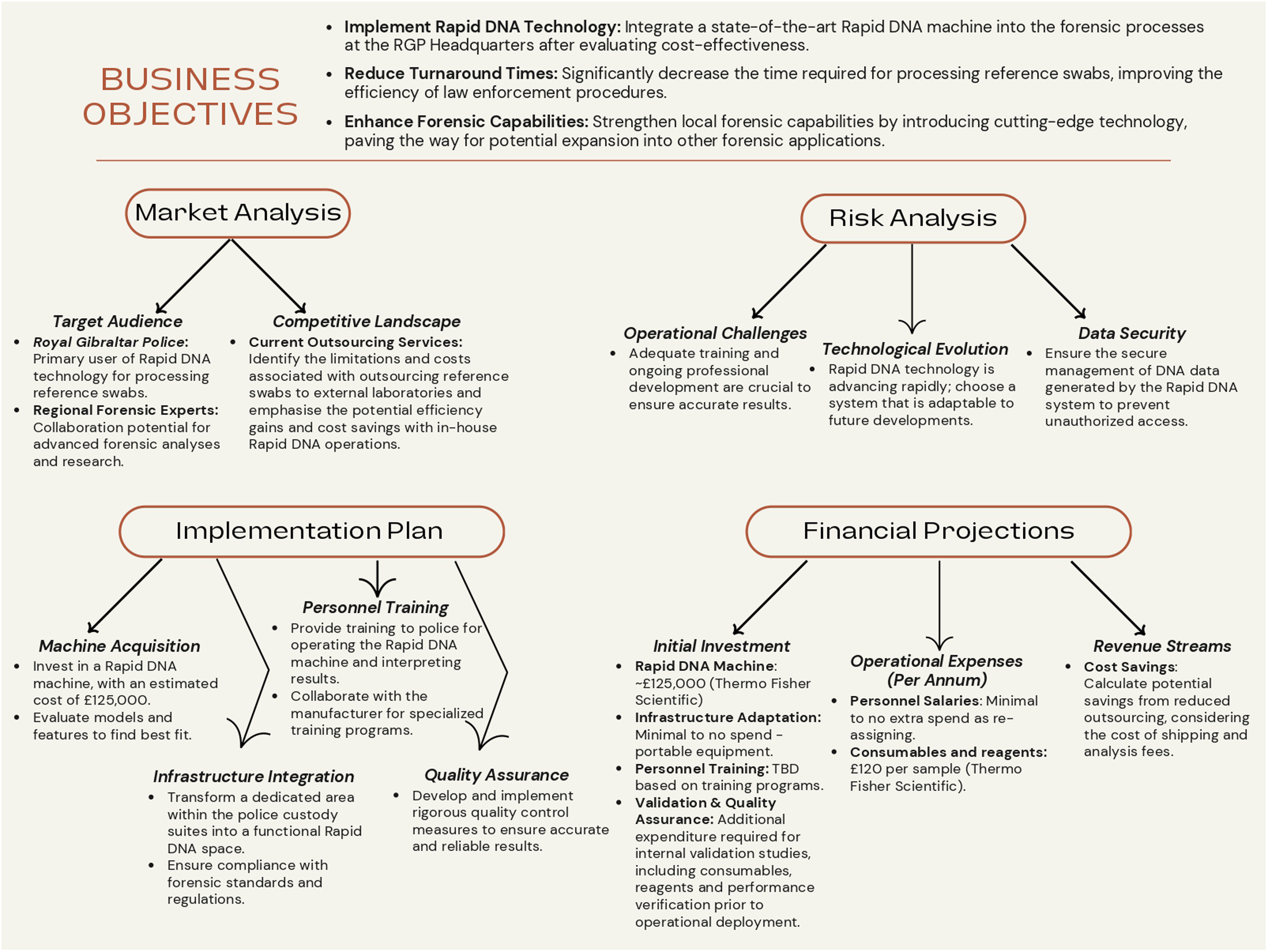
An initial business plan for the implementation of Rapid DNA for use with reference swabs at the Royal Gibraltar Police custody suites.
Summary and concluding remarks
Determining the optimal forensic strategy for Gibraltar—or any region—requires assessing factors such as budget, resource availability, and both short- and long-term goals. A detailed evaluation of each option, alongside consultation with key stakeholders, is essential for identifying the most viable solution that balances cost-effectiveness with improved forensic services (Bouzin et al., 2021; Kurimski et al., 2017). Outsourcing forensic analysis provides access to specialised expertise but leads to dependency on external laboratories, extended turnaround times, and additional transport costs. For smaller territories like Gibraltar, this presents inefficiencies that warrant exploring local solutions. In-house forensic screening can enhance autonomy, reduce transport costs, and foster national pride, aligning with the need for greater control over forensic processes. However, balancing the high initial costs against long-term benefits remains crucial. Among the options considered, leveraging existing resources is key.
The GHA stands out as the most practical solution. With minimal infrastructural change, the GHA can offer cost-effective sample screening, requiring only additional forensic-grade kits and staff training. Importantly, accreditation is not an immediate necessity but pursuing it would benefit both the forensic system and the broader healthcare sector. However, implementing such a model would require significant planning and further research before execution. Rapid DNA technology holds promise for processing reference swabs within custody suites, offering quick results and reducing dependence on external laboratories. Although it would lower turnaround times and potentially prevent further crime, the high initial cost and ongoing operational expenses could outweigh its benefits for small jurisdictions with limited throughput.
Similar small nations may face the same challenges in balancing investment versus utility (Bouzin et al., 2021). Investing in local capabilities will enhance law enforcement efficiency, provide faster results, and potentially allow for broader forensic research and development. However, careful planning, ongoing staff training, and strict quality control measures are vital to ensure sustainable and effective forensic services. Therefore, it appears the best low-cost option would be to continue outsourcing while working with the FSP to identify possible cost saving solutions, such as direct amplification of samples. We recommend maintaining outsourcing while piloting sample screening at the GHA to reduce costs and improve turnaround times; the results could guide policy by prioritising investment in cost-effective in-house screening, inform allocation of funding for forensic infrastructure, and support strategic planning in other small jurisdictions with limited resources.
Footnotes
Acknowledgements
This research was carried out as part of a PhD project funded by the Gibraltar Department of Education in collaboration with Royal Gibraltar Police. We would like to thank the individuals who took part in the interviews and answered the questionnaire developed for this project.

Funding
The authors disclosed receipt of the following financial support for the research, authorship, and/or publication of this article: This work was supported by Scholarship funding from the Gibraltar Department of Education.
Declaration of conflicting interests
The authors declared no potential conflicts of interest with respect to the research, authorship, and/or publication of this article.