




Abstract
This study involved data from a survey of a representative sample of 1417 US Internet users investigating positive outcomes from three types of participatory websites: social networking sites, e-commerce sites, and content communities (i.e. news organizations and content sharing sites). The findings indicate that the experience of flow (intense engagement in and enjoyment of an activity) promotes satisfaction with and affirmation for such websites as well as perceived focused and incidental knowledge-gain from them. Social capital affinity (sympathy marked by community of interest, and likeness based on weak ties) was found to strongly facilitate the experience of flow. Thus, the findings underscore the potency of online peers in terms of enhancing a variety of Internet experiences.
Introduction
Over the last two decades, Internet-facilitated access to news, and e-commerce; the proliferation of social networking sites (SNSs); and the widespread use of mobile social software have led to an exponential growth in research about the motivations for, and outcomes of, online activity. A myriad of for-profit (e.g. comScore, eMarketer, Google, Nielsen Wire) and not-for-profit organizations (e.g. Kaiser Family Foundation, 2002, 2008; Pew Research Center, 2013) have devoted considerable resources to describing facets of “new” media, which involve consumption of, interaction with, and generation of content. Additionally, a large proportion of the theoretically driven research has examined diverse and numerous uses, gratifications, and/or motives for online activities (as an early example, Papacharissi and Rubin, 2000) across a variety of demographic and Internet contexts as well as adoption outcomes of such use (e.g. Rogers and Shukla, 2001). Thus, there exists a considerable body of knowledge regarding the why and wherefore of Internet use. While continuing these lines of research, it is important to move toward greater understanding about how attitudinal outcomes from online participation emerge. What are the cognitive precursors to attitudes, cognitive gains, and behaviors resulting from online activity? How do they interact together? How might these cognitive precursors be productively harnessed?
The model
The goal of the current study is to validate a theoretical model that explains and predicts how forms of online engagement result in important emotional, cognitive, and perhaps behavioral outcomes. In other words, the current study is concerned with the process by which online activity facilitates positive attitudes and cognitive gains rather than the motivations behind such activity or the adoption of it. The model incorporates constructs that, for the most part, have a strong theoretical/research lineage but also includes linkages not previously investigated simultaneously across a range of participatory website genres. In brief, the proposed model posits that the positive relationship between social capital affinity (sympathy marked by community of interest, and likeness based on weak ties) and constructive outcomes such as reported satisfaction, affirmation, and focused and incidental knowledge-gain is mediated by flow (concentrated engagement in/enjoyment of an activity). In the current study, the model is tested in the context of three types of participatory websites: SNSs, e-commerce sites, and content communities (Kaplan and Haenlein, 2010; news organizations and content sharing sites). Arguably, the type of website will moderate the relationships hypothesized in the model because they serve quite contrasting functions: respectively, connection, e-commerce, and information/entertainment provision; however, each type of site also offers participatory options and the potential for intense engagement that is typical of flow.
Flow
Studies using a range of methodologies, employing observational, self-report, and physiological measures have shown flow to be associated with a wide spectrum of activities. Csikszentmihalyi (1975) introduced the theory of flow to explain why people engage in leisure activities that do not have utility. Flow comprises intense, focused concentration in the present moment, merging of action and awareness, loss of awareness as a social actor, a sense that one can deal with a challenging situation in the current context, a sense that time has passed faster than normal, and experience of an activity as intrinsically rewarding (Nakamura and Csikszentmihalyi, 2002).
Play is a subset of flow. Applying play to the consumption of media content, Stephenson (1967) defined play as “disinterested, self-sufficient, and an interlude from work. It brings no material gain” (pp. 192–193). Flow involves playfulness and is an affect-based response to types of pleasurable activity that involve intense engagement and enjoyment associated with high psychological arousal and positive valence (Mauri et al., 2011). Flow occurs when a clear goal is involved, and when the presence of feedback and the challenge afforded by the activity are in balance with the skill required to achieve the goal (Mauri et al., 2011). A high level of skill must be matched with a high level of challenge—a low level of skill and too much complexity inhibits flow (e.g. Guo and Poole, 2008). Sherry (2004) suggested that it is a balance between individual differences in cognitive abilities (skills) and media message challenges, which explains media enjoyment.
Just a few of the studies that indicate that Internet use is related to flow include the experience of online shopping (Guo and Poole, 2008), Facebook use (Mauri et al., 2011), video games (Weber et al., 2006), online game loyalty (Huang and Hsieh, 2011); learning and purchasing from virtual worlds (Choi and Baek, 2011; Mäntymäki and Salo, 2011), and online users’ keyword ads search behaviors (Wu et al., 2011). Clearly, much empirical evidence connects flow, Internet activity, and positive outcomes from such activity. However, what are the potential antecedents to flow in online activities?
Social capital affinity
The concept of affinity is defined as sympathy marked by community of interest, and likeness based on casual connection (http://www.merriam-webster.com/dictionary/affinity, 2013). Therefore, social capital affinity refers to the sense of community and likeness felt for people online who represent weak ties. Even though such people may be known only casually or not at all offline, their opinions may be of interest, or pique interest in certain online content, their presence may enhance the online experience by providing a loose sense of camaraderie. Thus, social capital affinity is conceptualized as the “identity” dimension of social capital.
Social capital is “the aggregate of the actual or potential resources which are linked to possession of a durable network of more or less institutionalized relationships of mutual acquaintance and recognition” (Bourdieu, 1985: 248). Putnam (2000) described bridging social capital as created through exposure to heterogeneous networks, with the majority of connections representing weak ties. Bridging social capital requires only connection. It is not related to close friendship (Ellison et al., 2011). However, bridging social capital is very important with regard to Internet activities because it is through such connections that users acquire new information and advice (Granovetter, 1973) and also potentially interact with people whom they would not ordinarily reach. Castells (2009) observed substantial evidence of reciprocity on the Internet: “… even between users with weak ties to each other. In fact online communication fosters uninhibited discussion, thus allowing sincerity in the process” (p. 389). Social capital increases as a result of Internet activity (Castells, 2009; Wellman et al., 2001) and is associated with a variety of Internet contexts, such as Facebook (Ellison et al., 2011) and virtual communities (Davenport and Daellenbach, 2011; Lee and Lee, 2010).
Walther et al. (2011) argued that “Social identification and peer group influence in computer-mediated communication should be a useful element in explaining a variety of influence effects in the new technological landscape” (p. 25). These authors listed a number of peer communication channels made available via the Internet (e.g. discussion boards, commenting, and referral systems) where online peers have the potential to influence other consumers’ thinking and emotions. Online activities allow an ease of access to peer groups with whom users can identify on a scale hitherto unimagined. Pondering all the possible permutations of mobile social software, virtual communities, file-sharing sites, news blogs, and online marketing, associations can be expected between social capital (especially bridging capital), peer affinity, and this wide array of online interactions. Walther et al. (2011) observed that these weak ties may be the source “of the multiple and simultaneous social influence agents embodied in the channels that these technologies make salient” (p. 26). If online users identify with peers online and/or possess shared goals or perspectives, then their opinions may be very potent (e.g. for Facebook profiles see Walther et al., 2009). Here, this phenomenon is referred to as social capital affinity.
In the present study, it is posited that social capital affinity is antecedent to flow. When one productively participates in, recommends, or discusses online activities or information with other online users, online enjoyment and engagement are heightened, and hence, the experience of flow is facilitated. For example, in a study examining the influence of online reviews, helpfulness ratings and consumer attitudes in e-commerce, Walther et al. (2012) assumed that readers feel positively toward online reviewers and commenters. This is because readers develop an affinity with other online shoppers and, therefore, their attitudes toward the online shopping experience are influenced by such affinity. Thus, the following is hypothesized:
Hypothesis 1. There will be a positive relationship between social capital affinity and flow.
Outcome variables
Satisfaction
Flow is associated with enjoyment and positive affect because when an individual experiences flow, the activity involved becomes an end in itself (i.e. autotelic). Thus, to an extent, rewards associated with the activity are irrelevant (Guo and Poole, 2008; Mauri et al., 2011; Stephenson, 1967). Satisfaction with an activity is one such positive emotion and an end in itself. In a study of the flow experience associated with browsing a sports team website, O’Cass and Carlson (2010) found a direct relationship between flow and website satisfaction. More recently, Hernandez (2012) reported that flow predicted positive attitudes among advergamers. The present study seeks to replicate these findings within a broader range of Internet use.
Hypothesis 2. There will be a positive relationship between flow and website satisfaction.
Affirmation
Another potential outcome from flow is consumer affirmation for websites. Many researchers have suggested that word-of-mouth recommendations are associated with consumer loyalty (e.g. Bansal and Voyer, 2000; Casaló et al., 2008; Chung and Darke, 2006; Park and Lee, 2009). Obviously, affirmation involves more than simply saying positive things to friends about media sources. Online consumers or potential consumers may seek information about products or sites and then share their knowledge, experiences, and opinions by posting links or comments. This form of communication is accomplished online in various ways, including user groups, online forums, and virtual communities. Chen et al. (2012) examined Taiwanese Web 2.0 users’ experiences with applications such as blogs, Facebook, iGoogle, Plurk, Twitter, and YouTube and found that consumer satisfaction and electronic word-of-mouth recommendations were positively related to intention to revisit Web 2.0 applications. Also, Chu and Choi (2011) conducted a cross-cultural study investigating electronic word-of-mouth via SNSs and focusing on differences between the United States and China. Specifically, social capital, tie strength, trust, and interpersonal influence were found to be predictors of electronic word of mouth communication in these online social channels. Additionally, O’Cass and Carlson (2010) found a direct relationship between participants’ experience of flow and word-of-mouth communication about websites. Hence, the next hypothesis states the following:
Hypothesis 3. There will be a positive relationship between flow and website affirmation.
Learning
Many media content-creators desire and expect that consumers will learn from their work. Learning can take many forms: learning about news and events; about niche areas, and products; expertise in specialized domains; about organizations; and social learning about SNS users. Frequently, there is a deliberate intent to impart specific knowledge but sometimes consumer learning may occur incidentally. Internet subscribers are not necessarily focused in their media use. Stephenson (1967) described the initial interaction with media content as akin to “milling around, as people do aimlessly and yet pleasantly at a fair, a shopping center, or seaside promenade” (p. 151). Clearly, people are often motivated to seek information online in a focused manner, but, in the process, they may also stumble upon attendant information (e.g. for news, see Tewksbury et al., 2001). Regardless of how knowledge is attained, there is ample evidence that people do learn from media.
For example, with regard to television content, in cooperation with the producers of the medical soap operas ER (2002) and Grey’s Anatomy (2008), the Kaiser Family Foundation created episodes in which they embedded health messages about emergency contraception/STDs in the case of ER and the treatment of and outcomes for HIV-positive expectant mothers in the Grey’s Anatomy episode. The foundation conducted surveys using random samples of viewers before the episodes aired, immediately after, and several weeks later to determine whether viewers remembered the information, learned from it, and acted upon it. In both studies, a large proportion of participants remembered the information immediately afterward and several weeks later. Some reported acting on the information.
In terms of news sources, there is evidence that soft and sensational news contains elements of quality news and information, which could serve as an everyday resource to consumers. A fair body of research has investigated incidental learning from soft news and entertainment (e.g. Baum, 2002, 2003; Baumgartner and Morris, 2006; Baum and Jamison, 2006; Hollander, 2005) and found that simply by viewing these media sources people learn from them without any conscious attempt to do so. Arguably, if learning occurs when consuming entertaining news media content, then it likely occurs with online content, as well. Pew Research Center (2013) reported a study where the majority of Facebook news consumers, (78%) said that they get news when they are on Facebook for other reasons. Relatedly, Packiam Alloway and Alloway (2012) investigated the effects of Facebook, Twitter, and YouTube engagement on cognitive and social skills in a group of young adults by testing their working memory, attentional skills, and reported levels of social connectedness. Results showed that certain activities on Facebook (such as checking friends’ status updates) and YouTube (telling a friend to watch a video) predicted memory test performance.
Flow and learning online
Two very important aspects of flow are intense enjoyment and focus. These dimensions may be expected to facilitate learning in situations when learning is intended and when it is not. A range of education research has shown that the experience of flow often mediates learning especially among teenagers and young adults (e.g. Shernoff et al., 2003). And a plethora of studies have addressed flow and student interaction with computers or the Internet (e.g. Chan and Ahern, 1999; Chan and Repman, 1999; Ghani, 1995; Konradt et al., 2003). Based on such research, flow appears to be related to both reported knowledge-gain (the sense that one has learned something) and with actual knowledge-gain (objective measurement of learning). With regard to online learning, Rossin et al. (2009) investigated the relationship between students’ experiences of flow and learning outcomes in an online management course taught in an MBA program. The findings indicated a positive relationship between flow and reported learning outcomes (reported learning, reported skill development, and student satisfaction). Also Choi and Baek (2011) explored factors that affect elementary school children’s learning via virtual worlds with a special emphasis on flow. Interactivity and representational fidelity predicted flow and facilitated learning for young students.
Turning to direct learning from a website, Skadberg and Kimmel (2004) conducted a study assessing visitors’ flow experience while website browsing. The findings indicated that website users experienced a sense of time distortion, enjoyment, and telepresence while browsing and that the website characteristics contributed to flow. When the participants experienced flow, they learned more about the website content, and learning was related to changes in attitudes. Therefore, in the present study, the following is expected:
Hypothesis 4. There will be a positive relationship between flow and both perceived focused and incidental learning from website genres.
The hypotheses are illustrated in Figure 1.

Proposed model.
Method
This study is part of a larger program of Internet research; however, for this study, three website genres were involved: SNSs (e.g. Facebook, Twitter, LinkedIn), content communities (dealing with news and shared content; e.g. Huffington Post, MSNBC, Google News, YouTube), and e-commerce sites (e.g. Amazon.com, eBay). The assumption underlying this choice was that feedback and participation are implicit aspects of these new media “encounters.” For example, studies have outlined the importance of consumer comments and feedback on e-commerce sites (e.g. Walther et al., 2012; Willemsen et al., 2011) and on sites such as YouTube (e.g. Walther et al., 2010). SNSs, especially, allow for varied interactions between subscribers and, therefore, enable individuals to maintain a larger set of weak ties, compared to contacts offline (Ellison et al., 2011).
The data were gathered using a random digit dialing telephone survey of Internet users from across the 50 states of the United States administered by Flag Ship Research (San Diego) and conducted from 24 July 2012 to 26 August 2012. This choice of methodology was made with the intention of obtaining a representative sample rather than a convenience or student sample. Calls to land lines were supplemented by calls to cell phone-only households. 1 Table 1 shows the sample distribution by age, gender, and cell versus landline households.
Sample distribution (N = 1417).

To achieve adequate samples for each website type, individual participants answered questions about one website genre only. To begin, a website genre was selected at random. A respondent qualified for a type of website genre if he or she used that type of website almost always, often, or sometimes. A respondent was disqualified for that website type if he or she used it almost never or never. When a person was disqualified for one website type, he or she would be asked about his or her use for the next randomly chosen website genre until the participant qualified for a website genre or was disqualified from the survey. At the conclusion of the survey, 200 respondents answered questions about content communities, 281 answered questions about e-commerce sites, and 236 answered questions regarding SNSs. Other participants answered questions relating to search engines or virtual worlds (dropped, n = 30 after 1056 interviews) or reported low usage, and therefore, only provided demographic/background information about Internet usage. A demographic breakdown for each website type is displayed in Table 2.
Demographic breakdown.

SNS: social networking sites.
Measures
The number of items comprising the questionnaire was limited so that the interviews ran to an average of 20 minutes. The majority of items were closed-ended using a 5-point scale with options ranging between strongly agree (5) and strongly disagree (1). In addition to several Internet, technology/media use, location of use, and demographic questions, multiple items measured the variables displayed in the hypothesized model (Figure 1). The scales were pilot-tested prior to this study with 281 undergraduate students; some item modifications were made to improve reliability. Participants were asked to respond to the following, choosing from “almost always” (1) to “never” (5) with regard to content communities: How often do you visit websites to read news and information and share comments, photos, and videos? For e-commerce, How often do you use e-commerce sites to buy or sell things, or simply to browse? For SNSs, How often do you use social networking sites to communicate and share information with people you pick? The other measures are detailed below. The Cronbach’s alphas and descriptive statistics are shown in Table 3.
Descriptive statistics and reliabilities.

M: mean; SD: standard deviation; SNS: social networking sites.
Social capital affinity
Five items were adapted from Williams (2006) and Ellison et al. (2007) bridging social capital scales and were constructed with affinity to weak ties in mind. These items together posted high reliability across the three website genres with an average alpha of .85. Some of the items included were as follows interacting with people visiting this site makes me feel like part of a community; when visiting this site, hearing what others say enhances the experience; and communicating with the people visiting this site raises points of interest for me.
Flow
Eight flow items were chosen based on Jackson and March’s (1996) flow state scale and the O’Cass and Carlson (2010) flow items and were intended to tap into the dimensions of flow described by Nakamura and Csikszentmihalyi (2002). These items showed moderate reliability, posting an average alpha of .72. However, two items were dropped to achieve measurement invariance. Some of the items included were as follows: I have feelings of total concentration when visiting this site; when visiting this site, I really enjoy the experience; I become totally involved when visiting this site; and I feel focused on what I am doing while visiting this site.
Satisfaction
Four items were adapted from Hennig-Thurau et al.’s (2002) customer satisfaction scale, and Casaló et al.’s (2008) and O’Cass and Carlson’s (2010) website satisfaction scales. These items posted high reliability across website genre. Cronbach’s alpha averaged .84. The measures were as follows: choosing to visit this site was a wise one; this site does a good job of satisfying my needs; and I did the right thing in visiting this site.
Website affirmation
Three items from Casaló et al.’s (2008) positive word-of-mouth scale were used to measure affirmation. The items posted moderate reliability across genre. The average Cronbach’s alpha was .75. The items were as follows: I say positive things to others about this site; I recommend this site to others who seek my advice; and if anyone criticizes this site, I will point out its positive aspects.
Perceived focused knowledge-gain
Three items were constructed to measure reported focused knowledge-gain from the website grouping chosen by the participant. These items were indirect measures of perceived knowledge-gain as opposed to objective measures of knowledge-gain. The items showed good reliability in the pilot study and together in the current study. Cronbach’s alpha averaged .77. The items were as follows: I often learn something I need to know when visiting this site; this site effectively communicates what I need to know; and this site helps me learn what I need to know.
Perceived incidental knowledge-gain
Three items were constructed to measure perceived incidental knowledge-gain from the website groupings. Again, it should be noted that these were indirect measures. The items posted high reliabilities in both the pilot test and the current study. Cronbach’s alpha averaged .81. The items were as follows: I enjoy learning new things by accident when visiting this site; I often learn interesting things that I was not looking for when visiting this site; and sometimes I learn something new that wasn’t intended when visiting this site. Table 4 shows discriminant validity and intercorrelations between composite measures.
Correlations: combination scales.
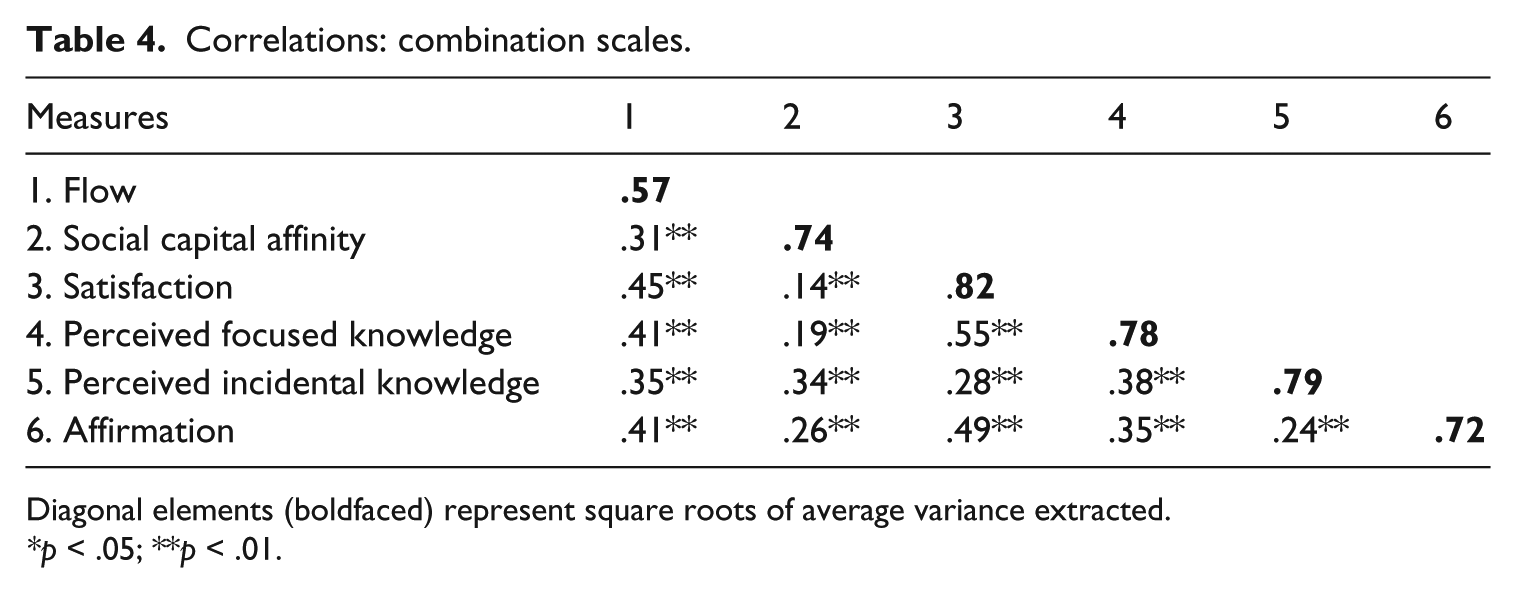
Diagonal elements (boldfaced) represent square roots of average variance extracted.
p < .05; **p < .01.
Table 5 displays the measurement items, composite reliabilities, factor loadings, means, and standard deviations.
Measurement Models: Latent Factor Loadings.
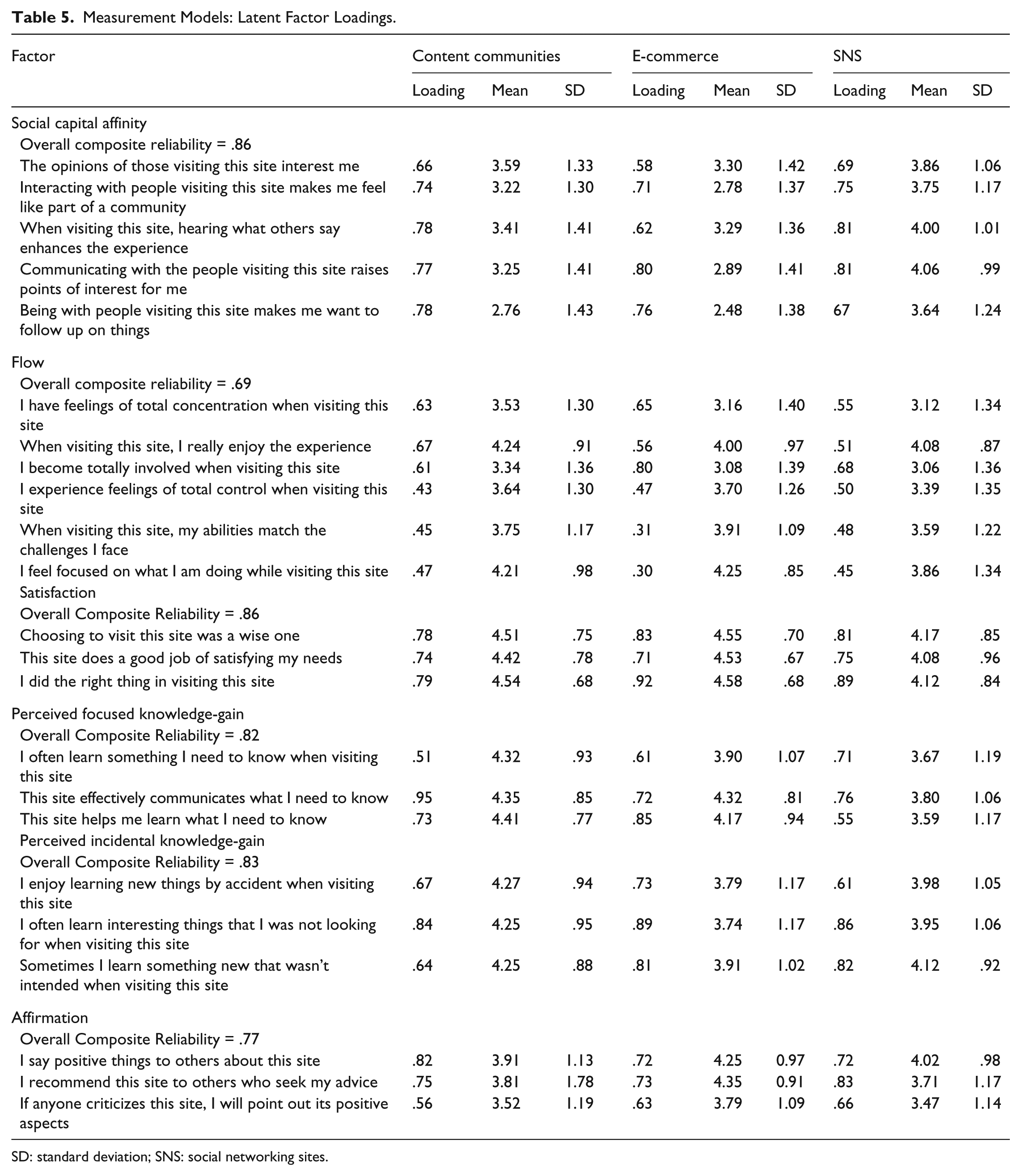
SD: standard deviation; SNS: social networking sites.
Results
Model testing
The analyses were conducted using structural equation modeling (Amos Graphics) which involves a two-step process. First the measurement model is assessed to determine the effectiveness of the latent variable indictors. Second, the structural model is tested to investigate the expected relationships.
Measurement models
The measurement models for each website genre as well as a composite measurement model showed good fit to their respective data sets. That said, some of the loadings for flow were low (especially for the items: when visiting this site, my abilities match the challenges I face and I feel focused on what I am doing while visiting this site). However, these items were retained in the model in order to approximate the dimensional aspect of flow and also because the models posted good fit overall. The model statistics are summarized in Table 6.
Model fit.
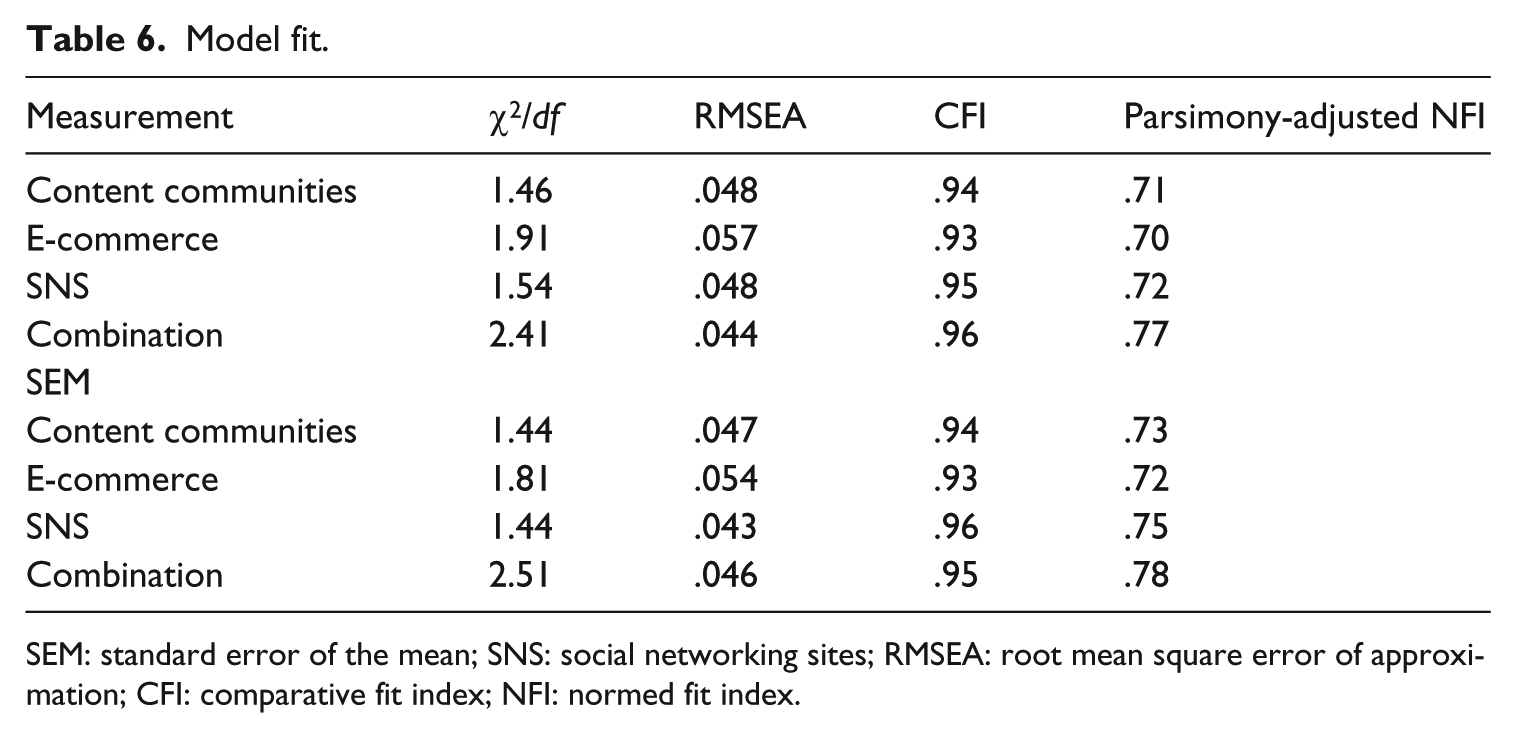
SEM: standard error of the mean; SNS: social networking sites; RMSEA: root mean square error of approximation; CFI: comparative fit index; NFI: normed fit index.
Structural equation models
The results of the model testing for each group of websites are summarized in Figure 2.

Model testing.
The critical ratios for equality of z scores for the regression weights were calculated based on the following equation
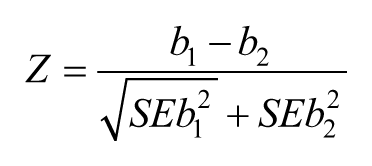
Hypothesis 1 predicted a positive relationship between social capital affinity and flow. This hypothesis was strongly confirmed for all three website genres with the most robust outcome for SNSs (SNSs and content communities: complete response (CR) = 2.95; SNSs and e-commerce: CR = 4.55; content communities and e-commerce: CR = 1.65). Hypothesis 2 predicted a positive relationship between flow and website satisfaction. This hypothesis was strongly supported for all three models. There were no statistically significant differences between groups on this path. Hypothesis 3 predicted a positive relationship between flow and website affirmation. Again, this hypothesis was strongly supported for all three website types with no statistical differences for this path. Hypothesis 4 predicted a positive relationship between flow and perceived focused and incidental knowledge-gain from the website type of choice. This hypothesis was strongly supported for all groups with no statistical differences between the regression weights.
Discussion
The purpose of this study was to shed light on the process by which positive emotional, attitudinal, and cognitive outcomes emerge from online use and interaction. Social capital affinity (sympathy marked by community of interest, and likeness based on weak ties) and flow (intense engagement in, and enjoyment of, an activity) were examined as potential antecedents to satisfaction, affirmation, perceived focused, and incidental knowledge-gain for three website groupings: content communities, e-commerce sites, and SNSs. The model proposed that social capital affinity facilitates flow, which, in turn, generates positive outcomes among Internet users.
Findings and implications: model components
Flow
With regard to flow, this study strongly reflects previous research in a variety of media, marketing, and Internet contexts in highlighting flow as a reliable predictor of positive emotion, attitudes, and cognitive gains. However, few, if any, studies have simultaneously assessed the influence of flow with regard to more than one type of website genre among a representative sample of Internet users in the United States. Having confirmed the importance of flow in these Internet contexts, the findings underscore the need to discover how flow is achieved during online activities, under what circumstances, and when.
Social capital affinity
As the “identity” dimension of social capital (affinity with weak ties), social capital affinity was found to be a strong predictor of flow for all three website genres: content communities, e-commerce sites, and SNSs. Unsurprisingly, this effect was strongest for SNSs. The main goal for SNS users is to communicate and identify with peers, to keep in touch, and to learn about others’ news and updates (Barker, 2009; Barker and Ota, 2011). Evidently, affinity with online peers in such a context encourages the sense of involvement and enjoyment that is part of the flow experience. However, perhaps of greater interest in the present study is the strong influence of social capital affinity among content community subscribers and e-commerce site users. This finding confirms that online interactions with (probably) unknown offline peers are important and influential in terms of the flow experience. Social capital affinity was also directly correlated with all of the outcome variables in this study, although not to the extent of flow. Overall, then, it appears that the low-key bonhomie enjoyed via Internet interactions engenders positive responses simply in terms of enjoyment and also in terms of goal attainment. Hypothetically, as individuals comment upon an online news story or perhaps read the comments of others, laugh out loud at a Tweet, or seek feedback on an ebay item, these actions are enjoyable and/or involving in themselves. But, simultaneously, people can learn what they need to know or perhaps did not need to know, feel satisfaction with the website, and see the need to offer affirmation for it.
Social capital affinity may be related to but is not another species of word-of-mouth information dissemination because the online interaction involved is mostly random. However, for Internet content generators social capital affinity is potentially a very important concept because the ability to foster or encourage it has far-reaching implications for attention to—and assimilation of—intended messages. Also, if Internet users regularly learn information that they did not set out to learn, either directly or indirectly because of this form of bonhomie, then content generators must be much more aware and strategic in terms of web design. Therefore, there is a need to test this model in a variety of highly specialized Internet settings—for example, political news websites (e.g. breitbart.com) and activist websites (e.g. MoveOn.org).
Conclusion
The study findings are important in four ways. First, this initial test of a process model investigating how and why positive outcomes accrue from interactions with selected website genres has highlighted the role of social capital affinity and convincingly reaffirmed the importance of flow across website genres. Second, flow strongly predicted satisfaction but also perceived focused and incidental knowledge-gain. This latter outcome promises to provide a rich context for future research. Arguably, many people begin at one point on the Internet and, some time later, find themselves somewhere else entirely, having gained unlooked-for but nevertheless, valued information in the process. Third, the results underscore the importance of uncovering antecedents to flow in highly interactive environments such as online video games and virtual worlds. And finally, the nature of the sample lends external validity to the results with regard to US users of these three website genres.
Limitations and future research
The response rate for this random digit dialing survey was very low (5.29%), which may arouse concerns about the validity of the conclusions drawn from its findings. However, Keeter et al. (2006) replicated a 1997 study that compared results from a 5-day random digit dialing survey employing the Pew Research Center’s methodology with results from a more rigorous survey conducted over a much longer period and achieving a significantly higher response rate. The analysis also included comparisons with the hardest-to-reach respondents and with respondents who terminated the interview early. Similar to the 1997 study, there was no indication that nonresponse seriously threatened the quality of survey estimates. Most of the comparable items in the two surveys yielded statistically indistinguishable results. Clearly, a higher response rate would have been desirable in the current study but an examination of the sample characteristics suggests that the responses were likely representative overall.
One of the major limitations for this study was that, because this was a telephone survey, the number of items on the questionnaire had to be quite severely limited. This meant that it was difficult to measure the concepts as rigorously as desired. Although all of the scales in their original state did hold in terms of reliability, some of them were more reliable than others. This was partly because, for the current study, the measurement items were required to hold across website genres: hence, it was clear that some items were more appropriate for certain website genres than others.
The next study in this program of research will be conducted online, measurement items will be honed and others added. Using an online medium to gather data will allow researchers to reach participants missed in the current sample; therefore, additional participants in virtual worlds and online games will be targeted in future projects. Moreover, it is important to uncover the influence of other antecedents to flow. These could include such concepts as perceived credibility of the websites visited and of online peers, intrusiveness of advertising/variations in web design and also perceptions of Internet privacy. As mentioned above, social capital affinity, in particular, should be further examined in terms of its importance to Internet users and to content generators (both private and institutional). In terms of outcomes, attention to website content may be of focal interest to media professionals and scholars.
The present study was correlational. It will be valuable to conduct experimental research during which social capital affinity and other potential independent variables are manipulated so as to reassess their causal influence on flow, learning from and attention to website content. Moderators such as gender, culture, delivery system, and location should be examined with regard to all of the above since it is clear both anecdotally and empirically that these variables are important in Internet use and user interaction. Future projects then (theoretically driven as well as inductive) will address these and other issues, employing a variety of perspectives and methodologies.
Footnotes
Funding
This study was funded by the School of Journalism & Media Studies, San Diego State University.