



Abstract
Social networks are generally regarded as channels through which parliamentarians establish direct contact with the public. However, do they engage in these activities personally or rather delegate them to their parliamentary assistants? This study examines the intermediary relationship between parliamentarians and the public (henceforth PAs)—seeking to understand their role in contemporary, political communications. While numerous studies have looked at types of parliamentarian contact with the public, PAs have received little scholarly attention. Adopting a comparative perspective, this study will suggest a theoretical model of the MP/PA social media work relationship, creating a new questionnaire for PAs in the US House of Representatives, German Bundestag, and Israeli Knesset, exploring whether level of parliamentarians’ involvement in social networking is influenced by working within different electoral systems: representatives elected directly (the United States), mixed (Germany), and indirectly (Israel). The study investigates the level of parliamentarians’ engagement with social media communication according to a four-category model.
Keywords
Theoretical background
Interaction patterns between parliamentarians and the public on social network sites
In the present decade, politicians have begun to perceive social network sites (hereafter SNS) as more important than personal websites (Johnson and Perlmutter, 2010; Karlsen, 2011; Koc-Michalska and Lilleker, 2011)—especially Facebook, the fastest way to partner with the public (Mutschke et al., 2011).
One of the main goals of the politicians’ use of Facebook is to increase a politician’s popularity and create a sense of public visibility. Most politicians testify to their use of Facebook for political purposes, with a few also mentioning private matters. Their main intent in updating posts is to display their presence on Facebook and not to start a discussion, especially since most of them are afraid of public debate that will become inflamed and get out of control (Joshi et al., 2011). Other possible disadvantages are hostility, lack of public interest, time consumed monitoring content, subordination to external sites, and investment of resources in updating content (Goldschmidt, 2011).
Most studies on politics and SNS have focused on different perceptions regarding social network use by elected officials (Bürger and Ross, 2014; Coleman, 2005; Congressional Management Foundation, 2011; Hoff, 2004; Lin, 2016; Tenscher, 2014; Ross et al., 2015; Williamson and Fallon, 2011). Several studies have focused on the public, asking their opinion on the use of these tools by politicians (Gibson and Ward, 2009; Williamson and Fallon, 2011), with some even arguing that the connection between the public and politicians on SNS is essential to democracy (Sørensen, 2016). By contrast, the actual process of creating the politicians’ presence on Facebook has been mostly neglected, although a few studies have touched on this aspect in specific contexts: election campaigns (Klinger and Russmann, 2017; Magin et al., 2017), ethnography (Rogin, 2015), and use case/toolbox (Mutschke et al., 2011).
The content production process might have been neglected because of the widespread perception that SNS are a direct link to the public, a perception stemming from the Internet’s entry into many areas of our lives, disrupting existing processes and creating new ones. Many areas of life are characterized by processes that Gellman (1996) called “Disintermediation,” that is, abolishing the mediator, wherein the Internet shortens processes in many aspects of our lives, enabling a direct link between the public and the service providers. Similarly (so goes the perception or hope), the Internet can enrich public–politician relations, thereby increasing a sense of democracy and civic cooperation through an unmediated relationship (Coleman and Blumler, 2009). One can conclude, therefore, that significant potential exists for unmediated contact with the public through SNS (Haleva-Amir, 2010).
Personal and organizational aspects of politicians’ SNS use
There are several variables that can affect the political communication activities of a parliamentarian. For example, various studies have measured the technological capabilities of MPs 1 in operating online platforms, and it has been found that this ability is influenced by various factors. First, the MP’s age; younger ones used the Internet for publicity and communication with the public more than older MPs (Jackson and Lilleker, 2011; Tenscher, 2014) and also made greater use of audience-interactive functions as well as interactive Web 2.0 technologies (Hinz, 2014). Larsson and Kalsnes (2014) and Akirav (2014) found that young MPs are more active in SNS than older MPs. Tenscher (2014) also found that age affects MPs’ approach to network use as does gender: Jackson and Lilleker (2011) discovered that female MPs used Twitter more because they wanted more direct contact with the public.
Another variable influencing level of SNS involvement is political affiliation (Williamson, 2009). Liberal Democrats in Britain have used SNS three times as much as Liberal Democrats. In a review of SNS use in the United States, Democrats spent more time and resources on SNS than their Republican counterparts (2011), such as sending videos (41% Democrats vs 27% Republicans) and emails (37% Democrats vs 26% Republicans). In Brazil, too, left-leaning MPs tend to tweet more on Twitter and have more followers than right-wing MPs (Marques et al., 2014).
Bürger and Ross (2014), in contrast, found that variables, such as party, gender, age, and status, rarely affect the level of politicians’ use of SNS, and the differences between politicians stemmed from positive or negative experiences from SNS and their personal tendency to adopt new technologies in general.
Involvement level can also be influenced by internal variables such as the relationship between MPs and their office team, especially their mutual degree of trust (Belkacem and Busby, 2013), as well as MP character traits and the PA’s seniority. Larsson and Kalsnes (2014) found that MP personality characteristics had greater influence than party affiliation.
RQ1. Do any or all the variables—political affiliation, socio-economic affiliation, 2 PA’s gender, MP’s gender, MP’s age, number of PAs in the MP’s office, level of trust between the MP and PA, and level of PA seniority—influence the levels of MP/PA Facebook engagement and/or the extent of delegation of authority to the PA by the MP?
The type of electoral system in various parliaments and its influence on MPs’ Facebook level of involvement
Studying different election systems in the United States, Israel, and Germany can lead to a better understanding of their influence on MP level of involvement in SNS, resulting from different levels of commitment to the voters. For example, the direct-vote, district system in the United States is considered more personal than party-list, proportional election systems, with the former increasing the MP’s degree of responsibility to their constituents (Hattis-Rolef, 2006). In comparison, Israel’s electoral system is national-proportional, that is, the entire country constitutes one electoral district where the party lists receive a proportion of the 120 Knesset seats based on the number of votes received nationally. This system’s advantage is that it enables the highest level of ideological, ethno-sectoral, and socio-demographic representation in a country with many cleavages. However, a main drawback is the lack of intrinsic connection between voter and MP, as the former vote for a list and not for a representative, thus weakening the level of MP commitment to their constituents (Hattis-Rolef, 2006).
Germany combines the United States and Israeli election methods. Germany is a constitutional federal republic composed of 16 states (Länder). Like the United States, the German parliament consists of an upper and lower house. The lower house, the Bundestag, is Germany’s supreme legislative authority. Each voter has two ballots: one for a candidate in a specific, district constituency (328 in total), and the other for a national party—these MPs are elected by their place on a regional party list, 3 with each list allotted seats in proportion to the percentage garnered on the second, regional ballot (with another 328 MPs elected). 4
RQ2. Is there a correlation between the type of parliamentary, electoral system, and the level of engagement of the MPs and their PAs?
Structure of a parliamentary office, division of media functions, and interaction between MPs and their PAs
Belkacem and Busby (2013) examined the role of office staff in the European Parliament and how PAs help them cope with vast amounts of information, arguing that PAs play very important roles for the MP but are not sufficiently appreciated. They called them “hidden actors,” explaining that PAs deal with a variety of interfaces of great importance to the MP and are therefore an important part of the decision-making mechanism: filtering the information, synthesizing relevant information from several sources, and maintaining the MP’s image and positive brand. A study conducted among members of US Congressional staff revealed that PAs in the office of a congressperson played an important role in using the Internet, with their main activity in SNS being public opinion cultivation. Receiving voters’ opinions and feelings was a central goal, with Facebook seen as the most effective tool for achieving that goal, followed by Twitter and finally YouTube (Congressional Management Foundation, 2011).
Studies conducted in the US Congress indicated that members of Congressional PAs can receive a relatively high degree of responsibility in a very short time. The seniority of each staff member influences the relationship between staff members, their professional norms, and the amount of autonomy they are given regarding office policy (Romzek and Utter, 1996). Romzek and Utter (1997) conducted interviews with 40 Congressional staff members in 1995 and found that they share common characteristics: perceptions of high status, professionalism, prestige, autonomy, commitment to political and public service, and a self-perception as political experts.
There is considerable variation in the office employment of PAs between Senators and House of Representatives members. In the Senate, hiring assistants is based on the Senator’s state budget, so that the number of assistants in the Senator’s office can range from 20 to 60 PAs. The manner of employment and employee qualifications also depend on the Senator’s desire to emphasize legislation or public service. Members of the House of Representatives are limited to employing up to 18 full-time PAs and 4 part-timers (Congressional Management Foundation, 2011).
As there are differences in SNS use among politicians with different profiles, there are also differences in the ways their PAs use the Internet. For example, many PAs were frustrated that members of Congress did not use the Internet sufficiently and thought that the use of the Internet should be increased, especially in interactive actions such as blogs, video calls, and personal sites (Congressional Management Foundation, 2011). Another study found that many MPs were dissatisfied with the level of their PA’s Internet knowledge, believing that the staff should undergo further training in this regard (Williamson, 2009).
In Israel, every MP was allowed to employ two PAs by law (Ben-David, 2011), increased to three PAs in 2015. An MP who serves as chairperson of a committee or as a government minister is now entitled to four PAs. MPs also receive a budget for “contact with the public,” intended to cover the costs of employing PAs as well as a website, SNS, telephone expenses, and more. For the most part, there is no clear distinction between the parliamentary and the communicative functions of the PAs, and nowhere is a specific role defined for them (Saranga, 2001). Usually, one of the PAs is responsible for communications, public relations, and spokesmanship. One of the PAs’ great challenges is to work with MPs who have little media experience; but when the MP has professional media experience, the PA’s role is mainly technical, intended mainly to convey the MP’s words. Formally, the status of Knesset PAs is not fixed by law but determined by House Committee decisions. However, it has never specified the nature of the job and what the PA must do (Shperman, 2010).
Mutschke et al. (2011) found that in Germany, PAs have made extensive use of social networking updates for their MP. However, two major problems arose from this study’s research interviews: The MP has a team that sometimes appears on the SNS as the MP, whereas other times the PAs use their own name and not the MP’s name. The former to avoid the risk that someone will think that they are talking to the PAs, not to the MP—leading to the second problem. Online SNS involvement of MPs cannot be very high because of the intensity involved. Many MPs were very aware of the SNS authenticity issue. Thus, the PAs sometimes responded by their MP’s name and not by their name, but it was important for them to emphasize that they did not want the audience to know that the discourse did not exist with the politician himself, attesting to the recognition that there is an ethical problem here. In Israel, as well, it was discovered that when PAs wrote a post they almost always used the MP’s name and not their own (Lev-On et al., 2017).
Members of the Bundestag determine what is relevant to their parliamentary work and therefore determine the character and number of PAs: clerks, secretaries, consultants, researchers, and so on. The Bundestag PAs are not a part of the administrative system (Ben-David, 2004); each MP chooses how much to set aside from the office budget for these PAs. The average is between two and eight PAs per Bundestag member (Galili, 2004). These MPs also determine the professional skills and prior knowledge to be required of their PAs, employing them directly through a contract made exclusively between MP and PA.
When it comes to using new media, PAs must know what channels to use (and how) to maximize the MP’s success. As such, it is very important to recruit staff with prior experience or training in the field. For example, Schelin (2004) argued that more attention should be given to planning technological strategies in order to increase sympathy for the project and its success.
Lack of training can be extremely problematic, especially when a multi-tasking PA has an MP who does not understand the operation of Facebook (Tenscher, 2014) and also when there is a relatively high turnover of MPs (Schelin, 2004). It should be noted that even prior knowledge of traditional public relations will not necessarily contribute to understanding online activity operations (Pattison, 2009). MPs themselves argue that a lack of staff and lack of training are the main obstacles between them and the effective operation of their SNS channels (The Global Centre for ICT in Parliament, 2012). Thus, MPs tend to rely on themselves for SNS operations, especially when their personal character tends to perfectionism (Lev-On et al., 2017).
As mentioned above, previous studies have examined MPs’ message content in SNS but not the real degree to which the MPs are themselves involved in such SNS communication. In order to get a fuller picture of the politician–public communication nexus, this study will examine the real (relative-proportional) level of MP and PA Facebook engagement.
To start, we posit a general theoretical model of MP versus PA engagement that is based on a survey analysis of PA engagement, from which we can directly infer the levels of MP engagement. The general model is characterized in Figure 1.

Categories of MKs’ level of engagement.
On one pole are the “uninvolved parliamentarians” who do not enter their own Facebook page, are not at all involved in initiating content or responding to the public’s comments/questions, and in general do not feel any need to supervise the PA in this area. The “autonomous parliamentarian” is found at the other pole, independently texting and responding on the Facebook page without help from any PA. In between these two archetypes are intermediate categories in which the MK is partly involved in operating and texting on the page but does not closely follow the public’s comments (“less involved”), or will write many (but not all) posts and replies to public comments, while approving all posts written by the PA (“highly involved”). Obviously, the boundaries between these four types are somewhat fluid, but overall they do reflect different levels of involvement.
This model then served as the basis for analyzing the actual process of PA intermediation through a cross-comparison of three countries, each with a different electoral system engendering diverse levels of connection between voters and elected representatives—as well as other variables such as level of trust between MP and PA, the level of authority/autonomy delegated by the MP, ideology (left–right wing), MP’s socio-economic status, MP’s age, and gender of the MP and PA. These variables can offer insight into the factor(s) underlying MP/PA level of SNS engagement and especially whether electoral system differences can explain (at least in part) such SNS engagement.
RQ3. To what extent (if at all) do MPs in the United States, Israel, and Germany use PA intermediaries (parliamentary assistants, advisors, or spokesperson) to operate their Facebook page?
Given that this study’s RQs have never been empirically studied before, only one research hypothesis is possible at this stage.
Research hypothesis
RH1: The more indirect and local the electoral system, the greater the level of commitment of the MP to the district’s residents as opposed to the rest of the population, and concomitant higher level of social network engagement (Hattis-Rolef, 2006, 2010).
Research population
This study’s three countries represent different electoral systems: in the United States, direct vote for representatives within specific geographic districts; in Israel, party vote through national-proportional elections; and in Germany, two ballots: one for party-proportional representation in regional elections, and the other through direct, district vote as in the United States.
Tools
The Israeli questionnaires were sent to all the PAs of Knesset MPs; in Germany to all Bundestag PAs, because unlike the upper house Bundesrat, only Bundestag MPs are elected by the public; in the United States solely to House of Representatives MPs, as explained earlier.
The general distribution of the three countries and the division of each country separately were done by k-means cluster analysis—an index dividing each research group into four categories according to the level of engagement index statements’ distribution. Five types of distributions were examined: the first for all three countries together, the second for the United States, the third for Israel, and two additional ones for Germany—PAs of MPs elected in direct-vote, district elections, and those elected in party-proportional regional elections.
The PA questionnaires included many questions never before studied. They dealt with the following variables: the level of PAs’ and their respective MP’s engagement in operating Facebook and the degree of autonomy granted to the PA; the level of delegation of authority to the PA by the MP; and level of trust between them. These three dependent variables (“indices”) contained a total of 21 statements. Internal reliability of the questionnaire was high; internal consistency (Cronbach’s alpha) was α = .91; and the reliability of each index separately was also high. The reliability of level of involvement, level of trust, and delegation of authority was α = .83, .95, and .81, respectively. To ensure actual reliability, several reversed statements in each index were added.
Testing the questionnaire’s structural validity through a pilot study was not feasible given the difficulty of obtaining responses, as each potential PA respondent was extremely busy (see section “Participant recruitment limitations”). The content of the questionnaire, therefore, was validated by three scholars from this research field. The questionnaires were written in Hebrew and professionally translated into German and English.
Participant recruitment limitations
The process of gathering the participants was lengthy and complex, with many difficulties encountered during this process. At first, we sent messages via Facebook to the MPs in the three parliaments, asking for the person who operates their Facebook page to answer the questionnaire. This request unfortunately reached the “Other” folder on Facebook, with the majority of MPs not seeing it at all. Another significant issue arose with Facebook’s messages: many of the PAs removed the feature that allows messages to be sent via their page, rendering it impossible to send them a message at all. We then tried to send the questionnaire by way of their email addresses. This worked in Israel because through the Israeli Knesset website we could reach the MPs’ email list. A total of 56 (of a possible 120) respondents responded to the questionnaire. In Germany, no list of emails existed, but we could contact the MPs’ personal sites where we wrote them that the questionnaire was intended exclusively for PAs, advisers, or spokespersons. In total, 53 (of 709) PAs responded. In the United States, there were no MP email addresses listed, and there was no way to communicate through the MP sites: due to a heavy load of messages, only people who lived in the same district as a Congressperson could make contact through the site, and we were also asked to write a zip code upon entering. In total, ultimately, we were able to obtain responses from 32 PAs (out of 538) for an overall response rate of 47% in Israel, 7.4% in Germany, and 6% in the United States.
It must be noted that despite promising complete anonymity, the PAs in all three countries were very wary of answering the questionnaire because it dealt with personal aspects and sensitive interactions between them and their MP, as well as between the office staff. This led to the following problem that reduced the questionnaire response rate: many respondents did not answer certain questions; others went in and immediately left. This made it difficult to conduct multivariate regressions that could only be performed with fully answered questionnaires. Based on the relatively low number of respondents, clearly no definitive conclusions can be reached. However, despite the exploratory nature of the research, the study’s findings are suggestive; they constitute a basis for future expansion in the number of countries to be investigated and the number of respondents to be included, somehow overcoming the logistical obstacles in obtaining a larger percentage of PAs in the respective countries.
Participants
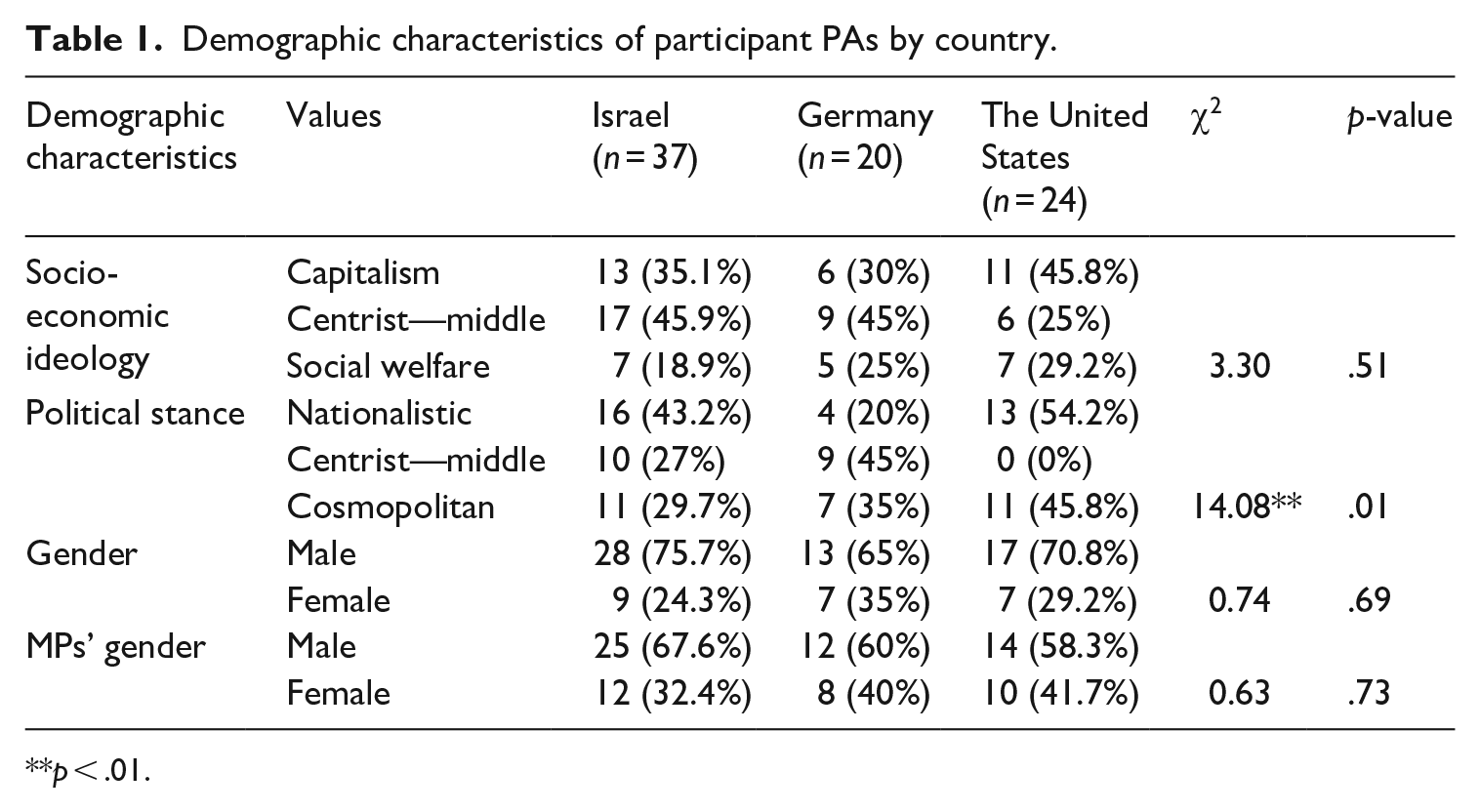
As a result, the study ended up with 81 participants (N = 81) who completed the entire questionnaire: 58 males (71.6%) and 23 females (28.4%); 37 in Israel (45.7%), 20 in Germany (24.7%), and 24 in the United States (29.6%). The questionnaires were delivered over 6 months, in the second half of 2018. In order to examine whether differences existed between the three countries in their demographic characteristics—socio-economic ideology, political stance, and the gender of PAs and MPs—Chi-square (χ2) analyses were conducted (see Table 1).
Demographic characteristics of participant PAs by country.
p < .01.
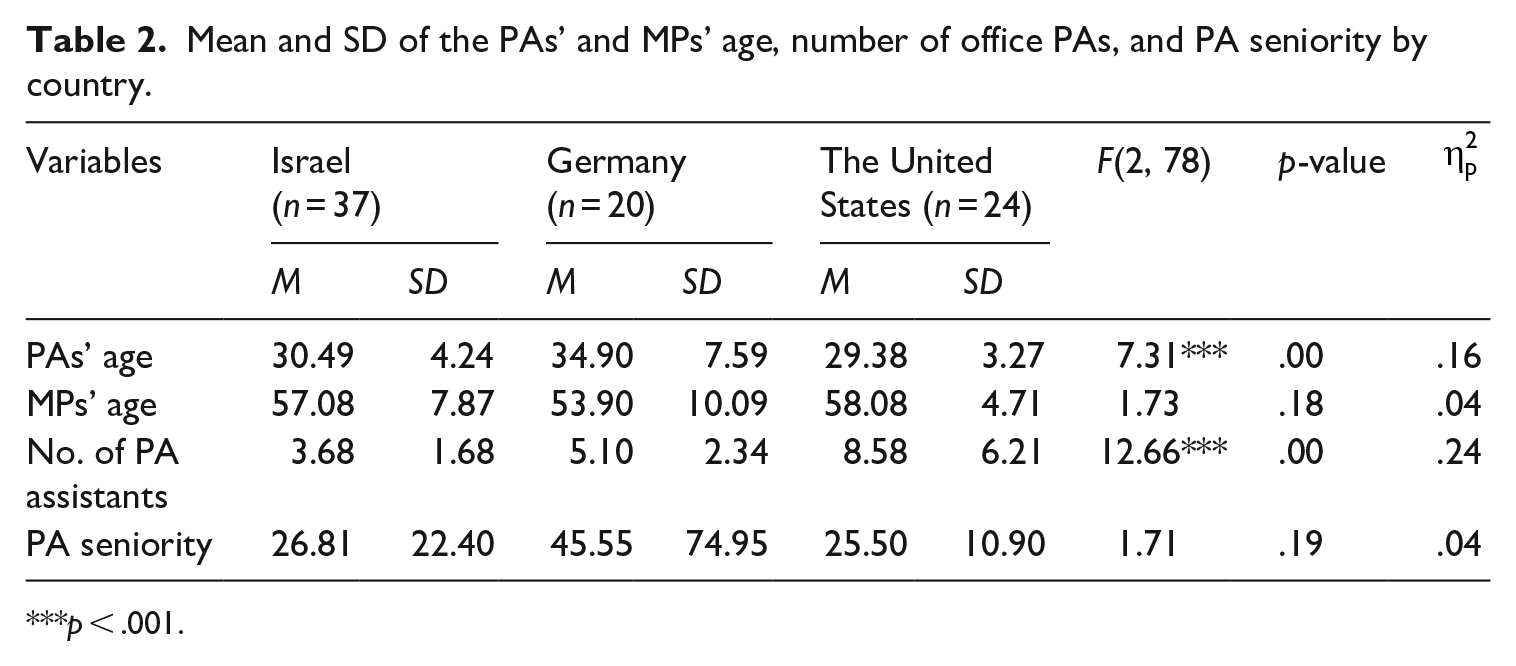
As Table 1 shows, significant differences in the distribution of political stance were found between the three countries, χ2(4) = 14.08, p < .01. No significant differences were found in the distribution of socio-economic ideology, or PAs’ and MPs’ gender, χ2(4) = 3.30, p = .51, χ2(2) = .74, p = .69, and χ2(2) = .63, p = .73, respectively. Furthermore, the PAs were questioned about their age, MPs’ age, number of office assistants, and personal seniority. For these four variables, one-way analyses of variance (ANOVAs) were conducted (see Table 2).
Mean and SD of the PAs’ and MPs’ age, number of office PAs, and PA seniority by country.
p < .001.
As Table 2 illustrates, significant differences were found between the three countries regarding the participants’ age and number of assistants, F(2, 78) = 7.31, p < .001,
Due to the small sample size in each country, in order to examine whether the dependent variable SNS Level of Engagement is normally distributed, we conducted a Shapiro–Wilk test. 5 The results indicated that the dependent variables in each country are normally distributed (p > .05). Furthermore, in order to examine the homoscedasticity of the variances, we conducted Levene’s test on the dependent variable that indicated equal variances between the three countries for the dependent variable. Therefore, parametric analyses were conducted in order to examine our hypotheses. Regarding some variables, we do not know for certain how well these respondents represented the population of all parliamentarians in their respective countries, as the questionnaire was answered anonymously. Nevertheless, as noted above (see Note 4), we were able to elicit a few demographic details: socio-economic ideology, political stance (national security etc), and the gender of PAs and MPs. These were found to be quite representative of their country’s respective parliamentarians.
Findings
Cluster categorization
The level of engagement index in the questionnaire was disaggregated by k-means cluster analysis into four categories. As noted above, five tables were compiled to understand whether the three countries’ different findings are related to their respective electoral system.
The distribution of the model in the United States (Figure 2) shows that one-quarter of MPs are uninvolved, with around one-third of the MPs showing a high level of engagement. In Israel, there are somewhat more uninvolved MPs—almost one-third. This is a relatively high number of legislators who leave the entire operation of SNS to their PAs. However, almost half of Israeli MPs have high levels of engagement, that is, aware of and involved in their SNS activity. When comparing the United States to Israel, the MPs in each country are more or less similarly divided among the four types. This means that extremely different and polarized electoral systems or representation do not lead to different levels of involvement among MPs, at least in those two countries.
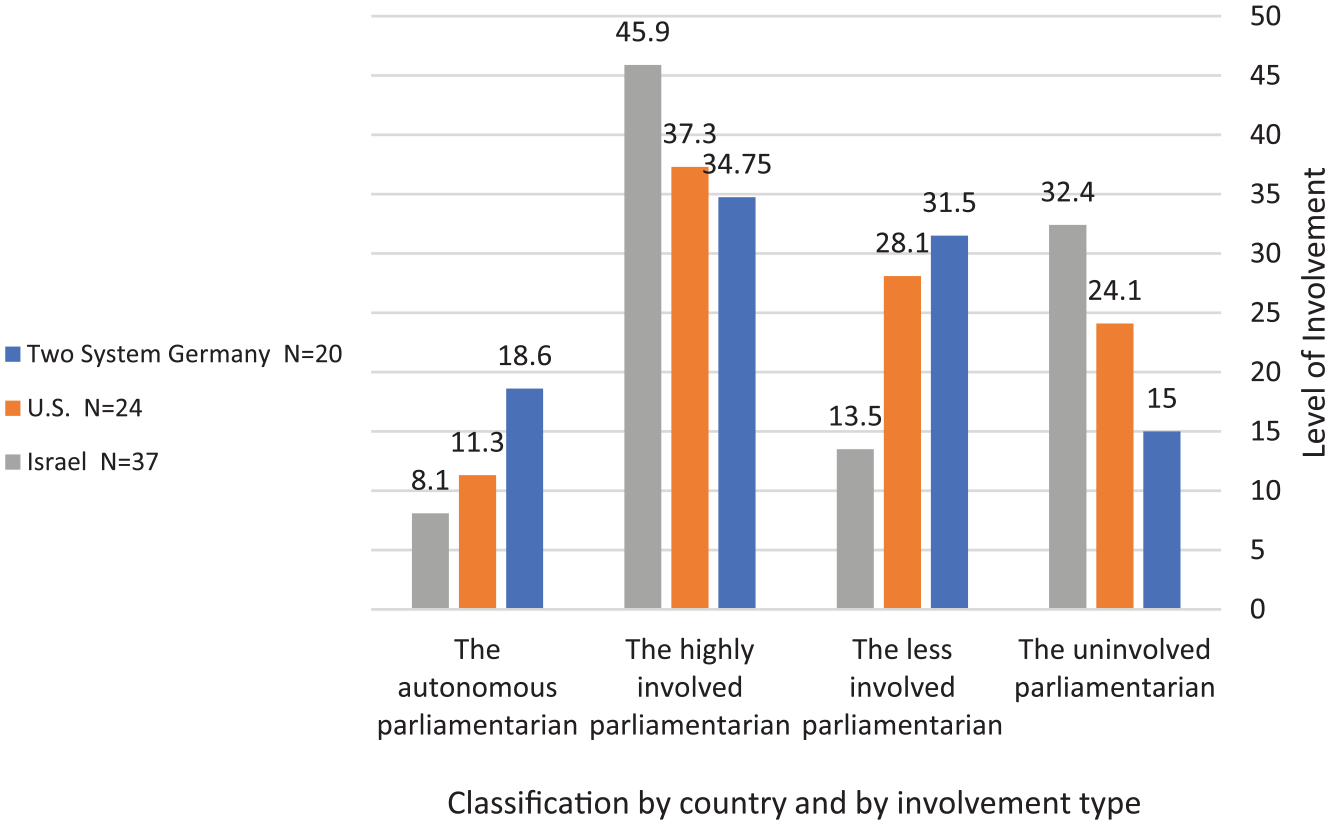
The United States, Israel, and “Two System” Germany: level of involvement (%).
However, a comparison between German MPs elected proportionally in regional elections and those elected directly in districts (Figure 3) does show that the latter were more involved in the operation of SNS and more committed to the connection with their districts’ public. Only 11% of those MPs elected in local districts were not involved at all, compared to 18% of those elected through German party lists. The percentages of “SNS-autonomous” MPs and those who were “highly involved” were also higher among the German MPs elected in local district elections.
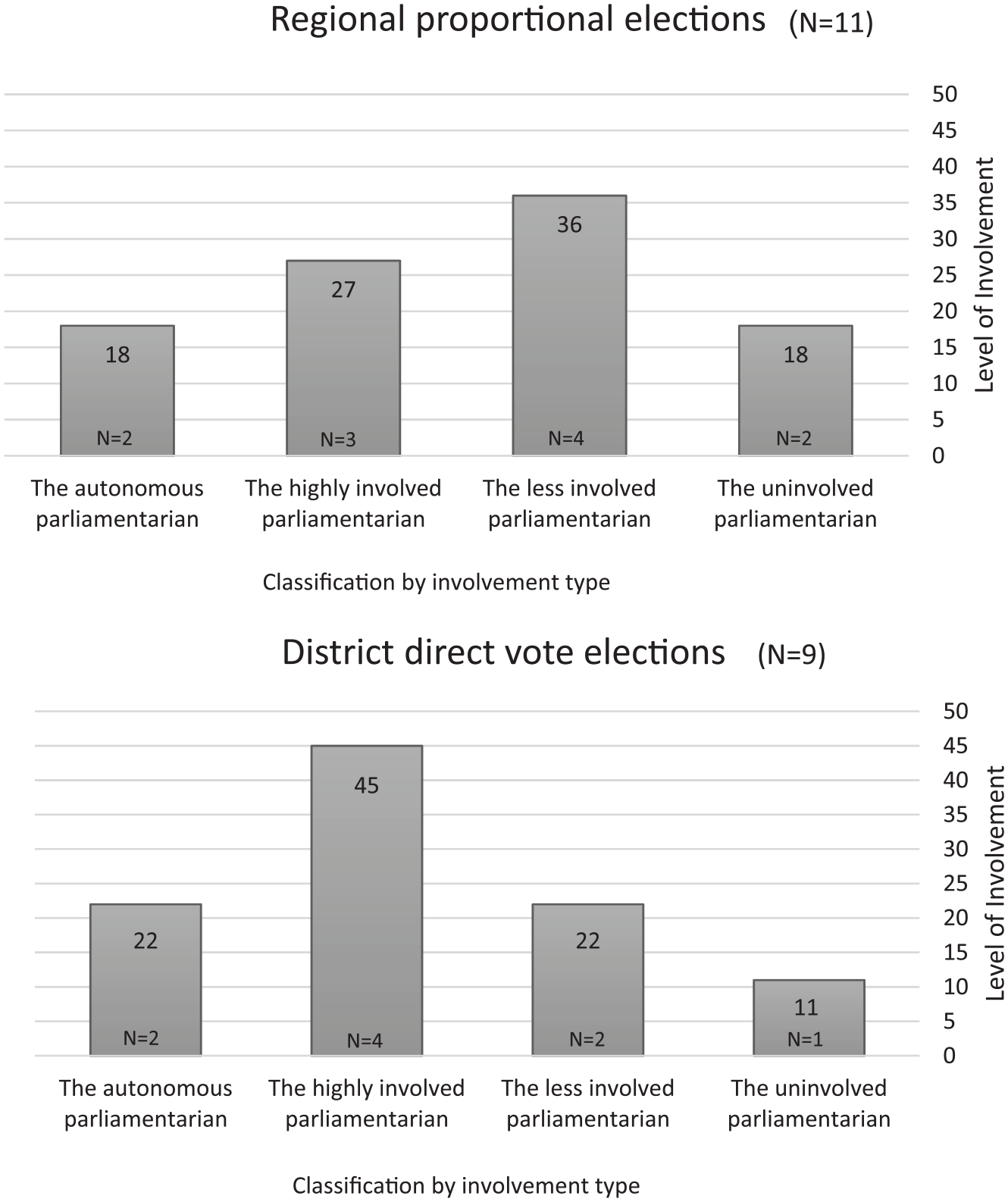
Germany’s level of engagement (regional vs district) (%).
In the general sample (Figure 4), it is possible to see an almost equal division of the MPs in all three countries between the model’s four categories. This can be interpreted in two ways: there is no overall connection between election system and MP involvement in SNS, or there might be an intervening (or complementary) cultural variable that brings out any such connection, a point to be developed in the “Discussion” section below.
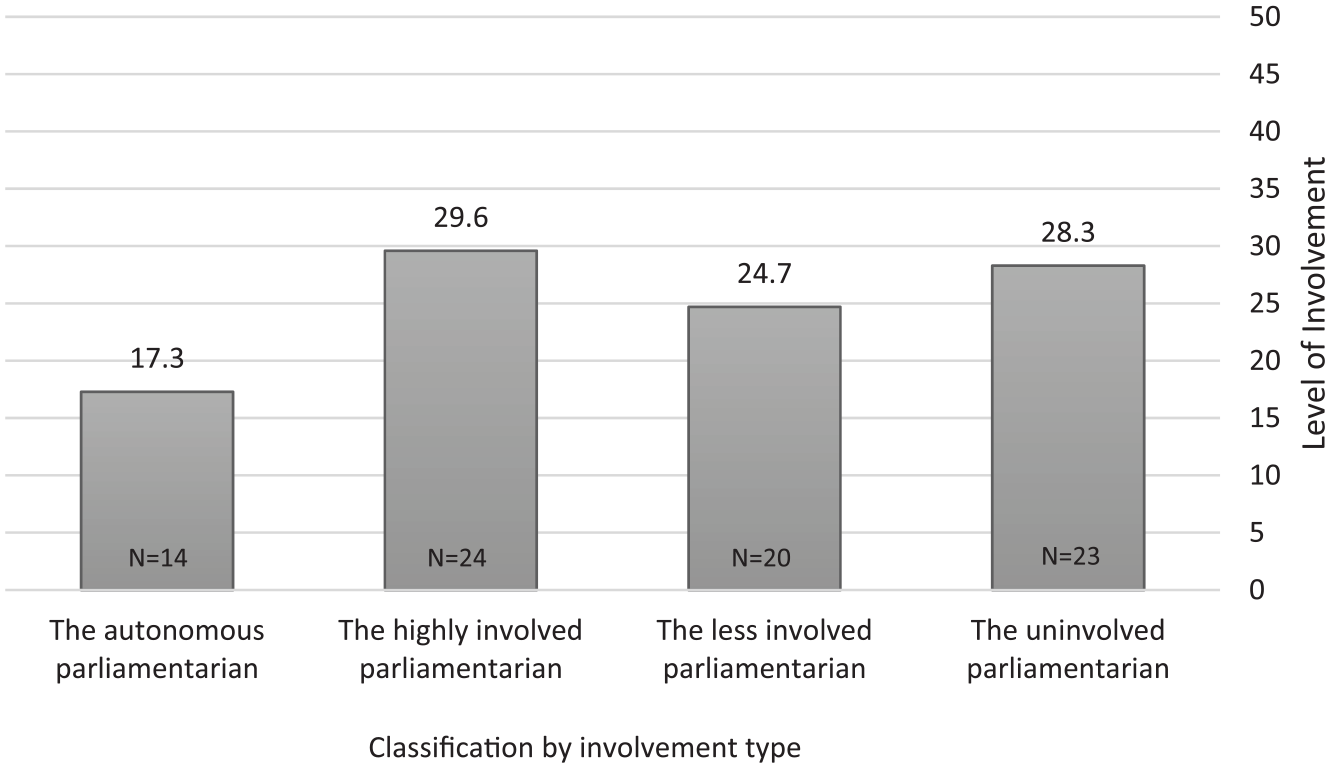
Level of engagement—entire sample (%) (N = 81).
To sum up the first two research question findings, no significant difference was found between the three countries regarding MP/PA social media activity patterns (RQ1); however, there is some evidence that a correlation exists between the type of parliamentary, electoral system, and the level of engagement of the MPs and their PAs (RQ2).
Correlations between the three aspects of the PA questionnaire
In order to examine whether the three aspects of the PA questionnaire (level of engagement, level of trust, and delegation of authority) are correlated with each other, Pearson’s correlation analyses were conducted within the entire sample and for each country separately (see Table 3).
Pearson’s correlation coefficients of the three aspects of the PA questionnaire.
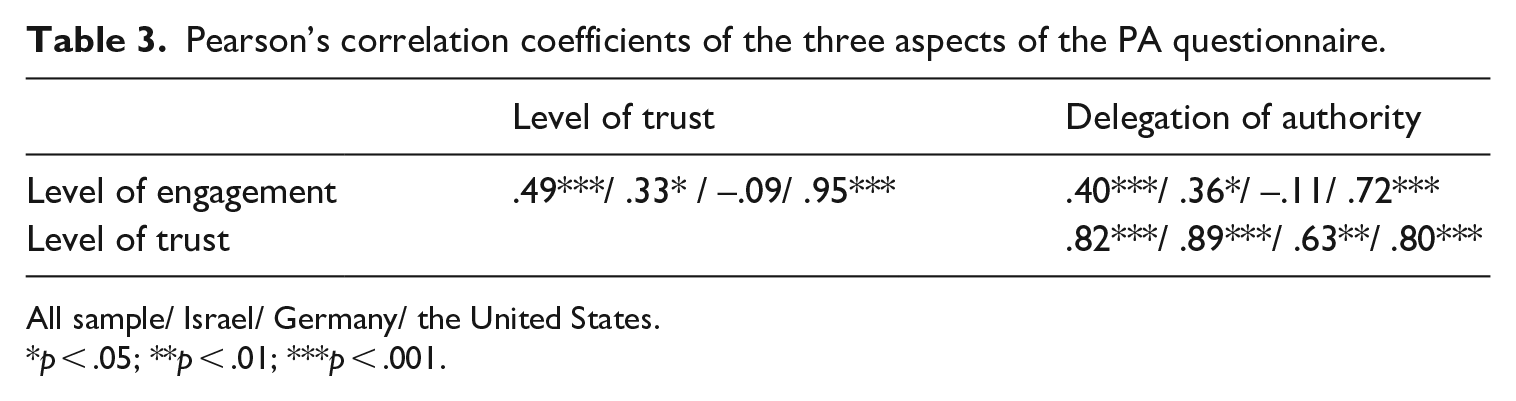
All sample/ Israel/ Germany/ the United States.
p < .05; **p < .01; ***p < .001.
As Table 3 shows, the three aspects are significantly correlated with each other among the whole sample and also among the respondents from Israel and the United States. Regarding Germany, a significant correlation was found between the levels of trust and of delegation of authority, r(18) = .63, p < .01. No significant correlations were found between the level of engagement and the two other aspects: r(18) = −.09, p = .70 for the level of trust and r(18) = −.11, p = .66 for the level of delegation of authority.
Differences between the three countries in level of engagement, trust, and delegation of authority
In order to examine whether there exist differences between the three countries in the level of engagement, trust, and delegation of authority, one-way multivariate analysis of variance (MANOVA) was conducted. The independent variable was the country of the participants. The dependent variables were the three aspects of the PA questionnaire. The results indicated significant differences between the three countries in different aspects of the questionnaire, F(6, 150) = 10.37, p < .001,
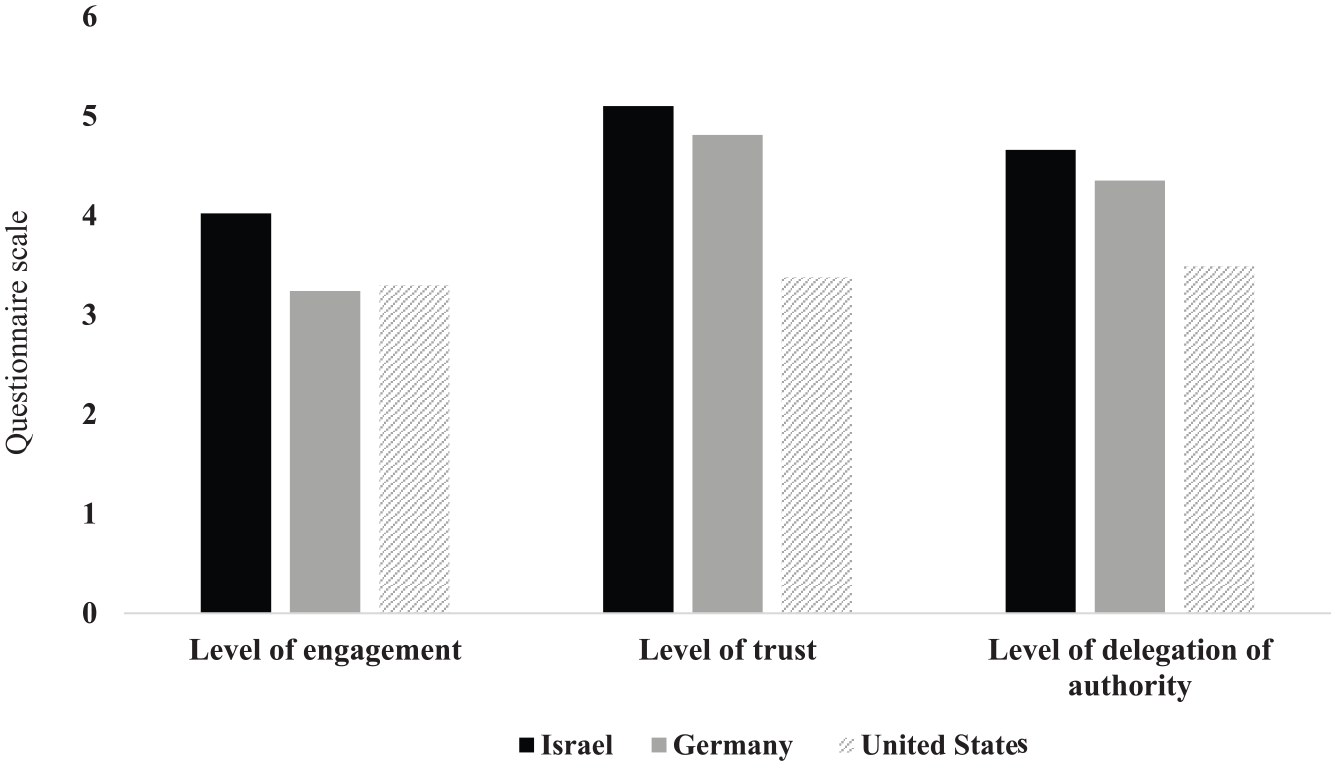
Level of engagement, trust, and delegation of authority—by country (N = 81).
Scheffe’s post hoc analyses indicated that the level of the three aspects was significantly higher among Israeli PAs than PAs from the United States (p < .05). Moreover, while the level of engagement was significantly higher among Israeli PAs compared to (whole sample of) German PAs (p < .05), 6 no significant differences were found between Israel and Germany regarding level of trust and level of delegation of authority (p = .51 and p = .47, respectively).
Contribution of demographic characteristics, level of trust, and level of delegation of authority on the level of engagement
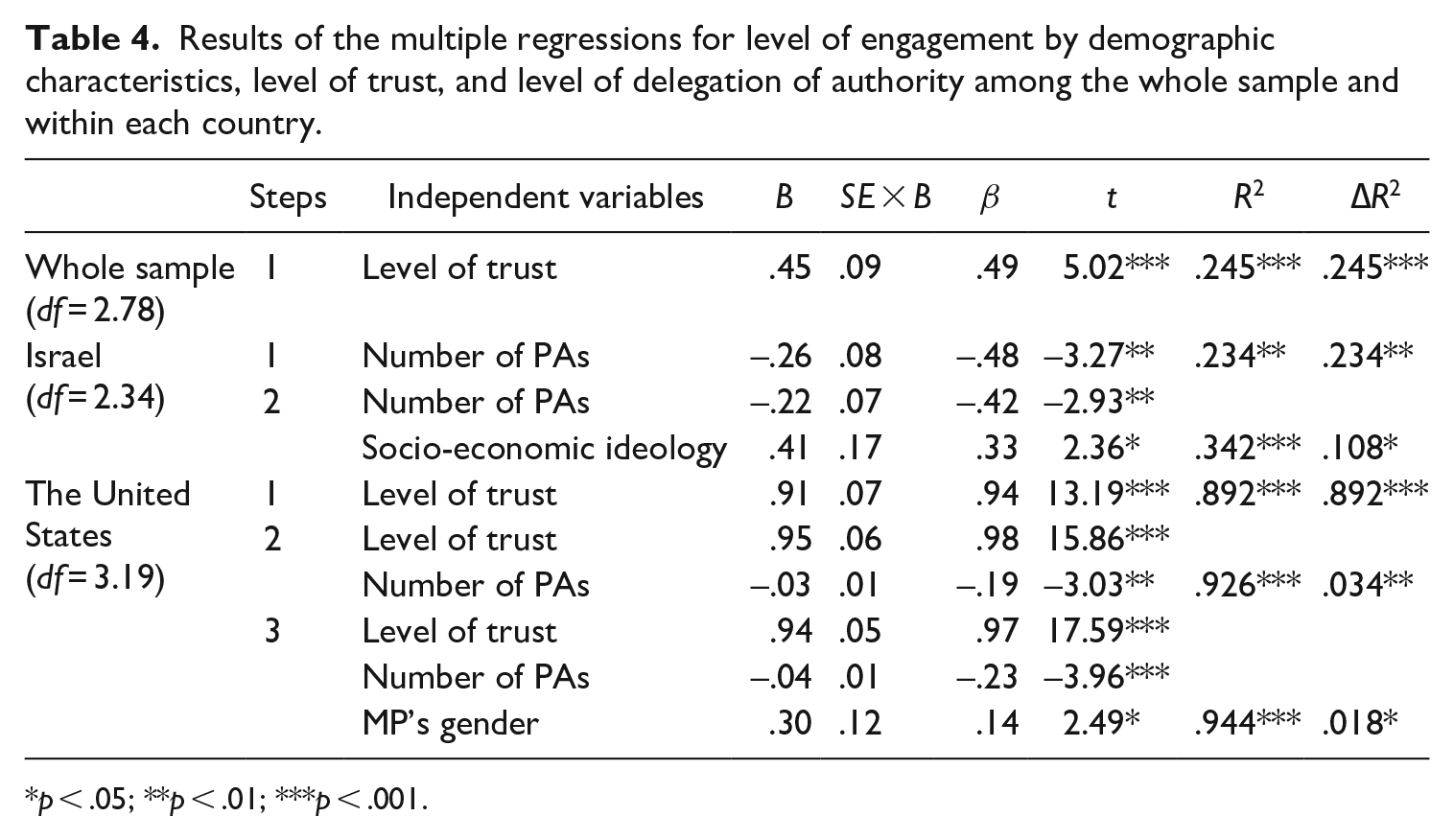
In order to examine the contribution of demographic characteristics, level of trust, and level of delegation of authority on the level of engagement, four multiple regression analyses were conducted: one for the entire sample and one for each of the three countries. The independent variables were socio-economic position, political position, PAs’ gender, MPs’ gender, PAs’ age, MPs’ age, number of office assistants, and PA seniority—along with two aspects of the PA questionnaire: level of trust and level of delegation of authority. The dependent variable was the level of engagement. The independent variables were entered into the regression model in step-wise manner; only variables that displayed a significant contribution were entered into the regression model, entered in the order of their statistical significance.
The results of regression analyses indicated that the level of trust contributed 24.5% to the explained variance (EPV) of the level of engagement in the whole aggregated sample. The positive β coefficient indicated that as the level trust increases, the level of PA engagement increases.
Israel
The results of the regression analysis indicated that the number of assistants contributed 23.4% to the EPV of the level of engagement. The negative β coefficient indicated that as the number of PAs decreases, their level of engagement increases (therefore, the level of MP engagement decreases). Socio-economic ideology was entered into the regression model in the second step and contributed 10.8%, beyond the number of PAs. The positive β coefficient indicated that as the socio-economic ideology tends more to social welfare, the level of PA engagement increases.
The United States
The level of trust contributed a huge 89.2% to the EPV of the level of engagement. That variable was virtually the only one to affect the level of engagement. The positive β coefficient indicated that as the level of trust between the MP and his PA increases, the level of the PA’s engagement increases (with the level of MP engagement decreasing). The number of office PAs contributed a mere 3.4% to the EPV of the level of engagement, beyond level of trust in the second step. The negative β coefficient means that as the number of office PAs decreases, the level of PA engagement increases. It bears repeating that MPs in the United States had almost six more assistants on average than in Israel and Germany that were very similar regarding this variable. Finally, the MPs’ gender was entered into the regression model in the third step and contributed 1.8% beyond the level of trust and the number of PAs. The positive β coefficient indicated that the level of engagement was higher for female MPs. No variables entered the regression model for the German respondents (Table 3).
In sum, the RQ3 findings show that only a few variables are correlated with the levels of MP/PA Facebook engagement and/or the extent of delegation of authority to the PA by the MP: mostly level of trust and, to a limited extent, the number of PAs for each MP. However, it bears repeating that no correlations were found in the German sample (and only Israel exhibited “ideology” as having a low level of influence) so that clearly no generalized conclusion can be made at this exploratory stage of the research. This is in part due to the fact that although the responding sample was larger than reported here, a significant number of the respondents had to be removed because they did not answer all the questions—a necessary condition for performing multivariate regressions (see Table 4).
Results of the multiple regressions for level of engagement by demographic characteristics, level of trust, and level of delegation of authority among the whole sample and within each country.
p < .05; **p < .01; ***p < .001.
Discussion
This study examined the patterns of interaction between US, Israeli, and Germany’s MPs and the public on SNS, from the completely autonomous MP on one hand to the absence of MP involvement on the other hand. The division of MPs’ SNS activity into four categories shows that contrary to prior research expectations and findings (Coleman, 2005; Coleman and Blumler, 2009; Jackson and Lilleker, 2014), new media are not necessarily a tool used for direct communication between MPs and the public; indeed, a relatively high percentage of MPs do not even participate in writing or producing content.
This supports previous studies of Magin et al. (2017) who claimed that although German and Austrian parties’ campaign managers declared Facebook to be the most important Web 2.0 campaigning tool, they did not make use of Facebook interactively. Klinger (2013) argued that while political parties appreciate the dialogue potential of social media, they mainly use it as a channel through which one can spread information and electoral propaganda. Ross et al. (2015) showed in their study that most politicians do not conduct any dialogue with readers of their own posts and rarely comment on them. They mostly use Facebook as a way of broadcasting information rather than a medium enabling a two-way flow. In short, political actors do not really use social media for interaction with the citizenry.
When turning to the electoral systems in these countries, we found some unexpected contradictions. First, Israel’s PAs are more involved than those of the US, even though Israel constitutes one electoral region, whereas far fewer US voters elect individual candidates from local districts (the House) and in many cases fewer voters (than in Israel as one national district) also elect the two Senators from many states.
However, when comparing local district, direct-vote elections in Germany to the proportional, party-list system in the regional (Länder) elections, the level of MP involvement for German district elections, as expected, was higher, and the level of PA involvement was lower. Conversely, regional election MPs were less concerned about what was happening in the SNS, leaving more responsibility to their PAs in this regard. Thus, the Israeli and American findings stood in contradistinction to the German case.
How can such contradictory, cross-comparative findings be explained? One possible answer—necessitating a far more in-depth, qualitative analysis—entails the polar philosophies of political representation (Dovi, 2018). On one side is the Burkean approach, whereby MPs act as “trustees” for their constituents, making independent political decisions based on their own intuition and life experience—connecting/communicating with the voters only during elections as a plebiscite on the job they performed during their tenure. On the other pole lies an “agency” approach, whereby the MP is merely an “agent” of the public, returning to that public again and again during the term in office for their guidance (public opinion) as to how to proceed regarding legislation or policymaking. Thus, it could be that MPs holding a Burkean, “trustee” approach to representation—or an entire country’s political culture in this regard—leads to a low level of MP activity on SNS specifically, and in all other forms of political communication in general. Conversely, a culturally oriented philosophy of “agency representation” would lead to higher MP engagement due to the felt need to understand what the public wishes/demands on specific major pieces of legislation or policymaking. 7
Given the speculative nature of the above explanation, additional variables were examined in each country in order to discern the most influential factor in the MPs’ levels of engagement. In Israel, the number of PAs was the most significant variable: more office PAs led to lower MP involvement in SNS. This is logical: MPs were able to delegate more responsibility to their PAs when more manpower was at their disposal. However, another complementary factor might be at work here. As noted earlier, committee chairpersons received an extra PA, and government ministers even more. Thus, it is not necessarily the higher number of PAs that might be determining low MP involvement in SNS communication, but rather the heightened political responsibility and greater work load of the MP that do not leave much time for SNS activity.
Complicating the issue is another distinct factor: population per MP. In the United States, the country with on average the highest population per MP (compared to Israel and Germany), this was not the main influential variable—perhaps because of the large number of PAs per office in America. These countervailing elements render it difficult to assess the impact (if any) when looking at the US case alone regarding the influence (on low MP/high PA engagement) of average number of office PAs versus population per MP. However, the picture does become somewhat clearer when comparing the US findings with those from Germany. The number of citizens represented in each district—the greater the district’s population, the heavier the SNS workload—can explain (at least in part) the disparity between higher MP involvement among the 299 Bundestag district MPs (on average 275,000 citizens per district in a country of 82.5 million people) and lower involvement among the 435 MPs in the House of Representatives (759,000 citizens per district; 330 million people).
Population per district is an exogenous variable. As shown earlier, an endogenous variable as well turned out to significantly influence PA involvement in American parliamentary SNS activity: the higher the level of trust between the MP and PA, the higher the level of PA involvement in SNS communication with the public. As trust is a psycho-cultural variable, it would be useful to undertake a follow-up study consisting of interviews with PAs and their MPs in order to (1) elicit more information regarding the MP/PA processes and interactions taking place within the MP’s office leading to heightened trust; (2) determine whether such trust in the PA is general or task-specific, that is, in our case, is it only for SNS activity or all other functions that the PA carries out; and (3) analyze the MP and PA perception of how influential is mutual trust (as opposed to other interpersonal factors) between them insofar as SNS delegation is concerned. For now, this finding is quite logical: the more an MP trusts the PA, the more likely it is that the MP would delegate greater autonomy to that PA, as the way the PAs perceive the MPs’ level of confidence in them is also very significant.
However, for Germany, no endogenous variable (among demographics, trust, and delegation of authority) was found to be seriously influential (Table 3). This might be due to the fact (as just noted) that the levels of MP involvement differed in the two German election system groups, canceling each other out when aggregated. From this, one can posit that an important variable influencing the level of German MP involvement was the electoral system itself as can be seen (Figure 4) from the much higher percentage of district MPs who were SNS involved (66.7% of the two high involvement categories together) compared to their party-list compatriot MPs (40%).
This does not negate the possibility that political-culture/representational-philosophy (the incommensurable variable mentioned earlier) might be at work as well. Such a variable does not replace the type of election system as a factor but rather complements it. This can be seen when comparing the same type of direct election, district system found in two countries with different democratic political cultures (Figure 4 vs Figure 2); the district MPs in Germany have far higher engagement (66.7% for the top two categories) than in the United States (48.6%). What would such a “cultural difference” entail? There are several possibilities: the voters’ expectation regarding communication with and from their MP; the respective population’s overall use of SNS for general social and/or specifically political purposes; or as noted above, where the country falls on the MP “agency” versus “trustee” representational philosophy spectrum.
Finally, an interesting, potentially relevant variable regarding MP SNS engagement was raised recently by Hong et al. (2019): whether the MP belongs to the governing coalition or the opposition. Their finding: as coalition MPs tend to receive greater coverage in traditional media, given that they are more involved in initiating and passing legislation (and perhaps also hold more “mainstream” viewpoints), opposition MPs turn more widely and intensively to SNS media in order to have their voices heard. Notwithstanding this, however, a previous study of ours (Lev-On et al., 2017) found that there is no correlation between frequency of SNS activity in an (Israeli) parliamentary office and the proportional distribution of such posting between the MPs and their PAs.
Conclusion
Beyond the specifics of PA SNS involvement variables, this study highlights the PA intermediation layer as a significant and important political actor that has received little prior research attention—an actor who often performs communicative actions exclusively with the public. The absence of real MP SNS engagement or even content supervision entails a significant loss in what can be defined as “knowing the audience,” many of whom, after all, are supporters of that specific MP or at the least are general voters. Even if the PA steadily transmits information to the MP about Facebook page discourse, qualitatively this is not the same as actual MP presence or, at the least, ongoing supervision of the contents—something found lacking in close to one-quarter of all MPs from all three countries in this study.
Regarding RH1, the electoral method clearly does affect the level of MP involvement, with a higher sense of commitment to smaller and more familiar audiences. This difference was particularly reflected in the German, dual electoral systems. In other words, parliamentarians can improve their level of communication and discourse with the public, but choose to do so based on the potential profit or harm, and not due to a genuine desire to know the voters and their wishes.
Apart from the election method, other variables were found to be significant: in the United States, the level of trust was found to be the most significant variable in MPs involvement; in Israel, the number of PAs and also the MPs’ socio-economic ideology; in Germany, however, there was no other predictive variable. All these might indicate varying elements in each country. For example, in order for an MP in the United States to “hand the reins” to the PA, there is a primary need for trust between them, whereas in Israel, the motive for delegation is more logistical. Further research could fruitfully examine how the characteristics of all three governmental systems as well as public opinion are related to the strength of these variables.
The multiplicity of responses on SNS makes it hard for the PA to transmit to the MP the full panoply of informational content on the SNS pages. Some exposure (even incomplete) to such public feedback would provide the MP with a fuller picture regarding supporters’ and opponents’ thoughts specifically and those of the wider citizenry in general. In the absence of true direct communication, we are left with a “chicken and egg” situation: the more the MP’s direct Facebook communication with the public deepens, the more the MP becomes familiar with the public’s feelings and desires, thereby enabling the MP to act more representatively in parliamentary activity. This in turn would lead to greater legitimacy in the public’s eyes for PA-initiated SNS posts and responses, based on an understanding and appreciation of the MKs’ hard legislative workload—itself a function of greater MP familiarity with the general voters’ or political supporters’ demands and feelings as posted on the MP’s SNS pages. At present, the situation is the reverse: a downward spiral of the MP’s low-level SNS engagement leading to greater public distrust, and so on.
Furthermore, the complex execution of this study, with all its obstacles and logistical difficulties, is at one with a negative trend regarding use of SNS use in parliamentary politics. In the course of the research, and especially in the process of contacting members of the US House of Representatives, we discovered how inherently difficult was the possibility of contact with MPs. Beyond this study’s specific findings, and the fact that most of the interaction had to be conducted with the PAs and not with the MPs, we were surprised to see that even online platforms enabling any connection with the parliamentarian, such as personal messages on Facebook, were neglected or nonexistent. Most House of Representatives members and about half of Knesset and Bundestag representatives used the Facebook feature disabling personal messages from the public. In addition to responding to an MP post (usually several posts a day), there were few other options for the public to respond/communicate/contact. This is a regression to the earliest years of online politics (Web 1.0), when not much more existed than “bulletin boards” providing only information without interactive capabilities.
Indeed, in one sense, the situation might even be worse. Every day, on a variety of platforms, we perceive MPs to be writing posts and reactions. The public thus comes to falsely believe that unlike with the traditional media, online we really are “hearing” our MPs’ authentic voices and somehow also communicating directly with them—when actually they are hiding their lack of involvement and interest through heavy use of PA involvement in their office’s SNS activity.
Such a distorted perception and lack of real interactivity could be one among several underlying factors for what Castells (2018) recently called the historic rupture of the institutional relationship between the governing and the governed. Instead of traditional, “vertical” political communication between governor and governed, we are now in the throes of a revolutionary transition to horizontal (peer-to-peer) political discourse within that same SNS world in which involved citizens use mutual communication, deliberation, and (occasionally) cooperative decision-making to resolve problems or at the least carry on significant political debate. In such a new political environment, it behooves elected representatives to themselves be more heavily involved in such “horizontal” discourse—and not rely so much on their PAs to enter the fray.
Beyond the methodological limitations mentioned earlier, one final caveat (albeit not strictly a “limitation”) can be offered. Each of the three countries in this study have different political cultures, in part a function of their democratic system’s seniority (the United States far longer than Germany and Israel) and perhaps also a matter of national socio-psychology (as a rough generalization: Israel more improvisational, Germany and the United States working by the book; Germany highly law-abiding, Israel far less so, the United States historically somewhere in the middle). Thus, in order to ascertain whether “political culture” (broadly defined) constitutes a factor in MP social media communication, as well as designating authority to the PA, future studies on this issue should widen the scope of political culture to include countries with similar (and also diverse) political backgrounds.
In conclusion, this study is merely a first step toward understanding the actual intermediating function of PAs regarding political communication between MPs and the public, and what influences the level of such PA activity. Future studies can carry this forward in several directions.
First, are the same patterns of PA intermediation found on other SNS such as Twitter and Instagram, each of which has different communication dynamics? Second, to what extent might the MP/PA division of work vis-a-vis legacy media differ from their SNS activity, assuming MPs’ greater familiarity with radio, TV, and newspapers? Third, given the growing importance of SNS communication, has PA training (or recruitment selection) improved lately in this regard? Fourth, in an age where an increasing number of media professionals (journalists and other types of media “celebrity”) jump into politics, to what extent does MPs’ prior, professional media experience influence their own level of SNS activity and/or delegation of SNS authority to their PAs? Fifth, continuing the line of inquiry regarding “direct” elections, does the need to first be (s)elected in internal party primaries affect the level of those MPs’ SNS involvement when becoming an MP? Sixth, several speculative explanations have been offered in this study (e.g. representation philosophy); to what extent are they valid as variables with real influence on MP/PA level of SNS engagement? Seventh and finally, this study’s findings are based on one country case study each from three different election systems. More such case studies need to be tested to ascertain whether these findings have general applicability.
Footnotes
Funding
The author(s) received no financial support for the research, authorship, and/or publication of this article.
