




Abstract
This article considers how Indigenous peoples in Central Australia share and keep digital records of events and cultural knowledge in a period of rapid technological change. To date, research has focused upon the development of digital archives and platforms that reflect Indigenous epistemologies and incorporation of protocols governing access to information. Yet there is scant research on how individuals with little access to such media share and hold—or not, as the case may be—digital cultural information. After surveying current enabling infrastructures in Central Australia, we examine how materials are held and shared when people do not have easy access to databases and the Internet. We analyze examples of practices of sharing materials to draw out issues that arise in managing storage and circulation of cultural records via Universal Serial Bus (USB) flash drives, mobile phones, and other devices. We consider how the affordances of various platforms support, extend, and/or challenge Indigenous socialities and ontologies.
Keywords
Introduction
This article contributes to the theme of this special issue—“the everyday ways we manage living in a world of digital data”—by exploring the current situation of Indigenous people in Central Australia (Figure 1) who, on one hand, are increasingly concerned about cultural loss, while on the other are confronted with proliferating amounts of digital cultural material, including that collected by researchers and “repatriated” to communities and to the descendants of those recorded (Barwick, 2004; Gibson, 2020). This article presents a granular study of the ways in which a variety of cultural digital media were circulated and stored in various remote Indigenous communities of Central Australia in the period 2015–2018, deriving from a project conducted by the Central Land Council (hereafter CLC or the Council) in partnership with a team, including the Vaarzon-Morel, Barwick and Green. 1 The “everyday ways” adopted for managing digital data in this situation are culturally, geographically, and historically specific and often vary across the diverse communities of the Central Australian region, yet the material requirements and affordances of digital platforms mean that concerns and conundrums arising for those seeking to produce, access, and use digital data may find many echoes worldwide (Barwick et al., 2019b).
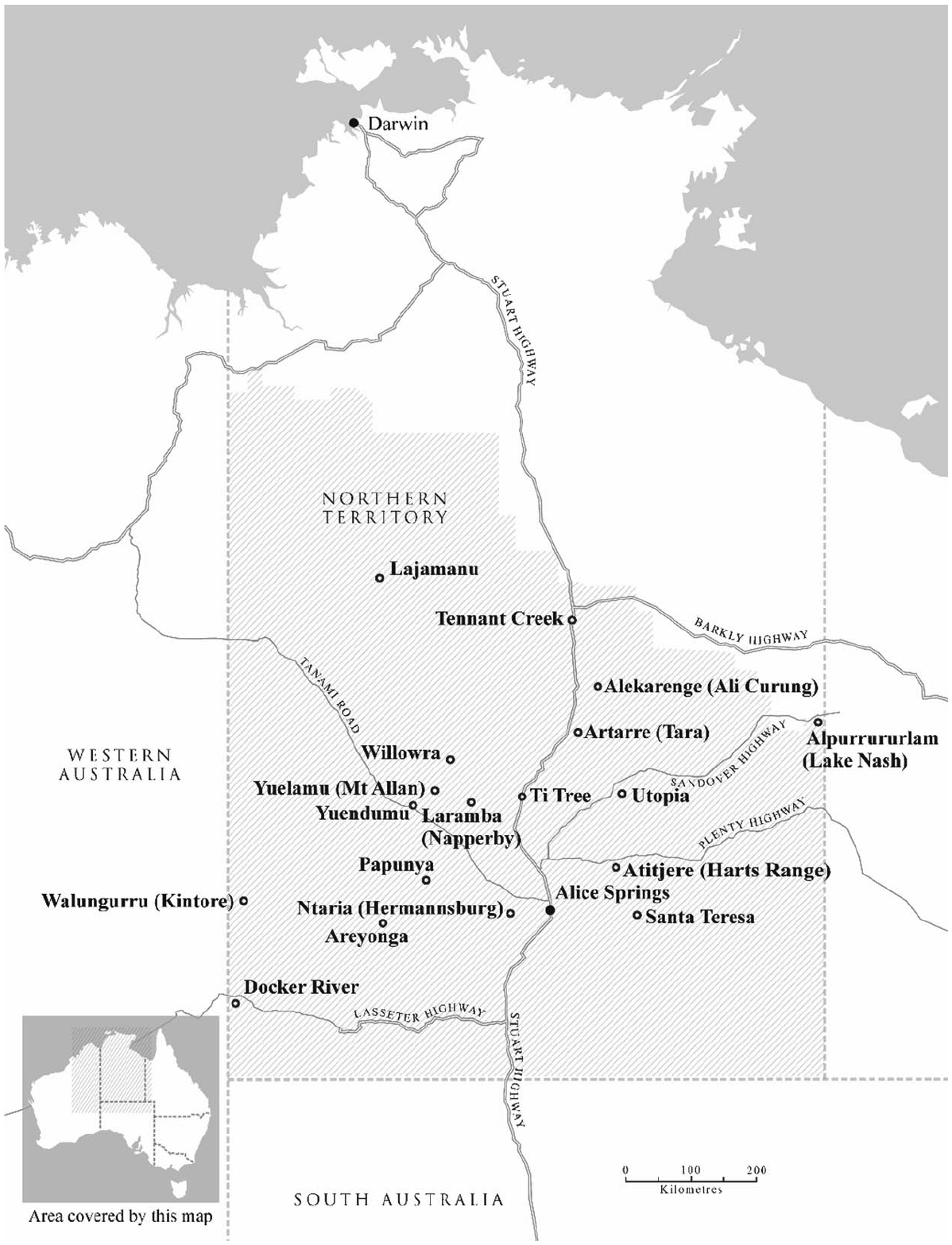
Map showing communities mentioned in this article. The CLC region is shaded (prepared by Jennifer Green).
Feeding into the complex situation we confronted were inequalities of Internet and computer access and use deriving from the “digital divide” that persists across Australia. The historical role of archival cultural media in supporting Indigenous claims to land rights and Native Title under Australian Law; the diversity of archival, personal, and research collections from which the media were derived; and highly developed localized Indigenous ontologies and associated practices of knowledge management are other important factors that add to the mix. One major finding was that, for end users, personal control over disseminated material was highly valued, with storage on personal devices being preferred over cloud-based platforms for day-to-day sharing and storing of digital cultural media, especially culturally sensitive materials.
There is a relative dearth of information about how individuals in remote communities with limited access to online databases and information technology currently access, share, and store—or not, as the case may be—digital cultural information (Gibson, 2020; Haviland, 2016; McGrath, 2010; Myers, 2017). Such information is of keen interest to CLC, as the statutory manager of Aboriginal land in the Central Australian region and as a representative body charged with managing the return to Native Title holders of cultural material produced during the course of the Native Title claim process. A major aim of the project was thus to apply current research on archiving and community access to find practical solutions to managing the large amounts of recorded cultural material of interest to the CLC’s Indigenous constituents. To address these questions, we undertook research with Indigenous people in Central Australia to understand how they currently share and store digital records of events, encounters, and cultural knowledge in today’s rapidly changing technological landscape. The future significance of these materials depends on interrelated factors, including sustainability and appropriate documentation of digital objects, and, most importantly, their accessibility to custodial communities and individuals with legitimate interests in them (Koch, 2008). While our remarks draw on research conducted across Central Australia, we provide some concrete examples of digital media use in a case study from Willowra, a Warlpiri community situated on the Lander River.
Relationship to other initiatives
In recent years, activities concerning sharing cultural media in Central Australia have tended to focus upon the development of complex, culturally appropriate archives and digital platforms, which reflect local Indigenous epistemologies and incorporate protocols that govern access to information. Many communities have customized one of two platforms, both originally developed as a computer database for a specific user community and subsequently generalized to a web platform for use in a number of other Indigenous communities.
The first, Ara Irititja, was originally developed for the Pitjantjatjara Yankunytjatjara Council as a Filemaker Pro database to run on stand-alone mobile hardware that could be used in remote communities with no Internet access. This database was subsequently redeveloped as the web-based Keeping Culture: Community Knowledge Management System (also known as Keeping Culture KMS; keepingculture.com) for “preserving, organising and repatriating digital or digitized media and cultural knowledge” in accordance with cultural protocols. This platform was then licensed to a number of external organizations, including the Northern Territory Library, the State Library of Western Australia, and the CLC (Gibson, 2009; Hughes and Dallwitz, 2007; Thorner, 2010; Thorner and Dallwitz, 2015). The Northern Territory Libraries Community Stories project, in collaboration with Local Government Shires, has provided a number of communities with computers preloaded with the KMS for the purpose of uploading and managing their own cultural materials. 2 While the situation is dynamic, at the time of writing 14 remote communities and three Alice Springs Town Camps 3 had KMS installed in community computer rooms, libraries, or other Internet-enabled sites such as schools, all supported by the Central Australian Youth Link-Up Service (CAYLUS) and partner organizations, which also support computer rooms in other communities without access to the KMS system (https://caylus.org.au/computerrooms). The CLC’s online KMS is managed by CLC staff but hosted on the Keeping Cultures server. 4
The second widely adopted initiative, the Mukurtu Wumpurrarni-kari database, was originally developed by Kimberly Christen and Craig Dietrich in 2007 in response to the need for Warumungu people in the Tennant Creek region to store and circulate cultural materials (Christen, 2011, 2015). Designed as a stand-alone platform using community protocols to manage access, Mukurtu was originally housed at the Nyinkka Nyunyu Aboriginal Art & Culture Centre. However, it appears that lack of infrastructural support for the Centre prevented it being utilized as intended, so it was subsequently transferred to a web-based content management system at http://mukurtu.org/. The Mukurtu cloud platform has been adopted both nationally and internationally, mainly in North America (Christen, 2015, 2019).
Both initiatives have contributed to discourse about “participatory” archives, in which users play a major role in structuring information (Huvila, 2008; Iacovino, 2015). Both have taken place outside institutional archive structures, constituting what might be called “autonomous” archives (Moore and Pell, 2010) with an explicit “decolonising” intent (O’Neal, 2015; Smith, 2013) and as part of a project for “sustaining cultural identities” (Featherstone, 2006: 594). Nevertheless, some of the heterogeneous content they aggregate, disseminate, and interpret derives from government archives such as the collection of the Australian Institute of Aboriginal and Torres Strait Islander Studies (AIATSIS). By typically operating outside government structures, such initiatives face challenges in ongoing funding and governance, and may thus struggle to incorporate archival management functions such as digital preservation and assurance of long-term governance and planning (Allard and Ferris, 2015). On the contrary, questions of the extent to which database infrastructures are amenable to align with local Indigenous ontologies and social systems for knowledge management have been raised (Christie, 2005; Povinelli, 2011; Van Gelderen and Guthadjaka, 2017; Verran and Christie, 2014).
Other prominent examples of autonomous Indigenous collections in Australia include the Mulka Project hosted by the Buku Larrngay Art Centre in northeast Arnhem Land (discussed, alongside other initiatives, in Ormond-Parker and Sloggett, 2012). These operate alongside a host of other local solutions established in remote communities to share ad hoc hybrid digital collections, hosted by community infrastructure typically provided by schools, art centers, and language centers. Community reuse of material originating from archival collections often includes education, revival or relearning of ceremony, and development of new hybrid artworks (Brown et al., 2019; Deger, 2017; Kral, 2014; Treloyn and Emberly, 2013). The Indigenous Remote Communications Association (IRCA, 2014) acts as an umbrella body for organizations hosting some of these collections, and has developed an audiovisual collections plan and a series of guidelines.
While the social media platform Divas Chat 5 is a popular way people in remote communities keep in touch (Rennie et al., 2018; Vaarzon-Morel, 2014), we have observed increasing use of Facebook by individuals and groups to store and circulate material. An example is the Pintubi Luritja Photo Archive. Supported by CAYLUS as part of the Pintubi Luritja Community Stories Project, it contains public photos of people and events. In addition to recent photos, old photos have been uploaded, mostly by non-Indigenous people who once worked and lived in Pintubi Luritja communities and want to share their memories. Visitors are encouraged to make comments and tag photos with names of people and places. The Facebook page also provides a link to the KMS archive, which contains thousands of photos. Yet another strategy for sharing and accessing audio and visual cultural material made by and for Indigenous people is via platforms such as IndigiTube (www.indigitube.com.au/) and ICTVplay’s “Indigenous community videos on demand” service (ictv.com.au).
Indigenous life-worlds in Central Australia
In 2016, the resident population of Central Australia was estimated at 34,459, of which 26,823 people (one-quarter Indigenous) lived in the Alice Springs region. The population of the next largest town, Tennant Creek, was 3000, of which 51% were Indigenous (Australian Bureau of Statistics, 2016). The remainder of the Indigenous population was spread among designated Indigenous “growth towns” such as Yuendumu, Lajamanu, Papunya, and Ali Curung (places with more than 300 people, which are prioritized for infrastructure development) and smaller, highly dispersed, settlements and outstations, with fewer than 100 people (Rennie et al., 2015). In these communities, the Indigenous population is proportionally much higher.
Everyday life for many Indigenous people in Central Australia differs in fundamental ways from that of people living in urban Western environments. Following colonization of their lands in the late 19th and 20th centuries, Indigenous people were forced to abandon their hunter-gatherer way of living to adopt a more sedentary life in missions, government-administered settlements, and on cattle stations. While the shift entailed dramatic economic change, people maintained their cultural beliefs and practices, the foundation of which is the cosmological system referred to in English as the “Dreaming.”
In many parts of Central Australia, land and associated ceremonial knowledge is inherited through a system of patrilineal descent and collectively held by senior members of clan groups or “owners.” According to this system, children of female members of the descent group act in the role of ritual “managers” for the owners. Their responsibilities include ensuring the correct observance of cultural protocols when visiting sites, managing ceremonial performances, and assisting “owners” with cultural knowledge and heritage matters. Managing return of historical records of cultural knowledge, in whatever format, thus requires input from a range of different people who furthermore may be living in quite widely dispersed geographical areas.
Despite significant commonalities, Indigenous groups in Central Australia are far from homogeneous. In addition to language and culture, historical factors including peoples’ experiences of colonization and access to resources and infrastructure (tangible and intangible) mean that there can be substantial differences between life-worlds and between communities. The past few decades have seen profound transformations in people’s daily lives, including the introduction of new communication media and digital technologies (see Ginsburg, 2008; Hinkson, 2002; Kral, 2012; Vaarzon-Morel, 2014). While it can be argued that lack of access to digital technologies is contributing to continuing disadvantage and social exclusion of Indigenous people within broader Australia (InfoXchange and Kearney, 2009), there is also much at stake culturally as people’s lives become increasingly entangled with settler colonial society (Carew et al., 2015; Gibson, 2020). Although there is variation across communities, factors such as the passing of elders who possessed an intimate knowledge of the cosmological landscape, the cessation of certain ceremonies, State interventions (Altman and Hinkson, 2010), and modernity are limiting opportunities and changing the forms and contexts through which cultural knowledge is embodied and transmitted. Furthermore, there is variation between communities as to the extent to which a relational ontology guides interpersonal engagements.
Developing appropriate frameworks for managing and providing access to large and heterogeneous collections of cultural material in Central Australia, such as that held by the CLC, thus presents significant challenges in identifying the specific stakeholders for multiple descent groups, each of which includes people with diverse socioeconomic and demographic characteristics that may affect their rights and ability to access and use digital cultural materials.
Access to infrastructures
While the existence of a “digital divide” has been noted worldwide between people with ready access to digital infrastructure and those without, the need for more granular studies of digital inequalities has emerged from the recognition that socioeconomic factors and varying levels of skills also shape differential access and use (Geismar and Mohns, 2011; Reisdorf and Groselj, 2017; Van Deursen and Van Dijk, 2019). In Australia, it is in remote locations like Central Australian Indigenous communities that the digital divide is widest (Australian Communications and Media Authority, 2008; Rennie et al., 2015: 14)
According to the 2016 Australian census, Internet connectivity in Indigenous households across the Northern Territory was 55% as compared to 89% in non-Indigenous households, and the lowest in Australia (Australian Bureau of Statistics). 6 The extent of this divide varies greatly across Central Australia (see also Rennie et al., 2015: 23), both within and between the different regions, towns, and settlements, but with consistently greater discrepancies in smaller more remote communities. In 2016, across the Northern Territory, 44 communities had no broadband availability and 30 communities were without mobile telephony services (Australian Bureau of Statistics, 2016). 7 Some communities have mobile telephony, but no mobile data for smartphones. Even in the latter communities, people frequently own smartphones as file storage devices, and for use when they visit larger communities (Vaarzon-Morel, 2014).
In recent years, telecommunication hotspots have been provided in a number of small communities by the Centre for Appropriate Technology (CAT), an Alice Springs-based Aboriginal organization that aims to give Indigenous people in remote areas better access to services. These hotspots allow local people to connect to the Internet using Wi-Fi on their smartphones or tablets. However, the number of people who can connect at any one time and the kind of data they can access is often limited (see Rennie et al., 2015: 149–150). At Yuelamu (Mount Allan), for example, mobile telephony (restricted to calls and text) and low-bandwidth Internet are accessed through a single Wi-Fi hotspot with a restricted range (see Figure 2). The low-capacity Internet means it is difficult or impossible to access social media, use third-party software applications, or otherwise download or email images, making it impractical to use for managing digital cultural material.
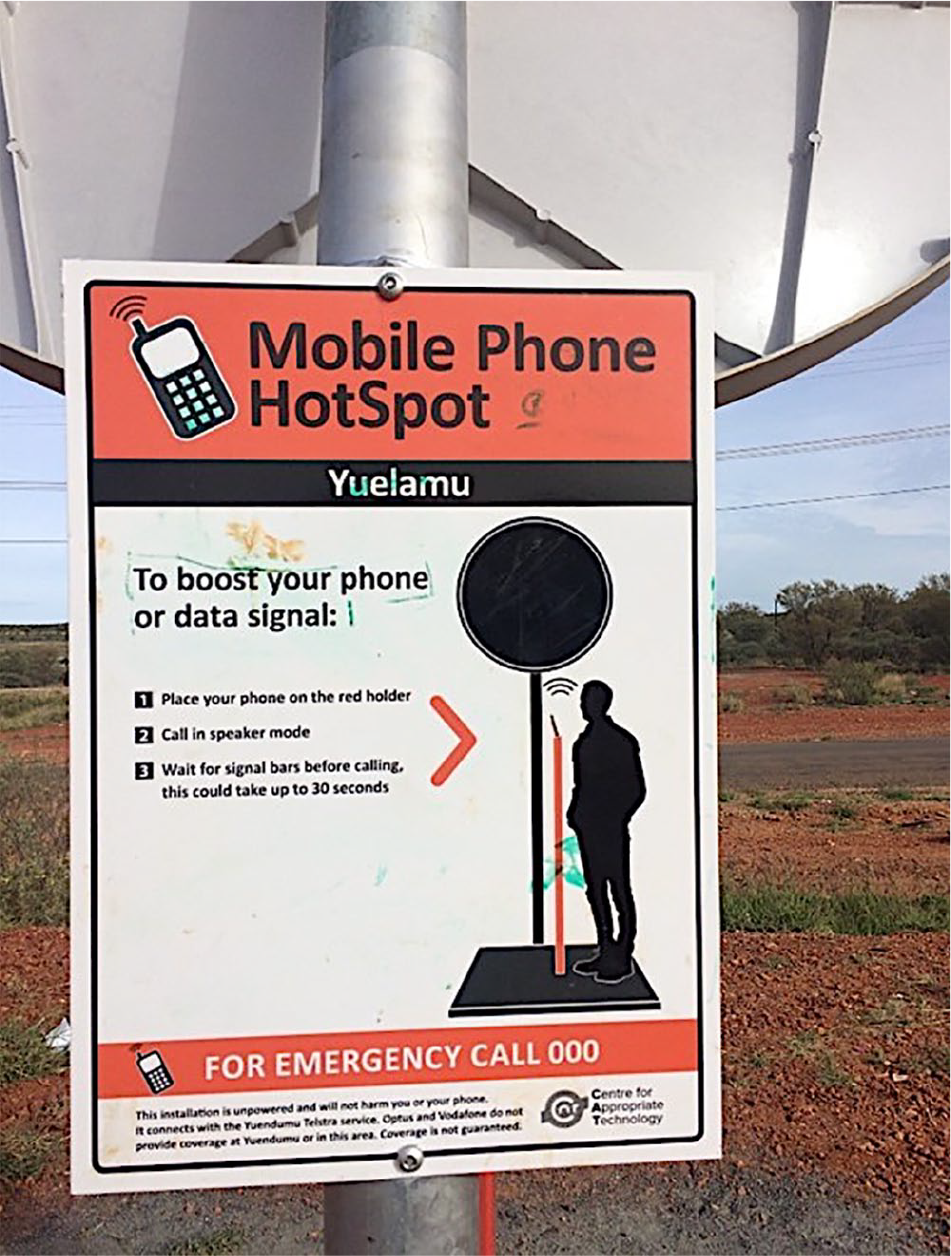
The mobile phone hotspot at Yuelamu, provided by the Centre for Appropriate Technology (photograph: Petronella Vaarzon-Morel).
Leaving aside differential provision of infrastructure in remote areas, other reasons advanced for the relatively low proportion of Internet access in the dwellings of Indigenous people include lack of affordability, low levels of alphabetic literacy and digital skills, lack of technological training and support, cultural preferences, and lack of security and housing issues (IRCA, 2010; Rennie et al., 2015). Even within communities with Internet connectivity infrastructure, such as Tennant Creek, the number of Indigenous people who access and use it within their homes is low compared to non-Indigenous people.
Despite high unemployment and low incomes, Indigenous people in remote communities have a high level of mobile phone ownership. Factors such as high mobility between settlements and houses influence people’s choice of mobile rather than fixed devices (Rennie et al., 2015). Many people use low-cost phones that utilize pre-paid credit and cannot access mobile data. Few people with whom we interacted had access to devices other than mobile phones, and fewer still enjoyed diversity of devices and peripherals, identified by Van Deursen and Van Dijk (2019) as associated with better outcomes for user experience and Internet outcomes. Few people own personal computers. Other technological devices used include iPads, tablets, music or video players, gaming consoles, and televisions. In contrast to many non-Indigenous households in the same communities, it is rare to find particular spaces dedicated to the use of digital technology other than TV and DVD players. In part, this relates to socioeconomic factors, including overcrowded houses. However, cultural factors such as notions of property, kinship, sharing, and people’s relational ontology also influence how new media technologies are integrated in everyday lives (see also Dourish and Bell, 2011; Horst, 2012: 61; Rennie et al., 2015; Vaarzon-Morel, 2014).
People commonly use their Internet-connected devices for everyday activities such as checking on welfare payments, purchasing items, social networking, and entertainment (Rennie et al., 2015). To obviate the high cost of mobile data to individual device holders, Internet access in many smaller communities is mainly through communal sites such as community learning centers for adults, youth centers, and computer rooms. Largely externally funded and supported through NGO (non-governmental organization) or government programs, such sites typically access the Internet via satellite or (where available) Asymmetric Digital Subscriber Line (ADSL) or 3G mobile data. It is important to note that long-term sustainability of these communal services is often not assured. Changes in, and lack of staff (to support use of computers and archival databases), irregular connectivity and limited bandwidth can hamper effective storage and circulation of cultural material.
Interest in cultural records
As is the case with other Indigenous peoples throughout the world (see, for example, Poirier, 2014), elders and other adults have become increasingly concerned about loss of cultural knowledge. There is heightened local interest in recording contemporary cultural practices and events for the benefit of future generations, and also in recuperating and sharing cultural heritage materials, most of which were recorded by non-Indigenous people. There is a hunger for old photos, in particular, of close family. Laminated prints of photos distributed on USBs appear several days, or even hours later, printed through the local schools or community centers. Digital images may be further circulated on Facebook, sometimes via digital photographs of printouts, attracting additional layers of comment and, in the case of images of deceased persons, lament. Facebook friends and family respond, adding their own personal reminiscences. Today’s imperative to record events, encounters, and cultural knowledge for the benefit of future generations is being “affectively driven” (Biddle, 2016) by Indigenous people themselves (see, for example, Hughes and Dallwitz, 2007; Turpin, 2018; Vaarzon-Morel, 2016), in the hope it can help revitalize cultural knowledge. In the words of Julie Kitson, a Warlpiri woman from Willowra, a small settlement on a former cattle station, “We want to hold it and put it all together, for the future.”
Awareness of the existence and scope of institutional archives varies. Some older people in remote communities are not aware of the locations of archived collections from their communities, while younger people, such as Anmatyerr educator April Pengart Campbell, have positive and proactive attitudes: We want to send our things to the archive so that they can look after our things—like photos, videos and other recordings. We are happy that they look after them for us [in Canberra] so that the next generations of children can see these things, after we are gone. In the old days these things got lost, and people didn’t know where to look for photos and recordings of their songs and Dreaming stories. The poor things didn’t know where to look. So that is why we are depositing things in the archive.
8
Indigenous peoples are increasingly making use of archival records to answer questions about cultural heritage (Gibson, 2020). This may entail searching for recordings of songs that have been forgotten, for recordings of stories or oral histories, or simply looking for photographs of long deceased relatives to show their grandchildren and great-grandchildren. Social history can be recovered and reinvigorated through images, texts, and audiovisual recordings (McGrath, 2010). In the words of Arrernte elder Veronica Perrurle Dobson, “What was archived before is getting a new face in the technology.” 9 However, as Gibson (2020) notes, “the act of returning film, sound, or textual material, while it might be thought of as being relatively straightforward, is in fact an important and complex engagement involving not just technical solutions but careful sociocultural navigations” (p. 43).
Commenting on the importance of the Linkage project, for example, Selina Napanangka, a middle-aged woman, remarked, When I see my grandmothers . . . it makes me sad and happy. I get emotional. I used to sit with my grandmother. She would say to me “This is the yawulyu [women’s ceremony] of your country, one day when you grow up you might take it on.” This is a really important project. In the future when we get old, I’ll have this good history of my grandmother and family and can pass it on to my children and my sister’s children. It is really important for us to pass on the knowledge from old people telling stories. It’s important they put it all in one so that each family from Willowra can get their family stories. It makes us feel really happy and makes us feel strong inside. It’s really important to pass on our culture and knowledge to our kids and these photos and stories can help.
10
For many Aboriginal people, the location of items of personal interest remains unknown and of some anxiety. As Dobson put it, “It worries me that things have been collected and we don’t know where they will end up. Young people don’t know where to look.” 11
Other anxieties include the potential for digital cultural records to fall into the wrong hands. A paradox for individuals and families in navigating new modes of mediating cultural information and its ever-increasing circulation is how to hold, control, and sustain it in ways that do not rupture and/or violate social and ontological relationships. As people have indicated, archival repatriation is not without dilemmas (Barwick et al., 2019a). For example, people are concerned that individuals in distant times and places may retain access to cultural information from their originating community. On the contrary, they recognize the potential for the ontological dispossession that this might entail: We need to guard against people getting this information and only turning up for royalty money. People that have never lived in the community or country but live far away and are not connected to our country. They might go to a computer in the city and get the information. That’s why we have to be careful. You have to go and live in country and look and listen to the person talking and teaching you face-to-face. We have to look with our own eyes on country visits, in-person, listening to people telling a story and listening on country and to the country.
12
The CLC’s collections, which include significant evidentiary material such as testimony by elders about connections between people and country and performances of ceremony that embody and enact such relationships (Koch, 2013), are particularly important in this regard. But even collections that have been made for other purposes (such as personal collections of photographs returned by previous staff in a community, or recordings of community musical activities produced as event documentation by promotional bodies) can be co-opted as evidence of relevance in present disputes. Elders who contributed knowledge and performances to support Land Rights and Native Title claims are anxious about loss of traditional knowledge of country and ceremony among younger people, and the effect this may have on their future ability to negotiate in matters concerning land ownership and management. As the late Warlpiri ceremonial leader Bunny Naburula commented in 2010, in the future, you know government people are going to ask young people, “Do you know your culture?” What are they going to say? Nothing, they can just look at it [not perform it]. That’s why I say to my family, “You’re going to have to learn your culture.” (Barwick et al., 2013: 201)
Case study: Willowra
In Willowra, a small village on a former cattle station located 350 km from Alice Springs, there is no mobile phone connectivity, and no Aboriginal houses currently have Internet, which is only available for general community use at the Willowra Learning Centre. 13 The data allowance for the Learning Centre is limited due to cost. Several personal computers are available in the main room, with separate areas for men and women. These computers store material downloaded over the Internet from YouTube, Facebook, and other social media sites, alongside locally produced content such as videos and photos of friends and family, sports events, trips to country and other places. Recorded mainly by younger people using camera phones, this content is uploaded onto the computers using Bluetooth or wireless local area networks. Any cultural materials on these computers are unsupervised, always at risk of being accidentally erased when people use the computers to access the Internet or when computers are replaced without backing up the data. Photos held on these computers have even on occasion been deliberately erased, or defaced and shared on social media as part of a dispute between families.
In an adjacent library room, another computer is installed with the CLC’s KMS, but erratic Internet connectivity combined with low bandwidth means that it is often difficult or impossible to connect and download digital objects from the platform. In the past, the KMS computer also functioned as the main local cultural heritage repository for digital photos, audio and video material uploaded from other sources. Young Warlpiri adults had recorded much of the more recent material during a 5-year community-initiated and -funded cultural mapping project (see Vaarzon-Morel and Kelly, 2019). There were also a large number of photos taken by schoolteachers and researchers during the 1980s, which had been recently digitized and returned, as well as a substantial amount of audiovisual material recorded by Vaarzon-Morel over a 40-year period while working with the community on various projects and in different roles. People regularly gathered around to view material when the Internet was not connected. Copies were also taken for personal use, printed out, or transferred via Bluetooth to smartphones or to USB flash drives for eventual viewing on laptops, televisions, or play stations.
When Vaarzon-Morel visited Willowra in October 2018 to return cultural objects digitized through the Linkage project, the Internet had been down for 3 months. In the interim, the KMS computer had died and all information stored on it was lost. Although some of the other computers had previously held some copies of the material, those too had been lost when the computers were updated by IT staff based in Alice Springs. While photos and videos from social media sites could easily be replaced, other material was irretrievable if individuals had deleted it from their devices. As a partial solution, staff decided to keep a copy of cultural heritage material on a large external hard drive which could be kept secure in the store room, to which only the Learning Centre staff had access. Of course, hard drives too can be vulnerable to catastrophic data loss, especially in extreme conditions such as the record-breaking summer heat in Central Australia in 2019.
Such local collections (or “hoards”) of cultural materials, assembled over time from various sources, can be difficult or impossible to reconstitute when digital disasters occur. Fortunately, in the case of Linkage-generated material, most people held copies of their own material on USBs. Some had also downloaded copies of other material. Furthermore, the majority of the legacy recordings were derived from various repositories elsewhere, such as the archives of CLC or AIATSIS. At the time of writing, Willowra has a replacement KMS computer, and Vaarzon-Morel has begun the lengthy and complex process of re-uploading much of her own material.
Not all material digitized during the project was suitable for upload to this public computer. As a preliminary step, copies were provided on USB flash media and distributed to people in keeping with local cultural protocols concerning age and gender restrictions, and rights to hold and make decisions about material based on factors such ancestral, kin, and country relatedness. Although some resources were regarded as belonging to particular individuals and their immediate family, others concerned public ceremonies involving interconnected land-based groups. In general people were happy for the latter material to be uploaded to the Learning Centre KMS computer for general viewing, because the content illustrated the older generation’s commitment to Lander Warlpiri and Anmatyerr people relating to each other as “all one family” (see Vaarzon-Morel, 2018). However, materials held as belonging to particular individuals and families were not so straightforward, and decisions made about access varied according to the state of social relations among particular families, the kind of cultural content of a digital item, and the context in which it was originally recorded. In many instances, the returned material continued to be held privately on USBs.
The erasure of cultural and archival material from Willowra Learning Centre computers provoked much community discussion about short-term access and long-term preservation in distant archives. Despite having limited understanding of institutional archives and how they functioned, people wanted to be responsible for holding and managing access to their cultural material in both the present and future. Subsequently, as part of the Linkage grant, Selina Napanangka, Julie Napaljarri, and Vaarzon-Morel visited archives in Sydney and Canberra, with the aim of gaining knowledge about archival options and how they worked. The visit to the archives, including training sessions with archivists and sound engineers, was videoed to be used in a community workshop. Both Napanangka and Napaljarri thought that being able to store their cultural content in such archives was important. As Napanangka commented, When I flew down here I saw that the archive and digitization process was real. I saw it with my own eyes what the machine was doing. From old tape they run it through computer, then it popped out . . . we went to Lauren’s computer and she showed us the world map with dots showing places where they have recordings. She clicked the NT and showed what you [Vaarzon-Morel] have been doing with my family and other people at Willowra when I was a little kid. She clicked Molly’s recording—she was singing about Mala Jukurrpa (Hare Wallaby Dreaming). She showed us photos that you took of old people at yawulyu and ceremony, sharing and caring for each other, living a good life and being strong. We have only four Nampijinpas and two older Jupurrula left. It made us think how important it is that you did that work and that we have those old recordings.
14
My Dad said: “I do all these records so that when I get old you can pass it on.” [Having the archives means that] that knowledge doesn’t disappear, it’s there for the future. One day, if my children go to study or live in the city, they can find these recordings.
However, the women also stressed the need for more funding to set up local community platforms, repositories, training workshops, and education so that people can gain expertise in archiving their own cultural heritage. They would also like training in digital mapping in order to emplace information. They also offered suggestions as to how to populate and manage cultural material on Learning Centre computers: I’ll sit with my family, Julie will sit with her family, and Teddy with his family. We’ll ask them in language if it’s OK to put all the material on the computer at the Learning Centre. We have to be careful if people are fighting and put scribbling on photos. What we want is one special computer for family photos in the Learning Centre in the library instead of putting photos on all the computers, a cultural heritage computer.
Younger people (mostly aged between 18 and 40) are increasingly buying their own laptops to use for videos and games, and many have play stations. Napanangka described how cultural material tends to be managed on different, more closely guarded devices: Some people download cultural material to PlayStation and their laptops. They have privacy on their laptops. Like me, I’ve got a little laptop. My daughter often watches cartoons on it. I bought the laptop for $495 at the store. Videos can fit on it and cartoons. Some of the kids have been playing around with it. But I’ve also got another second hand one that I bought from a teacher at the school. I’ll use that for the yawulyu [women’s ceremonies] and other material. At Bunnings I saw a safe for $99. I’m going to buy that to keep USB and photos.
15
As the children were watching TV inside the house, Napanangka invited Vaarzon-Morel to set up her computer on a little table outside so that Stella and other family members could view the material Vaarzon-Morel had collated. However, the outside light made it difficult to see the screen, so we moved inside. Since the audio on the laptop was hard to hear against the background noise, Napanangka took out a set of mini speakers which she connected by Bluetooth to Vaarzon-Morel’s laptop. She said that she’d bought the speakers (which greatly improved the sound quality) quite cheaply at Kmart in Alice Springs.
What is clear is that there is a great deal of variation in people’s access to and prowess at using computer and digital technology. While Napanangka is “tech savvy,” another Linkage project participant did not possess a computer or laptop and was thus reliant on other people’s devices to view USB data. In the event, she gave her USB with copied Linkage material to her son to keep and view on his laptop.
The role of feral devices
In examining day-to-day use of digital cultural media in Central Australia, this article has drawn attention to what we might term “feral” digital cultural media, that is, materials that have left the bounds of the originating archive or database (Moss, 2017: 264) usually to USB flash media devices or via Bluetooth transfer to smartphones. In some circumstances, the transfer of digital materials out of the archive is motivated by technological as well as social factors. For example, while we had originally planned to use the CLC’s KMS platform for the storage and circulation of project digital material, this solution proved impractical because the majority of project materials relate to people and communities without access to broadband Internet. Even when we visited Internet-connected towns such as Tennant Creek to return digitized material, none of our Warumungu interlocutors used the Mukurtu Content Management System (CMS) (designed specifically for their community) or suggested it as a place to store their material, possibly because of the cost of mobile data or reluctance to visit town facilities such as libraries or the CLC local office where free access was available. Despite the availability of Internet infrastructure and a purpose-built cloud-based platform, they preferred to hold the material on their own USBs that they could share directly with family.
Sharing resources between kin means that portability is a prized design feature of technological devices. Despite the ready availability of smartphones (even in communities lacking Internet), our team found that the preferred platform for sharing cultural media remained the USB flash drive. In contrast to the smartphone, the USB flash drive combines the advantages of cheapness, small size, relative robustness, and the ability to be plugged into a range of other devices, including some televisions, game boxes, computers, and vehicle media systems. One occasionally reported problem with using USB devices for access to cultural materials was that different playback devices (such as play stations and TVs) in the same household might have different requirements for formatting of the device, its internal file structure, and formats of media files. On other occasions, personal USBs provided by individuals for copying did not have adequate storage space for larger media files. A disadvantage common to both smartphones and USB flash devices is that data are presented without explanatory metadata and sensitivity warnings provided by online databases such as Mukurtu and the CLC KMS. Discarded, too, is the provenance metadata so essential to management in the archival environment, which users sometimes require to make sense of old photos or recordings.
What happens to these devices and files once they start to circulate? Some simple practices for storing, sharing, and safeguarding personal collections make do with whatever is available, and keep control firmly at a local and personal level. Although USBs are sought-after items, they are easily mislaid. For this reason, some women we worked with preferred to wear their USBs on their person as bracelets or on lanyards (Figure 3), providing an option for marrying archival return with desert style. Others store USBs in drawers or filing cabinets of workplaces. Mobile phones may be shared or traded among individuals (Vaarzon-Morel, 2014), meaning that digital data stored on them also circulate away from the original creator or downloader. Some may keep their treasured copies of archival materials—in formats and on devices fashionable and fleeting—in their handbags, only to report on their subsequent loss due to floods, fire, or other mishaps. Most acknowledge that these are temporary fixes—the distribution to loss cycle of a USB may be very short indeed—and the issue of meaningful ongoing access to the larger archives remains a burning one.
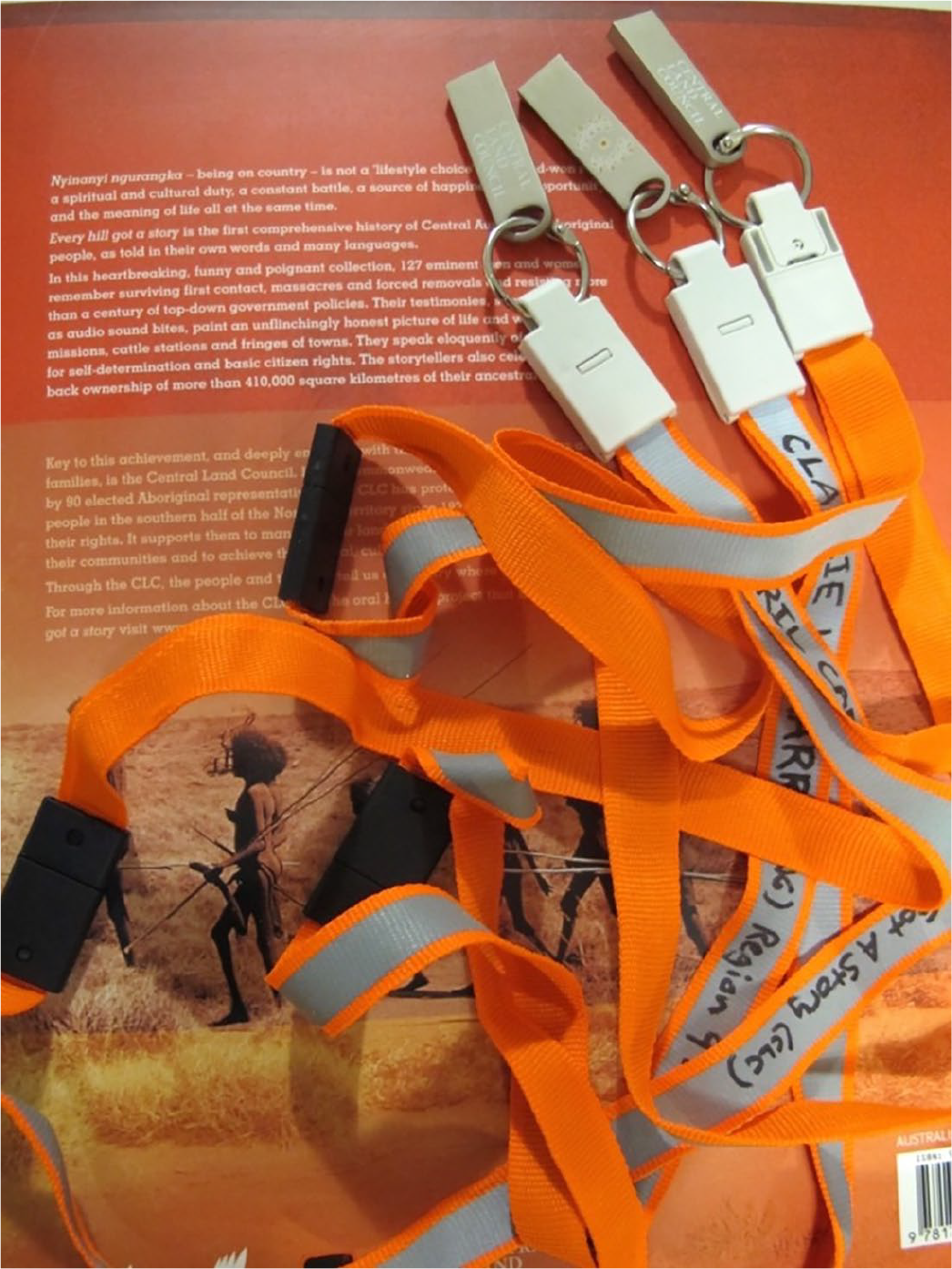
At the launch of the Central Land Council history book, Every Hill Got a Story (Bowman and Central Land Council, 2015), at the old Telegraph Station just north of Alice Springs in 2015, each of the 120 or so contributors were given a USB with the audio recording of his or her story (photograph: Jennifer Green).
USBs containing important ceremonial information may need to be safeguarded especially carefully. In relation to collections of men’s objects, Gibson has written about how “Galvanized metal tool boxes, lockable and secure, are often the vault of choice for Anmatyerr men . . . it is not uncommon for these mini-collections to be further hidden away in dilapidated caravans, broken-down cars, or the homes of senior men” (Gibson, 2020: 235). There are also anecdotes about the storage of the “sacred” and seminal texts of early ethnographers in ritually appropriate places, and sound recordings have also been included in the caches of ceremonial objects handed over to successive generations of song custodians (Barwick et al., 2013).
In past times, there was a prohibition on mentioning the name or sharing images or voice recordings of deceased people. While this applied generally within a community, such restrictions were usually lifted after a period for all except close kin. Nowadays, with the proliferation of digital records, attitudes to restrictions on viewing images of the deceased, or hearing their voices, are changing rapidly and there is a great deal of variation between communities, generations, and individuals. At a local level, it is not uncommon to see images of individuals appearing in publications removed or at least temporarily covered over. With agreement from close family, these restrictions may be lifted after some time has passed (Figure 4).

The paper that temporarily covered the image of the Anmatyerr artist, the late Emily Kam Ngwarray, was later removed by close kin from a publication held in the local Learning Centre (photograph: Jennifer Green, Utopia, May 2016).
Such time- and context-sensitive restrictions are most effectively negotiated locally, and perhaps more easily managed when storage devices are under the control of key individuals, rather than being hard-coded into a remotely hosted database. The fact that the local is the most contested and sensitive site is reflected in the archiving instructions: an analysis of views about future accessing of archival records showed that most people were much more concerned about local protocols than distant ones. For example, people might be happy for recordings to be heard at distant archives or even placed on YouTube, while wishing for local restrictions to be enforced.
Some reflect on the role of the church in these changing attitudes to images of deceased people, and it is now common practice for photos to feature prominently in funeral oratories. Some see the keeping of photos of loved ones as part of the “Christian way.” “A long time ago it was really restricted. Now we can see family and keep photos on mobile phones. After all, ‘Jesus showed himself,’” said one. 16 Still others have likened these changed practices to what has happened in the translation of ceremonial sand designs to canvas. In the former medium, the designs would be erased by the action of wind and time, while in the latter, it is imagined that the images can now be kept for time immemorial. Unlike books and paintings, unless long-term storage solutions are worked out, digital material also risks ephemerality.
Conclusion
The Linkage project has provided an opportunity to track a range of legacy materials and monitor the responses of the communities where they came from. We have shown that the Central Australian area represents a diversified landscape, not just in terms of social structuring of traditional knowledge management but also in highly differentiated access to various enabling infrastructures such as mobile data, Internet, storage device ownership, computer literacy, ability to afford ongoing costs such as subscriptions to mobile data, and access to community premises housing such infrastructure. The picture is further complicated by mobility of individuals (including high staff turnover in community facilities) and the difficulty of managing devices and computers and keeping them functional in remote locations with little or no technical support and harsh climatic conditions. While many people are happy to access unrestricted materials such as photographs of public events on an occasional basis via online databases such as CLC’s KMS, sensitive materials generally need to be held under the control of the relevant community elders. Small unpowered flash memory devices such as USB sticks are currently preferred for this purpose and can be stored and managed in similar ways to traditional ceremonial objects, although accessing the files may be complicated by changing requirements for the devices to read them.
We have indicated how use of devices to store and share information is shaped by multiple factors, including constraints on management of cultural knowledge, social context, available infrastructure and hardware, and the different affordances of platforms and devices. In their everyday relationships with digital materials, people frequently engage with infrastructure and hardware external to household dwellings, storing material on devices kept in a range of places, including computers and hard drives housed in community centers, office filing cabinets, abandoned cars, tin trunks, and handbags. Some of these places are more precarious than others, and while some are public, others reflect protocols surrounding management of knowledge according to gender and age.
The technical and social issues are not amenable to easy or permanent fixes; rather initiatives designed to provide access to culturally significant digital media (such as the CLC Cultural Media Project) need to be constantly alert to these complex issues. While there is no doubt that a digital divide does exist between the infrastructures available to Indigenous and non-Indigenous Australians, especially in remote areas, it is important for those planning platforms and processes for digital cultural heritage to take into account the affordances and social embedding of current systems and technical platforms, including the current preference for “low-tech” portable devices for controlled circulation of culturally sensitive or highly personal materials. Such “feral” devices coexist in complex interrelationship with online databases and with the larger national information infrastructure. As cultural media “escape” from the fiduciary environments of institutional archives and even online Indigenous-controlled content management systems designed to manage access and dissemination according to the application of hard-coded Indigenous protocols, we must recognize that they enter once more a lived social space. If managed carefully by the culturally knowledgeable, they may be used to support Indigenous socialities and ontologies. They may also extend these via new genres of identity formation (e.g. creative digital mashups, or sharing and commenting on archival material on social media). We must recognize that many of these extended uses also have the potential to challenge traditional modes of knowledge management via deliberate or ignorant misuse (such as defacement, or unauthorized sharing in uncontrolled online environments). Strategies to corral or manage this proliferation of feral archival media and its uses will always be locally contingent and likely to escape attempts to constrain it via policy or technological means.
Although our case study focused on the situation and perspectives of Indigenous people in Central Australia, we situate the study within an international literature that addresses concerns regarding the management and safeguarding of Indigenous cultural heritage material. Our article illustrates what happens on the ground, every day, when people who live far from centralized archives and have limited access to cloud-based repositories are negotiating options to manage digital data. The situation we illustrate has practical, cultural, and ethical implications for decolonizing methodologies that seek to address issues of access, control, and storage of cultural material (see also Salazar, 2008). Finally, many of the predicaments of storing and sharing discussed in this article speak to situations faced by people everywhere who lack the infrastructure and support necessary to ensure that their everyday personal collections and cultural heritage are secured for the future.
Footnotes
Funding
The author(s) disclosed receipt of the following financial support for the research, authorship, and/or publication of this article: The authors’ research was supported by the Australian Research Council Linkage project scheme (grant number LP140100806), for a partnership between the University of Sydney, the University of Melbourne, and the Central Land Council.
