



Abstract
The article conceptualizes character assassination (CA) as a tactic of populist communication on social media by using the case study of Italian politician Matteo Salvini. CA consists of personal attacks aimed at damaging the reputation of individuals, used as political means to attack the “enemies of the people.” By means of CA, populists operate a shift from issues and arguments toward individual traits and behaviors. CA’s importance is linked to the features of social media communication (i.e. disintermediation, speed, virality, fragmentation, emotionality). The article uses content analysis of tweets, and qualitative analysis of relevant examples; it demonstrates the strategic nature of CA in Salvini’s communication and identifies five functions (i.e. polarizing, personalizing, symbolic, discriminating, emotional) of CA in right-wing populist communication. CA’s logic is unpacked, by showing how the delegitimization of individuals is used to reinforce a populist communication strategy. Potential implications and responses to CA are discussed.
Introduction
On 12 December 2019, President Donald Trump attacked climate activist Greta Thunberg in a highly personalized, mocking message on Twitter: “So ridiculous. Greta must work on her Anger Management problem, then go to a good old-fashioned movie with a friend! Chill Greta, Chill!” 1 Trump had already used this aggressive communication style to attack political adversaries, especially during electoral campaigns characterized by “insult politics”—that is, a rhetoric based on direct attacks to individuals or groups, rather than on criticism (Winberg, 2017). However, the social media attacks directed at Thunberg were not part of electoral campaigns and did not target political opponents, but a member of civil society; moreover, they were directed at a vulnerable target, namely a teenager with Asperger’s syndrome.
A month later, on 16 January 2020, the Italian leader of the League (a right-wing populist party) Matteo Salvini posted on Facebook a video of a member of the “Sardines” (a grass-roots anti-populist movement) affected by a learning disability, openly mocking him for his way of speaking. 2 Several examples of Salvini carrying out personal attacks toward members of the civil society can be found on social media. On 28 December 2019, he targeted another member of the Sardines, Nibras Asfa, a Muslim woman who came out against him during a meeting of the movement. 3 On 21 January 2020, during a regional electoral campaign, a video of Salvini ringing a Tunisian family’s doorbell to ask a 17-year-old boy if he was a drug dealer (after being told so by a resident of the area) circulated on Facebook, causing a diplomatic incident with Tunisia and leading to Facebook’s decision to delete the video. 4
Such personal attacks reiterated over time and addressed to a wide range of people—from political opponents to members of civil society organizations, citizens, and foreigners—suggest that populists like Salvini and Trump are adopting this particular tactic as an integrative part of their communication strategy. Populism has been defined as a thin-centered ideology characterized by a Manichean opposition between the (good) people and the (corrupt) élite (Mudde and Kaltwasser, 2017). The literature analyzing populism as a communication style shows that right-wing populists tend to be anti-elitist and exclusionary (Jagers and Walgrave, 2007; Wodak, 2015), thus generating a strong polarization of politics. Right-wing populists can pursue exclusionary politics based, for instance, on nationalism, racism, patriarchy, anti-Semitism (Wodak, 2015). Populist communication also shows a tendency toward the personalization of politics (Krämer, 2017), usually by means of its emotionalization (e.g. Trump’s “angry populism,” Wahl-Jorgensen, 2018), and the construction of charismatic-leader figures, each adopting different populist leadership styles (Bracciale and Martella, 2017).
These characteristics of populist communication (i.e. polarized politics, personalization, emotionalization) can be found in the wide array of personal attacks carried out by such politicians as Trump and Salvini. However, the aforementioned examples also share a particular feature that is different from, although relatable to, the typical forms of populist communication. Trump is not simply picking on climate activists as representatives of élites or outgroups, just as Salvini is not merely confronting a grass-roots movement that opposes him or migrants living in Italy. By contrast, they are going after single individuals who belong to antagonistic groups and are symbolically used to embody them. These attacks to individuals perpetrated by populists go beyond mere criticism and aim to delegitimize the adversary (and often, symbolically, the groups represented by these individuals). Character assassination (from now on, CA) is “a deliberate and sustained effort to damage the reputation or credibility of an individual” (Samoilenko et al., 2016: 115). It is directed toward individuals who are either engaged in politics and public debate or represent a particular group, such as a party or a movement (Shiraev, 2008). CA is often not focused on political and professional actions, but rather on the target’s personality and behavior (Shiraev, 2008), and can include insults, defamation, and irony (Samoilenko et al., 2016). Similar to argumentum ad hominem (Wodak, 2015), CA represents a form of aggressive communication aimed at reinforcing the personalized, polarized, and emotionally charged strategy typical of populism. In the context of this research, therefore, personal attacks related to CA are distinguished by other forms of argument-based political criticisms by the use of aggressive tones, irony and mockery, insult, and a focus on individual traits and behaviors. Its aim is not to engage in a political debate with the opponent, but rather to undermine the opponent’s reputation. Historically, CA has been used through the ages to attack a broad range of individuals, from US Presidents (Smart and Shiraev, 2014) to political activists such as dissident Václav Havel in Communist Czechoslovakia (Klicperová-Baker, 2014).
CA may have substantial negative consequences. As shown by the previous examples of Trump and Salvini, it can be discriminating (for instance, toward religion, gender, and disability) and openly based on xenophobia and racism. By attacking single individuals who often do not have the media or political power to respond, CA identifies precise and weak targets and exploits them to attack entire groups. When used by powerful populist actors, this tactic exploits power relationships to exclude not just individuals, but groups and political opponents, contributing at the same time to the polarization of politics (Hameleers, 2020; Van Kessel and Castelein, 2016), and the normalization of aggression and some forms of discrimination (Krzyżanowski, 2020).
This article conceptualizes CA as a communicative tactic that can be adopted by right-wing populists. It argues that social media constitute the preferential channel to use CA and that its very success is largely due to populists’ strong reliance on social media communication (Gerbaudo, 2018). To account for this, a number of specific features of social media are pinpointed. Second, by looking at a specific case study (Matteo Salvini’s use of Twitter), the article shows how and how much right-wing populists can exploit CA. Finally, the article discusses the potential relevance of CA in the context of a broader populist communication strategy by attending to its communicative, political and social implications. In particular, it is suggested that CA is aimed at reinforcing some traits of the right-wing populist communication style (anti-elitism, charismatic leadership, politics of exclusion, nationalism—see Jagers and Walgrave, 2007; Wodak, 2015) by means of delegitimization and five main functions. Through these functions, the delegitimization of individuals is used to reinforce a broader right-wing populist narrative.
Social media, populism, and character assassination: a perfect recipe
In the highly mediatized environment of modern politics (Mazzoleni, 2014), social media have become central in political communication. As part of a hybrid media system (Chadwick, 2017), social media have gained importance in the communication strategies of a wide range of political actors (Postill, 2018; Stier et al., 2018), though they seem to be particularly fit for populist political forces (Gerbaudo, 2018), which demonstrated a greater ability to engage their audience than non-populists (Larsson, 2019).
The success of online populist communication is due to a series of key features of social media. The first is disintermediation—that is, the possibility of bypassing journalistic gatekeepers by creating a direct link between political actors and their audience (Engesser et al., 2017). Disintermediation is particularly relevant for populists, as they tend to “present themselves as the true voice of the people” (Mudde and Kaltwasser, 2017: 68) and separate from the élites, which, in their view, control traditional media (Fawzi, 2019; Schulz et al., 2020). Moreover, the opportunity to access to unmediated political communication turns social media into a source of information and news for journalists (Broersma and Graham, 2013). By communicating on social media such as Twitter or Facebook, political actors increase their power to influence traditional media and the public debate (Mazzoleni and Bracciale, 2018; Waisbord and Amado, 2017). As journalists partially lose their power of filtering and framing news (Jacobs and Spierings, 2019), populists can exploit types of communication that, in a situation of strong gatekeeping, are unlikely to reach the public, at least in their original form. This includes such aggressive and polarizing forms of communication as “cybermobbing,” “shitstorms,” and manipulated information (Vallespín and Bascuñán, 2019: 171), which may facilitate uncivil behaviors and, through provocation and scandalmongering, attract the attention of traditional media (Wodak, 2015). The subsequent spread of such aggressive messages on traditional media further increases the polarization of politics and public debate. Moreover, the efficacy of this form of communication can benefit from other two features of social media, speed and virality, which are helpful in “triggering spillover effects to traditional media” (Jacobs and Spierings, 2019: 1684).
Backed by empirical data, Engesser et al. (2017) suggest that social media favor the fragmentation of populist ideologies. Motivated by the need to send short and frequent messages, populists spread their ideology in a split form, focusing each time on a single aim (e.g. attacking an élite, invoking the heartland, ostracizing an outgroup . . .). This also suits their need to simplify messages and offer easy solutions to complex problems (Mazzoleni, 2008).
Social media, moreover, represent an excellent tool for personalized politics, which is a central feature of much contemporary political communication (McAllister, 2007) and contributes to shaping voters’ behavior (Garzia, 2011). Personalization is a crucial element of populism, which tends to construct charismatic leaders claiming to be the true representatives of the people (Mudde and Kaltwasser, 2017). Social media enable to mix public and private spaces, to discuss political issues and, at the same time, to disclose intimate aspects of life (Enli and Skogerbø, 2013), giving politicians the possibility to construct a self-image that is closer to the people. Bracciale and Martella (2017) showed how populist online communication can be characterized by a high degree of personalization, achieved by adopting different styles, from the “man of the street” to the “champion of the people.”
Finally, social media favor the circulation of messages charged with emotionality (Stieglitz and Dang-Xuan, 2013). Populist communication is highly emotional (Cossarini and Vallespín, 2019) and often uses negative tones, especially in right-wing populism (Jagers and Walgrave, 2007; Schmuck and Hameleers, 2020). Populists can use anger and fear to exacerbate the distance and antagonism between the people and the élites, or between the people and such outgroups as migrants (Wahl-Jorgensen, 2018; Wodak, 2015). Wodak (2015) observed that, in recent times, populist discourses in Europe led to the “normalization of nationalistic, xenophobic, racist and antisemitic rhetoric, which primarily works with ‘fear’” (p. X). Emotionality is a tool in the hands of populists to reinforce their message, and research suggests a potentially significant role of emotions in boosting populist attitudes (Hameleers et al., 2017).
In the light of all these features, which make social media the ideal means of communication for populists, it is important to show how CA is a tactic that can fully exploit such specificities to strengthen populist communication. CA is a form of personalization of political communication with a negative charge; rather than focusing on the construction of a charismatic leader, it can be used to undermine the reputation of leaders and representatives of antagonistic groups (Shiraev, 2008). This meets the following two objectives of populist communication: (1) attacking the enemy (élites and outgroups), symbolically represented by a single individual and (2) strengthening the figure of the populist leader, which can be counterposed to the character being “assassinated.” By attacking Thunberg, for instance, Trump is attacking the broad category of climate activists. CA, however, allows him to attack them by focusing on traits and behaviors (either real or only claimed) of a single, exposed individual, rather than on actual issues and arguments. This partially responds to the need for simplification and trivialization of populist politics. Moreover, CA is a strategy particularly apt for emotional communication. When attacking Thunberg, Trump speaks of her “anger management problem”; likewise, when attacking a Tunisian teenager accused by a resident to be a drug dealer, Salvini appeals to his audience’s anger and fear toward migration as a phenomenon that is supposedly deeply interrelated to crime.
In the fast and overwhelming information flow of social media, where populists are facilitated in spreading their fragmented, simplified message, CA can work as an effective tactic to generate messages charged with populist content. Attacks to individuals can be used to pick on entire groups, ideas, and even ideologies.
Finally, disintermediation is arguably fundamental for CA to be a successful populist communication strategy, to be used regularly and pushed to its limits. In a news environment mediated by gatekeepers (Shoemaker and Vos, 2009), insults, mocking, cybermobbing, and other forms of aggressive communication can be filtered, re-framed, and re-contextualized, preventing the desired (by populists) message to directly reach its audience. In the disintermediated social media environment, however, aggressive messages, which are boosted by speed and potential for virality, can easily reach broad audiences and, on account of their inflammatory content, acquire news value (Wodak, 2015). Filtering becomes impossible and the more provocative the message, the more traditional media might be compelled to turn it into news. Given its specificities (many of which will be seen in the next sections), the use of CA is simultaneously facilitated by social media and particularly effective in attracting journalistic attention.
The following sections further disentangle the different aspects of CA, from its connections to the defining features of social media and populist communication described earlier to the degree and modes in which it is used by a right-wing populist such as Salvini.
Research questions, case study, and methodology
In the previous section, CA was conceptualized as a right-wing populist communication tactic that can best be adopted on social media on account of their specific features. To support these arguments with empirical evidence, this article focuses on a specific case study, exploring the use of CA in Matteo Salvini’s communication on Twitter. The case of Salvini can be considered a critical case study (Jensen, 2002) for right-wing populist social media communication: Salvini’s party, the League, is exemplary of right-wing populism (Rooduijn et al., 2019) and is characterized by anti-immigration attitudes (Garzia, 2019), nationalism, and Euroscepticism (Ruzza, 2018); the communication strategies of both the party and its leader largely rely on personalization (Albertazzi et al., 2018) and heavy use of social media and emotionally charged contents (Bobba, 2019). Therefore, Salvini combines the most important characteristics of right-wing populism with a use of social media that skilfully exploits the features described in the previous section (disintermediation, personalization, emotionality, speed, and virality).
The analysis of this case study aims to answer the following research questions:
RQ1. How much does Salvini use CA in his Twitter communication?
RQ2. What types of individuals does he target, and what topics does he cover by means of CA?
RQ3. What are the main functions of CA and how are they integrated into Salvini’s right-wing populist communication strategy?
RQ4. What is the overall logic of CA (as used by Salvini) and what are its potential political and social consequences?
The first two research questions aim to evaluate how relevant CA can be in right-wing populist communication on social media and to describe its broad range of topics and targets; the third one entails an investigation of the modes and objectives of this particular communication tactic; finally, the fourth research question intends to understand what lies behind the use of CA and what this can tell us about right-wing populism and its potential political and social effects.
The empirical analysis is based on a Twitter dataset, as scientific literature shows that Twitter is largely used by political elites for agenda-building purposes (Parmelee, 2014; Stier et al., 2018).
Drawing on literature on multimodality (Kress and Van Leeuwen, 2006), we chose to focus our analysis on tweets containing both texts and images. This choice follows up with a recent call to explore non-verbal aspects of populist social media communication (Ernst et al., 2017). Much research on populist use of social media focuses only on texts, including research on Salvini (Bobba, 2019; Bracciale and Martella, 2017). However, a number of recent studies highlighted the importance of multimodal communication, particularly the combination of texts and images, in populist social media strategies (Forchtner and Kølvraa, 2017; Mendonça and Caetano, 2021; Wodak, 2015). Although the choice to focus only on tweets containing images might underestimate the overall number of tweets based on CA, it enables us to thoroughly investigate how right-wing populists exploit the multimodal potential of social media to strengthen their narrative. In addition, research showed that the presence of images increases the communicative power of social media content (Li and Xie, 2020).
The dataset consisted of all tweets from Matteo Salvini’s official Twitter profile (
The resulting sample was analyzed by means of content analysis (Elo and Kyngäs, 2008), and intercoder reliability between two coders was calculated by using the Holsti method (Mao, 2017). First, each tweet was coded according to the presence of CA, which was conceptualized as a personal attack to one or more individuals (clearly identifiable through their name and/or face in the tweet) aimed at damaging their reputation or credibility by using negative and derogatory language or images, including (but not limited to) explicit insults or defamation (intercoder reliability 1.0). The resulting subsample of CA tweets was further coded according to its main topic and the group affiliation of the individual(s) attacked (see Tables 1 and 2; intercoder reliability between 0.8 and 1.0).
Group affiliation of individuals attacked by CA (as more individuals can be attacked in a single tweet, the sum of the frequencies may be more than 100%).
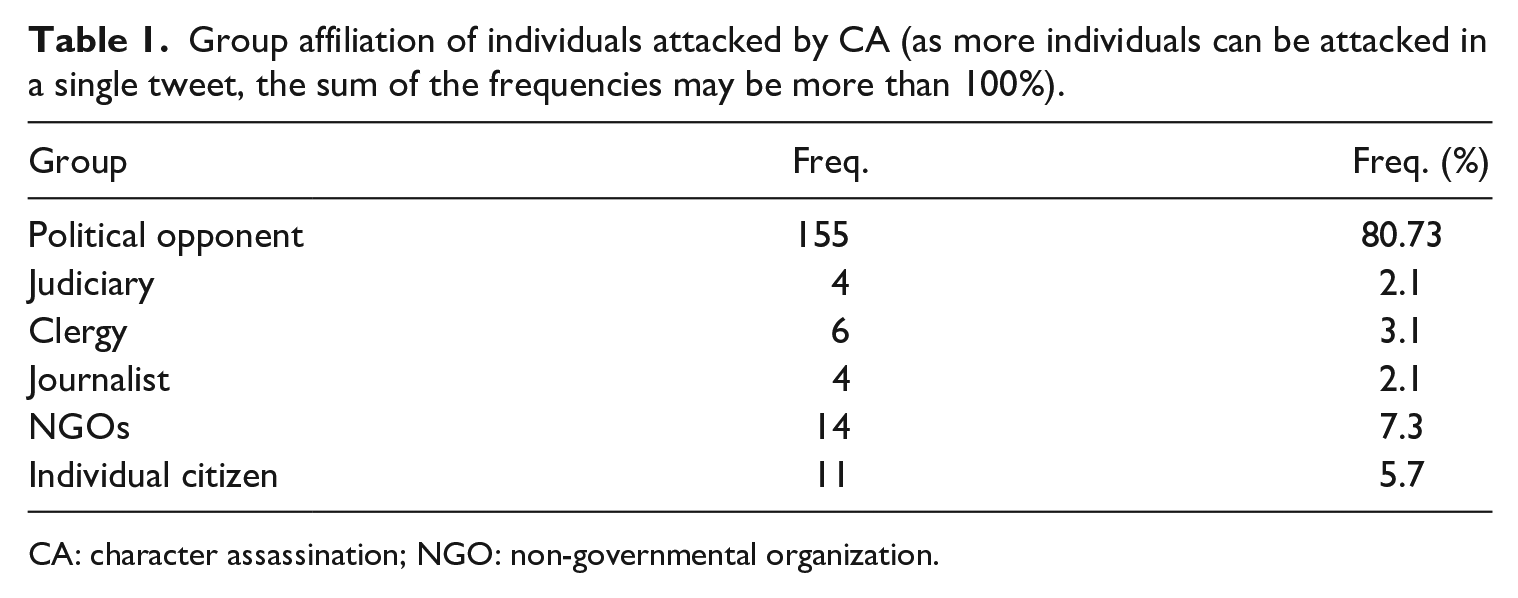
CA: character assassination; NGO: non-governmental organization.
Main topics of CA tweets (as more topics can be of relevance in a single tweet, the sum of the frequencies may be more than 100%).
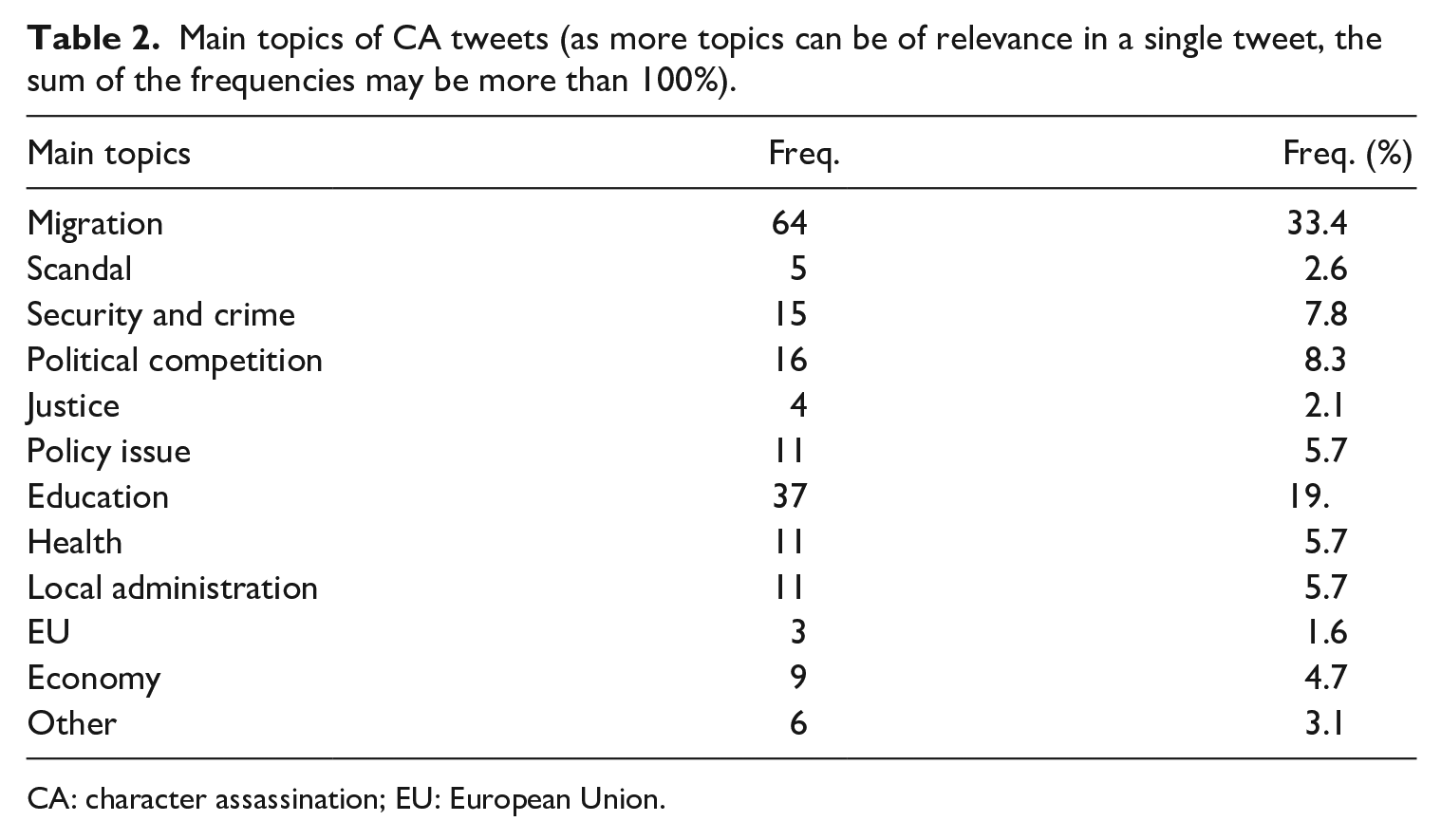
CA: character assassination; EU: European Union.
In a second phase, following Chilton and Schäffner’s (1997) conceptualization of political discourse analysis, five main functions of CA were identified (polarizing, personalizing, symbolic, discriminating, emotional), all aimed at delegitimizing adversaries through personal attacks; a qualitative analysis was then conducted on a subset of tweets. This analysis looked closely at the multimodal texts to explore how the five functions of CA are discursively constructed to delegitimize adversaries in Salvini’s tweets and how they are related to a broader right-wing populist communication strategy.
Results
General overview: targets and topics of CA
The analysis of multimodal social media communication of Matteo Salvini’s Twitter profile during the June to September 2020 period found that 192 out of 1426 tweets (13.5%) included CA targeting one or more individuals. This means that a considerable part of Salvini’s tweets (nearly 1 in 7 tweets containing images, and at least 6% of all the tweets in the timeframe considered) are based on CA. This equals an average production of about two multimodal tweets per day based on CA. Given the broad range of populist communication tactics and the fragmented nature of populist communication (Engesser et al., 2017; Ernst et al., 2017), this suggests that CA is a relevant strategic element of Salvini’s social media communication, which is used consistently and repeatedly over time. These attacks are mostly directed toward political opponents, but in several instances also toward individual citizens, members of non-governmental organizations (NGOs), members of the clergy, and journalists (see Table 1). While mainly used as a tactic of political struggle, CA demonstrates to be all-encompassing and versatile, exploitable to attack individuals belonging to different groups according to the needs of the moment. Moreover, Table 2 shows that these individual attacks are used to address a broad range of topics. While typical themes of the far-right, such as migration, security, and crime, dominate Salvini’s discourse, CA is also used to go after political opponents, for electoral campaigns, and to address issues such as education, economy, justice, national and EU policies, and local administration. CA thus takes the form of a multi-functional tactic, which can be used to discuss a vast array of issues and delegitimize a wide range of groups and adversaries.
While topics and targets may change, however, the specificity of CA is that groups and issues are not discussed through arguments or critiques, but rather through a series of personal attacks. These attacks usually perform one or more of the five functions, which all share the same purpose; the delegitimization of adversaries by means of personal attacks, rather than debate, legitimate criticism, and argumentation. The following sections conceptualize these functions by looking at a number of significant examples.
The polarizing function of CA: reinforcing the people Vs. élite dichotomy and nationalism
Based on a worldview that opposes the pure people and the corrupt élite (Mudde and Kaltwasser, 2017), populism tends to polarize politics, exacerbating the contrasts rather than engaging in debate. Right-wing populist leaders such as Salvini construct themselves as the “vox populi,” the true voice of the people, and often engage in nationalist and Eurosceptic discourses, generating antagonism among nations and between single countries and the EU. CA can effectively reinforce this polarizing aspect of populism.
Figures 1 and 2 show how Salvini uses CA to boost nationalism and attack political opponents and sea-rescue NGOs. Figure 1 reports the news of a sea-rescue ship docked in Italy with a migrant positive to COVID-19; however, the image shows the faces of Prime Minister Giuseppe Conte, Minister of Interior Luciana Lamorgese, and Carola Rackete (the ship captain of the sea-rescue vessel Sea Watch 3, harshly attacked by Salvini about a year before these tweets, see Berti, 2021): the three are labeled as “Dangerous for Italy,” depicting a situation in which the Italian government and German sea-rescue NGOs are conspiring against the Italian people; likewise, in Figure 2, several members of the Italian governing coalition are labeled as “Anti-Italian tragedy” for revoking a decree made by Salvini at the time he was Minister of Interior in the previous government. It should be noted that individual politicians (with Prime Minister Giuseppe Conte pictured with closed eyes and Minister of Justice Alfonso Bonafede smiling) are selected to represent all the major opposition forces, shifting the attack from political to personal.
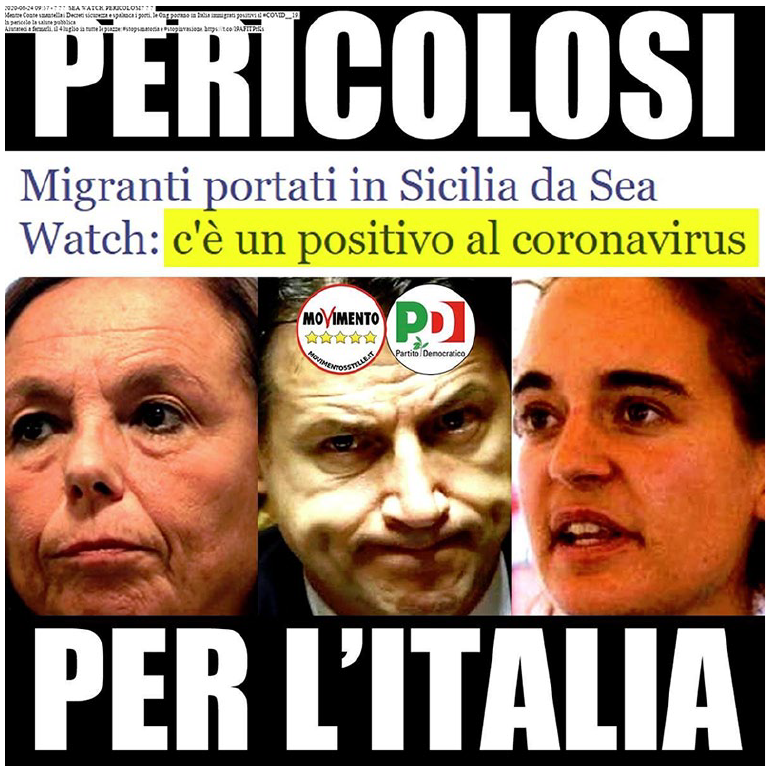
Tweet 24 June 2020.
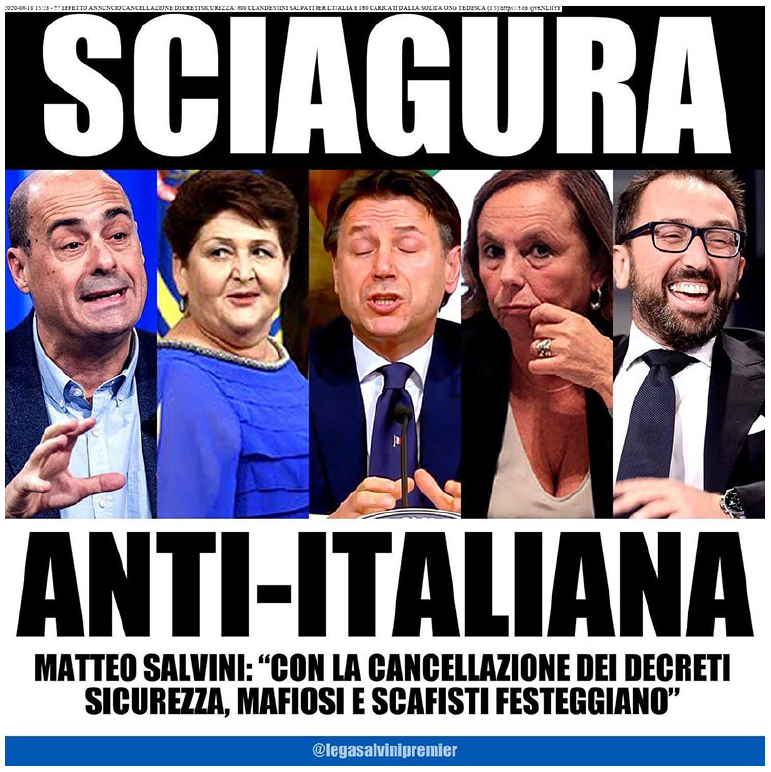
Tweet 18 June 2020.
In Figure 3, the face of Deputy Minister Laura Castelli is shown next to a quote from Salvini himself, saying, “I’ve been meeting restaurant and bar owners and hotel managers who are telling me ‘Five-Star Movement Deputy Minister Castelli is an idiot.’ They are right.” Here, Salvini juxtaposes a member of the government (and representative of the Five-Star Movement party) to some categories of workers by openly insulting her, without any explanation (either in the text or in the vignette) of the reasons for this insult. The use of CA is particularly evident as the shift from political to personal is total and the polarizing effect of the attack relies not just on derogatory language, but also on an explicit insult.
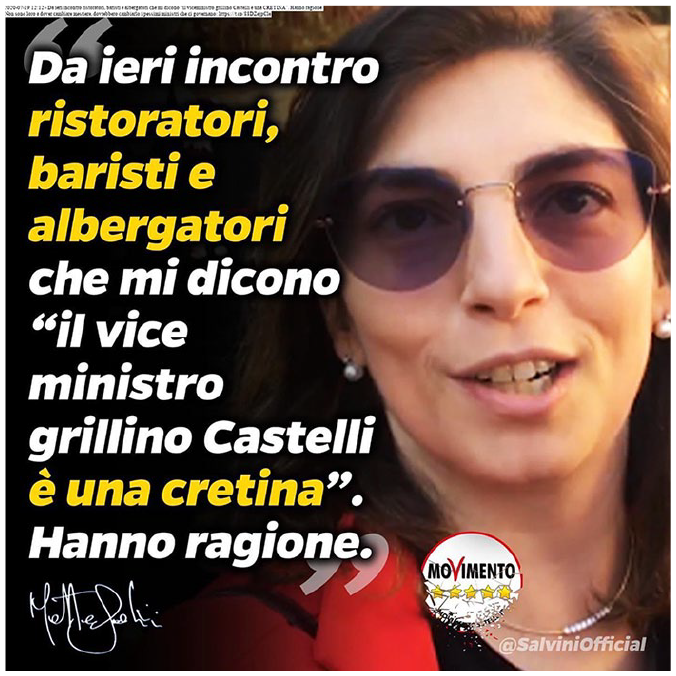
Tweet 19 July 2020.
The analysis of these cases shows that the polarizing function of CA reinforces the élite or people dichotomy (typical of all types of populisms) as well as a nationalist sentiment (typical of right-wing populism).
The personalizing function of CA: heroes and villains
It has been highlighted that populism is often centered on the figure of a charismatic leader who acts as “vox populi” (for a discussion of this aspect of populism, see Mudde and Kaltwasser, 2017: 62–78). CA, however, can be conceptualized as a sort of negative personalization. While the populist leader is the hero of populist narratives, CA generates enemies of the people. These villains can be members of élites (politicians, journalists, . . .) as well as members of the organized civil society and, at times, normal citizens. CA, thus, appears to be a good tactic to reinforce the reputation of populist leaders by juxtaposing their heroic figure with that of specific villains.
For instance, this is the case of Figure 4, a tweet mixing images and text in which Salvini builds up his figure at the expense of Minister of Public Education Lucia Azzolina. This vignette plays with Minister Azzolina’s idea of distributing wheeled desks to schools in order to help to prevent the diffusion of COVID-19. Built upon a dichotomic division of space, the image juxtaposes Azzolina, using one of these desks, with a photo of Salvini, displaying an attitude of mockery. The accompanying text says, “Wheeled desks? Yes, to send Azzolina home.” Azzolina is labeled as an incompetent politician whose ideas raise laughter and this enables Salvini to elevate himself as the much more competent political opponent who ridicules her idea.
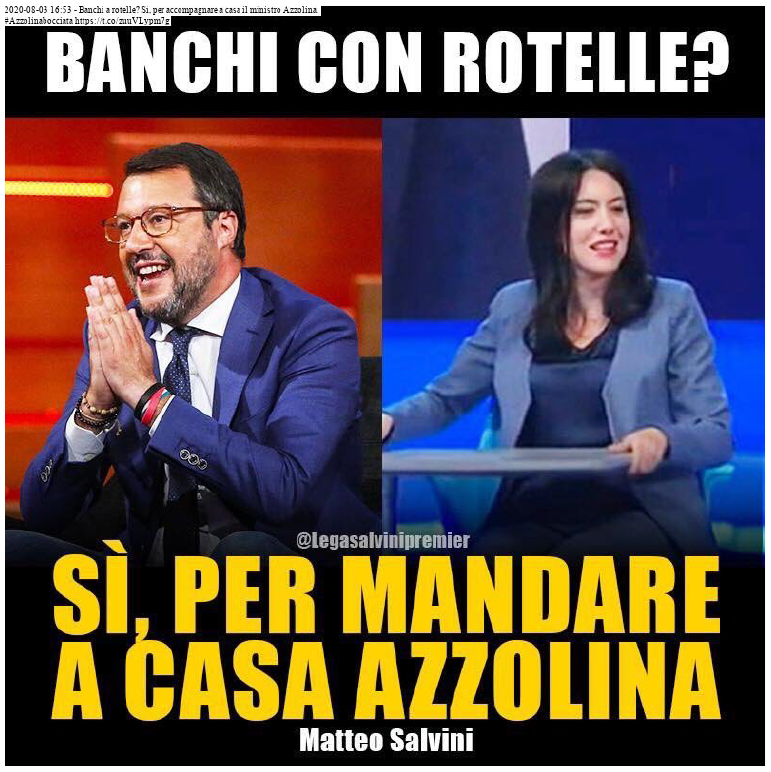
Tweet 3 August 2020.
Likewise, the positive construction of other politicians of the League is often based on a stark contrast with their political opponents, in a markedly personalized way. For instance, this is the case of a series of posters reporting the results of a survey (made by the financial newspaper Il Sole 24 Ore) on the most popular local administrators in Italy. All these posters rely (see Figure 5) not so much on content, but rather on the dichotomic division of space and the choice of photos; while League’s politicians are all smiling, political opponents’ photos (obviously taken out of their original context) show serious, worried, even desperate faces. Once again, the delegitimization of the adversary heavily relies on personalized elements, rather than on political content.
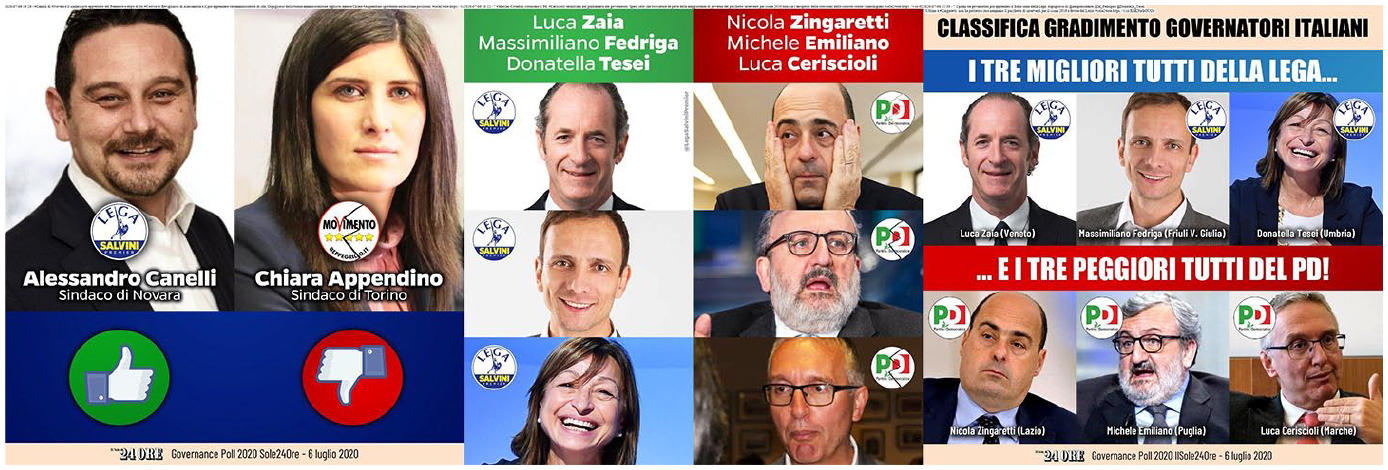
Tweets 6 July 2020.
However, while the personalizing function of CA focuses on reinforcing the (positive or negative) reputation of single individuals, CA also performs another function, which exploits individuals to attack entire groups.
The symbolic function of CA: attacking individuals to delegitimize groups
The symbolic function is central in CA. It is often present in Salvini’s communication based on CA; for instance, Figures 1 and 2 use a few individuals (members of the government) to represents political élites in general and Carola Rackete to represent all sea-rescue NGOs, respectively.
The symbolic function of CA is particularly powerful, as it allows to focus on personal traits, actions, and/or reputation of a single individual to attack a whole group. Individuals are usually weaker than groups, as they tend to rely on limited resources; moreover, CA tends to focus on personal weaknesses and traits (or actions) generally perceived as negative, rather than on political ideas and arguments; finally, attacking a single person offers the audience a very clear, specific target.
Figure 6 shows that, by means of the symbolic function, a single individual’s CA can be used to delegitimize several groups. In this case, the news of a sea-rescue vessel heading toward Italy with 211 migrants on board is associated (improperly) to Carola Rackete, a recurring target of Salvini’s attacks (Berti, 2021) while Rackete symbolizes sea-rescue NGOs in general, Salvini also adds the symbols of the governing Democratic Party and Five Star Movement, next to the word “Thank you” used ironically. Thus, a single individual becomes the symbol of a whole group of civil society organizations and of two major political parties.
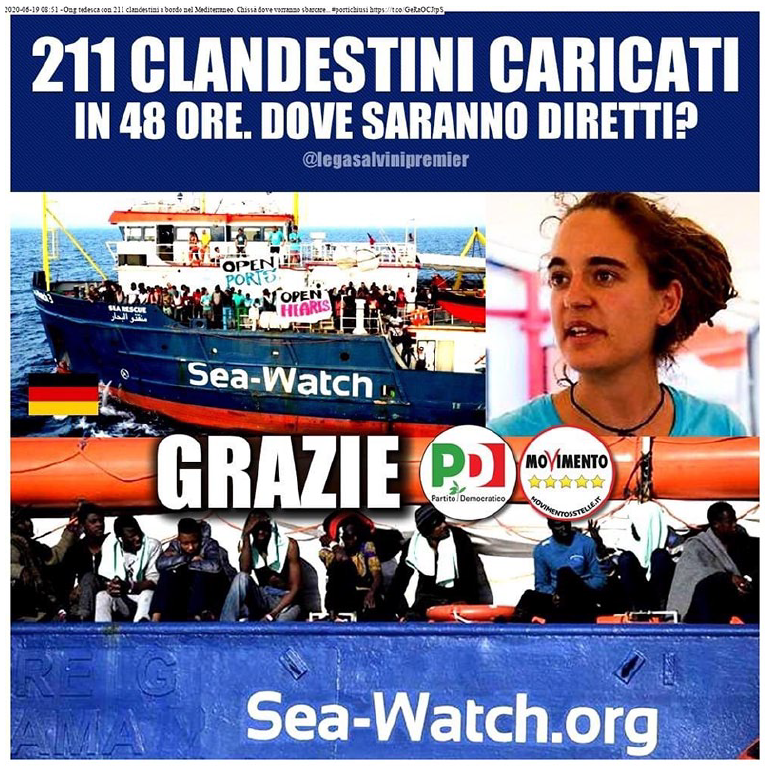
Tweet 19 June 2020.
Salvini often uses the symbols of parties in association with a single politician to reinforce the symbolic value of personal attacks. This is the case of the three images shown in Figure 7, in which Salvini associates the symbols of the Democratic Party and Italia Viva (center-left parties and members of the government coalition) to some of their representatives, whose quotes are accompanied, respectively, by the captions “Shameful!,” “Pitiful,” and “Ricoveratelo!” (i.e. “Admit him to a [psychiatric] hospital”).
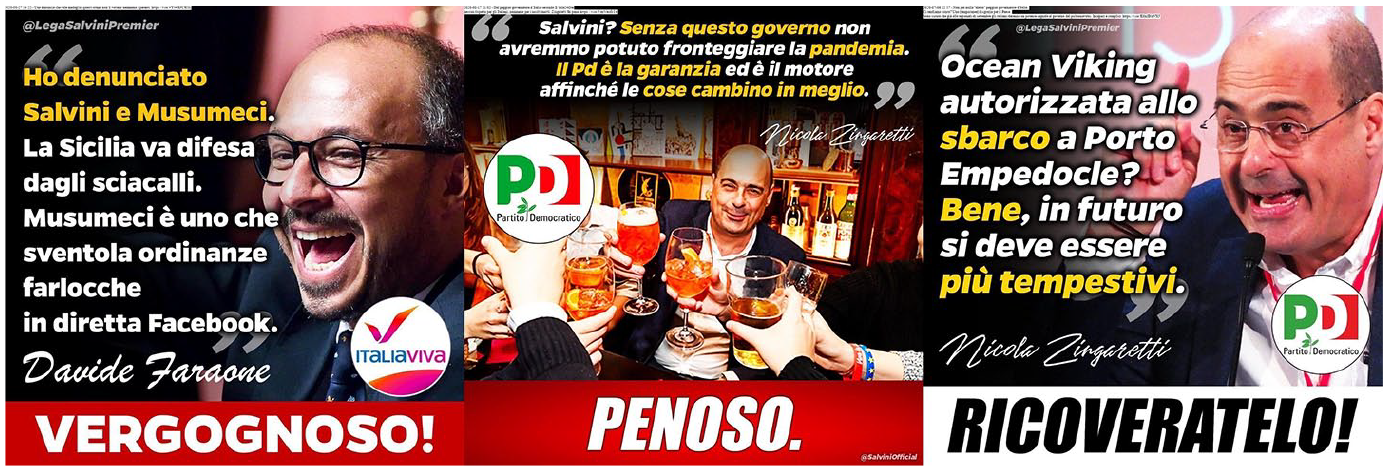
Tweets 17 August 2020, 27 August 2020, 6 July 2020.
The symbolic function of CA reinforces the populist Manichean conception of a world divided into homogeneous groups (Mudde and Kaltwasser, 2017), with the good people opposing the evil and corrupt élites. By using individuals as symbols, it is possible to broadly attribute their traits (either real or claimed) to the group they belong to; moreover, every single act committed by a member of a particular group can be exploited to draw a judgment about the entire group.
The symbolic function of CA is strictly linked to the discriminating function. The discrimination of particular groups can be pursued by attacking a single individual who appears to have the (supposedly) negative traits usually attributed to that group.
The discriminating function of CA: attributing individual traits to outgroups
By attacking individuals and attributing them a symbolic value for entire groups, CA can be exploited for several types of discrimination. Given the centrality of anti-migration stances in Salvini’s politics, migrants are often targeted by his political communication. Figure 8 puts together a series of tweets in which Salvini reports of crimes committed by foreigners; these people’s faces are shown and their names are made, but most importantly, their nationality is highlighted and associated with criminal behavior (“the notorious Roma thief,” “the Dominican perpetrator of the attack,” “the Tunisian trafficker”). CA against these individuals is thus used to support anti-migration ideas and, furthermore, to support anti-migration policies; for instance, the tweet about the “Tunisian trafficker” contains a text saying, “Thanks to the Security Decrees (which the government wants to cancel) these criminals can be punished.”
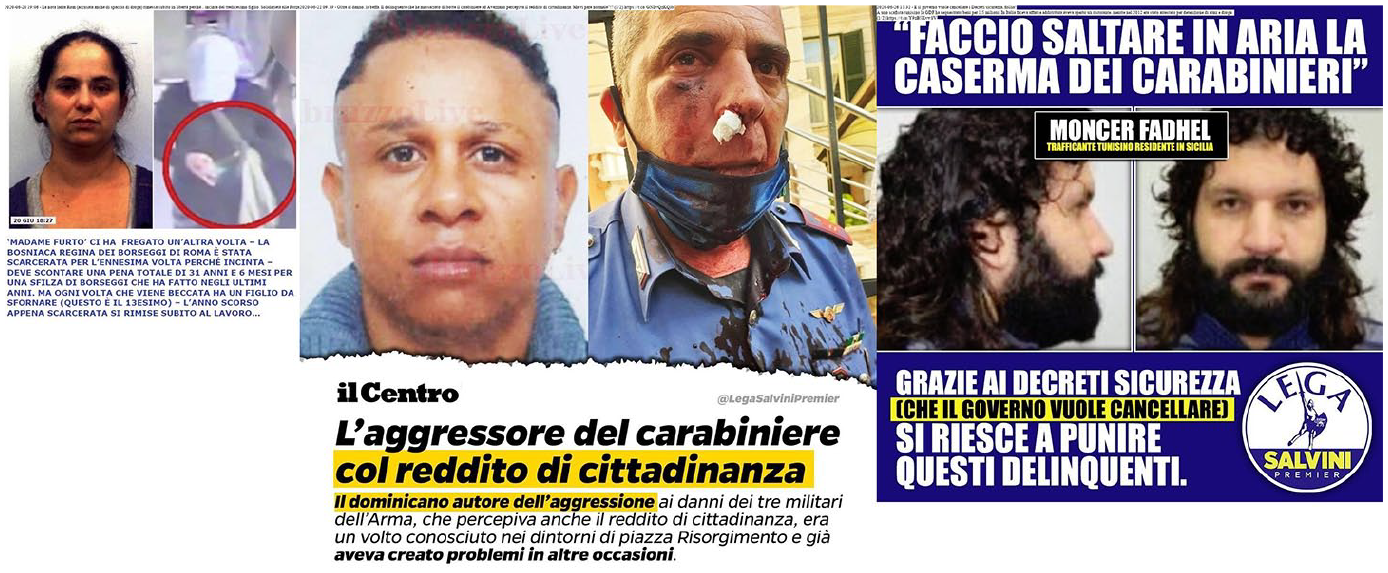
Tweets 20, 22, and 26 June 2020.
The so-called “Security Decrees” were made by Salvini at the time he was Minister of Interior. Their potentially negative implications from a legal, humanitarian, and political point of view have been recently highlighted (Cusumano and Gombeer, 2020; Geddes and Pettrachin, 2020). In these examples, Salvini is using CA against few individuals to construct the narrative of migration as a dangerous phenomenon strictly linked to criminality, thus discriminating migrants (and Roma people) to promote anti-migration policies.
The discriminatory potential of CA, in this case, is particularly relevant, as it is used against individuals and groups who have little political and media power to properly respond in the public arena.
The emotional function of CA: anger, humiliation, fear, and irony
Emotions, and especially negative emotions, play a relevant role in populism (Cossarini and Vallespín, 2019), so much that right-wing populism was conceptualized as “the politics of fear” (Wodak, 2015). Fear reinforces exclusionary politics; if people fear migrants, they will support anti-migration parties who feed this fear. Likewise, anger was shown to have a mobilizing potential in favor of populist actors (Wahl-Jorgensen, 2018).
Salvini often uses emotions on social media. In his tweets, he makes several references to shame, which, according to him, should be the dominant emotion of his opponents; he also exploits fear by often highlighting, for instance, how the current government is “dangerous”; he labels political adversaries with words such as “disgust” (schifo; disgustoso), “squalor” (squallore), “embarrassing” (imbarazzante), and “pity” (pena), to personally attack them and to generate anger and disgust toward them (see Figure 9 for some examples). The general tone of several tweets is of alarm, anger, and irony or mockery, as evidenced by textual and visual elements such as colors (the use of red to generate alarm and anger, see Elliot and Maier, 2012), punctuation (the abundance of exclamation points), uppercase writing, and warning symbols such as exclamation points inside yellow triangles (see Figure 9). Moreover, the individuals attacked are rarely represented with either neutral or positive expressions, but rather with angry faces, or (as in the case of Figure 9) in charmless poses such as while wiping sweat with a handkerchief. In all these examples, emotions are used in the context of CA, and directed toward single individuals who, through other functions such as the symbolic, end up representing entire groups. However, the combination of emotional communication and easily recognizable targets facilitates populist messages, and enables to shift from content discussion to personal attack.

Tweets 24 June 2020, 23 July 2020, 3 July 2020.
These are just a few examples of how different emotions can be exploited by means of CA to pursue a populist communication strategy. Several of the images previously analyzed had an emotional element (for instance, Figure 1 uses the word “Dangerous” to generate fear toward the government and sea-rescue NGOs), showing that the emotional function is relevant for CA to be effective.
Discussion and conclusion
Although CA can potentially be exploited by a wide range of political actors, including non-populists, its characteristics and its affinity with social media suggest that populists might be able (and willing) to exploit it with a high degree of effectiveness. Salvini, for instance, constantly and repeatedly uses CA to attack a broad range of individuals and exploits its different functions to reinforce other elements of a right-wing populist communication strategy. Understanding the logic of CA, therefore, is fundamental to fully unpack populist communication and to devise potential responses.
As seen in this article, there is a tight connection between the mechanism behind CA and the functions and the features of right-wing populism and this generates the affinity between them. The ratio behind CA can be summarized as follows: the direct aim of CA is the delegitimization of individuals by means of personal attacks. CA enables to delegitimize an individual by focusing on personal features and behaviors and to subsequently delegitimize entire groups symbolized by the “assassinated character”; CA shifts the discourse from the socio-political to the personal level and substitutes debate and argumentation with personal attacks, irony or mockery, emotional and derogatory language.
However, when employed by right-wing populists, CA also pursues the aim of reinforcing their ideology. Such aim is reached by means of the following five functions of CA:
The polarizing function reinforces anti-elitism (more broadly, the people/élite dichotomy) and nationalism;
The personalizing function reinforces the figure of the charismatic leader by constructing villains to sustain the narrative of good versus evil;
The symbolic function reinforces a Manichean worldview of heterogeneous groups by attributing negative traits to individuals and, subsequently, generalizing such traits to the groups they belong to;
The discriminatory function reinforces exclusionary politics and nationalism by attributing negative traits to individuals belonging to particular groups, for instance, on the basis of their nationality, religion, and political orientation;
The emotional function reinforces the aggressive tone and the focus on negative emotions of right-wing populism by offering easily identifiable targets (i.e. individuals) for these emotions.
The logic of CA is particularly fit for populist communication for a series of reasons. First, it enables populists to attack a broad range of groups (from political opponents to the media, from civil society organizations to foreigners, from single nations to supranational bodies such as the EU). Second, it enables simplifying communication by offering clear targets and focusing on individual traits and actions, rather than using arguments and engaging in public debate. Third, thanks to the disintermediation granted by social media, CA exploits the aggressive tones of right-wing populism, by circumventing journalistic gatekeeping and using provocation and scandalmongering to set the agenda (Wodak, 2015: 11). The use of personal attacks and, in a number of instances, defamation and insults by mainstream populist politicians may be seen as another step toward the “mainstreaming of extreme right-wing populist discourse” (Cammaerts, 2018: 7). Recent research pointed out how right-wing populist groups have been using social media to spread and normalize radical positions and discourses based on hatred and discrimination (Polli and Berti, 2020; Schwarzenegger and Wagner, 2018). If this process of normalization succeeds (as it seems to be happening), ideas and practices that were previously considered taboo may become acceptable and widespread (Kallis, 2013). The fact that an institutionalized political leader such as Salvini decides to frequently use CA as a tactic of his communication strategy suggests that such personal attacks have already reached a certain degree of acceptability and their use by mainstream politicians runs the risk of normalizing them even more. Other case studies demonstrated how attacks to a single individual can be a means of promoting discrimination and hatred. Kalmar (2020) showed how, in Hungary, Viktor Orbán’s attacks to George Soros promote antisemitism and Islamophobia. Likewise, Plenta (2020) showed how both Orbán (in Hungary) and Róbert Fico (in Slovakia) use personal attacks against Soros to construct conspiratorial narratives. These personal attacks exploit the delegitimization of an individual for political purposes, such as to face the migratory crisis (Hungary) and to quell mass protests (Slovakia).
Research showed that this type of aggressive and transgressive content effectively mobilizes social media users (Bucy et al., 2020) and, especially when mixed with humor and irony (as seen in several examples in this article), they tend to reinforce polarization and the moralization of politics (Sakki and Martikainen, 2021).
All these considerations raise important questions of ethical order. CA-based attacks do not simply delegitimize individuals, but can also become means of promoting discrimination and hatred on religious, ethnic, and other bases. Moreover, aggressive attacks based on CA can be directed at citizens or individuals who often have a little or no power to react, such as migrants and local activists.
Our study contributes to the field of digital populism by conceptualizing and describing a specific tactic of right-wing populist communication, which exploits aggressive personal attacks for political purposes. By showing how this tactic is used regularly and consistently by a mainstream populist politician such as Salvini, we also outlined the potentially discriminatory power of CA and the shift that it operates from political to personal. If this tactic proves particularly effective in engaging the audience of social media and generating political support, it might spread to other populist politicians and perhaps become part of mainstream political communication. Anecdotal evidence shows that this process might already be happening, as Italian far-right populist leader Giorgia Meloni has started to use CA in her social media communication. 5
When CA becomes a tactic ingrained in a communication strategy, it becomes central for other actors in the public debate to devise effective responses. The logic of CA described here suggests at least three possible types of responses, which take opposite directions but, somehow, can complement each other. One possible response may be an attempt to bring back the discourse from the personal to the political (or social, legal, etc.) level. This means reframing the discourse by operating a shift from individual attacks to arguments and debate. For instance, this is the case of Carola Rackete, who, after several personal attacks by Salvini, refused to comment on them and, eventually, exploited her new popularity to give a speech about migration and sea-rescue in front of the EU Parliament. 6 Another possible response may be to devise a strategy to restore the reputation of the individuals targeted by CA. A third possible response may consist in responding to CA with counter-CA, by attacking the attackers with their same means: however, this may entail a victory of this populist logic of communication.
Response to CA involves not only the individuals and groups attacked, but also the media. It has been shown that CA through social media relies on disintermediation, eroding the gatekeeping power of the media. Media, however, do not necessarily have to surrender to the aggressive and provocative tones of CA, aimed at setting the agenda by exploiting the “populist perpetuum mobile” (Wodak, 2015: 19), a cycle of scandal, denial, and justification that saturates the public debate. To a certain degree, media still have the power to give visibility, frame issues, and give voice to different actors of the socio-political arena.
This analysis attempted to conceptualize CA and its logic and show how it can become an ingrained tool of populist social media strategies. However, this study focuses on a single political leader in a specific national context. Further inquiries may approach different case studies and analyze CA from a comparative perspective. Empirical analysis may also delve into the audience’s reactions to CA to look for general patterns. Furthermore, research should examine the role of CA in the relationship between traditional and social media. While it has been shown that social media are ideal environments for the use of CA, it would be interesting to examine to what extent this type of communication spreads to traditional media and what are the potential implications for journalism.
Footnotes
Funding
The author(s) disclosed receipt of the following financial support for research, authorship, and/or publication of this article: The authors received financial support from the PRIN 2017 project “The transformation of democracy: Actors, strategies and outcomes in opposing populism in political, juridical and social arenas” (CUP E64I19003110005), funded by the Italian Ministry of Education, University and Research.
