



Abstract
New York State is one of only two states in the nation that processes all 16- and 17-year-old defendants as adults. Contrary to this seemingly punitive stance, the state also maintains a Youthful Offender Statute that requires mitigated punishments for youths up to their 19th birthday upon court designation of youthful offender status. This study empirically examines the individual and combined impact of the social status of being a “minor” and the legally awarded status of being designated a youthful offender, upon adult court sentencing decisions framing the discussion within broader conceptualizations of youthfulness, culpability, and punishment. Utilizing a population of all youths ages 16–21 whose cases were disposed in New York between 2000 and 2006, this study finds the legally defined status of youthful offender to provide much greater mitigation at sentencing than the more general social status of being a minor. Findings are discussed as they relate to categorical and individualized assessments of culpability. In addition, as the study finds individualized assessments of culpability to be related to factors such as gender and race, broader implications for the role of court assigned statuses and mitigation of punishment are offered.
While the notion that children are different than adults has a long social and legal history, it was during the 1800s that the issue came to the forefront of our nation’s criminal justice policy through the child-saving movement (Platt, 1969). The movement was premised in the idea that youth are different than adults, primarily because they are still developing and capable of change. Thus, advocates questioned the wisdom of placing wayward youths in penitentiaries with hardened adult criminals where they would develop and change under negative rather than positive conditions. A municipal judge in New York City at the time wrote, “the penitentiary cannot be but a fruitful source of pauperism, a nursery of new vices and crimes” (Pierce, 1869). This statement exemplifies the thinking of the time which emphasized that youth are (1) still developing and learning, (2) are highly influenced by the environment of such learning, and (3) therefore need to be treated differently than adults. From the creation of the first House of Refuge in New York in 1825 to the first official Juvenile Court in Cook County Illinois in 1899, the child-saving movement continued to embody the belief that minors are fundamentally different than adults.
However, as long as there has been a separate system of justice for juveniles in America, there have been procedures in place that allow certain youths to be processed as adult criminals. Referred to as the “adult-juvenile” (Barrett, 2013), these youths are children “under the age of 18 caught in legal limbo: legally labeled within the justice system as an adult for the purposes of criminal prosecuting, yet still defined as a minor in all other legal and social settings” (p. 12). In many instances, this adult status is conferred based solely on the seriousness of the crime committed with public sentiment seeming to be that normal youths are capable of minor wayward behaviors but that more serious and violent crimes are only committed by more mature and culpable youths.
While many statuses may be of little consequence, this conferred “adulthood” on a minor for criminal justice purposes becomes a “master status” as it structures and defines all that happens next. The youth, who is by all other social definitions a child, is denied the rehabilitative efforts of the juvenile justice system and instead placed in a retributive adult criminal justice system. To date, the phenomenon of processing minors in adult court has led to much research aimed at understanding which youths ultimately reach adult court and what this adult court processing means for later recidivism outcomes. Much less research, however, has focused on the immediate sentencing outcomes of these youths and how courtroom actors respond to this conflicted status of “adult-juvenile.”
The current study seeks to examine the impact of such conflicted social and legal statuses on the sentencing outcomes of youths processed in one state’s adult court system. The state of New York is selected as the context for the study for two reasons. First, it is one of only two states that defines the age of adulthood for criminal justice purposes for all youths as 16.
1
Thus, an adult court judge in this state sees not just the most serious or chronic youthful offenders (YOs) captured by transfer policies, but rather all youths ages 16 and 17, regardless of the seriousness of the offense committed. Second, since the 1940s New York has maintained a YO law that allows an adult court judge to assign a formal legal status of YO to any defendant who is below the age of 19 at the time of the crime (Chandler, 1982). This formal legal status provides one way for the court to recognize the paradoxical “adult-juvenile status” and provide mitigation of punishment. This study thus seeks to examine the independent and combined effects of “minor” status and “YO” status on immediate court outcomes through the following research questions:
Do adult court sentencing decisions reflect a general trend of mitigation to youth socially defined as minors regardless of their legal designation of adults for criminal justice purposes? Or, is mitigation of punishment provided only for, or to a greater extent for, only certain youth deemed worthy of leniency and granted the legal status of YO? And, if the answer to question 2 is yes, this then begs the question: “What characteristics of the offender and offense impact such determinations?”
To clarify, if leniency is observed generally for 16- and 17-year-olds based on their ascribed status as minors, then this would imply that even though these youth are processed in an adult court, judges are not categorically willing to hand down adult sentences based on traditional considerations of youthfulness. If, however, mitigation is reserved only for, or to a greater extant for, youth granted YO status, then this would imply that the court is willing to accept the status of “adult” for some minors but not others. If the latter is the case, then this begs the final research question of which youths are deemed worthy of such leniency?
These questions are tested using six years of adult court data from New York State that includes the entire population of individuals ages 16–20 convicted in adult criminal court during this time. 2 Before presenting the analyses, however, it is important to situate the research in the current literature regarding the processing of minors in adult courts and to provide a greater detail on the New York State sentencing context.
Juvenile or adult? The court of jurisdiction and its meaning
The origin of the juvenile court lies in the fundamental belief that children are still developing into the adults they will one day become. As such, youths are (1) less culpable for their actions as they have not yet developed the maturity to grasp the consequences of their actions or to control impulses (Casey et al., 2000; Grisso, 1996; Lenroot and Giedd, 2006; Morse, 1997; Steinberg, 2008; Steinberg and Cauffman, 1999; Zimring, 1998), (2) highly susceptible to outside influences when making decisions (Aronson, 2007; Dahl, 2001; Scott et al., 2007; Zimring, 1998) and, perhaps most importantly, (3) still capable of great change if provided the right opportunities (Bernard and Kurlychek, 2010). Therefore, the juvenile court was not instituted as merely a separate, less formal, mechanism for processing young offenders but rather as the cornerstone for an entirely separate system of justice focused on providing such “right opportunities.”
Although the practice of juvenile justice has been criticized for promoting what one group considered ideal development (Platt, 1969), and for disparate treatment of youth dependent on gender, race, and ethnicity (Bridges and Steen, 1998; Fader et al., 2014; Leiber, 2002; Pope and Feyerherm, 1995; Pope et al., 2002), the fact remains that processing in juvenile court is less onerous than adult prosecution. To provide some context, the 2014 National Report on Juvenile Offenders and Victims shows that about half (46%) of all arrested juveniles were handled informally by the system rather than having their case petitioned to court (p. 165). This focus on diversion to avoid further criminalization is a unique aspect of the juvenile justice system. Moreover, when a case does move forward to formal processing, the juvenile courtroom tends to be less formal and less adversarial than the adult courtroom and at the disposition stage the juvenile court typically has more options available to rehabilitate, rather than punish, the youth. While these differences are a matter of degree and not an absolute distinction, the general emphasis in juvenile court remains in crafting a disposition that meets the best interests of the child rather than meeting out a sentence proportional to the crime committed.
Given these philosophical and practical differences between juvenile and adult court justice, many have questioned whether it is ever right to process a minor in an adult court, and if so, which youths are possibly so culpable for their offenses that an adult court outcome is warranted. In a series of recent Supreme Court decisions, the U.S. Supreme Court has indeed “laid down the law” that at least some adult court outcomes are never appropriate for a minor. For example, Roper v. Simmons (2004) categorically forbid the death penalty for anyone who was under the age of 18 at the time of their offense while Graham v. Florida (2010) and Miller v. Alabama (2012) restricted the use of Life Without Parole for minors.
Regardless of such mandates, scholars have also questioned whether adult court judges are really willing to hand down adult sentences to minors. Empirical studies on this topic are mixed, with some finding that transferred youths suffer more severe outcomes than their counterparts maintained in juvenile court (Eigen, 1981; Myers, 2001) while others suggest that juveniles retained in the juvenile system actually received more severe outcomes (Bortner, 1986; Champion, 1989; Clement, 1997, Hamparian et al., 1982; Klein, 1997).
Another line of inquiry in this area has questioned whether juveniles retained in the juvenile system are the correct comparison group when assessing whether or not adult court judges truly hold minors equally accountable for their crimes as similar adults. Kurlychek and Johnson (2004) argue that because the two systems have such different underlying philosophies and practical resources available to them the correct comparison group for transferred juveniles is actually similarly situated young adult offenders ages 18–21. In two studies performing such a comparison in Pennsylvania (Kurlychek and Johnson, 2004) and Maryland (Kurlychek and Johnson, 2010) the authors actually find a “juvenile penalty” in which these youths actually received more severe sentences. Interestingly, however, another study by Kurlychek (2010) examined the adult court outcomes of youths (16 and 17 years of age) processed automatically as adults in the state of North Carolina and found that under this condition the minors received leniency at sentencing. The author reconciles these findings with her earlier work, suggesting that the practice of waiver or transfer itself might indicate “culpability” and thereby lead to harsher penalties.
In addition to a mere “youth discount” (Feld, 2013) or “juvenile penalty” (Kurlychek and Johnson, 2004, 2010) at sentencing, several studies have indicated that adult court judges may actually recreate some components of the juvenile court within the adult court when processing minors.First proposed by Singer et al. (2000), this idea has been reproduced and extended in several more recent studies. Kupchik (2006) specifically examines the outcomes of young juveniles (ages 13–15) statutorily excluded from juvenile court in New York state and processed in a special “Youth Part.” On the very surface this system exemplifies the contradicting statuses of adult—transferred to adult court—and minor—processed in a separate youth part. Kupchik describes the process in these courts as “sequential” justice in which the first stage—fact finding and conviction—is based on traditional adult court concerns such as strength of evidence, followed by a second stage of sentencing in which the judge returns to a juvenile justice model crafting a disposition focused on rehabilitation. Kupchik (2006: 130) concludes that “Criminal court decision makers view transferred youths as adolescents who are less culpable for their offenses than adults, and they reintroduce elements of juvenile justice to criminal court case processing.”
More recently, Barrett (2013) provides a detailed qualitative analysis of how one judge’s philosophy and practice in a Youth Part of New York’s adult court system maintains a traditional juvenile court philosophy. In these detailed accounts of interactions between the youths and the judge, the dialog shows how the judge reintroduces individualized justice to the adult criminal justice system through practices such as addressing the youth by first name and asking family and friends for information on the youth’s behavior. Also, while often verbally admonishing the youth’s behavior, the judge’s comments affirm the ability of the youth to change. Barrett further describes how YO status is used by this particular judge to replicate a juvenile justice model in which the record is sealed and the punishment is most often a term of probation.
While these studies provide interesting insight into how judges and court workers may view juveniles in adult court, most are directed primarily at transferred/excluded juveniles (exception Kurlychek, 2010) and those conducted in New York are specific to a designated Youth Part designed to blend the juvenile and adult court worlds. The current study takes this research a step further by analyzing the full population of minors (ages 16 and 17) who, according to New York law, fall outside the original jurisdiction of the juvenile justice system. 3 In addition to the “adult-juvenile” paradox proposed by Barrett, this research context provides another interesting status distinction in which the court may grant some, but not all minors, YO status that provides for sealed records and mitigated punishments.
New York’s YO law
Around the turn of the 20th century, the first juvenile court in New York was established in Manhattan. The court had jurisdiction over any child over the age of seven and under the age of 16 who committed an act that would be designated a crime if he/she were an adult (New York Penal Law Section 2186). While most states in the nation eventually increased the maximum age of juvenile court jurisdiction to 18, New York officials took a different approach creating YO status. Originally enacted in 1943 and revised in the 1970s, the YO law (Barrett, 2013; Chandler, 1982; N.Y. CPL. Law § 720.10). The current version allows YO status to be awarded to any defendant age 14–18 at the time of the crime who has no prior felony convictions, felony YO adjudications, or juvenile offender adjudications for certain designated felonies and who is not indicted for a Class A-I or A-II felony (murder), an armed violent felony, rape in the first degree, a criminal sexual act in the first degree, or aggravated sexual abuse. As with any law, however, there are exceptions to these rules. A judge can still grant YO status if in the opinion of the court such status would serve the interest of justice (C.P.L. § 720.20(1)(a)).
There are many benefits to YO status. First, the adjudication records are sealed. This reduces stigma on the youth and prevents the loss of civic rights and social opportunities. YO status also extends benefits through mitigation at sentencing by restricting the maximum sentences allowed. For example, for a felony YO adjudication the maximum prison sentence is that of a Class E Felony, which is an indeterminate sentence of 1 and 1/3 to 4 years. Adults face a possible seven years to life depending on the actual level of the felony. In addition, for a Class A misdemeanor YO status mitigates the possible punishment from one year incarceration to only six months.
Current study
Research questions
While the awarding of YO status clearly calls for mitigation at punishment, existing research suggests that being a minor in adult court may mitigate punishment in some instances but aggravate punishment in others. These different outcomes may be further nuanced by judicial assessments of culpability and maturity. Thus, the New York legal definition of all 16- and 17-year-olds as adults for criminal justice processing, as well as its somewhat contradictory YO law that extends mitigation to some, but not all youths up to age 19, provides a compelling sample upon which to study the impact of conflicting social and legal statuses. In specific, this study seeks to explore the following research questions.
Do adult court sentencing decisions reflect a general trend of mitigation to youth socially defined as minors regardless of their legal designation of adults for criminal justice purposes? Or, is mitigation of punishment provided only for, or to a greater extent for, only certain youth deemed worthy of leniency and granted the legal status of YO? What characteristics of the offender and offense impact determinations of YO status?
Finally, as not all youths eligible for YO status receive it, and YO status offers potentially meaningful benefits, it is also important to gain insight into how often and to whom the court awards YO status thus leading to the third research question,
Sample
The New York Division of Criminal Justice Services provided data on all 16- to 20-year-olds convicted in the state’s adult criminal justice system from 1 January 2000 through 31 December 2006 (n = 224,890). 4 A small number of cases were removed because there was an unusually long time between arrest and disposition (over three years, n = 2716) as it was thought the advanced age of the defendant at sentencing might override any prior considerations of youthfulness. Cases were also eliminated if key information was missing on the offense or sentence. The final sample for this analysis was 211,985 cases or 94% of the original sample.
For each case summary variables were created to capture the seriousness of the offender’s criminal history. Flag and numeric variables indicate whether the individual had any, and the number of any, prior adult felony or misdemeanor convictions, prior felony or misdemeanor YO adjudications and whether the individual was ever designated a juvenile offender. 5 Several variables were also created to represent the nature and seriousness of the convicted offense. Offense types were categorized as homicide, assault, robbery, other person offense, weapons offense, burglary, other property offense, drug distribution, drug possession, disorderly conduct, 6 and “other” offenses. A dichotomy was created to indicate if the most serious current charge was a felony or misdemeanor and a numeric scale provided by the Division of Criminal Justice Services was utilized to indicate a more detailed ranking of seriousness. This scale began with murder ranked at “100” as the most serious and increased in increments of 100 to a score of 24,200 (least serious). In addition, because the conviction offense can differ from the original arrest offense due to charge bargaining, a variable entitled “classification change” was created to measure any change in charge severity from arrest to disposition. For this variable the most serious charge classification of Felony A was coded as 10, a Felony B as a 9, and so on down to the least serious category of infraction/violation that was coded as 1. “Classification change” is then the numeric representation of the most serious arrest charge minus the numeric representation of the most serious conviction charge.
Traditional demographic variables were also created to capture sex, race, and ethnicity. Also important for this analysis was the creation of a variable to indicate if the case was eligible for and received a designation of YO status. Finally, as prior sentencing research suggests that context may also influence sentencing (Johnson, 2003), county and regional dummy variables were created to control for variation in sentencing that might occur due to differences across jurisdictions. 7
The key dependent variable of interest is the sentence imposed by the judge. This is explored two ways. First, the overall severity of the sentence is characterized as a continuous variable ranging from 0 (no confinement) to 300 months. 8 Second, the type of sentence is characterized as confinement (any indication of jail or prison), probation (a probation sentence without accompanying jail or prison time), or “other” sentence type including no penalty, time served, costs, fines, and community service. The second dependent variable of interest is the awarding of YO status. This is coded as a simple dichotomous variable (1 = YO status).
Sample descriptive statistics
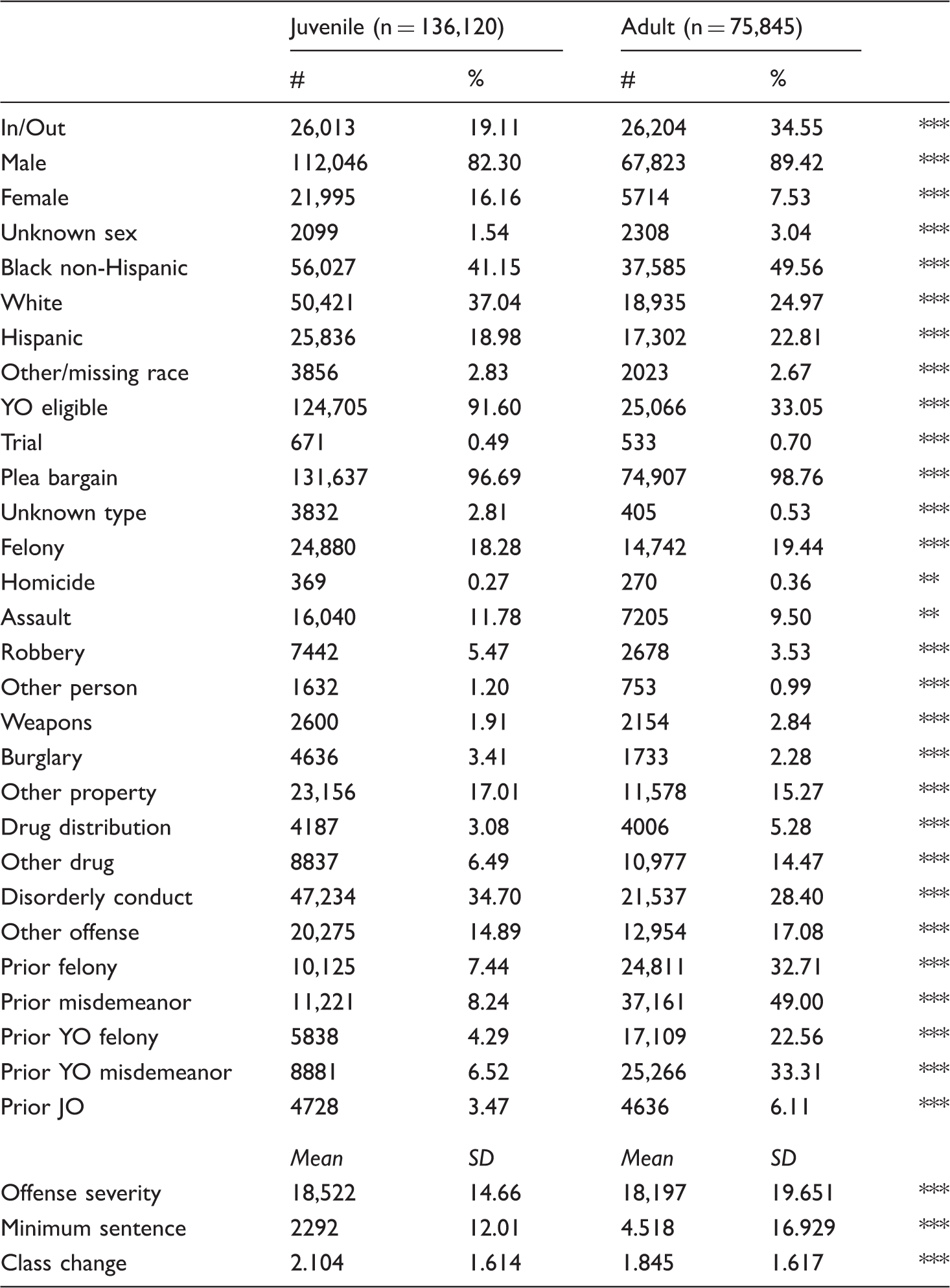
JO: juvenile offender (juvenile under the age of 16 transferred to adult court); YO: youth offender. * = .05, ** = .01, *** = .001.
At the bivariate level it is clear that adults are much more likely than minors to receive some sentence of incarceration (34.5% as compared to 19.1%). The minor sample is also more white (37% versus 25%) and female (16.2% versus 7.5%) than the adult sample. In both samples, plea bargains are by far the most common mode of disposition (96.7% of the minor sample and 98.8% of the adult sample). This difference is statistically significant with minors being slightly less likely to accept a plea. There were statistically significant differences in the samples across all offense types; however, the largest difference was for disorderly conduct with minors being much more likely (34.7% of sample versus 28.4% of sample) to receive a disorderly conduct conviction. Although minors were significantly less likely to be convicted of a felony, the magnitude of this difference was small (18.3% of minor sample and 19.4% of adult sample).
The most important difference between the samples was the greater likelihood of the adult sample to have prior convictions and adjudications. These variables were explored as both dichotomies and continuous counts. As the method of counting prior record did not impact other results, for parsimony, dichotomous variables are presented.
Of the minor sample, 91.6%, or almost everyone, was deemed as eligible for YO status while only 33.1% of the adult sample was deemed eligible. This large difference is driven by eligibility criteria excluding all 19- and 20-year-olds from eligibility. When looking at a more specific age breakdown it was found that 94.4% of 16-year-olds were eligible, 89.5% of 17-year-olds, and 70.1% of 18-year-olds. Thus, there is an age-related trend with eligibility. However, being deemed eligible for YO status does not ensure its application, as only slightly over one-third (37%) of those initially deemed eligible received YO status. More specifically, 39.4% of eligible minors received YO status compared to only 24.8% of eligible adults (age 18).
Methods
To address the overall severity of sentence awarded, Tobit regression is used with a truncated dependent variable represented as “sentence severity” that captures both the decision to incarcerate and the length of incarceration (Tobin, 1958). This method is commonly used for censored dependent variables and has previously been used in sentencing research to account for the fact that sentences have a bottom threshold of “0” (Albonetti, 1997; Kurlychek and Johnson, 2004; 2010). For this analysis, the dependent variable, sentence severity, is logged to account for its highly skewed distribution and greater variability in the higher ranges.
The second representation of the dependent variable captures sentence type comparing three categories of sentences: confinement (e.g. jail, prison), probation, and other (ranging from nothing, to costs and fines, to community service). In some cases a sentence of jail and probation is given indicating the individual is to spend a certain time in confinement followed by a period of probation supervision. For this analysis the more severe sentence of “jail” is selected. Multinomial logistic regression is used for this analysis due to the categorical nature of the dependent variable (DV). Interpretation of multinomial regression coefficient typically uses the log transformation to discuss the odds ratio or the difference in the odds of one type of sentence occurring as compared to the odds of another type of sentence occurring. In the models, I use an “other/community” sentence” as the reference category. To explore the awarding of YO status simple logistic regression is used based on the dichotomous nature of the DV. 10
Results
Tobit regression of sentence severity
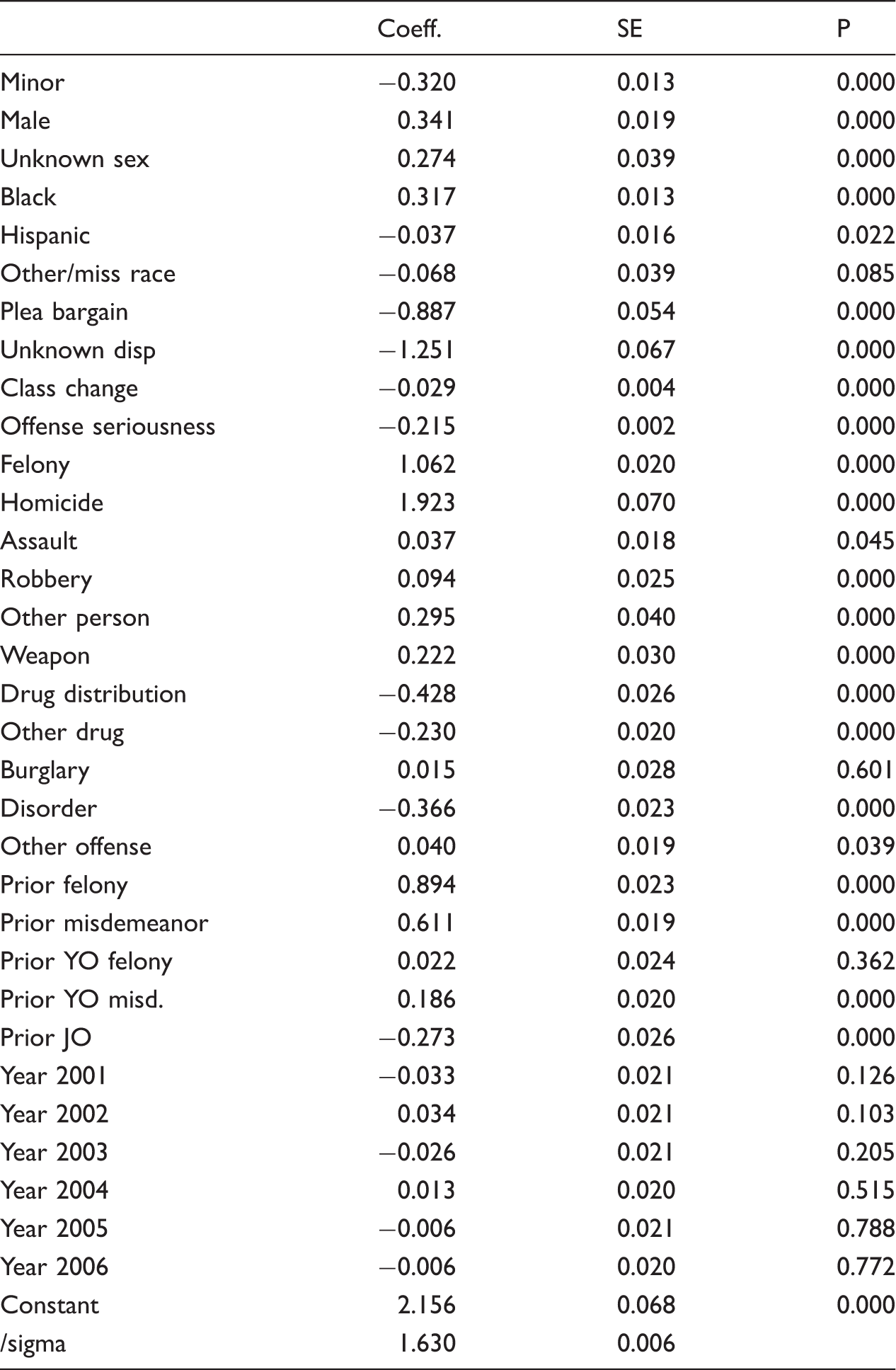
JO: juvenile offender (juvenile under the age of 16 transferred to adult court); YO: youth offender.
Multinomial logistic regression of sentence type
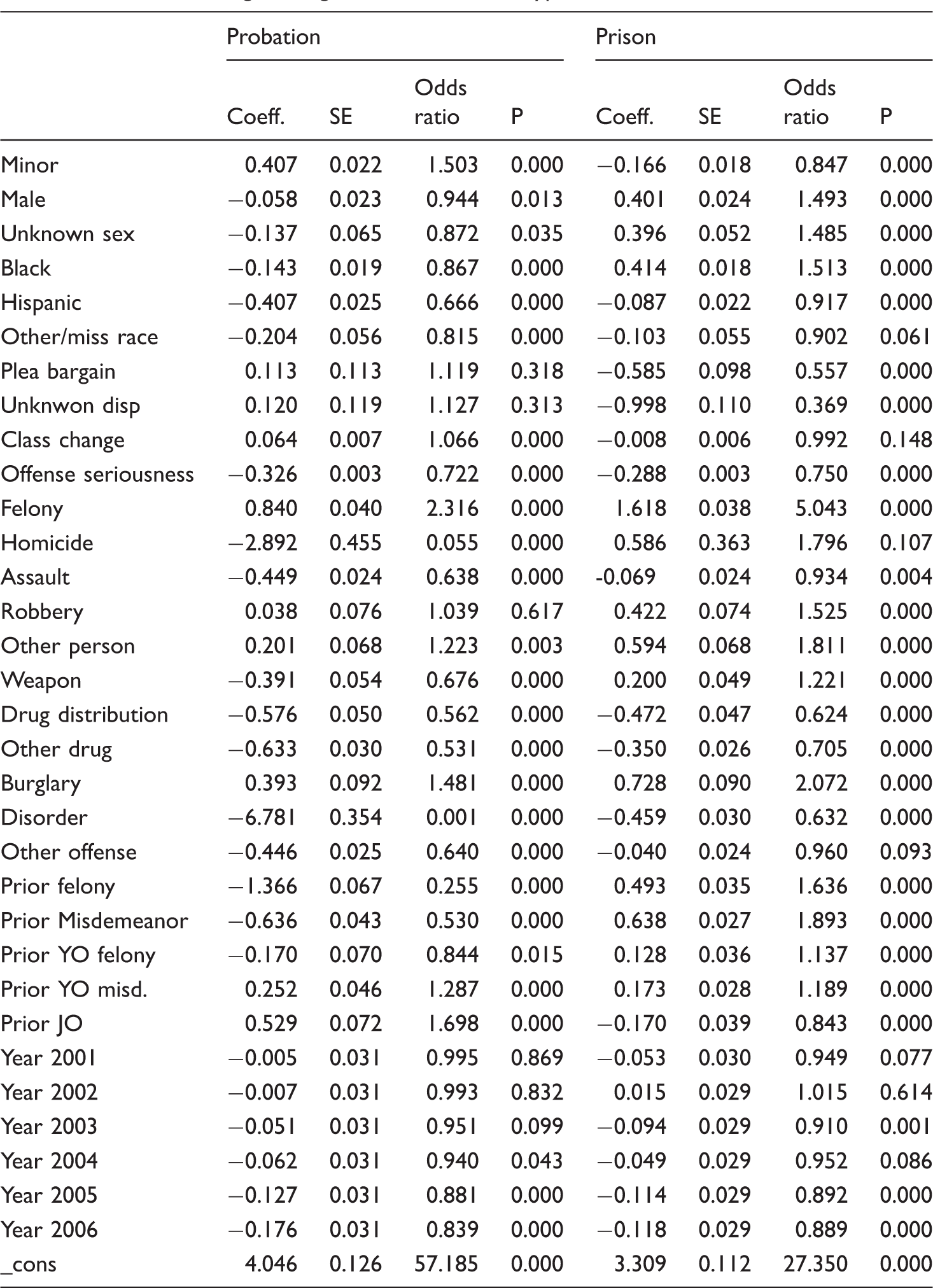
JO: juvenile offender (juvenile under the age of 16 transferred to adult court); YO: youth offender.
Table 2 shows that being a minor results in a −.320 change in the logged severity of sentence, which corresponds to a 27.4% less severe sentence for minors controlling for observables. Other coefficients of interest are that being male and being black increased severity of sentence (41.2 and 38.5%, respectively) controlling for observable legal characteristics. As might be expected more serious offenses and more substantial prior records lead to more severe sentences and plea and charge bargaining lead to less severe sentences. Fixed effect models controlling for county and regional differences provided almost identical results and confirmed these findings with only a slight alteration to the magnitude of the effect of being a minor (coefficient = −.358, or 30.1%, p = .000). 11
Regarding sentence type (Table 3), the odds of a minor receiving a sentence of probation were 1.5 times that of an older offender (e.g. about 50% higher) and the odds of receiving a sentence of confinement were reduced by about 15%. Again, gender and racial patterns held with males, blacks, and Hispanics being more likely to receive sentences of confinement. All other control variables appear to operate in the expected directions as well. Fixed effect models again confirm that the findings are robust to controls for county and regional differences in sentencing patterns.
Tobit regression of sentence severity including YO status in model
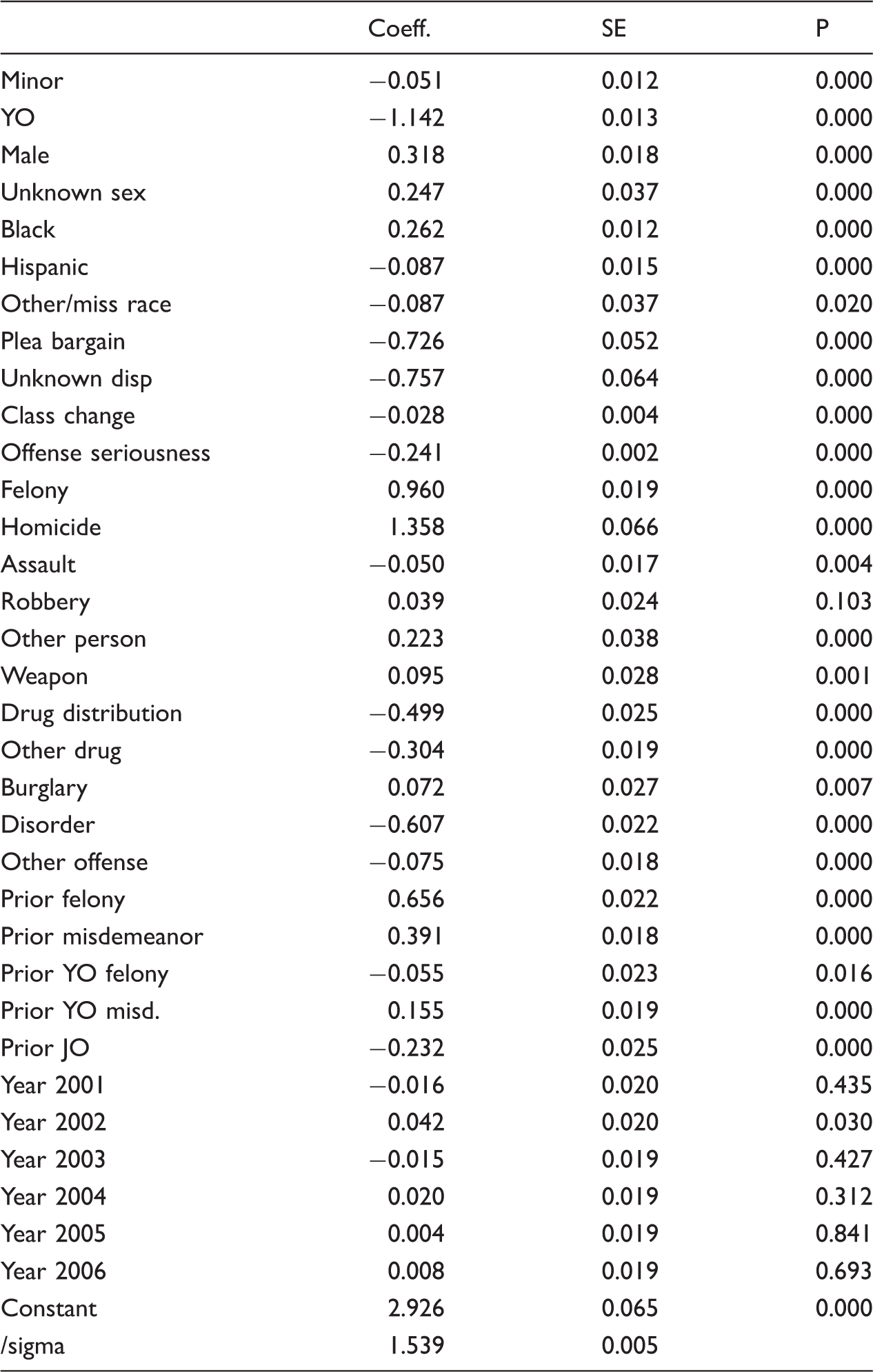
JO: juvenile offender (juvenile under the age of 16 transferred to adult court); YO: youth offender.
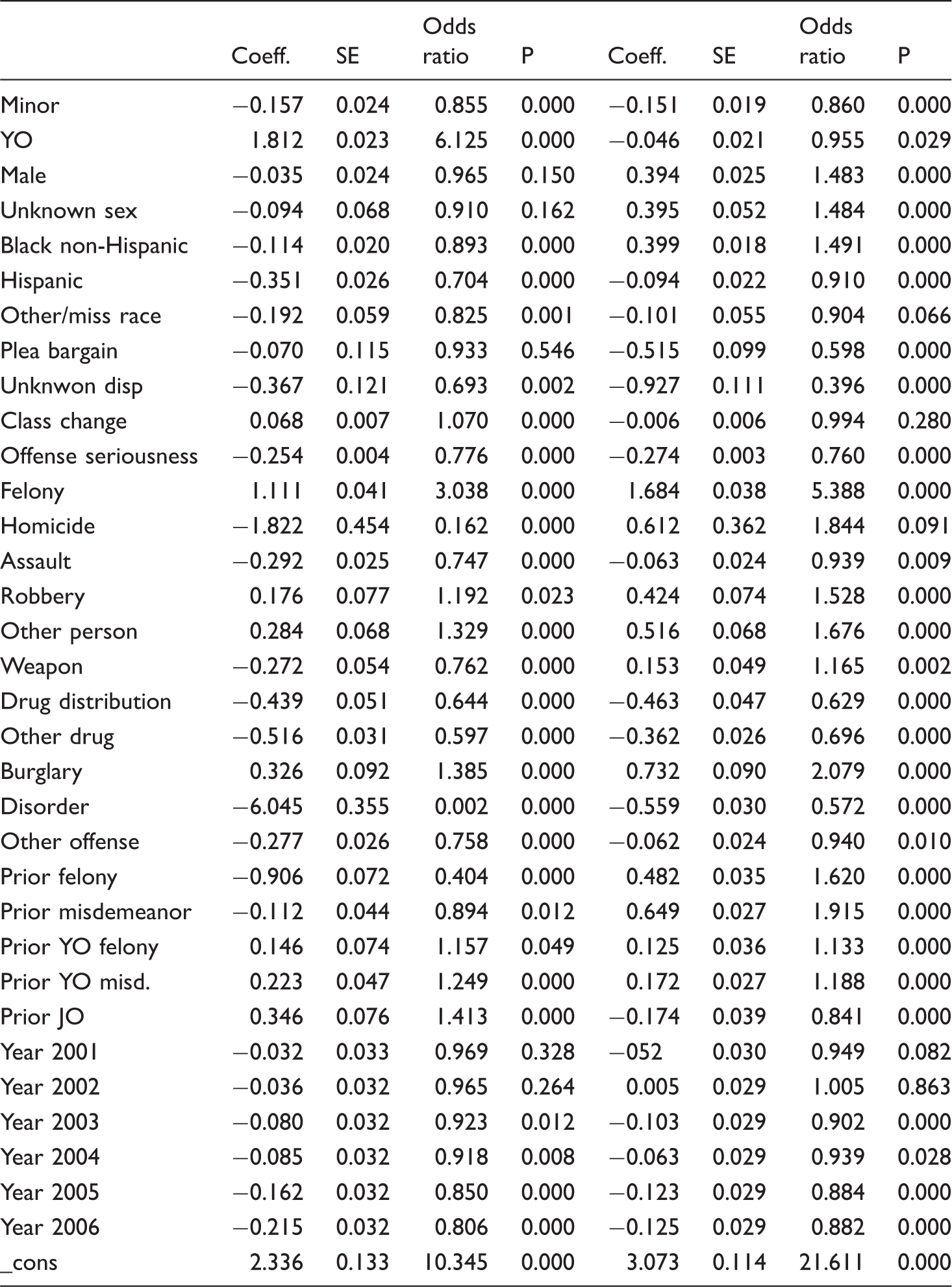
Multinomial logistic regression of sentence type including YO status in model
JO: juvenile offender (juvenile under the age of 16 transferred to adult court); YO: youth offender.
Regarding sentence type, YO status and minor status are still significantly negatively related to receiving a sentence of confinement with minor status having a slightly larger effect in this instance (14% reduction in the odds of confinement for minors and only a 4.5% reduction for YO offenders as compared to other sentence types). However, this lack of a large impact for YO status on the choice between prison/jail and other sentences may be in large part due to the greater impact of YO status on a preference for probation sentences. That is, controlling for observables, youths afforded YO status had five times greater odds of receiving a sentence of probation than an “other” type of sanction, while minor status actually had a negative impact on receiving probation over an “other” type of sentence when holding YO status constant. This is interesting in that it reveals that while probation sentences may be the primary outcomes for youths in New York’s adult system, being of traditional juvenile age further mediates even the use of probation sentences in favor of other community-based or diversionary tactics.
Sensitivity analyses
Sample specification
Because not all youths were YO eligible, and eligibility status is confounded with age and prior record, in addition to merely controlling for these variables additional sensitivity analyses were performed by altering the sample in two ways. First, the sample is restricted to only those youths under the age of 19, thus, those who could be potentially be eligible for YO status. Second, the sample is restricted to only youths who have no prior record regardless of YO eligibility thus entirely eliminating possible confounds with prior record. If the findings in the original models are robust, coefficients of similar magnitude and significance should result in each of these nuanced samples.
First, restricting the sample to only those potentially eligible for YO status, receiving YO status reduces the sentence severity by 69% and minor status independently reduces the sentence severity by 10%. Second, when restricting the sample to only those youth with no prior record, the impact of YO status remains significant and increases slightly to a 70% reduction in sentence severity, and the independent effect of minor status also increases slightly to about 13%.
Regarding sentence type, when restricting the sample to only those potentially eligible for YO status, all coefficients remain significant and are almost identical to those in the original sample. When restricting the sample to only those with no prior record, the coefficient for minor status on the odds of probation remains significant and is similar in magnitude but the coefficient for YO status on a sentence of confinement becomes insignificant. This may be due in part to the overall lesser use of sentences of confinements for individuals with no prior criminal history. Overall these alternative analyses reveal the findings remain highly stable both in magnitude and significance.
A final sensitivity analysis disaggregated the sample into original felony charges and original misdemeanor charges as some areas, particularly New York City, operate separate misdemeanor and felony courts. 12 All findings remained similar except that being a minor has a slightly larger impact on reducing sentencing severity in the felony sample (−.417) than in the misdemeanor sample (−.129), which makes sense as sentencing ranges are more restricted for misdemeanors. Also, interesting though when considering the felony only sample, YO status actually increased the odds of receiving confinement by about half, while being a minor still reduced the odds of confinement. This indicates that the benefit of YO status for felony offenders may be realized in lesser sentences lengths rather than reduced risk of confinement.
Receiving YO status
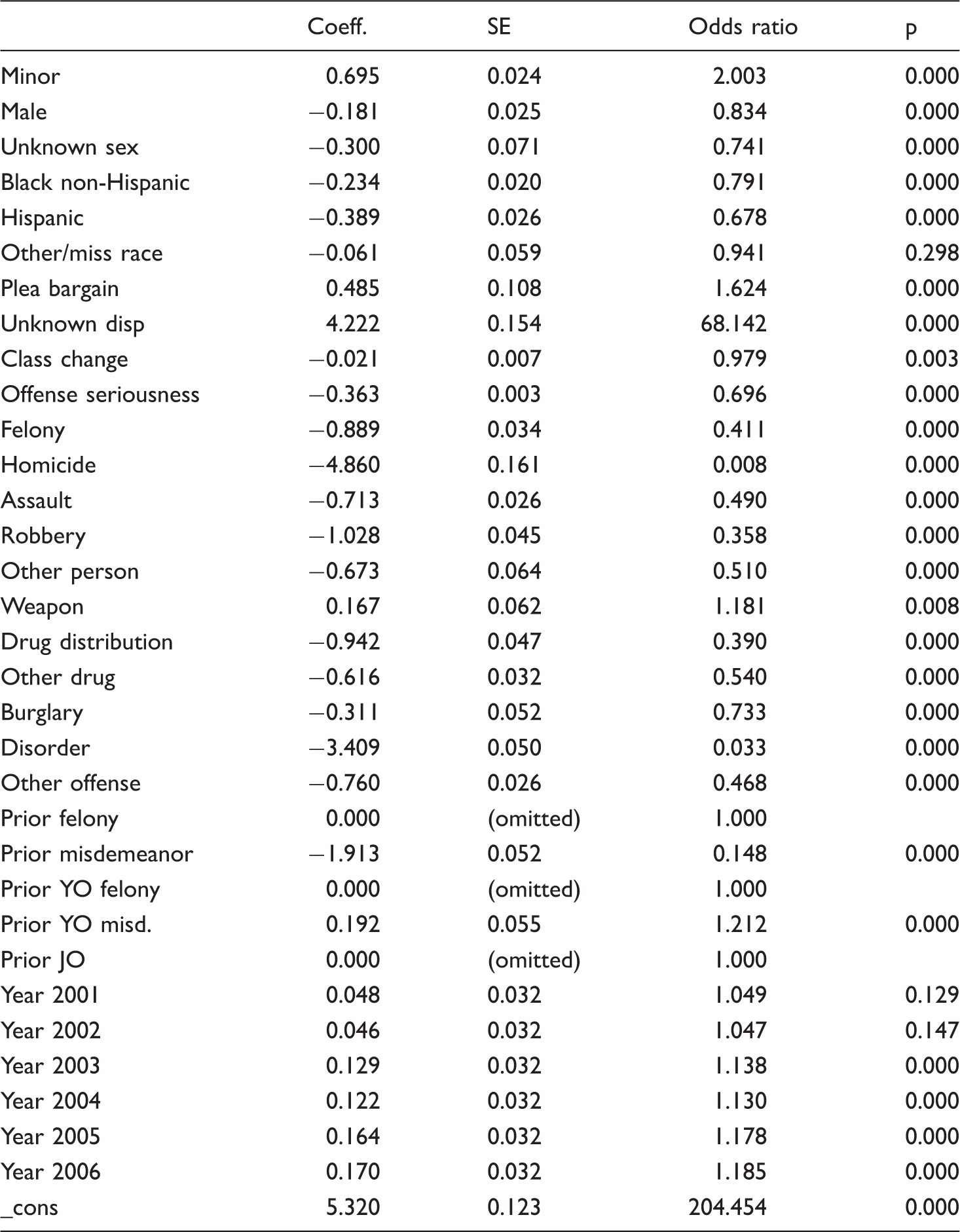
Logistic regression of receiving YO status given YO eligibility
JO: juvenile offender (juvenile under the age of 16 transferred to adult court); YO: youth offender.
The results also show that every offense category, except weapons, is negatively correlated with the odds of receiving YO status (reference category = other property). At first this finding seemed counterintuitive. While it makes sense that more serious offenses would reduce the odds of being awarded YO status, this raises the question as to why offenses less serious than the reference category, particularly disorderly conduct, would also reduce the odds of being awarded YO status? Further investigation into these charges revealed that these offenses are classified as violations, which, by the nature of the statute, means the record is sealed and the possible punishment is no more than that allowed by YO status. Thus, it is possible the judges merely felt awarding YO status had no meaning in these situations and that the plea to this minor level of offense was leniency in and of itself.
Discussion and conclusions
This study examines the sentencing outcomes of youths in New York’s adult criminal courts. New York provides an interesting avenue for research as it maintains 15 as the maximum age for juvenile court jurisdiction meaning that all 16- and 17-year-old minors are automatically processed as adults. In addition to this confusing “adult-juvenile” status, some of these youths are eligible for yet another status, YO status, which if awarded formally mitigates punishments.
The primary question addressed was how the traditionally prescribed status of minor for individuals under the age of 18 impacts punishments meted out in adult courts in a state where all youths of this age, and not just certain excluded or transferred youths, are defined in this manner. That is, since all 16- and 17-year-olds are simply defined as adults in New York, do the courts truly see these youths that way? Or rather, because these youths are below the age of adulthood for most other purposes, do the courts categorically extend mitigation based on attributions of youthfulness? The answer to this latter question is a definitive “yes.” The analyses reveal that minors were much more likely to receive sentences of probation and other types of nonconfinement than their young adult counterparts and, when sentenced to confinement, were assigned shorter periods of incarceration.
The second question aimed to disentangle the actual impact of minor status from the formal, and more individualized, legal designation of YO status. This is particularly interesting since YO status can be extended to those who were 18 at the time of the offense as thus not generally considered minors. Across all models the findings reveal that YO status has a large and significant impact on sentencing, in fact, much larger than minor status alone. However, minor status maintained significance in most models and was particularly relevant in determining type, rather than length, of sentence. YO status was strongly correlated with a preference for probation (typical for juvenile court outcomes), while minor status was more closely related to “other/community-based” types of sanctions. Given the strong impact of YO status on sentencing, it is important to also note that among the population of eligible offenders, 16- and 17-year-olds were much more likely to receive this status than were eligible 18-year-olds—thus being a minor may impact sentencing decisions both directly and through its impact on preference for awarding of YO status.
In investigating the third research question (who is actually awarded YO status), it was found that race and gender had a significant impact on this designation. This later point is particularly impactful as YO status not only mitigates punishment but provides for sealing of the criminal record. Thus, not receiving YO status may have ramifications that reach far beyond immediate sentencing outcomes as these youths will now have a criminal record that could limit many future life opportunities. As such further research is warranted to examine the ways in which race and gender may interact with legal variables such as offense type and prior record to further condition the awarding of YO status, subsequent mitigation of punishments, and potential collateral consequences of acquiring a criminal record at such a young age.
Finally, I suggest the fact that a significant number of youths who appear eligible for this status do not receive it raises a question as to whether such court defined determinations might serve as a hereto understudied source of court and judicial discretion. This is particularly true given the plethora of literature addressing racial biases in adult court sentencing (Demuth and Steffensmeier, 2004; Johnson, 2003; Spohn, 2000; Steffensmeier et al., 1998; Ulmer and Johnson, 2004; Zatz, 2000) and the specific disparities in gender and race found in this analysis. Many states operate versions of a YO law that reduces sentence severity for young offenders and/or offers sealing of the criminal record. For example, Alabama’s law applies to 18- through 21-year-olds and, if deemed a YO, provides for reduced punishments and sealing of the criminal record (Code of Alabama Section 15-19-7). While the law sets forth eligibility criteria, final determination is again at the discretion of the court.
Limitations to the current study include that it does only look at one jurisdiction, thus the generalizability of the findings to other states is not directly warranted. Rather, it provides a point of comparison to determine how policies and laws may work to condition sentencing and provides a basis for further research into the impact of legally designated statuses at sentencing.
Also, one might note that the current study only controlled for, rather than modeled, jurisdictional differences. This was primarily because the data did not support such modeling strategies with no significant level 2 variation. Indeed, exploration of the data suggests that sentencing practices in New York state could best be characterized as New York City and the rest of the state with 48% of the sample originating in New York City. However, with prior courtroom workgroup research revealing differences in urban and rural justice, as well as differences in sentencing based on caseload burderns this distinction may be of import for future research.
Finally, while this study focused on offense at conviction as the outcome of interest was the final sentence received, it is evident that the final sentence is only the end outcome of a greater system process that begins at arrest and follows through arraignment and charge and sentence bargaining to arrive at the final outcome. Thus, there are many other points in the system at which a youth might receive mitigation or leniency. While a full investigation of courtroom processes is beyond the scope of the current study, an initial attempt was at least made to address such plea bargaining through the addition of a control variable that captured changes in the seriousness of the charge from arrest to conviction. Clearly, a deeper understanding of how such plea bargaining processes work for YOs, rather than just controlling for them, are important topics of future inquiry.
In conclusion, this research provides a detailed look into the sentencing outcomes of arguably the nation’s largest population of minors processed in adult courts. 13 The research found that while being a minor (under age 18) did provide for some mitigation of punishment at sentencing, it was primarily the court determined legal status of YO that drove mitigation of punishment. This finding is important because it reveals that mitigation is not simply automatic for minors processed as adults, meaning that age alone does not determine court assessments of maturity and culpability. Rather, such assessments are done at a more individualized level and are inherently tied to other characteristics of the offense and offender that signal “adulthood.” Prior research indicates that such attributions of culpability are often racially and sexually biased (Feld, 1999; Graham and Lowery, 2004; Platt, 1969) and males and minorities receive harsher outcomes at sentencing (Chesney-Lind and Shelden, 1992; Poe-Yamagata and Jones, 2000; Pope et al., 2002). While judges and other courtroom actors may not be inherently racially biased or even cognizant of such subjective determinations, Steffensmeier et al. (1998) argues that judges often use perceptional shorthands that may unintentionally typecast minority youths as more “adult-like” and culpable for their offenses. This analysis further supports such findings with race and gender playing a significant role in determinations of YO status. As such, this research has national implications for the discourse regarding the processing of youths in adult courts and for the broader literature on judicial discretion, decision-making, and disparity.