



Abstract
Based on an ethnographic study of “Punta de Rieles” prison in Uruguay, where more than 600 prisoners coexist with increased levels of autonomy in a relatively peaceful environment, and that heavily relies on responsibilization as a strategy of governance, we seek to contribute to the analysis of the characteristics and boundaries of responsibilization in prison settings beyond the Global North. Considering the strong link between responsibilization and neoliberalism in recent prison studies, we describe the loose, lay and informal nature of responsibilization and the elements of collectivism that are present in our case study, connecting this strategy with broader political and cultural developments in this national context.
Introduction
Governmentality studies have introduced new theoretical tools to conceptualize technologies of power in different scenarios of contemporary societies (Burchell et al., 1991; Dean, 2009; Rose, 1999b, 1999a; Rose et al., 2006; Valverde, 2017). In this framework, O’Malley (1992, 1994, 1996) pioneered in describing a broader displacement from state responsibility to individual responsibility. Responsibilization refers to this process by which subjects start to be deemed individually responsible for tasks and duties previously assigned to other actors, mainly state agencies. In this way, individuals are activated by state authorities to govern themselves. In other words, authorities offer individuals a set of objectives and alternative paths for their own actions, so that individuals consider their acts as the result of their own choices and as the exercise of their freedom. This logic has been described by other authors as “governing at a distance” (Miller and Rose, 1990; Rose and Miller, 1992). Governmentality scholars strongly link this responsibilization strategy to a neo-liberal political rationality and the construction of an ideal subject of governance, i.e. a rational and free individual who seeks to navigate her/his own life maximizing benefits and minimizing costs.
Strategies for the government of conduct are fluid. When responsibilization is deployed in carceral institutions, which have largely been considered scenarios of authoritarian government by state authorities, it not only acquires features that are specific to the context but also reshape the power relations within it. Gaining a better understanding of the features and dynamics of responsibilization in the prison context is therefore highly relevant. In this regard, a number of researchers have described and analyzed contemporary prison programs and processes in the Global North that rely on responsibilization.
David Garland (1997: 191–192) briefly described programs in Scottish prisons (Personal Developmental File and Sentence Planning Scheme) aimed at creating “responsible prisoners” through training for freedom, where prisoners are the agents of their rehabilitation, the entrepreneurs of their own development, rather than an object or an infantilized client upon whom therapeutic treatment is imposed. These prisoners are taught to become responsible and prudent through techniques of the self that rest on aligning both parties’ interests, those of the prisoners and those of the prison authorities.
In the Canadian context, Kelly Hannah-Moffat (2000, 2001: 162–187) described the emergence of a neoliberal strategy for governing prisons through specific policy changes in federal women’s imprisonment based on the principles of “shared responsibility” and “empowerment” that started in the 1990s. This neoliberal strategy enrolls prisoners in their own government, encouraging them to make choices among different correctional programs. Their choices are then closely evaluated by prison officers. When prisoners fail to take responsibility for their own government, other traditional forms of disciplinary and sovereign power emerge.
Similarly, when exploring the characteristics and experience of penal power in late-modern English prisons, Ben Crewe (2007, 2009: 137–144, 2011a, 2011b) described the emergence of a responsibilization strategy in programs such as the “Incentives and Earned Privilege Program”. These programs are assemblages that produce order by mixing persuasion and compulsion. Prisoners learn to become entrepreneurs of their own development and to commit to institutional goals through a subtle mix of opportunities and threats, thus becoming responsible for their actions and seeking solutions for their behavioural issues. Crewe, therefore, describes the experience of contemporary power in English prisons as softer and lighter but tighter compared with the recent past.
As regards the US, Philip Goodman (2012) studied prison fire camps in California to explore how rehabilitation survives amid the shift toward warehouse imprisonment. The strong presence of labour as a rehabilitation mechanism in these institutions can be explained by the changes in the construction of the offender as a subject who needs to be taught labour value and to think and perform as a labourer. It represents a general shift towards hegemonic and contemporary ideas of responsibilization and of the subject's role as the architect of his/her destiny, a movement that has to start with a personal choice to change.
Together, these studies provide important insights into the deployment of responsibilization in prison settings. Responsibilized prisoners have a range of choices that are structured, promoted and monitored by the authorities. If prisoners choose to act beyond this range, a state sanction is triggered against them. If prisoners choose to act within this range of officially promoted choices, the authorities still monitor their actions and evaluate their performance, although with varied degrees of intensity. Nothing like this occurs when responsibilization is applied to subjects of government who are included in society (Rose, 2000: 334). For example, in the state initiatives in the name of crime prevention that seek to hold residents of an urban area responsible of managing their own risks of being victim of crime (O’Malley, 1992, 1996), there is no subsequent state intervention to monitor whether or not they pursued the promoted course of action. In the case of carceral institutions, therefore, the responsibilization strategy includes direct interventions by state agents that are well beyond governing “at a distance”.
The studies discussed above have produced critical advancement in our understanding of the rise, dynamics, and consequences of responsibilization strategies inside contemporary prisons in some Global North contexts. However, no attention has been paid to the emergence of this kind of governmental strategy in Global South prisons. 1 By exploring an atypical Latin-American prison that heavily relies on responsibilization, we seek to contribute to the analysis of its characteristics and boundaries in prison settings beyond the Global North. The Introduction section of this paper will provide a brief description of Punta de Rieles prison in Montevideo (Uruguay) and of our ethnographical research. The next section will provide a detailed account of the imperative of activation as a set of discourses and practices of the authorities of this prison that promote responsibilization of prisoners. The imperative of activation section aims to show how while responsibilization at Punta de Rieles is, at core, similar to the responsiblization strategy deployed in Global North contexts, it acquires specific features. We will argue that it is a case of loose, informal and lay responsibilization that could coexist with some collectivizing and mutual aid mechanisms. We will show how these features are linked to certain structural characteristics of incarceration that are commonly seen in many regions of the Global South, but also to broader political and cultural developments that have recently taken place specifically in some Latin-American contexts as a result of the rise of post-neoliberal governmental alliances and programs (Sozzo, 2017, 2018).
This paper uses “southern criminology” as a theoretical framework. This perspective warns against uncritical importation in the Global South of concepts and arguments built around the problems and processes related to the criminal question in the Global North as if they were universal, placeless and timeless. Southern criminology proposes in-depth exploration of the empirical realities of the peripheral contexts in order to generate a more equitable dialogue with Northern intellectual production by eliciting both similarities and differences, thus feeding “criminological imagination” (Young, 2011) beyond the reproduction of the “coloniality of knowledge” (Lander, 2000). In turn, “southern criminology” is also a political project that seeks to deconstruct the idea, often taken for granted, that crime control institutions and policies generated in the Global North must be reproduced in the Global South as a path towards modernization. On the contrary, this framework claims that the alternatives created in the peripheral contexts could have strong potential in terms of deepening democracy and social justice (Carrington et al., 2016, 2018, 2019). In this sense, our paper attempts to “southernize” both the theoretical and political debate around responsibilization as a contemporary component of life in different contexts of confinement.
Case study and methodology
Punta de Rieles is a medium-security facility for male prisoners located in Montevideo, Uruguay, and it is considered an atypical prison in the Latin-American context. It was inaugurated in 2010 -after being used as a detention center for female political prisoners during the last dictatorship between 1972 and 1985. In 2012, a civilian warden (Rolando Arbesún 2 ) began to implement a whole series of innovations in the governance style, which resulted in the unique features that characterize Punta de Rieles today.
Approximately 600 prisoners are currently held there. It is known as the “prison town”, with its several wings and buildings -including many built by prisoners- scattered unevenly throughout a forested area, and connected by streets and trails. The current warden is a civilian trained in social pedagogy. Two kinds of prison officers work there: 86 uniformed police officers are in charge of security, and 127 unarmed civilian prison officers are in charge of everyday relations with the prisoners. Punta de Rieles holds convicted prisoners 3 sentenced for a vast range of crimes, from thefts and robberies to murders, with the exception of sexual assault and drug trafficking. Prisoners are allowed to walk freely inside the prison 4 and use cell phones and the Internet. 5 The administration does not use solitary confinement or any other form of physical restraint to punish misbehaviour. Most of the civilian prison officers are women, and most have a background in different fields, such as human rights, social work, psychology, and adult education.
Primarily, the administration fosters responsibilization among prisoners -mainly, through the promotion of “being active”- based on a mandate that states that prisoners have to engage in some of the activities considered “positive” by prison authorities. These activities can be cultural, educational, or related to the production of goods and services. This key mandate generates a vibrant social and economic life inside the prison. At the same time, sustained inactivity and certain prohibited behaviours (possession of knives and illegal drug trafficking), are the only reasons that can lead to transfer to a regular prison.
Although it looks like a small village, Punta de Rieles is still a prison with many of the associated punitive and disciplinary implications. High walls, barbed wire, and armed guards surround the compound to avoid breakouts. In extreme cases, when “punishment” is needed, the administration could resort to restriction of visitors, 6 night lockdown of wings, or even –as mentioned above- transfer to a regular prison. The unusual power relations inside Punta de Rieles rest on a complex assemblage of techniques that shapes daily life experiences. Regardless, it is a prison with low levels of personal conflicts compared with traditional Uruguayan prisons, and particularly, with low levels of physical violence. 7
The Punta de Rieles experience was shaped in a political and cultural climate defined by the ascent of the “Frente Amplio”, a “post-neoliberal” governmental alliance and program (Sozzo, 2017, 2018) that began with the presidency of Tabaré Vazquez in 2005, and that has tried to generate changes regarding the former dissemination of neoliberal logics in economic and social policies in this national context. The first government of the “Frente Amplio” began a process of reform of the penitentiary system through the enactment of the “Prison System Humanization and Modernization Act” in 2005. In 2010, the second government of this political alliance created the National Institute of Rehabilitation with the aim to unify the national prison system and take prisons away from police control. The government organized a civil servant career called “penitentiary operators”, which introduced unarmed civilian officers in Uruguayan prisons (Arbesún, 2015, 2017; Juanche and Palummo, 2012; Vigna, 2016). At the beginning of the “Frente Amplio” government, nonetheless, the incarceration rate was high for the region (207 prisoners per 100.000 in 2004) and continued to grow reaching 295 prisoners per 100000 in 2018. With this 44% increase in a decade and a half, Uruguay became the country with the second highest incarceration rate in South America after Brazil.
This paper draws on an empirical research conducted at Punta de Rieles prison. The fieldwork was carried out during the first six months of 2017, and it involved more than 300 hours of semi-ethnographical work (Owen, 1998: 21; Rowe, 2015: 350), including many hours of informal conversations and diverse social interactions (lunch, soccer games, rock and theatre shows by prisoners, among others) which allowed creating a bond and building rapport with some sectors of the community (Beyens et al., 2015). Fifty-three semi-structured interviews were conducted (forty-one prisoners, ten prison officers, and the former and the current wardens).
A total of 90 hours was recorded with the consent of the interviewees after they were informed about the nature of the research. The interviews were private; they were not witnessed or monitored by prison officers in any way and could take place anywhere inside the prison (squares, inside shops, inside buildings, or sitting by the street). The interviewees answered questions about everyday life and personal relations, differences with traditional prisons, economic life, the impact of increased freedom, the need to be active, how to achieve goals, and the discourses and practices of the warden and officers. Field notes were taken mostly on site, and the remaining notes were recorded daily after leaving the prison. The prison officers authorized us to digitalize all the official documents we requested.
Some scholars have pointed out that prison ethnography is not a simple enterprise, and that researchers may find many obstacles on attempting to access the field and documents, and to interview prisoners with privacy (Crewe, 2006: 348–352). Nonetheless, the authorities and officers of this prison simplified the research enormously, not only by allowing access to every site and every document, but also by allowing us to take pictures, to walk alone and freely without a fixed agenda, and to witness board meetings and discussions.
Since the birth of the social studies of prisons, many researchers have taken a single prison as object of their empirical studies, beginning with the seminal work by Gresham Sykes, The Society of Captives (1958). Frequently, this type of research takes the single prison under study as representative of “the prison” as a social institution. Here, instead, we are interested in Punta de Rieles as a case study, precisely for the opposite reason: its peculiarities and its atypical character.
The imperative of activation
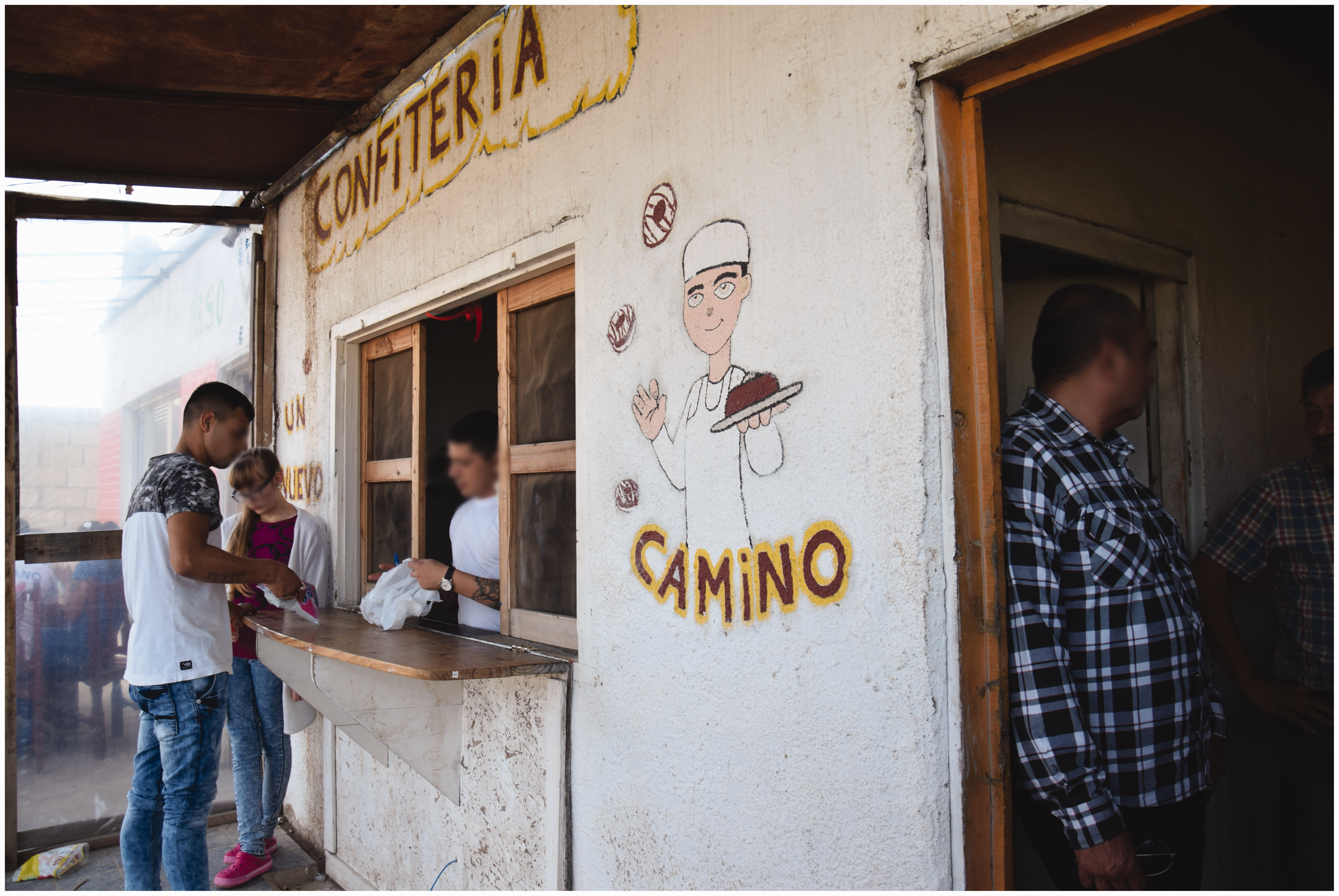
Considering the extended presence of labour in Punta de Rieles, where 8 out of 10 prisoners work in some way, 8 productive activities are a fruitful site for analyzing the responsibilization strategy in place. 9 Prisoners are encouraged to engage in productive activities, such as working for the prison (in maintenance) or for a private employer (another prisoner or private company) or becoming entrepreneurs. Prisoners working for an employer (290 out of 605 prisoners) account for the largest group, followed by prisoners working in maintenance (136 prisoners), 10 whereas the smallest, but most appreciated institutionally, is the group of entrepreneurs (53 prisoners). 11 Entrepreneur prisoners own and manage around 50 businesses, either alone or in partnership. These businesses can hire other prisoners as employees and sell their goods and services to prisoners, prison officers, and people from outside the prison. 12
The official discourse emphasizes that the Punta de Rieles prison prioritizes human interactions over security issues, and this decision allows the administration to foster productive behaviour. The warden explained how they envision the prisoners’ power and the possibility to transform it into something productive:
Invariably, when there are two people, there is power. You can’t deny that. Power is built in coexistence. These guys have enormous power. How do you transform that power into something productive for them, not for me, into something that allows them to think about something different from what they have done so far is the key question (Luis Parodi, Punta de Rieles’ warden)
I don’t subscribe to the theory of rehabilitation. It seems to me that it degrades the [human] relation. For me it is much simpler, you have rights and so do I; so let’s set a field, in this case the prison, where those rights can be exercised, mine and yours. Your obligations and my obligations (…) I simply have rights, and I demand that you respect them as I respect yours, and so we create an environment where those rights can be respected. There is not much more than that (Luis Parodi, Punta de Rieles’ warden)
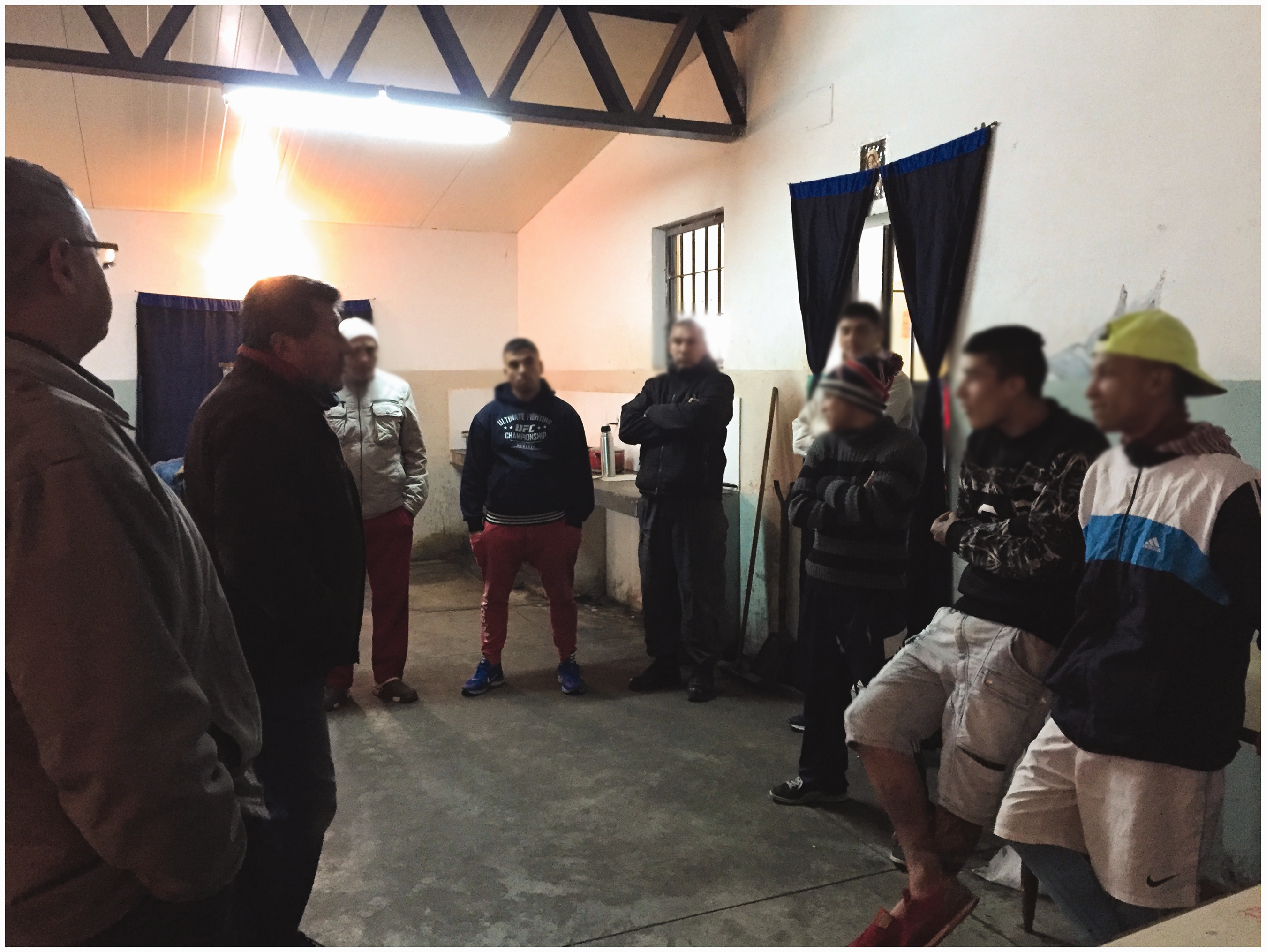
Welcoming meeting in the entry wing. The warden is on the left in front of a group of newly arrived prisoners.
The idea is that they must do something for themselves while they are in Punta de Rieles. When we welcome them, we tell them that it would be good for them to do something. Some prisoners -I don’t know how many- don’t do anything. They are the ones who stay in the “cave”, they have a world in the television and the cell. [They are] few. But you are not obliged to have a project. You are obliged to do something. The message is that you are not here to do time (…) My discourse is, at least, that if you got to Punta de Rieles, I beg you, I ask you, I demand, or whatever, that you think about what you are going to do with your life. In Punta de Rieles you have to think about what you are going to do with your life (Luis Parodi, Punta de Rieles’ warden)
We observed how this mentality operates at the welcoming meeting we attended. When one of the newcomers requested the warden to be assigned to a job, the warden answered: “Here we are not going to give you a job. You are going to leave this wing, and you are going to look for a job. You have many options”. Emphasis is placed on the idea of doing, of actively engaging as a way of using their time in prison productively:
I think there is a different way of doing things, it’s just starting, it has to do with initiative, with movement: you start “doing”, and then we’ll see. The thing is not to organize before “doing” [because] this breaks the culture of social work. Just “do”! The limit is that you can’t do anything to humiliate or kill me. Just “do”. It isn’t working? Well, we can see about that (Luis Parodi, Punta de Rieles’ warden)
We were not interested in the economic aspect of life, we were interested in creating the minimum conditions so that the prisoners could start to think about themselves in new ways, as workers for example, an aspect that had been absent or blurred in their life trajectories. Labour is just another support mechanism, not economic but as a support for a different subjectivity, different from the one you think you are, from the one they told you that you are (Rolando Arbesún, former Punta de Rieles’ warden).
There’s no imposition here, the change is yours. It’s different from things being imposed on you, you achieve those things (Prisoner A., 2 years in Punta de Rieles)
I had never thought of running [a business] by myself (…) Nobody taught me, the system just gave me the opportunity to do it, it’s not that they told me ‘you have to do this, this and that’. Nobody imposed anything on me. That was what happened in the system before (Prisoner R., 2 years and 6 months in Punta de Rieles)
Prisoners as workers
Most prisoners who work are employed under one of the following three categories: a) by entrepreneur prisoners, b) by companies or free citizens running a business inside the prison, or c) by the prison for maintenance activities. While these three categories are not valued the same in terms of social and economic status -and all three are below the entrepreneur category- they can still be considered the entry level to the world of production of goods and services in this peculiar prison, and they bestow a certain positive status within the social hierarchy of the prison as seen by prison authorities and prisoners.
Apart from maintenance jobs, the remaining job positions are generated by about fifty businesses owned by prisoners, and four businesses owned by free citizens (two brick factories, an industrial recycling plant, and an industrial bakery). 13 Free citizens and prisoners who want to start a business need authorization from the prison administration, and have to sign a contract with the prison. Some prisoners prefer to work for a private company because wages tend to be higher, whereas others prefer to work for another prisoner because the relationship is often more flexible. The warden explained that the administration is constantly negotiating with external private companies to achieve wage increases with no loss of job positions.
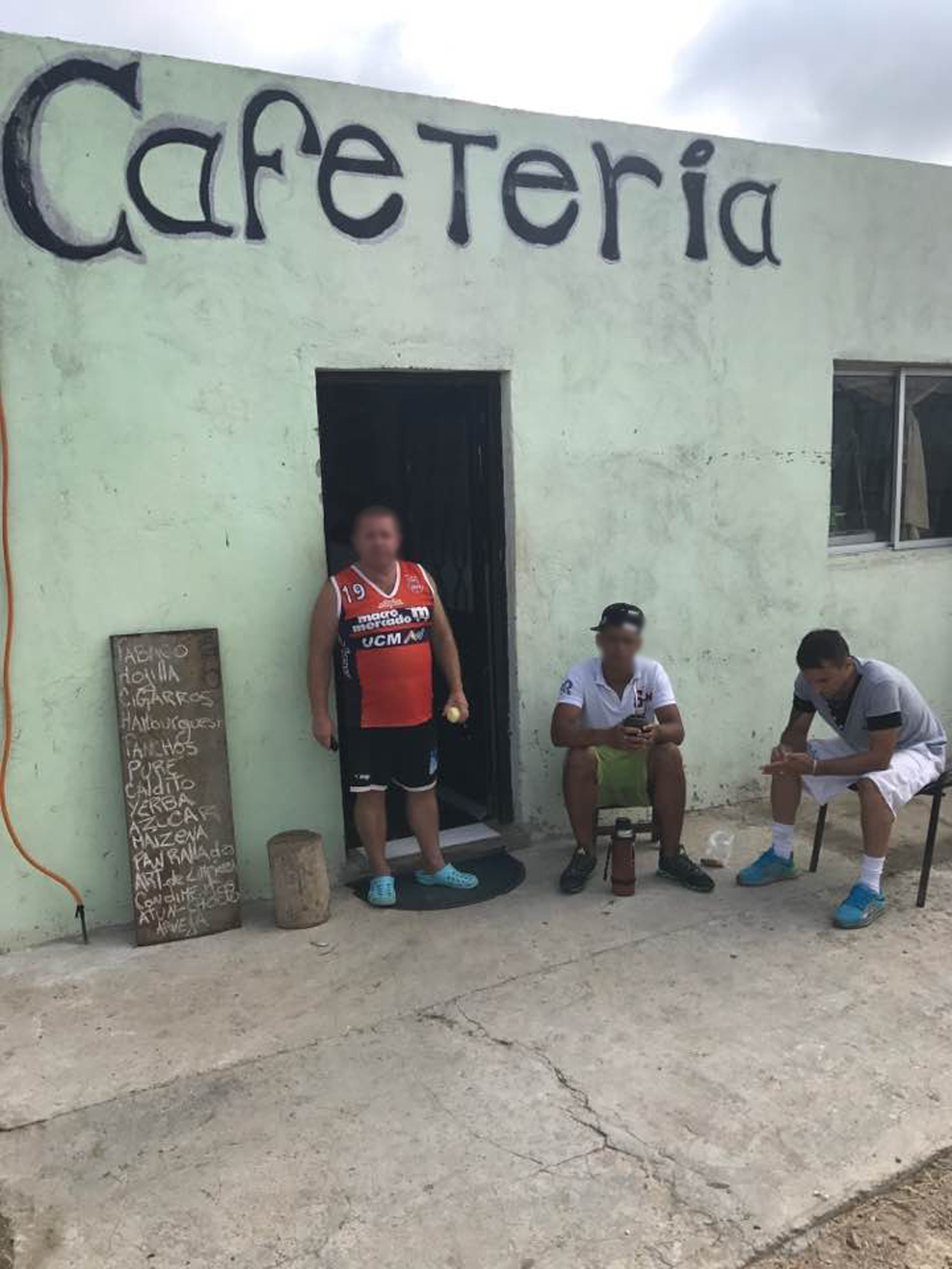
A Coffee shop inside Punta de Rieles. The owner is standing outside his business.
As mentioned above, the official stimulus for engaging in productive activities starts in the entry wing. In addition to the warden’s discourse, the newcomers are invited to join groups of volunteers that work with different employers. This allows them to network and explore the community in order to find a paid job in the event that they are finally admitted to the prison:
When they arrive (…) we explain the rules, they know that they are being observed and that it is a process. Every 10 days or so, we provide them with feedback so they can see how they are doing. Not the first fortnight, but the second, we give them a job, we assign them to 3 job committees, and they start to leave the entry wing. When they leave [the entry wing after 30 days], they try to get a job with one of the businesses (A.L., civilian prison officer)
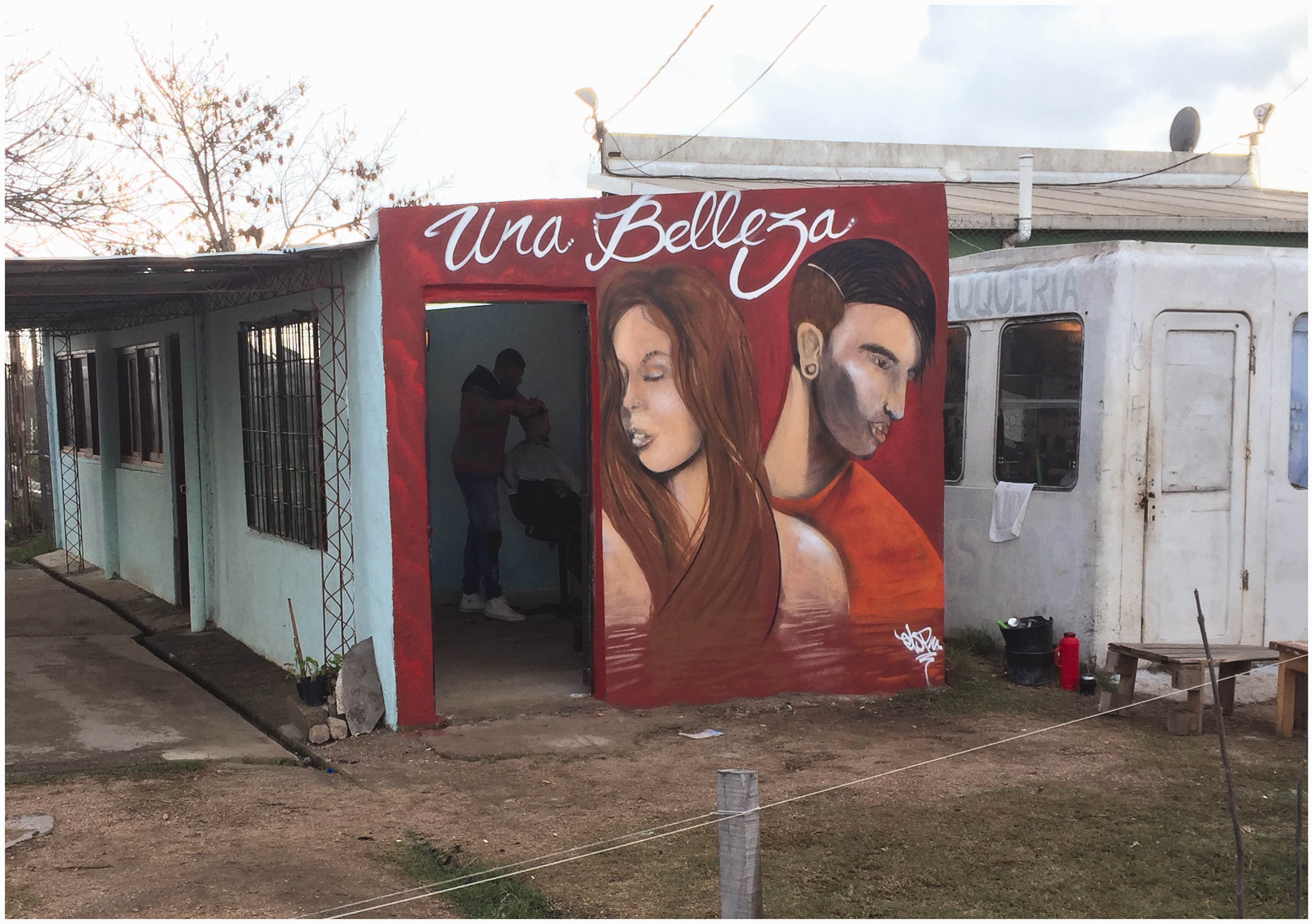
A barber shop.
After I arrived, I volunteered in a brick factory for a month. After that, I went to the bakery, where I learned a trade, to work, the labour routine. They gave me opportunities in the bakery, they paid me, I helped my family. Those things made me feel good (Prisoner D., 11 months in Punta de Rieles)
[When I arrived] I saw [prisoners] coming out of the food store with a bag and with their phone (…) and I said ‘Wow! I want my phone and I want to be able to walk around like that… like flying'. And then you [start to] work in the brick factory, and you can earn your own money and support yourself and avoid asking your family for anything. That's fundamental. (Prisoner N., 1 year and 6 months in Punta de Rieles)
There are at least two strong incentives for prisoners to engage in a labour relationship. The first is the possibility of sentence reduction. The Uruguayan law 15 allows for sentence reduction for prisoners who have worked or studied during their time of confinement: two days of work or study are equivalent to one day of imprisonment. The second incentive is the increased availability of services and goods the prisoners can access inside the prison once they get a salary. 16 For example, they can buy food, snacks, pay for a phone, get a haircut, have lunch at a restaurant, or pay for a tattoo or guitar lessons.
Prisoners as entrepreneurs
Because entrepreneurs earn more money than regular workers, and they provide jobs to other prisoners, becoming an entrepreneur can be considered a status upgrade in the social world of this peculiar prison. In addition, there are symbolic consequences associated with this new role, which influences the prisoners’ self-esteem and increases peer consideration and respect. Indeed, as revealed by the interviews, the prisoners usually link entrepreneurship to “intelligence”, “power”, “responsibility”, “luck” and “skills”. The process of becoming an entrepreneur is simple. The prisoner has to go through a few straightforward steps. First, he must write an informal petition to the prison administration explaining his project, whether it is an individual or a group undertaking, the number of job positions that it will create, and the intended location. Given the continuous creation of projects, the prisoners have to pick a terrain and construct the building where they plan to establish their business.
The procedure involves submitting a detailed application of the project that you want, the rules, the guidelines that you are going to have, what you are going to do, your schedule, everything. You present it and then you have to wait for the meeting of the Labor Office. That meeting took place after 15 days in my case. I insisted every day. Every day I went and insisted (…) And they gave me a thumbs up to start my barbershop. I waited for the paperwork, the corresponding procedure until they gave me the physical space, which was the one I had requested to construct the building, and I built it in about 25 days, and the business was running in one month. (Prisoner D, 1 year and 6 months in Punta de Rieles)
Warden talking with prisoners at their greengrocery.
Every business in the prison signs an administrative document in the Labor Area, it is something like a labour agreement. This document establishes the guidelines and requirements to operate inside the prison, as well as the rights and responsibilities, and the amount of money that the business must pay to the prison (the “fee”) to operate. This document is very similar, except for some differences, to the one that a private company from outside [the prison] must sign to operate inside (Daniela Rodríguez, adjunct director at Punta de Rieles prison)
Visitors having lunch with prisoners at a prisoner-owned restaurant.

The agreement also establishes guidelines for maintaining order by making entrepreneurs responsible, to some degree, for controlling prisoner-employees. In this way, entrepreneurs are actors who not only govern themselves but who also exercise government over prisoner-employees by enforcing rules as entrepreneurs.
I have strict rules here with the boys who work with me. In this sector, I never made any trouble [for the guards]. When the guys come to look for work, the rules are no drugs, you are not going to walk around, no fights (…) if they do that, they leave automatically (…) We must respect what is built with effort (Prisoner J., 7 years in Punta de Rieles)
After the contract is signed, the prisoners can request a no-interest loan from the prisoners’ solidarity fund. The prisoners’ fund works as a community development bank run by a board of directors formed by prisoners, the warden, and one civilian prison officer. The director of the fund is a prisoner elected by his peers. All the business owners have the right to participate in the decisions regarding whether to authorize a loan for a business project, and whether to allocate money to upgrade buildings or services aimed to improve the quality of life of the prisoners and their families. The funds’ capital comes from the 4% of sales that every entrepreneur must pay into the fund. At the time of the fieldwork, the fund’s monthly income was around USD 2,000. In the first months of 2017, at least 30 entrepreneurs were paying back a loan, and the funds’ savings reached USD 10,000.
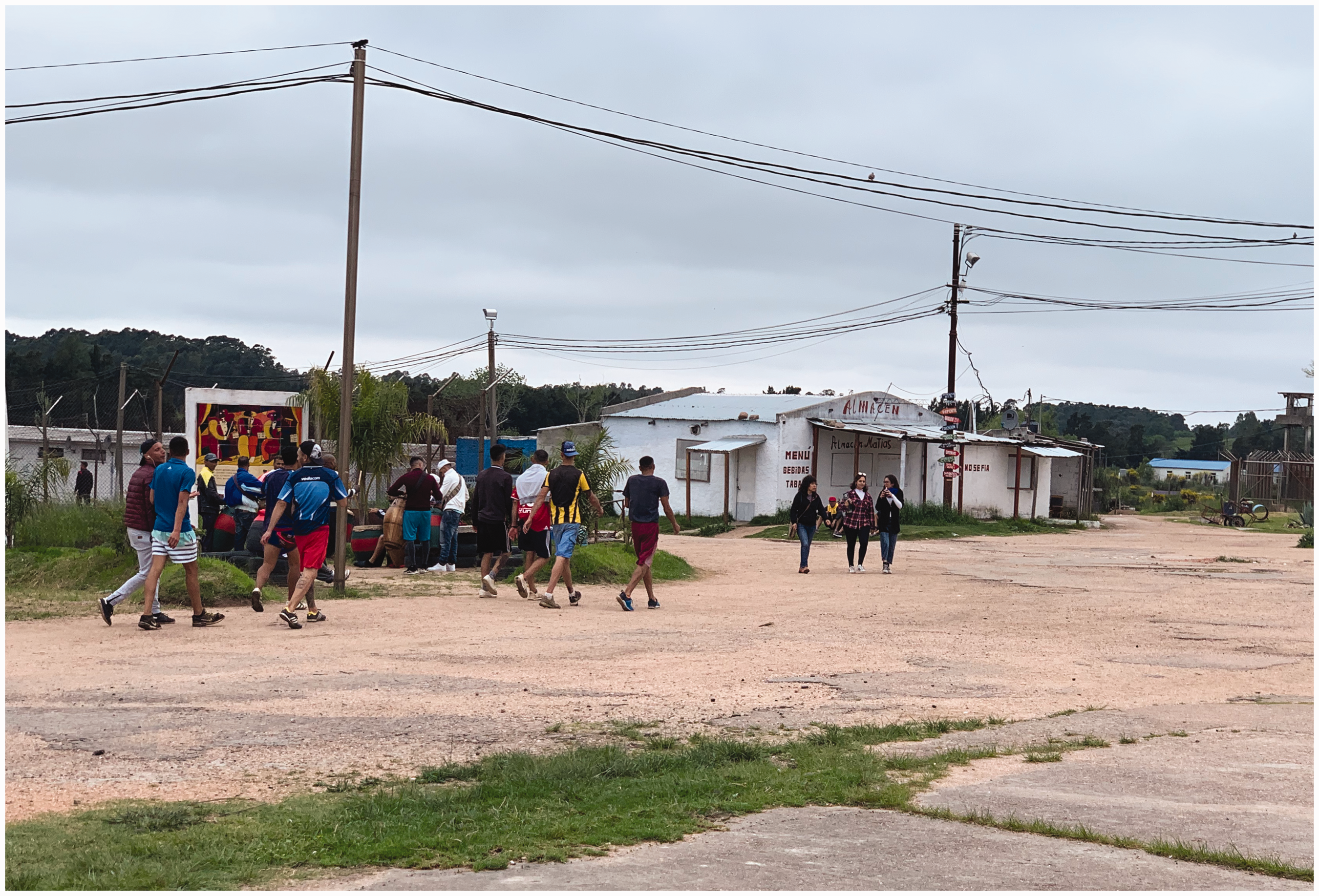
Prisoners and visitors walking inside the prison.
In an interview for a local newspaper, the warden recalled how the idea of the prisoners’ fund was developed, an anecdote that in turn depicts the prisoners’ active participation in daily prison life and decisions: “…We did an amazing thing: the fund starts because one day I entered through that door and one [prisoner] owner of a business, who is now released, a skilful guy, said: 'You know I was reading this Hindu guy that talks about the poverty bank, and it struck me, we could do the same here’. He did not sleep all night, he stayed in his cell, thinking. When I came the next day he had the fund rules, how to vote and everything figured out…” (Lauro and García, 2017).
What is at stake is learning, success is not at stake! Who can determine success? What is at stake is to set things in motion so they can learn (Luis Parodi, Punta de Rieles’ warden)
Food store. A prisoner buying food.
Peculiar responsibilization
The responsibilization strategy in place at Punta de Rieles prison is, at core, similar to that described in the examples of Global North prisons mentioned in the Introduction. First, the strategy involves the possibility to choose an activity from a range of alternatives set forth by the prison authorities, and the imperative that the prisoners must make a choice and develop the activity they have chosen. Second, when prisoners do not comply with the imperative of activation or when they carry out actions that are prohibited, a state intervention is triggered showing the boundaries of that range of alternatives. But there are also significant differences with the Global North examples.
First, the levels of autonomy at Punta de Rieles are higher than those reported for English and Canadian prisons where the responsibilization strategy is deployed. 18 Crewe’s idea of “tightness” (2007: 264, 2009: 139, 144, 449, 2011a: 520–523, 2011b: 460–461), coined to describe the exercise of a “soft power” based on the insidious regulation of the minutiae of daily life, invasive training schemes, and constant evaluation by experts in contemporary English prisons, could not be further away from what happens inside Punta de Rieles. In fact, Crewe uses the expression “pseudo-autonomous space” (2011b: 456) and refers to “few zones of autonomy either spatial or psychological where the reach of power can be escaped” (Crewe, 2011a: 522). 19 In this Global South prison, conversely, the “soft power” can be characterized by its “looseness” (Crewe, 2011a: 521). Once the prisoners become involved in any “positive” activity (cultural, educational, or productive) promoted by the Punta de Rieles’ authorities, there is no permanent or meticulous control of their performance. The authorities and officers only monitor the prisoners’ involvement in a “positive” activity and their commitment not to perform specific serious infractions. The prisoner is then “left alone” mostly (Crewe, 2009: 141). Unlike what occurs in English and Canadian prisons, this responsibilization strategy does not involve thoroughly planned interventions influenced by expert knowledge that seeks to generate constant reflection and reconstruction of the self, and to bring a wide range of behavioural and attitude dimensions under permanent evaluation. At Punta de Rieles, prison officers occasionally visit workshops and stores to see how business is coming along, but this information is not frequently used in the formal monitoring process or in decisions about privileges and benefits. In fact, the interviewed prisoners and prison officers agreed that these visits are mostly to chat about the arrival of supplies and tools, or about the paperwork to deliver sold goods outside the prison.
Crewe points out the limited freedom of movement of responsibilized prisoners in English prisons as evidence of their restricted autonomy (2009: 141). This is the opposite of the Punta de Rieles’ experience, where freedom of movement inside the prison perimeter is extraordinarily broad. Crewe also points out the key role that frequent mandatory drug tests and cell searches have in this form of power exercise in English prisons (2007: 258, 264, 2009: 138, 2011b: 456). Conversely, the authorities at Punta de Rieles will react to drug use by prisoners only if it is evidently problematic, and this reaction will be aimed mainly at helping the drug user. Nevertheless, as mentioned previously, selling illegal drugs is severely sanctioned. Cell searches are carried out once a month or every two months, and the prisoners describe them as respectful of their property and space. Many of our interviewees mentioned that “they are not real cell searches” compared with their experience in other Uruguayan prisons, and even joked about the prison officers asking them for permission to enter the cell when the door is closed. The latter are two further examples of the level of autonomy that prisoners at Punta de Rieles have, and the “looseness” of the exercise of “soft power” at this peculiar prison. 20
Secondly, the responsibilization strategy at Punta de Rieles shows high levels of informality. This informality, which generates close and personal relations between prisoners and prison authorities/officers, is very far from the highly structured and regulated dynamics that lead to the detached and impersonal relations between prisoners and authorities/guards described in Canadian and English prisons (Crewe, 2007: 262, 2009: 452–453, 2011a: 517, 2011b: 457–458, 463–465; Hannah-Moffat, 2005; Maurutto and Hannah-Moffat, 2006). 21 While informality is, to some extent, a general characteristic of prisons in Uruguay -and more broadly, in Latin America-, it often translates into far more problematic practices linked to corruption and clientelism. At Punta de Rieles, direct contact between prison authorities/officers and prisoners is constantly encouraged, starting with the welcoming meeting for new prisoners conducted directly by the warden. Furthermore, the warden walks around the prison every day and meets prisoners in their shops or in the streets to discuss everyday life issues or just to chat. Any prisoner can see the warden in his office with no need for a previous appointment, and there is usually a queue in the corridor in front of his office. This level of availability, dialogue, and openness is highly unusual in other prisons in the region. We witnessed these practices on many occasions during our fieldwork, and we confirmed them in our interviews both with the authorities/officers and prisoners. The prisoners generally see this contact as something positive, not as a form of surveillance or monitoring, but as a genuine willingness to understand and help. There is a strong belief at Punta de Rieles that daily, informal, and personal contact is the basis for increased levels of trust, legitimacy, and consensus.
Thirdly, unlike English and Canadian prisons, the responsibilization strategy at Punta de Rieles is not linked to expert knowledge and its bearers. At the former prisons, “professionals” design activities for prisoners as part of the responsibilization process towards their rehabilitation and are actively involved in monitoring and evaluating the outcomes. The authorities at Punta de Rieles openly distance themselves from any idea of rehabilitation based on treatment according to expert knowledge. There is no trace of the “psychological power” that Crewe describes in contemporary English prisons (2007: 259, 261–263, 2009: 115–137, 2011b: 462–463). 22 This may be associated with the weak presence of “professionals” and the underuse of expert knowledge, which are long-standing features of Latin American prisons that have been reinforced over the last decades in a context of steady growth of the prison population. Far from using technical jargon, the warden and prison officers communicate with prisoners using lay language, relying on persuasion to get them to commit to the options promoted by the prison. Even though the fundamental imbalance between prisoners and prison authorities/officers is not eliminated, there are high levels of horizontality. The ethos of Punta de Rieles authorities and prison officers is strongly linked to the idea of assistance but is based on lay experiences and understandings, and not on expert knowledge and techniques.
Fourthly, the responsibilization strategy at Punta de Rieles produces individualization since it seeks to influence the prisoners by moulding their choices for them to engage in activities valued as “positive” by prison authorities. This individualizing effect is somewhat similar to the experiences of responsibilization in Global North prisons. That is why Crewe states that “In the late modern prison, power is designed to individualize prisoners.” (2007: 273; see also Goodman, 2012: 450; Hannah-Moffat, 2000: 525, 2005: 43). At Punta de Rieles, however, this individualizing dimension is overlapped by a series of elements that could be defined as “collectivist” (Sykes, 1958: 82–83, 107). Even though there are not many cooperative projects among prisoners in the labour domain and the typical labour market employer-employee relationship with its traditional individualizing effects prevails, the prisoners’ fund introduces a collectivist element since its particular dynamics and characteristics promote solidarity and mutual help. For example, they grant no-interest loans to support new productive projects, they decide democratically the initiatives to be supported, and they do not regard failure and insolvency negatively. This collectivist element seems to be even stronger in the educational and cultural activities, where the construction of collective identities is widespread and generates a whole series of collective actions. 23
Although certain unique characteristics of the responsibilization strategy deployed at Punta de Rieles can be understood in the light of long-standing attributes of Uruguayan and Latin-American prisons, recent political and cultural changes generated by the rise of post-neoliberalism in the region have also been crucial to its development.
Global North scholars have often associated responsibilization strategy in prison government with neoliberalism as a broader governmental rationality (Garland, 1996: 462, 1997: 192–192, 196–198; O’Malley, 1999: 177, 183–185; Hannah-Moffat, 2000: 514, 522, 2001: 163; Maurutto and Hannah-Moffat, 2006: 451; Crewe, 2009: 142, 2011b: 456; Goodman, 2012: 438; Ballesteros-Pena, 2018: 459, 471). The peculiarities of the Punta de Rieles responsibilization strategy are directly influenced by the actual architects of this strategy, 24 current and former wardens Rolando Arbesún and Luis Parodi, who stand far from neoliberalism as a governmental rationality. Instead, both have been strongly influenced by the political and cultural tradition of the Latin American Left, and by their experiences in the field of popular education. 25 Since the 1960s, the Latin American Left has traditionally promoted the autonomy and self-determination of economically and socially disadvantaged groups as a key element of the idea of the emancipation of the oppressed, primarily through new instances of informal education and organization. This would explain why the Punta de Rieles authorities foster autonomy within a social solidarity and social justice framework. Rather than the image of a free and rational individual who has no history or context, Arbesún and Parodi recognize the weight of history and context in the development of the prisoners’ life trajectories, including their past criminal activity. Therefore, increasing opportunities and improving living conditions are at the core of the Punta de Rieles project. Despite its many limitations in different fields, including penal policy, the rise of a post-neoliberal governmental alliance and program provided the window for these two wardens to apply their perspectives to develop this experience.
The complexity of the responsibilization strategy at Punta de Rieles cannot be adequately grasped if we rely on neoliberalism as a master category of analysis (Rose et al., 2006: 97–98). In fact, the responsibilization strategy at Punta de Rieles is a blend of features that can be associated with neoliberalism on the one hand and with a local neo-welfarist tradition on the other. The latter tradition is far from the claims of expert knowledge and the idea of treatment that has characterized rehabilitation globally since the nineteenth century. Unlike the neo-welfarist characteristics, the neoliberal features exist despite the normative commitments of the architects of the responsibilization strategy at this prison. This is an interesting example of a paradoxical assemblage that has been working quite effectively, producing a particular order in this atypical prison through the exercise of soft, light, but loose, informal and lay power that generates individualizing effects without completely displacing collectivist and mutual aid dynamics.
Finally, this penal “experiment” (O’Malley, 2008) with its peculiar characteristics could be a source of inspiration to think normatively about the dissemination of responsibilization as a governmental strategy in contemporary prisons, both in the Global South and North. Clearly, this experiment is shaped by the particular macro and microscopic conditions that are difficult to reproduce in other contexts of confinement. Nevertheless, analyzing it, allows posing important ethical and political questions regarding the deployment of reponsibilization in carceral institutions: Is a responsibilization strategy that does not impede collective and mutual aid instances among prisoners possible and desirable? Is a responsibilization strategy that guarantees prisoners broad levels of autonomy without constant and invasive monitoring and evaluation possible and desirable? Is a responsibilization strategy based on more informal, open and horizontal relations between custodians and prisoners possible and desirable?
