




Abstract
Children’s right to participate in all matters and decisions affecting them has gained recognition in society. Its promotion is recommended from an early age – namely, in early childhood education settings – and it is described as benefiting children, adults and the community in general. Given the complex and polysemic meaning of participation, different conceptualizations, models and perspectives have emerged. In this article, the authors provide a theoretical overview, describing relevant models, concepts and contributions from distinct perspectives and fields of knowledge – sociological, educational, developmental and sociocultural – as well as contributions from social policy. This overview is particularly relevant to inform research and practice about children’s participation in early childhood education.
Introduction
Participation, a fundamental right of all children, has gained recognition in different areas of knowledge and has gained increased visibility in society (Burger, 2018). Children’s participation in all matters and decisions affecting them – in the family, school, health care and local community or at the political level – is acknowledged as a complex process, embedded in cultural, social and significant relational contexts (Lansdown, 2005). Further, it can and should be implemented in education services, such as early childhood education (ECE) settings, which are described as fundamental microsystems for children’s development (Sylva et al., 2010). In these settings, children must be able to express their ideas, preferences and choices regarding, for instance, where, when or with whom to play (Correia, Camilo, Aguiar and Amaro, 2019).
Participation provides the basis for other rights and for citizenship, enhancing children’s socio-cognitive development and well-being, and benefiting the communities in which children live (Hart, 1992; Hart and Brando, 2018; Kirby et al., 2003). Despite its relevance, participation lacks its own theoretical framework and has been informed by distinct fields of knowledge, with different theories and models being used interrelatedly (Percy-Smith and Thomas, 2010). Child participation thus remains a subject of discussion and multiple interpretations, which is a deterrent to its implementation. Therefore, this article aims to provide an integrative theoretical framework, describing relevant models and concepts, and how different areas of knowledge contribute to the study of children’s participation in ECE. Specifically, and since child participation cuts across various disciplines, we describe contributions from sociological, educational, developmental, sociocultural and social policy perspectives. This article thus offers a comprehensive theoretical overview regarding child participation in ECE, outlining its relevance and supporting its study and implementation.
Children’s right to participate: growing recognition
Children’s right to participate is considered an essential element of human-rights-based societies (Burger, 2018). Participation is a complex process, dependent on children’s agency and also on features of the family, community and education contexts (Hart, 1992). If fully implemented, participation is the basis for one of the biggest transformations towards a culture of respect for children’s rights – the commitment to values and principles of democracy and citizenship, and to children’s competences to contribute towards their own well-being (Lansdown et al., 2014). However, children seem to be one of the last groups in society to be granted access to rights, particularly to the right to participate, which has often been overshadowed by children’s right to protection from abuse and harm (Franklin, 2002).
Over time, there have been major changes in the status and space occupied by children in society, accompanied by a shift from a protectionist to participation paradigms. In effect, while two centuries ago children were seen as dependent on adults and subject to their control, during the last century they were seen as in need of protection (i.e. a protectionist paradigm). More recently, children have come to be considered as social actors and rights holders, with voice and competence to participate in decision-making processes affecting them (i.e. a participation paradigm) (Thomas, 2007).
Given the relatively recent recognition of children’s participation, there is no solid or distinctive theoretical background to this topic, and research and practice on children’s participation have been informed by a vast range of theoretical frameworks. For instance, the reconceptualization of children and childhood was in part driven by sociology, particularly the new sociology of childhood (Corsaro, 2005; James and Prout, 1997), and advocacy allowed the discourse on children’s rights to spread. Nonetheless, it was the nearly universally accepted Convention on the Rights of the Child (CRC; United Nations General Assembly, 1989) that largely contributed to the deconstruction of protectionist paradigms of childhood and the emergence of more complex images of children.
Convention on the Rights of the Child
In this section, we tackle the important role of the CRC. Established in 1989, the CRC is arguably the most groundbreaking human rights document in international law, and was a crucial milestone in framing and guiding the nature, scope and implementation of children’s participation rights in diverse social spheres. Encompassing provision, protection and participation rights, the CRC defines the rights granted to children to improve their lives, considering them of public and political concern (Habashi et al., 2012).
Article 12 of the CRC has two major components: children’s right to express their own views and their right to be heard and taken seriously. Hence, children who are capable of forming their own views are entitled to express them freely in all matters affecting them. Children’s right to participate is important from birth onwards. Therefore, Article 12 must be applied to children of all ages (United Nations Committee on the Rights of the Child, 2005, 2009).
Further, the CRC asserts countries’ and adults’ responsibility to listen to children’s views and to facilitate their participation, giving due weight to children’s perspectives according to their age and maturity (Lansdown et al., 2014; United Nations Committee on the Rights of the Child, 2005). Thus, age and maturity should be considered together with other variables such as the social context in which children live, the nature and complexity of decisions, and adult support throughout the process (Tomás, 2007). Accordingly, the onus rests with adults to create the necessary time and space to listen to children (Lansdown et al., 2014). The promotion of a culture of participation, where all actors respect, develop and experience participatory approaches, is thus crucial for the implementation of children’s rights. Moreover, children’s rights cannot be fulfilled by discarding adults’ voices and knowledge; rather, they should be used for guidance and support (Kanyal, 2014).
To experience the right of free expression and voice, children need to have access to conditions and opportunities to express their perspectives and choices, with appropriate support and information to understand the process, in a space with the potential for them to be heard (Lundy, 2007). Notions of access (i.e. opportunities to express one’s views) and standing (i.e. legitimacy, respect and consideration for individual perspectives) are fundamental for children to exert influence and have their perspectives considered (Senecah, 2004). Relatedly, children may experience different levels of access and opportunity to integrate in (or withdraw from) a collective situation, express their voice or influence the course of events (Vieira, 2017). Participation is, therefore, frequently described in terms of levels or stages, and diverse models of participation have been proposed.
Models of participation
Focusing on how distinct models provide ways of conceptualizing child participation, it is noteworthy that one of the most influential models of participation is Hart’s (1992) ladder of participation (Figure 1). This model was built on Arnstein’s (1969) classic model of participation, which described participation as taking place through some degree of power-sharing and redistribution. Within Hart’s ladder of participation, children’s participation becomes increasingly meaningful as it moves from a level of manipulation (e.g. being informed by the ECE teacher about a new project or activity but having no understanding of how it will happen or how to contribute) up to a child-initiated level, involving shared decisions with adults (e.g. proposing and discussing with the ECE teacher how to prepare an activity that will be organized in the ECE setting).
Although consisting of eight levels, the first three – manipulation, decoration and tokenism – are not considered truly participatory. The subsequent five levels are described based on the activity children are engaged in and on the degree to which their participatory and decision-making skills and opportunities have evolved – from being ‘assigned but informed’ to initiating activities or projects and sharing decisions with adults.
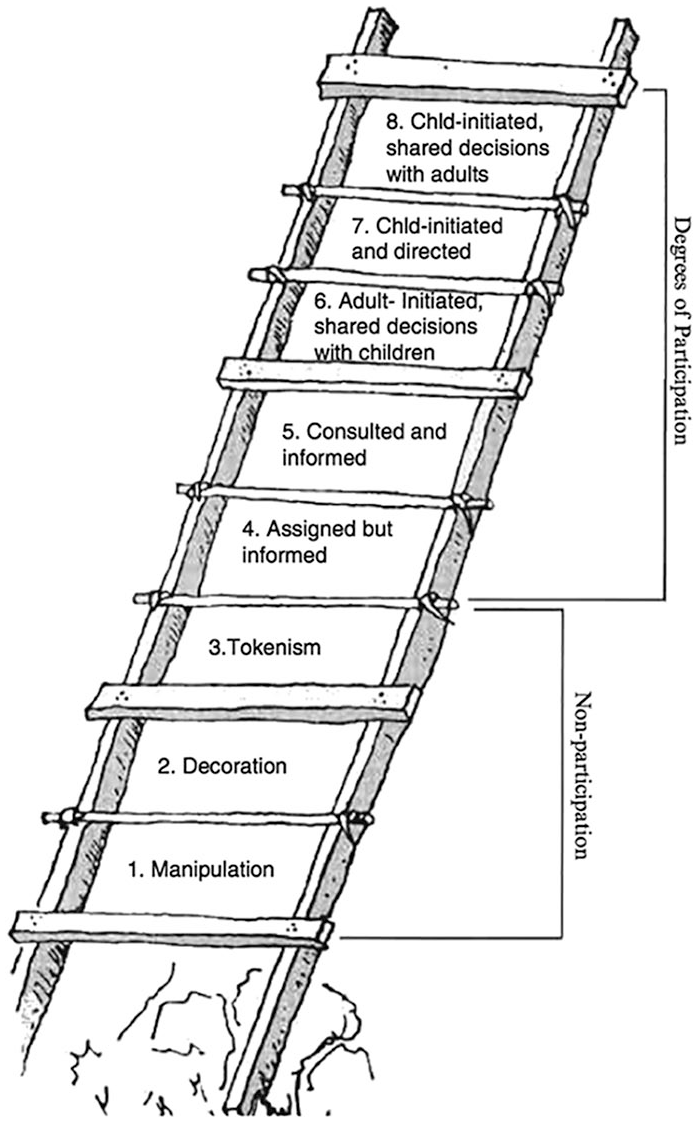
Hart’s (1992) ladder of participation. Taken from Children’s participation: From tokenism to citizenship, published by the UNICEF International Child Development Centre (https://www.unicef-irc.org/publications/pdf/childrens_participation.pdf). Reproduced with permission.
Despite contributing to a global movement for participation, Hart’s (1992) ladder received criticism – for example, for proposing a hierarchy in which each level is quantitatively higher than the previous level (Horwath et al., 2011). Subsequently, new models emerged (e.g. Kirby et al., 2003; Shier, 2001; Treseder, 1997). Treseder (1997), for instance, proposed a five-level model of participation, which was based on Hart’s ladder but introduced two significant changes: it moved away from a hierarchy and considered that children need to be empowered adequately in order to participate fully (Figure 2). This typology suggests that different conditions must be met for children’s participation to be achieved: having access to relevant information and to those in power (e.g. being informed about existing options by the ECE teacher), having effective choices between different options (e.g. different activities to choose from or different materials available) and being supported by a trusted person (e.g. an ECE professional).
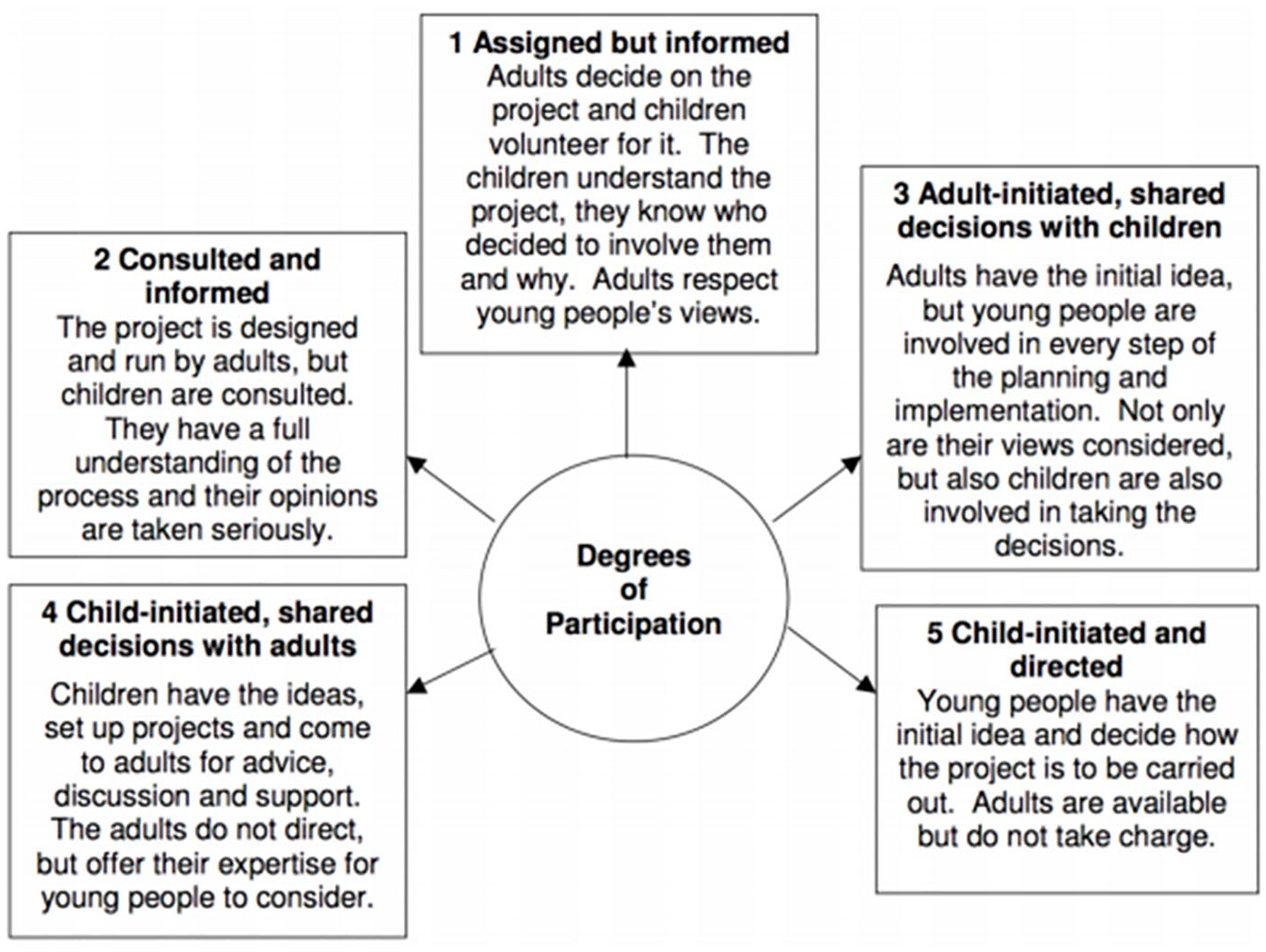
Treseder’s (1997: ) model of participation. Taken from Empowering Children and Young People: Promoting Involvement in Decision Making, published by Save the Children. Reproduced with permission.
Similarly, Shier (2001) proposed a five-level model of participation and named pathways to participation – from children being ‘listened to’ to children sharing ‘power and responsibility for decision-making’ (Figure 3). This model was innovative in suggesting three stages of commitment to participation: openings (e.g. when ECE professionals are committed to the promotion of participation), opportunities (e.g. when the necessary conditions to promote participation in the ECE setting are met) and obligations (e.g. when opportunities become an agreed policy of the ECE setting), again emphasizing adults’ role.

Shier’s (2001) (www.harryshier.net/) model of participation. Taken from ‘Pathways to participation: Openings, opportunities and obligations’, published in Children & Society. Reproduced with permission.
Kirby et al. (2003) developed a four-level non-hierarchical model in which no level is considered better than the others (Figure 4). Therefore, this model proposed to analyse if children’s views are taken into consideration (e.g. preferences about play); if children are involved in decision-making processes (e.g. materials to be acquired in a new playground area in the ECE setting); if children share power and responsibility within the decision-making process (e.g. voting and being responsible for registering and implementing their decisions in the ECE classroom); and if children make autonomous decisions (e.g. choose what activities to engage in in the ECE classroom). In this model, the context, activities, decisions and participants determine the appropriate level of participation.

Kirby et al.’s (2003:) model of participation. Adapted from Building a Culture of Participation: Involving Children and Young People in Policy, Service Planning, Delivery and Evaluation, published by Department for Education and Skills Publications. Reproduced with permission under Crown copyright/UK Open Government License (https://www.nationalarchives.gov.uk/documents/information-management/waiver-information.pdf).
Aiming to move the concept of children’s participation further and support its implementation, Lundy (2007) proposed a model based on the relationship between four key elements that follow a rational chronological order: space (e.g. ensuring the ECE setting constitutes a safe, inclusive space for children to express their views), voice (e.g. facilitating the expression of children’s views on issues that are relevant for them), audience (e.g. ensuring children’s views are communicated to someone in the ECE setting with the responsibility to listen) and influence (e.g. ensuring children’s views are taken seriously and acted on, where appropriate, and are embedded within decision-making in the ECE setting) (Figure 5). Within this model, children first have the right to express their views; their views are then ‘given due weight’ and, finally, children are informed of the extent of their influence, before the process starts again. This model, which emphasizes the importance of a discursive space for children to express and develop their perspectives, has been prominently endorsed by policymakers, seeking to help organizations and professionals promote the participation of young children.

Lundy’s (2007:) model of participation. Taken from the Irish Government National Child and Youth Participation Strategy (2015–2020), based on ‘“Voice” is not enough: Conceptualising Article 12 of the United Nations Convention on the Rights of the Child’, published in the British Educational Research Journal. Reproduced with permission.
Similarly, Tomás (2007) described four dimensions that influence the implementation and experience of children’s participation: the arena (public and private contexts), scope (full, circumstantial or continuous, organized or spontaneous, permanent or ephemeral), purpose (the extent to which advocacy and the dissemination of children’s participation are promoted) and conditions for participation (recognition of child participation, competences and means to promote participation). Instead of occurring automatically, participation is described as a gradual process requiring time and learning opportunities for children to know and understand power relations.
The existence of different models of children’s participation reflects the growing interest in involving children in decision-making (Sinclair, 2004). However, sometimes it is not clear to what extent children’s participation should be promoted, or to what extent it is meaningful and impactful. Therefore, participation levels should be carefully considered and not taken in a strict hierarchical order, with the risk of becoming too rigid (Kanyal and Gibbs, 2014). Importantly, the multidimensional character of participation should be noted, as well as the complex and diverse aspects influencing children’s right to participate, from individuals to contexts (Vieira, 2017). Consideration of these complex, multilayered aspects should contribute to a more comprehensive understanding of participation processes.
Adjacent concepts
The existence of different conceptualizations, and the complex and polysemic meaning of participation, requires considering the notions of power, agency, autonomy, involvement and citizenship. These notions are particularly important to understand children’s participation and the paradigm shift responsible for considering children’s constructive roles in society (Burger, 2018).
In effect, the debate on children’s participation is grounded in notions of power and empowerment, particularly addressed by the field of sociology, and in relation to children’s voice and competence (Thomas, 2007). Within psychology, empowerment has been defined as a construct linking individual strengths and competences, which contributes to increasing individuals’ degree of autonomy, enabling them to represent their interests in a responsible and self-determined way (Rappaport, 1995). Relatedly, participation enables and empowers children to represent their views and interests, influence decision-making processes, and take some degree of control over their lives (Hart, 1992; Herbots and Put, 2015; Menezes, 2003; Thomas, 2007).
From a Foucauldian perspective, power is described as something that is exercised and exists through action (Foucault, 2003; Gallagher, 2008). Relatedly, empowering children involves resources and strategies to pursue individual and collective objectives (Gallagher, 2008). However, historically, children have been considered as less able to make decisions and act than adults, due to power systems that have been created and prolonged through generational structures (Bühler-Niederberger, 2010). As such, the promotion of children’s participation requires some degree of redistribution and appropriation of power, simultaneously communicational and relational (Vieira, 2017), to enhance children’s social status and avoid unbalanced power relationships and practices (Freire, 2019). Participation thus requires intentionality and power, which circulates among diverse actors and assumes diverse forms (Foucault, 2003; Gallagher, 2008). However, children’s participation is often presented as unnecessary or a step too far compared with provision or protection rights, as it challenges adult authority and established power relationships. Notably, ensuring power redistribution guarantees that children are heard and included in important decisions, assuring meaningful participation and respecting their agency (Matthews, 2003).
Relatedly, discussions on children’s participation are also connected with the notion of agency, which takes place in the context of social relationships and interdependency, and more specifically in decentralized practices in which children participate (Hanson, 2016). To participate, children must be considered persons with agency, who are entitled to respect and whose voices must be heard and considered (Percy-Smith, 2016). Particularly in advocacy discourses, children’s agency is defined as the capacity to set goals, to reflect and act responsibly to effect change, influencing what happens, and to make autonomous choices (Hanson, 2016; Organisation for Economic Co-operation and Development, 2019). Agency is also related to identity construction, a positive sense of self and self-efficacy, and a positive sense of purpose and of being a learner (Luff and Martin, 2014). To have children’s agency respected, participation rights need to be premised on an understanding of children as equal members of society, with their own concerns and agendas and being entitled to influence the decision-making that affects them (Lundy, 2007).
By considering children’s active role and capacity to make choices, participation is also related to a sense of autonomy. In effect, participation is grounded in children’s need to gradually gain autonomy – understood as self-government and self-direction – and an independent status in society (Castle, 2004; Lansdown, 2005). Prior research has stressed the importance of supporting children’s autonomy in educational settings, describing it as the degree to which adults acknowledge children’s perspectives and promote their active, self-regulated participation and engagement in decision-making, balancing children’s needs and teaching practices (Castle, 2004). Further, by valuing individual autonomy, participation represents the commitment to children’s dignity, which is linked to the possibility of making choices and the principles of recognition and self-worth (Hicks, 2013; Honneth, 1995; Nussbaum, 2011). Autonomy is also connected with children’s involvement, which can be understood as the extent to which children concentrate on and are absorbed and engaged in activities (Laevers and Declercq, 2018).
Participation is frequently defined as children’s involvement in decision-making processes, which is an essential element of citizenship (Ennew, 2008; Sheridan and Samuelsson, 2001). Citizenship involves the individual feelings of belonging to a community, the daily experiences entailing the exercising of one’s rights and duties, and the social relations that are established. Therefore, the full exercise of citizenship is also understood as participatory citizenship (Menezes, 2003). Recognizing children as citizens, with visibility and the protagonism to participate in society, requires framing citizenship within a logic of rights, duties, responsibilities and participation, contributing to the construction of individual and collective identities (Jans, 2004). Notably, analysing children’s participation requires considering that children were not entitled to full citizenship for years (Cockburn, 2013), which was largely dependent on children being considered as fragile and needing protection, for instance, rather than as competent and active beings.
When children are respected as active citizens, with the understanding, skills and commitment needed within different social contexts, they experience and deepen their sense of democracy (Menezes, 2003). However, the promotion of children’s participation requires not only considering children as active citizens, but also how citizenship can be adapted to children (Jans, 2004; Kirby et al., 2003). Supporting children’s participation is thus essential in nurturing citizenship over the long term, contributing to progressively embedding values of democracy in children’s approach to life (Lansdown, 2005).
These important concepts have supported the reconceptualization of childhood and contributed to giving children’s participation a central position in a wide variety of disciplines, such as law, sociology, educational sciences and social policy.
Early childhood education: one context, different perspectives
Despite the multiple definitions of participation, it is agreed that it is most meaningful when it is rooted in children’s everyday lives (Percy-Smith and Thomas, 2010). Children’s participation can be implemented in education services such as ECE, which is a fundamental microsystem that is consequential for children and, in certain conditions (e.g. high process quality), beneficial for their development and well-being (Sylva et al., 2010). Even though children’s right to participate is encouraged from an early age (Hart, 1992; Lansdown, 2005), few studies have addressed participation specifically within ECE, with existing evidence emerging mostly from northern European countries (Correia, Camilo, Aguiar and Amaro, 2019; Sheridan, 2007; Sheridan and Samuelsson, 2001).
From an educational and relational viewpoint, child participation in ECE takes place within relationships with ECE professionals, and occurs by empowering children and developing a shared understanding about their needs, experiences and perspectives (Kanyal, 2014). Importantly, different perspectives can be addressed when considering children’s participation within this specific setting. Below, we describe contributions from sociological, developmental, educational and sociocultural perspectives, and also from social policy.
Sociological perspective
From the standpoint of sociology, particularly the new sociology of childhood, everyday life in school settings is one of the crucial domains of children’s participation (Sarmento et al., 2007). Further, children’s participation and active role in the process of their own learning must be encouraged in diverse areas and activities within the ECE setting, making use of child-centred participatory approaches (Clark and Moss, 2001; Thomas, 2007).
This perspective is consistent with capacity-building approaches (Nussbaum, 2011; Sen, 2004). These approaches highlight children’s knowledge, skills and capacity to express their perspectives and voices, participating in decision-making and shaping their own environments with adults’ support (Hart and Brando, 2018; Lundy, 2007). A capability approach and participation can thus complement and reinforce each other (i.e. the capability approach provides guiding principles for participation, such as ownership, accountability and empowerment, and participation provides the methods for making the capability approach operational), ensuring that democratic principles are respected and become the foundation for sustainable development (Hammock, 2019).
Although arising from the sociology of childhood, the principles of children as competent, active, agentic and co-constructors of reality spread through distinct areas within psychology (Kanyal, 2014). Consequently, these areas of psychology play a major role in understanding and contributing to the recognition of children’s right to participate, especially in reference to children’s evolving competences to exert their influence and identity (Christie et al., 2008).
Developmental perspective
The CRC (United Nations General Assembly, 1989) focuses on the rights of the child from a developmental perspective, presenting participation and autonomy as key processes in child development and stating that all children, irrespective of their characteristics, should be offered conditions that promote their dignity, self-reliance and active participation in the community. The notion of children’s evolving competences – simultaneously a developmental and participatory concept – is central for recognizing children as active agents in their own lives (Lansdown, 2005).
Further, children’s participation ties in with theories of development that integrate personal change, contextual, representational and regulation models (Sameroff, 2010; Sameroff and Fiese, 1990). In effect, children’s individual characteristics and competences change over time, progressively evolving as children become increasingly involved in a variety of social and cultural settings. For this reason, children’s development is the product of the dynamic and active interactions they establish within these contexts (e.g. with peers and teachers), which allow them to develop social representations, expand their self-regulation and be able to take responsibility for their own actions and well-being (Sameroff, 2010), experiencing progressive levels of responsibility (Rogoff, 2003). As children develop their competences, there is less need for protection and an increased capacity to participate in the decision-making processes affecting them (Lansdown, 2005).
Viewing child development as being shaped by social systems and structures, and driven by proximal processes, is consistent with Bronfenbrenner’s bioecological framework and the interrelated concepts of process, person, context and time (Bronfenbrenner and Morris, 2006). Applied to child participation, this approach identifies children’s ability to participate as an adaptable concept and describes professionals’ role as gatekeepers, as well as the importance of a comprehensive regulatory regime of participation as embedded in a sociopolitical landscape (Gal, 2017). Further, it considers interactions taking place between microsystems, mesosystems, exosystems and macrosystems, providing a multilayered system of variables influencing child participation.
At the individual and interpersonal levels, several socio-cognitive benefits have been proposed for children, such as increased self-esteem, self-efficacy, motivation, communication, negotiation, conflict resolution and decision-making skills (Kirby et al., 2003; Sinclair, 2004). Participation also offers opportunities for children from diverse backgrounds to build a sense of belonging, responsibility, caring and sensitivity (Lansdown, 2005). By balancing different rights, as a function of children’s best interests, participation contributes to children’s well-being (Hart and Brando, 2018). Further, potential benefits are expected for ECE teachers (Nah and Lee, 2016) and the improved organization and functioning of communities (Hart, 1992).
Educational perspective
From an educational perspective, it is pivotal to investigate interactional processes, as well as the knowledge structures (i.e. conceptions, perceptions and expectations), behaviours and practices influencing the promotion of children’s participation in ECE (Koran and Avci, 2017). It is agreed that teacher–child relationships characterized by warmth, respect, mutual esteem, solidarity and recognition, implying consideration for children’s voices and developing competences, do foster children’s participation (Salminen, 2013). Moreover, ECE teachers’ ideas about children’s participation seem to influence their own purposes and practices towards the promotion of children’s participation, which can be realized in diverse ways (e.g. documentation practices, councils, negotiation and dialogue) (Correia, Carvalho, Durães and Aguiar, 2020; Kanyal, 2014; Niemi, 2019; Oliveira-Formosinho and Formosinho, 2012).
Progressively, discussions about the quality of ECE settings have been extended to include children’s participation. Specifically, children’s participation, influencing decisions related to them, has been described as key to ECE quality (Sheridan, 2007; Sheridan and Samuelsson, 2001). Although pedagogical quality can be viewed in a variety of ways, it broadly refers to a multidimensional concept and aims to promote children’s well-being and positive development (Layzer and Goodson, 2006). A common distinction is made between structural (i.e. aspects related to legislation, policy and funding) and process quality (i.e. proximal processes shaping children’s everyday experiences, such as teacher–child interactions) (Pianta et al., 2005). Even though structural features are described as important preconditions for process quality, it seems to be agreed that high-quality teacher–child interactions are fundamental for children’s development and learning (Downer et al., 2010). Further, high-quality ECE settings are described as those in which children’s rights, specifically children’s right to participate, have been incorporated into practitioners’ beliefs, discourse and practices (Lansdown, 2005).
Regarding pedagogical approaches, different lenses might help us to understand participation in ECE. Diverse pedagogical models (e.g. HighScope and Reggio Emilia) value a pedagogy of participation, highlighting children’s active role and capacity to learn by doing and participating through the creation of pedagogical environments in which interactions and relationships sustain joint activities (Oliveira-Formosinho and Formosinho, 2012). Furthermore, in ECE settings, understanding children’s motivation is key to educating children to become self-directed and lifelong learners (Ryan and Deci, 2017). One of the most influential motivational theories, which is applied extensively to diverse fields, including education, is self-determination theory (Deci and Ryan, 2000). This broad framework is particularly pertinent within the study of participation rights, also described as self-determination rights, as children are broadly recognized as self-determined, autonomous social actors with evolving competences. Specifically, by exerting their right to be heard, children may satisfy their basic psychological needs for autonomy, competence and belonging. In effect, if children’s autonomy is respected and supported, they experience some control over their own life, becoming able to regulate their actions and feel competent (Noom et al., 2001). Motivated participation requires a safe environment where children receive support in experiencing opportunities to make choices and decisions, acquiring knowledge and competences that foster their self-determination (Ziemes and Gutzwiller-Helfenfiner, 2019). Moreover, self-determination refers to the combination of attitudes and competences that allows children to set goals for themselves and take the initiative to reach them.
Interestingly, when referring to their experiences of participation, children mention the possibility to experience a sense of belonging (Wyness, 2012), which is consistent with the self-determination need for relatedness and connectedness with others (Deci and Ryan, 2000). At the contextual level, self-determination theory also focuses on the needs and intentions of different actors (Williams and Deci, 1996), helping to analyse the dynamics of teacher–child interactions. Teacher practices guided by children’s interests and decisions are associated with children’s increased intrinsic motivation and well-being (Williams and Deci, 1996).
This evidence has practical implications for ECE professionals’ significant role in promoting participatory environments (Ziemes and Gutzwiller-Helfenfiner, 2019), which are largely influenced by their sociocultural context. Relatedly, in 2008, the American Psychological Association, through its Division of School Psychology, established the Social Justice and Child Rights Working Group (Nastasi and Nasser, 2014). Specifically, this group aims to facilitate reflection and professional development in relation to the promotion of children’s rights and social justice.
Sociocultural perspective
Given the vital role of social structures and culture, children’s participation must be analysed from a sociocultural perspective, meaning that it should not be analysed as individual, linear or straightforward, but rather as socially constructed (Komulainen, 2007).
Research has documented the influence of cultural values and expectations on children’s participation in the community, suggesting, for instance, differences in boys’ and girls’ experiences and levels of participation (Engel-Yeger et al., 2007; Percy-Smith and Thomas, 2010). Notably, aspects such as the sociocultural context, the people with whom children interact, individual perceptions or cultural-historical traditions must be equally considered, as they all shape children’s experiences of participation (Rogoff, 2003).
Within this sociocultural perspective, notions of apprenticeship, guided participation and participatory appropriation are particularly relevant for understanding children’s participation. In effect, by integrating and participating in culturally framed activities at the community level (i.e. apprenticeship), guided by cultural and social values and supported by adults (i.e. guided participation), children are able to learn and develop, gradually participating more and with greater authority, and becoming more active and critical (i.e. participatory appropriation) (Kanyal, 2014; Rogoff, 1995). Vygotsky’s (2012) sociocultural perspective reconceptualized the role of culture as part of proximal developmental processes, suggesting that children’s social and cultural knowledge evolves as they actively engage with their environments.
Socially constructed, participation is influenced by practices, values and behaviours imposed by the family, community and broader structures. Thus, children’s and teachers’ voices, as well as their practices, need to be analysed as being shaped by social processes (Komulainen, 2007). Relatedly, participation contributes to building a sense of social justice (Hammack, 2018), and children learn about justice and fairness when standing up for themselves and participating in problem-solving, which can make a difference even at younger ages. Research has shown that, from an early age, children become aware of questions related to democracy and justice (Helwig, 2006), and are more willing to accept group decisions in which they have had a voice (Grocke et al., 2018). Also, socio-psychological research on perceived procedural justice suggests that participating and having a voice is crucial to judgments of fairness (Folger, 1977).
Creating the opportunity for children’s right to be heard within education settings requires a significant cultural change at all levels of the educational system. Importantly, pedagogical quality and participatory processes developing through interactions also need to consider norms, values, traditions, and cultural and contextual specificities, as well as the heritage of the society (Sheridan, 2007). Lastly, participation has implications for society as a whole and, by participating, children exert influence over their own community, contributing to an increasing community awareness of this right (Lansdown, 2005).
Social policy perspective
Children constitute the human capital of a society. Therefore, promoting their development and well-being is an investment in the future (European Commission, 2013). This perspective is accepted in particular within the field of social policy, which plays an important role in recognizing participation as an essential entitlement of children, assuring the establishment of links between international and national initiatives that are responsible for protecting children’s participation rights.
In the international context, the Geneva Declaration of the Rights of the Child (League of Nations, 1924) constituted a historic document in discussing children’s well-being and recognizing and affirming, for the first time, the existence of rights specific to children, as well as adults’ responsibility towards them. However, it was not legally binding and, in the same way as the Declaration on the Rights of the Child (United Nations General Assembly, 1959), which preceded the CRC, it did not address children’s right to participate.
Participation was only recognized as a fundamental right and general principle by the CRC (United Nations General Assembly, 1989). Therefore, from a political standpoint, the CRC provided the legal framework for this right, with governments being responsible for its implementation and the promotion of democratic school environments. Particularly when applied to the educational field, it has implications for curricula and ECE professionals’ roles and practices. For instance, participation challenges the dominant discourses and traditional roles of practitioners, who need to reconceptualize children as competent social actors and active participants (MacNaughton et al., 2007).
General Comment No. 7 of the CRC drew attention to a rights-based approach in the early years, suggesting that the realization of children’s rights in early childhood should be monitored (United Nations Committee on the Rights of the Child, 2005). General Comment No. 12 reinforced children’s right to be heard, referring to participation as including information-sharing and dialogue between children and adults. It also referred to children’s participation as indispensable for the creation of a positive social climate in educational settings, particularly in the classroom (United Nations Committee on the Rights of the Child, 2009).
UNICEF has played a decisive role in the implementation of children’s rights and children’s right to participate. For instance, the Child-Friendly Cities initiative aims to contribute to the realization of children’s rights, mobilizing countries and municipalities to include children in various participatory processes, particularly in the construction of cities (UNICEF, 2004). Likewise, children’s right to participate is a crucial principle within the Rights Respecting Schools initiative, which provides a framework for encouraging adults and school settings to create a participatory environment (UNICEF, 2010).
Particularly at the European level, various initiatives have been implemented to ensure that children’s participation rights are supported and protected. Notably, children’s participation rights are described as the most difficult rights to implement, in part due to cultural aspects resulting from a tradition of silence, a lack of social participation and power issues embedded in intergenerational relationships, but also due to barriers that might hinder children’s participation, such as the misconception that children’s participation requires that the final decision belongs to them (Lundy, 2007). Nonetheless, in the last decades, discourses have consistently described participation as crucial for children to develop individual and social competences that are indispensable for their interactions and life in society. This has been particularly salient in northern European countries, where participation is a core value within ECE policies and curricula (e.g. Sheridan, 2007).
Still at the European level, the Council of Europe (2012) places children’s right to participate at the core of its children’s rights agenda, considering it a key strategic objective in the promotion of children’s rights and a cross-cutting approach. The European Convention on the Exercise of Children’s Rights (Council of Europe, 2000) aims to protect the best interests of children, proposing procedures that allow them to exercise their rights either themselves or through other persons or bodies. In addition, the right to be heard in all settings, including schools, at both the national and the European level, has been recommended for all children under the age of 18 (Council of Europe, 2012).
Similarly, the European Union has recommended that all member states implement mechanisms for the promotion of children’s participation in decision-making processes affecting their lives, going beyond mere children’s consultation through capacity-building for practitioners (European Commission, 2015). One of the most relevant and explicit initiatives is the recommendation to invest in children to break the cycle of disadvantage, which postulates the need to put in place mechanisms to foster children’s participation from an early age in decision-making affecting them (European Commission, 2013).
Further, both the Proposal for key principles of a quality framework for early childhood education and care (European Commission, 2014) and the European framework of quality and wellbeing indicators (Moser et al., 2017) prioritize participation as a key principle of high-quality ECE. Both documents propose children’s active, meaningful participation in the life of ECE settings, recognizing and valuing participation as key to achieving high quality. Recently, the ‘Council recommendation on high-quality early childhood education and care systems’ also stated that ECE settings need to be child-centred, based on children’s participation and interest in learning, and providing a choice of activities and objects for learning in a safe, nurturing and caring environment (European Union, 2019).
In Europe, particular emphasis has been placed on policy initiatives stressing the crucial role of participation rights for all children, targeting children’s participation in education and other contexts, as well as in professional development. In future, the observance of children’s rights and well-being must be prioritized, which will have implications for children’s everyday life (Kanyal and Gibbs, 2014).
The overview of perspectives described above, which aims to inform the discussion and promotion of children’s participation within ECE, is summarized in Figure 6.
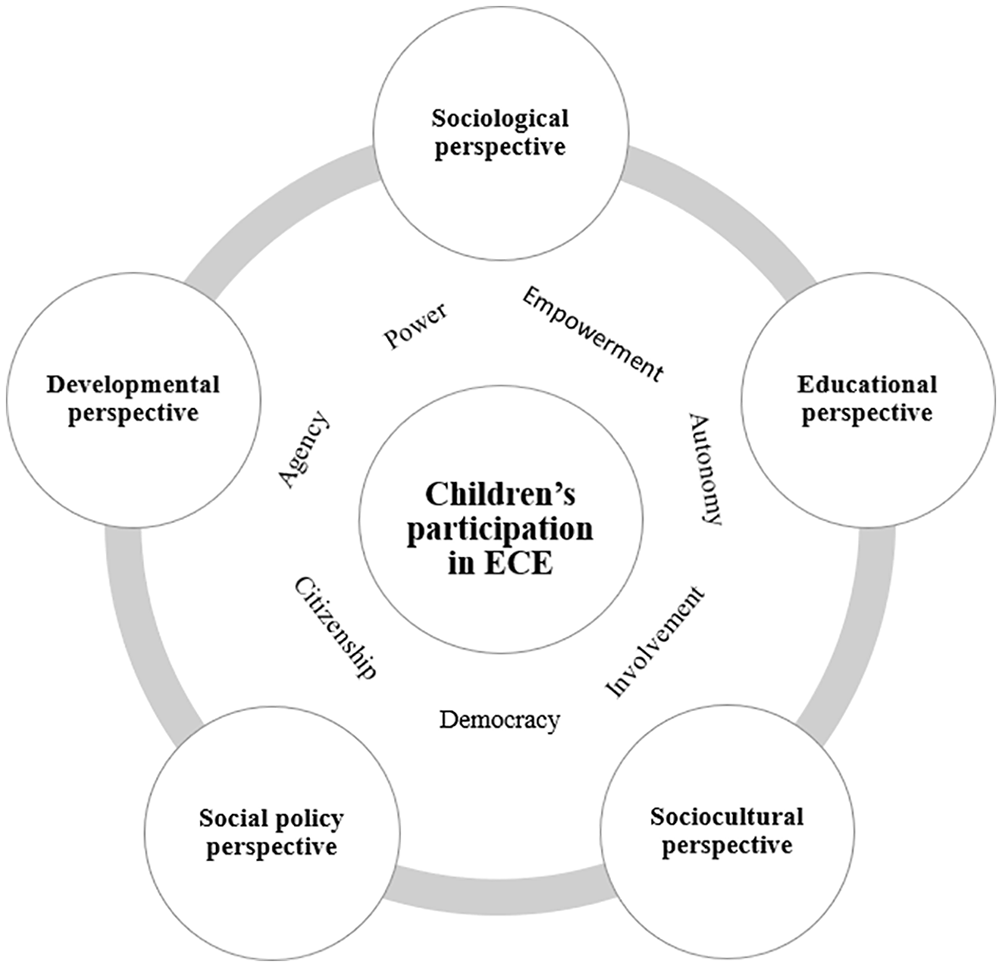
A theoretical overview of children’s participation in ECE.
Implications for research and practice
We have provided a theoretical overview of children’s participation within ECE. Considering the range of perspectives, summarizing children’s participation with a single definition, framework or unified theory may be reductionist, given its complexity (Herbots and Put, 2015). We therefore acknowledge the relevance of considering the intersection between diverse perspectives and areas of knowledge – from a sociological standpoint to educational, developmental and sociocultural perspectives, and social policy. This integrative perspective is particularly relevant for informing research and practice towards the promotion of children’s participation in ECE.
At the research level, it seems relevant to bridge the gaps between theory and empirical evidence. Considering multiple perspectives, methods, informants and levels of analysis contributes to a fuller understanding of children’s participation in ECE. Also, as younger children are described as facing barriers to their participation (Franklin, 2002), it seems relevant to investigate knowledge structures, practices and processes for the promotion of children’s participation, as well as participation outcomes for children and adults (Lansdown et al., 2014). Regarding practice, this theoretical overview is relevant for sensitizing and supporting the ECE community and society in general, acknowledging the multitude of individual and contextual factors that influence children’s participation in ECE.
Footnotes
Acknowledgements
It is a partial fulfilment of the requirements for the degree of Doctor of Psychology by the first author. The article has been written within the scope of a PhD project entitled ‘Children’s right to participate in early childhood education: From rights to empirical evidence’, authorized by Instituto Universitário de Lisboa ethics committee (committee communication 12/2015) and the Portuguese National Commission for Data Protection (authorization number 5182/2016).
Funding
This work was funded by Portuguese national funds via the Fundação para a Ciência e a Tecnologia through research grants awarded to the first author (SFRH/BD/96012/2013).
