



Abstract
Health issues stemming from the public’s lack of access to scientific and health information prompted mounting concerns about public health responses. A growing amount of digital journalism scholarship has indicated the relevance of podcasts in health communication through reaching and engaging audiences in more significant preventive behaviors. Integrating digital journalistic practices in health podcasts as a practical and low-cost communication strategy can augment public adherence to addressing widespread health issues. However, the role of health podcasts in media framing in promoting preventive health behaviors is largely unknown. This study used a mixed-method approach (e.g., content analysis and quasi-experiments) to uncover the effectiveness of health podcasts’ framing practices (scientific vs. health frames). The content analysis results demonstrated that the health podcasts mainly used carrier and normal frames, while problem definitions and treatment were leading scientific frames. In a series of quasi-experiments comprising 640 respondents from the UAE and Pakistan, this research manipulated eight frames employed in health podcasts (i.e., two leading sub-frames for each scientific and health frame) to examine the causal mechanism that affects preventive health behaviors (hereafter PB). The findings established that the message-consistent effects of media frames manifesting scientific evidence and health orientation made audiences adopt PB. Theoretically, this research addresses the call for a more comprehensive “community digital journalistic practices model,” further delivering novel evidence on the health podcast framing approaches to offer more eloquent community health campaigns to raise public health issues.
Keywords
Introduction
Since the technological revolution, media organizations have been utilizing several digital platforms to disseminate journalistic content, including news (Nee and Santana, 2021), interactive documentaries (Dowling, 2022), and podcasts (McHugh, 2022). The primary competitive advantage of using digital platforms like YouTube for journalistic practices is its higher reach at a comparatively low cost over traditional media production and distribution (Nee and Santana, 2021). Owing to these benefits, a transformation in traditional media outlets has been observed. Media organizations now use traditional means and turn to digital media platforms for journalistic practices. Besides, digital media journalistic practices serve as novel and influential tools for reaching, engaging, and connecting audiences for community benefits, including health promotion (Jorgensen, 2021). Digital content, such as podcasts, has recently been used for public health promotion and literacy (Kirkpatrick and Lee, 2021). Therefore, laypeople are reached by media organizations through health literacy and awareness content. Research has verified digital journalism’s benefits for health promotion through educating and disseminating risk information to the audience (Lee et al., 2022). Thus, digital media journalistic practice’s role in protecting motivation and health behavior change has been established and calls for more research.
However, there are still mounting health concerns, particularly in immediate past health hazards such as the COVID-19 pandemic, which have raised serious concerns about the lack of public awareness of health-related issues (Yousaf et al., 2022). In this scenario, there is a need to enhance more diverse health promotion through digital journalism content, such as podcasts. The podcast has replaced radio due to the digital emergence of streaming in the past decade. A podcast is a collection of digitally formatted episodes centered around a particular theme or topic, such as health awareness (Nee and Santana, 2021). Podcasts are digital manifestations of radio and are typically accessible on multiple platforms without cost. It is a digital audio file that may be downloaded or listened to online (Chan-Olmsted and Wang, 2022). Podcasts gained popularity in the last decade and have an extensive audience reach (Sims, 2021). For instance, in the USA, 68 million people, or 24%, listened to podcasts weekly; in the UK, podcasting has reached 18% of people, or 10 million people, weekly (Newman et al., 2021). Over the past 5 years, podcasts have experienced growth in the global south. For instance, UAE and Pakistan also witness an increase in podcast listenership. According to a report, there were 1.5 million (16%) in UAE, and 10%–19% of Pakistan’s population listened to a podcast at least once a week (Statista, 2022).
Podcasts are popular due to their availability and usability (Nee and Santana, 2021). Internet subscribers can automatically or manually obtain recordings. Thus, consumers can peruse these files from their desktops or transfer them to an MP3 player for mobile listening (Sims, 2021). The features of podcasts make them popular for carrying out journalistic practices (Nee and Santana, 2021). However, it is mainly unknown whether integrating technologies like podcasts into journalism specifically for health promotion and dissemination of health awareness can be an effective and practical strategy. Due to podcasts’ reach and user-friendly attributes, past research has identified podcasts as potential digital media journalistic platforms that can deliver health-related information to improve health behavior (Kirkpatrick and Lee, 2021). In practice, several international media outlets, such as BBC and Deutsche Welle (DW), have introduced health podcasts and generated opportunities for audience engagement with health-related issues.
To this end, health authorities such as national health programs and the public can benefit from health podcasting to deliver health information (Lee et al., 2022). However, there is a dearth of research about how a health podcast’s message frames (e.g., health or science) influence its effectiveness. Few recent studies (see Kirkpatrick and Lee, 2021) explored the influence of health podcast message attributes such as sources (e.g., doctors). However, the question remains about how a specific frame can be persuasive. Drawing on the framing and protective motivation theories (hereafter PMT), this research offers a mechanism for pitching compelling health podcasts to impact preventive behavior. Therefore, this research attempted to develop a community digital journalistic practices model that fits well into PB’s community and public engagement principles. To establish sustainable ways to promote public health, firstly, this research evaluates the digital health podcast using the tenets of the framing theory. Secondly, this research proposes a conceptual model utilizing the protection motivation theory to examine the efficacy of the message-consistent effects deemed practices by popular media organizations across two nations, UAE and Pakistan. Therefore, this research addresses the gap by identifying effective message-framing strategies to enhance persuasion in health podcasting. Based on this, we posed two research questions: 1. What were the dominant frames employed by media outlets in their health podcasts? 2. Which frame was more effective in ingraining health preventive behavior?
Literature review and theoretical underpinnings
Framing theory
Frames are organizing principles that are socially shared and persistent over time (Kim et al., 2019). Frames work symbolically to structure the social world meaningfully. People rely on media for information and access to local, national, and world events. This reliance on the media is important, as news stories are narratives and interpretations. Media outlets construct reality by focusing on one aspect of an event and presenting it to an audience. This construction operates by making certain aspects of stories more salient than others. This salience then “frames” an event and provides a reference point for viewers upon which all subsequent information is judged.
Framing theory has recently experienced enormous application; hence it is one of the most active and relevant research areas in communication (Matthes, 2009). Setting media agendas and creating interpretive frames to guide public debate are two primary journalistic functions in democratic societies (López-Rabadán, 2021). Currently, the media is at the frontline of identifying the major social problems and creating typical interpretive schemes for citizens. A case in point is COVID-19 and other health and science issues where citizens make sense of such issues from media cues. Consequently, framing influences and shapes public attitudes about current affairs (Entman, 2004), especially those concerning health and science information. López-Rabadán (2021) contends that framing has been of immense help in connecting and explaining the mechanism of production, distribution, and consumption of political information globally. This extends to health and science information.
Just like the media sets agenda on issues that influence the public agenda, which in turn influences policy agenda, it also frames issues through selection, emphasis, exclusion, interpretation, evaluation, and treatment (Entaman, 1993). Thus framing as a concept has been used to explain and understand smedia construction of social reality. While it is an abstraction that helps journalists shape a story, it is also considered (Gamson and Modigliani, 1989) as the ‘central organizing idea for making sense of relevant events, suggesting what is at issue’ (p.3).
Framing in digital age
In the digital age, the prevalence of social media and its consolidation as the preferred platform for media consumption has had important consequences in news production (Chadwick 2017). Specifically, platforms such as Twitter, Facebook, and YouTube have considerably changed the professional dynamics of content creation (news). To a large extent, the legacy media have lost their monopoly on managing current affairs, and their ability to influence has been limited: ordinary citizens distribute their messages directly to mass audiences through social media platforms and achieve greater prominence in public debate. Given the freedom of expression experienced in new media compared to legacy media, there seems to be a large plurality in framing controversial issues, including health and science issues like the COVID-19 vaccine. For instance, the proliferation of misinformation regarding the COVID-19 vaccines on social media platforms based on false assertions regarding deleterious vaccine side effects resulted in vaccine hesitancy. The global prevalence of vaccine hesitancy, fueled by misinformation, appears to persist.
Therefore, the new content creation paradigm has generated intense interactions between digital and old media (Tewksbury and Riles 2018). One of them is the hybridization that has sparked significant aspects of the framing process, creating new professional relationships and influences, new types of content (e.g., Podcasts) and communication styles, and opening a specific line of work that connects the emergence of fake news and misinformation strategies that alter the functioning of the communication system (Tewksbury and Riles 2018). The plethora of health and science information conspiracy theories loom in this direction. Many vaccine detractors utilized social media channels to articulate their perspectives on the vaccine. The utilization of frames by these opposing parties significantly influenced the populace’s perspectives and dispositions regarding COVID-19 immunization.
The most crucial change in framing studies in the present era is seen in media hybridization, which characterizes a symbiotic news system of social media news content production with the legacy news media that has managed to establish itself successfully on the internet, thus partially maintaining its traditional powers of agenda setting, gatekeeping, public opinion influencing (Güran and Ozarslan, 2022). Nonetheless, as citizens share news on social media platforms, they simply engage in agenda-setting or reframing content by choosing news above others or selecting particular sociocultural interpretations of issues (Aruguete and Calvo, 2018). This confers legitimization on and establishes social media platforms as competent and reputable news authorities, albeit with questionable authenticity. This has brought about part of the disinformation network (Chadwick, 2017).
Framing of health issues and digital media
Digital media have strongly impacted people’s perceptions of health and science issues, especially vaccination (Betsch et al., 2017). Many people continually refer to the internet for health-related information (Din et al., 2019). Such references to the internet most likely influence people’s attitudes towards health and science issues (Lee et al., 2022; Kirkpatrick and Lee, 2021). Hence, online messages and how digital journalism presents arguments are vital factors in shaping individual attitudes toward health and science issues (Kirkpatrick and Lee, 2021). In contrast, most studies have looked at framing as used in the old media to present and organize socially shared principles that are persistent over time and present interpretive packages (Kim et al., 2019). The present study highlights framing in the context of digital journalism as the lens through which the coverage and dissemination of health and science information are shaped. The focus on the frames used in health communication messages in digital journalism is critical, given that digital journalism is the preferred media and how messages are framed will most likely reflect the selected health goals (Hallahan, 2015). Citizens are subconsciously affected by such messages, which influence their perceptions and attitudes (Coleman, 2010).
Integrating protective motivation theory and framing theory
Framing theory posits that the frames used in the message have applicability effects (Yousaf et al., 2022). These applicability effects are a function of the beliefs manifested in the media messages (Bullock and Shulman, 2021). The influence of these beliefs relies on the particular applicable emphasis given in the media frames. People assess the relevancy and applicability of the action cues provided in the messages (Bullock and Shulman, 2021). For example, suppose a health frame message describes the adverse consequences of non-compliance with health prevention (e.g., disease victims) and emphasizes adopting preventive behavior (Mccullock and Perrault, 2020). In that case, people who assess these messages can learn about the benefits of compliance with health authorities’ guidelines. Therefore, a careful appraisal occurs when people encounter media frames manifested in media content such as health podcasts because they provide them with retrievable and accessible information (e.g., podcasts can be accessed through digital means, such as through an application) that helps them make decisions about adequate actions (Hallahan, 2015). As such, any message consistent effect of the media frames relies on the information processing and response of the people. This study investigated the message-consistent effects by integrating the notions of framing theory and revised PMT. The PMT is extensively used to comprehend the mechanism of threat stimuli regarding the individual’s response (Kim et al., 2022). These probable threat stimuli comprise fear messages that can trigger preventive responses by the individuals to refrain from detrimental actions to themselves or the community.
Rippetoe and Rogers (1987) originated revised PMT from a health psychology perspective primarily to describe the effect of fear appeals on health protection behavior. The PMT presented tenets to tap the mechanisms involved in developing the protection behavior (Kim et al., 2022). Besides, it delineates the processing of the individual’s response to potential health-related threat messages. The PMT postulates two cognitive mechanisms, (1) threat appraisal and (2) coping appraisal, that regulate modification in one’s coping action to prevent them from the appraised threat in question (Ezati Rad et al., 2021). The PMT points out that these two mechanisms take place consecutively.
The PMT suggests that if the extent of threat appraisal is surpassed after exposure to the fear message or a message containing health-related information, individuals start to assess their coping choices (Mccullock and Perrault, 2020). The PMT also noted a probable interaction between these two mechanisms. However, if a health-related message contains a greater extent of a threat appraisal and a higher coping appraisal, it can strengthen protection motivation (Ezati Rad et al., 2021). In the context of this research, health podcasts have been posited as the triggers for individuals to be aware of the potential and ongoing health-related risks. Drawing an analogy from PMT and framing theory, this research proposed a conceptual model (see Figure 1) whereby the efficacy of the several media frames is questioned. Details of both mechanisms in different media frames condition are delineated in the following section. Conceptual model.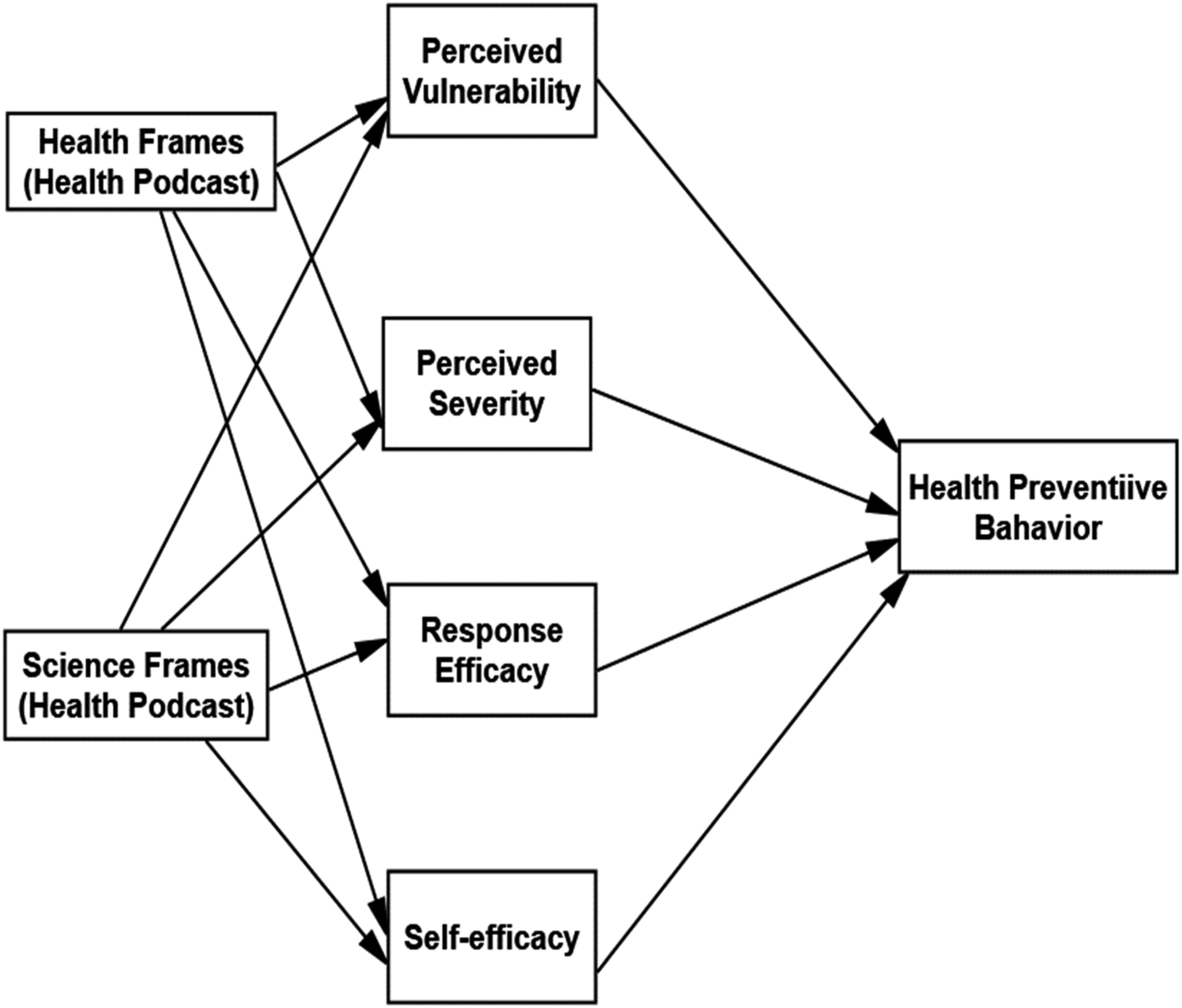
Hypotheses development
Threat appraisal
Threat appraisal (hereafter TA) is how individuals perceive a threat from a particular hazard (Ezati Rad et al., 2021). The construct of the TA includes two facets; (1) cognitive (perceived vulnerability) and (2) affective (perceived severity). The cognitive facet describes the extent of the perceived risk of getting affected by a threat (e.g., health risk). At the same time, affective facet is about the threat-related feelings (Ling et al., 2019). Cognitive facet designates an individual’s assessment of the perceived likelihood of a forthcoming health-related issue, such as an epidemic or vulnerability to disease, from a health-related risk perception perspective. Therefore, the anticipation of exposure to a disease and its severity is the probable harm if an individual becomes a victim of a disease or health-related issue (Wang et al., 2021). The affective factor describes the fears or uncertainties about health risks and accounts for feelings' consequences on health risk behaviors (Ghahramani and Wang, 2021).
Based on the tenets of the PMT, TA is a crucial cause of protection motivation (Ling et al., 2019). Ample literature on health communication advocates the positive influence of the TA factors (e.g., perceived vulnerability and perceived severity) on protection motivation. For example, research has found a positive relationship between the TA (e.g., cognitive and affective response) of health hazards and PB (Ezati Rad et al., 2021; Kowalski and Black, 2021; Mccullock and Perrault, 2020). Similarly, past research has identified perceived vulnerability and severity as protective motivation drivers (Wang et al., 2021). Communication literature has also documented that perceived vulnerability and severity influence PB when a person is exposed to media messages delineating threat awareness (Kowalski and Black, 2021). In the context of this research, health podcasts as media content may instill awareness of health threats. They could increase the probability of PBs among people. Thus, drawing an analogy with PMT and the notion of the consistent message effect of framing theory, the health podcast can provide threat cues to prompt PBs among people. To this end, media frames used in health podcasts can strengthen the threat appraisal factors. It is plausible to assert the following hypotheses that a person’s response to a health podcast containing health-related information would enhance PB.
Perceived vulnerability will positively affect PB when people get exposed to the digital health podcast frames.
Perceived severity will positively affect PB when people get exposed to the digital health podcast frames.
Coping appraisal
Coping appraisal (hereafter CA) describes the cognitive mechanism by which individuals evaluate probable reactions that may diminish the perceived threats (Ling et al., 2019). The coping appraisal comprises two main components, including (a) response efficacy and (b) self-efficacy. Response efficacy is an individual’s belief that preventive action will diminish potential harm from a particular risk. At the same time, self-efficacy denotes whether an individual feels capable of performing the protective action. In previous literature, response efficacy and self-efficacy are robust antecedents of health-preventive behavior (Kowalski and Black, 2021). Consistent with the results of these studies, we proposed that the effects of the health and science frames employed in the health podcasts would result in improved response and self-efficacy (Mccullock and Perrault, 2020). PMT also noted that the messages about health-related threats yield relevant results, and individuals learn coping methods to reduce the levels of the threats (Ezati Rad et al., 2021). The literature also supported this assertion and advocates that when individuals get the awareness of the health risks through media, they are inclined to adopt actions in compliance with safety, and it is hypothesized that:
Response efficacy will positively affect PB when people get exposed to the digital health podcast frames.
Self-efficacy will positively affect PB when people get exposed to the digital health podcast frames.
Research design
This research utilized the mixed-method approach. A content analysis method was employed to answer the research questions. In contrast, quasi-experiments were used to validate the hypotheses proposed in this research. First, a content analysis was used to evaluate the frames used in the digital health podcast audio stories by popular digital media outlets in UAE and Pakistan. The study utilized content analysis findings to identify the digital journalistic practices utilized by prominent media outlets and for sequential quasi-experiments. Onwards the four prevailing frames (two health and two science frames), digital health podcast audio stories were selected as the quasi-experiment stimuli. The details are delineated in the following sections.
Part 1: Method: Content Analysis
The study was based on health and science frames gathered from digital health podcast audio stories by popular digital media outlets in UAE and Pakistan (e.g., BBC Arabic and BBC Urdu). These podcast audio stories were collected from the eight media organizations’ YouTube channels and websites. The study was done over 3 years, from 2020 to 2022. These years were considered based on prominent health and science issues during the study period (e.g., COVID-19, monkeypox). The study was done in the context of two countries in the global south, UAE and Pakistan. 61 podcasts from UAE and 46 from Pakistan were collected from the websites of four digital media channels for each county. The content analysis categories were deducted from the previous literature. In coming up with the coding scheme and units of analysis, we adopted relevant health and science frames already used in past studies. We dwelt on and emphasized differentiation between health and science frames as used in this study – health frames are emotion-laden stories. In contrast, science frames are based on neutral or scientific information (Kohler and Koining, 2020).
In coding health and science frames, we also adopted character frames that have been progressively used in health communication (e.g., Koinig et al., 2017) and science communication (e.g., Kessler et al., 2016). Kohler and Koining (2020) state that character frames elicit recipients’ emotions and responses. We coded the four frames recognized in the literature (Dan, 2018). They are victim frames (person affected by the disease – negative aspects are stressed); survivor frames (healthy individual or a hero-like person who survived the disease – positive aspects are stressed); carrier frames (negative portrayal of health condition caused by deviant behavior); normal frames (people are portrayed as both ordinary and in a normal situation where the disease is not seen as a burden). Kohler and Koining (2020) indicate that health frames are effective and evoke emotional responses from recipients as such frames focus on individual aspects like well-being.
On the other hand, science frames are based on scientific evidence, and information is presented factually. Thus the scientific frames readily apply to Entaman’s (1993) frames of problem definition – which is related to actors and topics involved in the discussion at hand and commonly linked to scientific (un) certainty; casual interpretation - involves uncovering the reasons and causes behind specific problems; moral evaluation - includes a rating of the findings presented, which is most often based on negative or positive judgments; and treatment recommendation - solutions to the previously identified problems. Below is the content analysis based on the above narrative. The coding was done by four coders (two from Pakistan and two from UAE). Two research team members provided a training session to the coders. Next, they were requested to view each health podcast and code them in the relevant categories. The reliability of the coded data was determined using Holsti’s (1969) inter-coder reliability test to show consistency. All categories are accessible in Appendix A.
Results of content analysis
UAE’s top frames in podcast.
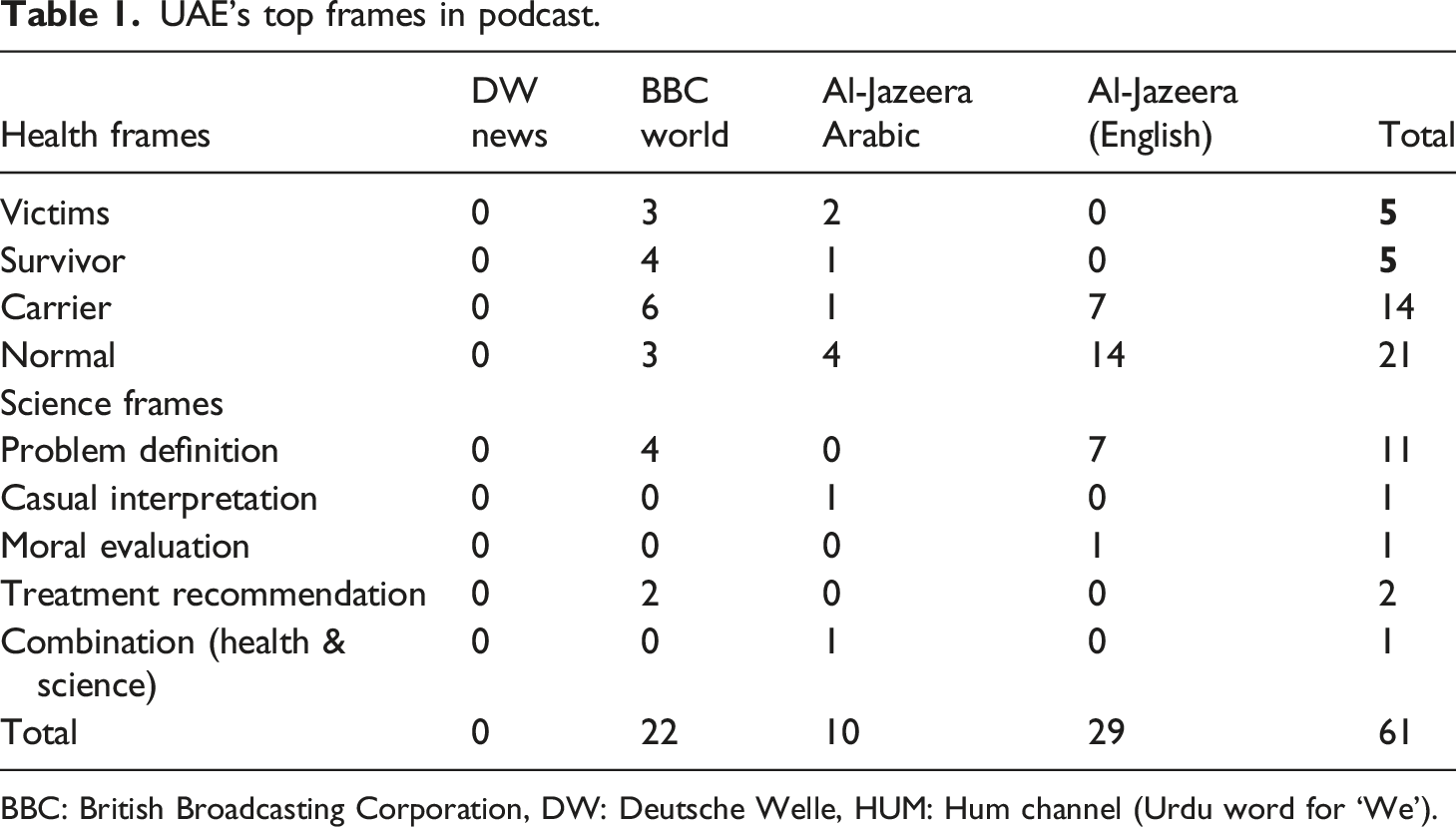
BBC: British Broadcasting Corporation, DW: Deutsche Welle, HUM: Hum channel (Urdu word for ‘We’).
Pakistan’s top frames in podcast.
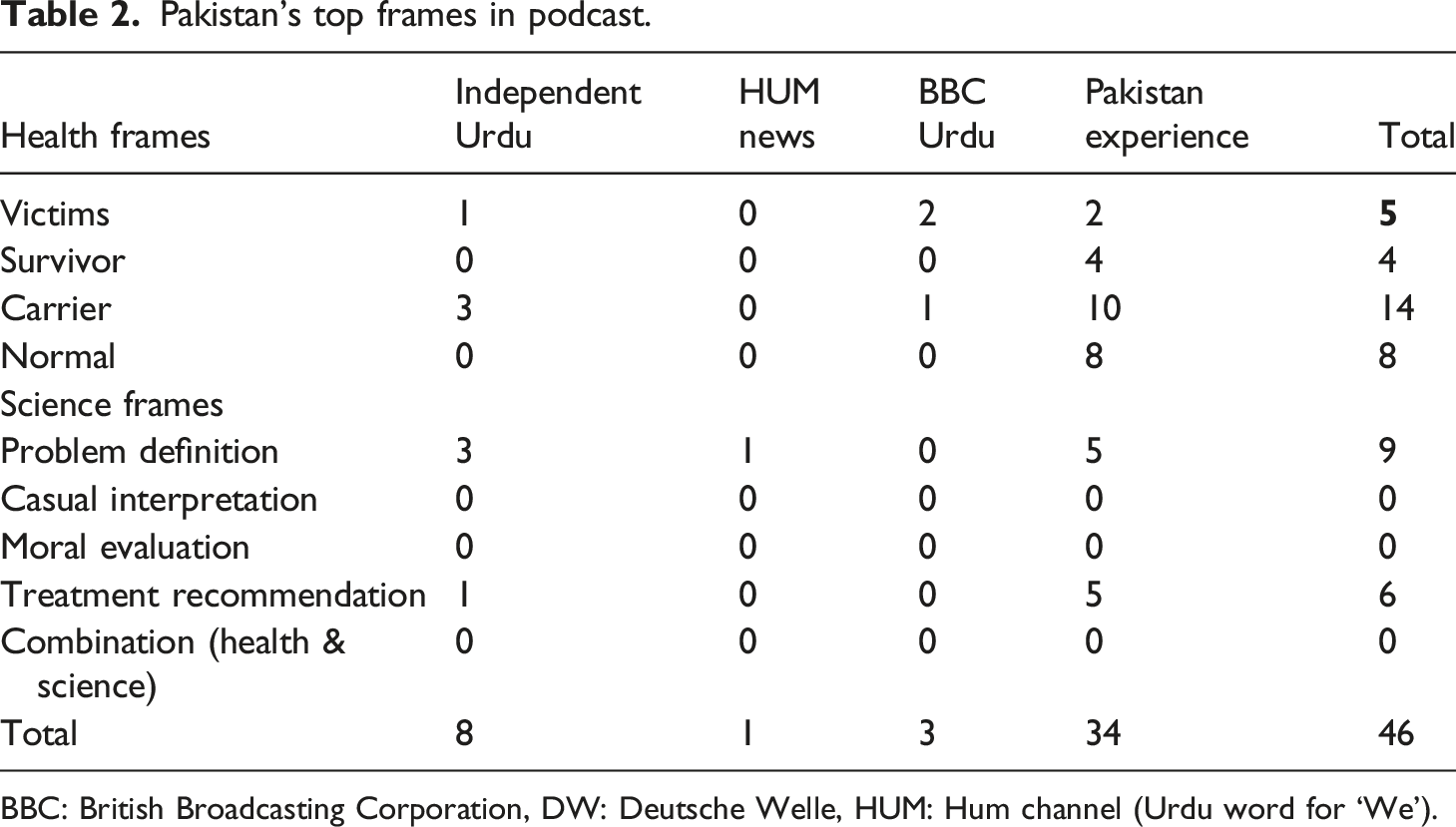
BBC: British Broadcasting Corporation, DW: Deutsche Welle, HUM: Hum channel (Urdu word for ‘We’).
Part 2: Method and materials
We also conducted four cross-sectional quasi-experiments to observe and compare the consistent message effect of the two widely used podcast frames. The quasi-experiment employed (Frames; health vs. science) x 2 (Country; UAE vs. Pakistan). The leading four frames (two science and two health frames) that emerged in the health podcast’s content analysis were employed as the stimuli for this research. Therefore, the UAE and Pakistani participants were divided into four groups. Each group was exposed to four different health-related podcasts with different frames. The four leading frames include two health frames: (1) Carrier and (2) Normal, along with two science frames: (1) Problem definition and (2) treatment, which were chosen as stimuli for this research.
Data was collected from 640 adults, including 320 participants from each country, UAE and Pakistan. Participants were recruited online to ensure the participation of digital media users. Once all participants were recruited through online invitations, they were requested to consent to information. After that, data was collected from 6th December 2022 to 25th December 2022. The Google form was sent to them. The participants were divided into eight conditions (groups), and 80 responded to the online administrated questionnaire after getting exposure to the relevant frame used in the health podcast. Four groups (n = 80) from each UAE and Pakistan recorded online responses. Participants ages ranged between 18 and 61 years (Mean age = 34.2 years). The demographic analysis revealed 386 males (58.4%) and 266 females (41.6%). Regarding educational level, 143 had high school certifications (22.3%), 256 were undergraduate students with a college certificate (40.1%), and 241 had university degrees (37.6%).
Stimuli selection
The digital podcast audio stories broadcasted by the mainstream channels on Youtube and their websites outlining health and science frames were selected as stimuli to perform the quasi-experiments. The leading frames practiced by these media outlets were recognized through the content analysis procedure reported in Study 1. Two podcast audio stories representing the leading frame (e.g., problem definition) were sent out for expert opinion. Following the content and face validity procedure which ensured that the test measured what it was supposed to measure, podcast audio stories, along with the operational definitions, scales, and objectives of this research, were sent to the eight subject experts (four academicians and four digital content creators). They were requested to report their responses on a 4-point scale, anchoring “1 = not suitable and 4 = most suitable” with no neutral scale. Their responses were computed using the excel program created following Lynn’s (1986) content validity index. The podcast with the highest score was selected as a stimulus to represent a specific frame and shown to the participants.
Measures
The media attention “semantic differential scale” measured the podcast frame manipulation. After exposure to a specific podcast (representing a frame), the participants were asked to respond to three items. The statement reads, “I pay attention to the health podcast because I think it is _____.” Three items followed the statement: “(1) 5 = extremely informative, 1 = not at all informative; (2) 1 = reliable information, 5 = not at all reliable information; and (3) 1 = persuasive, 5 = not at all persuasive.” The perceived vulnerability, severity, response efficacy, and self-efficacy were measured through 12 items (e.g., three items for each variable) adapted from the previous literature. PB was measured using the three items deducted from the literature (Ezati Rad et al., 2021; Wang et al., 2021). All scales were modified in the current study context, and responses were requested on a five-point scale “(5 = strongly agree to 1 = strongly disagree).” Finally, demographic characteristics such as gender, age, income, and education were gathered and utilized as control variables to account for potential confounding influences.
Results of Study 2
Manipulation checks
This research employed a MANOVA test to confirm the manipulation of the frames across the eight groups. Levene’s variance test results demonstrated considerable variance in the mean of the podcast frame (F (3637) = 59.41, p = 0.001). Furthermore, using the PLS, this research employed the multi-group analysis (hereafter MGA) to re-confirm the path variance among all eight groups. The results established the assumption of variance discussed in the hypotheses section.
Confirmatory factor analysis
This research utilized variance-based structural equation modeling (hereafter SEM) using the PLS software. Initially, the confirmatory factor analyses (hereafter CFA) were performed to observe convergent and discriminant validities and model fitness, followed by the hypotheses testing using the MGA. The results of the CFA confirmed the model fitness and revealed acceptable values of NFI= > 0.92 and SRMR= < 0.083.
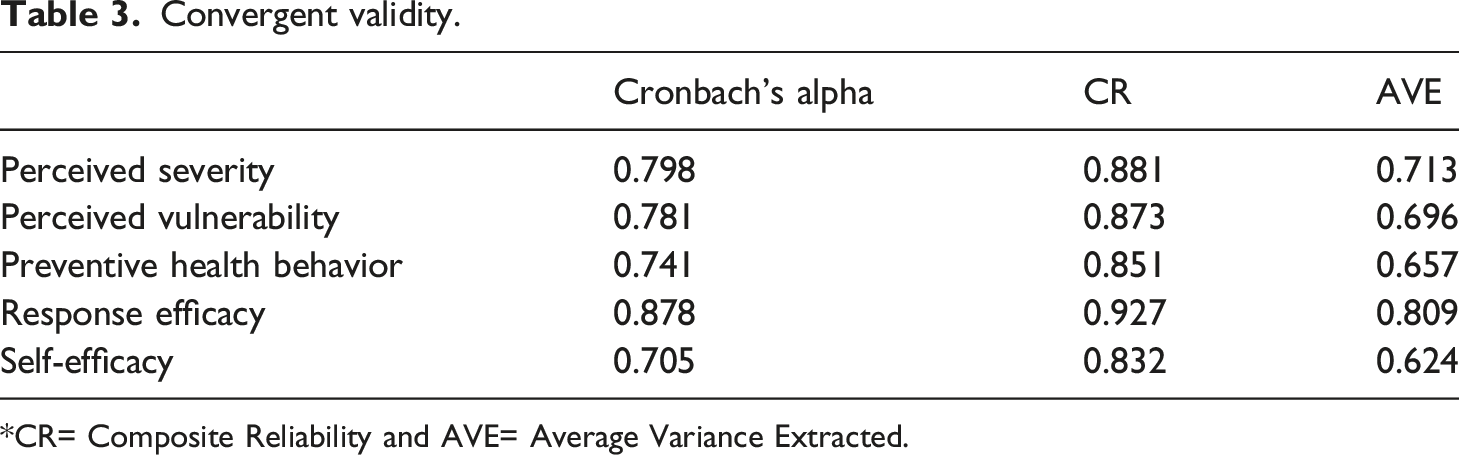
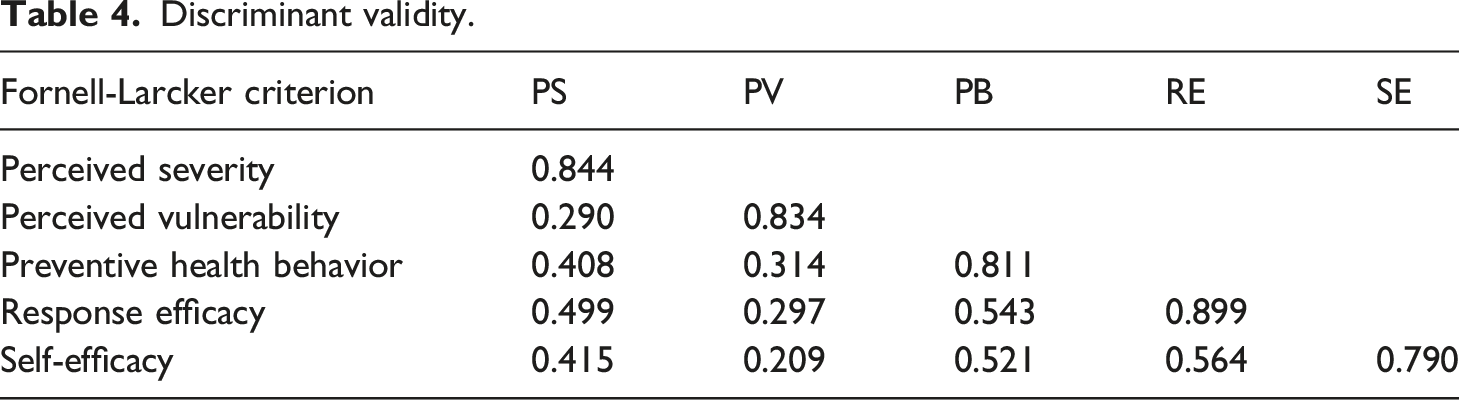
The results of the SEM (see Figure 2 and Table 3) suggested that all constructs (e.g., PV, PS, RE, SE, and PB) revealed satisfactory reliability (> 0.70). Additionally, the results also confirmed the convergent validity based on the adequate values of the Average Variance Extracted (> 0.50) and composite reliability (> 0.80). Moreover, using the Fornell-Larcker criterion, the discriminant validity was evaluated. The reported results in Table 4 confirmed the discriminant validity of the constructs, and we proceeded with the hypotheses testing. Measurement model. Convergent validity. *CR= Composite Reliability and AVE= Average Variance Extracted. Discriminant validity.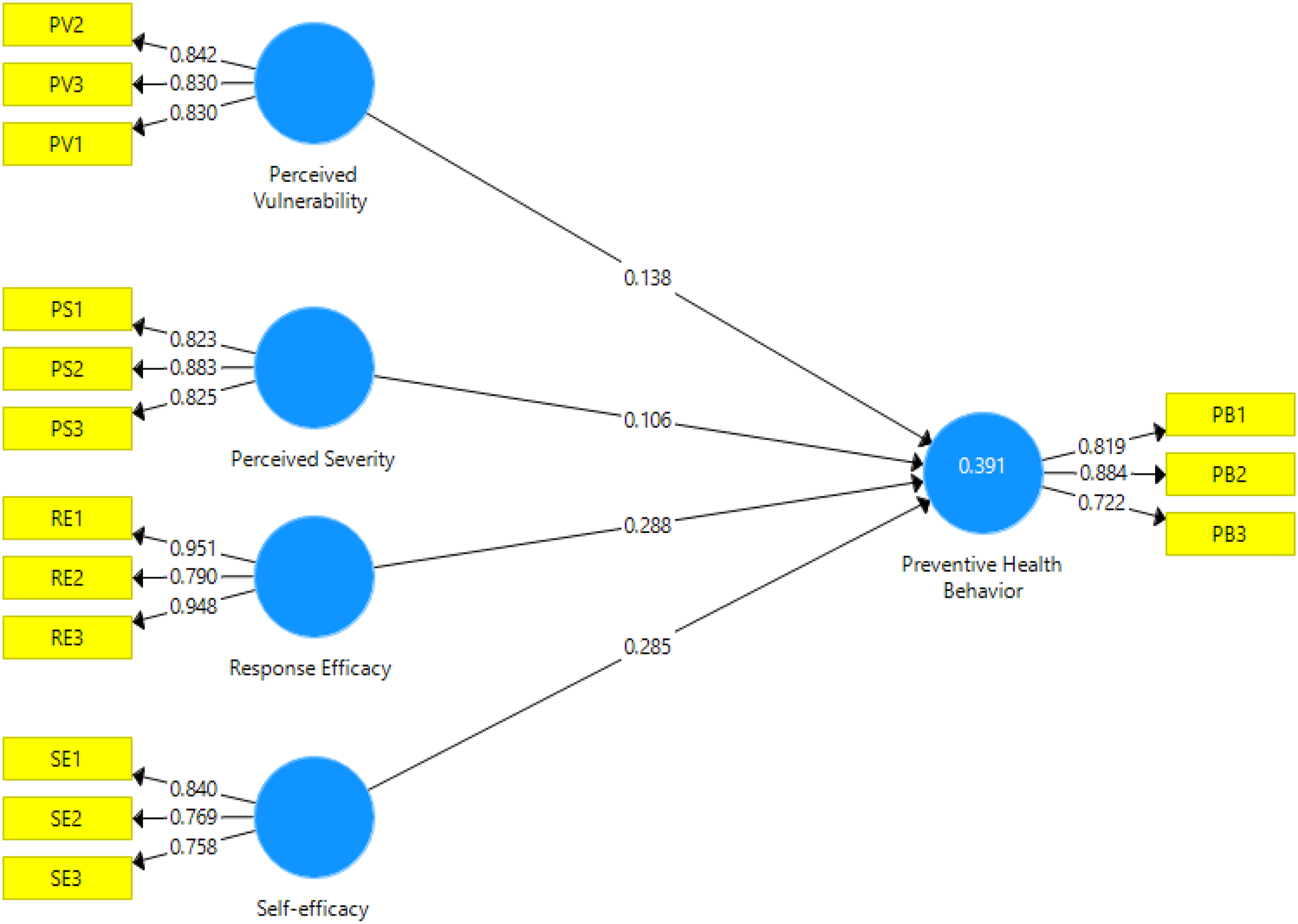
Hypothesis testing
Hypotheses results.
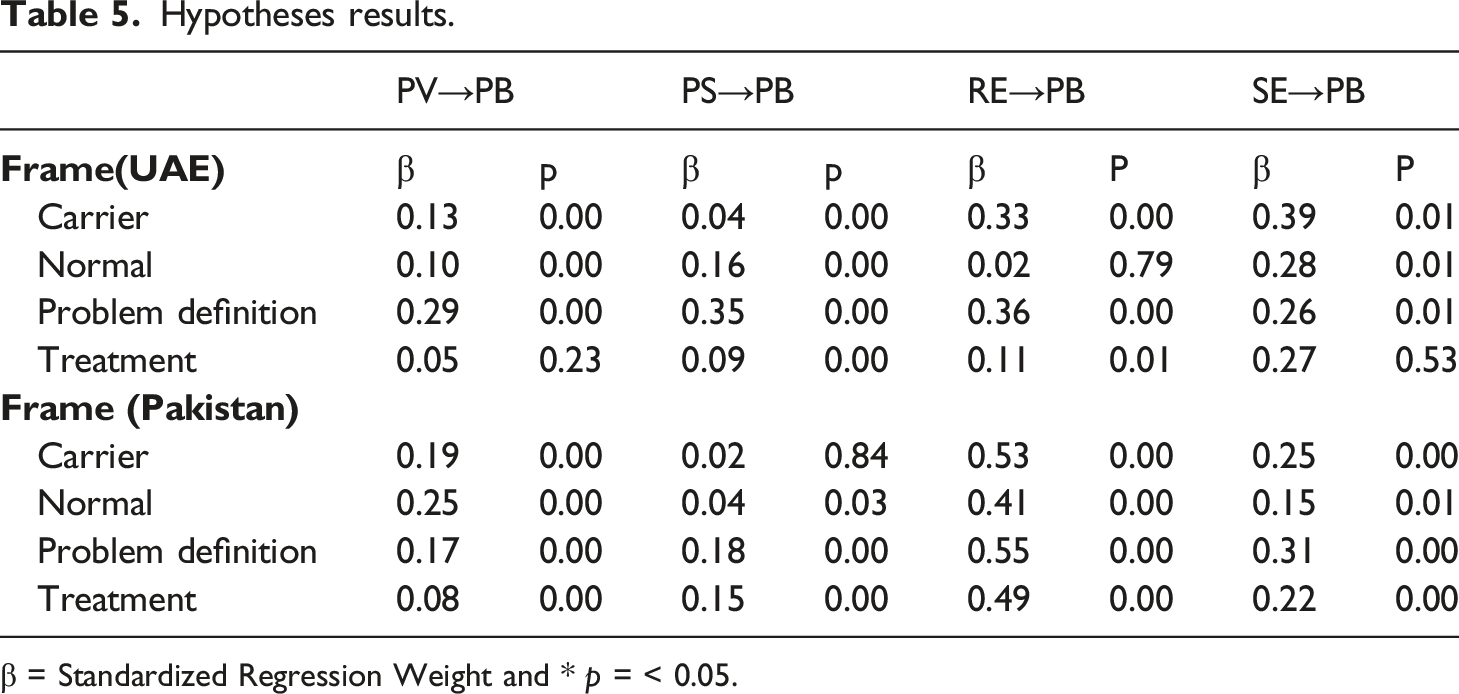
β = Standardized Regression Weight and * p = < 0.05.
The results revealed that the perceived severity (PS) affects PB among UAE and Pakistani nationals when exposed to the health and science frame among UAE nationals. However, the PS did not significantly affect PB when Pakistani nationals were exposed to the health frame. The effect of the PS on the PB was more substantial when participants were exposed to the podcasts with a scientific frame of problem definition among UAE nationals (β = 0.35) and Pakistani nationals (β = 0.18), and Hypothesis 2 was partially supported.
The results revealed that the response efficacy (RE) affects the PB among UAE and Pakistani nationals when exposed to the health and science frame with distinct intensities. The effect of the RE on the PB was more potent when participants were exposed to the podcast problem definition with a scientific frame of the problem among UAE nationals (β = 0.36) and Pakistani nationals (β = 0.55), and Hypothesis 3 was supported. Finally, the results revealed that self-efficacy (SE) affects PB among UAE and Pakistani nationals when exposed to the health and science frame with distinct intensities. The effect of the SE on the PB was stronger when participants were exposed to the podcasts with health frame of carrier among UAE nationals (β = 0.39). In contrast, the effect of the SE was higher among Pakistanis when exposed to the scientific frame of problem definition (β = 0.31), and Hypothesis 4 was supported. However, results overall identified scientific frames have generated more responsive efficacy and remain more effective in predicting PB. Lastly, demographic characteristics were analyzed for their confounding influence, revealing that only educational level significantly impacted prediction PB.
Discussions
From the content analysis perspective, this study aimed at determining how digital media/digital journalism through podcasts relay/report health and science information to determine its impact on community health. This is borne out of the fact, on the one hand, that podcast is evolving and emerging as one of the critical media platforms for media content production, especially in packaging effective communication strategies (French et al., 2020). It is also a potent medium for media consumption. On the other hand, audiences are interested in health and science issues, given their impacts on audiences’ lives. Audiences, therefore, make meaning of health and science issues based on how they are framed in the media. COVID-19 vaccination, for example, is a point in case. Reviewing how health and science information is framed in podcasts becomes necessary to make inferences and projections in the area, especially in the global south.
While data analysis from the content analysis may not lead to a general conclusion, it reflects the need for adequate utilization of podcast medium in disseminating health and science information. Content analysis data also indicate a poverty of podcast coverage of health and science issues in the UAE and Pakistan. This may be a pointer to the rest of the global south. One major explanation for this trajectory could be that podcasts are primarily used for entertainment. In this regard, health and science information could be transformed into the infotainment genre to attract more audiences.
However, data from content analysis on health and science issues indicate a plurality of frames (based on the frames analyzed) for both health and science issues, thus confirming the findings of previous studies (Matthes and Kohring, 2008). While carrier, normal, and survivor frames were prominent in health issues in both UAE and Pakistan, science information centered more on the problem definition frame, especially in the UAE. With the poverty of health and science information in podcast platforms in UAE and Pakistan, we argue that emerging health and science issues have not been reported to the point of promoting community health. There is a very strong need for podcasters, especially those that are yet to consider health and science information, to begin to do so and for other podcasters to double their efforts in reporting accurate and expert health and science information as such information shapes and determines audiences’ attitudes to health and science issues. There is also a strong need to include solution (Treatment Recommendation) frames in health and science information. This can only happen when podcasters have ample knowledge and expertise in analyzing and reporting health and science frames factually and scientifically. This study went beyond content analysis in determining the import of health and science information through podcasts; it conducted a quasi-experiment to explore how audiences adopt PB through other health and science frames. This gives this study an advantage over past studies that merely dwelt on determining the quantity of the content of health and science issues reported in digital media.
The quasi-experiment results (Study 2) clarified which frame is more effective in instilling a positive public health response. Furthermore, the results of each frame have been described in separate experiments. Study 2 was informed by content analysis results that identified the prevailing journalistic practices employed in health podcasts across two nations. The study underpinned the assumptions of the PMT theory and reported the effect of the four frames on participants of two nations. In doing so, eight participants were engaged in the study, and the effect of the PMT constructs was reported. According to the PMT, high threat and a coping appraisal are suggested to lead to protection motivation. In the results, the notion of PMT has been validated because the preventive response (i.e., preventive behavior) was reported when audiences were exposed to the scientific and health frames. The results were also consistent with the previous studies tapping the influence of the PMT constructs on health protection motivation in several contexts, such as COVID-19 (Kim et al., 2022) and mobile-health applications (Ghahramani and Wang, 2021).
Implications for content providers
As can be deduced from the above analysis, there is a poverty of podcasts on health and science issues in the UAE and Pakistan. Given that podcasting is evolving and growing in leap and quantum and is becoming a preferred medium for media consumption, it becomes imperative for media organizations, governments, and bloggers, to utilize podcasts in disseminating health and science information. It is also pertinent for podcasters in every shape and color to report health and science stories and formulate discussion recommendations to avoid confusing users (Matthes and Kohring, 2008; Kohler and Koining, 2020). The results of the quasi-experiments will also be helpful to media organizations, governments, and bloggers to determine how to present health and science stories to persuade them to adopt preventive health measures on emerging health issues. This explains the reason for the quasi-experiment used in this study.
Put differently, the quasi-experiment results give an extensive understanding of the usefulness of the particular frames that can be incorporated into digital journalistic practices. The strategic information of the results offers guidelines to devise a communication strategy for the journalistic production of health podcasts to influence PB. For instance, results suggested that explaining the problem with a scientific perspective can be a valuable strategy to instill a higher degree of response efficacy, perceived vulnerability, and severity of the health issue among the audience. Similarly, using the normal health frame can enhance the realization of the severity of the health issue among the viewers. Therefore, media organizations can enlighten digital journalists about appropriate information and emphasize the particular aspect (problem recognition) in health podcasts to improve the community health response. Moreover, this study aims to comprehensively analyze the content to understand digital journalism practices in the UAE and Pakistan. While both nations exhibit certain similarities, the results suggested a varied reception of the various frames employed in media content. Media organizations can potentially synchronize their message production strategies with the results of this study. These results can aid in developing impactful digital journalistic content exhibiting diversity within the global south. The results of quasi-experimental research offer valuable insights into the effectiveness of various frames employed in journalistic content, with potential implications for enhancing community health responses in the UAE and Pakistan.
Limitations and future directions
The first limitation is using quantitative content analysis and pre-defined categories; future studies may consider using the inductive method. Second, the quasi-experiment, though, has the benefit of taking responses in natural settings; therefore, future studies may use randomized experiments to establish the causal effects of the frames. Thirdly, future studies may explore the efficacy of the source and other message attributes (e.g., valence or tone) on health behavior. Lastly, the study research model could be applied to the West and the rest of the world.
Footnotes
Declaration of conflicting interests
The author(s) declared no potential conflicts of interest with respect to the research, authorship, and/or publication of this article.
Funding
The author(s) received no financial support for the research, authorship, and/or publication of this article.
