




Abstract
Migration has re-emerged as a central political issue across Africa and Europe, yet comparative research continues to privilege European perspectives and rarely incorporates the heterogeneity of African media systems. This study addresses this gap through a systematic content analysis of 1871 online news articles from 30 outlets in 15 African and European countries (2023-2024). We examine form, content, and evaluative dimensions of migration reporting, drawing on scholarship on transnationalisation, domestication, and structural influences on journalism. The findings show that domestication remains the dominant organising logic of European reporting and has become increasingly visible in African coverage, marking a notable shift from earlier studies that portrayed African media as largely agenda-following. While European outlets continue to focus strongly on security, conflict, and political regulation, African media devote comparatively more attention to the economic dimensions of migration, which is associated with more positive evaluations. By integrating African and European coverage into a unified comparative framework, the study advances debates on global news flows and indicates the emergence of a new transnational theme alongside persistent national logics: international migration ‘deals’.
Introduction
Ten years after the so-called ‘refugee crisis’ of 2015, migration has once again become a defining topic on both political and media agendas, but under profoundly transformed conditions. Migration today intersects with global developments such as climate change, economic insecurity, demographic change, populism, and disinformation, all of which redefine patterns of migration between the ‘Global South’ and the ‘Global North’ (World Bank, 2025). 1 In this evolving context, it becomes crucial to re-examine how the news media of origin, transit and destination countries portray migration. Particularly, we need to know whether the patterns of coverage identified in the 2010s – the dominance of crisis, security, and control frames in both destination and origin countries of migration (Balabanova and Balch, 2010; Caviedes, 2015) – persist, converge, or diverge across regions.
Migration has remained among the most salient issues in public and political debates (Eurobarometer, 2025), yet the ways in which news media frame it differ strikingly across continents and contexts. While European news coverage has repeatedly been shown to emphasize conflict, crisis, and control (Eberl et al., 2019), research on African media remains scarce and fragmented. Only a handful of studies have systematically examined how African news outlets report on migration, and most of these have focused on isolated cases or single countries (Moyo and Mpofu, 2020). Furthermore, African journalism has been portrayed as a passive recipient of European media narratives or as largely absent from the global debate, rather than as an active contributor to the construction of migration discourses.
This overlooks the fact that many African countries are not only points of origin but also important destinations for intra-African migration (Makina and Pasura, 2023). This dimension has remained largely invisible in Northern media coverage and underexplored in comparative research (Lecheler et al., 2019). Also, existing scholarship has not yet addressed the growing number of ‘migration deals’ between European and African states. While the UK-Rwanda agreement to host asylum seekers has now been abandoned, the Netherlands is negotiating a similar arrangement with Uganda at the time of writing.
Although these developments suggest a growing entanglement of African and European migration policies (Mastrosanti, 2025), we know little about whether media coverage reflects such interdependencies. This gap underscores the need for evidence that moves beyond Europe-centred perspectives and incorporates the viewpoints of media from origin, transit, and destination countries. By systematically comparing news content in 15 African and European countries between 2023 and 2024, this study provides one of the first intercontinental analyses of migration reporting.
Comparative studies on migration coverage: literature review
Theoretical approaches to journalism suggest that variation in news content emerges from the interplay of professional routines, institutional constraints, and broader structural conditions (Hanusch and Hanitzsch, 2019; Shoemaker and Reese, 2014). Migration coverage is a revealing case: it is transnational by nature, tied to questions of global governance (Hafez, 2009), and embedded in unequal global news flows that connect media in the Global North and the Global South (Boyd-Barrett and Rantanen, 1998; Segev, 2016). At the same time, newsrooms are increasingly interconnected through digital infrastructures, global news agencies, and cross-border collaboration (Berglez, 2008). These insights raise the question of whether migration coverage continues to reflect national agendas. Or do cross-regional patterns indicate an emerging transnational media agenda (Wessler and Brüggemann, 2012)? Reviewing a “myriad of available research findings” on migration coverage, Lecheler et al. (2019, 697-8) conclude that mass communication still lacks comparative studies to understand the global dimension of the topic.
Most comparative studies on the contents of migration coverage have been Europe-centred, and focused on Western European countries (e.g., Fotopoulos and Kaimaklioti, 2016; Mancini et al., 2019). Since 2015/16, comparative research in Europe has shown a persistent emphasis on securitization, crisis, and control, with limited space for humanitarian perspectives (Chouliaraki et al., 2017; Eberl et al., 2019). Media in Europe frame migration largely as a political, economic, and cultural threat (e.g., Caviedes, 2015; Zhang and Hellmueller, 2017). Evidence from the studies including also Central and Eastern Europe (CEE) (e.g. Kovář, 2023) adds nuance: CEE news outlets – on both sides of the political spectrum – cover migration even more critically, devote less attention to individual stories, and amplify sceptical voices across outlet types (Eberl et al., 2019; Kreutler et al., 2022).
Negative portrayals are frequent in European media for migrants from Muslim-majority countries (Cooper et al., 2020; Mance and Splichal, 2024), whereas Ukrainian refugees have been depicted more favourably (Prieto-Andrés et al., 2024). Despite rising numbers of migrants from Africa, the continent with the highest projected population increase (Landau et al., 2019), migrants from sub-Saharan Africa remain much less visible in the European media (Kreutler et al., 2022). When mentioned, they often appear in crisis narratives such as trafficking or Mediterranean boat accidents (Nothias, 2018; Syallow, 2024).
Migration also tends to be narrated from national vantage points in European news media, with a low degree of ‘Europeanisation’ (e.g., Lichtenstein, 2014) as well as little contextualization of origin countries, and few migrant voices (e.g., Berry et al., 2015; Georgiou and Zaborowski, 2017; Ramasubramanian and Miles, 2018). This has been interpreted as a sign of strong domestication (Gurevitch et al., 1991), a concept that refers to the extent and the journalistic techniques that local media employ to incorporate cross-border events in their coverage, “to make them attractive and accessible to their domestic audiences” (Van Dooremalen and Duyvendak, 2024, 110).
The perspectives of origin and transit countries of migration remain absent from comparative analyses conducted in destination regions. While fragile media systems in key Middle Eastern origin countries such as Afghanistan and Syria limit accessibility for research, the situation differs for Africa. Wasserman (2022, 311) notes a “widespread growth and diversification of the media in recent years,” which includes the expansion of privately owned newspapers and broadcasting stations. African media systems vary in regulation, ownership structures, editorial autonomy, and media use (Santos, 2022). This heterogeneity spans relatively liberal environments (e.g., South Africa, Ghana) as well as hybrid and authoritarian regimes (e.g., Malawi, Uganda, Rwanda) (V-Dem Varieties of Democracy, 2024). Despite Africa’s importance as a region of origin, transit, and destination, and its growing geopolitical relevance for Europe (World Bank, 2025), African journalistic perspectives remain marginal in comparative migration research. As a result, existing studies capture only a partial view of how global migration is represented across African media systems.
The hierarchy-of-influences model (Shoemaker and Reese, 2014) emphasizes how routines, organisational factors, and systemic contexts impact media output. Global differences in political and professional autonomy and newsroom resources (Hanitzsch et al., 2019) shape who writes (agency vs staff), who speaks (official vs civic actors), and what gets prioritized (topics, geographies). In many African markets, limited budgets and reliance on international news agency material constrain domestic authorship (Fengler et al., 2020), while European outlets often lack regional cross-border perspectives despite stronger resources. These structural conditions may also affect the form (authorship, genre, placement), content (topic, geography, actors), and evaluative (tone) dimensions examined in this study.
Existing studies indicate that migration coverage in African countries often reflects crisis scripts (trafficking, humanitarian emergencies), with national variation and generally negative framing (Gadzikwa and Jones, 2020). Historical research on post-Soviet media covering emigration from CEE in the 1990s has shown such patterns of external agenda-setting in migration reporting, amplified by resource constraints (Balabanova and Balch, 2010). The majority of research on migration coverage in Africa is focused on South African media, who tend to report African immigration in relation to xenophobic attacks on African migrants (Tarisayi and Manik, 2020), further emphasising negative aspects of migration (Bird et al., 2020). Comparative research points to a heavy reliance on governmental and elite actors, limited visibility of civil society and migrants, and the reproduction of international frames – with regard to humanitarian crises – where resources are scarce (Fengler et al., 2021; Wanda and Gondwe, 2024). The cited studies also conclude a lack of domestication, i.e. an adaption of the topic to the information needs of local audiences in African migration coverage (Sithole, 2023). However, recent global initiatives to strengthen professional capacity in Africa may be altering authorship, sourcing, and thematic selection in African media (Acheampong, 2025).
Journalism is shaped not only by national structures but also by transnational factors including global news agencies (Boyd-Barrett and Rantanen, 1998) and donor-funded media programmes (Lugo-Ocando, 2020). Identifying indicators of transnationalisation, Santos and Cazzamatta (2024) list equivalence of geographical focus, topics, and sources in news coverage as signals for a transnational media agenda. Transnational policy-making may provide a reservoir for such parallels in focus, frame and actors between Africa and Europe. Widely-discussed ‘migration deals’, e.g., UK-Rwanda, Italy-Tunisia, and Netherlands-Uganda (Chibelushi and Cyuzuzo, 2024; FT, 2025; TIMEP, 2025), add governance dimensions (Mastrosanti, 2025) largely unexplored in journalism research so far. Demographic change and labour shortages in the Global North have introduced policy frames of ‘managed mobility’ between Africa and Europe (World Bank, 2025). These ‘deals’ might have the potential to bring an economic dimension to the debate absent before, and may profoundly impact media coverage in ‘refugee rentier states’ (Freier et al., 2021). They also raise the question of whether African and European news outlets converge on themes such as externalisation and governance in the field of migration.
Method
Our comparative analysis focused on a total of 15 countries – seven European countries and eight African countries. The study set out to compare news coverage of migration from Africa to Europe and within Africa, with the central research question formulated as follows:
How is the coverage of migration – both cross-continental between Europe and Africa and intra-African – characterized in terms of its form (structural and authorship-related features), content (dominant topics and actors), and evaluative (tone and framing) dimensions in the media of (a) African and (b) European countries under study?
Country selection
The study’s media outlets by country in Europe and Africa. 3
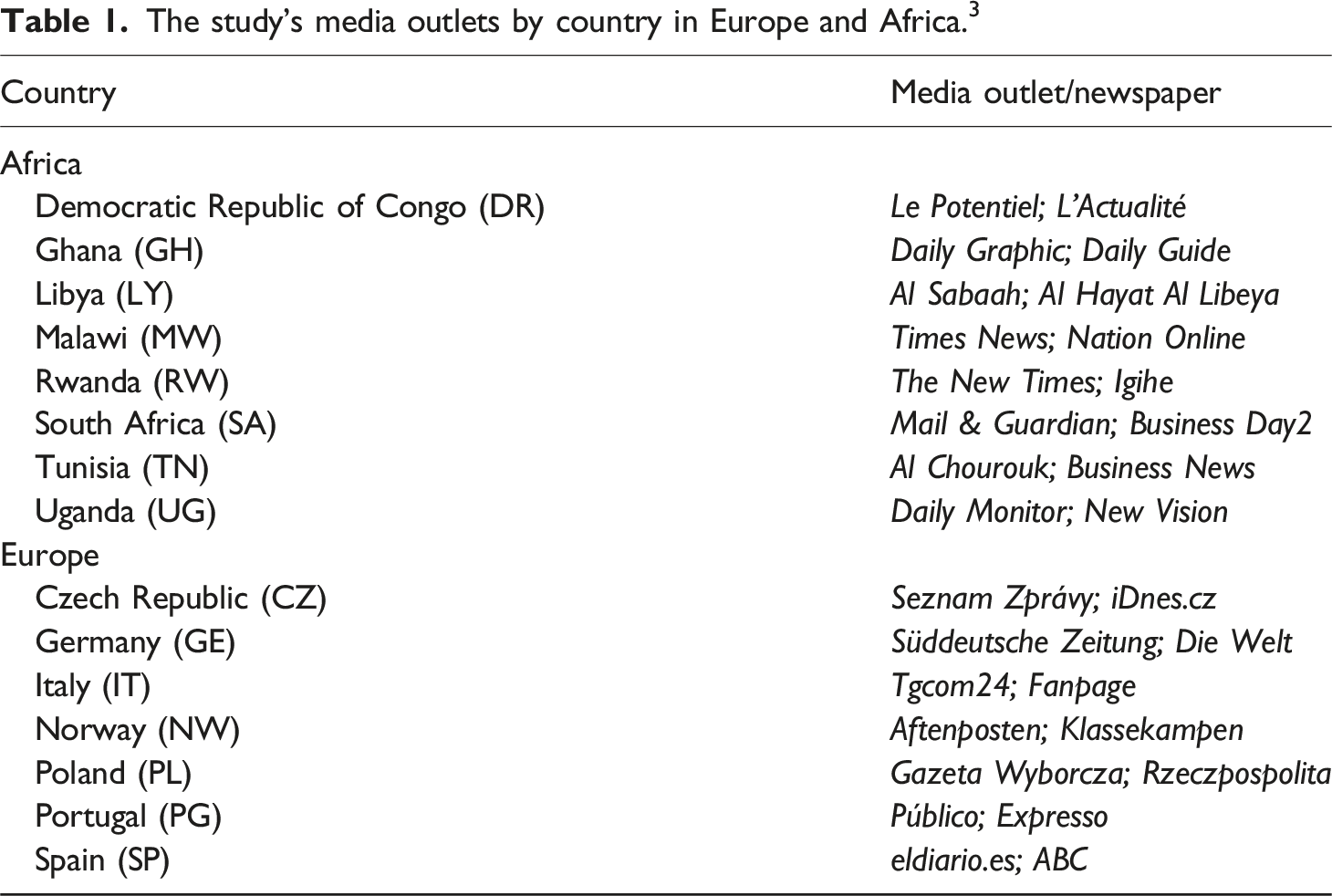
The African country sample includes South Africa and Rwanda whose unique roles have been outlined before. Uganda and Malawi see substantial migration to the Gulf monarchies as well. DR Congo continues to be challenged by armed conflict causing massive internal displacement of citizens. Ghana has pioneered with a campaign to increase circular migration and thus profit from ‘brain gain’. Our African country sample also includes the two key transit countries Libya and Tunisia. At this point, it needs to be noted that, due to recent researcher safety concerns in the politically sensitive climate in Libya and Tunisia, we have refrained from providing detailed national analyses for these cases. 2 For all country overviews see IOM (2024).
In Europe, the sample includes Portugal, where the government has tightened the traditionally liberal migration policy towards former colonies since 2024. Spain pursues a distinctly progressive migration policy, to counter demographic decline and boost the economy. Italy continues to be a major entry point for migrants and refugees from Africa embarking by boat. As Europe’s largest economy in terms of nominal GDP, Germany remains a magnet for migrants; but public discourse in Germany is polarized. In contrast, CEE countries like Poland and the Czech Republic see little immigration from Africa. Poland has implemented stricter regulations for asylum-seekers due to continuous efforts by Belarus and Russia to use irregular migration as a method of hybrid warfare. Norway has restrictive immigration laws as well; the vast majority of immigrants is from the EU. For all country overviews see EMN (2024).
Sampling
The sampled time period covers May 1, 2023, to April 30, 2024. Articles from online outlets of two relevant media in each country were collected to capture influential discourse within diverse media systems. Focusing on written online news content ensured cross-national comparability and reliable archive accessibility, which are more limited or more difficult to access for broadcast formats. Practical factors – such as archive availability, accessibility, and the need to capture contextually relevant agenda-setting influence – required to some extent compromise, and the inclusion of digital-native and non-traditional outlets alongside conventional newspapers. The selection of outlets was made by national scholars with in-depth knowledge of their respective media landscapes, ensuring contextual accuracy. In Europe, news outlets were chosen to include liberal- and conservative leaning media, accounting for the potential impact of political tendency on migration coverage (Kreutler et al., 2022). African consortium members usually chose to contrast state-owned and private news outlets, reflecting different political dynamics in African media systems (Santos, 2022).
The search terms were provided in English and then translated and adapted for each national context. 4 For conceptual and practical reasons, this study limits the datasets to not more than 100 articles per media, which equates to a maximum of 200 coded articles per country. Since the majority of outlets did not exceed the 100-article threshold, sampling was not necessary (Wimmer and Dominick, 2006). For Germany, Portugal, and Uganda, where outlets exceeded the 100-article threshold, we used systematic sampling, selecting every xth article to create a representative subset while preserving the temporal sequence of publications (Riffe et al., 2014). In total, 30 national websites of news outlets were sampled.
Instrument
The coding framework for the media content was developed using a combination of deductive and inductive approaches. Initially, categories were defined based on theoretical considerations. These were then refined through a pilot study, followed by an intercoder reliability test.
The final codebook was divided into three main sections: form, content, and evaluative codes (Krippendorff, 2019). Codes referring to form captured structural features such as country of publication, outlet, author (journalist, guest author, outlet staff/no byline, media agency), article length, beat, genre, and number of illustrations. Content coding focused on substantive elements, including main and secondary topics, referenced countries or regions, and primary and secondary actors, prioritized by their frequency and prominence in the text. The content codes follow a hierarchical structure, distinguishing between “main” and “sub” levels (e.g., main theme → subtheme 1 → subtheme 2; main actor → sub-actor 1 → sub-actor 2; main country → sub-country 1 → sub-country 2). This structure allows for a systematic, yet nuanced analysis. 5
Developing a codebook in cross-cultural consortia is a major methodological challenge in comparative journalism research (Esser and Hanitzsch, 2013). Given this project’s multi-sited design and involvement of numerous coders, simplified and clearly defined categories were necessary to maintain consistency and validity across diverse linguistic and cultural contexts. Most variables in the codebook were operationalised as dichotomous categories with binary response options (yes/no), to ensure intercoder reliability and cross-national comparability. The only exception was the evaluative tone variable, which was measured on a trichotomous scale to capture attitudinal nuances in the coverage. Positive coverage highlights benefits or successes; negative coverage stresses problems or threats; and neutral coverage remains descriptive or balanced.
In order to ascertain whether the descriptive disparities observed between African and European news outlets constitute statistically reliable patterns, bivariate or two-factor analyses were conducted on the full sample of 1871 items. All statistical analyses were conducted in Python using the SciPy and Statsmodels libraries. Group mean differences were tested using Welch’s t tests and, where appropriate, two-way fixed-effects ANOVA models to examine joint and interaction effects of key factors. For skewed count variables, such as the number of actors cited per article, we used non-parametric Mann–Whitney U tests. Associations between categorical variables were examined using Pearson’s χ2 tests. Effect sizes are reported throughout to gauge the substantive magnitude of differences and associations.
Intercoder reliability
Prior to final coding, the national coders received centralised training and iterative calibration and coded a subsample to harmonise definitions and decision rules. For this, the project manager conducted detailed training sessions on each variable, and the codebook was revised and discussed in detail to enhance clarity and ensure comparability across countries. In parallel, two external, independent coders, who were also trained using the codebook, coded a subsample of 30 items to check intercoder reliability and ensure internal validity and replicability. The sub-sample used for intercoder reliability consisted of 30 articles drawn from the two Ugandan media outlets. The Ugandan newspapers were chosen because they are published in English, ensuring that all coders could fully understand and accurately code the content, and also because both outlets offered stable, fully accessible archives, and the selected articles provided sufficient volume and topical breadth to exercise all variables. Using Krippendorff’s α for nominal data, agreement for the main variables was as follows: Author = 0.91; Beat = 0.78; Genre = 0.85; Main topic = 0.50; Main country = 0.96; Main actor country = 0.94; Main actor 0.73; Tone (evaluation of migration) = 0.78. These variables correspond to the core measures used in the comparative analyses reported below. Apart from Main topic (α = 0.50), which did not meet conventional thresholds (α > 0.67), all other variables meet conventional thresholds for acceptable to strong agreement.
Regional patterns in migration coverage: distribution, volume, and focus
The research team retrieved a total sample of n = 1871. The sample consists of 902 articles from 16 different African media outlets, and 969 articles from 14 different European media outlets (two per country in Africa and Europe).
Share of articles in sample (%, rounded) in African and European media outlets by country.
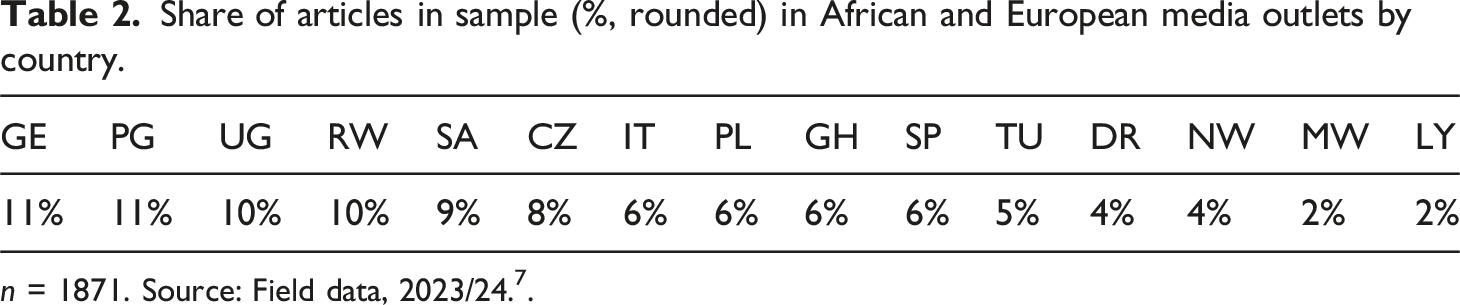
n = 1871. Source: Field data, 2023/24. 7 .
According to our dataset, European coverage emphasises governance and control: 48.2% of European articles treat migration as a political issue, compared to 20.8% in sub-Saharan African media and 9.8% in Libya and Tunisia (see Figure 1). News items coded as ‘migration’ dominate coverage in the North African transit states (88.5%) and have a substantial share in sub-Saharan African (48.3%) and European media (40.2%) as well. Within this category, ‘migration policies (including agreements)’ stood out on both continents as the most frequently addressed sub-topic (24.63% in Europe; 13.22% in sub-Sahara Africa). In European news outlets, ‘accidents/disasters/rescue (e.g. shipwrecking or maritime disasters) during migration’ was the second most relevant sub-topic (9.65%). Much less news items in sub-Sahara Africa had this sub-topic (4.88%). Instead, ‘war and crises’ – i.e., regional events – were the second most relevant sub-topic in sub-Sahara Africa media (11.65%). Furthermore, 8.7% of sub-Saharan African articles treat migration in an economic context, versus only 2.9% in Europe. The highest share of articles focusing on economic aspects across the sample can be found in Uganda (12.2%), South Africa (10.2%) and Rwanda (10.1%). The share of articles relating migration to climate change was 2.9% in European and 3.3% in sub-Saharan African news. Main topics of coverage in sample (%) in African and European media outlets by country. n = 1871. Source: Field data, 2023/24.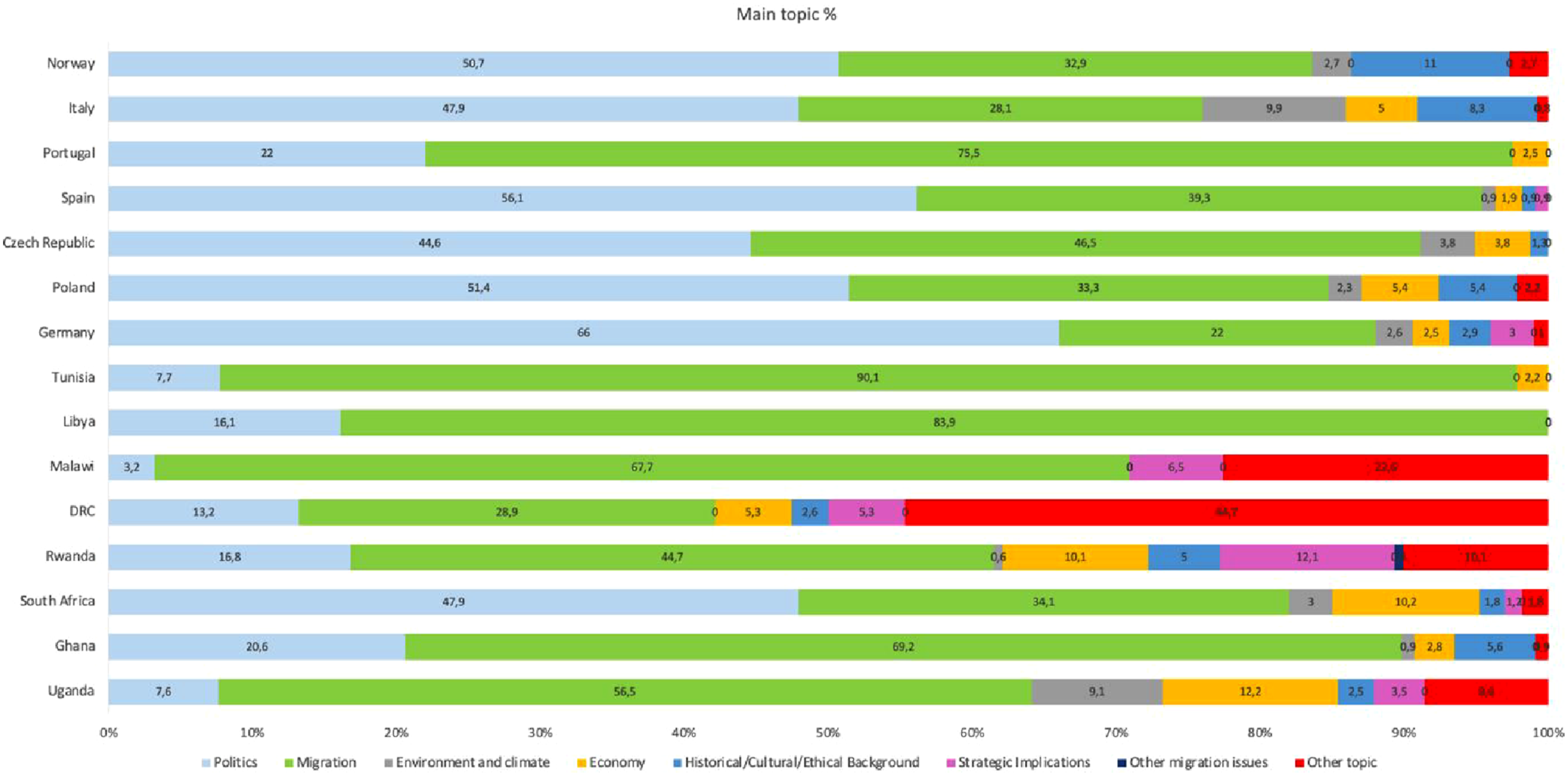
Main countries of coverage in sample (absolute numbers) in European media outlets by country.
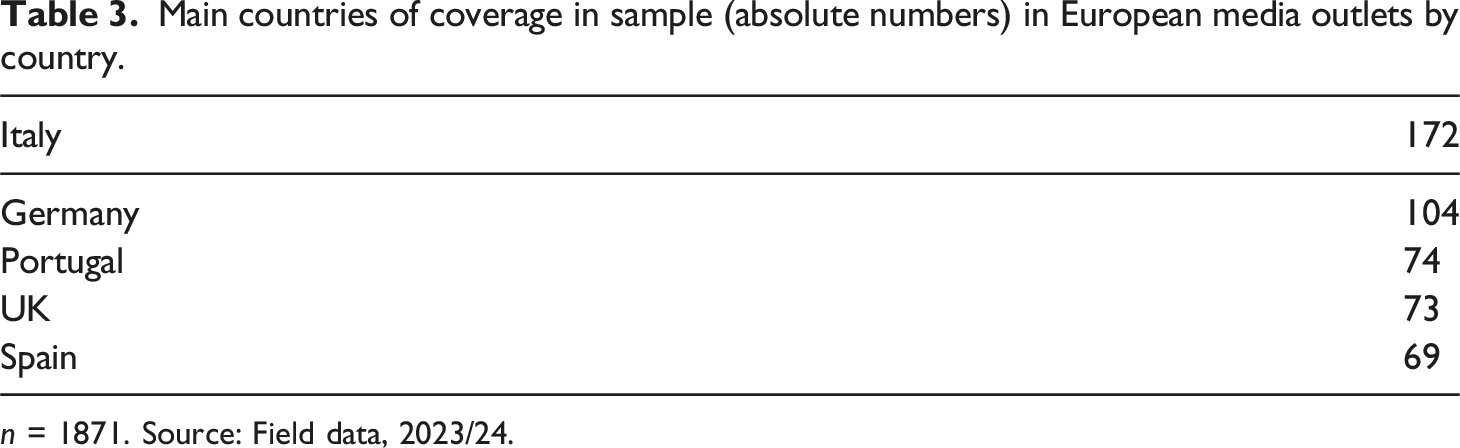
n = 1871. Source: Field data, 2023/24.
Main countries of coverage in sample (absolute numbers) in African media outlets by country.
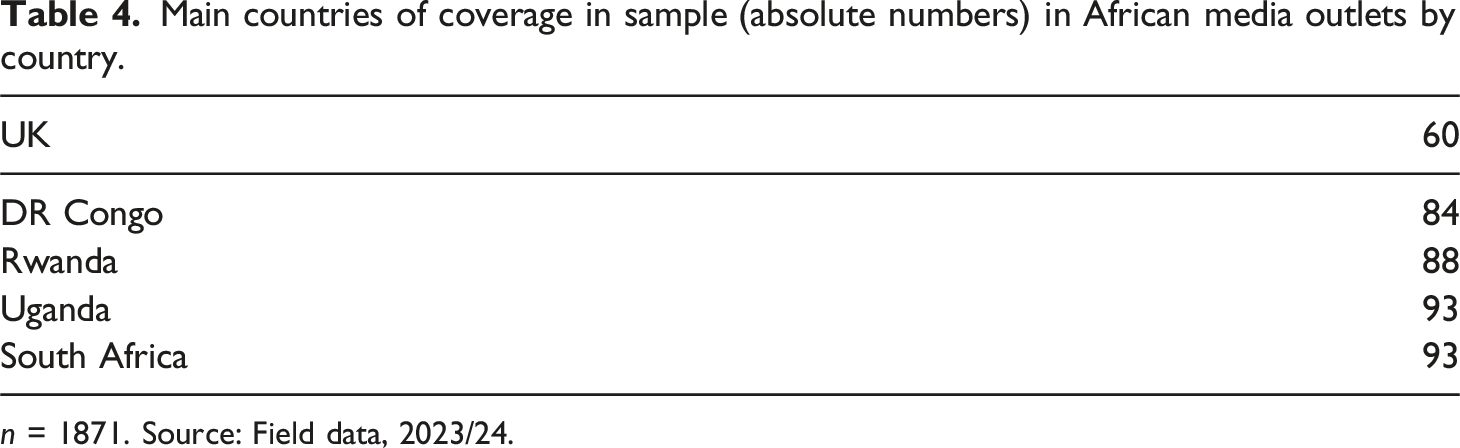
n = 1871. Source: Field data, 2023/24.
Otherwise, European newsrooms report primarily on European countries. But also sub-Saharan African media now focus on their own region and favour intra-African migration perspectives. A total of 76.3% of the articles in the sub-Saharan African sample were situated within Africa as a continent, with 18.3% of the articles covering events in Europe. An analysis of authorship in the sample shows that a substantial share of migration-related reporting in sub-Saharan African media is now written by local journalists. 8
Pearson’s χ2 tests confirm these distinctions. • Main topic distribution differs significantly by continent: χ2 (8, n = 1871) = 278.16, p < .001, Cramer’s V = 0.39. • Even more pronounced is the divergence in geographical focus: χ2 (7, n = 1871) = 638.26, p < .001, Cramer’s V = 0.59.
Actors and voices in migration reporting
In terms of source density, a Mann–Whitney U test was conducted to compare the number of actors cited per article. The results indicate that European articles (n = 969, M = 3.00, SD = 0.00, Median = 3) mention slightly more actors than African articles (n = 902, M = 2.92, SD = 0.47, Median = 3). The difference is statistically significant (U = 425 876, z = −5.00, p < .001), though the effect size is small (r = −0.12). Hence, the practical difference is minimal.
A closer look reveals deeper asymmetries. In European media, African actors have a low representation (4.6%). Domestic governments (18.5%) and politicians (33.6%) are mentioned more frequently in European media as compared to EU institutions (14%). In sub-Saharan African media, representatives of the government (31.9%), followed by international organisations (18.6%), dominate. The high share of state authorities is evident also in the pluralistic countries in our African sample (30% in South Africa, 43% in Ghana). In contrast, civil society actors and citizens have a combined share of 15.5% in European news items under study, but only 4.4% in sub-Saharan African news items.
Migration coverage tone
Negative trends and regional differences
The general connotation to migration in all study countries is scepticism, with 41% of overall articles conveying a negative perspective. Media framing of migration is strongly shaped by a country’s geographic position – whether it is an origin, transit, destination, or, quite recently, a ‘deal country’ gaining massive financial profit from European actors. The share of articles taking a positive look at migration phenomena is more widespread in sub-Saharan African media (24.9%) as compared to European media (10.8%). Media in Rwanda (42.4%) stand out with the largest share of positive coverage in the sample. In contrast, coverage in South Africa (64.1%), the major destination country for intra-African migration, is much more negative.
To assess these trends more precisely, the trichotomous code (−1 = negative, 0 = neutral, +1 = positive) was analysed as an interval-scale variable. Due to variance heterogeneity (Levene F (1, 1845) = 20.32, p < .001) Welch’s t-test was applied. African articles (n = 879) had a mean tone of −0.18 (SD = 0.80), whereas European articles (n = 968) averaged −0.28 (SD = 0.66). The difference was statistically significant (t (1705.94) = 2.88, p = .004, 95 % CI = 0.03 to 0.17), though the effect size was small (d = 0.14). In short, both continents trend negative, but European coverage is measurably more sceptical (see Figure 2). Evaluation of migration in the articles by percentage (%) in sub-Saharan African, North African and European media outlets. n = 1871. Source: Field data, 2023/24.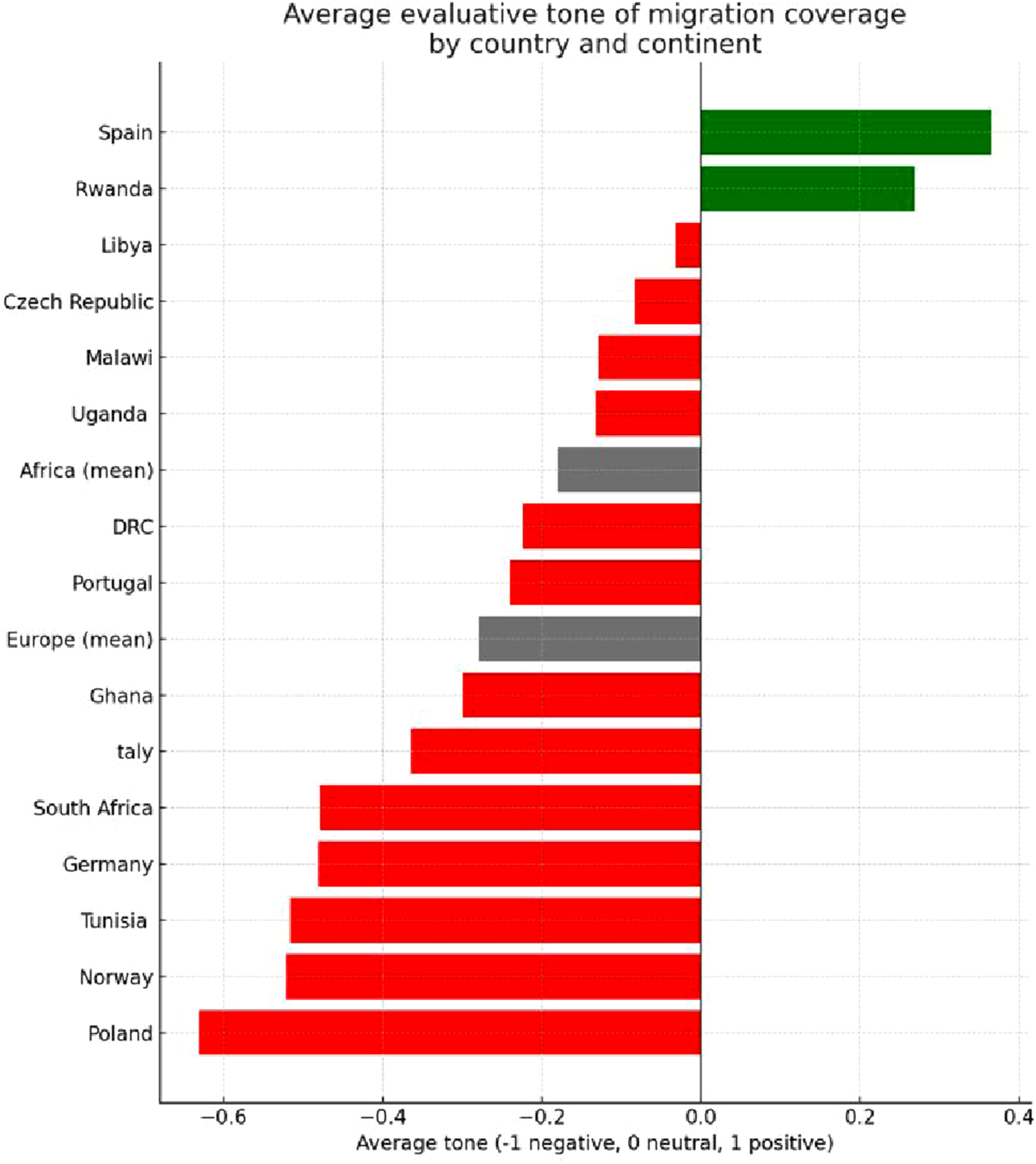
Polish media show the most negative tone (−0.63), followed by Norway (−0.52). Germany (−0.48) and Italy (−0.36) also lean negative. In contrast, media in Portugal (−0.24) report in a more neutral tone, and Spain (+0.36) even displays a net-positive tone. The majority of African cluster just below neutrality: Ghana (−0.30), the Democratic Republic of Congo (−0.22), Uganda (−0.13), and Malawi (−0.13). Coverage in Rwanda (+0.27) is markedly positive.
Author provenance as an explanatory factor
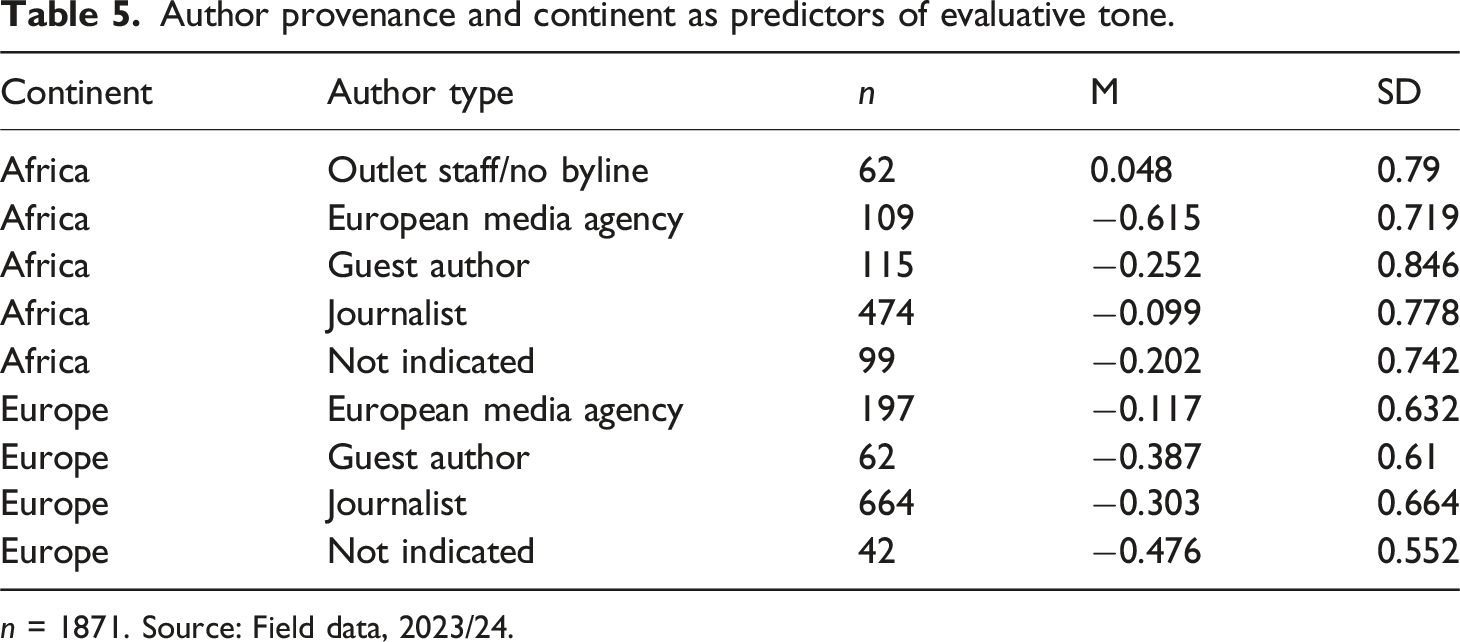
To test whether differences in tone are shaped more by the journalist writing the article than by where (media outlet) they are published, a two-way fixed-effects ANOVA was conducted. The evaluative score (−1 to +1) served as the dependent variable, with Continent and Author Type as fixed factors. Assumptions were met: skewness (−0.42) and kurtosis (2.11) were within acceptable limits, and Levene’s test showed no significant variance heterogeneity, F (4, 1816) = 1.27, p = .282. The results were telling: Once author provenance was accounted for, the continent effect disappeared entirely (F (1, 1815) < 0.01, p = 1.000, η2p < .001). By contrast, author type showed a modest but significant main effect, F (4, 1815) = 3.69, p = .005, η2p = .008, and interacted significantly with continent, F (4, 1815) = 15.75, p < .001, η2p = .034.
Author provenance and continent as predictors of evaluative tone.
n = 1871. Source: Field data, 2023/24.
These findings suggest that negativity in migration reporting is not a structural or regional inevitability, but rather a consequence of journalistic sourcing practices, especially the influence of European agency copy, which tends to emphasise crisis narratives and securitisation frames. When African newspapers republish European agency reports, their tone converges with the European pattern. Conversely, when African media outlets or journalists produce original content, the tone is less negative or even positive.
Thematic focus as a strong driver of tone
To explore whether differences in the evaluative tone of migration coverage are shaped more by content than geography, a two-way fixed-effects ANOVA was conducted, using the main topic categories defined in the codebook (routine migration news, politics, economy, environment and climate, historical/cultural/ethical background, and other issues).
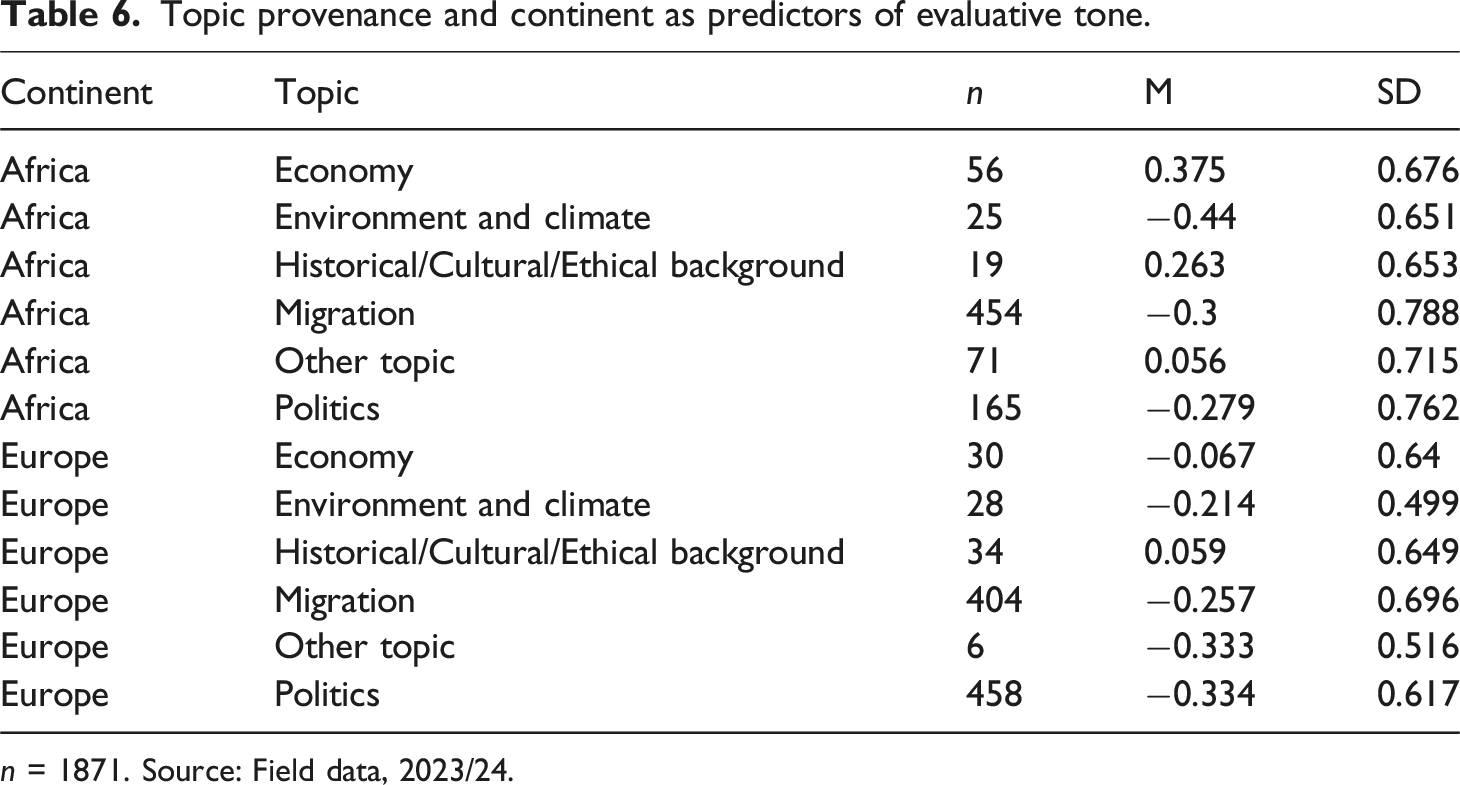
The results show that thematic focus is by far the most influential factor in shaping tone. Economic stories were the most positively framed (M = +0.22), followed by cultural/ethical features (+0.13). In contrast, articles on environmental issues and politics each averaged strongly negative tones (−0.32), though negativity may reflect either environmental disaster framing or political critique. General migration news, meaning the movement of people without linking it to a specific political, economic, or environmental event, also leaned negative (−0.28). Once thematic composition is considered, the continental effect vanishes (F <0.01, p = .999), suggesting that regional tone differences are primarily artefacts of differing topic distributions rather than intrinsic regional attitudes.
Topic provenance and continent as predictors of evaluative tone.
n = 1871. Source: Field data, 2023/24.
Taken together, these findings highlight that the framing of migration is shaped primarily by what is being discussed rather than where it is being discussed. Continental differences in tone emerge only when politically charged topics dominate and remain limited in magnitude.
Discussion
This study set out to address the persistent lack of intercontinental evidence in migration research and the marginal role of African media perspectives in comparative analyses (Lecheler et al., 2019). Our results confirm several patterns identified in Europe-centred research on migration news (Eberl et al., 2019). At the same time, they also point to emerging forms of differentiation in African coverage of migration (Wasserman, 2022).
Domestication (Gurevitch et al., 1991) has now become a central organising principle of migration reporting across regions. In Europe, migration continues to be framed primarily through national politics lenses, including institutional actors and domestic debates, confirming earlier findings on European media logics (Berry et al., 2015; Georgiou and Zaborowski, 2017). The findings once again underscore the lack of a more nuanced reporting in Europe that considers the potential economic benefits of immigration, as argued by Caviedes (2015). Despite the global nature of the topic, European media coverage remains reluctant to include African actors, confirming criticism voiced by Hafez (2009). European news outlets also fail to highlight the essential EU policy dimension of migration, a pattern identified for other European policy fields (Lichtenstein, 2014).
Earlier research has described coverage of origin countries as largely mirroring the agendas of destination countries, relying heavily on international agency copy (Balabanova and Balch, 2010; Fengler et al., 2020; Wanda and Gondwe, 2024). Our findings show that African outlets increasingly produce original reporting and anchor migration more firmly in domestic contexts, suggesting growing editorial autonomy and professionalism (Sithole, 2023). At the same time, the persistent dominance of government-centred sourcing underscores the need to diversify narratives, elevate underrepresented voices in migration debates and tackle blind spots – among them the role of climate change for migration. European outlets continue to focus strongly on political conflict, regulation, and security, confirming long-established patterns of security/control-oriented and problem-centred framing (Caviedes, 2015; Eberl et al., 2019). The crisis-oriented focus on humanitarian emergencies and irregular crossings that has dominated European reporting since 2015 (Chouliaraki et al., 2017) is visible in our data as well, though less prominently.
At the same time, our findings reveal increasing diversification across media systems, consistent with broader analyses of African media heterogeneity (Wasserman, 2022). African outlets no longer only reproduce the European media agenda, especially with regard to the coverage of boat accidents and irregular crossings. Instead, news media in sub-Sahara Africa – particularly those in Rwanda and Uganda as key “refugee rentier states” (Freier et al., 2021) – devote more attention to the economic dimensions of migration than their European counterparts, and tend to evaluate such stories more positively. The fact that African coverage reflects these nuances offers a new perspective on earlier accounts of African media as primarily reactive and externally driven (Fengler et al., 2020). While national and regional logics prevail now in Europe and in Africa, one theme – migration policies and agreements –, as well as the media’s attention to countries involved in migration ‘deals’ across continents, point to emerging contours of a transnational agenda as outlined by Wessler and Brüggemann (2012), reflecting global policy changes in the field of migration.
Authorship emerges as a central structural predictor in our comparative analysis. Staff-written articles tend to include domestic actors, adopt more contextualised frames, and present more balanced evaluations. In contrast, agency-based reporting, whether used in African or European newsrooms, shows a strong association with crisis-oriented and episodic storytelling. This pattern supports findings on how strongly international news agencies shape local news in the Global South (Boyd-Barrett and Rantanen, 1998). It is also consistent with Shoemaker’s and Reese’s (2014) hierarchy-of-influences model, which links journalistic choices to organisational and systemic conditions. Comparing across continents, these structural factors help explain variation in tone and topic beyond geography alone.
Limitations and future research
As a compromise in a cross-continental and cross-cultural consortium, the tone categories entail a simplification of complex discursive structures. A close qualitative reading, interviews, discourse analysis, as well as the inclusion of visual elements, could further illuminate narrative mechanisms and sourcing practices. However, the restrictions of the research budget did not enable further qualitative work. Future research should also broaden the range of media systems and include broadcast and digital-native outlets especially relevant for African audiences. Our data are restricted to online text-based news, excluding broadcast formats and social media, which may convey different visual and narrative cues. Due to current political risks, North African coverage could not be analysed in depth. A follow-up study may revisit this dimension when feasible. Finally, while most coding categories showed acceptable or strong reliability, the variable Main topic yielded lower consistency (Krippendorff’s α = 0.50). We therefore treat inferences for this variable as conservative and transparently provide the two-coder α estimates to contextualize reliability. Future efforts should improve measurement by refining definitions, providing additional coder training, or using complementary agreement metrics.
Conclusion
This study provides one of the first systematic intercontinental comparisons of migration reporting across Africa and Europe. By integrating African perspectives into a comparative framework, this study advances debates on domestication, global news flows, and media representations of migration. African media, previously portrayed as passive recipients of external frames, now exhibit greater thematic diversity, increased domestication, and growing editorial autonomy, marking a notable shift from earlier research. In Europe, national logics remain strong, and a stereotypical portrayal of migration from Africa to Europe in the context of crises and security/control persist. Reflecting recent policy developments, governance-oriented migration deals between Africa and Europe may pave the way towards a transnational media agenda. However, the framing still remains distinctly different: whereas most European media continue to depict migration as a threat, African media increasingly highlight economic opportunities and benefits associated with migration.
Footnotes
Declaration of conflicting interests
The authors declared no potential conflicts of interest with respect to the research, authorship, and/or publication of this article.
Funding
The authors disclosed receipt of the following financial support for the research, authorship, and/or publication of this article: The research presented in this study is part of a project funded by the German Foreign Office.
Ethical considerations
This article does not contain any studies with human or animal participants. There are no human participants in this article and informed consent is not required.

Data Availability Statement
All data analysed in this study are based on publicly available online news articles. A list of the sampled media outlets, graphs, calculations, and the search criteria are available from the corresponding author upon request. No proprietary or confidential data were used.