




Abstract
Drawing on a representative sample of 1600 U.S. journalists, this survey examines the prevalence and impact of online and offline threats. It analyzes how gender, race, medium, and journalists’ accessibility—particularly social media reach and visibility—shape exposure to hostility and its consequences. Findings show that 61% of journalists report being threatened, with TV broadcasters, younger journalists, women, and people of color most often targeted. Greater social media accessibility and frequent audience feedback correlate with higher exposure to online threats. Those facing more threats report lower job satisfaction and a greater likelihood of leaving the profession. The study concludes that protecting journalists’ safety and mental health is vital to preserving journalism’s role in American democracy.
Introduction
Amid growing global concern, UN agencies, scholars, and researchers have documented the risks journalists face both online and offline (e.g., Cheruiyot, 2022; Koirala, 2020; Miller and Lewis, 2022; Posetti et al., 2023). Even in democratic countries considered safe, findings reveal a troubling rise in threats, ranging from harassment to physical attacks and legal intimidation (Committee to Protect Journalists, 2024). For example, work-related physical assaults on U.S. journalists rose from 45 incidents in 2023 to 81 in 2024. These incidents ranged from reporters being shoved during interviews to being shot with rubber bullets by police (U.S. Press Freedom Tracker, 2024).
Hostility toward journalists has been fueled by a combination of inflammatory political rhetoric and the dynamics of digital media. During Donald Trump’s first presidency, repeated attacks on the press—such as labeling journalists the “enemy of the American people” (Grynbaum, 2017)—helped legitimize public distrust and animosity toward the media. At the same time, the rise of anonymous social media platforms and algorithmic amplification has enabled coordinated harassment campaigns, including doxing and trolling, further intensifying the risks journalists face (Chen et al., 2020; Ferrier and Garud-Patkar, 2018).
However, these attacks are not evenly distributed—journalists’ identities shape both their risk and how hostility manifests, with women journalists of color often facing the harshest treatment. During a 2018 press conference, for example, Trump dismissed CNN’s Abby Phillip for asking “a lot of stupid questions” and called April Ryan of American Urban Radio Networks “a loser” and “very nasty” (Fahri, 2017). Such identity-based attacks reflect and reinforce broader patterns of threat exposure documented in our study.
This hostile climate is further exacerbated by declining public trust in the news media. As of late 2024, just 31% of Americans expressed confidence in the news—a 14-point drop from 2018 (Brenan, 2024). This erosion of trust not only limits the public’s ability to hold leaders accountable but also creates conditions that embolden hostility toward journalists. One recent survey (Posetti and Ejaz, 2024) found that 34% of Americans believe it is acceptable for politicians and government officials to criticize journalists and news organizations, with support sharply divided by party—47% of Republicans versus 22% of Democrats. Such attitudes pose a serious risk not just to individual journalists but also to the function of a free press (Lewis et al., 2020).
Drawing from a 2022 nationally representative survey of 1600 U.S. journalists, we analyze the types, frequency, and sources of threats in relation to journalists’ identity and work. We focus on how journalists’ accessibility, defined by their direct connections and interactions with audiences, and their visibility, reflected in on-camera appearances or other public exposure, shape perceptions of risk. Although we measure accessibility through social media engagement, the concept also captures broader conditions that make journalists more reachable to diverse publics. We then examine how these risks influence journalists’ job satisfaction, well-being, and career trajectories.
The threats reported by journalists in our study include online and offline actions meant to harm, intimidate, or discredit them—ranging from physical or sexual violence to abuse, bullying, racism, sexism, and attacks on their professional reputation. The purpose of this broad definition is to capture not only isolated acts of violence but a wide range of hostilities that include both mild and severe forms of abuse (Miller, 2021).
The findings offer new theoretical insight into how journalists’ identity and accessibility shape risk exposure, highlighting the urgent need for institutional and societal responses. Without adequate protections, persistent threats and harassment may drive journalists to self-censor or avoid covering contentious but vital issues. Such outcomes undermine press freedom and weaken journalism’s role in democratic accountability and public discourse.
Literature review
Institutions that report on or scrutinize authority—including the news media—have long been targets of criticism from political elites and commentators (Ihlebæk and Figenschou, 2023). In the United States, anti-media sentiment accelerated in the 1970s as mainstream outlets were increasingly accused of liberal bias and abandoning objectivity (Watts et al., 1999). Political actors, partisan media, and advocacy groups have since amplified these claims, portraying journalism as partisan, elitist, and disconnected from citizens (Smith, 2010). This rhetoric now forms part of a broader political playbook, used by leaders in Hungary, Turkey, and Brazil to delegitimize journalism and consolidate power (e.g., Tutkal, 2021). Together, these dynamics reflect a political environment in which distrust of the press and other institutions (Brenan, 2025) is cultivated and weaponized, coinciding with rising hostility and violence against journalists worldwide (Slavtcheva-Petkova et al., 2024).
Types of threat experiences
Studies across several countries show that journalists face escalating online and offline threats, ranging from racism and sexism to targeted insults and death threats (Chen et al., 2020; Posetti et al., 2020). Even in safe democracies, physical assaults, arrests, and public denigration remain common for those covering protests and political events (Miller, 2023). The rise of social media and the normalization of direct audience engagement have further intensified these emerging threats (Miller and Lewis, 2022).
Journalists therefore operate in increasingly hostile conditions marked by harassment, discriminatory abuse, and physical violence. While past research has examined these dynamics and their psychological and physical consequences (e.g., Chen et al., 2020; Cheruiyot, 2022; Holton et al., 2023; Lewis et al., 2020), much of it relies on qualitative data or small samples (e.g., Miller and Lewis, 2022; Tsui and Lee, 2021). Other studies draw on larger samples but are not representative of the journalists they examine (e.g., Bucay, 2024; Posetti et al., 2020, 2023).
To build on this work, we examine the type and frequency of risks ranging from physical and verbal abuse to bullying, intimidation, racism, sexism, personal insults, and efforts to undermine journalists’ professional standing. The following research question guides this analysis:
Threat experiences by media sector
Threats and abuse toward journalists vary across online and offline platforms and are shaped by factors such as audience interaction, journalist visibility, and content format (Finneman et al., 2019; Finneman and Jenkins, 2018). Social media facilitate faster, more direct exchanges, increasing journalists’ accessibility and exposure to immediate audience reactions. Although online journalists often face more sustained exposure to direct audience reactions, print and broadcast reporters also use real-time reporting and social media, exposing them to similar forms of direct abuse. Online journalists, however, tend to encounter criticism more immediately as audiences can respond instantly to posts, updates, and live coverage.
Moreover, because social media are now embedded in journalists’ routines, they have become central arenas for threats and attacks (Chen et al., 2020). Although these platforms expand reach and facilitate journalist–audience interaction, their anonymity and weak accountability (Jaidka et al., 2022; Koirala, 2020) encourage behaviors uncommon in face-to-face settings (Kim et al., 2023). As a result, digital environments can quickly turn hostile, undermining journalistic freedom and fueling real-world threats.
Journalists’ exposure to threats also depends on their public visibility (Finneman and Jenkins, 2018). TV journalists, for example, tend to be more visible than their print counterparts, which places them at greater risk of both online and offline abuse (Lewis et al., 2020). This visibility also makes journalists—particularly women in broadcast journalism—more vulnerable to appearance-based threats and harassment (Finneman and Jenkins, 2018). For example, an analysis of Facebook posts about women broadcast anchors found that users frequently targeted their clothing, weight, and hairstyle, often ignoring the actual content of their reporting (Finneman et al., 2019).
Moreover, journalists affiliated with partisan TV outlets such as Fox News or MSNBC may face heightened risks of threats due to perceptions of political bias. When audiences view these journalists as representing opposing political views, they may not only reject the message but also target the messenger personally (Burgoon, 1993). These reactions are intensified in today’s polarized media environment, where declining trust in journalism and ongoing challenges to its legitimacy further fuel hostility toward journalists (Carlson et al., 2021).
In this study, we focus on journalists’ accessibility—defined as the extent to which audiences can reach, contact, and interact with journalists, creating opportunities for both legitimate feedback and hostile engagement. We measure accessibility through the affordances of social media, which offer direct channels for audience contact, though these platforms represent only one mechanism within a broader conceptual domain. Visibility, by contrast, refers to journalists’ public prominence within their professional roles and influences exposure to threats independently of the interactional dynamics captured by accessibility. To examine how accessibility relates to threat exposure, we test the following hypothesis:
Television and online journalists will generally report more online and offline threats than journalists working in other media sectors.
Threat experiences by gender and race
Research on journalist safety in the United States and across the world consistently shows that women journalists face higher rates of threats, harassment, and assaults than their male counterparts (Chen et al., 2020; Ferrier and Garud-Patkar, 2018; Hanusch et al., 2024; Posetti et al., 2023; Zviyita and Mare, 2024). These experiences are on the rise, both online and offline, partly due to the polarizing rhetoric of the Trump administration and the broader social and economic instability caused by the Covid-19 pandemic (Coalition for Women in Journalism, 2021).
Much of this hostility is rooted in broader gender expectations that are incongruent with the entrenched masculine norms in journalism (Paul et al., 2022). Traditionally viewed as a male-dominated profession that values masculine traits such as detachment and objectivity, journalism has often marginalized women by reinforcing the notion that they lack the traits necessary for success, making it difficult for women journalists to break through the “glass ceiling” and advance in their careers (Santia et al., 2025). As a result, news reporting is often perceived as incompatible with traditional female roles and may trigger public backlash (Koirala, 2020). Women journalists who resist these norms are particularly vulnerable to criticism and dismissal (Wilhelm et al., 2023).
While hostilities against women journalists frequently occur offline (e.g., during press briefings or street interviews), they have become even more widespread on social media and digital news platforms (Bugeja, 2023; Waisbord, 2022). These platforms allow users to voice controversial opinions with limited accountability, fueling a sharp increase in hostility, sexism, and misogyny toward women journalists (Lewis et al., 2020). A recent UNESCO report found that nearly three-quarters (73%) of women journalists had experienced online harassment, threats, or attacks (Posetti et al., 2020).
Although threats against women journalists have received considerable scholarly attention (e.g., Sobieraj, 2020), journalists from racial and ethnic minority groups also experience widespread targeting (e.g., Bugeja, 2023). Prior studies also show that journalists of color are more likely than their White colleagues to encounter hostilities due to their racial or ethnic identities (Bugeja, 2023; Mesmer, 2022). For example, interviews with Black broadcast journalists reveal recurring experiences with microaggressions, systemic bias, and both overt and subtle racism (Somani and Tyree, 2021). High-profile incidents, such as CNN’s Omar Jimenez being arrested on-air during the 2020 George Floyd protests (Hanna and Vera, 2020), underscore the heightened risks journalists of color face not only online but also in offline spaces. These disparities in risk exposure across gender, race, and ethnicity form the basis of our second hypothesis:
Women and journalists of color will generally report more online and offline threats than White men working in journalism.
Effects of threats on work, job satisfaction, and desire to leave the profession
Journalists frequently take steps to safeguard their psychological and physical well-being amid the emotional toll of threats and harassment (Frey, 2023). In doing so, many alter their professional routines, ranging from self-censorship to avoiding specific assignments (Mesmer, 2022; Posetti et al., 2023).
Several studies have demonstrated that online threats significantly undermine journalists’ job satisfaction (e.g., Chen et al., 2020; Lewis et al., 2020). For example, Posetti and colleagues (2023) found that many journalists identify job-related threats and harassment as a significant source of workplace stress and dissatisfaction. Additional interviews and focus group findings reveal that those subjected to online abuse may develop symptoms of anxiety, depression, and post-traumatic stress disorder (Dadouch and Lilly, 2021; MacDonald et al., 2023), all of which can further reduce job satisfaction (Lee and Park, 2024) or cause journalists to leave the profession altogether (Miller 2023; Panievsky, 2022). Based on these findings, we propose that:
Journalists who report more online or offline threats will generally feel less safe in their work, have lower job satisfaction, and express stronger intentions to leave the profession.
Methods
Demographics of U.S. journalists (N = 1600).

The survey was conducted online from January 19 to April 10, 2022, and uses a multistage sampling procedure, which first draws a representative sample of U.S. media organizations and then samples journalists working at each selected organization. Of the 14,700 U.S. journalists selected, 1600 completed the survey interviews, for a response rate of 11%. All journalists in the initial sample were invited to participate in the survey via email and received four reminders and one “nudge” call by telephone. The final sample includes 425 daily newspaper journalists, 175 from weekly newspapers, 536 from TV stations, 104 from radio stations, 218 from online news organizations, 85 from news services, and 57 from news magazines. The survey received IRB approval on December 22, 2021.
Threats against journalists
Respondents were first asked how safe they felt “operating as a journalist in the United States” and whether they had experienced any threats or abuse in their work. Next, journalists were asked whether they had experienced, either online or offline, any of the following 12 types of threats in their work during the past year: physical abuse, verbal abuse, bullying, intimidation, violence, racism, sexism, insults about their character, threats to their professional standing, threats of physical violence, threats of sexual violence, and death threats. The threat questions were adopted from Posetti et al. (2020).
Accessibility
The survey assessed journalists’ accessibility through three components. First, respondents indicated how often (1 = never, 4 = regularly) they used eight social media platforms in their work: Twitter/X, YouTube, Facebook/Meta, Instagram, LinkedIn, blogs, and crowd-sourcing sites. These items were combined into an additive index ranging from 1 to 4 (Cronbach’s α = 0.66, M = 2.53, SD = 0.51). Second, we measured how often journalists receive audience feedback on social media about their stories (1 = never, 6 = more than once a day; M = 4.07, SD = 1.39). Third, respondents indicated whether they use social media to interview sources, meet new people, follow others, keep in touch with their audience, and post or reply to comments (1 = yes, 0 = no). These six items were entered as individual predictors in the analyses.
Perceived effects of threats on work
The perceived effects of threats on journalists’ work were measured using 10 items adopted from Posetti et al. (2020), including questions about self-censorship, avoiding interactions with specific sources or audience members, increasing security measures, and asking to be reassigned to different duties.
Perceived effects of threats on personal well-being
Perceived effects of threats on journalists’ personal lives were measured with six items adopted from Posetti et al. (2020) that included questions about feeling physically unsafe, needing to seek medical or psychological support, suffering damage to one’s professional reputation, or missing work.
Job satisfaction and desire to leave the profession
Journalists’ level of job satisfaction was assessed on a four-point scale ranging from 1 = “very dissatisfied” to 4 = “very satisfied” (M = 1.99, SD = 0.81). Journalists’ desire to leave the profession was measured by asking them whether they planned to be working inside or outside the media in 5 years (12% said “outside”). Both measures were adopted from Willnat et al. (2025).
Demographics
Gender, age, education, race, religion, political party affiliation, political leaning, marital status, and income were measured with standard, closed-ended questions. Journalists identifying as transgender, non-binary, or preferring not to say were excluded from gender-specific analyses due to their small number (0.6%), which precluded reliable statistical estimates, though their experiences warrant attention in future research.
Findings
Survey results show that U.S. journalists face numerous threats, with verbal abuse and personal insults common online. Women journalists and journalists of color are particularly vulnerable, often encountering personal attacks and workplace harassment. Overall, about six in 10 journalists (61%) in our sample report having received threats while on the job.
Types of threat experiences
To contextualize the prevalence of threats, we first examine specific forms of hostility journalists report. As shown in Figure 1, verbal abuse and personal insults are the most common, with over half of journalists reporting online verbal abuse (54%), compared with 38% offline. Nearly half also report online insults (49%), while about a quarter encounter them offline (26%). Intimidation (36%) and bullying (34%) affect roughly one in three journalists online, with lower rates offline (29% and 16%). Other forms of hostility, such as physical violence, sexism, and racism, are reported less frequently across both settings. Building on these patterns, the next step is to assess how threat experiences vary across media sectors. Percentage of journalists who have experienced online and offline threats (N = 1600).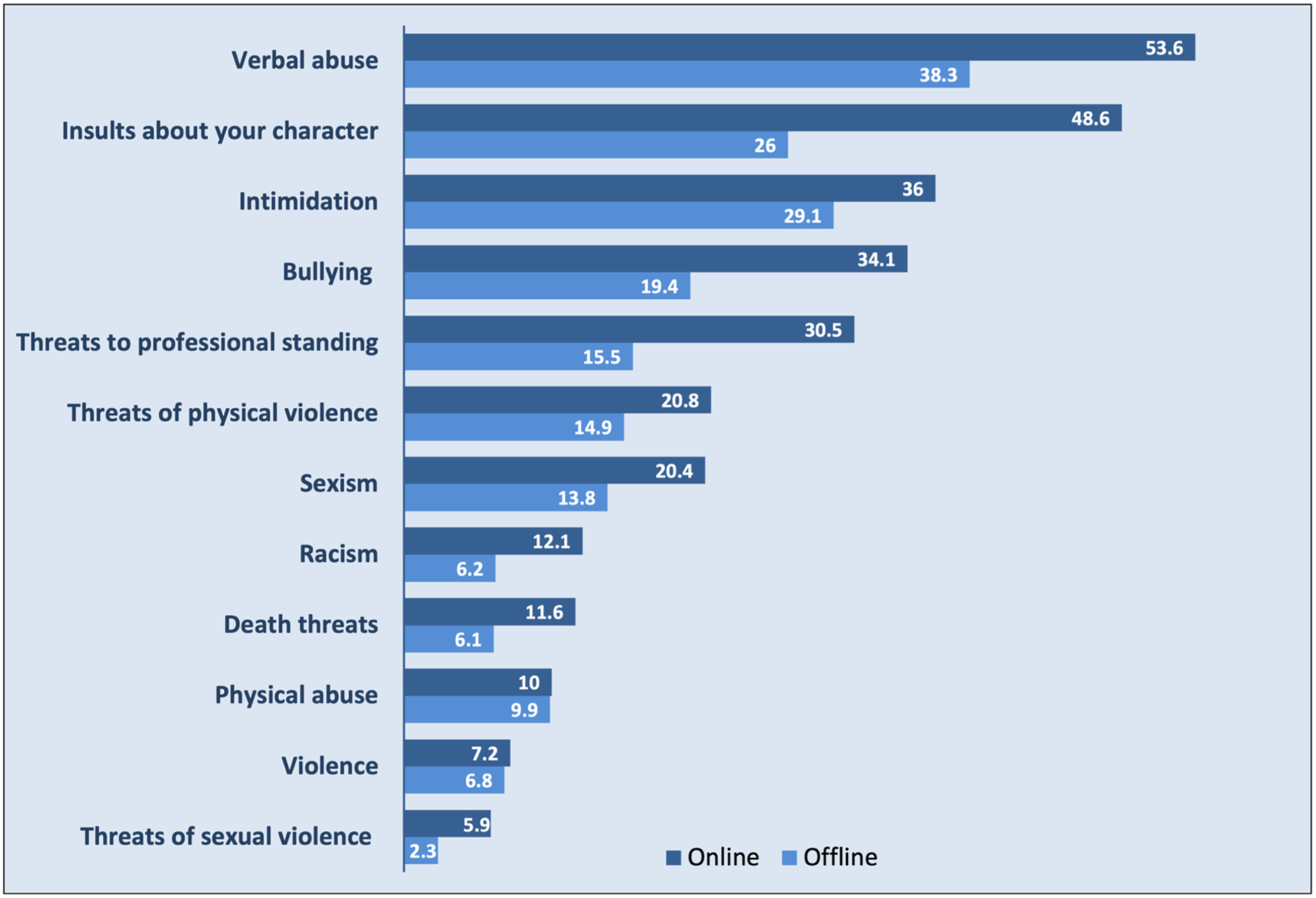
Threat experiences by media sector
U.S. journalists’ experience with online and offline threats by media sector.
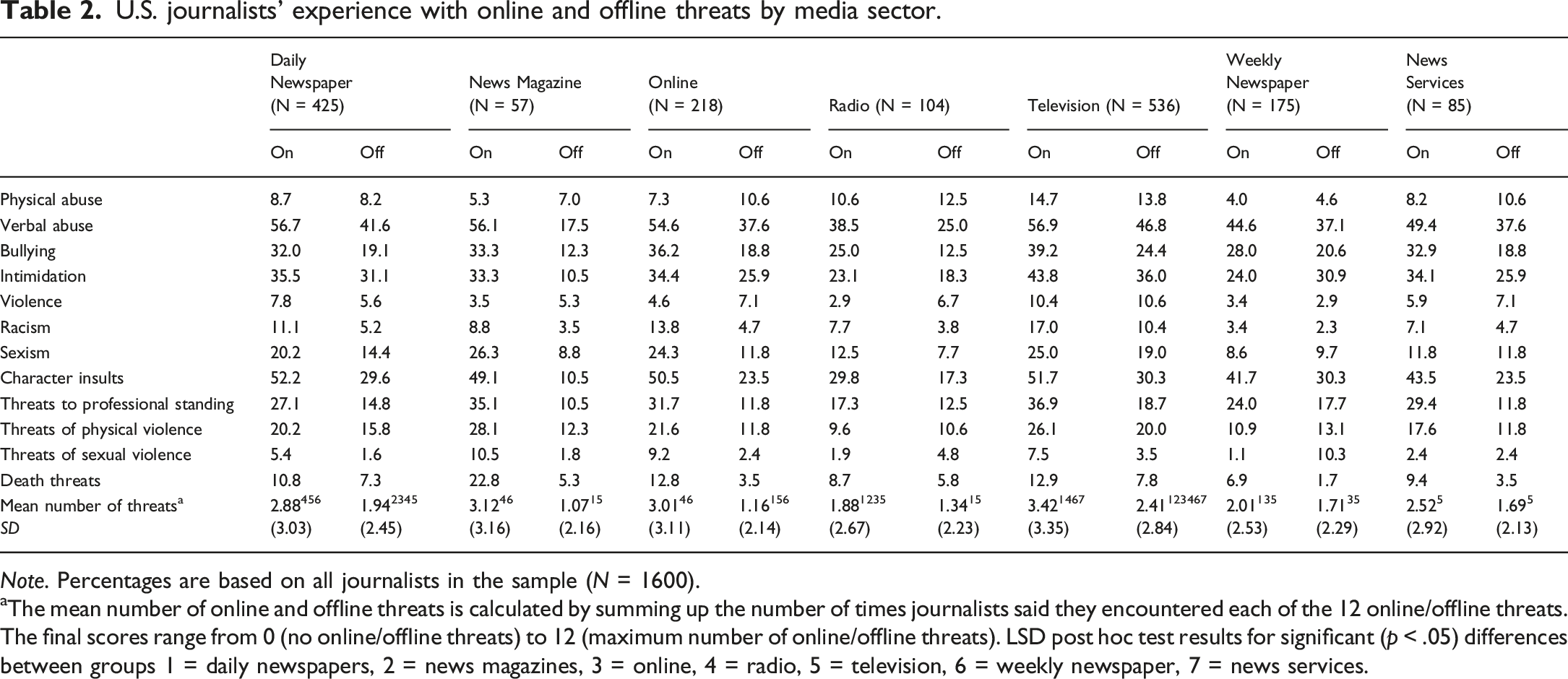
Note. Percentages are based on all journalists in the sample (N = 1600).
aThe mean number of online and offline threats is calculated by summing up the number of times journalists said they encountered each of the 12 online/offline threats. The final scores range from 0 (no online/offline threats) to 12 (maximum number of online/offline threats). LSD post hoc test results for significant (p < .05) differences between groups 1 = daily newspapers, 2 = news magazines, 3 = online, 4 = radio, 5 = television, 6 = weekly newspaper, 7 = news services.
Hypothesis 1 predicted that online and television journalists would report more online and offline threats because of greater social media accessibility and public visibility. One-way ANOVA confirms significant differences in the effects of media sector on online threats, F (7,974) = 4.44, p = .001, and offline threats, F (7,974) = 7.69, p = .001. As predicted, TV journalists report the highest number of online (M = 3.42, SD = 3.35) and offline (M = 2.41, SD = 2.84) threats among the media sectors (see Table 2). TV journalists also report more frequent threats involving physical and verbal abuse, bullying, intimidation, violence, racism, sexism, and attacks on their professional standing.
As expected, online journalists report a relatively high number of online threats (M = 3.01, SD = 3.11), including verbal abuse, bullying, intimidation, racism, sexism, and attacks on their professional standing. Offline threats for these journalists (M = 1.16, SD = 2.14) are less common than for their colleagues in newspapers (M = 1.94, SD = 2.45) and television (M = 2.41, SD = 2.84).
Overall, TV journalists face the greatest risks, likely because of their greater visibility and public recognition. By contrast, online journalists are more exposed to online threats but encounter fewer offline threats than print and broadcast journalists. Thus, Hypothesis 1 is partially supported.
Predictors of online and offline threats among U.S. journalists.
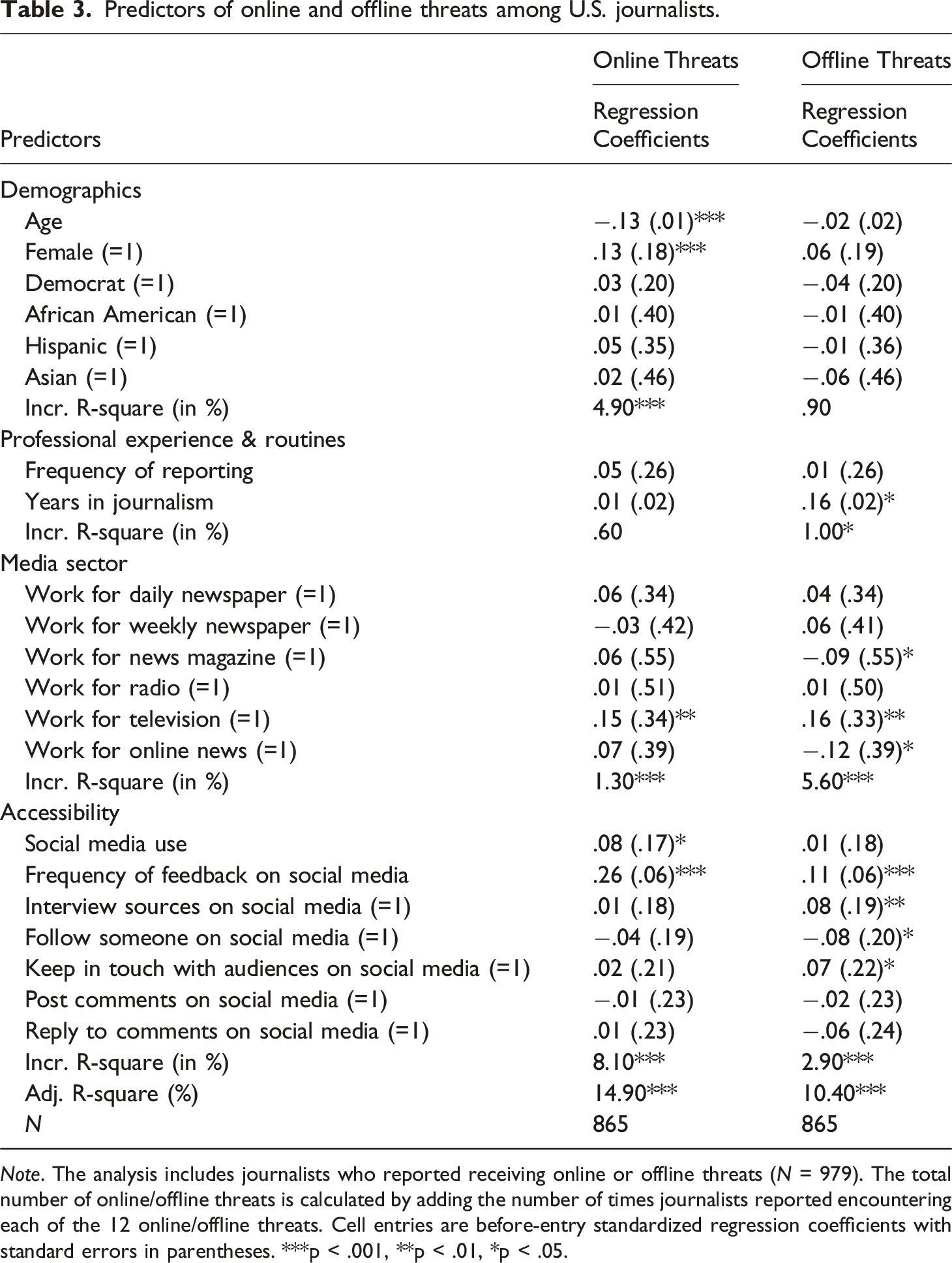
Note. The analysis includes journalists who reported receiving online or offline threats (N = 979). The total number of online/offline threats is calculated by adding the number of times journalists reported encountering each of the 12 online/offline threats. Cell entries are before-entry standardized regression coefficients with standard errors in parentheses. ***p < .001, **p < .01, *p < .05.
Findings indicate that younger journalists (β = −0.13, p < .001) and women (β = 0.13, p < .001) are more likely to face online threats, whereas political affiliation and race are not significant factors. Professional variables show limited associations, though TV journalists (β = 0.15, p < .01) appear to face greater risks, likely due to their higher public visibility. Frequent social media use (β = 0.08, p < .05) and audience feedback (β = 0.26, p < .001) are associated with hostilities, whereas replying to comments or using social media to interview sources are not. Overall, younger women in high-visibility roles, particularly in television, are most vulnerable, with social media engagement and frequent feedback amplifying their risk.
The regression analysis for offline threats shows no significant demographic effects: age, gender, political affiliation, and race are unrelated to offline threats. By contrast, professional factors matter. More years in journalism (β = 0.16, p < .05) and working in television (β = 0.16, p < .01) are associated with higher levels of offline threats, whereas working for magazines (β = −0.09, p < .05) or online news (β = −0.12, p < .05) corresponds to lower risk. Offline threats are also linked to frequent social media feedback (β = 0.11, p < .001), keeping in touch with audiences through social media (β = 0.07, p < .05), and using social media to conduct interviews (β = 0.08, p < .01). Conversely, following others on social media (β = −0.08, p < .05) is linked to slightly fewer offline hostilities.
Threat experiences by gender and race
U.S. journalists’ experience with online and offline threats by gender.
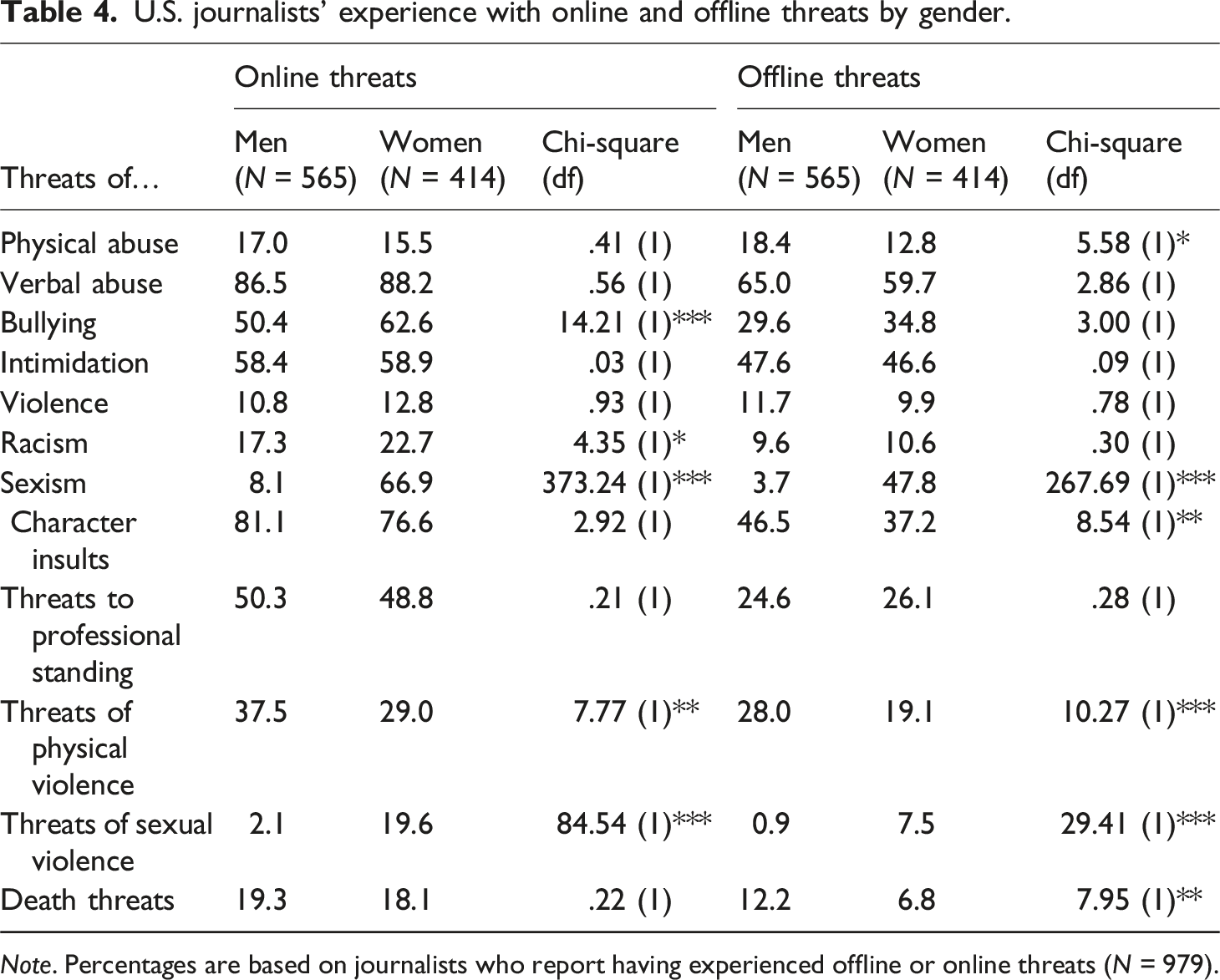
Note. Percentages are based on journalists who report having experienced offline or online threats (N = 979).
However, while women journalists report more online (M = 5.20 vs M = 4.39) and offline (M = 3.19 vs M = 2.98) hostilities than their male peers, only the observed difference in the number of online threats is statistically significant, F (1, 977) = 22.23, p < .001.
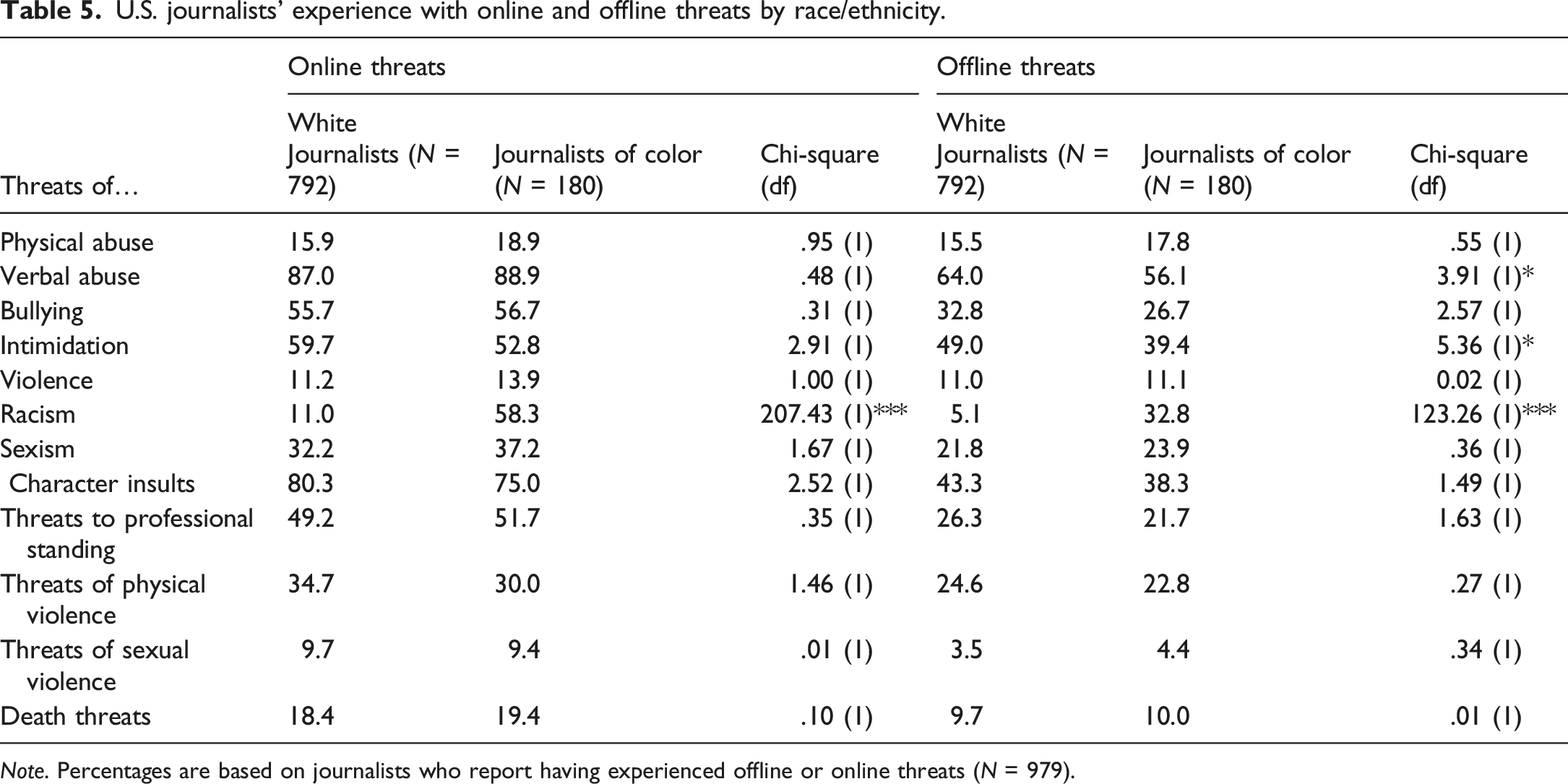
U.S. journalists’ experience with online and offline threats by race/ethnicity.
Note. Percentages are based on journalists who report having experienced offline or online threats (N = 979).
While Asian (M = 5.42) and Hispanic (M = 5.29) journalists report slightly more online threats than their African American (M = 4.70) and White colleagues (M = 4.65), these differences are not statistically significant, F (3, 933) = 1.95, p > .05. Similarly, African American (M = 3.22) journalists are slightly more likely to report offline threats than their Hispanic (M = 3.02), Asian (M = 2.44), and White peers (M = 3.07); but again, the differences are not statistically significant, F (3, 933) = 0.73, p > .05. Thus, empirical support for Hypothesis 2 emerges most clearly among women journalists, though subsequent analyses show that race and gender intersect to shape threat exposure in important ways.
Although race alone does not fully account for differences in risk perceptions, the intersection of race and gender plays a decisive role. As shown in Figure 2, Asian women report the highest incidence of online threats (M = 3.87), while Hispanic women journalists face the highest rates of offline threats (M = 2.97). Together, these patterns underscore how the interplay of race and gender substantially shapes how journalists of color perceive risk. Average number of online threats reported by journalists’ gender and ethnicity/race (N = 1600).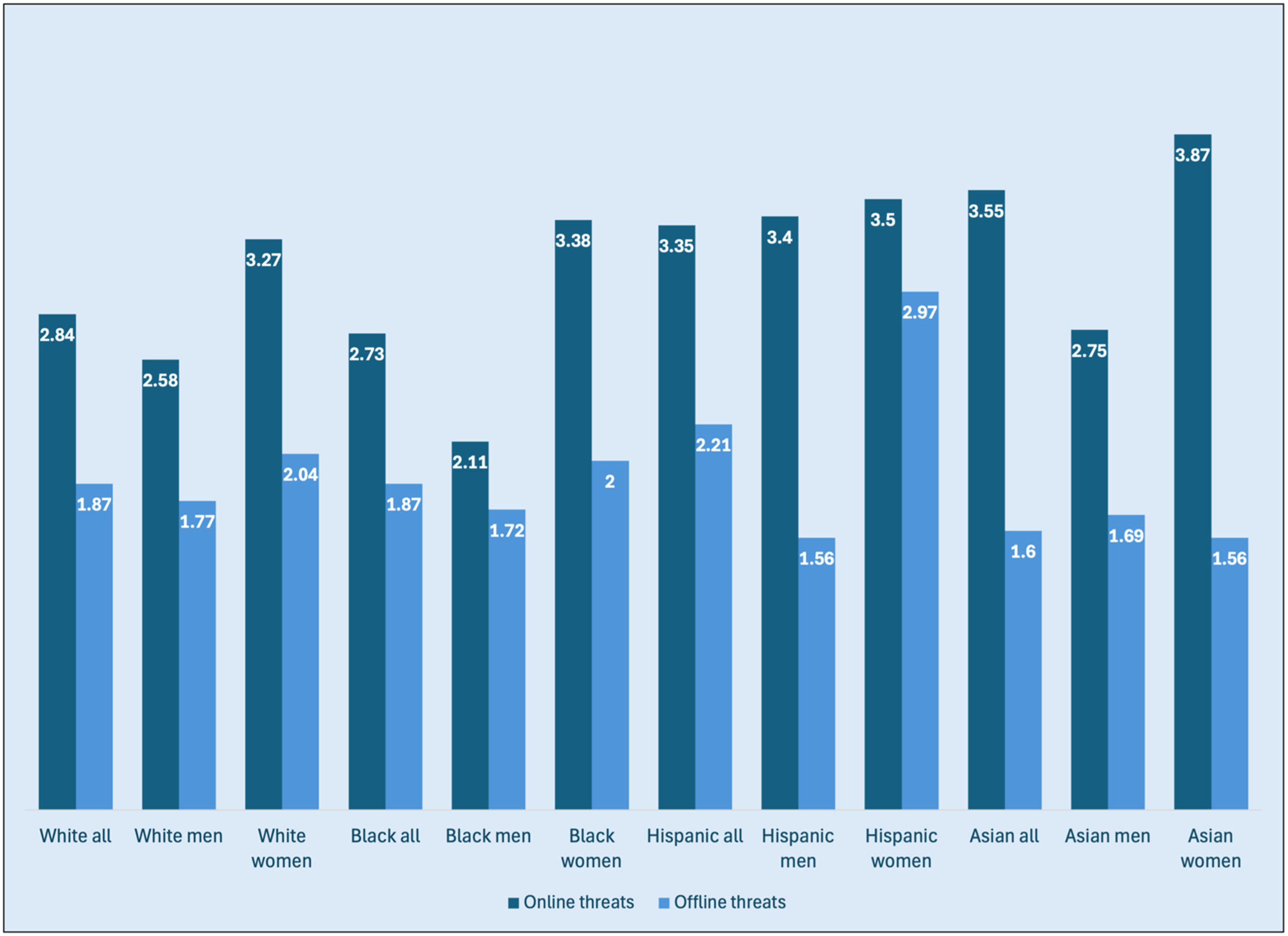
Effects of threats on journalists’ work and personal well-being
Perceived effects of threats on journalistic work by gender.
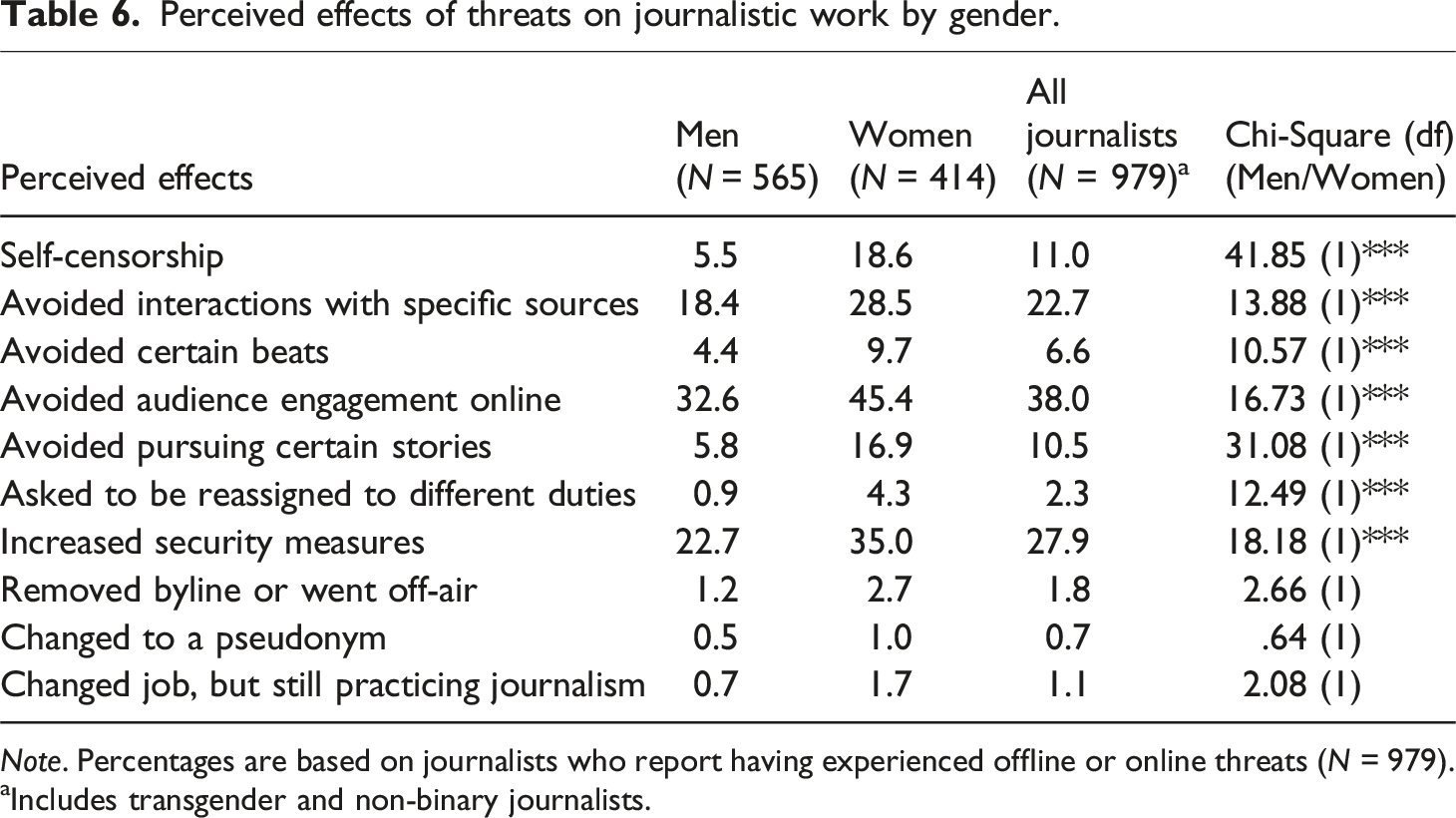
Note. Percentages are based on journalists who report having experienced offline or online threats (N = 979).
aIncludes transgender and non-binary journalists.
Perceived effects of threats on journalists’ personal lives by gender.
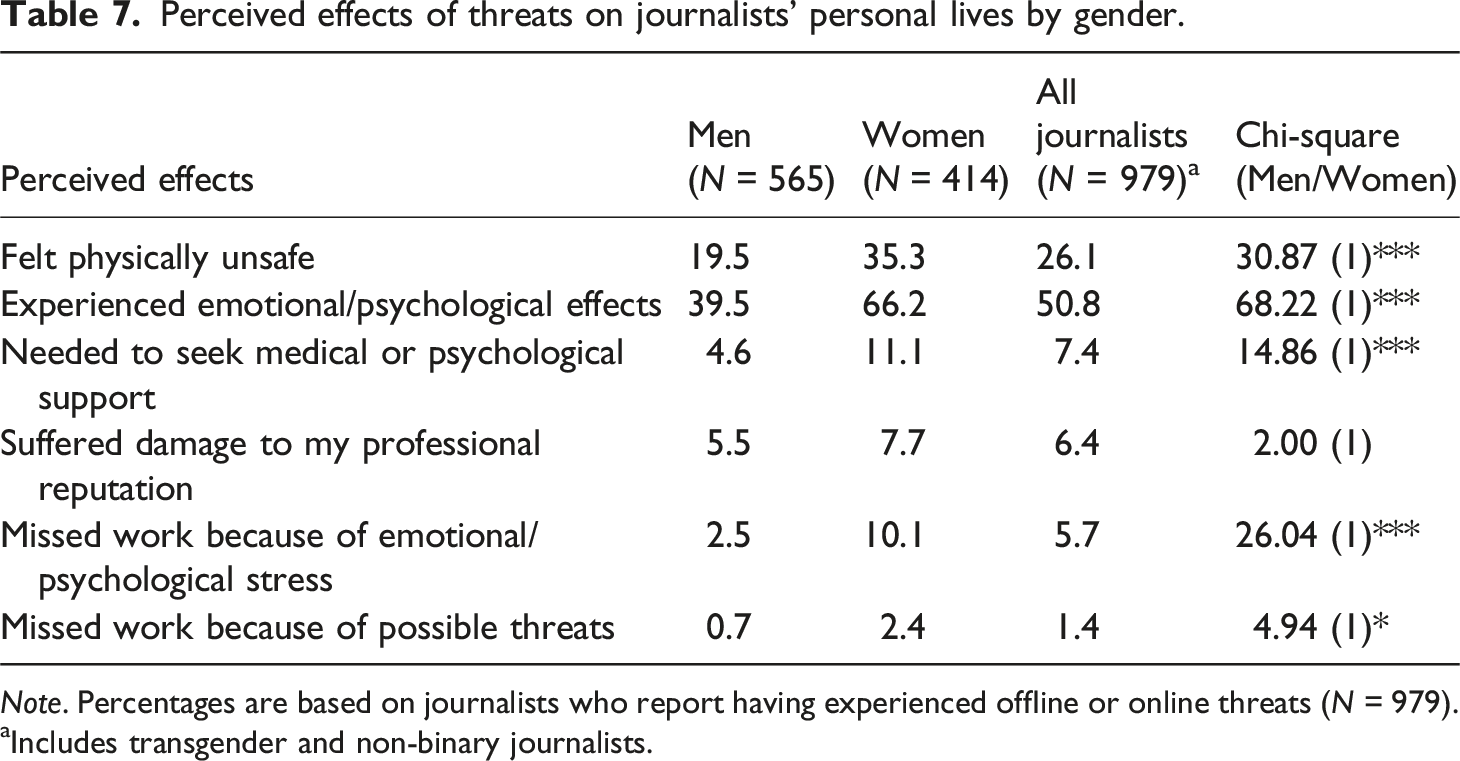
Note. Percentages are based on journalists who report having experienced offline or online threats (N = 979).
aIncludes transgender and non-binary journalists.
Effects of threats on journalists’ job satisfaction and desire to leave the profession
Because threat frequency is closely tied to journalists’ sense of personal safety, we analyze it alongside job satisfaction and intentions to leave the profession to capture the broader effects of sustained hostility. To assess these relationships, we estimated three multivariate models that control for demographics, work experience, job satisfaction (models 2 and 3 only), and media sector.
Predictors of job satisfaction, sense of feeling safe, and intent to leave journalism.
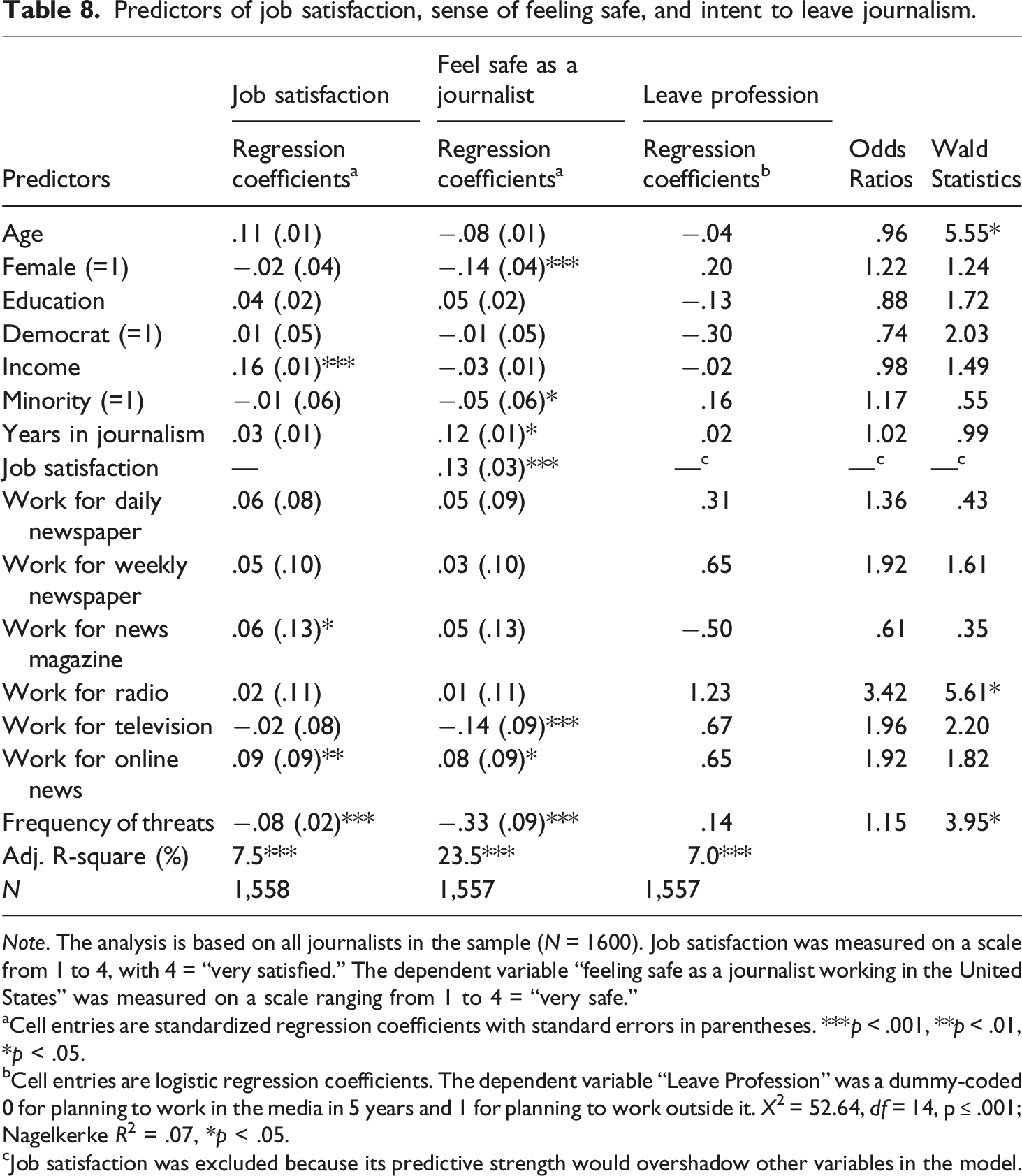
Note. The analysis is based on all journalists in the sample (N = 1600). Job satisfaction was measured on a scale from 1 to 4, with 4 = “very satisfied.” The dependent variable “feeling safe as a journalist working in the United States” was measured on a scale ranging from 1 to 4 = “very safe.”
aCell entries are standardized regression coefficients with standard errors in parentheses. ***p < .001, **p < .01, *p < .05.
bCell entries are logistic regression coefficients. The dependent variable “Leave Profession” was a dummy-coded 0 for planning to work in the media in 5 years and 1 for planning to work outside it. X2 = 52.64, df = 14, p ≤ .001; Nagelkerke R2 = .07, *p < .05.
cJob satisfaction was excluded because its predictive strength would overshadow other variables in the model.
Conclusions
As threats against journalists continue to rise globally, this study draws on a representative sample of 1600 U.S. journalists to examine the prevalence of threats and their impact on journalists’ work and personal lives, with attention to accessibility, public engagement, and identity. Our findings show that online threats disproportionately target younger journalists and those with a prominent online presence, suggesting that professional expectations for audience engagement may inadvertently increase risk exposure. Offline threats persist as well, but they appear more rooted in journalists’ work environments and routines, whereas online threats are driven primarily by demographics and accessibility.
We also show that women journalists and journalists of color are frequent targets of threats and harassment across both online and offline settings. These attacks, rooted in gender bias and systemic discrimination, carry substantial personal and professional costs. Such intersecting vulnerabilities are associated with lower job satisfaction, higher attrition, and reduced willingness to speak openly—pressures likely to deepen amid growing political polarization and declining public trust in the news media.
Our findings also highlight the double bind created by accessibility. The same conditions that allow journalists to cultivate audience relationships and expand their reach also increase their exposure to hostility. This tension reveals the hidden costs of contemporary journalism, as routine visibility and public engagement now carry emotional, professional, and safety risks. And although our analysis focuses on social media as the most direct channel of accessibility, the patterns we observe reflect a broader structural reality in which journalists’ accessibility—whether digital or physical—reshapes the conditions of their work. Understanding accessibility as both opportunity and vulnerability therefore requires recognizing its multidimensional nature, shaped not only by social media engagement, but also by professional routines, occupational roles, and identity.
Although this study offers valuable insights, it has several limitations. First, its focus on full-time U.S. journalists limits the generalizability of the findings to freelancers and journalists working in other countries. Second, because the data come from a single survey conducted in 2022, we cannot assess changes over time. Third, the study relies solely on journalists’ self-reports, without triangulating these accounts with independent evidence on actual attacks. Future research should build on these findings by incorporating qualitative approaches—such as in-depth interviews and newsroom ethnographies—to better understand and contextualize these threats. Cross-sector collaboration among academic institutions, philanthropies, and news organizations may also help develop strategies to support at-risk journalists (Holton et al., 2023). Finally, future work should employ more multidimensional measures to examine how different forms of accessibility—and their interactions with journalists’ identities—shape threat experiences.
Although threats and harassment are not unique to journalism, their implications for democracy are substantial (Miller, 2023; Sobieraj, 2020). A press that can report without fear of retaliation is essential to a functioning democracy (Miller, 2021), making the protection of journalists increasingly urgent. Confronting the occupational and psychological consequences of threats is therefore critical to sustaining an independent and effective democratic press.
Footnotes
Declaration of conflicting interests
The authors declared no potential conflicts of interest with respect to the research, authorship, and/or publication of this article.
Funding
The authors disclosed receipt of the following financial support for the research, authorship, and/or publication of this article: The study received support from the John Ben Snow Foundation and Memorial Trust; funding through the John Ben Snow Research chair.
Ethical approval
The research received approval from Syracuse University’s IRB on December 22, 2021.
