



Abstract
Pakistan is recognized as a country with low income along with poor human development indicators. Although its contribution to greenhouse gas (GHG) emissions is miniscule in comparison with other countries (it contributes only about 0.8 per cent of the total GHG emissions), it is one of the major victims of the adverse effects of climate change. The present study is an attempt to explore the impacts of climate change on the economic growth of Pakistan by conducting a national level analysis for the period 1973–2011. It has been found that temperature (proxy for climate change) has a negative and significant relationship with GDP, as well as with productivity in the agricultural, manufacturing and services sectors. The severity of these negative effects is higher for the Agriculture sector as compared to manufacturing and services.
Introduction
The effects of climate change on economic development are no longer a mystery but are rapidly becoming a stark reality. Accelerating emissions of the greenhouse gases (GHGs) in developing countries, especially in the emerging economies, have raised serious concerns about the relationship between climate change and economic growth. Rising GHG emissions are resulting in the increased temperatures and are having serious impacts on climate. Although climate change may initially have some positive effects for some developed countries, for example, Canada, in the long run it will be destructive (Parry et al., 2007).
Moreover, the impacts of climate change are not evenly distributed – the poorest countries and people will suffer earliest and most (Nordhaus, 1991; Stern, 2006) – because these countries are more vulnerable to the negative effects of climate change on water resources, ecosystems, crop production, fisheries and human health. These countries have a large population dependent on climate-sensitive sectors and they have low adaptive capacity to develop and implement adaptation strategies. Despite their limited role in GHGs emission they have to bear the cost for promotion and adoption of different mitigation strategies (Sathaye, 2006). Similarly, due to limited adaptive capacities in these countries poor communities are much more vulnerable (Parry et al., 2007).
Since Independence in 1947, considerable industrialization has taken place in Pakistan, consequently GHG emissions have accelerated and has resulted in changing the climate considerably. However, climate change and associated risks were not on the policy agenda in Pakistan until the country faced numerous devastating natural disasters. In this regard, the earthquake in 2005 was a turning point as it forced the government to take major steps in the form of disaster preparedness and mitigation. In this regard, the National Disaster Ordinance was promulgated in 2006 and the National Disaster Management Authority (NDMA) was set up. It is noteworthy that the efficiency and technical capacity of the NDMA was not remarkable during the floods 2010–11; these floods brought horrendous devastation, the aftermath of which are still being experienced. It can be summarized that Pakistan’s vulnerability to repeated natural disasters (e.g., droughts (2000), earthquake (2005) and floods (2010 and 2011) alerted the government towards the risks posed by natural disasters and climate change. In this regard the ‘National Environment and Climate Change Policy’ was formulated in 2005 and in 2008 the Planning Commission formed a special task force on climate change to deal with various climate change issues in Pakistan, like the increased variability of the monsoons, the rapid melting of Himalayan glaciers and the increased siltation of dams, etc. (Hamid et al., 2011).
The present study will analyse the effects of climate change on the overall economic growth of Pakistan as there is very limited research available that has analyzed how climate change is affecting the economy of Pakistan. The organization of the article is as follows: after the introduction, the section ‘Literature review’ presents the literature review and the section ‘The scenario for Pakistan’ describes the situation of climate change in Pakistan. In the section ‘Theoretical model’ a theoretical model for climate change and economic growth is developed. The empirical model along with a description of data is provided in the section ‘Empirical model and description of Data’. The section ‘Estimation results’ is devoted to the discussion of the estimation results while the last section ‘Conclusions and policy implications’ presents policy implications and suggestions for further research.
Literature review
Besides the fact that economic analysis of climate change is a comparatively new issue, numerous studies have estimated the impacts of climate change on economic growth in different regions of the world. Most of these studies are numerical in nature and are speculative but they provide a solid foundation for future research. There are three crucial types of studies focusing on the effects of climate change on economic growth.
First and the most important studies are those that are focused on how the overall economic growth and the structure of the economy are affected by climate change. Due to climate change, some sectors of the economy grow faster in comparison to the others; leading to change in the in the size and composition of GDP. These changes also affect the long-term growth potential of the country (Scheraga et al., 1993). Nordhaus (1994) finds that warming of 3°C would reduce the 0.25 per cent of GDP of the USA. However, if unmeasurable impacts of warming are also included then damage may increase to 1–2 per cent of GDP. On the other hand, Stern (2006) has projected that in next 50 years world temperatures would raise to 2–3°C. These climate changes have several socio-economic impacts; including impacts on water, agricultural productivity (food), health, etc., and it will result in a loss of at least 5 per cent of global GDP per year. However, Weitzman (2007) has criticized these findings by saying that there are certain uncertainties associated while measuring the impacts of climate change and conclusion are drawn by Stern (2006) are based on assuming a very low discount rate.
Fankhauser and Tol (2005) and Calzadilla et al. (2006) concluded that the extreme weather will result in raising the global savings. Because when it was expected that in future, global damage will increase then people save more to cope with anticipatory losses caused by climate change. According to Lecocq and Shalizi (2007) although there is no direct effect of climate change on the GDP; however, GDP will be affected indirectly by variations in demand structure.
The second important class consists of those studies that have analyzed; how climate change affects the major determinants of GDP and how these effects are transmitted to GDP growth. Parry et al. (2007) 1 have analyzed the impacts of climate change on different sectors. Study projects a decline in water supplies stored in the glaciers and snow cover, which results in water scarcity. If the global average temperature exceeds 1.5–2.5°C then approximately 20–30 per cent of the plant and animal species will face the danger of extinction. As far as the food production is concerned, if temperature increases in the range of 1–3°C then potential for food production will increase but temperature rise beyond that would decrease the food production. Rise in sea surface temperature of about 1–3°C would cause more frequent coral bleaching events and widespread mortality, unless there is thermal adaptation or acclimatization by corals. Sea-level rise will negatively affect the coastal wetlands including salt marshes and mangroves. Costs and benefits of climate change for industry, settlement and society depends on location and scale. Projections made by Agrawala et al. (2003) reveal that climate change affects the Bangladesh’s economy through sea level rise, higher temperatures, enhanced monsoon precipitation and run off, potentially reduced dry season precipitation and increase in cyclone intensity.
Since temperature and precipitation are direct inputs in agricultural production, many believe that the largest effects will be on agriculture. However, the production rises in the higher latitudes because of an increase in arable land and tends to fall in the tropics because of decline in the availability of water (Cooper, 2000). The climate change can affect food systems in several ways: including the direct effects on crop production includes (e.g., changes in rainfall leading to drought or flooding, or warmer or cooler temperatures leading to changes in the length of growing season) impacts on markets, food prices and supply chain infrastructure. Gregory et al., (2005) and Akram (2012) suggest that climate change plays crucial role in the context of food security.
Higher temperatures will be harmful for most of the developing countries, because in these countries water is inadequate, and temperatures are high (Reilly 1995; Rosenzweig and Parry, 1994). Due to these factors an increase in temperatures will make many agricultural areas less productive and even unsuitable for production. Mendelsohn and Dinar (1999) concluded that as the cool wheat-growing areas get warmer, the higher temperatures will reduce the grain yields. However, it is found that in case of India and Brazil, although the agricultural sector is very sensitive to climate but the individual farmers do consider local climates and they try to minimize the effects of global warming. Later on Mendelsohn et al. (2001) and Mendelsohn and Williams (2004) found that most of the market sector impacts of climate change have a hill-shaped relationship with temperature. Cool countries/areas are likely to benefit from warming; temperate locations will have modest effects, while the hot areas will be negatively affected by warming.
Livestock have a very significant role in the livelihoods of the poor in developing countries and impacts of climate change on livestock systems are another important dimension. The feed, its quantity and quality; heat stress, water, livestock diseases and disease vectors, biodiversity are major channels through which climate change affects the livestock (Thornton et al., 2009).
Gilbreath (2004) by discussing a report of WHO states that climate change may increase the risk of death and suggested that most of the diseases which are common in developing countries are sensitive to climate change and even a proportionally small change in global temperature, incidence of some diseases could result in significant public health problems. It has been estimated that due to climate change in some regions risk of diarrhoea has increased to 10 per cent. Similarly, large increases are also estimated for malaria. Gallup et al., (1999) has pointed out that any change in climate results in changing the pattern of disease burden and agricultural growth. It has been found that there exists a correlation between spread of malaria and climate change in India (Bhattacharya et al., 2006). Similarly, the degree of global warming can increase incidence of malaria by around 10 per cent (McMichael et al., 1996).
Third and very important issue that is discussed in some of the studies is that whether controlling GHGs will have positive impacts on long-run economic growth. It is a general perception that environmental regulations will impose the constraints on the production possibilities, leading to harmful impacts on economic growth. However, it has been argued that effects of environmental policy on economic growth vary through the stages of development (Bretschger and Smulders, 2001; Smulders et al., 2005). The environmental regulations will enhance prospects for growth if improved environmental quality increases the productivity of inputs or efficiency of education system (Ricci, 2007). Greiner (2003) finds that higher abatement activities may reduce GHG emissions and lead to higher economic growth. The study further extended and Greiner (2005) finds that an increase in GHG emissions, negatively affects aggregate output and marginal productivity of capital.
The scenario for Pakistan
The Global Climate Change Impact Study Centre (GCISC) has analyzed trends in temperature and precipitation for the period 1951–2000 in Pakistan by its agro-climatic zones. It has been found that Baluchistan plateau, Central and South Punjab had experienced a warming trend; however, other regions had a cooling trend during 1951–2000. Furthermore it has been projected that average annual temperature in Pakistan will increase by 4.3–4.9°C by 2085 and increase in temperature will be lower in Southern parts in comparison to the Northern parts of the country (Figure 1).
UNEP (2000) by developing an integrated scenario explained the impacts of climate change on various sectors of Pakistan economy like energy, agriculture, water resources, forestry, etc. It has been found that an increased temperature and decreased precipitation rates will negatively affect the agricultural production. The study has also predicted that there is likelihood of the occurrence of extreme weather events in the form of flooding and it was also indicated that infrastructure in Pakistan is not adequate to meet the challenge. Lack of education and health care facilities have been recognized as major causes of increased mortality (heat-related), water and vector-borne diseases, respiratory diseases, etc.
Another study by GCISC found that all 14 crops (under the analysis) were affected by the heat stress. It was also found that 6 per cent reduction in rainfall results in an increase of 29 per cent irrigation water requirements. Similarly except for Northern Mountainous region in all other regions wheat yield has shown a decline due to climate change. Hussain et al. (2005) also found a depressing impact of climate change on the agricultural productivity especially for wheat. Similarly, Ahmed (2005) found that 1 per cent increase in temperature will reduce the wheat yield by 1.74 per cent.

Source: Global Change Impact Study Centre (GCISC). Retrieved from
Oxfam (2009) investigated the impact of climate change on rural communities in Pakistan by selecting three disaster-prone areas; namely, Badin, Rajanpur and Khuzdar. In the coastal region of Badin, it was found that sea water has caused floods and soil had become saline causing difficulties for farmers in crop harvesting. The number and intensity of heavy rainfalls had increased vector and water-borne diseases like diarrhoea and malaria. In the flood-prone villages of Rajanpur, it was found that due to climatic changes both cultivation and harvesting periods moved backwards; therefore, farmers had to face shorter growing season. Similarly, diarrhoea and gastrointestinal diseases have also increased due to changes in weather. According to the survey in drought-prone district of Khuzdar duration of the growing season had decreased and due to scarcity of water livestock had been severely affected.
The foregoing review shows that most of the studies conducted on climate change in Pakistan are in context of investigating its impact on agriculture, water and natural resource base of the country. Comprehensive study to analyze the overall effects of climate change on economic growth is lacking and present study is an attempt to fill the existing gap in the literature.
To analyze the impacts of climate change on economic growth two types of approaches are most widely used, that is, enumerative approach and dynamic approach. In the enumerative approach the economic impact of climate change are analyzed separately sector by sector, that is, impacts of climate change on agriculture, ecosystem tourism, etc. Later on these effects are added up to get an estimate of total change in the social welfare from climate change (cline, 1994; Nordhaus, 1991; Tol, 1995). In this approach, mostly CGE models and simulation techniques are used.
In dynamic approach, different specifications of growth models are used by incorporating climate change indicators into growth models. Ramsey (1928), Solow (1956), Swan (1956), Cass (1965) and Koopmans (1965) and Mankiw et al. (1992) are most widely used growth models to analyse the impacts of climate change on economic growth (Fankhauser and Tol, 2005). In these models impacts of climate change are directly linked to GDP.
The present study will use both of these approaches to some extent and analyze the impacts of climate change on economic growth and its components, that is, Agriculture, Manufacturing and Services. Dell et al. (2008) have incorporated climate change in the production function, this model will be used as baseline in the present study because it provides theoretical basis for incorporating climate change into economic growth equations. Consider the production function.


Where Y is GDP, L is Labour force, A is technology and can also be referred as a labour productivity, and T is the impacts of climate and K is physical capital. Equation (1) captures direct effects of climate change on economic growth. While equation (2) captures the indirect effect of climate, that is, the impact of climate on other variables that indirectly influence the GDP growth. It is worth mentioning here that the equation (1) directly relates climate change to GDP whereas in the equation (2) climate changes affect labour productivity that will affect the GDP growth.
After taking logs of equation (1) and differencing with respect to time, following equation can be derived.

Where gt is the growth rate of GDP, direct effects of climate change on economic growth appear through a and indirect effects appear through b. This equation separately identifies the direct and indirect effects of climate change. Both of these affect GDP growth rate in the initial period. However, when climate returns to its prior state then direct effect reverses itself. For example, a rise in temperature may harm agricultural production, but whenever temperature returns to its normal level the agricultural production once again accelerates. On the other hand, indirect effect emerges during the climatic shock and their impact persists even in the normal conditions: for example, a failure in human capital development results in a permanent deterioration in human capital and economic growth.
In the light of the theoretical model, following reduced form equation of economic growth will be estimated. The equation is an empirical specification of the equation (3) of the preceding section.

Where y represents real GDP, k, pop, op and tmp denote investment, population growth, openness and temperature respectively.
In order to see which sector of economy is affected more by climate change, model will also be regressed on three major sectors of GDP, that is, Agriculture (ag), Manufacturing (mn) and Services (sr). The model that will be estimated in this regard is as under.
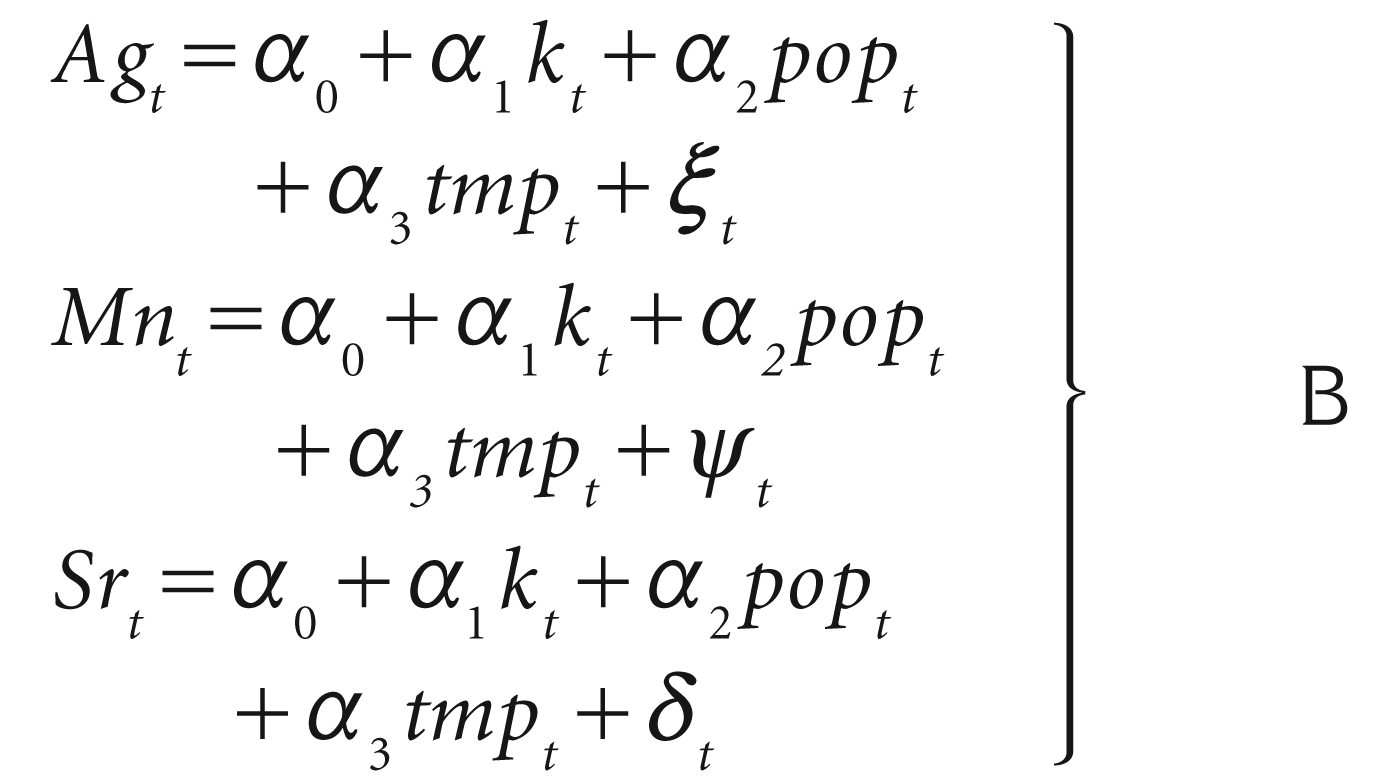
Time series econometric techniques will be used to estimate the model A. However, the model B is a Seemingly Unrelated Model so it will be estimated by using seemingly unrelated regression (SUR) technique. 2
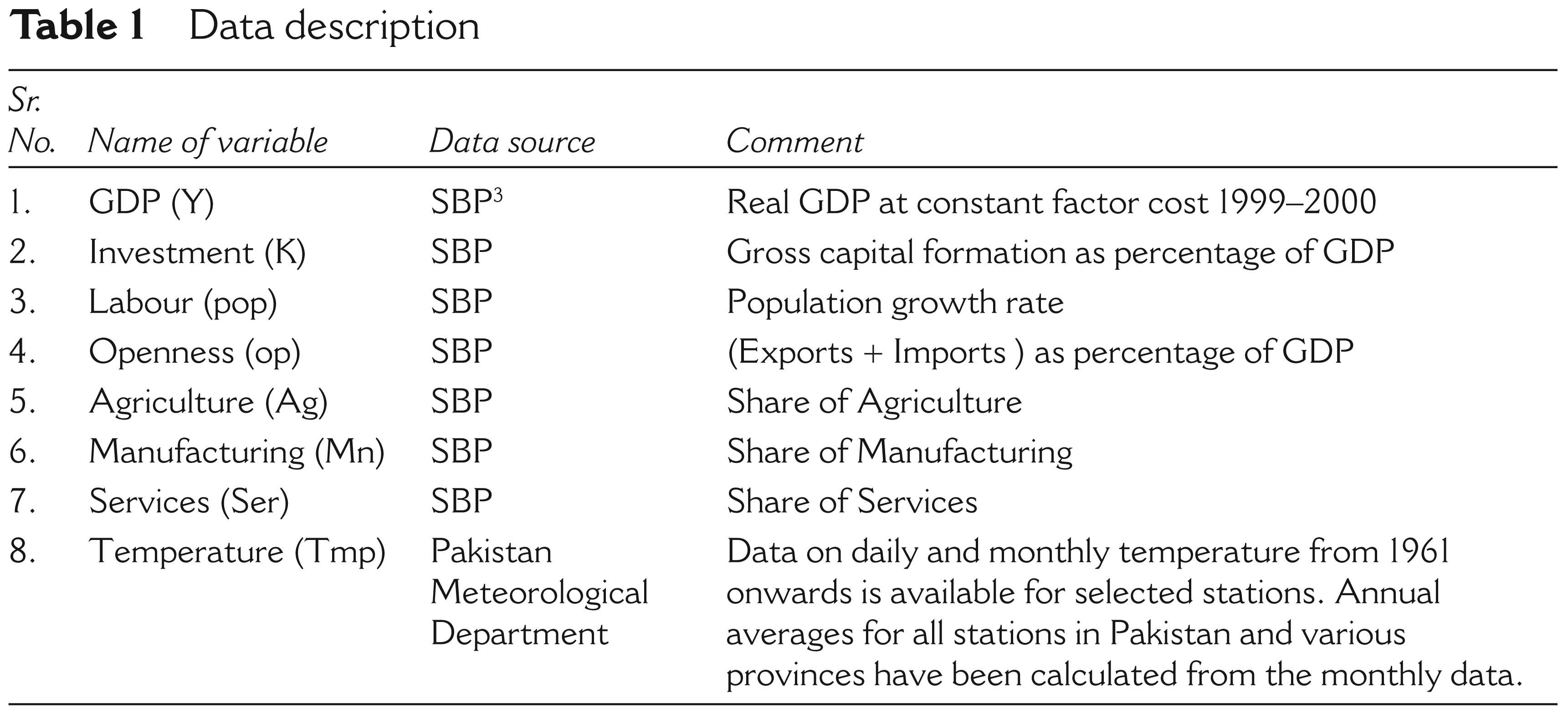
In the present study data spanning over the 1973–2011 for the Pakistan has been used. A brief description and details of the data sources is presented in Table 1:
Data description
It is noteworthy here that the selection of appropriate indicator for climate change is rather tricky issue. In literature, numerous indicators for the climate changes have been used. The selection of an indicator for climate change depends on the environment in consideration. In arctic and mountainous environments the loss of total snow pack or delay in the onset of snow are most appropriate. In temperate climates, it may very well be the associated drought but just as easily a loss of winter freezing temperatures which are often needed for seed germination or natural pest control. In many Mediterranean and semi-arid environments, the frequency of drought and increasing temperatures are more crucial. In coastal areas, sea level rising may trump all the above. Increase storm severity seems to, at least seasonally, be the dominant manifestation of climate change (due to rising ocean temperatures) in some areas. Likewise, increasing winds may play a dominant change role along with increasing drought severity in arid environments.
Similarly, climate change has been seen in various perspectives by different people. In the perspective of a common man, climate change is an increase in temperature and erratic rainfall pattern. According to a meteorologist, climate change is a rise in temperatures both maximum and minimum, rainfall patterns, rainy days, high intensity rains and rise in humidity, wind storms and variation in sunshine hours. A plant physiologist views the climate change as effects on flowering pattern in crops, fruit setting, fruit fall and early maturity. Similarly, an agricultural engineer perceives climate change as changing water demands of crops, high evaporation losses and crop damages due to water logging and salinity. Whereas an agronomist/horticulturist considers yield reduction or little increase in spite of all the high tech inputs as an indicator for climate change. A veterinary specialist may consider climate change as an impact on milk production, reproduction behaviour, newer diseases and viruses. Whereas in the view of a medical specialist changes in human behaviour, new viruses, diseases, human psychology to grab more to sustain uncertain future in the name of race, religion, region, language, caste, etc., are the outcomes of climate change.
It is appropriate to consider a range of impact indicators and not rely just on temperature. However, each indicator will have its own relationship with temperature, and some of these may be quite complex. Furthermore, the variable that may be chosen to describe climate change should be:
Continuous in time and space, Easily measurable, Monotonically increasing or decreasing, Should be a state variable, Preferably have a long record of observations. The natural variability of the variable should be low. If the variable itself naturally varies very much year-to-year or decade-to-decade, the signal of climate change might get swamped. It is difficult to assess whether climate is changing.
Considering the earlier criteria and date availability in Pakistan, temperature stands out as the best variable to describe climate change. It may also be important to mention here a couple of study limitation arising due to availability of data. The temperature data used here are annual mean average daily temperature. However, there are huge variations which exist in summer and winter temperatures in Pakistan, although monthly/daily data are available regarding temperature but no monthly or quarterly data are available for GDP and other macroeconomic variables.
Similarly, there exists considerable variation in climatic conditions among various provinces. Therefore, it is much better that a sub-national level analysis may also be conducted. The availability of data of the macroeconomic indicators for different provinces has once again emerged as a major hurdle in this regard.
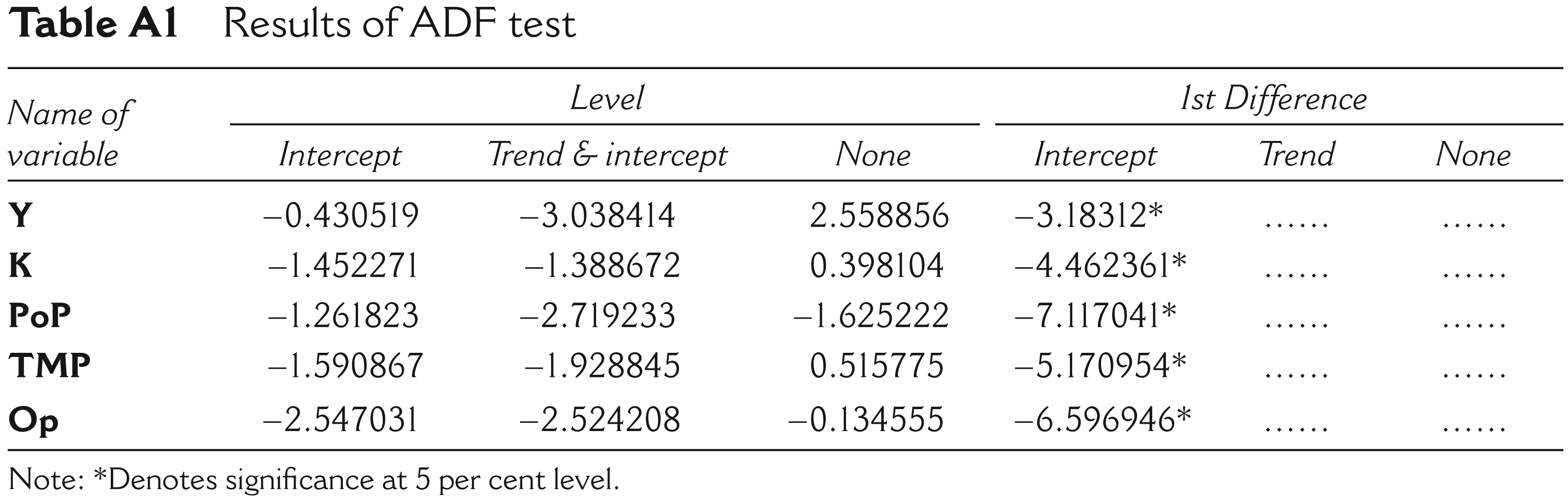
For the time series, in order to guard against spurious regression, the first step is to see whether the series is stationary or non-stationary; 4 to ensure that unit root tests are used. The results of unit root test, presented in Table A1, reveal that the model consists of I (I), that is, integrated of order 1, variables, in these circumstances cointegration technique has been used. To test the cointegration among the variables of the same order, there are two main techniques available, that is, Engle and Granger (1987) and Johansen (1988) approach. As the number of variables in the study is more than two, we apply cointegration procedure developed by Johansen (1988).
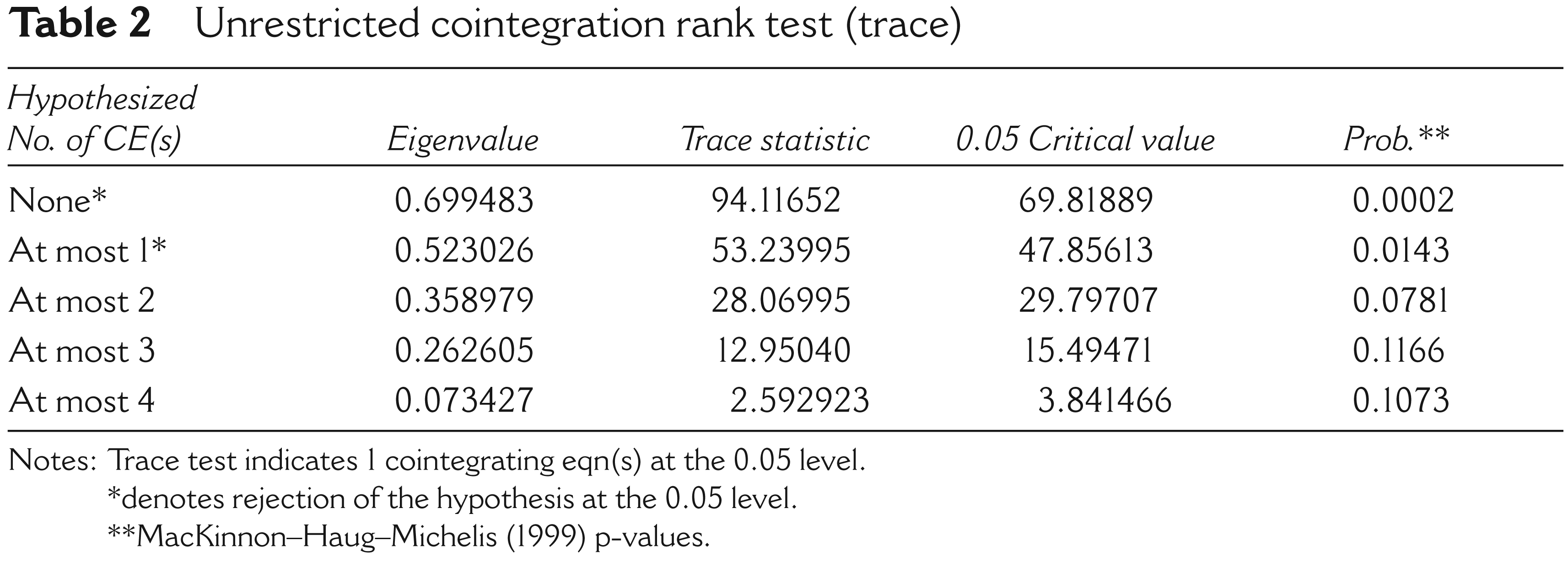
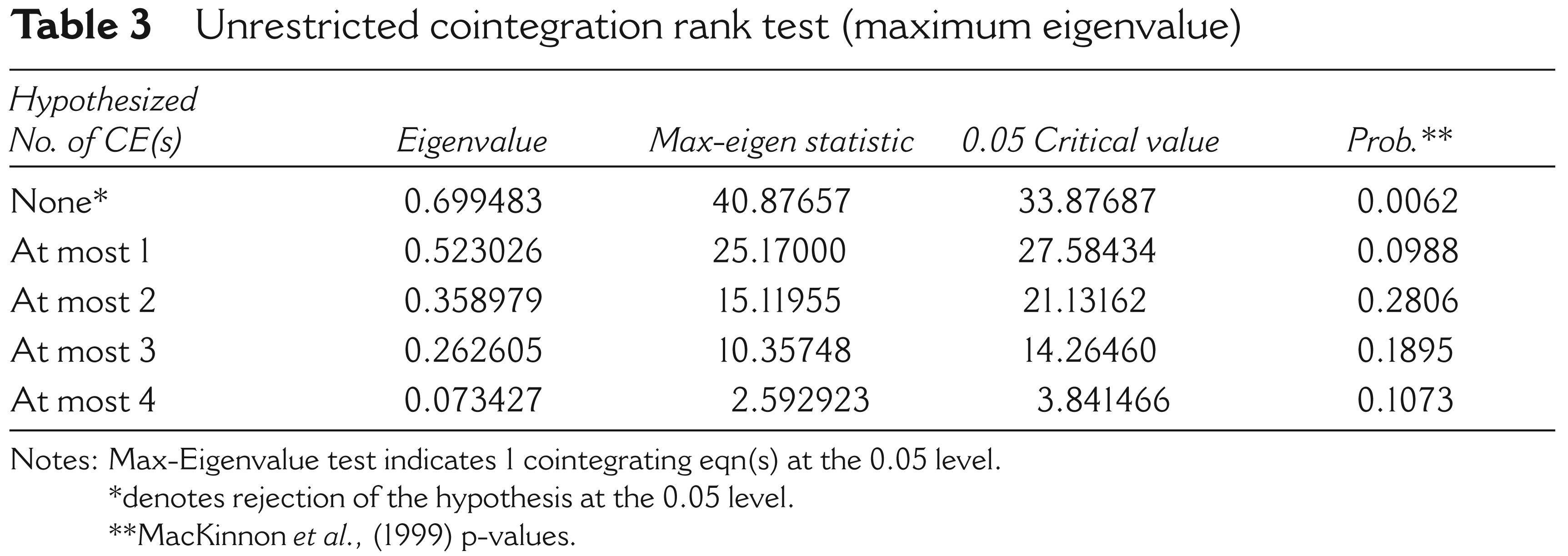
There are four different steps involved while testing cointegration, in the first step order of stationarity is determined and variable must be stationary at same level. We have already found that all variables are stationary at first difference, that is, series of the model is I (1). Therefore, the cointegration can be determined between the variables. Second step involves choosing the optimal lag length. To determine the lag length VAR model has been used and on the basis of AIC criteria, lag length of one for the model is determined. Next step deals with determining the number of cointegrating vectors. In the study, both trace statistic and eigenvalue statistic are used and the results are summarized in Table 2 and Table 3 respectively.
Both the trace and maximum eigenvalue tests suggest that there exists a cointegrating vector among the variables. In the fourth step normalized equation of the cointegration is analysed, the results of the normalized cointegrating equation are presented in Table 4.
Unrestricted cointegration rank test (trace)
Unrestricted cointegration rank test (trace)
Notes: Trace test indicates 1 cointegrating eqn(s) at the 0.05 level.
*denotes rejection of the hypothesis at the 0.05 level.
**MacKinnon–Haug–Michelis (1999) p-values.
Unrestricted cointegration rank test (maximum eigenvalue)
Notes: Max-Eigenvalue test indicates 1 cointegrating eqn(s) at the 0.05 level.
*denotes rejection of the hypothesis at the 0.05 level.
**MacKinnon et al., (1999) p-values.
Normalized cointegrating coefficients

Note: *denotes rejection of the hypothesis at the 0.05 level.
The significant normalized cointegration coefficient for gross fixed capital formation (proxy for investment) indicates that in the long run investment has a positive and significant impact on economic growth. The finding is in accordance with the theory that investment enhances economic growth; and it is supported by numerous studies on the subject including Mankiw (1990), Barro and Sala-i-Martin (2003) and Akram (2010). The results also support an important empirical regularity – that population growth results in curtailing economic growth of a country, although the effect is found to be insignificant. Coale and Edgar (1958) also come to the same result. It is worth noting here that relationship between population growth and economic growth is not straight forward. If population is well trained, educated and having access to better health facilities then it will have a positive effect on economic growth. However, in case of Pakistan, due to lack of education and training population growth results in having negative impacts on economic growth. Consistent with expectations, openness is significant with positive sign in all the specifications. It supports the findings of Coe (1995) and Lucas (1988). The temperature being the indicator of climate change is negatively affecting the economic growth in Pakistan. It may also be noted that coefficient of the temperature is highest revealing that it is the major factor that affects the GDP growth.
The results of estimating the empirical specification B (Supper reduced model of various sectors of economic growth) by using the seemingly unrelated regression (SUR) are summarized in Table 5.
System estimation results (SUR)
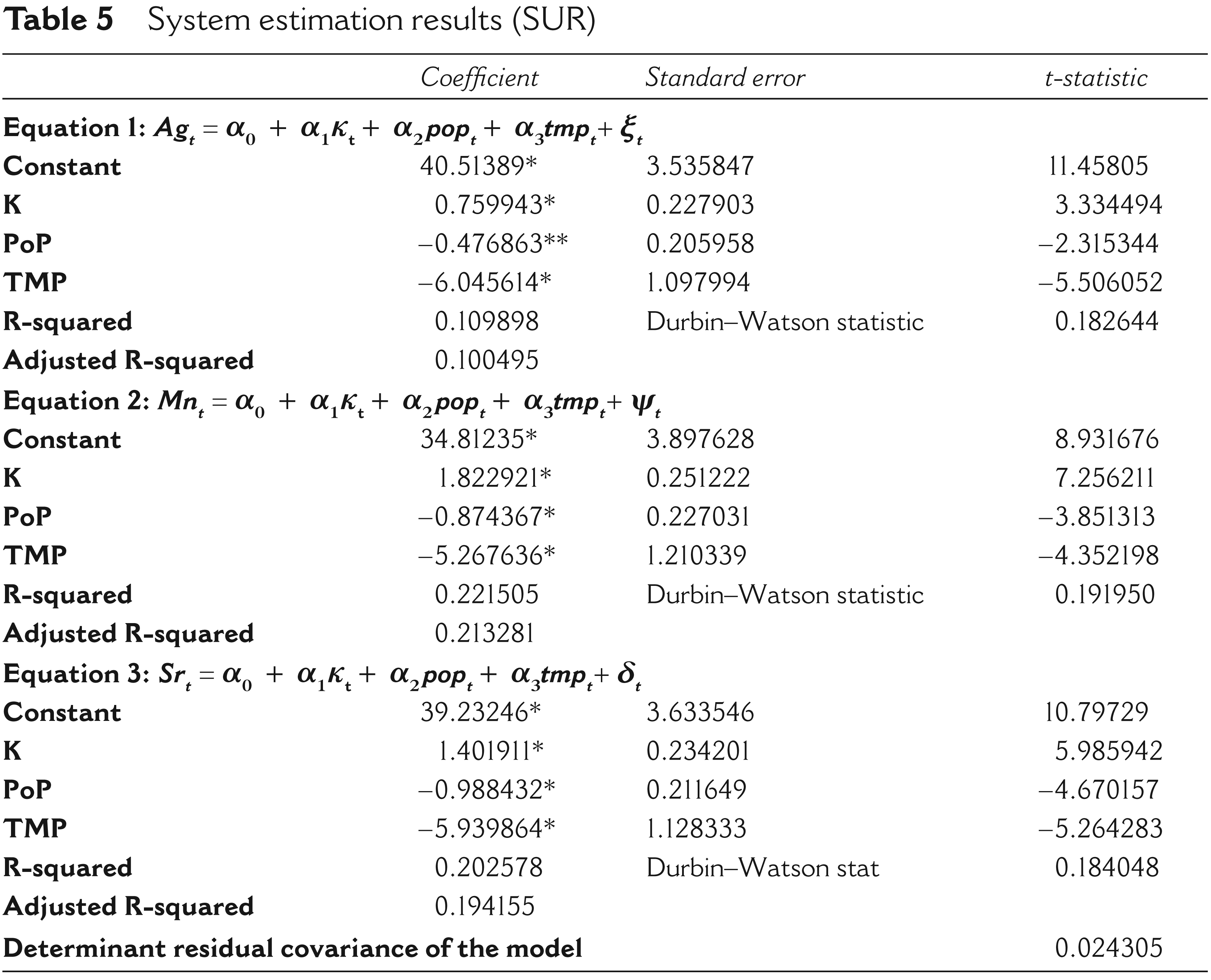
The results reveal that investment has a positive relationship with all sectors of GDP while, rest of the variables, that is, population growth and temperature (climate change) have a negative and significant impact on all the sectors. However, these results reveal that impacts of various variables are not evenly distributed. It suggests that investment stimulates the Manufacturing most and Agriculture least. Similarly, population growth rate has highest negative impact on the Services sector whereas the negative impacts of population growth rate are very limited to Agriculture sector. It sheds light on the issue that Agriculture has comparatively more labour absorption capacity. As far as temperature is concerned, the Agriculture sector is the most badly affected by a rise in temperature and the Manufacturing is the least vulnerable. The severe impacts of climate change on Agriculture are highlighted in various earlier studies on the subject including Reilly (1995) and Mendelsohn (1999).
The present study has analysed the relationship between climate change and economic growth in Pakistan by analyzing the historical relationship between variations in climate and economic growth for the period 1973–2011. Moreover, the study has also analyzed the effects of climate change on various sectors of the economy.
The results show that temperature (proxy for climate change) has negative and significant relationship with GDP as well as with the productivity in Agriculture, Manufacturing and Services sectors. However, severity of these negative impacts is higher in Agriculture sector as compared to Manufacturing and Services. The study asserts that if climate change is not controlled then it will hurt economic growth to a great extent.
In order to control climate change at the micro level, both adaptation and mitigation measures are needed to cope with the impacts of climate change in different sectors. Need for development of local level adaptation strategies, reducing undesirable human interventions in forests, on glaciers, wetlands and pastures are crucial in this regard.
However, climate change is an international/regional issue. Pakistan alone can do very little in controlling climate change as its share is very limited in GHGs emission in comparison to developed countries. Hence, there is a need for a joint and comprehensive policy regarding the adoption of mitigation strategies to control climate change. Furthermore south Asian countries are facing similar environmental problems, so in order to cope with the climate challenge there is need for joint actions at least among South Asian countries. It is suggested that:
Initiatives for sharing knowledge and experiences among South Asian countries may be supported and joint assessment studies for the future regarding availability of natural resources may be conducted that includes distributional challenges of increasing numbers and intensity of natural disasters. Academic exchange may be strengthened by considering it as a crucial pillar of cooperation. In order to collaborate on environmental data exchange scientific teams can provide a regional platform. Furthermore, joint research projects should be encouraged and supported.
It is noteworthy here that as mentioned earlier there exists huge variations in climate and geographic features in Pakistan. Although provincial/district level data regarding macroeconomic indicators are not available, however, primary data can be collected to gauge the impacts of climate change on livestock, agriculture and human health. Hence there is need of further analysis of climate change at various provinces/districts by conducting comprehensive surveys. In that direction, in future study will be further extended to explore the impacts of climate change on human health and agriculture production.
It is most commonly perceived that poor are more affected by negative fallouts of climate change due to their vulnerability and limited capacity to adopt mitigation/adoption strategies. There is also need to analyze the effects of climate change on the poor especially in the Agriculture and Health sector and also need to gauge the effects of extreme weather events (caused by climate change) on poor.
Footnotes
Appendix
Results of ADF test
| Name of variable | Level | 1st Difference | ||||
| Intercept | Trend & intercept | None | Intercept | Trend | None | |
|
|
−0.430519 | −3.038414 | 2.558856 | −3.18312* | …… | …… |
|
|
−1.452271 | −1.388672 | 0.398104 | −4.462361* | …… | …… |
|
|
−1.261823 | −2.719233 | −1.625222 | −7.117041* | …… | …… |
|
|
−1.590867 | −1.928845 | 0.515775 | −5.170954* | …… | …… |
|
|
−2.547031 | −2.524208 | −0.134555 | −6.596946* | …… | …… |
Note: *Denotes significance at 5 per cent level.
Acknowledgements
The views presented in the article are the authors’ personal and do not reflect the views of their affiliated institutions. The authors are also thankful to South Asian Network of Development and Environmental Economics (SANDEE), Nepal for their funding to conduct the present research.