




Abstract
This article points to the untapped potential for meaningful and mutually beneficial exchange between development research and practice, by presenting an example of an iterative process of knowledge formation, whereby project staff’s collective experiential insights and inductive learning are used to obtain an enriched Socio-ecological Model (SEM), which is attuned to the lived experiences in the field and is reinforced by the available research evidence. Using Catholic Relief Services, one of the largest humanitarian and development organizations worldwide, as case study, interviews were conducted with project staff from nine livelihood and food security projects and gathered staff’s perceptions and experiences with promoting gender-equitable outcomes through improved intra-household gender dynamics and men’s involvement. The qualitative analysis of the interviews shows that, while projects tried to integrate activities across the four levels of the SEM (individual, family, community and societal), staff perceived that the stickiness of social norms, women’s time poverty and limited buy-in from local organizations affected progress and presented new challenges that required constant adaptation. Our proposed method shows how an SEM can be enriched by incorporating these additional elements and by using existing research to confirm the significance of the exercise. An enriched SEM, by explicitly pointing to cross-cutting challenges that emerge from the field, is better reflective of the realities in which the staff works than a simple SEM. A process of SEM’s validation through incorporating insights from field staff and collaboratively involving researchers has the potential to deepen how projects or organizations think about the way they can foster gender transformative change; as well as to lead to more informed research and enhance researchers’ appreciations of the practical nature of development project challenges.
Keywords
Introduction
The relationship between theory and practice is fundamental in any field, but nowhere has this dialogue been so controversial and yet so consequential as in the field of gender in international development. On the one hand, researchers have challenged the ways in which gender entered the discourse in development organizations (Cornwall, 2007) and exposed the limits of practice that fails to transform social norms and affect structures underlying intersecting inequities (Chant and Sweetman, 2012; Kabeer, 2005). Attempts by development organizations to incorporate feminist perspectives have been touted as too timid or misguided (Mosedale, 2014; Phillips, 2015). On the other hand, development organizations have tried to take notice of these critiques and increasingly rely on research evidence to justify planned interventions and shape their approaches accordingly (Badstue et al., 2020). An increasing number of development projects are informed by sometimes elaborate theories of change, which incorporate the role of structural factors (including wider institutions and social norms) and recognize spheres of influences at multiple layers and scales (Harper et al., 2014; Hillenbrand et al., 2015; Shakun et al., 2021). However, there are challenges and lessons from such processes, which are not well known in research circles. Such reflections often remain internal to organizational learning; if shared externally, they mainly circulate in communities of practice and online settings (see, for instance, Le Masson, 2016) but are rarely incorporated into published literature and peer-reviewed journals. This is a missed opportunity. In particular, the lived experiences and reflections of staff members who are involved in the day-to-day management of projects in the field—hence referred to as ‘field staff’ or ‘project staff’—represent an untapped source of valuable data and information, which can stimulate a thorough analysis of existing paradigms and push the debate forward.
The present article illustrates the insights that can be derived from a closer dialogue between research and practice. The study involved two steps. The first consisted in conducting interviews with project staff about the challenges encountered within livelihood projects aiming to increase gender equity. The second step involved the analysis of the qualitative interview data through the lens of a Socio-ecological Model (SEM), a conceptual framework used to examine the dynamic interplay among personal and environmental factors affecting human development (Bronfenbrenner, 1979). In this exercise, theory is utilized to examine the wider implications of staff testimonies, but it is also tested against the realities of development practice. We show that building upon an SEM using the qualitative insights of field staff can enrich the model and make it a more amenable tool for appreciating and discussing challenges across scales.
The case study for this article is represented by Catholic Relief Service (CRS), a 75-year-old non-profit organization headquartered in Baltimore, USA. With its over 7,000 staff, an annual revenue above $900 million and outreach to 140 million people in 115 countries (Catholic Relief Services [CRS], 2021), CRS is among the largest humanitarian and development organizations worldwide. CRS mandate is ‘to assist people of all backgrounds to respond to humanitarian and development challenges, building strong, resilient communities and societies’. 1 As faith-based organization, CRS ‘provide[s] aid on the base of need, not creed’ and collaborates on the ground with over 2,000 partners, including civil society organizations, groups of different faiths, governments, researchers, foundations, businesses and impact investors. CRS has a comprehensive global gender strategy (CRS, 2020), which makes it suitable as case study.
CRS sought collaboration with a number of US-based academic institutions on the occasion of the launch of CRS Global Gender Learning Agenda (GGLA) in 2017. The aims of the GGLA were to identify knowledge gaps in CRS programming, leverage research to answer key questions and formally document CRS’ learning experience. Overall, both the GGLA and the partnerships with researchers reflect CRS’ commitment to learning and improving key aspects of its work on gender. As part of this wider collaboration, this article focuses on CRS livelihood and food security programming and on their efforts to promote more equitable household decision-making (HHDM) and involve men in order to attain more gender-equitable outcomes.
This study adds to the literature on the relationships between development theory and practice, especially to studies arguing for the need to expand the range of actors and views being represented globally so as to enhance mutual learning and obtain a more inclusive dialogue (Malunga and Holcombe, 2017). Past research has focussed on how gender norms and concepts are interpreted within development organizations and the way they travel through or are adapted to, geographical contexts (Østebø and Haukanes, 2016, Petersen, 2018) or different layers within the same organizations (Porter, 2012). This study takes a different but complementary angle, by focusing on the perspectives of field staff; it also argues that an appropriate examination of such subjective reflections can not only shed light on the challenges to development practice but also enrich theoretical frameworks and produce lessons for organizational headquarters and researchers alike.
The article is organized as follows. The next section briefly presents how research evidence has shaped livelihood and food security projects, by sensitizing development organizations to pay particular attention to gender dynamics within households and around men’s involvement. The next two sections present, respectively, the methods used in this study and the qualitative findings from staff interviews. In the discussion section, the themes identified in the qualitative analysis are then examined through the lens of an SEM and used to expand the model into a richer tool. The last section provides some concluding reflections.
Literature Review
International non-governmental organizations, such as CRS, often work in some of the most food-insecure and economically disadvantaged communities in the world. In many such contexts, while women are main contributors to household food security, many important decisions that influence access to food, such as allocating inputs to agricultural production or purchasing certain food items, are made by men. Achieving a better understanding of how gender norms and power relations at household and community levels mediate choices influencing agricultural livelihoods and affect people’s well-being is a necessary precondition for more effective and equitable programming (Agarwal, 1997; Kantor et al., 2015). While some development organizations and projects have made some progress in this regard (Badstue et al., 2020), there remain challenges, especially in terms of incorporating feminist considerations in development practice (Calkin, 2015; Farhall and Rickhards, 2021).
Two types of challenges identified within the literature have particular relevance for this study: the narrow focus on income-generating activities and the failure to adequately incorporate men in research about equity-promoting initiatives. Regarding the first, feminist research has long argued that women’s active participation in income-generating activities (in agriculture and elsewhere) does not necessarily translate into greater women’s economic autonomy or sense of empowerment, due to social norms that give husbands or other family members the power to override women’s preferences and choices (Agarwal, 1997; Kabeer, 2005). The World’s Women Report 2015 (United Nations, 2015) notes that about one in three married women from developing regions have no control over household spending on major purchases, and about one in 10 married women are not consulted on how their own cash earnings are spent (United Nations, 2015). The proportion of women experiencing lack of control over their own income is higher in the poorest quintiles; some African countries exhibit the highest percentages, such as the Democratic Republic of the Congo, Liberia, Sierra Leone, Zambia (all above 20%) and Malawi (42%). In some Latin American contexts, women need to seek spousal permission to engage in paid labour and are obliged to hand over their earnings to their partners with little to no say in how their wages are spent (Razavi et al., 2012). Given this vast gender gap in control over income, research finds that ownership or or control over assets may be more important than access to income in enhancing women’s bargaining power within the household (Deere et al., 2013; van den Bold et al., 2015). Assets can confer women a variety of benefits, such as security and status, and may lead to greater economic autonomy, particularly if they can exercise control over land and its production. Participation in collective action, such as in rural cooperatives, can also improve women’s economic control over economic resources (Serra and Davidson, 2020), as well as increase their inter-personal skills and self-confidence, in turn enhancing women’s status within the household and the community (Baden, 2013).
A second influential strand of research has argued against interventions exclusively focused on women. Chant and Sweetman (2012) deplored the risks implicit in the increasing emphasis on ‘investing in women’ as means for poverty reduction during structural adjustment programmes, especially those placing more burden and heavy responsibilities on women’s shoulders. While pushing back against an instrumental view of women’s empowerment in the pursual of economic growth and other societal benefits, feminist authors have favoured a more encompassing approach towards gender equity: one which, for a start, involves both genders in a process of transformation of harmful gender norms (Chant and Guttman, 2002; Razavi and Miller, 1995). Empirical studies show that women’s participation in income-generating activities when coupled with men’s thoughtful and supportive engagement can help facilitate a more equitable renegotiation of household power dynamics and reduce the risk of violence against women (Hadi, 2005; Kim et al., 2007). Careful research on masculinities also reveals that, when men and boys have a stake in contributing to more equitable gender norms, there is an improvement in the conditions and opportunities not only for women and girls but also for men and boys, who are often harmed or limited by prevailing masculinity norms (Edström and Shahrokh, 2016; Paulson, 2015). Organizations, like Equimundo (formerly Promundo), that actively seek to involve men in a sensitive way in community development projects have witnessed improved outcomes in terms of women’s empowerment and gender equity (Slegh et al., 2013).
This cumulative research evidence has supported calls for development interventions to go beyond both an income-only and a women-only approach—and instead promote an integrated set of activities that involve all members within households and communities in order to transform underlying gender power relations and ensure more lasting changes. Many large humanitarian organizations—including CRS—have embraced the adoption and implementation of Gender Transformative Approaches (GTAs) into project activities. 2 GTAs empower individuals and societies to challenge and change gender norms and address power inequities in relationships (Okali, 2011). They differ from approaches that merely involve women as participants or that address their more immediate economic needs (Barker et al., 2010).
The present study examines the challenges that arise in translating these ambitious goals into everyday development practices, through an analysis of CRS staff’s perspectives regarding the possibility of creating change within the life of the projects on which they worked, and a discussion of the lessons to be learned.
Methods
Conceptual Framework
SEMs can be used in both research and practice to represent holistic approaches to social change across scales. First proposed by Bronfenbrenner (1979) as conceptual frameworks to analyse the dynamic interplay among personal and environmental factors in affecting human development, SEMs have been particularly influential in the health domain (Commission on Social Determinants of Health, 2013; Crosby et al., 2013; Ma et al., 2017; McLeroy et al., 1988) and are now established tools for analysing determinants of violence against women (Heise, 1998) and gender drivers in adolescent health (Kapungu et al., 2018). SEMs have also entered the gender and development realm, with several development organizations, including CRS, adopting variants of SEMs to conceptualize the multi-faceted and mutually interactive nature of the factors underlying gender inequalities (CRS, 2020).
Within SEMs, change within a system is represented along a number of wider, and encompassing, levels going from the individual to the societal sphere. In this study, we follow the common practice of identifying four levels: individual, relational, community and legal/societal. We use this framework in order to organize the qualitative data derived from interviews with field staff. After this exercise, we discuss the insights derived from making sense of our findings in relation to the four levels that are commonly analyzed in SEMs.
Data Collection and Analysis
The study involved an analysis of qualitative interviews with project staff and review of project documentation across a small sample of CRS livelihood projects. The first step for data collection involved establishing the criteria for project selection. Since the aim was neither to obtain a representative sample nor to evaluate the projects, the team opted for an ad-hoc selection, informed by practical issues as well as by the wish to capture a variety of experiences. Two requirements were established for project selection: availability of annual and quarterly reports in the CRS project database (to allow the team to learn about the project history and other relevant details) and project staff’s willingness and availability to participate in an online interview within the space of a few months.
In September 2019, the CRS Senior Gender Technical Adviser compiled a list of livelihood projects aimed at promoting household food security and resilience, through either increased agricultural production, better access to markets and/or improved nutrition and hygiene practices. Fifteen projects were identified, which were recently completed (within two years) or were ongoing for at least three years. Of the 15 projects, 11 programmes had sufficient project documentation and available key staff who had intimate knowledge of the project and could speak about its gender components. For two of these projects, staff were not available for an interview within the designated time interval for data collection. In the end, nine projects were retained for interview and in-depth study (Table 1 describes key features of the selected projects).
Overview of the Nine Selected CRS Projects.
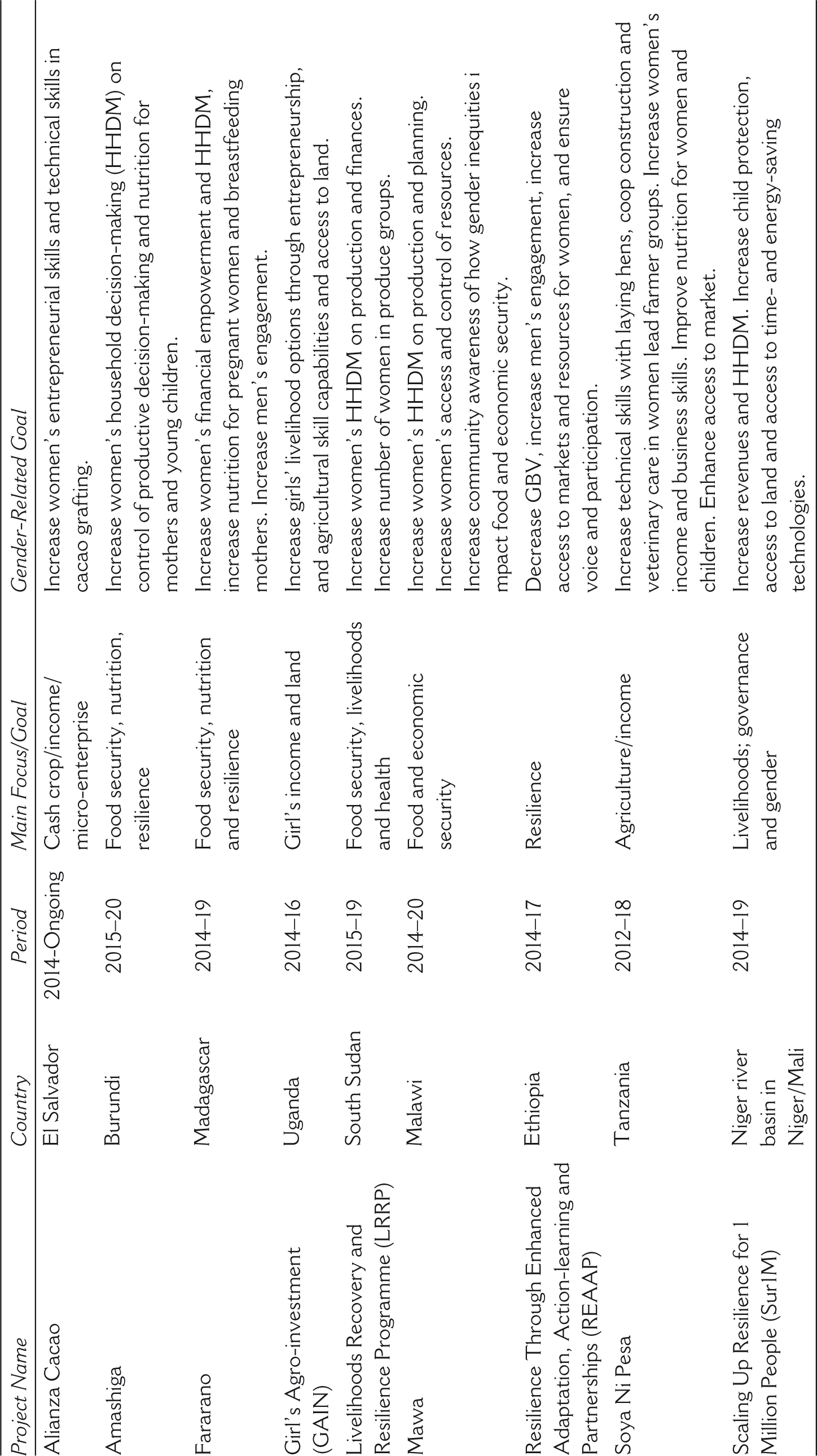
Overview of the Nine Selected CRS Projects.
In order to ensure neutrality, interviews were conducted by non-CRS personnel in the research team: a faculty member from the University of Florida and two Master students, from the Universities of Florida and Maryland. 3 The interviews were conducted in English (except one in French at the request of staff) and were held remotely through Microsoft Teams. The interview protocol and instruments were reviewed and approved by University of Florida’s Institutional Review Board, and informed consent was given by all participants in writing. Interviews took place during the months of February and March 2020 and each lasted between 60 and 90 minutes. For each project, we requested the participation, at the minimum, of the project chief of staff and/or project manager and/or gender specialist. Since the projects were already ended or about to end, we were aware of the difficulties in tracking down all team members at once (especially considering the difficulties linked to the ongoing COVID pandemic). Overall, 16 CRS field staff were interviewed, between one and three per project. Staff members included gender technical advisers (4), project managers (4), chiefs of parties (3), project officers (2), monitoring and evaluation officers (2) and a country director (1). Of the 16 staff members interviewed, 8 were men and 8 were women. All participants had a deep knowledge of the projects. The majority were nationals and the remaining had many years of experience in the countries where they worked.
Interviews followed a semi-structured format and allowed plenty of possibilities for the project staff to elaborate freely. Guiding questions focused on (a) how the modalities of gender integration promoted men’s and women’s equitable participation into HHDM and how they handled men’s involvement, (b) the nature of gender relations and social norms in the specific contexts, (c) the difficulties encountered and (d) the lessons learned that could inform future interventions.
The content of the interviews was coded and examined through thematic analysis. Coding involved two steps process. At first, the content was colour-coded to identify themes that appeared relevant and recurrent. Subsequently, the resulting themes were re-organized in a smaller and more cohesive number of themes, which were conceptually distinct and sufficiently salient for analysis.
Understanding project features was important in our discussions with the staff. However, rather than describing each project separately, we let information about the project activities transpire through the relevant themes and in conjunction with staff’s reflection on them. Such reflections are subjective by construction and our central aim is to analyse the way experiences have been reflected upon and which key challenges have been identified.
Besides interviews, various project documentations (programme proposals, and quarterly, mid-term and final reports from the CRS project database) were examined as supplemental data. The documents were mainly used to contextualize some of the information provided in interviews or to provide supporting evidence for statements made during interviews.
The projects reviewed are diverse in their focus and geographical contexts. Eight of the projects are located in Sub-Saharan Africa, with one project in Central America (Table 1).
Qualitative analysis led to the identification of eight main themes. Five themes emerged quite organically from staff’s recounting their experiences with multiple, and progressively wider, areas of project interventions: (1) building skills and knowledge, (2) couples’ approaches and family dialogue, (3) women’s saving groups, (4) fostering change at the community level and (5) engagement of community and religious leaders. Upon closer examination of qualitative interviews, three further themes emerged as cross-cutting topics that many of the staff eagerly elaborated on, once asked about challenges in their work: (6) social norms are slow to change, (7) time poverty is an undervalued constraint and (8) buy-in by local partners is not a given. The eight main themes are discussed in turn below.
Building Skills and Knowledge
Staff from several projects commented that a key obstacle they face is the low level of human capital among women and girls due to systemic gender inequities in education. Consequently, training women in a wide array of agriculture, nutrition and crop marketing topics is regarded as the starting point. For these projects, training is something that can transform life opportunities for women.
In Tanzania, for example, the Soya Ni Pesa project, whose goal is to improve soybean production and increase smallholder farmer incomes, developed Skills for Marketing and Rural Transformation (SMART) training to provide women farmers with the business skills required to market their agricultural products and scale their businesses. Another example from the interviews was from Alianza Cacao, which aims to build the cacao value chain in El Salvador while simultaneously promoting women’s economic autonomy. This project’s staff trained over 600 women farmers and reported increase in women groups’ capacity to graft cocoa trees, transform cocoa beans and participate in local fairs. Furthermore, the GAIN project in Uganda, which aims to provide sustainable livelihood options to girls who were out of school as a result of early pregnancies, trained 900 girls in business, life skills and the cultivation of passion fruit. According to project staff, these activities not only imparted practical skills, by using fun exercises to explain concepts and make the training session attractive to illiterate youth but also enhanced girls’ self-confidence and social status within their communities.
Across our sample, projects staff observed that training focused on increasing women’s technical knowledge and leadership skills represent a critical first step towards sustainable well-being and empowerment of women.
Couples’ Approaches and Family Dialogue
Projects rarely directed their trainings to just individual women, usually opting to include other family members for broader impact. One of CRS’ primary gender interventions is the household strengthening approach, sometimes called the ‘Strengthening Marriages and Relationships Through Communication and Planning’ or SMART Couples approach. The SMART Couples approach consists of faith-based curricula, which have been adapted to numerous country contexts and project aims, building on couples’ faith traditions and beliefs. The relationship-strengthening approach aims to increase dialogue and willingness of spouses to work together, so they can attain long-term, positive changes in terms of increased household income, food preparation, agricultural production and hygiene.
The field staff in the Amashiga project in Burundi found that, by including the mother-father unit, as well as other family members, in concerted decision-making, they could better reach their primary aim of improved children’s nutrition. The staff also referred to a previous internal project assessment, which found that the SMART couples’ approach not only increased joint HHDM and contributed to peaceful resolutions of marital conflict but also contributed to the adoption of key nutrition and health practices like the establishment of latrines and permagardens. 4
As for the GAIN project in Uganda, which was previously mentioned, a key factor was the involvement of the girl’s parents and other family members, such as brothers, in the training. Project staff felt that these additional training sessions boosted family members’ supporting roles and shared responsibilities in financial management and decision-making, which in turn helped foster the girls’ businesses. Staff commented that the involvement of the whole family helped build awareness and a greater appreciation for gender equity, resulting in increased confidence and decision-making for the girls.
Women’s Saving Groups
All projects interviewed, with the exception of Alianza Cacao, adopted the Savings and Internal Lending Communities (SILC) approach, a trademark of CRS programming. SILC is a micro-savings programme, where members meet regularly, save money together and in turn take out loans from the common pot for a variety of needs. While open to both women and men members, most SILC groups tend to have a majority of women members although some of them are led by men. An interesting staff perspective, which emerged during interviews, was that SILC groups were not only used for facilitating access to credit but also as a conduit for building skills, confidence and knowledge. For instance, staff reported that the SUR1M Project in the Niger river basin in Mali and Niger—which aimed to reduce long-term vulnerability to current and future climate change and strengthen livelihoods and prevent malnutrition—crucially relied on strengthening women’s financial literacy through SILC groups. Project staff emphasized that the integration of training—especially around financial literacy—into a microfinancing scheme can be key to enhancing women’s ability to manage their income and thus increase self-confidence.
Others observed how SILC meetings seemed to create safe places, where women could not just access resources and apply leadership skills but also talk about personal experiences and generally support one other. Staff from the REAPP project in Ethiopia, which aims to sustainably increase resilience and reduce long-term vulnerability to climate-related shocks and stresses, reported that, when one member of the group did not come to the meeting, other members called to check on them.
The REAAP and Soya Ni Pesa projects’ staff also noted positive effects of SILC groups on family dynamics, reporting that men began to watch children during SILC meetings, help with household tasks and give money to their wives to save in the SILC groups. According to interview participants, SILC groups that involved men seemed to foster valuable discussions about the implications of joint HHDM on financial matters and a better appreciation by husbands of their wives’ skills and ability to save.
Fostering Change at Community Level
The staff we interviewed reported that projects used a variety of creative approaches to promote social change through community dialogue and other social processes that support new ideas and different ways of doing things.
Staff from the Fararano project, whose aims are to reduce food insecurity and chronic under-nutrition and increase resilience to natural disasters in Madagascar, reported they not only taught couples valuable skills but also relied on Lead Mother and Community Champion models to pass on such skills in a cascading modality. Lead Mothers were identified, trained and empowered to train other community members about sanitation, children’s nutrition and equitable sharing of household workload. Community Gender Champions (called Miranjakas) were also recruited among community members and included both women and men, although men ended up being more numerous (about 60% overall). Miranjakas were trained and in turn informed others on how to utilize agricultural resources more efficiently and equitably. The project documents find that the Lead Mothers and the Miranjaka models are associated with positive changes in community attitudes regarding gender roles and norms. 5
According to the staff of the REAAP project in Ethiopia, community disaster-risk reduction committees (DRRC) were established through a participatory, gender-sensitive, approach. Each DRRC, composed of 20 community representatives (50% women), was reported to be in charge of leading participatory disaster risk assessments as well as planning, implementing and monitoring community responses. These community conversation groups, according to staff testimony, served as an effective forum to hold gender sensitization training and testimony sharing, through which community members learned about approaches that can increase joint HHDM and men’s engagement.
Other projects seemingly included other means for widespread community messaging and awareness raising. Staff from the SUR1M project reported that they partnered with Radio Rural International in Mali and Niger to promote gender inclusiveness through radio programmes that were collectively engaged via village-level Listening Clubs. Project documents indicate that the radio programmes also provided daily climate information to enhance women’s agricultural knowledge and practices. 6
Engaging Community and Religious Leaders
Beyond connecting lay community members, some projects specifically sought to leverage more effective support from and engagement with community and religious leaders.
Staff from the Mawa project, which aimed to sustainably improve the food and economic security of 21,500 smallholder households in Zambia, described how they involved local authorities and traditional leaders to transform traditional norms that had placed responsibility for clean household environments and nutrition decisions exclusively on women. Community and household awareness-raising sessions reportedly called for men to contribute to water collection and storage and also trained children to use latrines and wash their hands. The project’s internal evaluations additionally indicated that the participatory nature of community engagements through the establishment of Area Associations and the involvement of leaders as entry points for changes in traditional gender roles helped households implement more equitable practices much faster than if only the women were promoting these behaviours alone. 7
The Amashiga and GAIN projects’ staff shared how they drew on established partnerships with religious leaders to help overcome cultural barriers and promote social change. In Burundi, both church and mosque leaders were reportedly involved in developing training and communication materials with Amashiga staff so that lessons from their respective faith traditions could help support calls for increased women’s input into HHDM in their diverse communities. Staff from the GAIN project explained how they held training sessions on project goals with religious leaders, who then spread gender sensitization messaging within their congregations.
By contrast, project staff indicated only few examples of institutionalized collaboration with formal government institutions. The Amashiga project staff reported creating and implementing a training for government officials on SMART couples, which was then adopted by the Ministry of Human Rights, Social Affairs and Gender in Burundi. The Fararano project staff reported sharing the Miranjaka approach with the Madagascar Ministry of Population, Social Protection and Promotion of Women, and assisted with the development of the government gender strategy. The Area Associations, which the Mawa project established, were also reported to be validated by the government of Malawi as channels for expressing community opinions.
Social Norms Are Slow to Change
All staff members shared that the contexts in which they worked were characterized by rigid patriarchal social norms; and they faced many difficulties in promoting and obtaining positive social change, due to push-back from within the communities. In El Salvador, staff linked women’s low participation in community meetings and other project activities to gender norms that require women to perform many tasks in and around the house, while the men are out all day working as daily labourers or otherwise engaged. Staff described how patriarchy and machismo affected all levels of social relations and reduced their ability to obtain the community’s buy-in on gender equity. While the Alianza project achieved, according to project documents, some notable results in terms of increasing access to productive resources and entrepreneurial skills for a greater proportion of women cocoa farmers than initially anticipated, 8 the staff felt the impact on social norms (which normally take longer to shift) was limited.
Rural Burundi also exhibits a highly patriarchal social structure, and the staff on the Amashiga project encountered several challenges as men in the communities had become suspicious of gender-equitable programming with previous NGO programmes. Staff stressed that they would not have overcome the initial scepticism were it not for the involvement of religious leaders and their effective influence on the deep religious sentiments of the population.
The patriarchal culture in Madagascar also complicated community discussions about changes to gender roles in HHDM. According to Fararano staff, men would agree to women assuming some productive roles but were less inclined to accept women’s inputs in decisions on resource use and finances. Staff indicated that husbands also voiced their disapproval when male Community Champions, Miranjaka, visited their wives in the absence of other men from the household and repeatedly informed women about their rights. Staff shared their challenges in carefully negotiating what was acceptable for the context given these constraints. Some of the individual sessions were discontinued and their activities were moved to monthly community conferences.
In South Sudan, staff working on the LRRP project, which promotes sustainable and resilient livelihoods as well as greater social cohesion through increased agricultural production, found it difficult to increase women’s access to markets. Interviewees reported that success depended on the type of product, with women gaining greater control over sales of vegetables, poultry and small ruminants, whilst men wanted to retain control over the market for large livestock. Furthermore, staff faced stiff challenges in their attempts to recruit more women as animal health workers and had limited success despite many attempts. However, they reported that the project did successfully recruit and train female pump mechanics, which was a non-traditional role for women, partly thanks to women’s voicing greater interest than men in ensuring water supply.
Some of the staff stated that, besides push-back within the community, the change was also impeded by constraints at higher levels. In the GAIN project, despite progress in getting the entire family to help support girls’ access to land and decision-making, staff noted that girls’ lack of bargaining power in the wider market and institutional sphere reduced their monetary benefits from passion fruit growing.
Time Poverty Is an Undervalued Constraint
All programme staff interviewed referred to the difficulties that women participants face while balancing their regular household duties with the new project activities. Staff within the MAWA and Soya Ni Pesa projects noted that women voiced their concerns over not being able to attend the trainings involved with the SILC groups or participate in community surveys, due to their inability to leave their families for two weeks at a time. Staff reported that women worried about the consequences of taking on too many responsibilities outside the house and the potential conflict with their husbands.
The interviewees perceived that it was not only adult women but also girls who were affected by conflicting demands on their time, as evident in the decline of girls’ participation rate in the GAIN project. According to staff, girls found it too difficult to balance housework, schoolwork and participation in trainings, leading to their dwindling attendance.
Despite the recognition of the problem of excessive demand on women’s time, project staff mostly stated they were not able to address it properly. Staff members from SUR1M project were the only ones who reported that their project introduced time-saving technologies, in the form of cookstoves and solar systems, in order to address women’s time constraints. Staff from the Mawa project encouraged both men and women participating in training to document their typical day and share it with others. According to them, this led men and women to better appreciate each other’s time contributions and resulted in increased shared responsibility in the home.
Staff from the other projects acknowledged this is an area requiring further attention in future programming. For example, staff from LRRP talked about the need to develop training schedules in closer coordination with women’s preferences.
Buy-in From Local Partners Is Not a Given
Some of the most sensitive topics in the interviews were CRS staff’s admission of the difficulty in getting buy-in from men in the local organizations with which CRS partners in order to conduct its activities. In El Salvador, the project staff for Alianza Cacao said that they made several recommendations for integrating gender issues, but these were resisted by men within the community and within local partner organizations, due to engrained cultural norms (or ‘machismo’ culture). Our interviewees explained that the typical one-day gender sensitivity trainings are not enough to sensitize community partners and overcome these barriers. Instead, they argued, long-term training would be required to produce a cultural shift and obtain buy-in of men from community organizations.
The REAAP project staff found it difficult to identify suitable local women personnel, despite their considerable efforts. They felt this was regrettable since they perceived that involving female staff members as project coordinators and in activities that encourage women’s empowerment could make a huge difference to partner organizations. The Soya Ni Pesa project in Tanzania also raised similar issues. Staff explained how the limited local personnel’s knowledge of gender resources accounted for some of the project’s difficulties in addressing the very inequalities that their initial gender analysis had revealed.
Staff from several projects commented that a more comprehensive gender-sensitive training of local partner organizations and a more systematic use of gender impact indicators across all project domains and activities would make it easier for project staff to promote gender integration. Staff also suggested that investing in girls’ education programmes could also help increase the pool of educated women who could serve in projects, since, as one GAIN staff member put it, ‘when women are being trained by women, they feel that they are walking the walk, not just talking the talk’ (Interview, 20 February 2020).
Discussion
The data described above derive from project staff’s own words and experiences, reflecting their understanding of the scope for, and limitations to, gender normative change within livelihood and food security projects, especially around intra-HHDM and men’s involvement. In this section, we discuss the eight themes that emerge from their narratives through the lens of an SEM. This framework is appropriate to examine change involving a progressively wider set of levels and actors.
We argue that the first five themes, from individual training to working with couples/households, SILC groups, fostering change at the community level, and engagement of community leaders, fit well and can be positioned along the four nested circles within an SEM. However, the complexity of the issues raised through the qualitative interviews with field staff requires us to go a little further. Staff reflections around social norms persistence, time poverty and local institutional buy-in suggest that awareness of the inter-connection between the individual, family, community and societal levels is not sufficient to bring about sustainable change—and that doing so requires explicitly addressing a number of cross-cutting themes.
We thus propose an expanded SEM model (see Figure 1) in which the first five themes populate the traditional SEM’s four levels but are also enriched and complemented by the three cross-cutting constraints. Figure 1 also includes CRS-specific project approaches and activities, illustrating how they are distributed across levels. The following discussion elucidates how all these elements can be connected and operationalized within any enriched SEM model. We also draw attention to existing research that confirms the significance of the themes identified from the interviews.
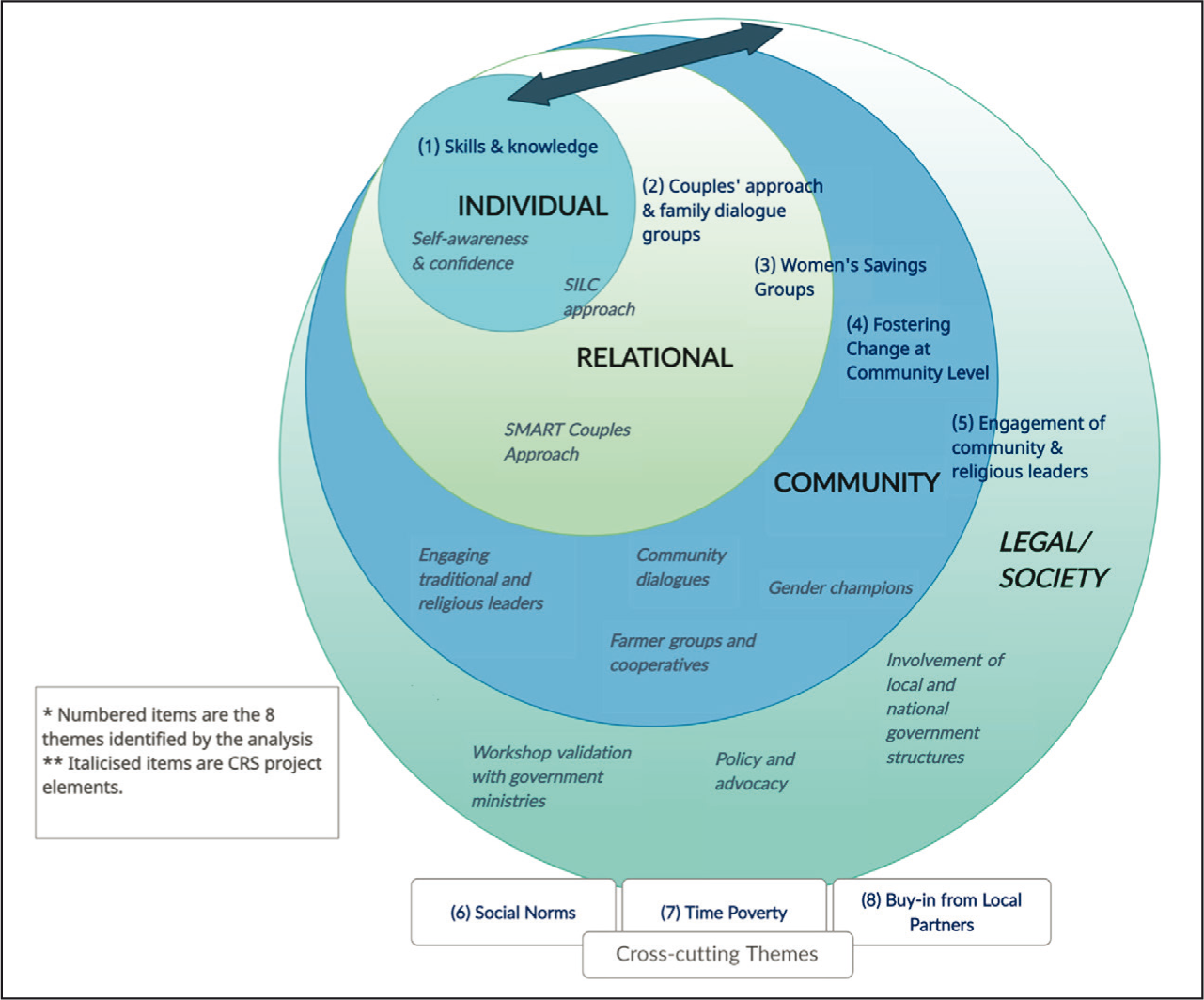
Individual-level activities within projects include teaching of life skills, literacy and technical training that build women’s awareness, skills, knowledge and confidence—which are expected to increase household ability to make important decisions for improved livelihoods, resilience and food security. However, staff recognized that many women do not have the time to participate in project activities and could not realize all the intended benefits. Their concern is confirmed by research, which points to women’s time poverty, defined as the lack of time to rest or pursue desired activities due to the demands of work and other duties, as a key constraint to women’s successful participation in income-generating activities (Bardasi and Wodon, 2010). A further and related constraint identified by staff is social resistance to change norms around gender roles. Their perspectives resonate with studies, which show that skills and technical training do not necessarily lead to women’s increased ability to participate in HHDM nor to higher acceptance by husbands or other men in the community (Buvinic and O’Donnell, 2016). Our interviews with project staff confirm that women’s training was more effective if the men supported it or when it involved the whole household.
Couples’ approaches and project activities around SILC and farmer groups are all represented at the relational level, due to their common objective to improve household and peer cooperation and foster women’s agency and confidence within their immediate social entourage. Yet, evidence from the literature shows that raising awareness of families and groups encounters some limits due to the persistence of gender norms and resistance by influential members of the community (see, Okali, 2011, for a summary of some of this evidence). Indeed, some of the most nuanced conversations with project staff revealed that normative change is hard to come by, because individuals and households who may be inclined to change their behaviour are influenced by what other people in the wider community think and do. Furthermore, not all local project partners equally embrace gender-equitable practices and goals.
Interventions at community level include fostering wider dialogue, promoting community champions and engaging religious and traditional leaders. These activities were regarded by staff to have a better chance to be transformative—by allowing behaviour change at the individual level to be reinforced by peers and approved by recognized community leaders. Indeed, research shows that normative change is more likely to be supported by fostering social capital not only horizontally, between similar groups or households, but also vertically, by linking with higher spheres of authority (Serra, 2011). Project staff commented, however, that involving community leaders and obtaining their buy-in require much greater effort and creativity in approach. Moreover, they noted that success is not always guaranteed, as broader institutional and market constraints may get in the way.
Finally, in order to sustain project impact over time and beyond the project life, SEMs suggest the need to operate at the legal/societal level. Empirical evidence confirms that project interventions have better chance of fostering an enabling environment if they work with local and national administrations (Buvinic and O’Donnell, 2016). Indeed, staff recognized that efforts to engage with the policy sphere or the legislation process could lead to more sustainable impact. However, they reported that these initiatives require substantial time investment and relation building and are less likely to be undertaken within a project lifetime. We agree that the engagement of actors at this level would require development organizations to not only make a long-term commitment to a locale but also to invest in relationship and institution building that goes beyond the length of appointment of many project managers and implies an equally strong commitment from national and local level institutions.
Ultimately, Figure 1 shows how an SEM framework—when it includes project-level activities and cross-cutting constraints from project staff’s experiences and perceptions—could be operationalized for analytical and project planning purposes. This framework is similar to others that have been proposed to advance multi-component, cross-scalar development interventions, such as Cole et al. (2014), which has been highly influential within WorldFish and other CGIAR institutions. However, our framework more explicitly visualizes the overarching constraints that, at each level of intervention, stand in the way when trying to promote gender-equitable approaches. The constraints identified in this study are not new. What is new is the process by which they were identified, as well as the promise this holds for better guiding organizational learning around gender issues in project planning.
We argue that the uniqueness of the framework lies in the practice-research iterative process that produced it, whereby staff’s collective experiential insights and inductive learning are complemented and reinforced by the available evidence from the wider gender and development literature. The three cross-cutting themes, for instance, both reflect staff’s perspectives and echo questions found in the development literature, regarding the challenges of transforming unequal gender roles and effecting normative and behavioural change (Kantor, 2013; Okali, 2011). An iterative process of knowledge formation, whereby findings from the field enrich a well-known framework such as SEMs, could be an effective avenue for creating a frank dialogue within organizations, and with local partners as well as researchers. We believe that such a collaborative methodology has the potential to deepen how projects think about the way they can foster gender transformative change as well as lead to more informed research.
Truly gender-transformative programming requires working at the mutually reinforcing levels that influence gender inequalities within households, communities and the wider society. By relying on both theory and empirical evidence, researchers have made the case that striving toward equality between genders requires development organizations to go beyond income-generating opportunities to incorporate multiple sectors and dimensions of well-being and go beyond a women-only approach to work with men and women. SEMs are often proposed as guiding frameworks for interventions to work simultaneously across multiple levels—as this has proven to be more effective than focusing on interventions at one single level. How do development organizations navigate such challenges and chart this promising but complex path?
Our thematic analysis of semi-structured interviews with CRS project staff from nine livelihood and food-security projects shows that several projects explicitly integrated activities across the individual, family, community and societal levels, and involved men and leaders in the community to create change around women’s and men’s roles. However, the experiences and perceptions of staff in these projects show that much more complexity is encountered in practice. Staff noted how the stickiness of social norms, women’s time poverty and limited buy-in from local organizations affected progress and presented new challenges that required constant adaptation.
This study shows how an SEM can be enriched by incorporating these additional elements and constraints, which are derived through the rich lessons from the field that are accumulated through deep project staff experience. An enriched SEM demands more attention to cross-cutting challenges than a simple SEM, and thus it is better situated in the realities in which the staff works. Operationalizing this refinement of the SEM within a specific project or set of projects through collaboratively incorporating insights from field staff has the potential to advance internal organizational learning in view of more informed project design; as well as enhance researchers’ understanding of the practical nature of development project challenges.
Finally, our analysis of staff’s perspectives suggests that projects’ ability to impact change at systemic level is not necessarily limited by a lack of appreciation about the complexity of gender power relations. In some organizations, such as CRS, such appreciation is noticeable, at least among the staff members who are properly trained in gender issues. Rather, in these settings, other issues become more binding constraints, such as short time project frame, insufficient financial and human resources to forge cooperation with other actors, and frequent pushbacks from within the wider institutional and social environment. These issues would require investments on the part of development organizations that go well beyond the normal 5-year project cycle. To the extent that these findings are not specific to CRS projects, it is hoped that the proposed framework can help development organizations at large to further their internal learning process as well as garner support for long-lasting project investment.
Footnotes
Declaration of Conflicting Interests
The authors declared no potential conflicts of interest with respect to the research, authorship and/or publication of this article.
Funding
The authors received no financial support for the research, authorship and/or publication of this article.