




Abstract
The farm shop is an increasingly proliferate form of farm diversification, both as a single entity or part of a wider strategy encompassing concentric and conglomerate elements. In this context, our paper investigates whether farm shops are viable diversification options in the United Kingdom, by investigating farmer drivers to diversify via shops and consumer motives to purchase there. The research combines data collected from semi-structured interviews (9) with farm shop owners and quantitative consumer surveys (181). The findings show that the primary driver to diversify was identified as an additional income stream. Other factors recognised throughout the interviews were the employment of family members, channels to sell produce and farm location. The reoccurring diversification option linked to farm shops was the addition of a tearoom or cafe. The findings highlight quality of produce and associated presence of attractions as being key to successful diversification. Seasonality of produce, consumer awareness and shop identity are seen as barriers to the enterprise. The research adopts a novel approach by gathering insights into consumer attitudes as well as producer motivations and experiences, and the relationship between them. The research further extends previous analysis by explicitly examining consumer survey evidence on attitudes to direct purchasing of farm products and increases our understanding into farm shop diversifications potential for nurturing entrepreneurship and supporting farm business resilience. The paper raises important implications for farm businesses and policy approaches that might seek to promote an entrepreneurial stance while also extending the analysis.
Introduction
UK agricultural holdings manage some 17.5 million hectares of land, which accounts for approximately 72% of the UK’s landmass (DEFRA, 2020) with a total labour force of 476,000. The total Income from farming stands at £5.3 billion with a gross output of £27.3 billion however; agricultures contribution to the national economy is less than 1%. Consideration must be given to the connected agri-food sector in the United Kingdom which accounted for a total estimated Gross Value Added (GVA) of £120 billion or 6.3% of national GVA in 2018 and employed just under 4 million (DEFRA, 2020).
While Farm Business Income (FBI) varies greatly between farms with just over a fifth of UK farms failing to make a positive FBI in 2018/19 (DEFRA, 2020). UK farmers are in the midst of what has been regarded as the ‘perfect storm’ due to the impact of the current covid-19 pandemic and ongoing discussion surrounding Brexit (see note 1). This impact is likely to extend into rural communities, which rely on a small number of particular sectors. For UK farmers it is likely that Brexit will pose a greater threat than the pandemic as policies and trading terms shift. Where currently, direct subsidies from the European Union Common Agricultural Policy can contribute up to 80% of farm incomes (Downing and Coe, 2018). Farm incomes and agricultural practices will be sensitive to funding level changes, which are likely to see a further greening of policies and an increase in Pillar 2 non-direct subsidies. Pillar 2 provides potential funding for farm diversification, ICT and skills development. However, opportunities for farms to build resilience are not uniform due to location, resource and managerial factors (Henley and Morris, 2019). Whereas diversification is seen as one strategy to increase resilience this paper provides a focus on farm shop diversification.
While the basic function and purpose of farm shops is the direct selling of produce from a working farm they are manifold in form and organisation, ranging from a small, semi-permanent or occasional stall at the roadside or in a local farmers’ market, to a permanent retail outlet. While the latter is often dedicated to selling produce of a single farming enterprise, it may also be part of a co-operative venture selling a range of farming products. In its more sophisticated form a farm shop may target the leisure shopping market as part of a large, multi-functional complex or hub, often akin to a visitor centre, containing tea rooms, cafes and restaurants, garden centres, and retailing various rural lifestyle products and offering a range of rural based activities contributing to the agritourism scene. Whatever its appearance, the establishment of a farm shop beyond its more casual and rudimentary form has become a significant aspect of farm diversification, incorporating an element of vertical integration.
In this context, our paper investigates whether farm shops are viable diversification options in the United Kingdom, by investigating farmer drivers to diversify via shops and consumer motives to purchase there. The research employs a case study approach using quantitative and qualitative methodologies to examine the nature and experience of farm shops as an increasingly proliferate form of farm diversification, both as a single entity or part of a wider strategy (Morris et al., 2017), either concentric, involving clearly related activities, or conglomerate incorporating more unrelated activities enabled by the opportunities provided by land usage, location and other farm resources. Following a descriptive section treating the form and purpose of, and opportunities for, farm shop diversification drawing on existing studies in combination with a search of UK farm shop websites, we present our research design and methodological approach employing quantitative and qualitative methods to analyse data collected from semi-structured interviews with farm shop owners and consumer surveys accessed online. The presentation and interpretation of our findings is followed by a concluding section that discusses the implications of our study.
Although the academic study of farm diversification has become extensive (see e.g. Islas-Moreno et al., 2020) that explicitly treating the farm shop option remains relatively scant (see, for example, Bavorova et al., 2018), and often treated within the wider context of farm/agri tourism. While Slocum and Curtis’ (2017) study of UK farm diversification through farm shop entrepreneurship provides insights in its treatment of the entrepreneurial skills and strategies required to achieve success in farm shop management, this paper extends the analysis by also explicitly examining consumer survey evidence on attitudes to direct purchasing of farm products. By combining an investigation of consumer attitudes with that of producer motivations and experiences, and the relationship between them, the study provides new evidence regarding the characteristic features required by, and enabling, successful farm shop diversification strategies.
Producer motivations and consumer opportunities for farm shop diversification
Farm diversification can be defined as ‘encompassing business activities that are run on the farm or are dependent on farm-based land and capital assets’ (Maye at al., 2009: 335). As is well established in the academic literature (De Rosa et al., 2019), and among policy makers and within the farming fraternity itself, the basic motive for farm diversification is economic and financial; seeking to broaden and subsidise the farm business by increasing and boosting revenue sources (GOV.UK, 2019a) and, in the extreme, ensuring business survival. However, Vik and McElwee (2011), find that social motivations (non-financial) motivations such as personal rewards and lifestyle choices are as important as economic motivations. While diversification options are many and various, the farm shop is specific in its form, involving an element of forward integration into direct marketing and selling of own produce; either in its primary form (cereals, dairy, meat, vegetables) or as prepared food dishes utilising owners’ produce. This option has two particular benefits to the farmer: one relating to identity retention and the other relating to greater profit retention. While selling own produce in a farm shop enables the farm business to maintain greater control and remain close to the heritage and tradition of their core activity, it also enables farmers to retain a larger proportion of profits otherwise going to ‘middlemen’ particularly supermarkets. Crucially, such a venture relies to a large extent on a particular set of market demand opportunities, with particular regard to the manner and extent to which potential consumers view the quality and efficacy of the offering.
The European Union defines farm diversification as ‘all activities other than farm work that have an economic impact on the holding. These activities must make use of the farm’s resources (such as the land, buildings or machinery) or products’ (Department for Environment Food and Rural Affairs, 2013: 3). As Di Domenico and Miller (2012) note, in order to remain viable, farmers have been encouraged to diversify into areas of entrepreneurial family-based business activities including farm tourism. However, the authors also note that many farmers are reluctant to diversify as they feel a need to retain and remain close to their farming identity and/or family traditions and heritage (Di Domenico Miller, 2012).
The general understanding from extant studies is that agricultural businesses are required to diversify in order to keep operating. Di Domenico and Miller (2012) state that 50% of UK farms now derive some income from a non-farming, diversified business, and in almost 30% of farms the income from the diversified business exceeds that from the farm. Traditional diversifications such as bed and breakfasts and renovating farm buildings as holiday lets or accommodation permits the continuation of farming alongside their diversification enterprises. In addition, general observations from previous research indicate that the larger the farming enterprise, the easier it is for them to diversify (Morris et al., 2017). The capabilities, motivations and individual circumstances of farmers for diversification vary significantly (De Rosa et al., 2019), especially within farms that hold greater assets, and that may be better placed to take advantage of the opportunities (Morris et al., 2017). According to Walford (2001), if farmers are looking to diversify into farm tourism their location is a prominent factor, with being located either close to a large centre of population or near to an environmental attraction particularly beneficial. This suggests that with particular regard to farm shops a successful venture may need to be located near a urban locations or an area enticing to tourists.
Diversification is important for economic growth and farmers may be economically motivated to diversify, reducing the overall business risk associated with their agricultural activities (De Rosa et al., 2019; McNally, 2001). Phelan and Sharpley’s (2012) paper explores entrepreneurial skills and competencies within this context. In addition, this paper considers McElwee and Bosworth (2010) research into the skills set and managerial mind-set identified as being essential for successful diversification strategies and entrepreneurial exploration. Rural development models are likely to be shaped by the effective deployment of managerial time and entrepreneurial skills, rather than resource availability and productive efficiency; hence, skills development cannot be ignored (Veidal and Flaten, 2014). McElwee and Bosworth (2010) identify three types of skills, which farmers possess, with the enterprise skills influential in successful diversification. Likewise, skills development will be essential if Government place-based economic policies are to assist rural economies in of ‘levelling-up’ with entrepreneurial farming businesses playing a crucial role in achieving these objectives. Investment in digital infrastructure and ICT skills can further assist farm shop diversification in creating a brand identity, connecting with consumers and reduce some location barriers (Bowen and Morris, 2019).
More generally, farm tourism diversification has been seen increasingly as a viable strategy to support declining farm incomes and promote a sustainable rural economy (McElwee et al, 2006; Phelan and Sharpley, 2012). However, the increased popularity in rural tourism diversification by UK farmers trails behind that of many European farmers (Sharpley and Vass, 2006). Farm based tourism’s mounting popularity is credited largely to the changing rural development and agricultural policy context in developed countries (Garrod, 2011), which have seen a shift in agriculture’s role from a productionist stance towards extensification and guardianship of the environment. The UK Government has also encouraged farmers to source different income streams by the introduction of diversification grants (GOV.UK, 2019b).
Williams and Shaw (2009) suggest that growth in the tourism and recreation sectors have forced changes in these sectors’ structures. These are a source of changing social, demographic and consumer behaviour, accompanied by technological and transport shifts along with governance and policy evolution. Changes in consumers wants has seen an increased desire for countryside retreats and places for individuals to participate and surround themselves in rural life. While these provide significant diversification opportunities, they may not apply to all farmers as McNally (2001) found that farm type is associated with diversification options while Morris et al. (2017) identify farmer characterisation in terms of farm focused, resource maximisers and lifestyle strategies. These factors can be a limitation on a farmer’s decision to diversify into the agricultural tourism sector.
Additionally, McNally (2001) notes that arable farms are more likely to diversify than livestock enterprises such as dairy which have high labour requirements throughout the year. As such, and in general, time restraints and managerial requirements may be viewed as a deterrent for farmers to seek non-agricultural employment.
A further driver to diversify into agricultural tourism is the creation of additional family employment (De Rosa et al., 2019). The National Farmers Union (NFU) Mutual report (2019) highlighted that farm diversification has the potential to employ more family members, providing an opportunity for succession. It can also allow family members to add value to farm produce, by introducing new skills such as making cheese or smoked meats. While employing family members is a driver for farms to diversify (De Rosa et al., 2019), there are also employment opportunities created for local people. The long-term benefits may be direct in terms of employment income and indirect by encouraging the emergence of new and related business ventures.
While farm shop diversification by co-operative and other joint ventures of various degrees of sophistication may mean some loss of control or identity, cost-sharing considerations may appear attractive, and possibly inevitable, particularly if they enable the farmer to access or take advantage of the core competencies or skills of venture partners, that would otherwise be beyond their scope or comfort zone, e.g. retail, marketing, catering, accounting, IT.
Figure 1 below demonstrates the wide variety of diversification options available to farmers.

Farm diversification options. Source: Robinson (2004).
The social impacts that diversification have on farmer’s identity are explored by Brandth and Haugen (2011: 35) noting, ‘When agriculture is restructured and diversified, one may expect that the meanings of the term farmer will change or at least assume more meanings’. Frequently an important factor for a farmer’s identity is the management and reputation of their farm. This influences other farmers’ impressions, provides status and confirms identity in relation to other farmers. However, when diversifying into agricultural tourism farmer identity is altered, as it is now visitors who ‘judge the farm hosts on their service, how the food is and how comfortable the beds are’ (Brandth and Haugen, 2011). It is clear that the social impact of unfamiliar practices and lack of feeling of belonging can deter farmers from diversifying. If farmers do not conform to the social norms of hosts while running a rural tourism enterprise, namely that customers are there for the experience and service, they risk the success of the enterprise. This is of particular relevance to the farm shop option of diversification.
Concerning the issue of consumer satisfaction associated with the local farm shop experience, the question of consumer awareness of food miles and product traceability is a particular critical factor in encouraging and possibly determining the likely success of such a venture. However, Sirieix et al.’s (2008) paper highlights a research gap in consumer awareness of food miles and the lack of understanding regarding whether and how end consumers perceive food miles. Globalisation has seen international corporations having a progressively significant role in food supply chains, including activities upstream and downstream from farms (Robinson, 2004). Globalisation has allowed British consumers to purchase global cuisines in their local supermarkets, and this ease of access has inevitably increased food miles. However, recently food miles have received considerable attention in association with the climate change debate (Coley et al., 2009). In addition, there have been increasing concerns for the resilience of small local businesses and an awareness of sustainable systems. This includes the role of farm shops, vegetable box schemes and farmers markets (Jones et al., 2004). However, the domination of large food retailers remains a barrier to successful farm shop diversification.
As the trend for diversification has increased so has consumer’s desire for farm shops selling local produce and an acknowledgement of food and its origins (Tregear, 2001). Factors such as food scares and increasing consumer concern about food safety have increased this drive (Jones et al., 2004). The growing interest in food traceability can provide an opportunity for farmers to sell direct to the consumer, with the idea of sustainability being associated with perceived benefits of buying locally embracing environmental, economic, social/community and health issues (Jones et al., 2004). As consumers become increasingly motivated by these factors there is potential for an increase in support for small, local businesses. Brown et al. (2009) recognised that food miles are a major motive for consumers who were involved in vegetable box schemes, but they also suggest that the leading factor discouraging consumers from making their food choices more sustainable was their desire to eat out of season food (Brown et al., 2009).
Research design and methodology
The research aim is to explore whether farm shops are a viable diversification option by examining farmer drivers to diversify and consumer motives to shop there, as well as identifying the characteristic features of successful ventures.
The study employs a mixed methods approach integrating both qualitative and quantitative research with both types of data collected having equal priority, according to the convergent parallel design model as schematically presented in Figure 2.
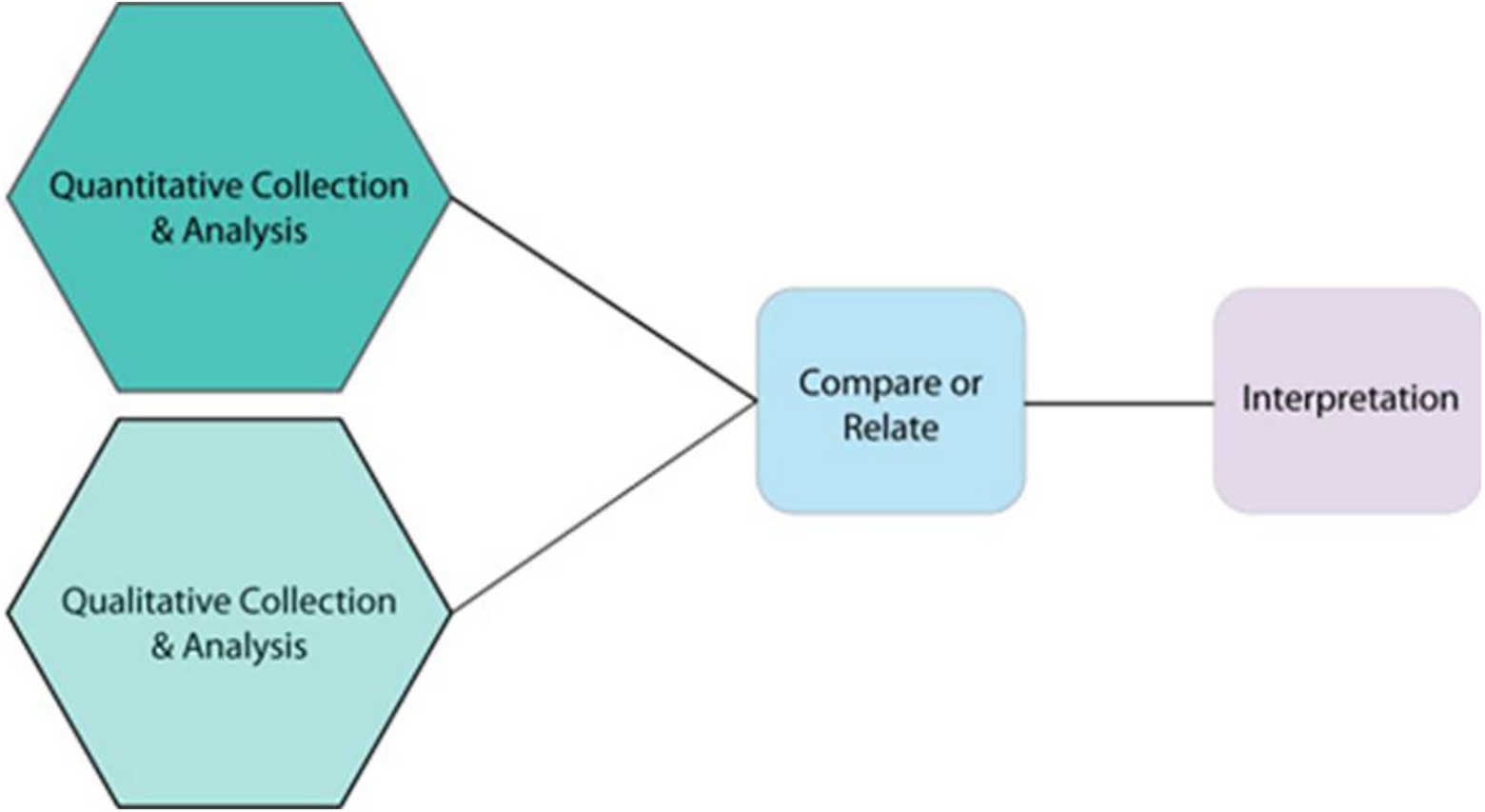
The convergent parallel design model. Source: Bryman and Bell (2015).
Quantitative analysis was conducted on primary data gathered via an online survey of consumers, as a convenience sample (Malhotra et al., 2010). This was used as an inquiry (Creswell, 2003) to collect statistical data on consumer shopping habits and views on British agriculture and farm shops. Responses from non-farm shop users were also gathered to investigate why consumers choose not to use farm shops and how farmers can combat this.
In order to obtain an appropriate amount and spread of quantitative data regarding consumer shopping habits and views the study employed online self-completion surveys distributed via Facebook, which could be completed anonymously and as convenient by participants. The questionnaire comprised of a few introductory questions followed by 18 closed and multiple-choice questions, to be answered in a predetermined order, including some focusing on participant demographics. Although limited to Facebook users, and given the universally accepted problem of potential self-selection bias in any survey (Wright, 2006), this method was viewed as the most suitable to access and encourage responses. The method facilitated data collection from a diversity of participant types and potentially constructive views over a wide geographic area, covering potential farm shop users and/or non-farm shoppers as well as current users. In all 181 responses were received, providing considerable locational variance as evident in Figure 3 based on participant postcodes.
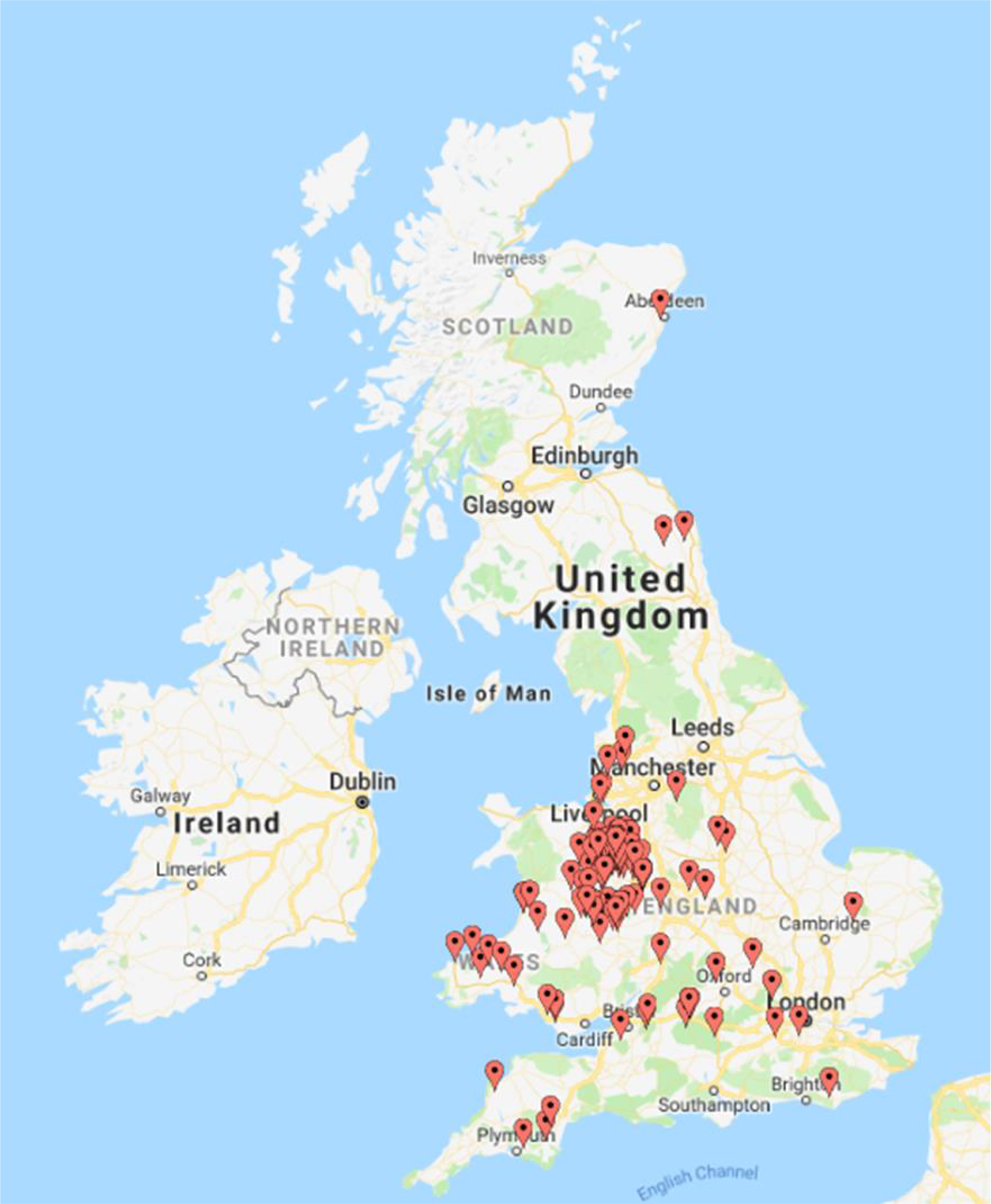
Location of survey participants.
For the purpose of this paper, univariate analysis was used to analyse the quantitative data (Bryman, 2016). Descriptive statistics are used to define the data collected from the surveys, presenting demographics of the consumers and comparing that to their shopping habits. A further stage of analysis adopting the chi-squared test is used to compare different groups and analyse their responses using a 95 per cent significance confidence level.
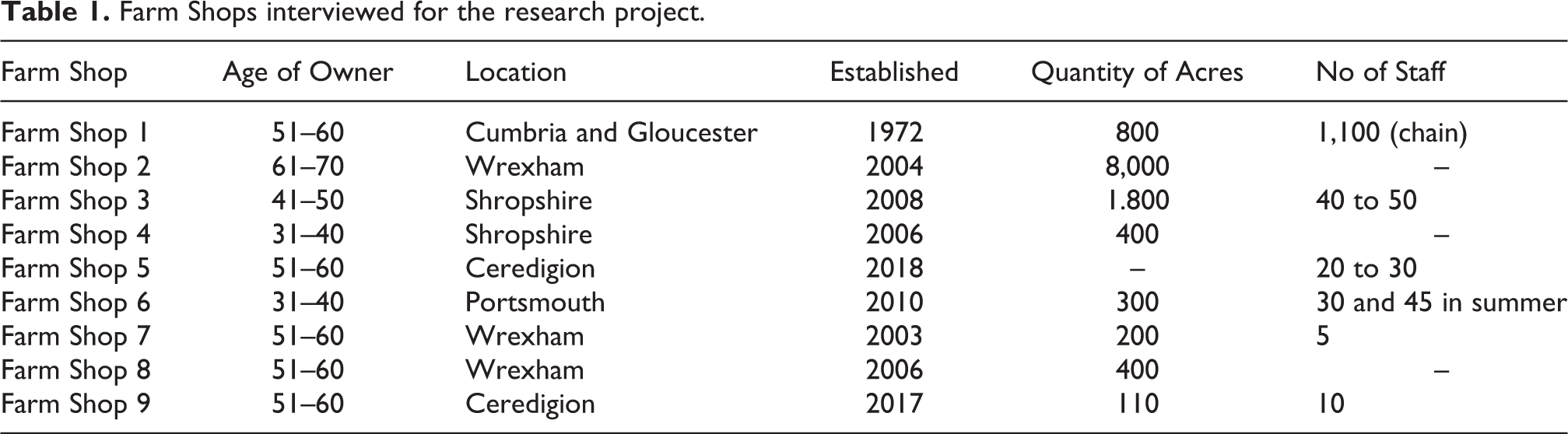
The primary, qualitative data relating to nine farm shops were collected as a purposive sample (Yin, 1989) using semi-structured interviews with their owners as listed in Table 1. The chosen farm shops vary geographically in order to get results representative of England and Wales. They also vary in terms of their years established, farm size and employment levels to provide a broad cross sectional sample. The data collected from farm shop owners provides reliable data on the drivers and challenges faced. The interviews ranged from 50 minutes to 2 hours in duration and the number of interviews is consistent with other studies for example Morris and James (2017) and more importantly achieved data saturation as no new themes or concepts were recorded.
Farm Shops interviewed for the research project.
Conducted ethically, with particular regard to confidentiality, the interviews began with a presentation of the study context and its objectives, and an explanation of the form and nature of the interview session. They proceeded in a relaxed and informal manner involving guided conversations based on a core set of basic and general questions regarding predetermined topics, designed to obtain information on key issues without constraining conversation. The interview questions are underpinned by four themes identified from current literature concerning the drivers to diversify, other diversification options explored, the challenges faced, and the success and perceived future of the farm shop. The prepared questions were open, allowing the interviewees the opportunity to discuss the general themes as well as other beneficial dynamics for the project, and enabling additional questions and issues to emerge, and elaborated upon as appropriate in response to interviewee contributions.
Most prearranged interviews were undertaken on site with the interviewer travelling to the farm shop and recording responses, which were later transcribed verbatim, where permission was given. This enhanced the richness and validity of the data and allowed the observation and identification of any emotional aspects involved in interviewee responses (Bryman, 2016). While farm shop visits encouraged and facilitated data collection in terms of reducing participant time and cost, and ensuring appropriate and fuller topic coverage, they also provided some observational evidence regarding context in terms of location, farm facilities and organisation. However, in order to ensure an appropriate diversity of farm shops, factors such as geographical location and associated interview costs necessitated some telephone interviews. In all the nine farm shops, participating in the study provided an appropriate spread in terms of location and type.
Data analysis and findings
The analysis in this section contains two related strands. One examining the data provided by the consumer survey, and the other the data gathered by the farm shop interviews. In both cases, the key themes are identified as the drivers for diversification and consumer motives, with the interview analysis also treating other diversification options considered, the challenges faced, and the characteristic features of successful enterprises.
Consumer survey
The quantitative analysis utilises the responses of 181 participants to an online consumer survey on farm shops and consumer attitudes. Of these, 137 were female, 44 were male, and the mean age category was under 30 with 56.9% of respondents within this group. The study captured responses from all age ranges with the younger demographics particularly providing new insights into the subject area. It may be noted, however, that the social media element of the survey could produce a potential bias towards young person responses. The predominant education level of participants reported as higher education (54.7%) could also be a factor, which influences responses in terms of familiarity levels with, and comfort in, utilising social media.
There is an assumption in the literature that farm shop customers tend to be affluent and therefore more selective in their purchasing decisions, with regards to, for example high end premium goods such as organic or speciality products. Padel and Foster (2005) for example associate high income earners with better education, and/or higher social class. Contrary to Padel and Foster (2005), however, our survey data show that consumers of all incomes ranges use farm shops. For our sample, the £12,000–£21,000 income range was the average of survey participants, lower than the national average annual income of £28,400 in the year 2018 (Ons.gov.uk, 2019).
As UK households generally shop for food weekly a daily visit to a farm shop is unlikely for the vast majority of potential customers, whatever their location. Our data highlights that 47% of respondents visit farm shops on a monthly basis with a further 39% of respondents visiting on an annual basis. The frequency of visits is a factor that the business owner must consider, with particular regard to special occasion purchases. Survey participants commented that farm shops have ‘Greater tasting vegetables, so for more special meals (Sunday lunch etc.)’ and ‘I would buy from a farm shop for a special occasion or maybe Christmas’. As the data suggests that farm shops need a high customer base in order to remain viable, implying that consumers visit and purchases need to be more regular than monthly. It could also imply that other attractions such as cafes should be introduced to encourage more regular visits or visitors spending more time during their visit in the shop or complex.
Figure 4 indicates that quality is a major influence for the majority of respondents to visit farm shops, with 30% listing quality of produce as the most important factor, with a further 19% stating the food traceability and quality as being important. In addition, our respondents generally believed that animal welfare standards are higher in farm shop produce, with product traceability a major factor. The quantitative data highlights that 77.7% of respondents use farm shops because of the quality of produce, with high quality products likely to encourage repeat sales. As shown in the quantitative data, 74.0% of respondents believe farm shop produce freshness differs from that for supermarket produce. Seasonality of produce is a challenge for farm shop owners, as displayed within the quantitative data collected, which shows that 89.3% of respondents buy food based on whether it is British produce and 91.4% of respondents visit farm shops to support local farmers. Six of the respondents marked (blank) in Figure 4 had never visited a farm shop.
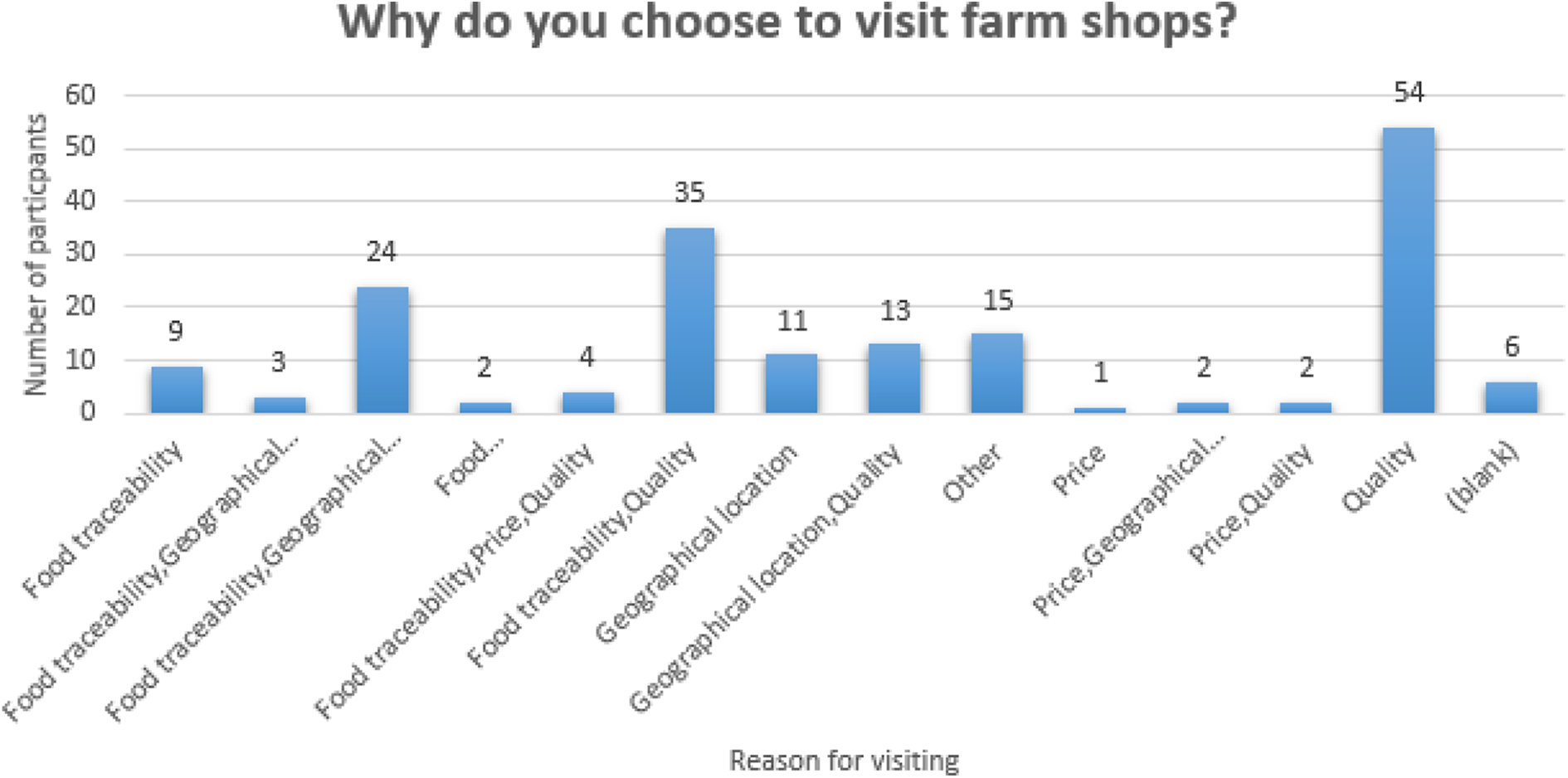
Reason for visiting farm shops.
The data presented in Figure 5 provides associated information as to why customers visit farm shops, further indicating that additional attractions must be considered if the diversification enterprise is to be succesful and have a sustainable business model.
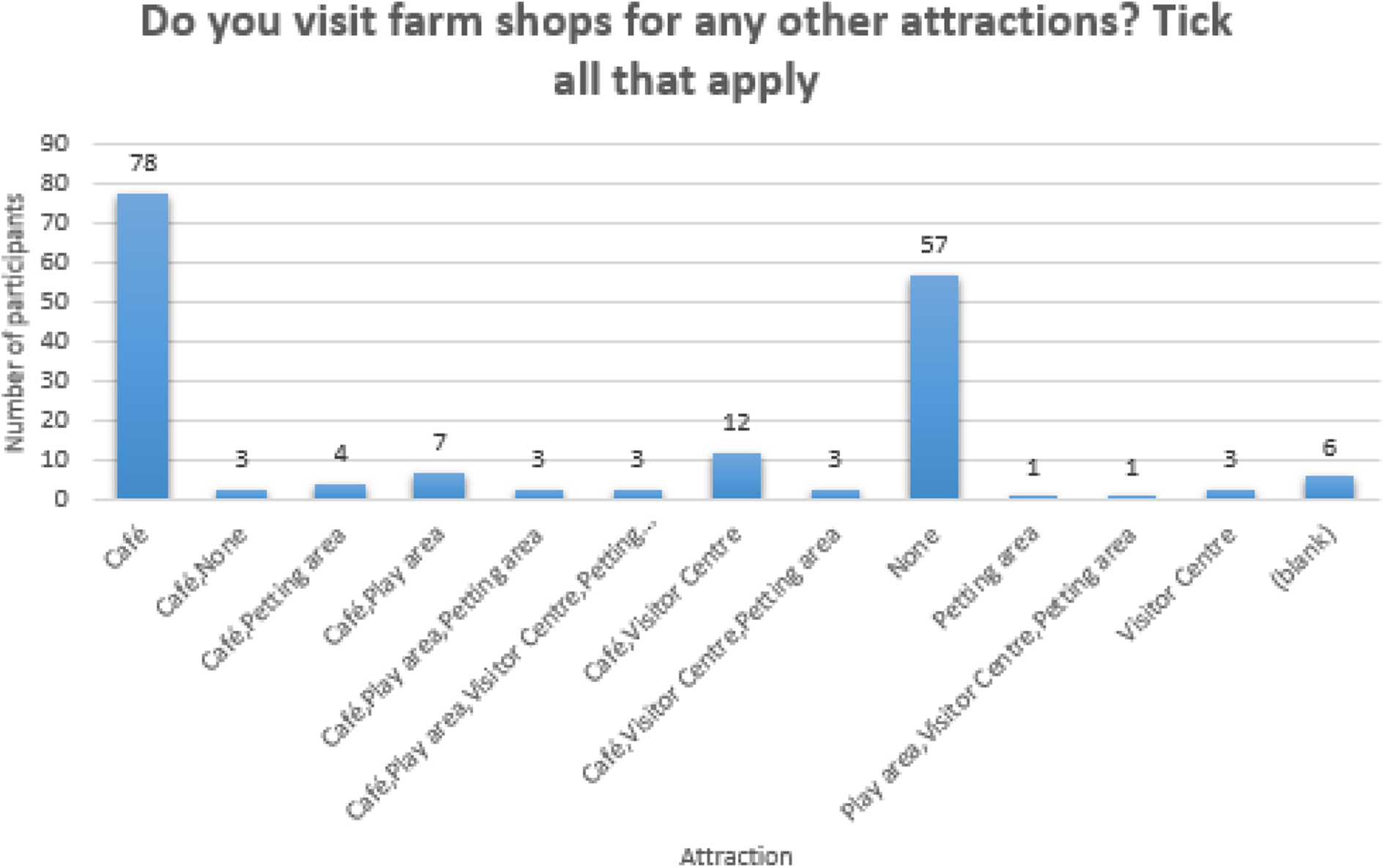
Which attractions do you use at farm shops?
The data gathered shows that cafes are identified as a particularly popular attraction, and a significant reason why consumers chose to visit farm shops. Otherwise participants appeared to be content with the shop itself, suggesting that the specific reason behind farm shop visits is to buy local farmers’ produce. However, adding a cafe or tea room is clearly viewed an attractive proposition to persuade more consumers to visit and hopefully stay longer, spending more money. A barrier to introducing a cafe could be the addtional finance required to start up and continuously run the new entity, together with the availability of catering experience and skilled staff.
In terms of marketing the business ‘word of mouth’ was the highest source of discovering a farm shop with 64% of respondents selecting this option. This statistic could be influential for farmers as this is an inexpensive way of marketing and would consequently lead them to focus on building relationships with their customers rather than spending money on expensive marketing campaigns. As a negative it could however signify the low levels of engagement in marketing adopted by such enterprises and the reach of the consumer base. This trend correlates with consumers shopping at farm shops for the quality of the produce, and further promoting the farm shop to family and friends based on the quality issue.
While the willingness and ability of some consumers to purchase organic foodstuffs might be viewed as significant for some farm shop customers, this feature does not seem to be reflectedin our data. The majority of survey particpants did not buy organic food, with the chi square analysis (0.009) revealing that there was a significant relationship between the frequency of customer visits and whether they purchased organic food. This shows that consumers who do not purchase organic food still frequently visit farm shops; an important consideration for non-organic farmers looking to diversify as a farms’ organic status doesn’t seem to impact on whether consumers buy the produce or not.
To summarise, our quantitative data demonstrates that consumer income doesn’t affect the frequency of consumers visits to farm shop, nor does their education. Consumers visit a farm shop primarily for produce quality, associated with higher animal welfare standards and traceability. The quality of the produce encourages consumers to market the farm shop via word of mouth. Consideration must also be given to other attractions such as cafes, in order to enhance and expand the visitor and consumer experience.
Farm shop interviews
Once transcribed the nine farm shop interviews were initially analysed individually and then collectively, in order to discover certain themes and develop familiarity (Bryman and Bell, 2015, Saunders et al., 2016; Yin, 1989). The collected material was coded and categorised according to similar meanings and further analysed to discover resemblances between farm shop owners, e.g. in terms of demographics and locations. Emerging propositions were then set against the primary data allowing triangulation in order to develop valid and well-grounded conclusions (Saunders et al., 2016), with particular regard to what features characterised successful ventures.
As anticipated, a major motivation for farmers to diversify is identified as the provision of an additional income stream for their business. Diversification into farm shops provides an opportunity for farmers to break out of conventional supply chains, which limit value added opportunities. The interviews revealed that location was also a significant driver for some farm shop owners to diversify. This conforms with past research by Evans and Llbery (1993), who suggested that a significant factor was the accessibility to market opportunities, commenting that ‘farm businesses located on major roads provide greater opportunities for direct marketing ventures’. Our survey indicates that farmers seek to adopt an opportunistic strategy and exploit their location on major roads in order to diversify. Being located on a major road within rural North Wales with direct access to North West England one farm shop owner believes that, ‘the shop is based in a prime location for passing trade particularly in the holiday season’ (Farm Shop 2). Located on a busy main road increases the chance of attracting more one-off, drop-by, trade combined with regular customers.
A further driver for diversification is reported as the quality of farm produce and the opportunity to sell direct to the public creating added value. Farm Shop 7 specifically opened their farm shop based on their product quality due to lack of nearby tourist attractions or a large population, requiring them to consider other diversification options such as ‘small industrial units, an equestrian centre, motor bike trial, caravan park’. However, their discussions kept returning to the same fact, ‘we knew we were good farmers and we knew we produced an exceptional product’ leading them to open a farm shop as a channel to sell their produce and retain their identity.
Opening their own shop and selling direct to the customer provides farmers with the opportunity to break out of low value-added supply chains and allows for setting their own prices to gain higher profits, making the business more viable as finance can be reinvested into the farm, resulting in increased product quality. Selling direct to the customer and building a reputation of high quality can increase a farmer’s customer base and distribution channels; for example, by selling direct to restaurants or selling through other retailers. This is a strategy that Farm Shop 2 undertook when their ‘original business was totally reliant on one outlet’, feeling that this was not ‘a good place to be and did not give us any opportunities to add value’. This encouraged them to look into diversification to ensure they were less reliant on one outlet so as to obtain greater business security. This farm shop in North Wales now sells meat direct to the public while also supplying restaurants in London and across the world.
A particular challenge highlighted throughout the interviews was staffing. The need to recruit, train and retain of good staff, particularly in rural locations often results in a limited applicant pool. Farm Shop 5 explained that within their county of Ceredigion there is ‘a much older community’, an implication of this is that it is harder to find staff that are skilled and willing to work within the industry. Another issue that Farm Shop 5 found affected their ability to retain staff was ‘Ceredigion is a seasonal place and so most places close for the winter’, reducing the attraction for potential applicants moving to the area, who prefer year-round work rather than seasonal employment. Having a limited pool of potential applicants could be a deterrent for farmers looking to diversify, as sales staff are the front of the business having daily face-to-face interaction with consumers, with their skills, knowledge and service needed in order to add value to high quality products.
The change from farming in isolation or with the help of family members to the training and selection of staff is a difficult challenge to overcome. Often however a driver to open a farm shop is ‘family employment’ with it being seen ‘at the root’ of the business with a growing ‘customer base on their doorstep’ (Farm Shop 4). Providing employment for family members can facilitate the transformation from farming to retail. Although, farmers may consider diversification into farm shops in order to increase family member employment they should also be concerned with ‘employing individuals with the required skill set to ensure success’ (Pfeffer, 1994).
The literature specifically McElwee and Bosworth (2010) is concerned with farmers’ skill sets for successful diversification. The interviews highlight the challenges faced by farmers in adapting their farming skill for example working in retail, which can often see farmers struggling. Farm Shop 2 outlined, ‘starting the farm shop was a challenge as it is a completely different skill set. You need retail expertise, judge what consumers want, get the product range right, stock control, margins, and labour costs’. Farmer 6 acknowledges, ‘the challenges faced when setting up and running the farm shop were training and developing skills of managing people and putting into place the systems’. Where Farm Shop 2 adds ‘if you add a section to your farm shop such as tea room, bistro or drive through different skills are required to the farm shop’. This resonates with McElwee and Bosworth (2010) who’s typology recognise the differing skillsets required by various forms of diversification.
Due to globalisation consumers are now used to being able to buy produce all year round in supermarkets and therefore do not consider seasonality of such products while food shopping; for example strawberries, a fruit seasonal to summer months in the UK that is available all year round in supermarkets. While trying to remain competitive against supermarkets by providing a varied stock of produce, farm shops also want to retain their ethos of providing local produce for the consumers. Farm Shop 9 explained that their ethos is ‘local, Welsh and organic’, with this stance impacting on the distance they can source produce from and its availability ‘finding people local enough to supply all the things that we want to stock’. On the downside, seasonality affects the availability and the price of the produce, which then has a knock-on effect to the consumer who can view farm shops as un-competitive on price compared with supermarkets. This is evidently a challenge for farm shop owners, endeavouring to provide produce all year round. Farm Shop 7 explained how they endeavour to work closely with seasonality ‘because I think what I didn’t realise the biggest part of the shop is education’, and consumers ‘are so far removed from agriculture now they have no idea what’s in season’. This may suggest that farmers would gain by using their farm shops as an educational platform, increasing consumers’ understanding of the food chain and aiming to increase their customer base.
As regards the exploration of other diversification options, Farm Shop 5 explained how they had used their Mid Wales location to set up a caravan park and campsite, with the farm shop being a natural addition. Often farmers inherit their farms and so cannot alter or choose their location, however this farmer was able to use ‘the location as a reason for choosing to invest in their farm, as it was derelict’ and available for purchase and development (Farm Shop 5). This agricultural tourism feature has enabled them to make a success out of a derelict farm, alongside their basic farming business. This suggests that farm shops work well as natural additions to other agricultural tourism diversifications.
Tourist attractions can alter the diversification options explored, with the drivers behind Farm Shop 1’s diversification identified as ‘the opening of the M6 which cuts through our Cumbrian family hill farm’. This farmer took advantage of the increased traffic flow passing through the farm, first opening a cafe and then naturally a farm shop as an extension, with the venture now having multiple farm shop service stations across England employing some 1,100 personnel. Petroman et al. (2016) indicated that location is a major influence on success, and farms with recreational/fun facilities are more likely to be successful if the farm is nearer to large urban agglomerations.
Our survey also shows that competitors can limit the diversification options available. In North Wales, one farm shop situated near a caravan park found this beneficial, as ‘the caravan park have sort of encouraged the campers to come to the farm shop’ (Farm Shop 8). Not being on a major road sees the shop using the caravan park as an opportunity to attract more customers as part of a symbiotic relationship favourable to both enterprises. On the other hand having the caravan park as a local attraction has been a deterrent for the farm shop to diversify into further agricultural tourism, explaining that the reason a tea room was not opened is due to ‘the caravan park having one and we now supply them with cakes’. Building such a tearoom may have taken investment ‘upwards of £100,000’ (Farm Shop 8), suggesting that existing competition has implications on the farm shop’s further diversification options.
Being aware of the competitive environment enables farm shop owners to make informed decisions. For example, Farm Shop 4 became aware of plans to open a cafe within their local village and as ‘this was a route we had planned to go down so pushed ahead sooner and extended the shop to accommodate a much larger kitchen and cafe’, in anticipation of the potential competition. As offering other attractions increases the potential market and again tempts consumers to stay longer and thus spend more money at the farm, farm shop owners have also begun to offer activities that supermarkets cannot ‘based on the place, the environment and settings’ (Farm Shop 3). Out of the nine farm shops interviewed, seven had an adjoining tearoom or cafe. A general theme from the interviews suggests that farm shops are seeking to attract consumers and encourage them to stay longer. This has led to farm shop owners thinking outside of the box and offering more experiences and other activities at the farm shop, such as a pick your own events (where the public are able to pick and choose their own crops from the fields).
As regards the farm shops’ perceptions of success, there was a clear, positive consensus view that the diversification option had been successful with Farm Shop 3 stating that they were ‘Absolutely very pleased with the success of it’ and Farm Shop 7 claiming a ‘massive success’. Finally, the life cycle experience of Farm Shop 6 provides a clear example of how a farm shop can develop into a successful operation explaining that while ‘the farm shop was opened to market and add value to produce on the farm…. There were issues with the original business model’ but ‘since then it has developed its own entity, we stock lines, local produce as well and other local producers now to supplement our income. It’s kind of become a retail premise in its own right’.
Discussion
The research study clearly establishes that the basic motivation for farm shop diversification is economic and financial; generating a new income source and providing greater business stability. This accords, for example, with Phelan and Sharpley’s (2012) study identifying the need to compensate for decreasing farm incomes. In some cases, opening a farm shop is reported as contributing to self-sufficiency with some operators reporting 80% of the farm’s income being generated by the farm shop.
The consumer surveys’ finding that a significant number of consumers are unaware of food miles conforms to previous research by Sirieix et al. (2008). This lack of consumer awareness does not assist farm shops who aim to sell local high-quality produce. This could result in farmers struggling to attract consumers for local produce, which is limited in comparison to supermarkets where a large range and quantity of products are readily available. This factor was highlighted within the interviews with farmers disclosing that seasonality was a real challenge. The lack of education regarding seasonality and the reliance on globalisation has contributed to consumer ignorance regarding product availability, which places increasing pressure on farm shop owners to provide out of season produce all year around. This produces a quandary for farmers who need to consider whether they want to stay true to their ethos of providing local produce, despite not necessarily providing what consumers are after.
This trade-off involves making a decision as to whether farm shops want to compete with the supermarkets and provide produce from across the UK and including some imports, in order to provide what consumers desire. One survey participant referring to attempts by traditional farm shops to adapt stated, ‘I think they are a dying trade and turning too commercial. Bring back the traditional farm shops. Home grown/made’. Another survey participant further supported this view stating that, ‘Farm shops can be a great tool to assist with local economy, reducing food miles and contributing to promoting better animal welfare and farming practices’. There is a general view that if they ‘become too led by what consumers want’, by providing a variety of ingredients and out of season produce, then they become ‘no longer focused on local then they are going away from what they should be’. All this implies that farm shop owners should remain traditional and be unique and clearly differentiated from supermarkets. Farmers must decide what their ethos is and how will they implement it. This may push farmers to engage in the education of consumers, using their platform to teach and promote.
The study also highlights that when farmers are considering farm shop diversification they should appreciate that their target market is not restricted to a small proportion of high earning individuals, a factor that should influence their marketing and pricing strategy to ensure that all groups of consumers can be targeted. Survey participants commented, ‘If I can afford it I’ll buy it’ and ‘Budget drives my purchasing decisions’. However, although farmers can see increased profits from selling direct, they need to remain considerate of the fact that consumer purchasing is often influenced by price, although a vast amount of the survey participants noted that, they are willing to pay for quality. On another pricing issue, Farm Shop 6 noted initial ‘volatility’ problems with their venture into direct selling of pork meat as ‘you’re a price taker, you’ve got no control over the price of the market’.
Quality of product has been a recurring theme throughout the research, with both farmers and consumers commenting on its importance, ‘I prefer to buy fresher produce from a farm shop’ (Survey Participant), ‘I buy quality products at farm shops’ (Survey Participant), ‘I would rather buy food that tastes good and is produced locally and pay more’ (Survey Participant). Farmers are required to ensure that the product they have is of a high quality before deciding to diversify with a farm shop; but although farmers will attempt to grow and produce as much as possible to meet demand this is not always viable due to land and finance restrictions, which challenges them to find other suppliers while maintaining quality. ‘Getting the quality at the top is easy; keeping it there that’s the hard part’ (Farm Shop 7). Sometimes within their local region there is not always a supplier that can provide the quantity needed, requiring farmers to consider what livestock or crops they focus on in order to satisfy the demand without losing the local aspect of their produce. ‘Trying to find a product to come into the shop but then also someone who can supply us with a product with continual quality and quantity was a nightmare’ (Farm Shop 7). In this case, the farmer introduced pigs to the farm in order to have a plentiful supply of pork.
Farm Shop 5 emphasised that, ‘Our money is made from the food that comes out of our kitchen and it has to be nothing but perfect, it has to be top quality’. Additionally, the service aspect is important, as although consumers are often ‘more likely to buy homemade products from a farm shop’ (Survey Participant), the staff need to deliver consistent quality of service. All this confirms a general view that consumer desire for farm shops is increasing with the primary data collected within this study indicating a growing interest with food traceability and quality particularly following supermarket scandals.
Consumers want more food traceability and seek to support small, local businesses. For example, the quantitative data revealed that 91.4% of the survey participants who visited farm shops did so to support local farmers, with 74.6% willing to travel up to 10 miles to farm shops, and 5.8% willing to travel 20 plus miles. One survey participant commented, ‘Farm shop quality and freshness are superb’. Participants also mentioned that they are happier knowing their food is traceable and from farmers who maintain high animal welfare standards, which are ‘massive things for me when buying meat products’. The data has also shown that location is an influence on the success of farm shops, being located near tourist attractions or on major roads enhancing the direct marketing opportunities and increasing the chance of customers from passing trade. However, the data has also highlighted the challenges associated with farm shops, the social changes farmers have to overcome, and the new skills required for managing staff, produce quality and customer satisfaction.
Conclusion
Our research study investigated the viability of farm shops as a diversification option, combining quantitative and qualitative methodology utilising online consumer surveys and semi-structured interviews with farm shop operators. The primary driver to diversify was identified as an additional income stream to increase and/or stabilise business revenue. Other factors recognised throughout the interviews were the employment of family members, direct channels to sell produce, and farm location with respect to proximity to main routes and/or a large consumer catchment area and nearby tourist attractions. The recurring diversification option linked to farm shops was the addition of a tearoom or cafe, with seven out of the nine farm shops interviewed possessing these facilities, with the survey revealing that 64.6% of the participants shopped at farm shops in order to visit the cafe. The research suggests that farm shop owners are constantly innovating their businesses to provide experiences that supermarkets cannot compete with, in order to attract and retain more customers.
As regards the challenges faced when setting up and running the farm shop, staffing was a significant factor concerning the availability and possession of requisite skills. Another major challenge highlighted was the seasonality of produce, with globalisation affecting consumer views regarding produce seasons. As such, farm shops struggle to operate competitively with other retail sellers while adhering to their ethos of local produce. The general consensus from consumers was that they use farm shops to support farmers and buy food based on whether it is British. The survey also revealed that there is a general lack of awareness of food miles among consumers, which could lead to consumers remaining loyal to accessible supermarkets in order to buy a variety of produce as and when required.
The recommendations from our research firmly suggest that farm shops are a viable diversification option for farmers. The increased consumer demand for food traceability and current global environmental concerns with food miles provide opportunities for the establishment of farm shops. However, as Henley and Morris (2019) comment that farm diversification is only one strategy to support farm resilience. The work informs both industry and policy of the opportunities for rural development via farm shop diversification, with spill over effects providing local employment and reducing carbon emission. As farm support shifts away from Pillar 1 towards Pillar 2 activities it is likely that further funding post Brexit will support diversification and entrepreneurial activities a feature seen in current Pillar 2 funding in Wales.
The farm shops in this study were successful businesses, which benefitted from favourable locations as noted by Henley and Morris (2019) as being influential. However, investment in ICT infrastructure and digital skills as recognised by Bowen and Morris (2019) will be influential in assisting such enterprises and overcoming some locational disadvantages.
The findings of the research indicate that rural development policies must address managerial and employee skills shortages, which is indicated as a barrier to growth and development within the qualitative data. Policies for improving the skill set and education levels in rural locations should be adopted while support for the creation of employment can assist in reducing the drain of young from rural areas.
In sum, our investigation of the two strands of behaviour that can make farm shops a viable strategy choice for diversification identifies the interaction of both push and pull factors. The evidence confirms some from extant studies (e.g. Bavarova et al., 2016) while also providing new insights. Although clearly indicating the potential for successful ventures, the study also corroborates Slocum and Curtis (2017) view that agricultural entrepreneurs must create an unique identity or brand for their operation, build networks, and develop knowledge, talent and business acumen to creatively overcome obstacles and manage direct activities.
Future research could overcome some limitations of this study whereby, a more substantial dataset would ensure that the population was accurately represented and could include representations from Scotland and Northern Ireland. Furthermore, there will be an opportunity for future research into how the covid pandemic and Brexit have impacted on these farm shop enterprises along with analysing their strategic responses.
Footnotes
Authors' Note
Wyn Morris is now affiliated with Aberystwyth University, Wales, UK.
Declaration of conflicting interests
The author(s) declared no potential conflicts of interest with respect to the research, authorship, and/or publication of this article.
Funding
The author(s) received no financial support for the research, authorship, and/or publication of this article.
