



Abstract
This multilevel, cross-national study builds on the Entrepreneurial Event Model (EEM) to examine the influence of perceived family support on young individuals’ perceptions about the desirability and feasibility of starting a business, and the moderating effect of cultural dimensions. Building upon institutional and social systems theories, this research shows family support increases the perceived desirability and feasibility of starting a business, depending upon national culture. Results find family support is more influential in countries with higher levels of power distance or lower individualism (in which social norms and culture may be less favorable to startups) and suggest family support acts as a substitution mechanism facilitating entrepreneurial behavior in these countries.
Introduction
Entrepreneurship is vital for job creation, innovation, economic revitalization (Doran et al., 2018), community involvement, and economic prosperity and growth (Urbano et al., 2019). Entrepreneurial intention, defined as the willingness to start a business, is a key predictor for entrepreneurial activity (Krueger and Carsrud, 1993; Shapero and Sokol, 1982). Shapero and Sokol’s (1982) Entrepreneurial Event Model (EEM) posits that entrepreneurial intentions are primarily formed by the perceived desirability and feasibility of starting a business. Perceived feasibility refers to the perception of being capable of starting a business, while perceived desirability refers to the attractiveness of operating a business. Previous studies report perceived feasibility and desirability are affected by dispositional factors (e.g. personal traits) and external factors (e.g. demographics and institutional support) (Cardella et al., 2020; Krueger et al., 2000).
Youth entrepreneurship is a supplementary path for young people to enter the labor market (International Labour Organization, 2020b). Yet, most entrepreneurship research studies adults. Also, research on youth entrepreneurship focuses on educational and structural support (e.g. Middleton et al., 2019; Saeed et al., 2015).These studies rely primarily on relatively homogeneous samples of university students leaving a gap in the literature about how younger people –not just students– are influenced by, and respond to, forces in their national environments or develop entrepreneurial intentions.
This research defines youth entrepreneurs as individuals who start their businesses between the ages of eighteen and thirty-four, in keeping with the Global Entrepreneurship Monitor (GEM) (Schøtt et al., 2015) and Youth Business International (YBI) (Kew et al., 2013) studies. Although a few studies on youth entrepreneurship examine startup activities and its predictors (e.g. Edelman et al., 2016; Geldhof et al., 2014; Manolova et al., 2019; Schoon and Duckworth, 2012), to the best of our knowledge, no studies examine the predictors of perceived desirability and feasibility of entrepreneurship in a cross-national context. Research examining the influence of institutions, and family support are lacking (Cardella et al., 2020), especially in a cross-national context.
To address these gaps in the literature, this study builds on the EEM framework to examine the influence of the family support on the predictors of youth entrepreneurial intentions, perceived feasibility, and desirability, in a cross-national context. Further, we examine the role of national culture on the relationships by studying the effect of two cultural dimensions, Power Distance, and Individualism. Exploring the influence of culture provides greater nuance and depth in the model, and helps explain and compare the role of family support on youth entrepreneurship across countries.
This study contributes to the entrepreneurship literature several ways. First, this research enhances our understanding of the influence of the important informal institution of family prior to entrepreneurial behavior (Soleimanof et al., 2018). Second, it extends our knowledge of youth entrepreneurial intentions by examining the influence of family support on perceived desirability and feasibility. Third, it helps link context to intention and perception (Liñán et al., 2011) by employing multilevel modeling to empirically link the cross-level impact of cultural dimensions to youth entrepreneurship. Finally, this study examines the moderating effect of dimensions of national culture on the relationships between family support and perceived desirability and feasibility.
Theoretical background
Youth unemployment is one of today's most pressing concerns. The global youth population increased from one billion to 1.3 billion between 1999 and 2019, while youths in the labor force decreased (International Labour Organization, 2020b). Demographic trends also show the number of young people increasing as a proportion of the population in many countries. Prior to the COVID-19 pandemic, almost 69 million young people were unemployed, three times more than adults (International Labour Organization, 2020a, 2020b). Worldwide, 30% of young women and 13% of young men are not engaged in employment, education, or training, and the rate is higher than 35% in nineteen countries (United Nations, 2020). Since the COVID-19 crisis, over one in six young people surveyed have stopped working, and those still employed report fewer working hours (International Labour Organization, 2020a). Further, a majority hold informal jobs that pay less (International Labour Organization, 2020a). Estimates suggest over 95% of all young workers are part of the informal economy in developing countries (United Nations, 2020). “In Latin America alone, there are around 19 million domestic workers, 80% without contracts, who have been laid off with very little legal and social protection” (Sprechmann, 2020). Recent youth-driven uprisings in countries like Tunisia and Egypt also underscore the importance of youth unemployment (Beissinger et al., 2015).
Youth entrepreneurship
Entrepreneurship enables more youths to enter the labor market (Schøtt et al., 2015). The United Nations, International Labor Organization, Youth Business International (YBI), and World Bank support youth entrepreneurship as a practical route to economic growth and personal satisfaction (Bosma et al., 2012). Many young people also express interest in entrepreneurship. For example, in the U.S., over 62% of millennials (i.e. young adults 20 to 35) have considered starting a business (Alton, 2017). The number of young entrepreneurs remains small (Geldhof et al., 2014), however, and may be declining. In 2013, the Kauffman foundation reported young people represented about 23% of new entrepreneurs, down from 35% in 1996 (Alton, 2017).
The considerable difference between the number of youths expressing interest in entrepreneurship and the number who start a business suggests many do not perceive entrepreneurship as a desirable and feasible choice, despite their interest Would-be entrepreneurs face many obstacles including a lack of experience and resources as well as being more vulnerable to legal and financial restrictions (Manolova et al., 2019).
Entrepreneurial intention and youth entrepreneurship
Entrepreneurial intention is an inquiry about what may influence individuals’ entrepreneurial decision in the first place (Krueger et al., 2000). Evidence suggests entrepreneurial intention is a direct predictor of entrepreneurial behaviors (Alferaih, 2017). A survey of over 200,000 university students from fifty-four countries found almost 35% plan to be entrepreneurs within five years of graduation (Sieger et al., 2018). Similarly, a majority of young Americans reported starting a business is a primary career goal (Leeming, 2018). World-wide, however, research suggests young people hold different attitudes toward entrepreneurship (Geldhof et al., 2014). Although many express entrepreneurial intentions, country level studies are needed (Sieger et al., 2018).
Evidence suggests demographic, structural, and cultural factors influence youth entrepreneurial intention and its predictors, perceived desirability and feasibility. Effective entrepreneurial education programs (i.e. in preparing or raising aware of entrepreneurship) boost business venturing (Liñán et al., 2011; Sieger et al., 2018). Several single-country studies find education is an important antecedent (e.g. Cera et al., 2020; Saeed et al., 2015). Completing a single course in entrepreneurship increased entrepreneurial intention in Iran (Farashah, 2013). In contrast, a perceived lack of structural support due to inadequate market opportunities, access to financial capital, and government programs for entrepreneurs deters many young people from engaging in entrepreneurship in South Africa (Fatoki and Chindoga, 2011). Nowiński et al. (2020) suggest entrepreneurial self-efficacy (perceived feasibility) mediates the relationship between a student's perceived public support and entrepreneurial intention.
Most studies on youth entrepreneurship also find a gender gap, with more men having entrepreneurial intentions than women. Interestingly, for university students, the gender gap varies between fields of study and is relatively small in fields regarded as “male- dominated” such as engineering or computer sciences (Sieger et al., 2018). Also, in a cross-cultural context, the impact of entrepreneurship education on youth intentions has been found to be dependent upon on the alignment of such programs with the country's dominant culture (Lee et al., 2005).
In sum, the literature has mainly focused on entrepreneurial activity (behavior). Entrepreneurial education, youth attitudes and interests (Geldhof et al., 2014), individual dispositions favorable to risk-taking, self-efficacy, innovativeness, competency, “know-how” (Hsu et al., 2019), and willingness to consider an entrepreneurial career (Schoon and Duckworth, 2012), all influence future entrepreneurial behavior, contingent upon the national and cultural context. Few studies, however, have examined the antecedents of youth entrepreneurial intentions. This study addresses this gap in the literature by focusing on family support as an important factor influencing youth entrepreneurial intentions.
Family support
Evidence suggests family support has a profound influence on young entrepreneurs. Family, defined as “two or more persons living together and related by blood, marriage, or adoption”, can aid young people when making entrepreneurial decisions (Powell and Eddleston, 2013). Evidence suggests family support may encourage entrepreneurial intentions (Manolova et al., 2019; Zampetakis et al., 2011), and be the primary source of support in an unfavorable business environment (Manolova et al., 2019). For example, family support is key to venture survival in impoverished Indian slums lacking other institutional supports (Gras and Nason, 2015). On the other hand, some studies report family support can have a negative effect on the youth entrepreneurial decision. As a “poisoned gift” (Minola et al., 2016), young entrepreneurs may avoid family financial help because strong financial and moral commitment can threaten the well-being of the venture and the family (Welsh et al., 2018).
Employing EEM as our theoretical framework, we examine the social/emotional aspect of family support that a young individual perceives with respect to engaging in entrepreneurial activity. This study seeks to tease out some of the underlying relationships between family support and youth entrepreneurial intentions in a multilevel and cross national research setting.
Theoretical framework: entrepreneurial event model (EEM)
Shapero and Sokol's (1982) Entrepreneurial Event Model (EEM) is one of the most commonly used frameworks for explaining entrepreneurial intentions. Another is Ajzen's (1991) Theory of Planned Behavior (TPB). EEM and TPB offer similar explanations for entrepreneurial intentions (Krueger et al., 2000). EEM explains the process of starting a new business as influenced by perceptions of the desirability and feasibility of business venturing, combined with a proclivity to act upon opportunities. TPB suggests people's attitudes toward starting a new business, their subjective norms, and their perceived behavioral control (perception of ease or difficulty of entrepreneurial activity) may underlie intentions or actual behaviors. Meta-analysis and structural equation modeling (MASEM)-based studies of the prior research on entrepreneurial intention using EMM and TPB approaches (e.g. Alferaih, 2017; Schlaegel and Koenig, 2014) find both frameworks help predict entrepreneurial intentions (Sharahiley, 2020).
The key difference between EEM and TPB is the point of view for evaluating the possibility of action; EEM's perceived feasibility does not necessarily mirror the perceived behavioral control cited in TPB (Krueger et al., 2000). Perceived behavioral control denotes the individual's capacity to self-control and to act (e.g. ‘at will’), with no situational or environmental restrictions, while perceived feasibility explains how a person evaluates his or her accomplishments, inferring a personal perception of situational and environmental limitations. This difference means the EEM model tends to offer broader insights by comprising exogenous factors in the model. EEM also cites family members as playing a role in the desirability and integrity of entrepreneurial behavior. The allowance for exogenous factors and for the role of family make EEM the more suitable theoretical framework for this study. Several studies also support the influence of perceived feasibility/desirability on entrepreneurial intentions (Krueger et al., 2000; Li and Zhang, 2020). We propose extending and enhancing EEM by including the influence of family support on the feasibility/desirability relationship and by considering the contingent influence of two national cultural dimensions: Power Distance and Individualism. Figure 1 presents our proposed theoretical model.
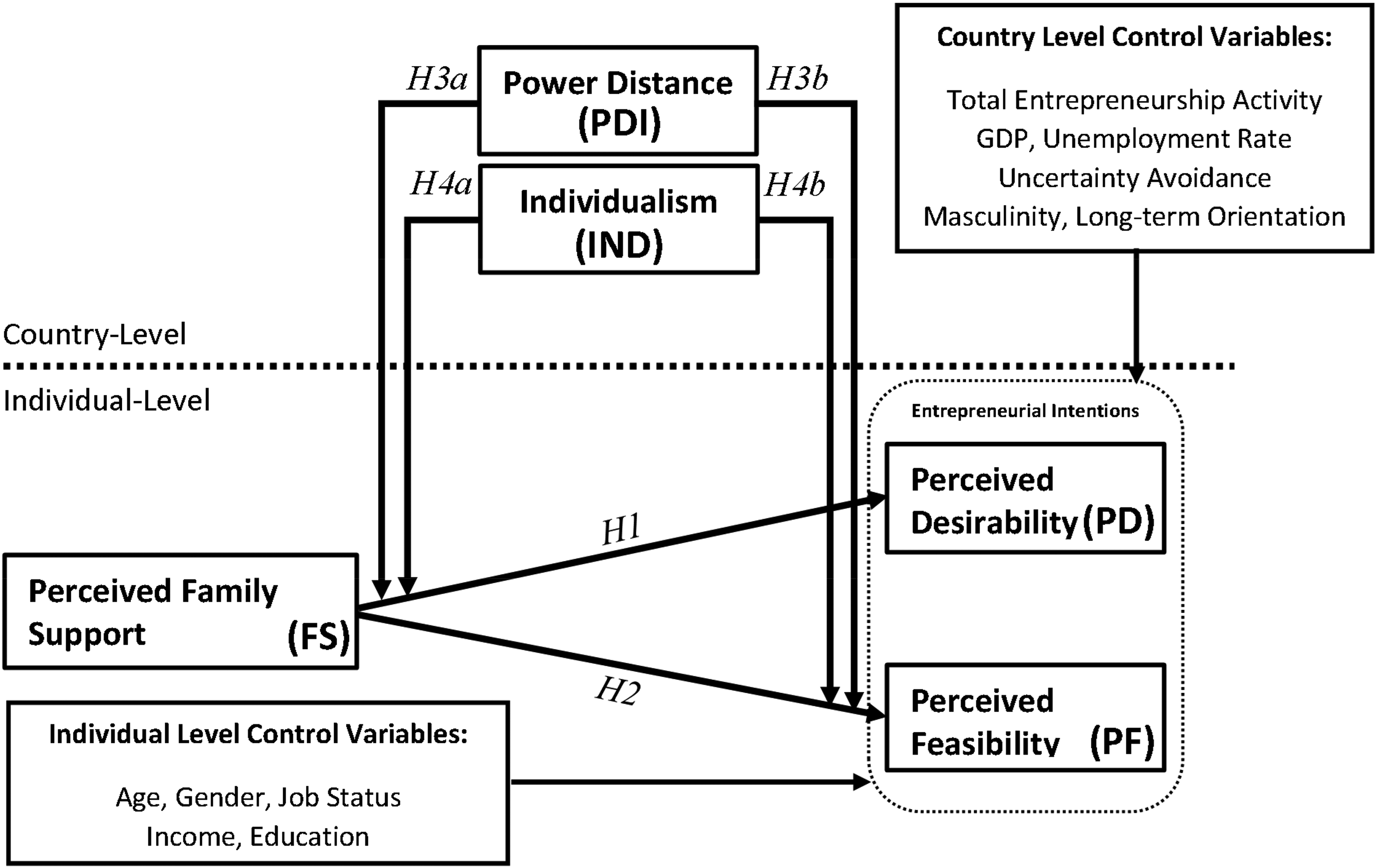
Theoretical model.
Hypotheses development
Family support and perceived desirability/feasibility
Consistent with the family embeddedness perspective (Aldrich and Cliff, 2003), recent studies highlight several ways families provide support (Cardella et al., 2020). Starting any business requires resources, and social networks are influential in an individual's entrepreneurial decisions (Shabsough et al., 2020); family, friends, and acquaintances can function as key resources in the entrepreneurship process (Moghaddam et al., 2018). Families may provide financial assets (i.e. seed money), help to secure external funding resources, offer access to other networks (i.e. circles of friends, business associates, or social groups), and work altruistically (i.e. free labor) in the startup.
Families also may provide role models or emotional support (Cardella et al., 2020). Being less experienced, young people often consider parental support vital when choosing entrepreneurship (Edelman et al., 2016). A strong relationship with family members also may provide inspiration and intellectual guidance (Sequeira et al., 2007). Family support may help young individuals manage the complexity and uncertainty of the entrepreneurship process, and make the decision to start a business more feasible and desirable (i.e. by buffering adversity, facilitating transactions, and helping obtain resources). Family support may be especially important in an unfavorable business environment lacking adequate structural or financial institutions such as banks and credit institutions, and may effectively serve as a substitute in such environments.
Thus, family support can increase the likelihood of seeing entrepreneurship as a desirable and feasible choice. Therefore,
H1. Perceived family support positively influences young peoples’ perceived desirability to start a business.
H2. Perceived family support positively influences young peoples’ perceived feasibility to start a business.
National culture and youth entrepreneurial intentions
Many studies examine the direct impact of cultural dimensions on entrepreneurship (Cacciotti and Hayton, 2017). Evidence suggests cultures can promote or weaken the motivating factors to entrepreneurship (Shapero and Sokol, 1982), and influence opportunity recognition that plays a crucial role in entrepreneurship (Moghaddam et al., 2017). Culture also tends to influence younger entrepreneurs differently (Shirokova et al., 2018). Minola et al. (2016) contend that Hofstede’s (2017) cultural dimensions (Power Distance, Individualism, Masculinity, Uncertainty Avoidance, and Long-term Orientation) can help explain the different levels of youth entrepreneurial intentions across cultures. In particular, power distance (Hayton et al., 2002) and individualism (Mueller and Thomas, 2001) appear to play an important role in youth entrepreneurship.
Hofstede's dimensions are widely utilized in the cross-cultural and entrepreneurship literature–even recently in top tier journals (Bennett and Nikolaev, 2021; Hansen and Block, 2020). Over the years, numerous replication studies, which include a number of additional subcategories, such as airline pilots, students, civil service managers, and “up-market” consumers and elites also have helped improve the validity of the model (Hofstede, 2017). A major advantage of Hofstede data is the availability of multi-country data, making it the choice for this study. Any alternative measure of culture reduces our sample size since those dimensions are not available for countries that we cover in the family support section.
That said, it must be acknowledged that the Hofstede model also has received criticism (McSweeney, 2004; McSweeney et al., 2016). An alternative framework, the Douglasian Cultural Framework (DCF) (Douglas, 1970) also provides insights into understanding entrepreneurial activity (Patel and Rayner, 2012). This model suggests that in “Competitive Cultures” (Patel and Salih, 2018), (i.e. low grid-low group) members value individual spatial and social mobility, and respect for individual rights (i.e. individualism), and care less about status or procedures and more about the bottom-line (i.e. low power distance) (Thompson, 1996). In our section on future research, we suggest future researchers collect multi-country data to continue testing this model.
Although several studies examine the moderating role (i.e. contextual effect) of cultural dimensions on the relationships between intention and related predictors (Bogatyreva et al., 2019; Manolova et al., 2019), no studies examine the effects on the perceived desirability and feasibility of starting a business. Therefore, we examine two found to be important contextual moderators for younger entrepreneurs, power distance and individualism, and control for the other dimensions (i.e. Masculinity, Uncertainty Avoidance, and Long-term Orientation).
Moderating effect of power distance
Power distance refers to a society's acceptance of unequal power distributions in institutions and organizations (Hofstede, 2017, 65). In countries where power distance is high, social inequality and power disparity are accepted as normal (Markus and Kitayama, 2014). Consequently, the higher echelon in the society have better access to resources and information for startup activity (Bogatyreva et al., 2019). People in the lower echelon perceive that they do not have access to resources necessary for entrepreneurial activity, and that entrepreneurship, an inherently risky activity, is less likely to be successful and rewarding for them (Rusu, 2014). Also, high power distance cultures can weaken the impact of university entrepreneurship programs on student startup activities (Hayton et al., 2002).
As an informal but significant institution, the family can aid its members to make entrepreneurial decisions (Aldrich and Cliff, 2003) and help their new businesses succeed (Powell and Eddleston, 2013). Young people often share their future aspirations or concerns with their families since family relationships usually are based on mutual trust and support. Family support is arguably more important in an unfavorable business environment such as one with higher degrees of power distance; family may mitigate the unfavorable environmental situation by supporting and encouraging young people to start their business. In other words, family support is likely be more influential on perceived desirability and feasibility in countries with an unfavorable business environment characterized by high power distance. Therefore, we hypothesize that:
H3a. In high power distance countries, the positive relationship between perceived family support and perceived desirability of starting a business is stronger.
H3b. In high power distance countries, the positive relationship between perceived family support and perceived feasibility of starting a business is stronger.
Moderating effect of individualism
Collectivist cultures value strong ties among groups and society while more individualistic cultures stress personal interests and goals (Hofstede, 2017). Low individualistic cultures (i.e. more collectivist) promote activities that benefit the group. Evidence suggests more individualistic countries are more conducive to entrepreneurship (Mueller and Thomas, 2001), and may increase entrepreneurial activity because they value personal accomplishment, autonomy and self-efficacy (Bogatyreva et al., 2019). In terms of entrepreneurship education, university students who participated were more willing to start a business in more individualistic countries (Mueller and Thomas, 2001).
Further, more individualistic cultures have less fear of failure (Bogatyreva et al., 2019). In contrast, more collectivist cultures tend to fear “losing face” and shaming the family or social group; individuals may be less motivated to engage in a risky economic activity (Bogatyreva et al., 2019), and starting a new business as the first career option may suggest personal over collective interest Thus, the perceived desirability of starting a business is lower (Minola et al., 2016), and collectivist societies may present fewer opportunities and resources for entrepreneurial activity (Mitchell et al., 2000). In such cultures, where the social norms and values do not promote entrepreneurship, family support is likely to be more influential and important in convincing young individuals to pursue entrepreneurship. Therefore, we hypothesize:
H4a. In low individualistic cultures, the positive relationship between perceived family support and perceived desirability is stronger.
H4b. In low individualistic cultures, the positive relationship between perceived family support and perceived feasibility is stronger.
Methodology
Data
All individual-level data came from the 2013 Adult Population Survey (APS) provided by the Global Entrepreneurship Monitor (GEM); newer GEM APS data is available, but only the 2013 version includes special edition questions about youth entrepreneurship and family support needed in this research. The GEM APS sample included 317,598 observations across 76 countries (Bosma et al., 2012). The country-level data for the cultural dimensions was extracted from Hofstede Insights (Hofstede, 2017). For this research, reliable measures of dependent and individual-level independent variables exist for a subset of 21 nations. The sample size per country ranged from 83 individuals in Algeria to 2468 individuals in Turkey.
Our final data set includes the individual data of 7260 people between 18 and 34. Because our primary goal is to examine the predictors of youth entrepreneurship, our sample excludes all individuals who indicated they had already engaged in entrepreneurial activity. Thus, our sample only includes individuals who either have entrepreneurial intentions (i.e. perceived desirability and feasibility) or do not have entrepreneurial intentions.
Dependent variables
Consistent with Krueger and Carsrud (1993), we operationalized perceived desirability of starting a business using the question in the GEM APS: “Do you think you will be an entrepreneur/still business owner in 5 years?” Respondents could choose yes (1) or no (0). We operationalized perceived feasibility with the five-point scale GEM APS question: “In my country, I think that becoming an entrepreneur is:” Very Difficult (5) to Very Easy (1). Data were reverse coded for analysis.
Individual-level independent variables
National level (level 2) independent variables
Control variables
We controlled for variables at the individual and country levels. Consistent with other cross national studies of entrepreneurship (e.g. Bogatyreva et al., 2019; Manolova et al., 2019), we controlled for age (Stirzaker and Galloway, 2017), gender (Galloway et al., 2002), education, household income, and job status at the individual level. Prior research indicates these factors to be related to entrepreneurial intention (Shinnar et al., 2012).
Respondent's age was coded 18 through 34. For gender, female was coded as 1 and male as 2. For education, we used a 7-point scale based on the International Standard Classification of Education (ISCED) from 0 to 6, where 0 is for Pre-primary education and 6 is for Second stage of tertiary education (e.g. advanced research programs such as a PhD). For household income, we used a 3-point scale, where 1 was for an income in the lowest 33 percentile of the country and 3 for the upper 33 percentile. For job status, employed was coded as 0 and unemployed as 1.
At the country level, we controlled for overall rate of entrepreneurship in each country, country wealth, and youth unemployment using the Total Early Entrepreneurship Activities (TEA) scale from GEM, the natural logarithm of GDP (Purchasing Power Parity) from the Central Intelligence Agency database, and the Youth Unemployment Rate from World Bank (Ding et al., 2015). The TEA assesses the percentage of a country's adult population involved in entrepreneurial activities, and thus, controls for the overall rate of entrepreneurship in each country in the study. The GDP as a measure of the country's wealth is also an indication of institutional support for investment and is likely to influence an individual's decision to engage in entrepreneurship (Urbano et al., 2019). Lastly, the country's unemployment rate reflects the extent to which the labor market provides the means of employment (i.e. structural support) to the population. Thus, the youth unemployment rate of individuals 18–34, reflects the relative lack of structural support for young individuals, and we control for this country level difference in the study. We also controlled for the other cultural dimensions of Uncertainty Avoidance, Masculinity and Long-term Orientation to ensure a more comprehensive and robust model.
Analysis
This research requires a two-level empirical model in order to examine the variation within countries (individual level) and between countries (country level). Therefore, a Multilevel Modeling (MLM) data analysis technique was appropriate to analyze the interactions at the different levels of analysis (Heck and Thomas, 2015). Previous studies that have used aggregated data and simple regression analysis (Sieger and Minola, 2017), where the scale of measuring perceived feasibility/desirability was aggregated at the country level, have ignored variation in individual-level data; every individual is assumed to be at the mean. Thus, using MLM separates the variation within countries and between countries and enhances our understanding of the impact of cultural dimensions on young people's attitudes.
We used Bernoulli Hierarchical Linear Models (HLM) to examine hypotheses H1 and H2 because one of the dependent variables is binary. For hypotheses H3a to H4b, we used the Linear Model with robust estimation. Because the primary focus was to test the moderation effect of cultural dimensions at the individual level, we set both the intercept and slope as random. Also, national-level variables were grand mean centered, and individual-level independent variables were group mean centered.
Results
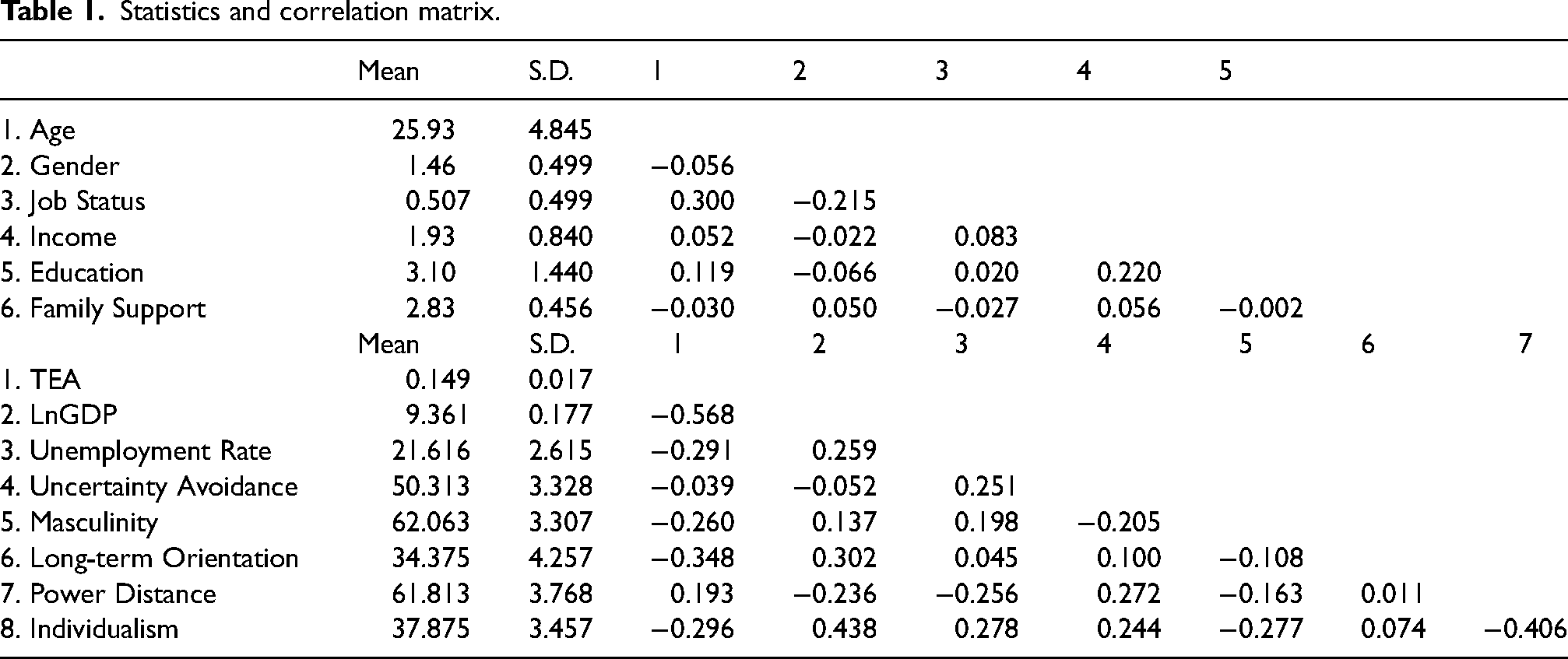
Table 1 presents the descriptive statistics and correlation matrix. The highest correlation is 0.56 between TEA and GDP. Thus, multicollinearity is not an issue. This study estimated eight hierarchical linear models. Table 2 presents models D1-D4 that tested the impact of family support on perceived desirability and the moderating effect of culture. Table 3 presents models F1-F4 that tested the direct effect of perceived family support on the perceived feasibility of entrepreneurship and the interaction effect of the cultural dimensions.
Statistics and correlation matrix.
Results for perceived desirability.

Results for perceived feasibility.

† p < 0.10. * p < 0.05. ** p < 0.01. *** p < 0.001.
We checked the null models D1 and F1 to see whether there was between-variability to justify multilevel modeling. The intraclass correlation found 22% of the perceived desirability of starting a new business and 12.6% of perceived feasibility may be explained by country-level phenomena. The design effect also indicated the appropriateness of using multilevel analysis. They were very high (105.7 and 100.12) because there were about 2000 average observations for each cluster.
Model D2 tested hypothesis 1, which suggested perceived family support positively influences young people's perceived desirability to start a business. Hypothesis 1 was supported. Model F2 tested hypothesis 2, which suggested perceived family support positively influences perceived feasibility to start a business. Hypothesis 2 was supported.
Model D3 tested hypothesis 3a. Power distance was found to moderate the relationship between an individual's perceived family support and perceived desirability
Model F3 tested hypothesis 3b. Power distance was not found to moderate the relationship between an individual's perceived family support and the perceived feasibility to start a business. Model F3 was not significant
Models D4 and F4 tested hypotheses 4a and 4b, the interaction effects of individualism and perceived family support. As shown in Table 2, model D4, the influence of perceived family support on perceived desirability was stronger in a low individualistic culture
Lastly, all findings were robust and remained consistent using the country control variables, TEA, GDP, and Youth Unemployment Rate, and the other cultural dimensions, Uncertainty Avoidance, Masculinity, and Long-term Orientation.
Discussion
Our study provides important evidence on the influence of family support on predictors of youth entrepreneurial intentions in a national context. Particularly, our findings demonstrate that perceived family support is important to understanding youth entrepreneurship. For young people, perceived family support has a significant positive impact on both antecedents of entrepreneurial intention-the perceived desirability and feasibility- of starting a new business. This finding also holds across countries.
Our study also provides important evidence on the influence of family support on predictors of youth entrepreneurial intentions in different cultural contexts and highlights how youthful entrepreneurs may differ from adult entrepreneurs. This study finds the perceived desirability of starting a new business is stronger in countries with higher levels of power distance. The literature, which has mostly focused on adult entrepreneurs, suggests countries with low power distance provide a better context for entrepreneurship (e.g. Rusu, 2014), while countries with high power distance are unfavorable to startups (Bogatyreva et al., 2019). However, our findings (as shown in Figure 2) suggest that family support may serve as a substitution mechanism for youthful entrepreneurs in this context in that perceived family support reduces the negative impact of unfavorable access to resources and societal norms and values; family support possibly may provide young people with an advantage over older entrepreneurs.
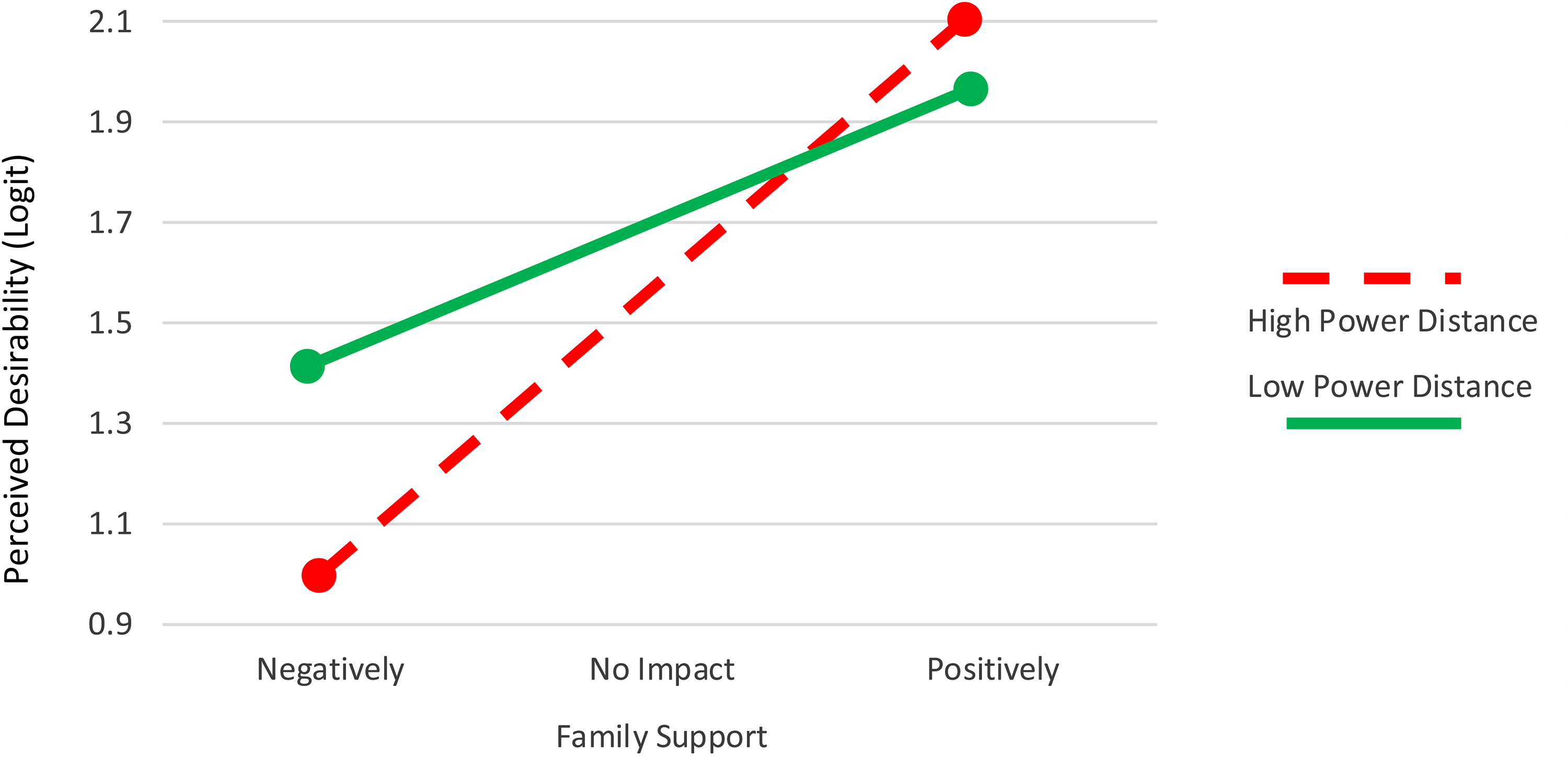
Family support & power distance interaction.
Similarly, our findings suggest the impact of family support on perceived desirability is stronger in countries with lower levels of individualism (i.e. more collectivist) as shown in Figure 3. Aligned with the previous arguments, family support may have stronger impact on entrepreneurial attitudes among young people when the social norms do not value startup activity; this is the case in collectivist societies, where such activities are not as legitimate as in individualistic cultures (Mueller and Thomas, 2001). While family support also may be positive in individualistic cultures, as hypothesized, family support shows a more profound impact in collectivist cultures and appears to serve as a substitution mechanism.
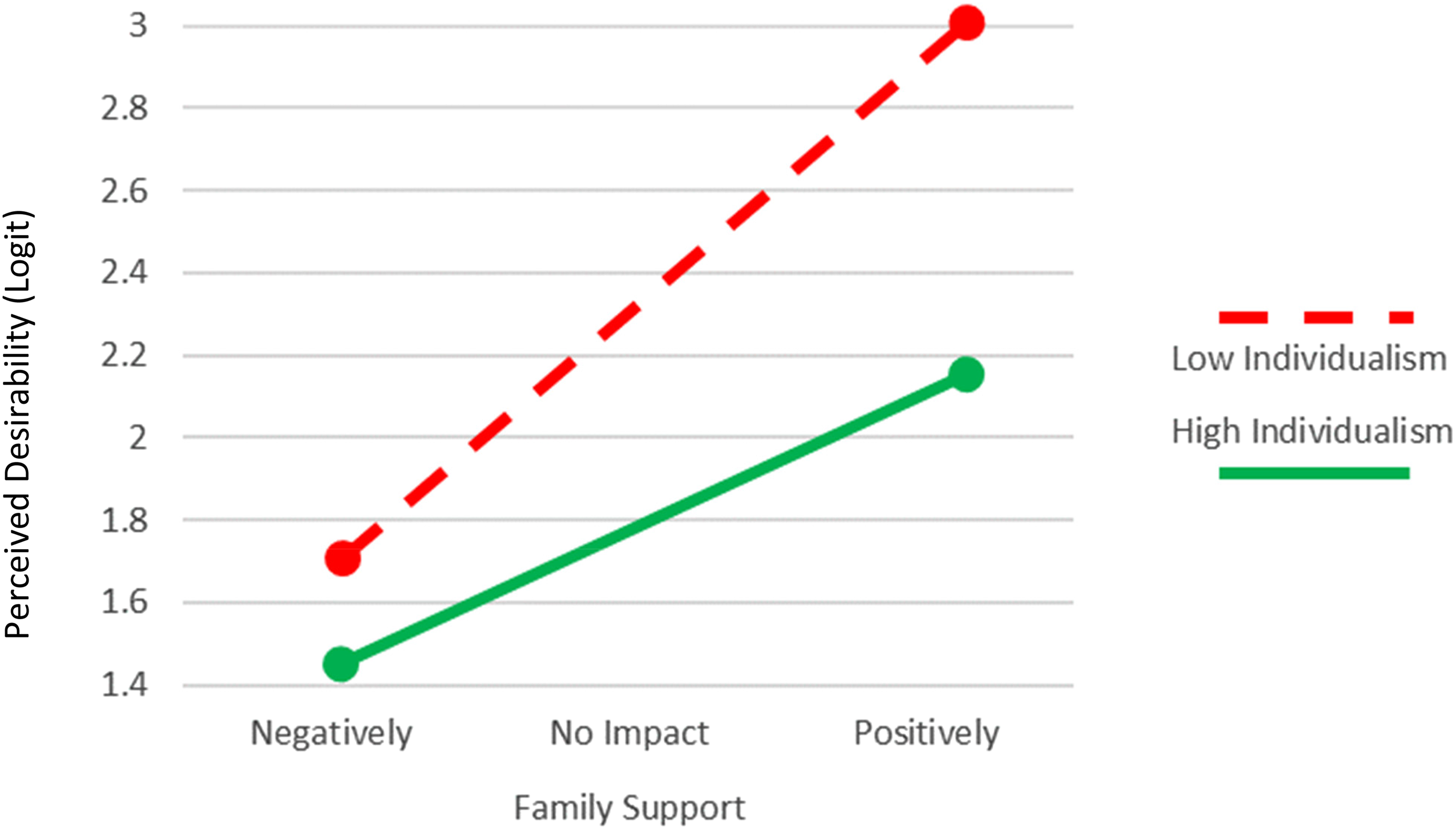
Family support & individualism interaction.
Significantly, our findings are robust even after adding our country control variables, TEA, GDP, and Youth Unemployment Rate, and the other three cultural dimensions, Uncertainty Avoidance, Masculinity, and Long-term Orientation. Thus, family support is an important influence in youth entrepreneurship, and appears to have a profound and consistent influence across different national and culture contexts.
Although Model F2 found support for hypothesis 2 that perceived family support positively influences young people's perceived feasibility to start a business, Models F3 and F4 did not find support for the interaction of cultural dimensions in this sample. We must ask why, in cultural environments that are more hostile to entrepreneurship, the positive relationship between perceived family support and perceived desirability of entrepreneurship increases, but perceived feasibility does not. Perceived desirability is related to the attractiveness of personal career choice (Sharahiley, 2020). Perceived feasibility, on the other hand, is related to self-efficacy and entrepreneurial competencies (Krueger et al., 2000), where the person's perception of being capable of starting a business shape his/her attitude toward entrepreneurship. Based on some motivation theories, “preferences are established by employing the evaluative criteria of desirability and feasibility” (Galloway and Mochrie, 2006; Steel and König, 2006). This suggests that feasibility is related to expectancy (i.e. possible future outcome) and desirability is a form of value. In line with this argument, it seems logical that cultural dimensions may be more likely to influence desirability because this factor is related to social norms and values while perceived feasibility is affected by more operational factors, such as structural or formal institutions. Subsequently, it is logical to suggest that family support has more profound impact on perceived desirability, considering variations in cultural context. However, this requires further study as discussed in future research section. In summary, our findings support two-thirds of our hypotheses and partially validates our theoretical model as shown in Figure 4. At the individual level, perceived family support positively influences perceived desirability and feasibility. At the country level, family support has a more profound influence on perceived desirability in less entrepreneurship-oriented cultures, but not on perceived feasibility
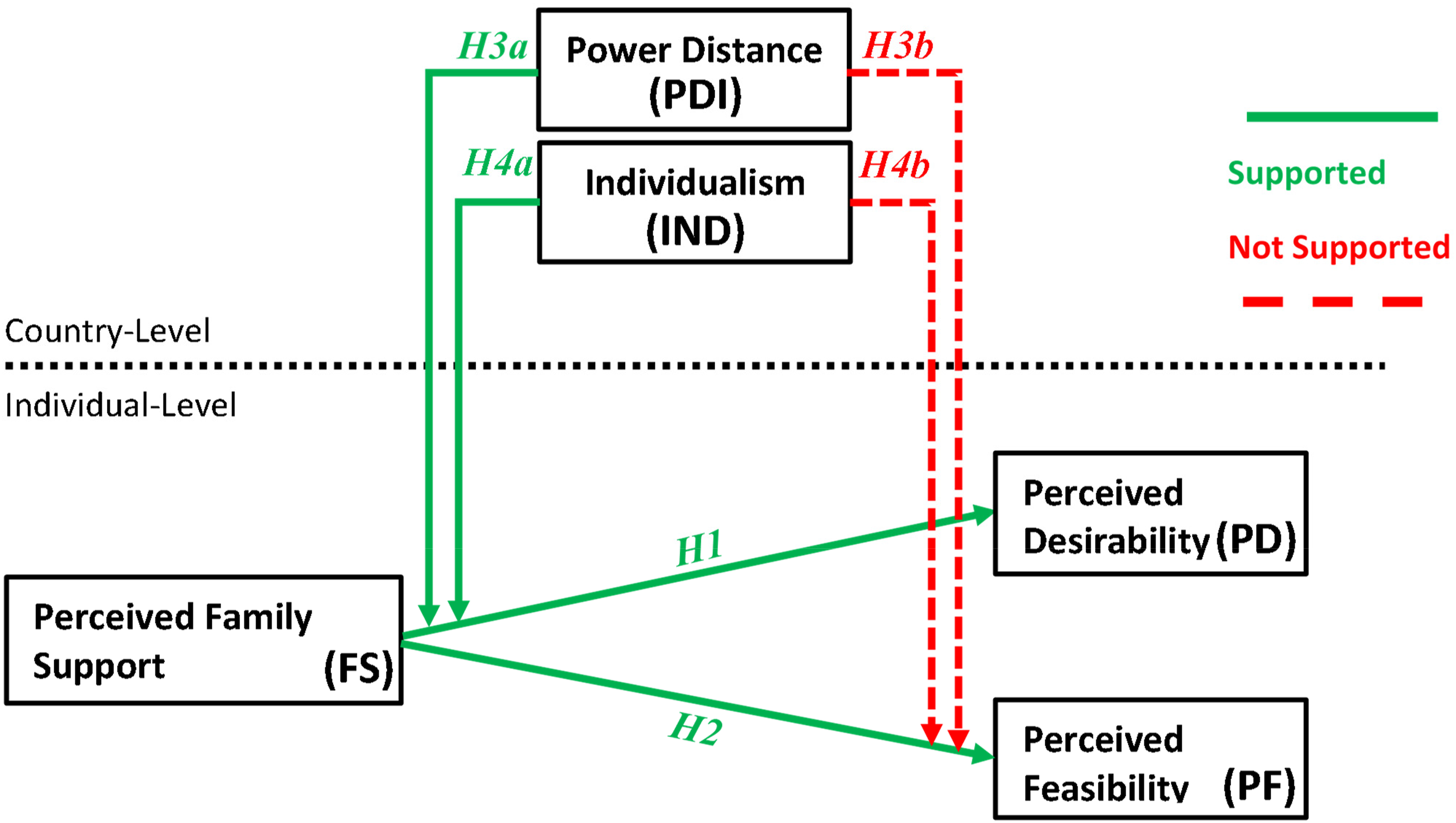
Final model.
Implications for theory
The positive findings in this study point to the importance of family support in understanding youth entrepreneurship. In our cross-national study, perceived family support positively influences both predictors of youth entrepreneurial intentions, perceived desirability and perceived feasibility. Further, our findings begin to shed light on the nuanced relationship of perceived family support and cultural context. Our study found perceived family support has a stronger positive relation on perceived desirability in cultures considered less supportive of entrepreneurship (e.g. low individualism and high-power distance). These findings contribute to the literature in several ways.
First, our results extend the literature on youth entrepreneurship. Our findings highlight an important way in which youth entrepreneurship may differs from adult entrepreneurship (i.e. family support), and helps theoreticians begin to incorporate perceived family support as well as cultural dimensions into their models, as we have done with our revised EEM. This builds on and reinforces previous research regarding family influence (e.g. Aldrich and Cliff, 2003; Shapero and Sokol, 1982), and also supplements EEM in two ways, by including family support and cultural context.
Second, this study advances and extends previous studies by employing a more robust multilevel modeling approach. The results show that cultural differences across countries explain the variation in the strength of individual-level relationships, that is, that perceived family support on perceived desirability of young individuals is contingent on selected national cultural dimensions.
Finally, this study highlights the nuances regarding the contextual moderating effect of culture on perceived startup desirability as opposed to feasibility. In the process of shaping attitudes, cultural dimensions may more profoundly influence desirability because desirability is related to social norms and values. In contrast, perceived feasibility is affected by more operational factors, such as structural or formal institutions.
Policy implications
Our findings suggest policymakers should consider families as an important informal institution in fostering youth entrepreneurship. In most developing countries, economic development needs investment in both formal and informal institutions (Ding et al., 2015). While formal policies, such as high-quality entrepreneurship education have been found effective (International Labour Organization, 2020b), our findings suggest policymakers should incorporate the family in their programs; youth entrepreneurship will be better served by the accumulated effects of institutional transformation. Including parents, for example, when developing training programs could help teach parents how to nurture their young members and increase the desirability of entrepreneurship as a career path.
Limitations and future research directions
Every research project has some limitations. In this study, the binary variables applied to test perceived desirability only explain a tendency to think about entrepreneurship as an attractive career choice or not. Future studies should include more advanced measurements; replication with different measures also would help vouch for the results found in this study. Also, researchers should explore alternative models of culture such as the Douglasian Cultural Framework (DCF) (Douglas, 1970; Patel and Salih, 2018).
Second, using GEM data to investigate global entrepreneurial intentions cannot fully capture the extent and depth of measurement. For practical reasons, we analyzed single-item predictors utilizing highly valid variables (e.g. Liñán et al., 2011). We believe this justified, since resource and situational limitations constrain the application of scales (Ding et al., 2015). Nevertheless, future research should consider case studies and enhanced surveys. Future studies should also consider different types of family support such as technical, financial, and human capital. This may be especially important in teasing out why family support has a more profound influence on desirability than on feasibility since perceived feasibility, we suggest, may be more affected by more operational factors. Thus, the type of family support such as providing access to resources, financial assistance, or free labor, may prove significant. Finally, longitudinal studies in this area in the future would greatly enhance the field.
Finally, our study has two segments in order to build theory connecting the individual-level of analysis and macro level variables (i.e. cultural factors). The individual level focuses on the relationship between family support and perceived feasibility and desirability, and the second segment, at the country level, focuses on cultural factors and the moderation and using questionnaire data from over 80 countries. It may be fruitful for future research to develop enhanced questionnaires and studies focusing on individual and cultural factors in only one country.
In conclusion, over a billion young people worldwide need to transition into the labor market and youth entrepreneurship can play an important role. This study indicates that family support is important to fostering youth entrepreneurship by increasing the perceived desirability and feasibility to start a business. Further, in cultures that may be less favorable for startup activities (i.e. high power distance or lower individualism), this study finds family support enhances the perceived desirability of starting a business and may act as a substitution mechanism. That is, faculty support increases the desirability of entrepreneurship in culturally unfavorable environments for entrepreneurship. We hope our revised model will help guide future research in this important area.
Footnotes
Acknowledgements
We would like to thank Dr Shaker Zahra and Dr Arvin Sahaym for their valuable feedback on an earlier version of this manuscript.
Declaration of conflicting interests
The author(s) declared no potential conflicts of interest with respect to the research, authorship, and/or publication of this article.
Funding
The author(s) received no financial support for the research, authorship and/or publication of this article.
