



Abstract
Digitalization has brought both opportunities and challenges, requiring organizations to strategically transform to remain sustainable. This study used Innovation diffusion and resource-based view Framework, to investigate the sequential mediation framework, how strategic digital orientation drives sustainable performance via the mediators of crowdfunding and digital business model innovation, as well as the moderating role of digital organizational culture. Data was collected from 373 executives level employees in Chinese manufacturing SMEs and analyzed using a hybrid SEM-ANN approach. Results demonstrate crowdfunding mediates the link between digital orientation and sustainability. Moreover, business model innovation sequentially mediates the relationships between digital orientation, crowdfunding, and sustainability. In addition, digital organizational culture moderates the link between strategic digital orientation, business model transformation, and crowdfunding. This study offers an enriched understanding of sustainable business practices within the context of SME's and provides useful insights for practitioners, academia and investors striving to boost sustainable growth in SME's sector.
Keywords
Introduction
In today's rapidly evolving digital landscape, digitalization stands out as a crucial catalyst for economic growth. Digitalization includes two key aspects: digital transformation and strategic digital orientation. The adoption of those aspects is widely acknowledged as pivotal for the survival of both traditional enterprises and those at the forefront of evolution (Khurana et al., 2022). Firstly, Digital transformation represents a pivotal innovation phase where businesses enhance production processes and business models through digital technologies, leading to greater automation and analytical capabilities, thus gaining a competitive edge in the market (Shehadeh et al., 2023). While early efforts focused on technology adoption, modern approaches emphasize strategic alignment and holistic integration to bolster organizational resilience (Zhao et al., 2023). Secondly, strategic digital orientation combines vision, leadership, structure, and culture to enhance responsiveness to digital opportunities, using technology to achieve specific goals and sustainability objectives (Kindermann et al., 2021). This strategic adaptation is crucial as digital innovations significantly impact business operations and sustainability (Akbari and Hopkins, 2022). The transformative potential of these technologies is maximized when integrated with crowdfunding, bridging digital transformation and innovative business models. Crowdfunding provides funding for digital initiatives and fosters a culture of collaboration and creativity, empowering entrepreneurs to explore new business ideas aligned with sustainability goals (Dabbous et al., 2024). The crowdfunding market is expanding rapidly, with China projected to reach a transaction value of US$35.4 million by 2024 and the United States leading globally at US$465 million. From 2014 to 2015, the number of crowdfunding platforms in China grew rapidly, entering a “Hyper-growth stage” (Zhao and Li, 2020). Crowdfunding has become a popular method for funding projects and businesses, with the potential for significant growth in the future. The World Bank estimates that China will generate $50 billion, or 52% of the global total, in crowdfunding by 2025 (Erdenebileg, 2016). In Asia, the Chinese market has the fastest annual growth rate of online alternative financing volume, accounting for over 99% of the region's total. Crowdfunding's transformative potential lies in democratizing access to capital and connecting entrepreneurs directly with backers (Wangchuk, 2021). The selection of appropriate crowdfunding models—reward-based, donation-based, equity-based, and peer-to-peer lending—significantly impacts campaign success (Sharma and Lertnuwat, 2016). Furthermore, the role of crowdfunding platforms in facilitating these models and generating income is crucial. The rapid advancement of digital technologies has fundamentally transformed business operations across the globe, prompting organizations to adopt innovative strategies for sustainability. on the other hand, digital organizational culture, fostering collaboration, creativity, and adaptability, is key to driving sustainable development goals (Hadi and Baskaran, 2021). Current discussions on sustainable business practices highlight a noticeable shift towards embracing digital organizational culture (Cruz-Cárdenas et al., 2022). which is essential as it aligns the activities of leaders, managers, and employees towards sustainability objectives. However, despite its critical role, there is a lack of research on how this digital culture influences the relationship between strategic digital orientation, crowdfunding, and business model transformation, especially in achieving the firm's sustainable goals.
Despite extensive research on the impacts of digital transformation on various organizational aspects such as green innovation (Li et al., 2023), risk taking and innovation (Liu et al., 2023), firm resilience (Saeed et al., 2023), corporate governance (Hussain and Yang, 2023), dynamic capabilities (Weritz et al., 2020), crowdfunding success (Dabbous et al., 2024) and financial constraints (Ai et al., 2023; Xu et al., 2023). While previous research has highlighted the importance of strategic digital orientation in gaining competitive advantage Kindermann et al. (2021), empirical investigations into its role in driving sustainable performance are limited. Specifically, there is a lack of research exploring the mediating role of crowdfunding and digital business model transformation between strategic digital orientation and sustainable performance, as well as the moderating role of digital organizational culture in these relationships. This gap underscores the need for research to evaluate the dynamics between strategic digital orientation and sustainable performance in the context of contemporary organizations. Therefore, To address the gaps in the literature, based on a questionnaire survey of 373 respondents, this study develops and tests a sequential mediation moderation model using SEM-ANN techniques. This study contributes to the sustainability and strategic management literature by addressing the following research questions: Q1. How does strategic digital orientation influence crowdfunding, and how does crowdfunding impact the transition of business models toward digital transformation? Q2. To what extent does digital business model transformation mediate the relationship between strategic digital orientation and sustainable performance, considering the intermediary role of crowdfunding? and Q3. How does organizational culture moderate the relationship between digital business model transformation and sustainable performance within organizations undergoing strategic digital orientation initiatives?
This study contributes to strategic management literature in three ways: Firstly, how strategic digital orientation influences the sustainable performance of Chinese manufacturing SMEs. Secondly, how access to crowdfunding and digital business model transformation influences sustainable performance. Finally, how digital culture strengthens the effect of strategic digital orientation and crowdfunding on digital business model transformation. By examining these interconnected elements, the research provides crucial insights into how businesses can effectively leverage digital strategies to innovate, secure funding, transform operations, and achieve sustainable outcomes. Understanding these dynamics is vital for leaders aiming to enhance competitiveness and sustainability in a rapidly evolving digital landscape. This study offers practical implications for fostering a resilient and forward-thinking organizational framework.
The subsequent section comprehensively reviews the literature on strategic digital orientation and its influence on sustainable performance. This is followed by an in-depth discussion on the role of crowdfunding, digital business model innovation, digital organizational culture and their impact on the sustainability of Chinese manufacturing SMEs. Following this, the methodological approach employed in the study is detailed, leading to the presentation and discussion of the research findings. The final section examines the theoretical and practical contributions of the study, along with its limitations.
Literature review and theoretical support
Strategic digital orientation, digital business model transformation and sustainable performance
In the digital era, organizations must rethink their strategies and business models to stay competitive and sustainable. Digital business model transformation is crucial for maintaining competitiveness in a digitalized landscape (Favoretto et al., 2022). Strategic digital orientation sets the vision for these initiatives, enabling firms to leverage digital technologies to adapt to market dynamics and enhance sustainable performance (Kindermann et al., 2021). Bican and Brem (2020) found that digital business model transformation bridges strategy and execution, driving changes in business processes, value propositions, and customer experiences. This innovation unlocks new revenue streams, improves operational efficiency, and enhances customer engagement, aligning with environmental, social, and governance (ESG) criteria for long-term value creation (Rachinger et al., 2018). Data-driven models help organizations capitalize on opportunities, mitigate risks, and navigate disruptions for sustainable performance (Yousaf et al., 2021). However, while there is substantial evidence supporting the positive impact of digitalization on sustainability, few studies found negative consequences such as Zhuge et al. (2023) and Linde et al. (2020) suggest that digitally enabled business models may lead to sustainable performance. Additionally, Chen et al. (2020) discuss the complexities of integrating digital transformation efforts across the ecosystem value chain to accelerate progress toward sustainability goals, indicating potential barriers and trade-offs associated with this process. Based on through literature review following hypotheses were developed;
Strategic digital orientation, crowdfunding, digital business model transformation and sustainable performance
Strategic digital orientation is paramount for organizations aiming to drive sustainable performance. Strategic digital orientation involves the proactive alignment of organizational strategies with digital technologies and capabilities. Highlights the importance of strategic digital orientation in enabling organizations to leverage digital opportunities effectively (Kindermann et al., 2021). Crowdfunding platforms provide financial resources, market feedback, and stakeholder engagement, facilitating innovation and digital transformation (Chan et al., 2021). Crowdfunding is critical for sustainable ventures, validating and funding environmentally conscious projects (Bento et al., 2019; Datta et al., 2019). Crowdfunding catalyzes digital business model transformation by providing funding, market validation, and community support for innovative ventures (Aji and Priyono, 2021; Yáñez-Valdés and Guerrero, 2023). Therefore, organizations that engage in crowdfunding are more likely to undergo digital business model transformation as they leverage crowdfunding resources and feedback to explore new value propositions and revenue streams. Moreover, Digital business model transformation is essential for organizations seeking to achieve sustainable performance in the digital age (Bican and Brem, 2020). Organizations that embrace digital technologies and adapt to market dynamics are better positioned for long-term economic, environmental, and social objectives (Vaska et al., 2021). Ciampi et al. (2021) suggest that Dynamic capabilities and stakeholder engagement mediate the relationship between digital transformation and sustainable performance, highlighting the importance of digital business model transformation in sustainability initiatives. These findings lay a foundation for future research endeavors aimed at further investigate the sequential mediation for sustainable performance in the digital age. On the basis of detailed literature review following hypothesis were developed;
Moderating role of digital organizational culture
Digital Organizational Culture consists of ten key characteristics, including cross-functional collaboration, digital leadership, innovation culture, employee digital skills, and technology change orientation, which can improve digital transformation and organizational performance (Teguh et al., 2022). Organizational culture, environmental sustainability, and digitalization in SMEs are interconnected, with strategic orientation, internal capabilities, management, and attitudes being the most studied cultural dimensions (Isensee et al., 2020). However Organizational culture plays a crucial role in digital transformation, with four research areas of interest: training, learning, cultural values, environmental influences, and technologies, but little international collaboration between author networks (Cruz-Cárdenas et al., 2022). emphasize that a supportive digital culture is instrumental in translating the success of SDO, such as crowdfunding initiatives, into meaningful adjustments in the digital business model. The cultural context within an organization determines how well the strategic orientation towards digital opportunities aligns with the execution of transformative initiatives, ultimately influencing the sustained success of digital transformations (Duerr et al., 2018). Organizational culture, environmental sustainability, and digitalization in SMEs are interconnected, with strategic orientation, internal capabilities, management, and attitudes being the most studied cultural dimensions (Isensee et al., 2020). Digital business transformation in entrepreneurial firms occurs through information exchange with the operating environment, driving reactive business models for market success (Gupta and Bose, 2022). Based on literature review following
Theoretical framework
Integrating Resource-Based View (RBV) and Dynamic Capabilities theories provides a robust framework for understanding sustainable practices and technologies in organizations. RBV emphasizes the strategic importance of managing valuable, rare, inimitable, and non-substitutable (VRIN) resources to achieve a competitive advantage (Barney, 1991; Wernerfelt, 1984). In digital transformation, RBV highlights financial resources and digital technologies as key assets for innovation and sustainable growth (Balta et al., 2024). By integrating digital technologies, SMEs can enhance efficiency, engagement, and innovation by leveraging digital technologies and crowdfunding for financial and social capital (Belleflamme et al., 2014). On the other hand, Dynamic Capabilities Theory extends RBV by emphasizing a firm's ability to integrate, build, and reconfigure internal and external competencies to address rapidly changing environments (Gupta, 2021). Dynamic capabilities allow firms to adapt their business models in response to digital opportunities. This involves reconfiguring existing resources and capabilities to create new value propositions and optimize operations (Paulraj, 2011). By focusing on RBV and Dynamic Capabilities Theory, we provide a coherent and robust theoretical foundation that is easier to explain and directly relevant to the variables in our study. This approach considers both the strategic importance of environmental resources and the influence of innovation adoption, providing valuable insights for navigating the complexities of sustainability in today's business landscape. Theoretical framework is presented in the following Figure 1.
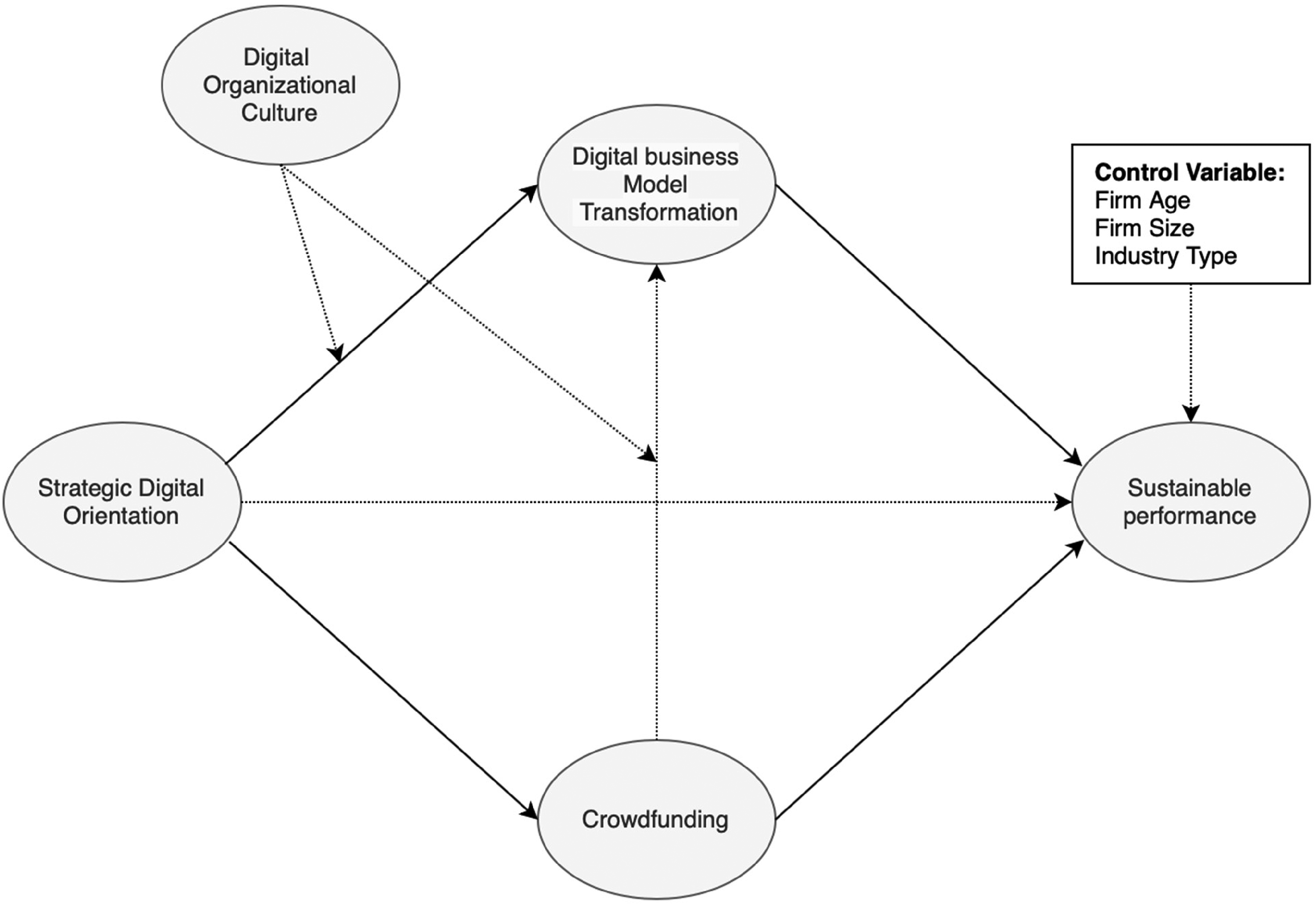
Research framework.
Methodology
This study will utilize a quantitative research design to test the hypothesis regarding the relationships between strategic digital orientation, crowdfunding, digital business model innovation, sustainable performance, and the moderating role of digital organizational culture. This study selects Chinese manufacturing SMEs as a target population located in Shenzhen, Shanghai, Beijing, Hangzhou, Wuhan and Chengdu that undergo digital transformation and have access to crowdfunding to achieve sustainable objectives. A purposive sampling technique was used to collect data from respondents through a structured questionnaire to senior managers and executives using WeChat and QQ groups. In line with recommendations from Cabrilo et al. (2020), the focus of study on Manufacturing firms with over 500 employees. These firms are more likely to have the resources and capabilities to leverage crowdfunding, undertake digital innovation initiatives, and invest in digital business model transformation. In total, the structured survey was distributed to 650 respondents through WeChat and QQ groups, out of which 373 complete, valid responses were received back for analysis. Subsequently, the collected data was analyzed using statistical analysis, employing techniques such as PLS-SEM and ANN. G*power software was used to determine the minimum sample size required for robust statistical analysis prior to questionnaire distribution (Kang, 2021). Based on the software computations, a minimum sample of 300 was needed to achieve 95% confidence level and 5% margin of error for the population size. Thus, the final sample of 373 responses adequately meets the requirements for generalizability. The required analytical sample size was determined to be adequate based on standard statistical formulae for sample size estimation in finite populations (Kotrlik and Higgins, 2001). This thorough methodology establishes a robust framework for unravelling the intricate dynamics linking Strategic Digital Orientation, crowdfunding, digital business model transformation and sustainable performance in the context of SMEs in China. Informed consent was obtained from the respondents, ensuring that they were fully aware of the study's purpose and kept their confidentiality.
Measures
The questions were developed using adaptive measures from existing literature, based on a five-point Likert scale ranging from 1-strongly disagree to 5-strongly agree. To measure strategic digital orientation, a five-item scale adaptive from (Kim and Lee, 2010). However, crowdfunding was measured using a seven-item scale, adopted from the work of (Sahaym et al., 2021). An example statement from this scale is “The crowdfunding campaign successfully met its fundraising goals”. Additionally, the digital business model transformation was measured using 9-item scale adopted from previous studies to measure Business model innovation (Babajide et al., 2023; Klötzer and Pflaum, 2017). An example statement is “The focus is on improving existing products and/or services/the focus is on developing radically new products and/or services”. Given that the digital organization culture adopted four items (Büschgens et al., 2013). Finally, to measure Sustainable Performance we chose 5 item scale adopted from (Danso et al., 2020; Sung and Park, 2018), a sample item is sustainability performance refers to an effort to increase businesses’ participation in sustainability.
Data analysis
In this study, we employed two main software tools for data analysis. We started with SPSS to check for common method biases and ensure our assumptions were met. SmartPLS 4 software was utilized as the primary analysis technique given its ability to handle complex predictive models with many constructs and indicators along with flexibility in sample size requirements relative to covariance-based SEM (Hair and Alamer, 2022). Additionally, we utilized artificial neural networking in SPSS to determine the relative importance of each significant factor.
Common method bais
Data collected via self-reported surveys from single informants was assessed for potential common method variance (CMV) using Harman's single factor test and a marker variable technique (Craighead et al., 2011; Fuller et al., 2016). The analysis revealed that the single factor accounted for less than 22% variance, below the 50% cutoff threshold. Additionally, the marker variable, representing manufacturing sub-sector type, showed low and insignificant correlations with focal model constructs. These findings suggest minimal bias, allowing unbiased examination of measurement scales and structural model testing.
Measurement model
Before conducting structural evaluation, model reliability and validity were assessed (Henseler et al., 2009). Multiple reliability criteria were used to determine internal consistency including Cronbach's alpha exceeding 0.7 and composite reliability over 0.8 (Bagozzi and Yi, 1988). All latent constructs demonstrated robust convergent and discriminant validity evidenced through indicators loadings over 0.7, average variance extracted above 0.5 thresholds (Henseler et al., 2009). Collectively, analyses verify appropriate scale reliability as well as signifies that all items effectively converge to their respective constructs, supporting the robustness of the measurement model as shown in Figure 2 and Table 1.

Measurement model analysis.
Measurement model.

Discriminant validity was evaluated by examining the Heterotrait-Monotrait (HTMT) ratio of correlations and the Fornell-Larcker criterion in line with recommended best practices (Fornell and Larcker, 1981; Henseler et al., 2009). The HTMT estimates between all construct pairs were below the conservative threshold of 0.85 establishing discriminant validity (Kline, 2023). Additionally, the square root of average variance extracted (AVE) for each construct exceeded inter-construct correlations satisfying Fornell-Larcker benchmarks (Fornell and Larcker, 1981). Thus, both HTMT ratios and Fornell-Larcker analysis provide evidence that the measurement scales capture distinct latent phenomenon respectively rather than overlapping variance as shown in Table 2.
Fornell and Larcker criteria.

SDO = Strategic digital orientation, CF = Crowdfunding, DOC = digital organizational culture, SP = Sustainable performance, DBMT = Digital business model innovation.
Hypotheses testing
Hypothesis testing was conducted through structural equation modeling, utilizing bootstrapping with 5000 subsamples at a 0.05 significance level and a 95% confidence interval. The control variables of firm age and firm size exhibit statistically insignificant effects on the key outcome of sustainable performance (β = -0.020, p > 0.05) and (β = -0.032, p < 0.05) respectively. This suggests the findings related to the predictors of interest persist irrespective of these organizational characteristics. Strategic digital orientation positively influences both digital business model transformation (β = 0.256, p < 0.05) and crowdfunding (β = 0.662, p < 0.001). Furthermore, strategic digital orientation significant and positive impact sustainable performance (β = 0.615, p < 0.05) and crowdfunding significantly and positively impact sustainable performance (β = 0.21, p < 0.05). Crowdfunding also positively predicts digital business model transformation (β = 0.143, p < 0.001), while digital transformation also has direct and significant impact on sustainable performance (β = 0.158, p < 0.001) as shown in Table 3.
Direct relationship.
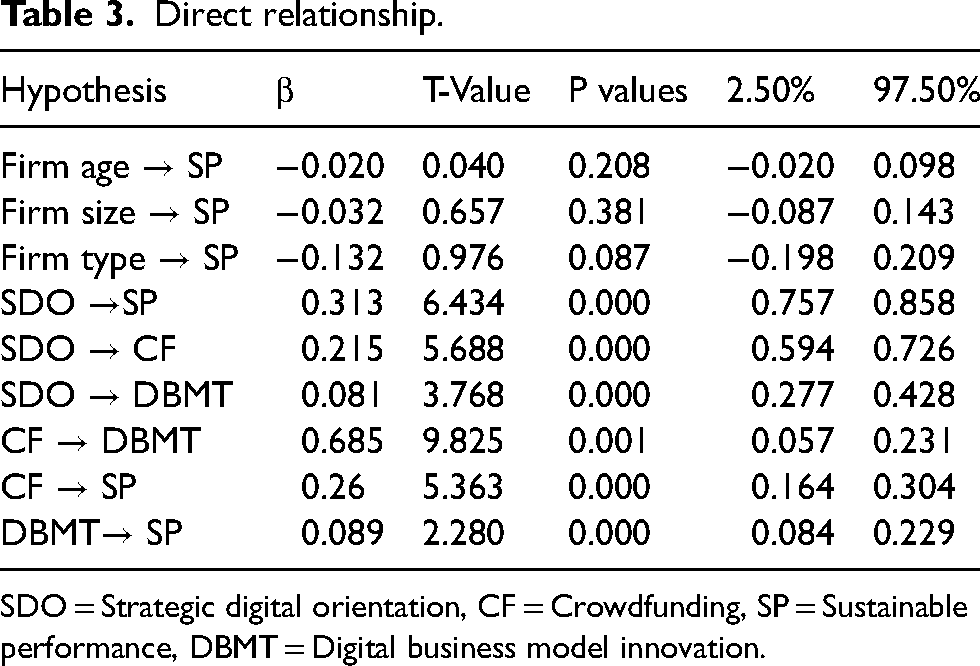
SDO = Strategic digital orientation, CF = Crowdfunding, SP = Sustainable performance, DBMT = Digital business model innovation.
The results in Table 4 demonstrate digital business model transformation mediate the relationship between strategic digital orientation and sustainable performance is significant as the indirect effect is (β = 0.040, p < 0.05). The findings further reveal that crowdfunding significantly mediates the relationship between strategic digital orientation and sustainable performance with indirect effect (β = 0.139, p < 0.005), providing support for H4. Additionally, digital business model transformation significantly mediates the relationship between crowdfunding and sustainable performance as the indirect effect (β = 0.022, p < 0.05), confirming H3. Crowdfunding mediates the relationship between strategic digital orientation and digital business model transformation as indirect effect (β = 0.094, p < 0.05), affirming H4. Finally, the sequential mediation model revealed a significant indirect effect of DBMT between strategic digital orientation, crowdfunding, and sustainable performance with indirect effect (β = 0.015, p = 0.011), lending support for H5. The direct relationships in all mediation models were also found to be significant.
Mediation analysis.
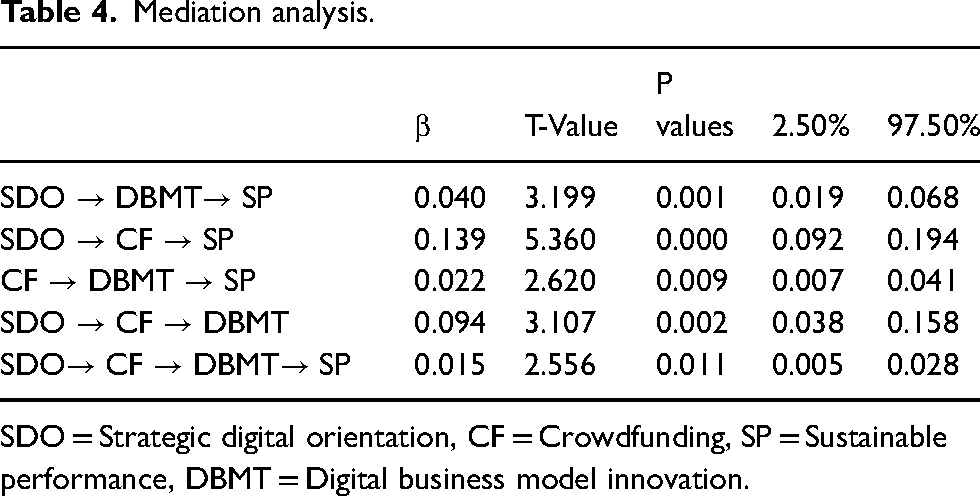
SDO = Strategic digital orientation, CF = Crowdfunding, SP = Sustainable performance, DBMT = Digital business model innovation.
Moderation analysis
Digital organization culture was also explored as a potential moderating mechanism between green and blue infrastructure, sustainable competitive advantage, and firm resilience. Specifically, we tested whether Digital organization culture moderates the relationship between SDO and DBMT (H6) as well as the relationship between crowdfunding and digital business model transformation (H7). The results presented in Table 5, Figure 3, and Figure 4 demonstrate that Digital organization culture significantly moderates the link between crowdfunding and DBMT (β = 0.097, p = 0.015), confirming Hypothesis 7. Additionally, Digital organization culture statistically significantly moderates the relationship between SDO and sustainable performance (β = 0.111, p = 0.002), providing support for Hypothesis 6.
Moderation analysis.
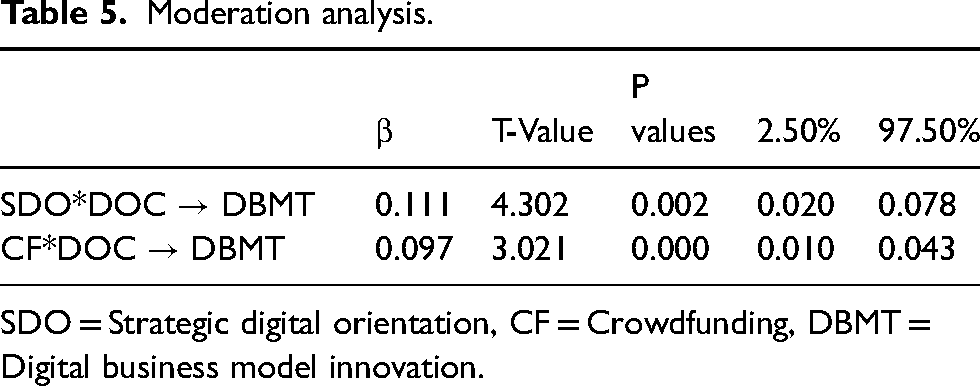
SDO = Strategic digital orientation, CF = Crowdfunding, DBMT = Digital business model innovation.

Moderation Analysis b/w SDO and SBMI.

Moderation Analysis b/w CF and SBMI.
Artificial neural networking
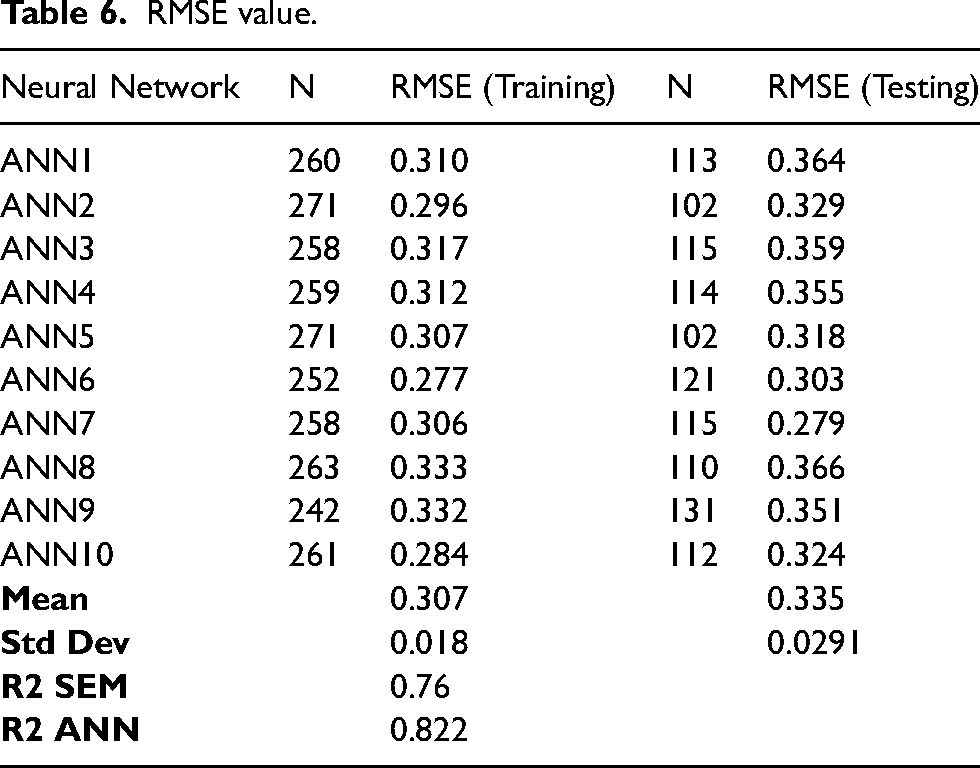
Artificial neural network (ANN) analysis was conducted using stringent inclusion criteria, incorporating only constructs statistically significant through PLS-SEM (Liébana-Cabanillas et al., 2018). Following established methodologies (Ooi et al., 2018), a single hidden layer with sigmoid activation functions was utilized, an approach known to represent continuous functions adequately (Negnevitsky, 2011). To prevent overfitting, 10-fold cross-validation was applied, with 70% of data for training and 30% for evaluation. Predictive accuracy was assessed using root mean square error (RMSE), with mean RMSE values of 0.307 for testing and 0.324 for training, indicating high accuracy (Hidayat-ur-Rehman et al., 2022). The proportion of output variability explained by the model (R2) was also scrutinized using an established formula (Leong et al., 2019). Results showed the input neurons could predict approximately 76% of firms’ sustainable performance variance. Notably, the 82.2% R² from ANN exceeded the 76% from SEM analysis, highlighting superior predictive capability. RMSE values below 0.1 (Table 6) confirm high accuracy, with average RMSEs of 0.307 for training and 0.335 for testing and standard deviations of 0.018 indicating consistency. These values fall within the stipulated range of 0.051–0.989, affirming model accuracy. The R² value of 0.822 indicates that input neurons account for 82.2% of the variance in sustainable performance, demonstrating the model's reliability and efficacy. This rigorous analysis underscores the ANN model's excellent performance in determining factors influencing manufacturing sustainability.
RMSE value.
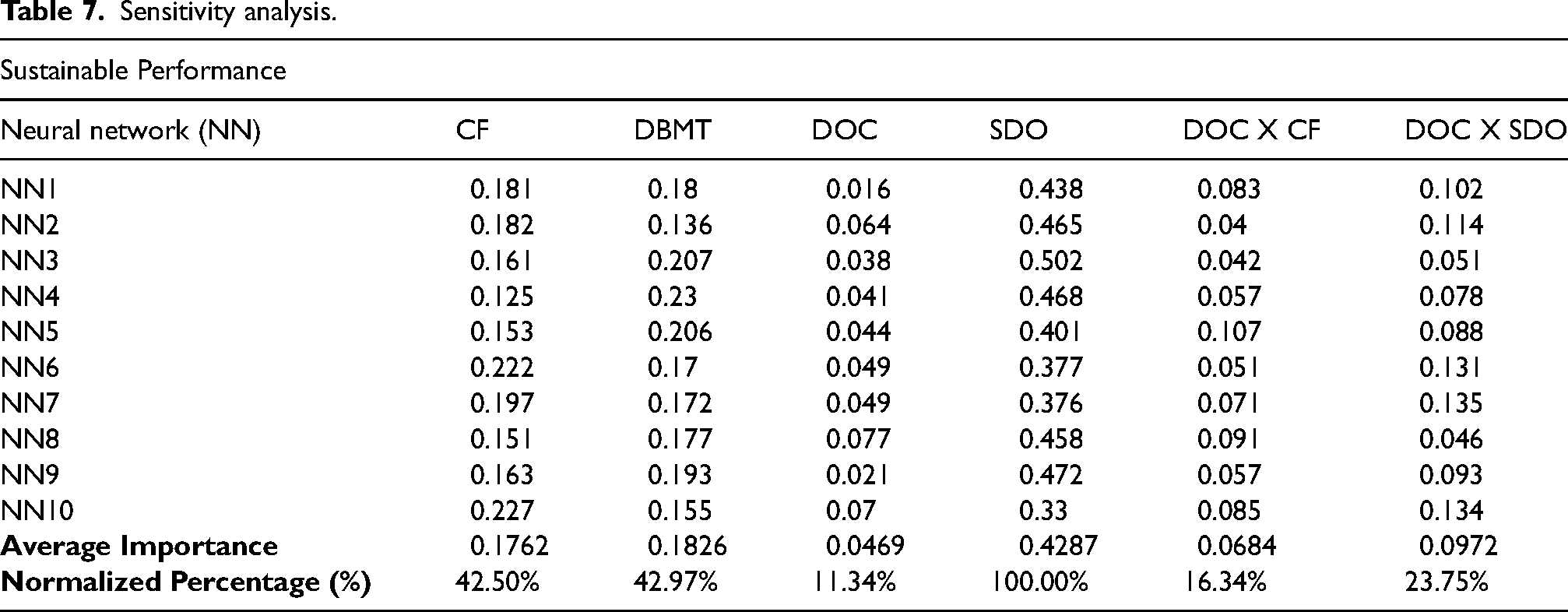
To conduct the ANN method, we used feed-forward-back-propagation and multilayer perceptron networks (Figure 5). The network comprises input, two hidden, and output layers. Neurons are interconnected across layers. In the feed-forward process, signals move from input to output through the hidden layers. Each neuron calculates its output based on the input vector's energizing quantity. A sensitivity analysis on both ANN models revealed the normalized importance values of each predictor variable. Normalized importance is the ratio of each input variable's relative importance to the maximum relative importance value. As shown in Table 7, strategic digital orientation had the highest relative importance for explaining sustainable performance (100%), followed by crowdfunding (42.50%) and digital business model transformation (42.97%). Meanwhile, interaction of DOC*CF and DOC*SDO contributed normalized importance values of 16.34% and 23.75% respectively. DOC shows the least predictive relevance for this model as 11.34%. Therefore, SDO is integral for enhancing crowdfunding, DBMT and sustainable performance. The patterns further confirm the pivotal mediated mechanisms linking Strategic digital orientation to sustainable performance.

Artificial neural network.
Sensitivity analysis.
Discussion
Firms are redefining their objectives to meet environmental responsibilities and technological advancements. Beyond typical digitalization and financial goals, they are incorporating social and environmental objectives through digital business model transformations. However, capital constraints often hinder these sustainability efforts. Crowdfunding can alleviate these financial barriers, facilitating investments in green capabilities and digital business model transformation. Drawing on the Natural Resource View theory and Innovation Diffusion theory, this study examines the influence of strategic digital orientation and crowdfunding on sustainable performance, with digital organizational culture enhancing these effects. Using a structured survey of 373 Chinese SME executives and managers, and analyzed via PLS-SEM and ANN, the study provides new insights into the relationships between strategic digital orientation, crowdfunding, digital business model transformation, organizational culture, and sustainable performance.
Our findings provide robust empirical evidence supporting the direct positive influence of strategic digital orientation on crowdfunding, business model transformation, and sustainable performance. This underscores the importance of strategic digital orientation as a pivotal driver of digitalization efforts within manufacturing firms, aligning with prior research on the benefits of digital transformation for innovation and competitiveness (Kolodiziev et al., 2021). Additionally, findings show a significant positive relationship between crowdfunding and business model transition (Gil-Gomez et al., 2020). Consistent with existing literature (Gregori and Holzmann, 2020), our research reaffirms the positive link between digital business model transformation and sustainable performance. Study findings confirm Hypothesis 1, underlining that digital business model transformation emerges as a crucial mediator between strategic digital orientation and sustainable performance (Lichtenthaler, 2021). This mediating function highlights the digital business model's pivotal role in translating strategic digital orientation into tangible, sustainable outcomes. Furthermore, the digital business model facilitates environmentally focused outcomes, including reduced material usage and carbon footprints via digital supply chain integration and additive manufacturing (Gregori and Holzmann, 2020). However, Hypothesis 2 highlights crowdfunding's mediating role between strategic digital orientation and sustainable performance. This aligns with recent literature on crowdfunding's multidimensional impact, including facilitating strategic transformations (Bargoni et al., 2022). Furthermore, crowdfunding's pivotal function is enabling a firm's digital transformation through financing digital capabilities and translating these digital advancements into enhanced sustainable performance (Calic and Mosakowski, 2016; Testa et al., 2019). Thus, by leveraging external financial resources through crowdfunding, manufacturing firms can accelerate strategic digital orientation efforts. Meanwhile, the findings illustrate that digital business model transformation significantly mediate the relationship between crowdfunding and sustainable performance support H3. Our results align with prior studies, such as crowdfunding as a financing mechanism, manufacturing firms are empowered to invest in progressive digital technologies related to analytics, automation, connectivity, and intelligence enhancement (Opazo-Basáez et al., 2018). The empirical support for Hypothesis 4 indicates that crowdfunding significantly mediates the relationship between strategic digital orientation and digital business model transformation. Findings are aligned with previous literature such as Tenner and Hörisch (2021), suggest that manufacturing firms guided by strategic digital orientation not only view crowdfunding as a financial resource, but also recognize its strategic enabling role in facilitating evolutions of their digital business model transformation. The instrumental function of external financial support in enabling internal digitalization efforts (Harris and Wonglimpiyarat, 2020). Furthermore, findings illuminate a sequential mediation process (H5), with strategic digital orientation influence extending through crowdfunding, subsequently leading to digital business model transformation and ultimately enabling sustainable performance gains (Warner and Wäger, 2019). This study highlights the enduring impact of digital business model transformation on sustainability. By leveraging crowdfunding, manufacturing firms can invest in digital initiatives that enable sustainable benefits. Hypothesis H6 suggests that digital organizational culture moderates the relationship between strategic digital orientation and digital business model transformation. This is supported by literature indicating that organizational culture is crucial for translating strategic orientations into tangible outcomes (Barney, 1991; Trushkina et al., 2020). Hypothesis H7 suggests that digital organizational culture strengthens the influence of crowdfunding on digital business model transformation. This aligns with studies emphasizing the role of organizational culture in shaping digital initiative outcomes (Müller et al., 2019). Organizations fostering a digital-friendly culture are expected to be more adept at leveraging crowdfunding gains to fuel meaningful transformations in their business models.
Conclusion
In conclusion, this study navigated the complex relationships within the manufacturing industry in China, exploring the dynamics among strategic digital orientation, crowdfunding, digital business model transformation, digital organization culture and sustainable performance based on innovation diffusion and resource-based view framework. The findings indicate that strategic digital orientation serves as a pivotal driver, influencing sustainable transition through the sequential mediation of crowdfunding and digital business models. Moreover, the study reveals the moderating role of digital organization culture in shaping the links between crowdfunding and both digital business model transformations. This integrative approach addresses an obvious gap in the existing literature, providing a comprehensive framework to understand the complex relationships within the context of sustainable business practices.
Theoretical contribution
This paper makes significant theoretical contributions in several areas. This study provides empirical evidence to support the significance of the Natural Resource-Based View and dynamic capability theory. It enhances our knowledge of how a strategic digital orientation promotes sustainability through crowdfunding and business model transformation. Secondly, by establishing digital business model innovation and crowdfunding as a mediator, the study highlights the complex mechanisms linking strategic digital orientation, crowdfunding, digital business models transformation, digital organizational culture, and sustainability performance. In addition, the research emphasizes the significance of digital organizational culture as a moderator, uncovering essential elements that impact the conversion of digital business models into sustainability benefits. Finally, the study fills a gap in research by examining issues of sustainability in developed economies via digital orientation, crowdfunding, digital culture building for resilience specifically in the Chinese context.
Practical contribution
This study offers valuable insights for practitioners and policymakers deeply rooted in the existing literature. The literature review identifies that strategic digital orientation significantly impacts business innovation and efficiency (Wang, 2022). SDO enhances access to crowdfunding, a critical aspect that democratizes capital access and fosters entrepreneurial growth (Necib and Mourad, 2024). Crowdfunding bridges strategic orientations to financial resources (Zhang et al., 2023), the study underscores the importance of digital business model transformation, extending the literature on its role in adaptability and competitiveness in the digital economy (Ancillai et al., 2023; Hanelt et al., 2021). It suggests SDO as a powerful driver of sustainable development goals, aligning with findings that digital transformation is crucial for long-term sustainability (Bican and Brem, 2020). Additionally, the study identifies the moderating role of digital organizational culture, supported by literature indicating that a robust digital culture fosters innovation and agility (Cruz-Cárdenas et al., 2022). Cultivating this culture enhances the relationships between SDO, crowdfunding, and digital business model transformation in achieving sustainable goals (Chen, 2022). Policymakers can use these insights to design policies encouraging sustainable practices by integrating SDO, crowdfunding, and digital business model transformation. This aligns with policy literature advocating for comprehensive frameworks to support digital and sustainable transformation. Ultimately, the study encourages a holistic approach to sustainable development, incorporating strategic, financial, digital, and cultural dimensions, benefiting both organizations and policymakers.
Limitations and direction for future research
While our study provides valuable insights, it is important to acknowledge several limitations that offer opportunities for future research. Firstly, our data was collected exclusively from manufacturing firms in China, which may limit the generalizability of our findings to other industries or regions. Future studies should aim to replicate our research across diverse sectors and geographic contexts for a more comprehensive understanding. Secondly, our research focuses on specific constructs such as strategic digital orientation, crowdfunding, digital business model transformation, and digital organizational culture. Exploring additional variables and their interplay in the context of digitalization could offer a more holistic view of the phenomenon. For instance, the role of leadership, leadership style, and external market forces in shaping digitalization outcomes remains an area ripe for investigation. Thirdly, our study primarily relies on quantitative data and the SEM-ANN approach. Future studies use longitudinal research design to track the evolution of digitalization initiatives over time would provide a dynamic perspective on the sustainability effects of digital transformation efforts. Lastly, emerging technologies, such as blockchain, artificial intelligence, and the Internet of Things, continue to shape the digital landscape. By addressing these limitations and pursuing these directions for future research, scholars can continue to enrich our understanding of the complex relationship between digitalization, sustainability, and the various factors that influence this transformative journey.
Footnotes
Acknowledgments
The author thanks the chief editor, guest editors, and journal editorial team.
Author contributions
Declaration of conflicting interests
The authors declared no potential conflicts of interest with respect to the research, authorship, and/or publication of this article.
Funding
The authors received no financial support for the research, authorship, and/or publication of this article.
