




Abstract
Chain organization has become the most prevalent form of the restaurant industry. Facing asymmetric information, however, many chains encounter difficulties in monitoring chain store managers who serve different markets. A proper incentive scheme for store managers must be designed to solve the agency problem. However, measuring performance is a critical element of any incentive system. Thus, this study examined the appropriate performance measures of assessing the performance of a store manager. Results revealed that emphasizing quality-related performance measures of assessing store managers produces significant effects on chain growth. Furthermore, placing greater emphasis on quality-related performance measures produces a greater effect on chain growth if the operation can be easily standardized. Contrary to the negative effect of stock-based compensation, bonus-based compensation could strengthen the positive relationship between quality-related performance measures and chain growth. The alignment among quality-related performance measures, operation standardization, and reward modes was considered crucial for managing restaurant chains.
Introduction
Chain organization has become the most prevalent form of the restaurant industry. A chain organization can facilitate the expansion of restaurants into a widely diverse market to achieve chain growth (Bradach, 1997; Chuang and Baum, 2003). The agency problem presents an issue in which managing chains is difficult, because chains with stores that serve heterogeneous markets experiences additional information asymmetries between store managers and chain headquarters (Campbell et al., 2009). Bloom and Milkovich (1998) indicated that agency problems in employment can be solved by structuring monitoring and compensation systems to induce agents to pursue the interests of the principal. However, chain headquarters find difficult the monitoring of chain store managers who serve different markets (Campbell et al., 2009; DeHoratius and Raman, 2007; Krueger, 1991). When not monitored, store managers may evade their responsibilities. These managers may even allocate time for activities irrelevant to their work responsibilities (Sorenson and Sørensen, 2001). Hence, chain headquarters must provide proper incentive schemes to solve these problems. DeHoratius and Raman (2007) examined store manager compensation schemes and the effect of such schemes on retail performance in a consumer electronics chain. The findings of their study emphasized that incentive plans influence the performance of the retail and the behavior of the store manager.
The provision of incentives requires affiliating employee pay with employee performance (Milgrom and Roberts, 1992). Certain organizations understand the importance of this measure. The absence of an effective incentive plan has caused organizational dissatisfaction in established pay-for-performance plans (Liccione, 2007). A poorly designed compensation system is one reason why store managers do not perform in accordance with corporate objectives (Balkin and Gomez-Mejia, 1987). The difficulty in designing incentive plans lies in measuring performance (Raith, 2008). Baker (2002) concluded that performance measurement is a critical element of any incentive system. These measurements determine the types of performance that are motivated and compensated.
Previous studies (e.g., Arnold et al., 2009; Chu and Liu, 2008) proposed that determining appropriate performance measures is vital for corporations because such measures influence the behavior of store managers. Arnold et al. (2009) indicated that the activities of corporate headquarters influence the behavior of store managers which, in turn, affect the sales in automotive parts chain. Chu and Liu (2008) suggested that corporate headquarters must design appropriate performance measures of motivating store managers to exert greater efforts, improving the entire performance of the chain. Consequently, designing proper incentives that are correlated to the performance of chain stores is crucial for corporations. These performance measures motivate store managers to pursue goals, which are consistent with the very goals of the firm they work for (DeHoratius and Raman, 2007). However, the available literature on chain management, including the effect of the performance of store managers on chain growth, is limited. Hence, this study attempts to fill this research gap by investigating the answers to following research questions: (1) What performance measures are suitable to assess chain store managers? and (2) What moderating variables affect the effectiveness of these performance measures on chain growth?
This research is organized into five sections. The next section presents the analyses of value chains and value creation in the context of the restaurant chain industry. Such analyses are endeavored to determine the appropriate performance measures for chain store managers. “Moderating variables and their enhancing effects” section discusses the testable hypotheses concerning the appropriate performance measures of assessing the performance of chain store managers, and the contextual factors of chain restaurants that moderate the effects of performance measures on chain growth. “Methodology” section describes the data and the construction of variables used for quantitative analysis, and the following section draws the results of this study. The final section cites the findings. Figure 1 exhibits the conceptual model of this research.
Conceptual model.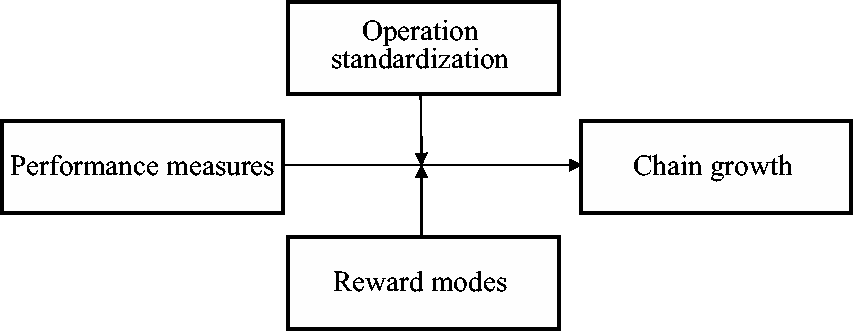
Quality-related performance measures for store managers
Organizations use financial measures as a means of management. However, these measures typically produce undesirable results (Adams et al., 1993). Taking the example of fast food chains, if corporate headquarters evaluate store managers solely on the basis of store revenue, then store managers might tend to emphasize the revenues of their respective stores at the expense of other responsibilities. These responsibilities may affect the reputation of other stores in several aspects, including fresh food provisions, fast service, and clean environment (Milgrom and Roberts, 1992). All these aspects affect the future performance and growth of the entire chain. Given that store manager performance measures are subject to the influence of uncontrollable environmental factors, then performance measures influence excessive risk for store managers (Ghosh and Lusch, 2000). For example, store managers are not authorized to make decisions regarding the operation of chain stores. These decisions may refer to store location, store size, advertising, and purchasing (Brickley et al., 2004; Ghosh and Lusch, 2000). These factors affect the operating revenue and profit of a store. Thus, selecting an appropriate store manager performance system is relevant for chain organizations.
This study proposes the quality-related performance measures of assessing the performance of store managers by conducting value chain and value creation analysis. First, corporate headquarters determine the value-creation activities for store managers by means of value chain analysis. Figure 2 shows that the value chain of a restaurant chain includes four value-creation activities, including logistics, central operations (central kitchen), marketing, and local operations (restaurant service). Chain enterprises can integrate value-creation activities of logistics, central operations (central kitchen), and marketing in the corporate headquarters. Such integration may produce economies of scale, subsequently reducing costs. Store managers must perform the last value-creation activity, which is the local operations (restaurant service), in different branches. This activity is the crucial step that affects customer satisfaction because of the direct contact between store managers and customers.
The value chain of restaurant chains.
Second, value creation comes from the differences between customer-perceived benefits and cost savings (Besanko et al., 2004; Hoopes et al., 2003; Priem, 2007). The views of consumer on the overall service quality of a chain directly affect their behavioral intentions. The tendencies of consumers to praise, recommend, and maintain loyalty with the company are also affected by such views (Zeithaml et al., 1996). Hence, corporations are informed of the necessary tasks performed by the store managers. These tasks meet the needs of the customers based on the latter’s perspective. Many studies (e.g., Cronin and Taylor, 1992; Gómez et al., 2004; Gupta et al., 2007; Oh, 1999) specified that customer-perceived quality is a prerequisite for customer satisfaction, which significantly affects the sales of food services chain industry. Thus, chains must set performance measures based on quality. Chain growth increases when store managers work hard to satisfy customer-perceived quality.
Previous studies (Johns and Pine, 2002; Jones, 1983) revealed the fundamental factors that contribute to customer satisfaction in restaurants. These factors include the qualities of food, service (service attributes of staff), and physical environment (physical attributes of the restaurant). In fact, considerable research has demonstrated that in the context of restaurant industry, the qualities of customer service (e.g., friendly and helpful staff, efficient service) and food (e.g., clean, fresh, and tasty food) are the two most crucial factors that attract customers and draw renewed patronage (e.g., Andaleeb and Conway, 2006; Auty, 1992; Gupta et al., 2007; Kara et al., 1995; Qin and Prybutok, 2008). Environment quality (e.g., ambience, comfort, and cleanliness of the dining area) is also an important factor because the ambiance of a restaurant significantly affects the perceptions of customers on the kind of services being offered by the restaurant. Thus, the quality of the environment influences customer satisfaction and repeat patronage (Auty, 1992; Bitner, 1992; Sulek and Hensley, 2004; Wall and Berry, 2007). The physical environment of fast food chains, in which services are provided, is vital because it can improve or overwhelm the moods of customers. In this event, the customers are satisfied, and the former’s behavior is influenced (Han et al., 2010; Ryu and Jang, 2008; Wakefield and Blodgett, 1999). In summary, the qualities of service, food, and environment are the crucial factors that affect customer satisfaction from the latter’s perspective.
Based on the above discussion, quality-related performance measures are more appropriate for assessing store managers than the financial measures. When a chain restaurant increases customer-perceived benefits, the various quality types perceived by the customer are improved. The results of the analyses of this study are consistent with the assertion of Worsfold (1999). Worsfold (1999) affirmed that service quality is a performance indicator in hospitality, and the determinants of this indicator are considered in relation to human resource management policies and practices. Thus, this study suggests that quality-related performance measures must be used as a medium of assessing the performance of store managers. Milgrom and Roberts (1992) indicated that a firm must establish performance measures based on the performance of employees in executing various tasks. Different incentive strengths (weights) are provided based on the contribution of each task to the firm. Therefore, chain restaurant may recognize the significance of quality-related performance measures, which may motivate store managers to work hard in performing tasks. These measures may also enhance the customer-perceived quality, prompting the growth of the chain. Accordingly, the below assumption is drawn:
Moderating variables and their enhancing effects
Strategic fit (Porter, 1996) states that a firm must align its organizational structure with its respective technology environment to gain competitive advantage. Moreover, firms under different environmental conditions must have corresponding organizational structures to gain superior organizational performance. This study examines how environmental factors (e.g., operation standardization) and organizational factors (e.g., reward modes) enhance the effectiveness of the performance measures.
Degree of operation standardization
Chains offer more convenience, quality, perceived value, and variety in their menu items and available services (Paul, 1994). Chains produce similar products and services in numerous markets while emphasizing standardization (Chuang and Baum, 2003; Ingram and Baum, 1997). Standardization not only facilitates the exploitation of economies of scale and the reduction of operating costs (Chuang and Baum, 2003; Cox and Mason, 2007; Ingram, 1996; Ingram and Baum, 1997) but also satisfies the customer’s need to obtain consistent products and services at any chain store (Cox and Mason, 2007).
From the customer perspective, standardization increases the perceptions of customers on reliability. Customers believe that chains continuously provide services with consistent quality (Chuang and Baum, 2003). This consistency enhances customer-perceived quality (Kim and Kim, 2004), thereby increasing chain growth. From the corporate perspective, standards exist to guide and monitor the behaviors of both the management and line-level employees in providing services (Susskind et al., 2003). Chain stores also emphasize the leveraging of a set of valuable organizational knowledge. This set replicates a subsequent set of standard procedures for implementation across different locations (Chuang and Baum, 2003). When a skill is less tacit, knowledge transfer occurs at a higher rate and is thus easier to replicate (Nelson and Winter, 1982). However, not all food preparation and services are easily standardized in the restaurant industry. Production techniques are less standardized when they are more implicit. For example, synchronization is the primary problem of chefs in full-service restaurants. Chefs must be highly proficient in providing food within a short time (Bailey, 1985). The problem does not only pertain to speed. The task of organizing kitchen works also becomes an issue. Chefs can only overcome these challenges by synchronizing their skills (Fine, 1990). Contrary to full-service restaurants that require experienced chefs, fast food restaurants involve more explicit knowledge on food and food preparation processes. Thus, synchronizing fast food restaurants is significantly easier to achieve and standardize (Bailey, 1985).
Assessing the performance of an agent allows the principal to effectively expend resources in the process of monitoring the former (Baker, 1992). In restaurant chains, when the products and services are easily standardized, corporations smoothly monitor and evaluate the performance of store managers by using quality-related performance measures. In this event, the greater weight of quality-related performance measures motivates the store managers to work hard and to satisfy the customer-perceived quality, subsequently increasing the sales. Accordingly, the below hypothesis is drawn:
Bonus- and stock-based compensation
Appropriate rewards strengthen the effects of incentives. These rewards combine the interests of both the employees and the firm. On one hand, the employees are encouraged to exert more effort in achieving the goal of firm growth. Meanwhile, the majority of firms provide employees compensations via bonus- or stock-based compensation schemes. The bonus is derived from a portion of the firm’s annual earnings. The amount is then distributed to managers, with the intention of encouraging managerial effort. The interests of shareholders and managers are aligned in granting the latter a share in the profits through their own respective efforts (Enis, 1993; Shavell, 1979). Bonuses are short-term incentives (Ittner et al., 2003). By contrast, stocks have a deferred effect, encouraging employees to pursue the long-term interests of the firm (Scholes, 1991). Stock-based compensation aligns the interests of the agent and the principal. Such scheme reduces agency conflicts between the two parties (Core and Guay, 1999; Smith and Watts, 1992).
Previous studies (e.g., Krueger, 1991; Patil and Chung, 1998) indicated that, in practice, most chain restaurants offer managers fixed salaries. Only a few newly established restaurant chains actually offer bonuses. Stocks were never offered to managers. In reality, merely discussing the bonuses or stock offerings with managers is meaningless. Only associate compensation with performance measures can increase the effort of employees (Kahn and Sherer, 1990). Therefore, this study examines which compensation system, and when this scheme offers better incentives for managers to increase their efforts. Compensation schemes are implemented in conjunction with the combined with quality-related performance measures used for assessing store managers. Such measures facilitate chain growth. Accordingly, the following hypotheses are posited:
Methodology
Sample and procedures
Taiwan is a renowned gourmet heaven, which is frequently featured in global media outlets, including Discovery Channel. Taiwan has been colonized by a few countries. The culture of a country reflects the rich cuisine diversity of the region. Taiwan offers a vast range of cuisine—from Chinese food to various foreign cuisines, in both snack food vendor stalls and international standard Michelin-rated restaurants. Following research conducted by the Taiwanese Department of Statistics (2011), sales of the restaurant industry in 2011 increased by 9% compared with the previous year. Meanwhile, sales in 2011 intensified by 40% in comparison with the values obtained in 2001. Adopting the restaurant chain business model enabled the Taiwanese restaurant industry to rapidly develop. The research conducted by the Taiwan Chain Stores and Franchise Association (TCFA) and the Commerce Development Research Institute (2010) concluded that the annual sales of restaurant chains in 2008 accounted for 48% of the overall industry. In 2009, 10 of the top 20 restaurants were restaurant chains. The sales of these chains accounted for 72% of the total sales of the top 20 restaurants. These results demonstrate that restaurant chains are quickly becoming the trend in the Taiwanese restaurant industry. Thus, restaurant chains displayed the highest sales growth rate in the restaurant industry.
Restaurant chains were selected as the subjects of this study. The study sample was derived from the annual general census of restaurant chains in Taiwan. This census was conducted by the TCFA, which is the main association for chain stores and franchise industry in the country. This reference source compiles basic information for a large sample of chain stores. The measuring unit of the subjects is at the corporate level. The research questionnaires were mailed to chain managers at corporate headquarters. This research excluded breakfast shops, beverage stores, snack food vendor stalls, and restaurant chains reliant on franchises (only single-company-owned stores). This limitation was set because this research focused on investigating the performance evaluations of company-owned store managers. Based on the population from the general census compiled by the TCFA in 2009 (data published in 2010; TCFA, 2010), 261 copies of the questionnaire were issued. This study retrieved a total of 60 valid questionnaires. The response rate was at 23%. The 60 chains included 1052 and 1305 company-owned and franchised stores, respectively. A total of 2357 stores were involved in this study. On average, the respondent companies have been operating for 14 years. Each company directly operates an average of 17 company-owned stores and 22 franchise stores. An average of 39 stores operate under each chain.
Measures
The variables in this study were measured following the below procedures.
Control variables
Two control variables were included to substantiate the empirical tests. Chain age refers to the number of years of restaurant chain operation. Chain size refers to the total number of company-owned and franchise stores in 2010. Chain age and size were controlled because previous research (e.g., Audretsch et al., 2004; Kosová and Lafontaine, 2010; Sorenson and Sørensen, 2001; Wilson and Morris, 2000) had shown that organizational growth rates often varied with regard to these variables. Moreover, Zajac and Kraatz (1993) referred to age and size as “diametric forces” that influence performance in both directions. All information was obtained from the compiled survey data of TCFA. This study logarithmically transformed both variables because the raw data were not normally distributed.
Quality-related performance measures
Chang and Harrington (2000) indicated that the performance of chain stores depends on the consistency of current operation practices with customer expectations. Therefore, this study proposes that restaurant chains can use customer perspectives to establish quality-related performance measures. In this event, store managers are encouraged to accomplish related tasks. These tasks include customer service, food preparation, and physical environment maintenance. Task accomplishment can then meet customer expectations and further drive chain growth. Hence, this study asked the corporate headquarters if the current performance measures of evaluating store managers by top management included the three aforementioned items, namely, service quality, food quality, and environment quality. If so, what proportion (%) did each of this measure account for in the total performance measures?
Degree of operation standardization
Restaurant chains implement standard operating procedures (SOPs) in their branches (Crandall et al., 1996). The SOPs are designed to help employees achieve consistent work performance. SOPs also control the quality of service provided to each customer (Mayer, 2002). However, the degree of operation standardization determines the complexity in standardizing operating procedures in various restaurant chains. With a higher degree of standardization, employees need only to execute their tasks according to SOPs to achieve consistent quality of work. Conversely, when there is a lower degree of standardization, employees might not achieve consistent quality of work even if they follow the SOPs. This study develops several measures in response to the dearth of previous material. Three questions related to serving customers, preparing food, and maintaining the environment queried respondents regarding the degree of operation standardization in their chain restaurants using a seven-point Likert scale, with one indicating “extremely low,” and seven indicating “extremely high.” These questions help determine the degree of operation standardization in chain restaurants. Such queries were sent only to corporate headquarters because this department has first-hand information concerning the difficulties encountered in the SOP set up.
Rewards
This study examined which compensation system offers better motivation incentives to managers. The system must account for the quality performance measures of assessing store managers. Accordingly, this study asked the corporate executives of restaurant chains whether they compensate the superior performance of store managers with (1) bonuses or (2) stocks. A seven-point Likert scale was used in this study. One chain received an “extremely low” rating. Seven establishments received “extremely high” ratings.
Chain growth
Retail chains operate stores under both company-ownership and franchising arrangements. Franchise contracts typically involve a fixed, up-front franchise fee. Royalty rates are often based on sales (Campbell et al., 2009). The overall company operation performance measurement via sales growth is a reasonable performance indicator (Sorenson and Sørensen, 2001). Chain restaurants in Taiwan are primarily private small- and medium-sized firms. Hence, obtaining objective organizational performance measurements is difficult. However, growth in the number of company-owned and franchise stores was determined as a more robust chain growth measurement (e.g., Shane, 1996; Kosová and Lafontaine, 2010). The dependent variable chain growth refers to the operational definition given by Shane (1996). Chain growth measures the amount of resources based on the logarithm of change in the number of total units from 2007 to 2010 (data from TCFA compiled survey data; TCFA, 2008, 2011). These years were selected in this study to measure chain growth for two reasons. First, temporal lag occurs between performance assessment and chain growth. Performance assessments and compensation are not likely to have an immediate effect on chain growth. Second, all 60 chains in the sample exist during this period. This study also followed the method of Shane (1996). A logarithmic transformation was used because the raw data were not normally distributed. Given that several chains had negative growth, a constant of 19 was added in all cases. This addition allowed the calculation of a log transformation.
Results
Descriptive statistics
Means, standard deviations, and correlations.

Note: N = 60.
ap < .10.
bp < .05.
cp < .01.
Hypotheses testing
Hierarchical regression analysis.
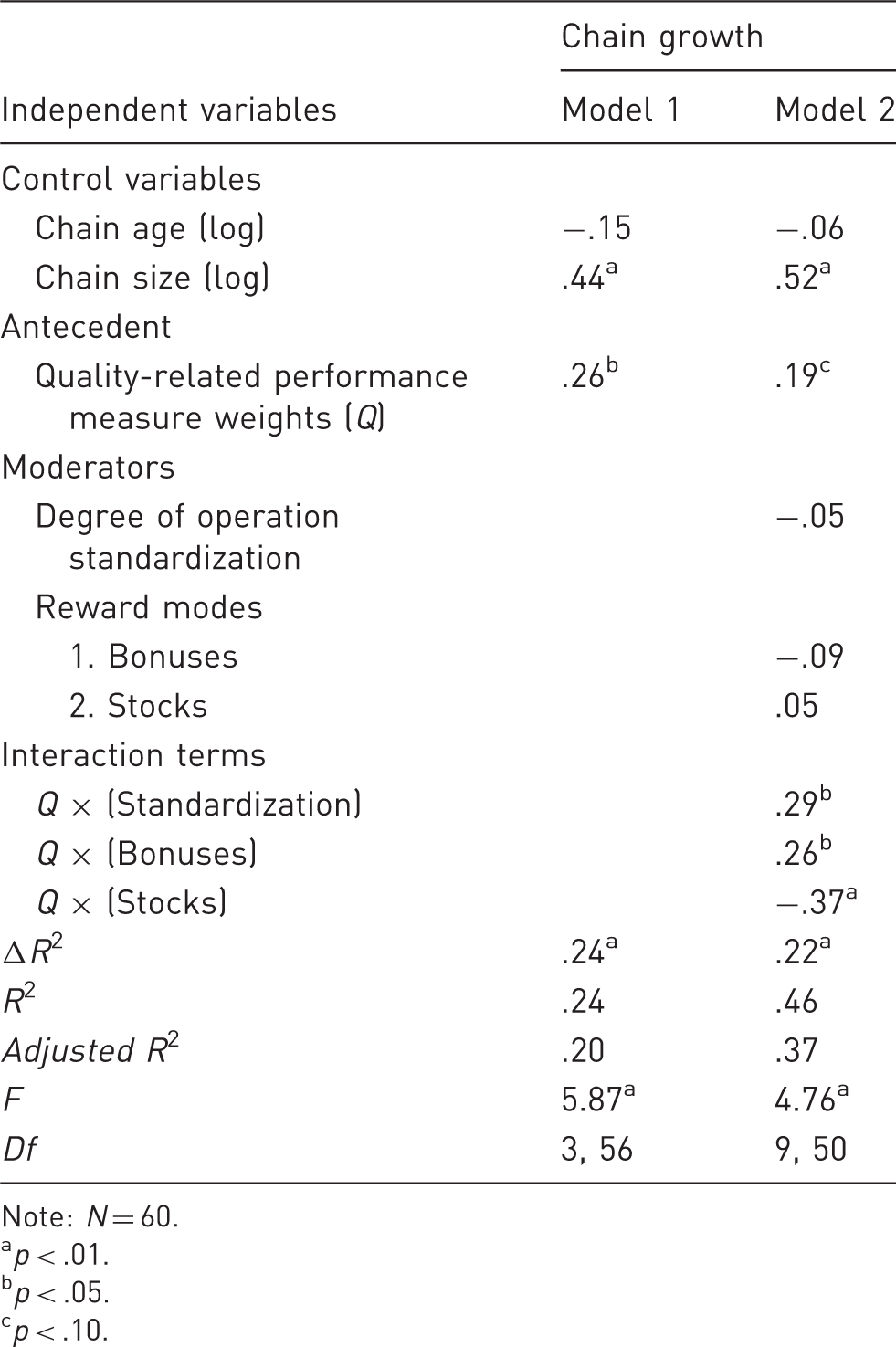
Note: N = 60.
ap < .01.
bp < .05.
cp < .10.
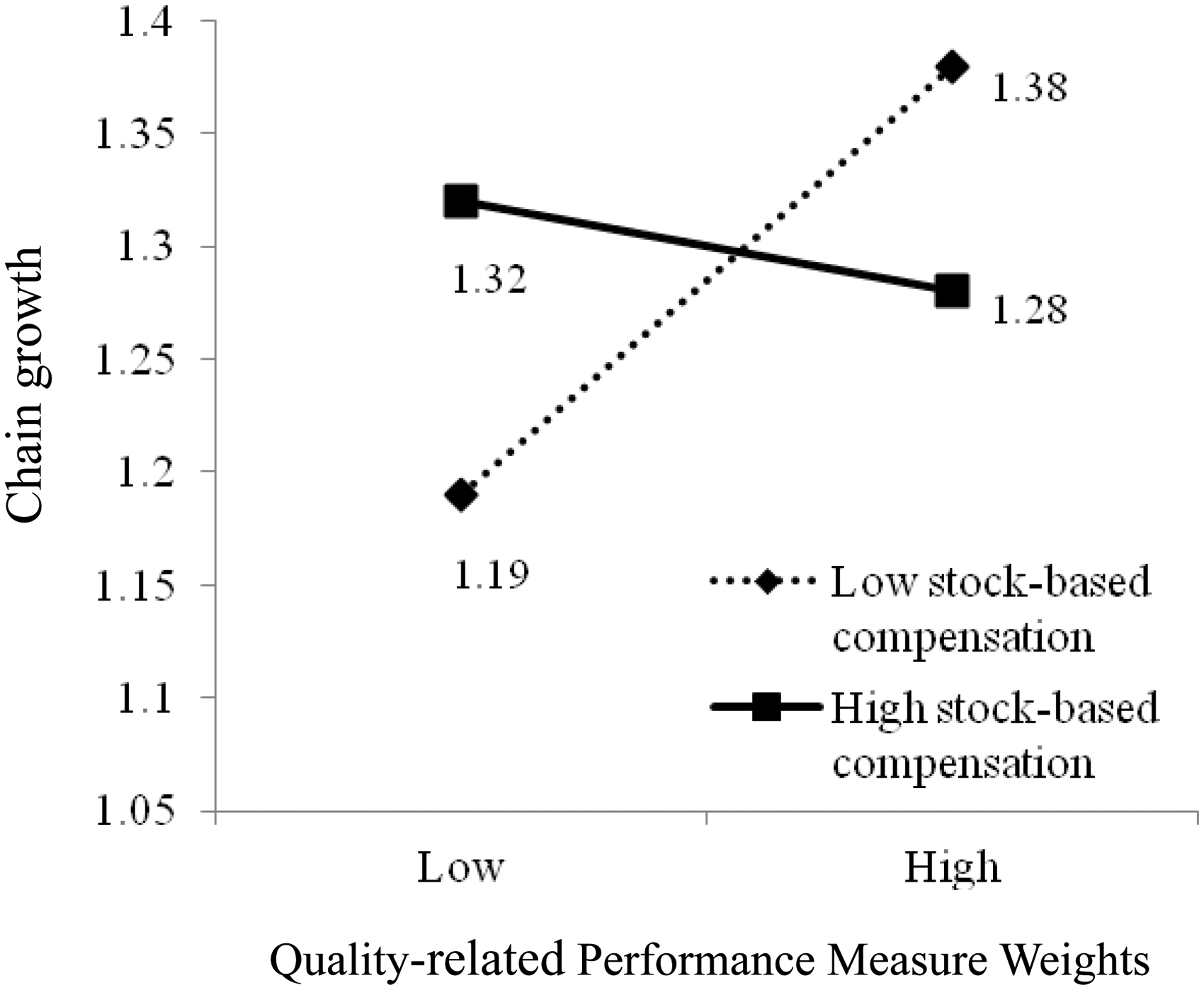
First, this study inserted primary variables in Model 1 (the weights of quality-related performance measures, Q) after controlling for chain age and size. The result exhibited that Q was significantly and positively related to chain growth (β = .26, p < .05). Furthermore, the overall squared multiple correlation value for Model 1 was significant (R2 = .24, p < .01). Thus, Hypothesis 1 was confirmed. Second, R2 exhibited an increase in significance (ΔR2 = .22, p < .01) after the moderators and interaction terms were added to Model 2. A meaningful selection of moderators and interaction terms was represented. The overall squared multiple correlation value for Model 2 was significant (R2 = .46, p < .01). Third, the interaction terms in Model 2 are as follows: (1) The interaction effect between the performance management systems primarily focused on quality (Q) and the attained levels of significance of standardization (β = .29, p < .05). The results implied that the degree of standardization moderated the relationship between emphasizing quality-related performance measures and chain growth. (2) The interaction effect between the performance management systems based on quality (Q) and bonus-based compensation was significant (β = .26, p < .05). This finding suggested that offering store managers bonuses moderated the relationship between asserting quality-related performance measures and chain growth. (3) The interaction effect between stock-based compensation and performance management systems based on quality (Q) attained the levels of significance (β = −.37, p < .01). Therefore, Hypotheses 2, 3, and 4 were tentatively confirmed. This study displayed the interaction effects by using the procedures of Aiken and West (1991) to further understand the substantial effects of interactions between the degree of standardization, rewards, and performance management systems on chain growth. The interactions are illustrated in Figures 3 to 5.
The moderating effect of the degree of operation standardization on the quality-related performance measure weights and chain growth. The moderating effect of stock-based compensation on the quality-related performance measure weights and chain growth.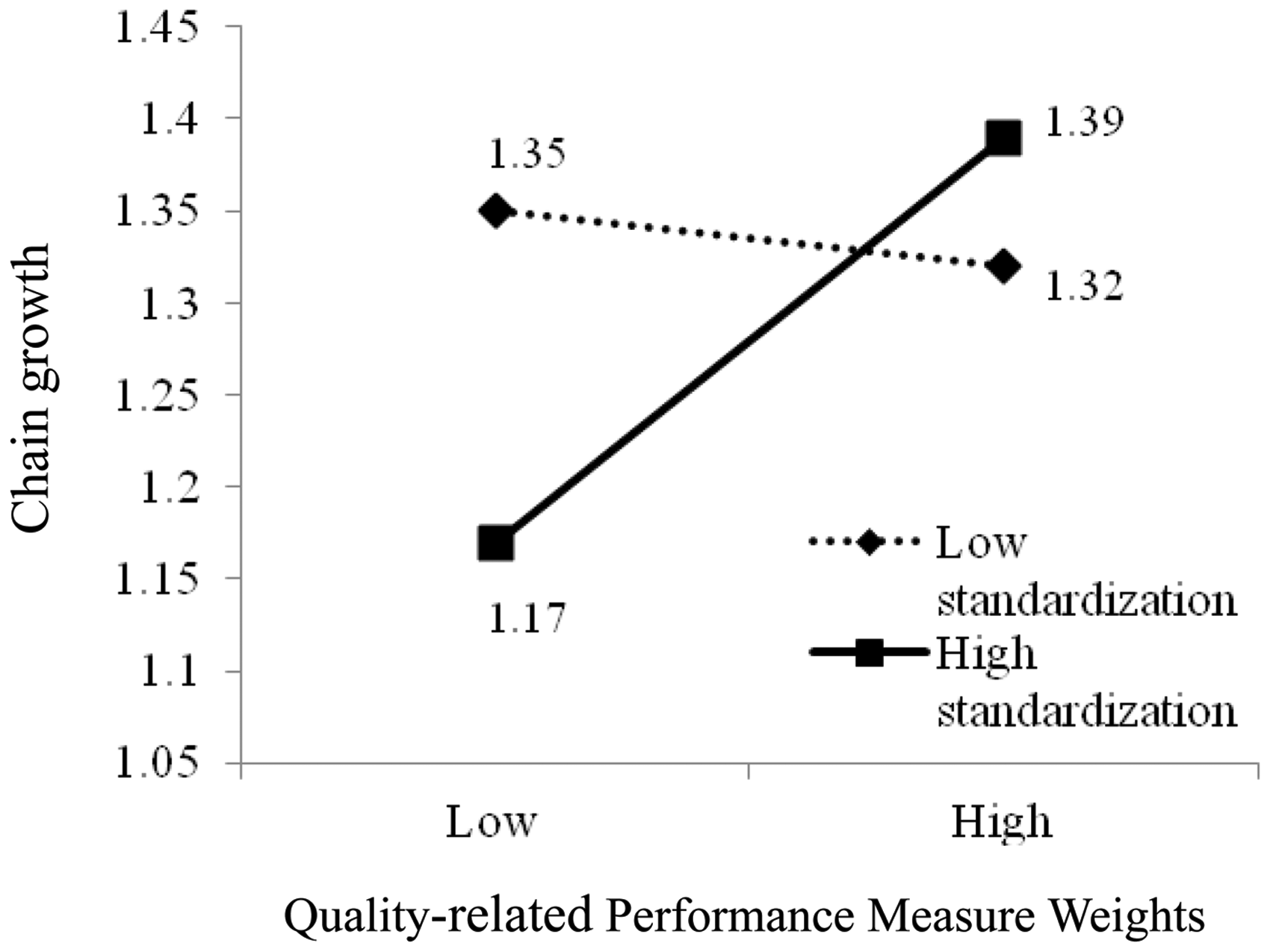
Chain restaurants with higher degree of standardization and higher quality-related performance measures experienced superior chain growth (Figure 3). With regard to chain restaurants with lower degree of standardization, no significant difference was identified in the chain growth between firms that do and do not emphasize quality-related performance measures. Hence, the direct relationship between quality-related performance measure weights and chain growth performance was strengthened when the degree of standardization was greater. Thus, Hypothesis 2 was confirmed.
The adoption of high bonus-based compensation for store managers by restaurant chains emphasized the quality-related performance measures and resulted in superior chain growth (Figure 4). By contrast, emphasizing quality-related performance measures in restaurant chains with low bonus-based compensation insignificantly affected chain growth. Thus, adopting bonuses as the primary mode of compensation strengthened chain growth. When bonuses are high, the quality-related performance measures are positively correlated to chain growth. Thus, Hypothesis 3 was verified.
The moderating effect of bonus-based compensation on the quality-related performance measure weights and chain growth.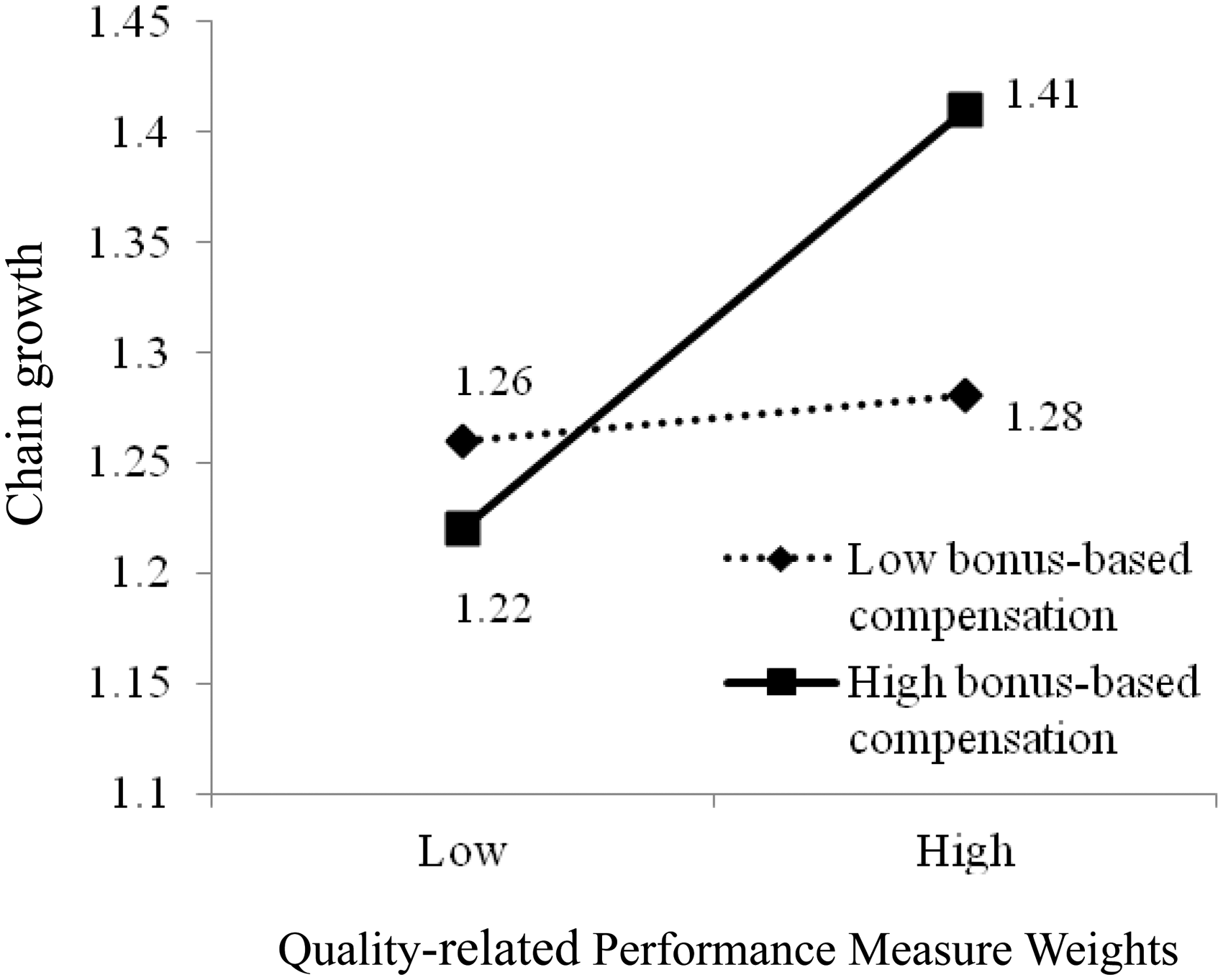
The adoption of low stock-based compensation for store managers by restaurant chains emphasized the quality-related performance measures that resulted in superior chain growth (Figure 5). In the case of restaurant chains offering higher stock-based compensation, emphasizing quality-related performance measures insignificantly affected chain growth. Thus, adopting stocks as the primary mode of compensation did not strengthen chain growth. When stocks are high, the quality performance measures have a negative correlation with chain growth. Thus, Hypothesis 4 was verified.
Conclusions
The majority of hospitality studies greatly focused on customer behavior, customer satisfaction, and marketing strategies. These studies, however, did not emphasize the store manager performance measures. This study aimed to determine the appropriate performance measures of assessing the performance of chain store managers, and the contextual factors of chain restaurants that moderate the effects of performance measures on chain growth.
This research specified the agency problem and the issue of strategic fit were the difficult management problems faced by chain restaurants. The agency problem originated from information asymmetry. This study suggested that determining appropriate performance measures is essential for chain corporations because such measures affect the performance of store managers to implement tasks, which are consistent with the goals of the firm. Moreover, this study identified the quality-related performance measures to assess chain store managers; such that service, food, and environment quality significantly affect chain growth. Many companies use financial measures as a means of evaluating the performance of chain store managers. However, this study indicated the importance of non-financial indicators in chain restaurants. Whether from the perspective of the chain organization or customers, using quality-related performance measures are suitable to assess chain store managers. Thus, chain headquarters can significantly emphasize quality-related performance measures to compel the chain store managers to work hard, satisfying the customer’s perceived overall quality and prompting chain growth.
According to strategic fit, a firm must align its organizational structure with its respective technology environment. In contrast with the focus of previous studies on main effects (e.g., Arnold et al., 2009; Chu and Liu, 2008), this research tested the moderating variables of the relationship between quality-related performance measures and chain growth. The results of this study revealed that the degree of operation standardization and the reward modes did not have significant effects on chain growth. However, these two variables moderate the effects on the relationship between quality-related performance measures and chain growth. This study discovered that when the environmental conditions of a restaurant chain consist of operations that can be easily standardized, significantly emphasizing quality-related performance measures will produce more significant effects on chain growth. Previous studies (e.g., Baker, 1992; Susskind et al., 2003) indicated that standardization helped a principal monitor an agent more easily. The results demonstrated that effective monitoring only occurs when the operating procedures are easily standardized. Moreover, this study tested the combination of various types of reward mode and quality-related performance measures to provide more effective incentives and achieve the facilitation of chain growth. The effect on chain growth becomes more significantly positive if quality-related performance measures and bonus-based compensation are simultaneously emphasized. By contrast, the effect on chain growth becomes more significantly negative if quality-related measures and stock-based compensation are simultaneously emphasized. The empirical results are consistent with the assertion of Baker (1992). Baker affirmed that bonus-based compensation must be adopted when an agent possesses valuable information, and his or her performance is easily measured. Conversely, stock-based compensation must be used as the primary reward mode when no good performance measures are available. In the restaurant industry, the efforts of a store manager immediately affect the store’s overall service quality. Compared with the research and development managers in the high technology industry, the performance of restaurant store managers is easily measured via customer satisfaction surveys. Hence, bonus-based compensation is more suitable for the business environment in the restaurant industry than stock-based compensation. In summary, this study provides insights on managing chain organizations by demonstrating the alignment of performance measures, operation standardization, and reward modes in enhancing the effectiveness of performance measures on chain growth.
This study also provides viable implications for top managers to develop an effective performance management system. First, placing greater emphasis on quality-related performance measures will produce a greater effect on chain growth in the chain restaurant industry. Second, chain restaurants with higher degrees of standardization must allocate more weight on quality-related performance measures than chain restaurants with lower degrees of standardization. Third, the store manager’s quality-related performance measures and bonus-based compensation must be simultaneously adopted to enhance the effect on chain growth. Lastly, operations in chain restaurants that can be easily standardized are suitable growth strategies. The opposite condition is valid for chain restaurants with operations that are difficult to standardize.
This study has two limitations. First, this study was conducted on a small sample, which might have caused research biases. Second, this study lied in its limited research scope pertaining only to restaurant chains. Other chain industries may have different store manager assessment measures. Other establishments may also have various moderators because of differences in industry characteristics. Future research can extend the scope of chain stores to examine the incentive scheme in other chain establishments, including hotels, travel agencies, supermarkets, automobile services, and electronic suppliers. The performance measures for store managers might be relatively different from those in restaurant chains because of the specific industrial characteristics of each chain. The associated moderating variables would also vary in accordance with the establishment’s respective industrial characteristics. The tasks performed by the managers in headquarters are relatively different from those in branch stores. Hence, future research can address the corresponding questions for managers in headquarters.
Footnotes
Funding
This research received no specific grant from any funding agency in the public, commercial, or not-for-profit sectors.
Conflict of Interest
None declared.