



Abstract
Guimarães is a UNESCO world heritage site, deemed as such in 2001 and hosted the 2012 European Capital of Culture. This paper examines the profile, destination image, and motivations of tourists’ visiting behaviors in Guimarães before the cultural event. Based on survey responses from 276 tourists, we found that tourists arriving in Guimarães had previously visited the two most important cities in the northern part of Portugal. These respondents were relatively young and well educated compared to the average tourists that visited Portugal. The results suggest that many tourists were aware of the city status as a world heritage site that encompasses a historic center, monuments, and architectural buildings. Furthermore, these perceptions shape the image of Guimarães, as the factor analysis indicates that “historical background and functionality” was the most reliable and valid factor behind the choice of visiting the city.
Introduction
Tourism is seen as one of the main drivers of socio-economic progress in both developed and developing regions. Although the evolution of tourism in recent years has been somewhat irregular, domestic and international tourism industries continue to expand in response to the markets demand, stimulated by consumers’ increased leisure time and relative wealth (UNWTO, 2011, http://www2.unwto.org/).
The competition among tourist destinations is fierce due to the increasing number of cities that envisage attracting international travelers. Cultural tourism is one of the most growing segments of the tourism industry. Many tourists who visit heritage sites seek a value-added and authentic experience, when compared with the traditional products (sea, sun, sand) or mass destinations (Yankholmes and Akyeampong, 2010). In this context, destination images are important, as they influence people’s perceptions of places and can affect their choices and behaviors (Chen and Chen, 2010).
The city of Guimarães, in the northwest of Portugal, was deemed a world heritage site (UNESCO) in December 2001 and was one of the cities that hosted the European Capital of Culture (ECOC) in 2012. One of the main outcomes of this event could be the reshaping of the image of the city, both by attenuating the most perceived negative attributes or by repositioning the city image according to the objectives and goals of the strategic communication plan tailored by the Portuguese organizers of the ECOC.
Until now, few studies have been undertaken in Portugal regarding the destination image (Agapito et al., 2010; Lopes, 2011). Besides, to our best knowledge, none has focused on heritage tourism destinations. Having that in mind, the present study examines tourists’ perceptions of Guimarães as a world heritage tourism destination and the motivations underlying tourists’ selection of the city. The identification of the visitors’ profile is also envisaged.
The understanding of tourists’ perceptions of a heritage destination is important in developing successful marketing strategies to promote and position a destination. In the case of Guimarães, the results are even more important, due to the organization of the ECOC 2012, as they suggest actions and tools to reshape some weak and/or negative dimensions of the image of Guimarães or to reinforce/reinvent a positive one.
As mentioned, this paper addresses the motivations and destination image in the context of a heritage city and the profile of the visitors. “Introduction” section clarifies the concepts of cultural and heritage tourism and presents some tourist typologies. “Cultural and heritage tourism” section describes the motivations to visit a heritage destination. “Travel motivations to heritage sites” section provides a brief overview of destination image literature relevant to the study. Then, “Tourism destination and image” section describes the general characteristics of the municipality of Guimarães. “Guimarães as a heritage city” section sets out the methodology used. “Methodology” section presents the results and discussion. The final section provides the study’s policy and managerial implications and conclusions.
Cultural and heritage tourism
Cultural tourism refers to a segment of the tourism industry that places special emphasis on heritage and cultural attractions. This is one of the fastest growing segments of the tourism industry (Chen and Chen, 2010; Ritchie and Inkari, 2006; Sharma and Dyer, 2009; Shin, 2010).
The changes in time and working conditions as well as expectations about holidays and leisure are contributing factors to this segment. The demand for more active vacations with more cultural elements, as opposed to passive and regenerative elements, has attracted more and more sectors of the population (Ritchie and Hudson, 2009; Ritchie and Inkari, 2006; Yankholmes and Akyeampong, 2010). The new middle class, with higher education levels and income, has been responsible for the increase of this segment of tourism (Richards, 1996).
According to Besculides et al. (2002: 303–304), cultural tourism includes visiting historic or archaeological sites, involvement in community festivals, watching of traditional dances and ceremonies, or merely shopping for handcrafted art. In less-developed regions, heritage and cultural attractions may include archaeological or historic sites, museums, traditional religious practices, handicrafts, gastronomy, or cultural performances.
The World Tourism Organization defines cultural tourism as the movement of persons due to cultural motivations such as study tours, performing arts, travel to festivals and other cultural events, visit to sites and monuments, travel to study nature, folklore, or art or pilgrimages (WTO, 1985).
According to Richards (1997), cultural tourism includes all movements of persons to specific cultural attractions such as heritage sites, artistically and cultural manifestations, and arts and drama outside their normal place of residence. Silberberg (1995) states that cultural tourism is a form of tourism motivated by interest in the historical, artistic, scientific, or heritage offerings of a region. Stebbins (1996) defines cultural tourism as a genre of special-interest tourism based on the search for and participation in new and deep cultural experiences, whether aesthetic, intellectual, emotional, or psychological.
Several authors (Cadima Ribeiro et al., 2012; Henriques, 2007; Ritchie and Hudson, 2009; Yankholmes and Akyeampong, 2010) emphasize the desire to experience another culture, in multiple forms and as a unique cultural experience that makes the experience authentic and memorable.
Recently, creative activities and intangible heritage were added to enlarge the definition of cultural tourism (OECD, 2009), and the cultural experience tended to be looked, more and more, as a holistic process (Russo and Van der Borg, 2002). However, as the time passes and tourism products diversify, it is increasingly difficult to incorporate all of the activities offered by a community, region, group, or institution within a well-established definition of cultural tourism.
The economic impact of cultural tourism is overwhelming: according to the OECD (2009), cultural tourism accounted for around 40% of all international tourism, or 360 million arrivals, in 2007. A study by the European Commission states that 60% of European tourists are interested in cultural discovery, and around 30% of tourist destinations are chosen based on the presence of heritage sites, which can be visited (EICR, 2004).
Narrowing the concept of cultural tourism, we can find the one of heritage tourism, classified by Timothy and Boyd (2006) as one of the most important and widespread types of tourism, being one of the oldest forms of travel. The main motivation for visiting a site is based on the place’s heritage characteristics according to the tourists’ perception of their own heritage; that is, a phenomenon based on tourists’ motivations and perceptions rather than on specific site attributes (Chen and Chen, 2010; Poria et al., 2001: 2006).
Frequently, includes visiting built (such as historic buildings), cultural (such as traditional cultural events), and natural arenas (such as national parks). It is derived from past images of history translated into reality that is constructed into costume dramas and re-enactments of past historic events (Goh, 2010).
Using other words, its central definition has to do with “the present day use of the past,” as focused by Ashworth, 2003 and Graham et al., 2000, cited by Timothy and Boyd (2006) and includes tangible and intangible elements from the cultural landscape. Still following Timothy (2011: 4), heritage tourism is linked to travelers “(…) seeing or experiencing built heritage, living culture or contemporary arts.”
Taking a demand approach, the majority of research undertaken on this issue has been centered on motivations and segmenting visitors’ markets (Timothy and Boyd, 2006, following Poria, 2003). The present paper is contributing to know more about motivations in a Portuguese particular heritage destination, Guimarães. From that empirical approach, one envisages to conclude if common empirical findings reported by the literature do apply to this case or if there is something singular to report.
Many tourists that visit heritage sites consider their experiences as value-added, and this can be viewed as a factor of differentiation between destinations and, at the same time, a chance to increase the number of returning visitors. Most of these tourists are disenchanted with traditional tourism products and mass destinations, seeking more authentic experiences provided by heritage attractions (Yankholmes and Akyeampong, 2010).
One of the reasons to explain the interest for heritage sites is the profile of heritage tourists, which is very different from the average tourist. In a pioneering work, Silberberg (1995) concluded that the heritage tourist earns more money and spends it more frequently while he/she is on vacation. The same author also identified that this kind of tourist is more educated, is older, and spends more time at the destination.
In Hong Kong, McKercher (2002) identified five segments of cultural tourists based on the importance of cultural motives (centrality) and depth of experience: the purposeful (high centrality/deep experience), the sightseeing (high centrality/shallow experience), the casual (modest centrality/shallow experience), the incidental (low centrality/shallow experience), and the serendipitous (low centrality/deep experience).
In the case of Nyaupana et al. (2006), three distinct segments were found among tourists visiting three Native American cultural heritage sites in Arizona, USA: culture focused (one-third), culture attentive (one-half), and culture appreciative (less than one-fifth). According to the authors’ conclusions, the first segment (culture focused) is similar to the purposeful cultural tourists proposed by McKercher (2002) and to Silberberg’s (1995) greatly motivated tourists (Nyaupane et al., 2006).
In the European case, Pérez (2009: 125), following Bywater (1993), found three profiles of cultural tourists: “(a) the culturally motivated are a small market segment that is attracted to a destination due to cultural reasons or causes, which leads them to spend several nights at the place of destination; (b) the culturally inspired are inspired by cultural sites and heritage such as the Alhambra in Granada and Venice. They want to see the same places, which imply problems of asset management. These tourists spend short periods of time in culture destinations and are not motivated to return to the same place; (c) the culturally attracted are those who carry out a day visit to cultural sites and heritage, but are not strictly motivated by cultural reasons.”
According to Perez (2009: 126), following Richards (2004), the profile of cultural tourists has not varied much over time. These groups include more women than men, younger people, and higher educational attainment, which is associated with higher consumption of culture.
Travel motivations to heritage sites
In the literature, travel motivations have been assessed in relation to the push and pull forces or demand stimulation. Crompton (1979) identified seven push motives and two pull motives. The push motives were escaped from a perceived mundane environment, exploring and the evaluation of self, relaxation, prestige, regression, enhancement of kinship relationship, and facilitation of social interaction. The pull motives were novelty and education.
Gnoth (1997) suggests that motivation formation could be expressed in terms of inner-directed values (emotional drives) and outer-directed values (cognitive). However, in addition to push and pull factors, a hedonic factor could be added, showing that emotional and experiential needs are relevant to pleasure-seeking and choice behavior (Goossens, 2000).
In general, motivations to travel could be related to physical motivators (physical rest, participation in sports, need for recreation at a beach, and person’s bodily health), cultural motivators (desire to gain knowledge about other countries), interpersonal motivators (desire to meet new people, visit friends or relatives, get away from routine or to make new friendships), and status and prestige motivators (self-esteem and personal development) (Jang and Cai, 2002).
According to Poria et al. (2004), the two most common reasons to visit a heritage site reported in the literature are education (i.e. the tourists’ willingness to learn) and entertainment (i.e. the tourists’ desire to be entertained). In the same way, according to Pérez (2009), among the main travel motivations stand out the atmosphere and environment of the destination, the opportunity to see interesting things, and the desire to learn more about the local culture.
Based on a sample of English-speaking international tourists leaving Israel through the Ben-Gurion airport, Poria et al. (2004) found three groups of reasons for visiting heritage sites: heritage experience, learning experience, and recreational experience. These reasons were linked to the tourists’ perceptions of the site in relation to their own heritage and their willingness to be exposed to an emotional experience (Poria et al., 2004).
In a study of potential visitors to the Anne Frank House in Amsterdam, Poria et al. (2006) reveal the existence of the emotional involvement and bequeathal of the site’s narrative. The findings also indicate a distinct relationship between tourists’ perceptions of a site relative to their own heritage and the motivations for visiting the site.
A more recent study by Yankholmes and Akyeampong (2010) shows that tourists’ perceptions of Danish-Osu (Ghana) reflect their knowledge of the site in relation to its cultural heritage attributes. They also found that tourists have dual experiences at the site: those that relate to recreational pursuits of heritage sites and those that ascribe meanings based on their background.
The results related to Australia suggest that tourists are motivated differently when deciding to visit heritage destinations. According to Goh (2010), the educational value was the most frequently stated reason for visiting a heritage destination, followed by positive feedback from previous tourists and the famous reputation of the site.
In Taiwan, Chen and Chen (2010) suggest that the total experience the tourists seek from the heritage site can be obtained through leisure, culture, education, and social interaction.
Tourism destination and image
The World Tourism Organization defined a tourism destination as “a physical space in which a visitor spends at least one overnight. It includes tourism products such as support services and attractions, and tourism resources within one day’s return travel time. It has physical and administrative boundaries defining its management, and images and perceptions defining its market competitiveness. Local destinations incorporate various stakeholders often including a host community, and can nest and network to form larger destinations” (WTO, 2007: 1). The other side of the mirror is the destination image, which could be considered a subjective interpretation of the destination by tourists.
This image is based on the perceptions each tourist has of all destinations they have been to or have heard of (San Martin and Rodriguez, 2008). Thus, the destination image is “formed through interpretations of rational and emotional context, which comprise two interrelated components: cognitive or perceptual (attributes) and affective or evaluative (feelings)” (Agapito et al., 2010: 92–93).
Destination image is a central cue in the destination selection process and, thus, contributes a lot to the understanding of the tourist’s behavior (Baloglu and McCleary, 1999).
One of the great challenges in the management of a destination image is the differentiation that needs to be done in order to gain sustainable competitive advantages regarding other places’ images. This differentiation strategy is based on attributes (tangible or intangible) but also involves the sum of all beliefs, ideas, and impressions that people associate with a destination (Crompton, 1979; Kotler et al., 1993). Therefore, the role played by destination image surpasses the reality of the destination, as tourists based their decisions mostly on image.
From a marketer’s point of view, the management of destination personality is also important. According to Ekinci and Hosany (2006), a destination personality could be described according to sincerity (reliable, sincere, intelligent, successful, wholesome), excitement (exciting, daring, original, spirited), and conviviality (friendly, family oriented, charming). Pike and Ryan (2004) approach the destination image from the positioning point of view describing Auckland (New Zealand) as having good life/infrastructure, getting away from it all, outdoor play, and weather.
As mentioned, the empirical research available shows that a destination image positively influences consumer perceptions and ultimately the demand for a place. In Lagos (Portugal), the attributes that explain the tourists’ recommendations to friends and family are, in descending order, “interesting cultural heritage, good value for money, interesting cultural events, calm sea, and good sports facilities” (Agapito et al., 2010: 105). In the case of the Amasra region (Turkey), the visitors are affected by the history and cultural heritage, shopping and food, peaceful and clean environment, and architecture and infrastructure of the region (Aksoy and Kiyci, 2011). In the case of Ios (Greece), the findings revealed that visitors enjoy the relaxing atmosphere and the party mood of the island (Stylidis et al., 2008).
Tapachai and Waryszak (2000) studied the image of Thailand and the United States using five dimensions (functional, social, emotional, epistemic, and conditional). The results show that Thailand was perceived as a country of cheap purchases, exotic food, historical places, virgin tropical rural regions, and gorgeous sights (functional dimension), thus providing a culture experience and climate (epistemic dimension) with proximity, cheap travel, and accessibility to other close destinations (conditional dimension). Similarly, the attributes found for the United States include a functional dimension, characterized by a fascination for purchases, famous theme parks, well-known landmarks, big cities, gorgeous sights, and scenery; an epistemic dimension, which includes the experience of the destination, and a lot of things to be seen and done; and a conditional dimension supported in the lack of linguistic barriers, cheap and quality transport, and special sports events (Tapachai and Waryszak, 2000).
Therefore, in the process of decision making, destinations with stronger positive images are more likely to be chosen. However, the destination choice should be based not only on the perceived destination images but also on the attitudes formed from the available sources of information, the position of the destination compared to other competitors, and the ability to satisfy the perceived needs (Truong and King, 2009).
In conclusion, for a tourism destination to be successful, it must project an image that conveys the specific benefits desired by tourists (both tangible and intangible) and, at the same time, search for differentiation in a meaningful way to visitors.
Having in mind the empirical evidence provided by the literature on heritage tourism and travelling motivations to those sites, in our empirical approach, we will try to capture both the Guimarães visitors’ profile and the perceived attributes and of the city.
Guimarães as a heritage city
Guimarães is located in the northern part of Portugal and is one of the most important towns of that territory, after Porto, Vila Nova de Gaia, and Braga (Cadima Ribeiro et al., 2012). The city was declared by UNESCO to be a World Heritage Site in 2001. The main reasons for this designation were the historical center and its role as the “cradle of the nation” (place of birth of D. Afonso Henriques, first king of Portugal), with the castle being a symbol of the independence of the country against Spain (Cadima Ribeiro and Remoaldo, 2011).
In 2012, the municipality hosted one of the 2012 European Capitals of Culture (ECOC), after Lisbon (the capital) in 1994 and Porto (the second most important city) in 2001. This was the first time that a Portuguese medium city hosted such a mega-event, and so, several challenges could be pointed out.
Speaking of mega-events, it seems useful to retain that we can define such kind of event as a large-scale one (cultural, sporting, and, even, commercial), which has a dramatic character, mass popular appeal, and international significance (Liu, 2012; Ritchie, 1984; Roche, 2000).
Like other mega-events, a European Capital of Culture tends to generate long-term impacts on host communities (Gursoy et al., 2011; Palonen, 2011), which can be of economic, sociocultural, psychological, environmental, and political nature. It can also reinforce the image of the city at national and international level (Deccio and Baloglu, 2002; Kim et al., 2006).
As highlighted by the official study about the ECOC 2012 undertook by the University of Minho, the city faced in 2012 a strong growth in the tourism demand, with the tourist offices of Guimarães registering an increase of 106.7% in the amount of visitors compared with the average of the previous 3 years (Universidade do Minho, 2013). Besides, according to the same source (Universidade do Minho, 2013) and following the results of a survey implemented in January 2013, covering a sample of small retailors of the city, 80% of the respondents considered positive (64.9%) or very positive (23.9%) the business impact of the ECOC 2012. Regarding the reshape of the international image of the city, it seems to be too soon to derive a conclusion.
During the last decade, the city experienced a slight decrease in the population (0.9%), and the hosting of the mega-event provided an opportunity to reinforce the pride of residents and, as underlined, attracting new visitors to the city. As a matter of fact, tourism was looked by local authorities as a major driver for regional growth. Therefore, the organization of the ECOC 2012 in Guimarães was an opportunity to reinforce the image of the city as a cultural destination both within the country and internationally.
In a previous study, Vareiro et al. (2011) concluded that residents’ perceptions toward tourism in Guimarães were very positive, due to job-creation expectations and the association kept between tourism development, economic opportunities of tourism, and the preservation of historical buildings, traditional events, and culture.
If “heritage is not simply the past, but the modern-day use of elements of the past” (Timothy and Boyd, 2006: 4; Yankholmes and Akyeampong, 2010: 603), then Guimarães municipality can be seen as an example of modern view and use of its past.
Methodology
The methodology was quantitative in nature and employed a survey research design as a common method to investigate motivations to travel and perceptions of destination image. Before the design of the questionnaire, we conducted an in-depth interview with those responsible for the office of tourism of the city to obtain information on the attributes and motivations of tourists. Also, secondary data (statistics) and previous surveys related to tourists’ behavior were considered.
After the design of the questionnaire (both in Portuguese and English), a pre-test was performed to ensure the internal and external consistency of the questions. The final self-administered structured questionnaire was applied in the two tourist offices in the city of Guimarães, both located in the classified area of the city (cultural heritage) between December 2010 and August 2011.
The final questionnaire includes three parts. The first part of the questionnaire dealt with cities visited before or after the tourists arrived to Guimarães. The other is a closed, multiple-response question about tourists’ motivations asking why tourists had chosen this specific heritage destination (such as touring, business, culture, and sports). The second part explored tourists’ perceptions of destination image using 21 attributes (such as monuments, gastronomy, historical center, and accessibility), measured by a five-point Likert scale. Another question aimed to ascertain whether the city could be recommended by tourists to relatives and friends with a multiple-response question (yes/no/perhaps). The third part covered the demographic characteristics of the respondents (such as gender, age, and education).
The final self-administered structured questionnaire was applied in the two tourist offices located in the classified area of Guimarães. Given the seasonality of tourism in the city, which also occurs elsewhere in the country, it was decided that the questionnaire would be applied during three different periods: December 2010, corresponding to the low season (90 questionnaires); April 2011, corresponding to the middle season (90 questionnaires); and July and August 2011, corresponding to the high season (96 questionnaires). A total of 300 questionnaires were filled in, of which 276 were properly completed and provided usable data.
The amount of questionnaires applied had in mind the costs incurred and the figures used in other studies, as Poria et al. (2006), where 205 interviews were conducted at an historic site (Anne Frank House in Amsterdam, the Netherlands), and as Yankholmes and Akyeampong (2010), where 218 questionnaires were applied at another heritage site (Danish-Osu, Ghana).
The questionnaire used did not envisage distinguishing between domestic and international tourists, even we were aware that these two types of visitors could have a different perception toward the city of Guimarães. Either domestic or international tourists tend to make use the two tourist offices located in the classified area of Guimarães. One being aware of that, it was there that the questionnaire was applied.
Annually, the local authorities use to collect data regarding the city’s visitors (www.guimaraesturismo.com). From there, we were aware that the tourists came, mostly, from Spain, Portugal, and France. Additionally, official statistics about the year 2011 told us that 35% of the hosted visitors were foreigners versus 53% that had come from Portugal (Instituto Nacional de Estatística, 2012). Remaining figures refer to Portuguese visitors that were living abroad.
Since we had several variables (21) by which to measure tourists’ perceived images of Guimarães, we decided to use factor analysis (with varimax rotation and principal components as the extraction method) to reduce data, transforming the original set of 21 variables into a smaller set of representative factors.
The use of factor analysis in this study relies on a previous diagnosis based on the computation of the Kaiser–Meyer–Olkin (KMO) statistics and on the Bartlett test. Cronbach’s alpha coefficients evaluate the reliability of the obtained factors.
Results and discussion
Sample characteristics.
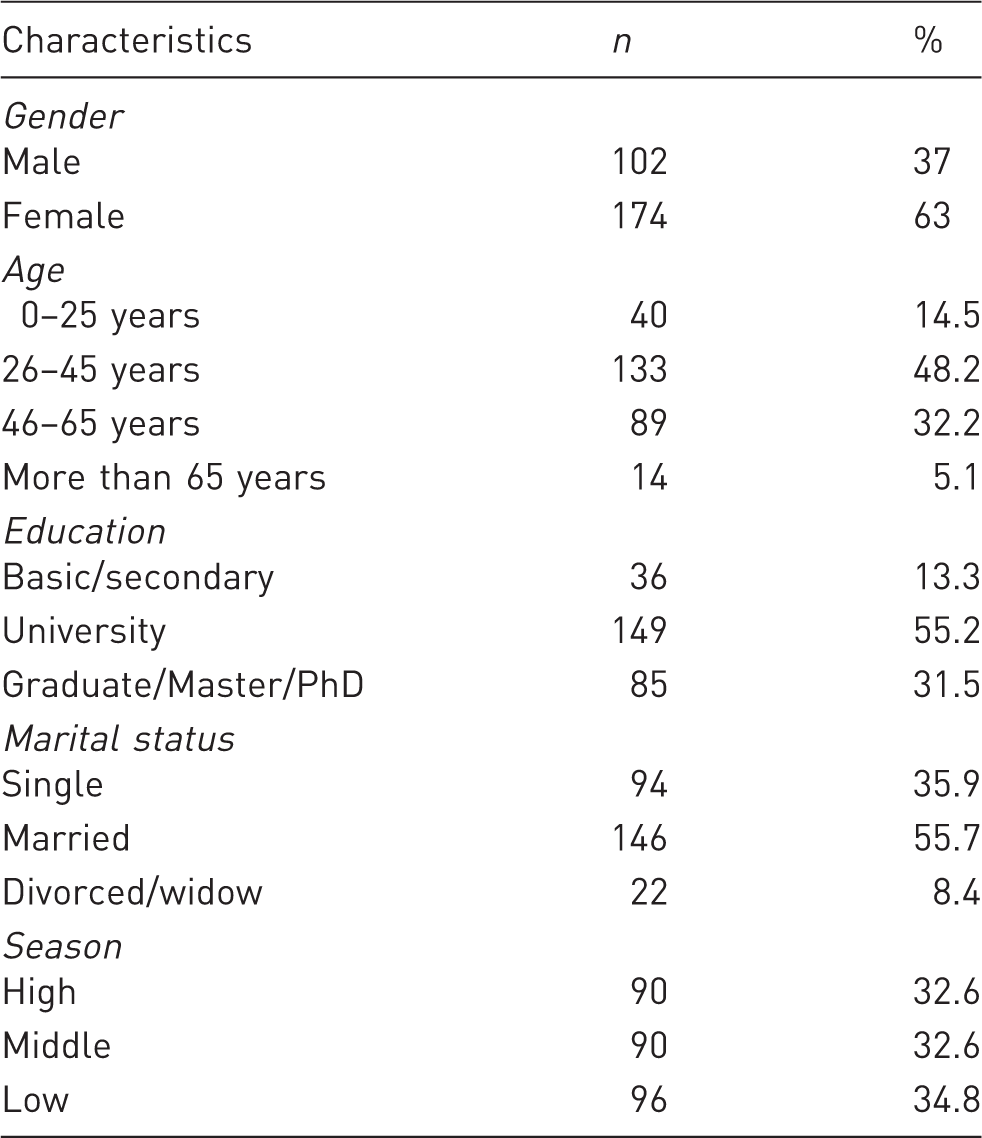
The level of education is one of the characteristics that Silberberg (1995) identified as part of the heritage tourist. On the contrary, significant differences were found between the age cohort of tourists visiting Guimarães (mostly under 46 years old) and the Silberberg (1995) study (where visitors were relatively older).
However, Perez (2009: 126, citing Richards, 1996 and 1997) has indicated that the profile of cultural tourists was increasingly younger. This is consistent with the results of the study of Yankholmes and Akyeampong (2010), as the modal age group was 18–34 years old. Poria et al. (2006) found something slightly different, as the mode answer of their sample was 20–29 years old (51.9% of the sample).
These different age profiles may be explained by the context (country, region, heritage site type) and time (year, seasonality) in which these studies have taken place. Given the nature of our sample (composition and size), no further considerations will be made regarding a definitive and specific typology of heritage tourists.
Destinations visited by tourists.
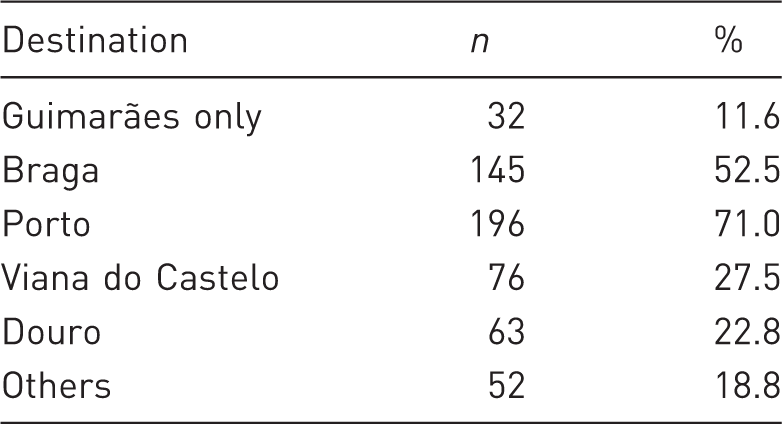
This occurs, first, because Porto has an international airport and a network of public transports (railways, buses, underground) and is the place of departure for boats that travel to Douro. A second reason for the attracting role played by the Porto metropolitan area is its critical dimension, which enhances the supply of accommodation in quality (multi-star hotels) and quantity (number of beds). Finally, a wider range of attractions and experiences is available to different typologies of tourists in the metropolitan area, such as beaches, museums, Porto wine caves, and shopping.
In addition to the importance of Porto as a tourism destination, it is very important that all the cities belonging to the northern region could benefit from tourism as well. Creating thematic itineraries (such as religious and wines routes) that link the different towns and rural communities outside the Porto metropolitan area is one strategy to increase the potential contribution of those places to regional development.
Meanwhile, one should have in mind that tourism seasonality is a major constraint. Different strategies have been implemented to attenuate this phenomenon, which includes attracting selected typologies of tourists (such as seniors), organization of special events, academic conferences, and professional seminars, among others.
Tourists’ motivations.
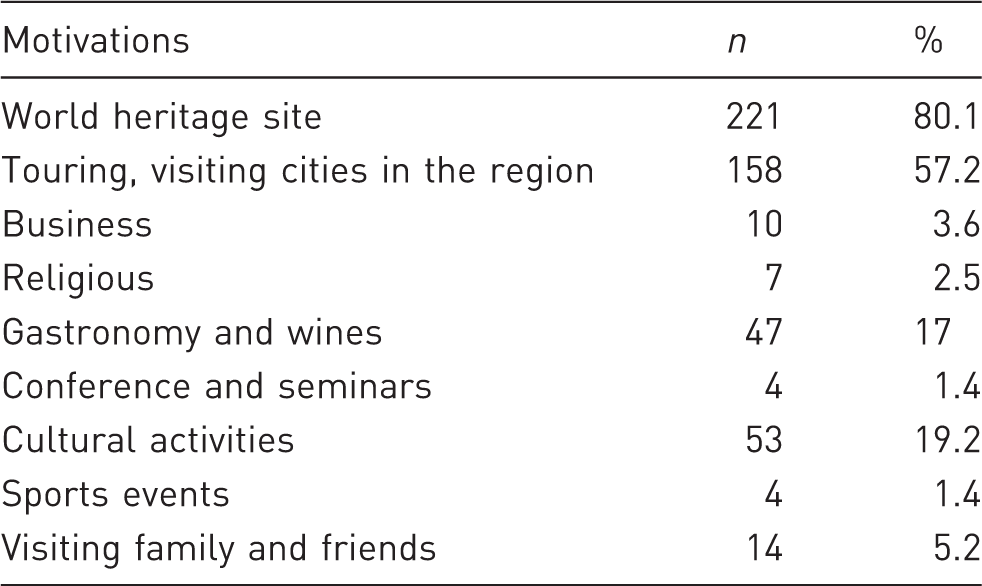
On the opposite side of the motivations, spectrum are tourism-related activities, such as touring (57.2%), cultural activities (19.2%), and other minor motivations. These motivations could be associated with the “tourists’ desire to be entertained” (Poria et al., 2004), which motivates tourists to pursue a recreational experience.
We know that historic sites can attract visitors due to a wide range of reasons (Chen and Chen, 2010; Poria et al., 2006). Does Guimarães provide an atmosphere of medieval age? Perhaps, the results we got are consistent with the ones of Poria et al. (2004, 2006) when they concluded that the tourists’ perceptions of a site may have a close relation to their own heritage and their willingness to be exposed to an emotional experience. The rising of such hypothesis seems making sense as visitors are, mostly, from neighbor European countries.
Attribute Perceptions of Guimarães as a heritage destination.
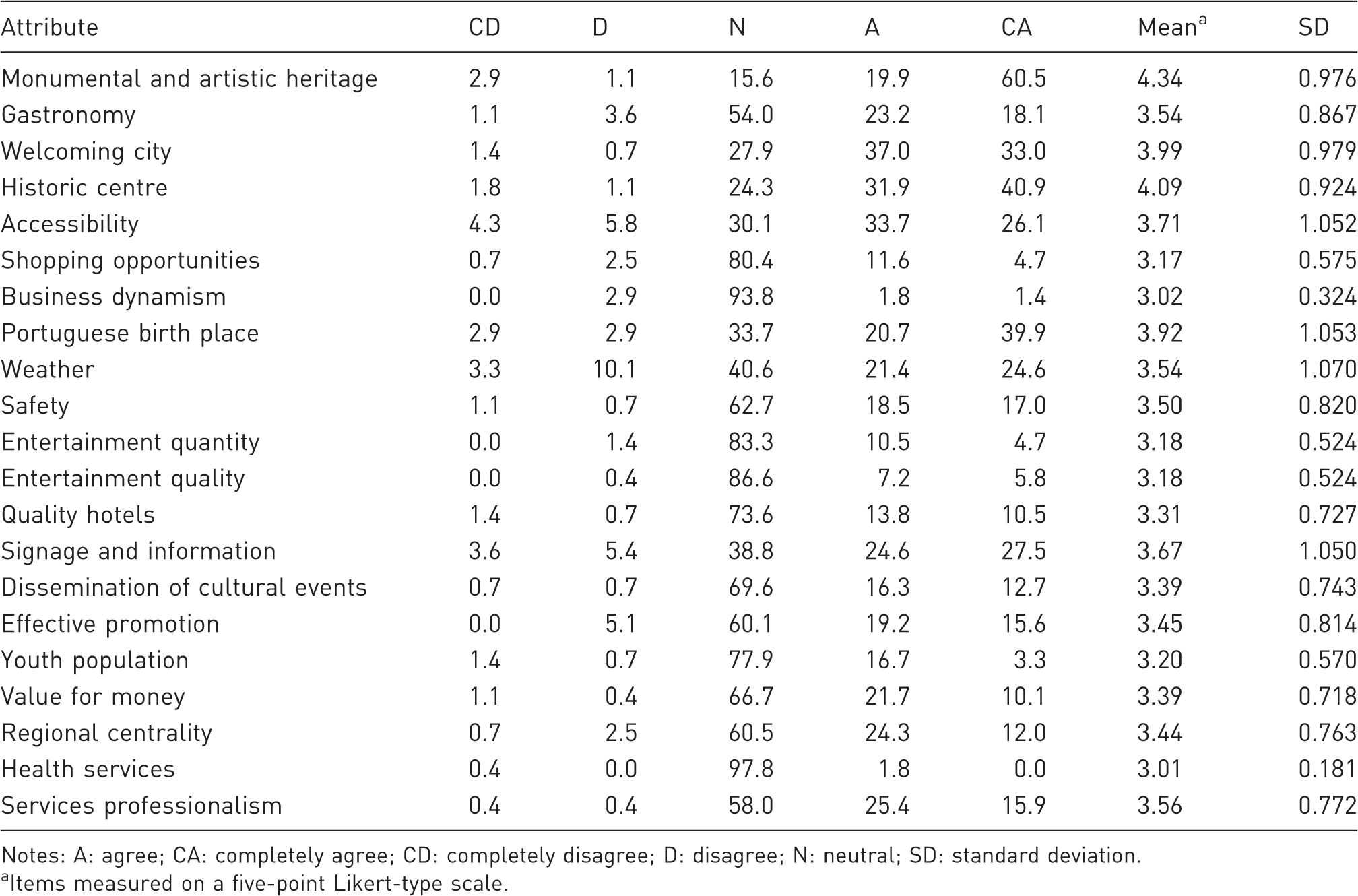
Notes: A: agree; CA: completely agree; CD: completely disagree; D: disagree; N: neutral; SD: standard deviation.
aItems measured on a five-point Likert-type scale.
This is also in line with the declaration of Guimarães as a UNESCO world heritage site in 2001. The item “welcoming city” was also pointed out by most of the tourists (67%) visiting Guimarães, who considered it a friendly city in which the residents are helpful and sympathetic. Another salient attribute of Guimarães was the linkages to the birth of Portugal as a nation and king Afonso Henriques.
The least relevant perceived attributes of the city were “health services” and “business dynamism” (mean values around 3), probably because they did not experience the health services, and the business environment was difficult to envisage.
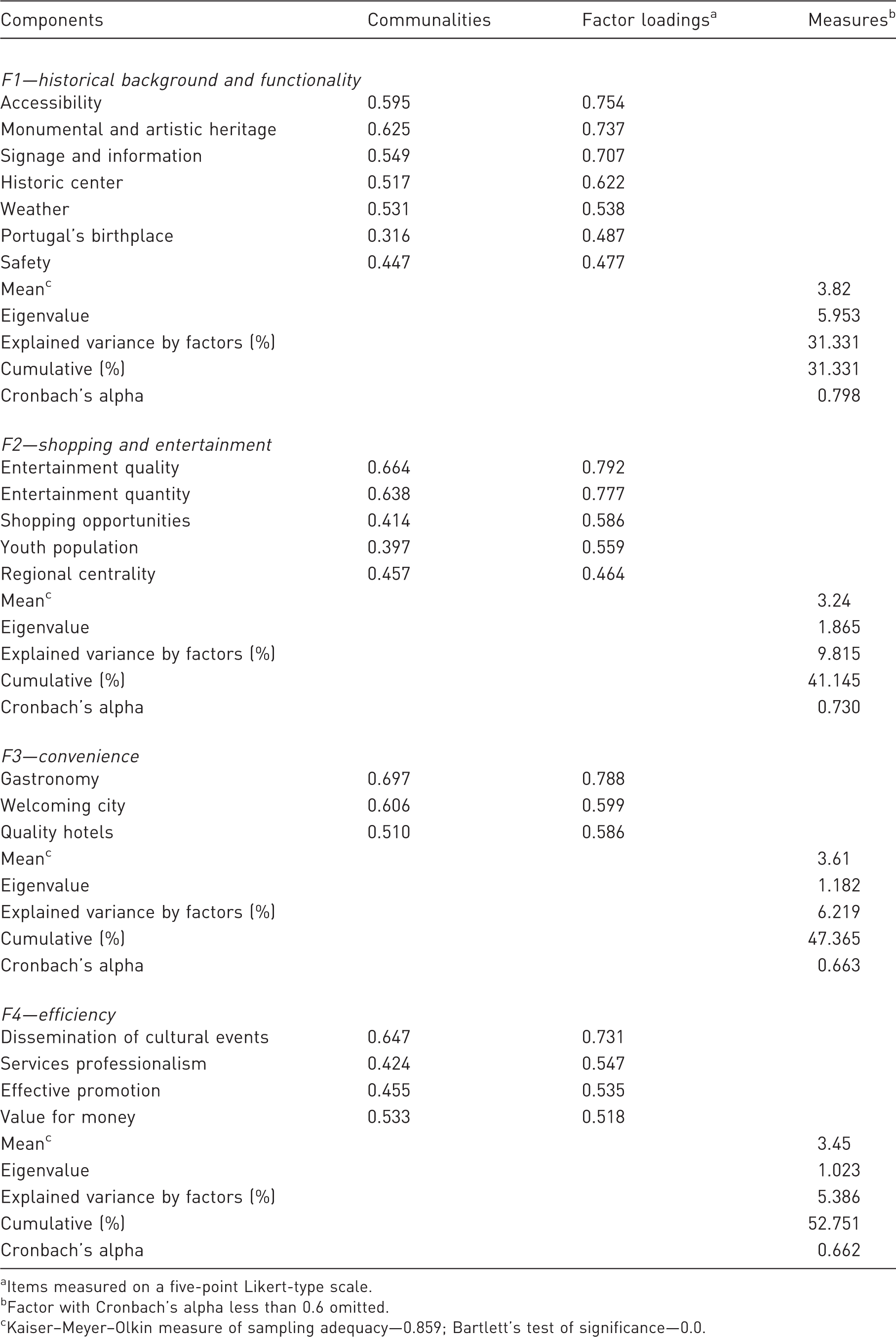
Principal component analysis with Varimax rotation (n = 276).
aItems measured on a five-point Likert-type scale.
bFactor with Cronbach’s alpha less than 0.6 omitted.
cKaiser–Meyer–Olkin measure of sampling adequacy—0.859; Bartlett’s test of significance—0.0.
The principal component factor analysis with varimax rotation was used to identify the underlying dimensions. After inspection of item content for destination image, two items were deleted corresponding to a fifth factor with a Cronbach’s alpha of less than 0.6. A final four-factor model was estimated with 19 items. The factor solution accounted for approximately 52.7% of the total variance explained, with all communalities ranging from 0.316 to 0.697.
The factors represent the overall perception of all respondents regarding the destination image of Guimarães and were labeled as “historical background and functionality,” “shopping and entertainment,” “convenience,” and “efficiency.”
Factor 1 is related to the basic characteristics of the city, and it is responsible for explaining 31.33% of the total variance found, with a reliability coefficient of 0.798. It is followed by Factor 2 (9.82% of total variance and Cronbach’s alpha level of 0.730), which comprises items related to shopping and entertainment, as expressed by good range of entertainment in terms of quality and quantity and good shopping opportunities. Complementary to Factor 2 is the youth population and regional centrality. Factor 3, labeled “convenience,” contains the accommodation, gastronomy, and sympathy of the host population (6.22% of total variance explained with the alpha level of 0.663). The final factor, “efficiency,” represents 5.39% of the statistical variance and had a reliability alpha of 0.662. This factor is associated with the good promotion of cultural events and of the city and with the professionalism and prices of services.
Considering the internal consistency of the items within each dimension measured by examining the Cronbach reliability alphas, these show a high level for factors 1 and 2 but lower for factors 3 and 4, suggesting lower reliability. In fact, Nunnally (1978) suggests that reliability alphas close to 0.70 indicate a high level of internal consistency between the individual scale items and the related factors.
The results of Table 5 indicate that tourists’ perceptions can be described in four dimensions: “historical background and functionality,” “shopping and entertainment,” “convenience,” and “efficiency.” The dimensions were found to be reliable and valid, with “historical background and functionality” and “shopping and entertainment” as the two main factors.
The attributes found are in line with the profile of other heritage sites and seem to be consistent with what the visitors of those kind of destinations use to look for, that is, not just history and cultural heritage but also shopping opportunities, access to good food, peaceful and clean environment, relaxing atmosphere, and good infrastructures, among other attributes (Agapito et al., 2010; Aksoy and Kiyci, 2011; Stylidis et al., 2008). It is worthy to underline that an enjoyable tourism visit comes from all the five senses that allow tourists to get an intensive global experience of the destination components.
The dimension “historical background and functionality” aggregates the main attributes that tourists perceived as unique and clearly distinct regarding other cities in the region. Each tourist has an image of all destinations where he/she has visited but only remembers some of them, especially if that image is truly remarkable. From the tourists’ perspective, Guimarães is an accessible and safe city, the birthplace of Portugal, with a historic center and monumental and artistic heritage, easily visited by people.
This factor should support a differentiation strategy aimed to position the city as a set of historical attributes (tangible and intangible), beliefs, ideas, and impressions that people associate with the birth of Portugal (Crompton, 1979; Kotler et al., 1993). The European Capital of Culture, a designation that took place during 2012, provides an excellent opportunity to reinforce this niche positioning and shape the image of Guimarães.
Indeed, although tourists highly recommend this cultural destination, they spent short periods of time in it and were not motivated to return. Being so, these tourists can be classified as “culturally inspired” (Pérez, 2009), and if Guimarães wants tourists to stay longer, it needs to reinforce the cultural atmosphere and depth of the experience offered.
The dimension of “shopping and entertainment” contains less potential for differentiation. These attributes are more deeply rooted in neighbor cities that compete directly with Guimarães, such as Braga, Viana do Castelo, or Porto.
The last two dimensions (convenience and efficiency) are an integral part of a large set of attributes that need to be fulfilled in order to attract tourism (Agapito et al., 2010; Aksoy and Kiyci, 2011; Stylidis et al., 2008), as already mentioned. Good food, sympathetic people, and quality hotels are only pre-conditions, not differentiators of a welcoming city. Also, a high level of professionalism in services and communication mix is needed to maintain tourists’ satisfaction.
In brief, the four-factor solution offered by the analysis includes a major intangible factor of differentiation that surpasses the other three; that is, the historical heritage of the city and all the imagery around characters (king Afonso Henriques), places (castle), and stories. These attributes should be the central element of the city image, positioning, and communication mix, rather than entertainment and shopping, convenience, or efficiency. If the strategy to be followed envisages to reinforce the cultural image of Guimarães and, this way, to make it more likely to be chosen by tourists “culturally motivated” (Pérez, 2009), that seems the path that needs to be taken.
Conclusions
This paper examines the profile, tourists’ motivations toward visiting Guimarães before the hosting of the 2012 European Capital of Culture cultural, and its destination image as a World heritage city. The understanding of tourists’ perceptions of a heritage destination is important in developing successful marketing strategies to promote and position or reshape its image.
According to the results of the empirical research undertaken, many tourists who arrived in Guimarães seem to have stayed previously at Porto and Braga. This shows that the city remains as an emergent destination and is part of tourists’ tours that incorporate visits to more than one site. As the profile of the other cities normally included in these tours has a few distinguishing attributes, this raises the questions of the motivation behind the choice of the tourists and of the segment of visitors we are facing, namely if they are endowed with a more or less culturally inspired or attracted profile.
The results gotten from the survey implemented told us that, in average terms, the “historical background and functionality” are the most reliable reasons behind the choice of visiting Guimarães. Furthermore, the tourists that visit Guimarães are relatively young and well educated compared with the average tourists that use to visit Portugal and show a few differences vis-à-vis the cultural tourist profile reported by mostly of the empirical literature.
The perceptions they have toward the city as being a heritage city (UNESCO destination site), with a historic center, architectural buildings, and monuments (castle), shape the image of Guimarães and, as mentioned, seem to have a significant effect on tourists’ choices. The results also indicate that many tourists were aware of the city status as a world heritage site.
Besides underlining the importance of “historical background and functionality” as perceived major attributes of the city, the factor analysis indicates that “shopping and entertainment” is also a reliable and valid factor behind the choice of visiting Guimarães. The combination of those two dimensions should be regarded as showing that even heritage tourists do not look for just history and cultural heritage when they choose visiting a heritage site. In this sense, this result is according with the findings reported by the literature.
The city was considered as an accessible and safe city, with a historic center and monumental and artistic heritage easily visited by tourists. The dimension “shopping and entertainment” is more deeply rooted in cities that compete directly with Guimarães, such as Braga, Viana do Castelo, or Porto. Therefore, a differentiated image must be based on the historical background of the city rather than on the other three dimensions (shopping and entertainment, convenience, and efficiency). Thus, the positioning and communication mix should be designed around characters, places, and stories in order to detach the historical background of the city.
The present study is a snapshot, assessing tourist perceptions during a particular time (December 2010, April 2011, and July/August 2011) and at a certain location (Guimarães). More studies are needed to cover more points regarding time and other locations around the country in order to compare for differences and similarities between the perceptions of heritage destinations sites (such as Douro).
Having in mind that one of the main reasons to visit a heritage destination is the tourists’ perceptions of the site in relation to their own heritage and their willingness to be exposed to an emotional experience, of particular importance is the knowledge of tourists’ features (country of origin, demographics, and social and economic status) and image perceptions. The results of these studies are critical for local tourism organizations (such as hotels, travel operators, cultural agents, and tourism planners) to design consistent tourism products. Otherwise, even culturally motivated tourists interested in exploring new places and diversify experiences will tend to remain out of Guimarães.
The investigation of the visitors’ profile in different seasons of the year (low, middle, and high season) is also likely to help authorities and private stakeholders to supply an attractive tourism product along whole the year. Destinations must be aware of the existing fierce competition among cities with similar profiles and according to the need of taking accurate action.
The main conclusion we got from our empirical research is, perhaps, that the profile of the heritage tourist is changing, namely that is becoming younger and, following the results of other studies, is motivated not just by history and cultural heritage when they visit a heritage site. The tourism experience is made of all the senses, and there is nothing better than to get both an educational (cultural) experience and a relaxing time. Following the results of the literature, we also found in this case a segment of well-educated visitors.
Even if you got interesting insights in the Guimarães tourism heritage destination, this empirical study has a preliminary nature and, thus, does not allow extracting conclusive answers. As already suggested, there is place for going deeper in what regards knowing better the tourists’ typologies and image perceptions, besides the changing of the visitors’ profile along the year. A broader understanding of tourism implies also making use of a variety of research tools, of quantitative and qualitative nature, that allow to improve the rigor of the analysis.
Footnotes
Acknowledgements
We thank Dr Vítor Marques who collected the data.