



Abstract
The purpose of this study is to develop and test a theoretical model explaining the effects of previous hotel brand extensions on customer attitudes toward new extensions, customer perceptions of core brand reputation, and loyalty. An online survey was conducted to collect data. A total of 511 responses were analyzed using confirmatory factor analysis and structural equation modeling. The results revealed that for a hotel brand that has launched more than one extension, the performance of any previous hotel brand extensions had positive effects on a new hotel brand extension as well as the core brand. These findings contribute to the body of knowledge on brand extension, especially in hotel context. More detail findings and implication are provided in the manuscript.
Introduction
Brand extension is a popular marketing tool for launching new products and services. Using established brand names can save cost to introduce a new product and reduce risk of new product failure (Hem et al., 2003). In the hotel industry, according to Jiang et al. (2002), leveraging the strength of a brand through category and line extensions has been used since the 1970s. Today, most major hotel brands have at least one extension with a name connected with the family brand name to demonstrate the relation between the new extension and the core brand (Kim and Lavack, 1996).
Although there are benefits associated with brand extensions, the implementation of such strategies may result in negative consequences, including dilution effects on brand image and beliefs (Loken and John, 1993; Martínez Salinas and Pina Pérez, 2009). Therefore, it is important to understand not only how customers evaluate brand extensions but also how these extensions affect the core brand. For more than decade, substantial research has been conducted on this subject (e.g. Aaker and Keller, 1990; Bhat and Reddy, 2001; Bottomley and Doyle, 1996; Swaminathan et al., 2001). However, two issues have received little attention to date. First, despite the fact that a multiple brand extension strategy is widely used by several companies, particularly in the hotel industry, research on the effects of previous brand extensions on subsequent extensions is limited. Second, the majority of existing research has been concerned with consumer evaluations of brand extensions within the context of consumer goods. Minimal research is available for the service industry, particularly the hotel industry in which a multiple brand extension strategy has been widely used. Specifically, in a hotel services context, the questions of whether service quality of previous hotel brand extensions affect customer evaluations of a subsequent brand extension, customer perceptions of core brand reputation (REP), and loyalty remain unanswered.
In this study, we developed and tested a theoretical model named the spillover effect of multiple brand extension model to respond to the above issues. Specifically, we examined the impact of previous hotel brand extensions on a new brand extension and on the REP and loyalty. This study contributes to the existing literature in the following aspects. First, the existing literature in service context has focused on investigating the effects of a single brand extension (Kwun, 2010; Kwun and Oh, 2007; Lei et al., 2008), thus providing limited knowledge on multiple brand extensions. Specifically, previous works indicated that customer evaluations of a new brand extension are influenced by attitude toward the parent brand. However, they did not address whether the service quality of previous brand extensions has spillover effects on new brand extensions and core brand. Second, although the issues of the multiple brand extensions for goods have been examined (Keller and Aaker, 1992; Swaminathan et al., 2001) these works did not test the structural relationships among variables. In this paper, variables (constructs) in the hypothesized model were examined in path relationships that consider the structural relationships among these constructs.
Theoretical background and hypotheses
The effects of previous brand extensions on a new brand extension
A signal theory of umbrella branding (Wernerfelt, 1988) was served as a theoretical background of this study because it has been widely used to explain asymmetric information problems such as quality uncertainty in marketing discipline (e.g. Boulding and Kirmani, 1993; Srivastava and Lurie, 2004). The theory posits that when customers are uncertain about the quality of a new product, they often use their experience with other products under the same brand, as a clue for the quality of the extension. Thus, attaching new brand names to an existing well-known brand name works as a tool to guarantee quality of new products (Erdem, 1998; Rao et al., 1999). Wernerfelt’s (1988) theory also explained that under an umbrella brand information about one product can be passed to another. Thus, the perceived quality of one product could be derived from quality of another products sold under the same brand.
The signaling theory of umbrella branding has been supported by several empirical studies (Erdem, 1998; Hakenes and Peitz, 2008; Völckner et al., 2010). In service context, a study conducted by Völckner et al. (2010) revealed that information about the service quality of the parent brand can be passed to other products under the umbrella brand. Their study showed that a customer’s expectation of service quality of the extension is influenced by the perception of the parent brand’s service quality. Based on the previous empirical works on brand extensions and the signal theory of umbrella branding, we believed that when a new hotel brand extension is introduced, customers will use their experience with any hotels that have names associated with the extension to judge or predict the service quality of the new extension. This will consequently influence their attitude or overall evaluations of the new or subsequent extension.
In this paper, we adopted Brady and Cronin’s (2001) hierarchical model to conceptualize the perceived service quality of a hotel. This model is appropriate to the study because it captures all unique characteristics of service in three dimensions (Völckner et al., 2010). Specifically, service quality is measured by three dimensions including physical environment, interaction, and outcome in which the first dimension focusing on the surrounding environment influencing service quality perception, the second dimension involving the perceptions of interaction quality between a service provider and clients, and the last dimension focusing on outcomes of service delivery. Moreover, the hierarchical model is well recognized and has been adapted to measure service quality in a variety of settings (e.g. Dagger et al., 2007; Ko and Pastore, 2005; Martínez Caro and Martínez García, 2008; Volckner et al., 2010). Based on previous discussion regarding the effects of perceived service quality of previous brand extensions on a new brand extension, we proposed the following hypotheses:
H1. Perceived overall service quality of a new hotel brand extension is positively influenced by perceived physical environment quality of previous extensions.
H2. Perceived overall service quality of a new hotel brand extension is positively influenced by perceived interaction quality of previous extensions.
H3. Perceived overall service quality of a new hotel brand extension is positively influenced by perceived outcome quality of previous extensions.
Using a survey approach with four hotel brands from two lodging portfolios (Marriott International and Hilton Hotels Corporation) as sample products, a study conducted by Kwun and Oh (2007) revealed that customer attitudes toward a hotel brand extension was influenced by their perceptions of the extension’s quality. Based on this empirical finding, we proposed the following hypothesis:
H4. Attitudes toward a new hotel brand extension is positively influenced by perceived overall service quality of the new extension.
The effects of previous brand extensions on the REP
Results from the previous studies have suggested that brand reputation is associated with the perceived product quality (Selnes, 1993; Thamaraiselvan and Raja, 2008). According to the Sullivan’s (1990) study, brand reputation consists of two elements including a product-specific element and a brand element. Both elements are formed from information acquired by customers including company advertising, customer experiences with the products, and word-of-mouth communication. Customer experiences give them opportunities to inspect the qualities of the product, which can be either reinforced or disconfirmed (Selnes, 1993). This effect will consequently influence customer perceptions of brand reputation (Selnes, 1993). In other words, a low-quality product will distort the brand reputation, whereas a high-quality product will strengthen the reputation of the brand. Therefore, we hypothesized that:
H5. Core brand reputation is positively influenced by perceived physical environment quality of previous hotel brand extensions.
H6. Core brand reputation is positively influenced by perceived interaction quality of previous hotel brand extensions.
H7. Core brand reputation is positively influenced by perceived outcome quality of previous hotel brand extensions.
According to Hem et al. (2003), when a new product or service is launched, customers have neither concrete attributes nor experience (particularly for services) to evaluate the new extended product or service. Accordingly, customers rely greatly on brand reputation to distinguish a superior product quality from inferior ones. Brand reputation reduces the risks associated with a purchase decision involving a subsequent extended brand. Previous studies (Kwun, 2010; Loureiro and Kastenholz, 2011) suggested that brand reputation is the sum of the past behavior of the brand. Moreover, it is considered as one of the main contributors to expected quality of a new product. Customer perceptions of a newly developed product are affected by the perceptions of the company’s reputation, which are derived from the customers’ experiences with the company’s established products (John and Paul, 1994). Therefore, the following hypothesis was proposed:
H8. Perceived overall service quality of the new hotel brand extension is positively influenced by the core brand reputation.
Previous studies (Hem et al., 2003; Thamaraiselvan and Raja, 2008) suggested a strong positive association between brand reputation and attitude toward the brand. Therefore, the following hypothesis was proposed:
H9. Attitudes toward a new hotel brand extension is positively influenced by core brand reputation.
The effects of previous brand extensions on core brand loyalty (LOY)
In addition to the spillover effect on attitude toward a subsequent brand extension, there is evidence to suggest that previous brand extensions affect the core brand. The literature (Herbig and Milewicz, 1993; Milewicz and Herbig, 1994) has suggested that an experience with the product or service creates a means of building a reputation because it provides customers with the opportunity to test the signaling claims made by the brand. If a brand repeatedly fails to fulfill its promises, it will lose its reputation. Generally, brands with positive reputations are more likely to draw customers than those with negative reputations. According to Bartikowski et al. (2011), the influence of brand reputation on brand loyalty involves cognitive learning and recall processes; positive or negative reputation traits are stored in customer memories. The more the brand is associated with positive traits, the more likely customers are to purchase the products or services, or provide recommendations to others. Selness (1993) revealed that perceived performance quality of a product has a positive impact on brand loyalty through brand reputation. In his study, brand loyalty represented a customer’s intended behavior including the renewal of service contracts, the likelihood of future purchases, and intentions to recommend the brand to others. Loureiro and Kastenholz (2011) also supported the positive association between brand reputation and brand loyalty. They found that in the rural tourism context, a lodging unit’s reputation was the most significant factor in determining customer loyalty toward that rural accommodation. Based on the foregoing discussion, we hypothesized the following:
H10. Core brand loyalty is positively influenced by core brand reputation.
Research has shown that brand attitude relates positively with brand loyalty (Chaudhuri, 1999; Suh and Youjae, 2006a, 2006b; Swaminathan, 2003; Taylor and Hunter, 2003). Thus, the following hypothesis was proposed:
H11. Core brand loyalty is positively influenced by attitudes toward a new hotel brand extension.
Conceptual model
The proposed conceptual model that includes the hypothesized relationships is presented in Figure 1.
Proposed conceptual model.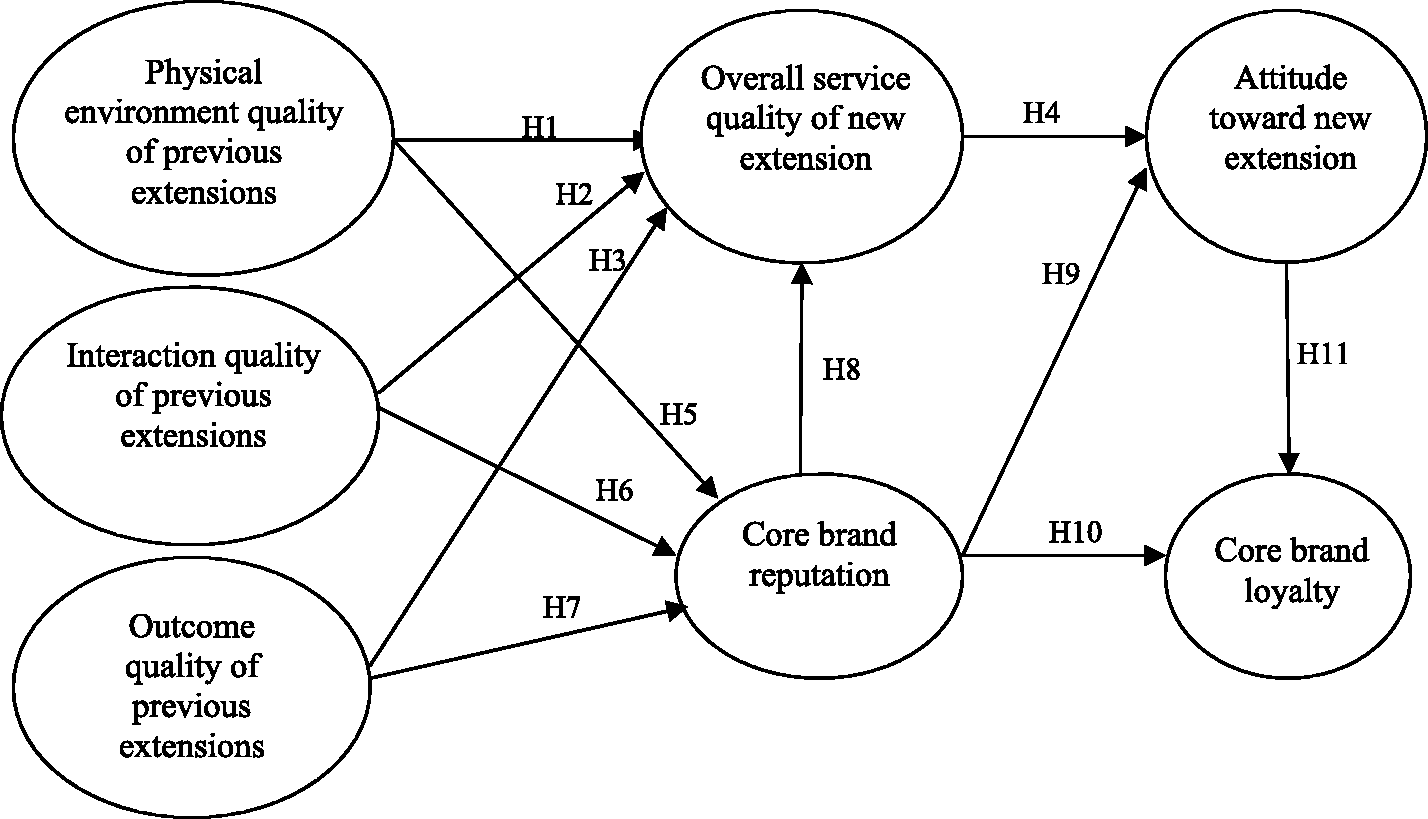
Method
Research instrument
A self-administered questionnaire was developed based on a review of relevant literature and a pilot test. The core brand and previous hotel brand extensions were the actual lodging brands, whereas the subsequent brand extension was a fictitious hotel brand extension. Marriott, Hyatt, Hilton, and Holiday Inn were chosen as the core brands because they are well-known brands and have been extended to several hotel brands (“Top 50 Hotel Companies,” 2002).
All constructs were measured using multiple items validated in prior studies. Specifically, each dimension of the perceived service quality of the previous brand extension and the overall service quality (OSQ) of a new hotel brand extension were measured using three factors adapted from Brady and Cronin (2001) and Völckner et al. (2010). Four items adapted from Dwivedi et al. (2010) were used to measure attitudes toward a new hotel brand extension. To measure the perception of REP, this study used four items from previous works (Abideen and Latif, 2011; Chaudhuri, 2002; Hem et al., 2003; Veloutsou and Moutinho, 2009). Four measurement items for LOY were adapted from several prior studies, including Han and Back (2008), Maxham and Netemeyer (2002), Srinivasan et al. (2002), Taylor and Baker (1994), and Zeithaml et al. (1996). The responses to all measurement items were rated from 1 (completely disagree) to 7 (completely agree) on a seven-point Likert-type scale.
Prior to the final survey, 31 pretest questionnaires were conveniently circulated to graduate students at a university in the United States for validation of the reliability of the measures. The results indicated the Cronbach’s alpha of the seven constructs all exceeded the acceptable level of .70 suggested by Hair et al. (2010), indicating internal consistency of the measurement.
Data collection and response rate
The target population of the study was travelers in the U.S. whose email addresses were listed on a publicly available email database and a southern university’s email address system. Email invitations with direct links to the questionnaires were sent to all selected subjects. Subjects who desired to participate in the study were asked to click on a hyperlink located at the end of the invitation message. After respondents finished the questionnaire, they were asked to submit their answers by clicking the submit button. The answers were sent directly to the online survey site, and the researcher was able to retrieve the data.
Respondent demographic characteristics (N = 511).

Data analysis
Descriptive statistics were used to describe the respondents’ characteristics. The proposed conceptual model and its corresponding hypothesized relationships were examined using structural equation modeling (SEM) under a two-step modeling approach (Anderson and Gerbing, 1988). To ensure that the proposed model fit the data reasonably well, was parsimonious, and performed better than other models, the nested models were assessed (Hair et al., 2010; Kline, 2005). With this analysis, the proposed model was compared to an alternative model called a nested model, which contained an identical number of variables and could be formed from the baseline model (the proposed model) by altering some path relationships by either adding or deleting paths. The significance of the model was tested by the chi-square difference statistic.
Results
Assessing the overall measurement model
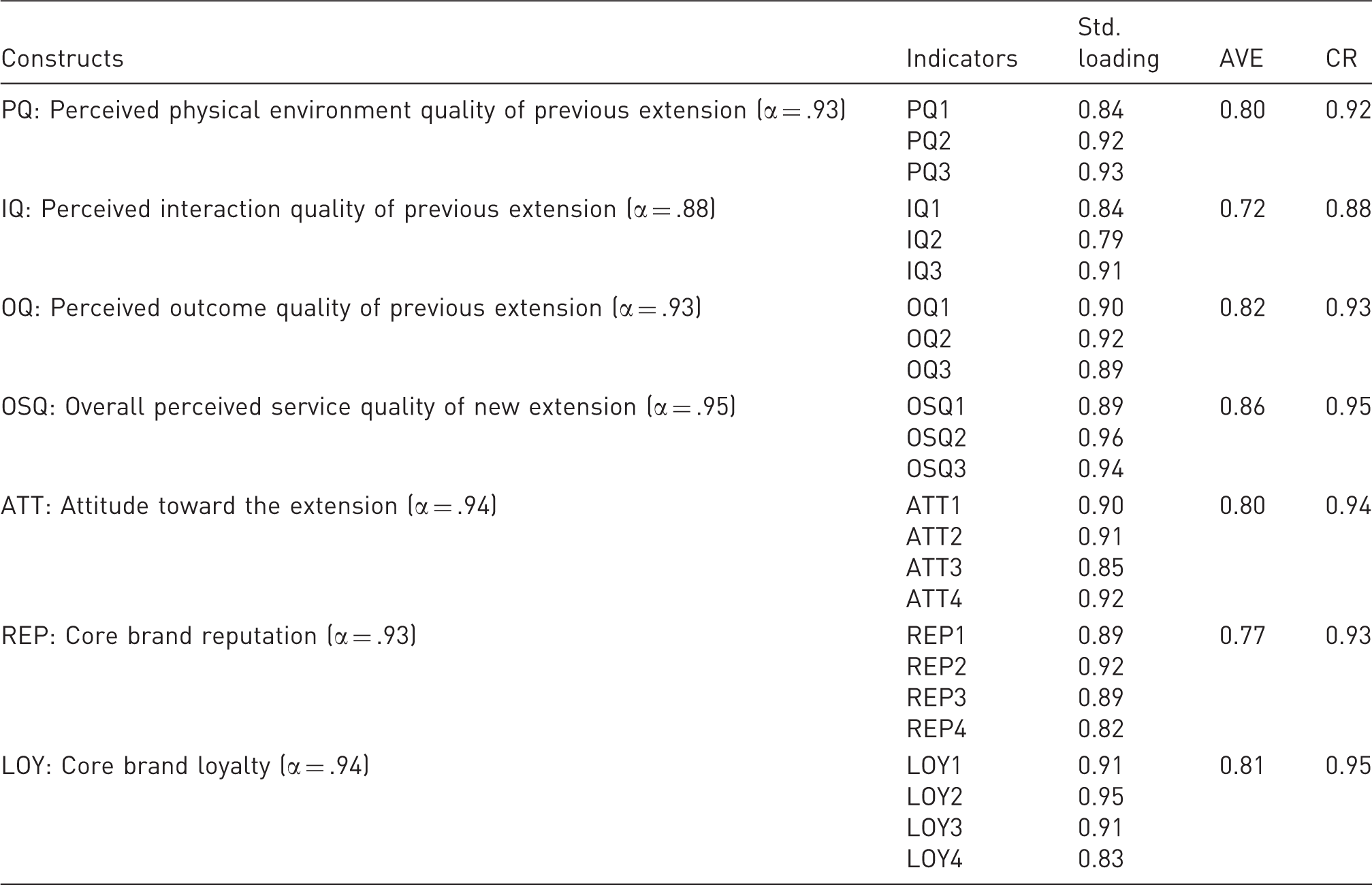
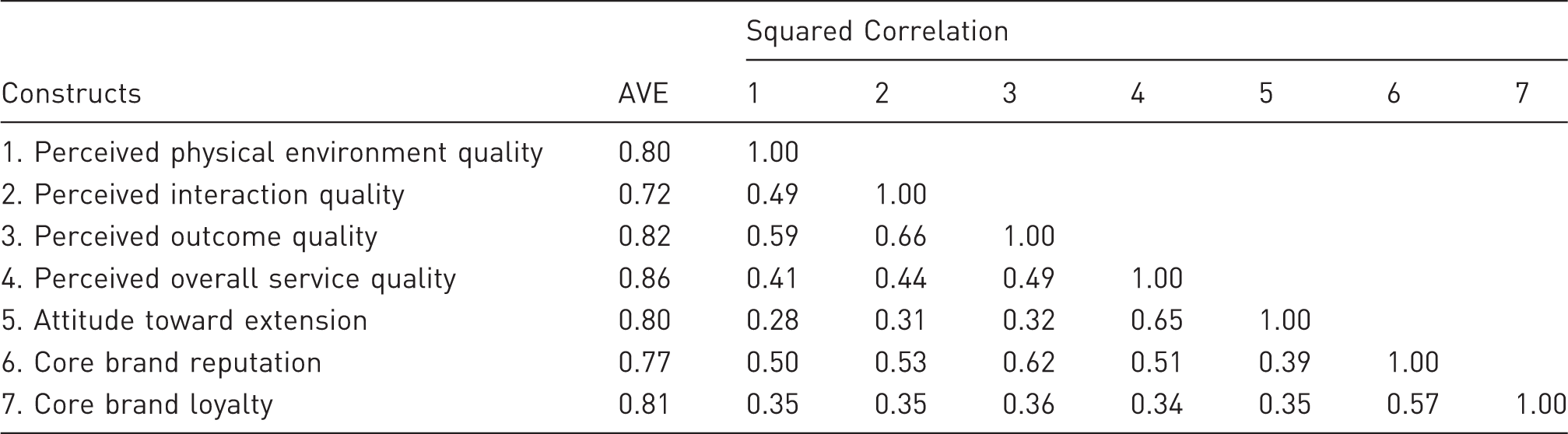
By conducting confirmatory factor analysis (CFA), a total of 24 measured variables were constrained into seven hypothetical constructs. All of these latent variables met the minimum requirements for specifying a measurement model (Hair et al., 2010). The results of the CFA yielded a significant chi-square test (χ2(231) = 766.812 (p < .001)), indicating that the estimated covariance matrixes did not match perfectly with the sampling variance. However, given the problems associated with the χ2 test, Hair et al. (2010) suggested that for the large sample size, at least one absolute fit index and one incremental fit index should be used to assess the overall measurement model, in addition to the χ2 test. The values for other goodness-of-fit statistics (χ2/df ratio = 3.32, Root Mean Square Error of Approximation (RMSEA) = .067 (90% Confidence Interval for RMSEA = .062, .073), Comparative Fit Index (CFI) = .960, Tucker–Lewis Index (TLI) = .952, Standardized Root Mean Square (SRMR) = .039, Normed Fit Index (NFI) = .944) fell within the acceptable ranges, signifying that the overall measurement model provided an adequate fit to the data.
Results of the measurement model.
Average variance extracted and squared correlation matrix.
Assessing the structural model and hypothesized paths
The goodness-of-fit statistics, χ2/df ratio = 3.26, RMSEA = .067, CFI = .960, TLI = .953, SRMR = .04, NFI = .943, indicated that the proposed structural model had an acceptable fit to the data. The results of the SEM, presented in Figure 2, revealed that all 11 path estimates were statistically significant in the expected directions.
Hypothesized model with path estimates.
The positive direct effects of perceived service quality of a previous hotel brand extension in terms of physical environment quality (
As hypothesized, REP was influenced by the perceived physical environment quality (
Competing models
The model proposed in this study was compared with two competing models. In the first competing model, as presented in Figure 3, the path from perceived OSQ of the previous brand extension to LOY was added to the proposed model. In the literature, perceived service quality has a positive effect on brand loyalty (Cronin et al., 2000; Taylor and Baker, 1994). Thus, one can expect the positive relationship between OSQ and LOY. Consequently, adding this path to the proposed model was deemed to be reasonable. A nonsignificant test of chi-square difference ( Competing model 1: Adding path.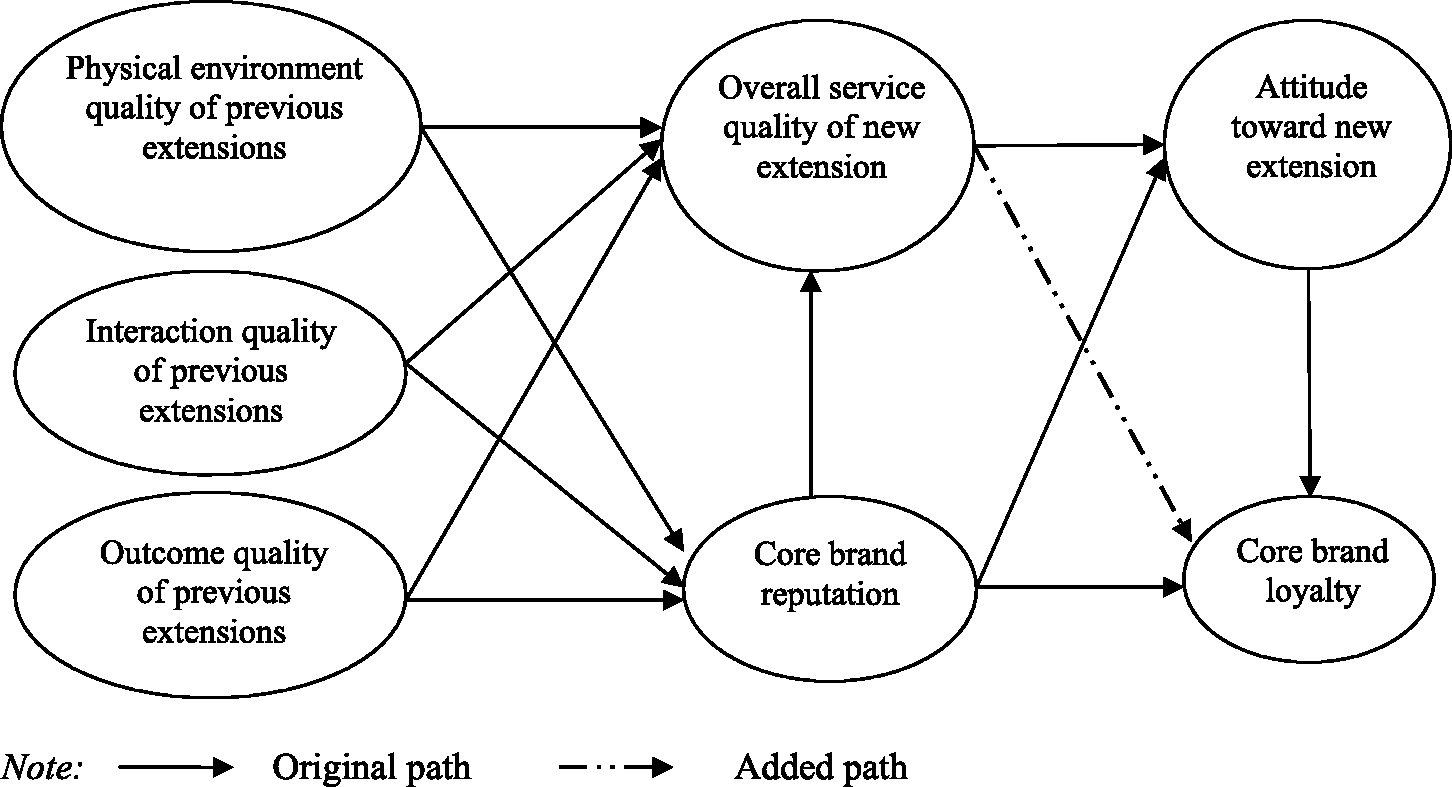
In the second competing model, as shown in Figure 4, the path from REP to attitude toward the subsequent extension (ATT) was deleted from the proposed model. The path estimates of the proposed model indicated that REP had significant direct and indirect effects on ATT. The direct effect, however, was extremely weak ( Competing model 2: Deleting path.
Discussion
The main purpose of this study was to develop and test a theoretical model explaining the effects of previous hotel brand extensions on customer attitudes toward new extensions, customer perceptions of REP, and loyalty. The results revealed that perceived service quality, in all three dimensions, of previous hotel brand extensions had positive effects on customer perceptions of OSQ of a new hotel brand extension. Among the dimensions, outcome quality demonstrated the strongest effect. The results also revealed that customers are more likely to have a positive attitude toward a new hotel brand extension if they perceived that the OSQ of the hotel brand extension is high. This result is consistent with previous studies (e.g. Kwun and Oh, 2007); customer attitudes toward a hotel brand extension are directly influenced by their perceived quality of the extension. Consistent with the marketing literature (Selnes, 1993; Thamaraiselvan and Raja, 2008; Zeithaml, 1988), the findings of this paper suggested that perceived service quality is positively associated with brand reputation. Specifically, REP was significantly influenced by all three dimensions of hotel service quality. Outcome quality was found to be the most important dimension contributing to the REP. These findings support the view that a direct experience gives customers an opportunity to test the signaling claims made by the brand, which consequently either reinforces or disconfirms their perceptions of the brand reputation (Herbig and Milewicz, 1993; Milewicz and Herbig, 1994; Selnes, 1993; Thamaraiselvan and Raja, 2008). As expected, the model further indicated that REP had positive effects, both directly and indirectly through perceived OSQ, on customer attitudes toward the new hotel brand extension. Brands with higher perceived reputations encouraged more positive evaluations than those with lower reputations, supporting previous empirical findings (e.g. Hem et al., 2003; Thamaraiselvan and Raja, 2008).
The findings of this study also demonstrated that the perceived quality of previous brand extensions had a significant effect on LOY based on customer attitudes toward the new hotel brand extension and REP. These results are supported by the empirical findings from previous studies (Helm, 2007; Selnes, 1993), indicating that customers are more likely to purchase or recommend the brand with a strong reputation than the one with a weak reputation or the brand that generated a positive attitude toward the brand extension.
Implication
For multiple brand extensions to be successful, it is critical for hotel management to understand that favorable evaluations of a subsequent hotel brand extension correlate with not only customer perceptions of the service quality of the extended hotel brand itself but also the reputation of the core brand. Hotel management should note that although REP has a relatively small direct impact on attitude toward a new brand extension, it has a moderate positive direct effect on how customers perceive the service quality of the subsequent brand extension. As a result, REP should be recognized as an important factor in multiple hotel brand extensions.
Accordingly, questions arise regarding how to enhance the reputation of the core brand and the perceptions of service quality of an extended hotel brand to increase favorable attitudes toward such an extension. This study revealed that the physical environment quality, interaction quality, and outcome quality of previously extended hotel brands are important for multiple brand extensions because they not only enhance positive perceptions of OSQ of the new hotel brand extension itself but also improve REP. If hotel companies are planning to engage in multiple brand extensions, hotel management should ensure that service quality, in all three dimensions, of previously extended hotel brands is favorably perceived by customers. Previous research (Brady and Cronin, 2001; Grönroos, 1984; Rust and Oliver, 1994) suggested that outcome quality perceptions could be enhanced by minimizing waiting time. Perceived physical environment quality is influenced by facility design (such as the layout of the hotel and visually appealing facilities) and ambient conditions (such as temperature, scent, and music). The perceived interaction quality of the hotel or employee–customer interface is directly affected by employee attitudes, behaviors, and expertise.
From a managerial perspective, it is important to know the relative importance of the three service quality dimensions as the determinants of OSQ and REP to be able to allocate resources properly. Although a review of the literature suggests that service quality plays a critical role in brand extensions, it provides little information about the relative importance of each service quality attribute, particularly in the context of multiple hotel brand extensions. Thus, hotel management might intuitively assume that all aspects of service quality are equally important in improving REP and perceived service quality of extended hotel brands. However, the findings from this paper revealed that each of the three dimensions of service quality had varying effects. Specifically, this study revealed that the relative importance of the three service quality measurements, from highest to lowest, was outcome quality, interaction quality, and physical environment quality. Hotel management can use this knowledge to establish priorities for the development of hotel service quality, according to their resources.
Hotel management must consider the potential negative effects that hotel brand extensions may have on the core brand when considering engaging in a multiple brand extension strategy. Our results can help hotel management understand that the core brand equity or LOY of their hotel can be enhanced or diminished by multiple brand extensions. For hotel companies that have previous successful brand extensions, the spillover effect model implies that launching a subsequent hotel brand extension can increase LOY. By contrast, hotel companies’ LOY may be at risk when launching a new brand extension if their previous brand extensions were not successful.
In summary, the spillover effect model developed from this study suggests that for a hotel brand that has been extended more than once, the performance of any previous hotel brand extensions, measured by customer perceptions of service quality in three dimensions, affects not only customer attitudes toward a new hotel brand extension but also the reputation and loyalty of the core brand. Prior to implementing a multiple brand equity extension strategy, hotel management must ensure that the service quality of each hotel under the umbrella brand meets customer expectations. One hotel with low perceived service quality has repercussions for all hotels within an umbrella brand, weakening the reputation of the core brand and lowering the perception of service quality for the newly extended hotel brands, which consequently decreases loyalty toward the core brand.
Limitations and directions for future research
As expected in research, four main limitations that restrict the generalizability of the findings were discovered. First, the samples were drawn based on convenience sampling. Although the demographic characteristics of the samples had a similar pattern to those of typical lodging customers, this does not guarantee that the samples were representative of the larger target population because they may not accurately reflect other aspects of the population (Churchill and Brown, 2007). Second, the response rate of 0.18% is low compared to the average online survey response rate of 3.2% (Sheehan, 2001). As a result, this may raise the question of whether respondents in this study are different from nonrespondents. Third, the results of this study were limited to a few well-known core brands (Marriott, Hyatt, Hilton, and Holiday Inn). The spillover effect model may work differently for a less well-known brand. Finally, in this study, the subsequent hotel brand extension was a factitious brand. As such, the respondents were provided with a short description of the new hotel brand with respect to amenities, facilities, and services. However, in a real-world setting, customers would have access to more information about the new hotel brands. Prior research (Dacin and Smith, 1994) advised that by using only a single piece of information, the magnitude of the effects may be greater than those that exist in the marketplace.
Some ideas for further research are suggested by the limitations of the study. First, replication of the study with different core brands, particularly ones with less well-known brands, and using more complex multiattribute descriptions, such as including a picture of the hotel, to describe a factitious brand extension would help in generalizing the results of this study. Second, a mixed method design (qualitative and quantitative) should be used to measure latent constructs, such as the perceived similarity between existing hotel brands and a subsequent hotel brand. In this study, this construct was measured using two self-reporting items, which may not capture all imperative aspects of the construct. By using in-depth interviews or focus groups, future research could establish the quantitative factors of importance to customers. Future research could also consider types of extensions, either step-down or step-up extensions, which were not considered in this study. Prior research (Lei et al., 2008) has suggested that for vertical line extensions, the extension type moderates the effects of the extensions on the core brand and the customer evaluations of the extensions. It would thus be useful to examine whether introducing sequential brand extensions in step-up and step-down extensions provides similar results. In addition, future research might contribute to the literature by incorporating the service quality subdimensions suggested by Brady and Cronin (2001) in the spillover effect model. This approach would provide a more comprehensive and accurate tool for assessing the relative importance of hotel service quality in all dimensions.